Preparation is the key to success in any interview. In this post, we’ll explore crucial Insurance and Recovery interview questions and equip you with strategies to craft impactful answers. Whether you’re a beginner or a pro, these tips will elevate your preparation.
Questions Asked in Insurance and Recovery Interview
Q 1. Explain the claims process from initial report to final settlement.
The insurance claims process is a structured procedure designed to fairly and efficiently resolve disputes between an insured individual and an insurance company following a covered event. It typically involves several key steps:
- Initial Report: The insured party reports the incident to the insurance company, usually via phone or online portal. This initial report should include as much detail as possible about the date, time, location, and circumstances of the event.
- Claim Assignment and Investigation: The insurance company assigns a claims adjuster who will investigate the claim. This involves reviewing the initial report, gathering additional information (police reports, medical records, photographs), and potentially conducting interviews with involved parties.
- Verification and Validation: The adjuster verifies the validity of the claim, confirming coverage under the policy and assessing the extent of the damages or losses. This step might involve appraisals for property damage or medical reviews for injury claims.
- Negotiation and Settlement: Once the investigation is complete and the liability and damages are determined, the adjuster negotiates a settlement with the insured. This might involve several back-and-forth communications. The goal is to reach a mutually agreeable settlement amount.
- Payment and Closure: After the settlement is agreed upon, the insurance company processes the payment. Once payment is received by the insured, the claim is officially closed. Documentation of all communications and actions is crucial throughout the process.
Example: Imagine a homeowner whose house is damaged by a fire. They would report the fire to their insurance company, providing details like the date, time, and cause of the fire. The adjuster would then visit the property to assess the damage, obtain a fire marshal’s report, and work with contractors to estimate the repair costs. After negotiation, a settlement amount would be agreed upon, and the repair work would proceed, followed by claim closure once the homeowner receives payment.
Q 2. Describe your experience with different types of insurance claims (e.g., property, liability, health).
My experience encompasses a broad spectrum of insurance claims. I’ve handled numerous property claims, including those related to fire, water damage, theft, and vandalism. In these cases, careful documentation of the damages, cost estimation, and negotiation with contractors are paramount. I’ve also worked extensively with liability claims, involving bodily injury or property damage caused by the insured. This often includes investigating the incident, assessing liability, and negotiating settlements with injured parties or their legal representatives. My experience extends to health insurance claims, where I have processed claims for medical treatments, hospital stays, and prescription drugs. This area demands understanding of complex medical terminology, billing codes, and provider contracts.
One particularly challenging case involved a complex liability claim resulting from a multi-vehicle accident. It required careful analysis of police reports, witness statements, medical records, and vehicle damage assessments to determine liability and damages. I successfully negotiated a settlement that satisfied all parties involved, showcasing my ability to navigate complex situations.
Q 3. How do you prioritize competing claims and manage your workload effectively?
Prioritizing competing claims and managing workload efficiently requires a structured approach. I utilize a system that combines urgency, complexity, and potential financial impact to determine claim priority. High-priority claims typically include those involving significant financial loss, potential legal ramifications, or severe injuries. I leverage project management tools to track deadlines, document progress, and ensure timely resolution of each claim.
- Urgency: Claims involving immediate needs (e.g., emergency medical care, immediate shelter) are prioritized.
- Complexity: Claims involving multiple parties, substantial damages, or legal disputes require more time and attention.
- Financial Impact: Claims involving high financial exposure are prioritized to minimize potential losses.
For instance, I might use a Kanban board or a similar system to visually track the progress of multiple claims and adjust priorities as needed. Regular review meetings with my team ensure we’re all aligned on priorities and deadlines. Regular communication with claimants and stakeholders also helps in effectively managing expectations.
Q 4. What are the key legal aspects you consider when handling insurance claims?
Legal aspects are central to insurance claims handling. A thorough understanding of relevant state and federal laws, contract law, and tort law is crucial. Key considerations include:
- Policy Language: Precise interpretation of the insurance policy’s terms and conditions is essential to determine coverage. Ambiguities are usually interpreted in favor of the insured.
- Statutes of Limitations: Knowing the applicable statutes of limitations for filing lawsuits is critical for timely claim resolution.
- Evidence and Documentation: Maintaining comprehensive and accurate documentation of all aspects of the claim is crucial to support decisions and defend against potential litigation.
- Liability Determination: Establishing fault or negligence in liability claims requires a careful analysis of evidence and application of relevant legal principles.
- Damages Assessment: Determining the appropriate amount of damages to compensate for losses involves understanding legal precedents and valuation methods.
For example, understanding comparative negligence laws is essential in liability claims, as it affects the apportionment of fault and the amount of compensation awarded.
Q 5. How do you identify and investigate potential insurance fraud?
Identifying and investigating potential insurance fraud requires a keen eye for detail, analytical skills, and a thorough understanding of fraudulent schemes. Methods I use include:
- Data Analysis: Analyzing claim data to identify patterns or anomalies that suggest fraud (e.g., unusually high claims from a single individual or location).
- Verification and Validation: Cross-referencing information from various sources (police reports, medical records, witness statements) to verify the accuracy of the claim.
- Interviews and Interrogation: Conducting interviews with the insured and other relevant parties to gather information and assess their credibility.
- Surveillance: Employing surveillance techniques (when legally permissible) to gather evidence of fraudulent activity.
- Specialized Software: Utilizing software designed to detect and investigate insurance fraud.
Example: A claim for a significant amount of jewelry theft with no supporting documentation or witness statements might raise red flags. Further investigation might involve checking police reports and reviewing the insured’s past claims history to assess the validity of the claim.
Q 6. Describe your experience with subrogation and recovery efforts.
Subrogation is the process by which an insurance company, after paying a claim to its insured, seeks to recover the amount paid from a third party who was responsible for the loss. Recovery efforts involve pursuing legal action or negotiating settlements with the at-fault party or their insurer. My experience includes successfully pursuing subrogation claims against negligent drivers, manufacturers of defective products, and other responsible parties.
One successful subrogation case involved a car accident where our insured was injured by a negligent driver. After settling the claim with our insured, we successfully pursued subrogation against the at-fault driver’s insurance company, recovering the full amount we had paid out to our insured. This requires skillful negotiation and sometimes litigation to pursue these recoveries.
Q 7. What software or tools do you use to manage claims and track recovery efforts?
I utilize several software and tools to manage claims and track recovery efforts. These include:
- Claims Management Systems (CMS): These systems provide a centralized platform for managing all aspects of the claims process, from initial reporting to final settlement. They allow for efficient tracking of claim status, communication with claimants, and generation of reports.
- Database Management Systems (DBMS): Databases are crucial for storing and analyzing large amounts of claim data, facilitating efficient retrieval and analysis of information for fraud detection and trend analysis.
- Document Management Systems (DMS): These systems ensure secure storage and retrieval of claim-related documents, improving organization and reducing the risk of loss or damage.
- Subrogation Software: Specialized software helps to identify potential subrogation opportunities, track recovery efforts, and manage legal proceedings.
Example: A CMS might allow me to assign claims to adjusters, track deadlines, and generate reports on claim resolution times and costs. A DMS allows for secure and easy access to all documentation relevant to a particular claim.
Q 8. Explain your understanding of insurance policy terms and conditions.
Insurance policy terms and conditions are the legal agreement between the insurer and the policyholder. They define the scope of coverage, outlining what events are covered, the extent of the insurer’s liability, and the policyholder’s responsibilities. Understanding these terms is crucial for both parties.
- Insuring Agreement: This section specifies the promises made by the insurer, detailing the risks covered and the circumstances under which benefits will be paid.
- Definitions: This section clarifies the meaning of key terms used throughout the policy, ensuring there’s no ambiguity.
- Exclusions: This outlines events or situations specifically not covered by the policy. Understanding exclusions is vital to avoid misunderstandings during a claim.
- Conditions: These are stipulations the policyholder must meet to maintain coverage and be eligible for benefits. For example, timely notification of an incident or cooperation with the investigation.
- Limits of Liability: This specifies the maximum amount the insurer will pay for a covered loss, often stated per occurrence or per policy period.
For instance, a homeowner’s policy might clearly define what constitutes ‘covered damage’ (e.g., fire, windstorm) and exclude damage caused by flooding unless a specific flood endorsement is added. Understanding these nuances prevents disappointment during the claims process.
Q 9. How do you handle difficult or demanding claimants?
Handling difficult claimants requires empathy, patience, and a strong understanding of the claims process. I approach such situations by actively listening to their concerns, validating their feelings, and clearly explaining the policy provisions and the claims process. I strive to be transparent and fair, focusing on providing evidence-based answers and explaining any denials of coverage thoroughly.
If a claimant is upset, I would begin by acknowledging their frustration, letting them know I understand their difficult position. I would then patiently explain the relevant policy language, perhaps with illustrative examples, and offer to find solutions within the policy guidelines. If a claim is denied, a detailed explanation with supporting evidence is critical. Maintaining professionalism and respect is paramount, even when dealing with intense emotions.
In cases of persistent disagreements, I would escalate the issue to a supervisor or involve a mediator to help find a resolution and maintain a positive professional relationship.
Q 10. Describe a time you had to make a difficult decision regarding a claim.
I once faced a difficult decision regarding a claim for a significant water damage in a commercial building. The policyholder claimed the damage resulted from a sudden and accidental pipe burst, a covered peril. However, during the investigation, we discovered evidence suggesting a gradual, undetected leak over an extended period, possibly due to negligence. This would have excluded the damage from coverage under the policy’s wording.
The decision was challenging because the policyholder was a long-standing client, and the financial burden of the repair was substantial. After careful review of all evidence, including plumbing reports and witness statements, I presented my findings to my supervisor. We determined the evidence pointed to a pre-existing condition rather than a sudden accidental event, therefore the claim was partially denied. This was a difficult call but necessary to maintain fairness and integrity within our policy guidelines. We offered a partial settlement based on the portion attributable to a sudden pipe burst, helping to mitigate the financial impact on the client.
Q 11. What is your understanding of reserving and how it impacts claim handling?
Reserving is the process of estimating the amount of money an insurance company needs to set aside to cover future claim payments. It’s a crucial aspect of claim handling because it impacts the insurer’s financial stability and its ability to pay claims promptly. Accurate reserving ensures the company has sufficient funds to meet its obligations.
In claim handling, the initial reserve is set based on preliminary information about the claim. As more information becomes available—medical reports, repair estimates, etc.—the reserve may be adjusted upward or downward to reflect the evolving understanding of the claim’s potential cost. Inadequate reserving can lead to financial instability, impacting the insurer’s ability to handle future claims. Over-reserving, while seemingly safe, can limit investment opportunities and reduce profitability.
The reserving process requires expertise in evaluating claims, understanding policy coverages, and forecasting potential costs. Actuaries and claims professionals use various statistical methods and historical claim data to refine these estimations, making reserving a critical component of sound insurance management.
Q 12. How do you calculate indemnity in various claim scenarios?
Calculating indemnity, the amount paid to compensate for a loss, varies greatly depending on the type of insurance policy and the circumstances of the claim. The fundamental principle is to restore the insured party to their pre-loss financial position, to the extent possible, without profiting from the loss.
- Property Damage: Indemnity for property damage usually involves the cost of repair or replacement, less depreciation.
Indemnity = (Repair Cost or Replacement Cost) - Depreciation - Bodily Injury: In liability claims involving bodily injury, indemnity covers medical expenses, lost wages, pain and suffering, and other related damages. This often involves negotiations with the claimant or their legal representative.
- Liability Coverage: Liability insurance protects the insured against their legal responsibility for causing harm to others. The amount of indemnity will depend on the legal judgment or settlement reached.
For example, in a car accident, indemnity may cover medical bills, lost wages, and vehicle repair costs. In a homeowner’s claim for a fire, it would involve the cost of rebuilding or repairing the house and replacing personal belongings, up to the policy limits. The process always involves a thorough investigation to determine the cause of loss, assess damages, and ensure the indemnity calculation aligns with the policy terms and conditions.
Q 13. Explain your experience with different types of insurance policies (e.g., homeowners, auto, commercial).
My experience encompasses various insurance policies, including homeowners, auto, and commercial lines. Homeowner’s insurance policies cover dwelling damage, personal property, and liability. I’m familiar with handling claims related to fire, wind, water damage, theft, and liability issues such as injuries occurring on the property. Auto insurance claims include property damage to vehicles, medical expenses, and liability for injuries caused by an accident. I’ve processed claims related to collisions, comprehensive coverage, and uninsured/underinsured motorist claims.
In commercial insurance, I’ve worked with a variety of policies, including commercial property, general liability, and workers’ compensation. This involves understanding business interruption coverage, product liability, professional liability (Errors and omissions), and the specific needs of different industries. Handling these varied types of claims required a deep understanding of policy specifics, industry standards, and relevant legislation.
Q 14. How familiar are you with regulatory compliance in the insurance industry?
I am very familiar with regulatory compliance in the insurance industry. Compliance is paramount, and my work consistently adheres to relevant state and federal regulations. This includes understanding and following guidelines related to:
- Consumer protection laws: Ensuring fair and transparent dealings with policyholders, providing accurate information, and adhering to prompt claims handling procedures.
- Data privacy regulations: Protecting sensitive policyholder information in accordance with regulations such as HIPAA (for health information) and CCPA/GDPR (for personal data).
- Anti-money laundering (AML) regulations: Identifying and reporting suspicious transactions to prevent illegal activities.
- State-specific insurance regulations: Each state has its own regulations concerning insurance products, claim handling, and company operations, which must be meticulously followed.
Staying updated on changes to regulations and industry best practices is a continuous process, typically involving regular training and reviewing updates from regulatory bodies.
Q 15. Describe your experience with negotiating settlements.
Negotiating settlements is a crucial aspect of insurance and recovery. It requires a blend of strong communication skills, a deep understanding of the legal and financial aspects of the case, and the ability to empathize with all parties involved. My approach involves a thorough investigation of the claim, carefully analyzing all available documentation, and assessing the strengths and weaknesses of each party’s position. I begin by clearly outlining the insurer’s position and offering a reasonable settlement proposal based on the evidence.
For example, in a recent case involving a property damage claim, I initially received a demand significantly exceeding the estimated repair costs. Through detailed documentation review, I identified inconsistencies in the claimant’s narrative and supporting documentation. By presenting these findings in a clear, professional manner, I successfully negotiated a settlement 40% lower than the initial demand, saving the insurer a substantial amount of money. I always strive for a win-win outcome, even if it means compromising slightly on the insurer’s initial position to avoid costly and time-consuming litigation.
Career Expert Tips:
- Ace those interviews! Prepare effectively by reviewing the Top 50 Most Common Interview Questions on ResumeGemini.
- Navigate your job search with confidence! Explore a wide range of Career Tips on ResumeGemini. Learn about common challenges and recommendations to overcome them.
- Craft the perfect resume! Master the Art of Resume Writing with ResumeGemini’s guide. Showcase your unique qualifications and achievements effectively.
- Don’t miss out on holiday savings! Build your dream resume with ResumeGemini’s ATS optimized templates.
Q 16. What is your approach to documenting claims and recovery efforts?
Meticulous documentation is paramount in insurance and recovery. My approach involves maintaining a centralized, chronologically ordered repository for all claim-related documents. This includes initial reports, correspondence, investigation findings, expert opinions, and settlement agreements. Each document is meticulously indexed and easily accessible using a sophisticated case management system. I adhere to a standardized system of labeling and filing to ensure efficient retrieval and auditability.
For instance, I utilize a unique identification number for each claim, ensuring all documents are consistently tagged and easily searchable across multiple systems. This allows for quick access to critical information during audits, legal proceedings, or internal reviews. This organized approach ensures clarity and helps to prevent discrepancies or oversights, facilitating a smoother and more efficient claims process.
Q 17. How do you manage confidential information and maintain client privacy?
Confidentiality and client privacy are of utmost importance, and I adhere to strict ethical and legal guidelines to protect sensitive information. I employ several methods to maintain confidentiality, including secure data storage and access protocols, data encryption, and restricted access to confidential files. Only authorized personnel have access to sensitive client data, and we conduct regular security awareness training to ensure compliance.
Furthermore, all electronic communication is encrypted, and hard copies of documents are stored in locked, secure facilities. I strictly adhere to relevant data privacy regulations, such as GDPR and CCPA, and ensure all actions are compliant with these regulations. Any external party involved in the claim process receives only the necessary information to carry out their specific task.
Q 18. How do you stay updated on changes in insurance laws and regulations?
Staying abreast of changes in insurance laws and regulations is essential for success in this field. I actively participate in industry conferences and workshops, attend continuing education courses, and subscribe to reputable legal and insurance publications. I also monitor regulatory websites, such as those of the relevant state insurance departments, to receive updates on new laws and regulatory changes.
Furthermore, I maintain a professional network of contacts within the legal and insurance industry to readily discuss emerging issues and best practices. This multi-faceted approach ensures that my knowledge base remains current, and that I can provide informed and compliant advice to my clients and the organization. Staying informed allows me to proactively address potential legal and compliance risks and apply the latest legal interpretations.
Q 19. Describe your experience with working with external parties (e.g., lawyers, investigators).
Collaboration with external parties, including lawyers, investigators, and expert witnesses, is often crucial in complex insurance and recovery cases. I have extensive experience working with these professionals, employing clear and concise communication strategies. I ensure that all information shared is relevant and accurate, and I work collaboratively to ensure alignment of goals and expectations.
For example, when working with investigators, I provide clear instructions outlining the scope of the investigation, timelines, and required documentation. Regular progress updates are exchanged to maintain transparency and ensure efficiency. Similarly, when engaging with legal counsel, I provide all necessary documentation and actively participate in strategy sessions to formulate effective legal arguments. Clear communication and collaborative partnerships ensure seamless and efficient handling of complex cases.
Q 20. How do you assess the validity of claims and supporting documentation?
Assessing the validity of claims and supporting documentation requires a critical and methodical approach. I begin by verifying the identity of the claimant and the authenticity of the provided documentation. I meticulously review all supporting evidence, cross-referencing information to identify inconsistencies or discrepancies. I often use various investigative techniques, including contacting witnesses and obtaining independent verification of facts.
For instance, in a case involving a vehicle theft claim, I carefully examined the police report, the claimant’s statements, and the vehicle registration documents. I noticed a discrepancy in the description of the vehicle in the police report and the claimant’s initial statement. Further investigation revealed inconsistencies that led to the conclusion that the claim was fraudulent. Through thorough analysis and verification, I can assess the legitimacy of claims and support informed decision-making.
Q 21. What is your experience with different types of recovery methods (e.g., litigation, negotiation, arbitration)?
My experience encompasses various recovery methods, including negotiation, litigation, and arbitration. Negotiation is my preferred first approach, aiming for a mutually agreeable settlement that avoids costly and time-consuming litigation. However, if negotiation fails, I am fully prepared to pursue litigation or arbitration.
In one instance, a claim involving a significant commercial property damage dispute required litigation. I worked closely with our legal counsel, providing all necessary documentation and expert witness testimony to build a strong case. The resulting favorable court judgment significantly reduced the insurer’s financial exposure. Selecting the appropriate recovery method is a strategic decision based on the specific facts of each case, taking into consideration factors such as the potential costs, the likelihood of success, and the claimant’s likely approach.
Q 22. How do you handle claims involving complex liability issues?
Handling claims with complex liability issues requires a methodical approach. It’s not simply about assigning blame; it’s about meticulously investigating all contributing factors to determine the extent of each party’s responsibility. This often involves reviewing police reports, witness statements, expert testimony (e.g., engineers, medical professionals), and potentially conducting our own independent investigations.
For example, consider a car accident where multiple drivers are involved and there are conflicting accounts of the events. We would:
- Gather all evidence: This includes police reports, dashcam footage, photographs of the accident scene, and medical records of those involved.
- Interview all parties: We conduct thorough interviews with all drivers, passengers, and witnesses to obtain different perspectives.
- Consult with experts: If needed, we may engage accident reconstruction specialists or medical experts to provide objective analysis and clarify disputed points.
- Analyze the evidence: This involves carefully reviewing all gathered information to construct a timeline of events and determine the proximate cause of the accident and the degree of fault of each driver. This often requires understanding legal precedents and case law relevant to the jurisdiction.
- Negotiate a settlement or prepare for litigation: Based on our findings, we negotiate a fair settlement with all involved parties or prepare for potential litigation if a settlement cannot be reached.
The key is to be thorough, objective, and well-documented throughout the entire process. This ensures a fair and equitable resolution, minimizing potential disputes and litigation costs.
Q 23. Describe a time you had to deal with a challenging claim involving significant losses.
One particularly challenging claim involved a catastrophic fire at a large warehouse. The initial loss estimates were substantial, exceeding our policy limits. The cause of the fire was initially undetermined, leading to difficulties in determining liability. We faced immense pressure from the policyholder, who was understandably distraught and facing significant financial hardship. The investigation was complex, involving fire marshals, forensic engineers, and extensive review of building permits and maintenance records.
Our team followed a structured approach:
- Secure the scene: We immediately worked with the authorities to secure the scene, preventing further damage and preserving evidence.
- Engage experts: We engaged independent fire investigators and forensic engineers to determine the cause of the fire and assess the extent of the damage.
- Collaborate with the policyholder: We maintained open communication with the policyholder, keeping them informed of the investigation’s progress and offering support. We also helped them navigate the process of filing claims with other relevant parties such as their landlord.
- Negotiate a settlement: After a thorough investigation revealed a faulty electrical system as the cause of the fire, we were able to successfully negotiate a settlement that was fair to both the policyholder and the insurance company. This involved a combination of our policy payout and settlements from other responsible parties.
The success of this claim stemmed from our thorough investigation, proactive communication, and collaborative approach. While financially significant, the experience reinforced the importance of strong investigative skills and empathetic communication in crisis situations.
Q 24. Explain your experience with using data analytics to identify trends in claims.
Data analytics plays a crucial role in identifying trends and patterns in claims data. We utilize various tools and techniques to analyze vast datasets, looking for indicators that can help us improve risk assessment, detect fraud, and enhance our claims handling process.
For instance, we use statistical modeling to identify high-risk areas or demographics prone to certain types of claims (e.g., higher rates of auto theft in specific neighborhoods). We also use machine learning algorithms to detect patterns that might indicate fraudulent claims – for example, an unusual number of claims from a particular doctor or repair shop.
These analytical insights allow us to:
- Refine underwriting criteria: Identify and mitigate risks more effectively by adjusting premiums or coverage options.
- Improve claims handling efficiency: Prioritize claims based on urgency and potential severity, optimizing resource allocation.
- Detect and prevent fraud: Proactively identify and investigate potentially fraudulent claims, saving the company substantial funds.
- Enhance customer service: Better understand customer needs and provide more personalized services.
We use tools such as SQL, R, and Python to perform data analysis and visualization, helping us make data-driven decisions that improve both efficiency and profitability.
Q 25. How do you balance the needs of the claimant with the financial interests of the insurer?
Balancing the needs of the claimant with the financial interests of the insurer is a critical aspect of our job and requires a delicate balance of empathy and sound judgment.
Our approach is guided by principles of fairness and ethical conduct. We strive to provide prompt and efficient service to claimants, recognizing that they are often facing stressful and difficult circumstances. At the same time, we have a fiduciary responsibility to our insurer to ensure claims are processed accurately and in accordance with policy terms and conditions. We achieve this balance through:
- Thorough investigation: A complete and unbiased investigation ensures that the claim is assessed fairly and accurately.
- Open communication: Maintaining clear and consistent communication with the claimant keeps them informed about the progress of their claim and addresses their concerns.
- Fair and equitable settlement: We strive to reach a settlement that is both fair to the claimant and protects the financial interests of the insurer. This often requires negotiation and compromise.
- Adherence to policy terms: All decisions are made within the framework of the insurance policy, ensuring transparency and consistency.
It’s important to remember that a satisfied claimant is often a loyal customer, so it is in the company’s best long-term interest to balance empathy with responsible financial management.
Q 26. What are your salary expectations for this role?
My salary expectations for this role are in the range of $X to $Y per year, depending on the full benefits package offered and the specific responsibilities involved. This range reflects my experience and expertise in insurance claims and recovery, and is competitive with industry standards for similar positions.
Q 27. What are your long-term career goals within the insurance industry?
My long-term career goals within the insurance industry involve progressing into a leadership role, potentially managing a team of claims adjusters or specializing in a niche area such as complex liability or catastrophe response. I am interested in further developing my expertise in data analytics and leveraging technology to improve claims handling processes. Ultimately, I aspire to contribute to the continued growth and innovation within the industry by improving both efficiency and customer experience.
Q 28. Why are you interested in this specific position?
I am particularly interested in this position because of [Company Name]’s reputation for excellence in claims handling and its commitment to innovation. The opportunity to work with a team of experienced professionals in a dynamic environment, coupled with the specific responsibilities outlined in the job description, perfectly aligns with my skills and career aspirations. The emphasis on [mention a specific company value or initiative that resonates with you] is especially appealing.
Key Topics to Learn for Your Insurance and Recovery Interview
- Insurance Fundamentals: Understanding various insurance types (property, casualty, life, health), policy structures, and coverage limitations. Practical application: Explain how different policy clauses impact claim settlements.
- Claims Processing and Adjustment: Mastering the claims lifecycle, from initial reporting to final settlement. Practical application: Describe your approach to investigating a complex claim, including evidence gathering and negotiation strategies.
- Loss Control and Risk Management: Identifying and mitigating potential risks within insured properties or businesses. Practical application: Explain how to assess risk and recommend preventative measures to reduce future claims.
- Regulatory Compliance: Familiarizing yourself with relevant industry regulations and legal frameworks. Practical application: Discuss how compliance impacts claims handling and company procedures.
- Data Analysis and Reporting: Analyzing claims data to identify trends, assess risk, and improve efficiency. Practical application: Explain how you would use data to improve a company’s underwriting or loss control efforts.
- Fraud Detection and Prevention: Identifying and mitigating fraudulent claims. Practical application: Describe your methodology for detecting potentially fraudulent activity and your approach to investigation.
- Customer Service and Communication: Effective communication with policyholders and stakeholders during the claims process. Practical application: Describe how you handle difficult or emotionally charged situations with claimants.
- Technology in Insurance and Recovery: Understanding the role of technology in claims processing, risk assessment, and customer service (e.g., claims management systems, AI-powered tools). Practical application: Discuss how technological advancements can improve efficiency and accuracy in the claims process.
Next Steps
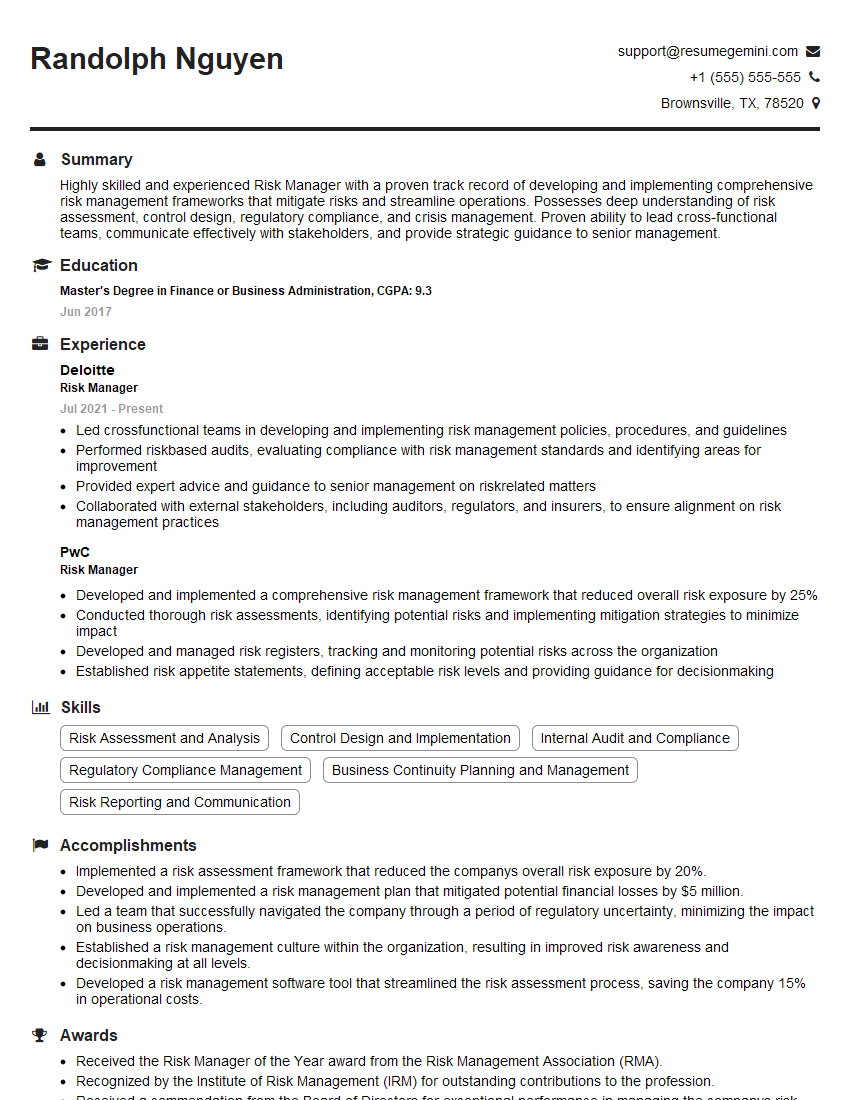
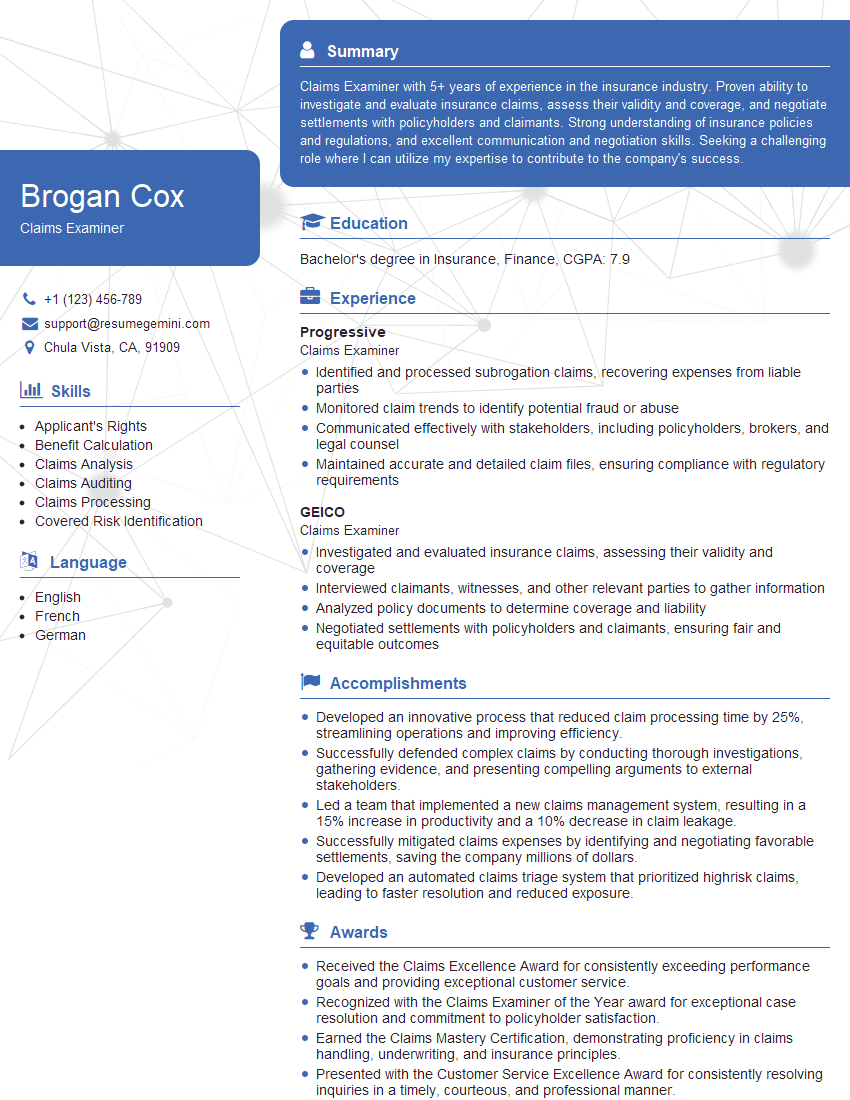
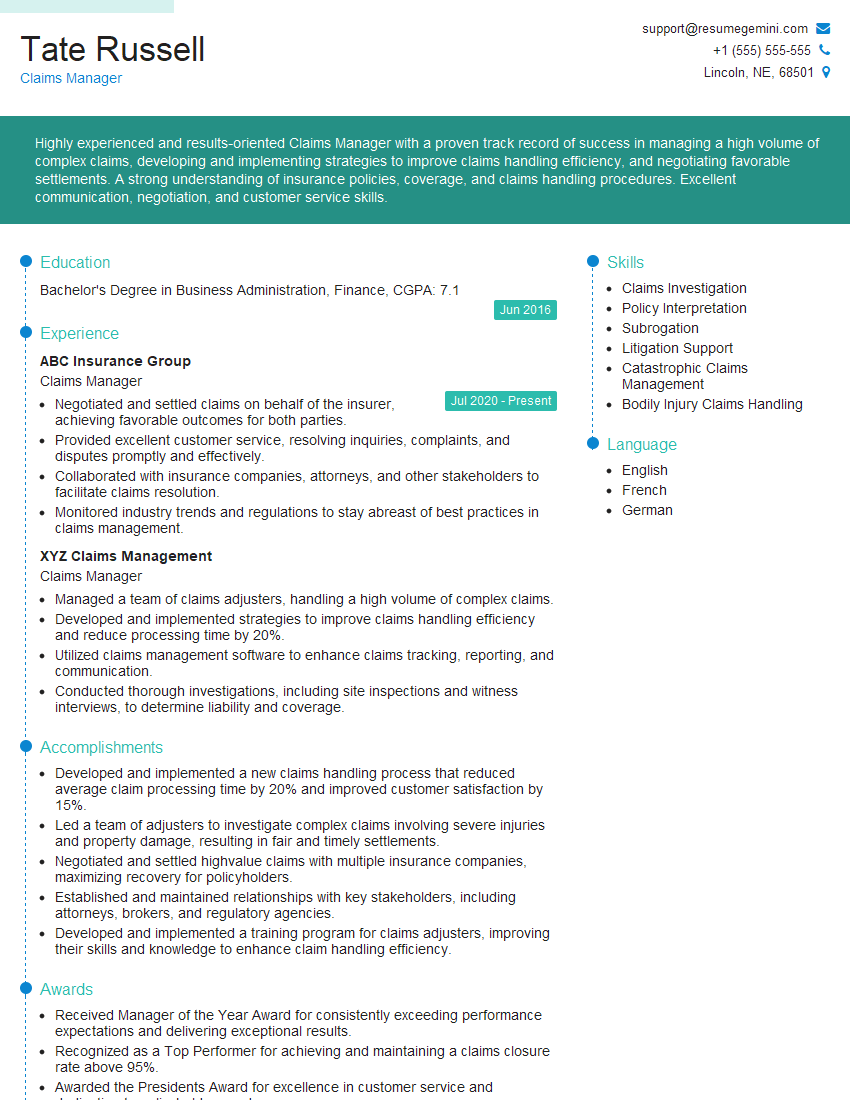
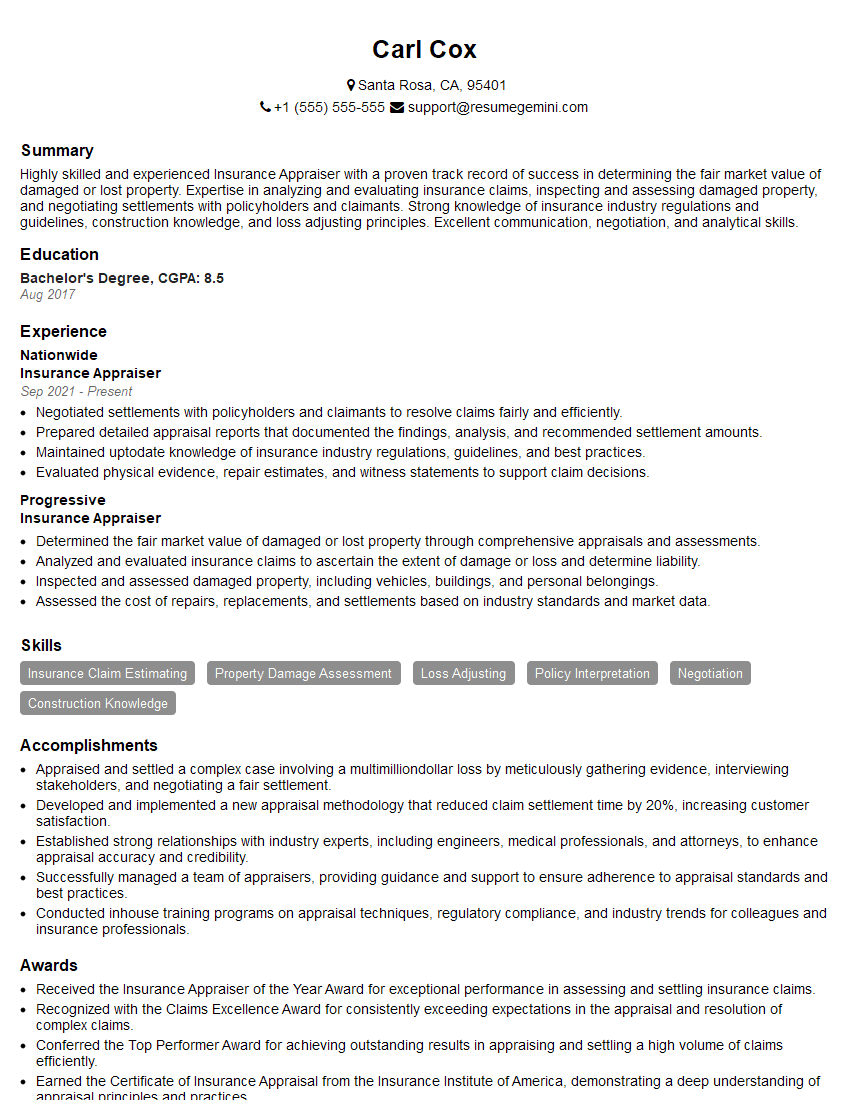
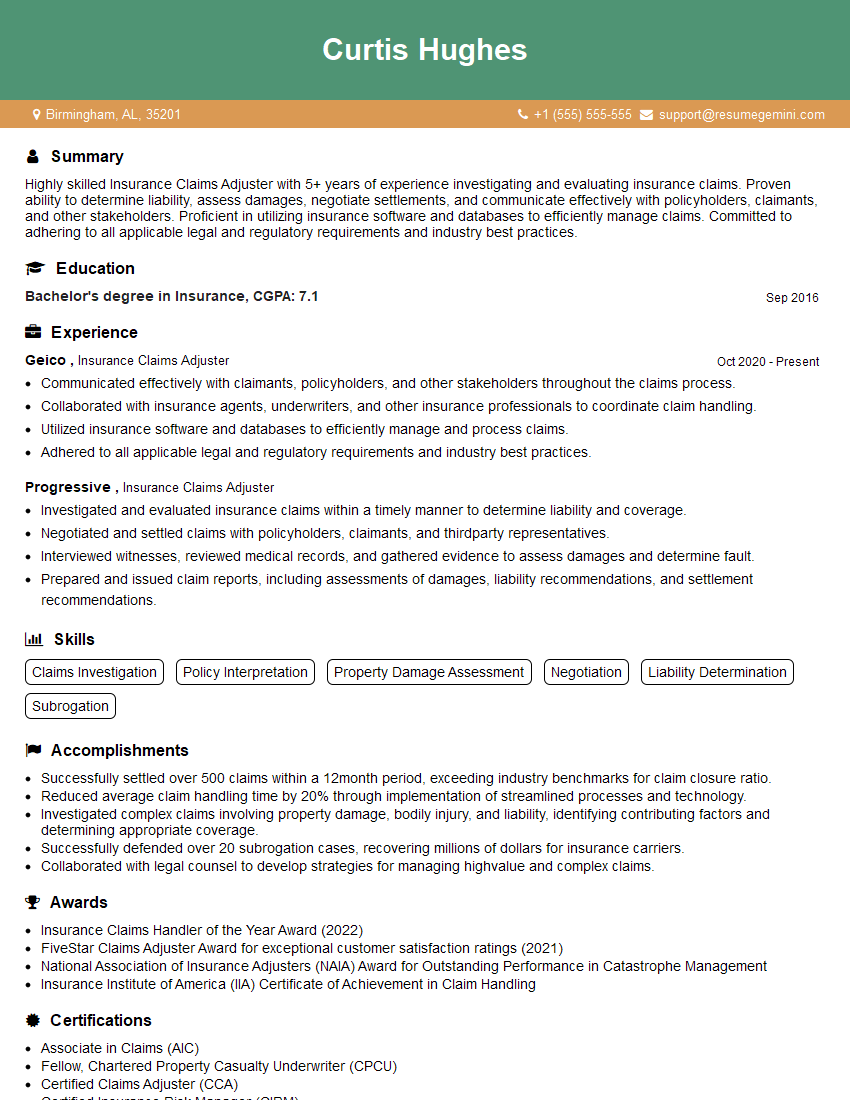
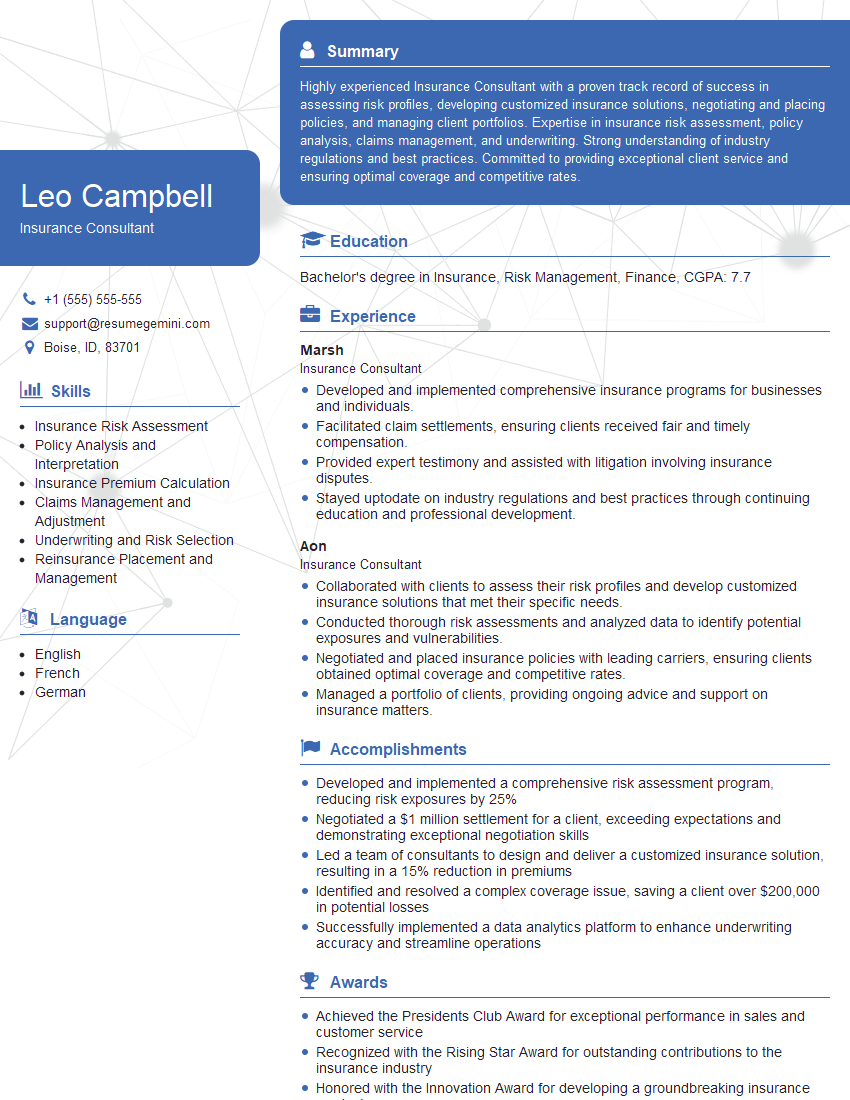
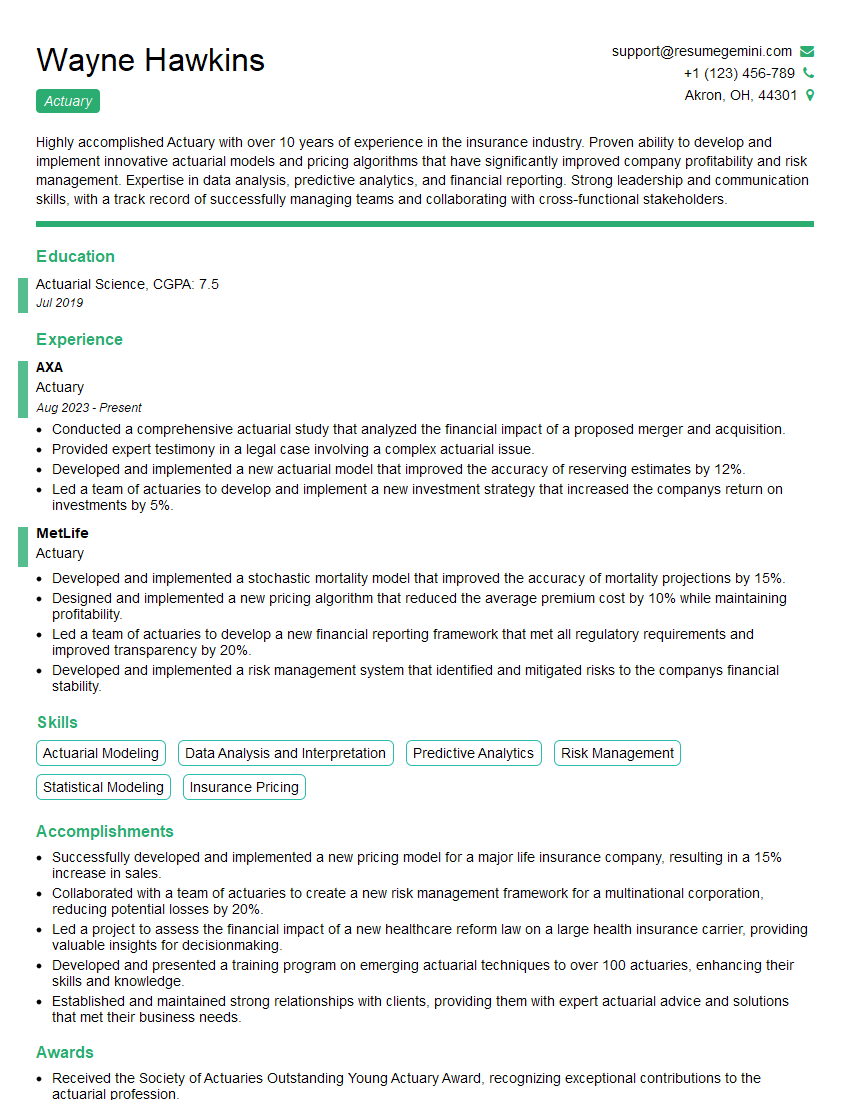
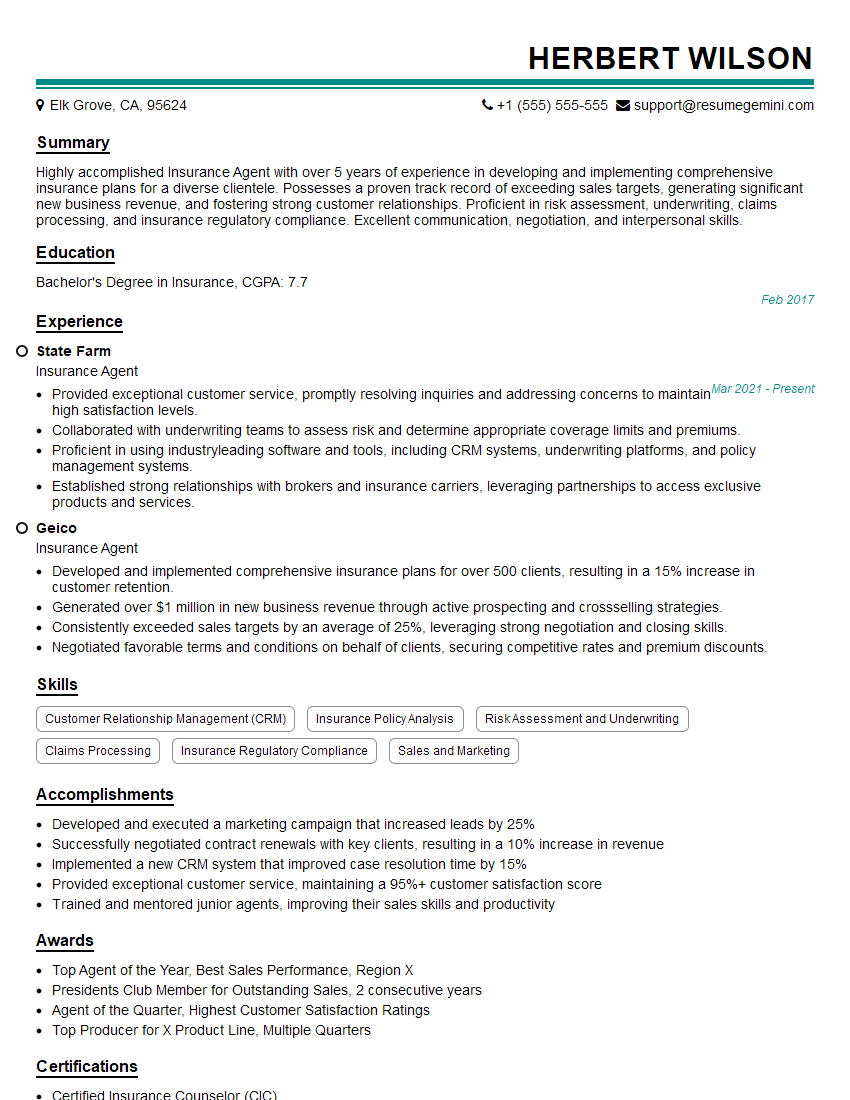
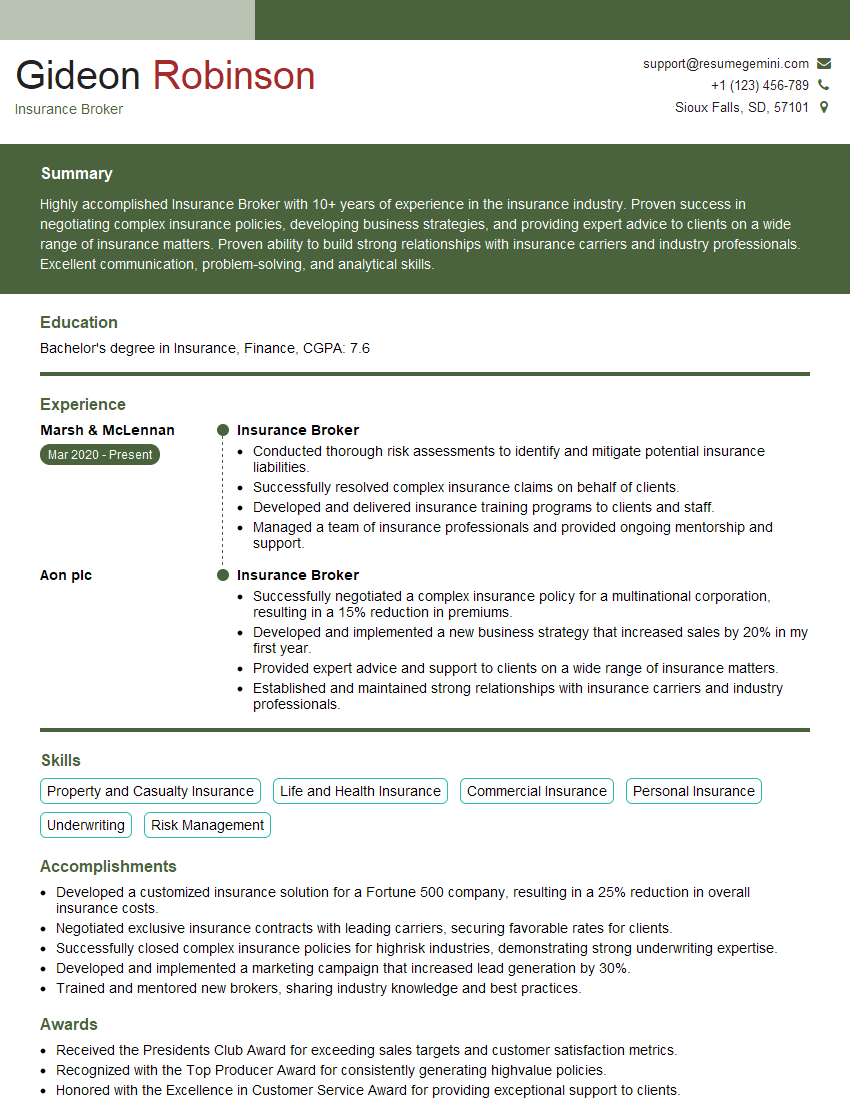
Mastering the intricacies of Insurance and Recovery opens doors to a rewarding and impactful career, offering excellent growth potential within a dynamic industry. To maximize your job prospects, creating a strong, ATS-friendly resume is crucial. ResumeGemini is a trusted resource to help you build a professional and impactful resume that highlights your skills and experience effectively. We provide examples of resumes tailored to the Insurance and Recovery sector to give you a head start. Invest time in crafting a compelling resume – it’s your first impression and sets the stage for interview success.
Explore more articles
Users Rating of Our Blogs
Share Your Experience
We value your feedback! Please rate our content and share your thoughts (optional).
What Readers Say About Our Blog
Very informative content, great job.
good