The right preparation can turn an interview into an opportunity to showcase your expertise. This guide to Intelligence Exploitation interview questions is your ultimate resource, providing key insights and tips to help you ace your responses and stand out as a top candidate.
Questions Asked in Intelligence Exploitation Interview
Q 1. Explain the difference between strategic and tactical intelligence.
Strategic intelligence focuses on long-term, high-level issues and informs policy decisions. Think of it as the big picture. It addresses broad challenges and opportunities, anticipating future threats and shaping national strategies. For example, analyzing the long-term economic and political stability of a region to guide foreign policy decisions is a strategic intelligence task. Tactical intelligence, on the other hand, is short-term and operationally focused. It supports immediate actions and decisions in the field. This is the ‘here and now’ intelligence. An example would be providing real-time information about enemy troop movements to inform a military operation.
The key difference lies in their scope and timeframe. Strategic intelligence is about understanding the bigger picture and making long-term plans, while tactical intelligence is about immediate actions and decision-making on the ground.
Q 2. Describe your experience with the intelligence cycle.
My experience with the intelligence cycle is extensive, encompassing all phases from planning and direction to dissemination and feedback. I’ve worked on numerous projects requiring rigorous adherence to the cycle’s stages. In one particular project focusing on transnational organized crime, we began with planning and direction, identifying specific intelligence requirements based on high-level strategic goals. This led to the collection phase, where we leveraged a multi-source approach including HUMINT (Human Intelligence), OSINT (Open Source Intelligence), and SIGINT (Signals Intelligence). Data from various sources was then carefully processed and exploited, employing advanced analytic techniques to identify patterns and connections. The analysis and production phase involved rigorous verification and validation to ensure accuracy and reliability, culminating in a comprehensive intelligence report. Finally, the dissemination and feedback stages allowed for the sharing of our findings with relevant stakeholders, ensuring timely action and iterative improvement of our intelligence gathering methods based on operational feedback.
Q 3. How do you prioritize intelligence requirements?
Prioritizing intelligence requirements involves a structured approach that considers several critical factors. I typically employ a matrix prioritizing based on time sensitivity, impact, and feasibility. Time sensitivity considers how urgently the information is needed. Impact assesses the potential consequences of not having the information, and feasibility analyzes the resources and effort required to obtain it. For instance, information concerning an imminent terrorist attack would naturally rank higher than information on long-term economic trends, even if both are highly impactful. A clear understanding of the decision-makers’ needs is paramount. This is often done through formal requests or informal discussions to ensure alignment between intelligence collection and strategic objectives.
Q 4. What methods do you use for open-source intelligence (OSINT) gathering?
My OSINT gathering methods are diverse and leverage various tools and techniques. I regularly use search engines like Google, specialized search engines such as Shodan (for identifying internet-connected devices), and social media platforms like Twitter and Facebook for information gathering. News aggregators, government websites, academic databases, and even forums and blogs are crucial sources. I am proficient in using Boolean search operators to refine searches and identify relevant information efficiently. For example, using the Boolean operator “AND” allows for precise searches like "target company" AND "financial reports". This allows me to find specific information within the vast ocean of data available online.
Q 5. Explain your experience with geospatial intelligence (GEOINT) analysis.
My GEOINT analysis experience includes extensive work with satellite imagery, aerial photography, and maps. I’m proficient in using GIS software like ArcGIS to analyze spatial data, identify patterns, and create visualizations. For example, in one project involving a conflict zone, I used satellite imagery to track troop movements, identify infrastructure damage, and assess the overall impact of the conflict. My skills also include utilizing different types of imagery, including multispectral and hyperspectral imagery, to identify different materials and features. By overlaying multiple layers of data like terrain maps, demographic data, and conflict events, we’re able to build a comprehensive picture of the situation on the ground, supporting decision-making and providing valuable insights.
Q 6. Describe your experience with signals intelligence (SIGINT) analysis.
My experience with SIGINT analysis involves the interpretation and analysis of communications data, such as intercepted phone calls, emails, and radio transmissions. I am experienced in using specialized software tools to process and analyze raw SIGINT data, identifying patterns, and extracting meaningful intelligence. For example, identifying communication patterns between suspected members of a criminal organization was crucial in disrupting their operation. This included analyzing frequency hopping, encryption techniques, and metadata to reconstruct communications, revealing key information about their plans and activities. Protecting source integrity and maintaining operational security are paramount, hence strict protocols are adhered to throughout the process.
Q 7. How do you assess the credibility of intelligence sources?
Assessing the credibility of intelligence sources is a critical aspect of my work. I use a multi-faceted approach, considering the source’s track record, motivation, and corroboration with other sources. For instance, an intelligence report from a known reliable source will generally be given more weight than one from an unverified source. I also look for potential biases or agendas that might influence the information provided. Triangulation of information from multiple independent sources is vital for validating information. Finally, analyzing the methods used to collect the information helps determine its reliability. For example, if a source’s information is consistently corroborated by multiple independent sources and methods, that drastically increases the credibility rating.
Q 8. How do you handle conflicting intelligence reports?
Conflicting intelligence reports are a common challenge. Handling them effectively involves a systematic approach that prioritizes verification and triangulation. It’s not about simply picking one report over another, but rather understanding the discrepancies and integrating the information to develop a more complete picture.
My approach begins with source evaluation. I critically assess the reliability and credibility of each source, considering its track record, methodology, and potential biases. I examine the reporting methods, looking for evidence of manipulation or misinterpretation. For example, a report from an open source like a news article carries different weight than one from a trusted human intelligence source.
Next, I employ triangulation. This means comparing the information from multiple sources to find commonalities and inconsistencies. If several independent sources corroborate a piece of information, it strengthens its credibility. Conversely, conflicting information necessitates further investigation to understand the underlying reasons for the discrepancy. This might involve revisiting original sources, conducting additional research, or even deploying additional collection assets to gather more information.
Finally, I construct an integrated assessment, summarizing the findings and highlighting areas of uncertainty. This often involves incorporating probabilistic reasoning and acknowledging areas of ambiguity. The result is not always a definitive answer, but rather a nuanced understanding of the situation, acknowledging the limitations and uncertainties inherent in intelligence work. This balanced approach prioritizes transparency and allows for adaptability as new intelligence becomes available.
Q 9. What techniques do you use to identify biases in intelligence data?
Identifying biases in intelligence data is crucial for producing objective analysis. Biases can stem from various sources – the source itself, the collection method, the analyst’s own perspectives, or even cultural factors. My approach involves a multifaceted strategy.
- Source Bias Identification: I carefully assess the source’s motivation, potential agenda, and inherent limitations. For example, a report from a government agency might reflect national interests, while information from a corporate entity might be influenced by profit motives.
- Cognitive Biases Recognition: I actively look for signs of confirmation bias (favoring information confirming pre-existing beliefs) and anchoring bias (over-reliance on initial information). Techniques like structured analytic techniques, which promote systematic thinking and challenge assumptions, can help mitigate these.
- Data Verification and Triangulation: Comparing information from multiple diverse sources helps identify biases. Discrepancies often point to potential biases in one or more sources.
- Contextual Understanding: Deeply understanding the social, political, and cultural context is vital. A statement might be perfectly factual but interpreted differently based on cultural norms or political climate.
By systematically considering these factors, I strive to identify and account for biases, leading to more accurate and reliable intelligence assessments. The goal isn’t to eliminate bias entirely – that’s practically impossible – but to understand and mitigate its influence on the analysis.
Q 10. Explain your experience with intelligence fusion and analysis.
Intelligence fusion and analysis are at the heart of my work. It involves integrating information from diverse sources – HUMINT (human intelligence), SIGINT (signals intelligence), IMINT (imagery intelligence), OSINT (open-source intelligence), and others – to create a comprehensive understanding of a situation or target. My experience focuses on developing a coherent narrative from seemingly disparate data points.
I have extensive experience using various analytical frameworks, including the DIAMOND model (which maps out the relationship between actors, capabilities, infrastructure, motivations, and objectives) and other structured analytic techniques. These frameworks help organize and analyze complex data sets, ensuring thorough coverage and minimizing analytical bias.
For example, in one project, I fused HUMINT reports on the activities of a suspected terrorist group with SIGINT intercepts of their communications and IMINT imagery of their training camps. By correlating this information, I was able to produce a detailed assessment of the group’s structure, capabilities, and intentions, enabling effective counter-terrorism measures. This involved using specialized software tools to analyze large datasets and visualize relationships between data points.
A key skill in intelligence fusion is recognizing patterns and connections that might not be immediately apparent. It’s about being a skilled storyteller, weaving together various threads of information to build a compelling and insightful assessment.
Q 11. How do you ensure the accuracy and timeliness of intelligence reporting?
Ensuring the accuracy and timeliness of intelligence reporting is paramount. This involves a multi-step process that begins with rigorous source validation and continues throughout the entire analytical process.
- Source Validation: This is the cornerstone of accuracy. I meticulously evaluate the reliability, credibility, and potential biases of each source, using established criteria and historical performance data. This helps prevent the spread of misinformation or disinformation.
- Data Verification and Triangulation: Comparing information from multiple independent sources helps validate findings and identify potential errors or inconsistencies.
- Quality Control Measures: The intelligence report undergoes a rigorous review process involving multiple analysts to ensure accuracy and consistency. Peer review and editorial checks help identify potential errors and biases before dissemination.
- Timely Dissemination: Timeliness is critical in many situations. Prioritizing speed, without compromising accuracy, requires efficient workflow processes, leveraging technology to automate data processing, and maintaining clear communication channels. This might include using automated alerts or implementing streamlined reporting systems.
Furthermore, acknowledging the inherent limitations and uncertainties of intelligence is crucial. Reports should clearly state the basis for the assessment and areas of uncertainty, fostering trust and promoting transparency with consumers.
Q 12. Describe your experience with intelligence data visualization and presentation.
Effective data visualization and presentation are essential for communicating complex intelligence findings in a clear and concise manner. My experience includes using a range of tools and techniques to present intelligence in easily understandable formats.
I’m proficient in using various software packages to create maps, charts, graphs, and other visualizations that effectively illustrate key findings. For instance, I use geographic information systems (GIS) to visualize the spatial distribution of events or actors. Network diagrams are effective for showing relationships between individuals or organizations. Data dashboards allow for the dynamic monitoring and tracking of key indicators.
Beyond technical skills, I emphasize the importance of tailoring the presentation to the audience. A technical briefing for senior decision-makers will differ considerably from a report for field operatives. Clear, concise language and an appropriate level of detail are crucial. I often use storytelling techniques to convey complex information effectively, making the data relatable and memorable.
Ultimately, the goal is to communicate insights clearly and persuasively, enabling effective decision-making based on sound intelligence.
Q 13. How do you protect sensitive intelligence information?
Protecting sensitive intelligence information is critical and demands a multi-layered approach incorporating technical, procedural, and personnel security measures.
- Classification and Handling Procedures: Strict adherence to established classification guidelines is paramount. This includes proper handling, storage, and transmission of classified information, following all security protocols and procedures.
- Technical Safeguards: Utilizing secure communication systems, encryption technologies, and access control mechanisms is crucial. This could involve the use of secure networks, data encryption, and multi-factor authentication.
- Personnel Security: Thorough background checks, security clearances, and ongoing training are essential to ensure personnel are trustworthy and competent in handling sensitive information. This also includes implementing robust procedures to detect and mitigate insider threats.
- Data Loss Prevention (DLP) measures: Using tools and procedures to identify and prevent sensitive data from leaving the controlled environment is crucial. This includes both physical and electronic security measures.
Regular security assessments and audits are also crucial to identify and address potential vulnerabilities. This ongoing process of vigilance and adaptation is essential in maintaining the confidentiality, integrity, and availability of sensitive intelligence information.
Q 14. What are the ethical considerations in intelligence exploitation?
Ethical considerations are paramount in intelligence exploitation. The power of intelligence gathering and analysis necessitates a strong ethical framework to guide actions and decision-making. Key considerations include:
- Respect for Privacy: Intelligence gathering should respect the privacy rights of individuals, collecting information only when necessary, justified, and proportionate to the legitimate aim. This requires careful consideration of the potential impact on individuals’ lives and adherence to legal frameworks.
- Minimizing Harm: Intelligence activities should strive to minimize potential harm to individuals or groups, avoiding actions that could lead to unintended consequences, such as unlawful detention or physical harm.
- Accuracy and Objectivity: Intelligence assessments must strive for accuracy and objectivity, avoiding manipulation or bias. This involves rigorous source evaluation, transparency in methodology, and a commitment to truth.
- Accountability and Transparency: Intelligence agencies should be accountable for their actions, adhering to established legal and ethical guidelines. Transparency, where possible, fosters trust and accountability.
- Proportionality: The means employed in intelligence gathering and exploitation must be proportionate to the threat or objective. Overly invasive or intrusive methods are unacceptable unless strictly justified and authorized.
The ethical considerations in intelligence work are complex and often require difficult judgments. A strong ethical compass, guided by a commitment to legal compliance and the protection of fundamental human rights, is crucial for responsible intelligence practice.
Q 15. Explain your experience with intelligence database management.
My experience with intelligence database management spans over ten years, encompassing both the design and implementation of databases as well as the extraction and analysis of information within them. I’ve worked with relational databases like Oracle and PostgreSQL, as well as NoSQL databases like MongoDB, choosing the most appropriate technology based on the specific needs of the intelligence project. For example, in one project involving the tracking of transnational criminal organizations, we utilized a graph database to map complex relationships between individuals and entities. This allowed us to visualize connections and identify key players far more effectively than a traditional relational database could.
Beyond the technical aspects, I’m adept at developing data governance policies and procedures to ensure data quality, security, and integrity. This involves designing processes for data cleansing, validation, and the implementation of robust access control mechanisms to protect sensitive information. We implemented a rigorous metadata management system to ensure that all information was accurately tagged and easily searchable, significantly improving retrieval times and enabling more efficient analysis.
Career Expert Tips:
- Ace those interviews! Prepare effectively by reviewing the Top 50 Most Common Interview Questions on ResumeGemini.
- Navigate your job search with confidence! Explore a wide range of Career Tips on ResumeGemini. Learn about common challenges and recommendations to overcome them.
- Craft the perfect resume! Master the Art of Resume Writing with ResumeGemini’s guide. Showcase your unique qualifications and achievements effectively.
- Don’t miss out on holiday savings! Build your dream resume with ResumeGemini’s ATS optimized templates.
Q 16. How do you use technology to enhance intelligence analysis?
Technology is absolutely fundamental to modern intelligence analysis. I leverage a range of tools to enhance the process, from sophisticated data mining and visualization software to natural language processing (NLP) and machine learning (ML) algorithms. For example, using NLP, we can process vast quantities of unstructured text data – such as social media posts, news articles, and intercepted communications – to identify key themes, sentiments, and entities relevant to our investigations. This allows analysts to quickly pinpoint crucial information that might otherwise be missed in a manual review.
Machine learning algorithms can also identify patterns and anomalies in large datasets that might escape human detection. For instance, ML can be used to predict future events based on historical trends, identify potential threats, or detect deception in communications. In essence, technology dramatically improves the speed, accuracy, and efficiency of intelligence analysis, allowing us to analyze more data and derive more meaningful insights than ever before.
Q 17. Describe your experience with specific intelligence analysis software or tools.
I have extensive experience with several intelligence analysis software and tools, including Palantir Gotham, Analyst’s Notebook, and open-source tools like Maltego. Palantir Gotham, for example, excels at visualizing complex relationships within large datasets, enabling analysts to quickly understand the connections between individuals, organizations, and events. Analyst’s Notebook is invaluable for creating link charts and timelines, offering a powerful way to visualize the progression of events and identify critical turning points. Maltego’s open-source nature allows for customization and integration with other tools, providing a highly flexible platform for specific intelligence needs.
Beyond these, I’m proficient with various geospatial intelligence (GEOINT) tools that allow for the analysis of satellite imagery, geographic information systems (GIS) data, and other location-based information. These are crucial for understanding the context of events and movements of key actors. My experience also includes using data visualization tools such as Tableau and Power BI to create compelling reports and presentations to communicate findings effectively to stakeholders.
Q 18. How do you adapt your analysis techniques to different types of intelligence?
Adapting analysis techniques to different types of intelligence is crucial for effective intelligence exploitation. The approach to analyzing human intelligence (HUMINT), signals intelligence (SIGINT), or open-source intelligence (OSINT) varies significantly. For example, analyzing HUMINT often involves corroborating information from multiple sources, assessing the credibility of informants, and understanding the context in which information was gathered. This may involve applying psychological profiling techniques or using deception detection methodologies.
SIGINT, on the other hand, may involve the technical analysis of intercepted communications, requiring expertise in cryptography, signal processing, and network analysis. Analyzing OSINT, meanwhile, often involves identifying credible sources, verifying information, and understanding the potential biases inherent in publicly available data. In each case, rigorous validation and contextualization are paramount. I utilize a structured analytical approach, such as the Analysis of Competing Hypotheses (ACH) method, to ensure objectivity and avoid biases, regardless of the intelligence type.
Q 19. What are some common challenges in intelligence exploitation?
Several challenges frequently arise in intelligence exploitation. One major challenge is the sheer volume and velocity of data. Processing and analyzing the massive amount of information generated daily requires sophisticated tools and techniques. Another significant challenge is the often fragmented and incomplete nature of intelligence. Information may be contradictory, incomplete, or unreliable, demanding careful analysis and corroboration from multiple sources. This often requires creative problem-solving and the ability to work with ambiguity.
Additionally, the challenge of protecting sensitive information and ensuring the security of intelligence databases is paramount. Robust security protocols and access control mechanisms are essential to prevent unauthorized access and data breaches. Finally, effectively communicating complex findings to non-technical audiences – policymakers and decision-makers – requires excellent communication and presentation skills to ensure actionable intelligence is correctly understood and utilized.
Q 20. How do you measure the effectiveness of your intelligence analysis?
Measuring the effectiveness of intelligence analysis is crucial and often challenging. One key metric is the accuracy of predictions or assessments. This involves tracking the accuracy of forecasts made based on the analysis and comparing them to actual events. Another important metric is the timeliness of the analysis. Providing intelligence that is relevant and timely to decision-makers is paramount. The impact of the analysis on decision-making is another crucial measure – did the intelligence lead to informed decisions and positive outcomes?
We also assess the utility of the intelligence by evaluating whether it influenced policy changes, operational decisions, or prevented negative events. Finally, continuous feedback loops from stakeholders are essential for evaluating the usefulness and effectiveness of the analysis process, guiding improvements and ensuring alignment with decision-making needs. Regular reviews of our methods and results help us refine our approach and ensure its continued effectiveness.
Q 21. Describe a time you had to make a critical decision based on incomplete intelligence.
During a counter-terrorism operation, we faced a situation where we had incomplete intelligence on a potential imminent attack. We had intercepted fragmented communications and gathered some HUMINT suggesting a possible attack, but the details were scarce, leaving crucial information gaps, such as the exact time and location. We had to make a critical decision whether to launch a preemptive operation based on this incomplete intelligence, weighing the risks of acting on incomplete information against the potential consequences of inaction.
Using a structured analytical approach, we systematically evaluated the available information, identified potential biases, and developed a range of competing hypotheses about the threat. We employed a probabilistic approach, assigning likelihoods to each hypothesis based on the available evidence. This allowed us to manage uncertainty and understand the potential consequences of different courses of action. Ultimately, we decided to proceed with a preemptive operation based on our analysis and assessment of risk, resulting in the prevention of what was believed to be a catastrophic terrorist event. While the intelligence was incomplete, the use of a systematic, rigorous approach allowed us to make an informed decision under pressure.
Q 22. How do you collaborate effectively with other intelligence analysts?
Effective collaboration among intelligence analysts is crucial for producing accurate and timely intelligence. It hinges on clear communication, shared understanding of goals, and mutual respect for diverse perspectives. I approach collaboration through a structured process. First, I ensure that all team members have a clear understanding of the intelligence requirements and the overall analytical goals. Then, I facilitate open and honest communication through regular meetings, utilizing collaborative platforms to share data and analytical products. I actively listen to others’ viewpoints, even if they differ from my own, valuing diverse perspectives which often lead to more comprehensive analysis. I also utilize a variety of communication methods to accommodate individual preferences and maintain transparency.
For example, during an analysis of a transnational criminal organization, I actively sought input from colleagues specializing in financial analysis, human intelligence, and open-source intelligence. By combining our expertise and perspectives, we produced a far more complete picture of the organization’s structure, finances, and modus operandi than any of us could have achieved independently.
Q 23. Explain your understanding of different intelligence collection methods.
Intelligence collection methods are diverse and can be broadly categorized into several types: Human Intelligence (HUMINT), Signals Intelligence (SIGINT), Open Source Intelligence (OSINT), Measurement and Signature Intelligence (MASINT), and Geospatial Intelligence (GEOINT). HUMINT relies on human sources to gather information, such as through informants or undercover operatives. SIGINT intercepts and analyzes electronic signals, including communications and radar emissions. OSINT uses publicly available information from sources like newspapers, social media, and academic publications. MASINT analyzes non-geospatial data to reveal patterns and insights, often through technical means. GEOINT utilizes imagery and geospatial data, often from satellites, to understand geographical contexts and activities.
Each method has its strengths and weaknesses. For example, HUMINT offers unique insights but can be slow, expensive, and risky. SIGINT can provide real-time information but may be difficult to interpret accurately without contextual information. OSINT is readily accessible but can be unreliable, requiring critical evaluation. Successful intelligence gathering often involves integrating several methods. In a past investigation, we combined HUMINT gathered from a confidential source with SIGINT data on communications to corroborate information and paint a more complete picture of a target’s activities.
Q 24. Describe your experience working under pressure and meeting tight deadlines.
Working under pressure and meeting tight deadlines is inherent in intelligence work. I thrive in such environments because I am highly organized and possess strong time management skills. I prioritize tasks effectively, using project management techniques such as breaking down large tasks into smaller, manageable steps. I also actively seek to clarify expectations, identify potential bottlenecks, and adjust my approach as needed. I’m adept at working efficiently under duress, always maintaining accuracy and attention to detail even when faced with limited time.
In one instance, we were tasked with analyzing a developing crisis situation requiring a comprehensive report within 24 hours. By effectively delegating tasks among the team, prioritizing critical data, and utilizing efficient analytical tools, we successfully met the deadline without compromising the quality of our analysis.
Q 25. How do you stay up-to-date on current events and intelligence trends?
Staying current on events and intelligence trends is paramount. I employ a multi-faceted approach to stay informed. This includes subscribing to reputable news sources (both domestic and international), reading analytical reports from respected think tanks and government agencies, and following key influencers and experts on social media (always critically evaluating information). Attending conferences and workshops related to intelligence and international affairs expands my network and helps me stay current with new approaches and technologies. Furthermore, I actively engage with professional communities by participating in discussion forums and subscribing to relevant journals.
I routinely monitor key geopolitical events, economic indicators, and technological advancements that could impact the intelligence landscape. This continuous learning ensures my analysis remains relevant and informed by the latest developments.
Q 26. What are your strengths and weaknesses as an intelligence analyst?
My strengths as an intelligence analyst include strong analytical skills, a meticulous attention to detail, and a capacity for critical thinking. I am proficient in data analysis, possess excellent research skills, and have a proven ability to synthesize complex information from diverse sources. Furthermore, I am an effective communicator, capable of clearly articulating complex analyses to both technical and non-technical audiences. I’m also a team player.
One area I am continually working on is improving my speed in processing large volumes of data. While I am thorough and accurate, I am committed to optimizing my efficiency to meet even the most demanding deadlines. I achieve this by regularly experimenting with new analytical tools and methodologies and seeking feedback from colleagues to refine my techniques.
Q 27. Describe your experience with risk assessment and mitigation in intelligence operations.
Risk assessment and mitigation are fundamental aspects of intelligence operations. I approach this systematically by identifying potential threats, vulnerabilities, and impacts associated with any intelligence activity. I use a framework that considers various factors including the sensitivity of the information being collected or processed, the potential consequences of exposure, and the operational environment. This includes legal and ethical considerations, as well as security risks such as cyber threats and physical risks to personnel.
For example, in planning a HUMINT operation, we would carefully assess the risks to the human source, such as potential exposure, arrest, or harm. This assessment would inform the development of mitigation strategies, such as using secure communication methods, establishing reliable escape routes, and providing appropriate security training to the source. Following successful execution, a post-operational debriefing is also undertaken to identify lessons learned and further enhance future mitigation strategies.
Q 28. Explain your understanding of the legal and regulatory frameworks governing intelligence activities.
A deep understanding of the legal and regulatory frameworks governing intelligence activities is essential. This includes being intimately familiar with laws such as the Foreign Intelligence Surveillance Act (FISA) in the US context (or equivalent legislation in other jurisdictions), which dictate the parameters for electronic surveillance and the collection of foreign intelligence. I am also versed in the principles of privacy protection, human rights, and due process and understand the importance of complying with all relevant ethical guidelines and legal restrictions.
My experience includes working within strict protocols and regulatory compliance while conducting analysis and reporting. This necessitates a robust understanding of how these frameworks shape the conduct of intelligence operations and ensuring that all activities are lawful and ethical.
Key Topics to Learn for Intelligence Exploitation Interview
- Data Collection & Analysis: Understanding various intelligence gathering methods (OSINT, HUMINT, SIGINT, etc.), data validation techniques, and the importance of source credibility.
- All-Source Intelligence Fusion: Practical application of combining information from disparate sources to create a cohesive and actionable intelligence picture. This includes understanding biases, inconsistencies, and the limitations of individual data points.
- Intelligence Reporting & Dissemination: Mastering the art of concise, clear, and impactful reporting, tailored to the specific audience and their needs. This includes understanding different classification levels and security protocols.
- Geospatial Intelligence (GEOINT): Utilizing imagery, maps, and geospatial data to analyze situations, identify patterns, and support decision-making. Practical application might involve interpreting satellite imagery or using GIS software.
- Open Source Intelligence (OSINT): Techniques for gathering and analyzing publicly available information from the internet and other sources. Understanding the ethical considerations and limitations of OSINT is crucial.
- Threat Assessment & Risk Management: Applying intelligence analysis to identify potential threats, assess their likelihood and impact, and develop strategies for mitigation. This often involves scenario planning and predictive analysis.
- Technical Skills (for technical roles): Proficiency in data analysis tools, programming languages (Python, R), database management, and data visualization techniques. Explore specific technologies relevant to the job description.
Next Steps
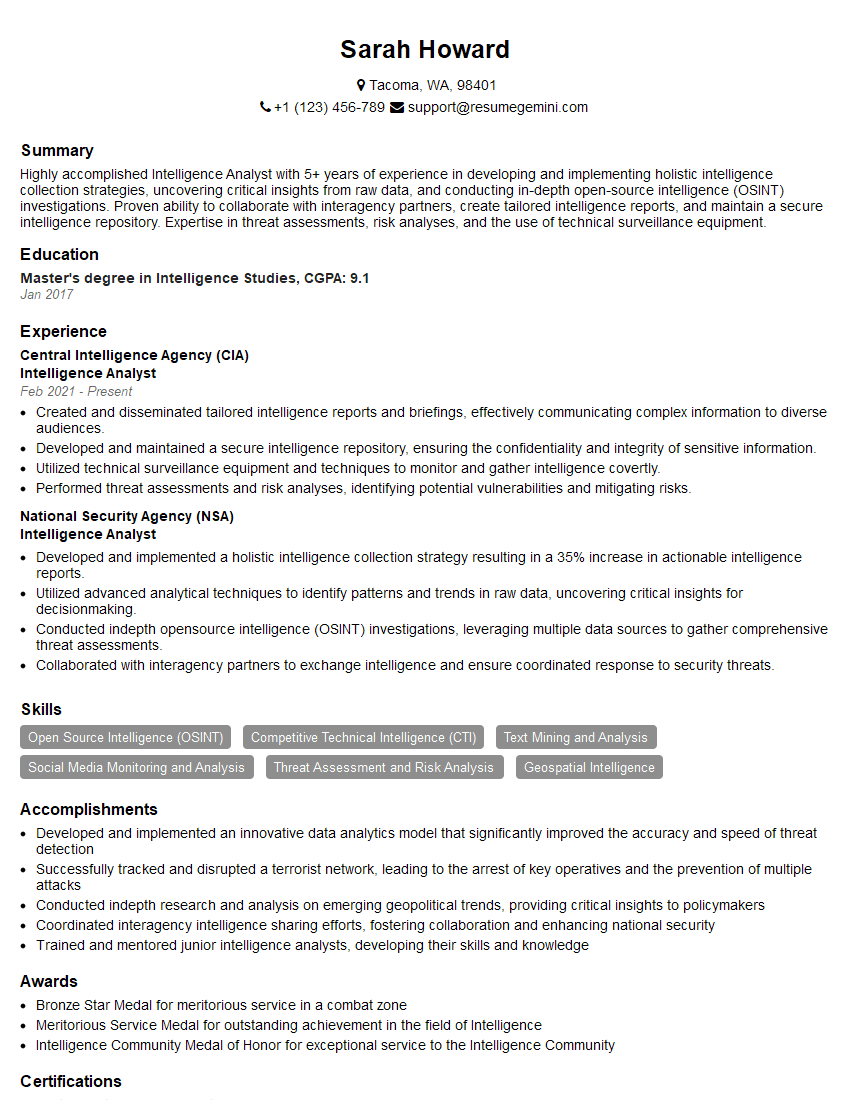
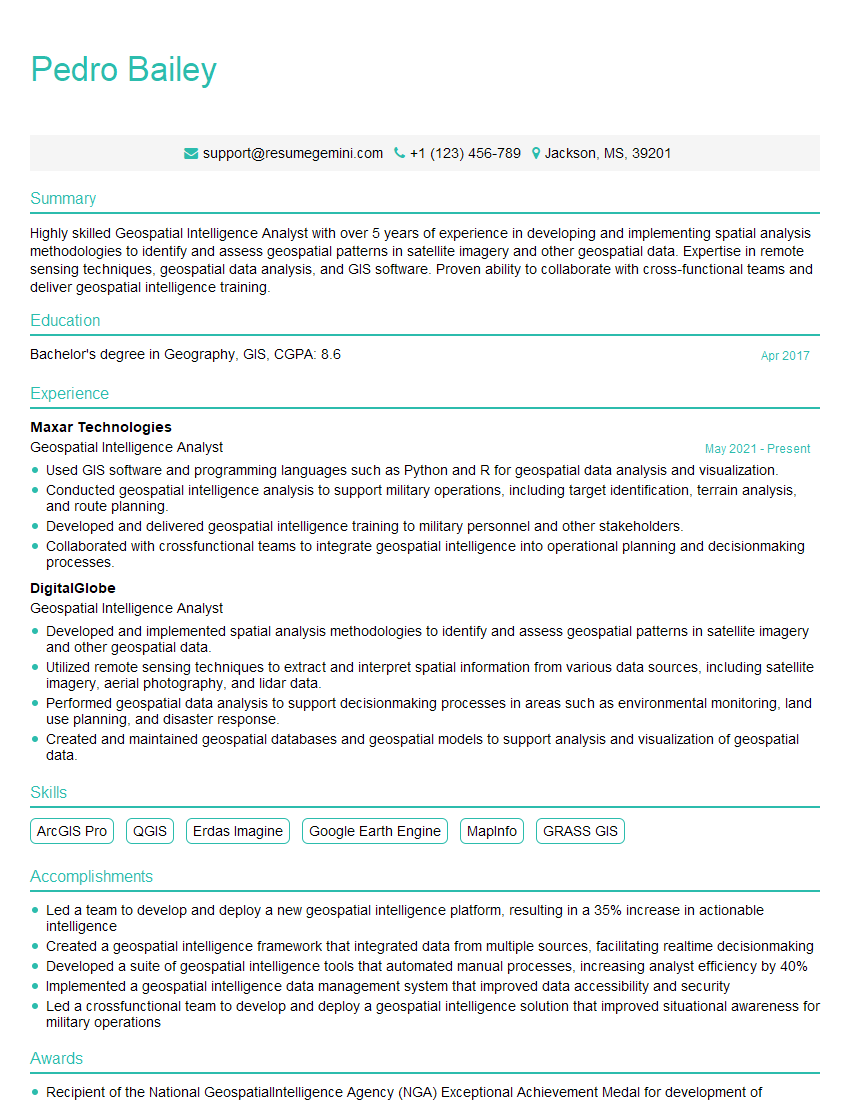
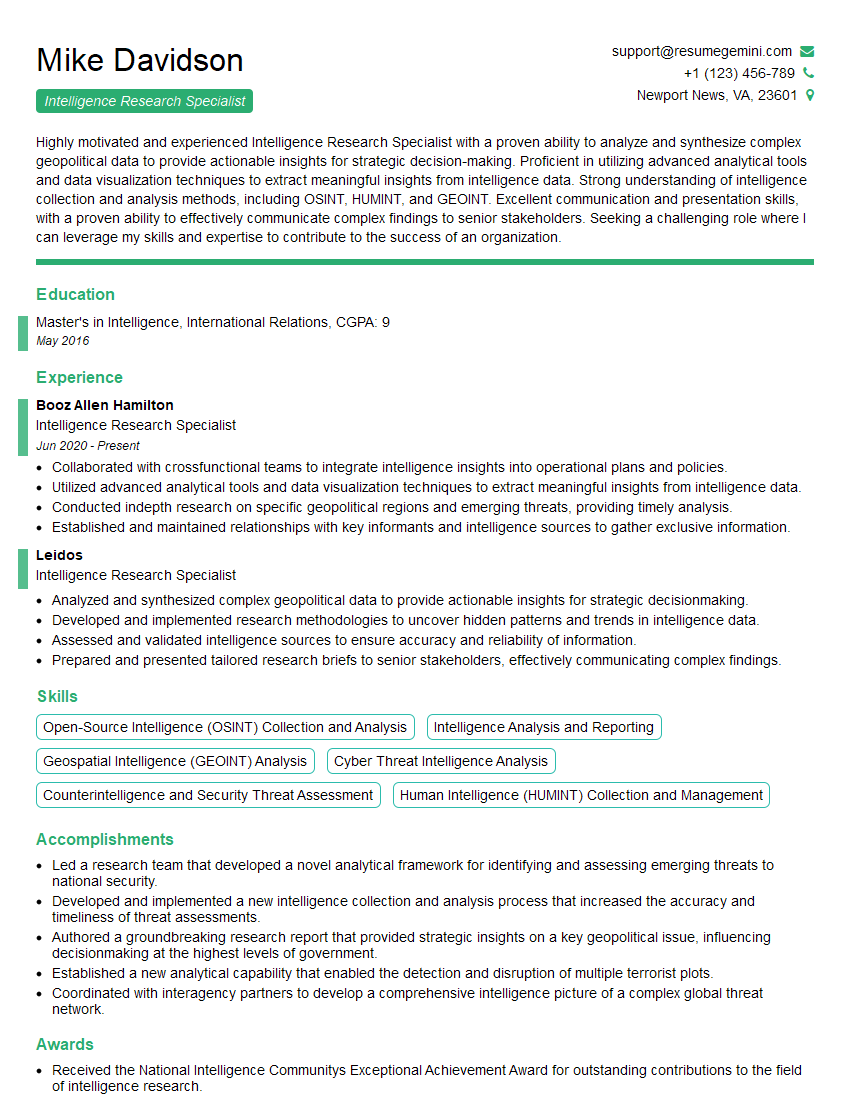
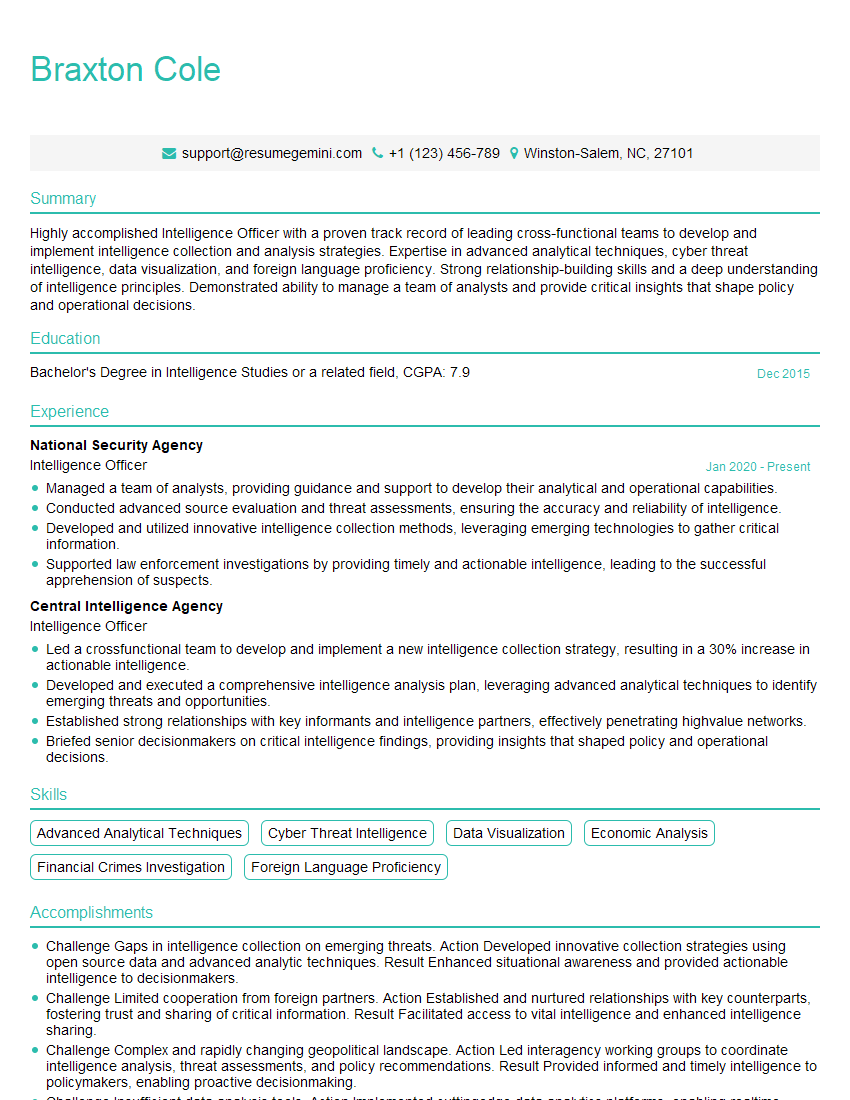
Mastering Intelligence Exploitation opens doors to exciting and impactful careers, offering opportunities for continuous learning and professional growth within the intelligence community and beyond. To maximize your job prospects, creating a strong, ATS-friendly resume is vital. This ensures your application gets noticed by recruiters and hiring managers. We highly recommend using ResumeGemini to build a professional and effective resume tailored to the specific demands of Intelligence Exploitation roles. Examples of resumes tailored to this field are available to help guide you.
Explore more articles
Users Rating of Our Blogs
Share Your Experience
We value your feedback! Please rate our content and share your thoughts (optional).
What Readers Say About Our Blog
Attention music lovers!
Wow, All the best Sax Summer music !!!
Spotify: https://open.spotify.com/artist/6ShcdIT7rPVVaFEpgZQbUk
Apple Music: https://music.apple.com/fr/artist/jimmy-sax-black/1530501936
YouTube: https://music.youtube.com/browse/VLOLAK5uy_noClmC7abM6YpZsnySxRqt3LoalPf88No
Other Platforms and Free Downloads : https://fanlink.tv/jimmysaxblack
on google : https://www.google.com/search?q=22+AND+22+AND+22
on ChatGPT : https://chat.openai.com?q=who20jlJimmy20Black20Sax20Producer
Get back into the groove with Jimmy sax Black
Best regards,
Jimmy sax Black
www.jimmysaxblack.com
Hi I am a troller at The aquatic interview center and I suddenly went so fast in Roblox and it was gone when I reset.
Hi,
Business owners spend hours every week worrying about their website—or avoiding it because it feels overwhelming.
We’d like to take that off your plate:
$69/month. Everything handled.
Our team will:
Design a custom website—or completely overhaul your current one
Take care of hosting as an option
Handle edits and improvements—up to 60 minutes of work included every month
No setup fees, no annual commitments. Just a site that makes a strong first impression.
Find out if it’s right for you:
https://websolutionsgenius.com/awardwinningwebsites
Hello,
we currently offer a complimentary backlink and URL indexing test for search engine optimization professionals.
You can get complimentary indexing credits to test how link discovery works in practice.
No credit card is required and there is no recurring fee.
You can find details here:
https://wikipedia-backlinks.com/indexing/
Regards
NICE RESPONSE TO Q & A
hi
The aim of this message is regarding an unclaimed deposit of a deceased nationale that bears the same name as you. You are not relate to him as there are millions of people answering the names across around the world. But i will use my position to influence the release of the deposit to you for our mutual benefit.
Respond for full details and how to claim the deposit. This is 100% risk free. Send hello to my email id: lukachachibaialuka@gmail.com
Luka Chachibaialuka
Hey interviewgemini.com, just wanted to follow up on my last email.
We just launched Call the Monster, an parenting app that lets you summon friendly ‘monsters’ kids actually listen to.
We’re also running a giveaway for everyone who downloads the app. Since it’s brand new, there aren’t many users yet, which means you’ve got a much better chance of winning some great prizes.
You can check it out here: https://bit.ly/callamonsterapp
Or follow us on Instagram: https://www.instagram.com/callamonsterapp
Thanks,
Ryan
CEO – Call the Monster App
Hey interviewgemini.com, I saw your website and love your approach.
I just want this to look like spam email, but want to share something important to you. We just launched Call the Monster, a parenting app that lets you summon friendly ‘monsters’ kids actually listen to.
Parents are loving it for calming chaos before bedtime. Thought you might want to try it: https://bit.ly/callamonsterapp or just follow our fun monster lore on Instagram: https://www.instagram.com/callamonsterapp
Thanks,
Ryan
CEO – Call A Monster APP
To the interviewgemini.com Owner.
Dear interviewgemini.com Webmaster!
Hi interviewgemini.com Webmaster!
Dear interviewgemini.com Webmaster!
excellent
Hello,
We found issues with your domain’s email setup that may be sending your messages to spam or blocking them completely. InboxShield Mini shows you how to fix it in minutes — no tech skills required.
Scan your domain now for details: https://inboxshield-mini.com/
— Adam @ InboxShield Mini
support@inboxshield-mini.com
Reply STOP to unsubscribe
Hi, are you owner of interviewgemini.com? What if I told you I could help you find extra time in your schedule, reconnect with leads you didn’t even realize you missed, and bring in more “I want to work with you” conversations, without increasing your ad spend or hiring a full-time employee?
All with a flexible, budget-friendly service that could easily pay for itself. Sounds good?
Would it be nice to jump on a quick 10-minute call so I can show you exactly how we make this work?
Best,
Hapei
Marketing Director
Hey, I know you’re the owner of interviewgemini.com. I’ll be quick.
Fundraising for your business is tough and time-consuming. We make it easier by guaranteeing two private investor meetings each month, for six months. No demos, no pitch events – just direct introductions to active investors matched to your startup.
If youR17;re raising, this could help you build real momentum. Want me to send more info?
Hi, I represent an SEO company that specialises in getting you AI citations and higher rankings on Google. I’d like to offer you a 100% free SEO audit for your website. Would you be interested?
Hi, I represent an SEO company that specialises in getting you AI citations and higher rankings on Google. I’d like to offer you a 100% free SEO audit for your website. Would you be interested?