Unlock your full potential by mastering the most common Intelligence Operations interview questions. This blog offers a deep dive into the critical topics, ensuring you’re not only prepared to answer but to excel. With these insights, you’ll approach your interview with clarity and confidence.
Questions Asked in Intelligence Operations Interview
Q 1. Describe your experience with the Intelligence Cycle.
The Intelligence Cycle is a foundational framework for intelligence operations. It’s a continuous loop encompassing five key phases: Planning and Direction, Collection, Processing, Analysis, and Dissemination. Think of it as a recipe for creating actionable intelligence.
Planning and Direction begins with identifying intelligence needs – what questions need answering? This phase sets the scope and priorities for the entire cycle. For example, if a nation is concerned about a potential coup, the planning phase would define the specific information needed to assess the threat’s legitimacy and capabilities.
Collection is the gathering of raw information from various sources. This might involve using open-source intelligence (OSINT), human intelligence (HUMINT), signals intelligence (SIGINT), or imagery intelligence (IMINT).
Processing involves converting raw data into a usable format. This includes tasks like translating languages, deciphering codes, and organizing data into databases.
Analysis is where the magic happens. Analysts interpret the processed information, identify patterns, and draw conclusions. This involves evaluating the credibility and biases of sources, comparing various reports, and formulating assessments.
Dissemination is the final stage, where intelligence products (reports, briefings, etc.) are shared with decision-makers. It’s crucial to tailor the information to the audience’s needs and understanding.
In my experience, I’ve led teams through each phase of the cycle, from defining intelligence requirements to delivering impactful assessments to senior leadership. I’ve managed diverse collection efforts, developed analytical methodologies, and ensured timely dissemination of critical intelligence.
Q 2. Explain the difference between OSINT, HUMINT, SIGINT, and IMINT.
These are all types of intelligence collection disciplines. They differ primarily in their sources and methods:
- OSINT (Open-Source Intelligence): This is publicly available information, such as news articles, social media, academic papers, and government reports. Imagine piecing together a puzzle using only publicly available clues.
- HUMINT (Human Intelligence): This involves gathering information from human sources, like informants, spies, and defectors. Think of it as relying on confidential conversations and personal contacts.
- SIGINT (Signals Intelligence): This focuses on intercepting and analyzing electronic signals, including communications, radar, and satellite transmissions. It’s like eavesdropping on electronic conversations.
- IMINT (Imagery Intelligence): This involves analyzing imagery from satellites, drones, and aircraft. It’s using visual data to understand events on the ground.
In practice, a comprehensive intelligence operation will often use a combination of these disciplines. For instance, analyzing satellite imagery (IMINT) might reveal suspicious activity, which can then be investigated further using HUMINT and SIGINT to confirm suspicions or gain additional context. OSINT can be used to understand the broader landscape and provide context to other intelligence findings.
Q 3. How do you assess the credibility of intelligence sources?
Assessing source credibility is paramount. I use a multi-faceted approach, considering several factors:
- Source Track Record: Has this source provided reliable information in the past? Past performance is a strong indicator of future reliability.
- Motivation and Bias: What are the source’s motivations for providing information? Are there any potential biases that might influence their reporting? A source seeking personal gain might be less reliable than one motivated by a sense of civic duty.
- Method of Acquisition: How was the information obtained? Direct observation is generally more reliable than hearsay. Information from multiple independent sources strengthens credibility.
- Corroboration: Can the information be verified through other independent sources? Triangulation of information from different channels increases confidence in the intelligence.
- Consistency: Is the information consistent with other known facts and intelligence? Inconsistent information raises red flags.
For example, if a single informant provides information about an impending attack, I wouldn’t solely rely on this. I would seek corroboration from other sources like SIGINT intercepts or IMINT imagery before making a judgement.
Q 4. What techniques do you use to identify biases in intelligence reporting?
Identifying biases is crucial to ensure objective analysis. I employ several techniques:
- Source Identification and Background Check: Understanding the source’s background, affiliations, and potential biases is the first step. A journalist from a pro-government news outlet, for example, might exhibit a pro-government bias.
- Content Analysis: Carefully examining the language, tone, and framing of intelligence reports can reveal underlying biases. Loaded language or one-sided perspectives are red flags.
- Comparison with Multiple Sources: Comparing information from diverse sources helps identify inconsistencies and biases. If multiple independent sources report similar information, that strengthens the overall assessment.
- Confirmation Bias Awareness: I’m constantly aware of my own potential biases and actively work to mitigate their influence on my analysis. Maintaining a critical and questioning approach is essential.
For instance, if a report consistently emphasizes the successes of one side in a conflict while ignoring or downplaying the successes of the other side, this indicates a potential bias. I would seek alternative sources to obtain a more balanced perspective.
Q 5. Describe your experience with data analysis and visualization in an intelligence context.
Data analysis and visualization are integral to my work. I utilize various tools and techniques to analyze large datasets and present findings effectively. My experience includes:
- Statistical Analysis: Employing statistical methods to identify trends, patterns, and anomalies within intelligence data.
- Data Mining: Using techniques to uncover hidden relationships and insights within large datasets. This might involve identifying links between seemingly unrelated pieces of information.
- Data Visualization: Creating charts, graphs, and maps to present complex information clearly and concisely. Effective visualizations make complex intelligence accessible to decision-makers.
- Programming Skills: Proficiency in languages like Python and R to process and analyze data efficiently.
For instance, I used network analysis techniques to map relationships within a terrorist organization, revealing key leaders and communication patterns. The visualization of this network allowed for a more intuitive understanding of the group’s structure and operations.
Q 6. How do you handle conflicting intelligence reports?
Conflicting intelligence reports are common. My approach involves a systematic process:
- Source Evaluation: Assessing the credibility of each source, as described earlier. Sources with stronger track records and less obvious biases are given more weight.
- Data Reconciliation: Identifying the points of conflict and exploring the reasons for the discrepancies. Are there differences in methodology, timeframes, or perspectives?
- Contextual Analysis: Placing the conflicting reports within their broader context to understand possible interpretations. Is there a reason why one source might be providing inaccurate or biased information?
- Alternative Explanations: Considering alternative explanations that could reconcile the discrepancies. Maybe the apparent contradictions are due to different facets of the same event.
- Judgment and Synthesis: Based on my analysis, I synthesize the available information into a comprehensive and balanced assessment. It may involve highlighting the uncertainty inherent in the information and presenting multiple plausible scenarios.
Sometimes, it’s impossible to definitively resolve conflicts. In such cases, I present the conflicting information along with an explanation of the uncertainties and my reasoning for favoring one interpretation over another.
Q 7. What is your experience with intelligence database systems?
I have extensive experience with various intelligence database systems, including both commercially available and custom-built solutions. My expertise covers:
- Database Design and Management: Designing and maintaining relational and NoSQL databases to store and manage intelligence information. I am familiar with data modeling techniques for effective information retrieval.
- Data Integration: Integrating data from multiple sources, including various intelligence collection platforms. This might involve dealing with inconsistencies in data formats and cleaning up incomplete or inaccurate data.
- Querying and Data Retrieval: Efficiently querying databases to retrieve specific information based on analysts’ needs. Knowledge of SQL and other querying languages is essential.
- Data Security and Access Control: Implementing security measures to protect sensitive intelligence data. This includes access control mechanisms and encryption techniques.
In a previous role, I was involved in designing and implementing a new intelligence database system which significantly improved the speed and efficiency of data retrieval, enhancing the overall effectiveness of the analysis process. This involved working closely with database administrators and intelligence analysts to ensure that the system met their specific requirements.
Q 8. Explain your understanding of threat modeling and risk assessment.
Threat modeling and risk assessment are crucial for proactive security. Threat modeling systematically identifies potential threats to a system or organization, while risk assessment analyzes the likelihood and impact of those threats, allowing for prioritization of mitigation efforts. Think of it like a doctor’s exam: threat modeling is identifying potential illnesses, and risk assessment is determining the severity and urgency of treatment.
In my work, I’ve used several threat modeling methodologies, including STRIDE (Spoofing, Tampering, Repudiation, Information disclosure, Denial of service, Elevation of privilege) and PASTA (Process for Attack Simulation and Threat Analysis). For example, when assessing the security of a sensitive data repository, I would use STRIDE to identify vulnerabilities like unauthorized access (Spoofing), data modification (Tampering), and denial-of-service attacks. The risk assessment would then quantify the likelihood of each threat based on factors like system architecture, access controls, and existing security measures. The outcome would be a prioritized list of vulnerabilities and recommendations for mitigating the most critical risks.
Q 9. Describe your experience with intelligence writing and briefing.
Intelligence writing and briefing are about communicating complex information clearly and concisely to decision-makers. My experience encompasses writing various intelligence products, including assessments, briefings, and reports, tailored to the audience’s needs and level of expertise. This includes ensuring accuracy, objectivity, and a logical flow of information.
I’ve found that the key to effective intelligence writing is clarity, conciseness, and the ability to weave together multiple sources of information to paint a coherent picture. For example, during a briefing on a potential terrorist threat, I would summarize key findings from human intelligence (HUMINT), signals intelligence (SIGINT), and open-source intelligence (OSINT), highlighting the most critical aspects for immediate action. Visual aids like maps and charts are often used to support the presentation and ensure efficient information transfer. I’ve also mastered the skill of adapting my writing style depending on the audience, whether it’s a high-level policymaker or a field operative.
Q 10. How do you maintain confidentiality and security in intelligence work?
Maintaining confidentiality and security in intelligence work is paramount. This involves strict adherence to established security protocols, including handling classified information, using secure communication channels, and following strict access control measures. It’s a multifaceted approach encompassing technical, physical, and human security.
For example, I rigorously follow procedures for handling classified documents, ensuring they’re stored securely, accessed only by authorized personnel, and destroyed appropriately when no longer needed. I utilize secure communication platforms and encryption techniques to protect sensitive data during transmission. Furthermore, I regularly undergo security training to remain updated on best practices and emerging threats. In essence, it’s about maintaining a mindset of constant vigilance and awareness.
Q 11. Describe your experience with geopolitical analysis.
Geopolitical analysis involves examining the complex interplay of political, economic, social, and military factors that shape international relations. My experience includes analyzing global events, forecasting potential conflicts, and assessing the implications of various policy decisions. I use a variety of analytical frameworks, including historical precedents, power dynamics, and economic indicators, to understand the drivers of international events and anticipate future trends.
For instance, I have analyzed the strategic implications of China’s Belt and Road Initiative, considering its economic impact on participating countries, its geopolitical implications for regional stability, and the potential for conflict arising from competing interests. This type of analysis involves a deep dive into primary and secondary sources, including government reports, academic journals, and media coverage, allowing for a well-rounded and nuanced understanding. It’s about seeing the big picture and understanding the intricate connections between seemingly disparate events.
Q 12. What are some common challenges in intelligence gathering and analysis?
Intelligence gathering and analysis face many challenges, ranging from the limitations of data availability and accuracy to the complexities of human behavior and technological advancements.
- Data Gaps and Incompleteness: Often, information is incomplete, fragmented, or contradictory, requiring extensive verification and triangulation to ensure accuracy.
- Technological Advances: Rapid technological advancements, such as encryption and anonymity tools, make it more challenging to intercept communications and monitor online activities.
- Human Factors: Biases, deception, and misinformation can easily contaminate the intelligence process, requiring critical evaluation and validation.
- Time Sensitivity: In many cases, intelligence needs to be delivered quickly, while maintaining high levels of accuracy and validation. This demands efficient processes and skilled analysts.
Overcoming these challenges necessitates the use of multiple intelligence sources, rigorous analytical methods, and continuous adaptation to evolving threats and technologies.
Q 13. How do you prioritize intelligence requirements?
Prioritizing intelligence requirements involves balancing urgency, importance, and feasibility. I often use a matrix that considers the potential impact of an event (high, medium, low) against its likelihood (high, medium, low). This produces a prioritized list that focuses limited resources on the most critical issues.
For example, an imminent terrorist threat would naturally receive top priority due to its high impact and high likelihood. Less urgent but still significant long-term strategic issues might receive lower priority, though still requiring careful monitoring and analysis. This structured approach ensures that intelligence resources are allocated effectively, focusing on the information most likely to influence decisions and outcomes.
Q 14. Explain your experience with using open-source intelligence tools.
Open-source intelligence (OSINT) tools are invaluable for gathering information from publicly available sources. My experience includes utilizing a wide range of tools, from search engines and social media platforms to specialized databases and mapping applications.
For instance, I regularly use tools like Google Earth to visually analyze geographic locations, identify potential vulnerabilities, and monitor activities. Social media platforms provide invaluable insights into public sentiment, allowing for the monitoring of potential unrest or the tracking of influential figures. Specialized databases such as those tracking maritime traffic or air travel provide critical data for real-time monitoring and situational awareness. Effective use of OSINT requires a combination of technical skills, strong analytical abilities, and a keen awareness of potential biases and inaccuracies within open-source information.
Q 15. Describe your experience with the development and use of intelligence tradecraft.
My experience with intelligence tradecraft spans over a decade, encompassing the entire intelligence cycle – from planning and collection to analysis and dissemination. I’ve been involved in developing and implementing various tradecraft techniques, including:
- Open-Source Intelligence (OSINT) collection and analysis: This includes using publicly available information from the internet, social media, and news sources to build a comprehensive picture of a target or situation. For example, I once used OSINT to track the movements of a suspected arms dealer by analyzing their social media activity and travel patterns.
- Human Intelligence (HUMINT) operations: This involves managing and working with human sources to obtain classified information. This requires meticulous planning, secure communication channels, and a deep understanding of source handling techniques. I’ve been directly involved in recruiting, vetting, and managing human assets, always adhering to strict ethical and legal protocols.
- Signals Intelligence (SIGINT) analysis: I have experience analyzing intercepted communications, focusing on identifying patterns and extracting key information. This requires a strong understanding of signal processing techniques and the ability to interpret data from a variety of sources. For instance, I’ve used SIGINT data to identify clandestine communication networks used by terrorist groups.
- Geospatial Intelligence (GEOINT) analysis: I’m proficient in interpreting satellite imagery, maps, and other geospatial data to identify patterns, targets, and changes in the environment. This work has been crucial in understanding the layout of enemy bases or tracking the movements of military equipment.
Throughout my career, I’ve consistently strived to improve existing techniques and develop new approaches to ensure the effectiveness of our intelligence gathering and analysis processes. This includes contributing to the development of new analytic tools and training programs for junior analysts.
Career Expert Tips:
- Ace those interviews! Prepare effectively by reviewing the Top 50 Most Common Interview Questions on ResumeGemini.
- Navigate your job search with confidence! Explore a wide range of Career Tips on ResumeGemini. Learn about common challenges and recommendations to overcome them.
- Craft the perfect resume! Master the Art of Resume Writing with ResumeGemini’s guide. Showcase your unique qualifications and achievements effectively.
- Don’t miss out on holiday savings! Build your dream resume with ResumeGemini’s ATS optimized templates.
Q 16. How do you stay current with evolving intelligence threats and technologies?
Staying current in the rapidly evolving field of intelligence requires a multi-faceted approach. I maintain awareness of emerging threats and technologies through several key methods:
- Continuous professional development: I regularly attend conferences, workshops, and training courses focused on new intelligence methodologies, technologies, and emerging threats. This keeps me up to date on the latest developments in areas such as cyber intelligence, artificial intelligence, and data analytics.
- Networking and collaboration: I actively participate in professional networks and collaborate with colleagues across various disciplines. Sharing knowledge and experiences with experts in different fields is invaluable in understanding the full scope of threats and countermeasures.
- Reading and research: I dedicate time to reading relevant journals, academic publications, and intelligence reports. I also actively research emerging technologies and their potential applications in intelligence gathering and analysis. This often involves independently exploring new open-source tools and techniques to assess their applicability to our operational needs.
- Monitoring open-source intelligence: Staying informed through open sources—news, academic papers, social media—gives a sense of the broader geopolitical picture and early indications of emerging threats. This is often a key source of early warning.
By employing these strategies, I ensure my skills and knowledge remain relevant and adaptable to the constantly shifting landscape of intelligence operations.
Q 17. What is your understanding of the legal and ethical considerations of intelligence operations?
A thorough understanding of legal and ethical considerations is paramount in intelligence operations. My experience has instilled in me a deep respect for the laws governing intelligence collection and dissemination, including:
- The Fourth Amendment (US): This protects against unreasonable searches and seizures, and I am rigorously trained in ensuring all intelligence activities comply with this fundamental right. Any actions must have a legal basis, like a warrant or clear exigent circumstances.
- Privacy laws (various): I understand the importance of protecting the privacy of individuals, and I adhere strictly to all applicable laws and regulations. This requires careful consideration of data collection and handling procedures.
- International law: When operating internationally, I am keenly aware of the applicable international laws and agreements, ensuring compliance with all relevant treaties and conventions.
Furthermore, ethical considerations guide every decision I make. This includes maintaining the integrity of the intelligence process, avoiding bias in analysis, and ensuring accountability for all actions. Ethical considerations also encompass protecting the safety and well-being of sources and avoiding actions that could cause harm to innocent individuals. I firmly believe that intelligence gathering and analysis should always be conducted within the confines of the law and with the highest ethical standards. Decisions are made using a cost-benefit analysis that weighs potential risks to human rights and national security implications.
Q 18. How do you effectively communicate intelligence findings to diverse audiences?
Effective communication of intelligence findings to diverse audiences is crucial for informing decision-making. My approach involves tailoring the message to the specific audience’s needs and level of understanding:
- Identifying the audience: Before preparing any communication, I carefully consider the audience’s background, knowledge level, and information needs. A technical briefing for analysts will differ significantly from an executive summary for senior leadership.
- Choosing the right format: I use different communication methods depending on the context. This could include written reports, oral briefings, presentations, or data visualizations. For example, complex data might best be presented using charts and graphs, while a policy decision might benefit from a concise written summary.
- Clear and concise language: I avoid jargon and technical terms unless necessary, and always define terms when using them. The goal is to ensure everyone understands the key takeaways, regardless of their background. I use analogies and real-world examples whenever possible to illustrate complex points.
- Visual aids: Using visual aids, such as maps, charts, and images, can significantly enhance understanding and retention. Visualizations are particularly helpful for conveying complex data or spatial information.
Practicing clear, concise communication is paramount in the intelligence field. Misunderstandings can lead to costly mistakes, which is why tailoring the message to a specific audience, and employing a variety of methods is so crucial.
Q 19. Describe your experience with intelligence collaboration and teamwork.
Collaboration and teamwork are fundamental to successful intelligence operations. My experience has shown that effective teamwork requires:
- Open communication: I foster open and honest communication among team members, ensuring everyone has the information they need to do their job effectively. This includes actively soliciting feedback and perspectives from others.
- Shared understanding of goals: It’s essential to establish clear and shared goals from the outset, ensuring everyone is working towards the same objective. This helps avoid conflicts and redundancy.
- Respectful collaboration: I value the expertise of each team member and encourage a collaborative environment where everyone feels comfortable sharing their ideas and concerns. This includes actively listening to other perspectives and finding consensus.
- Effective conflict resolution: Disagreements are inevitable, but it’s important to have mechanisms for resolving conflicts constructively. This requires active listening, empathy, and a willingness to compromise.
For example, in one particularly challenging case, our team successfully solved a complex espionage case through close collaboration, with each team member leveraging their specialized expertise (SIGINT, HUMINT, OSINT).
Q 20. How do you handle pressure and tight deadlines in an intelligence setting?
Working in intelligence often means dealing with pressure and tight deadlines. My approach to managing these challenges is based on several key strategies:
- Prioritization: I use prioritization techniques, such as the Eisenhower Matrix (urgent/important), to focus on the most critical tasks first. This ensures the most important objectives are met even under pressure.
- Effective time management: I utilize time management tools and techniques to schedule tasks effectively, allocate appropriate time for each activity, and monitor progress regularly. This ensures efficiency and prevents time wasting.
- Teamwork and delegation: When feasible, I delegate tasks to team members to share the workload and leverage individual strengths. This also fosters a sense of shared responsibility and promotes efficiency.
- Stress management: Working under pressure can be stressful, so I practice stress management techniques, such as mindfulness, exercise, and ensuring adequate rest. This helps to maintain focus and effectiveness under pressure.
In one instance, we were under immense pressure to provide critical intelligence on an impending terrorist attack. By prioritizing tasks, delegating responsibilities, and maintaining calm communication, we successfully delivered timely intelligence which averted the attack.
Q 21. Explain your experience with the use of intelligence to inform decision-making.
I have extensive experience using intelligence to inform decision-making at various levels. The process typically involves:
- Understanding the decision-making context: Before providing intelligence, I carefully consider the decision-makers’ objectives, constraints, and potential risks. This ensures the intelligence provided is relevant and actionable.
- Tailoring the intelligence product: The intelligence product is tailored to the specific decision to be made. This might involve providing a concise summary, a detailed analysis, or a series of recommendations. Overly technical reports are avoided where clarity is key.
- Communicating uncertainty: Intelligence is rarely certain; I clearly communicate the degree of uncertainty associated with any intelligence assessment. This helps decision-makers assess the risks and make informed choices.
- Presenting the intelligence in a usable format: The intelligence is presented in a format that is easily understood and usable by decision-makers. This might involve charts, graphs, maps, or concise written summaries.
- Providing follow-up and support: After the decision is made, I may provide follow-up intelligence to monitor the situation and offer additional analysis as needed.
In a recent example, my analysis of economic trends and geopolitical events helped inform a high-level strategic decision regarding trade policy, ultimately benefiting national economic security. This success highlighted the critical role of timely, relevant intelligence in sound decision making.
Q 22. Describe a time you had to solve a complex intelligence puzzle.
One particularly challenging puzzle involved identifying the source of a series of seemingly unrelated cyberattacks targeting critical infrastructure. Initially, the attacks appeared disparate – affecting power grids in one region, financial institutions in another, and transportation systems in a third. The complexity stemmed from the attackers’ sophisticated use of anonymization techniques and their ability to quickly move between targets.
To solve this, we employed a multi-faceted approach. First, we meticulously analyzed the malware used in each attack, searching for common code signatures or infrastructure. We then leveraged open-source intelligence (OSINT) to uncover potential connections between the affected entities, looking for subtle links like shared suppliers or overlapping personnel. Finally, we used network traffic analysis and geolocation data to trace the attacks back to their origin. It took weeks of painstaking analysis, but we eventually identified a previously unknown state-sponsored hacking group operating out of a specific geographical location, and their method of operation. This involved not only identifying their digital footprint, but also piecing together human intelligence suggesting a pattern of recruitment and funding.
Q 23. How familiar are you with different intelligence methodologies?
My familiarity with intelligence methodologies is extensive. I’m proficient in both HUMINT (Human Intelligence), SIGINT (Signals Intelligence), IMINT (Imagery Intelligence), OSINT (Open-Source Intelligence), MASINT (Measurement and Signature Intelligence), and GEOINT (Geospatial Intelligence). I understand the strengths and limitations of each discipline and how they can be integrated for a comprehensive understanding of a situation.
For instance, while HUMINT might provide valuable insights into an individual’s motivations, SIGINT could reveal their communications and activities. Combining these allows for a more complete picture. Similarly, GEOINT can contextualize data from other sources, showing the location of actors and assets, while OSINT can provide background information and context. My experience involves successfully integrating these methodologies to address complex intelligence challenges.
Q 24. What is your experience with intelligence reporting formats (e.g., executive summaries, detailed analyses)?
I have extensive experience with a range of intelligence reporting formats, tailored to the specific audience and purpose. Executive summaries provide concise overviews of critical findings for senior decision-makers, highlighting key insights and recommendations. Detailed analyses, on the other hand, delve into the methodology, evidence, and supporting data to ensure complete transparency and accountability. I’ve also produced tactical reports for on-the-ground operators, strategic assessments for long-term planning, and assessments for policymakers.
For example, in one case, I prepared a detailed analysis of a potential terrorist threat for a counterterrorism task force, followed by a succinct executive summary that provided the key threat indicators and recommended courses of action for the leadership team. My reports always adhere to strict classification guidelines and maintain data integrity.
Q 25. How do you ensure the accuracy and completeness of your intelligence reports?
Ensuring accuracy and completeness is paramount. My approach involves a rigorous multi-stage process. First, source validation is crucial. We meticulously assess the reliability and credibility of each source, considering their track record, motivation, and potential biases. Second, triangulation of data is essential; we corroborate information from multiple independent sources to build a robust and verifiable picture. Third, rigorous fact-checking and verification protocols are followed, checking information against multiple sources and using various techniques to corroborate findings. This often involves cross-referencing information across different intelligence disciplines.
Finally, a thorough review process is implemented, including peer review and quality control checks before final dissemination. This ensures the report is free from errors, inconsistencies, and biases, presenting findings in a clear and unbiased manner.
Q 26. Describe your experience with using technology to enhance intelligence gathering and analysis.
Technology significantly enhances intelligence gathering and analysis. I’m proficient in using a variety of tools, including data mining software to identify patterns in large datasets, network analysis tools to map relationships between individuals and organizations, and geospatial intelligence software to visualize and analyze location-based data. I’ve used social media monitoring tools to identify potential threats and trends, and also used advanced data analytics tools to predict future events based on historical trends.
For example, I used network analysis software to map the communication network of a suspected criminal organization, revealing key players and their connections. This information was instrumental in disrupting their operations. Similarly, the use of data mining tools helped uncover hidden connections in seemingly unrelated datasets which aided in revealing a complex financial fraud scheme.
Q 27. What are your skills in using geospatial intelligence software?
I’m highly proficient in using various geospatial intelligence (GEOINT) software packages, including ArcGIS, QGIS, and Google Earth Pro. My skills extend beyond basic map manipulation to include advanced spatial analysis techniques such as creating thematic maps, conducting proximity analysis, and performing spatial statistical modeling. I can effectively integrate GEOINT data with other intelligence sources to provide a comprehensive understanding of a situation.
For instance, in one investigation, I used ArcGIS to overlay crime data with demographic information, revealing a correlation between crime rates and socioeconomic factors. This provided valuable context for law enforcement agencies and informed their strategies for resource allocation. I also regularly integrate data from various sources, like satellite imagery and sensor data, to create dynamic visualizations.
Q 28. Explain your understanding of counterintelligence measures.
Counterintelligence (CI) measures aim to protect sensitive information and assets from espionage and other hostile activities. This involves identifying, assessing, and mitigating threats, and it requires a proactive and multi-layered approach. It includes techniques for detecting and preventing leaks, protecting against deception, and safeguarding against infiltration.
Key aspects of counterintelligence include: personnel security, physical security, communications security, and information security. Each of these areas involve specific protective measures. For example, rigorous background checks on personnel help prevent insider threats, while robust cybersecurity measures help to protect against external attacks and data breaches. Furthermore, understanding adversarial tactics, techniques, and procedures (TTPs) is crucial for developing effective countermeasures. A strong CI program also involves actively detecting and responding to intelligence gathering attempts by hostile actors.
Key Topics to Learn for Intelligence Operations Interview
- Intelligence Gathering & Collection: Understanding various methods (OSINT, HUMINT, SIGINT, etc.), their limitations, and ethical considerations. Practical application: Analyzing open-source information to identify potential threats.
- Intelligence Analysis & Reporting: Developing critical thinking skills to synthesize information from diverse sources, identify patterns, and produce clear, concise, and actionable intelligence reports. Practical application: Presenting findings and recommendations to stakeholders in a persuasive manner.
- Threat Assessment & Risk Management: Evaluating potential threats, assessing vulnerabilities, and developing mitigation strategies. Practical application: Designing a security plan based on identified risks.
- Data Analysis & Visualization: Utilizing data analysis techniques to identify trends and insights from large datasets. Practical application: Presenting complex data in a visually compelling and easily understandable format.
- Counterintelligence & Security: Understanding counterintelligence principles and techniques to protect sensitive information and personnel. Practical application: Identifying and mitigating potential security breaches.
- Technology & Tools: Familiarity with relevant software and technologies used in intelligence operations (e.g., data analysis tools, geospatial intelligence software). Practical application: Demonstrating proficiency in using these tools to support intelligence work.
- Ethical Considerations & Legal Frameworks: Understanding the legal and ethical implications of intelligence operations and adhering to relevant regulations. Practical application: Justifying decisions within a legal and ethical framework.
Next Steps
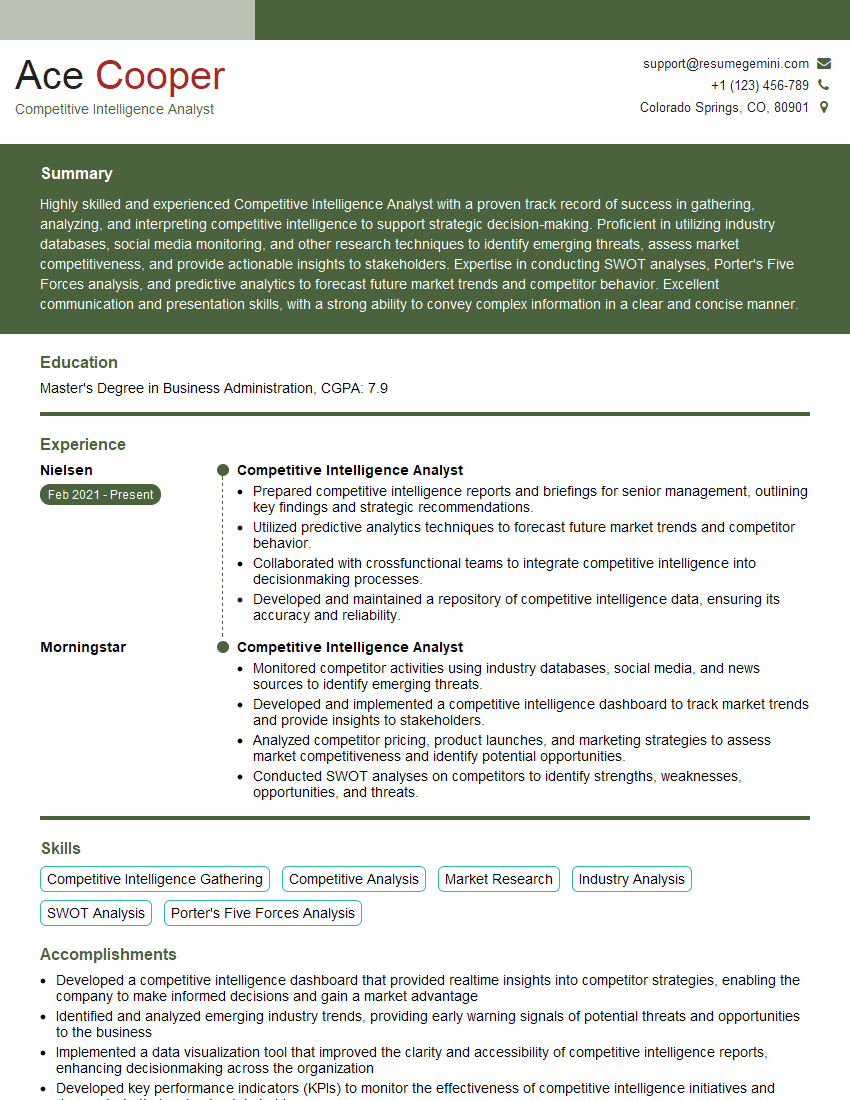
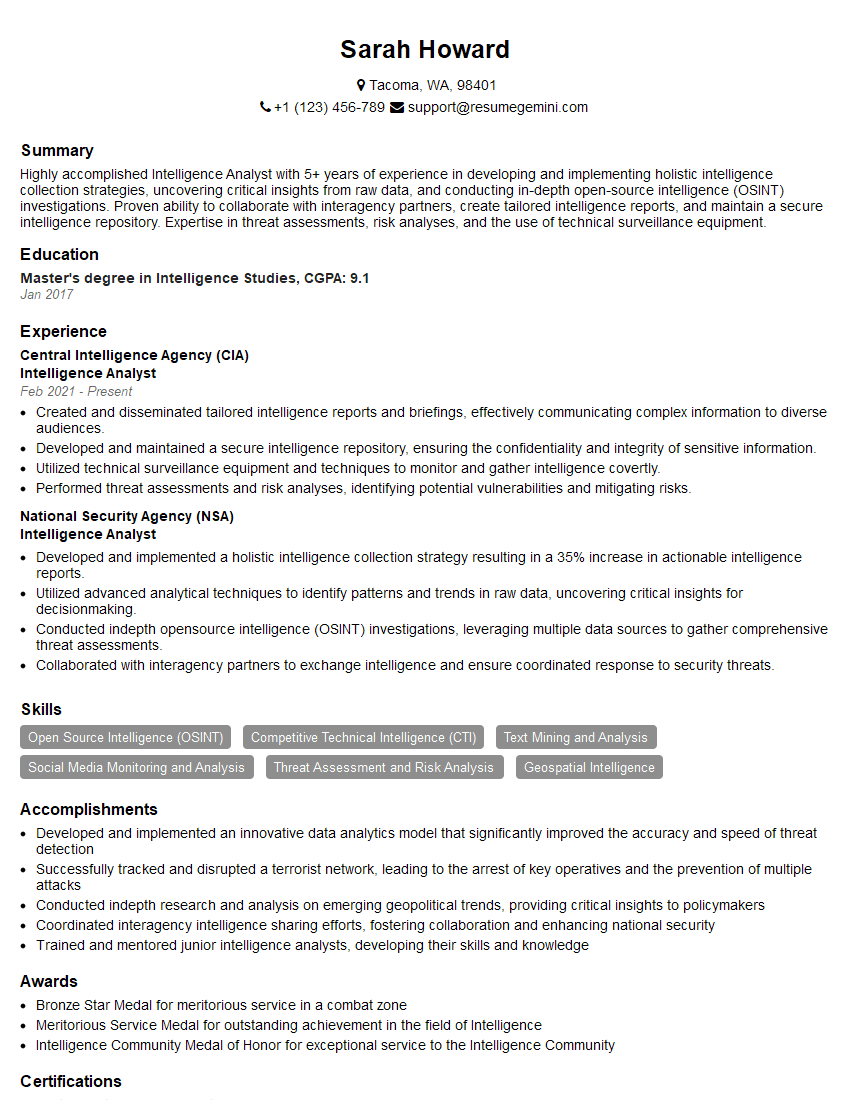
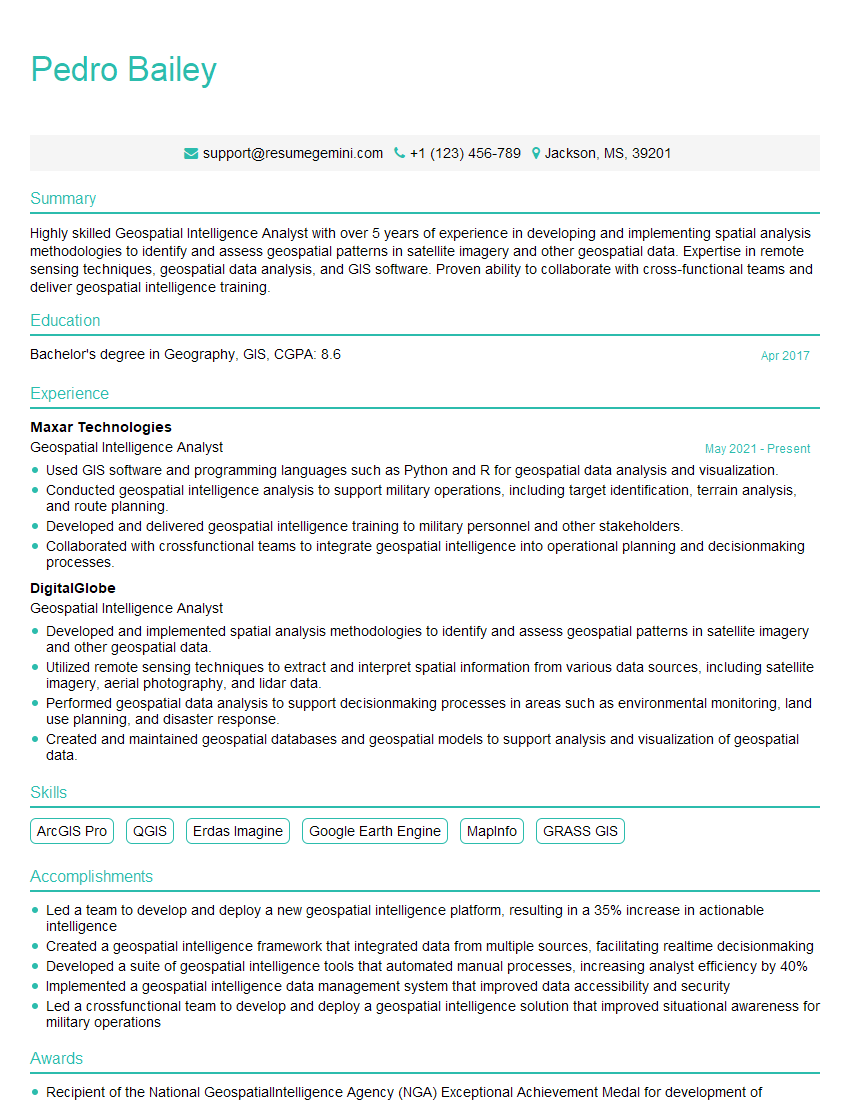
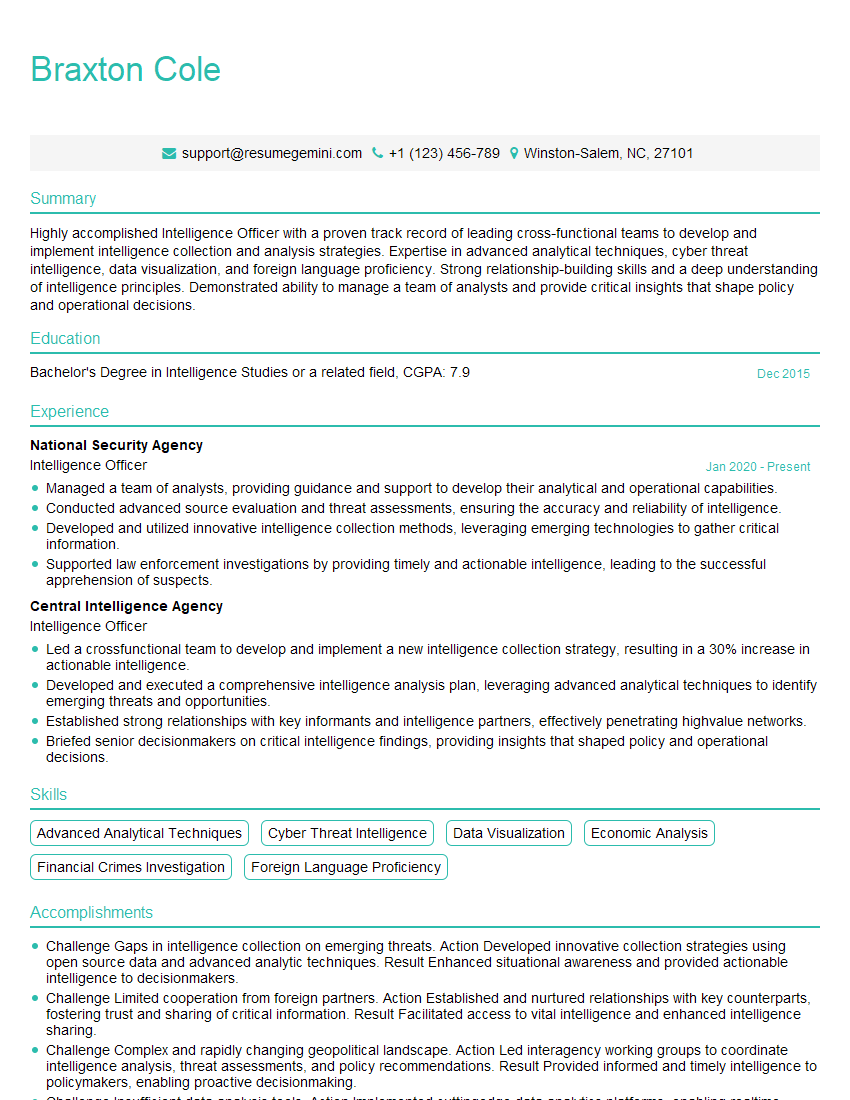
Mastering Intelligence Operations opens doors to a dynamic and impactful career, offering opportunities for continuous learning and professional growth within a field crucial to national security or corporate protection. To significantly boost your job prospects, invest time in crafting an ATS-friendly resume that highlights your relevant skills and experience. ResumeGemini is a trusted resource to help you build a professional and effective resume. Examples of resumes tailored to Intelligence Operations are available to guide you. Take advantage of these resources to present yourself powerfully to potential employers.
Explore more articles
Users Rating of Our Blogs
Share Your Experience
We value your feedback! Please rate our content and share your thoughts (optional).
What Readers Say About Our Blog
Attention music lovers!
Wow, All the best Sax Summer music !!!
Spotify: https://open.spotify.com/artist/6ShcdIT7rPVVaFEpgZQbUk
Apple Music: https://music.apple.com/fr/artist/jimmy-sax-black/1530501936
YouTube: https://music.youtube.com/browse/VLOLAK5uy_noClmC7abM6YpZsnySxRqt3LoalPf88No
Other Platforms and Free Downloads : https://fanlink.tv/jimmysaxblack
on google : https://www.google.com/search?q=22+AND+22+AND+22
on ChatGPT : https://chat.openai.com?q=who20jlJimmy20Black20Sax20Producer
Get back into the groove with Jimmy sax Black
Best regards,
Jimmy sax Black
www.jimmysaxblack.com
Hi I am a troller at The aquatic interview center and I suddenly went so fast in Roblox and it was gone when I reset.
Hi,
Business owners spend hours every week worrying about their website—or avoiding it because it feels overwhelming.
We’d like to take that off your plate:
$69/month. Everything handled.
Our team will:
Design a custom website—or completely overhaul your current one
Take care of hosting as an option
Handle edits and improvements—up to 60 minutes of work included every month
No setup fees, no annual commitments. Just a site that makes a strong first impression.
Find out if it’s right for you:
https://websolutionsgenius.com/awardwinningwebsites
Hello,
we currently offer a complimentary backlink and URL indexing test for search engine optimization professionals.
You can get complimentary indexing credits to test how link discovery works in practice.
No credit card is required and there is no recurring fee.
You can find details here:
https://wikipedia-backlinks.com/indexing/
Regards
NICE RESPONSE TO Q & A
hi
The aim of this message is regarding an unclaimed deposit of a deceased nationale that bears the same name as you. You are not relate to him as there are millions of people answering the names across around the world. But i will use my position to influence the release of the deposit to you for our mutual benefit.
Respond for full details and how to claim the deposit. This is 100% risk free. Send hello to my email id: lukachachibaialuka@gmail.com
Luka Chachibaialuka
Hey interviewgemini.com, just wanted to follow up on my last email.
We just launched Call the Monster, an parenting app that lets you summon friendly ‘monsters’ kids actually listen to.
We’re also running a giveaway for everyone who downloads the app. Since it’s brand new, there aren’t many users yet, which means you’ve got a much better chance of winning some great prizes.
You can check it out here: https://bit.ly/callamonsterapp
Or follow us on Instagram: https://www.instagram.com/callamonsterapp
Thanks,
Ryan
CEO – Call the Monster App
Hey interviewgemini.com, I saw your website and love your approach.
I just want this to look like spam email, but want to share something important to you. We just launched Call the Monster, a parenting app that lets you summon friendly ‘monsters’ kids actually listen to.
Parents are loving it for calming chaos before bedtime. Thought you might want to try it: https://bit.ly/callamonsterapp or just follow our fun monster lore on Instagram: https://www.instagram.com/callamonsterapp
Thanks,
Ryan
CEO – Call A Monster APP
To the interviewgemini.com Owner.
Dear interviewgemini.com Webmaster!
Hi interviewgemini.com Webmaster!
Dear interviewgemini.com Webmaster!
excellent
Hello,
We found issues with your domain’s email setup that may be sending your messages to spam or blocking them completely. InboxShield Mini shows you how to fix it in minutes — no tech skills required.
Scan your domain now for details: https://inboxshield-mini.com/
— Adam @ InboxShield Mini
support@inboxshield-mini.com
Reply STOP to unsubscribe
Hi, are you owner of interviewgemini.com? What if I told you I could help you find extra time in your schedule, reconnect with leads you didn’t even realize you missed, and bring in more “I want to work with you” conversations, without increasing your ad spend or hiring a full-time employee?
All with a flexible, budget-friendly service that could easily pay for itself. Sounds good?
Would it be nice to jump on a quick 10-minute call so I can show you exactly how we make this work?
Best,
Hapei
Marketing Director
Hey, I know you’re the owner of interviewgemini.com. I’ll be quick.
Fundraising for your business is tough and time-consuming. We make it easier by guaranteeing two private investor meetings each month, for six months. No demos, no pitch events – just direct introductions to active investors matched to your startup.
If youR17;re raising, this could help you build real momentum. Want me to send more info?
Hi, I represent an SEO company that specialises in getting you AI citations and higher rankings on Google. I’d like to offer you a 100% free SEO audit for your website. Would you be interested?
Hi, I represent an SEO company that specialises in getting you AI citations and higher rankings on Google. I’d like to offer you a 100% free SEO audit for your website. Would you be interested?