Cracking a skill-specific interview, like one for Kitchen and bathroom remodeling, requires understanding the nuances of the role. In this blog, we present the questions you’re most likely to encounter, along with insights into how to answer them effectively. Let’s ensure you’re ready to make a strong impression.
Questions Asked in Kitchen and bathroom remodeling Interview
Q 1. Describe your experience with different countertop materials (granite, quartz, laminate).
My experience encompasses a wide range of countertop materials, each with its own set of advantages and disadvantages. Let’s look at granite, quartz, and laminate:
- Granite: A natural stone, granite offers unparalleled beauty and durability. Its unique veining and color variations make each countertop one-of-a-kind. However, it requires sealing to protect against staining and etching, and it can be susceptible to chipping if subjected to heavy impact. I’ve worked with numerous granite types, from the classic black galaxy to more exotic options like Verde Butterfly, adapting installation techniques to suit the specific stone’s properties.
- Quartz: An engineered stone, quartz boasts exceptional durability, stain resistance, and low maintenance. It’s a popular choice for its consistent color and pattern, making it ideal for large-scale projects. While it’s less prone to damage than granite, improper installation can lead to cracking. I often advise clients on the specific quartz composition and its suitability for their lifestyle—for instance, recommending a higher resin content for high-traffic areas.
- Laminate: A budget-friendly option, laminate countertops offer a wide variety of styles and colors mimicking more expensive materials. While it’s easy to install and maintain, it’s less durable and susceptible to scratches and heat damage. I often suggest laminate for clients on a tight budget or for areas with less demanding use, such as a laundry room.
My approach involves guiding clients towards the material that best balances their aesthetic preferences, budget, and lifestyle needs.
Q 2. What are the common plumbing challenges encountered during kitchen and bathroom remodeling?
Plumbing challenges during remodeling are common and often unexpected. Some of the most frequent issues include:
- Pipe Leaks and Corrosion: Old plumbing systems, especially galvanized pipes, are prone to leaks and corrosion. Discovering these during demolition requires careful assessment and potentially extensive repairs, impacting both the timeline and budget. We always conduct a thorough plumbing inspection before starting major demolition.
- Incorrect Pipe Sizing: Outdated plumbing systems might have improperly sized pipes, leading to low water pressure or drainage problems. This often necessitates rerouting or replacing sections of the plumbing system, which adds to the cost and complexity.
- Improper Venting: Inadequate venting can cause sewer gases to back up into the home, creating a health hazard. Identifying and resolving venting issues is crucial for ensuring a safe and functional plumbing system. We use specialized testing equipment to pinpoint ventilation problems.
- Fixture Compatibility: Choosing new fixtures that are compatible with the existing plumbing is essential. Improper connections can lead to leaks and even damage to the fixtures. We always verify fixture specifications before ordering to avoid such issues.
Addressing these plumbing challenges requires a proactive approach. We use high-quality materials, employ experienced plumbers, and thoroughly test all new plumbing installations before handing the project over to the client.
Q 3. Explain your process for managing a remodeling project timeline and budget.
Managing project timelines and budgets is crucial for successful remodeling. My process begins with a detailed scope of work, created in collaboration with the client. This includes a clear description of the project’s objectives, materials specifications, and anticipated timelines. We then develop a comprehensive budget, outlining material costs, labor costs, and contingency for unforeseen issues.
For timelines, we utilize project management software to track progress, schedule tasks, and manage milestones. We establish regular check-in points with the client to review progress, address concerns, and make necessary adjustments. This transparent approach prevents cost overruns and delays. For example, if a material experiences an unexpected price increase, we immediately discuss alternatives with the client and adjust the budget accordingly.
Budget management involves tracking expenses meticulously, comparing actual costs against the budget, and proactively addressing any variances. Regular financial reporting keeps the client informed and allows for adjustments as the project unfolds. Think of it like navigating with a GPS – the initial route is planned, but minor adjustments are made along the way to reach the destination on time and within budget.
Q 4. How do you handle unexpected issues or changes during a remodel?
Unexpected issues are inevitable in remodeling. My approach focuses on proactive problem-solving and transparent communication.
When unexpected issues arise (e.g., discovering rotted subflooring or encountering unforeseen electrical work), we follow these steps:
- Assessment: We thoroughly assess the problem’s scope and impact on the project.
- Documentation: We document the issue with photographs and detailed notes.
- Options: We explore potential solutions, considering their cost and impact on the timeline.
- Client Communication: We clearly communicate the issue, proposed solutions, and their associated costs to the client.
- Agreement: We obtain client approval before proceeding with any repairs or modifications.
- Implementation: We implement the agreed-upon solution efficiently and effectively.
A recent example involved discovering hidden plumbing during demolition. We carefully documented the issue, presented the client with different repair options, and worked collaboratively to incorporate the necessary plumbing adjustments into the project timeline and budget.
Q 5. What are your preferred methods for communicating with clients throughout a project?
Clear and consistent communication is paramount. I utilize a multi-faceted approach:
- Regular Meetings: We schedule regular in-person or virtual meetings to discuss project progress, address concerns, and review decisions.
- Progress Reports: We provide written or digital progress reports detailing completed tasks, upcoming milestones, and any potential challenges.
- Project Management Software: We use project management software (like Asana or Trello) to facilitate communication, share documents, and track progress in real-time. Clients often find this extremely convenient.
- Open Communication Channels: We maintain open communication channels (email, phone, text) for quick responses to queries and updates.
- Photography and Video Updates: We share photos and short videos of the project’s progress to help clients visualize the transformation and remain engaged.
The goal is to keep clients fully informed and involved throughout every step of the process, building trust and ensuring a positive experience.
Q 6. Describe your experience with various cabinet styles and installation techniques.
My experience spans a wide variety of cabinet styles, from traditional shaker to modern slab-door designs. I’m proficient in various installation techniques, including:
- Custom Cabinet Installation: Working with bespoke cabinetry often involves intricate measurements and precise installation to ensure a perfect fit. This requires a high level of craftsmanship and attention to detail.
- Semi-Custom Cabinet Installation: Offering a balance between customization and cost-effectiveness, semi-custom cabinets often involve adjusting existing designs to fit the space.
- Ready-to-Assemble (RTA) Cabinet Installation: RTA cabinets require careful assembly and precise installation to guarantee stability and functionality. I’ve honed techniques for efficient assembly and installation that maximize both quality and speed.
Beyond the style, installation involves careful consideration of factors like cabinet hardware, countertop integration, and ensuring proper alignment and levelness. I always prioritize creating a seamless and visually appealing result, considering the overall design of the kitchen or bathroom.
Q 7. What safety protocols do you follow on a remodeling job site?
Safety is paramount on every job site. We adhere to strict safety protocols, including:
- Personal Protective Equipment (PPE): All team members are required to wear appropriate PPE, including safety glasses, gloves, hard hats, and dust masks.
- Proper Tool Use and Maintenance: We ensure that all tools are used correctly and maintained in good working order. Regular inspections help prevent accidents caused by malfunctioning equipment.
- Fall Protection: We utilize fall protection equipment, such as harnesses and safety lines, when working at heights.
- Electrical Safety: We follow strict electrical safety protocols, including deactivating power before working on electrical components and using ground fault circuit interrupters (GFCIs).
- Waste Disposal: We adhere to regulations regarding the proper disposal of construction debris and hazardous materials.
- Site Cleanup: We maintain a clean and organized job site to minimize tripping hazards and prevent accidents.
Regular safety meetings and toolbox talks reinforce safe practices and ensure that our team is always aware of potential hazards. Our commitment to safety ensures a healthy and productive work environment for everyone involved.
Q 8. Explain your knowledge of building codes and permits related to kitchen and bathroom remodeling.
Navigating building codes and permits is crucial for any successful kitchen and bathroom remodel. My experience encompasses a deep understanding of local, state, and sometimes even national regulations. This includes everything from plumbing and electrical codes to ventilation requirements and accessibility standards (ADA compliance). For example, in many jurisdictions, you need separate permits for plumbing, electrical, and structural work. Ignoring these can lead to hefty fines, project delays, and even safety hazards.
Before starting any project, I meticulously research the specific codes applicable to the location. I utilize online resources, consult with local building inspectors, and often engage structural engineers or specialized contractors when complex issues arise. I ensure all plans are meticulously drawn, including detailed specifications that meet or exceed code requirements. This proactive approach prevents costly mistakes down the line and guarantees a smooth, compliant project.
For instance, a recent project involved installing a new shower. We had to adhere to strict waterproofing standards to prevent mold and water damage. This meant using specific membrane materials and installing them according to the manufacturer’s and code’s precise instructions. Failing to do so would have jeopardized the entire project and potentially put the homeowner at risk.
Q 9. How do you ensure client satisfaction throughout the remodeling process?
Client satisfaction is paramount. My approach starts with clear, open communication from the initial consultation through to the project’s completion. We begin by establishing a thorough understanding of the client’s vision, budget, and timeline. I use detailed mood boards, 3D renderings (see answer 3), and regular check-ins to ensure alignment throughout the process.
I also prioritize meticulous planning and project management. This includes creating realistic timelines, procuring high-quality materials, and managing the project budget effectively. I keep clients informed every step of the way, providing regular updates, addressing concerns promptly, and offering solutions to any unforeseen challenges. Unexpected issues are part of construction; how you handle them defines the experience. Transparency is key to building trust and managing expectations.
For example, on a recent project, the client was initially hesitant about a particular tile choice. We discussed the pros and cons, explored alternative options, and ultimately found a solution that satisfied their aesthetic preferences while remaining within budget. Active listening and collaborative decision-making are invaluable in this field. Post-project, I follow up with clients to ensure they are completely satisfied with the finished product and address any lingering concerns.
Q 10. What software or tools do you use for design and project management?
Technology plays a vital role in my design and project management process. I utilize 2020 Design and SketchUp for 3D modeling and design visualization. These tools allow me to create realistic renderings that clients can easily understand, helping them visualize the finished project and make informed decisions. We use the software to showcase various design options, material selections, and even adjust lighting and spatial arrangements.
For project management, I rely on Asana or similar project management software. This allows for streamlined communication with clients, subcontractors, and suppliers. Tasks, timelines, budgets and all relevant documents are managed within this central hub which helps me to ensure accountability and keeps projects moving smoothly. I find these digital tools facilitate efficient collaboration and enhance accuracy in planning and execution.
Q 11. Describe your experience with different tiling methods and materials.
My experience with tiling methods and materials is extensive, ranging from traditional methods like thin-set mortar application to more modern techniques like large-format tile installation. I’m proficient in various tile types: ceramic, porcelain, natural stone (marble, granite, travertine), glass, and mosaic. Each material demands a different approach, requiring specialized tools, adhesives, and installation techniques. For example, large-format porcelain tiles require precise measurements and leveling systems to prevent cracking or uneven surfaces. Natural stone often requires specific sealants to protect against staining and water damage.
I understand the importance of proper substrate preparation which is critical for any successful tile installation. This includes ensuring the surface is level, clean, and free of any debris or imperfections. Improper preparation can result in cracked tiles, grout failure, and even structural damage. I use a combination of methods, including using self-leveling compounds to ensure a perfectly flat surface. My focus is always on ensuring both aesthetic appeal and long-term durability. I am also well-versed in different grout types and their applications, considering factors like water resistance, color, and ease of maintenance.
Q 12. How do you handle customer complaints or disagreements?
Handling customer complaints or disagreements is a critical aspect of project management. My approach is centered on proactive communication and conflict resolution. I encourage clients to express concerns openly and honestly throughout the project. Addressing issues early on prevents minor problems from escalating. When a complaint arises, I listen carefully, acknowledge the client’s perspective, and work collaboratively to find a mutually acceptable solution.
My goal isn’t simply to resolve the immediate issue; I aim to restore trust and maintain a positive working relationship. This might involve revisiting design choices, offering compensation for damages, or adjusting the project schedule. I maintain thorough documentation throughout the entire process, which is invaluable in addressing any disputes. Documentation includes contracts, change orders, payment schedules, and communication logs. For more complex or unresolved issues, I may involve mediation or arbitration to ensure a fair and just resolution.
Q 13. What is your approach to selecting subcontractors for a remodeling project?
Selecting reliable and skilled subcontractors is crucial to project success. My approach involves a thorough vetting process. I start by gathering referrals from trusted colleagues and researching potential subcontractors online. I check their licensing, insurance, and bonding status, which are essential for legal and financial protection. I also review their past projects and client testimonials to gauge their reputation and work quality.
Before awarding any contracts, I hold detailed interviews with potential subcontractors, discussing the project scope, timeline, and budget. This helps assess their understanding of the project requirements, their ability to manage their work effectively, and their commitment to maintaining high-quality standards. I only work with subcontractors who demonstrate a strong work ethic, a commitment to safety, and a clear understanding of local building codes. Clear contracts with specific scopes of work, payment schedules, and performance expectations help mitigate risks and ensure accountability.
Q 14. Explain your experience with different flooring options for kitchens and bathrooms.
Kitchen and bathroom flooring choices are critical for both aesthetics and functionality. My experience spans a broad range of materials, each with its own advantages and disadvantages. Popular options include ceramic and porcelain tiles (durable, water-resistant, various styles), natural stone (elegant, durable, but can be expensive and require sealing), luxury vinyl plank (LVP) or tile (waterproof, durable, cost-effective), and engineered hardwood (beautiful, but less water-resistant than other options).
When recommending flooring, I consider factors such as budget, lifestyle, desired aesthetic, and the specific requirements of the space. For example, LVP is excellent for high-traffic areas and bathrooms, providing durability and waterproof protection. Natural stone might be a better fit for a luxurious, high-end bathroom where aesthetics are paramount. I also advise clients on underlayments and proper installation methods, ensuring long-term durability and preventing problems like cracking, warping, or moisture damage. The decision is always a collaborative one, balancing the client’s preferences with practical considerations for longevity and maintenance.
Q 15. How do you ensure the proper ventilation in a kitchen or bathroom remodel?
Proper ventilation is paramount in kitchen and bathroom remodels to prevent moisture buildup, mold growth, and the accumulation of cooking odors and steam. It’s not just about aesthetics; it’s about protecting the health and longevity of your home.
In kitchens, we typically install or upgrade range hoods with sufficient CFM (cubic feet per minute) ratings to effectively exhaust cooking fumes. The ductwork needs to be properly sized and sealed to prevent leaks. We also consider the placement of the hood relative to the cooktop to maximize efficiency. For example, a poorly placed hood might not capture all the smoke and grease, leading to greasy walls and a build-up of odors.
Bathrooms require exhaust fans with adequate CFM ratings to remove moisture generated by showers and baths. These fans should vent directly to the outside to prevent moisture from circulating within the house. We ensure that the fan is properly sealed and powerful enough to handle the volume of moisture produced. Poor ventilation in bathrooms can lead to mold and mildew, causing structural damage and respiratory issues.
We always incorporate a comprehensive ventilation plan into our blueprints, ensuring both the correct equipment and proper installation for optimal air quality and long-term health of the space.
Career Expert Tips:
- Ace those interviews! Prepare effectively by reviewing the Top 50 Most Common Interview Questions on ResumeGemini.
- Navigate your job search with confidence! Explore a wide range of Career Tips on ResumeGemini. Learn about common challenges and recommendations to overcome them.
- Craft the perfect resume! Master the Art of Resume Writing with ResumeGemini’s guide. Showcase your unique qualifications and achievements effectively.
- Don’t miss out on holiday savings! Build your dream resume with ResumeGemini’s ATS optimized templates.
Q 16. What are the key differences between a kitchen and bathroom remodel?
While both kitchen and bathroom remodels involve significant structural changes, they differ greatly in their focus and requirements. Kitchens primarily deal with plumbing for sinks and dishwashers, gas lines for stoves, and electrical work for appliances. The emphasis is often on creating an efficient and aesthetically pleasing workspace. Think open shelving, custom cabinetry, and the latest appliances.
Bathrooms, on the other hand, center around plumbing fixtures like toilets, showers, and tubs, ventilation to control humidity, and often require more intricate tile work. The focus is usually on creating a relaxing and hygienic space, emphasizing waterproofing and preventing mold growth. Consider features like heated floors, walk-in showers, and luxurious vanities.
In short: kitchens focus on functionality and efficiency, while bathrooms prioritize hygiene, relaxation, and water management.
Q 17. Describe your experience with demolition and waste removal processes.
Demolition and waste removal are critical, potentially messy, stages that require careful planning and execution. Safety is always our top priority. We use proper protective gear and follow strict safety protocols throughout the demolition process. We begin by carefully disconnecting utilities – electricity, gas, and water – to prevent accidents. We then systematically remove fixtures and materials, taking care to avoid damaging surrounding areas.
Waste removal is handled responsibly and ethically. We sort materials for recycling whenever possible and work with licensed waste disposal companies to ensure proper disposal of hazardous materials, like asbestos or lead paint, if encountered. We meticulously document all waste removal activities for compliance and record-keeping. For example, recently, on a project in a historic building, we encountered asbestos in the tile. We immediately halted work, contacted a certified asbestos abatement company, and followed all regulatory procedures for safe removal and disposal. This ensured not only the safety of our team but also compliance with building codes and regulations.
Q 18. How do you manage multiple projects simultaneously?
Managing multiple projects simultaneously requires meticulous organization and effective communication. We use project management software to track timelines, budgets, and resources across all our projects. This allows us to allocate our team and materials efficiently. We also maintain consistent communication with clients, subcontractors, and suppliers to ensure everyone is informed and on the same page.
We prioritize tasks based on deadlines and critical path analysis. This helps us focus on the most time-sensitive aspects of each project while ensuring steady progress across the board. Regular project status meetings help to identify and address potential roadblocks early on. For example, if one project is experiencing a delay in material delivery, we might re-allocate resources from another project to mitigate the impact without compromising overall timelines.
Q 19. What are your pricing strategies for kitchen and bathroom remodeling projects?
Our pricing strategies are transparent and tailored to each project’s unique requirements. We offer several pricing models, including fixed-price contracts for projects with clearly defined scopes and timetables. For larger or more complex projects, we may use a cost-plus pricing model, where the client pays for the cost of materials and labor plus a predetermined markup.
We provide detailed, itemized estimates that break down all costs, including materials, labor, permits, and any unforeseen expenses. This helps clients understand the complete cost of the project upfront, minimizing surprises and fostering trust. We believe in open communication regarding pricing and always offer several options to suit different budgets and priorities. We strive to be competitive while maintaining the highest standards of quality and workmanship.
Q 20. How do you incorporate energy-efficient solutions into your remodeling projects?
Incorporating energy-efficient solutions is a core principle of our remodeling philosophy. We routinely suggest and implement strategies to minimize energy consumption and reduce environmental impact. This includes using energy-star rated appliances, low-flow showerheads and faucets, and energy-efficient lighting.
For example, we often suggest installing LED lighting throughout the kitchen and bathroom, which consumes significantly less energy than traditional incandescent or fluorescent bulbs and has a much longer lifespan. We also advocate for better insulation, which reduces energy loss and improves the overall efficiency of the heating and cooling systems. In addition, we incorporate features like tankless water heaters, which heat water on demand, reducing energy waste compared to traditional tank-style water heaters. Every project presents an opportunity to promote sustainable building practices, and we always strive to educate our clients about the long-term benefits of energy efficiency.
Q 21. Describe your experience with accessibility modifications in kitchens and bathrooms.
We have extensive experience designing and installing accessibility modifications in kitchens and bathrooms to make them safer and more user-friendly for people with disabilities. This includes installing grab bars in showers and tubs, widening doorways, and lowering countertops and cabinets to improve accessibility for wheelchair users.
We carefully consider universal design principles throughout the remodeling process. For instance, we might suggest lever-style door handles instead of knobs, easy-to-grip faucets, and non-slip flooring to enhance safety and accessibility. We often work closely with occupational therapists and accessibility specialists to ensure our designs meet the specific needs of our clients and comply with relevant accessibility regulations. Recently, we remodeled a bathroom for a client with limited mobility, incorporating features like a walk-in shower with a zero-threshold entry and a roll-under sink. The project’s success was measured not only by its aesthetic appeal but also by its functionality and the client’s enhanced independence and quality of life.
Q 22. What are your strategies for minimizing disruption to the homeowner during a remodel?
Minimizing disruption during a remodel is paramount. We achieve this through meticulous planning and proactive communication. This starts with a detailed project schedule shared with the homeowner, outlining each phase and its anticipated duration. We utilize phased construction whenever possible – for example, completing the bathroom remodel before starting the kitchen, allowing the homeowner to use at least one functional space throughout the project. We also maintain clean and organized workspaces daily, minimizing dust and debris, and providing temporary solutions like a portable toilet for bathroom remodels.
- Staging: We carefully stage the project, identifying areas that can be worked on without impacting others.
- Dust Containment: We use plastic sheeting and air purifiers to keep dust to a minimum.
- Temporary Utilities: When necessary, we arrange for temporary utilities like water and electricity to maintain access.
- Regular Communication: We schedule regular check-ins with homeowners to address any concerns and provide updates.
For instance, in a recent kitchen remodel, we completed the demolition and plumbing work before starting the cabinetry installation, allowing the homeowner to continue using their existing appliances during the initial phase. This significantly reduced disruption to their daily routine.
Q 23. How do you handle material procurement and scheduling?
Material procurement and scheduling are crucial for efficient and timely project completion. We begin with a comprehensive materials list, developed in close consultation with the homeowner, specifying exact quantities and selections. We then work with trusted suppliers to secure materials, ensuring timely delivery to the job site. A detailed schedule, factoring in lead times, is created to ensure materials arrive when needed, preventing delays. We also maintain a buffer for unexpected issues, such as material damage or delivery delays.
- Supplier Relationships: We maintain strong relationships with reliable suppliers to guarantee timely delivery.
- Inventory Management: We meticulously track material orders and deliveries using project management software.
- Contingency Planning: We account for potential delays or material shortages by maintaining a buffer stock of commonly used items.
For example, if a specific tile requires a longer lead time, we’ll order it early and store it securely to avoid project delays. This proactive approach helps to prevent costly delays and ensures a smooth workflow.
Q 24. What are your methods for quality control and inspection?
Quality control and inspection are integrated into every phase of our projects. We start with a thorough review of plans and specifications before commencing work. During the construction phase, daily inspections are conducted to ensure adherence to plans, quality standards, and building codes. We use checklists to document completed tasks and identify any potential issues early on. Finally, we perform a comprehensive final inspection before handover, addressing any outstanding issues and ensuring client satisfaction.
- Regular Inspections: Daily on-site inspections ensure work is performed to specification.
- Checklists and Documentation: Detailed checklists and photographic records document progress and quality.
- Third-Party Inspections: We utilize third-party inspectors where required by local codes.
- Client Walkthroughs: Regular client walkthroughs allow for immediate feedback and issue resolution.
For example, during a bathroom remodel, we carefully inspect the tiling work for proper grouting and alignment, ensuring a high-quality finish. Any imperfections are addressed immediately to avoid rework and maintain a consistent quality throughout the project.
Q 25. Explain your experience with different lighting options for kitchens and bathrooms.
Lighting is a crucial design element in kitchens and bathrooms. We offer a wide range of options to meet diverse needs and aesthetics, from task lighting to ambient lighting and accent lighting. In kitchens, we often incorporate under-cabinet lighting for task illumination, pendant lights over islands, and recessed lighting for general illumination. For bathrooms, we often use recessed lighting combined with vanity lighting and potentially accent lighting to highlight features. We also consider the use of LED lighting for its energy efficiency and long lifespan. We always discuss the client’s preferences and budget to determine the optimal lighting plan. Smart lighting systems offer additional control and functionality, adding an element of luxury and convenience.
- Task Lighting: Under-cabinet lighting in kitchens and mirrors in bathrooms.
- Ambient Lighting: Recessed lighting for general illumination.
- Accent Lighting: To highlight specific features or architectural details.
- LED Lighting: Energy-efficient and long-lasting.
- Smart Lighting: Provides control and flexibility.
We recently incorporated a sophisticated dimmable LED system in a bathroom remodel, allowing the homeowner to adjust the lighting levels to suit their mood and activities.
Q 26. What are the latest trends in kitchen and bathroom design?
Current trends in kitchen and bathroom design prioritize functionality, sustainability, and personalized aesthetics. We’re seeing a rise in smart home integration, with features such as voice-activated appliances and automated lighting systems. Natural materials like wood, stone, and bamboo are increasingly popular, reflecting a growing emphasis on sustainability. Open shelving and minimalist designs are also trending, creating clean and uncluttered spaces. In bathrooms, spa-like designs are sought after, incorporating elements such as rain showers and heated floors. Customization and personalization are key, with homeowners seeking unique solutions that reflect their individual style and needs. Larger format tiles are in high demand, offering a sleek and modern aesthetic.
- Smart Home Integration: Voice-activated appliances, automated lighting.
- Sustainable Materials: Bamboo, reclaimed wood, recycled glass.
- Open Shelving and Minimalist Designs: Clean and uncluttered spaces.
- Spa-like Bathrooms: Rain showers, heated floors, luxurious finishes.
- Customization: Personalized solutions tailored to homeowner needs.
For example, a recent project incorporated a smart kitchen faucet with temperature control and filtered water, illustrating the integration of technology into a functional design.
Q 27. How do you stay up-to-date with industry best practices and new technologies?
Staying current in this dynamic industry requires continuous learning and engagement. We actively participate in industry conferences and trade shows, such as KBIS (Kitchen & Bath Industry Show), to learn about the latest technologies, products, and design trends. We also subscribe to industry publications and online resources, ensuring we’re aware of best practices and emerging technologies. Furthermore, we maintain relationships with other professionals in the field, sharing knowledge and collaborating on projects. Online continuing education courses help us maintain our licensing and stay ahead of the curve.
- Industry Conferences and Trade Shows: KBIS, local industry events.
- Professional Publications and Online Resources: Magazines, websites, blogs.
- Continuing Education: Online courses and workshops.
- Networking: Collaboration with other professionals.
Recently, we attended a workshop on the latest advancements in smart home technology for kitchens and bathrooms, allowing us to integrate these innovations into our projects.
Q 28. Describe a challenging project you successfully completed and what you learned from it.
One challenging project involved a complete gut renovation of a historic home’s kitchen and bathrooms. The biggest challenge was balancing the homeowner’s desire for modern amenities with the need to preserve the home’s historical integrity. We encountered unexpected structural issues during demolition, requiring creative problem-solving and adjustments to the plans. Effective communication with the homeowner was key to navigating these challenges and ensuring their satisfaction. We learned the importance of thorough pre-construction investigation and flexible planning to accommodate unforeseen circumstances. The project was successfully completed, resulting in a beautiful, functional space that honored the home’s history while incorporating modern conveniences. We celebrated the project by having a small post-completion gathering with the homeowners and the crew. The resulting space was featured in a local design magazine.
- Challenge: Balancing historical preservation with modern updates.
- Solution: Meticulous planning, open communication, and creative problem-solving.
- Lesson Learned: Thorough pre-construction investigation and flexible planning are crucial.
Key Topics to Learn for Kitchen and Bathroom Remodeling Interviews
- Project Management: Understanding project timelines, budgeting, client communication, and managing subcontractors.
- Practical Application: Developing a realistic project schedule, allocating resources effectively, and proactively addressing potential delays.
- Design Principles: Knowledge of space planning, ergonomics, and incorporating client preferences into functional and aesthetically pleasing designs.
- Practical Application: Creating detailed design plans, selecting appropriate materials, and presenting design options to clients.
- Construction Techniques: Familiarity with demolition, plumbing, electrical, carpentry, tiling, and finishing techniques relevant to kitchen and bathroom renovations.
- Practical Application: Troubleshooting common construction issues, ensuring adherence to building codes, and overseeing the quality of workmanship.
- Materials and Fixtures: Knowledge of various materials (cabinetry, countertops, flooring, fixtures) and their properties, along with understanding sustainable and eco-friendly options.
- Practical Application: Sourcing high-quality materials within budget constraints, advising clients on material selection, and understanding the implications of different material choices.
- Client Communication and Relationship Management: Effective communication skills, conflict resolution, and building strong rapport with clients throughout the project lifecycle.
- Practical Application: Managing client expectations, addressing concerns professionally, and ensuring client satisfaction.
- Safety Regulations and Compliance: Understanding and adhering to all relevant safety regulations and building codes during the renovation process.
- Practical Application: Implementing safety protocols on site, ensuring proper use of tools and equipment, and maintaining a safe working environment.
Next Steps
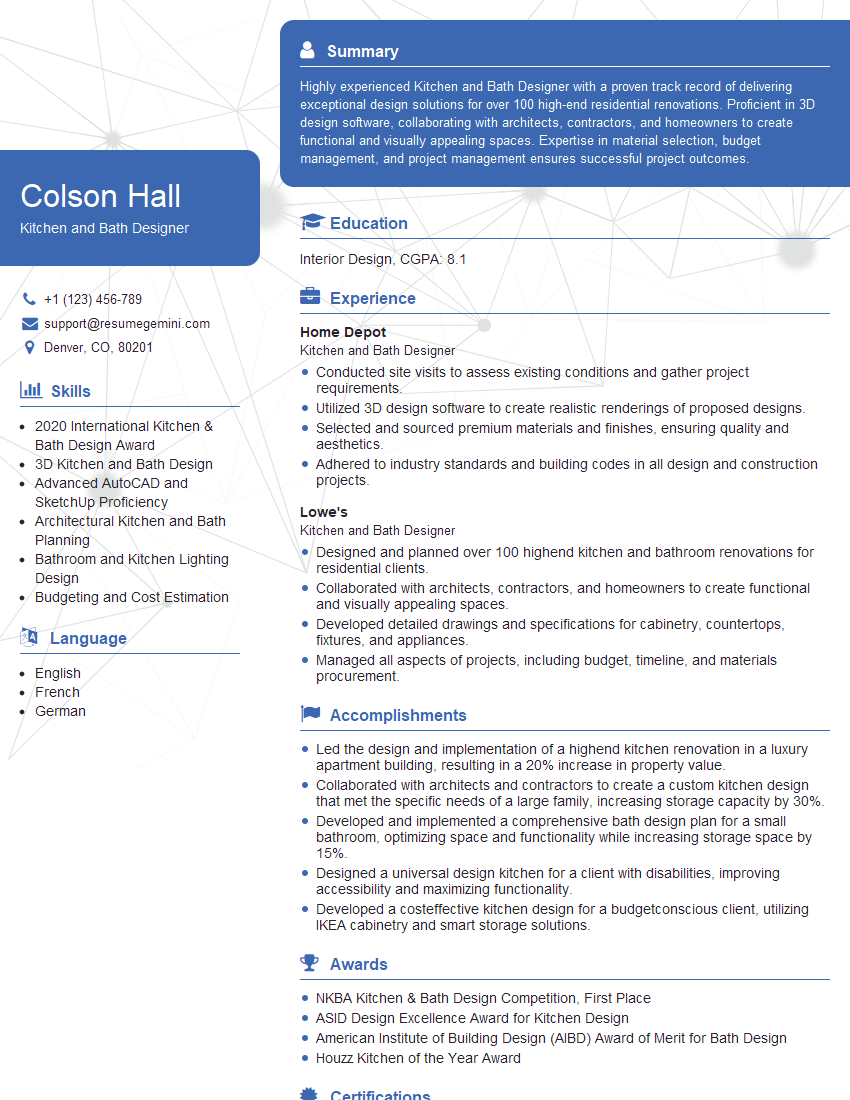
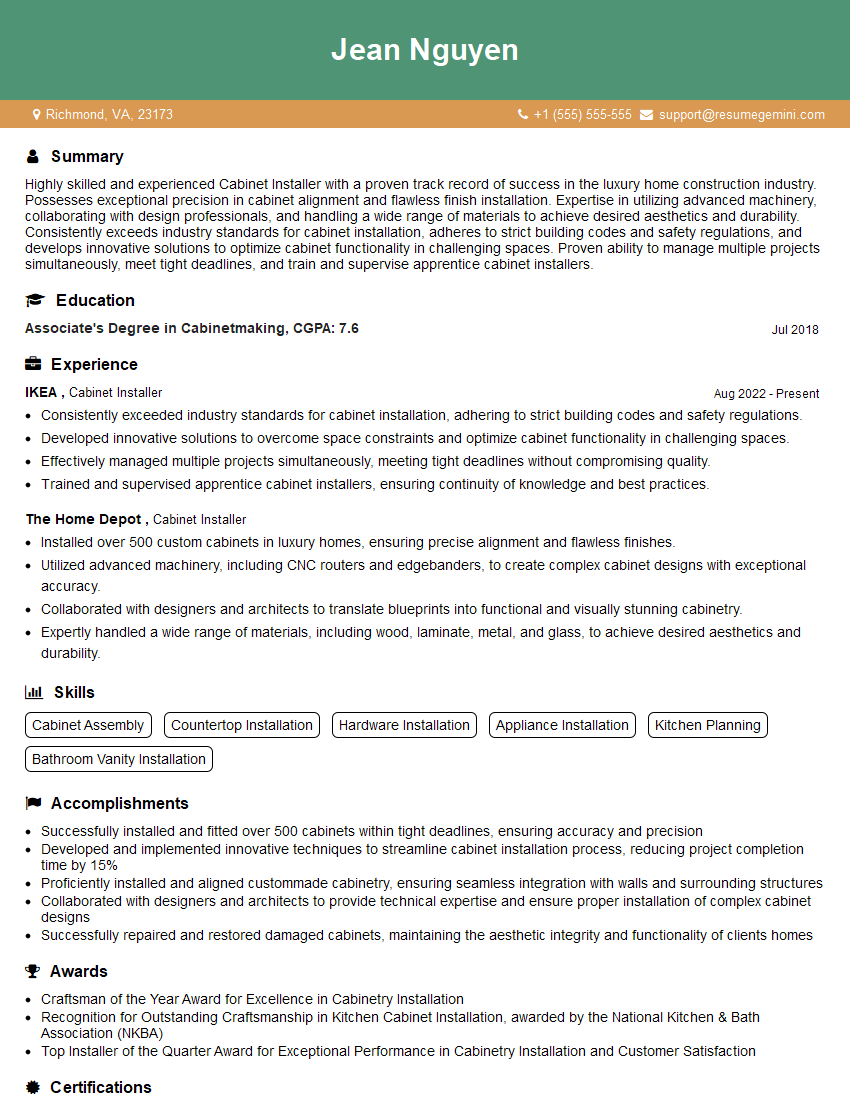
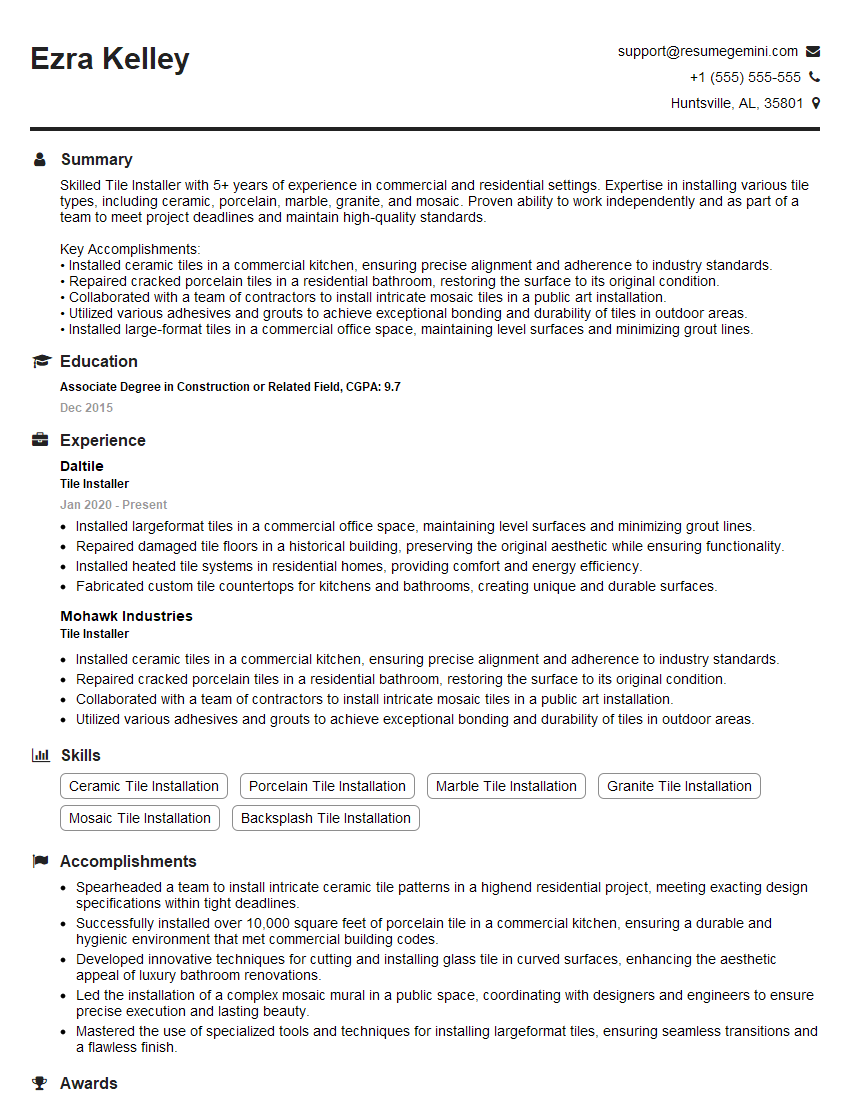
Mastering kitchen and bathroom remodeling opens doors to exciting career opportunities with strong earning potential and professional growth. A well-crafted resume is crucial for showcasing your skills and experience to potential employers. Creating an ATS-friendly resume significantly increases your chances of getting your application noticed. ResumeGemini is a trusted resource that can help you build a professional and impactful resume tailored to the specific requirements of the Kitchen and Bathroom remodeling industry. Examples of resumes tailored to this field are available, providing you with valuable templates and guidance to help you present your qualifications effectively.
Explore more articles
Users Rating of Our Blogs
Share Your Experience
We value your feedback! Please rate our content and share your thoughts (optional).
What Readers Say About Our Blog
Attention music lovers!
Wow, All the best Sax Summer music !!!
Spotify: https://open.spotify.com/artist/6ShcdIT7rPVVaFEpgZQbUk
Apple Music: https://music.apple.com/fr/artist/jimmy-sax-black/1530501936
YouTube: https://music.youtube.com/browse/VLOLAK5uy_noClmC7abM6YpZsnySxRqt3LoalPf88No
Other Platforms and Free Downloads : https://fanlink.tv/jimmysaxblack
on google : https://www.google.com/search?q=22+AND+22+AND+22
on ChatGPT : https://chat.openai.com?q=who20jlJimmy20Black20Sax20Producer
Get back into the groove with Jimmy sax Black
Best regards,
Jimmy sax Black
www.jimmysaxblack.com
Hi I am a troller at The aquatic interview center and I suddenly went so fast in Roblox and it was gone when I reset.
Hi,
Business owners spend hours every week worrying about their website—or avoiding it because it feels overwhelming.
We’d like to take that off your plate:
$69/month. Everything handled.
Our team will:
Design a custom website—or completely overhaul your current one
Take care of hosting as an option
Handle edits and improvements—up to 60 minutes of work included every month
No setup fees, no annual commitments. Just a site that makes a strong first impression.
Find out if it’s right for you:
https://websolutionsgenius.com/awardwinningwebsites
Hello,
we currently offer a complimentary backlink and URL indexing test for search engine optimization professionals.
You can get complimentary indexing credits to test how link discovery works in practice.
No credit card is required and there is no recurring fee.
You can find details here:
https://wikipedia-backlinks.com/indexing/
Regards
NICE RESPONSE TO Q & A
hi
The aim of this message is regarding an unclaimed deposit of a deceased nationale that bears the same name as you. You are not relate to him as there are millions of people answering the names across around the world. But i will use my position to influence the release of the deposit to you for our mutual benefit.
Respond for full details and how to claim the deposit. This is 100% risk free. Send hello to my email id: lukachachibaialuka@gmail.com
Luka Chachibaialuka
Hey interviewgemini.com, just wanted to follow up on my last email.
We just launched Call the Monster, an parenting app that lets you summon friendly ‘monsters’ kids actually listen to.
We’re also running a giveaway for everyone who downloads the app. Since it’s brand new, there aren’t many users yet, which means you’ve got a much better chance of winning some great prizes.
You can check it out here: https://bit.ly/callamonsterapp
Or follow us on Instagram: https://www.instagram.com/callamonsterapp
Thanks,
Ryan
CEO – Call the Monster App
Hey interviewgemini.com, I saw your website and love your approach.
I just want this to look like spam email, but want to share something important to you. We just launched Call the Monster, a parenting app that lets you summon friendly ‘monsters’ kids actually listen to.
Parents are loving it for calming chaos before bedtime. Thought you might want to try it: https://bit.ly/callamonsterapp or just follow our fun monster lore on Instagram: https://www.instagram.com/callamonsterapp
Thanks,
Ryan
CEO – Call A Monster APP
To the interviewgemini.com Owner.
Dear interviewgemini.com Webmaster!
Hi interviewgemini.com Webmaster!
Dear interviewgemini.com Webmaster!
excellent
Hello,
We found issues with your domain’s email setup that may be sending your messages to spam or blocking them completely. InboxShield Mini shows you how to fix it in minutes — no tech skills required.
Scan your domain now for details: https://inboxshield-mini.com/
— Adam @ InboxShield Mini
support@inboxshield-mini.com
Reply STOP to unsubscribe
Hi, are you owner of interviewgemini.com? What if I told you I could help you find extra time in your schedule, reconnect with leads you didn’t even realize you missed, and bring in more “I want to work with you” conversations, without increasing your ad spend or hiring a full-time employee?
All with a flexible, budget-friendly service that could easily pay for itself. Sounds good?
Would it be nice to jump on a quick 10-minute call so I can show you exactly how we make this work?
Best,
Hapei
Marketing Director
Hey, I know you’re the owner of interviewgemini.com. I’ll be quick.
Fundraising for your business is tough and time-consuming. We make it easier by guaranteeing two private investor meetings each month, for six months. No demos, no pitch events – just direct introductions to active investors matched to your startup.
If youR17;re raising, this could help you build real momentum. Want me to send more info?
Hi, I represent an SEO company that specialises in getting you AI citations and higher rankings on Google. I’d like to offer you a 100% free SEO audit for your website. Would you be interested?
Hi, I represent an SEO company that specialises in getting you AI citations and higher rankings on Google. I’d like to offer you a 100% free SEO audit for your website. Would you be interested?