Every successful interview starts with knowing what to expect. In this blog, we’ll take you through the top Knowledge of Book Binding Techniques interview questions, breaking them down with expert tips to help you deliver impactful answers. Step into your next interview fully prepared and ready to succeed.
Questions Asked in Knowledge of Book Binding Techniques Interview
Q 1. Describe the different types of bookbinding techniques.
Bookbinding techniques are diverse, each chosen based on factors like the publication’s length, budget, and desired aesthetic. They broadly fall into two categories: section sewing techniques, where individual sections (signatures) of pages are sewn together, and non-section sewing methods, which don’t require individual section stitching.
- Section Sewing Techniques: These include Case Binding (for high-quality books), Concertina Binding (for pamphlets and short books), and Japanese Binding (a sophisticated, intricate method).
- Non-Section Sewing Techniques: This group encompasses Perfect Binding (common for paperback books), Saddle Stitching (for magazines and booklets), Wire-O Binding (for calendars and notebooks), and Spiral Binding (for documents that need to lay flat).
The choice depends heavily on the project’s requirements. For example, a high-end coffee table book would benefit from the robust durability of case binding, while a simple brochure might be perfectly suited to saddle stitching.
Q 2. Explain the process of case binding.
Case binding is a robust, time-honored technique ideal for creating durable, high-quality books. It involves several steps:
- Gathering and Sewing: Sections (signatures) of printed sheets are folded and sewn together using different methods like kettle stitch or oversewing.
- Adhesive Binding: A strong adhesive is applied to the spine to create a solid spine.
- Preparing the Case: A separate cover (the case) is made from heavier board, often covered in cloth or other materials.
- Attaching the Cover: The sewn text block is glued to the spine of the case, ensuring a secure bond.
- Finishing: This stage includes head and tail banding (reinforcing the spine ends), applying endpapers, and any additional embellishments like gold lettering.
Imagine building a house: the sewn sections are like the walls, the adhesive acts as the mortar, and the cover is the protective outer shell. This meticulous process results in a book that can withstand years of use.
Q 3. What are the advantages and disadvantages of perfect binding?
Perfect binding, commonly used for paperbacks, involves gluing the edges of the pages together to create a smooth spine.
- Advantages: Relatively inexpensive and fast, suitable for high-volume production, allows for a flat-laying book, and the spine can be printed.
- Disadvantages: The spine can be prone to cracking or breaking, especially with frequent use. The pages can’t lay fully flat unless the spine is scored or specially prepared, and it’s not ideal for very thick books.
Think of it like gluing together pages of a notepad. It’s practical and economical for many publications but may lack the durability of more robust methods.
Q 4. How does saddle stitching work, and what types of publications is it suitable for?
Saddle stitching is a simple and cost-effective binding method where pages are folded in half, and wire staples are inserted through the fold to secure them.
- Process: Pages are printed and folded, collated (stacked in the correct order), and then the staples are inserted near the spine. This simple mechanism is usually automated in larger-scale printing.
- Suitable Publications: This method is best for thinner publications like magazines, brochures, booklets, and short reports. It’s unsuitable for very thick documents, as the staples might not be able to hold the pages securely.
Imagine stapling a set of papers together – quick, easy, and appropriate for smaller projects.
Q 5. Describe the process of wire-O binding.
Wire-O binding, also known as double-loop wire binding, uses double-loop wire or wire staples to bind pages together.
- Punching Holes: Holes are punched along the spine of the document.
- Inserting Wire: A specialized machine opens and closes the wire, inserting it through the punched holes to bind the pages together.
- Closing the Wire: The wire is then closed to complete the binding process.
This method allows pages to lay flat, making it ideal for calendars, notebooks, and other publications needing to lay flat for easy writing or viewing. It’s a more durable alternative to spiral binding.
Q 6. What are the different types of adhesives used in bookbinding?
The choice of adhesive in bookbinding is crucial for durability and longevity. Several types are used:
- Animal Glue: A traditional method using collagen derived from animals. Offers good strength but is sensitive to moisture and temperature.
- Polyvinyl Acetate (PVAc): A common synthetic adhesive used in perfect binding and case binding. Offers good strength and flexibility but can be affected by water.
- Hot Melt Adhesives: Thermoplastic adhesives applied in molten form. Fast-setting and suitable for automation but can be brittle if not applied correctly.
- PUR (Polyurethane Reactive) Adhesives: High-strength adhesives offering excellent flexibility and durability, suitable for demanding applications.
The ideal choice depends on the binding method, budget, and desired book lifespan. A high-quality case-bound book might utilize PUR adhesive for maximum strength, while a paperback might rely on more cost-effective PVAc.
Q 7. Explain the importance of proper paper selection for different binding methods.
Paper selection significantly impacts the success of different binding methods. The weight, texture, and absorbency of the paper affect the adhesion of the glue and the overall durability of the finished product.
- Perfect Binding: Requires paper with a smooth surface to ensure the glue bonds well and the spine doesn’t crack easily. Thinner papers are often preferred to avoid excessive bulk.
- Saddle Stitching: Can work with a range of paper weights, but too heavy paper can make folding difficult and increase the risk of staple breakage.
- Case Binding: Typically uses a higher-quality, thicker paper stock to give the book more weight and durability. The paper needs to be compatible with the sewing and gluing methods employed.
- Wire-O Binding: The paper must be sufficiently strong to prevent tearing during the punching process. Thinner papers are generally used to ensure the finished product isn’t overly bulky.
For instance, selecting thin, brittle paper for case binding would lead to a weak and easily damaged book, while heavy, textured paper might not be ideal for perfect binding because of the glue adhesion issues. Matching paper choice to the binding method ensures both quality and longevity.
Q 8. How do you ensure the quality and durability of a bound book?
Ensuring the quality and durability of a bound book is paramount. It’s a multi-faceted process starting from the selection of materials to the precision of the binding technique. Think of it like building a house – you wouldn’t use substandard materials or shoddy construction techniques.
- Material Selection: Choosing high-quality paper, durable thread, and appropriate cover materials is crucial. Acid-free paper, for instance, prevents yellowing and brittleness over time. Strong, linen-based threads are ideal for sewing sections together.
- Precise Sewing: The sewing method itself significantly impacts durability. For instance, a well-executed sewing technique like sections sewing (where the text blocks are sewn together through the spine) provides superior strength compared to simpler methods. Poor sewing can lead to pages falling out.
- Adhesive Selection: The type of adhesive used for adhering the cover boards to the spine must be archival quality, ensuring it remains flexible and doesn’t degrade over time, causing the cover to detach.
- Proper Pressing and Finishing: After binding, the book needs to be pressed to ensure a flat spine and prevent warping. Finally, the finishing touches like headbands (decorative bands at the top and bottom of the spine) add to the aesthetic appeal and protect the spine from wear and tear.
For example, I once worked on a limited edition art book, where we used Japanese handmade paper and archival-quality adhesives to ensure its longevity for generations to come. The extra care in material selection and meticulous sewing resulted in a beautiful, durable book.
Q 9. What are some common problems encountered in bookbinding, and how do you troubleshoot them?
Common problems in bookbinding range from minor aesthetic flaws to structural issues affecting the book’s integrity. Think of it as diagnosing a car problem – you need to identify the source to fix it effectively.
- Loose Sections: This often happens due to insufficient stitching or weak thread. The solution involves resewing the affected sections or, if severely damaged, rebinding the entire book.
- Uneven Spine: This usually results from improper pressing or inconsistent glue application. Rectifying this requires careful pressing or, in extreme cases, re-gluing the spine.
- Cover Detachment: This commonly occurs due to poor adhesive quality or inadequate adhesion. Repair can sometimes be done with appropriate archival adhesive but sometimes requires re-covering the book.
- Text Block Distortion: Caused by improper folding or handling of pages before binding, causing unevenness and bowing. This can sometimes be fixed by pressing but may need re-binding in severe cases.
Troubleshooting involves careful observation of the problem area, identifying the cause (e.g., material failure, technique error), and then selecting an appropriate repair method. Documenting the process and taking before-and-after photos for future reference is also a good practice.
Q 10. Describe your experience with different types of bookbinding equipment.
My experience encompasses a wide range of bookbinding equipment, from traditional hand tools to sophisticated automated machines. Each tool has its own strengths and is suitable for different tasks and scales of production.
- Hand Tools: I’m proficient with traditional tools like bone folders (for creating crisp folds), sewing frames (for consistent stitching), and various types of presses (for flattening the book after binding). These tools are essential for meticulous, high-quality work, particularly for smaller projects or specialized techniques.
- Automated Machines: I’ve worked with casemaking machines (which automatically construct book covers), perfect binding machines (for gluing the edges of pages together), and gathering machines (which automatically collate pages in the correct order). These machines are vital for large-scale projects and significantly enhance efficiency and productivity.
- Specialized Equipment: My experience also includes using specialized machines like nibbling machines (for cutting cover board precisely) and embossing machines (for adding decorative elements to the cover). The specific tool chosen greatly depends on the nature of the project.
For example, I recently completed a project where we used a perfect binding machine for a high-volume paperback run, while a handcrafted edition of the same book involved exclusively hand-sewing techniques using traditional tools. The choice of equipment is intrinsically linked to the desired result and scale of the project.
Q 11. How do you maintain and clean bookbinding equipment?
Maintaining and cleaning bookbinding equipment is crucial for its longevity and optimal performance. It’s similar to regularly servicing a car – preventative maintenance keeps it running smoothly.
- Regular Cleaning: Daily cleaning is essential to remove dust, paper scraps, and adhesive residue. This often involves using compressed air, brushes, and appropriate cleaning solvents.
- Lubrication: Moving parts of machines, like those in casemaking or perfect binding machines, require regular lubrication to prevent wear and tear. The correct type of lubricant should be used according to the manufacturer’s instructions.
- Blade Sharpening: Cutting blades on machines like guillotines or nibbling machines require periodic sharpening to ensure clean, precise cuts. Dull blades can lead to uneven cuts and damage the material.
- Inspection: Regular visual inspections are important to identify any potential problems, like loose screws, worn parts, or misalignment. Addressing these issues promptly prevents further damage.
For instance, I always make it a point to clean the glue rollers on the perfect binding machine after every use to prevent build-up and ensure smooth operation. Ignoring this simple step could lead to glue spills and require costly repairs down the line.
Q 12. What safety precautions do you take while operating bookbinding machinery?
Safety is paramount when operating bookbinding machinery. Many machines have sharp blades, moving parts, and high-power mechanisms. It’s like working with any power tools; safety protocols are non-negotiable.
- Personal Protective Equipment (PPE): This includes safety glasses or face shields to protect the eyes from flying debris, cut-resistant gloves to protect hands from sharp blades, and hearing protection for noisy machines.
- Machine Guards: Always ensure that all machine guards are in place and functioning correctly before operating any equipment. These guards prevent accidental contact with moving parts.
- Proper Training: Adequate training is essential before operating any bookbinding machinery. This ensures that operators understand the machine’s functions, safety features, and potential hazards.
- Emergency Procedures: Everyone working with the equipment should be familiar with emergency procedures, including how to shut down the machine quickly in case of an accident.
For instance, before starting a guillotine, I always check the blade guard, ensure the safety lock is engaged, and only operate it once all personnel are clear of the cutting area. This consistent attention to safety is crucial to avoid potential accidents and ensure a safe working environment.
Q 13. Explain your understanding of different cover materials and their applications.
Cover materials significantly influence the book’s look, feel, and durability. The choice depends on factors like budget, intended use, and the overall aesthetic of the book. Imagine selecting fabric for a dress – the right material enhances the look and feel.
- Paperboard: This is a common choice for covers, offering good rigidity and print-ability. The thickness varies from lightweight for paperbacks to heavier for hardcovers.
- Cloth: Cloth-covered boards are more durable and offer a more luxurious feel. Linen, buckram, and other materials are commonly used. Cloth covers provide better protection and longevity for the book.
- Leather: Leather is a premium option, providing exceptional durability and a luxurious look. It’s often used for high-end books, Bibles, and journals. Different types of leather, each with distinct characteristics, are available.
- Synthetic Materials: These are more cost-effective alternatives to leather, offering decent durability and various colors and finishes. They often mimic the look of leather.
For example, I would choose a sturdy paperboard for a mass-market paperback, while a high-end coffee table book might require a fine leather cover with intricate embossing to match its prestigious nature. The selection is driven by the book’s specific requirements.
Q 14. How do you handle large-scale bookbinding projects?
Handling large-scale bookbinding projects necessitates efficient planning and execution. It’s like managing a large construction project – careful coordination is key.
- Project Planning: This involves detailed assessment of the project requirements, including quantity, binding type, material specifications, and deadlines. A well-defined project plan minimizes delays and ensures smooth workflow.
- Work Breakdown Structure (WBS): Dividing the project into smaller, manageable tasks facilitates better organization and assignment of responsibilities to different team members.
- Resource Allocation: Ensuring adequate personnel, equipment, and materials are available is crucial for meeting deadlines. Proper inventory management is essential.
- Quality Control: Implementing rigorous quality checks at each stage prevents errors and ensures consistent quality throughout the project. This minimizes rework and enhances efficiency.
- Automation and Technology: Utilizing automated machinery and streamlining processes through technology significantly enhances efficiency in large-scale projects.
For example, in a recent large-scale textbook project, we used a combination of automated machines and skilled manual labor to ensure the timely delivery of thousands of books. The project’s success depended on precise planning, efficient resource allocation, and rigorous quality control checks.
Q 15. Describe your experience with hand bookbinding techniques.
My experience with hand bookbinding encompasses a wide range of techniques, from the simplest pamphlet stitch to the intricate complexities of long stitch binding and case binding. I’ve worked extensively with various materials, including different paper weights, boards, and fabrics. I’m proficient in creating both single-section and multi-section books, mastering techniques like coptic stitch, Japanese stab binding, and perfect binding. I find immense satisfaction in the precision and artistry required, and each project allows me to explore different aesthetic approaches and refine my skills.
For example, I recently completed a project using the intricate long stitch binding for a limited edition poetry collection. The client specifically requested this method for its elegant aesthetic and to showcase the high quality of the paper. It required meticulous attention to detail and precise measurements to ensure the sections were evenly sewn and the spine was perfectly aligned.
I’m equally comfortable working with more modern techniques adapting them to meet specific design requirements, for example creating a unique look by combining a case binding structure with a decorative Japanese stab binding spine.
Career Expert Tips:
- Ace those interviews! Prepare effectively by reviewing the Top 50 Most Common Interview Questions on ResumeGemini.
- Navigate your job search with confidence! Explore a wide range of Career Tips on ResumeGemini. Learn about common challenges and recommendations to overcome them.
- Craft the perfect resume! Master the Art of Resume Writing with ResumeGemini’s guide. Showcase your unique qualifications and achievements effectively.
- Don’t miss out on holiday savings! Build your dream resume with ResumeGemini’s ATS optimized templates.
Q 16. How do you ensure accuracy and consistency in bookbinding?
Accuracy and consistency in bookbinding are paramount. I achieve this through a combination of meticulous preparation and precise execution. This starts with careful planning, ensuring accurate measurements and material selection. I utilize specialized tools like bone folders and awls for precise scoring, sewing, and gluing.
I employ consistent methods for every step, from preparing the sections to applying the cover. For instance, I always use a consistent tension when sewing sections together using a particular stitch. Regularly checking measurements against templates and using jigs for repetitive tasks like spine-gluing helps maintain consistent results. I maintain a well-organized workspace to ensure quick access to materials and avoid errors.
Quality control checks are integrated throughout the process. Before each phase, I review my work, and adjust my approach as needed. This methodical approach ensures consistency and minimizes rework, ultimately enhancing the quality of the finished product.
Q 17. What is your experience with different types of finishing techniques (e.g., embossing, foil stamping)?
My experience with finishing techniques is broad, encompassing both traditional and modern methods. I’m skilled in embossing, creating raised designs on the cover using heat and pressure. This involves selecting the right type of die and adjusting the pressure to achieve the desired depth and clarity. I’m adept at foil stamping, adding metallic or colored foil to create visually striking designs. I’m familiar with various types of foil, including gold, silver, and specialty colors, and understand how different foil types interact with various substrates.
Beyond embossing and foil stamping, I have experience with other techniques such as edge gilding, head and tail banding, and the application of decorative endpapers. For instance, I’ve successfully executed a complex project requiring intricate gold foil stamping on a leather-bound journal, demonstrating my proficiency in handling delicate materials and achieving precise results.
My skills in finishing enhance the visual appeal and overall quality of my work, adding professional value to book production.
Q 18. How do you manage your time effectively in a fast-paced bookbinding environment?
In a fast-paced environment, time management is crucial. I use a combination of planning, prioritization, and efficient work practices. I start by carefully analyzing the project requirements and estimating the time needed for each phase. This detailed breakdown allows me to prioritize tasks effectively and allocate my time accordingly.
I use project management tools to track deadlines and ensure I remain on schedule. I avoid multitasking to maintain focus and precision, and continuously evaluate my workflow for inefficiencies and areas of improvement. By staying organized and streamlining my processes, I’m able to maintain high quality work even within tight deadlines. I also proactively communicate with clients and colleagues to ensure that any unexpected delays are identified and addressed quickly.
Q 19. Describe a time you had to solve a complex problem in bookbinding.
During a rush order for a large number of journals, a crucial component of the tooling for the cover design unexpectedly broke. We were halfway through the production, and a delay meant missing a critical deadline. I couldn’t simply order a replacement part; the lead time was too long.
My solution involved creatively adapting existing tools. I spent several hours studying the broken piece and meticulously redesigning a functional replacement using readily available materials from the workshop – it wasn’t perfect, but it allowed us to continue working. I collaborated with the team to optimize the workflow to compensate for the limitation of the makeshift tool. Through collaborative problem solving and resourcefulness, we managed to meet the deadline, even with this setback, and delivered a high-quality product. This experience solidified the importance of teamwork and quick thinking in high-pressure scenarios.
Q 20. How do you stay updated on the latest trends and technologies in bookbinding?
Staying updated is essential in this ever-evolving field. I regularly attend workshops and seminars focused on new bookbinding techniques and technologies. I subscribe to industry publications and follow leading bookbinders and studios on social media to stay informed about the latest trends and innovations. I also actively engage with online bookbinding communities, participating in forums and discussions. This allows me to learn from peers and experts, explore new ideas, and gain insights into emerging techniques.
I explore new materials and their applications in bookbinding, such as experimenting with new types of adhesives or exploring the use of sustainable binding materials. This continuous learning approach keeps me at the forefront of the craft, allowing me to offer my clients the most current and effective solutions.
Q 21. What are your strengths and weaknesses in bookbinding?
My strengths lie in my meticulous attention to detail, problem-solving abilities, and my adaptability to different binding styles and client needs. I excel in creating high-quality, aesthetically pleasing books, and I’m comfortable working independently and as part of a team. I’m adept at communicating technical concepts to non-technical audiences.
One area I am continually working to improve is increasing my speed for high-volume projects, while maintaining the high standards I set for myself. I’m focusing on workflow optimization and time management techniques to address this. Despite this, I consistently deliver high-quality results within agreed-upon deadlines and I view this ongoing improvement as a crucial element of my professional development.
Q 22. Why are you interested in this bookbinding position?
My deep passion for preserving history and craftsmanship drew me to bookbinding. I’ve always been fascinated by the intricate details and the tactile experience of working with materials like leather, paper, and thread to create something both beautiful and enduring. This position offers a unique opportunity to combine my artistic skills with my meticulous attention to detail, and contribute to the legacy of the written word.
Q 23. What are your salary expectations?
My salary expectations are in line with the market rate for experienced bookbinders with my skillset and experience. I’m open to discussing a specific range based on the complete compensation package, including benefits.
Q 24. What are your long-term career goals in bookbinding?
My long-term career goals involve becoming a master bookbinder, specializing in conservation and restoration of rare and antique books. I envision myself potentially leading a workshop or teaching others the art of bookbinding, contributing to the preservation of this vital craft. I’m also interested in exploring the intersection of traditional bookbinding and modern digital techniques.
Q 25. Describe your experience with quality control procedures in bookbinding.
Quality control is paramount in bookbinding. My experience involves a multi-stage process. Initially, I carefully inspect all materials for imperfections – checking for consistent paper weight, leather quality, and thread strength. During the binding process itself, I regularly check for even stitching, accurate spine measurements, and proper adhesion of all components. Finally, a thorough post-binding inspection ensures the book lays flat, the cover is securely attached, and the text block is properly aligned. I use checklists and detailed documentation to track each step, ensuring consistency and identifying potential issues early on. For example, if I find inconsistencies in paper thickness, I’ll immediately investigate the source and adjust accordingly, preventing costly errors later in the process. This proactive approach minimizes waste and ensures high-quality output.
Q 26. How do you handle customer feedback and resolve issues related to bookbinding?
Handling customer feedback is crucial. I believe in active listening and understanding the client’s perspective. I start by acknowledging their concerns and validating their feelings. I then carefully examine the bound book to identify the root cause of the issue. This might involve checking for stitching errors, glue adhesion problems, or cover inconsistencies. Once I’ve identified the issue, I’ll discuss potential solutions with the client, whether it’s a repair, a partial rebind, or a full replacement depending on the severity of the problem. Transparency and clear communication are essential in maintaining a positive customer relationship. For instance, if a client points out uneven spine gluing, I’ll explain the potential causes – perhaps variations in glue application – and how I’ll prevent this in future projects. The goal is to resolve the issue effectively and professionally, ensuring client satisfaction.
Q 27. What is your experience with book restoration and conservation techniques?
I have significant experience in book restoration and conservation. This involves carefully assessing the condition of a book, identifying damage such as tears, water stains, or insect damage. I’m proficient in various techniques, including repairing tears with Japanese tissue and wheat starch paste, cleaning soiled pages using specialized materials, and reinforcing weak bindings. For example, I recently restored a 19th-century leather-bound volume with significant spine damage. This required careful removal of the original cover, cleaning and repairing the text block, and creating a new cover using traditional techniques, while maintaining historical accuracy. I understand the importance of using archival-quality materials to ensure long-term preservation. I’m also aware of the ethical considerations involved in book restoration, always prioritizing minimal intervention and the book’s structural integrity. I meticulously document each step of the restoration process, creating a detailed record for future reference.
Q 28. Describe your proficiency with different bookbinding software and tools.
While bookbinding is primarily a hands-on craft, I’m familiar with relevant software and tools. I have proficiency with design software such as Adobe Illustrator for creating cover designs and layouts. I’m also adept at using various tools – from traditional bone folders and sewing frames to specialized cutting tools and presses. My experience includes operating various types of bookbinding machinery including casemaking machines, and I understand the safety procedures associated with their use. I’m always eager to learn and adapt to new technologies to enhance efficiency and precision in my work.
Key Topics to Learn for a Knowledge of Book Binding Techniques Interview
- Materials and Their Properties: Understanding the characteristics of different papers, boards, adhesives, and threads crucial for selecting appropriate materials for various binding styles.
- Common Binding Techniques: Practical knowledge of various binding methods, including case binding, perfect binding, saddle stitching, spiral binding, and their suitability for different projects (e.g., hardcovers vs. softcovers, magazines vs. notebooks).
- Preparation and Finishing: Mastering pre-binding processes like folding, gathering, and sewing, as well as post-binding finishing techniques like edge staining, embossing, and cover application.
- Equipment and Tools: Familiarity with various bookbinding machinery and hand tools, including their proper operation and maintenance (e.g., sewing frames, cutting presses, gluing machines).
- Quality Control and Troubleshooting: Identifying common binding flaws and developing strategies to prevent and rectify issues related to adhesion, stitching, and overall book durability.
- Design and Layout Considerations: Understanding how design elements impact the choice of binding method and the overall production process. This includes factors like page count, paper weight, and desired aesthetic.
- Cost Estimation and Production Planning: Developing an understanding of the factors that influence the cost of a bookbinding project and the ability to create efficient production schedules.
Next Steps
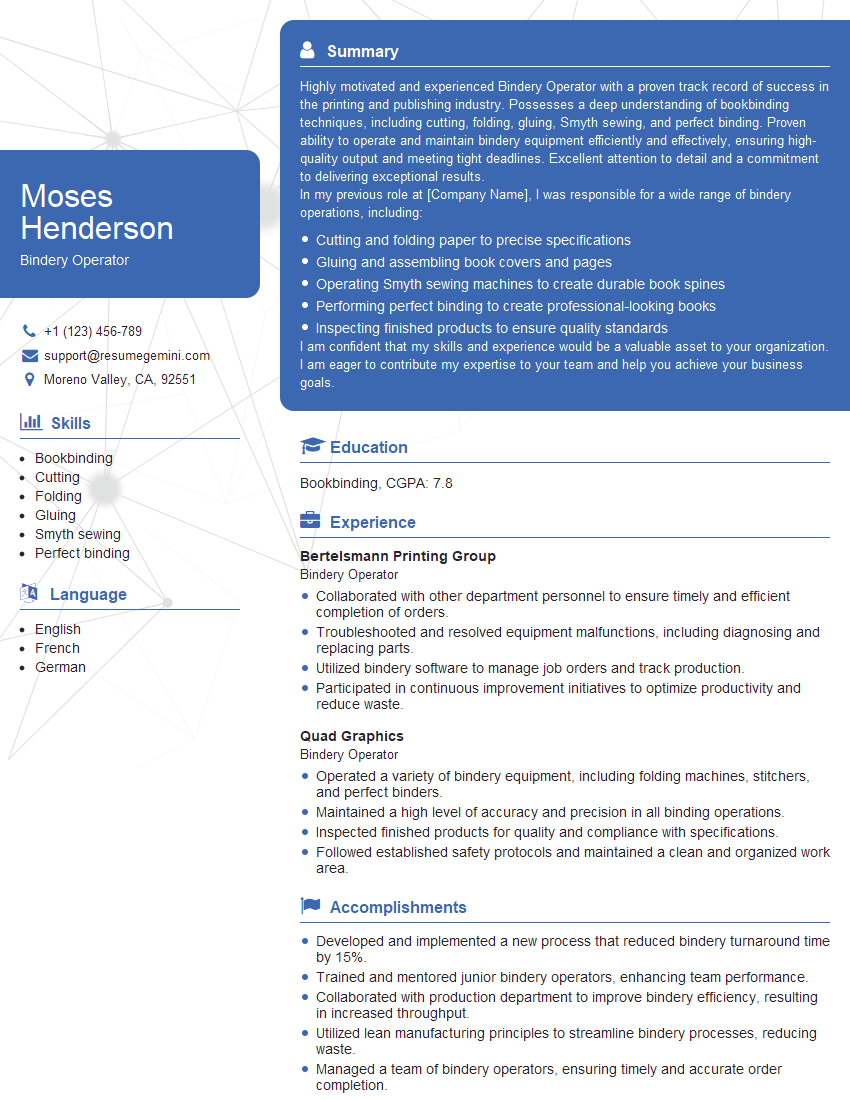
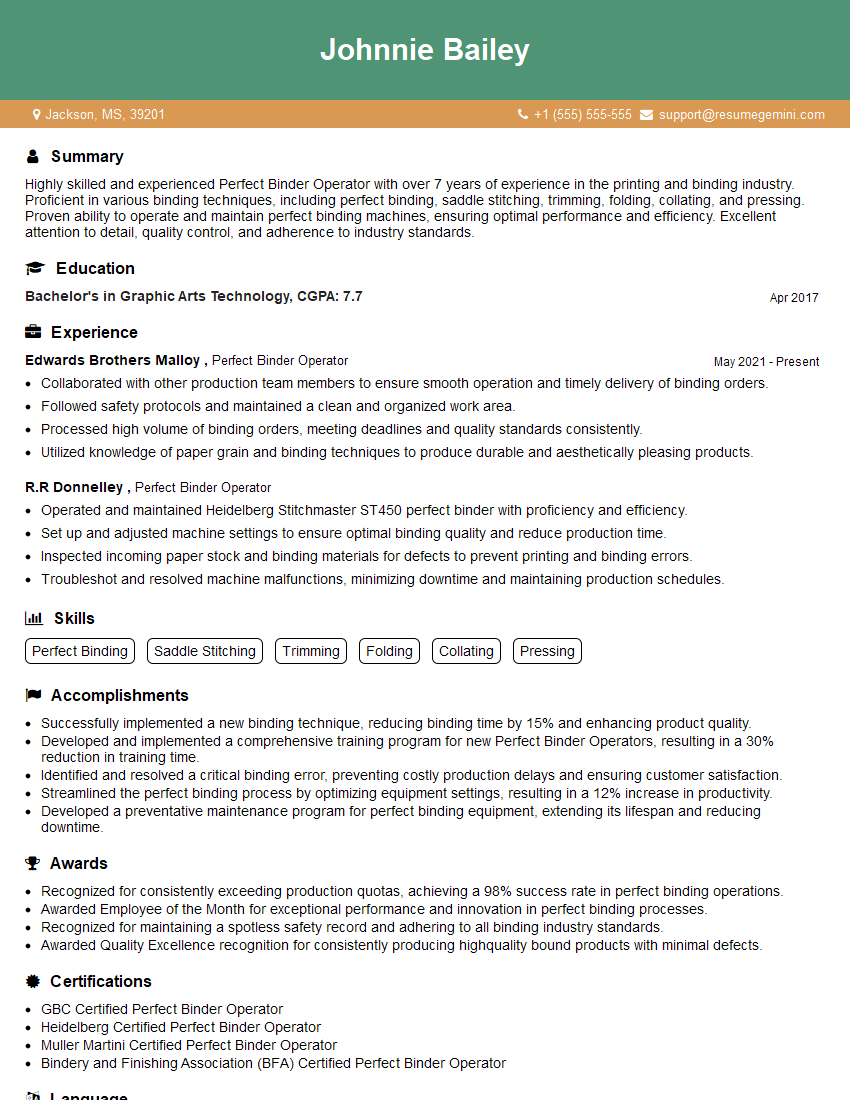
Mastering bookbinding techniques opens doors to exciting opportunities in publishing, archival preservation, and artisan crafts. A strong understanding of these techniques will significantly enhance your interview performance and career prospects. To maximize your chances, create an ATS-friendly resume that highlights your skills and experience effectively. ResumeGemini is a trusted resource that can help you build a professional and impactful resume. We provide examples of resumes tailored to Knowledge of Book Binding Techniques to guide you in creating a compelling application. Take the next step towards your dream job – build your resume with ResumeGemini today!
Explore more articles
Users Rating of Our Blogs
Share Your Experience
We value your feedback! Please rate our content and share your thoughts (optional).
What Readers Say About Our Blog
Attention music lovers!
Wow, All the best Sax Summer music !!!
Spotify: https://open.spotify.com/artist/6ShcdIT7rPVVaFEpgZQbUk
Apple Music: https://music.apple.com/fr/artist/jimmy-sax-black/1530501936
YouTube: https://music.youtube.com/browse/VLOLAK5uy_noClmC7abM6YpZsnySxRqt3LoalPf88No
Other Platforms and Free Downloads : https://fanlink.tv/jimmysaxblack
on google : https://www.google.com/search?q=22+AND+22+AND+22
on ChatGPT : https://chat.openai.com?q=who20jlJimmy20Black20Sax20Producer
Get back into the groove with Jimmy sax Black
Best regards,
Jimmy sax Black
www.jimmysaxblack.com
Hi I am a troller at The aquatic interview center and I suddenly went so fast in Roblox and it was gone when I reset.
Hi,
Business owners spend hours every week worrying about their website—or avoiding it because it feels overwhelming.
We’d like to take that off your plate:
$69/month. Everything handled.
Our team will:
Design a custom website—or completely overhaul your current one
Take care of hosting as an option
Handle edits and improvements—up to 60 minutes of work included every month
No setup fees, no annual commitments. Just a site that makes a strong first impression.
Find out if it’s right for you:
https://websolutionsgenius.com/awardwinningwebsites
Hello,
we currently offer a complimentary backlink and URL indexing test for search engine optimization professionals.
You can get complimentary indexing credits to test how link discovery works in practice.
No credit card is required and there is no recurring fee.
You can find details here:
https://wikipedia-backlinks.com/indexing/
Regards
NICE RESPONSE TO Q & A
hi
The aim of this message is regarding an unclaimed deposit of a deceased nationale that bears the same name as you. You are not relate to him as there are millions of people answering the names across around the world. But i will use my position to influence the release of the deposit to you for our mutual benefit.
Respond for full details and how to claim the deposit. This is 100% risk free. Send hello to my email id: lukachachibaialuka@gmail.com
Luka Chachibaialuka
Hey interviewgemini.com, just wanted to follow up on my last email.
We just launched Call the Monster, an parenting app that lets you summon friendly ‘monsters’ kids actually listen to.
We’re also running a giveaway for everyone who downloads the app. Since it’s brand new, there aren’t many users yet, which means you’ve got a much better chance of winning some great prizes.
You can check it out here: https://bit.ly/callamonsterapp
Or follow us on Instagram: https://www.instagram.com/callamonsterapp
Thanks,
Ryan
CEO – Call the Monster App
Hey interviewgemini.com, I saw your website and love your approach.
I just want this to look like spam email, but want to share something important to you. We just launched Call the Monster, a parenting app that lets you summon friendly ‘monsters’ kids actually listen to.
Parents are loving it for calming chaos before bedtime. Thought you might want to try it: https://bit.ly/callamonsterapp or just follow our fun monster lore on Instagram: https://www.instagram.com/callamonsterapp
Thanks,
Ryan
CEO – Call A Monster APP
To the interviewgemini.com Owner.
Dear interviewgemini.com Webmaster!
Hi interviewgemini.com Webmaster!
Dear interviewgemini.com Webmaster!
excellent
Hello,
We found issues with your domain’s email setup that may be sending your messages to spam or blocking them completely. InboxShield Mini shows you how to fix it in minutes — no tech skills required.
Scan your domain now for details: https://inboxshield-mini.com/
— Adam @ InboxShield Mini
support@inboxshield-mini.com
Reply STOP to unsubscribe
Hi, are you owner of interviewgemini.com? What if I told you I could help you find extra time in your schedule, reconnect with leads you didn’t even realize you missed, and bring in more “I want to work with you” conversations, without increasing your ad spend or hiring a full-time employee?
All with a flexible, budget-friendly service that could easily pay for itself. Sounds good?
Would it be nice to jump on a quick 10-minute call so I can show you exactly how we make this work?
Best,
Hapei
Marketing Director
Hey, I know you’re the owner of interviewgemini.com. I’ll be quick.
Fundraising for your business is tough and time-consuming. We make it easier by guaranteeing two private investor meetings each month, for six months. No demos, no pitch events – just direct introductions to active investors matched to your startup.
If youR17;re raising, this could help you build real momentum. Want me to send more info?
Hi, I represent an SEO company that specialises in getting you AI citations and higher rankings on Google. I’d like to offer you a 100% free SEO audit for your website. Would you be interested?
Hi, I represent an SEO company that specialises in getting you AI citations and higher rankings on Google. I’d like to offer you a 100% free SEO audit for your website. Would you be interested?