The right preparation can turn an interview into an opportunity to showcase your expertise. This guide to Knowledge of horse show rules and regulations interview questions is your ultimate resource, providing key insights and tips to help you ace your responses and stand out as a top candidate.
Questions Asked in Knowledge of horse show rules and regulations Interview
Q 1. What are the common penalties for refusing a fence in show jumping?
In show jumping, refusing a fence, meaning the horse doesn’t attempt to jump the obstacle, results in penalties. The severity of the penalty depends on the level of competition and the specific rules of the show. Generally, a first refusal results in four penalty points added to your score. A second refusal at the same fence usually results in elimination from the class. Think of it like this: the horse is given one ‘do-over’, but a second refusal shows the partnership isn’t ready for that obstacle. This rule prioritizes the safety of both horse and rider, and fair competition. Some shows might have slight variations in penalties but generally adhere to this principle.
For example, in a smaller local show, a first refusal might only incur three penalty points while a major competition will likely enforce the four-penalty standard. The key takeaway is that refusals are directly penalized, emphasizing the importance of training and clear communication between horse and rider.
Q 2. Explain the difference between a ‘fault’ and an ‘elimination’ in dressage.
In dressage, ‘faults’ and ‘eliminations’ represent different levels of infractions. A ‘fault’ is a minor mistake that detracts from the overall performance but doesn’t necessarily disqualify the rider. Faults are scored as penalty points, usually one or two points per mistake, depending on the severity. These penalties are added to the final score, impacting placement. Common faults include deviations from the correct sequence of movements, deviations from the designated track or, poor execution of a movement. Imagine a fault like a small spelling error in a long essay; it lowers your overall score, but doesn’t invalidate your work.
An ‘elimination’, however, is a major infraction that results in immediate disqualification from the competition. This signifies a serious breach of the rules, often involving safety concerns like dangerously unsound behavior from the horse, disobedience of the judge’s commands, or any behavior that may pose a risk to the horse or the rider. An elimination is like a major rule violation in a game; it ends your participation. Examples include dangerous disobedience, striking the horse, or using illegal equipment. The distinction is crucial in understanding the grading system and the importance of following the rules.
Q 3. Describe the process for resolving a protest during a horse show.
The process for resolving a protest during a horse show typically begins with submitting a formal written protest to the show’s designated protest committee within a specified timeframe – usually shortly after the completion of the class in question. The protest must clearly state the grounds for the protest, including specific rules violated or other justification for the challenge. This should be accompanied by any evidence, like photographic or video proof. The committee, comprised of impartial judges or officials, will then review the protest and the relevant evidence.
The committee can choose to investigate and may even interview witnesses to reach a conclusion. Depending on the nature and validity of the protest, the committee may uphold or dismiss the protest. If upheld, the committee can modify the scores, results, or even disqualify a competitor. Their decision is final and typically binding, unless a further appeal process is defined by the governing body of the horse show.
Q 4. What are the rules regarding attire for competitors in a hunter class?
Attire for hunter classes emphasizes a traditional, elegant, and safe appearance. Riders usually wear a tailored hunt coat (typically navy or black), breeches (usually white or beige), a long-sleeved shirt (typically white or pale color), a protective helmet (ASTM/SEI-certified is required), riding boots (tall leather boots), and gloves. The horse should be clean and well-groomed, wearing a bridle that matches the saddle. Jewelry is generally kept to a minimum for safety reasons.
Specific show rules may impose slightly different details or restrictions, but the overall aim is a consistent, formal look that emphasizes horsemanship and tradition. Think of it as a formal dress code for riders, reflecting the traditional history of hunter competition.
Q 5. How are ties broken in Western pleasure events?
Ties in Western pleasure events are usually broken through a series of tie-breaker rounds or procedures. The judge will select certain maneuvers or elements of the performance and have those riders who tied repeat these in a second or even a third round. For instance, they might ask all tied competitors to perform a specific pattern of circles, stops, and backings. The rider demonstrating the most consistent and impressive execution in the tie-breaker rounds ultimately wins. Some shows use a panel of multiple judges to improve fairness and accuracy in judging performances.
The specifics of the tie-breaker procedure often vary depending on the show and governing organization’s rules. The emphasis during these tie-breakers is on the quality of the horsemanship and the horse’s responsiveness, clarity of performance, and overall smoothness.
Q 6. What are the safety regulations surrounding equipment checks before competition?
Safety regulations surrounding equipment checks before competition are paramount. Before any competition, both the horse’s tack (equipment) and rider’s protective gear undergo scrutiny. This usually involves a visual inspection by designated officials or stewards to ensure everything is safe and in compliance with the rules. This includes checking the tack for any potential hazards: loose or broken buckles, worn leather, sharp edges. For the rider, helmet integrity is critical and safety equipment is thoroughly inspected. The saddle is inspected for secure girth straps, proper fit, and overall structural soundness.
The goal of these checks is to prevent accidents that could result from malfunctioning equipment. Failing an equipment check may result in disqualification or require immediate repairs before the rider can compete. This proactive approach underscores the emphasis on safety in equestrian sports.
Q 7. Explain the procedure for a horse that becomes injured during a competition.
If a horse becomes injured during a competition, the immediate priority is the horse’s safety and well-being. The competition will be halted, and the show’s veterinarian or appointed medical professional will be summoned immediately. The rider should stay with the horse and provide what assistance they can without exacerbating the injury. The injured horse is assessed for severity and a plan for treatment and transport to a veterinary facility is created. The rider will also be assessed for any injuries.
Depending on the severity of the injury, the show officials will take the necessary action, such as ending the competition, or ensuring the situation is handled with an appropriate level of care and safety. The decision of whether to continue the competition depends on various factors including safety concerns and the overall circumstances. The focus will remain on the animal’s welfare throughout the process.
Q 8. What are the rules governing the use of whips in different equestrian disciplines?
Whip rules vary significantly across equestrian disciplines, primarily focusing on safety and ethical treatment of the horse. Generally, the goal is to prevent excessive or abusive use. In disciplines like Dressage, the use of whips is highly regulated, often limited to a certain size and type (e.g., dressage whips with a flexible end), and their use must be subtle and barely perceptible. Penalties are incurred for excessive or forceful use. Jumping competitions typically allow for a slightly more permissive use of whips, but again, abusive use is penalized. Western disciplines, like Reining or Cutting, may have specific regulations regarding the type of whip allowed and its use. For example, some may prohibit crops entirely, while others may allow them only under certain circumstances. The specific rules will be detailed in the rule book for each organization (e.g., USEF, FEI) and each specific competition. Imagine it like the difference between a gentle tap to guide a child vs. a forceful strike; the former is acceptable, the latter is not.
For instance, in international dressage competitions governed by the FEI, the whip must be kept below the rider’s knee to avoid undue pressure on the horse’s body. Any striking action above the knee or any excessive use resulting in visible signs of distress in the horse will be penalized. Similarly, in Western disciplines, improper use of a spur or crop is often penalized more severely.
Q 9. Outline the judging criteria for a typical Western riding competition.
Judging in Western riding competitions typically assesses the horse and rider’s performance across several key areas, prioritizing horsemanship, precision, and the overall impression created. Judges look for a harmonious partnership between horse and rider, with the horse exhibiting smooth, responsive movements. Common criteria include:
- Horsemanship: This assesses the rider’s skill in controlling the horse smoothly and accurately, demonstrating a partnership built on trust and mutual respect. Good posture, effective aids, and control without excessive force are crucial.
- Reining (if applicable): This involves precise execution of maneuvers such as circles, spins, rollbacks, and lead changes. Smoothness, accuracy, and the horse’s responsiveness are paramount.
- Cattle Work (if applicable): In events involving cattle (like cutting or team penning), the horse’s agility, responsiveness, and the rider’s ability to maneuver the horse to work cattle effectively are judged.
- Showmanship: This assesses the rider’s appearance and presentation. This includes grooming the horse, attire, and the overall image projected.
- Smoothness and Rhythm: The horse’s gaits should be performed smoothly, without abrupt transitions or loss of rhythm.
- Accuracy: The maneuvers should be performed precisely, following the prescribed patterns and sequences.
Judges score each element, often using numerical scores, and those scores are compiled for a final result. The overall impression, demonstrating a relaxed yet responsive horse working harmoniously with the rider, carries significant weight in the final scoring.
Q 10. How are times recorded and verified in horse racing events?
Time recording in horse racing is a sophisticated process that uses multiple technologies to ensure accuracy and fairness. It typically involves several steps and different technologies working in tandem. Photo-finish cameras capture the horses crossing the finish line, providing extremely precise records, even when horses finish extremely close. These cameras take thousands of frames per second allowing precise determination of the order of finish. Electronic timing systems, integrated with sensors at the starting gate and the finish line, record the exact time each horse completes the race. These timings are often verified against other sensors and manual observation. This layered system ensures that even in very close races, there is clarity.
For example, at larger races, multiple photo-finish cameras, positioned at different angles along the finish line, capture the race from different perspectives. This redundancy helps to eliminate the possibility of errors and inaccuracies, ensuring fairness among participants. The images are then analyzed and compared for accuracy, and the official results are often reviewed by officials and race stewards to confirm that the results are accurate and that the rules of the race have been adhered to properly.
Q 11. What are the rules concerning the use of medications in competition horses?
Medication rules in equestrian competition are strictly enforced to ensure fair play and the well-being of the horses. Prohibited substances vary depending on the governing body (e.g., USEF, FEI) and the specific discipline. These rules often include lists of banned substances (including performance-enhancing drugs and substances that mask other prohibited drugs) and detailed regulations concerning the administration of permitted medications. There are specific time frames before competitions during which certain medications are prohibited and strict procedures for testing and sample collection are in place to detect violations. This is often a rigorous process that includes surprise testing at events.
For example, certain pain relievers might be permitted but only if given a certain time before the competition and only with proper documentation. Failing to follow these guidelines, even unintentionally, can lead to disqualification and penalties. It’s vital for competitors to understand and adhere to the rules very carefully, often consulting with veterinarians to ensure compliance. Penalties range from disqualification to more severe sanctions, including suspension from competition.
Q 12. Describe the process for handling a rule infraction during a competition.
Handling rule infractions during a competition involves a structured process to ensure fairness and consistency. The first step often involves identification of the infraction by the judge or official. They will typically note the infraction, potentially making an immediate verbal warning or even stopping the competition. Then, a formal report is typically prepared documenting the nature of the infraction and the involved parties. Depending on the severity of the infraction and the governing rules of the competition, penalties may range from a verbal warning to disqualification. The rider or driver might be given the opportunity to present their side of the story before the final decision is made. In some cases, particularly for serious rule breaches, a hearing with judges or a disciplinary committee might occur.
For instance, a rider might be penalized for refusing a jump in a show jumping competition. The severity of the penalty might depend on whether it was deemed intentional or if there were extenuating circumstances. The judge will document the infraction and apply a penalty according to the rules. An appeal process might be available following the decision for review by higher authorities.
Q 13. Explain the various types of penalties a rider might incur in a driving competition.
Penalties in driving competitions are tailored to address various infractions that might compromise safety, the smooth running of the event, or the fair assessment of competitors. Penalties may be incurred for a variety of reasons, and the severity of the penalties will vary based on the specifics of the rulebook and the severity of the infraction. Common infractions include:
- Obstructions: Penalties are applied for impeding other competitors on the course.
- Refusals: If a horse refuses to go through an obstacle, penalties may arise.
- Unsafe Driving: Poor handling of the carriage or horses that poses a risk to safety.
- Rule Violations: Not following the stipulated course or rules of the competition.
- Time Faults: Exceeding the allowed time for the competition.
Penalties can range from small time deductions to elimination from the competition. The specific penalties and point deductions are usually clearly outlined in the rules of the competition and are based on the severity of the infraction. A judge will observe these actions and apply the appropriate penalties in a fair and consistent manner.
Q 14. What are the veterinary regulations related to horse health before and during the competition?
Veterinary regulations before and during competition are paramount to ensure the health, welfare, and safety of the horses. These regulations often include mandatory health checks before the competition, sometimes involving veterinary inspections to verify the horse’s fitness to participate. This might include examinations for lameness, infectious diseases, and overall health assessments. Often, documentation of the horse’s vaccination records and recent health history is required to show that the horse is healthy and free from any potentially contagious diseases. Rules regarding medication are also significant; as previously noted, rules exist concerning the use of therapeutic medications and performance-enhancing drugs. During the competition, veterinarians are often on-site to monitor horses and address any immediate health concerns that might arise. If a horse appears unwell or injured, the veterinarian can assess the situation and decide whether the horse should continue participating or be withdrawn from the competition.
For example, a horse exhibiting signs of lameness during a competition would be examined by a veterinarian, and depending on the assessment, they could be withdrawn from the competition to prevent further injury. The horse’s welfare is the primary consideration, and rules exist to prevent the participation of any horse that could be at risk during the competition.
Q 15. How does the rule book handle instances of horse-related injury during an event?
Horse welfare is paramount in all equestrian events. Rule books typically detail procedures for handling horse injuries, ranging from minor cuts to more serious situations. The severity dictates the response. For minor injuries, a qualified veterinary professional on-site might provide immediate treatment. More serious injuries necessitate immediate veterinary attention, potentially halting the competition until the horse’s condition is assessed and stabilized. The specific rules often mandate reporting procedures to the show officials, outlining the steps to be taken depending on the injury’s nature and the horse’s ability to continue. The rules also often cover the humane euthanasia of a horse in cases of critical injury where continued suffering is unavoidable. This process is usually overseen by a veterinarian and ensures the horse’s dignity is respected. For example, imagine a horse sustaining a leg injury mid-jump. The show would halt, veterinary help would be summoned, and the judge would decide whether to allow the competitor to withdraw without penalty, depending on the severity and the rules of that particular competition.
Career Expert Tips:
- Ace those interviews! Prepare effectively by reviewing the Top 50 Most Common Interview Questions on ResumeGemini.
- Navigate your job search with confidence! Explore a wide range of Career Tips on ResumeGemini. Learn about common challenges and recommendations to overcome them.
- Craft the perfect resume! Master the Art of Resume Writing with ResumeGemini’s guide. Showcase your unique qualifications and achievements effectively.
- Don’t miss out on holiday savings! Build your dream resume with ResumeGemini’s ATS optimized templates.
Q 16. Explain the protocols for handling protest and appeals in horse shows.
The process for handling protests and appeals is generally formal and hierarchical. First, an objection or protest must be lodged within a specified timeframe (often immediately after the incident or the announcement of scores) with the designated show officials. This protest must be accompanied by a clear and concise explanation of the grounds for appeal. The protest is then reviewed by the judges or a designated panel. If the protest is deemed valid, action can be taken – such as a re-ride, a score correction, or even disqualification. If the initial decision isn’t satisfactory, the rules typically outline a procedure for appeal to a higher authority, perhaps a regional or national equestrian federation. Each appeal will also typically incur fees. This process ensures fairness and allows for due process. Imagine a competitor believing they were unfairly penalized for exceeding the time limit. They would need to lodge a formal protest within the stipulated timeframe, explaining with evidence (e.g., a video recording) why they believe the penalty was unwarranted. The judges would review, and if unsuccessful, an appeal process would follow to a higher level of governance.
Q 17. What are the rules for substitutions in team competitions?
Rules for substitutions in team competitions vary depending on the specific event and governing body. However, general principles typically include pre-approval from the officials before any substitution is allowed. This is often due to fair competition standards and ensures the integrity of the event. The rules may also stipulate restrictions on the number of substitutions permitted. For instance, there might be a limit of one or two permitted substitutions throughout the duration of the team competition. Additionally, the substituted rider may need to meet certain eligibility requirements, and the substitution might not be allowed at all after the competition has started (depending on the nature of the event). Imagine a dressage team competition. If a rider falls ill, a pre-approved substitute rider might be allowed to replace them, but only after obtaining prior permission from the competition organisers. Without such a process, the competition’s fairness could be jeopardized.
Q 18. How do different scoring systems work for various equestrian disciplines?
Scoring systems vary widely across equestrian disciplines. In dressage, judges score individual movements on a scale (often 0-10), with penalties for mistakes. These scores are then totaled to produce a final score. In jumping, penalties are assessed for rail-downs (knocked-down jumps) and exceeding the allowed time. The rider with the lowest total penalty wins. In eventing, scores from dressage, cross-country, and show jumping are combined. Western disciplines often use a point system based on specific maneuvers’ execution. In some racing disciplines, the placement or completion time determines the winning horse and rider. The rules of each discipline dictate the specific scoring method, ensuring a consistent and fair assessment of performance. A dressage competition might score based on the horse’s precision, suppleness, and obedience. In contrast, a show jumping competition prioritizes speed and the number of rails knocked down.
Q 19. Describe the roles and responsibilities of a show steward.
Show stewards play a crucial role in maintaining the smooth and fair running of equestrian events. Their responsibilities include ensuring compliance with the rules and regulations, monitoring the competition, resolving minor disputes, and reporting any violations to the show management. They are the eyes and ears of the organizing committee and ensure that the competition runs according to plan. Stewards also frequently interact with competitors, addressing concerns, and providing clarifications. In addition, they help to maintain an orderly environment, ensuring the safety of both the horses and the spectators. A steward might intervene if a rider is found to be using an illegal whip, or if there is a dangerous incident during a cross-country competition, or if a competitor is not demonstrating sportsmanship. They are essentially the regulatory authority on the ground during the horse show.
Q 20. Explain the importance of maintaining fair play and sportsmanship in horse shows.
Fair play and sportsmanship are fundamental to the ethos of equestrian sports. They foster respect for fellow competitors, judges, and especially the horses. Maintaining a spirit of sportsmanship builds a positive atmosphere and promotes ethical behavior. It is crucial for the reputation of the sport and builds the enjoyment of everyone involved. This involves respecting competition rules, accepting wins and losses gracefully, and treating competitors, officials, and other participants with respect. Examples of sportsmanship include congratulating winners, helping fellow competitors in need, and avoiding any actions that could be considered dangerous or unfair to other participants. This aspect is crucial in maintaining the positive reputation of equestrian sports, promoting a welcoming and enjoyable atmosphere, and upholding the ethical principles that should guide all equestrian competition.
Q 21. What are the rules regarding horse equipment and tack inspections?
Horse equipment and tack inspections are common in horse shows to ensure safety and fairness. Rules usually specify what is permissible equipment, checking for anything that could be deemed unsafe or give a rider an unfair advantage. This may include inspecting bits for sharpness or excessive pressure points, ensuring that saddles fit appropriately, and checking for any prohibited materials or modifications to the tack. The goal is to maintain a level playing field, prioritizing the welfare of the horse, and creating equal opportunity for all competitors. In many competitions, the horse and its tack will be subject to inspection to verify compliance with these rules. Failure to pass the inspection might lead to disqualification or penalties. Imagine a jumping competition where a rider’s saddle is found to have illegal padding, giving the rider an unfair advantage. The show steward would conduct an inspection, and if the violation is confirmed, the rider would likely face penalties.
Q 22. How do you handle a situation where a horse is clearly distressed during the event?
Horse welfare is paramount. If a horse shows signs of distress—excessive sweating, labored breathing, lameness, refusal to jump, or clear signs of fear or anxiety—the situation requires immediate action. First, I would halt the competition for that horse. Then, I’d assess the situation: is it a minor issue (e.g., temporary spooking) or something more serious requiring veterinary attention? For minor issues, I might allow a brief rest period and observation. For serious distress, I would immediately call for the on-site veterinarian. Depending on the severity, the horse might be withdrawn from the competition. The rider’s safety and the welfare of the horse always take precedence over competition outcomes. In all cases, thorough documentation of the incident is crucial, including the horse’s behavior, any interventions taken, and the veterinarian’s assessment. This ensures transparency and enables a review process to prevent similar incidents in the future. For example, I once had to halt a dressage test when a horse developed acute lameness. The vet attended, the horse was withdrawn, and the rider was very understanding.
Q 23. Describe the process for managing spectator safety near the arena.
Spectator safety is managed through a multi-layered approach. Firstly, designated spectator areas are clearly marked and monitored by trained personnel (stewards, volunteers). Barriers are usually in place to maintain a safe distance from the arena. Signage reminding spectators of safety protocols (e.g., remaining seated during certain phases of the competition, refraining from entering restricted areas) is prominently displayed. Announcements are made regularly to inform spectators of any changes or potential hazards. Trained personnel proactively manage crowd flow, particularly during entry and exit. Emergency response plans are in place, including clearly designated exits, first-aid stations, and communication channels with emergency services. Regular safety checks are conducted throughout the event to identify and rectify any potential hazards. The entire setup aims to create a safe and enjoyable atmosphere for all spectators, minimizing the risk of accidents.
Q 24. What are the rules surrounding the use of electronic devices during a competition?
Rules regarding electronic devices vary depending on the specific competition and governing body, but generally, their use is restricted during certain phases to prevent distraction and ensure fairness. Taking photos or videos might be permitted in designated areas and during specific times, but filming during a performance is usually prohibited. Mobile phones must often be switched to silent mode. The use of electronic devices that could interfere with judging (like electronic scoreboards not officially part of the judging system) is strictly forbidden. These rules aim to maintain the integrity of the competition, prevent cheating, and ensure that the focus remains on the horses and riders’ performance. Strict adherence to these rules is crucial, and infringements can result in penalties, including disqualification.
Q 25. Explain how different judging panels work together to reach a consensus.
Judging panels in equestrian events typically consist of multiple judges, each independently scoring the performance based on a pre-defined set of criteria. Their individual scores are then collated. Depending on the competition, there might be a scoring system that averages the scores, discarding high and low scores (e.g. discarding the highest and lowest score before averaging the remainder). This reduces bias. In case of significant discrepancies among judges’ scores, a panel discussion may be necessary to identify potential inconsistencies and reach a consensus. They may review video footage or discuss their observations to ensure fairness and accuracy. The goal is to achieve a fair and objective assessment of each performance, even with varied judging perspectives. Open communication and clear criteria are crucial in this process. For instance, in some dressage events, judges will meet briefly after each test to resolve any major discrepancies and ensure consistency.
Q 26. Describe your experience handling rule infractions and managing disputes.
Handling rule infractions and disputes requires fairness, consistency, and clear communication. I follow a structured approach: Firstly, I thoroughly document the infraction, including details of the incident, witnesses’ accounts, and relevant rule numbers. Then, I communicate the infraction to the involved party (rider, trainer) in a calm and professional manner, explaining the specific rule broken and the potential penalties. I’m open to hearing their perspective and any mitigating factors. The decision regarding the penalty depends on the severity of the infraction, past performance of the competitor, and the governing body’s regulations. Penalties might range from a verbal warning to disqualification. In cases of dispute, I escalate the issue to higher authorities (e.g., the head steward, the organizing committee) for review and a final decision. Maintaining objectivity, applying rules consistently, and ensuring a fair process are essential. I maintain detailed records of all decisions and disputes for transparency and future reference. A clear and well-documented process minimizes misunderstandings and ensures everyone is treated fairly.
Q 27. How do you stay updated on the latest rule changes in the equestrian world?
Staying updated on rule changes is crucial. I subscribe to official publications from governing bodies like the FEI (Fédération Equestre Internationale) and national equestrian federations. I attend rule interpretation seminars and workshops regularly. I actively participate in online forums and communities of equestrian officials, sharing knowledge and discussing rule changes with experienced colleagues. I also review rulebooks meticulously for any updates or clarifications. This proactive approach ensures I’m fully abreast of all the latest changes and their implications. Knowledge of the evolving rules, and the principles behind them, is critical for consistent and fair officiating.
Q 28. How do you ensure compliance with all relevant safety regulations during a horse show?
Ensuring compliance with safety regulations necessitates a proactive and multi-faceted approach. Before the show, I meticulously inspect the arena and surrounding areas, identifying and mitigating potential hazards. This includes checking fencing, footing, obstacles (if applicable), and lighting. I confirm that all safety equipment is present and in good working order (e.g., first-aid kits, emergency communication systems). During the competition, I actively monitor the arena for any emerging safety concerns and promptly address them. This includes ensuring that the competition is running smoothly and that all participants are following the safety guidelines. I coordinate with veterinarians, paramedics, and other safety personnel to ensure a swift response to any injuries or emergencies. Post-competition, I review all safety procedures and make necessary improvements to prevent future incidents. This attention to detail is crucial in creating a safe environment for horses and riders.
Key Topics to Learn for Knowledge of Horse Show Rules and Regulations Interview
- Show Management & Organization: Understanding the structure of horse shows, including class formats, judging procedures, and scheduling protocols. Practical application: Knowing how to navigate a show program and anticipate potential scheduling conflicts.
- Rules of the Road (Arena Etiquette): Mastering safe and courteous riding practices within the show arena, including proper passing techniques and maintaining a safe distance from other competitors. Practical application: Demonstrating awareness of potential hazards and reacting appropriately.
- Specific Discipline Rules: Thorough comprehension of the rules governing your specific equestrian discipline (e.g., hunter, jumper, dressage, western). Practical application: Applying rules to hypothetical scenarios and explaining their rationale.
- Judging Criteria & Scoring: Understanding the criteria used by judges to assess performances and award placings. Practical application: Analyzing performances and predicting scores based on the rules.
- Dress Code & Attire Regulations: Familiarity with the expected attire for riders, grooms, and spectators. Practical application: Knowing how to properly present oneself at a horse show.
- Safety Regulations & Procedures: In-depth knowledge of safety protocols, including emergency procedures and the handling of unexpected situations. Practical application: Identifying and mitigating potential safety risks.
- Protest Procedures & Dispute Resolution: Understanding the formal processes for lodging a protest and resolving disputes fairly and professionally. Practical application: Knowing when and how to escalate a concern through the appropriate channels.
Next Steps
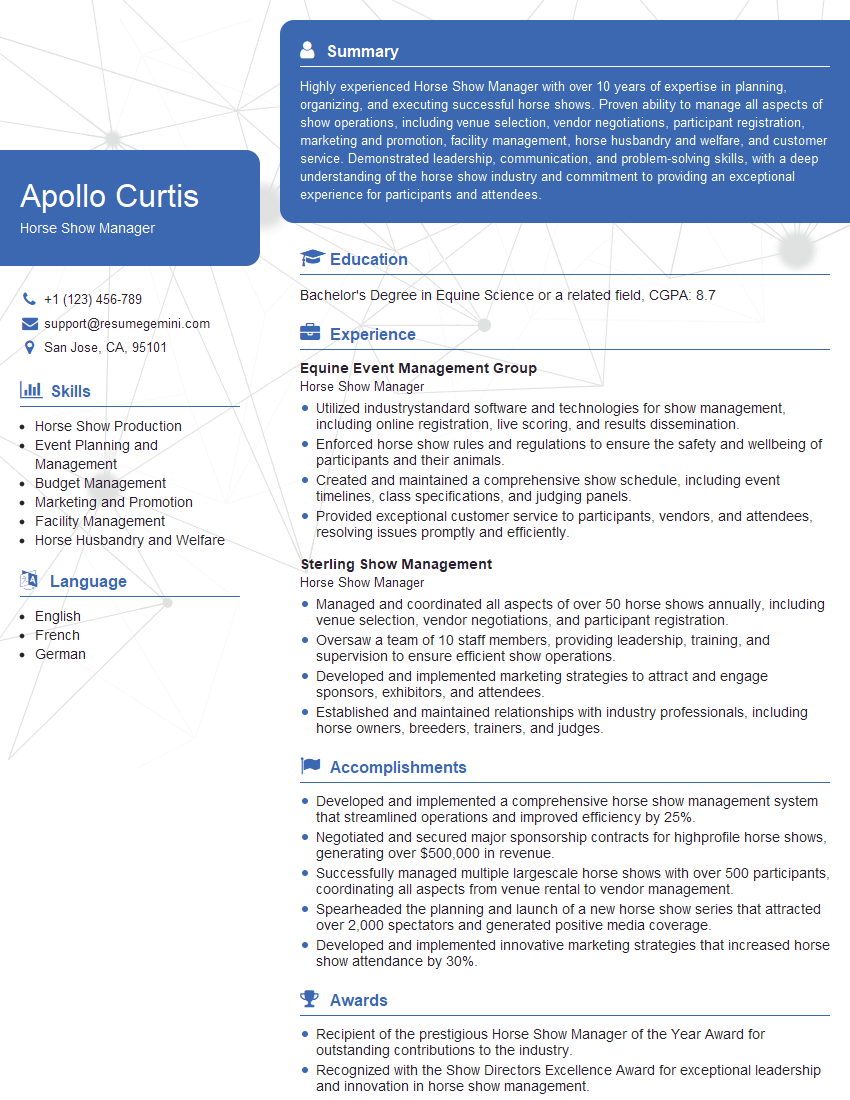
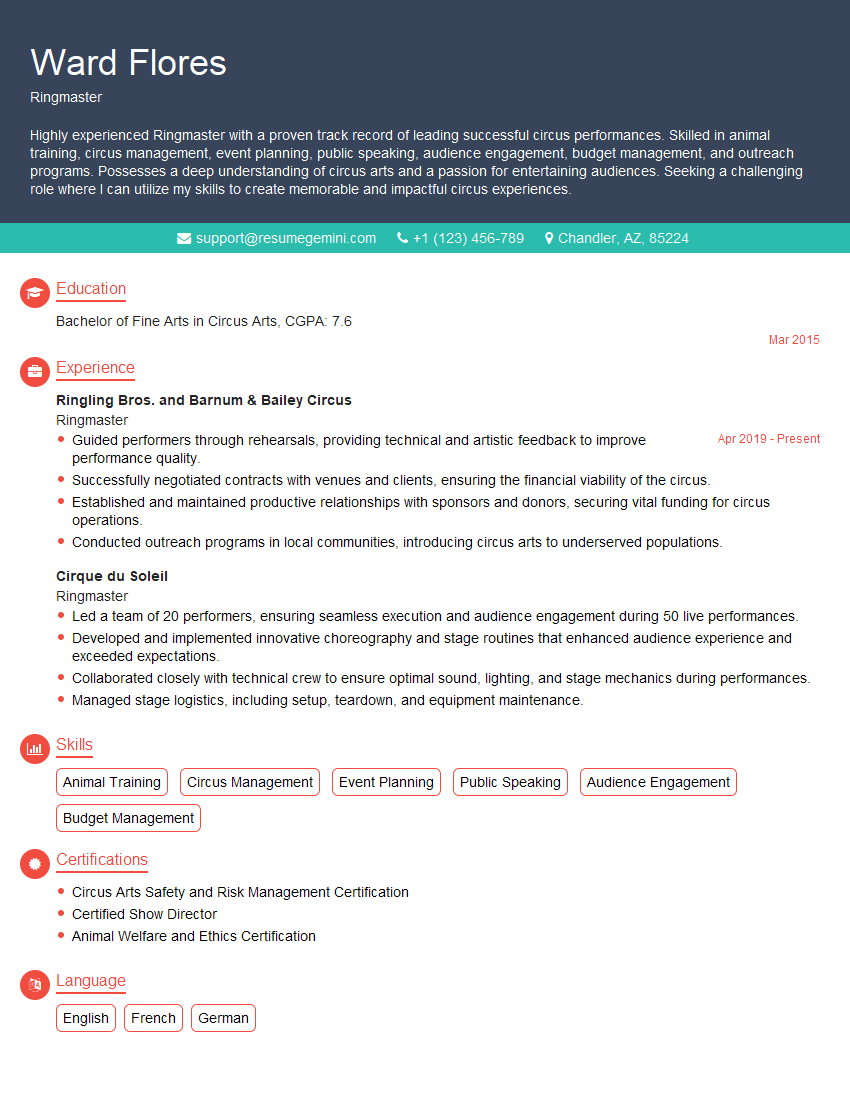
Mastering horse show rules and regulations is crucial for career advancement in the equestrian industry, demonstrating your professionalism and commitment to safety and fair play. A well-crafted resume is key to showcasing this expertise to potential employers. To increase your chances of securing an interview, focus on building an ATS-friendly resume that highlights your knowledge and experience. ResumeGemini is a trusted resource to help you create a compelling and effective resume tailored to the equestrian industry. Examples of resumes tailored to showcasing knowledge of horse show rules and regulations are available to guide you.


Explore more articles
Users Rating of Our Blogs
Share Your Experience
We value your feedback! Please rate our content and share your thoughts (optional).
What Readers Say About Our Blog
Hello,
we currently offer a complimentary backlink and URL indexing test for search engine optimization professionals.
You can get complimentary indexing credits to test how link discovery works in practice.
No credit card is required and there is no recurring fee.
You can find details here:
https://wikipedia-backlinks.com/indexing/
Regards
NICE RESPONSE TO Q & A
hi
The aim of this message is regarding an unclaimed deposit of a deceased nationale that bears the same name as you. You are not relate to him as there are millions of people answering the names across around the world. But i will use my position to influence the release of the deposit to you for our mutual benefit.
Respond for full details and how to claim the deposit. This is 100% risk free. Send hello to my email id: [email protected]
Luka Chachibaialuka
Hey interviewgemini.com, just wanted to follow up on my last email.
We just launched Call the Monster, an parenting app that lets you summon friendly ‘monsters’ kids actually listen to.
We’re also running a giveaway for everyone who downloads the app. Since it’s brand new, there aren’t many users yet, which means you’ve got a much better chance of winning some great prizes.
You can check it out here: https://bit.ly/callamonsterapp
Or follow us on Instagram: https://www.instagram.com/callamonsterapp
Thanks,
Ryan
CEO – Call the Monster App
Hey interviewgemini.com, I saw your website and love your approach.
I just want this to look like spam email, but want to share something important to you. We just launched Call the Monster, a parenting app that lets you summon friendly ‘monsters’ kids actually listen to.
Parents are loving it for calming chaos before bedtime. Thought you might want to try it: https://bit.ly/callamonsterapp or just follow our fun monster lore on Instagram: https://www.instagram.com/callamonsterapp
Thanks,
Ryan
CEO – Call A Monster APP
To the interviewgemini.com Owner.
Dear interviewgemini.com Webmaster!
Hi interviewgemini.com Webmaster!
Dear interviewgemini.com Webmaster!
excellent
Hello,
We found issues with your domain’s email setup that may be sending your messages to spam or blocking them completely. InboxShield Mini shows you how to fix it in minutes — no tech skills required.
Scan your domain now for details: https://inboxshield-mini.com/
— Adam @ InboxShield Mini
Reply STOP to unsubscribe
Hi, are you owner of interviewgemini.com? What if I told you I could help you find extra time in your schedule, reconnect with leads you didn’t even realize you missed, and bring in more “I want to work with you” conversations, without increasing your ad spend or hiring a full-time employee?
All with a flexible, budget-friendly service that could easily pay for itself. Sounds good?
Would it be nice to jump on a quick 10-minute call so I can show you exactly how we make this work?
Best,
Hapei
Marketing Director
Hey, I know you’re the owner of interviewgemini.com. I’ll be quick.
Fundraising for your business is tough and time-consuming. We make it easier by guaranteeing two private investor meetings each month, for six months. No demos, no pitch events – just direct introductions to active investors matched to your startup.
If youR17;re raising, this could help you build real momentum. Want me to send more info?
Hi, I represent an SEO company that specialises in getting you AI citations and higher rankings on Google. I’d like to offer you a 100% free SEO audit for your website. Would you be interested?
Hi, I represent an SEO company that specialises in getting you AI citations and higher rankings on Google. I’d like to offer you a 100% free SEO audit for your website. Would you be interested?
good