Feeling uncertain about what to expect in your upcoming interview? We’ve got you covered! This blog highlights the most important Knowledge of naval operations and tactics interview questions and provides actionable advice to help you stand out as the ideal candidate. Let’s pave the way for your success.
Questions Asked in Knowledge of naval operations and tactics Interview
Q 1. Describe the different types of naval warfare.
Naval warfare encompasses a broad spectrum of combat operations conducted at sea. It’s not simply about surface ships engaging each other; it’s a multifaceted domain.
- Surface Warfare: This is the most readily understood aspect, involving engagements between warships such as destroyers, cruisers, and frigates. Think of the classic battleship duels of past eras, or modern engagements using guided missiles and advanced sensors. The Battle of Tsushima in 1905 is a prime example of a large-scale surface action.
- Submarine Warfare (Anti-Submarine Warfare (ASW)): Submarines, operating stealthily underwater, pose a significant threat. ASW involves detecting, tracking, and neutralizing these threats, often utilizing sonar, sonobuoys, and anti-submarine helicopters. The Battle of the Atlantic during World War II vividly illustrates the strategic importance of submarine warfare.
- Amphibious Warfare: This involves the combined operations of naval, air, and land forces to project power ashore. It requires coordinated planning and execution to successfully land troops and equipment on hostile beaches. The Normandy landings in 1944 are a testament to the complexity and scale of amphibious operations.
- Mine Warfare: This involves the use of naval mines to block shipping lanes, damage enemy vessels, or protect friendly harbors. Mines can be laid by surface ships, submarines, or aircraft, and require specialized equipment for clearance. The extensive use of naval mines during both World Wars highlights their strategic value in controlling sea lanes.
- Electronic Warfare (EW): This employs electronic countermeasures and surveillance to disrupt enemy communications, radar systems, and navigation. This silent battle often determines the outcome of engagements unseen by the general public. Modern navies heavily rely on EW capabilities.
- Information Warfare: The manipulation or exploitation of information to achieve military objectives. This increasingly important aspect includes cyber warfare impacting ships’ systems and control of narratives through media.
These types of naval warfare are often interwoven, requiring coordinated efforts between different naval forces and branches of the military. For example, an amphibious assault might necessitate extensive ASW measures to protect the landing force from submarine attack.
Q 2. Explain the concept of naval power projection.
Naval power projection refers to a navy’s ability to exert influence and force at a distance from its home territory. It involves the deployment of naval assets – ships, submarines, aircraft, and marines – to project power and achieve strategic objectives in various locations around the world. This can be achieved through various means, including:
- Presence: Simply having a naval force present in a region can deter aggression or demonstrate support for allies. A carrier strike group deploying near a region of tension sends a clear message.
- Force Demonstration: Showing off military capabilities through exercises or maneuvers can influence other countries’ actions. Joint military exercises involving multiple nations act as both a demonstration and a means to bolster international alliances.
- Intervention: Using naval power to respond to crises, such as humanitarian relief efforts or enforcing sanctions. Naval vessels are often the first responders in natural disaster scenarios, providing crucial aid.
- Combat Operations: Engaging in direct military action, like a naval blockade or airstrikes from aircraft carriers. The use of naval air power during the first Gulf War demonstrates the ability to project lethal force at significant range.
Effective naval power projection requires a combination of strong naval capabilities, effective logistics, strategic planning, and political will. It’s a crucial element of national strategy for countries seeking to safeguard their interests and influence global events.
Q 3. What are the key elements of a successful naval campaign?
A successful naval campaign requires a careful orchestration of multiple factors. Think of it as a complex symphony, where each instrument (naval asset) must play its part perfectly for a harmonious (successful) result.
- Clear Objectives: The campaign must have well-defined, achievable goals. What are you trying to achieve? Control of a sea lane? The destruction of an enemy fleet? Liberation of a coastal area?
- Strategic Planning: This involves meticulously mapping out the campaign’s execution, considering all aspects, from logistics to intelligence gathering. This needs to account for potential contingencies and adaptive planning.
- Intelligence: Superior intelligence on the enemy’s capabilities, intentions, and movements is paramount. Knowing where the enemy is, what they’re doing, and what they’re planning allows for proactive decision-making.
- Operational Coordination: Seamless cooperation between different branches of the military, including the navy, air force, army, and marines, is vital. This includes flawless interoperability between various systems and platforms. Successful campaigns leverage combined arms effectively.
- Logistics: Maintaining the supply chain is crucial; ships need fuel, ammunition, food, and spare parts. Without proper logistics support, even the best-laid plans can fail. This often involves complex supply lines extending across oceans.
- Force Concentration: Focusing the available force at the decisive point and time is key to victory. This might involve concentrating firepower at a specific location or employing deception tactics to achieve surprise.
- Adaptability: Being prepared to adjust the campaign plan in response to unforeseen circumstances or changes in the battlefield situation is essential. Flexibility is a critical aspect of effective operational planning.
Ultimately, a successful naval campaign is a testament to careful planning, robust execution, and a deep understanding of the naval warfare environment.
Q 4. Discuss the importance of naval intelligence in modern warfare.
Naval intelligence is absolutely critical in modern warfare. It’s the eyes and ears of the navy, providing crucial information to guide decisions and ensure operational success. In today’s complex geopolitical landscape, it’s often the difference between victory and defeat.
- Target Acquisition: Identifying enemy ships, submarines, and installations to be targeted during an operation. This allows for accurate targeting and efficient use of resources.
- Threat Assessment: Evaluating enemy capabilities and intentions. Understanding enemy strengths and weaknesses helps formulate effective strategies and tactics.
- Situational Awareness: Maintaining a comprehensive understanding of the operating environment, including weather conditions, enemy movements, and friendly forces. This helps anticipate threats and mitigate risks.
- Operational Planning: Providing the information necessary for developing and executing effective naval operations. The more accurate the intelligence, the more efficient and effective the planning.
- Electronic Intelligence (ELINT): Intercepting and analyzing enemy communications and radar signals, providing valuable insights into their activities. ELINT plays a major role in detecting and tracking enemy assets.
- Human Intelligence (HUMINT): Gathering information from human sources, such as spies or defectors, can provide invaluable insights unavailable through technical means. HUMINT provides crucial context and understanding of operational objectives.
Modern naval intelligence relies heavily on advanced technologies, such as satellite imagery, signals intelligence (SIGINT), and sophisticated data analysis tools. However, human intelligence and skilled analysts remain vital for interpreting this data and translating it into actionable insights.
Q 5. How do you assess the effectiveness of different naval weapons systems?
Assessing the effectiveness of naval weapons systems is a multifaceted process, going beyond simple metrics like range and explosive yield. A holistic assessment is needed, considering several factors:
- Effectiveness Against Target: How reliably does the weapon hit and neutralize its intended target? This involves analyzing kill probabilities against various targets (ships, aircraft, land installations, etc.). Modern warfare includes examining effectiveness against newer threats and advancements in defensive systems.
- Reliability: How frequently does the weapon system function as intended? High reliability is crucial in combat, as a malfunction can have severe consequences.
- Survivability: Can the weapon system withstand enemy fire and continue functioning effectively? This requires evaluating its defensive capabilities and resilience to attacks.
- Cost-Effectiveness: Does the weapon’s performance justify its cost? This involves comparing its effectiveness and life-cycle cost to alternatives. The overall cost-benefit ratio is a key component of military budgeting.
- Maintainability: How easy and cost-effective is it to maintain the weapon system? High maintenance costs can offset the benefits of even the most effective weaponry. Logistical support is critical.
- Integration with Other Systems: How well does the weapon system integrate with other naval platforms and systems? Seamless integration is essential for optimal performance.
This assessment often involves complex simulations, live-fire exercises, and rigorous data analysis. The evaluation criteria vary depending on the specific weapon system and its intended role within the overall naval strategy. For example, a long-range cruise missile will be judged differently than a close-in weapons system (CIWS).
Q 6. Explain the concept of naval blockade and its strategic implications.
A naval blockade is a military operation where a navy prevents ships from entering or leaving a port or coastal area. It’s a powerful tool used to isolate a target, disrupting its supply lines and potentially leading to its surrender or collapse.
- Strategic Implications: A successful blockade can cripple an enemy’s economy by preventing imports and exports. This can be a decisive tool in forcing an opponent into compliance or undermining their military capabilities. The blockade of Germany during World War I is a clear example of how this can lead to economic collapse and impact war strategy.
- Enforcement Challenges: Blockades are not easy to maintain. The blockading force needs to be substantial enough to control the area and prevent ships from breaking through. This involves considering factors like the adversary’s counter-blockade strategy and potential for third-party involvement.
- International Law: Blockades are governed by international law. A blockade must be clearly declared, and neutral ships must be treated according to established norms. International law often requires justification for the declaration of a naval blockade, involving potential legal ramifications if the blockade does not meet criteria for just cause.
- Economic Warfare: Blockades are a significant tool in economic warfare, applying pressure on the targeted nation’s economy and potentially influencing their political behavior. A successful blockade can influence public support for the regime in question, potentially triggering internal upheaval.
- Humanitarian Concerns: Blockades can have humanitarian consequences, as they may prevent the delivery of essential goods like food and medicine. This requires careful consideration of the potential impact on civilians. Balancing military objectives with humanitarian needs is critical during blockades.
The decision to employ a naval blockade is a significant strategic move with potentially far-reaching consequences. It’s essential to weigh the potential benefits against the potential risks and ethical considerations before implementing one.
Q 7. Describe the challenges of operating in littoral waters.
Littoral waters, the coastal regions of seas and oceans, present unique challenges for naval operations. These shallow waters and their proximity to land create a complex and demanding environment.
- Navigation Hazards: Littoral waters often contain numerous obstacles, such as shallow reefs, underwater rocks, and busy shipping lanes. Accurate navigation is critical to avoid collisions and groundings. The risk of grounding is significantly higher in littoral zones compared to the open sea.
- Mine Threat: Coastal areas are susceptible to minefields, both deployed by adversaries and unintentionally present from prior conflicts or accidents. These pose significant risks to ships and require thorough mine countermeasures (MCM) capabilities.
- Environmental Factors: Weather conditions in littoral zones can be unpredictable and extreme, changing rapidly. This can negatively impact visibility and increase the risk of accidents. Shallow waters are also subject to higher levels of wave action.
- Anti-Access/Area Denial (A2/AD): Land-based threats, such as coastal defense systems, anti-ship missiles, and aircraft, can make it difficult for naval forces to operate effectively in these waters. These adversaries can create significant challenges for naval power projection in these coastal zones.
- Asymmetric Warfare: Littoral regions are often vulnerable to asymmetric threats from smaller, faster vessels like armed fishing boats or terrorist groups. These pose a different threat paradigm compared to traditional naval warfare and need different counter-strategies.
- Crowded Waters: Littoral waters are often congested with commercial and civilian vessels. Maintaining safe passage while effectively operating naval units can be exceptionally challenging.
Operating successfully in littoral waters requires specialized training, advanced technology, and a detailed understanding of the local environment. It also mandates a robust and adaptive approach that combines traditional naval warfare doctrines with specialized techniques to counter asymmetric threats.
Q 8. Discuss the role of naval logistics in sustaining operations.
Naval logistics is the lifeline of any naval operation, encompassing the complex process of planning, procuring, transporting, and managing all resources needed to sustain a fleet at sea. Think of it as the unseen hand that keeps a navy functioning far from its home bases.
This involves a vast array of activities, including:
- Fuel and ammunition supply: Warships consume massive amounts of fuel and ammunition. Logistics ensures these are delivered to the right place at the right time, often involving complex supply chains across oceans.
- Food and water provisions: Keeping a crew fed and hydrated is crucial for morale and operational effectiveness. This involves careful planning, storage, and distribution of food and water supplies.
- Spare parts and maintenance: Ships require constant maintenance and repairs. Logistics manages the supply and delivery of spare parts and provides for maintenance personnel.
- Medical supplies and personnel: Maintaining the health of the crew is paramount. Logistics guarantees the availability of medical supplies and personnel, often utilizing dedicated medical ships.
- Personnel deployment and rotation: Logistics manages the movement of personnel, ensuring crews are rotated and fresh personnel are available.
Effective naval logistics is critical for mission success. A breakdown in logistics can severely hamper operational effectiveness, potentially resulting in mission failure. For example, during the Battle of Midway, the Japanese suffered from poor logistics, running low on fuel and ammunition, which contributed significantly to their defeat.
Q 9. Explain the principles of naval command and control.
Naval command and control (C2) is the integrated process of exercising authority and direction over naval forces to accomplish assigned missions. It’s essentially the brain of the naval operation, ensuring coordinated and effective action among different units.
Key principles of naval C2 include:
- Decentralized control: Naval commanders often have considerable autonomy to make decisions based on the situation on the ground (or rather, at sea), as real-time communication might be limited. This requires high levels of trust and well-defined responsibilities.
- Clear communication: Efficient and reliable communication is paramount. This includes secure and timely transmission of information among units, including orders, updates on the enemy’s position, and reports on own units’ status.
- Situational awareness: Having a clear picture of the operational environment is vital. This involves gathering and analyzing information from various sources, such as intelligence, sensors, and reconnaissance, to develop a shared understanding of the battlespace.
- Responsiveness and adaptability: The maritime environment is dynamic. C2 must be flexible enough to adapt to changing situations and to respond quickly to unexpected events.
- Integrated warfare: Modern naval operations often involve the coordination of various platforms, including ships, aircraft, submarines, and ground forces. Effective C2 is necessary to integrate these various elements into a cohesive fighting force.
The failure of effective C2 can lead to confusion, missed opportunities, and even defeat. The Normandy landings during WWII demonstrate the vital importance of well-executed C2, as the successful coordination of naval, air, and ground forces was crucial for the success of the invasion.
Q 10. What are some common naval tactical maneuvers?
Naval tactical maneuvers are the specific actions warships and other naval units undertake to gain an advantage in combat or to avoid an enemy threat. These maneuvers are heavily influenced by factors such as the enemy’s capabilities, the environment, and the desired outcome.
Some common maneuvers include:
- Flank speed: Maximum speed to evade or pursue. Think of it as a naval ‘sprint’.
- Defensive formation: Positioning ships to protect weaker vessels from enemy attack (e.g., screen formation). Similar to a football team protecting the quarterback.
- Offensive formation: Positioning ships for a coordinated attack (e.g., wedge formation). A coordinated assault on an enemy formation.
- Crossing the T: A classic naval maneuver where one fleet crosses the ‘T’ of another, allowing it to fire on the enemy’s entire broadside while receiving fewer return shots. It’s like finding the perfect angle for a basketball shot.
- Evasive maneuvers: Using speed and maneuvering to avoid enemy fire. Think of it as dodging incoming projectiles in a video game.
- Anti-submarine warfare (ASW) tactics: Using sonar, depth charges, and other weapons to detect and destroy enemy submarines.
The selection of appropriate maneuvers depends entirely on the situation. A surface action will differ greatly from a submarine engagement.
Q 11. How does technology impact modern naval operations?
Technology has revolutionized modern naval operations, impacting almost every aspect from warfare to logistics. It’s a constant arms race, with technology rapidly shaping and reshaping the naval battlespace.
Key technological impacts include:
- Improved sensors and surveillance: Advanced radar, sonar, satellite imagery, and other sensors provide greater situational awareness, allowing for earlier detection of threats.
- Precision-guided weapons: Missiles and other weapons systems are far more accurate than ever before, increasing the effectiveness of naval firepower while reducing collateral damage.
- Network-centric warfare (NCW): NCW integrates various sensors, weapons systems, and command-and-control nodes into a shared network. This facilitates better information sharing and coordination.
- Unmanned systems: Drones and unmanned underwater vehicles (UUVs) are increasingly utilized for reconnaissance, surveillance, and even attack missions, reducing the risk to human life.
- Cyber warfare: The vulnerability of naval systems to cyberattacks requires increased focus on cybersecurity to protect critical infrastructure and operational capabilities.
The integration of AI and machine learning is also rapidly changing the landscape, with applications ranging from automated target recognition to predictive maintenance.
Q 12. Describe the difference between offensive and defensive naval strategies.
Offensive and defensive naval strategies represent fundamentally different approaches to achieving naval objectives. The distinction isn’t always clear-cut, as many strategies blend both offensive and defensive elements.
Offensive naval strategy focuses on actively seeking out and engaging the enemy, aiming to destroy their forces and seize control of key maritime areas. Examples include preemptive strikes, blockade breaking, and amphibious assaults. The goal is to dictate the terms of engagement and impose one’s will on the enemy.
Defensive naval strategy emphasizes protecting one’s own forces and assets, deterring enemy attacks, and controlling key waterways. This may involve establishing defensive lines, deploying minefields, and maintaining a strong naval presence to deter enemy aggression. The focus is on protecting national interests and preventing the enemy from achieving their objectives.
The choice between offensive and defensive strategies depends on various factors such as the relative strengths of the opposing forces, the geopolitical context, and the specific objectives of the naval operation.
Q 13. Explain the concept of sea control and its significance.
Sea control refers to the ability of a navy to deny the effective use of the sea to an adversary, while ensuring its own use of the sea for its purposes. It’s not simply about physical control of the ocean; it’s about controlling the conditions in which naval operations take place.
Sea control is significant because:
- It supports power projection: A navy that controls the sea can deploy forces and supplies virtually anywhere, enhancing its ability to project power globally.
- It protects sea lines of communication (SLOCs): SLOCs are crucial for trade and the movement of goods. Sea control ensures the safety and security of these vital routes.
- It supports amphibious operations: Sea control is essential for successful amphibious landings, as it guarantees safe passage for landing craft and provides protection against enemy counterattacks.
- It influences economic power: Control of the sea can significantly influence a nation’s economic prosperity, as it controls access to global markets and resources.
- It is a cornerstone of national security: In a globalized world, access to the seas is critical for national security. Sea control guarantees national security by protecting the nation’s coasts and seaborne trade.
Throughout history, nations have fiercely fought for sea control, recognizing its decisive influence on geopolitical power and economic strength.
Q 14. Discuss the importance of communication in naval operations.
Effective communication is the backbone of any successful naval operation. The vast distances involved, the dynamic nature of the maritime environment, and the need for coordinated action among multiple platforms necessitate robust and reliable communication systems.
The importance of communication is multifaceted:
- Coordination of forces: Seafaring units must communicate to coordinate their actions, share situational awareness, and execute coordinated maneuvers.
- Command and control: Clear and timely communication is crucial for the exercise of command and control, ensuring orders are accurately transmitted and understood.
- Intelligence sharing: Effective communication facilitates the rapid sharing of intelligence information, which is critical for making informed decisions.
- Logistics and supply: Communication is essential for coordinating logistics and supply chains, ensuring that ships receive necessary resources and support.
- Personnel safety: In case of emergencies or distress situations, effective communication is crucial for ensuring the safety and well-being of personnel.
Modern navies utilize a variety of communication technologies, including satellite communication, radio systems, and secure data links, to ensure reliable and timely communication in diverse and challenging conditions. The failure of communication can lead to disastrous consequences, as seen in several historical naval battles.
Q 15. What are some of the key factors to consider when planning a naval exercise?
Planning a successful naval exercise requires meticulous attention to detail across multiple domains. It’s akin to orchestrating a complex ballet, where every ship and aircraft must perform its role flawlessly to achieve the overall objective. Key factors include:
- Clear Objectives: Defining specific, measurable, achievable, relevant, and time-bound (SMART) goals is paramount. What are we trying to accomplish? Improved anti-submarine warfare tactics? Refining amphibious assault procedures? This determines the scope and complexity of the exercise.
- Scenario Development: A realistic and challenging scenario is crucial. This involves crafting a believable threat, incorporating environmental factors like weather and sea state, and considering potential friendly and enemy actions. A poorly designed scenario renders the exercise largely useless.
- Force Composition: Selecting the right mix of ships, aircraft, and personnel is vital. This depends on the exercise objectives and the capabilities being tested. You wouldn’t use a destroyer squadron to practice mine countermeasures, for example.
- Communications Plan: Effective communication is the lifeblood of any naval operation. A robust communications plan ensures seamless information flow between all participating units. This includes establishing communication protocols and addressing potential communication failures.
- Safety Procedures: Safety must be paramount. Detailed safety protocols must be established and rigorously enforced to minimize risk of accidents or injuries. This involves pre-exercise briefings, safety drills, and the designation of safety observers.
- Post-Exercise Analysis: A thorough debriefing session is vital to identify lessons learned and areas for improvement. This involves gathering feedback from participants, analyzing data collected during the exercise, and incorporating insights into future training and operations.
For example, an exercise focused on carrier strike group operations would involve different considerations than one focused on littoral combat operations. The former would emphasize air-sea integration and long-range strike capabilities, while the latter would prioritize close-quarters combat and amphibious warfare techniques.
Career Expert Tips:
- Ace those interviews! Prepare effectively by reviewing the Top 50 Most Common Interview Questions on ResumeGemini.
- Navigate your job search with confidence! Explore a wide range of Career Tips on ResumeGemini. Learn about common challenges and recommendations to overcome them.
- Craft the perfect resume! Master the Art of Resume Writing with ResumeGemini’s guide. Showcase your unique qualifications and achievements effectively.
- Don’t miss out on holiday savings! Build your dream resume with ResumeGemini’s ATS optimized templates.
Q 16. How do you assess risk in a naval operation?
Risk assessment in naval operations is a continuous process, vital for mission success and crew safety. It’s a systematic approach involving identifying, analyzing, and mitigating potential hazards. We use a multi-faceted approach, much like a doctor conducting a thorough patient examination.
- Hazard Identification: This involves systematically identifying all potential threats, including environmental factors (e.g., severe weather, rough seas), enemy actions (e.g., attacks, ambushes), equipment malfunctions, and human error.
- Risk Analysis: We assess the likelihood and severity of each identified hazard. This often involves using quantitative methods, such as probability matrices, to assign numerical values to these factors. A high likelihood and high severity hazard presents a critical risk.
- Risk Mitigation: This step focuses on developing and implementing strategies to reduce the likelihood or severity of identified hazards. This might involve alternative operational plans, enhanced surveillance, improved training, or the use of defensive systems. For instance, if the risk of a minefield is high, we might use mine-sweeping assets or choose a different route.
- Risk Monitoring and Control: Throughout the operation, we continuously monitor the risk environment, updating our assessment as new information becomes available. This allows for dynamic adjustment of plans and mitigation strategies as needed.
For example, during an amphibious assault, the risk of enemy fire is high. Risk mitigation might include employing air superiority, using smoke screens, and having robust medical capabilities on standby. It’s a continuous process of evaluation, adaptation, and refinement.
Q 17. Explain the process of naval damage control.
Naval damage control is a critical aspect of ensuring ship survivability and crew safety in the face of damage. Think of it as the ship’s emergency medical team, working tirelessly to stabilize the situation and prevent further harm. The process is typically divided into several phases:
- Damage Assessment: Immediately after an incident, teams rapidly assess the extent and nature of the damage. This involves locating the damage, determining the type of damage (e.g., flooding, fire, structural damage), and estimating the severity.
- Emergency Response: Trained damage control teams spring into action, implementing pre-planned damage control procedures to address the immediate threats. This might include flooding control (using pumps, plugging holes), fire suppression (using fire extinguishers, fire-fighting systems), and structural shoring.
- Damage Control Organization: Every ship has a well-defined damage control organization, with designated personnel and responsibilities. This ensures coordinated and efficient response during an emergency.
- Temporary Repairs: Temporary repairs are carried out to stabilize the situation and prevent further damage. These are often makeshift solutions, designed to hold things together until permanent repairs can be undertaken.
- Permanent Repairs: Once the immediate threat is neutralized, permanent repairs are undertaken to fully restore the ship’s functionality and seaworthiness. This might involve extensive welding, plumbing, and electrical work.
- Post-Incident Analysis: After the incident, a thorough post-incident analysis is conducted to identify any deficiencies in the damage control system, procedures, or training. This helps prevent similar incidents from occurring in the future.
Effective damage control training is crucial. Regular drills and simulations prepare the crew to react quickly and effectively in a variety of emergency scenarios. The goal is to maximize survival and minimize damage.
Q 18. Describe the role of naval aviation in modern warfare.
Naval aviation plays a pivotal role in modern warfare, providing a powerful combination of offensive and defensive capabilities. It’s the eyes and the teeth of the fleet, allowing projection of power over vast distances and enabling unparalleled situational awareness. The role can be categorized as follows:
- Offensive Operations: Carrier-based aircraft conduct strikes against enemy targets, providing precision firepower and overwhelming force. This includes attacking land-based targets, enemy ships, and submarines.
- Defensive Operations: Fighter aircraft protect the fleet from air attacks, providing a critical defensive layer against enemy aircraft and missiles. They patrol the skies, maintaining air superiority and intercepting threats.
- Anti-Submarine Warfare (ASW): Patrol and maritime patrol aircraft locate and track enemy submarines, providing valuable intelligence and assisting in their destruction.
- Electronic Warfare (EW): Naval aircraft contribute to EW operations, jamming enemy communications and radar systems, providing critical support to the fleet.
- Reconnaissance and Surveillance: Aircraft can provide reconnaissance and surveillance over vast areas, gathering critical intelligence on enemy activity.
- Logistics and Support: Aircraft are also crucial in providing logistics and support to the fleet, transporting supplies, personnel, and equipment.
For example, the use of F-35C Lightning II stealth fighters aboard the Nimitz-class carriers represents the cutting edge of carrier air power, enabling advanced long-range strike capabilities and superior air superiority.
Q 19. What are some of the ethical considerations in naval warfare?
Ethical considerations in naval warfare are of paramount importance, guiding actions to minimize harm to civilians and maintain adherence to international humanitarian law. It’s about finding the delicate balance between military necessity and the protection of innocent lives.
- Proportionality: Attacks must be proportionate to the military advantage gained. This means avoiding excessive force that causes disproportionate harm to civilians or civilian infrastructure. This requires careful targeting analysis and stringent rules of engagement.
- Distinction: A clear distinction must be made between military objectives and civilians. Attacks should not be directed at civilians or civilian objects. This necessitates meticulous intelligence gathering and careful target selection.
- Precaution: All feasible precautions must be taken to avoid civilian casualties. This includes using precision-guided munitions, avoiding densely populated areas, and warning civilians when possible.
- Military Necessity: All actions must be militarily necessary. This means that the action must contribute to the overall military objective and be essential for achieving it.
- Responsibility: Commanders and personnel have a responsibility to comply with international humanitarian law and to ensure their actions are ethical and lawful.
The potential for collateral damage in naval operations necessitates careful planning and execution. For example, during a strike on an enemy facility located near a civilian area, the utmost care must be taken to minimize collateral damage. This might involve using a less powerful weapon, choosing a different strike time, or abandoning the mission altogether.
Q 20. Discuss the importance of international law in naval operations.
International law plays a critical role in governing naval operations, ensuring stability and predictability in the maritime domain. It’s the rulebook for naval activities, preventing conflicts and promoting peaceful relations between nations. Key aspects include:
- The Law of the Sea (UNCLOS): UNCLOS defines the rights and responsibilities of states concerning the use of the world’s oceans. It establishes maritime zones, such as territorial waters, exclusive economic zones (EEZs), and the high seas, each with its specific legal regime.
- International Humanitarian Law (IHL): IHL sets out rules for conducting warfare, aiming to protect civilians and limit the suffering caused by armed conflict. This includes rules on targeting, proportionality, and the treatment of prisoners of war.
- Freedom of Navigation: International law recognizes the freedom of navigation in international waters, allowing ships of all nations to transit freely. However, this freedom is not absolute and must be exercised in accordance with international law.
- Maritime Security: International cooperation is essential to address maritime security challenges such as piracy, terrorism, and drug trafficking. This often involves joint naval operations between multiple countries.
Compliance with international law is essential for maintaining good relations between nations and preventing conflicts. For example, a naval vessel operating in another nation’s territorial waters without permission is a violation of international law and could lead to a serious incident.
Q 21. How do you manage conflicts between different naval units?
Managing conflicts between different naval units requires clear communication, well-defined command structures, and a robust conflict resolution mechanism. It’s about preventing friction and ensuring seamless cooperation within a complex operational environment.
- Clear Chain of Command: A clearly defined chain of command ensures that all units understand their roles and responsibilities, preventing confusion and minimizing the potential for conflict.
- Effective Communication: Open and frequent communication channels are vital for coordinating actions and resolving disagreements. This involves using standardized communication procedures and establishing clear communication protocols.
- Standardized Procedures: Standardized procedures for various operations minimize ambiguity and reduce the chances of misunderstanding between units. This reduces friction and ensures consistency in actions.
- Conflict Resolution Mechanisms: Formal conflict resolution mechanisms should be in place, allowing for disputes to be addressed in a structured and fair manner. This might involve mediation by a senior officer or a formal investigation.
- Pre-Deployment Training: Thorough pre-deployment training ensures that all personnel understand the importance of teamwork and cooperation, and they are equipped with the skills necessary to resolve conflicts effectively.
For example, during a large-scale naval exercise, different units might have conflicting priorities or operational requirements. Effective communication and clear protocols will help prevent these conflicts from escalating into major problems. A pre-exercise briefing emphasizing cooperation and communication significantly reduces the probability of such issues arising.
Q 22. Explain the concept of force projection from the sea.
Force projection from the sea refers to a nation’s ability to deploy military power—troops, equipment, and supplies—from its navy to a distant location. It’s about extending a country’s military reach beyond its borders, influencing events far from its shores. Think of it like a powerful punch thrown across an ocean. This is achieved through a combination of naval assets: aircraft carriers launching air strikes, amphibious assault ships landing marines, and logistics ships sustaining deployed forces.
For example, during the Gulf War, the US Navy played a crucial role in projecting force. Aircraft carriers launched numerous sorties against Iraqi targets, while amphibious assault ships and other vessels delivered troops and supplies to the theatre of operations. This rapid deployment and sustained support demonstrated the power of sea-based force projection.
Successful force projection demands a robust naval infrastructure, including well-maintained ships, trained personnel, effective command and control systems, and secure supply lines. Failing in any of these areas can severely limit a nation’s ability to project power effectively.
Q 23. Describe the role of submarines in naval operations.
Submarines are arguably the most versatile and potent assets in naval operations. Their primary roles include anti-submarine warfare (ASW), anti-surface warfare (ASuW), intelligence gathering, and strategic nuclear deterrence. Their ability to operate undetected beneath the waves provides a significant advantage.
In ASW, submarines hunt and destroy enemy submarines. In ASuW, they use torpedoes and cruise missiles to target surface ships and coastal installations. Their stealth capabilities make them ideal for intelligence gathering, allowing them to collect information without being detected. And, in the case of nuclear-powered ballistic missile submarines (SSBNs), they form the backbone of a nation’s nuclear deterrent, capable of launching nuclear weapons from hidden positions.
Consider the role of Soviet/Russian submarines during the Cold War. Their ability to patrol undetected in the oceans, carrying nuclear weapons, served as a powerful deterrent to Western powers. The constant threat of submarine-launched ballistic missiles (SLBMs) shaped geopolitical strategies for decades.
Q 24. What are the key considerations for selecting a naval base?
Selecting a naval base involves careful consideration of several key factors. Strategic location is paramount – proximity to potential threats or operational areas is crucial. The base must offer sufficient depth of water to accommodate the largest vessels in the fleet, and have adequate berthing facilities for repair and maintenance. The surrounding geography should offer protection from the elements and potential attacks. Furthermore, reliable infrastructure, including power, communication networks, and logistical support, is essential.
Other considerations include proximity to civilian infrastructure (skilled labor, supply chains), environmental impact, and political stability of the region. For example, a base located in a politically unstable area might be vulnerable to attacks or sabotage, whereas a base near a major shipyard could facilitate quicker repairs and maintenance.
The selection process typically involves a detailed cost-benefit analysis, considering all the above factors, to ensure the chosen location provides the optimal balance of operational capability and long-term sustainability.
Q 25. Discuss the implications of asymmetric warfare on naval operations.
Asymmetric warfare, involving a weaker adversary employing unconventional tactics against a technologically superior opponent, presents significant challenges for naval operations. These tactics might include suicide attacks on ships, the use of improvised explosive devices (IEDs), or cyberattacks targeting naval command and control systems. The relative lack of technological parity means that traditional naval doctrines may be less effective against these threats.
Naval forces must adapt to this changing landscape by enhancing force protection measures, employing more robust anti-terrorism tactics, and investing heavily in cybersecurity. Increased intelligence gathering and improved situational awareness are also critical in mitigating asymmetric threats. The 2000 USS Cole bombing highlighted the vulnerability of naval vessels to asymmetric attacks. Subsequently, increased security measures were adopted across naval fleets globally.
Successfully responding to asymmetric warfare requires a flexible and adaptable approach, emphasizing intelligence, situational awareness, and robust security measures alongside traditional naval capabilities.
Q 26. How do you maintain operational readiness of a naval vessel?
Maintaining operational readiness of a naval vessel is a continuous process demanding meticulous attention to detail. It involves regular maintenance schedules, crew training exercises, and rigorous inspections. This encompasses everything from ensuring the vessel’s propulsion systems are functional to verifying the effectiveness of its weapons systems and communication equipment. Regular drills, simulating various operational scenarios, are crucial for maintaining crew proficiency and coordination.
Preventive maintenance, where components are replaced or serviced before failure, is crucial to minimizing downtime. This requires a well-trained engineering crew and a robust maintenance management system to track and schedule tasks effectively. Furthermore, the crew must undergo regular training to stay proficient in operating and maintaining the vessel’s systems. Simulators are frequently used to train personnel without the risks and costs associated with real-world deployments.
A comprehensive approach to maintaining readiness includes rigorous inspections and audits to ensure compliance with safety standards and operational requirements. These efforts are crucial to ensuring a naval vessel is always mission-ready.
Q 27. Describe the role of cyber warfare in naval operations.
Cyber warfare is increasingly significant in naval operations. It encompasses attacks targeting various aspects of naval operations, including navigation systems, communication networks, and weapon systems. A successful cyberattack could disable a ship’s ability to navigate, communicate with other vessels, or even launch weapons. The potential for disruption and damage is immense.
Naval forces need to develop strong cybersecurity defenses to protect their systems from cyber threats. This includes investing in robust network security systems, conducting regular security audits, and providing cybersecurity training to personnel. Furthermore, offensive cyber capabilities are being developed to deter attacks and disrupt adversaries’ operations.
The increasing reliance on networked systems in modern naval vessels makes them particularly vulnerable to cyberattacks. Proactive measures like implementing multi-layered security protocols and investing in robust network segmentation are crucial for mitigating this risk. The development of robust cyber defenses is just as vital as traditional naval capabilities in the modern battlefield.
Q 28. How do you integrate different naval assets into a coordinated operation?
Integrating different naval assets into a coordinated operation requires robust command and control structures, effective communication systems, and clearly defined roles and responsibilities. This involves coordinating activities across various platforms, including aircraft carriers, submarines, destroyers, and amphibious assault ships. A centralized command centre, with real-time situational awareness, is essential for coordinating the actions of these dispersed units.
The successful execution of a coordinated naval operation depends on using a common operational picture, allowing all units to have the same awareness of the situation. This requires seamless communication between ships, aircraft, and command headquarters, often utilizing encrypted data links to ensure secure transmission of information. Effective communication protocols and standardized procedures are vital for smooth coordination and avoiding conflicts or misunderstandings.
The US Navy’s deployment of carrier strike groups provides a prime example of multi-asset coordination. These groups include an aircraft carrier, cruisers, destroyers, submarines, and support vessels, all working together under a single command structure to achieve a common operational goal. The intricate coordination, both within and between these groups and external assets, showcases the complexities and importance of integrating naval assets effectively.
Key Topics to Learn for Knowledge of Naval Operations and Tactics Interview
- Naval Warfare Principles: Understanding core doctrines, strategies, and the historical evolution of naval warfare. Consider the impact of technological advancements.
- Operational Planning & Execution: Familiarize yourself with the process of planning naval operations, including intelligence gathering, force deployment, and logistics. Practice analyzing hypothetical scenarios and proposing solutions.
- Maritime Security Operations: Explore the complexities of maritime security, including anti-piracy, counter-terrorism, and search and rescue operations. Understand the legal and ethical frameworks involved.
- Command & Control Systems: Gain a working knowledge of the command structures, communication systems, and decision-making processes within a naval environment. Analyze the challenges of coordinating large-scale operations.
- Naval Tactics & Maneuvering: Study various naval tactical doctrines, including anti-submarine warfare, surface warfare, and amphibious operations. Understand the strengths and weaknesses of different naval platforms and their tactical capabilities.
- Logistics and Sustainment: Explore the crucial role of logistics in supporting naval operations. This includes fuel, ammunition, supplies, and personnel management.
- Modern Naval Technology: Develop a foundational understanding of modern naval technology, including sensors, weapons systems, and communication technologies. Consider their impact on naval strategy and tactics.
- International Law of the Sea: Gain familiarity with the legal framework governing maritime operations and its implications for naval actions.
- Problem-Solving & Decision-Making under Pressure: Practice analyzing complex scenarios, identifying key challenges, and developing effective solutions within time constraints – a crucial skill for naval roles.
Next Steps
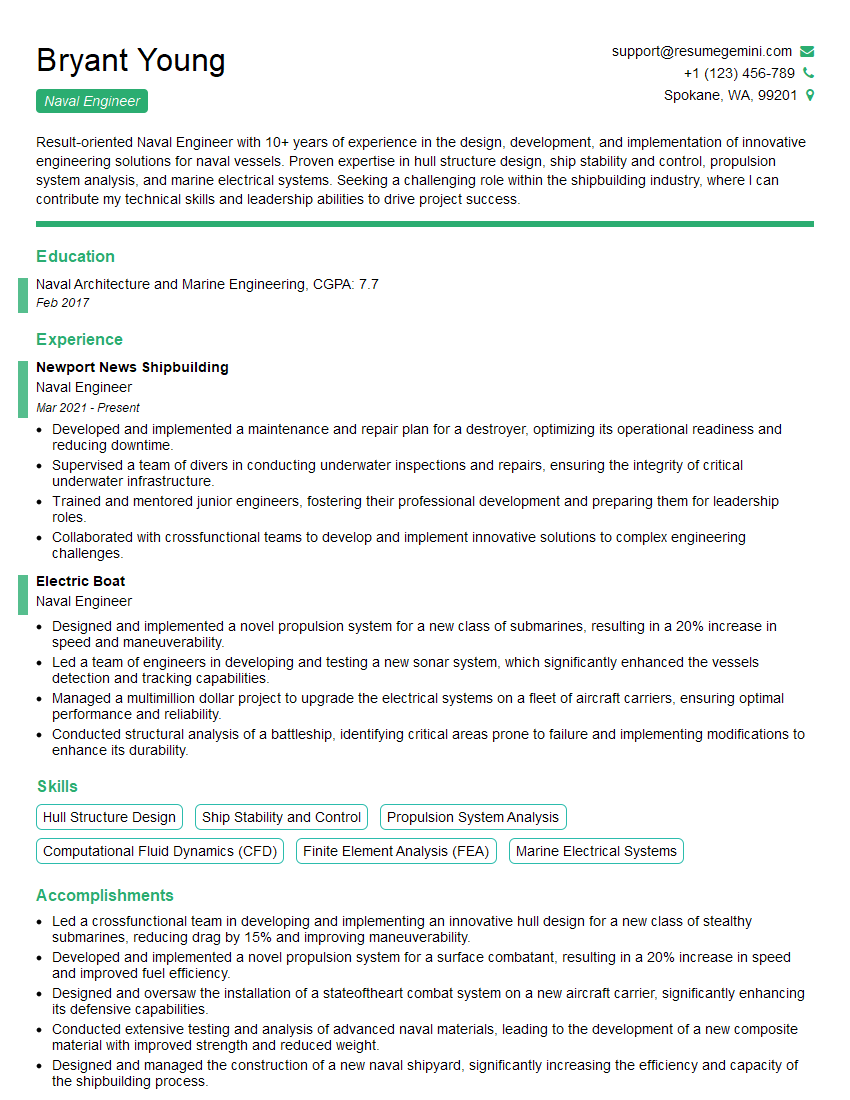
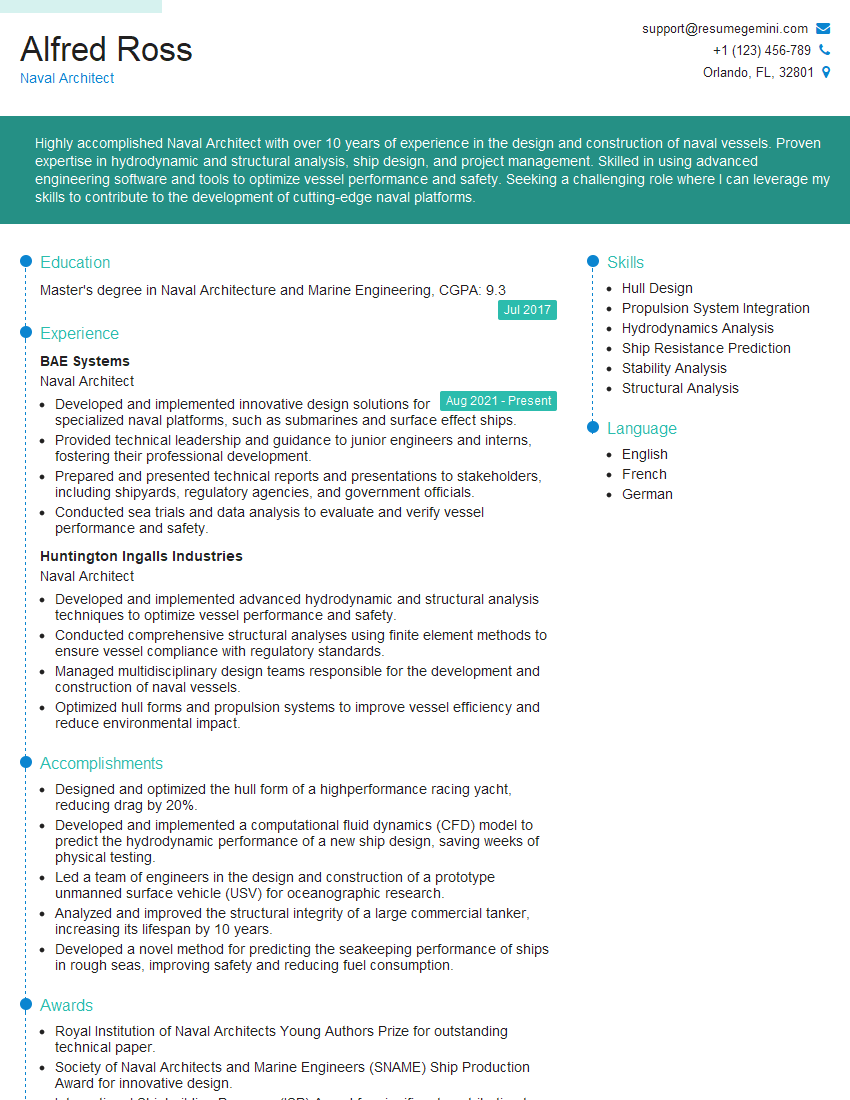
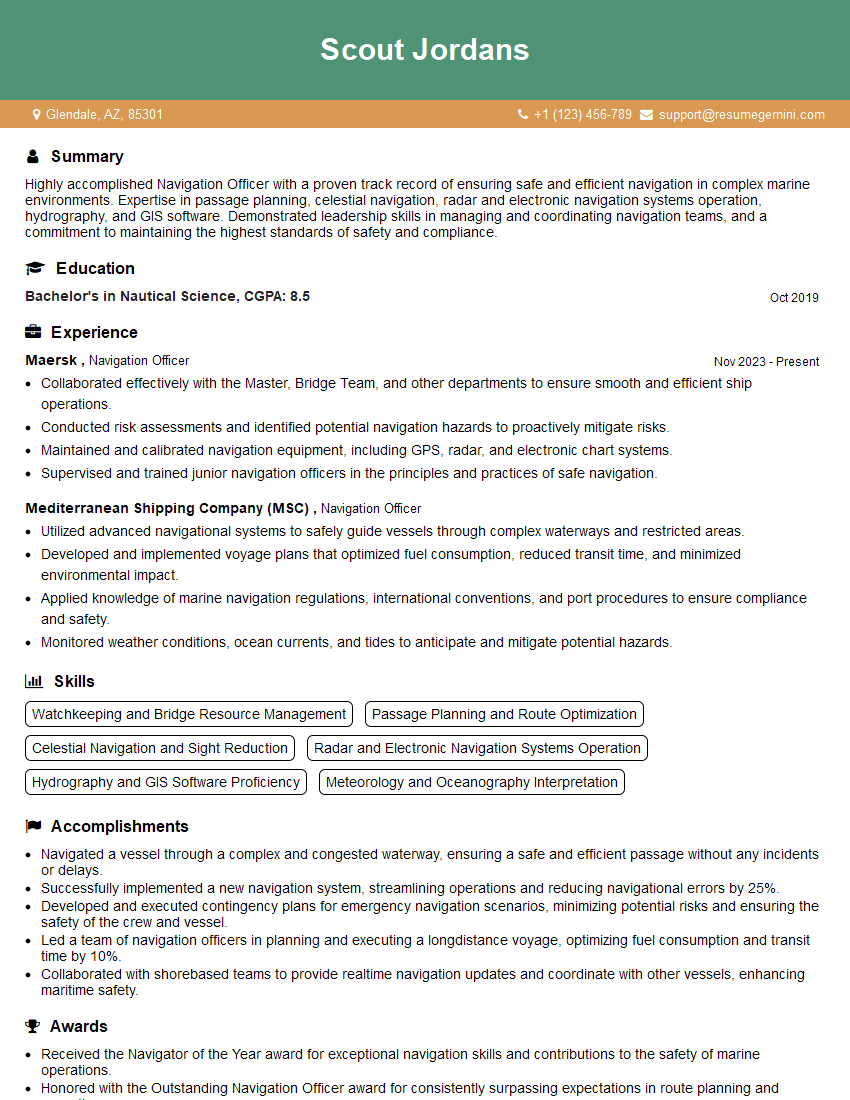
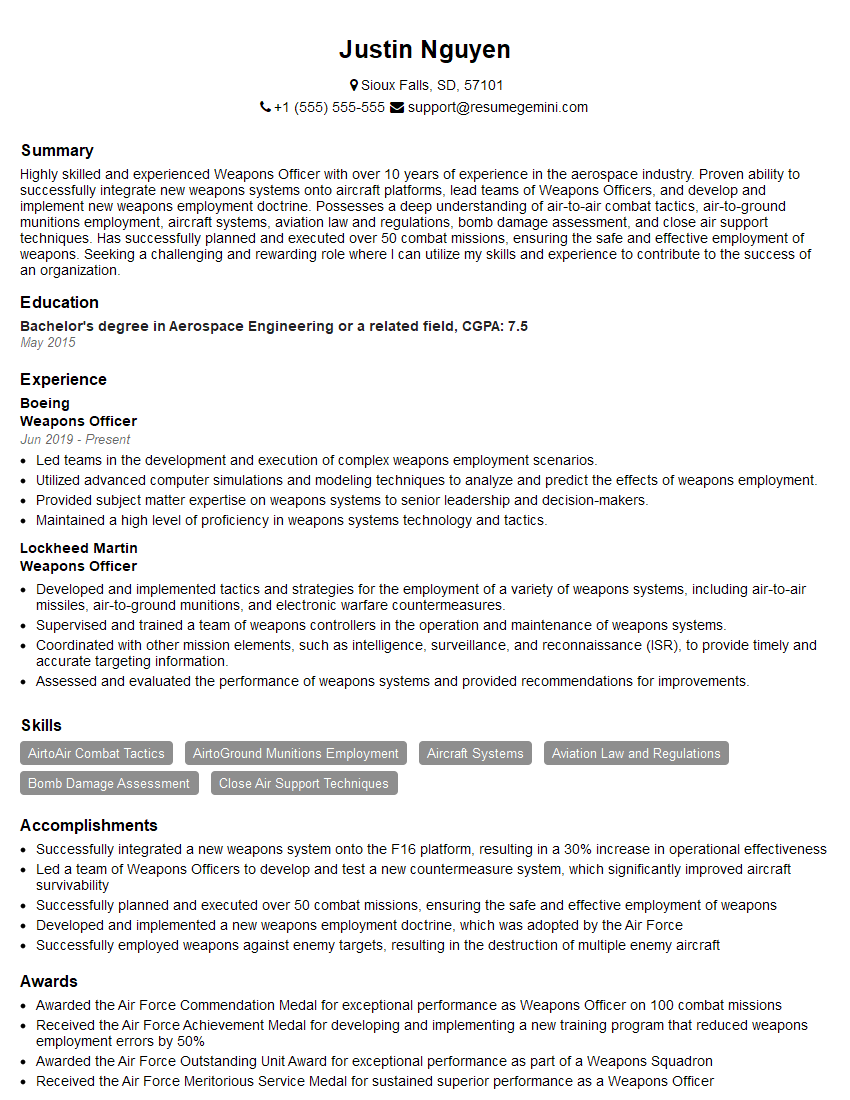
Mastering knowledge of naval operations and tactics is paramount for career advancement in the maritime sector, opening doors to leadership roles and specialized assignments. To enhance your job prospects, creating an ATS-friendly resume is essential. A well-crafted resume significantly increases your chances of getting noticed by recruiters and securing interviews. We highly recommend utilizing ResumeGemini to build a professional and impactful resume tailored to your experience and the specific requirements of naval positions. ResumeGemini provides examples of resumes specifically designed for candidates with expertise in Knowledge of naval operations and tactics; leveraging these examples will greatly benefit your job search.
Explore more articles
Users Rating of Our Blogs
Share Your Experience
We value your feedback! Please rate our content and share your thoughts (optional).
What Readers Say About Our Blog
Hello,
we currently offer a complimentary backlink and URL indexing test for search engine optimization professionals.
You can get complimentary indexing credits to test how link discovery works in practice.
No credit card is required and there is no recurring fee.
You can find details here:
https://wikipedia-backlinks.com/indexing/
Regards
NICE RESPONSE TO Q & A
hi
The aim of this message is regarding an unclaimed deposit of a deceased nationale that bears the same name as you. You are not relate to him as there are millions of people answering the names across around the world. But i will use my position to influence the release of the deposit to you for our mutual benefit.
Respond for full details and how to claim the deposit. This is 100% risk free. Send hello to my email id: [email protected]
Luka Chachibaialuka
Hey interviewgemini.com, just wanted to follow up on my last email.
We just launched Call the Monster, an parenting app that lets you summon friendly ‘monsters’ kids actually listen to.
We’re also running a giveaway for everyone who downloads the app. Since it’s brand new, there aren’t many users yet, which means you’ve got a much better chance of winning some great prizes.
You can check it out here: https://bit.ly/callamonsterapp
Or follow us on Instagram: https://www.instagram.com/callamonsterapp
Thanks,
Ryan
CEO – Call the Monster App
Hey interviewgemini.com, I saw your website and love your approach.
I just want this to look like spam email, but want to share something important to you. We just launched Call the Monster, a parenting app that lets you summon friendly ‘monsters’ kids actually listen to.
Parents are loving it for calming chaos before bedtime. Thought you might want to try it: https://bit.ly/callamonsterapp or just follow our fun monster lore on Instagram: https://www.instagram.com/callamonsterapp
Thanks,
Ryan
CEO – Call A Monster APP
To the interviewgemini.com Owner.
Dear interviewgemini.com Webmaster!
Hi interviewgemini.com Webmaster!
Dear interviewgemini.com Webmaster!
excellent
Hello,
We found issues with your domain’s email setup that may be sending your messages to spam or blocking them completely. InboxShield Mini shows you how to fix it in minutes — no tech skills required.
Scan your domain now for details: https://inboxshield-mini.com/
— Adam @ InboxShield Mini
Reply STOP to unsubscribe
Hi, are you owner of interviewgemini.com? What if I told you I could help you find extra time in your schedule, reconnect with leads you didn’t even realize you missed, and bring in more “I want to work with you” conversations, without increasing your ad spend or hiring a full-time employee?
All with a flexible, budget-friendly service that could easily pay for itself. Sounds good?
Would it be nice to jump on a quick 10-minute call so I can show you exactly how we make this work?
Best,
Hapei
Marketing Director
Hey, I know you’re the owner of interviewgemini.com. I’ll be quick.
Fundraising for your business is tough and time-consuming. We make it easier by guaranteeing two private investor meetings each month, for six months. No demos, no pitch events – just direct introductions to active investors matched to your startup.
If youR17;re raising, this could help you build real momentum. Want me to send more info?
Hi, I represent an SEO company that specialises in getting you AI citations and higher rankings on Google. I’d like to offer you a 100% free SEO audit for your website. Would you be interested?
Hi, I represent an SEO company that specialises in getting you AI citations and higher rankings on Google. I’d like to offer you a 100% free SEO audit for your website. Would you be interested?
good