Feeling uncertain about what to expect in your upcoming interview? We’ve got you covered! This blog highlights the most important Knowledge of printing presses interview questions and provides actionable advice to help you stand out as the ideal candidate. Let’s pave the way for your success.
Questions Asked in Knowledge of printing presses Interview
Q 1. Explain the difference between offset and digital printing.
Offset and digital printing are two distinct methods of printing, differing primarily in their printing processes and applications. Offset printing, also known as lithography, uses an indirect printing method. Ink is transferred from a plate to a rubber blanket, and then from the blanket to the printing substrate (paper, cardstock, etc.). This indirect transfer allows for high-quality, consistent results across large print runs and is ideal for projects requiring high-volume printing like books, magazines, and brochures. Digital printing, on the other hand, prints images directly onto the substrate using toner or ink, similar to a high-end inkjet or laser printer. It’s faster for smaller print runs, allows for customization of individual pieces, and is perfect for personalized marketing materials or short-run projects.
Think of it like this: offset printing is like using a stamp to make many identical copies, while digital printing is like using a personalized label maker – each print can be slightly different.
Q 2. Describe the process of setting up a printing press for a specific job.
Setting up a printing press for a specific job is a meticulous process requiring precision and attention to detail. It typically begins with reviewing the job specifications, including the type of paper, ink colors, number of pages, and overall design. This informs the choice of plates (for offset) or digital files (for digital printing) and the necessary press settings. For offset, the process involves mounting the plates onto the press, carefully aligning them to ensure accurate registration (color alignment), and configuring ink fountains and dampening systems. We might perform a test print to check color accuracy, registration, and ink density before starting the full run. This step is vital for ensuring the final product meets client expectations. For digital presses, the process is simpler, involving loading the appropriate paper and uploading the digital file. However, accurate color profiles and calibrations are crucial to ensure consistent results.
For example, printing a four-color brochure on high-gloss paper would require a different setup than printing a one-color business card on standard cardstock. The paper type affects the feeding mechanism and ink absorption; the number of colors impacts the ink configuration and plate alignment; and the design complexity might necessitate adjustments to the printing speed and pressure.
Q 3. How do you ensure color accuracy in printing?
Color accuracy is paramount in printing. We achieve this through a combination of techniques, starting with proper color management throughout the workflow. This includes using color profiles (ICC profiles) that accurately describe the color capabilities of all devices involved: monitors, scanners, printers, and even the printing substrate. Proofing is another crucial step, often involving the creation of a hard copy proof (a physical print sample) that closely approximates the final printed output. This allows for visual assessment and adjustments before proceeding with a full print run. Accurate color calibration of the printing equipment is also essential, ensuring the press delivers colors as intended. Specialized software and color measurement tools aid in this process. Additionally, experienced press operators know how to subtly adjust ink densities and balance to achieve precise color matching.
Imagine trying to match a specific shade of blue. Using color profiles, like a recipe, gives us the correct proportions of cyan, magenta, yellow, and black inks; proofing helps us ensure the recipe matches our expectations, and careful press calibration makes sure the recipe is executed correctly by the press.
Q 4. What are the common problems encountered during printing and how do you troubleshoot them?
Common printing problems can be broadly classified into issues related to paper handling, ink problems, and mechanical malfunctions. Paper jams are frequent, often caused by improper paper feeding or humidity affecting paper thickness. Ink problems might include poor color saturation (low ink density), uneven ink distribution (stripes or blotches), or color inconsistencies (incorrect registration). Mechanical issues could involve faulty rollers, misaligned plates, or problems with the drying system. Troubleshooting involves systematically checking each component, starting with the most likely cause. For instance, paper jams usually require an examination of the feed rollers and paper path. Ink problems might necessitate adjustments to the ink fountain, dampening system (offset), or cleaning the rollers. Mechanical issues might need the intervention of a technician.
A systematic approach, combined with a deep understanding of the press mechanics, is key to resolving these problems. I often begin troubleshooting by asking ‘Where is the problem most visible?’ to pinpoint the likely source of the issue. The experience of identifying and solving these problems comes with time and hands-on practice.
Q 5. Explain the different types of printing inks and their applications.
Printing inks vary greatly in their composition and applications. The most common types are:
- Solvent-based inks: These offer vibrant colors and good adhesion but can have strong odors and require specific ventilation. Often used in flexographic printing and screen printing.
- Water-based inks: Environmentally friendly, they are low-odor and non-toxic, suitable for food packaging and applications where environmental concerns are paramount. Commonly used in offset and digital printing.
- UV-curable inks: These inks cure instantly upon exposure to ultraviolet light, enabling fast drying and high-speed printing. Excellent for products requiring quick turnaround times and durability.
- Vegetable-based inks: Made from renewable resources, these inks offer a sustainable alternative. They are commonly used for eco-friendly applications.
The choice of ink depends heavily on the printing method, substrate, and the final application of the printed material. For instance, solvent-based inks might be preferred for outdoor signage due to their durability, while water-based inks are ideal for printing on food packaging.
Q 6. What safety precautions are essential when operating a printing press?
Safety is paramount when operating a printing press. The most crucial precautions include:
- Personal Protective Equipment (PPE): Always wear appropriate safety glasses, gloves, and hearing protection. Some inks can be harmful to skin and eyes.
- Machine guarding: Ensure all safety guards are in place and functioning correctly to prevent accidental contact with moving parts.
- Lockout/Tagout procedures: Follow strict lockout/tagout procedures when performing maintenance or repairs to prevent accidental activation.
- Emergency shut-off procedures: Familiarize yourself with the emergency stop buttons and procedures in case of accidents or malfunctions.
- Proper ventilation: Ensure adequate ventilation to prevent exposure to harmful fumes and solvents, especially when using solvent-based inks.
Regular safety training and adherence to safety protocols are essential to maintain a safe working environment.
Q 7. How do you maintain and clean a printing press?
Maintaining and cleaning a printing press is crucial for optimal performance, print quality, and longevity. Regular cleaning involves wiping down the press with appropriate cleaning solutions, removing excess ink, and cleaning the rollers and other moving parts. The frequency of cleaning depends on the type of press and the inks used. More frequent cleaning is generally needed for presses that handle water-based inks. Preventive maintenance includes regular lubrication of moving parts and checks of critical components such as rollers, bearings, and motors. This often involves scheduled inspections and potentially the replacement of worn-out parts. A well-maintained press produces superior print quality, reduces downtime, and extends the machine’s lifespan. A comprehensive maintenance schedule, tailored to the specific model of the press, is crucial for preventing breakdowns and maximizing the press’s efficiency.
Think of it as servicing a car: regular maintenance, like oil changes and tire rotations, prevents costly repairs down the road.
Q 8. Describe your experience with different types of printing plates.
My experience encompasses a wide range of printing plates, each suited for different printing processes and desired outcomes. Let’s explore some key types:
- Letterpress Plates: These are typically made of metal, often lead or magnesium, and are raised to create an impression on the paper. I’ve worked extensively with these, particularly in fine art and specialty printing, appreciating their ability to produce a unique tactile texture.
- Offset Lithographic Plates: This is the workhorse of modern commercial printing. These aluminum plates use a chemical process to create an image that repels or attracts ink, enabling high-volume, consistent printing. I’ve handled both conventional and computer-to-plate (CTP) versions, witnessing the evolution toward faster, more precise platemaking.
- Flexographic Plates: These photopolymer plates are incredibly versatile and used for packaging, labels, and flexible substrates. I’ve worked with various plate thicknesses and materials, adjusting the printing parameters to optimize quality on different materials like plastics and films.
- Gravure Plates: These etched metal cylinders create a recessed image, ideal for high-volume printing requiring consistent ink density, such as magazines and packaging. My experience with gravure focused on maintaining cylinder quality and ensuring accurate ink metering.
Choosing the right plate depends on the printing method, desired print quality, substrate, and run length. Each type requires specific handling and processing techniques, which I’ve mastered through years of practical experience.
Q 9. How do you handle paper jams and other printing press malfunctions?
Handling malfunctions is a critical part of the job. A systematic approach is key. For paper jams, I start by identifying the location and type of jam. Simple jams are often solved by carefully removing the jammed sheets, ensuring no tears remain to cause further problems. For more complex jams, I’ll consult the press’s manual and, if necessary, contact the manufacturer’s support.
Other malfunctions require different strategies. For instance, if the ink isn’t transferring correctly, I would systematically check the ink viscosity, fountain solution balance, and the condition of the rollers. I also regularly check the dampening system, rollers, and blankets to identify worn or damaged components before they cause issues. If problems persist, I meticulously log the issues, test solutions, and involve engineering support where needed. Preventative maintenance is crucial. I’ve found regular inspections and cleaning significantly reduce downtime. I believe in a proactive approach; it’s much more efficient than reacting to major breakdowns.
Q 10. What is your experience with pre-press preparation?
Pre-press preparation is the foundation of quality printing. My experience encompasses all aspects, from designing and preparing artwork to color correction and creating printing plates. This involves:
- Artwork preparation: Checking image resolution, ensuring proper color modes (CMYK), correcting any errors in the artwork, and preparing it for output.
- Imposition: Arranging pages efficiently on a printing sheet to minimize waste and optimize production.
- Color management: Using color profiles to ensure color consistency between the screen, the proof, and the final print. I’m familiar with ICC profiles and software like Adobe Acrobat and Color Management Modules.
- Proofing: Reviewing proofs to identify any discrepancies or issues before proceeding with the actual print run. This ensures the final output will meet the client’s expectations.
- Platemaking: This process depends on the printing method; I’ve worked with both traditional and CTP technologies, and I ensure that the plates are correctly exposed, processed, and mounted to maintain precise registration and print quality.
Efficient pre-press is like building a sturdy foundation for a house – a crucial step ensuring the final product’s success. A missed step can lead to costly rework or even a ruined print job.
Q 11. Explain the importance of maintaining proper register during printing.
Maintaining proper register is paramount in multi-color printing. Register refers to the precise alignment of multiple colors or images printed on top of each other. Imagine a four-color image – cyan, magenta, yellow, and black. If these colors aren’t perfectly aligned, you’ll see misregistration, resulting in blurry images, color halos, and an unprofessional look. I’ve dealt with many situations where slight misalignment can occur due to paper stretch, temperature fluctuations, or mechanical issues with the press.
Ensuring accurate register involves several steps: careful pre-press preparation, proper press setup, regular monitoring during the printing process, and using tools for precise alignment. I use register marks, which are small marks printed on the sheet, to guide the alignment process. Regular checks, especially during longer runs, are essential to maintain accuracy. If misregistration occurs, I have to adjust the press settings, which requires a deep understanding of the press’s mechanics and color management systems. In addition, press maintenance is critical for accurate registration.
Q 12. How do you ensure consistent print quality throughout a long run?
Consistent print quality throughout a long run demands meticulous attention to detail and proactive maintenance. Here’s my approach:
- Regular press checks: Monitoring ink levels, fountain solution, and the condition of rollers and blankets regularly throughout the run.
- Consistent paper feed: Ensuring a stable paper supply and appropriate tension to prevent paper jams or variations in registration.
- Temperature and humidity control: Environmental conditions impact paper and ink behavior. Maintaining a stable environment is crucial for consistent results. I’ve noticed changes in humidity can influence the accuracy of the printing process dramatically.
- Ink management: Maintaining consistent ink viscosity and managing color throughout the run using color management tools.
- Regular cleaning: Cleaning the press components at intervals to avoid ink buildup or contamination.
Consistency is achieved through rigorous monitoring and proactive adjustments. It’s a continuous process requiring vigilance and a deep understanding of how different variables interact.
Q 13. What are the different types of printing presses and their applications?
There are many types of printing presses, each with its own strengths and applications:
- Offset Lithography: The workhorse of commercial printing, used for high-volume printing of books, magazines, brochures, and posters. Its versatility and relatively low cost per print make it the most widely used method.
- Letterpress: Produces a distinctive tactile impression and is often used for fine art prints, business cards, and stationery. It offers unparalleled texture and quality.
- Flexography: Commonly used for packaging, labels, and flexible substrates due to its ability to print on various materials. It’s highly adaptable and perfect for repetitive tasks on various substrates.
- Gravure: Ideal for high-volume printing of magazines, newspapers, and packaging materials because of its ability to produce consistent ink coverage and high-quality imagery. It’s the preferred choice for high-volume printing with detailed imagery.
- Screen Printing: Used for a wide range of applications, from t-shirts to posters, this technique offers versatility and excellent color saturation and can work on several types of substrates. It’s often selected for unique applications where other printing processes can’t meet the needs.
The choice of press depends on factors like print quality requirements, substrate, volume, and budget. Each type offers unique advantages and is best suited for different applications.
Q 14. Explain the concept of color profiles and their importance in printing.
Color profiles are digital descriptions of a device’s color characteristics. They are crucial for ensuring color consistency across different stages of the printing process. Think of it like a translator for colors. Your monitor displays colors differently from a printer, and different printers have unique color characteristics. A color profile acts as a standardized reference, ensuring your print matches your screen.
In printing, we use ICC (International Color Consortium) profiles. These profiles are created using sophisticated colorimetric measurement instruments. For example, an ICC profile for a particular printer precisely defines how that printer renders specific colors. By using these profiles in software like Adobe Photoshop and in RIP (Raster Image Processor) software, we can predict and manage color accuracy. Without color profiles, colors will shift between the screen, the proof, and the final print, leading to inconsistent results. The accuracy and precision of color profiles are essential for ensuring the final product’s accuracy and quality, reducing costly errors and re-prints.
Q 15. Describe your experience with different types of printing substrates (paper, cardstock, etc.).
My experience with printing substrates is extensive, encompassing a wide range of materials from standard papers to specialized cardstocks and even synthetics. Understanding substrate properties is crucial for achieving optimal print quality and finishing.
- Paper: I’ve worked with various paper weights (gsm – grams per square meter), finishes (coated, uncoated, matte, gloss), and textures (smooth, textured). For instance, a lightweight uncoated paper might be suitable for flyers, while a heavier coated stock would be better for brochures demanding high-image quality. The choice influences ink absorption, print sharpness, and overall durability.
- Cardstock: Cardstock, thicker than paper, offers greater rigidity and is ideal for business cards, postcards, and packaging. I have experience selecting cardstocks based on their thickness, color, and coating (e.g., linen, silk). The right cardstock ensures a professional and lasting impression.
- Specialty Substrates: I’ve also worked with synthetic materials like vinyl and plastics, used for durable signage and applications requiring water resistance or longevity. These substrates require specialized inks and printing techniques.
Choosing the right substrate involves considering the project’s purpose, budget, and desired aesthetic. For example, a glossy magazine cover demands a high-quality coated paper for vibrant color reproduction, while a rustic invitation might best utilize a textured, uncoated paper stock.
Career Expert Tips:
- Ace those interviews! Prepare effectively by reviewing the Top 50 Most Common Interview Questions on ResumeGemini.
- Navigate your job search with confidence! Explore a wide range of Career Tips on ResumeGemini. Learn about common challenges and recommendations to overcome them.
- Craft the perfect resume! Master the Art of Resume Writing with ResumeGemini’s guide. Showcase your unique qualifications and achievements effectively.
- Don’t miss out on holiday savings! Build your dream resume with ResumeGemini’s ATS optimized templates.
Q 16. How do you manage and interpret print specifications?
Interpreting print specifications is fundamental to successful printing. This involves understanding details like color profiles (CMYK, Pantone), resolution (DPI – dots per inch), ink coverage, and bleed.
I meticulously review specifications, ensuring complete clarity. This includes:
- Color Management: Ensuring accurate color reproduction by utilizing appropriate color profiles and calibration tools. For example, using a Pantone color matching system for consistent brand colors.
- Resolution: Verifying the resolution is adequate for the intended print size and quality. A low resolution can lead to pixelation and blurry images.
- Ink Coverage: Checking that ink coverage remains within acceptable limits to avoid issues such as ink trapping or excessive drying time.
- Bleed: Confirming proper bleed (the extension of images beyond the trim line) to prevent unsightly white borders after trimming.
Any discrepancies are immediately communicated with the client to avoid costly reprints or delays. I consider the specification a blueprint, and my role is to execute it precisely.
Q 17. How familiar are you with different types of finishing techniques (e.g., cutting, folding, binding)?
My familiarity with finishing techniques is extensive, ranging from simple cuts to complex binding methods. These processes significantly impact the final product’s presentation and usability.
- Cutting: Precise cutting using guillotine cutters or die-cutting machines is essential for clean edges and accurate dimensions on items like business cards or brochures. Die-cutting allows for intricate shapes and designs.
- Folding: Folding techniques vary depending on the project, from simple letter folds to complex gate folds for brochures. I’m adept at choosing the most suitable fold type for the design and material.
- Binding: I’m experienced with various binding methods, including saddle-stitch (stapling), perfect binding (gluing), spiral binding, and wire-o binding. The choice depends on the page count, desired look, and budget. For example, a high-page-count book might require perfect binding for a professional finish.
- Other Finishes: I also have experience with lamination (for protection and gloss), embossing/debossing (for textured effects), and UV coating (for added durability and shine).
A deep understanding of these techniques allows for optimizing the printing process for efficiency and quality. For instance, selecting the right binding method prevents pages from falling out or creates a more visually appealing result.
Q 18. What is your experience with print quality control procedures and measurements?
Print quality control is paramount. My procedures involve meticulous checks throughout the entire process, from pre-press to post-press. This includes:
- Proofing: I carefully review digital proofs and press proofs to ensure colors, images, and text align with specifications. This often involves using colorimeters and densitometers for accurate color measurement.
- Inspection: During and after printing, I visually inspect the output for defects such as misregistration (incorrect alignment of colors), blurry images, or inconsistencies in ink density. I also check for any substrate damage or defects.
- Measurements: I use tools like densitometers to measure ink density, and spectrophotometers for precise color measurement, ensuring consistency throughout the print run. This ensures consistency and accuracy.
- Documentation: Thorough documentation of quality control checks is crucial for traceability and problem resolution. This includes recording measurements, noting any defects, and taking images of any issues.
My goal is zero defects; however, if issues arise, my experience allows for quick identification and rectification, minimizing waste and ensuring client satisfaction.
Q 19. Describe your problem-solving skills in a printing press environment.
Problem-solving is inherent to a printing press environment. I’ve encountered various challenges, such as paper jams, ink misalignment, and unexpected equipment malfunctions. My approach is systematic and data-driven.
My problem-solving strategy typically involves:
- Identifying the problem: Through observation, testing, and using diagnostic tools. For example, analyzing color variations to determine if it’s an ink issue or a press setting issue.
- Analyzing the root cause: Determining the underlying reason for the problem, whether it be a mechanical fault, a software glitch, or a procedural error.
- Developing a solution: Using my expertise and experience to devise a solution. This might involve adjusting press settings, recalibrating equipment, or consulting technical manuals.
- Implementing the solution: Making the necessary adjustments and monitoring the results to ensure the problem is resolved.
- Preventing recurrence: Documenting the issue and solution to prevent similar problems in the future. This includes updating standard operating procedures.
For instance, I once resolved a recurring paper jam by identifying a small obstruction in the feed rollers, a seemingly minor detail that had significant consequences. Through systematic troubleshooting, I resolved the issue and prevented further disruptions.
Q 20. How do you handle unexpected issues or deadlines?
Handling unexpected issues and deadlines effectively requires a proactive and organized approach. My strategy includes:
- Prioritization: Quickly assessing the urgency and impact of the issue, prioritizing critical tasks to minimize disruption.
- Communication: Open and honest communication with clients and team members is crucial. Transparency helps manage expectations and secure cooperation.
- Resource Allocation: Efficiently allocating resources (personnel, materials, equipment) to address the issue promptly.
- Problem-Solving: Employing effective problem-solving techniques to find a rapid solution, potentially involving outside expertise when necessary.
- Contingency Planning: Developing alternative strategies to meet deadlines when unforeseen problems arise. This might involve adjusting schedules or seeking help from other departments.
For example, I once faced a sudden equipment malfunction right before a crucial deadline. By immediately contacting our maintenance team and creatively re-allocating work across other presses, we managed to meet the deadline with minimal impact on the project’s quality.
Q 21. What is your experience with different types of printing press software?
My experience with printing press software is extensive, encompassing various pre-press and press control systems.
- Pre-press Software: I’m proficient in Adobe Creative Suite (Photoshop, Illustrator, InDesign) for designing and preparing print-ready files. This includes ensuring proper color management, image resolution, and trapping.
- RIP Software: I’m experienced with various RIP (Raster Image Processor) software packages, used to process digital files for printing. This involves managing color profiles, optimizing image quality, and generating print instructions for the press.
- Press Control Software: I’m familiar with the control panels and software interfaces of various press types, allowing for fine-tuning of print settings (ink density, registration, etc.). This requires a strong understanding of the press’s mechanics and software functions.
- Workflow Software: I’ve worked with workflow automation software to manage print jobs, track progress, and improve efficiency. This helps streamline the entire printing process from file submission to final output.
Understanding these different software systems allows for seamless integration throughout the printing process and optimization of workflow efficiency.
Q 22. Explain your understanding of color management systems (e.g., Pantone, CMYK).
Color management systems are crucial in printing to ensure consistent color reproduction across different devices and media. Two prominent systems are Pantone and CMYK. Pantone uses a spot color system, where each color is assigned a unique Pantone Matching System (PMS) number, guaranteeing precise color matching regardless of the printing method. Think of it like a paint store – each paint has a specific code, ensuring you get the exact shade every time. CMYK, on the other hand, is a subtractive color model using Cyan, Magenta, Yellow, and Key (black) inks. It’s how most printers mix colors, combining varying percentages of these four inks to create a wider range of colors. The challenge lies in the fact that CMYK cannot always perfectly replicate all Pantone colors, leading to color variations.
For example, a vibrant Pantone-specified red might appear slightly duller when printed using CMYK. Therefore, skilled press operators understand the limitations of each system and choose the optimal approach depending on the project’s color criticality and the printing method employed. For logos or branding, using PMS spot colors is often preferred for absolute accuracy, while CMYK is suitable for large-area prints where slight color variations are less noticeable.
Q 23. Describe your experience with maintaining and troubleshooting different press components (e.g., rollers, dampening system).
Maintaining and troubleshooting press components is a daily part of my routine. I’m proficient in handling various press types and am experienced in preventative maintenance. For instance, I regularly inspect and clean rollers to ensure consistent ink transfer and prevent streaking or color inconsistencies. A key aspect is understanding the dampening system; properly balanced fountain solutions are critical for optimal ink transfer and preventing problems like mottle (uneven ink distribution) or set-off (ink smudging).
Troubleshooting often involves systematic problem-solving. If I encounter a problem with print quality, I’ll start by checking the simplest things first: ink levels, roller condition, paper moisture content, and the press’s overall alignment. If the issue persists, I’ll analyze the problem further. For instance, if there’s significant color variation, I would check for ink viscosity, roller pressure, and potentially calibrate the color settings. A thorough understanding of the mechanics of the press and the printing process is key to diagnosing and resolving issues efficiently.
One time, we experienced consistent banding (vertical stripes) across a large print run. After systematically eliminating other causes, I traced the problem to a slightly worn roller, a detail easily missed with a cursory glance. Replacing the roller immediately rectified the problem, saving time and material costs.
Q 24. How do you prioritize tasks when managing multiple printing jobs?
Prioritizing tasks when managing multiple printing jobs requires a structured approach. I typically use a combination of factors, including job deadlines, urgency, complexity, and client requirements. I use a job scheduling system, often software-based, to log all incoming jobs with their specific parameters. Then, I prioritize based on the earliest deadlines and the level of urgency specified by the clients. High-volume, short-deadline jobs will naturally take precedence.
For example, a critical marketing campaign piece with a tight deadline will be given priority over a less time-sensitive project. In cases of similar deadlines, I assess the complexity of the job. A complex job involving multiple colors and intricate designs might require more setup time and thus may get scheduled accordingly. This organized approach ensures efficient workflow and timely delivery of all jobs without compromising quality.
Q 25. What are your strengths and weaknesses as a printing press operator?
My strengths include my meticulous attention to detail, my problem-solving skills, and my ability to work efficiently under pressure. I pride myself on my consistent delivery of high-quality print output. I’m a quick learner and I’m always eager to adopt new technologies and processes to improve efficiency and quality.
One area where I am always striving to improve is further developing my expertise in advanced color management techniques. While proficient in current methods, I want to become more deeply knowledgeable in aspects such as spectral color measurement and advanced color profiling techniques to achieve even more precise color reproduction.
Q 26. What are your salary expectations?
My salary expectations are commensurate with my experience and skills, and I’m open to discussing this further based on the specifics of the role and the company’s compensation structure.
Q 27. What are your long-term career goals?
My long-term career goals include becoming a leading expert in the field of printing, possibly specializing in advanced printing technologies or management. I envision myself taking on more responsibility, potentially leading a team or managing a printing department. Continuous learning and professional development are paramount to achieving these goals. I would like to be a key contributor to innovation in the industry.
Q 28. Why are you interested in this particular position?
I’m particularly interested in this position because of [Company Name]’s reputation for excellence in printing and its commitment to [mention specific company values or projects that resonate with you]. The opportunity to contribute to such a respected organization, and to work with [mention specific equipment, technologies or team members] is very appealing. I believe my skills and experience align perfectly with the requirements of this role and I am confident I can make a significant contribution to your team.
Key Topics to Learn for a Printing Press Knowledge Interview
- Types of Printing Presses: Understand the differences between offset, digital, flexographic, screen, and other printing methods. Be prepared to discuss their applications and limitations.
- Press Operation and Maintenance: Familiarize yourself with the practical aspects of operating and maintaining various press types. This includes understanding color management, ink systems, paper handling, and troubleshooting common issues.
- Pre-Press Processes: Gain a strong understanding of the steps involved in preparing files for printing, including color separation, image manipulation, and proofing. Know the importance of file formats and color profiles.
- Print Quality and Control: Discuss methods for ensuring high-quality print output, including dot gain, registration, and color consistency. Be prepared to discuss quality control checks and problem-solving techniques.
- Safety Procedures and Regulations: Demonstrate your knowledge of safety protocols associated with operating and maintaining printing presses, including hazard identification and risk mitigation.
- Industry Software and Technology: Familiarize yourself with common software and technologies used in the printing industry, including RIP software, color management systems, and press control systems.
- Sustainability and Environmental Considerations: Understand the environmental impact of printing and discuss sustainable practices within the industry, such as using eco-friendly inks and papers.
- Troubleshooting and Problem Solving: Be ready to describe your approach to diagnosing and resolving common printing press issues, demonstrating your analytical and problem-solving skills.
Next Steps
Mastering the knowledge of printing presses opens doors to exciting career opportunities in a dynamic industry. A strong understanding of these processes is highly valued by employers, offering potential for advancement and higher earning potential. To maximize your job prospects, creating a compelling and ATS-friendly resume is crucial. ResumeGemini can help you build a professional and effective resume tailored to the printing industry. We offer examples of resumes specifically designed for candidates with knowledge of printing presses, helping you present your skills and experience in the best possible light. Invest the time in crafting a strong resume; it’s your first impression on potential employers.

Print Production Manager Resume Sample
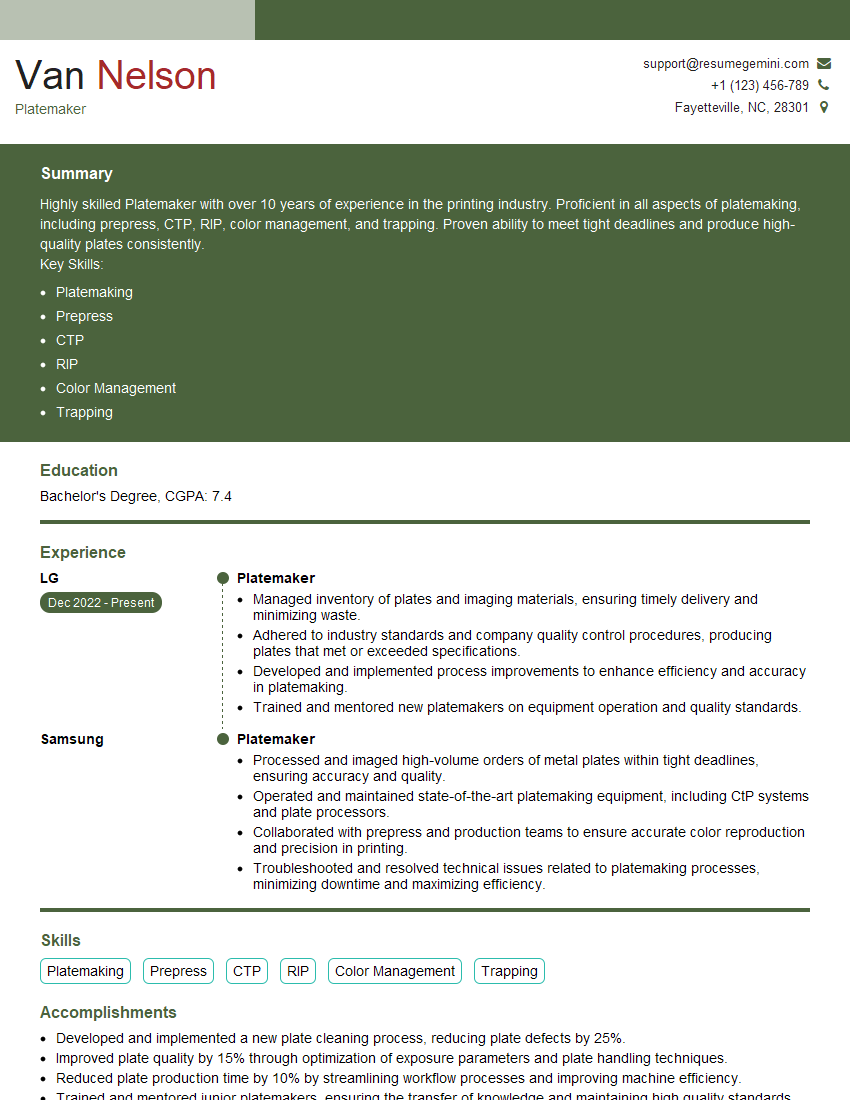
Platemaker Resume Sample

Prepress Technician Resume Sample
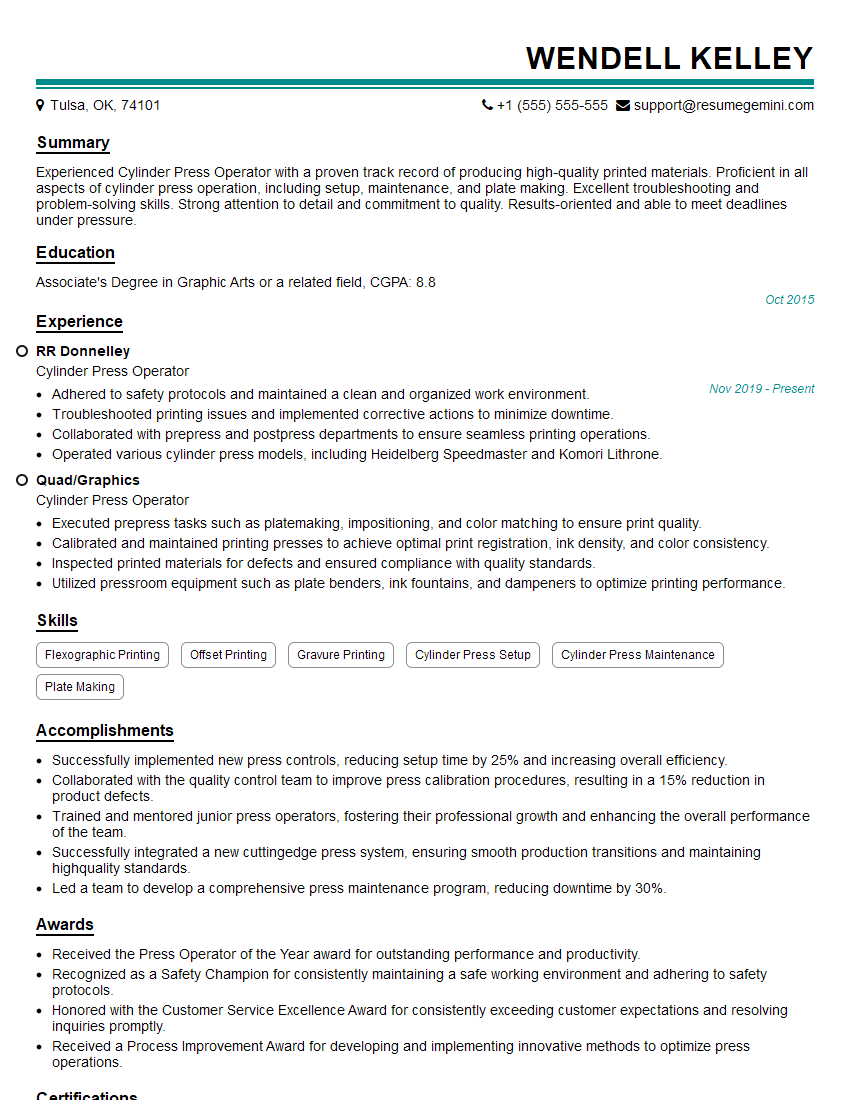
Cylinder Press Operator Resume Sample
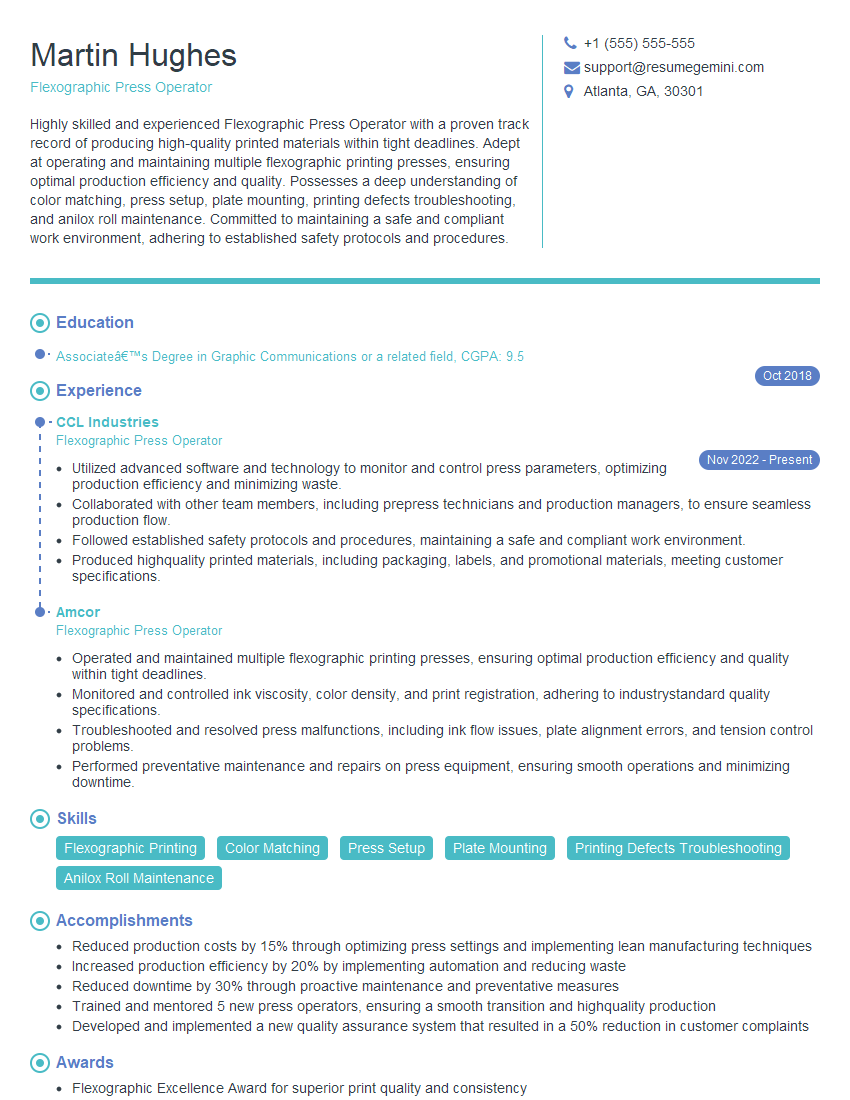
Flexographic Press Operator Resume Sample
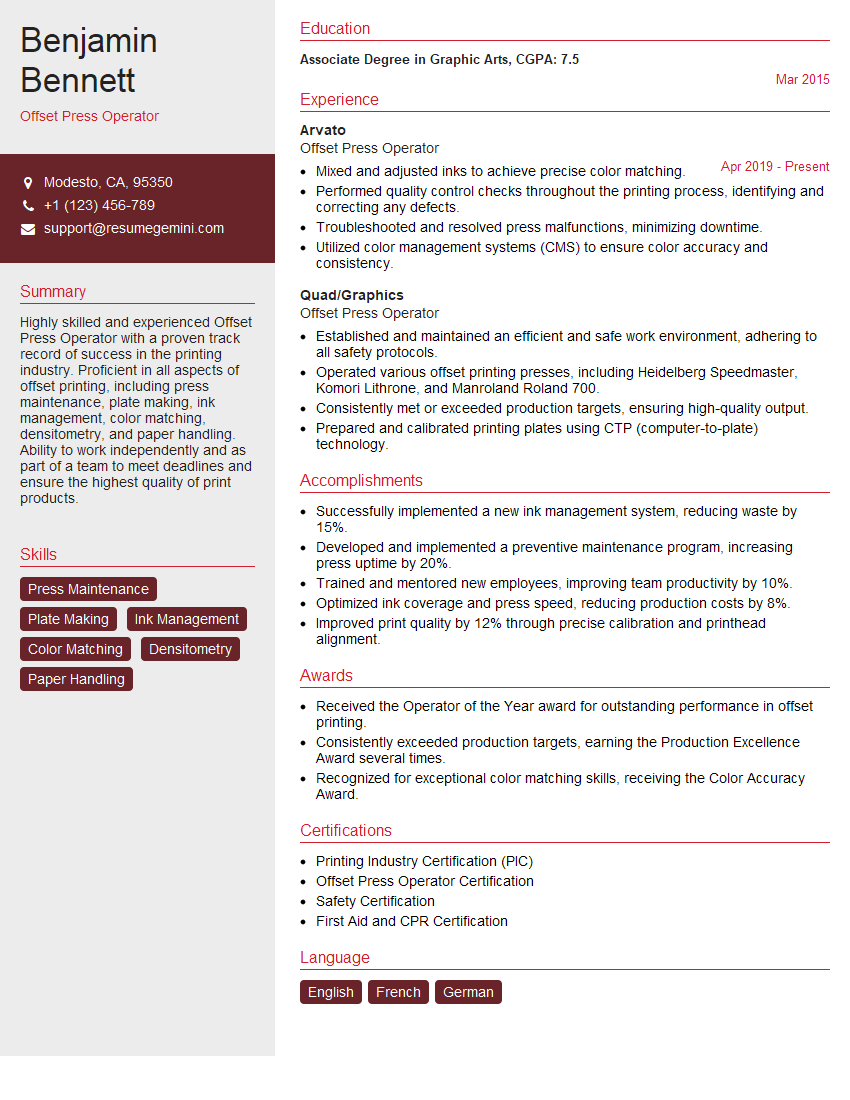
Offset Press Operator Resume Sample
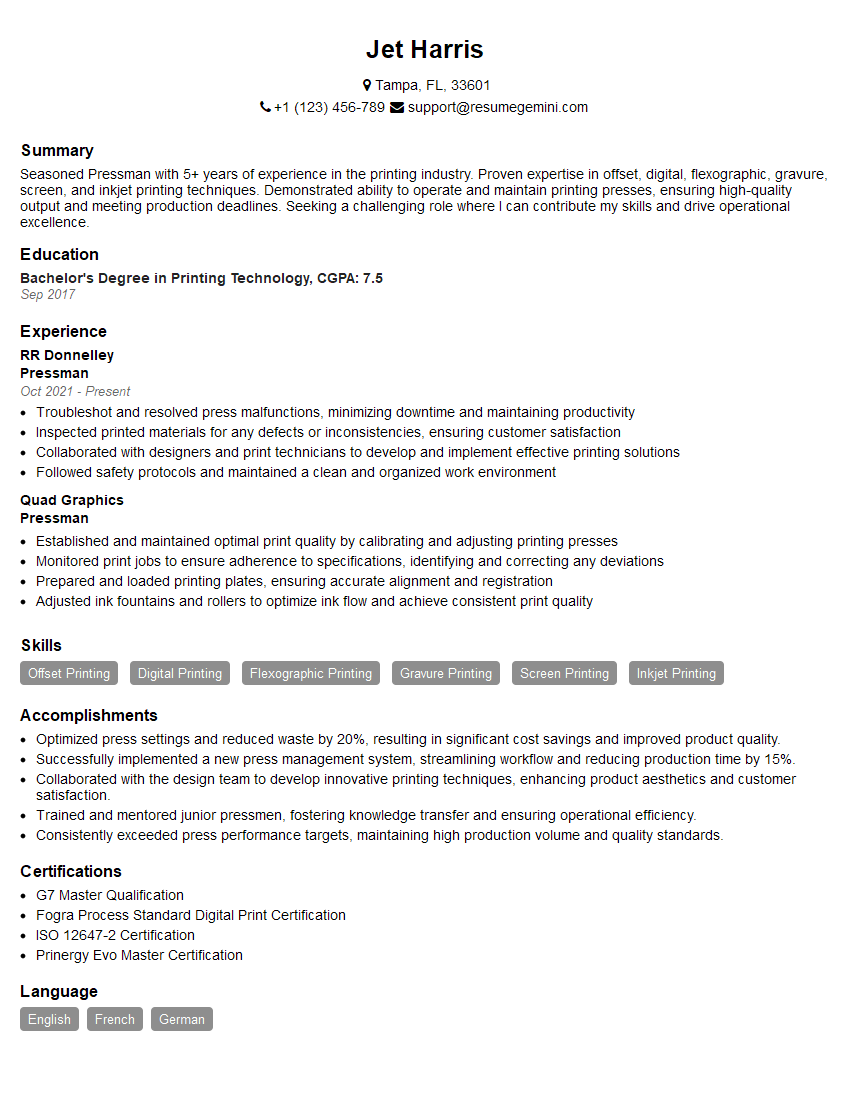
Pressman Resume Sample
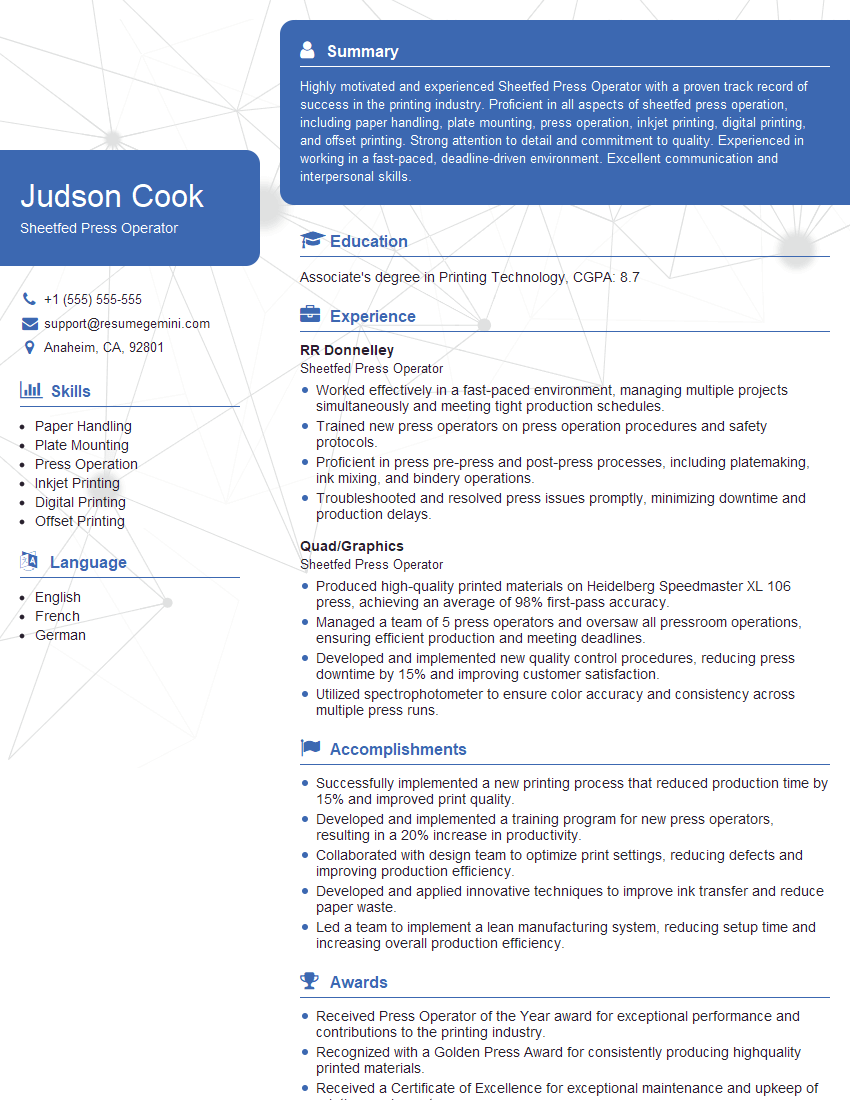
Sheetfed Press Operator Resume Sample
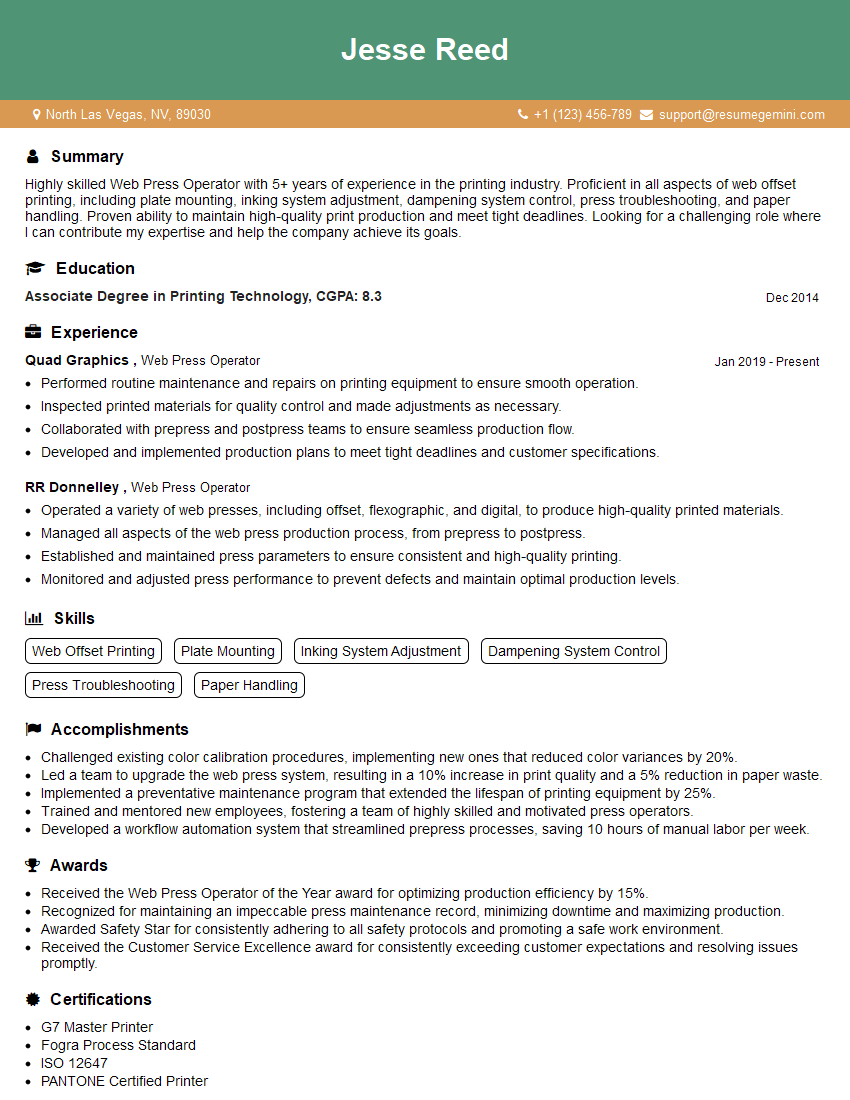
Web Press Operator Resume Sample
Explore more articles
Users Rating of Our Blogs
Share Your Experience
We value your feedback! Please rate our content and share your thoughts (optional).
What Readers Say About Our Blog
Attention music lovers!
Wow, All the best Sax Summer music !!!
Spotify: https://open.spotify.com/artist/6ShcdIT7rPVVaFEpgZQbUk
Apple Music: https://music.apple.com/fr/artist/jimmy-sax-black/1530501936
YouTube: https://music.youtube.com/browse/VLOLAK5uy_noClmC7abM6YpZsnySxRqt3LoalPf88No
Other Platforms and Free Downloads : https://fanlink.tv/jimmysaxblack
on google : https://www.google.com/search?q=22+AND+22+AND+22
on ChatGPT : https://chat.openai.com?q=who20jlJimmy20Black20Sax20Producer
Get back into the groove with Jimmy sax Black
Best regards,
Jimmy sax Black
www.jimmysaxblack.com
Hi I am a troller at The aquatic interview center and I suddenly went so fast in Roblox and it was gone when I reset.
Hi,
Business owners spend hours every week worrying about their website—or avoiding it because it feels overwhelming.
We’d like to take that off your plate:
$69/month. Everything handled.
Our team will:
Design a custom website—or completely overhaul your current one
Take care of hosting as an option
Handle edits and improvements—up to 60 minutes of work included every month
No setup fees, no annual commitments. Just a site that makes a strong first impression.
Find out if it’s right for you:
https://websolutionsgenius.com/awardwinningwebsites
Hello,
we currently offer a complimentary backlink and URL indexing test for search engine optimization professionals.
You can get complimentary indexing credits to test how link discovery works in practice.
No credit card is required and there is no recurring fee.
You can find details here:
https://wikipedia-backlinks.com/indexing/
Regards
NICE RESPONSE TO Q & A
hi
The aim of this message is regarding an unclaimed deposit of a deceased nationale that bears the same name as you. You are not relate to him as there are millions of people answering the names across around the world. But i will use my position to influence the release of the deposit to you for our mutual benefit.
Respond for full details and how to claim the deposit. This is 100% risk free. Send hello to my email id: lukachachibaialuka@gmail.com
Luka Chachibaialuka
Hey interviewgemini.com, just wanted to follow up on my last email.
We just launched Call the Monster, an parenting app that lets you summon friendly ‘monsters’ kids actually listen to.
We’re also running a giveaway for everyone who downloads the app. Since it’s brand new, there aren’t many users yet, which means you’ve got a much better chance of winning some great prizes.
You can check it out here: https://bit.ly/callamonsterapp
Or follow us on Instagram: https://www.instagram.com/callamonsterapp
Thanks,
Ryan
CEO – Call the Monster App
Hey interviewgemini.com, I saw your website and love your approach.
I just want this to look like spam email, but want to share something important to you. We just launched Call the Monster, a parenting app that lets you summon friendly ‘monsters’ kids actually listen to.
Parents are loving it for calming chaos before bedtime. Thought you might want to try it: https://bit.ly/callamonsterapp or just follow our fun monster lore on Instagram: https://www.instagram.com/callamonsterapp
Thanks,
Ryan
CEO – Call A Monster APP
To the interviewgemini.com Owner.
Dear interviewgemini.com Webmaster!
Hi interviewgemini.com Webmaster!
Dear interviewgemini.com Webmaster!
excellent
Hello,
We found issues with your domain’s email setup that may be sending your messages to spam or blocking them completely. InboxShield Mini shows you how to fix it in minutes — no tech skills required.
Scan your domain now for details: https://inboxshield-mini.com/
— Adam @ InboxShield Mini
support@inboxshield-mini.com
Reply STOP to unsubscribe
Hi, are you owner of interviewgemini.com? What if I told you I could help you find extra time in your schedule, reconnect with leads you didn’t even realize you missed, and bring in more “I want to work with you” conversations, without increasing your ad spend or hiring a full-time employee?
All with a flexible, budget-friendly service that could easily pay for itself. Sounds good?
Would it be nice to jump on a quick 10-minute call so I can show you exactly how we make this work?
Best,
Hapei
Marketing Director
Hey, I know you’re the owner of interviewgemini.com. I’ll be quick.
Fundraising for your business is tough and time-consuming. We make it easier by guaranteeing two private investor meetings each month, for six months. No demos, no pitch events – just direct introductions to active investors matched to your startup.
If youR17;re raising, this could help you build real momentum. Want me to send more info?
Hi, I represent an SEO company that specialises in getting you AI citations and higher rankings on Google. I’d like to offer you a 100% free SEO audit for your website. Would you be interested?
Hi, I represent an SEO company that specialises in getting you AI citations and higher rankings on Google. I’d like to offer you a 100% free SEO audit for your website. Would you be interested?