Interviews are more than just a Q&A session—they’re a chance to prove your worth. This blog dives into essential Knowledge of storytelling through design interview questions and expert tips to help you align your answers with what hiring managers are looking for. Start preparing to shine!
Questions Asked in Knowledge of storytelling through design Interview
Q 1. Explain the importance of narrative structure in user interface design.
Narrative structure is fundamental to effective UI design because it guides users through a logical and engaging experience. Think of it like a good story: it needs a beginning, middle, and end. In UI, this translates to a clear onboarding process, intuitive navigation, and a satisfying conclusion to the user’s task. A well-structured narrative creates a sense of flow, making the interaction feel natural and predictable.
For example, a mobile banking app might begin by welcoming the user and guiding them through login. The middle would involve the core functionalities – checking balances, transferring funds, etc. – presented in a clear and progressive way. Finally, the app might offer a summary or confirmation page, marking the successful completion of the user’s goal. Without this structure, the app would feel disjointed and frustrating.
- Clear Onboarding: A welcome screen and tutorial can set the stage.
- Logical Progression: Tasks should follow a natural order.
- Satisfying Conclusion: Provide clear confirmation and feedback.
Q 2. Describe how you would use visual metaphors to enhance user understanding.
Visual metaphors leverage familiar imagery to communicate complex concepts quickly and intuitively. They work by connecting abstract ideas to concrete, easily understood representations. For instance, a trash can icon universally represents deletion, while a magnifying glass symbolizes search. The key is to choose metaphors that are culturally relevant and easily understood by the target audience.
When designing a file management system, I might use a folder icon to represent directories and a document icon for files. This instantly communicates the nature of the system’s contents without requiring extensive textual explanations. In a project management tool, a progress bar visually communicates task completion, offering immediate feedback and motivation to the user.
The effectiveness of visual metaphors hinges on their clarity and appropriateness. An ambiguous or culturally insensitive metaphor can confuse or even alienate users.
Q 3. How do you identify the core narrative of a product or service?
Identifying the core narrative involves understanding the product’s purpose and the user’s journey. I approach this by asking several key questions:
- What problem does the product solve? This defines the central conflict.
- Who is the target user? This establishes the protagonist.
- What is the desired outcome? This outlines the resolution.
- What are the key steps involved in achieving this outcome? This maps the plot points.
For example, a fitness tracking app’s core narrative might be: ‘A user, struggling to maintain a healthy lifestyle, uses the app to track their progress, receive personalized recommendations, and ultimately achieve their fitness goals.’ This narrative informs every design decision, ensuring consistency and user engagement.
Q 4. How would you translate complex data into a compelling visual narrative?
Translating complex data into a compelling visual narrative involves simplifying the information and choosing the appropriate visual representation. Charts, graphs, and interactive dashboards are powerful tools. The key is to focus on the story the data tells, highlighting key trends and insights without overwhelming the user with unnecessary details.
For example, instead of presenting a table of raw sales figures, I might create a line graph showing sales trends over time, highlighting peak seasons and growth patterns. This immediately communicates the story the data reveals, making it accessible and engaging. Color-coding, annotations, and interactive elements can further enhance the narrative and highlight key takeaways.
I often utilize storytelling techniques such as creating a clear beginning, middle, and end to the visualization. The beginning might set the context, the middle presents the data trends, and the end offers conclusions and insights.
Q 5. Explain your process for creating user personas with distinct narratives.
Creating user personas with distinct narratives involves understanding their goals, motivations, frustrations, and behaviors. I start by conducting user research – interviews, surveys, and observations – to gather insights into the target audience. Then, I create detailed profiles that include:
- Demographics: Age, occupation, location, etc.
- Goals: What are they trying to achieve with the product?
- Motivations: What drives their behavior?
- Frustrations: What challenges do they face?
- Tech savviness: Their level of comfort with technology.
- A brief narrative: A short story that encapsulates their relationship with the product.
For instance, a persona for a social media app might be ‘Sarah, a 28-year-old working professional who uses the app to stay connected with friends and family, but is frustrated by the constant notifications.’ This narrative helps to inform design decisions that address Sarah’s specific needs and pain points.
Q 6. How do you ensure your design choices align with the overall brand narrative?
Alignment between design choices and brand narrative is crucial for brand consistency and user experience. I achieve this by closely examining the brand’s values, personality, and visual identity. The design should reflect and reinforce these elements.
For example, a luxury brand might employ elegant typography, sophisticated color palettes, and high-quality imagery, whereas a playful brand might use bold colors, quirky illustrations, and a more informal tone. Every design element—from the color palette to the typography and imagery—should contribute to the overall narrative and resonate with the brand’s identity. A style guide is an invaluable tool to maintain consistency.
Consistency strengthens brand recognition and builds trust with users, creating a more cohesive and memorable experience.
Q 7. Describe a time you used storytelling to overcome a design challenge.
During the redesign of a complex e-commerce platform, we faced a challenge in simplifying the checkout process. The existing flow was convoluted and confusing, resulting in high cart abandonment rates. We addressed this by reframing the checkout process as a ‘journey’ – a narrative with distinct stages and clear milestones.
Instead of presenting a daunting list of steps, we broke the process into visually distinct phases: ‘Review your cart,’ ‘Enter your address,’ ‘Choose your payment method,’ and ‘Confirm your order.’ Each stage was presented with clear progress indicators and encouraging messages. This narrative approach significantly improved user engagement, reduced confusion, and ultimately led to a substantial decrease in cart abandonment.
This experience reinforced the power of narrative in design. By crafting a compelling user journey, we transformed a frustrating experience into a simple and rewarding one.
Q 8. How do you balance functionality and narrative in your design solutions?
Balancing functionality and narrative in design is about creating a cohesive user experience where the story enhances the usability, not detracts from it. It’s not about choosing one over the other, but weaving them together seamlessly. Think of it like a good movie – the plot (narrative) is engaging, but the scenes (functions) flow logically and allow the story to unfold effectively.
For instance, imagine designing a mobile app for learning a new language. The functionality is providing vocabulary lessons, grammar exercises, and speech recognition. The narrative could be framed as a journey – you’re the explorer, uncovering the mysteries of a new language, with each lesson representing a new discovery. This narrative enhances motivation and engagement. Progress bars visually represent the user’s journey, strengthening the narrative arc. Poor functionality (a buggy app, slow loading times) would disrupt the narrative and the user experience, rendering the story ineffective. The key is to ensure every functional element contributes to the overall narrative and enhances user engagement.
Practically, I employ user journey mapping and storyboarding early in the design process to ensure both aspects are integrated from the start. This ensures functionality supports the narrative arc rather than working against it. Regular usability testing helps identify any friction between the narrative and functionality, enabling timely adjustments.
Q 9. How do you incorporate user feedback into the iterative process of narrative design?
User feedback is crucial for iterative narrative design. It’s not simply about fixing bugs; it’s about understanding how users interpret the story, what resonates with them, and where they get lost or disengaged. I use a variety of methods to gather feedback, including:
- Usability testing: Observing users interacting with the design and noting their reactions, pain points, and moments of delight.
- Surveys and questionnaires: Gathering quantitative and qualitative data on user preferences and comprehension of the narrative.
- A/B testing: Comparing different narrative approaches (e.g., different character designs, story arcs) to see which performs better.
- Focus groups: Facilitated discussions to explore users’ emotional responses and interpretations of the design’s story.
The feedback informs revisions to the narrative, character development, pacing, and even the visual design to enhance clarity, engagement, and emotional impact. For example, if user testing reveals confusion around a particular plot point, I might revise the interface or add contextual clues to guide the user. The iterative process is continuous; we constantly refine the narrative based on user responses until we achieve the desired level of engagement and comprehension.
Q 10. Explain your understanding of emotional design and its role in storytelling.
Emotional design in storytelling aims to evoke specific feelings in the user, fostering a deeper connection with the narrative and enhancing engagement. It’s about understanding the psychology of user experience and designing for feelings as much as for functionality.
Think about the feeling of accomplishment when completing a level in a game, or the satisfaction of receiving personalized recommendations on a streaming service. These are examples of positive emotional design. On the other hand, an error message that is frustrating or unclear might evoke negative emotions that hinder the user experience. Effective emotional design understands that users’ emotional state directly impacts their experience and engagement.
I use emotional design principles to shape the entire user experience, from the initial welcome screen to the final interactions. This includes selecting appropriate imagery, typography, color palettes, and sound design to create the desired atmosphere and evoke specific emotions. For instance, I might use soft colors and calming music to create a peaceful experience in a meditation app, while a game might employ vibrant colors and dynamic music to create excitement. The goal is to carefully cultivate the emotional landscape of the user experience to enhance the story’s impact and strengthen the connection with the user.
Q 11. How do you ensure consistency in the narrative across different platforms or touchpoints?
Maintaining narrative consistency across platforms requires meticulous planning and a well-defined style guide. This includes establishing a clear brand voice, visual identity, and storyline across all touchpoints.
I use a centralized content repository and style guide that acts as a single source of truth for all aspects of the narrative and visual identity. This ensures that the story is told consistently across websites, mobile apps, social media, and any other touchpoints.
For example, character designs, logos, and color schemes must remain consistent. The tone of voice in written communications must also be consistent – whether it is a blog post, in-app notification, or tweet. Regular reviews and collaboration among teams involved in different platforms ensure that the narrative remains consistent and the brand identity remains unified. Inconsistent messaging across platforms can be confusing and detract from the user’s overall experience, impacting the narrative’s effectiveness.
Q 12. Discuss your experience with different storytelling frameworks (e.g., Freytag’s Pyramid).
I’ve extensively used various storytelling frameworks, most notably Freytag’s Pyramid, which is a classic model outlining the structure of a dramatic narrative: exposition, rising action, climax, falling action, and resolution. Understanding these stages helps to structure the user’s journey and ensure a satisfying experience. However, not every user experience necessarily needs to follow this rigid structure.
For instance, a linear game might closely adhere to Freytag’s Pyramid, while a website promoting a product might focus more on the exposition and resolution, highlighting the product’s benefits and the call to action. Other frameworks I utilize include:
- Hero’s Journey: This framework emphasizes the transformative journey of a central character, useful in designing interactive experiences where the user embodies the hero.
- Story Spine: A concise storytelling tool that helps identify the core elements of a story: Once upon a time… Every day… But, one day… Because of that… Because of that… Because of that… Until finally… And ever since that day…
- The Narrative Arc: This framework is particularly useful in designing user experiences over time, focusing on building anticipation and resolution.
The choice of framework depends on the specific project and its goals. Adapting and blending frameworks is often necessary to meet unique design challenges. The core concept is always to create a compelling narrative that guides the user through the experience.
Q 13. How do you measure the effectiveness of your storytelling in design?
Measuring the effectiveness of storytelling in design involves both qualitative and quantitative methods.
Quantitative metrics include:
- Engagement metrics: Time spent on the platform, task completion rates, click-through rates, and session duration.
- Conversion rates: The percentage of users who complete a desired action (e.g., making a purchase, signing up for a newsletter).
- Retention rates: The percentage of users who return to the platform over time.
Qualitative metrics involve understanding the user’s emotional response and experience:
- User feedback surveys: Gathering direct feedback from users about their emotional experience.
- Usability testing: Observing users interacting with the design to see how they react to different narrative elements.
- A/B testing: Comparing different versions of the design to see which is more effective at engaging users and achieving goals.
By combining these methods, we obtain a holistic picture of the storytelling’s effectiveness. For example, high engagement metrics but low conversion rates might suggest that the narrative is engaging but fails to guide users towards the desired action, indicating a need to revise the narrative’s call to action or messaging.
Q 14. Describe your approach to designing for different cultural contexts and narratives.
Designing for different cultural contexts requires a deep understanding of cultural nuances, values, and beliefs. It’s not simply about translating text; it’s about adapting the entire narrative to resonate with the target audience.
My approach involves:
- Research: Conducting thorough research to understand the cultural context, including local customs, social norms, and visual preferences.
- Collaboration: Working with local experts and cultural consultants to ensure accuracy and avoid unintended cultural misunderstandings. This includes understanding symbolic meanings, color associations, and visual representation preferences.
- Testing: Testing the design with users from the target culture to get their feedback and identify any potential issues.
- Adaptation: Adapting the narrative, visuals, and even the functionality to reflect cultural sensitivities and preferences. For example, the color red might symbolize luck in one culture and danger in another.
For instance, a design intended for a Western audience might feature individualism and competition, whereas a design for an Eastern audience might focus on cooperation and harmony. Understanding and incorporating these cultural nuances are critical to creating a narrative that resonates deeply and creates a positive user experience across different cultural backgrounds.
Q 15. How do you adapt your storytelling approach for different user groups?
Adapting storytelling for different user groups hinges on understanding their unique needs, contexts, and preferences. It’s not just about translating text; it’s about tailoring the entire narrative experience.
- Understanding your audience: Before designing, conduct thorough user research. Consider demographics, technical proficiency, cultural background, and prior knowledge related to the subject matter. For instance, a children’s app needs simpler language, brighter visuals, and shorter interactions compared to a financial software application.
- Content adaptation: Adjust the complexity of language, information density, and visual style. A technical user might appreciate detailed diagrams and data visualizations, whereas a casual user may prefer concise explanations and engaging visuals.
- Platform considerations: The platform itself dictates constraints and opportunities. A mobile app demands a concise, tap-friendly design; a website allows for more intricate interactions.
- Testing and iteration: Usability testing with representative user groups is paramount. Collect feedback and iterate based on their experiences to ensure the narrative resonates effectively.
For example, when designing an educational game about climate change, I’d simplify the science for younger children, using interactive animations and playful characters. For adults, I might use data visualizations, compelling case studies, and more detailed explanations.
Career Expert Tips:
- Ace those interviews! Prepare effectively by reviewing the Top 50 Most Common Interview Questions on ResumeGemini.
- Navigate your job search with confidence! Explore a wide range of Career Tips on ResumeGemini. Learn about common challenges and recommendations to overcome them.
- Craft the perfect resume! Master the Art of Resume Writing with ResumeGemini’s guide. Showcase your unique qualifications and achievements effectively.
- Don’t miss out on holiday savings! Build your dream resume with ResumeGemini’s ATS optimized templates.
Q 16. How do you use micro-interactions to enhance the narrative experience?
Micro-interactions are small, specific interactions within a larger interface that provide immediate feedback and enhance the user experience. In storytelling through design, they act as tiny narrative beats, enriching the overall flow and emotional impact.
- Providing feedback: A simple button press accompanied by a subtle animation and sound reinforces an action and progresses the narrative. For example, a gentle ‘click’ and a visual highlight when a user selects a choice in an interactive storybook strengthens the sense of agency.
- Adding personality: Custom animations and transitions can reflect the tone and style of the story. For example, a whimsical game might use bouncy animations, whereas a serious documentary might use more subdued transitions.
- Guiding the user: Micro-interactions can subtly guide the user through the narrative, providing clear visual cues for progression or choices. Progress bars, subtle highlighting, and loading animations all fall into this category.
Imagine a historical game where selecting a specific historical figure triggers a short animation showing their portrait and a concise biography appearing, subtly adding depth and background to the narrative without interrupting the flow.
Q 17. How do you integrate accessibility considerations into your storytelling design?
Accessibility in narrative design means ensuring everyone can enjoy the story, regardless of their abilities. This includes considering users with visual, auditory, motor, or cognitive impairments.
- Alternative text for images: Providing descriptive alt text for all images allows screen readers to convey the visual information to visually impaired users, thus embedding the visual narrative into the audio experience.
- Captioning and transcripts: Including captions and transcripts for audio and video content ensures accessibility for deaf or hard-of-hearing users. This extends the narrative to a wider audience.
- Keyboard navigation: Ensuring all interactive elements are accessible via keyboard navigation allows users with motor impairments to fully engage with the narrative.
- Color contrast: Adhering to WCAG (Web Content Accessibility Guidelines) color contrast ratios ensures readability for users with low vision.
- Cognitive accessibility: Using clear, concise language and avoiding complex layouts ensures the narrative is understandable for users with cognitive impairments.
For example, designing a museum tour app requires providing audio descriptions for exhibits, ensuring clear font sizes for text labels, and incorporating keyboard navigation for users to navigate the app’s interactive map and virtual tours.
Q 18. Explain how you utilize visual hierarchy to guide the user’s narrative journey.
Visual hierarchy guides the user’s eye through the narrative, emphasizing key information and creating a natural flow. It’s about controlling attention and creating a clear path through the story.
- Size and scale: Larger elements attract more attention, indicating importance. A larger title or headline immediately communicates the main idea.
- Color and contrast: Using color strategically directs the eye. Bright, contrasting colors draw attention to crucial elements, while muted colors create a background.
- Spacing and proximity: Grouping related elements together visually connects them in the narrative. Sufficient white space prevents visual clutter.
- Typography: Different font weights, styles, and sizes convey hierarchy. Bold headings and subheadings help organize information.
Consider a website telling the story of a company’s journey. The main headline would be the largest and boldest, showcasing the central theme. Then, subheadings could introduce different stages of the company’s growth, followed by supporting visuals and text.
Q 19. Describe your experience working with design systems and maintaining narrative consistency.
Design systems are crucial for maintaining narrative consistency across multiple platforms and touchpoints. They provide a set of reusable components, styles, and patterns that ensure a unified brand voice and user experience.
- Component libraries: Reusable buttons, icons, and other UI components maintain visual consistency across different parts of the narrative.
- Style guides: Defined color palettes, typography, and spacing rules ensure a cohesive visual language throughout.
- Pattern libraries: Pre-defined interaction patterns and user flows ensure consistent navigation and engagement within the narrative.
- Version control: Using version control systems like Git ensures that changes to the design system are tracked, documented, and managed effectively, preserving consistency across iterations and updates.
In a large-scale project, like a multi-platform game, a design system ensures that the game’s visual style and user experience are consistent across different platforms (PC, mobile, console), preserving the story’s integrity across diverse technological contexts. This enables a unified experience and reduces design inconsistencies that might otherwise disrupt the narrative flow.
Q 20. How do you incorporate user research findings into your narrative design decisions?
User research is the cornerstone of effective narrative design. It helps identify pain points, preferences, and opportunities for improvement. Insights gleaned inform design decisions, ensuring the story resonates with the intended audience.
- User interviews and surveys: Gathering qualitative and quantitative data helps understand user preferences regarding storytelling styles, engagement levels, and information absorption.
- Usability testing: Observing users interacting with prototypes allows identification of areas where the narrative is unclear, confusing, or ineffective.
- A/B testing: Comparing different design iterations allows for data-driven decisions, optimizing engagement and narrative flow.
- Analytics: Tracking user behavior within the experience reveals engagement patterns and hotspots, informing adjustments to the narrative structure and pacing.
For example, if user testing reveals confusion around a specific section of an interactive story, design changes could be made to clarify the narrative, perhaps by simplifying the language, introducing visual cues, or reorganizing the information.
Q 21. Discuss your understanding of the relationship between design and user engagement.
Design plays a crucial role in user engagement. A well-designed experience captivates the user, fostering emotional connection and increasing the likelihood of completion and satisfaction. Poor design, conversely, leads to frustration and disengagement.
- Emotional connection: Design elements – visuals, sounds, interactions – evoke emotions, enhancing the immersion and memorability of the story.
- Intuitive navigation: Clear navigation and information architecture allow users to easily progress through the narrative without distraction.
- Visual appeal: An aesthetically pleasing design creates a positive first impression and encourages continued engagement.
- Feedback and rewards: Providing timely feedback and rewards reinforces positive behaviors and motivates users to continue.
Think of a game with beautiful visuals, captivating music, and intuitive controls. These design elements combine to create an engaging experience that keeps players coming back for more. Conversely, a poorly designed game with confusing controls, jarring visuals, or no feedback mechanism will likely lead to frustration and abandonment.
Q 22. Explain how you ensure clarity and simplicity in your narrative design.
Clarity and simplicity in narrative design are paramount. It’s about ensuring the story is easily understood and emotionally engaging without overwhelming the user. I achieve this through several key strategies:
- Focusing on a core message: Before diving into visuals or interactions, I pinpoint the single most important takeaway I want the user to experience. This guides all subsequent design decisions.
- Utilizing a clear narrative structure: I employ established storytelling structures like the hero’s journey or Freytag’s pyramid to ensure a logical and satisfying flow. This provides a roadmap for the user’s experience.
- Prioritizing visual hierarchy: Visual elements, like text size, color, and placement, are carefully orchestrated to guide the user’s eye and emphasize key information. Less is often more; minimizing distractions ensures the narrative shines.
- Employing concise language: Text should be succinct, impactful, and free of jargon. Every word should contribute to the overall message.
- Iterative testing and feedback: User testing is critical. I gather feedback at various stages to identify areas where clarity can be improved. This allows me to refine the narrative based on real user responses.
For example, in designing an onboarding flow for a complex software, I would focus on a single, easily digestible task for each screen, minimizing the amount of text and utilizing clear, illustrative visuals to support the steps involved.
Q 23. How do you evaluate the success of your storytelling efforts in a design project?
Evaluating the success of storytelling in design requires a multi-faceted approach. I use a combination of quantitative and qualitative metrics:
- Completion rates: Tracking how many users complete the narrative experience helps assess overall engagement. Low completion rates indicate potential roadblocks or areas of confusion in the narrative.
- Time on task: Analyzing how long users spend on different parts of the experience reveals which aspects are particularly engaging or confusing. Unexpectedly high or low dwell times warrant further investigation.
- User feedback: Surveys, interviews, and usability testing sessions provide direct insight into user understanding and emotional response. This qualitative data helps identify areas for improvement and refine the storytelling.
- A/B testing: Comparing different narrative approaches (e.g., different visual styles, pacing, or interaction design) allows for data-driven optimization. This iterative process helps identify the most effective approaches.
- Heatmaps and clickstream analysis: These tools visualize user behavior, highlighting areas of interest and revealing unexpected interactions. This helps to identify areas that are working and those that need improvement.
For instance, if users consistently abandon a tutorial midway, I’d analyze the specific steps causing attrition. Qualitative feedback would then help me redesign these parts to improve comprehension and user flow.
Q 24. Describe your approach to creating engaging and memorable user experiences through narrative.
Creating engaging and memorable user experiences through narrative involves crafting a compelling story that resonates with the user on an emotional level. My approach includes:
- Understanding the user’s needs and goals: The narrative should be relevant and meaningful to the user’s context and aspirations. This requires thorough user research and persona development.
- Developing relatable characters and scenarios: Users should connect with the characters and their challenges. This fosters empathy and emotional investment in the story.
- Building a clear emotional arc: The narrative should evoke a range of emotions, creating a compelling and satisfying experience. This is more than just a happy ending, but an emotional journey.
- Using interactive elements: Incorporating choices, challenges, and feedback mechanisms enhances user agency and engagement. This allows the user to participate actively in the narrative.
- Consistent branding and style: The visual and interactive elements should reflect the overall brand identity and maintain a consistent tone throughout the user experience. This builds a sense of familiarity and cohesiveness.
Consider a mobile game; the narrative could involve a protagonist facing increasingly difficult challenges, with users making choices that impact the storyline and the character’s ultimate success or failure. The emotional arc would involve tension, triumph, and perhaps even some setbacks.
Q 25. How do you create a sense of discovery and anticipation in the user experience?
Creating a sense of discovery and anticipation is crucial for maintaining user engagement. I achieve this through several techniques:
- Progressive revelation: Gradually unveiling information and features keeps users curious and invested. Avoid overwhelming them with everything at once.
- Intriguing visual cues: Using subtle visual hints and suggestive imagery can create a sense of mystery and prompt exploration. This encourages the user to actively look for more information.
- Strategic use of gamification: Incorporating elements of gameplay, such as rewards, challenges, and progress indicators, fosters anticipation and a sense of achievement.
- Creating a sense of place: Immersing users in a rich and detailed environment creates a more evocative experience, encouraging exploration and discovery. It allows the user to engage with the setting itself.
- Unexpected twists and turns: Introducing surprising elements or plot points can keep users on their toes and maintain their interest. This works particularly well with interactive narratives.
Imagine a website showcasing travel destinations. Instead of immediately showing all locations, initially only a few striking images are visible, with subtle cues suggesting hidden content or interactive elements. This encourages users to explore and discover more destinations gradually.
Q 26. Explain how you use animation and motion graphics to enhance narrative.
Animation and motion graphics are powerful tools for enhancing narrative. They can:
- Clarify complex information: Animated sequences can visually represent abstract concepts or processes more effectively than static visuals. This helps make complex information easier to digest.
- Evoke emotions: Specific animation styles can convey a range of emotions – from excitement and joy to suspense and sorrow. This allows the designer to control the emotional arc more precisely.
- Guide user attention: Strategic use of animation can draw the user’s attention to key elements or transitions, improving the overall user experience.
- Create a sense of realism: Realistic animation can enhance the immersion and credibility of the narrative, making it more believable and engaging.
- Add personality and character: Animated characters can have distinct personalities and expressions, making them more relatable and memorable.
For example, in an educational app explaining the water cycle, animation can visually depict the process of evaporation, condensation, and precipitation in a clear and engaging manner. This makes the learning process itself more enjoyable.
Q 27. Discuss the role of sound and music in enhancing the narrative experience.
Sound and music play a crucial role in enhancing narrative experience. They can:
- Set the mood and atmosphere: The right soundtrack can instantly transport users to a specific time and place, creating a sense of immersion and emotional resonance.
- Enhance emotional impact: Music and sound effects can amplify the emotional impact of key moments in the narrative, making them more memorable and powerful. The right sound can intensify a moment of suspense or joy.
- Provide feedback and guidance: Sound cues can provide subtle feedback to user actions or guide users through the experience. This works particularly well in games or interactive simulations.
- Create a sense of continuity: Consistent use of sound design helps to maintain a cohesive narrative experience, creating a sense of wholeness.
- Improve accessibility: Sound design can be used to provide audio cues for users who may have visual impairments. This ensures that the narrative is inclusive.
For instance, in a horror game, carefully chosen sound effects and music can create a constant sense of unease and suspense, making the experience much more chilling and effective.
Q 28. How do you balance the use of text and visuals in your storytelling design?
Balancing text and visuals requires a careful understanding of the narrative and the target audience. The key is to ensure that both elements work together synergistically, complementing each other rather than competing for attention.
- Prioritizing visuals where possible: Visuals can often convey information more efficiently and engagingly than large blocks of text. This helps to create a less tedious experience.
- Using text strategically: Text should be concise and focused, only used where absolutely necessary to convey critical information or enhance the emotional impact. This ensures every word counts.
- Creating visual hierarchy: The arrangement of text and visuals should guide the user’s eye and emphasize key information. This makes the presentation much easier to read and comprehend.
- Considering visual literacy: The level of visual complexity should match the target audience’s understanding. This ensures the visuals are both effective and accessible.
- Iterative testing and refinement: Continuously testing and evaluating the balance of text and visuals ensures that the narrative is both clear and engaging. This iterative process is essential.
Imagine a children’s book app. The narrative would rely heavily on visuals to tell the story, with text used sparingly for key phrases or dialogue. This prioritizes accessibility and ensures that the children are able to understand the story without difficulty.
Key Topics to Learn for a Knowledge of Storytelling Through Design Interview
- Narrative Structure and Design: Understanding the fundamentals of narrative arc, character development, and plot structure as they apply to visual communication. Consider how different design elements contribute to the overall story.
- Visual Storytelling Techniques: Mastering the use of imagery, typography, color palettes, and layout to convey a compelling narrative. Explore examples of effective visual metaphors and symbolism.
- User Experience (UX) and Storytelling: How user journeys and interaction design can be leveraged to create engaging and memorable experiences that tell a story. Think about information architecture and its role in narrative flow.
- Branding and Storytelling: Utilizing design to communicate a brand’s values, mission, and story to resonate with the target audience. Analyze successful branding campaigns that effectively use storytelling.
- Data Visualization and Storytelling: Transforming data into compelling narratives through effective charts, graphs, and infographics. Practice translating complex data sets into easily understood visual stories.
- Accessibility and Inclusive Storytelling: Designing visual narratives that are accessible and inclusive to diverse audiences, considering factors like color blindness and cognitive accessibility.
- Storyboarding and Prototyping: Developing visual representations of your storytelling approach before implementation, allowing for iterative refinement and problem-solving.
- Case Studies and Portfolio Development: Demonstrating your understanding of storytelling through design by presenting well-structured case studies that highlight your process and results.
Next Steps
Mastering the art of storytelling through design is crucial for career advancement in today’s competitive landscape. It allows you to communicate complex ideas effectively, solve design problems creatively, and build stronger connections with your audience. To maximize your job prospects, create an ATS-friendly resume that highlights your skills and achievements clearly. ResumeGemini is a trusted resource that can help you build a professional and impactful resume. They provide examples of resumes tailored to roles emphasizing Knowledge of storytelling through design, ensuring your application stands out. Invest the time to craft a compelling narrative in your resume – it’s your first step in telling your professional story!
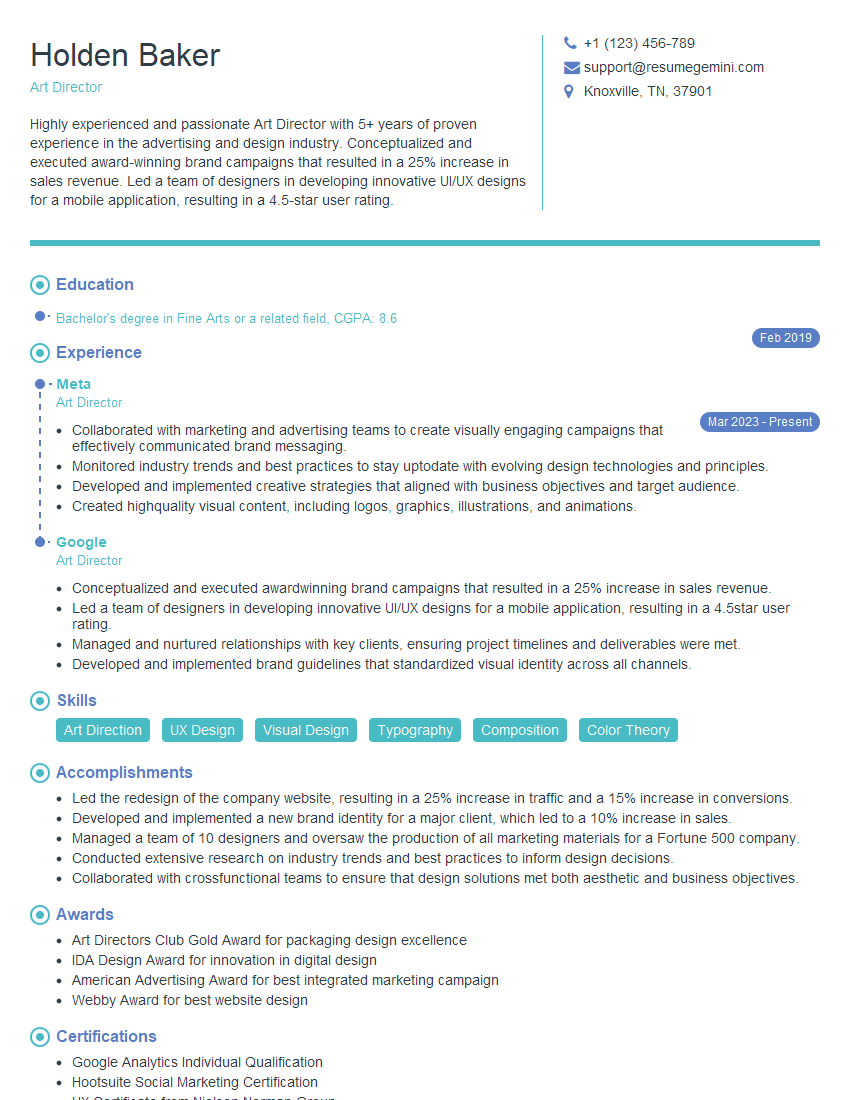
Art Director Resume Sample

Creative Director Resume Sample

Information Architect Resume Sample
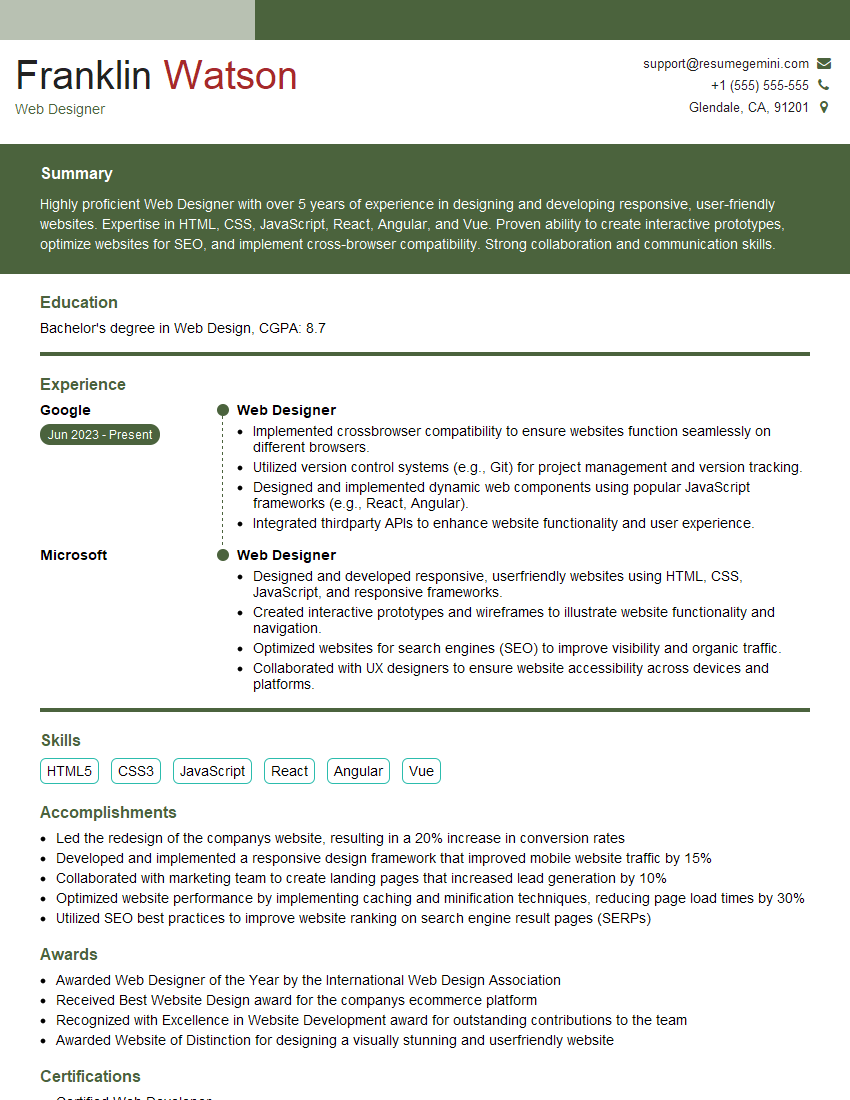
Web Designer Resume Sample
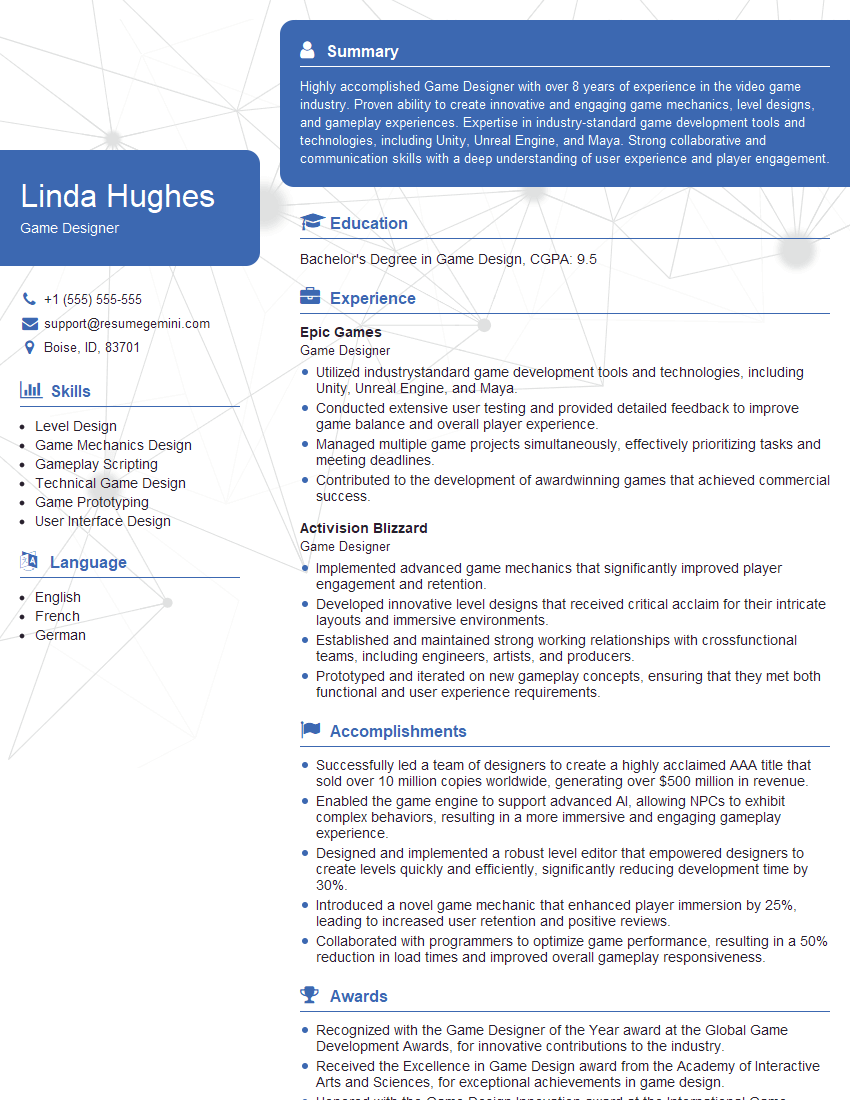
Game Designer Resume Sample

Content Strategist Resume Sample
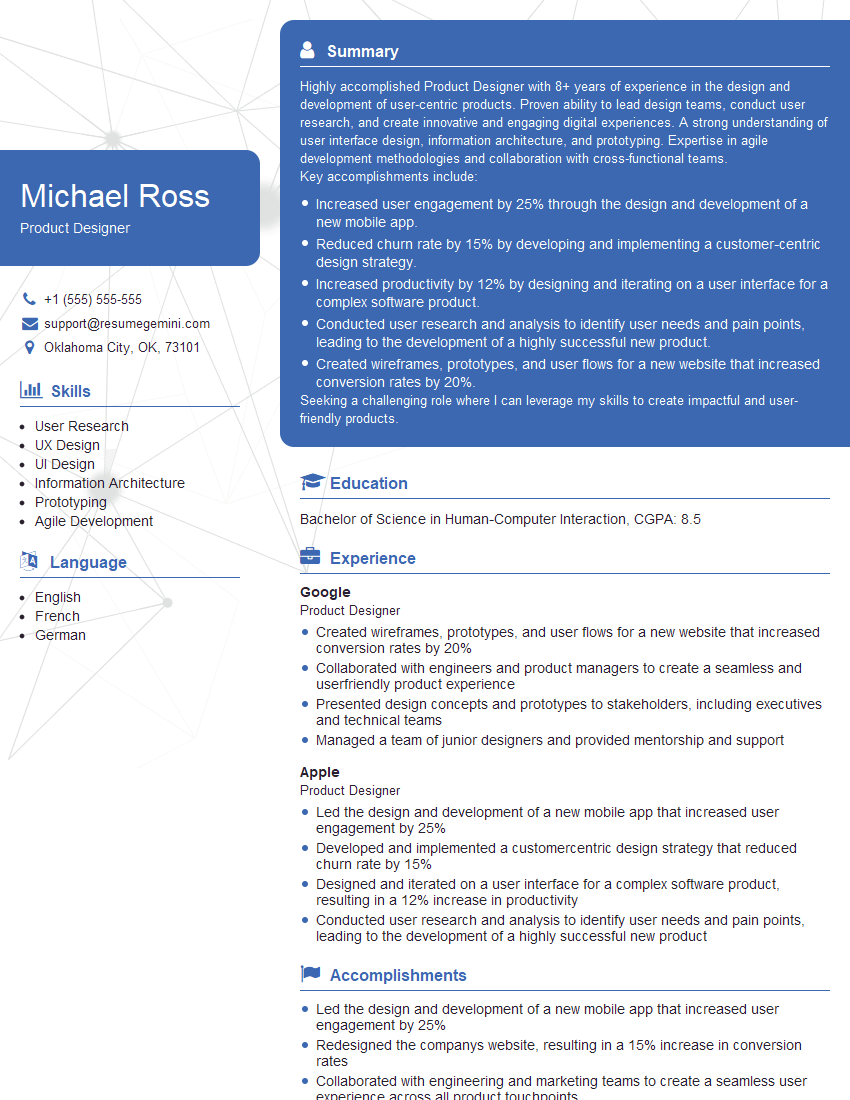
Product Designer Resume Sample
Graphic Designer Resume Sample
Design Manager Resume Sample
UX Designer Resume Sample
Lead UX Designer Resume Sample
Explore more articles
Users Rating of Our Blogs
Share Your Experience
We value your feedback! Please rate our content and share your thoughts (optional).
What Readers Say About Our Blog
Attention music lovers!
Wow, All the best Sax Summer music !!!
Spotify: https://open.spotify.com/artist/6ShcdIT7rPVVaFEpgZQbUk
Apple Music: https://music.apple.com/fr/artist/jimmy-sax-black/1530501936
YouTube: https://music.youtube.com/browse/VLOLAK5uy_noClmC7abM6YpZsnySxRqt3LoalPf88No
Other Platforms and Free Downloads : https://fanlink.tv/jimmysaxblack
on google : https://www.google.com/search?q=22+AND+22+AND+22
on ChatGPT : https://chat.openai.com?q=who20jlJimmy20Black20Sax20Producer
Get back into the groove with Jimmy sax Black
Best regards,
Jimmy sax Black
www.jimmysaxblack.com
Hi I am a troller at The aquatic interview center and I suddenly went so fast in Roblox and it was gone when I reset.
Hi,
Business owners spend hours every week worrying about their website—or avoiding it because it feels overwhelming.
We’d like to take that off your plate:
$69/month. Everything handled.
Our team will:
Design a custom website—or completely overhaul your current one
Take care of hosting as an option
Handle edits and improvements—up to 60 minutes of work included every month
No setup fees, no annual commitments. Just a site that makes a strong first impression.
Find out if it’s right for you:
https://websolutionsgenius.com/awardwinningwebsites
Hello,
we currently offer a complimentary backlink and URL indexing test for search engine optimization professionals.
You can get complimentary indexing credits to test how link discovery works in practice.
No credit card is required and there is no recurring fee.
You can find details here:
https://wikipedia-backlinks.com/indexing/
Regards
NICE RESPONSE TO Q & A
hi
The aim of this message is regarding an unclaimed deposit of a deceased nationale that bears the same name as you. You are not relate to him as there are millions of people answering the names across around the world. But i will use my position to influence the release of the deposit to you for our mutual benefit.
Respond for full details and how to claim the deposit. This is 100% risk free. Send hello to my email id: [email protected]
Luka Chachibaialuka
Hey interviewgemini.com, just wanted to follow up on my last email.
We just launched Call the Monster, an parenting app that lets you summon friendly ‘monsters’ kids actually listen to.
We’re also running a giveaway for everyone who downloads the app. Since it’s brand new, there aren’t many users yet, which means you’ve got a much better chance of winning some great prizes.
You can check it out here: https://bit.ly/callamonsterapp
Or follow us on Instagram: https://www.instagram.com/callamonsterapp
Thanks,
Ryan
CEO – Call the Monster App
Hey interviewgemini.com, I saw your website and love your approach.
I just want this to look like spam email, but want to share something important to you. We just launched Call the Monster, a parenting app that lets you summon friendly ‘monsters’ kids actually listen to.
Parents are loving it for calming chaos before bedtime. Thought you might want to try it: https://bit.ly/callamonsterapp or just follow our fun monster lore on Instagram: https://www.instagram.com/callamonsterapp
Thanks,
Ryan
CEO – Call A Monster APP
To the interviewgemini.com Owner.
Dear interviewgemini.com Webmaster!
Hi interviewgemini.com Webmaster!
Dear interviewgemini.com Webmaster!
excellent
Hello,
We found issues with your domain’s email setup that may be sending your messages to spam or blocking them completely. InboxShield Mini shows you how to fix it in minutes — no tech skills required.
Scan your domain now for details: https://inboxshield-mini.com/
— Adam @ InboxShield Mini
Reply STOP to unsubscribe
Hi, are you owner of interviewgemini.com? What if I told you I could help you find extra time in your schedule, reconnect with leads you didn’t even realize you missed, and bring in more “I want to work with you” conversations, without increasing your ad spend or hiring a full-time employee?
All with a flexible, budget-friendly service that could easily pay for itself. Sounds good?
Would it be nice to jump on a quick 10-minute call so I can show you exactly how we make this work?
Best,
Hapei
Marketing Director
Hey, I know you’re the owner of interviewgemini.com. I’ll be quick.
Fundraising for your business is tough and time-consuming. We make it easier by guaranteeing two private investor meetings each month, for six months. No demos, no pitch events – just direct introductions to active investors matched to your startup.
If youR17;re raising, this could help you build real momentum. Want me to send more info?
Hi, I represent an SEO company that specialises in getting you AI citations and higher rankings on Google. I’d like to offer you a 100% free SEO audit for your website. Would you be interested?
Hi, I represent an SEO company that specialises in getting you AI citations and higher rankings on Google. I’d like to offer you a 100% free SEO audit for your website. Would you be interested?