The right preparation can turn an interview into an opportunity to showcase your expertise. This guide to Knowledge of Tile Installation Techniques interview questions is your ultimate resource, providing key insights and tips to help you ace your responses and stand out as a top candidate.
Questions Asked in Knowledge of Tile Installation Techniques Interview
Q 1. Describe your experience with different types of tile (ceramic, porcelain, natural stone).
My experience spans a wide range of tile types, each demanding a unique approach. Ceramic tiles, known for their affordability and versatility, are a staple in many projects. I’ve worked extensively with various finishes, from glossy to matte, and understand their varying absorption rates, impacting the choice of thin-set mortar. Porcelain tiles, a denser and more durable alternative, often require more precision cutting due to their hardness. I’m proficient in handling large-format porcelain, understanding the crucial need for proper support and substrate preparation to prevent cracking. Finally, natural stone – including marble, granite, and travertine – presents its own set of challenges. Each stone has unique characteristics regarding porosity, strength, and susceptibility to staining, demanding specialized cleaning and sealing techniques. For example, I once worked on a project using a beautiful but delicate travertine tile; careful planning, including using a specific type of thin-set and grout, and a meticulous installation process were critical to its success and longevity.
Q 2. Explain the process of preparing a substrate for tile installation.
Substrate preparation is the cornerstone of a successful tile installation. Think of it as building a strong foundation for a house – if the foundation is weak, the whole structure is compromised. The process begins with a thorough cleaning, removing any loose debris, dust, or old adhesive. Next, the substrate needs to be level and firm. For uneven surfaces, self-leveling compounds are invaluable. Cracks or holes must be repaired using appropriate patching materials. Finally, the substrate must be primed to ensure proper adhesion of the thin-set mortar. The choice of primer depends on the substrate material; for example, concrete requires a different primer than drywall. Failing to properly prepare the substrate can lead to tile cracking, hollow areas, and ultimately, costly repairs down the road. I once had a job where the previous installer had skipped the priming step, resulting in significant tile failure. It was a costly lesson learned, emphasizing the importance of this foundational step.
Q 3. What are the different methods for setting tile (thin-set mortar, mastic)?
Tile setting methods largely depend on the type of tile and the substrate. Thin-set mortar is the preferred method for most installations, offering superior adhesion and crack resistance, especially with larger format or heavier tiles. It’s a cement-based adhesive, mixed with water to a workable consistency. Mastic, on the other hand, is a more economical, organic-based adhesive better suited for smaller tiles on interior walls where movement is minimal. However, mastic is less durable and not suitable for larger format tiles, wet areas, or exterior applications. The selection of thin-set mortar itself is crucial. Different types are available for specific situations, considering factors like the substrate’s porosity and the tile’s material. For instance, modified thin-set offers enhanced flexibility and bond strength, often necessary for installations in areas prone to movement, such as over radiant heating systems. Choosing the incorrect mortar can result in bond failure and tile issues later.
Q 4. How do you ensure proper spacing and alignment during tile installation?
Maintaining proper spacing and alignment is crucial for achieving a professional finish. Spacers, typically plastic crosses, are used to create uniform grout lines. These are placed between the tiles as they are set, ensuring consistent gaps. For larger format tiles, the use of a laser level is often beneficial to verify levelness and squareness. A good installer also regularly checks alignment using a straight edge or long level to ensure the tiles remain straight and true throughout the installation process. Inconsistent spacing can create an unprofessional look, while misaligned tiles may compromise the structural integrity. I always prioritize these steps – it’s what sets a good job apart from a great job.
Q 5. What tools and equipment are essential for efficient tile installation?
Efficient tile installation requires a variety of tools and equipment. These include: a wet saw for precise cutting, especially for porcelain and natural stone; a notched trowel for applying thin-set mortar; spacers to maintain consistent grout lines; a level and straight edge to ensure alignment; a grout float for applying grout; and sponges for cleaning excess grout. Beyond these basics, other useful tools include a tile cutter for scoring smaller tiles, a grinder for shaping edges, and knee pads for comfort. Investing in quality tools pays off in the long run, enhancing both efficiency and the quality of the finished product. A dull blade on a wet saw, for instance, can lead to chipping and breakage of the tiles.
Q 6. Explain your process for cutting and shaping tiles.
Cutting and shaping tiles requires precision and the right tools. For straight cuts, a wet saw is indispensable, offering the cleanest and most accurate cuts, particularly for harder tiles like porcelain. For smaller tiles or curved cuts, a manual tile cutter or nippers might suffice. More intricate shapes may require an angle grinder with a diamond blade, demanding extra care to prevent chipping. When cutting natural stone, it’s crucial to use a blade specifically designed for the material to prevent damage. Always wear appropriate safety gear, such as safety glasses and a dust mask, when cutting tiles. Improper cutting techniques can lead to damaged tiles and safety hazards; precision and experience are key to efficient and safe cutting.
Q 7. How do you handle uneven surfaces before tile installation?
Uneven surfaces pose a significant challenge in tile installation and must be addressed before tiling commences. Self-leveling compounds are excellent for smoothing out minor imperfections. For more substantial irregularities, the substrate might require patching or resurfacing. This could involve removing sections of the old substrate and rebuilding them to create a level plane. Failure to address uneven surfaces will result in an uneven tile surface, potentially causing cracking and leading to a less than satisfactory outcome. I recently encountered a bathroom floor with significant undulation – after careful leveling, the finished tile job was seamless and beautiful, a testament to the importance of addressing substrate imperfections.
Q 8. Describe your experience with different grout types and application techniques.
Grout is the mortar used to fill the spaces between tiles, and selecting the right type is crucial for durability and aesthetics. I have extensive experience with various grout types, including cement-based, epoxy, and sanded/unsanded options. Cement-based grout is the most common and cost-effective, suitable for most applications. However, it’s porous and requires sealing. Epoxy grout, on the other hand, is non-porous, stain-resistant, and ideal for high-traffic areas or wet environments like showers. Sanded grout is used for wider grout lines (typically over 1/8 inch) to provide strength and prevent cracking, while unsanded grout is best for thinner grout lines to create a smoother, more refined finish.
Application techniques differ depending on the grout type. Cement-based grout requires careful mixing to achieve the right consistency – not too thick, not too thin. It’s applied using a rubber grout float, pressed firmly into the joints at a 45-degree angle to ensure complete filling. Excess grout is removed immediately using a damp sponge. Epoxy grout, due to its quick-setting nature, requires a more precise and rapid application. I use specialized tools for epoxy, often incorporating a slow-setting time additive. Proper mixing and timing are paramount to prevent early setting. Regardless of the grout type, consistent pressure and attention to detail during application are key to achieving a professional, even finish. For example, on a recent bathroom remodel, the client specifically requested an epoxy grout for its superior water resistance and easy maintenance, which we successfully implemented resulting in a flawless, long-lasting installation.
Q 9. How do you ensure proper grout cleaning and sealing?
Proper grout cleaning and sealing are vital for longevity and maintaining the tile’s aesthetic appeal. Immediately after grout application, before it sets, I carefully remove excess grout using a damp sponge and a gentle scrubbing motion, being cautious not to dislodge the tiles. Once the grout is completely cured (usually 24-72 hours, depending on the type), I clean the tile surfaces thoroughly with a grout haze remover to eliminate any residue. This often involves a gentle acid-based cleaner, used with care according to manufacturer’s instructions, followed by a thorough rinsing.
Sealing is the next crucial step, especially for cement-based grout. A high-quality grout sealer protects against water, stains, and mildew. I apply the sealer according to the manufacturer’s instructions, usually using a brush or sprayer, ensuring even coverage and allowing for sufficient drying time before resuming any cleaning or use. I always recommend using a penetrating sealer, rather than a topical one, for optimal protection. The difference is significant; a penetrating sealer soaks into the grout, strengthening it from the inside. A topical sealer merely coats the surface. Regularly sealing the grout every 1-2 years (depending on usage and exposure to water) is a good practice for maintaining its integrity and long-term appeal. Think of grout sealer as sunscreen for your grout; it protects it from the harsh effects of the elements, preventing long-term damage.
Q 10. What are the common issues encountered during tile installation, and how do you address them?
Common issues during tile installation include uneven surfaces, lippage (where tiles are not flush), cracked tiles, and grout problems. Uneven surfaces can lead to a poorly installed tile with an unlevel finish. To address this, I ensure the substrate (the surface the tiles are laid on) is properly leveled before installation, often using a self-leveling compound. Lippage arises when tiles are not set at the same height, creating an uneven surface. This is avoided through careful attention to the thickness of mortar and consistent pressure during installation. I use spacers to maintain even spacing between the tiles and a level to check the height of each tile as it is set. Cracked tiles can result from improper handling or a faulty substrate; careful selection of high-quality tiles and handling them with care greatly minimizes this problem. Finally, grout problems such as incomplete filling or cracking can stem from improper mixing, application, or insufficient curing time; addressing this requires careful adherence to the manufacturer’s instructions and good attention to detail.
My approach involves thorough preparation, using appropriate tools and materials, and diligent quality control throughout the installation process. For instance, I once encountered an unexpectedly uneven subfloor. Rather than rushing the installation, I took the time to level the floor using a self-leveling compound, ensuring a perfectly smooth surface before proceeding with the tile setting. This extra step prevented significant problems later and guaranteed a high-quality final product.
Q 11. Explain your understanding of waterproofing membranes in tile installations.
Waterproofing membranes are crucial in areas prone to water exposure, such as showers, bathrooms, and kitchens. These membranes act as a barrier, preventing water from penetrating the substrate and causing damage to the structure. I have experience working with various types of waterproofing membranes, including liquid-applied membranes (often based on polyurethane or epoxy), sheet membranes (such as PVC or CPE), and cementitious waterproofing systems. The choice of membrane depends on the specific application and project requirements.
Proper installation of a waterproofing membrane is critical to its effectiveness. This typically involves applying the membrane according to the manufacturer’s instructions, ensuring a continuous, seamless layer without gaps or overlaps. For liquid-applied membranes, I utilize appropriate tools and techniques to achieve an even coating, paying close attention to corners and joints. For sheet membranes, overlapping seams are carefully sealed using appropriate adhesives and tapes to guarantee waterproofing integrity. The membrane must extend beyond the tiled area onto the surrounding walls and up to the appropriate height to effectively contain water. A waterproofing membrane is like an insurance policy for your tile installation, protecting against potential water damage and associated costs down the line.
Q 12. Describe your experience with different tile layout patterns (e.g., running bond, herringbone).
I’m proficient in various tile layout patterns, including running bond (the most common, with tiles offset like bricks), herringbone (tiles arranged in a zig-zag pattern), basketweave (interlocking rectangular tiles resembling a woven basket), and diagonal layouts. The choice of pattern significantly impacts the overall aesthetic of the space. Running bond is simple and classic, while herringbone and basketweave add more visual interest and complexity.
Each pattern requires careful planning and precise execution. For instance, herringbone requires precise cuts and accurate spacing to achieve a visually appealing pattern. I use templates and marking tools to ensure accuracy, particularly for more intricate patterns like those requiring diagonal cuts or curved lines. Before starting a project, I always create a detailed layout plan to visualize the pattern and ensure optimal material usage, minimizing waste. A recent project involved a herringbone pattern in a high-end residential kitchen backsplash; the meticulous planning and execution resulted in a stunning, unique, and client-approved finish.
Q 13. How do you calculate the amount of tile and materials needed for a project?
Accurate material calculation is essential for avoiding costly overages or shortages. I begin by meticulously measuring the area to be tiled, accounting for all surfaces and any cuts or adjustments needed for the chosen pattern. I then factor in waste, typically 5-10%, depending on the complexity of the pattern and tile size. For example, intricate cuts in a herringbone pattern might require a higher waste percentage than a simple running bond. I always round up my calculations to guarantee sufficient materials.
Next, I calculate the number of tiles needed by dividing the total area by the area of a single tile. Similarly, I calculate the amount of thin-set mortar and grout based on manufacturer recommendations, considering factors like tile size and grout line width. I always purchase a slightly larger quantity than calculated to account for unforeseen circumstances or potential mistakes. Accurate measurement and meticulous calculation ensure efficient project completion and prevent costly delays caused by material shortages.
Q 14. What safety precautions do you take during tile installation?
Safety is paramount during tile installation. I always use appropriate personal protective equipment (PPE), including safety glasses to protect my eyes from flying debris, dust masks to prevent inhalation of fine particles, gloves to protect my hands from irritants, and hearing protection when using power tools. I ensure the work area is clean, well-lit, and free of obstructions. Power tools, such as wet saws, are used according to manufacturer instructions and with utmost care. I take breaks when needed and avoid fatigue to minimize the risk of accidents. Proper storage and disposal of waste materials, such as broken tiles and excess grout, are also crucial.
When working at heights, I utilize appropriate scaffolding or ladders, and I always have a spotter present to enhance safety. Before starting any potentially hazardous task, I conduct a thorough risk assessment to identify and mitigate potential hazards, ensuring a safe and productive work environment. I follow all relevant safety regulations and standards to minimize risk and protect myself and my crew. In all my years of experience, I have maintained an excellent safety record, prioritizing safety above all else.
Q 15. How do you manage waste and dispose of materials responsibly?
Responsible waste management is crucial for any professional tile installer. It’s not just about being environmentally conscious; it also impacts project costs and efficiency. My process begins with careful planning. I always overestimate material needs by a small percentage to account for cuts and breakage, but I also meticulously measure the space to minimize waste from the outset. During installation, I separate different types of waste – cardboard, plastic packaging, broken tiles, and grout – into designated containers. Broken tiles, especially, are handled carefully to prevent injury.
Disposal methods vary depending on local regulations and material types. Cardboard and plastic are typically recycled through standard municipal services. For construction debris like broken tiles and grout, I work with licensed waste disposal companies specializing in construction waste, ensuring responsible and environmentally sound disposal at appropriate facilities. This not only minimizes the environmental impact but also complies with all relevant building codes and regulations.
Career Expert Tips:
- Ace those interviews! Prepare effectively by reviewing the Top 50 Most Common Interview Questions on ResumeGemini.
- Navigate your job search with confidence! Explore a wide range of Career Tips on ResumeGemini. Learn about common challenges and recommendations to overcome them.
- Craft the perfect resume! Master the Art of Resume Writing with ResumeGemini’s guide. Showcase your unique qualifications and achievements effectively.
- Don’t miss out on holiday savings! Build your dream resume with ResumeGemini’s ATS optimized templates.
Q 16. Explain your experience with installing large-format tiles.
Installing large-format tiles (typically over 24” x 24”) presents unique challenges compared to smaller tiles. The larger size increases the potential for unevenness, lippage (uneven height between tiles), and cracking due to their weight and susceptibility to stress. My experience includes projects featuring porcelain slabs up to 60” x 120”. To manage these difficulties, I start by ensuring the substrate is perfectly level, often requiring extensive preparation work, including self-leveling compound for imperfections.
I also use specialized tools and techniques. This includes using large-format tile spacers for consistent joint widths and powerful tile saws designed for precise cuts in these large, often heavy, pieces. Proper support is essential during installation, frequently using multiple people to handle these weighty tiles and minimizing the risk of breakage. Successful large-format tile installations require meticulous attention to detail and expertise in mitigating the inherent challenges of working with this tile type. For example, I recently worked on a project involving 48” x 48” porcelain tiles in a high-traffic commercial space. The extensive substrate preparation and use of a large-format tile saw were critical to ensuring a smooth, even surface and a long-lasting, attractive installation.
Q 17. Describe your experience with installing tiles on walls versus floors.
Wall and floor tile installations differ significantly in their techniques and considerations. Floor tile installations require a stronger, more robust substrate capable of withstanding heavy foot traffic and potential impact. This might involve using cement backer board or other reinforced materials. The adhesive type is also crucial, needing to provide strong bonding and superior impact resistance. Furthermore, I always account for expansion joints, crucial to prevent cracking due to thermal changes and building movement.
Wall tile installations have different concerns. The substrate may not need the same level of reinforcement, but proper waterproofing behind the tile is extremely important, especially in areas like showers and bathrooms to prevent water damage. The adhesive used for walls is generally different than that used for floors, optimized for vertical application and to allow for even spreading across varied surfaces. The weight of the tiles and the potential for sagging are also considerations in the design and supporting structure. I approach each application with the appropriate materials and techniques, understanding the unique challenges and risks presented by the specific installation environment.
Q 18. How do you ensure the longevity and durability of your tile installations?
The longevity and durability of a tile installation depend heavily on several factors starting from preparation. The most crucial aspect is proper substrate preparation. This ensures a stable, level surface that distributes stress evenly, preventing cracking and unevenness. Using the correct type of adhesive for the tile and substrate is also essential. This ensures the tiles adhere strongly and resist movement over time. Another critical element is the selection of appropriate grout that is water-resistant and durable, especially for floor installations. Expansion joints are crucial for allowing movement within the tile surface.
Throughout the installation, meticulous attention to detail prevents issues like lippage and unevenness. Finally, proper cleaning and sealing post-installation help to protect the tiles from staining and wear. I always provide my clients with guidelines on post-installation maintenance to maximize the lifespan of their new tile. For example, in a recent kitchen renovation, the use of a crack-resistant grout and meticulous sealing resulted in a floor installation that is still pristine years after completion.
Q 19. What are your preferred methods for cleaning and maintaining installed tiles?
Cleaning and maintaining installed tiles is straightforward but requires the right approach to avoid damaging the grout or tile surface. For regular cleaning, I recommend a solution of mild detergent and water, applied with a soft-bristled brush or mop. Avoid abrasive cleaners or scouring pads which can scratch the surface. For more stubborn stains, a commercial tile cleaner may be necessary, but always test it in an inconspicuous area first. Grout lines are particularly susceptible to staining and require specific attention.
After cleaning, it’s crucial to rinse thoroughly to prevent residue buildup. For sealed tiles, regular sweeping or vacuuming prevents dirt accumulation. A sealed grout line reduces the risk of staining. The frequency of cleaning depends on the area’s traffic level and the type of tile; in high-traffic areas, more frequent cleaning is necessary. I usually provide clients with detailed post-installation care instructions, emphasizing gentle cleaning techniques and regular maintenance.
Q 20. Describe your experience with troubleshooting tile installation problems.
Troubleshooting tile installation problems requires a systematic approach. I start by carefully assessing the issue: Is it a crack, a discoloration, unevenness, or something else? Once identified, I examine the potential causes. Common issues include poor substrate preparation (uneven surfaces, improper waterproofing), incorrect adhesive selection or application, using improper tools, or lippage due to incorrect spacing.
My approach involves meticulously checking each step of the installation process. If the problem is linked to the substrate, I may need to address those problems and then re-tile. Incorrect adhesive might necessitate removing tiles and restarting that section. Sometimes, the issue is superficial and easily remedied with grout repair or cleaning. My experience allows me to quickly identify the root cause and implement the appropriate solution, minimizing disruptions and extra costs for the client. For example, I once encountered significant lippage in a large area. By carefully analyzing the cause (incorrect spacer use combined with uneven substrate), I efficiently corrected it by using a self-leveling compound under affected tiles, saving significant time and expense compared to a full-scale re-tile.
Q 21. What are your strengths and weaknesses as a tile installer?
My strengths lie in my meticulous attention to detail, my problem-solving skills, and my extensive experience working with a wide variety of tile types and installation scenarios. I’m adept at substrate preparation, ensuring a perfectly level surface, and have a proven track record of managing complex installations, including large-format tiles and intricate designs. My communication skills enable me to collaborate effectively with clients and other tradespeople. I’m comfortable working both independently and as part of a larger team.
One area I continually strive to improve is my business management, specifically in more effectively utilizing project management software for better scheduling and material tracking. While I am proficient in these areas, continuously enhancing my efficiency is important as my business grows. This includes actively seeking opportunities to enhance my knowledge through ongoing professional development in new installation methods, materials, and business management techniques.
Q 22. How do you handle challenging customer requests or project changes?
Handling challenging customer requests and project changes requires clear communication, flexibility, and a problem-solving mindset. I always start by actively listening to the customer’s concerns and clarifying their requests. This ensures I understand their vision and any potential issues. If changes arise mid-project, I immediately assess the impact on the timeline and budget, presenting transparent options to the customer. For instance, if a customer wants to change tile type mid-installation, I’ll explain the potential delays and additional costs involved in sourcing the new material and adjusting the installation plan. I then work collaboratively with the client to find a solution that meets both their needs and the project’s feasibility.
I always document all changes in writing, keeping both the customer and myself informed. This prevents misunderstandings and ensures a smooth process. My experience has shown that proactive communication and a willingness to collaborate are crucial in navigating these situations successfully.
Q 23. What is your experience with different types of tile adhesives?
My experience encompasses a wide range of tile adhesives, each with its own strengths and applications. I’m proficient with modified thin-set mortars, which are ideal for most ceramic and porcelain tiles, offering excellent bond strength and flexibility. For large-format tiles or installations in high-stress areas, I utilize high-performance thin-set mortars designed to withstand heavy loads. I also have experience with epoxy adhesives, which provide superior bond strength and water resistance, perfect for wet areas like showers and pools. The selection of the right adhesive depends on several factors, including the tile type, substrate material, and the intended use of the tiled area. For example, a porous tile on a concrete substrate in a dry area might only need a standard modified thin-set, while a large, heavy porcelain tile in a shower would necessitate a high-performance thin-set or epoxy.
Q 24. Explain the importance of proper ventilation during tile installation.
Proper ventilation during tile installation is crucial for several reasons. Firstly, it ensures the proper curing of the adhesive. Many adhesives require a certain level of humidity and temperature to cure correctly. Inadequate ventilation can lead to excessive moisture buildup, resulting in a weakened bond and potential issues like mold growth. Secondly, good ventilation removes dust and fumes generated during cutting and grinding, creating a safer and more comfortable working environment for both the installer and occupants. Think of it like baking a cake – you need the right environment for it to rise properly; likewise, tile adhesive needs the right environment to cure effectively.
In practical terms, I always ensure that adequate ventilation is available, either through natural ventilation (opening windows and doors) or using exhaust fans, especially in enclosed spaces. This ensures optimal curing conditions and a healthy work environment.
Q 25. Describe your experience with using a wet saw for cutting tiles.
I’m highly proficient in using a wet saw for cutting tiles. This is an essential tool that ensures precise and clean cuts, minimizing chipping and breakage. My experience involves using both manual and automated wet saws, adjusting the blade and water flow according to the tile type and desired cut. For example, a harder porcelain tile requires a diamond blade specifically designed for porcelain and a higher water flow to prevent overheating and blade damage. A softer ceramic tile might need a less aggressive blade. Safety is paramount; I always wear appropriate safety gear, including eye protection and a dust mask, when operating a wet saw.
I understand the importance of maintaining the saw’s blade and ensuring proper water lubrication to prolong its lifespan and ensure the accuracy of cuts. A poorly maintained saw can lead to inaccurate cuts, damaged tiles, and even injuries.
Q 26. How do you ensure proper expansion joints are included in your tile installations?
Expansion joints are critical in tile installations to accommodate the natural expansion and contraction of the tile and substrate due to temperature and humidity fluctuations. Neglecting these joints can lead to cracking and buckling of the tile. I ensure proper expansion joints are incorporated by following manufacturer recommendations and industry best practices. This includes using control joints in the substrate before tiling and incorporating expansion joints around perimeters, doorways, and other structural elements. The size and spacing of the joints depend on the type of tile and substrate and are usually specified in the tile manufacturer’s guidelines.
Materials like expansion joint caulk or strips are used to fill these gaps, ensuring flexibility and preventing stress on the tile installation. I often use a combination of planning and precise measurements to ensure these joints are correctly placed and sized to achieve a professional and durable finish.
Q 27. How do you maintain a clean and organized workspace during tile installation?
Maintaining a clean and organized workspace is paramount for efficiency and safety. My approach involves a systematic process. Before starting any project, I thoroughly clean the work area, removing any debris or obstacles. During installation, I use designated areas for storing materials, tools, and waste. I regularly clean up spills and excess mortar to prevent accidents and ensure a smooth work surface. This proactive approach makes the installation process more efficient, reduces the risk of damaging the tiles, and creates a professional impression on the client.
I also utilize various organizational tools such as buckets, trays, and labeled containers to keep everything in its place. This prevents mixing up materials and makes it easier to find what I need quickly. Ultimately, a clean and organized workspace translates into higher quality work and a more efficient and pleasant installation process.
Q 28. Describe a time you had to problem-solve a difficult tile installation issue.
One challenging installation involved a complex curved wall in a high-end bathroom. The customer selected a large-format, intricate mosaic tile that required precise cutting and placement to follow the wall’s curvature. The initial approach of using standard cutting techniques resulted in significant tile breakage and inconsistencies in the pattern. To solve this, I researched different techniques, ultimately adopting a combination of wet-saw cutting with meticulous hand-grinding and shaping to achieve a seamless fit. This involved creating templates and carefully adjusting the cuts to maintain the mosaic’s design integrity.
The solution required patience, precision, and a willingness to adapt my techniques. The final result was a stunning installation that met the customer’s expectations and showcased the tile’s beauty. This experience highlighted the importance of adapting to unexpected challenges and utilizing creative problem-solving to achieve optimal outcomes.
Key Topics to Learn for Knowledge of Tile Installation Techniques Interview
- Surface Preparation: Understanding different substrate types (concrete, drywall, plywood), appropriate leveling techniques, and moisture mitigation strategies. Practical application: Explaining how to properly prepare a wall for tile installation, addressing potential issues like uneven surfaces or moisture damage.
- Tile Selection and Layout: Knowledge of various tile materials (ceramic, porcelain, natural stone), sizing, and pattern selection (running bond, herringbone, etc.). Practical application: Demonstrating the ability to calculate the required amount of tile for a given area, considering waste and cuts.
- Thin-Set Mortar Application: Understanding the properties of different mortars, proper mixing techniques, and application methods for various tile types and substrates. Practical application: Describing the process of applying thin-set mortar to achieve optimal adhesion and prevent issues like lippage.
- Grouting Techniques: Selecting the appropriate grout type, mixing consistency, and application methods for different grout types. Practical application: Explaining how to properly grout tiles, ensuring complete filling of joints and preventing staining.
- Cutting and Finishing: Proficiency in using various tile cutting tools (wet saw, nippers), achieving precise cuts, and finishing edges for a professional look. Practical application: Describing how to handle challenging cuts, such as around corners or plumbing fixtures.
- Troubleshooting and Problem Solving: Identifying and resolving common tile installation problems, such as hollow tiles, cracked tiles, and uneven grout lines. Practical application: Demonstrating an understanding of preventative measures and corrective actions for typical installation challenges.
- Safety Procedures and Regulations: Adherence to safety guidelines related to using power tools, handling materials, and working at heights. Practical application: Explaining the importance of personal protective equipment (PPE) and safe work practices.
Next Steps
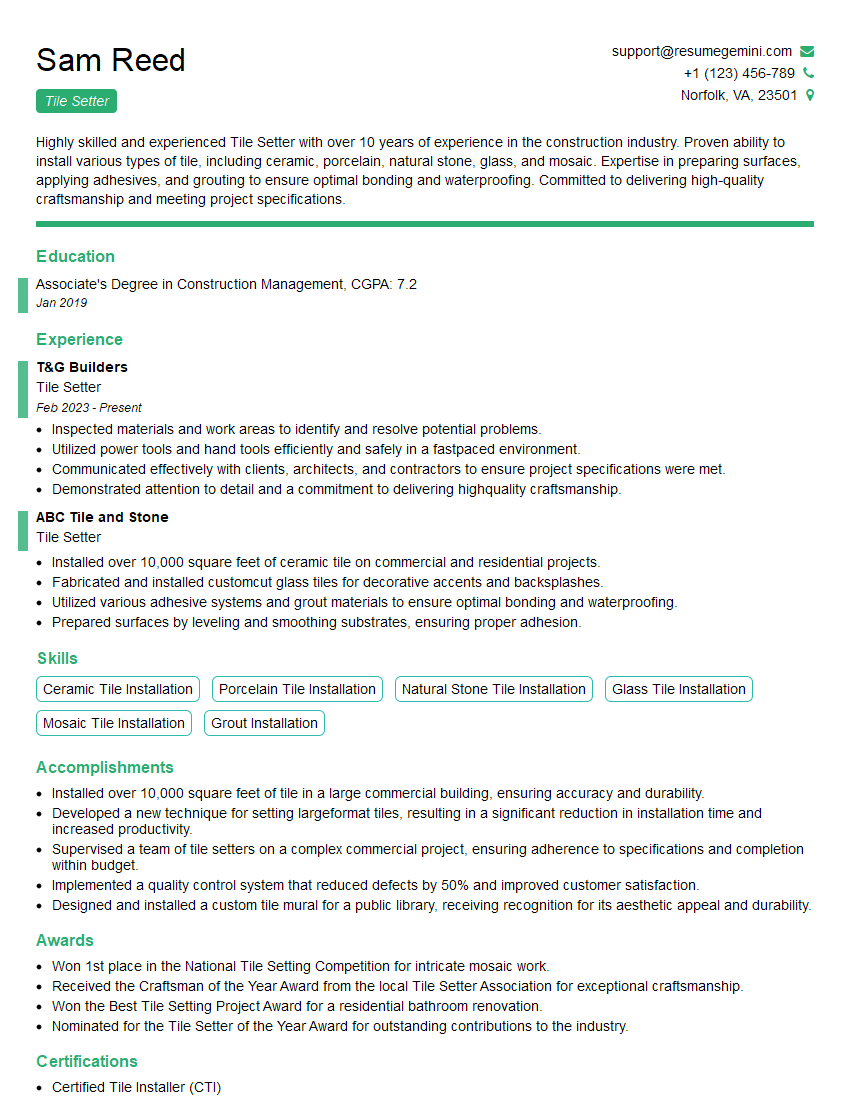
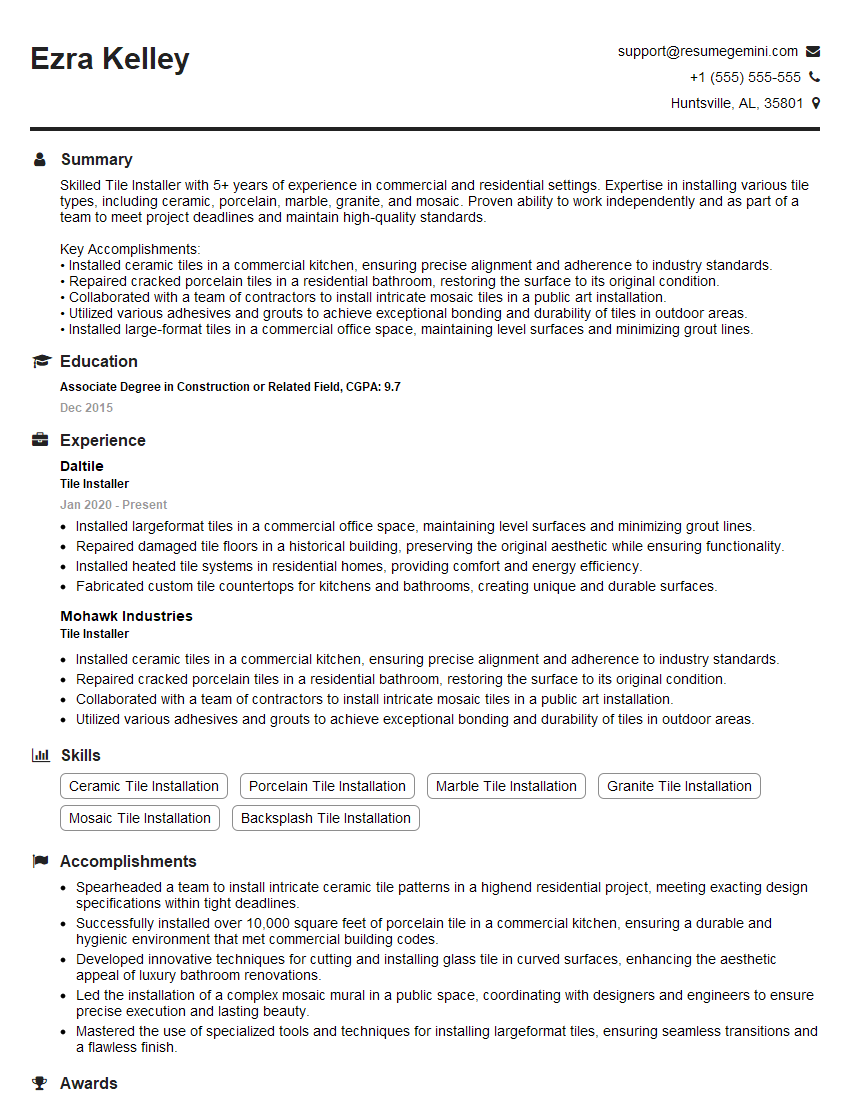
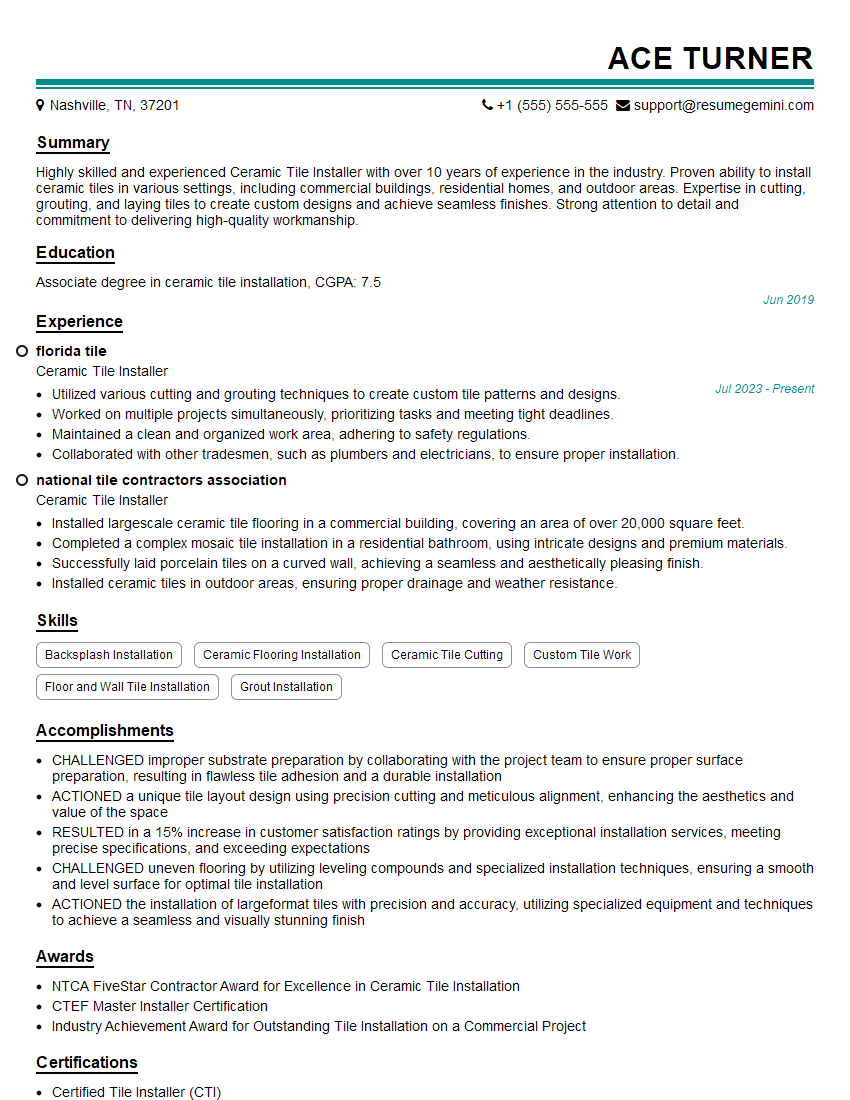
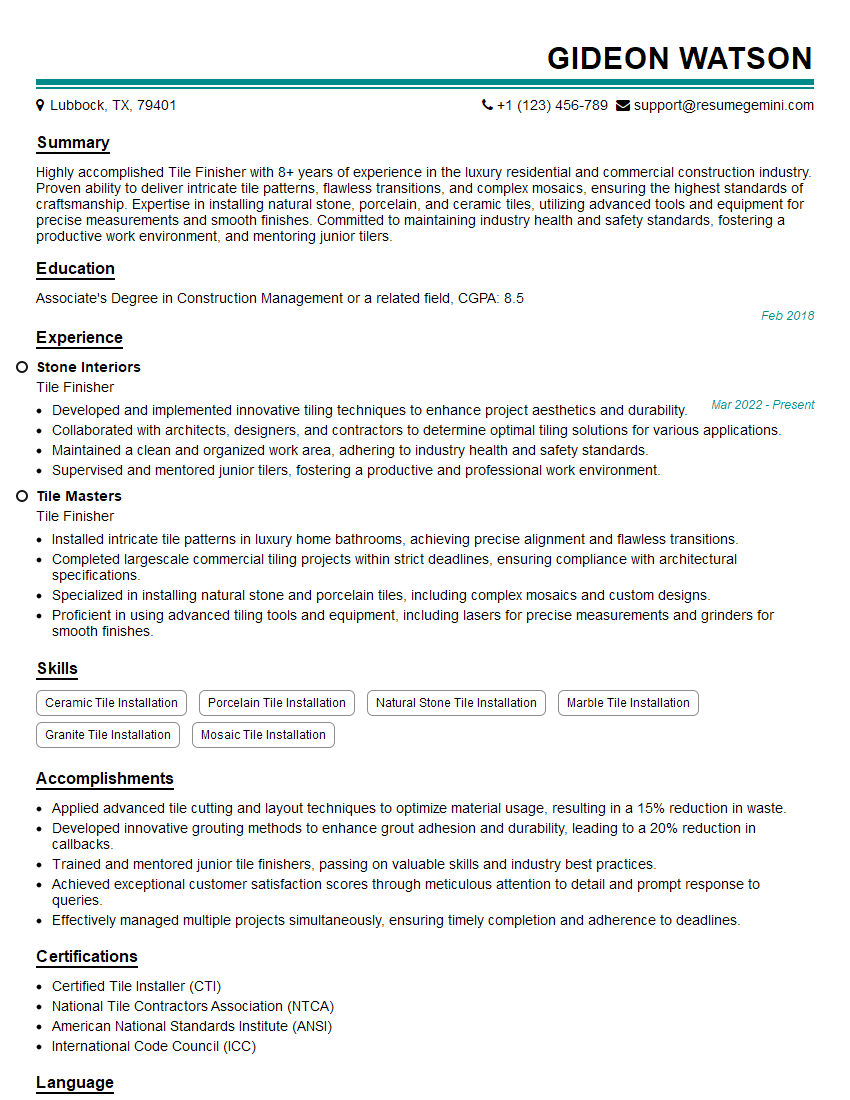
Mastering tile installation techniques is crucial for career advancement in the construction and renovation industries. A strong understanding of these techniques demonstrates your expertise and increases your marketability to potential employers. To significantly improve your job prospects, creating an ATS-friendly resume is paramount. ResumeGemini is a trusted resource that can help you craft a professional and impactful resume tailored to highlight your skills and experience. Examples of resumes tailored to showcasing expertise in Knowledge of Tile Installation Techniques are available through ResumeGemini to guide your resume building process.
Explore more articles
Users Rating of Our Blogs
Share Your Experience
We value your feedback! Please rate our content and share your thoughts (optional).
What Readers Say About Our Blog
Very informative content, great job.
good