Preparation is the key to success in any interview. In this post, we’ll explore crucial Knowledge of tree pruning and removal techniques interview questions and equip you with strategies to craft impactful answers. Whether you’re a beginner or a pro, these tips will elevate your preparation.
Questions Asked in Knowledge of tree pruning and removal techniques Interview
Q 1. Describe the different pruning techniques used for various tree species.
Pruning techniques vary greatly depending on the tree species, its age, and the desired outcome. Some common techniques include:
- Thinning: Removing entire branches back to a lateral branch or the trunk. This improves light penetration and air circulation, promoting stronger growth. Think of it like giving the tree a haircut – removing some branches to shape it and encourage healthy growth. This is often used on fruit trees to improve fruit production.
- Heading: Cutting back a branch to a stub. This is generally discouraged as it can lead to weak growth, disease, and decay. Think of it like chopping off a tree’s hair very short – it looks bad and can be harmful.
- Reduction: Shortening a branch to a lateral branch or point further along the main stem. This technique is used to reduce the overall size of a branch without completely removing it. This is useful for managing the height or spread of a tree and reducing wind resistance.
- Cleaning: Removing dead, diseased, damaged, or crossing branches. This is crucial for tree health and safety. It’s like tidying up a messy tree, removing debris and potential hazards.
- Rejuvenation: Removing old, dense, and unproductive wood to encourage new growth. Commonly used on older fruit trees to revitalize production.
For example, a young maple tree might benefit from thinning to promote a strong central leader, while an aging oak might require cleaning and reduction to remove weak, decaying branches and maintain structural integrity.
Q 2. Explain the importance of proper pruning cuts to prevent disease and decay.
Proper pruning cuts are essential for preventing disease and decay. Improper cuts leave wounds that are difficult for the tree to close, making it vulnerable to infection. The key is to make clean, precise cuts that minimize the amount of damaged tissue.
The proper technique involves making three cuts: a bottom cut (undercut), a top cut (removing the branch), and a final cut (removing the stub). The undercut should be made a few inches out from the branch collar (the slightly swollen area at the base of the branch). This prevents tearing the bark. The top cut removes the branch, and the final cut shapes the wound, leaving a smooth surface for healing. Think of it like preparing a clean wound for a bandage.
Failure to make proper cuts can lead to:
- Decay: Fungi and bacteria can easily enter large wounds, leading to decay and structural weakness.
- Disease: Open wounds provide entry points for various tree diseases.
- Insect Infestation: Damaged wood is more attractive to insects, which can further damage the tree.
By making precise cuts, we minimize damage and allow the tree to quickly compartmentalize the wound, protecting its healthy tissues.
Q 3. What are the safety precautions to be followed during tree pruning?
Safety is paramount during tree pruning. Always prioritize personal safety and the safety of those around you.
- Proper Personal Protective Equipment (PPE): Always wear safety glasses, gloves, hearing protection (for power tools), and sturdy closed-toe shoes. A hard hat is recommended for larger jobs, especially when working near power lines.
- Assess the Work Area: Carefully inspect the area for hazards such as power lines, other obstructions, and unstable ground. Clear the area of any obstacles that could cause a fall or injury.
- Use appropriate tools and equipment in good working order: Ensure all tools are sharp and well maintained. Dull tools require more force and are more likely to slip and cause injury.
- Never prune under unsafe conditions: Don’t work in high winds, storms, or during periods of inclement weather. Postpone your work if there is any question about safety.
- Secure the work area: Establish safe working zones, use barriers if necessary to prevent access to the work area by unauthorized individuals.
- Have a spotter: Whenever possible, work with a spotter, especially when using ladders or working at heights. They can help you maintain balance and awareness of your surroundings.
- Plan your work: Always have a plan before you start work, considering the steps involved and the most efficient way to carry out the job.
- Follow all OSHA regulations: Make sure that you are fully compliant with all safety guidelines.
Remember, safety isn’t just about avoiding injury; it’s about working efficiently and effectively without compromising your well-being.
Q 4. How do you assess the risk of tree failure and what measures are taken to mitigate it?
Assessing the risk of tree failure involves a thorough visual inspection and potentially more in-depth assessments, depending on the size and condition of the tree and its location. We look for:
- Decay: Signs of decay such as hollow trunks, cracks, fungal fruiting bodies, and oozing sap indicate structural weakness.
- Leaning: A significant lean, especially towards buildings or other structures, increases the risk of failure.
- Structural defects: Include codominant stems, included bark, weak branch attachments, and major wounds.
- Species and age: Certain species are more prone to failure than others. Older trees are generally at higher risk than younger trees.
- Environmental factors: Strong winds, heavy snow, or ice storms can increase the risk of failure.
- Site conditions: Poor soil drainage, unstable soil, and root damage can weaken trees and make them more susceptible to failure.
Mitigation measures can range from pruning to remove weak or dead branches, to cabling or bracing to reinforce structural weaknesses, to complete removal if the risk is deemed too high. In some cases, we might use specialized equipment, such as an arborist’s report, to provide a more comprehensive assessment and create a risk management plan.
For example, a large oak tree with extensive decay and leaning significantly toward a house would require immediate attention, possibly including removal. Conversely, a smaller tree with minor branch damage could be mitigated with targeted pruning.
Q 5. What tools and equipment are commonly used in tree pruning and removal?
The tools and equipment used in tree pruning and removal vary depending on the size and complexity of the job. Common tools include:
- Hand saws: Bow saws, pruning saws, and folding saws are used for smaller branches.
- Pole saws: Extend the reach of the saw, allowing for pruning of higher branches.
- Chainsaws: Used for larger branches and tree removal. Different chainsaws are available for different applications, some are designed for limbing and others for bucking (cutting into sections).
- Pruning shears: Used for small branches and precise cuts.
- Loppers: Used for slightly larger branches that are too thick for shears.
- Climbing gear: Includes ropes, harnesses, and climbing spurs for accessing higher branches.
- Aerial lifts: Provide access to higher branches without the need for climbing.
- Winches and rigging equipment: Used for controlling the fall of large branches and trees.
- Chippers: Used to process branches and debris.
Proper tool maintenance is essential for safety and efficiency. Sharp tools are easier to control and less likely to cause injury.
Q 6. Explain the process of removing a large tree safely and efficiently.
Removing a large tree safely and efficiently requires careful planning and execution. The process typically involves:
- Assessment: Thoroughly assess the tree’s size, condition, and surrounding environment.
- Planning: Determine the felling direction and escape route. Consider wind direction, potential obstacles, and proximity to structures or utilities.
- Preparation: Clear the area around the tree of any obstacles. Utilize appropriate safety equipment and have a spotter if necessary.
- Notching and Bucking: Make directional notches in the tree trunk to control the direction of the fall. Then, begin cutting through the tree from the opposite side, creating a hinge. Using a chainsaw and the correct technique in the cutting is important for control and safety.
- Felling: Using the hinge, carefully fell the tree in the planned direction.
- Limbing and Bucking: Remove branches and cut the trunk into manageable sections for easier removal and transport.
- Debris removal: Dispose of branches and other debris properly, chipping if necessary.
This process requires specialized training and expertise. Improper techniques can lead to serious injury or property damage. Always employ qualified professionals for large tree removal projects.
Q 7. How do you determine the best method for removing a tree in a confined space?
Removing a tree in a confined space requires a different approach than open space removal. The primary concern is preventing damage to surrounding structures and ensuring the safety of workers.
The best method will depend on the specific constraints of the space, but common techniques include:
- Sectioning: Carefully removing the tree in sections, starting from the top and working down. This minimizes the risk of the tree falling unexpectedly.
- Crane removal: Utilizing a crane to lift and remove sections of the tree. This is particularly useful in extremely confined areas.
- Specialized equipment: Employing specialized tools such as small, maneuverable chainsaws and winches to control the movement of tree sections.
Thorough planning and risk assessment are crucial in confined-space removal. A detailed plan should address every aspect of the process, including the potential challenges posed by the limited space and the precautions to be taken to prevent damage to nearby structures or property. Safety is paramount, and specialized knowledge and equipment will likely be required.
Q 8. Describe your experience with different tree removal techniques, such as climbing, rigging, and crane operation.
Tree removal involves a variety of techniques chosen based on the tree’s size, location, and surrounding environment. My experience encompasses all three methods you mentioned: climbing, rigging, and crane operation.
Climbing: This is a common method for smaller to medium-sized trees in accessible locations. It allows for precise cuts and minimizes damage to surrounding areas. I’m proficient in various climbing techniques, using ropes, harnesses, and specialized equipment to ensure safety and efficiency. For example, I recently removed a large oak overhanging a house using climbing techniques, carefully sectioning the tree to prevent damage to the property.
Rigging: For larger trees or those in difficult locations, rigging is crucial. This involves using ropes, pulleys, and other equipment to carefully lower sections of the tree to the ground in a controlled manner. Proper rigging is paramount to prevent accidents and property damage. I’ve successfully used rigging techniques to remove several large trees near power lines, ensuring the safety of both my crew and the public.
Crane Operation: In situations involving very large trees, particularly those close to structures or in densely populated areas, a crane provides the safest and most efficient removal method. Operating a crane requires specialized training and a keen understanding of weight distribution and load capacity. I’m certified to operate various types of cranes and have extensive experience using them for large-scale tree removals.
The choice of technique is always a careful assessment balancing safety, efficiency, and minimizing environmental impact. I pride myself on selecting the most appropriate method for each unique situation.
Q 9. How do you handle unexpected situations during tree removal, such as encountering underground utilities?
Unexpected situations are an inherent part of tree removal. Encountering underground utilities is a serious concern. My approach involves a multi-layered strategy:
Pre-Removal Assessment: Before any work begins, I always conduct a thorough site assessment, utilizing utility marking services (Call Before You Dig) to locate underground lines. This is crucial to preventing damage and potential injury.
Careful Excavation: When working near suspected utility lines, I proceed with extreme caution, using hand tools for excavation rather than machinery whenever possible. This allows for precise work and reduces the risk of accidental damage.
Communication: If any utility lines are discovered during the process, I immediately stop work and contact the relevant utility company. Clear and constant communication is vital to ensuring everyone’s safety.
Alternative Techniques: In some cases, we may need to adjust our techniques based on unexpected findings. For example, we might need to employ a different approach to avoid damaging a line, perhaps utilizing more specialized rigging techniques or a different felling direction.
Safety is my top priority. My experience allows me to react effectively and make informed decisions even in unforeseen circumstances.
Q 10. What are the legal and regulatory requirements related to tree removal in your area?
Legal and regulatory requirements surrounding tree removal vary by location. In my area, key regulations include:
Permits: Removal of trees on private property often requires a permit, especially for protected or significant trees. I’m familiar with the permitting process and assist clients in obtaining the necessary approvals.
Protected Species: Certain tree species are protected by law. I possess extensive knowledge of local flora and ensure that all work adheres to regulations concerning protected species.
Environmental Impact: Regulations may require measures to minimize the environmental impact of tree removal, such as proper disposal of waste and mitigation plans for habitat disruption. I always ensure our practices are environmentally responsible.
Neighboring Properties: Care must be taken to avoid damage to neighboring properties. I am meticulous in ensuring the safety and integrity of surrounding areas.
Staying up-to-date on these regulations is essential. I actively maintain my knowledge to ensure all operations are compliant.
Q 11. How do you identify different tree diseases and pests and how do you address them?
Identifying tree diseases and pests requires careful observation and knowledge of local species. I utilize a multi-pronged approach:
Visual Inspection: I closely examine the tree for symptoms such as leaf discoloration, wilting, cankers, insect infestations, and unusual growths. Experience helps in identifying these subtle signs.
Laboratory Testing: In cases where identification is uncertain, I utilize laboratory testing services to confirm the presence of specific diseases or pests. This provides accurate diagnoses and guides treatment strategies.
Treatment Strategies: Once a disease or pest is identified, I implement appropriate treatment measures. This could include pruning infected branches, applying pesticides (with careful consideration of environmental impact), or utilizing other methods depending on the specific problem. For example, I recently treated a case of oak wilt using a combination of pruning and fungicide application.
Early detection and treatment are crucial for successful management. I emphasize preventative measures like proper fertilization and watering to improve tree health and resistance.
Q 12. Explain the importance of proper tree planting techniques for long-term health.
Proper tree planting techniques are fundamental to a tree’s long-term health and survival. Key factors include:
Site Selection: Choosing a location with adequate sunlight, well-drained soil, and sufficient space for root development is critical. I assess the site’s characteristics to determine the best planting spot.
Planting Hole Preparation: The planting hole should be twice as wide as the root ball and just deep enough to accommodate the roots without burying the root collar. I often amend the soil with organic matter to enhance drainage and nutrient availability.
Proper Planting: The tree should be planted at the correct depth, ensuring the root collar is at or slightly above ground level. I carefully backfill the hole, avoiding air pockets around the roots.
Watering and Mulching: Regular watering is essential, especially during the first few years. A layer of mulch around the base of the tree helps retain moisture and suppress weeds.
Neglecting these steps can lead to stunted growth, disease susceptibility, and ultimately, tree failure. I always emphasize the importance of these initial steps to clients.
Q 13. How do you manage tree waste after pruning and removal?
Managing tree waste after pruning and removal involves responsible disposal and resource utilization. My approach includes:
Chipping: I use chipping equipment to reduce larger branches and wood into smaller pieces, which can be used as mulch or soil amendment, reducing landfill waste. This is both environmentally friendly and cost-effective for the client.
Recycling and Repurposing: Whenever possible, I explore opportunities to recycle or repurpose wood materials, such as using larger pieces for construction or landscaping features. For instance, I recently repurposed larger logs from a removal project for a local artisan who creates wooden bowls.
Landfill Disposal: In cases where recycling isn’t feasible, tree waste is transported to an approved landfill facility according to local regulations. I always work with licensed haulers to ensure compliance with environmental guidelines.
Sustainable waste management is a key component of responsible tree care. I strive to minimize environmental impact and maximize the reuse of materials whenever possible.
Q 14. What are the different types of pruning cuts and when are they used?
Pruning cuts are essential for tree health and shaping. Different cuts serve different purposes:
Heading Cut: This cut removes the terminal portion of a branch, creating a stub. It’s generally avoided as it can lead to decay and weaken the branch. I rarely use this cut unless absolutely necessary, for example, to remove a broken branch close to the trunk.
Thinning Cut: This cut removes a branch back to a lateral branch or the trunk. It preserves the tree’s natural form and reduces density while promoting strong branch growth. It’s a common cut I use during routine pruning to improve air circulation and sunlight penetration.
Reduction Cut: This cut shortens the length of a branch. It’s done by cutting back to a lateral branch or a point that allows the branch to heal properly. This is frequently used to reduce the overall size of a branch without damaging it. I use this often to reduce the size of branches that pose a risk.
The timing and type of cut depend on the tree species, its growth habit, and the specific objectives of the pruning. Proper pruning techniques minimize stress on the tree and promote long-term health. I always choose the most appropriate cut to ensure the tree’s continued vigor and aesthetic appeal.
Q 15. How do you select the appropriate equipment for different tree pruning and removal tasks?
Selecting the right equipment for tree work is crucial for safety and efficiency. It depends heavily on the size and type of tree, the task (pruning or removal), and the site conditions. For instance, a small ornamental tree needing a light prune might only require hand pruners, loppers, and a pole saw. But a large, dangerous tree needing removal will demand much more.
- Hand Tools: Pruners, loppers, and pole saws are essential for smaller branches and precise cuts. The choice depends on branch diameter.
- Chainsaws: Various sizes are needed, from smaller ones for limbing to larger ones for felling large trunks. Choosing the right bar length and power is critical for safety and productivity. For example, a long bar chainsaw is ideal for felling large trees but can be dangerous for detailed pruning.
- Climbing Equipment: For larger trees, climbing gear like ropes, harnesses, and ascenders are essential. Safety is paramount, so proper training and certification are mandatory.
- Aerial Lifts/Cranes: These are necessary for reaching high branches or removing large trees safely. The choice depends on the height of the tree and the weight of the material being removed.
- Safety Equipment: This is non-negotiable. Hard hats, safety glasses, gloves, chaps, hearing protection, and high-visibility clothing are always required. Specific equipment like a full body harness is vital for climbing.
I always perform a thorough site assessment before choosing equipment, considering factors like access, potential hazards, and the tree’s overall condition. This ensures the job is completed safely and efficiently.
Career Expert Tips:
- Ace those interviews! Prepare effectively by reviewing the Top 50 Most Common Interview Questions on ResumeGemini.
- Navigate your job search with confidence! Explore a wide range of Career Tips on ResumeGemini. Learn about common challenges and recommendations to overcome them.
- Craft the perfect resume! Master the Art of Resume Writing with ResumeGemini’s guide. Showcase your unique qualifications and achievements effectively.
- Don’t miss out on holiday savings! Build your dream resume with ResumeGemini’s ATS optimized templates.
Q 16. What are the signs of a stressed or unhealthy tree?
Identifying a stressed or unhealthy tree requires careful observation. Several key indicators signal potential problems.
- Dieback: Dead or dying branches, often starting at the tips, indicate stress. This can be due to disease, insect infestation, or environmental factors.
- Changes in Foliage: Unusually sparse foliage, yellowing or browning leaves, or premature leaf drop are warning signs. The pattern of discoloration can sometimes pinpoint the cause.
- Cankers: These are sunken, discolored areas on the bark, often indicating disease or injury. They can girdle a branch or trunk, leading to death.
- Insect or Disease Infestation: Look for evidence of pests (like borers or aphids) or fungal growth (like mushrooms or fruiting bodies). These can weaken the tree significantly.
- Structural Defects: Cracks, leaning, or decay in the trunk or major branches indicate compromised structural integrity.
- Excessive Fruit or Flower Production: This can sometimes signal stress as the tree is diverting energy to reproduction instead of growth and health. This is often context-dependent and needs evaluation with other symptoms.
For example, I once encountered an oak displaying significant dieback and unusual yellowing leaves. A closer inspection revealed extensive borer damage, necessitating immediate treatment and pruning to prevent further spread.
Q 17. Explain the concept of crown reduction and how it’s implemented.
Crown reduction aims to decrease a tree’s overall size while maintaining its natural shape and structural integrity. It’s not about simply cutting off the top; it’s a delicate process.
Implementation: Crown reduction involves selectively removing branches to reduce the tree’s height, width, or overall volume. It focuses on reducing the size of the crown in a way that’s structurally sound, mimicking the tree’s natural branching patterns. This involves cutting back to a lateral branch or leader, not simply topping the tree. Topping is extremely harmful and should be avoided at all costs.
- Select Branches: Identify branches that can be removed without compromising the tree’s structure or creating imbalances.
- Reduce Branch Length: Cut back to lateral branches or strong laterals, minimizing the need for stubs.
- Reduce Weight: Removing heavy branches reduces stress on the tree’s remaining structure.
- Maintain Natural Shape: Aim to maintain the tree’s natural form and proportions. The goal is a healthy, smaller tree.
Improper crown reduction can lead to weak branch growth, increased susceptibility to disease, and potential hazards. A proper crown reduction takes skill and knowledge of tree biology.
Q 18. How do you assess the structural integrity of a tree?
Assessing a tree’s structural integrity is crucial for ensuring safety during pruning or removal. I use a combination of visual inspection and, when necessary, more advanced techniques.
- Visual Inspection: Checking for cracks, decay, leaning, cavities, dead branches, and unusual growths. The angle of branches, especially major ones, is key to identifying potential stress points.
- Sounding: Using a tool to tap on the trunk and branches to detect hollow areas or decay. A dull sound often indicates decay.
- Resistance Drilling: Drilling small holes to assess the density of the wood. This helps determine the extent of decay.
- Root Inspection: Checking the root system for damage, disease, or limited support. Exposed roots or those that are damaged reduce tree stability.
- Advanced Techniques: In complex cases, I may use instruments like a Resistograph, which measures wood density to assess the presence and extent of decay more precisely.
For instance, I once assessed a large oak that appeared outwardly healthy. However, sounding revealed significant decay in the lower trunk, indicating a high risk of failure. This necessitated a more cautious approach during pruning and eventually led to the recommendation for removal.
Q 19. Describe your experience with using aerial lifts or cranes for tree removal.
I have extensive experience using aerial lifts and cranes for tree removal, especially on large or high trees where ground-based techniques are insufficient or too dangerous. Safety is always my top priority when operating this equipment.
- Aerial Lifts: I’m proficient in operating various types of lifts, ensuring the platform is properly positioned and stabilized before working on the tree. This includes securing the lift and adhering to all manufacturer safety guidelines.
- Crane Operation: I’m trained to direct crane operations for larger trees, ensuring the tree is properly rigged and controlled during removal to prevent damage to surrounding property.
- Rigging Techniques: I’m experienced in various rigging techniques to safely lower sections of the tree, minimizing the risk of damage or injury.
- Safety Procedures: Before, during, and after operation, the lifts and cranes are inspected thoroughly. We have clear communication procedures to avoid accidents.
One instance involved a large maple overhanging a house. Using a crane, we carefully sectioned and removed the tree, ensuring minimal disturbance to the property. Detailed planning and precise crane control were essential for a safe and successful removal.
Q 20. How do you ensure the safety of yourself, your crew, and the public during tree work?
Safety is paramount in all tree work. I implement a rigorous safety plan for every job, encompassing personnel, equipment, and the public.
- Risk Assessment: Before commencing any work, a thorough risk assessment identifies potential hazards. This includes analyzing the tree’s condition, the work site, and the weather.
- Safe Work Practices: All crew members are trained in safe work practices, including proper use of equipment, emergency procedures, and communication protocols.
- Emergency Procedures: Clear emergency response plans are in place, including communication systems and procedures for dealing with injuries or equipment malfunctions.
- Public Safety: The work site is secured to protect the public. This might involve traffic control, signage, or barricades. Communication with neighbors and relevant authorities is important.
- Equipment Inspection: All equipment is regularly inspected and maintained to ensure it’s in good working order and safe to use.
- Personal Protective Equipment (PPE): All crew members use appropriate PPE, including hard hats, safety glasses, gloves, chaps, hearing protection, and fall protection equipment as necessary.
For example, when removing a tree near a busy road, we always implement traffic control measures, ensuring the safety of both our crew and the public.
Q 21. What are your experiences with dealing with difficult clients or challenging situations?
Dealing with difficult clients or challenging situations is an inevitable part of this profession. Open communication, professionalism, and a problem-solving approach are key.
- Active Listening: I make sure to actively listen to the client’s concerns and understand their perspective. This builds rapport and helps find solutions.
- Clear Communication: I provide clear and concise explanations of the work, the risks, and the proposed solutions. I use non-technical language as needed.
- Professionalism: Maintaining a calm and professional demeanor, even in stressful situations, is essential. This helps de-escalate tensions and build trust.
- Compromise: When possible, I look for solutions that address the client’s needs while maintaining safety and professionalism. I clearly outline the limitations and potential impacts of certain requests.
- Documentation: Maintaining accurate records of communication, agreements, and work performed helps in resolving any disputes.
I remember one instance where a client was unhappy with the appearance of the tree after pruning. Through clear communication, I explained the pruning techniques used, showing that the cut was structurally sound and the tree’s health was prioritized. While I couldn’t completely change the appearance, addressing their concerns with honesty and professionalism resolved the situation amicably.
Q 22. Describe a time you had to make a quick, critical decision during a tree removal operation.
One time, during a large oak removal near a power line, a significant branch unexpectedly fractured higher than anticipated during the initial cuts. It started to swing dangerously close to the power line, creating a high-risk situation. My immediate decision was to immediately signal the ground crew to evacuate the area and quickly adjust my climbing position to redirect the branch’s fall trajectory using a controlled drop technique. I had to quickly assess the weight, momentum, and the available space to safely guide the branch away from the power lines and onto a designated drop zone. This involved precise saw cuts and quick rope adjustments, ensuring both crew safety and minimizing damage. The successful execution prevented a potential power outage and severe injuries.
Q 23. How do you maintain your equipment and ensure it is in safe working order?
Equipment maintenance is paramount for safety and efficiency. My routine involves daily checks of all my saws (chainsaws, pole saws, etc.) for chain sharpness, oil levels, and overall condition. I regularly sharpen chains, ensuring they’re properly tensioned to prevent kickback. I also meticulously inspect ropes for fraying or damage, and replace them as needed. My climbing gear, including harnesses, carabiners, and ropes, undergoes regular professional inspections and certifications to ensure it’s up to safety standards. All equipment is stored in a clean, dry environment to prevent corrosion and damage. I also maintain detailed maintenance logs recording all inspections and repairs, following a preventative maintenance schedule to extend equipment life and minimize downtime.
Q 24. What are the different types of saws used in tree pruning and removal and their specific applications?
We utilize a variety of saws, each suited for specific tasks:
- Chainsaws: Essential for larger cuts, felling trees, and bucking (cutting into sections). Different chainsaw sizes and bar lengths are selected based on tree diameter and access. We use various chains for different wood types and cutting conditions (e.g., skip-tooth for hardwoods, full-skip for softer woods).
- Pole Saws: These extendable saws are ideal for pruning high branches from the ground, providing a safer alternative to climbing for smaller jobs.
- Hand Saws: Used for more delicate pruning cuts and smaller branches. They offer greater precision than power saws.
- Reciprocating Saws: Useful for cutting through thicker branches and limbs when other methods are impractical.
Choosing the correct saw is crucial for safety and efficiency. Using an inappropriate saw can lead to dangerous situations and potentially damage the tree.
Q 25. Explain the difference between crown cleaning and crown thinning.
Both crown cleaning and crown thinning are pruning techniques aimed at improving tree health and structure, but they differ in their approach:
- Crown Cleaning: This involves removing dead, diseased, damaged, or crossing branches. The goal is to improve the tree’s health and aesthetics by eliminating potentially hazardous elements. It focuses on maintaining the natural form of the tree.
- Crown Thinning: This reduces the density of the crown by selectively removing live branches to improve light penetration, air circulation, and balance. This reduces stress on the tree and mitigates the risk of structural failure. Unlike cleaning, it involves removing live branches that are not structurally compromised, usually following a natural branching pattern.
Consider a tree with a dense canopy. Crown cleaning would remove only dead branches, whereas crown thinning would reduce overall density for better air and light penetration. Both methods work together to promote a healthy tree, particularly in stressful situations like dense urban settings.
Q 26. Describe your experience with using ropes and rigging techniques for tree removal.
Rigging and rope techniques are fundamental to safe and efficient tree removal, especially for larger trees or those in difficult locations. My experience encompasses various methods, including:
- Directional felling: Using ropes and pulleys to guide the direction of a falling tree away from structures or other hazards.
- Securing limbs: Employing ropes to control large, heavy branches during removal, preventing uncontrolled falls.
- Lowering sections: Utilizing ropes to safely lower sections of a tree to the ground after cutting them, rather than allowing a free-fall which is inherently dangerous.
- Climbing and positioning: Using ropes and climbing gear for safe access to branches in difficult to reach locations.
I’m proficient in various knot tying techniques, ensuring secure rigging and understanding the mechanical advantage provided by different systems to ensure a safe and controlled removal. Proper training and experience with different ropes and hardware are crucial; miscalculations can have catastrophic consequences.
Q 27. How do you comply with OSHA regulations and other safety standards?
OSHA regulations and other safety standards are strictly followed in all operations. This includes:
- Personal Protective Equipment (PPE): Consistent use of helmets, eye protection, hearing protection, gloves, and high-visibility clothing.
- Safe work practices: Regular safety meetings, detailed risk assessments for each job, implementation of appropriate control measures, and emergency response plans.
- Equipment inspections: Rigorous daily and regular checks of all equipment to maintain proper function and identify potential hazards.
- Proper training and certifications: All crew members are extensively trained in tree climbing, rigging, chainsaw safety, first aid, and emergency response. We maintain relevant certifications.
- Communication protocols: Clear communication channels established between crew members and supervisors to maintain situational awareness.
Compliance is not merely a regulatory requirement but an integral part of our operations, designed to protect our team and the public. Safety is our highest priority.
Q 28. What are your future goals and aspirations within the tree care industry?
My future goals involve continued professional development in advanced arboricultural techniques such as complex rigging systems and specialized pruning practices. I aspire to enhance my leadership skills, mentoring younger arborists and contributing to a safer and more sustainable tree care industry. I’m also interested in expanding my knowledge in urban forestry and contributing to projects that combine tree care with environmental conservation. Ultimately, I aim to become a respected leader and innovator within the field, consistently striving for excellence in tree care practices and contributing to the health and well-being of our urban forests.
Key Topics to Learn for Knowledge of Tree Pruning and Removal Techniques Interview
- Tree Biology and Anatomy: Understanding tree growth patterns, branch structures, and the impact of pruning on overall tree health.
- Pruning Techniques: Mastering various pruning methods like crown reduction, thinning, raising, and heading cuts; understanding the appropriate techniques for different tree species and situations.
- Safety Procedures and Equipment: Detailed knowledge of safe work practices, including personal protective equipment (PPE), proper use of tools (chainsaws, hand saws, ropes, etc.), and hazard identification/risk mitigation.
- Tree Removal Techniques: Understanding different removal methods (e.g., sectioning, climbing, rigging) and choosing the most appropriate approach based on tree size, location, and surrounding environment.
- Assessing Tree Health and Risk: Identifying diseases, pests, and structural weaknesses that may require pruning or removal; understanding how to assess risk factors for potential tree failure.
- Legal and Regulatory Compliance: Familiarity with local regulations and permits required for tree work, including awareness of environmental considerations and potential liabilities.
- Practical Application: Be prepared to discuss real-world scenarios and explain your decision-making process when facing challenges related to pruning or removal.
- Problem-Solving and Decision Making: Demonstrate your ability to analyze complex situations, assess risks, and develop effective solutions for difficult tree care projects.
Next Steps
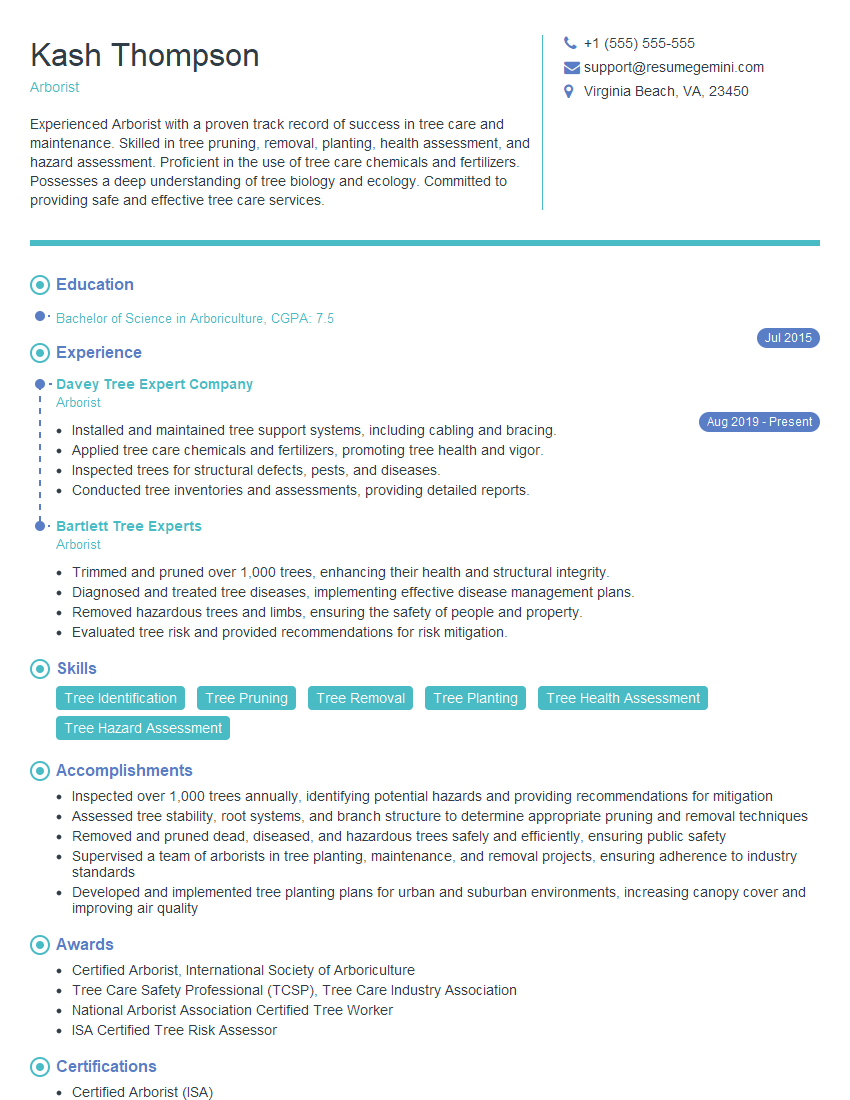
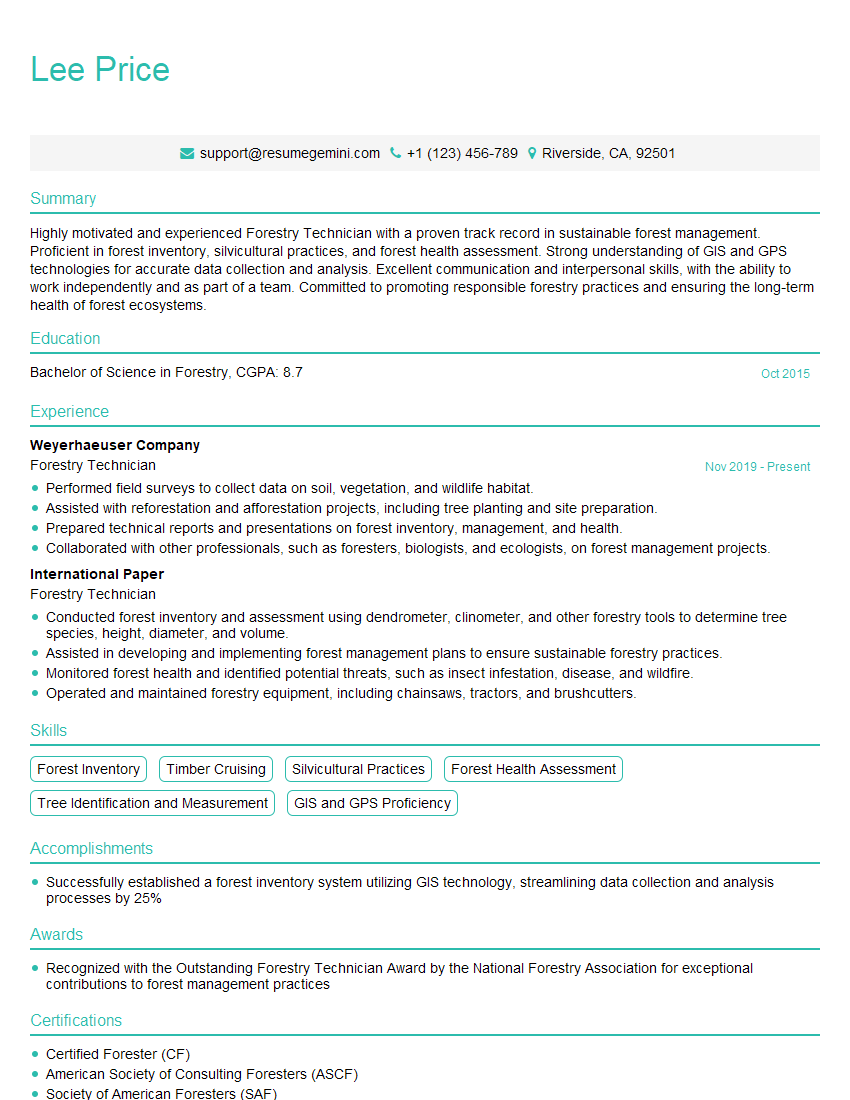
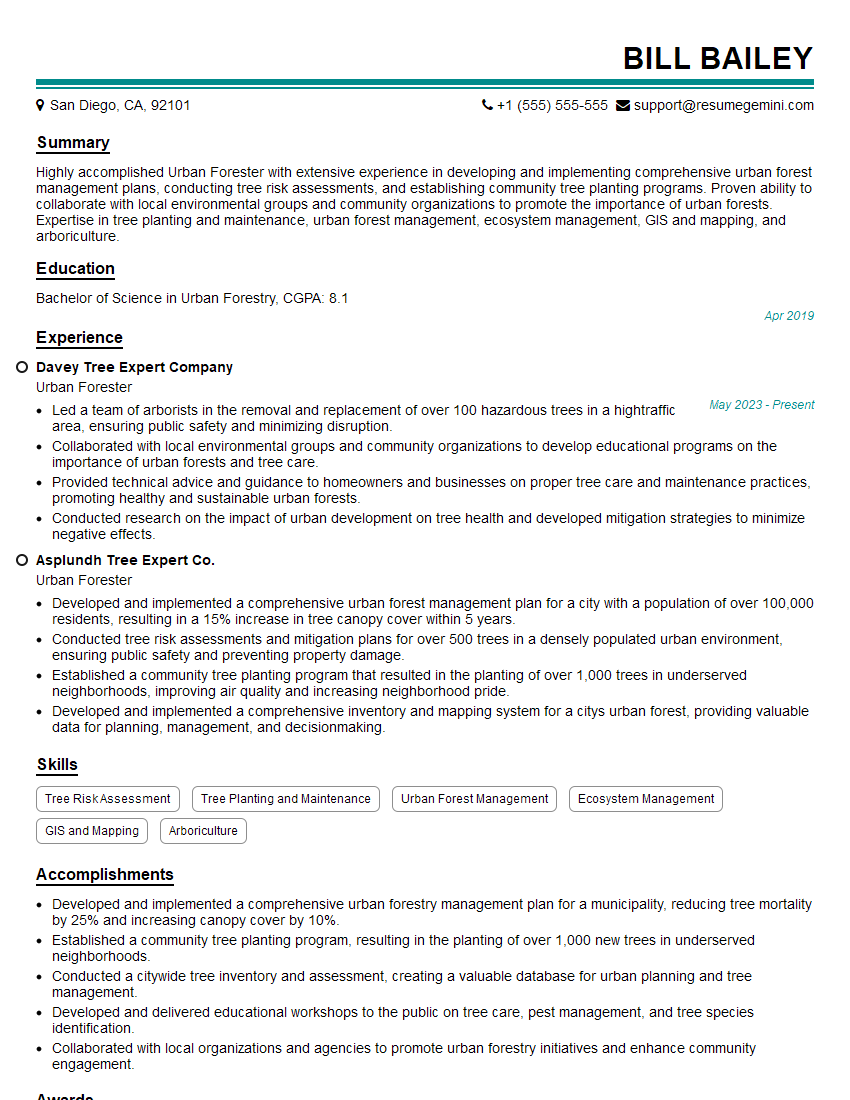
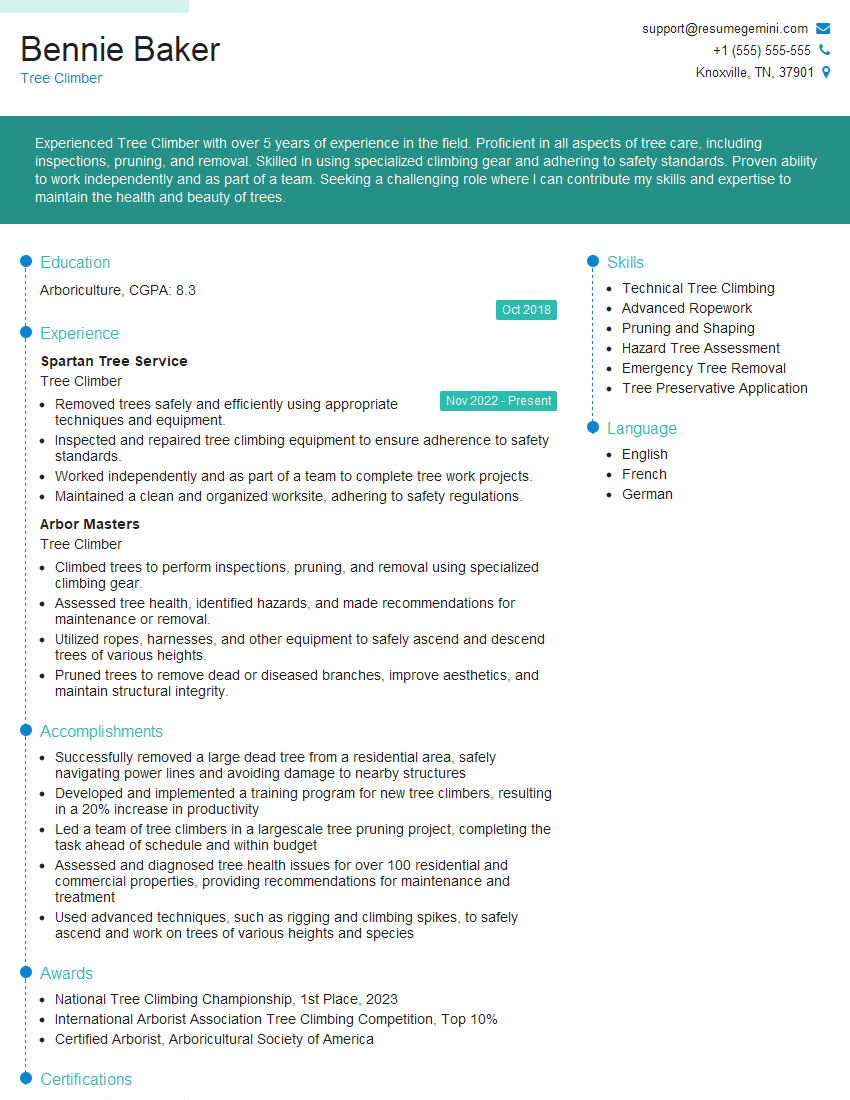
Mastering tree pruning and removal techniques is crucial for career advancement in the arboriculture industry. It opens doors to higher-paying positions and increased responsibility. To maximize your job prospects, it’s vital to present your skills effectively through a well-crafted resume optimized for Applicant Tracking Systems (ATS). ResumeGemini is a trusted resource that can help you build a professional, ATS-friendly resume that highlights your expertise. ResumeGemini provides examples of resumes tailored to showcasing expertise in Knowledge of tree pruning and removal techniques, helping you present yourself as the ideal candidate.



Explore more articles
Users Rating of Our Blogs
Share Your Experience
We value your feedback! Please rate our content and share your thoughts (optional).
What Readers Say About Our Blog
Attention music lovers!
Wow, All the best Sax Summer music !!!
Spotify: https://open.spotify.com/artist/6ShcdIT7rPVVaFEpgZQbUk
Apple Music: https://music.apple.com/fr/artist/jimmy-sax-black/1530501936
YouTube: https://music.youtube.com/browse/VLOLAK5uy_noClmC7abM6YpZsnySxRqt3LoalPf88No
Other Platforms and Free Downloads : https://fanlink.tv/jimmysaxblack
on google : https://www.google.com/search?q=22+AND+22+AND+22
on ChatGPT : https://chat.openai.com?q=who20jlJimmy20Black20Sax20Producer
Get back into the groove with Jimmy sax Black
Best regards,
Jimmy sax Black
www.jimmysaxblack.com
Hi I am a troller at The aquatic interview center and I suddenly went so fast in Roblox and it was gone when I reset.
Hi,
Business owners spend hours every week worrying about their website—or avoiding it because it feels overwhelming.
We’d like to take that off your plate:
$69/month. Everything handled.
Our team will:
Design a custom website—or completely overhaul your current one
Take care of hosting as an option
Handle edits and improvements—up to 60 minutes of work included every month
No setup fees, no annual commitments. Just a site that makes a strong first impression.
Find out if it’s right for you:
https://websolutionsgenius.com/awardwinningwebsites
Hello,
we currently offer a complimentary backlink and URL indexing test for search engine optimization professionals.
You can get complimentary indexing credits to test how link discovery works in practice.
No credit card is required and there is no recurring fee.
You can find details here:
https://wikipedia-backlinks.com/indexing/
Regards
NICE RESPONSE TO Q & A
hi
The aim of this message is regarding an unclaimed deposit of a deceased nationale that bears the same name as you. You are not relate to him as there are millions of people answering the names across around the world. But i will use my position to influence the release of the deposit to you for our mutual benefit.
Respond for full details and how to claim the deposit. This is 100% risk free. Send hello to my email id: lukachachibaialuka@gmail.com
Luka Chachibaialuka
Hey interviewgemini.com, just wanted to follow up on my last email.
We just launched Call the Monster, an parenting app that lets you summon friendly ‘monsters’ kids actually listen to.
We’re also running a giveaway for everyone who downloads the app. Since it’s brand new, there aren’t many users yet, which means you’ve got a much better chance of winning some great prizes.
You can check it out here: https://bit.ly/callamonsterapp
Or follow us on Instagram: https://www.instagram.com/callamonsterapp
Thanks,
Ryan
CEO – Call the Monster App
Hey interviewgemini.com, I saw your website and love your approach.
I just want this to look like spam email, but want to share something important to you. We just launched Call the Monster, a parenting app that lets you summon friendly ‘monsters’ kids actually listen to.
Parents are loving it for calming chaos before bedtime. Thought you might want to try it: https://bit.ly/callamonsterapp or just follow our fun monster lore on Instagram: https://www.instagram.com/callamonsterapp
Thanks,
Ryan
CEO – Call A Monster APP
To the interviewgemini.com Owner.
Dear interviewgemini.com Webmaster!
Hi interviewgemini.com Webmaster!
Dear interviewgemini.com Webmaster!
excellent
Hello,
We found issues with your domain’s email setup that may be sending your messages to spam or blocking them completely. InboxShield Mini shows you how to fix it in minutes — no tech skills required.
Scan your domain now for details: https://inboxshield-mini.com/
— Adam @ InboxShield Mini
support@inboxshield-mini.com
Reply STOP to unsubscribe
Hi, are you owner of interviewgemini.com? What if I told you I could help you find extra time in your schedule, reconnect with leads you didn’t even realize you missed, and bring in more “I want to work with you” conversations, without increasing your ad spend or hiring a full-time employee?
All with a flexible, budget-friendly service that could easily pay for itself. Sounds good?
Would it be nice to jump on a quick 10-minute call so I can show you exactly how we make this work?
Best,
Hapei
Marketing Director
Hey, I know you’re the owner of interviewgemini.com. I’ll be quick.
Fundraising for your business is tough and time-consuming. We make it easier by guaranteeing two private investor meetings each month, for six months. No demos, no pitch events – just direct introductions to active investors matched to your startup.
If youR17;re raising, this could help you build real momentum. Want me to send more info?
Hi, I represent an SEO company that specialises in getting you AI citations and higher rankings on Google. I’d like to offer you a 100% free SEO audit for your website. Would you be interested?
Hi, I represent an SEO company that specialises in getting you AI citations and higher rankings on Google. I’d like to offer you a 100% free SEO audit for your website. Would you be interested?