Preparation is the key to success in any interview. In this post, we’ll explore crucial Knowledge of wood properties interview questions and equip you with strategies to craft impactful answers. Whether you’re a beginner or a pro, these tips will elevate your preparation.
Questions Asked in Knowledge of wood properties Interview
Q 1. Explain the difference between hardwood and softwood.
The difference between hardwood and softwood lies primarily in their botanical classification, not necessarily their physical hardness. Hardwoods come from deciduous trees (those that lose their leaves annually), while softwoods come from coniferous trees (cone-bearing, evergreen trees). This botanical distinction often translates to differences in properties. Hardwoods generally possess a more complex cellular structure, resulting in greater density, strength, and durability in many cases. They often have a more intricate grain pattern, making them desirable for fine furniture and flooring. Softwoods, with their simpler cellular structure, are typically lighter, less dense, and easier to work with. However, some softwoods, like Douglas fir, can be surprisingly strong. Think of it like this: oak (hardwood) is strong and heavy, ideal for a sturdy table, while pine (softwood) is lighter and easier to shape, suitable for construction framing. The terms ‘hard’ and ‘soft’ are relative; some softwoods are harder than some hardwoods.
Q 2. Describe the various types of wood defects and their impact on strength.
Wood defects significantly impact strength and can render lumber unusable for certain applications. These defects can arise during tree growth or during harvesting and processing. Common defects include:
- Knots: Branches embedded in the trunk. Large, loose knots weaken the wood considerably, reducing its tensile and bending strength. Imagine trying to break a stick with a knot in it – the knot acts as a stress concentrator.
- Checks and Shakes: Cracks within the wood. Checks are typically radial cracks that run along the grain, while shakes are separations between growth rings. These significantly reduce strength and can cause splitting.
- Decay: Caused by fungi, decay weakens the wood structure dramatically, compromising its integrity and making it brittle. Decayed wood is essentially structurally unsound.
- Splits and Cracks: These can result from drying stresses or physical damage. Splits reduce the effective cross-sectional area, impacting strength.
- Wane: The presence of bark or lack of wood on the edges of a piece of lumber, reducing its usable dimensions and strength.
The impact on strength depends on the size, location, and type of defect. For example, a small, tight knot might be acceptable in less critical applications, but a large, loose knot in a structural beam is unacceptable.
Q 3. How do different wood species vary in terms of density and hardness?
Density and hardness vary significantly between wood species. Density, often expressed as weight per unit volume, is closely related to strength and durability. Harder woods typically have higher density. For example:
- High Density/Hardness: Ipe, Lignum Vitae, are extremely dense and hard, making them exceptionally durable and resistant to wear, suitable for decks in harsh weather.
- Medium Density/Hardness: Oak, Maple, Birch are moderately dense and hard, widely used in furniture and flooring due to their strength and aesthetic appeal.
- Low Density/Hardness: Pine, Fir, Spruce are relatively light and soft, easy to work with, commonly used in construction and cheaper furniture.
These are just examples; many other species fall within this range. Knowing the density and hardness of a specific species is crucial for selecting the appropriate wood for a given application.
Q 4. What are the key factors affecting wood durability and decay resistance?
Wood durability and decay resistance are influenced by several factors:
- Wood Density and Extractives: Denser woods with high concentrations of natural chemicals (extractives) like oils and resins are more decay-resistant. These extractives act as natural preservatives, hindering fungal growth.
- Heartwood vs. Sapwood: Heartwood, the darker, inner part of the tree, generally has higher extractive content and is more decay-resistant than sapwood, the lighter outer portion.
- Moisture Content: High moisture content promotes fungal growth. Proper drying (seasoning) is essential to reduce moisture content and increase decay resistance.
- Environmental Conditions: Exposure to moisture, temperature fluctuations, and sunlight can significantly impact wood durability. A consistently moist environment promotes decay.
For example, redwood and cedar are naturally decay-resistant due to their high extractive content. However, even naturally durable woods can succumb to decay in persistently wet conditions.
Q 5. Explain the process of wood seasoning and its importance.
Wood seasoning is the process of drying green lumber (lumber freshly cut from a tree) to reduce its moisture content to a stable level. This is critical because high moisture content leads to shrinkage, warping, cracking, and increased susceptibility to decay. Seasoning methods include:
- Air Drying: Stacking lumber outdoors under cover to allow for gradual drying. This is a slow process but produces good quality lumber.
- Kiln Drying: Using a controlled environment (kiln) to accelerate the drying process. This method is faster but requires careful control to avoid defects.
The importance of seasoning cannot be overstated. Properly seasoned lumber is more dimensionally stable, stronger, and less prone to decay, making it far superior for construction and manufacturing applications. Imagine building a house with unseasoned wood – the shrinkage and warping would cause significant structural problems.
Q 6. Discuss various methods of wood preservation and their effectiveness.
Several methods are employed to enhance wood preservation and protect it against decay, insects, and fire:
- Pressure Treatment: Forcing preservatives (e.g., chromated copper arsenate (CCA), copper azole) into wood under pressure. This is highly effective for increasing decay resistance and is often used for outdoor applications like utility poles and decking.
- Surface Treatments: Applying preservatives to the wood’s surface, providing a barrier against decay organisms. This offers less protection than pressure treatment but is simpler and less expensive.
- Waterborne Preservatives: Water-based preservatives that are less toxic than oil-borne options and provide good protection.
- Oil-borne Preservatives: Oil-based preservatives that penetrate deeply into the wood, offering good protection but often with higher toxicity concerns.
The choice of method depends on the wood species, the intended use, and environmental concerns. For instance, pressure-treated lumber is essential for outdoor applications subjected to moisture and ground contact, ensuring long-term durability.
Q 7. Describe the different types of wood finishes and their applications.
Wood finishes enhance the appearance and protect the wood from damage and decay. Different types of finishes are suitable for various applications:
- Paints: Provide a complete opaque covering, protecting the wood from the elements and offering a wide range of colors. Excellent for exterior applications.
- Stains: Penetrate the wood surface, changing its color while allowing the wood grain to show through. They provide less protection than paints.
- Varnishes: Create a clear or tinted protective layer, enhancing the wood’s natural beauty and offering some water resistance. Popular for furniture and interior woodwork.
- Lacquers: Fast-drying finishes that provide a hard, durable surface. Often used for furniture and musical instruments.
- Oils: Penetrate the wood, enhancing its color and providing some protection, commonly used on cutting boards and butcher blocks.
The choice of finish depends on factors such as the intended use of the wood, its location, the desired aesthetic, and the level of protection required. A kitchen countertop, for example, would benefit from a durable finish that is resistant to stains and scratches, whereas a decorative piece might use a finish primarily for aesthetic appeal.
Q 8. How do moisture content and temperature affect wood properties?
Moisture content and temperature are crucial factors influencing wood properties. Think of wood like a sponge; it absorbs and releases moisture from its surroundings. Changes in moisture content cause wood to swell (when wet) or shrink (when dry), impacting its dimensions, strength, and even its appearance. This dimensional instability is why wood needs to be properly acclimated to its environment before use in construction or furniture making.
Temperature, while less impactful than moisture on dimensional stability, still affects wood’s mechanical properties. Extreme cold can make wood more brittle, increasing the risk of cracking, while excessive heat can weaken it and even cause degradation, like scorching or charring. For example, a wooden chair left outdoors in a harsh winter may crack due to the cold and dryness, while a wooden deck exposed to intense summer sun may become brittle and prone to splintering.
In woodworking, understanding the interplay of moisture and temperature is vital. For example, a skilled woodworker might choose to store lumber in a climate-controlled environment to minimize warping and cracking, or adjust their woodworking techniques to compensate for seasonal changes in humidity.
Q 9. Explain the concept of wood grain and its significance in woodworking.
Wood grain refers to the arrangement of wood fibers visible on the surface of a piece of wood. These fibers run lengthwise along the trunk of the tree, and their pattern is determined by the tree’s growth process. The grain can be straight, wavy, or even figured, creating unique visual characteristics.
Wood grain significantly impacts a woodworker’s choices. Straight grain wood is generally stronger and easier to work with, making it ideal for structural applications. Wavy or figured grain, while aesthetically pleasing, can be more challenging to work with and may be more prone to splitting. Understanding grain direction is critical when cutting and shaping wood to avoid unintended breakage. For example, cutting against the grain will often result in a rougher finish and increased risk of tear-out.
Think of wood grain like the threads of a fabric; parallel threads (straight grain) are strong and resistant to tearing, while interwoven threads (figured grain) may be visually attractive but less durable along certain lines of pull.
Q 10. What are the mechanical properties of wood (strength, stiffness, etc.) and how are they measured?
Wood’s mechanical properties describe its ability to withstand various forces. Key properties include:
- Strength: Wood’s ability to resist forces such as tension (pulling), compression (pushing), shear (sliding), and bending. Strength varies significantly depending on the wood species, its density, and moisture content.
- Stiffness (Modulus of Elasticity): Wood’s resistance to deformation under load. A stiffer wood will deflect less under the same amount of force. This is important in structural applications where deflection needs to be minimized.
- Hardness: Wood’s resistance to indentation or wear. Janka hardness testing is a common method for measuring this property.
- Toughness: Wood’s ability to absorb energy before fracturing. It reflects the combined effects of strength and stiffness.
These properties are measured using standardized testing methods. For example, strength is often determined using universal testing machines that apply controlled forces to wood specimens. Specific tests exist for tension, compression, bending, and shear strength. Janka hardness is measured by applying force to a small ball bearing embedded in the wood surface.
Q 11. Describe the different types of wood joints and their applications.
Numerous wood joints exist, each suited for specific applications. Some common types include:
- Butt Joint: Simple joint where two pieces meet end-to-end. Often reinforced with glue and screws or dowels for strength.
- Lap Joint: Overlapping joint where one piece overlaps another. Useful for hidden joints.
- Miter Joint: Angled joint where two pieces are cut at an angle and joined together. Often used in picture frames.
- Dovetail Joint: Strong interlocking joint that’s particularly suited for drawers and other furniture components requiring strength and stability.
- Mortise and Tenon Joint: A strong joint where a projecting piece (tenon) is inserted into a hole (mortise). Used in chairs, tables, and other furniture.
The choice of joint depends on the intended application, required strength, and aesthetic considerations. For instance, a simple butt joint might suffice for a less-stressed application, while a dovetail joint is essential for maximum strength in a drawer.
Q 12. What are the different methods for identifying different wood species?
Identifying wood species involves a combination of methods:
- Visual Examination: Observing color, grain pattern, texture, and presence of distinctive markings. Each species possesses unique characteristics. For example, the presence of distinct growth rings can help differentiate many hardwoods and softwoods.
- Microscopic Examination: Analyzing the wood’s cellular structure under a microscope. This provides highly accurate identification, particularly useful for distinguishing closely related species.
- Physical Properties: Measuring properties like density, Janka hardness, and moisture content. Specific ranges of these values exist for different species.
- Chemical Tests: Analyzing the chemical composition of the wood, useful in specialized identification.
Experienced woodworkers often use a combination of these methods, often starting with visual inspection and then employing more advanced techniques if necessary.
Q 13. How do you assess the quality of lumber?
Assessing lumber quality involves examining several factors:
- Species: Identifying the wood species and assessing its suitability for the intended application.
- Grading: Checking for grading stamps, which indicate the quality based on defects such as knots, checks, and splits. Lumber grading standards vary depending on the region and application.
- Straightness: Evaluating how straight the board is. Significant bowing, crooking, or twist can negatively impact the final product.
- Surface Quality: Checking for surface defects, such as splits, checks, decay, and insect damage.
- Moisture Content: Determining if the wood is properly dried to minimize shrinkage and warping.
Understanding grading standards is crucial; higher grades generally imply fewer defects and better suitability for demanding applications.
Q 14. What is the difference between clear wood and knotty wood?
Clear wood refers to lumber with minimal or no knots, defects, or other imperfections. It typically comes from the center of the tree trunk where growth is most uniform. This is considered high-grade lumber and is more expensive because of its uniformity and suitability for fine woodworking projects, such as furniture or cabinetry. Imagine a clear, smooth surface ideal for a fine finish.
Knotty wood, on the other hand, contains knots—the points where branches grew from the tree trunk. The knots create visual texture and character but also represent structural weaknesses. Knotty wood is often used for less demanding applications or in projects where the rustic character adds to the aesthetic appeal, like in some rustic furniture or flooring.
The choice between clear and knotty wood depends on the project requirements and aesthetic preferences. Clear wood is favored where strength and a smooth finish are essential, while knotty wood can add visual appeal to rustic-style projects.
Q 15. What are the environmental concerns associated with wood harvesting and processing?
Wood harvesting and processing, while providing essential materials, carry significant environmental burdens. The primary concerns revolve around deforestation, habitat loss, and biodiversity reduction. Clear-cutting, for instance, removes entire tracts of forest, disrupting ecosystems and impacting wildlife populations. Soil erosion is another major issue, as tree roots play a crucial role in stabilizing the soil. The loss of forest cover also contributes to climate change by reducing carbon sequestration and increasing greenhouse gas emissions. Furthermore, the processing of wood, particularly pulping, often involves the use of chemicals that can pollute water sources and harm aquatic life. Responsible forestry practices are crucial to mitigate these negative impacts.
- Deforestation and Habitat Loss: Large-scale logging can lead to the loss of vital habitats, endangering numerous plant and animal species.
- Soil Erosion: Removal of trees leaves soil vulnerable to erosion, leading to degradation of land and water quality.
- Water Pollution: Chemical processes involved in pulping and other wood treatments can contaminate water sources.
- Greenhouse Gas Emissions: Deforestation releases stored carbon, contributing to climate change.
Career Expert Tips:
- Ace those interviews! Prepare effectively by reviewing the Top 50 Most Common Interview Questions on ResumeGemini.
- Navigate your job search with confidence! Explore a wide range of Career Tips on ResumeGemini. Learn about common challenges and recommendations to overcome them.
- Craft the perfect resume! Master the Art of Resume Writing with ResumeGemini’s guide. Showcase your unique qualifications and achievements effectively.
- Don’t miss out on holiday savings! Build your dream resume with ResumeGemini’s ATS optimized templates.
Q 16. Explain the concept of sustainable forestry practices.
Sustainable forestry is all about managing forests in a way that meets the needs of the present without compromising the ability of future generations to meet their own needs. It’s a holistic approach that considers ecological, economic, and social factors. Key principles include:
- Selective Harvesting: Removing only mature trees, leaving younger trees to grow, mimicking natural forest dynamics.
- Reforestation and Afforestation: Planting trees to replace those harvested or to create new forests.
- Reduced-Impact Logging: Techniques that minimize damage to remaining trees and the forest floor during harvesting.
- Biodiversity Conservation: Protecting a variety of tree species and other organisms within the forest ecosystem.
- Community Involvement: Engaging local communities in forest management decisions, ensuring their livelihoods are considered.
- Certification Schemes: Adherence to standards such as the Forest Stewardship Council (FSC) certification, demonstrating commitment to sustainable practices.
Imagine a farmer harvesting only ripe apples from an orchard, leaving the younger trees to mature, ensuring a continuous supply of apples for years to come. That’s the essence of sustainable forestry.
Q 17. Describe the process of wood pulping and paper making.
Wood pulping is the process of breaking down wood fibers into pulp, which is then used to make paper. There are two main methods: mechanical and chemical pulping.
- Mechanical Pulping: Wood is ground or refined into pulp using mechanical force. This process is relatively simple and inexpensive, but it produces pulp with lower strength and more lignin (a component that makes paper yellow and brittle over time).
- Chemical Pulping: Wood chips are cooked in chemicals (like kraft process using sodium hydroxide and sodium sulfide) to dissolve lignin and separate fibers. This results in stronger, brighter pulp, but it’s more expensive and environmentally demanding.
After pulping, the pulp is cleaned, screened, and bleached (if necessary). Then, it’s mixed with water and refined to create a slurry. This slurry is spread onto a mesh wire in a paper machine, where water drains out, leaving behind a sheet of fibers. The sheet is then pressed, dried, and calendered (smoothed) to produce the final paper product.
Q 18. What are the different types of wood-based panels (plywood, MDF, etc.)?
Wood-based panels offer a versatile and cost-effective alternative to solid wood. Common types include:
- Plywood: Layers of wood veneer glued together with the grain of adjacent layers running perpendicularly, creating a strong and stable panel. The number of plies and the type of wood veneer affect its properties.
- Medium-Density Fiberboard (MDF): Made from wood fibers, resins, and waxes compressed under high pressure and heat. It has a uniform density and is easy to machine, making it ideal for furniture and cabinetry.
- Particleboard (Chipboard): Similar to MDF but uses larger wood particles. It’s generally less dense and less uniform than MDF.
- Oriented Strand Board (OSB): Uses wood strands oriented in different layers, creating high strength. Often used in construction applications like sheathing.
- Hardboard: High-density fiberboard, very hard and durable, often used for flooring or backing for other materials.
Q 19. How do different wood species respond to different woodworking tools and techniques?
Different wood species possess unique properties that affect their response to woodworking tools and techniques. Hardwoods, like oak and maple, are dense and strong, requiring sharp tools and potentially slower cutting speeds to avoid tear-out. Softwoods, like pine and fir, are easier to work with but can be prone to splintering if not handled carefully. The grain pattern also plays a significant role; working against the grain can lead to chipping and tearing. For example, fine-grained woods like cherry are easier to get a smooth finish on, whereas coarse-grained woods like oak might require more sanding. Specific tools may also be needed; for example, using a specialized router bit could be beneficial for certain species to get precise cuts without causing splintering or tear-out.
Example: A chisel will cut cleanly through a piece of soft pine, but the same chisel might require more force and potentially lead to chipping when used on hard maple. Selecting the right tool and adjusting techniques based on the wood species is essential for achieving high-quality results.
Q 20. Describe the effects of various treatments on wood properties (e.g., staining, painting).
Various treatments can significantly alter wood properties. Staining penetrates the wood, enhancing its color and grain, while leaving the wood’s texture largely unchanged. Paints form a protective layer on the surface, shielding the wood from moisture and UV damage but hiding the natural grain. Other treatments include:
- Sealing: Using sealants (e.g., polyurethane) to create a protective barrier against moisture and other environmental factors.
- Waterproofing: Applying water-repellent treatments to enhance the wood’s resistance to water absorption.
- Fire Retardants: Treating wood with chemicals to increase its fire resistance.
- Preservatives: Applying chemicals to protect against insect infestations and fungal decay.
These treatments can affect the wood’s durability, appearance, and overall performance. For instance, staining might enhance the beauty of a wooden floor, while a waterproof sealant is crucial for outdoor furniture to withstand rain and sun.
Q 21. Explain the concept of wood shrinkage and swelling.
Wood shrinkage and swelling are caused by changes in moisture content. Wood is hygroscopic, meaning it absorbs and releases moisture from the surrounding environment. As wood dries, it shrinks; as it absorbs moisture, it swells. This dimensional change is primarily along the direction of the wood grain but also occurs tangentially and radially.
Shrinkage and swelling can cause warping, cracking, and other dimensional instability, particularly in larger pieces of wood. Understanding this behavior is crucial for selecting appropriate wood species and implementing effective drying and finishing techniques to minimize these effects. For example, when selecting wood for a piece of furniture intended for high-humidity environment, one needs to choose a wood that has a relatively low shrinkage and swelling coefficient.
Think of a sponge: when it’s dry, it’s smaller; when it’s wet, it expands. Wood behaves similarly, though the process is much more complex.
Q 22. How do you handle different types of wood waste responsibly?
Responsible wood waste management is crucial for environmental sustainability and resource conservation. It involves a multi-pronged approach focusing on reduction, reuse, and recycling.
Reduction: Minimizing waste starts at the source. Efficient cutting techniques, precise planning, and optimized material usage significantly reduce scrap. For example, using computer-aided design (CAD) software to create precise cuts for furniture projects can drastically reduce waste.
Reuse: Smaller pieces of wood can be repurposed for smaller projects like craft items, or as kindling. Off-cuts can even be used to create beautiful mosaics or artistic installations.
Recycling: Larger amounts of waste can be chipped and used for biomass fuel, creating energy instead of ending up in landfills. Some companies even specialize in taking wood waste to produce composite materials like particleboard or MDF, which reduces the demand for virgin timber.
Composting: Smaller pieces, especially from untreated wood, can be composted, enriching the soil. However, it’s important to check local regulations for composting wood waste.
Proper disposal practices must also be followed. Never burn untreated wood as it releases harmful chemicals. Always check local guidelines for waste disposal of treated lumber which might contain preservatives that should be handled specifically.
Q 23. What are the common safety precautions when working with wood?
Safety is paramount when working with wood. Several precautions can significantly minimize risks.
Personal Protective Equipment (PPE): Always wear safety glasses to protect your eyes from flying debris. Ear protection is vital when using power tools. Dust masks or respirators are necessary to avoid inhaling wood dust, which can cause respiratory problems. Gloves protect your hands from splinters and cuts.
Tool Safety: Regularly inspect tools for damage. Ensure power tools are properly maintained and used according to the manufacturer’s instructions. Always unplug power tools before making adjustments or cleaning.
Workshop Safety: Keep your workspace clean and organized to prevent accidents. Proper lighting is essential. Ensure adequate ventilation to reduce dust build-up and the concentration of fumes from finishes or glues. Securely fasten all workpieces to prevent them from moving during operation.
Material Handling: Lift heavy pieces correctly, using your legs, not your back. Use appropriate lifting aids for large or cumbersome items.
Emergency Preparedness: Have a first-aid kit readily available and know how to use it. Be familiar with the location of fire extinguishers and emergency exits.
Remember, safety is not a suggestion; it’s an essential part of the woodworking process. Taking appropriate precautions can help prevent accidents and injuries.
Q 24. Explain the significance of understanding wood anatomy in woodworking.
Understanding wood anatomy is fundamental to successful woodworking. It allows you to predict how the wood will behave during processing and in its final application.
Grain Direction: Knowing the grain direction is vital for cutting and shaping. Cutting against the grain can lead to splintering and tear-out. Understanding grain patterns helps in selecting appropriate wood for different projects (e.g., figured wood for decorative purposes, straight-grained wood for structural components).
Growth Rings: Examining growth rings reveals the age of the tree and can indicate its density and strength. Closely spaced rings generally suggest denser, stronger wood, while wide rings can signify faster growth and potentially less strength.
Heartwood vs. Sapwood: Heartwood, the darker inner portion of a tree, is generally more durable and decay-resistant than sapwood (the lighter outer portion). Understanding this difference affects material selection for applications requiring durability. For example, heartwood is often preferred for outdoor projects.
Wood Defects: Knowing about defects like knots, cracks, and shakes helps in selecting appropriate wood and making adjustments to the working process to avoid problems. Understanding the effect of defects on strength and appearance is crucial for structural and aesthetic considerations.
Ultimately, a good grasp of wood anatomy improves efficiency, quality, and safety in woodworking projects.
Q 25. Describe how different wood properties affect the choice of woodworking tools.
Wood properties like hardness, density, grain pattern, and moisture content significantly impact tool selection.
Hardness: Hardwoods require more robust tools than softwoods. A harder wood would necessitate stronger chisels, stronger planes, and possibly carbide-tipped bits for routing, as compared to softwoods which may be more easily worked with standard high-speed steel tools.
Density: Dense wood requires more power and sharper tools to avoid dulling. A denser wood may cause more stress on tools compared to less dense wood.
Grain Pattern: Intricate grain patterns influence tool selection. Fine-grained wood can be worked with finer tools, while coarser grain requires more robust tools to prevent tear-out.
Moisture Content: Wood that is too wet is difficult to work with and can damage tools. Tools suitable for working with green wood (high moisture) will differ from those used with dry wood.
For example, a delicate carving would use fine, sharp tools in softer wood. In contrast, rough shaping of a dense hardwood might need stronger tools like a heavy-duty planer or a robust router.
Q 26. What are some common wood pests and how are they controlled?
Wood pests can cause significant damage and require prompt action for effective control. Common pests include:
Termites: These insects feed on cellulose in wood, causing extensive structural damage. Control measures range from pre-treating lumber with preservatives to using professional termite treatments.
Wood-boring beetles: Various beetle species bore into wood, creating holes and weakening the structure. Prevention involves using treated lumber or applying insecticides.
Powderpost beetles: These small beetles attack seasoned wood, leaving behind fine dust. Infestation can be treated with insecticides, heat treatments or fumigation.
Carpenter ants: While they don’t directly consume wood, they excavate tunnels, weakening the structure. Controlling carpenter ants involves identifying and treating their nests.
Control methods vary depending on the pest and the extent of infestation. Professional pest control services should be consulted for significant infestations. Preventive measures, such as proper ventilation, regular inspections, and using treated wood where appropriate are also very important.
Q 27. Describe the process of kiln drying wood and its impact on quality.
Kiln drying is a controlled process of removing moisture from wood, reducing its susceptibility to warping, cracking, and shrinking. It involves placing wood in a large oven (kiln) where temperature and humidity are carefully controlled.
Process: The kiln gradually reduces moisture content, preventing rapid shrinkage which can cause stress and damage. The rate of drying is monitored to avoid defects. Different wood species require different drying schedules optimized for their specific properties.
Impact on Quality: Properly kiln-dried wood is more stable and dimensionally consistent, making it ideal for high-quality furniture, flooring, and other applications. However, improper kiln drying can lead to checking (cracks), warping, and other defects. The drying process needs to be carefully managed to produce high quality end product.
Kiln drying significantly improves wood’s usability and longevity, making it a crucial step in many woodworking processes. Choosing a reputable kiln-drying service is crucial for ensuring optimal results. The cost is offset by the reduced risk of defects and improved dimensional stability.
Q 28. Discuss the use of wood in various construction applications.
Wood finds extensive use in various construction applications due to its versatility, renewability, and aesthetic appeal.
Structural Elements: Wood is used in beams, columns, joists, and rafters for framing residential and commercial buildings. Engineered wood products like laminated veneer lumber (LVL) and parallel strand lumber (PSL) provide high strength and stability for larger structures.
Sheathing and Siding: Plywood and oriented strand board (OSB) are used for sheathing walls and roofs, providing structural support and a substrate for exterior cladding. Wood siding provides aesthetic appeal and weather protection.
Flooring: Hardwood and engineered wood flooring offer durability, beauty, and warmth. These are widely used in both residential and commercial spaces.
Decking and Fencing: Treated wood is commonly used for decks, fences, and other outdoor structures due to its resistance to rot and insect damage. The type of wood used needs to consider the local climate and conditions.
Interior Finishes: Wood is used extensively for trim, doors, windows, cabinets, and other interior finishes, adding warmth and character to spaces. Different finishes can also greatly affect the longevity of the material.
The choice of wood depends on factors like strength requirements, durability needs, aesthetic preferences, and cost. The use of wood in construction offers a balance of strength, beauty, and sustainability.
Key Topics to Learn for Knowledge of Wood Properties Interview
- Wood Anatomy and Structure: Understanding the cellular structure of wood (e.g., earlywood vs. latewood, growth rings), its impact on properties, and how to identify different wood species microscopically.
- Mechanical Properties: Exploring strength (compressive, tensile, shear), stiffness, hardness, toughness, and their practical applications in design and construction. Consider how these properties vary across different species and wood treatments.
- Physical Properties: Analyzing density, moisture content, shrinkage/swelling, and their influence on dimensional stability and durability. Know how to measure and control these properties.
- Chemical Properties: Understanding the chemical composition of wood, its susceptibility to decay and insect attack, and the effectiveness of various preservative treatments. This includes knowledge of different wood treatments and their impact on properties.
- Wood Identification and Classification: Developing skills in identifying various wood species based on their macroscopic and microscopic features, as well as understanding common grading systems.
- Working with Wood: Familiarize yourself with different woodworking techniques and their impact on wood properties. This includes machining, joining, finishing, and the implications for structural integrity.
- Sustainability and Environmental Concerns: Understanding the environmental impact of wood harvesting and processing, and the importance of sustainable forestry practices. This may include knowledge of certified wood products.
- Problem-Solving Applications: Be prepared to discuss how your knowledge of wood properties has helped you solve problems in past projects. Think about instances where understanding wood’s limitations and strengths was crucial to a successful outcome.
Next Steps
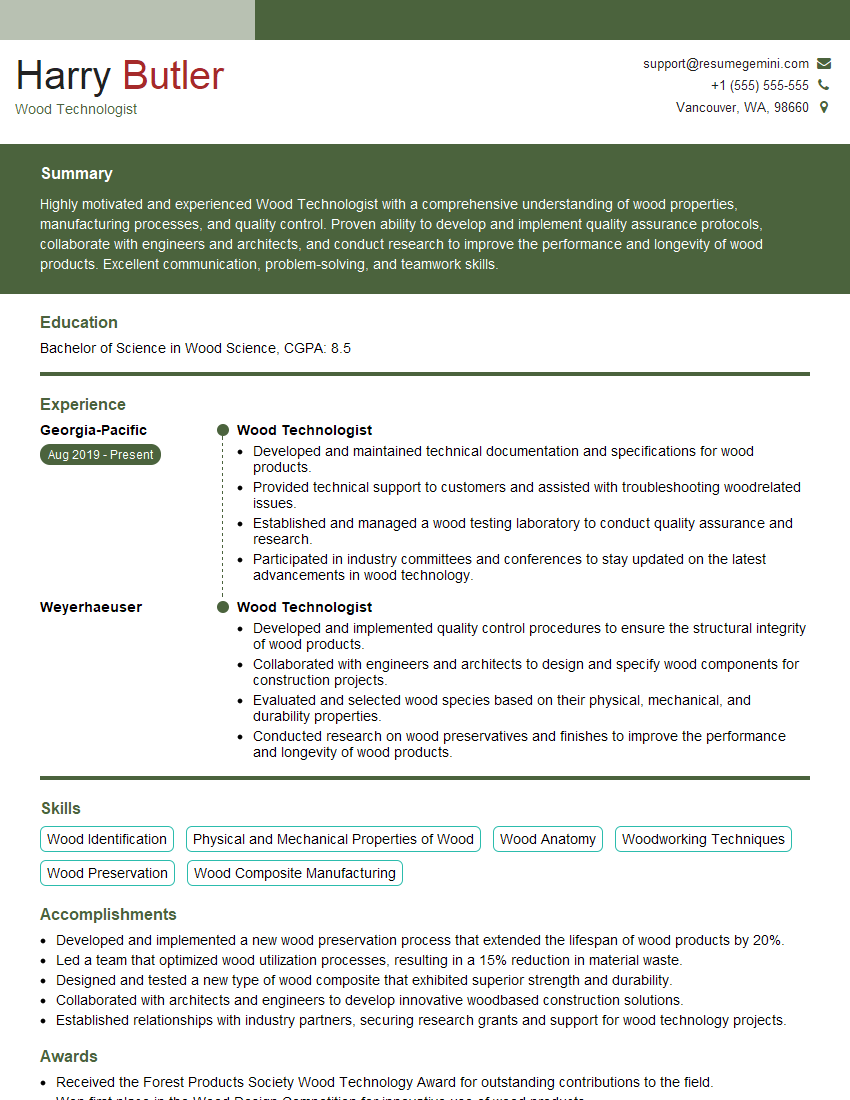
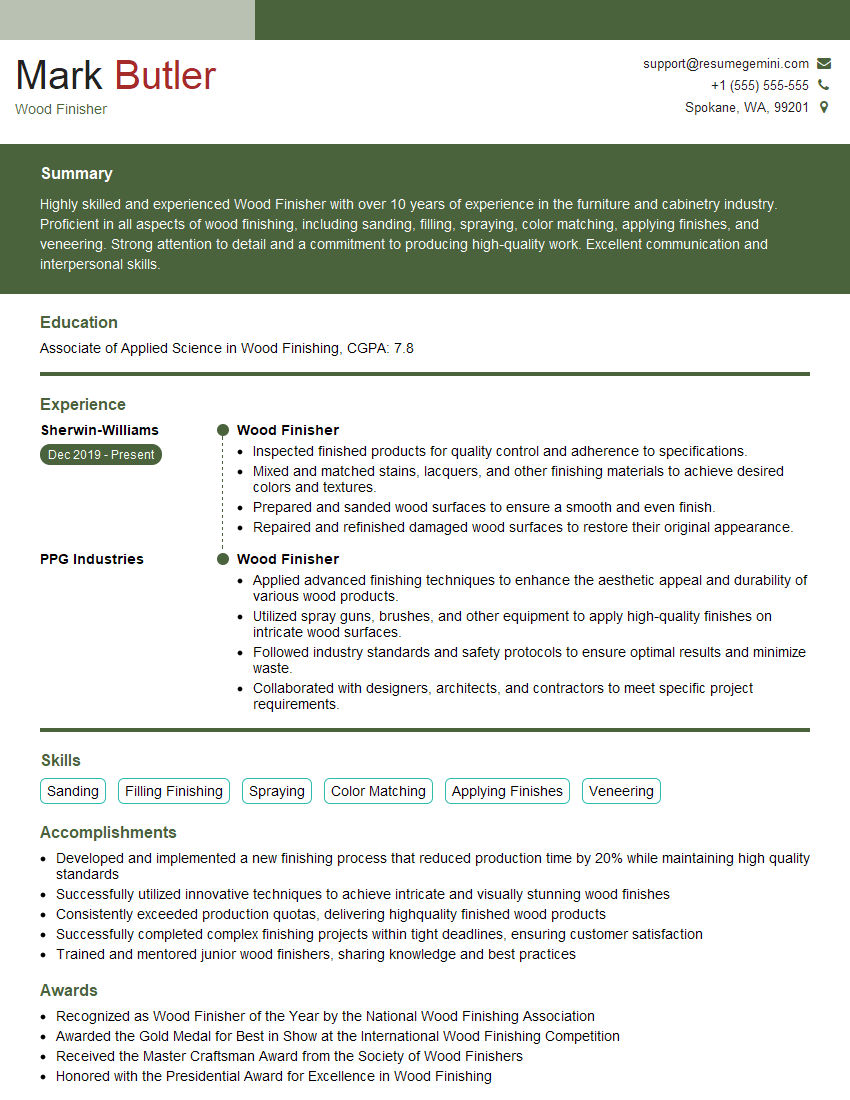
Mastering knowledge of wood properties is crucial for career advancement in fields like forestry, woodworking, construction, and design. A strong understanding of these properties directly translates to better decision-making, improved project outcomes, and increased efficiency. To showcase your expertise effectively, create an ATS-friendly resume that highlights your skills and experience. ResumeGemini is a trusted resource that can help you build a professional and impactful resume. They provide examples of resumes tailored to the knowledge of wood properties, helping you present your qualifications in the best possible light. Invest time in crafting a compelling resume—it’s your first impression with potential employers.



Explore more articles
Users Rating of Our Blogs
Share Your Experience
We value your feedback! Please rate our content and share your thoughts (optional).
What Readers Say About Our Blog
Attention music lovers!
Wow, All the best Sax Summer music !!!
Spotify: https://open.spotify.com/artist/6ShcdIT7rPVVaFEpgZQbUk
Apple Music: https://music.apple.com/fr/artist/jimmy-sax-black/1530501936
YouTube: https://music.youtube.com/browse/VLOLAK5uy_noClmC7abM6YpZsnySxRqt3LoalPf88No
Other Platforms and Free Downloads : https://fanlink.tv/jimmysaxblack
on google : https://www.google.com/search?q=22+AND+22+AND+22
on ChatGPT : https://chat.openai.com?q=who20jlJimmy20Black20Sax20Producer
Get back into the groove with Jimmy sax Black
Best regards,
Jimmy sax Black
www.jimmysaxblack.com
Hi I am a troller at The aquatic interview center and I suddenly went so fast in Roblox and it was gone when I reset.
Hi,
Business owners spend hours every week worrying about their website—or avoiding it because it feels overwhelming.
We’d like to take that off your plate:
$69/month. Everything handled.
Our team will:
Design a custom website—or completely overhaul your current one
Take care of hosting as an option
Handle edits and improvements—up to 60 minutes of work included every month
No setup fees, no annual commitments. Just a site that makes a strong first impression.
Find out if it’s right for you:
https://websolutionsgenius.com/awardwinningwebsites
Hello,
we currently offer a complimentary backlink and URL indexing test for search engine optimization professionals.
You can get complimentary indexing credits to test how link discovery works in practice.
No credit card is required and there is no recurring fee.
You can find details here:
https://wikipedia-backlinks.com/indexing/
Regards
NICE RESPONSE TO Q & A
hi
The aim of this message is regarding an unclaimed deposit of a deceased nationale that bears the same name as you. You are not relate to him as there are millions of people answering the names across around the world. But i will use my position to influence the release of the deposit to you for our mutual benefit.
Respond for full details and how to claim the deposit. This is 100% risk free. Send hello to my email id: lukachachibaialuka@gmail.com
Luka Chachibaialuka
Hey interviewgemini.com, just wanted to follow up on my last email.
We just launched Call the Monster, an parenting app that lets you summon friendly ‘monsters’ kids actually listen to.
We’re also running a giveaway for everyone who downloads the app. Since it’s brand new, there aren’t many users yet, which means you’ve got a much better chance of winning some great prizes.
You can check it out here: https://bit.ly/callamonsterapp
Or follow us on Instagram: https://www.instagram.com/callamonsterapp
Thanks,
Ryan
CEO – Call the Monster App
Hey interviewgemini.com, I saw your website and love your approach.
I just want this to look like spam email, but want to share something important to you. We just launched Call the Monster, a parenting app that lets you summon friendly ‘monsters’ kids actually listen to.
Parents are loving it for calming chaos before bedtime. Thought you might want to try it: https://bit.ly/callamonsterapp or just follow our fun monster lore on Instagram: https://www.instagram.com/callamonsterapp
Thanks,
Ryan
CEO – Call A Monster APP
To the interviewgemini.com Owner.
Dear interviewgemini.com Webmaster!
Hi interviewgemini.com Webmaster!
Dear interviewgemini.com Webmaster!
excellent
Hello,
We found issues with your domain’s email setup that may be sending your messages to spam or blocking them completely. InboxShield Mini shows you how to fix it in minutes — no tech skills required.
Scan your domain now for details: https://inboxshield-mini.com/
— Adam @ InboxShield Mini
support@inboxshield-mini.com
Reply STOP to unsubscribe
Hi, are you owner of interviewgemini.com? What if I told you I could help you find extra time in your schedule, reconnect with leads you didn’t even realize you missed, and bring in more “I want to work with you” conversations, without increasing your ad spend or hiring a full-time employee?
All with a flexible, budget-friendly service that could easily pay for itself. Sounds good?
Would it be nice to jump on a quick 10-minute call so I can show you exactly how we make this work?
Best,
Hapei
Marketing Director
Hey, I know you’re the owner of interviewgemini.com. I’ll be quick.
Fundraising for your business is tough and time-consuming. We make it easier by guaranteeing two private investor meetings each month, for six months. No demos, no pitch events – just direct introductions to active investors matched to your startup.
If youR17;re raising, this could help you build real momentum. Want me to send more info?
Hi, I represent an SEO company that specialises in getting you AI citations and higher rankings on Google. I’d like to offer you a 100% free SEO audit for your website. Would you be interested?
Hi, I represent an SEO company that specialises in getting you AI citations and higher rankings on Google. I’d like to offer you a 100% free SEO audit for your website. Would you be interested?