Cracking a skill-specific interview, like one for LastIn, FirstOut (LIFO), requires understanding the nuances of the role. In this blog, we present the questions you’re most likely to encounter, along with insights into how to answer them effectively. Let’s ensure you’re ready to make a strong impression.
Questions Asked in LastIn, FirstOut (LIFO) Interview
Q 1. Explain the Last-In, First-Out (LIFO) principle.
The Last-In, First-Out (LIFO) principle is a fundamental concept in data structures where the last element added to a collection is the first one to be removed. Think of it like a stack of plates: you can only add a new plate to the top, and you can only remove a plate from the top. The last plate you put on is the first one you take off.
Q 2. What are the common applications of LIFO data structures?
LIFO data structures, commonly implemented as stacks, have numerous applications in computer science and beyond. Some common examples include:
- Function call stacks: When a function calls another, the current function’s state is pushed onto the stack. When the called function returns, its state is popped off, allowing the original function to resume execution. This is crucial for managing program execution.
- Undo/Redo functionality: In applications like text editors or image manipulation software, each action is pushed onto a stack. The ‘undo’ operation pops the last action, reverting the changes. ‘Redo’ pushes it back.
- Expression evaluation: Stacks are used to evaluate arithmetic expressions, particularly those using infix notation (operators between operands). The operands and operators are pushed onto the stack and processed according to their precedence.
- Backtracking algorithms: Algorithms like depth-first search (DFS) utilize stacks to keep track of visited nodes, allowing the algorithm to backtrack when a dead end is reached.
- Memory management: Stacks are used for managing the call stack, local variables, and function parameters during program execution.
Q 3. Compare and contrast LIFO with FIFO (First-In, First-Out).
Both LIFO (Last-In, First-Out) and FIFO (First-In, First-Out) are queuing disciplines that manage elements in a collection, but they differ significantly in how they access those elements.
- LIFO (Stack): The last element added is the first one removed. Think of a stack of plates – the last plate placed on top is the first one taken off.
- FIFO (Queue): The first element added is the first one removed. Imagine a queue at a store – the first person in line is the first person served.
Key Differences:
- Order of access: LIFO accesses elements in reverse order of their arrival, while FIFO accesses them in the order of arrival.
- Data structure: LIFO is typically implemented using a stack, while FIFO is typically implemented using a queue.
- Applications: LIFO is ideal for scenarios requiring backtracking or managing function calls, while FIFO is better suited for managing tasks or processes in the order they arrive.
Q 4. Describe a real-world example where LIFO is used.
A classic real-world example of LIFO is a stack of trays in a cafeteria. The last tray placed on the stack is the first one taken off. Another example is a pile of papers on a desk; you typically take the topmost paper first.
Q 5. How would you implement a LIFO stack using an array?
Implementing a LIFO stack using an array involves managing an index that tracks the top of the stack. Let’s consider a stack of integers:
class StackArray:
    def __init__(self, capacity):
        self.capacity = capacity
        self.array = [None] * capacity
        self.top = -1

    def push(self, item):
        if self.is_full():
            raise Exception("Stack Overflow")
        self.top += 1
        self.array[self.top] = item

    def pop(self):
        if self.is_empty():
            raise Exception("Stack Underflow")
        item = self.array[self.top]
        self.top -= 1
        return item

    def is_empty(self):
        return self.top == -1

    def is_full(self):
        return self.top == self.capacity - 1

#Example
stack = StackArray(5)
stack.push(10)
stack.push(20)
stack.push(30)
print(stack.pop()) # Output: 30
print(stack.pop()) # Output: 20
Q 6. How would you implement a LIFO stack using a linked list?
A LIFO stack can be efficiently implemented using a linked list. Each node in the list stores a data element and a pointer to the next node. The top of the stack is simply the head of the linked list.
class Node:
    def __init__(self, data):
        self.data = data
        self.next = None

class StackList:
    def __init__(self):
        self.head = None

    def push(self, data):
        new_node = Node(data)
        new_node.next = self.head
        self.head = new_node

    def pop(self):
        if self.is_empty():
            raise Exception("Stack Underflow")
        popped = self.head.data
        self.head = self.head.next
        return popped

    def is_empty(self):
        return self.head is None

# Example:
stack = StackList()
stack.push(10)
stack.push(20)
stack.push(30)
print(stack.pop())  # Output: 30
print(stack.pop())  # Output: 20
Q 7. What are the time complexities of push and pop operations in a LIFO stack?
The time complexity of both push and pop operations in a LIFO stack implemented using either an array or a linked list is O(1), meaning they take constant time regardless of the number of elements in the stack. This is because accessing the top element is a direct operation in both implementations. The space complexity depends on the number of elements and is therefore O(n).
Q 8. What are the space complexities of a LIFO stack?
The space complexity of a LIFO stack, also known as a stack, is determined by the maximum number of elements it can hold. In a simple implementation using an array, the space complexity is O(n), where n is the maximum number of elements. This means the space used grows linearly with the number of elements stored. Each element takes a fixed amount of memory, and the stack needs space for all of these. More sophisticated implementations might use dynamic memory allocation, which can impact complexity in edge cases, but the fundamental relationship remains linear. Imagine a stack of plates – the more plates you add, the more space you need, and the space needed is directly proportional to the number of plates.
Q 9. What are the advantages of using a LIFO stack?
LIFO stacks offer several advantages:
- Simplicity and Efficiency: Basic stack operations (push and pop) are very fast and efficient, usually taking constant time O(1). This makes them ideal for situations where quick access to the most recently added item is crucial.
- Last-In, First-Out Logic: This inherent property perfectly suits scenarios where order of processing is essential, such as function call management (explained later) and undo/redo functionality in applications.
- Easy Implementation: Stacks can be implemented relatively easily using arrays or linked lists, making them accessible to programmers with varying levels of experience.
Think of a stack of trays in a cafeteria. The last tray placed on top is the first one removed. This simple, efficient system is analogous to how a LIFO stack functions.
Q 10. What are the disadvantages of using a LIFO stack?
Despite their advantages, LIFO stacks have limitations:
- Limited Access: You can only access the top element of the stack directly. Accessing other elements requires popping elements off until the desired one is at the top. This can be inefficient if you frequently need to access elements deep within the stack.
- Stack Overflow: If you attempt to push an element onto a full stack, a stack overflow error occurs. This needs careful handling (as discussed later).
- Stack Underflow: Attempting to pop an element from an empty stack results in a stack underflow error, also requiring careful management.
Imagine trying to retrieve a book buried deep in a stack of books – you’d have to remove all those on top first. This illustrates the limited access limitation of a LIFO stack.
Q 11. How do you handle stack overflow in a LIFO implementation?
Handling stack overflow requires proactive measures to prevent the situation entirely, or to gracefully handle it if it occurs. Here’s a breakdown:
- Dynamic Sizing: Implement your stack using dynamic memory allocation, so that it can grow as needed. This means you don’t pre-allocate a fixed amount of space, but rather expand as elements are added. Libraries often provide this functionality.
- Pre-allocation with limits: You can estimate the maximum stack size based on application needs. If you pre-allocate that much space, you will handle the vast majority of situations, but still need to have overflow handling in place for edge cases.
- Exception Handling: Include proper exception handling in your code to catch and respond to a stack overflow. This might involve logging the error, displaying a message to the user, or taking other corrective actions.
Consider a well-managed hotel: If all rooms are occupied (stack is full), the hotel might have a waiting list or suggest alternative accommodations. This approach mirrors handling stack overflow.
Q 12. How do you handle stack underflow in a LIFO implementation?
Stack underflow is usually handled through checks before popping an element:
- Empty Check: Before each pop operation, always check if the stack is empty. If it is, either throw an exception, return a special value (like null), or handle the situation based on your application’s needs.
- Conditional Operations: Instead of a direct pop, you may conditionally execute the pop only if the stack is not empty.
if (!stack.isEmpty()) { element = stack.pop(); } else { // Handle underflow }
Imagine trying to take a tray from an empty tray stack in the cafeteria; you’d need to handle the situation where there are no trays available.
Q 13. Explain the concept of a stack frame in the context of LIFO.
In programming, a stack frame is a data structure that represents the context of a function call. When a function is called, a new stack frame is created on the call stack. This frame contains:
- Local Variables: Variables declared within the function.
- Function Arguments: Values passed to the function.
- Return Address: The location in the code to return to after the function completes.
The LIFO nature of the call stack is crucial here: Function calls follow a LIFO order – the last function called is the first one to return. When a function returns, its stack frame is popped off the call stack, freeing the memory used and restoring the context of the calling function.
Think of a stack of file folders; each folder represents a function call with its contents as local variables and arguments. When a function completes, its folder is removed from the stack.
Q 14. How is LIFO used in function call stacks?
Function call stacks utilize the LIFO principle to manage function calls effectively. When a function is invoked, a new stack frame is pushed onto the call stack. This frame stores information about the function call. When the function completes, its stack frame is popped, and control returns to the calling function. This LIFO behavior allows for proper nesting of function calls and ensures that each function has its own separate context.
If function A calls function B, which calls function C, the order of frames on the call stack would be A, B, C (C on top). When C finishes, its frame is popped, and B continues. Then B’s frame is popped, and A resumes. This demonstrates how the LIFO property of the stack ensures the correct sequence of execution and prevents function context from interfering with one another.
Q 15. How can you reverse a string using a LIFO stack?
Reversing a string using a LIFO (Last-In, First-Out) stack leverages the stack’s inherent property of adding and removing elements from the top. Imagine a stack of plates; you can only add or remove plates from the top. To reverse a string, we push each character onto the stack. Since the last character pushed is the first one popped, the order is reversed.
Here’s how it works:
- Push: Iterate through the string, pushing each character onto the stack.
- Pop: Once all characters are on the stack, pop each character and append it to a new string.
Example: Let’s reverse the string “hello”.
- Push: ‘h’ is pushed, then ‘e’, ‘l’, ‘l’, ‘o’. The stack top to bottom now looks like: ‘o’, ‘l’, ‘l’, ‘e’, ‘h’.
- Pop: We pop ‘o’, then ‘l’, ‘l’, ‘e’, ‘h’, appending each to the new string. The new string becomes “olleh”.
Code Example (Python):
def reverse_string(s):
    stack = []
    for char in s:
        stack.append(char)
    reversed_string = ""
    while stack:
        reversed_string += stack.pop()
    return reversed_string
print(reverse_string("hello")) # Output: olleh
Career Expert Tips:
- Ace those interviews! Prepare effectively by reviewing the Top 50 Most Common Interview Questions on ResumeGemini.
- Navigate your job search with confidence! Explore a wide range of Career Tips on ResumeGemini. Learn about common challenges and recommendations to overcome them.
- Craft the perfect resume! Master the Art of Resume Writing with ResumeGemini’s guide. Showcase your unique qualifications and achievements effectively.
- Don’t miss out on holiday savings! Build your dream resume with ResumeGemini’s ATS optimized templates.
Q 16. How can you check for balanced parentheses using a LIFO stack?
Checking for balanced parentheses using a LIFO stack is a classic application. The key is to treat opening parentheses like pushes onto the stack and closing parentheses like pops. If the parentheses are balanced, the stack should be empty at the end. If a closing parenthesis is encountered without a matching opening parenthesis on the stack, the parentheses are unbalanced.
Algorithm:
- Iterate: Go through the string character by character.
- Opening Parenthesis: If an opening parenthesis (‘(‘, ‘[‘, or ‘{‘) is found, push it onto the stack.
- Closing Parenthesis: If a closing parenthesis (‘)’, ‘]’, or ‘}’) is found, check if the stack is empty. If empty, the parentheses are unbalanced. If not empty, pop the top element from the stack. If the popped element doesn’t match the closing parenthesis (e.g., ‘(‘ doesn’t match ‘}’), the parentheses are unbalanced.
- Check for emptiness: After iterating through the entire string, if the stack is empty, the parentheses are balanced; otherwise, they are unbalanced.
Example: Let’s analyze “( [ { } ] )”.
- ‘(‘ is pushed.
- ‘[‘ is pushed.
- ‘{‘ is pushed.
- ‘}’ is popped, matching ‘{‘.
- ‘]’ is popped, matching ‘[‘.
- ‘)’ is popped, matching ‘(‘.
The stack is empty, so the parentheses are balanced.
Code Example (Python):
def balanced_parentheses(s):
    stack = []
    opening = tuple('({[')
    closing = tuple(')}]')
    match = dict(zip(opening, closing))
    for char in s:
        if char in opening:
            stack.append(char)
        elif char in closing:
            if not stack or match[stack.pop()] != char:
                return False
    return not stack
print(balanced_parentheses("( [ { } ] )")) # Output: True
print(balanced_parentheses("( ) [ } ]")) # Output: False
Q 17. Describe the use of LIFO in undo/redo functionality.
Undo/redo functionality relies heavily on the LIFO principle. Think of each action (like typing a word or saving a file) as an item pushed onto the undo stack. When you undo, you pop the most recent action from the stack, effectively reverting it. Redo works similarly, using a separate stack to store actions that have been undone. These actions are pushed onto the redo stack when an undo operation occurs, and can later be popped off.
Example: Imagine a text editor:
- Action 1: Type “Hello”. “Hello” is pushed onto the undo stack.
- Action 2: Type ” World!”. ” World!” is pushed onto the undo stack.
- Undo: ” World!” is popped from the undo stack, and pushed onto the redo stack. The text is now “Hello”.
- Redo: ” World!” is popped from the redo stack. The text is “Hello World!”.
This ensures that you can easily go back and forth through a sequence of actions, preserving the LIFO order.
Q 18. Explain how LIFO is used in backtracking algorithms.
Backtracking algorithms explore various possibilities, often systematically trying different options and undoing choices that lead to dead ends. The LIFO nature of a stack perfectly supports this process. When exploring a path, you push the current state onto the stack. If the path proves fruitless, you backtrack by popping the state from the stack, effectively returning to a previous decision point and trying a different option.
Example: Consider a maze solver. Each step into a new path is a push onto the stack. If a dead-end is encountered, the algorithm pops the last position from the stack (backtracking) and tries another direction. The stack remembers the path taken.
Key Advantage: LIFO enables efficient backtracking because the last explored path is the first one undone. It simplifies the process of retracing steps, making backtracking algorithms elegant and easier to implement.
Q 19. How can you implement a LIFO queue using two stacks?
Implementing a LIFO queue (which is a contradiction in terms, as LIFO is the opposite of FIFO) using two stacks is a clever technique. While you can’t directly create a LIFO queue (a queue is inherently FIFO), you can mimic its behavior using two stacks. The first stack will handle insertions (like a normal LIFO), while the second stack will manage the dequeues.
Algorithm:
- Enqueue: Push the element onto the first stack.
- Dequeue: If the second stack is empty, transfer all elements from the first stack to the second stack by repeatedly popping and pushing (reversing the order). Then pop from the second stack.
This maintains the LIFO order during dequeues, while allowing you to use a straightforward LIFO structure for enqueues.
Code Example (Python):
class LIFOWithTwoStacks:
    def __init__(self):
        self.stack1 = []
        self.stack2 = []
    def enqueue(self, item):
        self.stack1.append(item)
    def dequeue(self):
        if not self.stack2:
            while self.stack1:
                self.stack2.append(self.stack1.pop())
        if self.stack2:
            return self.stack2.pop()
        else:
            return None
q = LIFOWithTwoStacks()
q.enqueue(1)
q.enqueue(2)
q.enqueue(3)
print(q.dequeue())  # Output: 3
print(q.dequeue())  # Output: 2
print(q.dequeue())  # Output: 1
Q 20. How can you implement a LIFO stack using recursion?
Implementing a LIFO stack using recursion is an interesting exercise but generally less efficient than iterative approaches for large stacks. It exploits the call stack itself as the stack data structure. Each recursive call pushes a new frame onto the call stack, acting like a push operation. Returning from a recursive call acts like a pop.
Caveat: Recursion has limitations due to stack overflow if the depth of recursion exceeds the system’s limits. Iterative solutions are often preferred for their efficiency and avoidance of potential stack overflow errors.
Code Example (Python):
class RecursiveStack:
    def __init__(self):
        self.items = []
    def push(self, item):
        self.items.append(item)
    def pop(self):
        if not self.items:
            return None
        else:
            return self.items.pop()
    def is_empty(self):
        return len(self.items) == 0
stack = RecursiveStack()
stack.push(1)
stack.push(2)
stack.push(3)
print(stack.pop()) # Output: 3
print(stack.pop()) # Output: 2
print(stack.pop()) # Output: 1
Q 21. Discuss the use of LIFO in depth-first search (DFS) algorithms.
Depth-First Search (DFS) algorithms naturally use a LIFO structure, typically implemented with a stack. DFS explores a graph by going as deep as possible along each branch before backtracking. The stack keeps track of the vertices to visit. When a vertex is explored, its unvisited neighbors are pushed onto the stack. The next vertex explored is the one at the top of the stack (LIFO).
Algorithm:
- Initialization: Push the starting vertex onto the stack.
- Iteration: While the stack is not empty:
- Pop: Pop a vertex from the stack.
- Visit: Visit the vertex (mark it as visited and perform any desired operations).
- Push Neighbors: Push the unvisited neighbors of the vertex onto the stack.
Example: Imagine exploring a maze. DFS pushes the current cell onto the stack. It explores one adjacent cell at a time, pushing them onto the stack until a dead-end or the exit is found. Backtracking occurs when a dead-end is hit, simply popping the last cell from the stack.
This inherent LIFO order ensures that DFS fully explores one branch before moving to another, guaranteeing that all reachable vertices are visited.
Q 22. How would you debug a LIFO implementation with unexpected behavior?
Debugging a LIFO (Last-In, First-Out) implementation with unexpected behavior involves a systematic approach. Think of a LIFO stack like a stack of plates – you can only add or remove plates from the top. Unexpected behavior usually stems from incorrect push or pop operations, or issues with the underlying data structure.
Debugging Steps:
- Check for Boundary Conditions: Test edge cases such as an empty stack (trying to pop from an empty stack), or a stack that’s full (trying to push onto a full stack). These often reveal subtle bugs.
- Use a Debugger: Step through your code line by line, inspecting the stack’s contents at each step. This helps pinpoint where the data becomes corrupted.
- Print Stack Contents: Add print statements at crucial points in your code to display the stack’s contents. This gives a visual representation of the stack’s state at different stages of execution.
- Test with Known Inputs: Create a series of test cases with known inputs and expected outputs. Compare the actual outputs against your expectations to identify discrepancies.
- Review Stack Implementation: Scrutinize your code for logical errors in the push and pop operations. Ensure that memory allocation and deallocation are handled correctly, especially if you are implementing your own stack instead of using a built-in data structure.
- Consider Race Conditions (for concurrent access): If your LIFO implementation is used in a multithreaded environment, make sure appropriate locking mechanisms are in place to prevent race conditions, which can lead to unpredictable behavior.
Example: Suppose you are implementing a LIFO stack using an array. A common error is to accidentally increment the stack pointer beyond the allocated array size during a push operation, leading to data corruption or a crash.
//Example of a potential error in a LIFO implementation (C++)
int stack[10];
int top = -1;
void push(int x) {
top++; //Error if top becomes >= 10
stack[top] = x;
}
Q 23. What are some alternative data structures that can be used instead of LIFO in certain situations?
While LIFO is ideal for certain applications, alternatives exist. The best choice depends on the specific requirements of your application.
- FIFO (First-In, First-Out) Queue: A queue is the opposite of a stack; the first element added is the first element removed. Think of a line at a grocery store. Queues are useful for managing tasks or resources in the order they arrive.
- Priority Queue: A priority queue orders elements based on their priority, regardless of their insertion order. This is useful when certain tasks or requests have higher precedence.
- Deque (Double-Ended Queue): A deque allows addition and removal from both ends. It offers the flexibility of both stacks and queues.
- Heap: A heap is a tree-based data structure that satisfies the heap property (e.g., a min-heap where the smallest element is always at the root). Heaps are efficient for finding the minimum or maximum element.
Choosing an Alternative: The decision hinges on the order in which you need to access elements. If the order of arrival or processing matters, FIFO might be preferred. If priority is a key factor, a priority queue would be appropriate.
Q 24. How does LIFO impact performance in specific applications?
LIFO’s performance impact varies significantly based on the application. Its strength lies in its simplicity and constant-time (O(1)) complexity for push and pop operations. However, searching for a specific element within the stack is O(n) – meaning it can become slow as the stack grows large.
Applications and Performance:
- Function Call Stack: Managing function calls uses LIFO. Each function call pushes its context onto the stack, and when it returns, its context is popped. This is highly efficient because of the constant-time operations.
- Undo/Redo Functionality: Many applications use LIFO for undo/redo operations. Each action is pushed onto a stack, and undo operations pop actions from the stack.
- Expression Evaluation: Evaluating arithmetic expressions using postfix notation often employs a LIFO stack. Operators and operands are pushed onto the stack, and the stack is processed to get the result. This is efficient for simple expressions but can become less efficient as complexity increases.
Performance Bottlenecks: While push and pop are fast, the O(n) search complexity means that if your application frequently needs to search the stack, performance can suffer. For large stacks, this could become a significant bottleneck.
Q 25. Can you explain the limitations of LIFO in specific scenarios?
LIFO has limitations, particularly when the order of element retrieval is not strictly last-in, first-out.
- Inability to Access Elements in the Middle: You can only access the top element. To access any other element, you must pop all elements above it, which is inefficient and destroys the stack’s current state.
- Unpredictable Retrieval Order: If you need to retrieve elements in a specific order other than LIFO (e.g., FIFO), using a LIFO stack is inefficient and might require significant data manipulation.
- Memory Management: Implementing LIFO stacks with dynamic memory allocation (e.g., using linked lists) requires careful memory management to prevent memory leaks. Incorrect handling of memory can lead to runtime errors.
- Stack Overflow: A LIFO stack has a limited size. Pushing elements onto a full stack (stack overflow) can lead to program crashes.
Example: In a system processing requests, if the order of processing needs to be FIFO (e.g., a print queue), then LIFO is inappropriate.
Q 26. Describe a situation where choosing LIFO over FIFO would be beneficial.
LIFO is beneficial when you need to reverse the order of processing. Imagine a web browser’s back button functionality. Each page visited is pushed onto a stack. When the user clicks the back button, the last visited page (the one at the top of the stack) is displayed. This perfectly illustrates the LIFO principle of last-in, first-out.
Other examples:
- Undo/Redo functionality in applications: Actions are pushed onto a stack, and ‘undo’ operations pop them off in reverse order.
- Compiler function call stack: When functions are nested, LIFO ensures the correct order of execution and memory allocation.
Q 27. Describe a situation where choosing FIFO over LIFO would be beneficial.
FIFO is better than LIFO when the order of element processing must preserve the order of arrival. A classic example is a print queue. Documents are added to the queue (printed) in the order they are submitted. Using FIFO ensures that jobs are processed in their arrival order; the first document sent to the printer is the first to be printed.
Other Examples:
- Buffering data streams: Data is added to the buffer (FIFO) and retrieved sequentially to maintain data order.
- Task scheduling: In certain scenarios, tasks might need to be processed in a First-Come-First-Served manner.
Q 28. What are some common errors associated with implementing a LIFO stack?
Common errors when implementing a LIFO stack include:
- Stack Overflow: Attempting to push an element onto a full stack. Robust implementations should check for this condition before pushing.
- Stack Underflow: Trying to pop an element from an empty stack. Similar to overflow, this should be checked before popping.
- Memory Leaks (in dynamically allocated stacks): Forgetting to free memory when elements are popped from a dynamically allocated stack can lead to memory exhaustion.
- Incorrect Stack Pointer Manipulation: Off-by-one errors in managing the stack pointer (the index pointing to the top of the stack) can result in data corruption or crashes.
- Concurrency Issues (in multithreaded environments): Without appropriate synchronization mechanisms (mutexes, semaphores), multiple threads accessing the stack concurrently can lead to race conditions and inconsistent state.
Prevention: Thorough testing, boundary condition checks, and careful attention to memory management and concurrency issues are vital to prevent these errors. Using a well-tested library or data structure will greatly reduce the chance of such errors.
Key Topics to Learn for LastIn, FirstOut (LIFO) Interview
- Understanding LIFO: A thorough grasp of the fundamental concept of Last-In, First-Out, including its core principles and how it differs from FIFO (First-In, First-Out).
- Data Structures Implementing LIFO: Explore how stacks and their variations implement the LIFO principle. Understand their advantages and disadvantages in different scenarios.
- Algorithm Design with LIFO: Practice designing algorithms that leverage the LIFO principle. Consider problems involving recursion, depth-first search, and expression evaluation.
- Practical Applications of LIFO: Examine real-world applications of LIFO, such as function call stacks, undo/redo functionality in software, and managing system processes.
- Time and Space Complexity Analysis: Learn to analyze the efficiency of LIFO-based algorithms in terms of time and space complexity. This is crucial for optimizing solutions.
- Debugging and Troubleshooting: Develop your skills in identifying and resolving issues related to LIFO implementation, including stack overflow and underflow.
- LIFO in Different Programming Languages: Explore how LIFO is implemented and used in various programming languages you are familiar with.
Next Steps
Mastering LastIn, FirstOut (LIFO) demonstrates a strong foundation in computer science fundamentals, significantly enhancing your candidacy for roles requiring strong problem-solving and algorithm design skills. To maximize your job prospects, it’s crucial to present your skills effectively. Building an ATS-friendly resume is key to getting your application noticed. We highly recommend using ResumeGemini, a trusted resource for creating professional and impactful resumes. ResumeGemini provides examples of resumes tailored to highlight expertise in LastIn, FirstOut (LIFO) and other relevant technologies, helping you showcase your abilities to potential employers.

Operations Manager Resume Sample

Logistics Manager Resume Sample

Project Manager Resume Sample
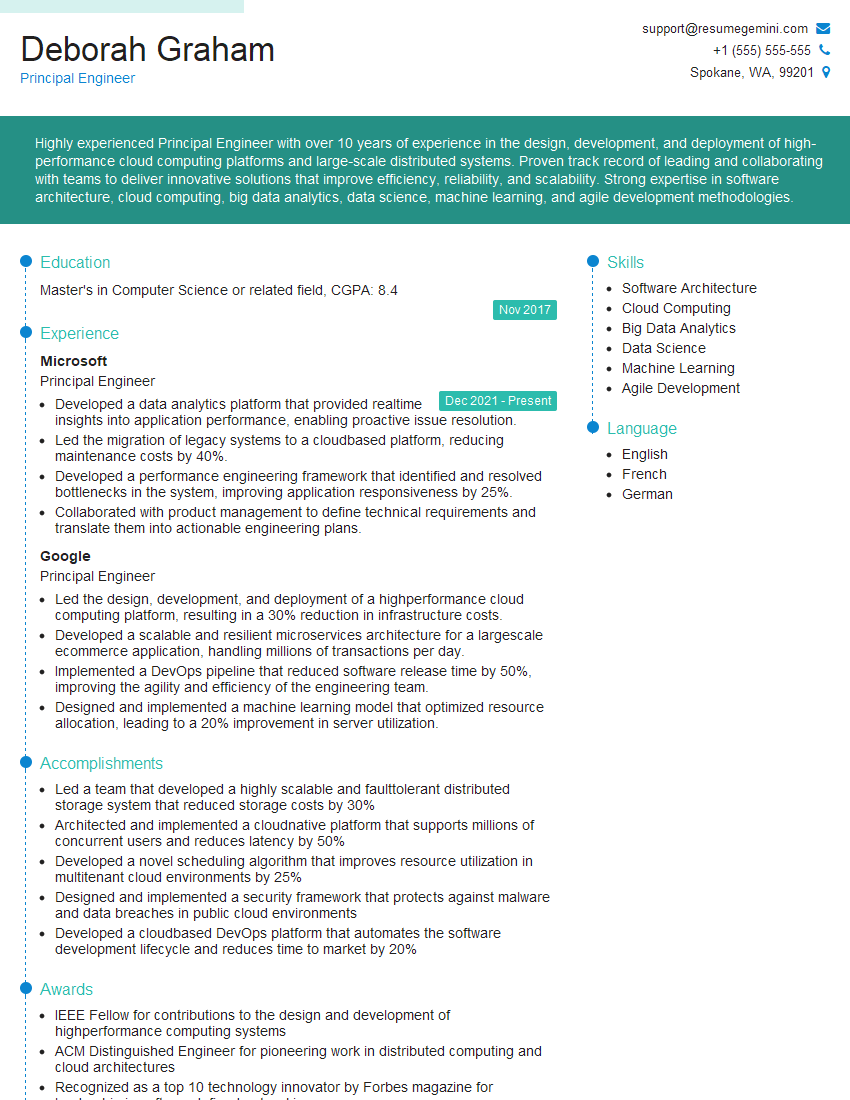
Principal Engineer Resume Sample

Inventory Manager Resume Sample
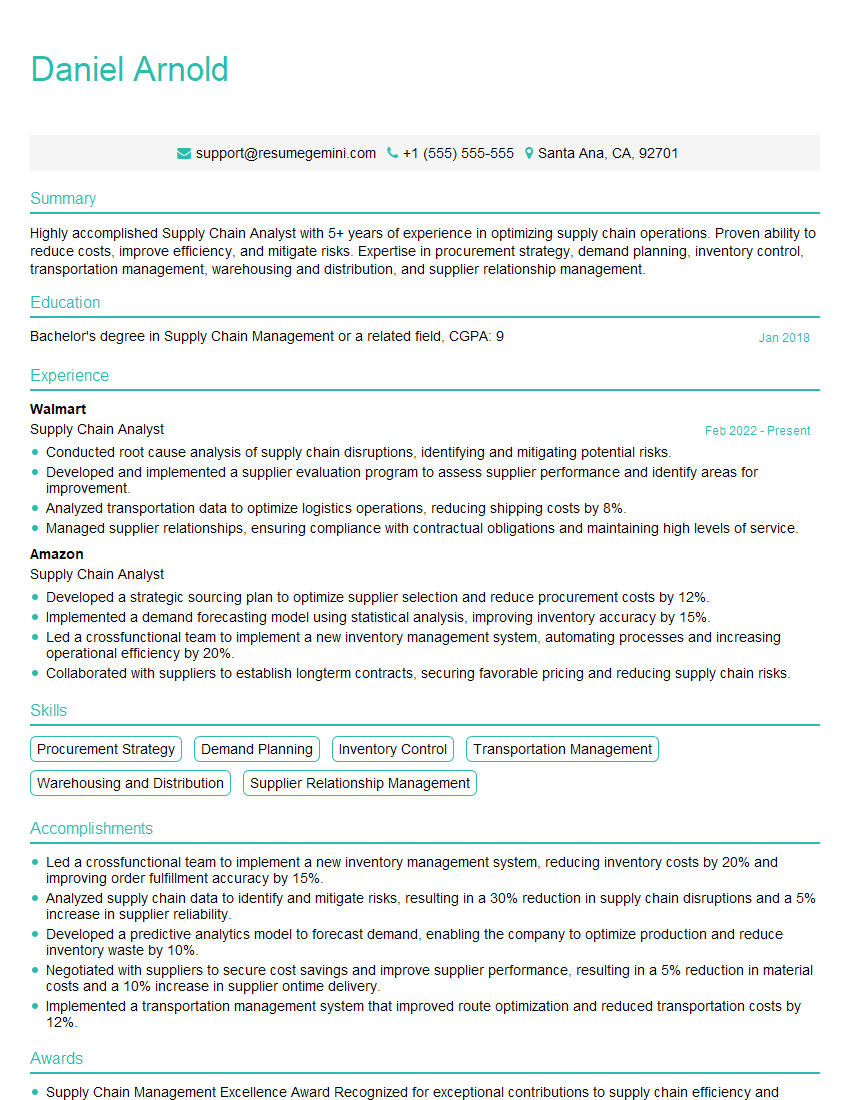
Supply Chain Analyst Resume Sample
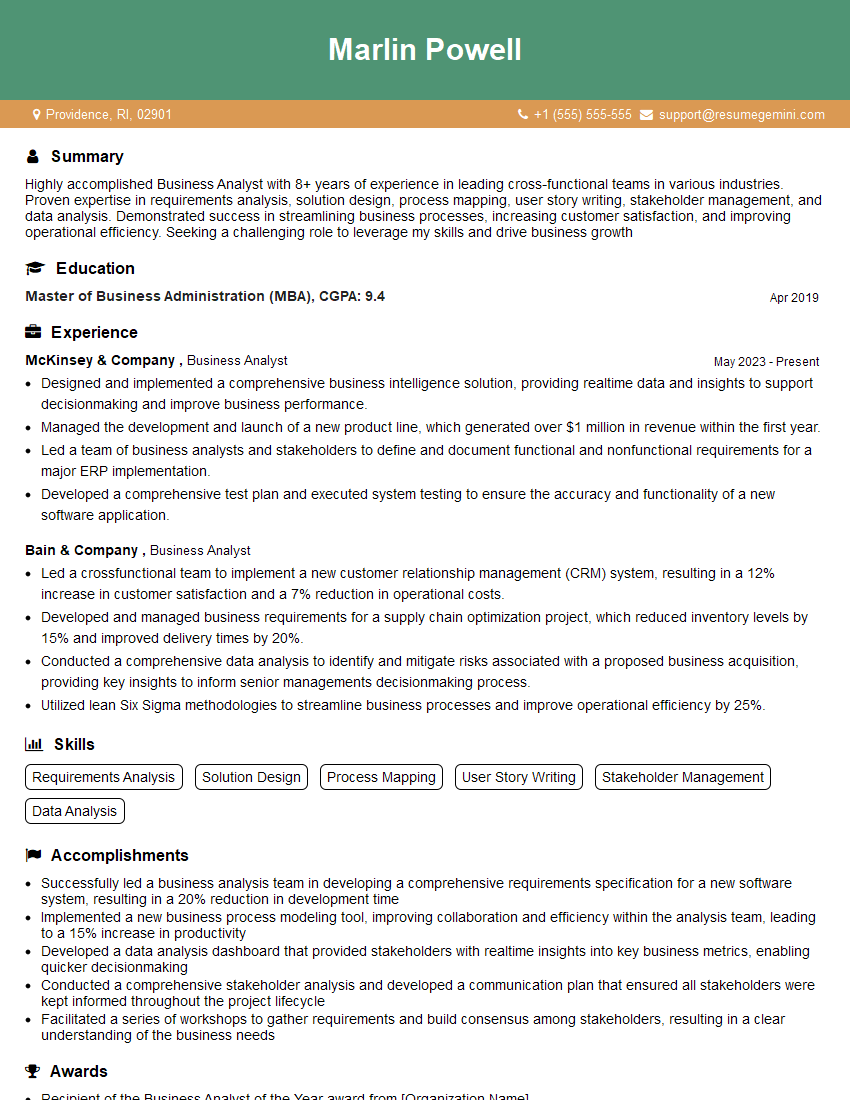
Business Analyst Resume Sample
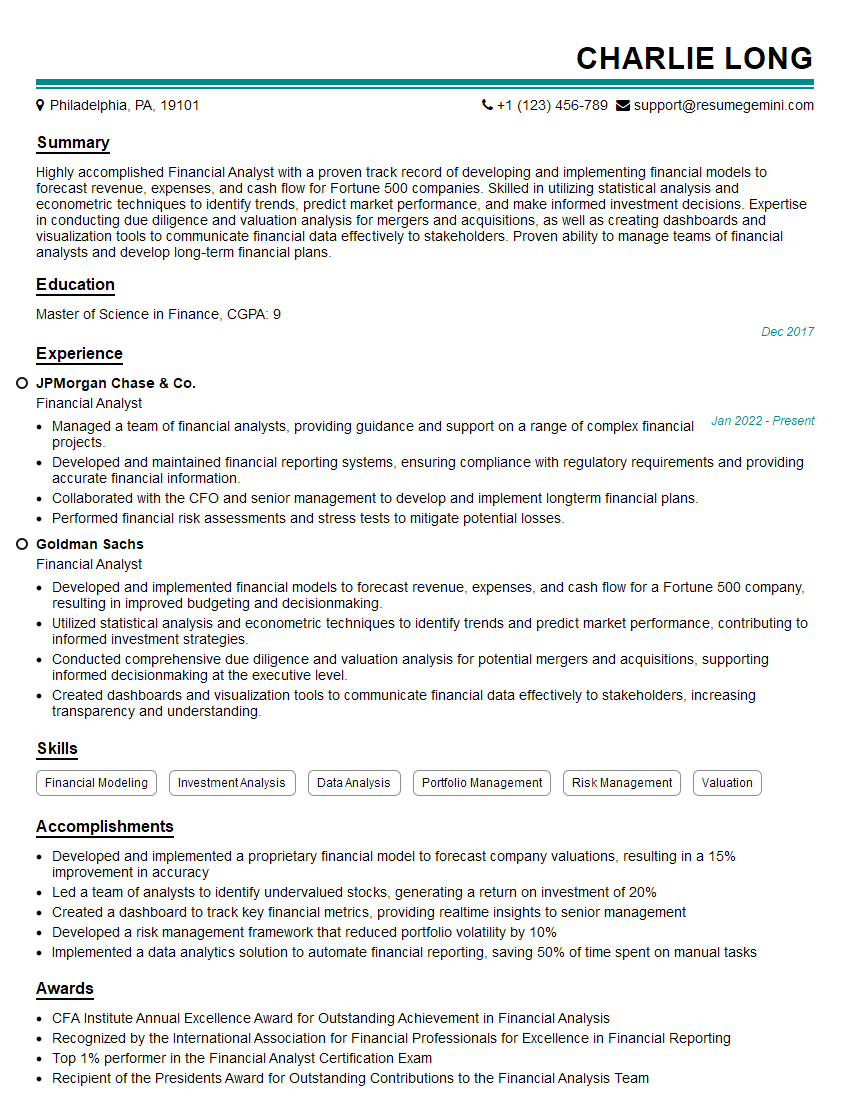
Financial Analyst Resume Sample
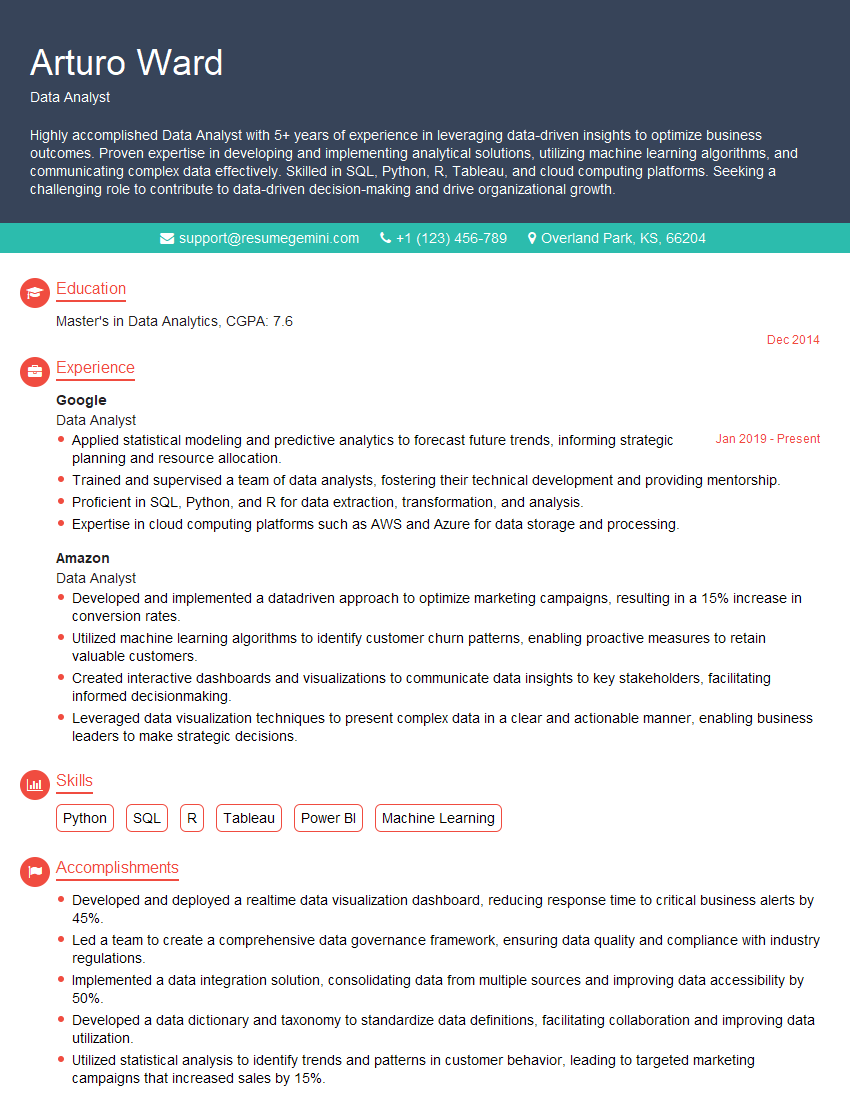
Data Analyst Resume Sample
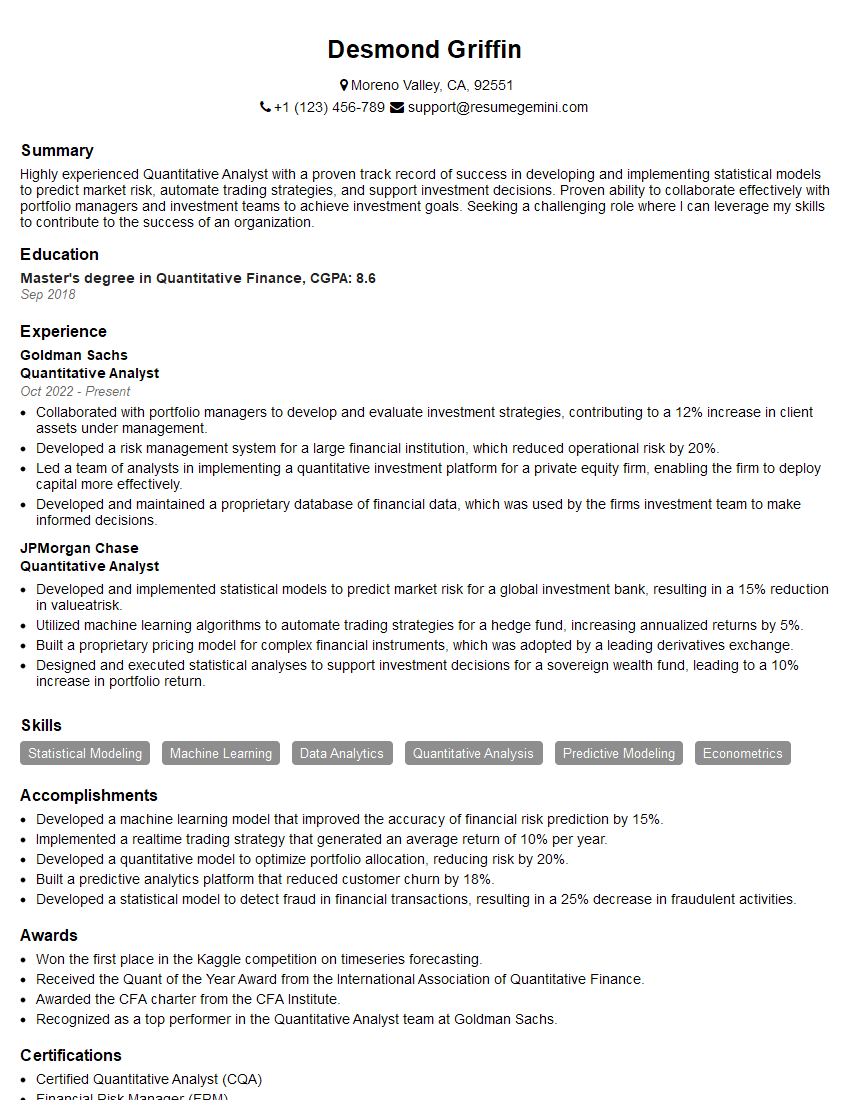
Quantitative Analyst Resume Sample
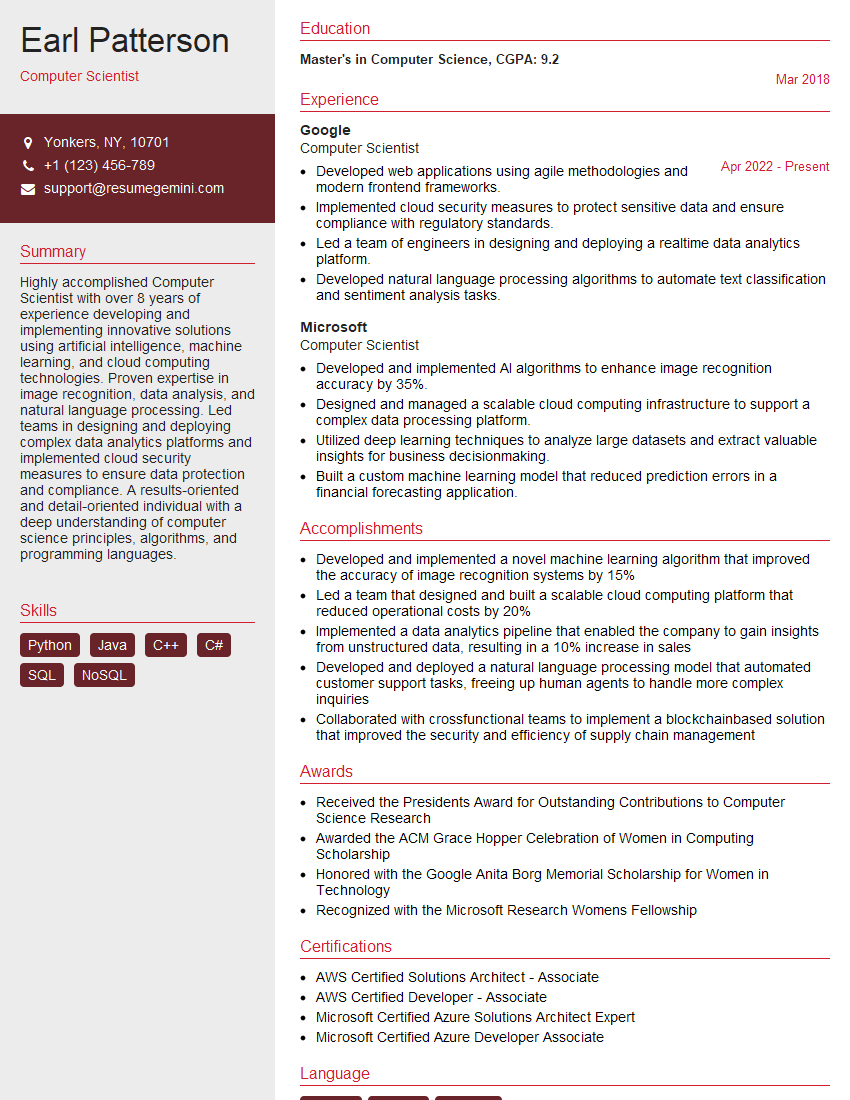
Computer Scientist Resume Sample

Research Scientist Resume Sample
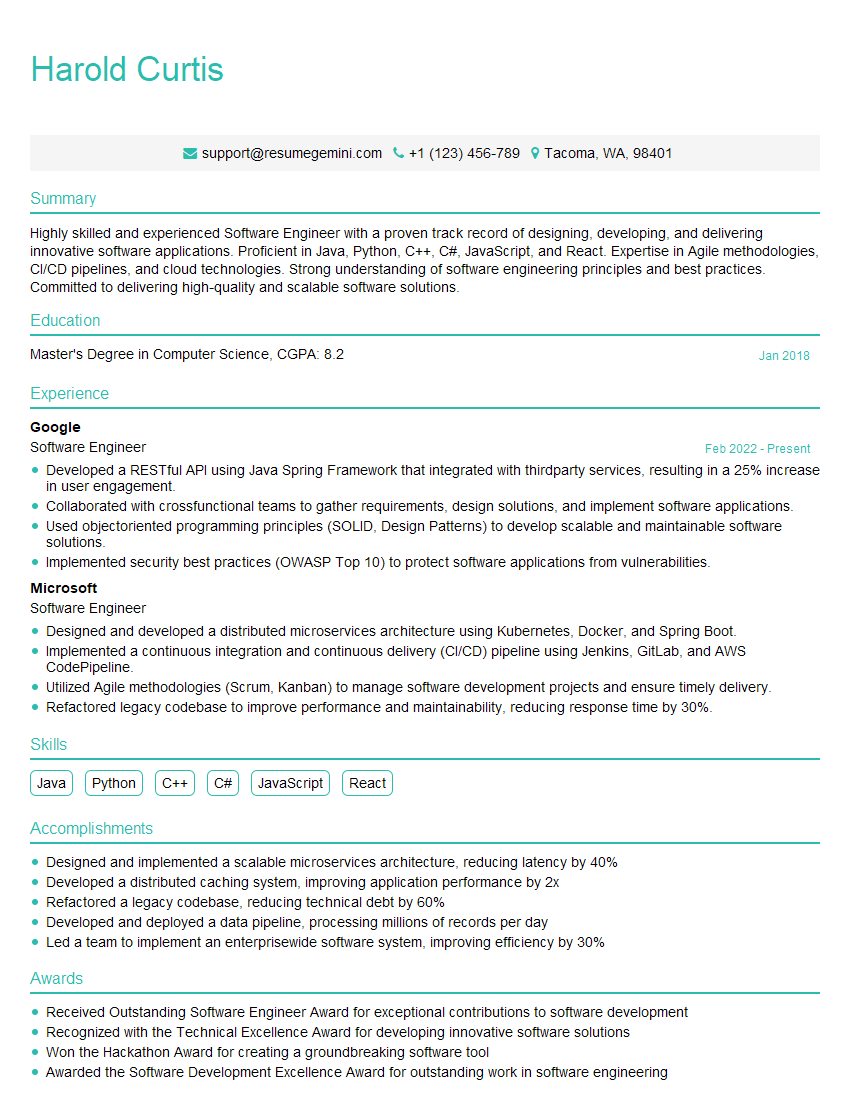
Software Engineer Resume Sample
Solutions Architect Resume Sample

Senior Software Engineer Resume Sample
System Architect Resume Sample
Database Administrator Resume Sample
Full-Stack Developer Resume Sample
Technical Lead Resume Sample
DevOps Engineer Resume Sample
Cloud Engineer Resume Sample
- Operations Manager
- Logistics Manager
- Project Manager
- Principal Engineer
- Inventory Manager
- Supply Chain Analyst
- Business Analyst
- Financial Analyst
- Data Analyst
- Quantitative Analyst
- Computer Scientist
- Research Scientist
- Software Engineer
- Solutions Architect
- Senior Software Engineer
- System Architect
- Database Administrator
- Full-Stack Developer
- Technical Lead
- DevOps Engineer
- Cloud Engineer
Explore more articles
Users Rating of Our Blogs
Share Your Experience
We value your feedback! Please rate our content and share your thoughts (optional).
What Readers Say About Our Blog
Hello,
we currently offer a complimentary backlink and URL indexing test for search engine optimization professionals.
You can get complimentary indexing credits to test how link discovery works in practice.
No credit card is required and there is no recurring fee.
You can find details here:
https://wikipedia-backlinks.com/indexing/
Regards
NICE RESPONSE TO Q & A
hi
The aim of this message is regarding an unclaimed deposit of a deceased nationale that bears the same name as you. You are not relate to him as there are millions of people answering the names across around the world. But i will use my position to influence the release of the deposit to you for our mutual benefit.
Respond for full details and how to claim the deposit. This is 100% risk free. Send hello to my email id: [email protected]
Luka Chachibaialuka
Hey interviewgemini.com, just wanted to follow up on my last email.
We just launched Call the Monster, an parenting app that lets you summon friendly ‘monsters’ kids actually listen to.
We’re also running a giveaway for everyone who downloads the app. Since it’s brand new, there aren’t many users yet, which means you’ve got a much better chance of winning some great prizes.
You can check it out here: https://bit.ly/callamonsterapp
Or follow us on Instagram: https://www.instagram.com/callamonsterapp
Thanks,
Ryan
CEO – Call the Monster App
Hey interviewgemini.com, I saw your website and love your approach.
I just want this to look like spam email, but want to share something important to you. We just launched Call the Monster, a parenting app that lets you summon friendly ‘monsters’ kids actually listen to.
Parents are loving it for calming chaos before bedtime. Thought you might want to try it: https://bit.ly/callamonsterapp or just follow our fun monster lore on Instagram: https://www.instagram.com/callamonsterapp
Thanks,
Ryan
CEO – Call A Monster APP
To the interviewgemini.com Owner.
Dear interviewgemini.com Webmaster!
Hi interviewgemini.com Webmaster!
Dear interviewgemini.com Webmaster!
excellent
Hello,
We found issues with your domain’s email setup that may be sending your messages to spam or blocking them completely. InboxShield Mini shows you how to fix it in minutes — no tech skills required.
Scan your domain now for details: https://inboxshield-mini.com/
— Adam @ InboxShield Mini
Reply STOP to unsubscribe
Hi, are you owner of interviewgemini.com? What if I told you I could help you find extra time in your schedule, reconnect with leads you didn’t even realize you missed, and bring in more “I want to work with you” conversations, without increasing your ad spend or hiring a full-time employee?
All with a flexible, budget-friendly service that could easily pay for itself. Sounds good?
Would it be nice to jump on a quick 10-minute call so I can show you exactly how we make this work?
Best,
Hapei
Marketing Director
Hey, I know you’re the owner of interviewgemini.com. I’ll be quick.
Fundraising for your business is tough and time-consuming. We make it easier by guaranteeing two private investor meetings each month, for six months. No demos, no pitch events – just direct introductions to active investors matched to your startup.
If youR17;re raising, this could help you build real momentum. Want me to send more info?
Hi, I represent an SEO company that specialises in getting you AI citations and higher rankings on Google. I’d like to offer you a 100% free SEO audit for your website. Would you be interested?
Hi, I represent an SEO company that specialises in getting you AI citations and higher rankings on Google. I’d like to offer you a 100% free SEO audit for your website. Would you be interested?
good