Every successful interview starts with knowing what to expect. In this blog, we’ll take you through the top Lean Six Sigma (Six Sigma) interview questions, breaking them down with expert tips to help you deliver impactful answers. Step into your next interview fully prepared and ready to succeed.
Questions Asked in Lean Six Sigma (Six Sigma) Interview
Q 1. Explain the DMAIC methodology.
DMAIC is a data-driven methodology used in Six Sigma projects to improve processes. It’s an acronym for Define, Measure, Analyze, Improve, and Control. Think of it as a structured roadmap for systematically identifying, measuring, and solving problems, ultimately leading to significant process improvements.
Q 2. Describe the 5 phases of DMAIC.
The five phases of DMAIC are:
- Define: Clearly define the project’s goals, scope, and customer requirements. This involves identifying the problem, setting measurable goals, and creating a project charter.
- Measure: Collect data to understand the current state of the process. This involves identifying key metrics, establishing a baseline performance, and documenting the process flow.
- Analyze: Analyze the data collected in the Measure phase to identify the root causes of the problem. This often involves using statistical tools to identify significant factors affecting the process.
- Improve: Develop and implement solutions to address the root causes identified in the Analyze phase. This might involve process redesign, technology upgrades, or employee training.
- Control: Implement monitoring systems to ensure that the improvements are sustained over time. This includes establishing control charts, implementing standardized work procedures, and developing a plan for continuous improvement.
Q 3. What are the key tools used in the Define phase?
Key tools used in the Define phase include:
- SIPOC Diagram: A visual representation of the process mapping Suppliers, Inputs, Process, Outputs, and Customers. It helps define the boundaries of the project and identify key stakeholders.
- Voice of the Customer (VOC): Gathering information about customer needs and expectations through surveys, interviews, and focus groups to ensure the project aligns with customer requirements.
- Project Charter: A formal document outlining the project’s goals, scope, timeline, resources, and stakeholders. It serves as a roadmap for the entire project.
- Problem Statement: A concise and clear statement that defines the problem the project aims to solve. It should be specific, measurable, achievable, relevant, and time-bound (SMART).
For example, in a manufacturing process, a SIPOC diagram would clearly map out the suppliers of raw materials, the inputs used in manufacturing, the process steps, the output product, and the end customer. This helps pinpoint areas for improvement at an early stage.
Q 4. How do you measure process capability using Cp and Cpk?
Cp and Cpk are process capability indices that measure how well a process meets its specifications. They help determine if a process is capable of consistently producing outputs within the required tolerances.
Cp (Process Capability) measures the potential capability of a process, assuming the process is centered. It’s calculated as:
Cp = (USL - LSL) / 6σ
Where:
- USL = Upper Specification Limit
- LSL = Lower Specification Limit
- σ = Standard Deviation of the process
Cpk (Process Capability Index) considers both the process capability and its centering. It’s the minimum of:
Cpk = min[(USL - μ) / 3σ, (μ - LSL) / 3σ]
Where:
- μ = Process Mean
A Cp and Cpk value greater than 1 indicates that the process is capable of meeting specifications. A value greater than 1.33 is generally considered good, while a value greater than 1.67 is excellent. A Cp value may be high, but a low Cpk indicates that the process mean is not centered within the specification limits, highlighting the need for process adjustments.
Q 5. Explain the concept of control charts (e.g., X-bar and R charts).
Control charts are graphical tools used to monitor process stability and identify variations. They plot data points over time, allowing you to see patterns and detect anomalies. X-bar and R charts are commonly used for variables data (continuous data that can take on any value within a range).
X-bar chart tracks the average (mean) of subgroups of data. R chart tracks the range (difference between the highest and lowest values) within each subgroup. By monitoring both charts, you can identify shifts in the process mean or increases in process variability.
Imagine a bottling plant filling soda bottles. An X-bar chart would track the average fill volume of a sample of bottles, while the R chart would track the variation in fill volume among those bottles. If the X-bar chart shows the average fill volume consistently drifting outside control limits, it might indicate a problem with the filling machine, and the R chart would highlight an increased variability in the filling process.
Q 6. What are common causes and special causes of variation?
Variations in a process can stem from two main sources: common causes and special causes.
Common causes of variation are inherent in the process itself and are considered normal, random fluctuations. They are inherent to the system and are present all the time, contributing to the overall variation seen in the process output. Think of slight variations in temperature or humidity affecting a manufacturing process.
Special causes of variation are unusual events or factors that are not inherent to the process. These are outside the normal range and indicate a problem that needs to be addressed. Examples include a machine malfunction, a change in raw materials, or a human error.
Identifying special causes is crucial for improving the process. Control charts help distinguish between common and special causes by identifying data points that fall outside the control limits.
Q 7. Describe the Pareto principle and its application in Six Sigma.
The Pareto principle, also known as the 80/20 rule, states that roughly 80% of effects come from 20% of causes. In Six Sigma, this means that a small percentage of factors often contribute to the majority of defects or problems in a process.
A Pareto chart is a bar graph that visually represents this principle. It helps prioritize improvement efforts by focusing on the vital few, rather than the trivial many. For example, in a manufacturing plant experiencing high defect rates, a Pareto chart might reveal that 80% of defects stem from just 20% of the production steps or machine components. This allows for focused corrective action on the most significant contributors to defects.
By applying the Pareto principle, Six Sigma projects can achieve maximum impact by focusing on the most significant sources of variation or problems, resulting in more effective and efficient improvement initiatives.
Q 8. What is a fishbone diagram (Ishikawa diagram) and how is it used?
A fishbone diagram, also known as an Ishikawa diagram, is a visual tool used for brainstorming and identifying the potential causes of a problem. Think of it as a skeleton of a fish, where the head represents the problem and the bones are the potential causes, categorized into different groups.
How it’s used: The team involved in solving the problem gathers and brainstorms potential root causes, classifying them into main categories (typically, Materials, Methods, Manpower, Machinery, Measurement, and Environment – the 6Ms, but this can be customized). Each category forms a ‘bone’ branching off from the ‘head’ (the problem). This visual representation helps in systematically exploring all potential factors and encourages collaborative problem-solving.
Example: Let’s say the problem is ‘Late project delivery’. The team might brainstorm and categorize causes under:
- Materials: Supplier delays, material defects
- Methods: Inefficient processes, unclear project plan
- Manpower: Lack of skilled resources, high employee turnover
- Machinery: Equipment malfunctions, inadequate capacity
- Measurement: Lack of monitoring tools, inaccurate progress reports
- Environment: External regulations, unexpected disruptions
By visually organizing these potential causes, the team can better understand the problem’s complexity and prioritize which root causes to investigate further.
Q 9. Explain the concept of a process flow chart.
A process flow chart, also called a flowchart, is a visual representation of the steps involved in a process. It uses standardized symbols to illustrate the sequence of actions, decisions, and information flows. Imagine it as a roadmap showing exactly how a process unfolds from start to finish.
Purpose: Process flow charts are invaluable for understanding, analyzing, and improving processes. They provide a clear picture of how work gets done, highlighting areas of inefficiency, redundancy, or bottlenecks. They’re crucial for communication within a team and across departments, ensuring everyone is on the same page regarding a process’s steps.
Example: Consider a simple process like ‘Customer Order Fulfillment’. A process flow chart would visually show steps like: Receive order, check inventory, pick items, pack items, ship items, update customer, and so on. Each step would be represented by a specific symbol, with arrows indicating the flow of the process. This allows you to quickly identify delays, such as long wait times at the ‘inventory check’ stage, prompting improvement strategies.
Q 10. How do you calculate sigma level?
Calculating a sigma level quantifies the process capability, representing the number of standard deviations between the process mean and the nearest specification limit. A higher sigma level indicates better process performance and fewer defects.
Calculation: The most common method uses the Defects Per Million Opportunities (DPMO) metric. You first need to determine the DPMO from your data (number of defects divided by the number of opportunities for defects, multiplied by one million). Then, you can use a sigma level conversion table or a statistical software package to convert the DPMO to a corresponding sigma level. This conversion accounts for the shape of the data distribution (normally assumed to be a normal distribution).
Example: If a process has a DPMO of 3.4, that translates to approximately a 6-sigma level. A DPMO of 62,100 would correspond to a 3-sigma level. The higher the sigma level, the fewer defects a process is likely to produce. A 6-sigma level implies very high process capability.
Q 11. What is a SIPOC diagram and what is its purpose?
A SIPOC diagram is a simple yet powerful tool used in Six Sigma and Lean projects. It’s an acronym for Suppliers, Inputs, Process, Outputs, and Customers. It provides a high-level overview of the process being analyzed, clarifying who is involved, what goes in, what comes out, and who the ultimate beneficiaries are.
Purpose: The SIPOC diagram helps define the boundaries of the process under scrutiny. It ensures all stakeholders understand the scope of the project and facilitates communication among team members. This clarity is essential before diving deeper into detailed process analysis. It helps to streamline processes by ensuring you’re focusing on the relevant elements only.
Example: Consider a restaurant’s ‘Order Fulfillment’ process. The SIPOC diagram might look like this:
- Suppliers: Food suppliers, beverage suppliers, kitchen staff
- Inputs: Food ingredients, beverages, orders from customers
- Process: Order taking, food preparation, food delivery, payment processing
- Outputs: Prepared meals, customer satisfaction, revenue
- Customers: Restaurant patrons
This simple visual helps to define the system and ensure all relevant aspects are considered.
Q 12. Explain the difference between Lean and Six Sigma.
While both Lean and Six Sigma aim to improve efficiency and reduce waste, they focus on different aspects:
Lean focuses on eliminating waste (muda) in all its forms, including defects, overproduction, waiting, transportation, inventory, motion, and over-processing. It emphasizes continuous improvement through waste reduction and process streamlining, aiming for speed and efficiency. Think of it as ‘doing more with less’.
Six Sigma focuses on reducing variability and defects to achieve near-perfection. It employs statistical tools to measure and analyze processes, identify root causes of variation, and implement solutions to minimize defects. Think of it as ensuring high quality and consistency.
In essence: Lean is about speed and efficiency, while Six Sigma is about quality and consistency. They are often used together synergistically – Lean to optimize the flow of the process, and Six Sigma to improve the quality of the output.
Q 13. How do you identify and prioritize improvement projects?
Identifying and prioritizing improvement projects requires a systematic approach. I typically use a combination of methods including:
- Data-driven analysis: Using metrics such as defect rates, cycle times, customer satisfaction scores, and operational costs to identify areas needing improvement. This is the most important step because it helps avoid bias and emotions.
- Voice of the Customer (VOC): Gathering feedback from customers and stakeholders to understand their needs and pain points. This helps you understand the actual impact of your processes on the people using your products or services.
- Process mapping: Visually representing the current state of the process to pinpoint areas of inefficiency or bottlenecks.
- Prioritization matrix: Using a matrix (e.g., a value vs. effort matrix) to rank projects based on their potential impact and the resources required to implement them. You should focus on projects that have high impact and are relatively easy to implement.
- Financial analysis: Evaluating the potential return on investment (ROI) for each project to ensure alignment with business objectives. This is vital to get buy-in from leadership and stakeholders.
Example: A high defect rate in a manufacturing process might be identified through data analysis. Customer feedback might indicate that these defects lead to high warranty costs and customer dissatisfaction. A process map highlights a bottleneck causing the defects. This project would likely be high priority due to high impact and potential cost savings.
Q 14. Describe your experience with root cause analysis techniques.
I have extensive experience with various root cause analysis (RCA) techniques, including:
- 5 Whys: A simple yet effective technique where you repeatedly ask ‘Why?’ to drill down to the root cause of a problem. While simple, it can be incredibly effective in quickly getting to the core issue.
- Fishbone Diagram (Ishikawa): As discussed previously, this helps visualize and categorize potential causes, leading to a better understanding of the root causes.
- Fault Tree Analysis (FTA): A deductive reasoning technique used to identify all potential causes that could lead to a specific undesirable event (failure). This is more complex and works well for critical systems.
- Pareto Analysis: This focuses on identifying the ‘vital few’ causes that contribute to the majority of problems, enabling targeted effort on high-impact areas.
In practice: I typically choose the appropriate technique based on the complexity of the problem and the available data. For example, 5 Whys is excellent for quick analysis of simpler issues, while FTA is more suitable for analyzing complex system failures. It is usually best to use multiple RCA methods to ensure a comprehensive investigation.
Example: In a previous project involving frequent equipment downtime, we used a combination of 5 Whys and a Fishbone Diagram. The 5 Whys helped us identify the immediate cause of a particular downtime event. The Fishbone Diagram then helped us categorize potential causes across different aspects (maintenance, operator error, etc.) leading to improvements in maintenance procedures and operator training, ultimately reducing downtime.
Q 15. What are some common metrics used to track process improvement?
Tracking process improvement relies on a suite of metrics that provide a holistic view of performance. These metrics are carefully chosen to reflect the specific goals of the improvement initiative. Common metrics fall into several categories:
- Defect Rate/Yield: This measures the percentage of defective outputs or the percentage of successful outputs. For example, a manufacturing process might track the number of defective units produced per 1000 units. A higher yield indicates improvement.
- Cycle Time/Lead Time: This measures the time taken to complete a process. Reducing cycle time is a key goal in Lean Six Sigma. For example, reducing the lead time for order fulfillment from 7 days to 3 days demonstrates significant improvement.
- Process Capability (Cp, Cpk): These metrics assess how well a process meets specifications. A Cp/Cpk value greater than 1.33 generally indicates a capable process. Imagine a manufacturing process producing bolts: Cp/Cpk would measure how consistently the bolt diameter conforms to specifications.
- Cost of Poor Quality (COPQ): This encompasses all costs associated with defects, including rework, scrap, customer returns, and warranty claims. Reducing COPQ is a crucial financial objective. A company might track the cost of handling customer complaints to assess the impact of process improvements.
- Customer Satisfaction (CSAT): Ultimately, process improvements should enhance customer satisfaction. Surveys, feedback forms, and Net Promoter Score (NPS) are commonly used to measure customer happiness.
The selection of appropriate metrics depends on the specific process and organizational goals. A balanced scorecard approach, incorporating both lagging (outcome-based) and leading (process-based) indicators, is often beneficial.
Career Expert Tips:
- Ace those interviews! Prepare effectively by reviewing the Top 50 Most Common Interview Questions on ResumeGemini.
- Navigate your job search with confidence! Explore a wide range of Career Tips on ResumeGemini. Learn about common challenges and recommendations to overcome them.
- Craft the perfect resume! Master the Art of Resume Writing with ResumeGemini’s guide. Showcase your unique qualifications and achievements effectively.
- Don’t miss out on holiday savings! Build your dream resume with ResumeGemini’s ATS optimized templates.
Q 16. Describe your experience using Minitab or other statistical software.
I have extensive experience using Minitab, a leading statistical software package, for various Six Sigma projects. My proficiency spans data analysis, statistical process control (SPC), hypothesis testing, and Design of Experiments (DOE).
For instance, in a recent project aimed at reducing defects in a packaging line, I used Minitab to:
- Analyze process capability: I calculated Cp and Cpk indices to determine the process’s ability to meet specifications. This highlighted the need for machine adjustments.
- Construct control charts: I used X-bar and R charts to monitor the process’s stability over time, identifying points of instability and preventing further defects.
- Perform hypothesis testing: I used t-tests and ANOVA to compare the effectiveness of different process adjustments, validating which changes yielded the most significant improvements.
- Design and analyze DOE: I designed a fractional factorial DOE to optimize process parameters efficiently. The results guided us towards the optimal settings that minimized defects and maximized yield.
Beyond Minitab, I am also familiar with JMP and R, giving me flexibility in choosing the most appropriate statistical tool for a given project.
Q 17. Explain the concept of a value stream map.
A value stream map (VSM) is a visual representation of all the steps involved in delivering a product or service to a customer. It highlights both value-added and non-value-added activities, helping to identify areas for improvement. Think of it as a detailed flowchart that goes beyond basic process steps, showing material and information flow as well as process times and inventory levels.
A typical VSM includes:
- Customer: The ultimate recipient of the product or service.
- Process Steps: Each step involved in creating the product or service, categorized as value-added or non-value-added.
- Data: Process times, lead times, inventory levels, and defect rates for each step.
- Information Flow: How information moves between steps.
- Material Flow: How materials move between steps.
Creating a VSM involves several steps: defining the scope, gathering data, mapping the current state, and then developing a future state map that incorporates improvement ideas. For example, in a manufacturing setting, a VSM might reveal bottlenecks in the production line, excessive inventory buildup, or unnecessary steps that add time and cost without adding value. By visualizing these inefficiencies, the team can effectively target improvement efforts.
Q 18. How do you handle resistance to change during improvement initiatives?
Resistance to change is a common challenge in improvement initiatives. Addressing it requires a multifaceted approach that prioritizes communication, collaboration, and empathy.
My strategy usually involves:
- Proactive Communication: Openly communicating the rationale behind the changes, highlighting the benefits to both individuals and the organization, addresses initial concerns.
- Collaboration and Engagement: Involving stakeholders early in the process, actively seeking their input and feedback, increases buy-in and reduces resistance. This ensures that the changes are not imposed but collaboratively developed.
- Addressing Concerns: Actively listening to concerns and addressing them directly, acknowledging the validity of fears and anxieties, creates a safe space for dialogue.
- Pilot Testing and Incremental Change: Implementing changes incrementally, starting with a pilot test, minimizes disruption and allows for adjustments based on feedback. Success with smaller changes builds momentum and trust.
- Leadership Support: Securing strong leadership support is crucial for reinforcing the importance of the changes and providing backing during challenging moments.
- Celebrating Successes: Highlighting early wins, even small ones, helps build momentum and demonstrate the value of the changes, further motivating employees.
Essentially, it’s about building a culture of continuous improvement where change is seen as an opportunity for growth rather than a threat.
Q 19. What is your experience with Kaizen events?
Kaizen events, also known as Kaizen workshops, are focused improvement events involving a cross-functional team working together for a short, intense period (typically 3-5 days) to identify and implement improvements in a specific process. I have led and participated in numerous Kaizen events across various industries.
My experience includes:
- Facilitating Kaizen events: Leading teams through the structured Kaizen methodology, from defining the scope and gathering data to implementing and validating improvements.
- Applying Lean tools and techniques: Using tools like value stream mapping, 5S, and process flow charting to analyze the process and identify areas for improvement.
- Generating and implementing solutions: Working collaboratively with team members to brainstorm and prioritize improvement ideas, testing and implementing them in a controlled environment.
- Measuring and documenting results: Tracking key metrics to measure the success of the implemented changes, documenting the improvements and lessons learned for future reference.
For example, in one Kaizen event focused on improving order fulfillment, we identified and eliminated several non-value-added steps, resulting in a 20% reduction in cycle time and a significant improvement in customer satisfaction.
Q 20. Explain your understanding of Design of Experiments (DOE).
Design of Experiments (DOE) is a powerful statistical method for efficiently determining the influence of multiple factors on a response variable. Instead of changing one factor at a time (which can be time-consuming and inefficient), DOE allows us to systematically vary several factors simultaneously, identifying the most significant factors and their optimal settings.
My understanding of DOE encompasses:
- Full Factorial Designs: Evaluating all possible combinations of factor levels, providing a comprehensive understanding of factor effects.
- Fractional Factorial Designs: A cost-effective approach used when the number of factors is large. This selectively tests certain combinations of factors, focusing on the most important interactions.
- Response Surface Methodology (RSM): Used to optimize a process by fitting a model to the response variable and identifying the optimum settings of the factors.
- Analysis of Variance (ANOVA): Used to analyze the results of DOE experiments, determining which factors are statistically significant and their interactions.
I’ve successfully applied DOE in various contexts. For example, a project to optimize the yield of a chemical process used a fractional factorial design to identify three key factors significantly affecting the yield. Optimizing these factors resulted in a 15% increase in yield.
Q 21. Describe your experience with FMEA (Failure Mode and Effects Analysis).
Failure Mode and Effects Analysis (FMEA) is a systematic approach to identifying potential failure modes in a process, analyzing their effects, and developing mitigation strategies. It’s a proactive risk assessment tool used to prevent failures before they occur.
My FMEA experience includes:
- Conducting FMEAs: Leading cross-functional teams through the FMEA process, from identifying potential failure modes to developing mitigation strategies and assigning risk priorities.
- Using FMEA software: Utilizing specialized software for FMEA to streamline the process and facilitate risk assessment calculations.
- Prioritizing risks: Calculating the Risk Priority Number (RPN) for each failure mode to focus efforts on the most critical risks.
- Developing action plans: Creating clear and actionable plans to mitigate identified risks, including assigning responsibilities and timelines.
For instance, in a recent project involving a new product launch, we conducted an FMEA to identify potential failures in the manufacturing process and supply chain. This proactive assessment helped us to implement preventative measures, resulting in a smoother launch with minimal disruptions.
Q 22. How do you ensure project sustainability after completion?
Project sustainability hinges on integrating Lean Six Sigma principles into the organization’s culture and processes, not just the project itself. It’s about ensuring the improvements achieved aren’t temporary fixes but become the new standard operating procedure.
- Documentation and Standardization: Thorough documentation of the project’s methodology, findings, and implemented solutions is crucial. This creates a knowledge base that can be referred to and used to train new employees. We need to develop standardized operating procedures (SOPs) based on the improvements.
- Embedding Improvements into Systems: The improvements shouldn’t exist in isolation. We need to integrate them into the company’s existing systems, such as IT systems, training manuals, or workflow diagrams. This ensures the changes are automatically implemented and maintained.
- Ownership and Accountability: Identifying a project champion within the team or organization who is committed to sustaining the improvements is key. This person takes ownership of monitoring the results and addressing any deviations from the improved processes.
- Continuous Monitoring and Measurement: Establishing a system for ongoing monitoring and measuring key performance indicators (KPIs) is essential. This helps to identify any potential setbacks early and allows for timely corrective action. Regular control charts should track performance post-project.
- Training and Communication: Ensuring all relevant employees are trained on the new processes is paramount. Regular communication reinforces the importance of the changes and helps build buy-in across the organization. This includes addressing potential concerns or resistance to change.
For example, in a previous project streamlining a manufacturing process, we not only documented the improved workflow but also updated the company’s production scheduling software to reflect the changes. We then established a monthly review process to monitor efficiency gains and address any emerging issues.
Q 23. Explain your experience with problem-solving methodologies beyond DMAIC.
While DMAIC is the backbone of many Six Sigma projects, I’m proficient in other methodologies, adapting my approach based on the specific problem. For instance, I’ve extensively used:
- DMADV (Define, Measure, Analyze, Design, Verify): This is particularly useful for new product or process development, focusing on designing for quality from the outset. I utilized DMADV when we launched a new customer service system, designing the system based on customer needs and expected service levels before implementation.
- Kaizen (Continuous Improvement): This focuses on small, incremental improvements made over time. It’s great for fostering a culture of continuous improvement within a team. In a previous role, I implemented daily Kaizen events in our assembly line to address minor bottlenecks and improve overall efficiency.
- 8D Problem Solving: This structured approach to problem-solving focuses on identifying the root cause and implementing corrective actions. It’s especially useful for solving complex, critical problems rapidly. We used 8D to effectively address a critical equipment failure in production, focusing on containment, root cause identification, and permanent corrective action.
- A3 Problem Solving: This method uses a single-page document to summarize the problem, analysis, solution, and follow-up. It fosters clear communication and concise problem-solving.
The choice of methodology depends heavily on the context; DMAIC excels for existing processes needing optimization, while DMADV suits new product or process creation. I am comfortable adapting and combining these methodologies for optimal effectiveness.
Q 24. How do you prioritize multiple projects with competing demands?
Prioritizing multiple projects with competing demands requires a structured approach. I typically use a combination of techniques:
- Prioritization Matrix: I use a matrix that considers factors like urgency, impact, and resource requirements. This allows for a visual comparison of projects and their relative importance.
- Value Stream Mapping: Identifying the value streams associated with each project helps to prioritize projects that will have the biggest impact on overall business value. This helps eliminate projects that may seem important but contribute minimally to strategic goals.
- Risk Assessment: Projects with high potential risks or negative consequences are often prioritized to mitigate those risks proactively.
- Resource Allocation: Considering the available resources (personnel, budget, time) is crucial. Prioritizing projects that align with available resources ensures efficient use of resources.
- Stakeholder Alignment: Understanding and aligning expectations with key stakeholders is necessary. Collaboration and clear communication ensure everyone understands the priorities.
For example, I might use a weighted scoring system, assigning scores based on factors such as financial impact, customer satisfaction, and regulatory compliance. Projects with the highest weighted scores are prioritized first. This provides a transparent and objective basis for decision-making, preventing biases in prioritizing individual preferences.
Q 25. Describe a time you failed in a Six Sigma project and what you learned.
In one project aiming to reduce customer service call times, we focused heavily on streamlining the internal processes without adequately considering the customer’s perspective. We implemented new software and workflows that, while efficient internally, made the customer experience more complex and frustrating. Call times initially decreased, but customer satisfaction plummeted.
The key learning was the importance of involving the customer throughout the entire process. We initially focused solely on internal efficiency metrics (cycle time, processing speed) at the expense of the end-user experience. Our failure highlighted the need for Voice of the Customer (VOC) data early and often. Next time, we would incorporate feedback mechanisms (surveys, interviews) at each stage of the DMAIC cycle, ensuring alignment between our process improvements and actual customer needs.
While the initial project wasn’t entirely successful, it significantly improved my understanding of VOC analysis and the importance of balancing efficiency and customer satisfaction. I integrated this lesson into future projects, actively seeking customer feedback and incorporating it into the project’s design and evaluation criteria. This led to more successful outcomes in subsequent projects.
Q 26. Explain the difference between common and special cause variation.
The difference between common and special cause variation is crucial in Six Sigma. Understanding this distinction is fundamental to effective process improvement.
- Common Cause Variation: This is inherent to the process itself. It’s the normal, random fluctuation you would expect in any process. It’s a predictable, consistent variation and represents the inherent variability of the system. Think of it like the normal scatter of shots on a target from a skilled marksman – there’s natural variation, but the overall pattern is consistent.
- Special Cause Variation: This is unusual and unexpected variation. It suggests a problem or anomaly within the process that needs to be investigated and addressed. It’s an unpredictable, inconsistent variation that signals a change in the system. This would be like the same marksman suddenly starting to consistently hit the target to one side – something has changed affecting the accuracy.
Control charts (e.g., X-bar and R charts) are critical tools for distinguishing between these two types of variation. Points consistently within control limits indicate common cause variation, while points outside the limits or exhibiting non-random patterns (e.g., trends, runs) signal special cause variation, requiring investigation and corrective actions.
Q 27. How would you approach a project with limited resources and a tight deadline?
Facing a project with limited resources and a tight deadline requires a strategic approach, focusing on efficiency and prioritization.
- Define a Minimal Viable Product (MVP): Focus on delivering the core value proposition within the constraints. This means potentially delaying less critical features until a later phase.
- Prioritize Tasks: Employing prioritization techniques like MoSCoW (Must have, Should have, Could have, Won’t have) helps ensure focus on essential tasks. Eliminating non-essential activities is critical.
- Efficient Team Collaboration: Foster clear communication, well-defined roles, and effective teamwork to maximize productivity. Regularly checking progress against the timeline becomes crucial.
- Agile Methodology: An iterative approach, like Agile, with short sprints, frequent reviews, and adaptations based on feedback is more suitable than a rigid waterfall approach. This flexibility allows for course corrections based on the limited resources and the fast deadline.
- Automation: Where possible, automate tasks to free up time and resources. This might involve using existing software or tools to streamline processes.
For instance, in a project with limited budget for software, we would leverage free or open-source tools where feasible, outsourcing only the most critical tasks that couldn’t be done in-house. We would also use efficient project management software to track progress and communicate effectively. By combining streamlined methods and focused execution, even resource-constrained projects can achieve considerable success.
Key Topics to Learn for Lean Six Sigma (Six Sigma) Interview
- DMAIC Methodology: Understand each phase (Define, Measure, Analyze, Improve, Control) and their practical application in process improvement projects. Be prepared to discuss real-world examples where you’ve used or could use this methodology.
- Lean Principles: Familiarize yourself with core Lean principles like Value Stream Mapping, 5S, Kaizen, and Poka-Yoke. Practice explaining how these principles contribute to efficiency and waste reduction.
- Statistical Process Control (SPC): Grasp the concepts of control charts (e.g., X-bar and R charts), process capability analysis (Cp, Cpk), and how these tools are used to monitor and improve process stability.
- Hypothesis Testing and Statistical Significance: Understand the basics of hypothesis testing, p-values, and confidence intervals. Be ready to discuss how these concepts inform decision-making in process improvement.
- Root Cause Analysis (RCA) Techniques: Master various RCA techniques like 5 Whys, Fishbone diagrams (Ishikawa diagrams), and Fault Tree Analysis. Be prepared to illustrate how you’ve used these to identify and address the root causes of problems.
- Data Analysis and Interpretation: Showcase your proficiency in analyzing data using various tools and techniques, including descriptive statistics, regression analysis, and data visualization. Emphasize your ability to draw meaningful conclusions from data.
- Project Selection and Prioritization: Demonstrate your understanding of how to select and prioritize projects based on their potential impact and feasibility. Discuss metrics used to evaluate project success.
- Change Management and Implementation: Explain your approach to implementing process improvements and managing change within an organization. Highlight your communication and collaboration skills.
Next Steps
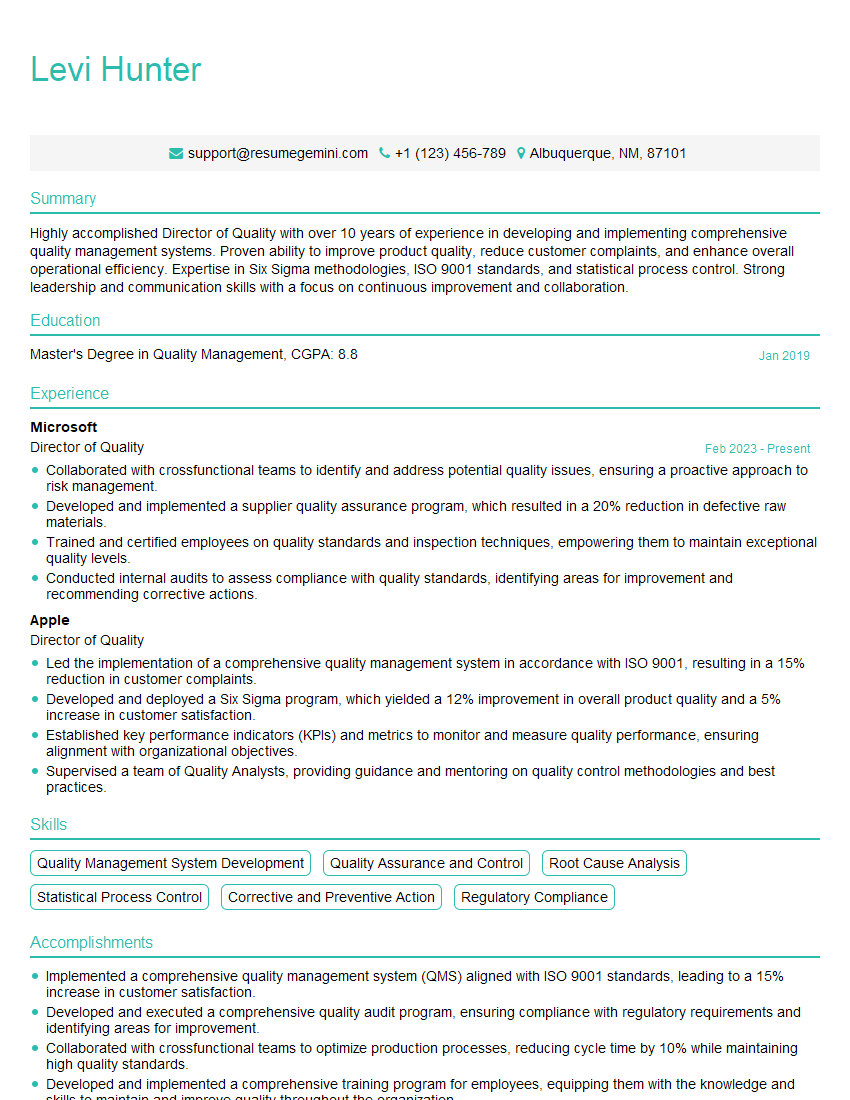
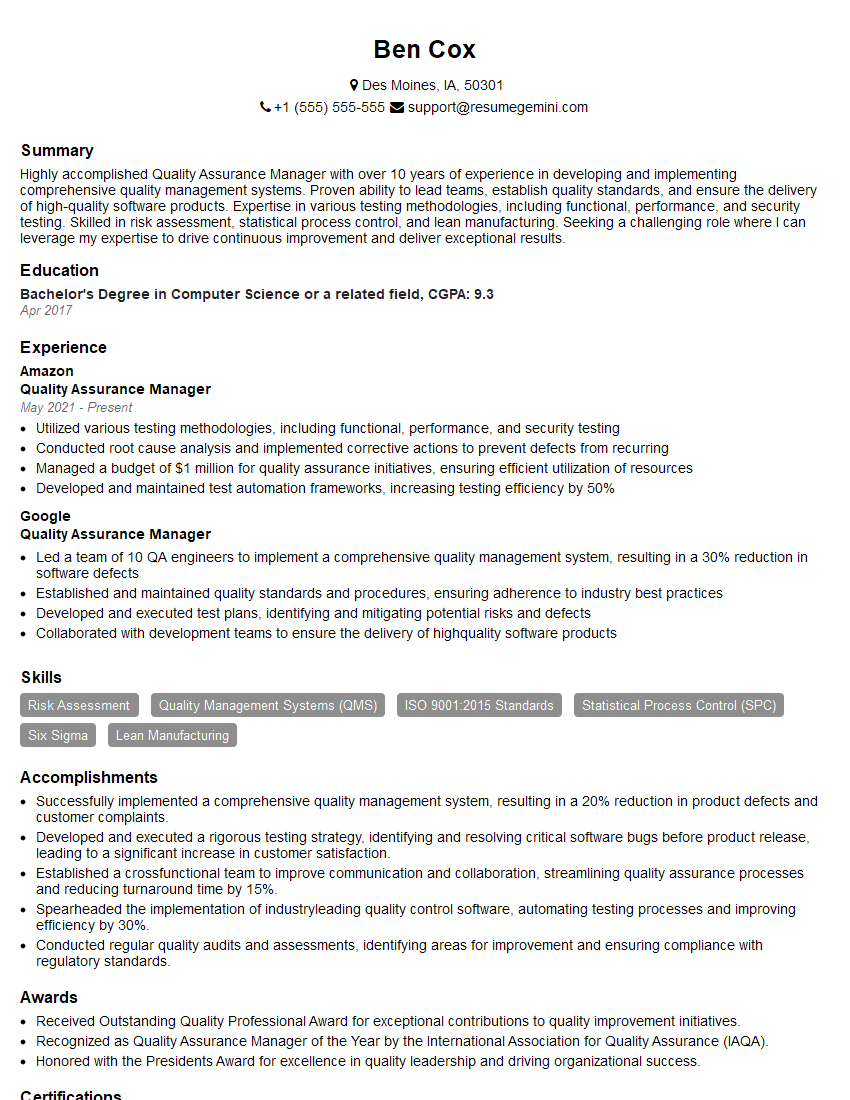
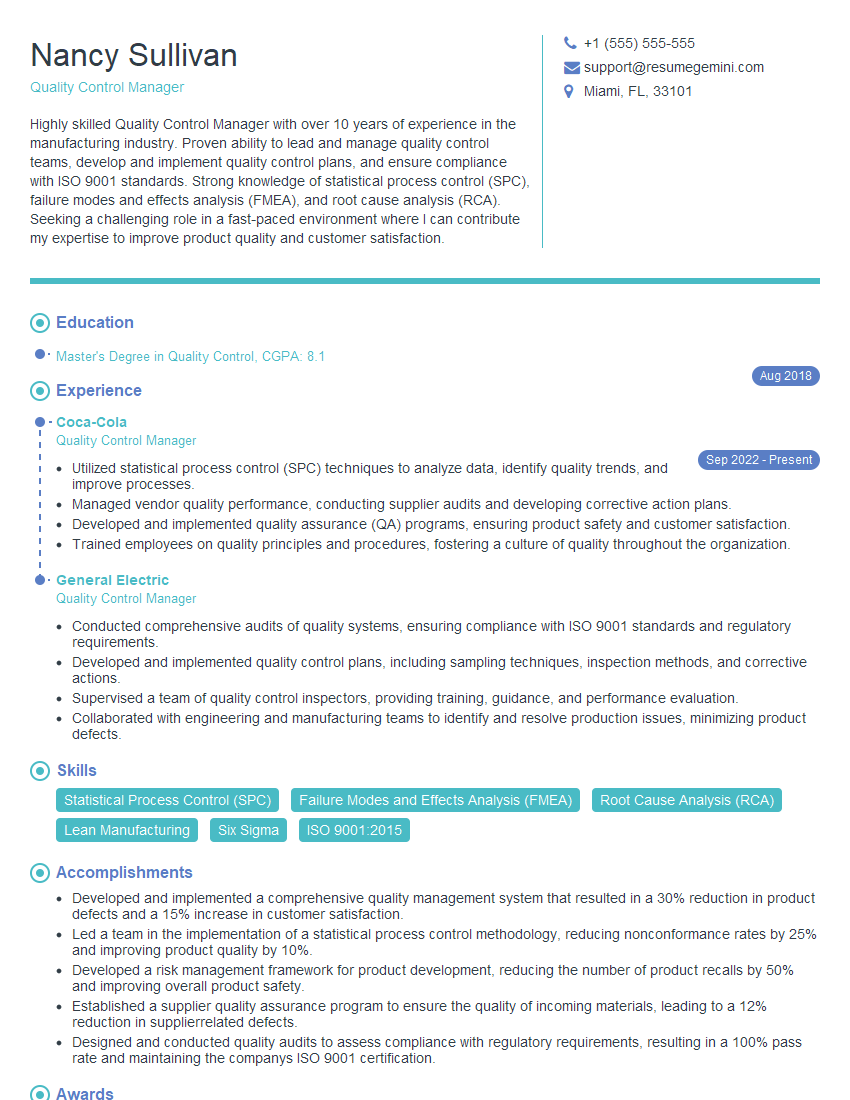
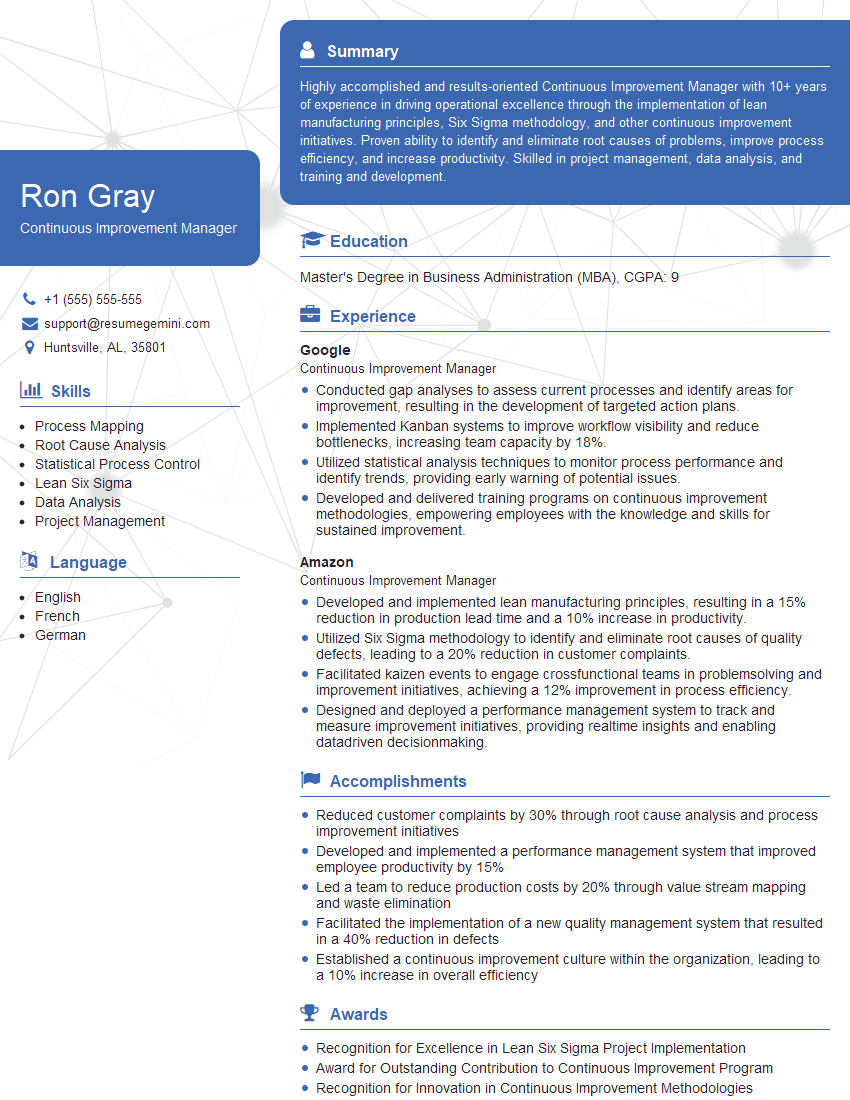
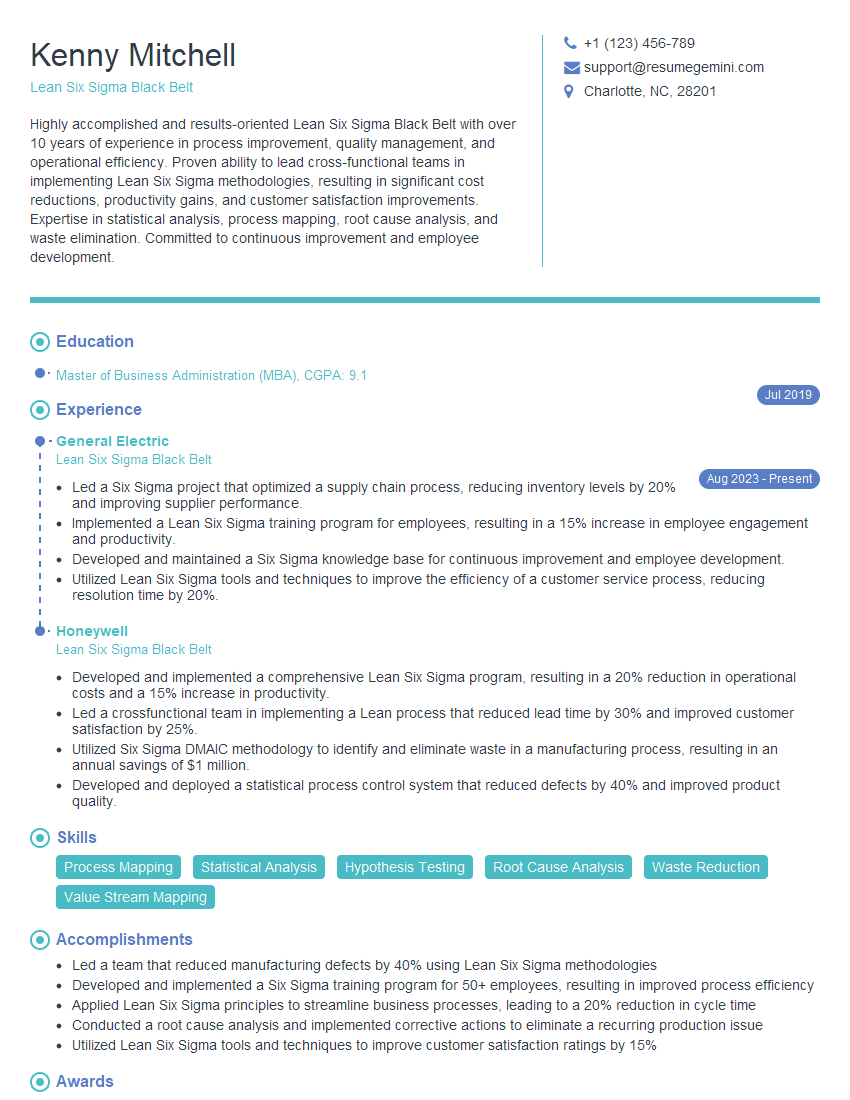
Mastering Lean Six Sigma significantly enhances your problem-solving abilities and demonstrates your commitment to continuous improvement – highly valued skills in today’s competitive job market. This expertise can open doors to leadership roles and higher earning potential. To maximize your job prospects, create an ATS-friendly resume that clearly highlights your Lean Six Sigma skills and accomplishments. ResumeGemini is a trusted resource to help you build a professional and impactful resume. They provide examples of resumes tailored to Lean Six Sigma professionals, giving you a head start in crafting your perfect application.
Explore more articles
Users Rating of Our Blogs
Share Your Experience
We value your feedback! Please rate our content and share your thoughts (optional).
What Readers Say About Our Blog
Very informative content, great job.
good