Are you ready to stand out in your next interview? Understanding and preparing for Lighting and Sound Setup (if applicable) interview questions is a game-changer. In this blog, we’ve compiled key questions and expert advice to help you showcase your skills with confidence and precision. Let’s get started on your journey to acing the interview.
Questions Asked in Lighting and Sound Setup (if applicable) Interview
Q 1. Explain the difference between incandescent, fluorescent, and LED lighting.
Incandescent, fluorescent, and LED lighting represent three distinct generations of lighting technology, each with its own strengths and weaknesses. Think of them as a progression, each improving upon its predecessor.
- Incandescent: These lights function by heating a filament until it glows. They are simple, inexpensive to manufacture, and produce a warm, inviting light. However, they are incredibly inefficient, converting only a small percentage of energy into light (the rest is heat), and have a short lifespan. Imagine an old-fashioned light bulb; that’s incandescent.
- Fluorescent: Fluorescent lights use electricity to excite mercury vapor, which then emits ultraviolet (UV) light. This UV light strikes a phosphor coating on the inside of the tube, converting the UV into visible light. They are far more energy-efficient than incandescent bulbs, lasting much longer, but the light quality can be cooler and less appealing, sometimes flickering or buzzing. Think of the long, slim lights often found in offices or classrooms.
- LED (Light Emitting Diode): LEDs are semiconductor devices that emit light when an electric current passes through them. They are exceptionally energy-efficient, long-lasting, and available in a wide range of color temperatures and intensities. They are also durable and can withstand vibrations better than incandescent or fluorescent options. LEDs have become the dominant technology due to their versatility and efficiency; they’re everywhere from smartphones to stadium lighting.
In summary, the choice depends on the application. Incandescent might be suitable for a romantic ambiance in a small space, fluorescent for a large, functional area, and LED for virtually any situation where efficiency, longevity, and color control are paramount.
Q 2. Describe your experience with different types of microphones (dynamic, condenser, ribbon).
My experience encompasses a wide range of microphone types, each suited to different applications. Understanding their nuances is critical for capturing high-quality audio.
- Dynamic Microphones: These are robust and relatively inexpensive. They operate using a moving coil within a magnetic field to convert sound waves into electrical signals. They’re highly resistant to feedback and handling noise, making them ideal for live performances, particularly loud environments like concerts. Think of the classic Shure SM58 – a workhorse for vocals.
- Condenser Microphones: These microphones are known for their sensitivity and ability to capture a wide frequency range, resulting in detailed and nuanced audio. They require phantom power (external voltage) and are more susceptible to handling noise and feedback than dynamic mics. They are perfect for studio recordings, voiceovers, and situations where capturing subtle sounds is important. A Neumann U87 is a prime example of a high-end condenser.
- Ribbon Microphones: Ribbon microphones use a thin metallic ribbon suspended in a magnetic field. They are exceptionally delicate and are prized for their warm, smooth sound and natural character. However, they are fragile, have a lower output level, and are highly susceptible to damage from high sound pressure levels, making them generally unsuitable for live applications. They are usually reserved for specific studio recordings where their unique sonic qualities are desired.
My experience allows me to choose the appropriate microphone based on the acoustic environment, the sound source, and the desired audio quality. For instance, I’d choose a dynamic mic for a live rock concert but a condenser mic for a voiceover in a recording studio.
Q 3. What are the common issues encountered with sound reinforcement systems and how do you troubleshoot them?
Common issues in sound reinforcement systems often stem from improper setup, faulty equipment, or environmental factors. Troubleshooting involves a systematic approach.
- Feedback: A high-pitched squeal caused by a microphone picking up its own amplified sound. This is often resolved by lowering the microphone gain, adjusting the EQ to cut frequencies causing feedback, or repositioning microphones and speakers.
- Low Output Level/Weak Signal: Check microphone cables, connections, and phantom power (for condenser mics). A faulty microphone, preamp, or mixer can also be the culprit.
- Distortion: Caused by excessive signal levels, overloading the amplifiers or mixer. Reducing the gain on the affected channels will resolve this.
- Hum or Buzz: This can be caused by ground loops (multiple ground connections) or faulty cables. Using a ground lift adapter or balanced cables often solves this.
- Poor Sound Quality: This could be due to inadequate EQ, poor microphone placement, or room acoustics. Careful EQ adjustments and microphone placement are crucial in optimizing the sound.
My troubleshooting approach always starts with isolating the problem. I’ll check cables, connections, and power first, then move to the equipment itself. Using a signal flow chart or a systematic checklist helps me to efficiently identify and address the issue.
Q 4. How do you balance sound levels in a multi-microphone setup?
Balancing sound levels in a multi-microphone setup involves careful gain staging and equalization. The goal is to achieve a natural-sounding mix where all microphones contribute without any one overpowering the others.
- Gain Staging: Start by setting individual microphone gains to a moderate level. Avoid clipping (distortion) by ensuring the signal meters are not peaking. Adjust the gain according to each microphone’s sensitivity and proximity to the sound source. A good starting point is often setting the faders to ‘unity’ and gradually increasing them until a good signal is attained.
- Equalization (EQ): Use equalization to sculpt the sound of each microphone. Cut out unwanted frequencies, like rumble or harshness, and boost frequencies that enhance clarity and presence. This helps to create a balanced and harmonious mix. Think of it like a sculptor carefully refining a clay model.
- Panning: Panning (placing the sound on the stereo field) can aid in balancing the mix by spatially separating different sound sources. For example, placing a backing vocal slightly to the left or right of center can prevent it from competing with the lead vocal.
- Mixing Console/Digital Audio Workstation (DAW): A mixing console or DAW allows precise control over individual channels and the overall mix, enabling fine-tuning of balance and levels.
Successful microphone level balancing is an iterative process that requires careful listening, understanding of frequency ranges, and effective use of the mixing console’s tools. I often work with a calibrated sound level meter to ensure objective adjustments and consistent levels across a wide range of microphones.
Q 5. What are some strategies for controlling unwanted noise and feedback in a sound system?
Controlling unwanted noise and feedback is crucial for a professional sound system. Several strategies are employed to minimize these issues.
- Microphone Placement: Carefully positioning microphones away from unwanted sound sources can dramatically reduce noise. Directivity patterns of the microphones (cardioid, supercardioid etc.) are also to be considered here; this will reduce unwanted sounds from entering your audio feed.
- Acoustic Treatment: Treating the room with acoustic panels and bass traps reduces reflections and reverberation, which can contribute to feedback and unwanted noise. Imagine the difference between a quiet library and a noisy cafeteria – acoustic treatment minimizes that unwanted reflection and reverberation.
- Equalization (EQ): Using a graphic equalizer (GEQ) or parametric equalizer (PEQ) allows for precise control over frequencies, enabling the reduction of frequencies causing feedback or highlighting particular frequencies causing muddiness. Narrow notches can target specific frequencies causing problems. The frequency response graph of the room would be extremely helpful here.
- Feedback Suppressors: Specialized equipment like feedback suppressors actively identify and reduce feedback frequencies in real time, without significantly affecting the overall sound quality.
- Gain Staging: Properly setting microphone gains and ensuring that the system isn’t overloaded will prevent distortion and reduce the likelihood of feedback.
A combination of these strategies is often necessary to effectively control unwanted noise and feedback. I always begin with proper microphone placement and acoustic treatment, then utilize EQ and feedback suppressors as needed. The goal is a clean, clear sound, free from unwanted distractions.
Q 6. Describe your experience with lighting control consoles (e.g., ETC Ion, MA Lighting grandMA).
I have extensive experience with various lighting control consoles, including the ETC Ion and MA Lighting grandMA series. These consoles represent the pinnacle of lighting control technology, allowing for sophisticated programming and effects creation. The choice of console often depends on the scale and complexity of the production.
- ETC Ion: Known for its intuitive interface and powerful programming capabilities, the ETC Ion is widely used in theaters, architectural lighting, and broadcast. Its flexibility makes it ideal for a variety of projects. I appreciate its robust cue management system and the ease of creating complex lighting sequences.
- MA Lighting grandMA2/grandMA3: This series of consoles is favored for large-scale productions, concerts, and touring shows. Its advanced networking capabilities and powerful effects engine allow for dynamic and visually stunning lighting designs. The learning curve is steeper than the Ion but its capabilities are immense, allowing for synchronization of multiple lighting universes and exceptional precision in control.
My proficiency with these consoles allows me to create dynamic and engaging lighting designs, programming cues, and controlling lighting effects in a smooth and efficient way. I am adept at utilizing the advanced features of these consoles, such as networking, visual programming tools, and sophisticated cue lists to achieve seamless lighting transitions and dynamic effects.
Q 7. How do you calculate the appropriate lighting levels for a given space?
Calculating appropriate lighting levels for a given space involves considering several factors, moving beyond simply ‘bright’ or ‘dim’. It requires a blend of art and science.
- Illuminance (Lux): This is the measurement of light intensity falling on a surface, measured in lux (lx). Different activities and spaces require different illuminance levels. For example, a task requiring precision, like surgery, requires much higher illuminance than a dimly lit restaurant.
- Luminous Flux (Lumens): This measures the total amount of light emitted by a source, measured in lumens (lm). Knowing the lumens of your fixtures is crucial for determining how many you need to achieve the desired illuminance.
- Room Size and Shape: Larger rooms require more lighting fixtures or more powerful fixtures to achieve the same illuminance level as a smaller room. The shape of the room affects the distribution of light, requiring careful placement of fixtures. Think about how a long, narrow hallway needs different lighting than a square room.
- Ceiling Height: Higher ceilings require more powerful fixtures or more fixtures to adequately light the space. Light falls off with distance following an inverse square law.
- Reflectance: The reflectivity of surfaces within the space affects the overall illuminance. Darker surfaces absorb more light, requiring more lighting to achieve the desired level.
While there are complex formulas and software for precise lighting calculations, a simplified approach involves estimating the required lux for the space, determining the luminous flux per fixture, and then calculating the number of fixtures needed, taking into account factors like room size, shape, and surface reflectance. I typically use a combination of lighting design software and on-site measurements to ensure accurate lighting levels for any given space.
Q 8. Explain your experience with different types of audio cabling (e.g., XLR, TRS, RCA).
Audio cabling is fundamental to sound systems. Different cable types handle different signal types and impedance, affecting sound quality and reliability. Let’s explore three common types:
- XLR (Cannon): These are professional-grade, balanced cables typically used for microphones and line-level audio. The balanced nature reduces noise interference significantly, making them ideal for longer cable runs. They use three pins: one for ground, and two for signal (positive and negative). I’ve extensively used XLRs in concert setups, ensuring clean audio signals even across large venues.
- TRS (Tip-Ring-Sleeve): These cables are used for both balanced and unbalanced signals, frequently found with instruments, studio equipment and headphones. A TRS cable’s three contacts permit the transmission of stereo signals or, in some cases, a balanced mono signal. The choice between balanced and unbalanced configurations depends largely on the equipment and the length of the cable run. For instance, on a smaller gig I might use an unbalanced TRS for connecting a keyboard to a mixer, whereas a larger show would require balanced configurations for better noise rejection.
- RCA (Phono): These are unbalanced cables, commonly used for consumer-level audio applications, like connecting CD players or turntables to amplifiers. They are generally not suitable for professional use, especially over long distances, due to their susceptibility to noise. While I avoid them in high-end professional projects, I’ve had to use them occasionally for integrating older audio equipment.
Understanding the differences between these cable types is crucial for designing reliable and high-quality audio systems. Choosing the wrong type can lead to signal degradation, noise, and even equipment damage. My experience spans numerous projects where choosing the right cable was vital to achieving the desired sound quality.
Q 9. What software are you proficient in for audio editing and mixing (e.g., Pro Tools, Audacity, Logic Pro)?
My audio editing and mixing proficiency encompasses several industry-standard software packages. I’m highly adept at using Pro Tools, the industry leader, for complex multitrack recording, editing, mixing, and mastering. I frequently utilize its advanced features like automation, plugins, and extensive routing capabilities for professional-grade productions. For simpler projects or quick edits, I utilize Audacity, a powerful free and open-source alternative ideal for tasks ranging from basic audio cleanup to more involved projects, offering a surprisingly comprehensive feature set. I’m also familiar with Logic Pro X, a strong competitor to Pro Tools, known for its user-friendly interface and comprehensive features, which I’ve used for both personal projects and collaborative efforts.
Q 10. What software are you proficient in for lighting design and programming (e.g., WYSIWYG, Vectorworks)?
My lighting design experience centers around WYSIWYG, a powerful industry-standard software package used for visualizing and programming lighting designs. I use it to create detailed 3D models of venues, place and manipulate lighting fixtures, and program lighting cues that precisely follow the creative vision for the show. I’m proficient in all aspects of the software, from initial design and fixture selection to generating comprehensive documentation and creating cue lists. While I have some exposure to Vectorworks, which can handle lighting and other aspects of stage design, my core competency remains with WYSIWYG.
Q 11. How do you design a lighting plot for a stage production?
Designing a lighting plot is a collaborative and iterative process. It begins with understanding the director’s vision, the script’s themes, and the overall mood the production aims to create. Then I consider the:
- Venue: The size, shape, and architectural features of the performance space significantly influence lighting choices. Ceiling height, seating arrangement, and available power outlets all play a role.
- Set Design: The set’s colors, textures, and overall aesthetic dictate how light will interact with it. I often work closely with the set designer to ensure lighting complements and enhances the visual elements.
- Budget and Available Equipment: Realistic planning involves working within budget limitations and utilizing available equipment effectively.
My design process involves sketching initial ideas, creating a 3D model in WYSIWYG, and then refining the lighting positions and intensities to achieve desired effects, such as highlighting actors, setting the mood, or creating specific visual sequences. The plot is then meticulously documented for use by the lighting technician during setup and execution. This process involves frequent reviews and adjustments based on rehearsals and creative feedback.
Q 12. Explain your process for setting up a sound system for a live event.
Setting up a sound system for a live event involves several critical steps:
- Site Survey and System Design: This initial phase involves assessing the venue’s acoustics, audience capacity, and the specific requirements of the event. I determine the necessary speaker configuration, amplifier power, and placement to ensure optimal sound coverage and minimize feedback.
- Equipment Setup: I carefully position speakers, microphones, and other equipment according to the system design. I always use appropriate cable types, ensuring secure connections to prevent accidental disconnections or signal loss. I check each component, confirming proper functionality.
- Sound Check and Adjustments: This crucial stage involves testing the entire system, optimizing levels, and fine-tuning equalization to achieve the best possible sound. I frequently collaborate with the musicians or performers to ensure that the sound meets their needs.
- Monitoring and Troubleshooting: During the event, I monitor the sound system closely, addressing any issues promptly. This could involve adjusting levels, troubleshooting equipment problems, or replacing faulty components. Maintaining consistent communication with performers ensures a seamless experience.
Careful planning and attention to detail at each step is essential to ensure a successful sound system setup for a live event. I’ve consistently used this process in large and small venue events, achieving consistently excellent audio quality.
Q 13. Describe your experience working with different types of speakers and amplifiers.
My experience with speakers and amplifiers spans various types and applications. I’m familiar with:
- Speaker Types: I’ve worked with a wide array of speakers, including point-source speakers (commonly used for smaller venues), line array systems (effective for large venues and providing even sound coverage), and subwoofer systems (providing low-frequency enhancement). Each speaker type has its strengths and weaknesses, and their selection depends heavily on the size and type of venue and the nature of the audio content.
- Amplifier Types: Similarly, I’m experienced with various amplifier types, including power amplifiers (used for driving speakers), pre-amplifiers (used for signal conditioning and boosting), and mixing consoles (which incorporate amplification). My selection of amplifiers is dictated by power requirements, impedance matching to the speakers, and the overall system design. I’ve always ensured that amplifiers are properly rated for the speakers they drive, to prevent damage.
My experience includes selecting and configuring suitable speaker and amplifier combinations for various applications. This often involves careful impedance matching and power calculations to avoid damaging equipment or compromising sound quality. I always prioritize reliable equipment from reputable brands, knowing that it minimizes the risk of failures during live events.
Q 14. How do you ensure the safety of lighting and sound equipment?
Ensuring the safety of lighting and sound equipment is paramount. My approach involves:
- Proper Grounding and Cabling: I consistently use properly grounded equipment and cables to minimize the risk of electric shocks and equipment damage. This includes regular inspection of cables for wear and tear. I’ve seen first-hand the dangers of poorly grounded equipment and always prioritize this crucial safety aspect.
- Appropriate Circuit Protection: I always utilize circuit breakers and surge protectors to safeguard the equipment from power surges and overloads. This protects both the equipment and the people working with it.
- Safe Handling Procedures: I meticulously adhere to safe handling procedures when setting up and operating equipment, always observing weight limits and handling heavy equipment with appropriate care. Safety briefings are also provided to any assistants or other personnel working with the equipment.
- Regular Inspections and Maintenance: Regular inspections of equipment for damage, wear, or any signs of malfunction are important preventative measures. I often work with technicians who perform regular maintenance.
- Compliance with Safety Regulations: I ensure strict adherence to all relevant health and safety regulations, and any specific requirements outlined for the event venue. This is a non-negotiable part of the process.
Safety is always my top priority. My procedures are designed to minimize risk, protect equipment, and, most importantly, protect people.
Q 15. How do you manage and troubleshoot audio delays in a large venue?
Audio delays in large venues, often called latency, are a significant problem that can ruin a performance. They arise from various sources, including long cable runs, digital processing delays in sound systems, and even the acoustics of the room itself. Managing and troubleshooting these delays requires a systematic approach.
- Identify the source: The first step is pinpointing the origin of the delay. This involves meticulously checking all signal paths, from the microphone to the speakers. We often use test tones and specialized measurement equipment like delay meters to precisely quantify the delay at each stage.
- Cable Length Optimization: Longer cables introduce more delay. We aim to use the shortest cables possible. In situations where long cable runs are unavoidable, we might use digital audio networking technologies like Dante or AES/EBU, which offer significantly lower latency than analog systems.
- Digital Signal Processing (DSP) Adjustments: Many modern sound systems utilize DSP for effects and equalization. Excessive processing can introduce delay. We carefully optimize DSP settings, minimizing unnecessary processing steps and utilizing low-latency algorithms whenever possible.
- Room Acoustics: The acoustics of the venue itself can contribute to perceived delay – echoes or reverberation make sounds seem smeared or delayed. Employing acoustic treatments like sound absorption panels can mitigate this. Careful speaker placement can also help in minimizing delays associated with reflected sound.
- Compensation Techniques: In some cases, we can use delay compensation techniques. This involves introducing a precisely calculated delay to other signals to synchronize them with the delayed signal. This requires sophisticated audio equipment and skilled operation.
For example, during a recent concert in a large arena, we discovered a significant delay caused by an unexpectedly long cable run to a stage monitor. By replacing the cable with a shorter one and using a Dante network for the rest of the audio, we eliminated the delay and ensured a clear, synchronized sound.
Career Expert Tips:
- Ace those interviews! Prepare effectively by reviewing the Top 50 Most Common Interview Questions on ResumeGemini.
- Navigate your job search with confidence! Explore a wide range of Career Tips on ResumeGemini. Learn about common challenges and recommendations to overcome them.
- Craft the perfect resume! Master the Art of Resume Writing with ResumeGemini’s guide. Showcase your unique qualifications and achievements effectively.
- Don’t miss out on holiday savings! Build your dream resume with ResumeGemini’s ATS optimized templates.
Q 16. What is your experience with digital audio workstations (DAWs)?
I have extensive experience with various Digital Audio Workstations (DAWs), including Pro Tools, Logic Pro X, and Ableton Live. My proficiency extends beyond basic recording and editing to include advanced mixing, mastering, and sound design techniques.
In Pro Tools, I’m comfortable working with complex session setups, utilizing advanced plugins for mixing and mastering, and implementing automation to create dynamic mixes. In Logic Pro X, I have experience with its comprehensive MIDI editing capabilities and sophisticated scoring features. I have also used Ableton Live for live performance and electronic music production, leveraging its intuitive workflow and powerful looping capabilities.
My DAW skills often intersect with my work in live sound. For instance, I’ll often use a DAW to pre-mix backing tracks for live performances or to create custom effects presets for live sound systems.
Q 17. How do you work effectively as part of a technical crew?
Effective teamwork is crucial in technical crews. I believe in clear communication, shared responsibility, and mutual respect. My approach involves:
- Proactive Communication: I maintain open and consistent communication with my team members, keeping everyone informed of plans, potential challenges, and progress.
- Collaborative Problem-Solving: I actively participate in brainstorming sessions to find creative solutions to problems and am always open to suggestions from others.
- Shared Responsibility: I understand that everyone on the crew plays a critical role. I’m comfortable delegating tasks, providing support to others, and stepping up when needed to assist my colleagues.
- Respect for Expertise: I recognize that each member of the crew brings unique skills and experience. I value their expertise and am open to learning from others.
- Professionalism: I maintain a professional attitude and demeanor at all times, ensuring a positive and productive work environment.
For example, during a recent festival setup, we encountered a lighting malfunction. By working collaboratively with the lighting technician, we quickly identified the faulty component and replaced it, minimizing any disruption to the schedule.
Q 18. Describe your experience with lighting and sound system maintenance.
I have extensive experience maintaining both lighting and sound systems. This includes preventative maintenance, troubleshooting, and repairs.
- Preventative Maintenance: This involves regular inspections of equipment, cleaning, and testing to identify potential problems before they occur. For sound systems, this includes checking cable connections, testing microphone functionality, and inspecting speaker components. For lighting, this includes cleaning lenses, checking lamp life, and testing dimmer packs.
- Troubleshooting: When problems arise, I use a systematic approach to identify and resolve them. This involves using test equipment, consulting technical documentation, and leveraging my experience to diagnose the root cause of the issue.
- Repairs: I am proficient in performing basic repairs on audio and lighting equipment. This ranges from replacing damaged cables and connectors to troubleshooting and fixing malfunctioning components. However, I know the limits of my skills, and for complex repairs, I’ll contact qualified technicians.
For example, I recently identified a failing power supply in our main lighting console through preventative maintenance. Replacing it averted a potential system failure during a critical event.
Q 19. What are the differences between analog and digital audio signals?
Analog and digital audio signals differ fundamentally in how they represent sound.
- Analog Audio: Analog signals are continuous representations of sound waves. The amplitude and frequency of the signal directly correspond to the loudness and pitch of the sound. Think of it like a vinyl record – the groove continuously varies to represent the audio waveform. Analog signals are susceptible to noise and distortion as they are passed through different components.
- Digital Audio: Digital audio signals are discrete representations of sound waves. The waveform is sampled at regular intervals, and each sample is converted into a numerical value. This digital representation is much less prone to noise and distortion. Think of it like an image – it’s composed of individual pixels, representing the image’s information digitally. Digital audio can easily be processed and stored digitally with no loss in quality over time.
The key difference lies in their susceptibility to noise and degradation. Analog signals degrade over time and through repeated copying, whereas digital signals remain consistent, provided the data is not corrupted.
Q 20. Explain your understanding of audio frequency response and equalization.
Audio frequency response refers to the range of frequencies a system can reproduce accurately. Equalization (EQ) is the process of adjusting the frequency response of an audio signal. The human ear can perceive sounds ranging from about 20 Hz to 20,000 Hz.
A flat frequency response means all frequencies are reproduced at the same level. However, most audio systems and environments don’t have a perfectly flat response. Rooms have natural resonances and absorptions at different frequencies. Speakers also have their own frequency characteristics, meaning they don’t always produce a balanced output across all frequencies.
Equalization is used to correct or shape the frequency response. We use EQ to:
- Correct Problems: Fix imbalances in the frequency response of speakers or rooms (e.g., a speaker that’s too boomy in the bass).
- Shape the Tone: Enhance certain frequencies to create a desired sound (e.g., boosting high frequencies to make a vocal sound brighter).
- Reduce Problems: Cut frequencies that are problematic (e.g., reducing harshness in the high frequencies).
EQ is a powerful tool, but it needs to be used judiciously. Over-equalization can lead to unnatural and undesirable sounds. The goal is to achieve a balanced and natural sound within the context of the specific environment.
For instance, in a live sound context, we often use parametric EQ to reduce feedback frequencies from a microphone or to address room resonances that are causing a muddy low-end.
Q 21. How do you address issues with microphone placement and proximity effect?
Microphone placement is crucial for achieving good audio quality. Improper placement can lead to several issues, including the proximity effect.
- Microphone Placement: The distance between the microphone and the sound source affects the quality and balance of the recorded audio. Generally, placing the microphone closer to the source increases the level of the signal while simultaneously boosting the lower frequencies, a phenomenon known as the proximity effect.
- Proximity Effect: This is the bass boost that occurs when a microphone is placed close to a sound source. It’s caused by the directional characteristics of the microphone, particularly cardioid mics, which are commonly used in live sound.
- Addressing Issues:
- Distance Control: Adjust the distance between the microphone and the sound source to manage the proximity effect. Moving the microphone farther away reduces the bass boost. This can be valuable for controlling the low-end, particularly if the sound source already has a strong bass presence.
- EQ Adjustments: Use a low-cut filter (high-pass filter) on the microphone signal to reduce unwanted low-frequency buildup caused by the proximity effect. This selectively removes frequencies below a certain point without affecting the rest of the frequency range. This technique is helpful if we can’t adjust microphone distance.
- Microphone Choice: The type of microphone also affects the proximity effect. Omnidirectional microphones exhibit a less pronounced proximity effect than cardioid microphones.
In a live setting, a singer standing too close to a cardioid microphone might experience an overly prominent bass response. To resolve this, I might adjust the microphone position or use a low-cut filter to remove excessive low-end frequencies.
Q 22. What safety protocols do you follow when working with high-voltage lighting equipment?
Safety is paramount when working with high-voltage lighting equipment. My protocol begins with a thorough pre-job risk assessment, identifying potential hazards like exposed wires, damp conditions, and proximity to water. I always utilize appropriate personal protective equipment (PPE), including insulated gloves, safety glasses, and arc flash suits where necessary. Before touching any equipment, I ensure the power is completely disconnected and locked out/tagged out. This prevents accidental energization. I also conduct regular inspections of the equipment for any signs of damage or wear and tear. If any issues are found, the equipment is immediately taken out of service until repaired by a qualified technician. Furthermore, I insist on a spotter during rigging or any high-voltage work to ensure a second pair of eyes are always present, minimizing the risk of accidents.
I adhere to all relevant electrical safety codes and regulations, and I regularly attend refresher courses to maintain my knowledge of best practices. Think of it like this: treating high-voltage lighting with the utmost respect is not just a precaution, it’s a fundamental part of ensuring a safe and productive work environment for everyone on set.
Q 23. Describe your experience with rigging and hanging lighting fixtures.
I have extensive experience in rigging and hanging lighting fixtures, encompassing various sizes and weights. My experience spans from small-scale events to large-scale productions, including theatrical performances and concerts. I’m proficient in using a wide range of rigging hardware, including chain hoists, motor hoists, and counterweight systems. I understand the importance of proper weight distribution, load calculations, and safety factors. Before any hanging takes place, I always perform a thorough inspection of all the equipment, checking for any signs of wear, damage, or corrosion. I ensure that all safety lines and backups are properly installed and checked multiple times to create redundancy and maximize safety.
For example, on a recent concert setup, we were rigging heavy truss structures. I meticulously calculated the load capacity of each point, ensuring sufficient safety margins and using the appropriate rated hardware. We also pre-rigged the truss sections on the ground before hoisting to minimize risks. This methodical approach, combined with careful planning and communication with the crew, ensures efficient and safe lighting fixture placement. Safety is paramount – a mishap could be catastrophic.
Q 24. How do you determine the appropriate microphone for a particular application?
Selecting the right microphone depends heavily on the application and the desired sound. Factors to consider include the type of sound source (e.g., vocals, instruments, ambience), the environment (e.g., live stage, recording studio, outdoor setting), and the budget. For example, a dynamic microphone is generally more rugged and less susceptible to feedback, making it ideal for live stage applications with loud instruments. Conversely, a condenser microphone offers greater sensitivity and detail, which is ideal for recording delicate acoustic instruments or vocals in a controlled studio environment.
For vocals, a cardioid polar pattern microphone is typically preferred as it minimizes unwanted background noise. For instruments like drums, multiple microphones with different polar patterns might be used to capture the sound accurately. The size and directionality of the microphone also affect sound capture. I always meticulously test various microphones in the specific environment to fine-tune the best setup for optimal audio quality. It’s a bit like choosing the right tool for the job; a hammer isn’t suited to every task, and neither is a single microphone type for all applications.
Q 25. Explain your understanding of different lighting color temperatures and their effect on a scene.
Color temperature, measured in Kelvin (K), describes the warmth or coolness of light. Lower color temperatures (e.g., 2700K – 3000K) produce warmer, more yellowish light, often associated with candlelight or incandescent bulbs, creating a cozy or intimate ambiance. Higher color temperatures (e.g., 5000K – 6500K) produce cooler, bluer light, similar to daylight, offering a clean and crisp feel. Intermediate temperatures (around 4000K) are considered neutral. The choice of color temperature significantly impacts the mood and atmosphere of a scene.
For instance, a romantic scene might benefit from warm, yellowish light (2700K), while a dramatic scene might utilize cooler, bluer light (5500K) to enhance tension. Inconsistent color temperature can create an unnatural and jarring effect; therefore, maintaining consistency across the lighting setup is vital for a cohesive and aesthetically pleasing outcome. Understanding this allows me to use light effectively to convey emotion and atmosphere, enhancing the overall visual narrative.
Q 26. How do you create a balanced and immersive soundscape?
Creating a balanced and immersive soundscape involves careful consideration of several factors: sound placement, EQ (equalization), dynamics, and the overall mix. Accurate sound placement aims to create a sense of space and realism by positioning sound sources realistically within the audio space. EQ involves adjusting the frequency balance to sculpt the sound, reducing muddiness or harshness. Dynamics management ensures that the audio doesn’t clip or become too quiet, enhancing clarity and listener engagement. The overall mix aims for a cohesive sound where each element complements the others.
For example, in a theatrical production, I would strategically position speakers to create a three-dimensional soundscape. I would use EQ to balance the frequencies of different sound sources, ensuring that the instruments and voices don’t clash. By carefully controlling the dynamics, I would prevent the quieter parts from being lost while preventing the louder parts from overpowering. The final mix would need to be meticulously checked to ensure that it provides an engaging and immersive listening experience for the audience.
Q 27. Describe a time you had to troubleshoot a complex technical issue in a high-pressure situation.
During a live concert, just before the headliner was due on stage, the main PA system suddenly went silent. The pressure was immense, with the venue packed and the audience expecting the show to start. My initial troubleshooting involved systematically checking each component of the audio chain, starting from the source (mixing console) and moving toward the speakers. We quickly identified a faulty power amplifier. Unfortunately, we didn’t have a spare amplifier of the same model on-site.
However, we were able to locate a different amplifier that was compatible and quickly reconfigured the system to use this alternative. Although it required a bit of quick patching and level adjustments, we successfully restored the audio system within 15 minutes, avoiding significant delays to the show. This experience highlighted the importance of possessing comprehensive troubleshooting skills, a calm approach under pressure, and the ability to think creatively to find solutions using available resources.
Q 28. What are your strategies for time management when working on multiple projects simultaneously?
Managing multiple projects simultaneously requires a structured approach. I utilize project management software to track deadlines, tasks, and resource allocation. Prioritization is key; I focus on the most urgent and critical tasks first, using a combination of time-blocking and prioritization matrixes (like Eisenhower Matrix). I frequently communicate with clients and team members to keep everyone informed of progress and any potential roadblocks.
Effective delegation is also crucial; I trust my team members to handle their assigned tasks effectively and provide them with the support they need to succeed. Regular reviews of my schedule and project timelines ensure that I remain on track. This proactive approach allows me to efficiently handle several projects simultaneously without compromising quality or exceeding deadlines. It’s like conducting an orchestra: you need to keep an eye on every instrument while conducting the whole piece, requiring planning, delegation, and ongoing monitoring.
Key Topics to Learn for Lighting and Sound Setup Interview
- Lighting Design Principles: Understanding color temperature, light intensity, and different lighting styles (e.g., ambient, accent, key lighting).
- Sound System Fundamentals: Knowledge of microphones, speakers, mixers, and audio signal flow. Understanding concepts like impedance matching and gain staging.
- Equipment Operation and Troubleshooting: Practical experience with common lighting and sound equipment, including setup, operation, and basic troubleshooting of malfunctions.
- Health and Safety Regulations: Familiarity with relevant safety regulations and procedures for handling electrical equipment and managing potential hazards on set or in a venue.
- Signal Processing and Effects: Understanding basic audio signal processing techniques (e.g., equalization, compression) and the application of audio effects (e.g., reverb, delay).
- Practical Application: Scenario-based problem solving, such as designing lighting for a specific event, troubleshooting a faulty microphone, or optimizing sound levels in a particular space.
- Workflow and Collaboration: Understanding the collaborative nature of event production, including communication with other team members, adhering to schedules, and effectively managing project timelines.
- Technical Specifications and Documentation: Ability to interpret technical specifications for equipment, read schematics, and create clear and concise documentation for setup and configuration.
Next Steps
Mastering Lighting and Sound Setup opens doors to exciting careers in event production, theatre, film, and more! Your skills are in high demand, and a strong resume is key to showcasing your expertise. Building an ATS-friendly resume is crucial for getting noticed by potential employers. ResumeGemini is a trusted resource to help you craft a professional and effective resume that highlights your abilities. Examples of resumes tailored to Lighting and Sound Setup are available to guide your process.
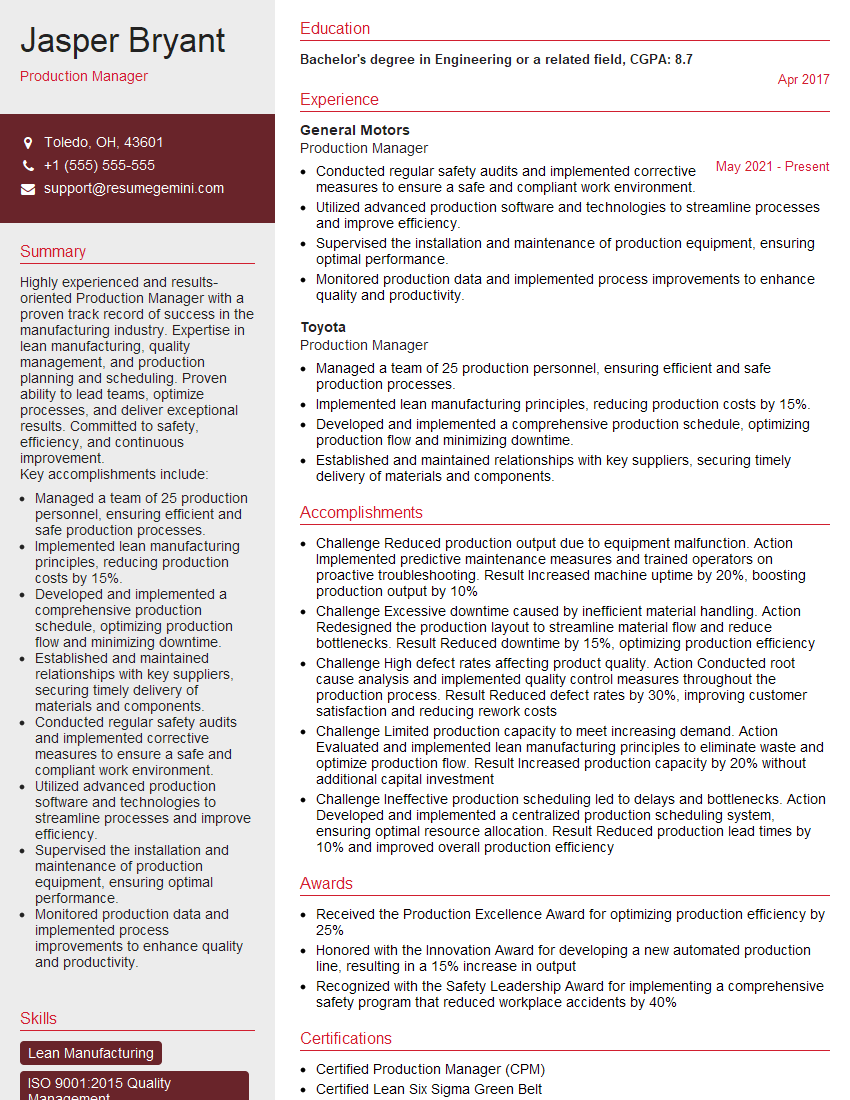
Production Manager Resume Sample
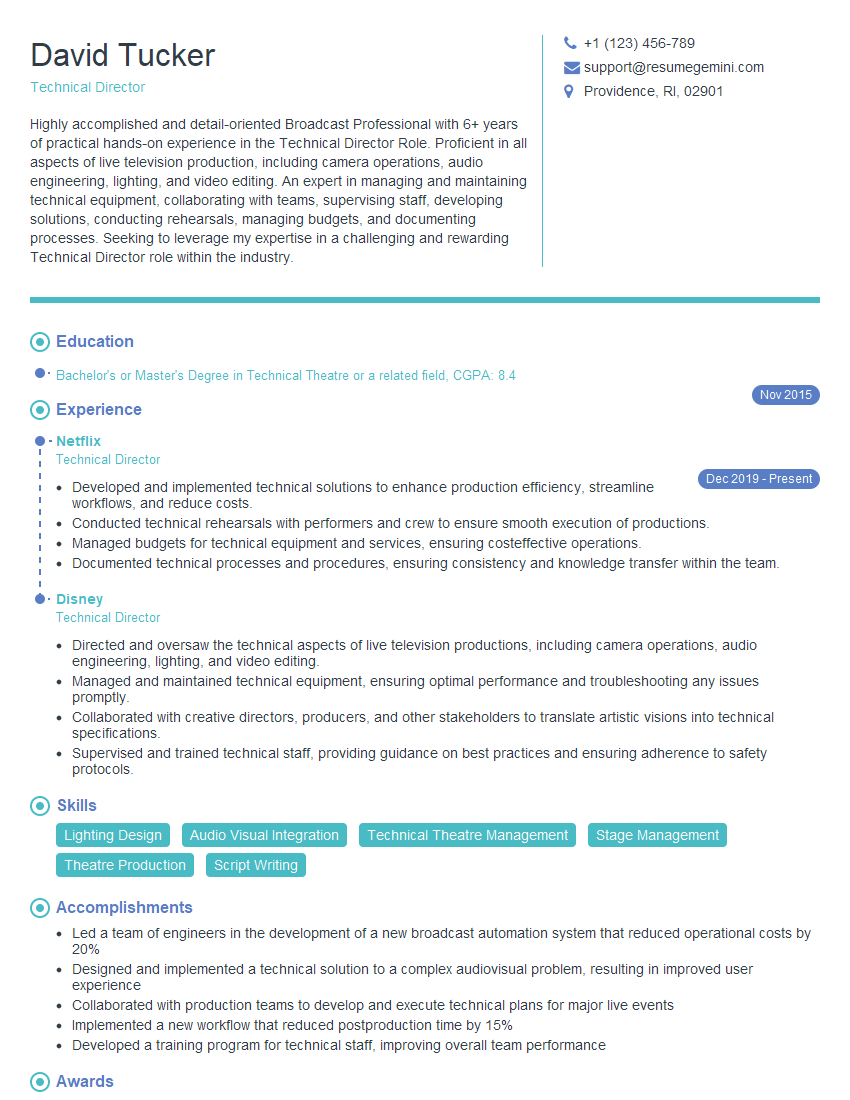
Technical Director Resume Sample
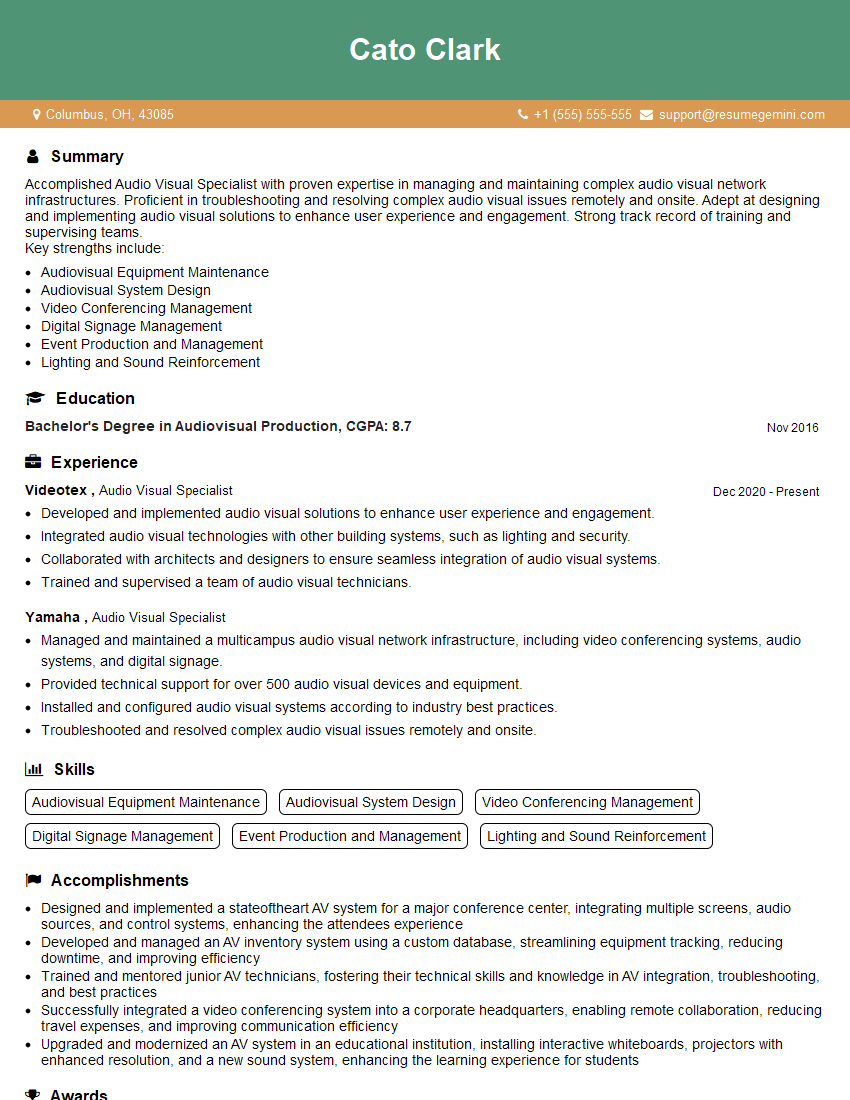
Audio Visual Specialist Resume Sample
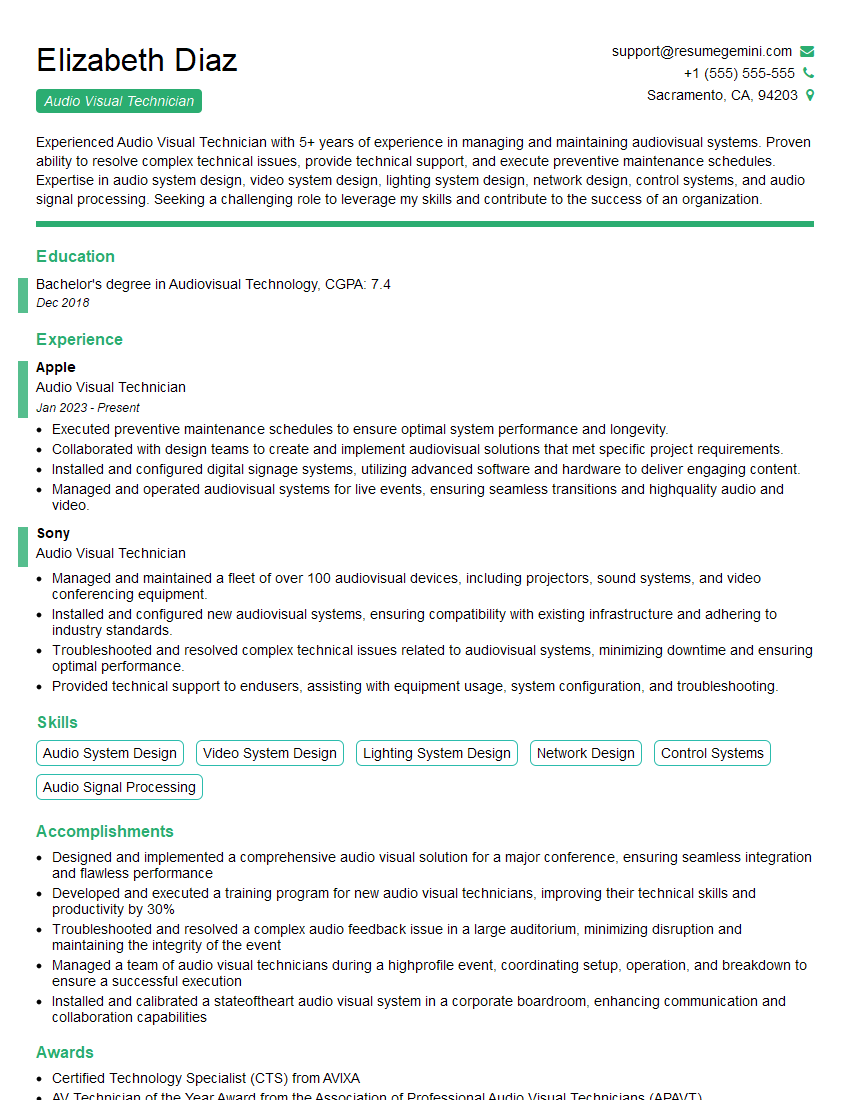
Audio Visual Technician Resume Sample
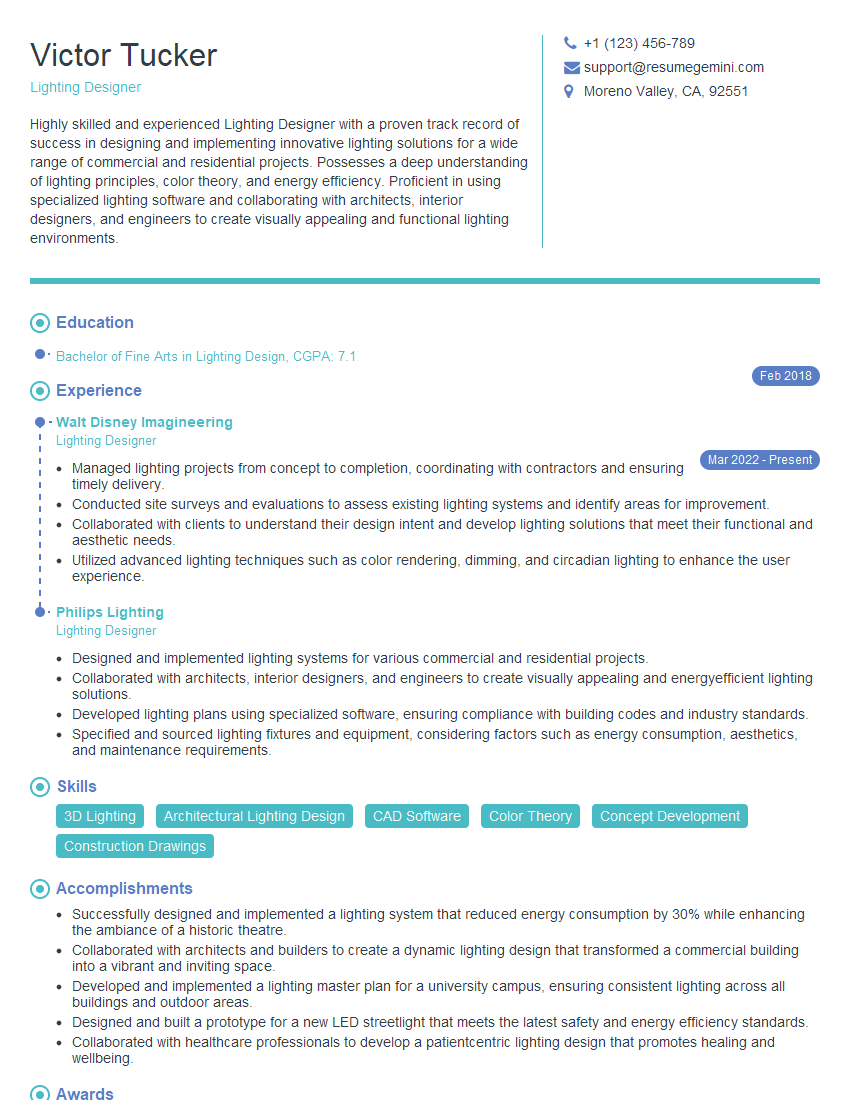
Lighting Designer Resume Sample
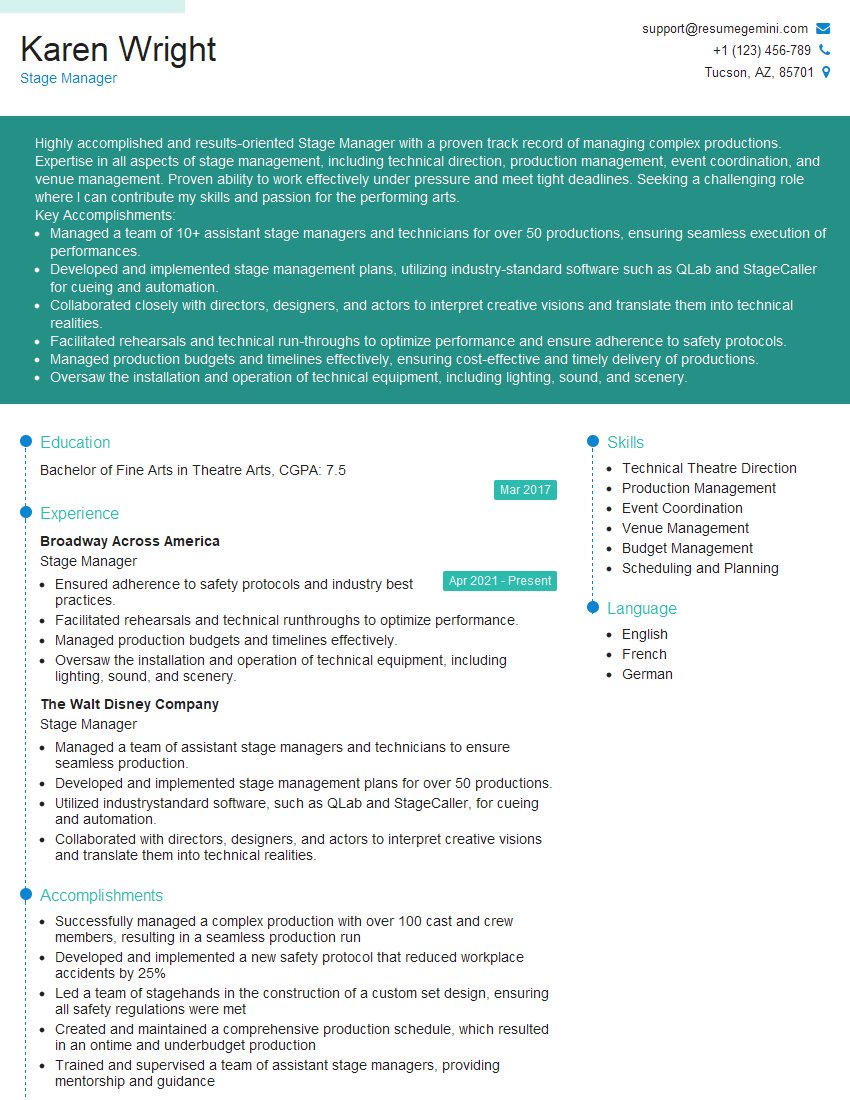
Stage Manager Resume Sample
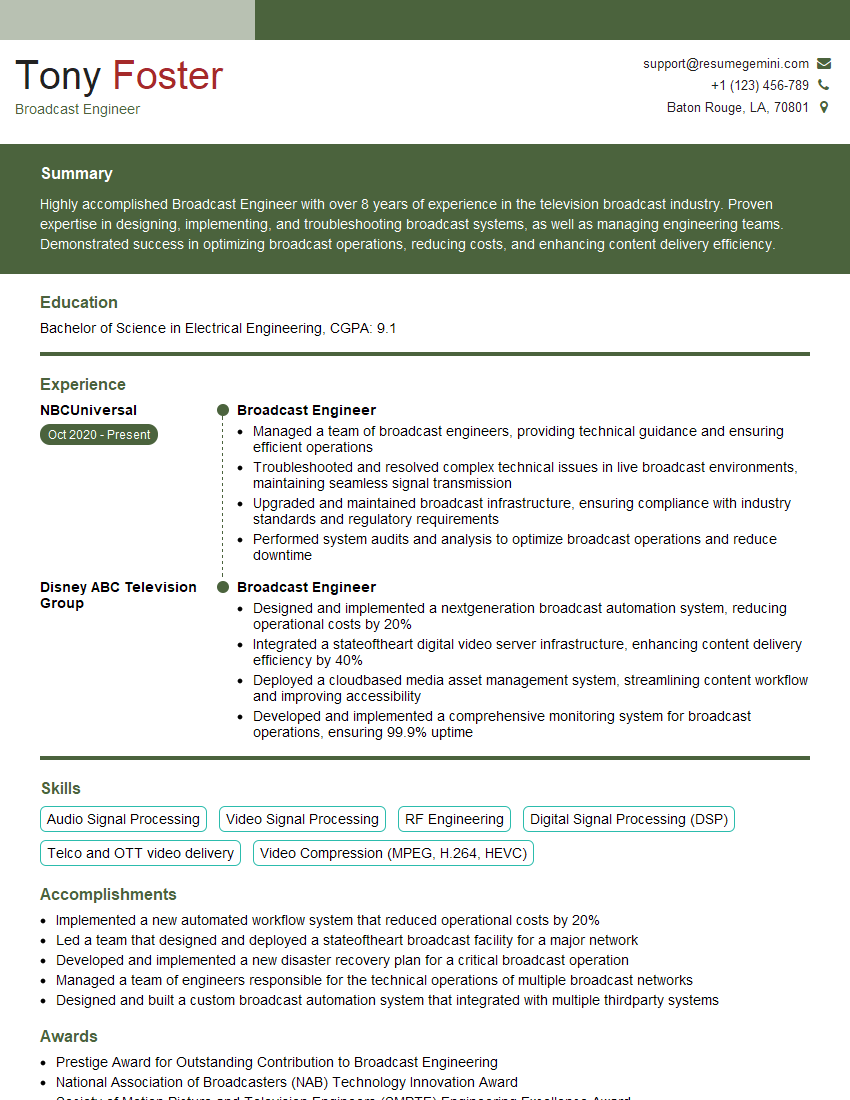
Broadcast Engineer Resume Sample
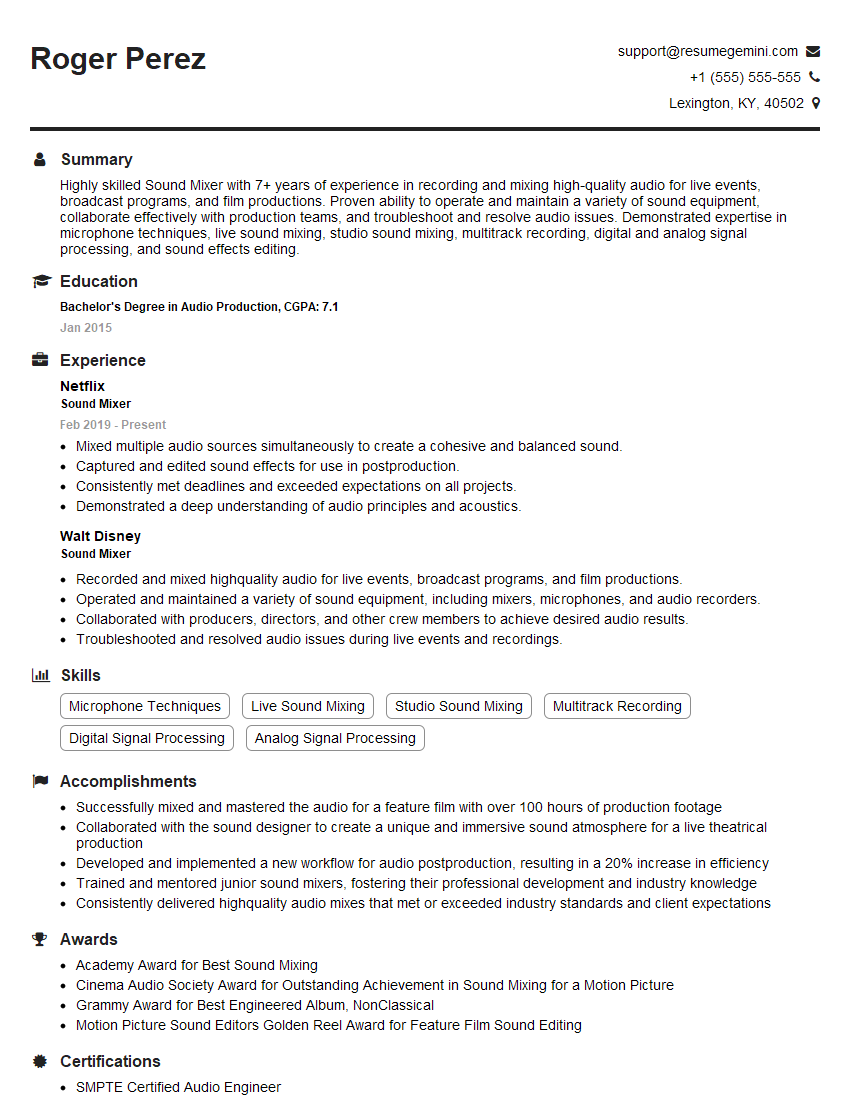
Sound Mixer Resume Sample
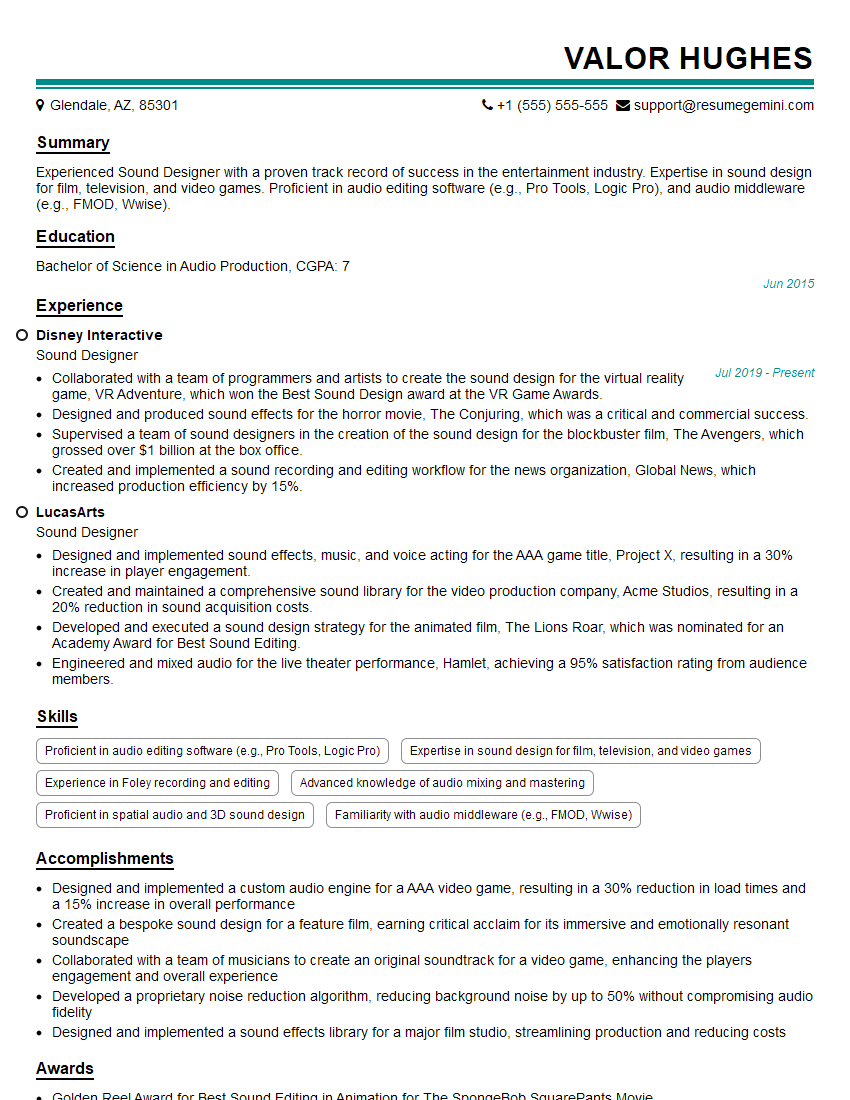
Sound Designer Resume Sample
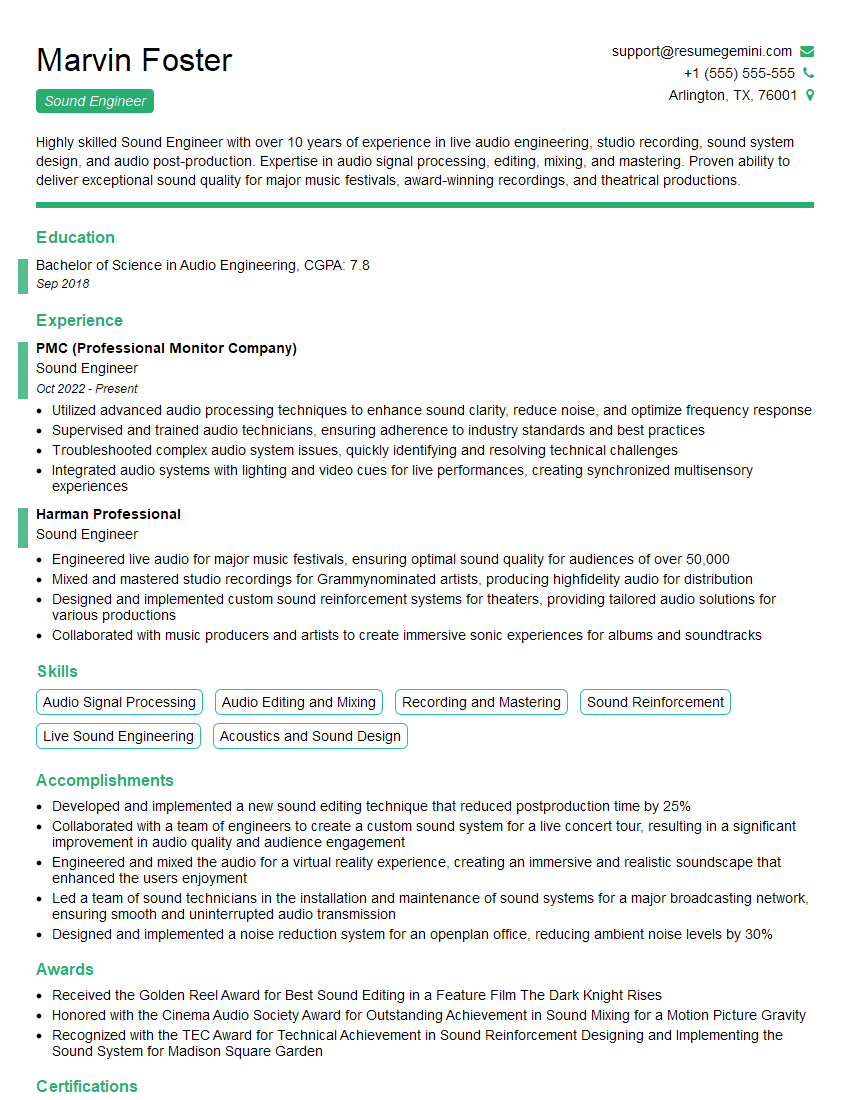
Sound Engineer Resume Sample
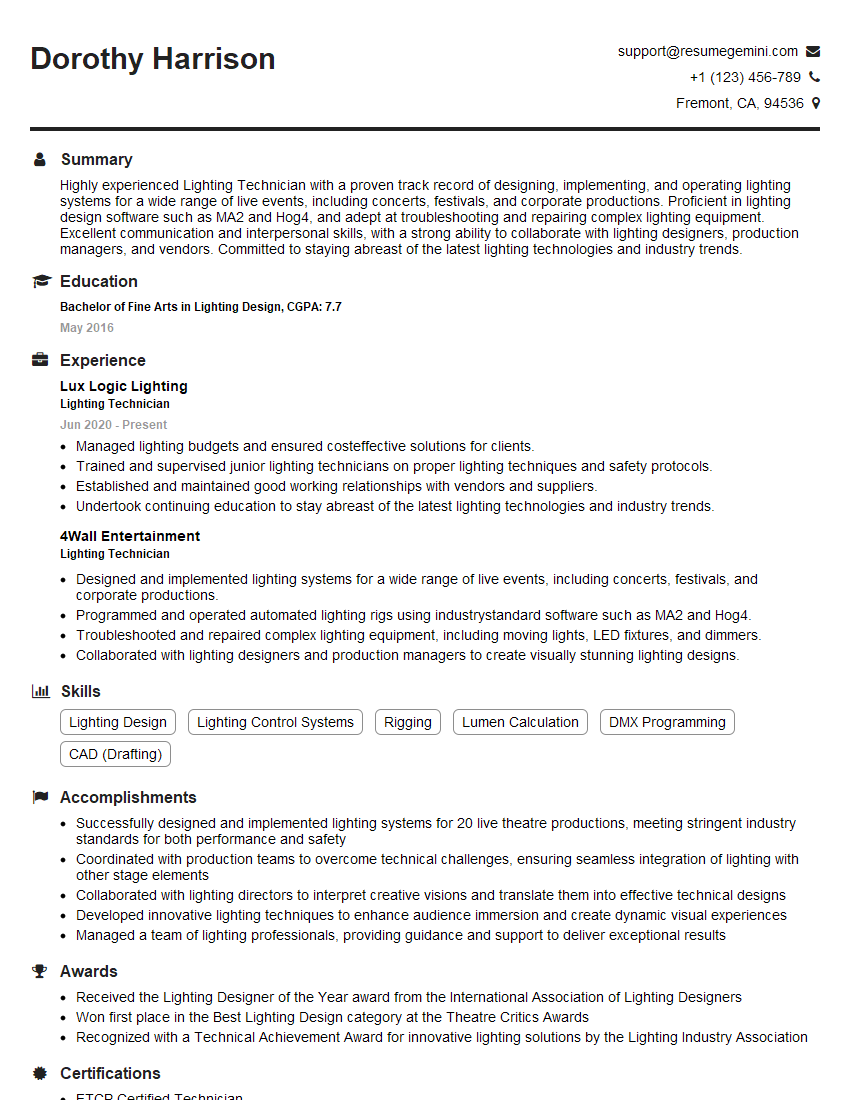
Lighting Technician Resume Sample
Explore more articles
Users Rating of Our Blogs
Share Your Experience
We value your feedback! Please rate our content and share your thoughts (optional).
What Readers Say About Our Blog
Hello,
we currently offer a complimentary backlink and URL indexing test for search engine optimization professionals.
You can get complimentary indexing credits to test how link discovery works in practice.
No credit card is required and there is no recurring fee.
You can find details here:
https://wikipedia-backlinks.com/indexing/
Regards
NICE RESPONSE TO Q & A
hi
The aim of this message is regarding an unclaimed deposit of a deceased nationale that bears the same name as you. You are not relate to him as there are millions of people answering the names across around the world. But i will use my position to influence the release of the deposit to you for our mutual benefit.
Respond for full details and how to claim the deposit. This is 100% risk free. Send hello to my email id: [email protected]
Luka Chachibaialuka
Hey interviewgemini.com, just wanted to follow up on my last email.
We just launched Call the Monster, an parenting app that lets you summon friendly ‘monsters’ kids actually listen to.
We’re also running a giveaway for everyone who downloads the app. Since it’s brand new, there aren’t many users yet, which means you’ve got a much better chance of winning some great prizes.
You can check it out here: https://bit.ly/callamonsterapp
Or follow us on Instagram: https://www.instagram.com/callamonsterapp
Thanks,
Ryan
CEO – Call the Monster App
Hey interviewgemini.com, I saw your website and love your approach.
I just want this to look like spam email, but want to share something important to you. We just launched Call the Monster, a parenting app that lets you summon friendly ‘monsters’ kids actually listen to.
Parents are loving it for calming chaos before bedtime. Thought you might want to try it: https://bit.ly/callamonsterapp or just follow our fun monster lore on Instagram: https://www.instagram.com/callamonsterapp
Thanks,
Ryan
CEO – Call A Monster APP
To the interviewgemini.com Owner.
Dear interviewgemini.com Webmaster!
Hi interviewgemini.com Webmaster!
Dear interviewgemini.com Webmaster!
excellent
Hello,
We found issues with your domain’s email setup that may be sending your messages to spam or blocking them completely. InboxShield Mini shows you how to fix it in minutes — no tech skills required.
Scan your domain now for details: https://inboxshield-mini.com/
— Adam @ InboxShield Mini
Reply STOP to unsubscribe
Hi, are you owner of interviewgemini.com? What if I told you I could help you find extra time in your schedule, reconnect with leads you didn’t even realize you missed, and bring in more “I want to work with you” conversations, without increasing your ad spend or hiring a full-time employee?
All with a flexible, budget-friendly service that could easily pay for itself. Sounds good?
Would it be nice to jump on a quick 10-minute call so I can show you exactly how we make this work?
Best,
Hapei
Marketing Director
Hey, I know you’re the owner of interviewgemini.com. I’ll be quick.
Fundraising for your business is tough and time-consuming. We make it easier by guaranteeing two private investor meetings each month, for six months. No demos, no pitch events – just direct introductions to active investors matched to your startup.
If youR17;re raising, this could help you build real momentum. Want me to send more info?
Hi, I represent an SEO company that specialises in getting you AI citations and higher rankings on Google. I’d like to offer you a 100% free SEO audit for your website. Would you be interested?
Hi, I represent an SEO company that specialises in getting you AI citations and higher rankings on Google. I’d like to offer you a 100% free SEO audit for your website. Would you be interested?
good