Preparation is the key to success in any interview. In this post, we’ll explore crucial Loading and unloading cargo and supplies interview questions and equip you with strategies to craft impactful answers. Whether you’re a beginner or a pro, these tips will elevate your preparation.
Questions Asked in Loading and unloading cargo and supplies Interview
Q 1. Describe your experience with different types of cargo.
Throughout my career, I’ve handled a wide variety of cargo, from delicate electronics requiring climate-controlled environments to heavy machinery demanding specialized rigging techniques. This includes:
- Pallettized goods: These are the most common – boxes, crates, and other items secured on pallets for easy handling with forklifts and pallet jacks. I’m adept at optimizing pallet stacking for maximum space efficiency and stability.
- Bulk cargo: This encompasses items like grains, powders, or liquids shipped in large quantities, often requiring specialized containers and handling procedures to prevent spillage or damage. I have experience with both loading and unloading using conveyors and other bulk handling equipment.
- Oversized and heavy-lift cargo: This presents unique challenges requiring careful planning and execution, including the use of cranes, specialized lifting equipment, and adherence to stringent safety protocols. I’ve overseen the secure loading and unloading of items exceeding 100 tons, utilizing methods like crane lifts and multiple-point slings.
- Hazardous materials: My experience includes handling hazardous materials, which requires strict adherence to regulations, including proper documentation, specialized handling equipment, and personnel training. I’m familiar with the regulations surrounding the transport of dangerous goods and ensuring proper segregation.
- Refrigerated goods: I’ve worked extensively with perishable goods, ensuring the uninterrupted cold chain from origin to delivery. This involves careful monitoring of temperatures and using specialized equipment.
My diverse experience allows me to adapt quickly to different cargo types and prioritize safety and efficiency in every situation.
Q 2. What safety procedures do you follow when loading and unloading cargo?
Safety is paramount in cargo handling. My procedures include:
- Pre-shift inspections: Thoroughly checking all equipment for functionality, including forklifts, pallet jacks, and lifting gear, to prevent malfunctions.
- Proper Personal Protective Equipment (PPE): Ensuring all team members use appropriate safety gear such as safety shoes, high-visibility vests, and hard hats. I am always vigilant about enforcing PPE usage and providing refresher training as needed.
- Securement of cargo: Using appropriate straps, chains, or other securement devices to prevent shifting during transit. I understand the principles of load stability and employ proper techniques like load blocking and bracing. For instance, I wouldn’t just stack heavy items atop lighter ones, but rather strategically interleave them to maintain balance.
- Load capacity limits: Never exceeding the weight or load capacity limits of equipment, following weight distribution best practices. Overloading equipment is a recipe for disaster.
- Communication and teamwork: Maintaining clear communication with drivers, warehouse staff, and other personnel to coordinate activities and minimize risks. A well-coordinated team is critical for safety.
- Emergency procedures: Familiar with and able to implement emergency response procedures, such as reporting accidents or injuries immediately and knowing where to locate emergency equipment. Regular safety briefings are essential.
I view safety not merely as a set of rules, but as a mindset that integrates into every aspect of cargo handling.
Q 3. How do you prioritize tasks when multiple loads are waiting?
When multiple loads are waiting, I prioritize based on several factors:
- Urgency: Loads with tight deadlines or those destined for time-sensitive deliveries take precedence.
- Special handling requirements: Cargo requiring specialized equipment or handling receives priority to avoid delays.
- Delivery route optimization: I group loads with similar destinations to optimize delivery routes and reduce transportation time. For instance, I’d load items going to the same local area together.
- Inventory management: Loads containing items in high demand or with low stock levels might be prioritized to avoid stockouts.
- Load size and weight: Larger or heavier loads may be prioritized to maximize loading efficiency.
I use a combination of load scheduling software and my own experience to develop an optimal loading sequence that minimizes delays and maximizes efficiency. Think of it like a well-orchestrated symphony; every instrument (load) has its place and time to play.
Q 4. Explain your experience with operating warehouse equipment (forklifts, pallet jacks, etc.).
I’m highly proficient in operating various warehouse equipment, including:
- Forklifts: I’m certified to operate various types of forklifts (sit-down, stand-up, reach trucks) and am well-versed in safety regulations and maintenance procedures. I can safely maneuver loads in tight spaces and know when to avoid operating the equipment in hazardous conditions.
- Pallet jacks: I regularly use pallet jacks to move pallets around the warehouse, including both manual and electric powered models. This involves techniques for efficiently moving large, heavy loads safely and without damaging merchandise or the facility.
- Order pickers: I’m also experienced in using order pickers to reach high racks and efficiently select specific items for order fulfillment.
- Conveyor systems: I’m familiar with different types of conveyor systems and understand how to troubleshoot and resolve any issues that may arise, ensuring smooth operation.
My experience extends to maintaining and performing basic troubleshooting on these machines and recognizing when professional maintenance is required. Regular equipment maintenance is critical for safety and efficiency.
Q 5. How do you handle damaged or incorrectly labeled cargo?
Handling damaged or incorrectly labeled cargo requires a methodical approach:
- Document the damage: Take detailed photos and notes of the extent of damage, including location of damage, type of damage, and any potential causes.
- Note the discrepancy: If the cargo is incorrectly labeled, record the discrepancies between the label and the actual contents.
- Isolate the affected cargo: Remove the damaged or mislabeled items from the rest of the shipment to prevent further damage or confusion.
- Report the issue: Inform the relevant stakeholders (e.g., shipping company, warehouse manager, receiving department) immediately.
- Follow established procedures: Follow the company’s established procedures for handling damaged or mislabeled goods. This might involve contacting the supplier, filing a claim, or disposing of the damaged goods.
Clear documentation is crucial in resolving these types of issues. It also helps to prevent future occurrences by pinpointing potential areas for improvement in the supply chain.
Q 6. Describe your experience with inventory management.
My inventory management experience includes:
- Receiving and checking inventory: Accurately verifying the quantity and condition of incoming goods against purchase orders.
- Data entry and updating: Maintaining accurate inventory records in warehouse management systems (WMS).
- Stock rotation (FIFO/LIFO): Implementing First-In, First-Out (FIFO) or Last-In, First-Out (LIFO) systems to ensure optimal stock management and minimize waste.
- Cycle counting: Regularly performing cycle counts to ensure accuracy of inventory records and identify discrepancies early.
- Inventory optimization: Identifying opportunities to optimize storage space and improve inventory flow.
I am proficient in using various inventory management software and understand the importance of maintaining accurate and up-to-date inventory records for efficient order fulfillment and preventing stockouts or overstocking. Think of it like being a highly organized librarian, managing the ‘books’ (inventory) in the warehouse.
Q 7. How do you ensure the safe and efficient loading of heavy or oversized items?
Loading heavy or oversized items requires careful planning and execution:
- Risk assessment: Conducting a thorough risk assessment to identify potential hazards and develop mitigation strategies. This includes assessing the weight, dimensions, and center of gravity of the item.
- Specialized equipment: Utilizing appropriate equipment, such as cranes, forklifts with extended forks, or specialized lifting slings.
- Load distribution: Distributing the load evenly to prevent stress or imbalance. This may involve the use of load spreaders or other distribution techniques.
- Securement: Employing appropriate securing methods to prevent movement during transit. This can include various types of straps, chains, and specialized blocking and bracing materials.
- Teamwork and communication: Coordinating with other team members to ensure safe and efficient loading.
- Compliance with regulations: Adhering to all relevant safety regulations and permitting requirements.
For example, when loading an extremely heavy piece of equipment, we would use a crane with a capacity exceeding the weight of the item, deploy multiple heavy-duty slings for even distribution of the weight, and have spotters stationed strategically to guide the crane operator. Safety briefings and detailed procedures prior to the lift are essential.
Q 8. What are the common hazards associated with loading and unloading, and how do you mitigate them?
Loading and unloading cargo involves inherent risks. Common hazards include:
- Musculoskeletal Injuries: Lifting heavy objects improperly can lead to strains, sprains, and back injuries. This is mitigated by using proper lifting techniques, mechanical aids like forklifts and pallet jacks, and ensuring adequate training for personnel.
- Crush Injuries: Being trapped between equipment or cargo is a serious risk. This is reduced by clear communication and designated safe zones around loading areas, use of spotters for forklift operation, and proper securing of loads.
- Falls: Uneven surfaces, inadequate lighting, and lack of safety railings contribute to falls. This is prevented by maintaining clean, well-lit work areas, providing appropriate fall protection equipment, and ensuring proper footwear.
- Struck-by Hazards: Being hit by falling or moving objects poses significant danger. This can be mitigated through careful load planning and securing, using appropriate safety barriers and equipment, and training staff on hazard recognition.
- Material Handling Accidents: Improper use of equipment or handling of unstable cargo can lead to accidents. Regular equipment maintenance, operator training and certification, and proper load-securing techniques are crucial.
For instance, during a recent project unloading steel beams, we implemented a system using slings and spreader beams to prevent any crushing injuries. Our team’s meticulous planning and use of appropriate safety equipment prevented any incidents.
Q 9. How do you maintain accurate records of loaded and unloaded goods?
Maintaining accurate records is paramount. We utilize a combination of methods:
- Pre-loading Inspection and Manifest: A detailed manifest is created, listing each item’s description, quantity, weight, and condition before loading. This document serves as the primary record.
- Loading and Unloading Checklists: Checklists are used to ensure every item is accounted for during loading and unloading. Each step is confirmed and signed off.
- Scanning Technology: Barcodes and RFID tags are often integrated to track items electronically, providing real-time inventory updates and minimizing manual entry errors. This creates an auditable trail of events.
- Digital Documentation: Photos or videos are taken of loaded shipments to provide visual verification and evidence, especially for items with unique identifiers or conditions.
- Warehouse Management System (WMS): Integrated WMS systems can automate record-keeping, providing accurate and readily available data for tracking and analysis.
For example, we recently used a WMS to track a shipment of fragile ceramics; the system automatically updated inventory numbers upon both loading and unloading, allowing for immediate discrepancies detection.
Q 10. How do you handle discrepancies between loading manifests and received goods?
Discrepancies between manifests and received goods are addressed systematically:
- Immediate Investigation: The discrepancy is immediately reported and a thorough investigation is launched. This involves comparing the loading manifest with the unloading documentation and physically verifying the goods present.
- Physical Inventory Check: A complete recount is performed, often with more than one person involved, to ensure accuracy. Damaged goods are also noted and documented.
- Damage Assessment: If damage is discovered, the extent of the damage is assessed and documented with photographs or videos.
- Reporting and Documentation: A report is generated detailing the discrepancy, the steps taken to resolve it, and any conclusions drawn. This report serves as a record for future reference.
- Communication with Stakeholders: Relevant stakeholders, such as the shipper, receiver, and transportation company, are immediately informed of the discrepancy and the actions taken.
In one instance, a shortage of five boxes in a shipment of electronics was discovered. Through a detailed recount and review of loading footage, we found the missing boxes had been inadvertently loaded onto a different trailer. This was promptly communicated and the boxes rerouted.
Q 11. Describe your experience with different types of packaging and securing methods.
My experience encompasses a wide range of packaging and securing methods:
- Pallets: Standard pallets (wood, plastic) for efficient handling with forklifts and other material-handling equipment.
- Crates: Custom-built wooden crates provide robust protection for fragile or irregularly shaped items. Securing within the crate is usually accomplished with dunnage and bracing.
- Strapping: Steel or plastic strapping secures goods to pallets and prevents shifting during transport.
- Shrink Wrap: Provides water resistance and helps to keep pallets or bundles together.
- Containers: Sea containers, ISO containers and other shipping containers provide protection from elements and theft during transportation.
Securing methods vary depending on the cargo. For example, fragile glassware would need to be carefully cushioned within a crate and secured with foam, while heavy machinery requires secure lashing and blocking to prevent shifting.
Q 12. How do you work effectively as part of a team during loading and unloading?
Effective teamwork is crucial. I believe in:
- Clear Communication: Open communication is vital. A designated team leader ensures clear instructions are given and understood by all members.
- Coordination and Planning: The team works together to plan the loading and unloading process efficiently, assigning roles and responsibilities accordingly.
- Mutual Respect: A respect for each team member’s skills and experience fosters a safe and productive work environment.
- Problem-solving: The team works collaboratively to resolve challenges or unexpected issues that may arise during the operation.
- Safety Focus: A shared commitment to safety ensures everyone follows safety procedures.
During a particularly tight deadline, our team worked seamlessly, using hand signals and efficient communication to unload a large container of goods quickly and safely. Everyone played their part, demonstrating the importance of a well-coordinated team.
Q 13. How do you adapt to changing schedules and priorities?
Adaptability is key in this field. I approach changing schedules and priorities by:
- Prioritization: Assessing the urgency of each task and prioritizing accordingly, focusing on time-sensitive operations first.
- Flexibility: Being willing to adjust my work schedule and tasks based on the changing needs.
- Communication: Maintaining constant communication with supervisors and team members to ensure everyone is aware of changes and the impact on the loading/unloading process.
- Problem-Solving: Quickly finding solutions to overcome obstacles that may arise due to schedule changes or unexpected events.
- Resourcefulness: Utilizing available resources effectively to handle increased workload or revised schedules.
For instance, when an unexpected rush order came in, we reorganized our loading operations, prioritizing the urgent items, and seamlessly integrated them into our existing schedule with minimal disruption. This involved adjusting team assignments and optimizing workflow.
Q 14. What is your experience with using warehouse management systems (WMS)?
I have extensive experience using Warehouse Management Systems (WMS). My experience includes:
- Inventory Management: Utilizing WMS to track inventory levels, location, and movement throughout the warehouse.
- Order Fulfillment: Using WMS to optimize order picking and packing processes, ensuring accurate and timely order fulfillment.
- Receiving and Shipping: Using WMS to manage the receiving and shipping of goods, generating labels, and tracking shipments.
- Reporting and Analytics: Analyzing WMS data to identify trends, improve efficiency, and make informed decisions regarding logistics and warehouse management.
- Integration with other systems: Experience integrating WMS with transportation management systems (TMS) for streamlined operations.
For example, I have utilized a WMS to significantly reduce picking errors by implementing a directed putaway and picking strategy which improved accuracy and order fulfillment time.
Q 15. Describe your experience with different types of transportation vehicles (trucks, trains, ships).
My experience spans various transportation modes, each demanding unique handling techniques. With trucks, I’m proficient in loading and unloading using various equipment like forklifts, pallet jacks, and hand trucks, adapting to different truck sizes and configurations (e.g., flatbeds, box trucks, refrigerated units). Rail transportation involves working with train cars of varying capacities and understanding the specifics of securing cargo for rail transit, often utilizing specialized equipment like cranes and heavy-duty straps. My experience with ships includes both container ships and bulk carriers. Container ships require precise stacking and securing of containers, often using cranes and specialized lifting gear. Bulk carriers necessitate different methods, focusing on efficient loading and unloading of loose materials like grains or ores via conveyors, chutes, and specialized pumps. I’ve worked with both break-bulk and containerized cargo across different shipping lines.
- Example: Successfully managed the loading of a 1000-ton shipment of steel coils onto a flatbed train, optimizing weight distribution for safe transit.
- Example: Implemented a new loading procedure for a container ship, reducing loading time by 15% and improving efficiency.
Career Expert Tips:
- Ace those interviews! Prepare effectively by reviewing the Top 50 Most Common Interview Questions on ResumeGemini.
- Navigate your job search with confidence! Explore a wide range of Career Tips on ResumeGemini. Learn about common challenges and recommendations to overcome them.
- Craft the perfect resume! Master the Art of Resume Writing with ResumeGemini’s guide. Showcase your unique qualifications and achievements effectively.
- Don’t miss out on holiday savings! Build your dream resume with ResumeGemini’s ATS optimized templates.
Q 16. How familiar are you with hazardous materials handling procedures?
I’m highly familiar with hazardous materials handling procedures and possess relevant certifications (mention specific certifications if applicable). My understanding encompasses the entire process, from initial identification and segregation of hazardous goods according to their classification (e.g., UN numbers, HAZMAT classes) to the use of appropriate safety equipment (PPE, specialized containers), and adherence to all relevant regulations and shipping documentation. This involves understanding Material Safety Data Sheets (MSDS) and emergency response protocols. Safe storage, handling, and transportation of hazardous materials are paramount, and I’m trained to minimize risks throughout the entire supply chain.
- Example: Successfully handled the unloading of a shipment of Class 3 Flammable Liquids, ensuring complete adherence to safety regulations and preventing any incidents.
Q 17. How do you prioritize safety while maintaining efficiency?
Prioritizing safety without compromising efficiency requires a proactive approach. It starts with a thorough pre-load inspection to identify potential hazards and plan accordingly. This includes checking the condition of the loading area, equipment, and the cargo itself. Following established safety protocols, such as proper use of PPE, is non-negotiable. I always communicate clearly with the team, ensuring everyone understands their roles and responsibilities, and that safety procedures are followed diligently. Efficient workflows contribute to safety by minimizing the time spent in potentially hazardous situations. Regular training and refresher courses maintain a high safety standard for the entire team.
- Example: Developed and implemented a new safety checklist that reduced workplace injuries by 20%.
Q 18. Explain your experience with using scanners and RF devices.
I’m proficient in using scanners and RF (Radio Frequency) devices for inventory management, tracking, and documentation. This includes RF scanners for barcode scanning to verify cargo details against manifests and tracking items throughout the loading and unloading process. I’m experienced with various RF devices and warehouse management systems (WMS). Accurate data entry is crucial for efficiency and traceability, which I ensure through careful attention to detail. Knowledge of different scanning technologies (e.g., laser, imager) and their applications is essential for optimal performance.
- Example: Utilized RF scanners to track the movement of over 500 pallets in a single day, ensuring accuracy and efficiency in the warehouse.
Q 19. How do you ensure cargo remains secure during transit?
Cargo security during transit is achieved through a combination of methods. This includes proper securing techniques using appropriate straps, chains, or other restraints, depending on the cargo type and mode of transport. For containers, ensuring proper locking and sealing is crucial. For bulk shipments, appropriate partitioning and bracing may be necessary to prevent shifting. Documentation is also critical, verifying the contents, weight, and destination to prevent theft or misplacement. Using tamper-evident seals provides further security. Regular inspections throughout the transit are recommended, particularly for longer journeys.
- Example: Successfully secured a sensitive electronics shipment using specialized anti-vibration and shock-absorbing materials, ensuring safe arrival.
Q 20. What is your understanding of weight distribution and load balancing?
Understanding weight distribution and load balancing is critical for preventing accidents and damage. Uneven weight distribution can lead to instability, particularly in vehicles or vessels. I use various techniques to ensure proper load balancing, including utilizing load-bearing diagrams and calculating the center of gravity. This involves distributing weight evenly across the load-bearing surface, considering the vehicle’s or vessel’s capacity and stability limits. Heavier items are often placed lower and towards the center of gravity. Software and specialized load-planning tools are frequently employed for complex loads.
- Example: Successfully balanced a heavy machinery shipment on a lowboy trailer, ensuring safe transport across challenging terrain.
Q 21. Describe a time you had to solve a problem related to loading or unloading.
During the unloading of a container ship carrying perishable goods, a significant portion of the shipment was found to be damaged due to improper temperature control during transit. This resulted in a substantial financial loss for the client. To solve this, I first initiated a thorough investigation, working with the shipping line and the client to determine the root cause of the issue. We discovered that a malfunctioning refrigeration unit had caused temperature fluctuations. The problem was addressed by implementing stricter pre-shipment checks of refrigeration units and developing a contingency plan for equipment failure during transit, including immediate notification procedures to allow for quicker intervention. This improved our quality control and reduced risks associated with temperature-sensitive cargo.
Q 22. How do you maintain a clean and organized work area?
Maintaining a clean and organized work area is paramount for safety and efficiency in cargo handling. Think of it like a well-organized kitchen – you can find what you need quickly and prevent accidents. My approach involves a multi-step process:
Pre-loading/unloading preparation: Before any operation begins, I ensure the area is clear of debris, loose materials, and obstacles. This includes sweeping, removing any discarded packaging, and properly securing any equipment not in immediate use.
Organized stacking and placement: Cargo is strategically placed to maximize space and prevent collapse. Heavier items are always at the bottom, and lighter ones on top. We use designated areas for different cargo types, making retrieval quicker and preventing mix-ups. For instance, perishable goods are kept separate and in a cooler area.
Regular cleanup: Throughout the loading/unloading process, I consistently clear away waste materials, and organize tools and equipment. This prevents clutter and ensures a safe working environment.
Post-operation clean-up: Once the operation is complete, a thorough cleanup is performed. This involves sweeping, removing any remaining debris, and ensuring all equipment is properly stored and secured. This leaves the area ready for the next task.
Following these steps ensures a safe and productive work environment, reducing the risk of accidents and improving overall efficiency.
Q 23. What steps do you take to prevent theft or damage to cargo?
Preventing theft and damage is a crucial responsibility. We employ a multi-layered approach, combining physical security with procedural safeguards:
Secure storage: Cargo is stored in locked containers or secure areas, with access limited to authorized personnel only. This includes using tamper-evident seals on containers and regularly checking them.
Surveillance and monitoring: Where possible, CCTV cameras and security personnel provide additional layers of protection. Regular patrols can also act as a deterrent.
Inventory management: Precise inventory checks are performed before and after every loading/unloading operation. Any discrepancies are immediately reported to prevent theft or loss. This involves meticulously documenting each item.
Proper handling techniques: Training all personnel in proper cargo handling techniques significantly reduces the risk of damage. This includes appropriate lifting techniques and the use of protective equipment.
Documentation: Thorough documentation of every step, including receiving, inspection, securing and dispatch of cargo serves as evidence and helps identify any potential issues or discrepancies.
For example, I once noticed a discrepancy in a shipment of electronics. Following our procedures, I reported it immediately, which led to a thorough investigation and helped avoid a significant loss.
Q 24. How familiar are you with various types of cargo securing equipment (straps, chains, etc.)?
I’m proficient in using various cargo securing equipment. My experience encompasses:
Straps: I’m skilled in using different types of straps, including ratchet straps, webbing straps, and cargo securing straps, ensuring proper tension and securing methods to prevent shifting during transit. This includes understanding the weight limits of various straps.
Chains: I’m experienced in using chains for heavy-duty securing, ensuring proper hook-ups and the use of appropriate chain binders. I understand chain ratings and the importance of regular inspection for wear and tear.
Other equipment: My experience extends to using other equipment such as dunnage bags, blocking and bracing, and edge protectors to protect the cargo and enhance stability during transport. I also understand the importance of selecting the right equipment for the specific cargo and transport method.
Knowing the strengths and limitations of each type of equipment is crucial for safe and efficient cargo handling, especially for fragile or heavy items.
Q 25. Describe your experience with loading and unloading in different weather conditions.
Weather conditions significantly impact loading and unloading operations. My experience includes working in various climates:
Extreme heat: In extreme heat, we take extra precautions to prevent heatstroke among personnel, including frequent breaks and hydration. We may also adjust work schedules to avoid peak heat periods.
Rain or snow: Wet conditions can make surfaces slippery, increasing the risk of accidents. We utilize additional safety measures, such as using non-slip mats and extra caution while operating machinery. Ensuring cargo remains dry is also a priority.
Strong winds: High winds can make it challenging to secure cargo, especially if it’s unsecured, causing damage or even tipping over. We use extra securing methods and may postpone operations if wind speeds exceed safe limits.
Safety is always my top priority, regardless of weather conditions. We always assess the risks associated with each weather scenario and adapt our procedures accordingly.
Q 26. What is your experience with load planning and optimization?
Load planning and optimization are essential for efficient and safe transportation. My experience involves:
Weight distribution: I ensure even weight distribution within the vehicle to maintain stability and prevent overloading, using specialized software for complex calculations.
Space optimization: I maximize space utilization by strategically placing cargo to minimize empty spaces, reducing transportation costs. This may involve using different loading patterns depending on cargo shape and size.
Securing plans: I develop detailed securing plans to accommodate the specifics of each cargo item and type of vehicle used, based on industry best practices and standards.
Compliance with regulations: I ensure all load plans comply with relevant safety regulations and weight limits, preventing fines or legal issues.
For instance, I once optimized a load for a shipment of furniture, reducing the number of trucks required by 20% by careful planning and using specialized loading techniques.
Q 27. How do you communicate effectively with drivers and other personnel?
Effective communication is crucial in this role. I employ a clear and concise communication style:
Clear instructions: I provide clear and concise instructions to drivers and other personnel, ensuring everyone understands their roles and responsibilities. This includes using hand signals or radio communication in noisy areas.
Active listening: I actively listen to concerns or questions from others and address them promptly, fostering a collaborative environment.
Confirmations: I always confirm instructions and ensure everyone is on the same page to avoid miscommunication and errors. This is especially important during complex operations.
Documentation: Proper documentation of communications, including hand-off notes, ensures a complete record of activities for tracing back and resolving potential issues later.
Building trust and respect through clear communication greatly improves overall efficiency and minimizes the potential for mistakes.
Q 28. How do you ensure compliance with all relevant safety regulations?
Compliance with safety regulations is non-negotiable. My approach includes:
Regular training: I participate in regular safety training and refreshers, staying up-to-date on relevant regulations and best practices. This involves understanding of the relevant OSHA regulations and company safety protocols.
Equipment inspections: I regularly inspect equipment for defects or damage, ensuring it is in safe working condition. This involves checklists and detailed logging.
Adherence to procedures: I strictly adhere to all established safety procedures and protocols, prioritizing safety in every task. This involves proper use of PPE and following all emergency procedures.
Reporting: I promptly report any safety incidents or near misses, contributing to an improved safety culture and preventing future accidents.
Documentation: I maintain thorough documentation of all safety-related activities, providing a record for audits or investigations.
Safety is not just a guideline – it’s a core value, and I’m committed to maintaining a safe work environment for myself and my colleagues.
Key Topics to Learn for Loading and Unloading Cargo and Supplies Interview
- Safety Regulations and Procedures: Understanding and applying relevant safety regulations, including OSHA guidelines, for handling various cargo types and using appropriate safety equipment (e.g., harnesses, gloves, forklift operation).
- Cargo Handling Techniques: Mastering proper techniques for lifting, carrying, securing, and stacking different types of cargo, considering weight, size, fragility, and hazardous materials.
- Inventory Management and Tracking: Understanding inventory control systems, verifying cargo against manifests, and accurately documenting loading and unloading activities. Practical application includes using scanners and inventory management software.
- Equipment Operation and Maintenance: Familiarization with various loading and unloading equipment (forklifts, cranes, conveyors), their safe operation, and basic maintenance procedures. Troubleshooting minor equipment issues.
- Logistics and Supply Chain Knowledge: Understanding the broader context of your role within the supply chain, including the importance of timely and efficient loading and unloading for meeting deadlines and customer expectations.
- Problem-Solving and Adaptability: Demonstrating the ability to handle unexpected challenges, such as damaged goods, equipment malfunctions, or changing schedules. This includes effective communication and teamwork skills.
- Communication and Teamwork: Effectively communicating with team members, supervisors, and potentially clients or drivers. Demonstrating collaborative skills and the ability to work as part of a team to achieve shared goals.
Next Steps
Mastering the skills involved in loading and unloading cargo and supplies is crucial for career advancement in logistics, warehousing, and transportation. A strong understanding of these areas demonstrates competence, efficiency, and a commitment to safety. To enhance your job prospects, create an ATS-friendly resume that highlights your relevant skills and experience. We highly recommend using ResumeGemini to build a professional and effective resume. ResumeGemini provides valuable tools and resources, including examples of resumes tailored to Loading and Unloading Cargo and Supplies, to help you present yourself in the best possible light to potential employers.
Operations Manager Resume Sample
Warehouse Manager Resume Sample
Transportation Coordinator Resume Sample
Warehouse Supervisor Resume Sample
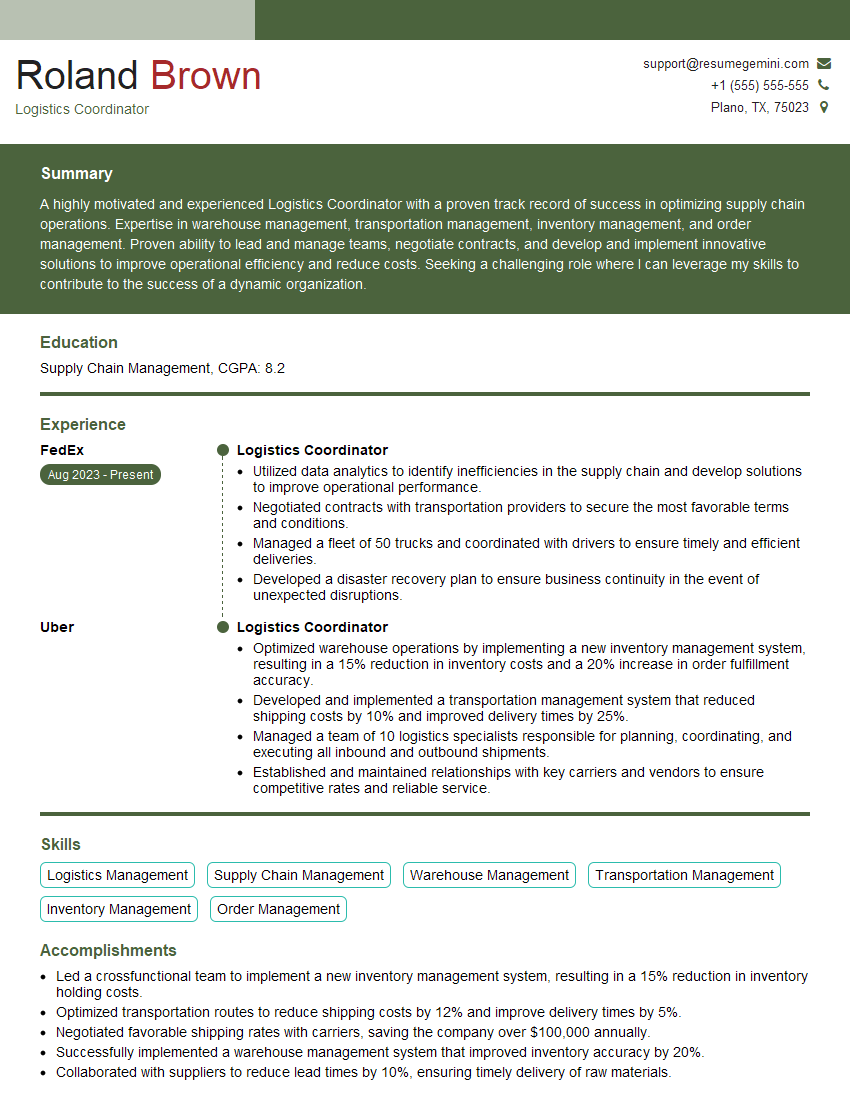
Logistics Coordinator Resume Sample

Crane Operator Resume Sample
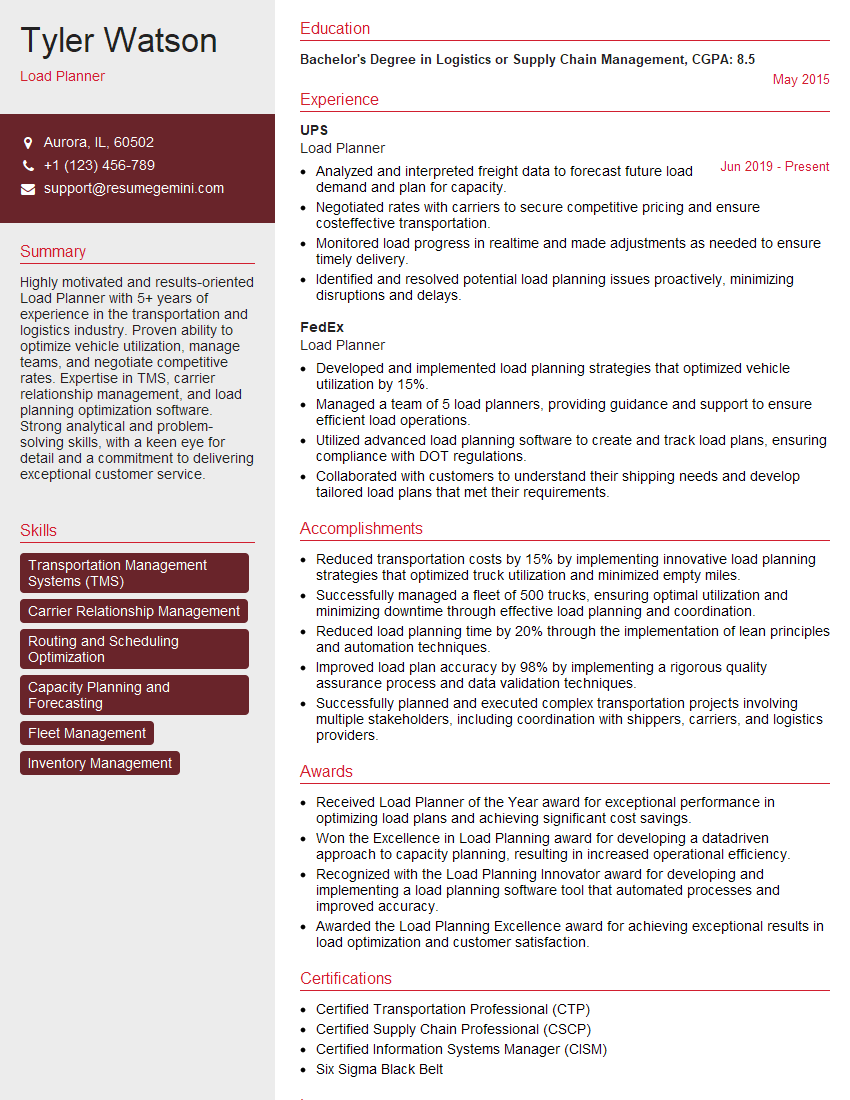
Load Planner Resume Sample
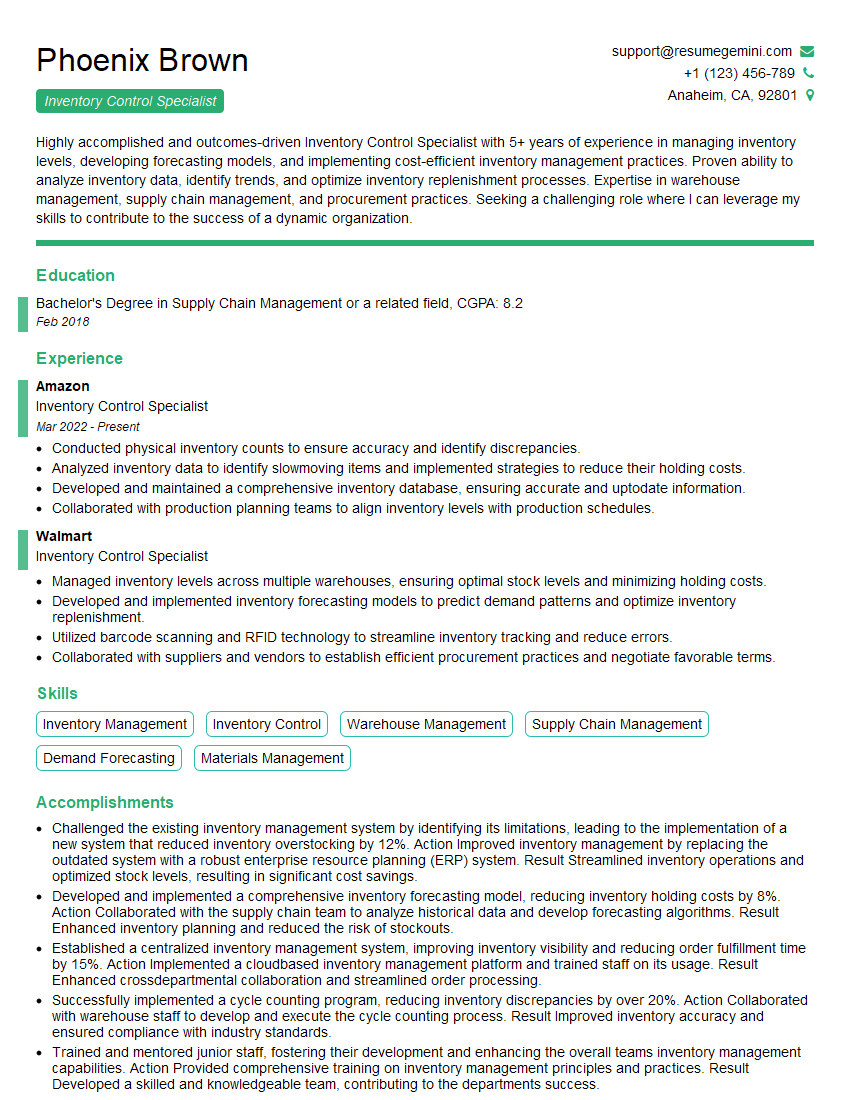
Inventory Control Specialist Resume Sample

Shipping and Receiving Clerk Resume Sample
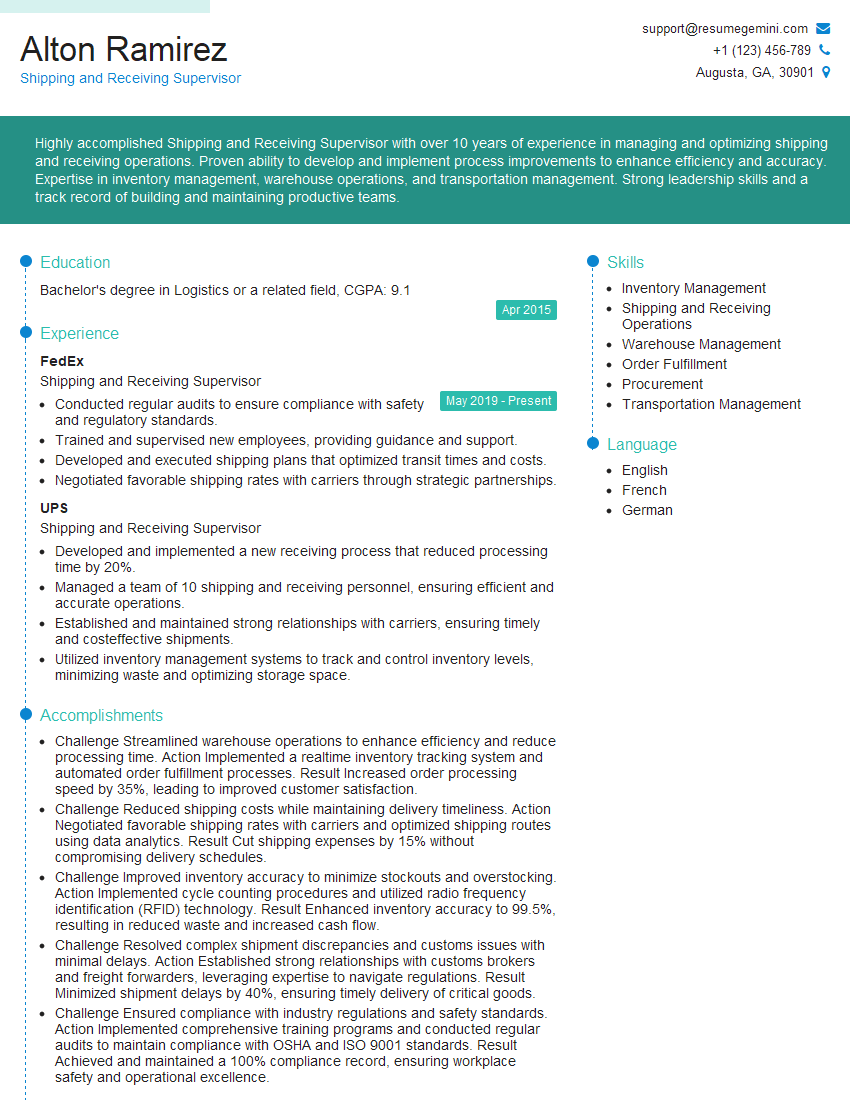
Shipping and Receiving Supervisor Resume Sample
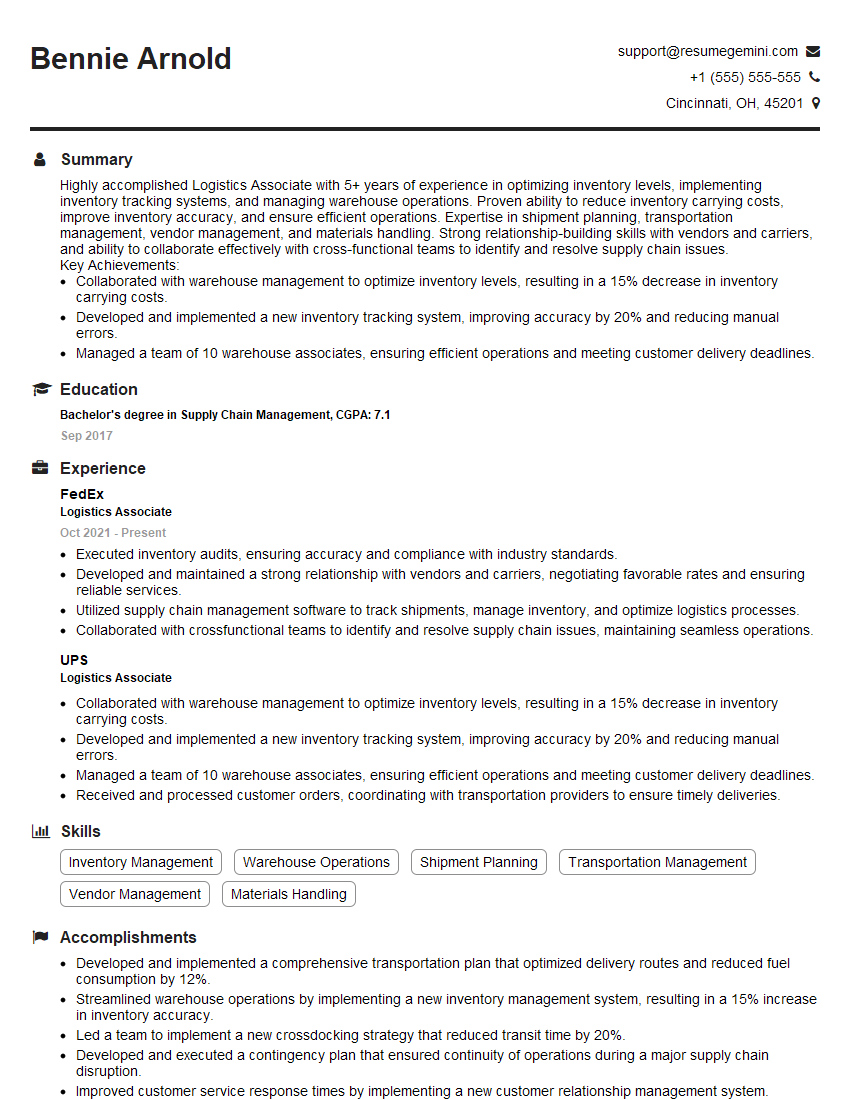
Logistics Associate Resume Sample
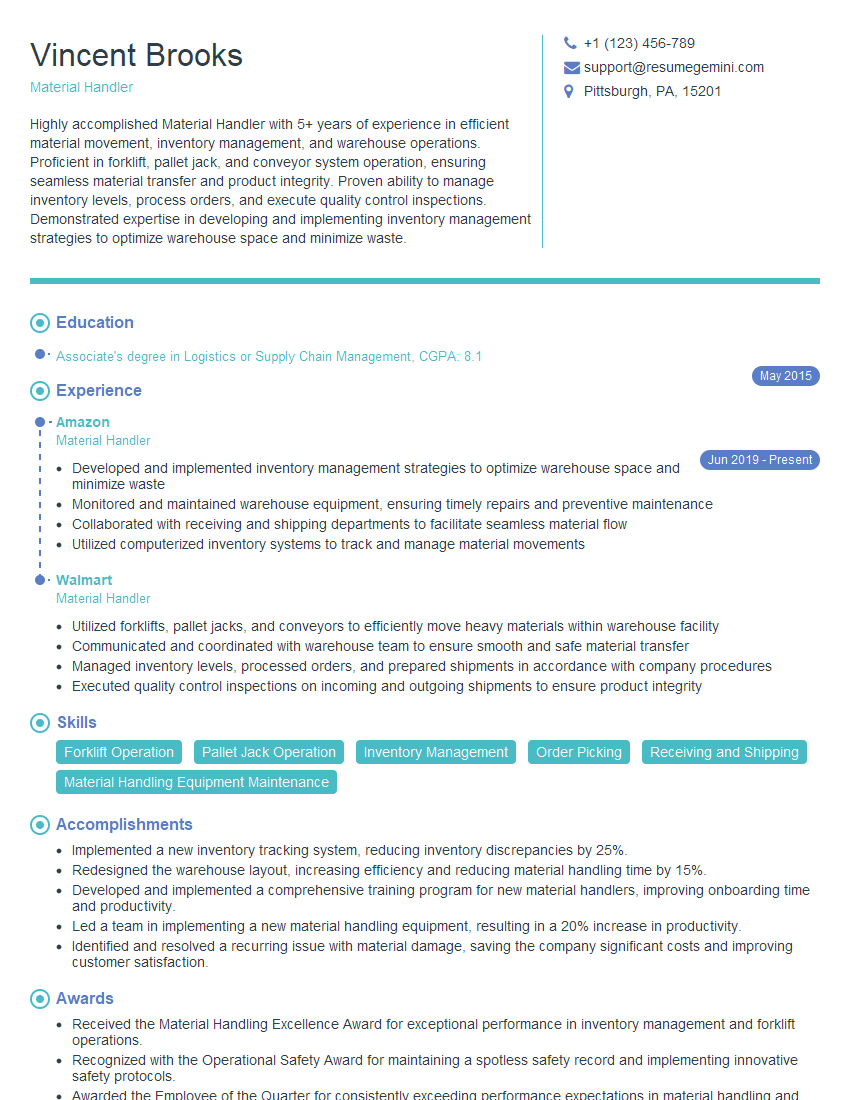
Material Handler Resume Sample
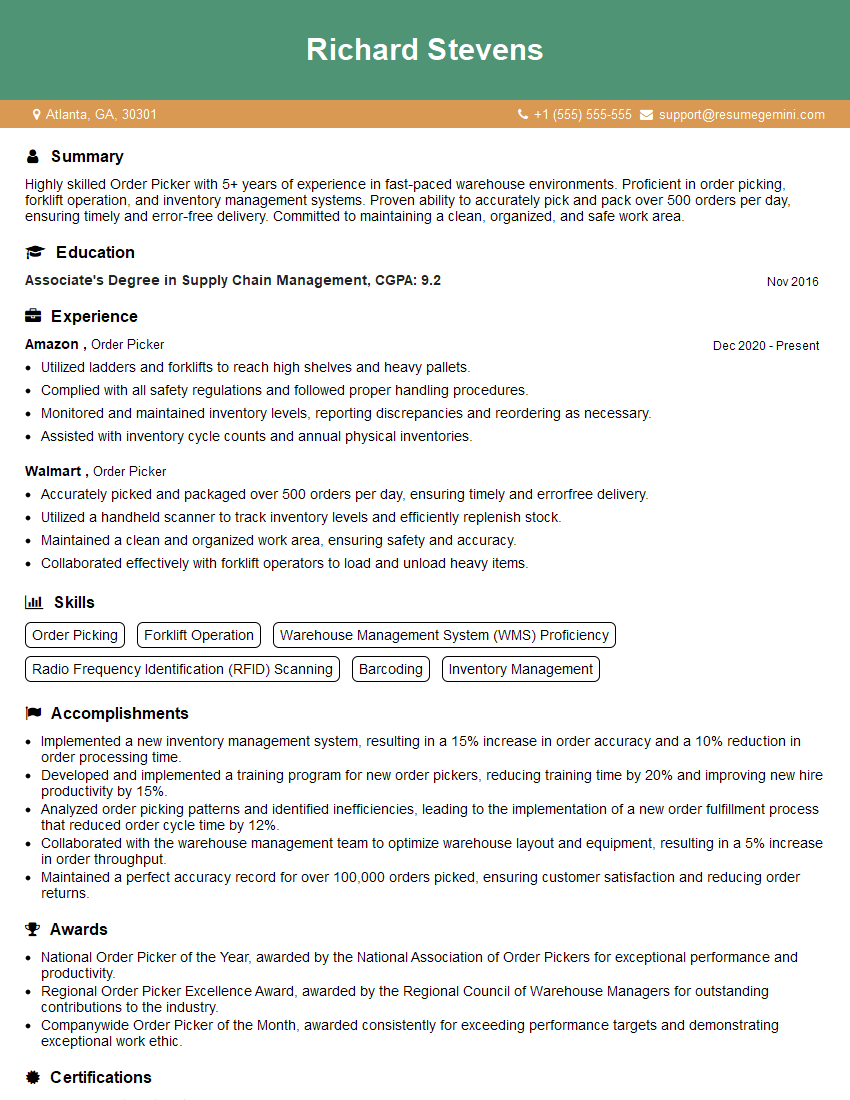
Order Picker Resume Sample
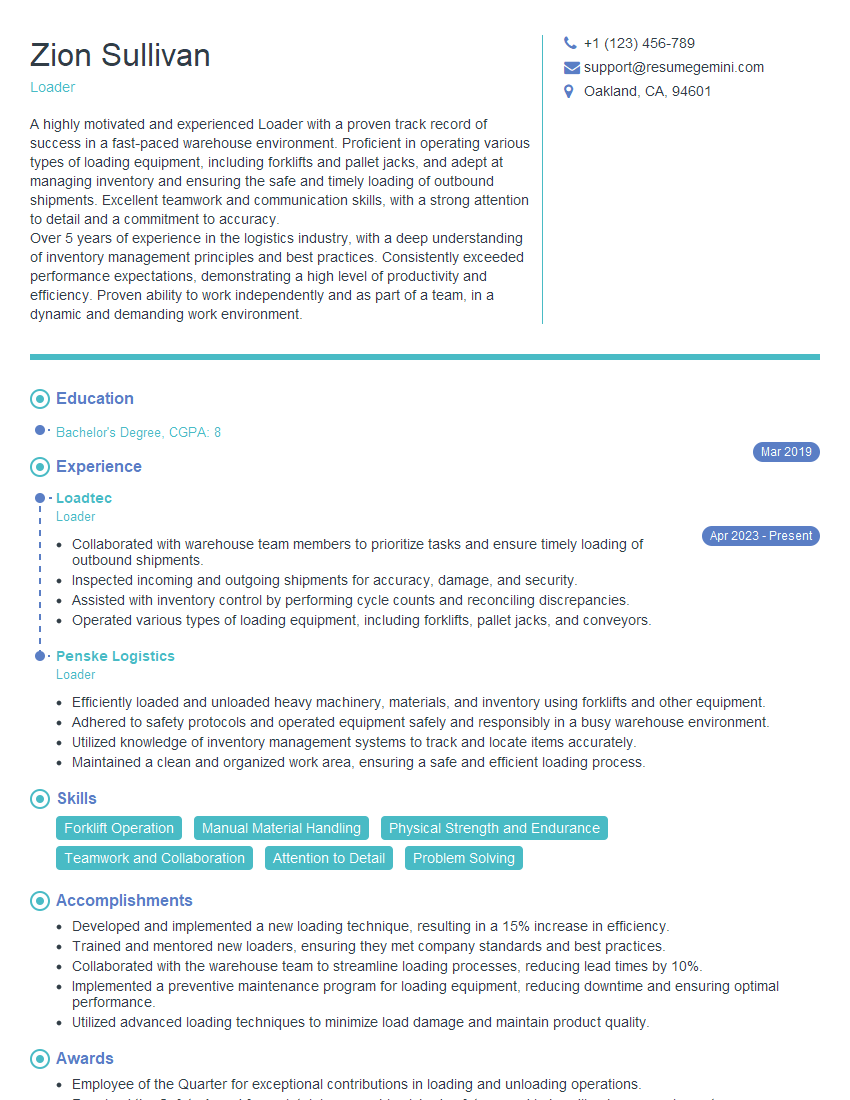
Loader Resume Sample
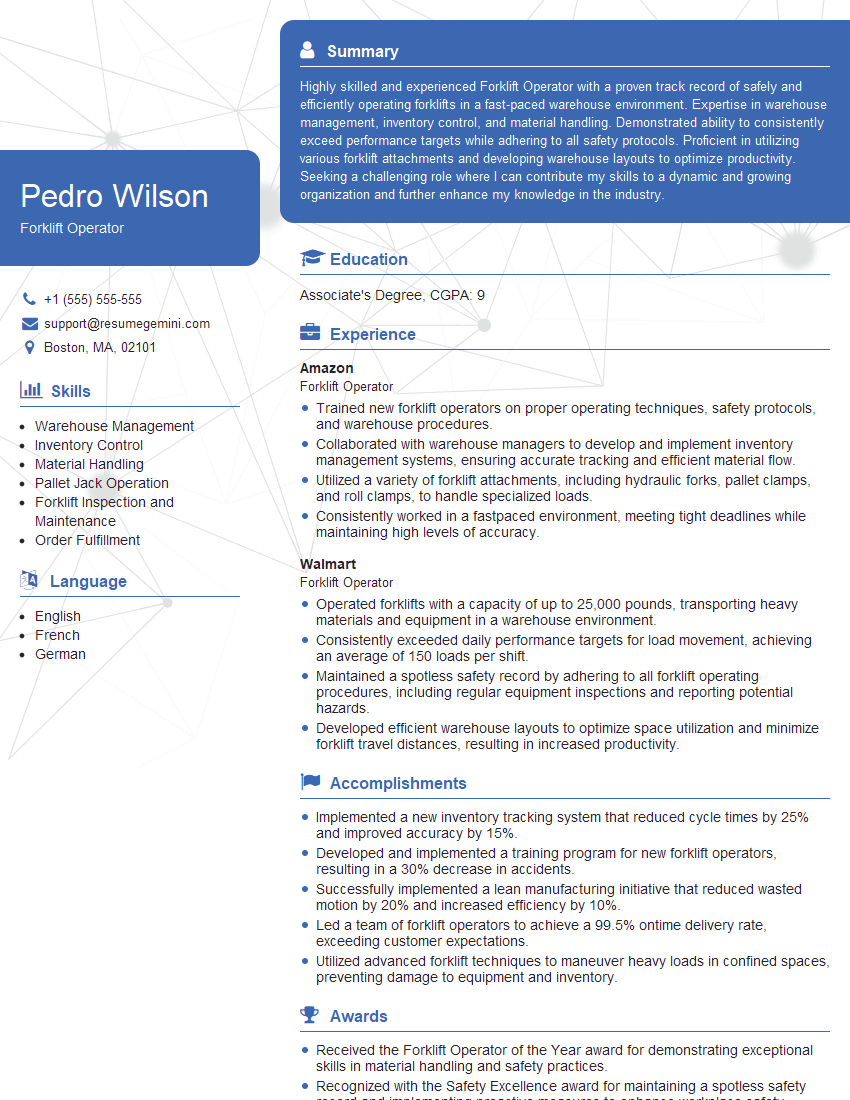
Forklift Operator Resume Sample
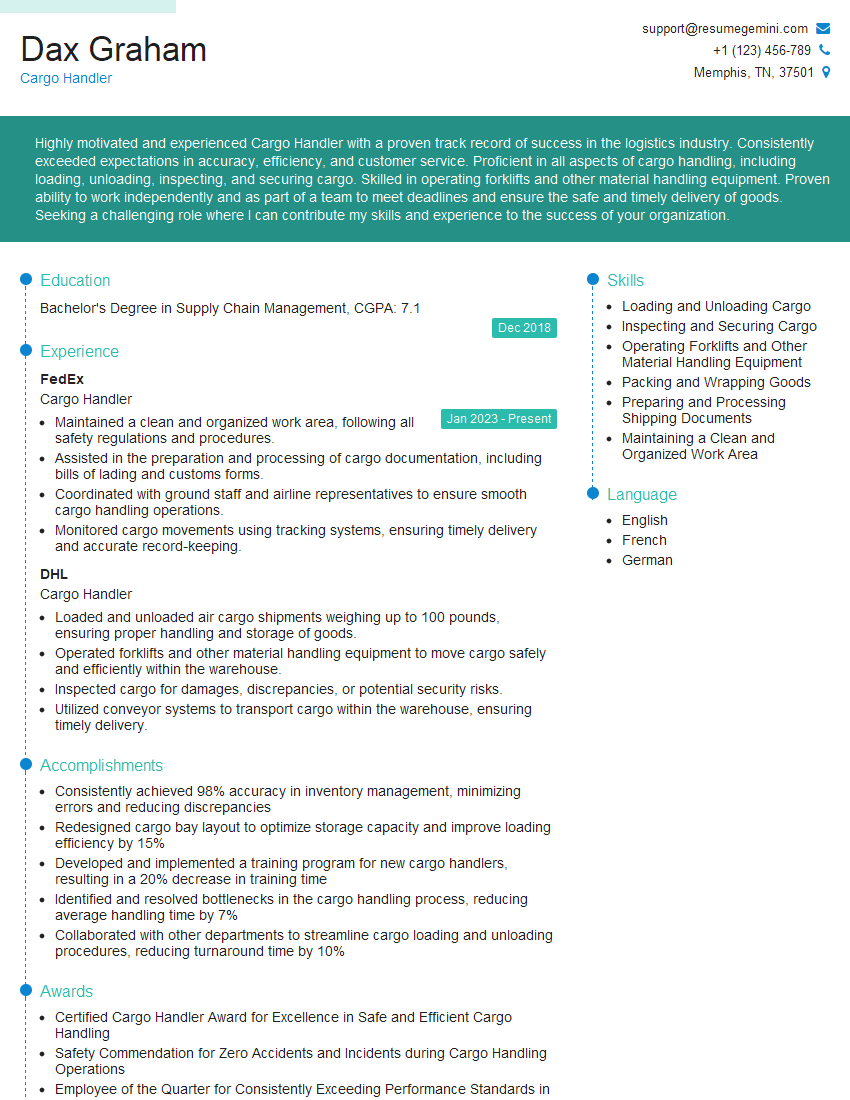
Cargo Handler Resume Sample
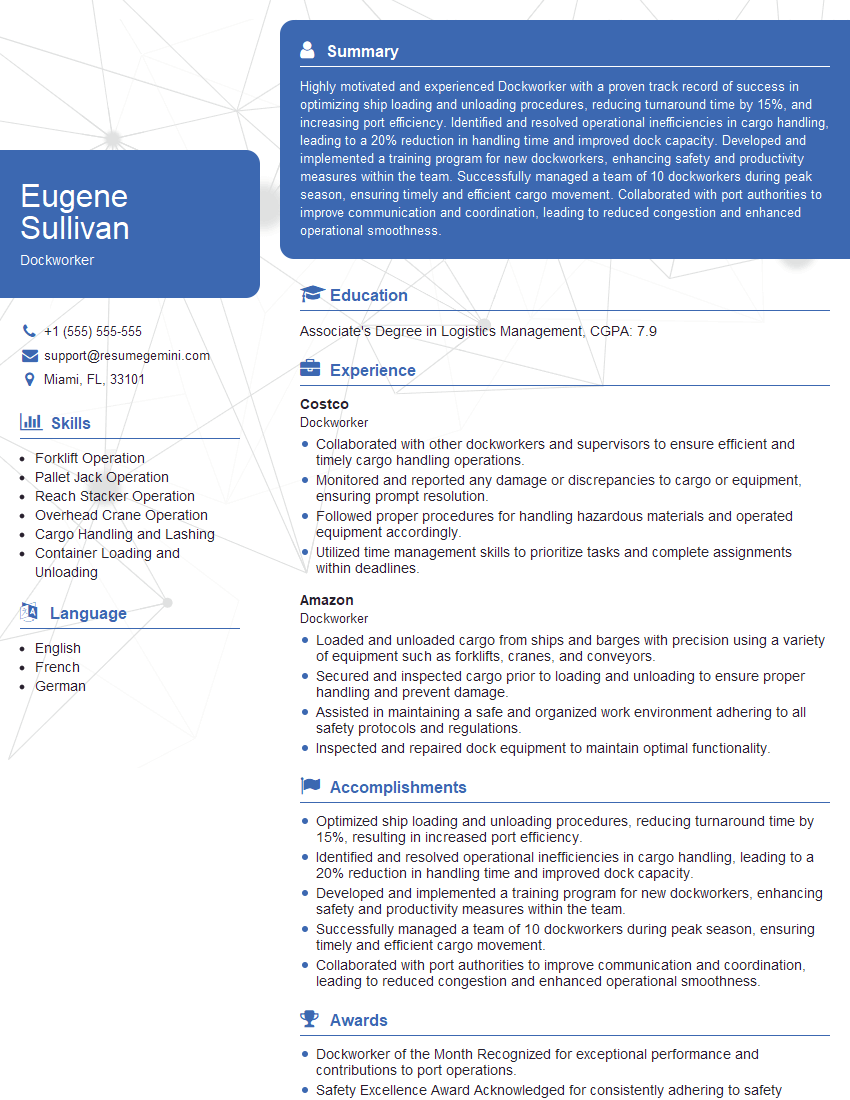
Dockworker Resume Sample
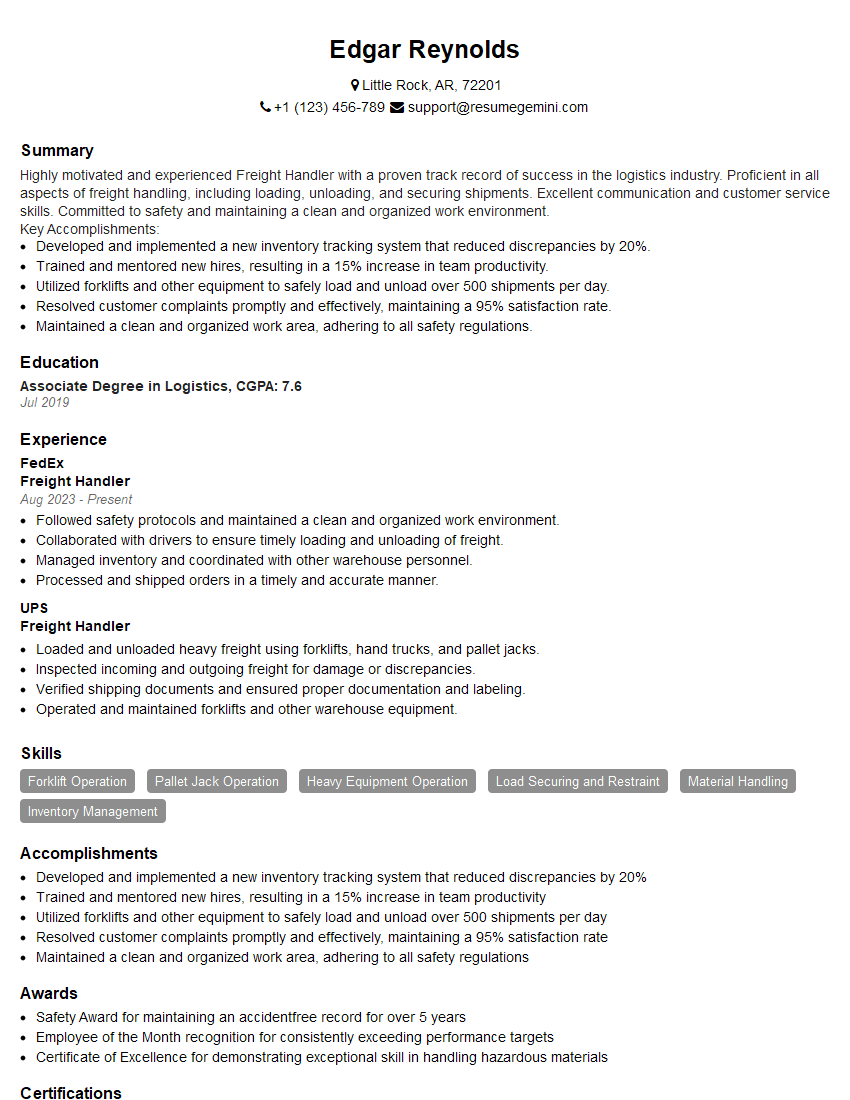
Freight Handler Resume Sample
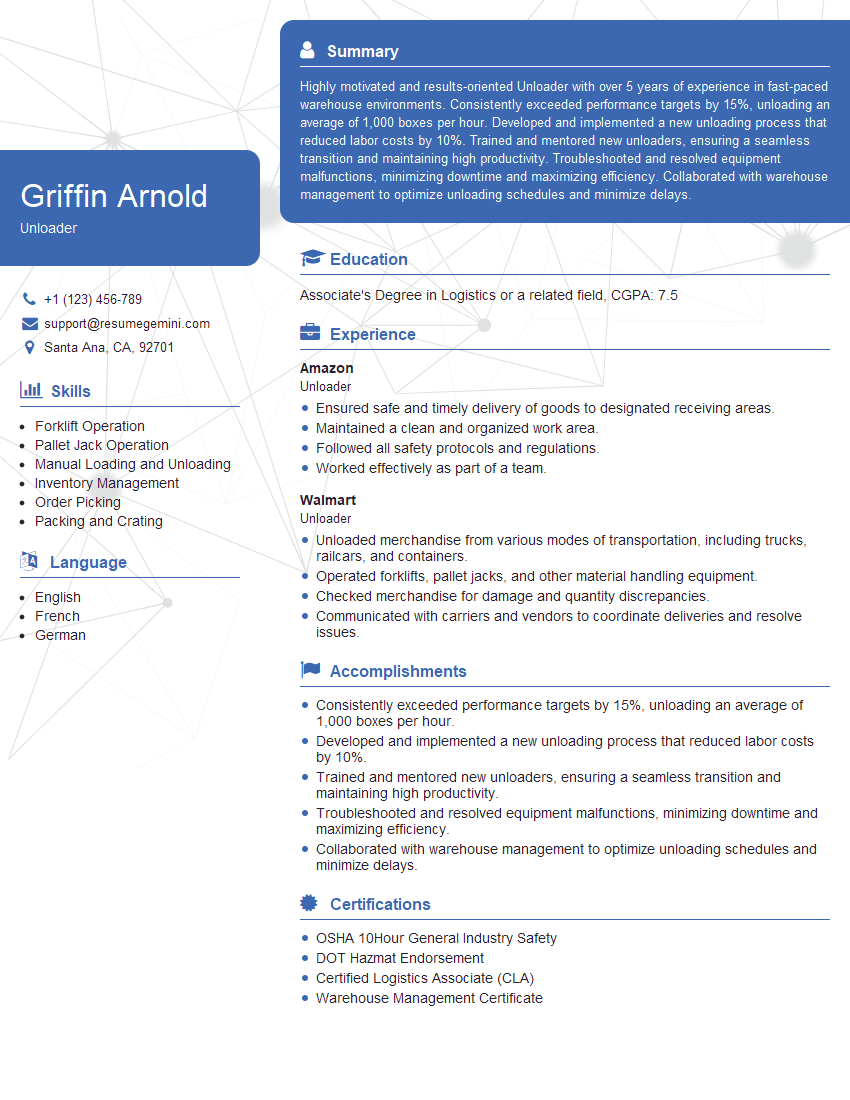
Unloader Resume Sample
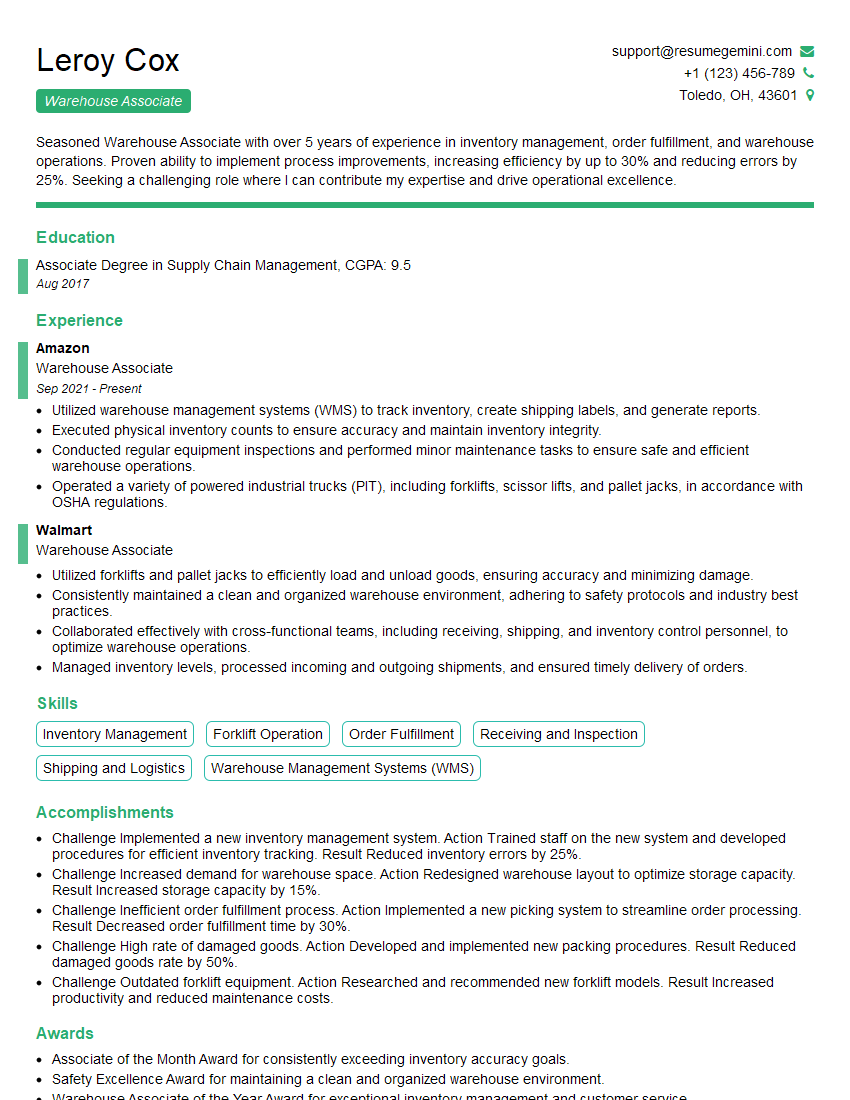
Warehouse Associate Resume Sample
- Operations Manager
- Warehouse Manager
- Transportation Coordinator
- Warehouse Supervisor
- Logistics Coordinator
- Crane Operator
- Load Planner
- Inventory Control Specialist
- Shipping and Receiving Clerk
- Shipping and Receiving Supervisor
- Logistics Associate
- Material Handler
- Order Picker
- Loader
- Forklift Operator
- Cargo Handler
- Dockworker
- Freight Handler
- Unloader
- Warehouse Associate
Explore more articles
Users Rating of Our Blogs
Share Your Experience
We value your feedback! Please rate our content and share your thoughts (optional).
What Readers Say About Our Blog
Attention music lovers!
Wow, All the best Sax Summer music !!!
Spotify: https://open.spotify.com/artist/6ShcdIT7rPVVaFEpgZQbUk
Apple Music: https://music.apple.com/fr/artist/jimmy-sax-black/1530501936
YouTube: https://music.youtube.com/browse/VLOLAK5uy_noClmC7abM6YpZsnySxRqt3LoalPf88No
Other Platforms and Free Downloads : https://fanlink.tv/jimmysaxblack
on google : https://www.google.com/search?q=22+AND+22+AND+22
on ChatGPT : https://chat.openai.com?q=who20jlJimmy20Black20Sax20Producer
Get back into the groove with Jimmy sax Black
Best regards,
Jimmy sax Black
www.jimmysaxblack.com
Hi I am a troller at The aquatic interview center and I suddenly went so fast in Roblox and it was gone when I reset.
Hi,
Business owners spend hours every week worrying about their website—or avoiding it because it feels overwhelming.
We’d like to take that off your plate:
$69/month. Everything handled.
Our team will:
Design a custom website—or completely overhaul your current one
Take care of hosting as an option
Handle edits and improvements—up to 60 minutes of work included every month
No setup fees, no annual commitments. Just a site that makes a strong first impression.
Find out if it’s right for you:
https://websolutionsgenius.com/awardwinningwebsites
Hello,
we currently offer a complimentary backlink and URL indexing test for search engine optimization professionals.
You can get complimentary indexing credits to test how link discovery works in practice.
No credit card is required and there is no recurring fee.
You can find details here:
https://wikipedia-backlinks.com/indexing/
Regards
NICE RESPONSE TO Q & A
hi
The aim of this message is regarding an unclaimed deposit of a deceased nationale that bears the same name as you. You are not relate to him as there are millions of people answering the names across around the world. But i will use my position to influence the release of the deposit to you for our mutual benefit.
Respond for full details and how to claim the deposit. This is 100% risk free. Send hello to my email id: lukachachibaialuka@gmail.com
Luka Chachibaialuka
Hey interviewgemini.com, just wanted to follow up on my last email.
We just launched Call the Monster, an parenting app that lets you summon friendly ‘monsters’ kids actually listen to.
We’re also running a giveaway for everyone who downloads the app. Since it’s brand new, there aren’t many users yet, which means you’ve got a much better chance of winning some great prizes.
You can check it out here: https://bit.ly/callamonsterapp
Or follow us on Instagram: https://www.instagram.com/callamonsterapp
Thanks,
Ryan
CEO – Call the Monster App
Hey interviewgemini.com, I saw your website and love your approach.
I just want this to look like spam email, but want to share something important to you. We just launched Call the Monster, a parenting app that lets you summon friendly ‘monsters’ kids actually listen to.
Parents are loving it for calming chaos before bedtime. Thought you might want to try it: https://bit.ly/callamonsterapp or just follow our fun monster lore on Instagram: https://www.instagram.com/callamonsterapp
Thanks,
Ryan
CEO – Call A Monster APP
To the interviewgemini.com Owner.
Dear interviewgemini.com Webmaster!
Hi interviewgemini.com Webmaster!
Dear interviewgemini.com Webmaster!
excellent
Hello,
We found issues with your domain’s email setup that may be sending your messages to spam or blocking them completely. InboxShield Mini shows you how to fix it in minutes — no tech skills required.
Scan your domain now for details: https://inboxshield-mini.com/
— Adam @ InboxShield Mini
support@inboxshield-mini.com
Reply STOP to unsubscribe
Hi, are you owner of interviewgemini.com? What if I told you I could help you find extra time in your schedule, reconnect with leads you didn’t even realize you missed, and bring in more “I want to work with you” conversations, without increasing your ad spend or hiring a full-time employee?
All with a flexible, budget-friendly service that could easily pay for itself. Sounds good?
Would it be nice to jump on a quick 10-minute call so I can show you exactly how we make this work?
Best,
Hapei
Marketing Director
Hey, I know you’re the owner of interviewgemini.com. I’ll be quick.
Fundraising for your business is tough and time-consuming. We make it easier by guaranteeing two private investor meetings each month, for six months. No demos, no pitch events – just direct introductions to active investors matched to your startup.
If youR17;re raising, this could help you build real momentum. Want me to send more info?
Hi, I represent an SEO company that specialises in getting you AI citations and higher rankings on Google. I’d like to offer you a 100% free SEO audit for your website. Would you be interested?
Hi, I represent an SEO company that specialises in getting you AI citations and higher rankings on Google. I’d like to offer you a 100% free SEO audit for your website. Would you be interested?