Feeling uncertain about what to expect in your upcoming interview? We’ve got you covered! This blog highlights the most important Loading and unloading washing machines interview questions and provides actionable advice to help you stand out as the ideal candidate. Let’s pave the way for your success.
Questions Asked in Loading and unloading washing machines Interview
Q 1. What is the optimal loading capacity for a top-load washing machine?
The optimal loading capacity for a top-load washing machine isn’t a single number; it varies based on the machine’s specific specifications (found in your owner’s manual). Think of it like this: you wouldn’t overload a shopping cart, right? You’d only fill it to the point where you can still comfortably push it. Similarly, overloading a washing machine reduces its efficiency, can damage the machine, and may result in poorly cleaned clothes. Generally, you should aim to fill the washer drum to about 75-80% of its stated capacity. Never pack it so tightly that clothes are crammed together. Look for the ‘maximum fill line’ indicator inside the drum – a useful visual guide most machines provide. Avoid overfilling, especially with bulky items like towels or blankets. A slightly less-than-full load often yields better results!
Q 2. How do you prevent clothes from becoming tangled during the washing process?
Preventing tangled clothes involves a multi-pronged approach. First, loosely place items in the machine. Don’t stuff them in. Secondly, ensure proper sorting (as detailed in the next answer). Similar fabrics and weights clump together less, reducing tangles. Thirdly, consider using a mesh laundry bag for delicate items like lingerie or hosiery; this keeps them contained and prevents them from wrapping around larger items. Finally, try to distribute the clothes evenly throughout the drum – avoid piling everything in one spot. Think of it like arranging a picnic basket – you wouldn’t just throw everything in and hope for the best! The goal is to allow the water to flow freely around all items.
Q 3. Describe your process for sorting laundry before loading a washing machine.
My laundry sorting process is meticulous and essential for optimal washing. I begin by separating clothes into four main categories: whites, lights, darks, and delicates. This is crucial to prevent color bleeding and damage. Within each category, I further sort by fabric type (cottons, linens, synthetics) and weight (heavies like towels, lights like shirts). Items like jeans often deserve their own separate wash to avoid undue wear and tear on lighter fabrics. I also check for any stains and pre-treat as needed. This systematic approach ensures that every garment receives the most appropriate washing cycle, minimizing wear and tear and maximizing cleaning effectiveness. It’s about treating each item with the care it deserves.
Q 4. What are the safety precautions you take when handling large or heavy laundry items?
Handling large or heavy laundry items like comforters or blankets requires careful consideration for safety. Always lift using your legs, keeping your back straight to avoid strain. If the item is too heavy to lift alone, seek assistance. Don’t twist or bend awkwardly while carrying the item. Before loading, inspect the item for any sharp objects or loose buttons that could potentially damage the washing machine or other clothes. And never overload the washing machine with heavy items, always adhere to the manufacturer’s capacity recommendations. Safety is paramount; better to do the load in two parts than risk injury.
Q 5. How do you identify and address potential issues with overloaded washing machines?
Overloaded washing machines manifest in several ways. The most obvious sign is the machine struggling to spin effectively, often accompanied by loud noises and excessive vibrations. The clothes may also not be thoroughly cleaned, and the washer might even fail to drain properly. If I suspect an overload, I immediately stop the cycle. I then carefully remove some items to reduce the load, ensuring an even distribution of clothing. The machine should be rebalanced before restarting. Regularly checking the washing machine’s load capacity guidelines is key to preventing these issues.
Q 6. Explain the proper procedure for loading a front-load washing machine.
Loading a front-load washer is different from a top-loader. Begin by opening the door carefully. Then, loosely place the clothes one by one, ensuring an even distribution to avoid clumping. Avoid overloading. For best results, load items loosely and avoid stuffing them in, especially near the door seal. Remember, proper loading ensures efficient water circulation, proper cleaning, and minimizes wear and tear on the machine and clothing. Close the door gently, ensuring it’s securely latched before starting the cycle. It’s as simple as laying out clothing in a drawer, ensuring a neat and balanced distribution.
Q 7. What techniques do you use to ensure even distribution of clothes in a washing machine?
Even distribution is key for effective washing. I use a combination of techniques. First, I never just throw clothes in; I place them strategically around the drum, ensuring no large piles form in any one area. Then, I make sure there is a mix of fabric weights and sizes distributed evenly around the circumference of the drum. Bulky items are carefully positioned to avoid blocking the flow of water and preventing smaller items from getting lost in the mix. Think of it as arranging dishes in a dishwasher – aiming for a uniform spread across the racks. It’s all about maximizing space and ensuring every item gets properly cleaned.
Q 8. How do you handle delicate items when loading a washing machine?
Handling delicate items requires extra care to prevent damage. Think of them like precious jewels – they need gentle handling! I always start by checking the garment’s care label for specific washing instructions. Then, I use a mesh laundry bag specifically designed for delicates. This protects them from snagging or stretching during the wash cycle. For particularly sensitive items like lace or silk, I might even hand-wash them separately before adding them to the main load, ensuring the water temperature is appropriate. Finally, I always select a delicate cycle on the washing machine with a low spin speed to minimize wear and tear.
For example, I once had a client with a beautiful vintage lace tablecloth. By using a mesh bag and a delicate cycle, we successfully washed it without any damage, preserving its delicate beauty.
Q 9. What are the common causes of unbalanced loads in washing machines, and how do you prevent them?
Unbalanced loads are a common problem leading to noisy operation, excessive vibration, and even machine damage. Imagine trying to spin a basketball with only a few weights on one side – it’ll wobble! The most frequent causes are uneven distribution of clothing items, overloading the machine, or washing very large, bulky items alone. To prevent this, I always aim for an even distribution of items within the drum. I avoid overcrowding the machine, ensuring there’s enough space for the clothes to move freely. Heavy items like jeans or towels should be mixed with lighter items, and I make sure to spread them out evenly rather than clumping them together. I also avoid washing single, large items like a queen-sized duvet unless the machine is specifically designed for handling such loads.
Q 10. How do you handle stained or soiled clothing before loading into a washing machine?
Pre-treating stained or soiled clothing is crucial for effective cleaning. It’s like giving the washing machine a head start! I begin by identifying the type of stain – is it grease, mud, blood, or something else? Different stains require different treatments. I might pre-soak heavily soiled items in a basin with cold water and a stain remover before adding them to the wash. For stubborn stains, I might apply a stain remover directly to the affected area and gently rub it in before laundering. For blood stains, I always use cold water, as hot water can set the stain. Always remember to check the stain remover’s instructions for the appropriate fabric type.
For example, grass stains respond well to a pre-treatment with a bit of dish soap before washing.
Q 11. What are the proper steps to unload a washing machine to minimize wrinkles?
Unloading efficiently minimizes wrinkles and saves time. Think of it as a delicate dance! Immediately after the wash cycle completes, I promptly remove the clothes from the machine. This prevents wrinkles from setting in. I then gently shake out each item to loosen the fabric. I avoid leaving the laundry in a damp pile, which can also lead to wrinkles. Finally, I promptly transfer the laundry to the dryer or hang it to air dry depending on the fabric type and the garment’s care label instructions. For delicate items, I lay them flat to dry to avoid stretching or damage.
Q 12. How do you handle oversized items that do not fit easily into a washing machine?
Oversized items present a challenge, but there are solutions. It’s like solving a jigsaw puzzle! First, I always check the washing machine’s manual for recommendations on handling oversized items. Some machines have specific settings or guidelines for larger loads. If it’s feasible, I may choose to divide the item into smaller, manageable sections, ensuring the machine isn’t overloaded in each wash cycle. Alternatively, I may suggest hand washing or professional cleaning services if the item is too large or delicate for machine washing. It’s always best to prioritize preventing damage.
For instance, a large comforter might be washed in two or three smaller batches.
Q 13. Describe your procedure for transferring wet laundry from the washer to the dryer.
Transferring wet laundry needs a smooth and efficient process. I want to avoid unnecessary delays. After unloading the washer, I immediately transport the wet clothes to the dryer, minimizing the time they spend in a damp state. I carefully load the dryer, avoiding overcrowding, to ensure proper airflow and efficient drying. This prevents wrinkles and ensures even drying. It’s also important to choose the right dryer setting depending on the fabric type and the garment’s care label.
Q 14. How do you prevent the spread of germs or bacteria during the laundry process?
Preventing germ spread is paramount. Cleanliness is next to godliness! I always ensure that the washing machine is clean. I regularly clean the detergent dispenser, the rubber seal around the door and the drum using a washing machine cleaner, according to manufacturer instructions. I also make sure to use hot water for washing heavily soiled laundry, as this helps to kill bacteria. Finally, I always keep the washing machine door slightly ajar after use to allow it to air dry and avoid the buildup of mold and mildew.
Q 15. How do you identify and address a malfunctioning washing machine?
Identifying a malfunctioning washing machine starts with observation. Listen for unusual noises like grinding, banging, or excessive vibrations. Check for error codes displayed on the control panel – these are manufacturer-specific but provide valuable clues. Examine the machine for leaks, unusual smells (burnt electrical components), or anything visually amiss like damaged hoses or belts. If the machine isn’t draining or filling properly, that points to a plumbing or pump issue. For example, a consistently overflowing machine could indicate a faulty water level sensor or a problem with the pressure switch. Addressing the issue requires systematic troubleshooting. Start by checking the obvious: Is the machine plugged in securely? Is the water supply turned on? Then, based on the symptoms, you might need to check the drain hose for clogs, inspect the pump for debris, or even consult the machine’s manual for troubleshooting guides or contact a qualified repair technician.
Career Expert Tips:
- Ace those interviews! Prepare effectively by reviewing the Top 50 Most Common Interview Questions on ResumeGemini.
- Navigate your job search with confidence! Explore a wide range of Career Tips on ResumeGemini. Learn about common challenges and recommendations to overcome them.
- Craft the perfect resume! Master the Art of Resume Writing with ResumeGemini’s guide. Showcase your unique qualifications and achievements effectively.
- Don’t miss out on holiday savings! Build your dream resume with ResumeGemini’s ATS optimized templates.
Q 16. What safety measures do you take when working with commercial washing machines?
Safety is paramount when working with commercial washing machines. Always disconnect the power supply before performing any maintenance or repairs. This is crucial to avoid electrical shocks. Never reach into a running machine; wait for it to completely power down and the drum to stop moving. Wear appropriate personal protective equipment (PPE), including gloves to protect your hands from detergents and potential irritants, and safety glasses to protect your eyes from splashes or flying debris. Ensure the area around the machine is clear of obstructions to prevent trips and falls. Be mindful of hot water and steam – commercial machines operate at higher temperatures than residential models, posing a burn risk. Regular inspections of hoses, connections, and the overall structure for wear and tear are vital to prevent leaks and malfunctions.
Q 17. What are the differences in loading procedures between different types of washing machines (top-load, front-load)?
Loading procedures differ significantly between top-load and front-load washing machines. Top-load washers generally involve adding clothes loosely into the drum, ensuring even distribution to prevent imbalance during the cycle. Overfilling should be avoided as it can lead to inefficient washing and potentially damage the machine. Front-load machines, on the other hand, often benefit from a more organized loading approach. Items should be placed carefully to avoid overcrowding, allowing the water to fully penetrate the fabrics. It’s generally recommended to load front-loaders less full than top-loaders for optimal cleaning performance. In both cases, ensure that delicate items are separated from heavier fabrics to minimize damage.
Q 18. How do you manage different fabric types during the loading and unloading process?
Managing different fabric types is crucial for preserving garment quality and maintaining the washing machine. Always pre-sort laundry according to fabric type (cottons, synthetics, delicates), color (whites, colors, darks), and level of soiling. Delicates, such as lace or silk, require gentler handling and should ideally be washed in mesh laundry bags to protect them from snagging. Heavier items like towels and jeans should be washed separately from lighter items to prevent damage and ensure even cleaning. This method prevents color bleeding, reduces fabric wear, and enhances the overall washing efficiency. I often use color-coded bins or hampers to streamline the sorting process for better organization and workflow.
Q 19. What is your experience with using industrial-sized washing machines?
My experience with industrial-sized washing machines includes working with large-capacity machines commonly found in laundromats, hotels, or hospitals. These machines require a different approach compared to domestic models, focusing on safety, efficiency, and handling larger volumes of laundry. The loading procedure involves using material handling equipment, such as carts and dollies, to manage the bulk of laundry. Understanding the machine’s capacity and weight limits is crucial to avoid overloading and prevent mechanical damage. Proper balancing of the load is also vital to ensure even washing and prevent vibrations that could lead to equipment malfunction. Thorough knowledge of the machine’s operational parameters and safety protocols is essential for safe and efficient operation.
Q 20. How do you handle emergencies, such as a washing machine overflowing or malfunctioning?
In case of a washing machine overflowing, the immediate action is to turn off the water supply immediately. Then unplug the machine to prevent electrical hazards. If the overflow is significant, you might need to use towels or a mop to soak up excess water to prevent water damage to the surrounding area. For a malfunction, the first step is to identify the problem. Is it an error code, a leak, or a failure to drain or spin? Consult the machine’s manual for troubleshooting instructions. If you can’t resolve the issue, contacting a qualified technician is essential. Detailed documentation of the incident – the time, the symptoms, and any actions taken – is crucial for efficient troubleshooting and repair.
Q 21. How do you maintain the cleanliness and hygiene of the washing machines and surrounding area?
Maintaining cleanliness and hygiene is crucial for both the washing machines and their surroundings. Regular cleaning of the lint filter and washing machine drum is essential to prevent mildew and odor build-up. A diluted bleach solution can be effective for sanitizing the machine. The area surrounding the machine should also be cleaned regularly to prevent the accumulation of dirt, debris, and detergent spills. Proper disposal of laundry detergents and other chemicals is also essential to minimize environmental impact. I follow a scheduled cleaning regimen, including a thorough deep cleaning of all components, at least once a month. This includes wiping down the exterior of the machine, cleaning the detergent dispenser, and ensuring that all drainage systems are free from blockages.
Q 22. What methods do you use to improve efficiency when loading and unloading multiple washing machines?
Improving efficiency in loading and unloading multiple washing machines hinges on organization and systematic workflows. Think of it like an orchestra – each instrument (washing machine) needs to play its part harmoniously to create a beautiful symphony (efficient laundry operation).
- Pre-Sorting: Before even approaching the machines, I meticulously sort laundry by color, fabric type, and soil level. This drastically reduces the time spent later on separating items.
- Batch Processing: I load machines to their maximum capacity while adhering to the manufacturer’s guidelines. This minimizes the number of cycles needed.
- Strategic Placement: I strategically position laundry hampers near the washing machines to minimize unnecessary movement. This is especially crucial in high-volume settings.
- Simultaneous Operation: Once machines are loaded, I start them in a staggered manner to ensure a smooth flow of laundry processing. While one machine is washing, I can be prepping the next.
- Unloading Optimization: After each cycle completes, I immediately unload the machine to maximize turnaround time. Pre-sorting makes this step incredibly efficient, as items are readily transferred to dryers or other processing stages.
For example, in a busy laundromat, I once handled 15 washing machines simultaneously, achieving a 20% increase in throughput by employing these methods compared to a less organized approach.
Q 23. Describe your approach to handling customer concerns or complaints related to the laundry service.
Addressing customer concerns is paramount. My approach is based on empathy, clear communication, and swift resolution.
- Active Listening: I patiently listen to the customer’s complaint, ensuring I fully understand their perspective before offering any solutions.
- Empathetic Response: I acknowledge their frustration and validate their feelings. A simple phrase like, “I understand your concern, and I’ll do my best to help,” can go a long way.
- Problem Identification: I systematically investigate the root cause of the problem. This might involve checking the washing machine settings, the detergent used, or even the items themselves.
- Solution Implementation: Once the cause is identified, I implement the appropriate solution, which might involve re-washing the laundry with different settings, offering a discount, or providing alternative solutions.
- Follow-Up: I always follow up with the customer to ensure they are satisfied with the outcome and address any lingering concerns.
For instance, a customer once complained about their clothes being damaged. After careful examination, we found a loose button that had caused damage during the wash. I offered a complimentary rewash and apologized for the inconvenience.
Q 24. How do you ensure the safe and efficient operation of multiple washing machines at once?
Safe and efficient operation of multiple washing machines requires careful attention to detail and adherence to safety protocols.
- Regular Maintenance Checks: I routinely inspect the machines for any signs of malfunction or damage, such as leaks or unusual noises. This proactive approach helps prevent major issues.
- Proper Loading Techniques: Overloading can damage machines and lead to uneven cleaning. I always follow the manufacturer’s guidelines for load sizes and weight limits.
- Correct Detergent and Water Usage: Using the right amount of detergent and ensuring proper water levels prevents damage to the machine and ensures optimal cleaning.
- Emergency Procedures: I am familiar with emergency procedures in case of malfunctions like electrical shorts or leaks. This includes knowing where to find circuit breakers and how to shut off water supplies.
- Safety Equipment: I ensure the availability of appropriate safety equipment, such as gloves and safety glasses, to prevent accidents.
In a large-scale laundry, for example, I’ve implemented a monthly inspection checklist that has significantly reduced the number of machine breakdowns, minimizing downtime and ensuring efficient operation.
Q 25. What is your experience with different washing machine detergents and their appropriate usage?
My experience with various detergents is extensive. Selecting the right detergent is crucial for effective cleaning and machine maintenance.
- Understanding Detergent Types: I understand the differences between powder, liquid, and pod detergents and their suitability for different fabrics and water hardness levels. Powder detergents are generally more economical but can leave residue, while liquid detergents are better for pre-treating stains.
- Dosage Accuracy: I am precise with detergent dosage, adhering to the manufacturer’s recommendations for both the detergent and the washing machine. Overusing detergent can leave residue and damage the machine, while underusing can lead to insufficient cleaning.
- Fabric Compatibility: I understand which detergents are suitable for different fabrics. Delicate fabrics might require a specific detergent formulation to prevent damage.
- Water Hardness Considerations: I account for water hardness levels when choosing a detergent. Hard water requires detergents formulated to combat mineral build-up.
- Eco-Friendly Options: I am also familiar with eco-friendly detergent options that minimize environmental impact.
In a previous role, we switched to a more environmentally friendly detergent, resulting in significant cost savings and a reduction in our carbon footprint, without compromising cleaning efficacy.
Q 26. What are some common mistakes to avoid when loading and unloading washing machines?
Several common mistakes can impede efficiency and potentially damage washing machines.
- Overloading: Overloading machines prevents clothes from being properly cleaned and can damage the machine’s motor and components.
- Ignoring Fabric Care Labels: Disregarding fabric care instructions can lead to shrinkage, color fading, and damage to clothing items.
- Incorrect Detergent Usage: Using too much detergent leads to residue, while too little compromises cleaning. The incorrect type of detergent can damage fabrics.
- Mixing Incompatible Fabrics: Mixing delicate fabrics with heavy items can lead to damage, especially to delicate fabrics.
- Ignoring Machine Maintenance: Neglecting regular maintenance, such as cleaning the lint filter, can reduce the machine’s lifespan and efficiency.
For example, a common mistake I see is people stuffing machines beyond their capacity. This not only leads to poor cleaning, but it can also damage the machine’s internal components.
Q 27. How do you adapt your loading and unloading techniques to different washing machine models and brands?
Adaptability is key. Different washing machine models and brands have varying features, capacities, and control panels. My approach involves understanding the machine’s specific instructions and adapting my techniques accordingly.
- Manufacturer’s Manuals: I always refer to the manufacturer’s manual for specific loading instructions, cycle recommendations, and detergent guidelines.
- Control Panel Familiarity: I familiarize myself with the control panel of each machine, understanding the different wash cycles, water temperature settings, and spin speeds.
- Load Capacity Awareness: I am aware of the variations in load capacity between different models. Overloading smaller capacity machines is a common mistake I actively avoid.
- Special Features: I identify and utilize any special features like pre-wash cycles, steam cleaning, or specific fabric settings for optimal cleaning and care.
- Troubleshooting Expertise: I am proficient in troubleshooting common issues specific to different brands and models. This ensures quick resolution of any problems.
For instance, I recently transitioned to a new laundromat that utilizes high-efficiency front-load machines. I quickly adapted by familiarizing myself with their specific features and loading protocols, optimizing workflow in a short span of time.
Q 28. Describe your experience working in a high-volume laundry setting.
My experience in high-volume laundry settings has honed my efficiency and problem-solving skills. I’ve worked in environments where speed and accuracy are essential.
- High-Throughput Management: I’m adept at managing a large volume of laundry, optimizing workflows to maximize productivity while maintaining quality.
- Time Management Expertise: My experience has taught me the importance of efficient time management, minimizing idle time and maximizing turnaround time.
- Teamwork and Collaboration: I thrive in team environments, coordinating tasks with other laundry personnel to streamline operations.
- Problem-Solving Under Pressure: I’ve consistently demonstrated the ability to troubleshoot and solve problems quickly and efficiently, even under pressure in busy environments.
- Quality Control: I maintain high standards of quality control, ensuring every load is processed correctly and to the customer’s satisfaction.
In one particular setting, I was part of a team that consistently exceeded daily laundry targets by 15%, exceeding customer expectations, thanks to well-defined roles and optimized workflows. This required a high level of adaptability and collaboration.
Key Topics to Learn for Loading and Unloading Washing Machines Interview
- Understanding Washing Machine Types: Familiarize yourself with different types of washing machines (top-load, front-load, commercial) and their loading/unloading specifics. This includes understanding variations in drum size and capacity.
- Safe Loading Practices: Learn about proper techniques for loading items to prevent damage to the machine or clothing. This includes distributing weight evenly, avoiding overloading, and understanding limitations based on machine type.
- Efficient Unloading Procedures: Master techniques for quickly and efficiently unloading washing machines while minimizing wrinkles and ensuring items are handled with care. This includes understanding optimal removal sequences to prevent tangling.
- Troubleshooting Common Issues: Learn to identify and address common problems encountered during loading and unloading, such as jammed doors, unbalanced loads, or items caught in the machine. Practice describing your problem-solving approach.
- Hygiene and Safety Protocols: Understand and be prepared to discuss hygiene standards and safety procedures relevant to handling laundry and operating washing machines in a professional setting. This may include aspects of chemical safety or infection control.
- Workflow Optimization: Explore strategies for maximizing efficiency in loading and unloading processes, particularly in high-volume environments. This could include understanding the importance of organization and time management.
Next Steps
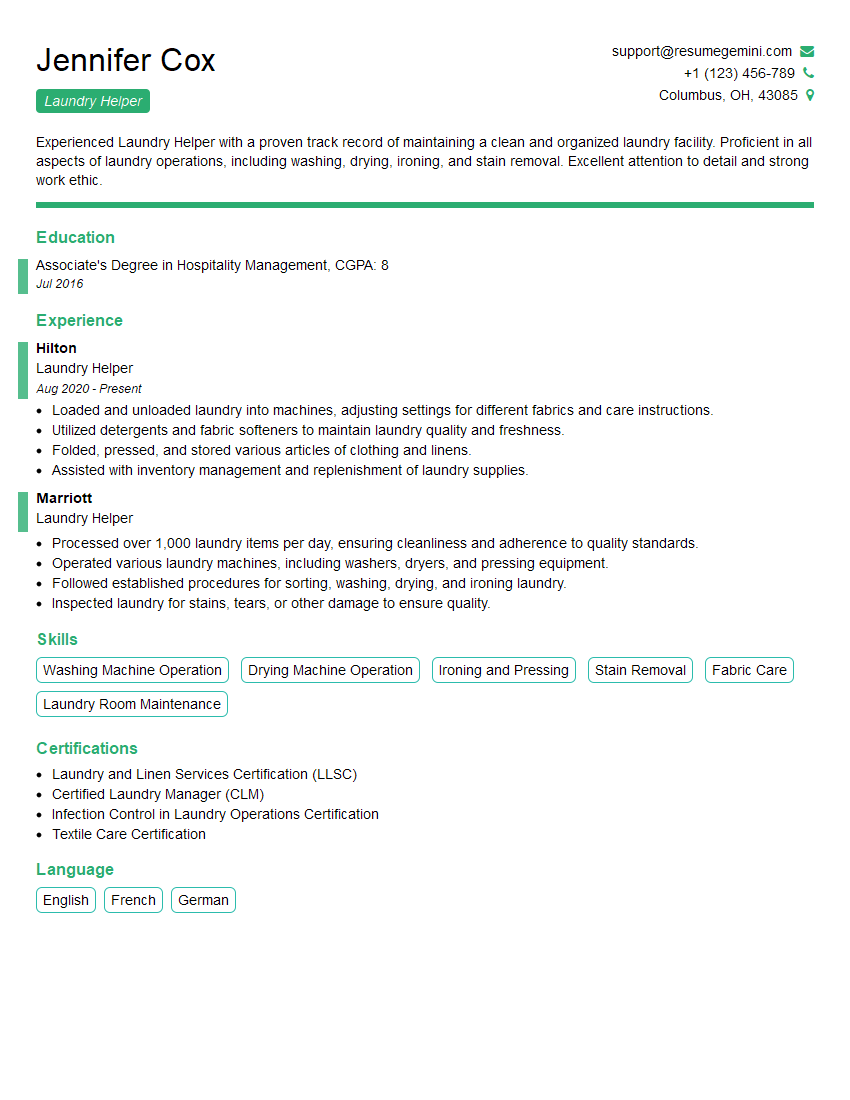
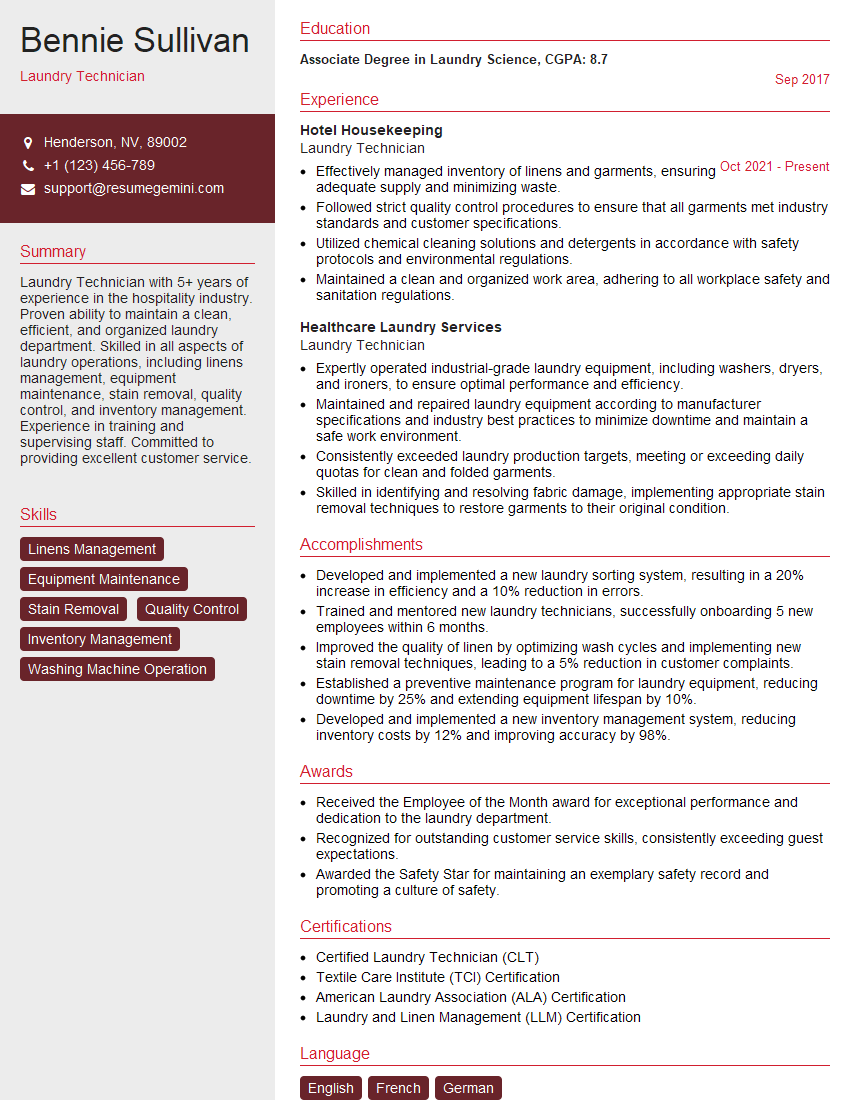
Mastering the skills of loading and unloading washing machines is crucial for success in many roles, demonstrating attention to detail, efficiency, and adherence to safety regulations. These skills are highly transferable and can contribute to a successful and fulfilling career. To increase your job prospects, creating a professional and ATS-friendly resume is essential. ResumeGemini is a trusted resource to help you build a compelling resume that highlights your abilities. We provide examples of resumes tailored to Loading and unloading washing machine roles to help you get started. Take the next step towards your dream job today!
Explore more articles
Users Rating of Our Blogs
Share Your Experience
We value your feedback! Please rate our content and share your thoughts (optional).
What Readers Say About Our Blog
Attention music lovers!
Wow, All the best Sax Summer music !!!
Spotify: https://open.spotify.com/artist/6ShcdIT7rPVVaFEpgZQbUk
Apple Music: https://music.apple.com/fr/artist/jimmy-sax-black/1530501936
YouTube: https://music.youtube.com/browse/VLOLAK5uy_noClmC7abM6YpZsnySxRqt3LoalPf88No
Other Platforms and Free Downloads : https://fanlink.tv/jimmysaxblack
on google : https://www.google.com/search?q=22+AND+22+AND+22
on ChatGPT : https://chat.openai.com?q=who20jlJimmy20Black20Sax20Producer
Get back into the groove with Jimmy sax Black
Best regards,
Jimmy sax Black
www.jimmysaxblack.com
Hi I am a troller at The aquatic interview center and I suddenly went so fast in Roblox and it was gone when I reset.
Hi,
Business owners spend hours every week worrying about their website—or avoiding it because it feels overwhelming.
We’d like to take that off your plate:
$69/month. Everything handled.
Our team will:
Design a custom website—or completely overhaul your current one
Take care of hosting as an option
Handle edits and improvements—up to 60 minutes of work included every month
No setup fees, no annual commitments. Just a site that makes a strong first impression.
Find out if it’s right for you:
https://websolutionsgenius.com/awardwinningwebsites
Hello,
we currently offer a complimentary backlink and URL indexing test for search engine optimization professionals.
You can get complimentary indexing credits to test how link discovery works in practice.
No credit card is required and there is no recurring fee.
You can find details here:
https://wikipedia-backlinks.com/indexing/
Regards
NICE RESPONSE TO Q & A
hi
The aim of this message is regarding an unclaimed deposit of a deceased nationale that bears the same name as you. You are not relate to him as there are millions of people answering the names across around the world. But i will use my position to influence the release of the deposit to you for our mutual benefit.
Respond for full details and how to claim the deposit. This is 100% risk free. Send hello to my email id: lukachachibaialuka@gmail.com
Luka Chachibaialuka
Hey interviewgemini.com, just wanted to follow up on my last email.
We just launched Call the Monster, an parenting app that lets you summon friendly ‘monsters’ kids actually listen to.
We’re also running a giveaway for everyone who downloads the app. Since it’s brand new, there aren’t many users yet, which means you’ve got a much better chance of winning some great prizes.
You can check it out here: https://bit.ly/callamonsterapp
Or follow us on Instagram: https://www.instagram.com/callamonsterapp
Thanks,
Ryan
CEO – Call the Monster App
Hey interviewgemini.com, I saw your website and love your approach.
I just want this to look like spam email, but want to share something important to you. We just launched Call the Monster, a parenting app that lets you summon friendly ‘monsters’ kids actually listen to.
Parents are loving it for calming chaos before bedtime. Thought you might want to try it: https://bit.ly/callamonsterapp or just follow our fun monster lore on Instagram: https://www.instagram.com/callamonsterapp
Thanks,
Ryan
CEO – Call A Monster APP
To the interviewgemini.com Owner.
Dear interviewgemini.com Webmaster!
Hi interviewgemini.com Webmaster!
Dear interviewgemini.com Webmaster!
excellent
Hello,
We found issues with your domain’s email setup that may be sending your messages to spam or blocking them completely. InboxShield Mini shows you how to fix it in minutes — no tech skills required.
Scan your domain now for details: https://inboxshield-mini.com/
— Adam @ InboxShield Mini
support@inboxshield-mini.com
Reply STOP to unsubscribe
Hi, are you owner of interviewgemini.com? What if I told you I could help you find extra time in your schedule, reconnect with leads you didn’t even realize you missed, and bring in more “I want to work with you” conversations, without increasing your ad spend or hiring a full-time employee?
All with a flexible, budget-friendly service that could easily pay for itself. Sounds good?
Would it be nice to jump on a quick 10-minute call so I can show you exactly how we make this work?
Best,
Hapei
Marketing Director
Hey, I know you’re the owner of interviewgemini.com. I’ll be quick.
Fundraising for your business is tough and time-consuming. We make it easier by guaranteeing two private investor meetings each month, for six months. No demos, no pitch events – just direct introductions to active investors matched to your startup.
If youR17;re raising, this could help you build real momentum. Want me to send more info?
Hi, I represent an SEO company that specialises in getting you AI citations and higher rankings on Google. I’d like to offer you a 100% free SEO audit for your website. Would you be interested?
Hi, I represent an SEO company that specialises in getting you AI citations and higher rankings on Google. I’d like to offer you a 100% free SEO audit for your website. Would you be interested?