Unlock your full potential by mastering the most common Log Felling Techniques interview questions. This blog offers a deep dive into the critical topics, ensuring you’re not only prepared to answer but to excel. With these insights, you’ll approach your interview with clarity and confidence.
Questions Asked in Log Felling Techniques Interview
Q 1. Describe your experience with different felling techniques (e.g., directional felling, hinge cutting).
Directional felling is the cornerstone of safe and efficient logging. It involves carefully planning and executing the cut to make the tree fall precisely where you want it. Hinge cutting, a crucial part of directional felling, creates a controlled hinge that guides the tree’s fall. My experience encompasses various scenarios – from felling single trees in tight spaces to managing complex harvesting operations in dense forests. For example, in a recent project involving a large oak near a power line, precise directional felling, utilizing a carefully placed hinge, allowed us to fell the tree safely, minimizing risk to both the power line and surrounding vegetation. I’ve also employed various techniques adapting to different tree species and terrain conditions. In steeper terrain, I’ve used techniques like leaning the tree slightly uphill to control the momentum of the fall, and on flatter terrain, I leverage the natural lean of the tree to assist in the felling direction.
Q 2. Explain the safety procedures you follow before, during, and after felling a tree.
Safety is paramount. Before felling, we meticulously assess the tree’s condition, surrounding environment (obstacles, personnel, power lines), and weather conditions. This involves a visual inspection for defects, assessing the lean and crown, and identifying potential escape routes. During the felling process, maintaining a safe distance, using proper personal protective equipment (PPE), and ensuring clear communication with the team is vital. After felling, we carefully inspect the tree for any unexpected issues, secure the area, and remove any immediate hazards. One time, while felling a large pine, I noticed an unexpected lean during assessment and adjusted my plan to incorporate additional safety measures, including deploying more spotters and using wedges to improve directional control.
Q 3. How do you assess tree risk factors before felling?
Assessing tree risk involves a multi-faceted approach. I check for visible defects like rot, decay, cracks, leaning, and broken branches. I also consider the tree’s species, its overall health, and the surrounding environment. Factors like soil conditions, wind speed, and the presence of nearby obstacles greatly influence risk. I always consider the potential impact zone and the trajectory of the tree’s fall. For instance, a tree with significant lean towards a road poses a higher risk than a tree standing upright in a clear area. I use experience and judgment to interpret this information to decide on a safe approach. If unsure, I often consult with more experienced colleagues.
Q 4. What are the different types of cuts used in log felling and when would you use each?
Several cuts are crucial in log felling. The face cut, usually a 45-degree notch, helps to establish the direction of fall. The back cut, carefully made a few inches higher than the face cut, controls the felling process and creates a hinge to ensure a smooth fall. The undercut is used to further control the direction of the fall, reducing the chance of unwanted movement. I select the appropriate technique based on the tree’s size, species, lean, and surrounding environment. For instance, in a tight space, a precise undercut helps direct the tree’s fall with accuracy and precision, reducing the risk of damage. A larger tree requires different cut sizes for better control.
Q 5. How do you handle unexpected situations during felling, such as encountering hidden defects?
Encountering hidden defects is a possibility in felling. If a defect is discovered during the felling process, I immediately stop cutting, reassess the situation, and adjust my strategy to mitigate the risk. This might involve using wedges to help control the fall or changing the felling direction. In extreme cases, it might necessitate abandoning the cut and developing an alternative approach, like using a different felling technique or calling in additional support. For example, if I discover significant rot during the back cut, I might carefully use wedges to split the hinge and guide the fall safely, rather than continuing with the original cut.
Q 6. Describe your experience with different types of felling equipment (chainsaws, wedges, etc.).
My experience includes extensive use of chainsaws – from various sizes and models, each suited for different felling tasks. I’m proficient in maintaining and using different types of chainsaws, and I’m familiar with the safety protocols associated with each. Wedges, both metal and plastic, are critical for guiding the tree’s fall, especially when dealing with complex lean or hidden defects. I’ve also worked with felling equipment such as grapples and processors, which improve efficiency in large-scale operations. Proper training and certification in the operation and maintenance of all equipment is always maintained.
Q 7. How do you maintain your chainsaw and other equipment to ensure optimal performance and safety?
Maintaining equipment is crucial for both safety and performance. I regularly sharpen and clean my chainsaw chain, keeping it properly tensioned and lubricated. This ensures efficient cutting and reduces the risk of kickback. The entire chainsaw also receives regular servicing and maintenance which includes checks of all moving parts, fuel system, and chain brake functionality. I also inspect and maintain wedges, ensuring they are free from damage, and clean all equipment after each use to prevent rust and damage. Proper maintenance prevents accidents and extends the lifespan of the equipment, resulting in a safer and more productive work environment.
Q 8. Explain your understanding of felling angles and their impact on tree fall direction.
Felling angles are crucial for directing the fall of a tree. The ‘hinge’ – the uncut wood on the opposite side of the felling cut – dictates the direction. A correctly placed felling angle ensures the tree falls predictably and safely.
Think of it like this: imagine a door. The hinges are like the hinge wood, and the direction you push the door is like the planned fall path. A small back cut (the notch) creates a hinge, while the felling cut determines how much wood remains, controlling the tree’s lean and swing as it falls. Angles are usually measured from the direction of the fall, with a 45-degree back cut being a common starting point. This angle is adjusted based on factors like tree lean, wind, and obstacles. A steeper back cut will force the tree to fall more quickly and aggressively.
- 0° angle: The tree falls straight ahead, suitable only for exceptional circumstances.
- 30° – 45° angle: Most common. Offers good control and is versatile.
- Over 45° angle: Used for trees with a pronounced lean or difficult terrain. It needs considerable expertise to avoid kickback or uncontrolled fall.
The impact on fall direction is directly proportional to the angle; a greater angle results in a more directed and controlled fall. Improper angles significantly increase the risk of unpredictable falls.
Q 9. How do you manage potential hazards like power lines or nearby structures during felling?
Safety around power lines and structures is paramount. I follow strict protocols that prioritize risk assessment and mitigation. I would never attempt to fell a tree near power lines without engaging utility companies. Before any work begins, I’d confirm their de-energizing and safe approach procedure. The felling method is adapted to ensure the tree is manipulated to avoid contact. This may involve rigging, directional felling with extreme precision, or even employing specialized techniques like using a climbing rope to control the direction of the tree’s fall.
Near structures, the same meticulous planning is essential. The felling direction and technique are carefully chosen to guide the tree away from buildings, fences, or other obstacles. It might necessitate creating a wider safety zone or using equipment to help direct the tree’s fall. I always consider the potential for branches to break off and cause damage, setting up protective barriers where needed.
In situations where the risk is exceptionally high, I would recommend alternative methods such as dismantling the tree section by section using climbing techniques and a crane.
Q 10. What is your experience with pre-felling assessments and planning?
Pre-felling assessments and planning are the cornerstones of safe and efficient felling. My experience in this area is extensive. Every job starts with a thorough site survey to evaluate the terrain, tree species, tree health, and the presence of any hazards. I check for potential hazards including unseen ground features, tree lean, root systems, and the proximity of obstacles.
For instance, before felling a group of trees on a hillside, I would carefully assess the slope’s angle and the soil composition to minimize the risk of landslides. The size of the safety zone depends on the size of the trees and the proximity of hazards. The assessment also involves understanding potential risks associated with the wind and weather conditions. This assessment is documented; drawings are created showing a detailed tree-felling plan with measurements and marked safe areas. It’s used for safety briefings and for the crew to understand each step and the required precautions. This process reduces accidents and makes the project run smoothly.
Q 11. How do you ensure the safety of yourself and others during felling operations?
Ensuring safety during felling is my top priority. This involves a multi-layered approach:
- Personal Protective Equipment (PPE): I always use appropriate PPE, including safety helmets, high-visibility clothing, safety glasses, hearing protection, chainsaw chaps, and sturdy work boots.
- Proper Training and Certification: I hold all necessary certifications and undergo regular refresher training to stay updated on best practices and safety regulations. My knowledge of felling techniques, emergency response, and first aid is essential.
- Risk Assessment and Communication: Thorough risk assessments are crucial, and clear communication with the crew is vital. I clearly explain each step of the felling process and ensure everyone understands their roles and responsibilities.
- Safe Work Practices: I always adhere to safe work practices, which include establishing a clear safety zone, regular equipment checks, and understanding the escape route.
- Emergency Procedures: I have clearly defined emergency procedures, and every team member knows exactly what to do in case of an accident.
Safety isn’t just about avoiding accidents; it’s about creating a culture of safety where everyone feels empowered to speak up about concerns.
Q 12. Describe your experience with different types of terrain and their impact on felling techniques.
Terrain significantly impacts felling techniques. I’ve worked in various terrains – from flat, open areas to steep slopes and rocky ground.
- Flat terrain: Easier and simpler felling, allowing for standard techniques.
- Slopes: Require careful consideration of potential roll or slide. Felling direction is crucial to prevent uncontrolled movement. I often use wedges to help guide the fall and reduce the chances of it rolling or sliding downslope.
- Rocky terrain: Presents challenges due to unstable footing and potential for damage to equipment. The placement of the felling cuts must account for the possibility of hitting rocks, which might cause the chain to bind and become more dangerous.
- Swampy terrain: Requires specialized equipment and techniques to avoid sinking or getting stuck. This might involve using mats or other supportive equipment under the machinery.
My experience allows me to adapt my techniques to any terrain, always prioritizing safety and efficiency.
Q 13. How do you handle challenging weather conditions during felling operations?
Challenging weather conditions demand extra caution and can necessitate postponing work. High winds are a significant concern, as they can cause trees to fall unpredictably. I wouldn’t fell trees in strong winds unless absolutely necessary, and if so, I would carefully monitor wind direction and speed, adapting my techniques accordingly. Rain can make the ground slippery, increasing the risk of accidents. I would adjust safety procedures as needed and ensure proper drainage, and ensure that the chainsaw is kept dry and maintained to ensure it is running safely and effectively.
Heavy snow or ice adds another layer of complexity, posing risks of tree breakage and creating slippery conditions. The assessment needs to address this, including the potential for snow buildup on branches, and the increased risk of tree breakage. In extreme weather, work is postponed until conditions improve to ensure the safety of everyone involved. Safety is non-negotiable, and postponing operations is preferable to risking an accident.
Q 14. What are the common causes of accidents in log felling, and how can they be prevented?
Accidents in log felling often stem from a combination of factors, including:
- Improper felling techniques: Incorrectly placed cuts, neglecting the hinge, or failing to account for tree lean or wind can lead to uncontrolled falls.
- Equipment malfunction: Chainsaw problems, improper maintenance, or using faulty equipment increases the risk of accidents. Regular maintenance is essential.
- Lack of training: Inadequate training or lack of experience can result in poor judgment and unsafe practices.
- Failure to assess risks: Overlooking hazards like power lines, unstable terrain, or nearby structures greatly increases the risk.
- Environmental factors: High winds, rain, or snow can significantly increase the risks. Work must be carried out with care, taking weather conditions into consideration.
Prevention involves a combination of thorough risk assessment, proper training, regular equipment maintenance, adherence to safety regulations, and a strong safety culture emphasizing communication and teamwork. Regular training refreshers for all personnel is key in maintaining high standards and reducing accident risk.
Q 15. What is your experience with first aid and emergency response in logging operations?
First aid and emergency response are paramount in logging, a high-risk occupation. My training includes current certifications in Wilderness First Responder and OSHA-compliant first aid and CPR. I’ve personally managed several on-site incidents, ranging from minor lacerations to more serious injuries involving broken bones. For example, during a timber harvest in the Cascade Mountains, a colleague suffered a severe ankle sprain after a tree unexpectedly shifted. I immediately administered first aid, immobilized the injury, called for emergency medical services, and coordinated with the team to ensure safe extraction from the site. My experience emphasizes both immediate response and the importance of preventative measures, like enforcing proper safety protocols and ensuring colleagues are equipped with and know how to use personal protective equipment (PPE).
Career Expert Tips:
- Ace those interviews! Prepare effectively by reviewing the Top 50 Most Common Interview Questions on ResumeGemini.
- Navigate your job search with confidence! Explore a wide range of Career Tips on ResumeGemini. Learn about common challenges and recommendations to overcome them.
- Craft the perfect resume! Master the Art of Resume Writing with ResumeGemini’s guide. Showcase your unique qualifications and achievements effectively.
- Don’t miss out on holiday savings! Build your dream resume with ResumeGemini’s ATS optimized templates.
Q 16. Explain your knowledge of relevant safety regulations and standards.
My understanding of safety regulations and standards is extensive, encompassing both federal and state-specific guidelines. I’m familiar with OSHA’s logging regulations, focusing on fall protection, hazard communication, and personal protective equipment (PPE). I’m also well-versed in state-specific regulations concerning timber harvesting practices, including those related to environmental protection and worker safety. I regularly review and update my knowledge to stay compliant with the ever-evolving safety standards in the industry. This includes understanding requirements for pre-harvest planning, hazard assessments, and the implementation of effective safety programs. For instance, I ensure that all crew members are properly trained in the use of fall protection systems, such as harnesses, lanyards, and anchor points, and that these systems are regularly inspected and maintained.
Q 17. Describe your experience with different types of wood and their felling characteristics.
Experience with diverse tree species is crucial. I’ve worked extensively with conifers like Douglas fir (known for its strength and straight grain but potential for kickback) and hemlock (which tends to be more brittle), as well as hardwoods such as oak (strong but can be difficult to fell due to its density) and maple (also strong and dense, prone to splitting). Each species requires a different approach to felling. For instance, a Douglas fir, with its tall, straight trunk, often requires a more directional felling technique compared to a shorter, more irregularly shaped oak. Understanding wood properties such as grain, density, and moisture content significantly impacts felling strategies. I’ve learned to recognize signs of decay or disease that might affect a tree’s stability and influence the chosen felling method. Knowing how these variations affect a tree’s reaction to felling cuts is fundamental to safe and efficient operations.
Q 18. How do you select the appropriate felling technique based on tree species, size, and location?
Selecting the appropriate felling technique is a critical decision. I consider several factors: tree species (as described above), size (diameter and height), lean (if the tree is leaning significantly), and the surrounding environment (obstacles, proximity to other trees, terrain). For a large, leaning Douglas fir in a dense stand, I might opt for a directional felling technique with a hinge cut to direct the fall away from other trees. In contrast, a smaller, straight tree in an open area might be felled using a simpler notch and back cut method. This process always begins with a thorough assessment of the entire situation and a careful consideration of potential hazards. I regularly utilize tree felling guides and manuals to ensure compliance with safety regulations and best practices. Safety is always the primary concern, guiding every step of the felling process.
Q 19. What is your experience with using wedges and other tools to control tree fall?
Wedges and other tools are essential for precise fall control. I use various types of wedges—wooden, plastic, and even hydraulic—depending on the situation. Wooden wedges are commonly used for smaller trees, providing leverage to direct the fall. For larger trees, or when more control is needed, I’ll often use hydraulic wedges, which provide more power and precision. In cases where a tree is stubborn or has an unexpected reaction, I utilize additional tools to assist with controlling the fall, such as felling levers or snatch blocks. I’ve had several situations where wedges proved crucial in preventing accidents. For instance, during the felling of a large oak, the tree showed signs of resisting the back cut. Quick insertion of hydraulic wedges directed the fall safely away from power lines.
Q 20. Explain your understanding of felling limits and restrictions.
Felling limits and restrictions are determined by a variety of factors, including environmental considerations (protecting sensitive habitats or water bodies), safety concerns (proximity to power lines, buildings, or roadways), and legal restrictions (permit requirements). I am very familiar with these limits and always work within them. I ensure that all felling operations adhere to the specified regulations and restrictions set forth by the landowner, regulatory agencies, and the company’s safety protocols. For example, felling near a stream requires extra caution and might necessitate using specific techniques to avoid soil erosion or water contamination. These legal and safety considerations must always take priority over productivity.
Q 21. How do you communicate effectively with your team during felling operations?
Effective communication is critical for team safety. Before any felling operation, we conduct thorough pre-job briefings, outlining the plan, identifying potential hazards, and assigning roles and responsibilities. During the felling operation, clear and concise hand signals are crucial, especially when visual communication is limited. We use a standardized set of signals to indicate the direction of the fall, the need for assistance, or any potential hazards. Regular communication ensures everyone is aware of the situation and can react accordingly. I maintain a respectful and collaborative atmosphere, encouraging team members to voice concerns. I believe open communication is not just vital for efficient teamwork, but, most importantly, a crucial aspect of creating a safe work environment.
Q 22. Describe your experience with log bucking and limbing.
Log bucking and limbing are fundamental steps in harvesting timber. Bucking involves cutting the felled tree into manageable log lengths, while limbing removes the branches. My experience spans over 15 years, encompassing various tree species and terrain conditions. I’m proficient in using both chainsaws (both manual and hydraulic) and specialized bucking tools, adapting my technique to the size and species of the tree. For instance, when bucking a large Douglas fir, I’d prioritize safety by employing a precise felling cut and using wedges to control the direction of the fall, followed by careful bucking to prevent kickback. Limbing, on the other hand, requires a systematic approach, working from the top down to avoid damaging the log and ensuring efficient removal of branches. I always prioritize safety, ensuring a clear workspace and using proper personal protective equipment (PPE).
For example, in one project involving large redwoods, we utilized a specialized grapple to maneuver the logs while limbing was done using a chainsaw with a long bar attachment to maximize reach and minimize the need for precarious positioning. Efficiency and safety were paramount – we developed a system where one person focused on limbing while another prepared the next section for bucking.
Q 23. What is your experience with skidding and yarding techniques?
Skidding and yarding are crucial for transporting felled logs from the felling site to the landing area. Skidding involves dragging logs directly to the landing using tractors or skidders, while yarding utilizes a cable system for longer distances or steeper terrain. My experience includes both methods, employing various equipment such as tracked skidders, grapple skidders, and high lead yarding systems. The choice of method depends on factors like terrain, log size, and distance to the landing. For example, in steep mountainous terrain, high lead yarding is the safest and most efficient method. It’s important to understand the limitations of each system. A tracked skidder excels in challenging terrain, while a grapple skidder offers greater maneuverability for smaller logs. Proper planning is crucial to minimize ground disturbance and environmental impact. We always consider soil type and moisture levels to reduce rutting and erosion. In one project, we utilized a low ground pressure skidder to minimize damage in a sensitive wetland area.
Q 24. How do you ensure the sustainability of logging practices?
Sustainable logging practices are essential for preserving forest ecosystems. My approach prioritizes selective harvesting, leaving behind sufficient seed trees and protecting valuable biodiversity. This involves careful planning and assessment of the forest stand before harvesting begins. We utilize felling charts to minimize damage to residual trees and ensure efficient log extraction. We also employ buffer zones around sensitive areas like streams and wetlands. Post-harvest operations include reforestation efforts, which can involve planting seedlings or allowing natural regeneration. I am also a strong proponent of Reduced Impact Logging (RIL) techniques, aiming to minimize soil compaction and damage to the forest floor. For example, we’ve used directional felling and carefully planned skid trails to protect riparian zones and minimize soil erosion. Long-term monitoring of the harvested area is also critical to assess the success of these practices. Proper planning and execution can mean the difference between environmental degradation and sustainable forest management.
Q 25. Explain your understanding of environmental regulations related to logging.
I have a thorough understanding of environmental regulations related to logging, including federal, state, and local laws. This involves knowledge of permits required for harvesting, protection of endangered species and their habitats, water quality regulations concerning streamside management zones (SMZs), and requirements for erosion and sediment control. I’m familiar with different environmental impact assessment (EIA) processes and ensure all logging activities comply with these regulations. Before any logging operation, a thorough site assessment is conducted to identify sensitive areas and to plan the logging operation accordingly. We work closely with environmental consultants and regulatory agencies to ensure adherence to all relevant laws and permits. A solid understanding of these regulations ensures responsible and sustainable forest management.
Q 26. Describe your experience with using felling charts and planning tools.
Felling charts and planning tools are essential for safe and efficient logging operations. Felling charts provide guidelines on the optimal felling direction based on tree characteristics and surrounding terrain, minimizing the risk of tree damage or injury. I’m proficient in using various felling charts, adapting my approach based on tree species and conditions. We use GPS and GIS technology to map the forest stand, identify high-value trees and areas requiring special attention. This data informs our harvesting plan, ensuring optimal resource utilization and minimizing environmental impact. Planning tools also allow us to simulate different harvesting scenarios and optimize resource allocation. For example, in a recent project involving uneven-aged forest, using GIS data and planning software allowed us to select specific trees to harvest while minimizing impact on the remaining forest structure and biodiversity. Software tools can also help with inventory calculations and cost-benefit analysis, which is crucial for effective management of any harvesting operation.
Q 27. How do you stay updated on best practices and new developments in log felling techniques?
Staying updated on best practices and new developments in log felling techniques is crucial for maintaining safety and efficiency. I actively participate in industry conferences and workshops, attend training courses offered by chainsaw manufacturers and safety organizations, and regularly review industry publications and journals. I also maintain professional affiliations with organizations dedicated to promoting safe and sustainable forestry practices. These practices include adopting new technologies like felling heads or improved safety equipment and gaining knowledge of innovative harvesting techniques like pre-harvest planning. Following best practices ensures compliance with safety regulations and promotes the adoption of sustainable forestry methods. Active engagement allows one to adapt to new technologies, strategies, and environmental regulations – leading to more efficient and sustainable work practices.
Q 28. Describe your experience working as part of a logging crew.
Working as part of a logging crew requires effective teamwork, communication, and collaboration. My experience includes leading and participating in diverse logging crews, always emphasizing safety and efficiency. I believe in open communication, ensuring all team members understand their roles and responsibilities. This involves daily briefings to discuss the day’s tasks, potential hazards, and safety protocols. Effective communication is vital in coordinating operations, especially in complex felling situations. We foster a culture of mutual respect and shared responsibility, ensuring everyone feels comfortable raising safety concerns. A strong team dynamic ensures smooth operations, reduces risks, and contributes to overall productivity and safety. One specific example involves the time we worked through an unexpectedly challenging weather event. By relying on open communication, our team was able to adapt to the changing conditions and ensure everyone returned safely.
Key Topics to Learn for Log Felling Techniques Interview
- Tree Assessment and Selection: Understanding tree anatomy, identifying hazards (disease, decay, lean), and selecting appropriate felling techniques based on tree characteristics and surrounding environment.
- Felling Techniques: Mastering various felling methods (e.g., directional felling, undercut techniques, hinge creation) and their practical application in diverse terrain and timber types. Consider the impact of different saw types and their maintenance.
- Safety Procedures and Regulations: Detailed knowledge of safety protocols, personal protective equipment (PPE) requirements, hazard identification and risk mitigation strategies, and adherence to industry regulations and best practices.
- Equipment Operation and Maintenance: Safe and proficient operation of chainsaws, including maintenance, sharpening, and troubleshooting. Understanding other relevant equipment like wedges and felling wedges.
- Environmental Considerations: Minimizing environmental impact through responsible logging practices, understanding sustainable forestry principles, and awareness of potential damage to surrounding flora and fauna.
- Problem-Solving and Decision-Making: Analyzing complex situations, adapting felling techniques to unexpected challenges (e.g., difficult terrain, unforeseen hazards), and making quick, informed decisions to ensure safety and efficiency.
- Post-Felling Procedures: Safe and efficient limbing, bucking, and skidding techniques, ensuring proper timber handling and storage to prevent accidents and damage.
Next Steps
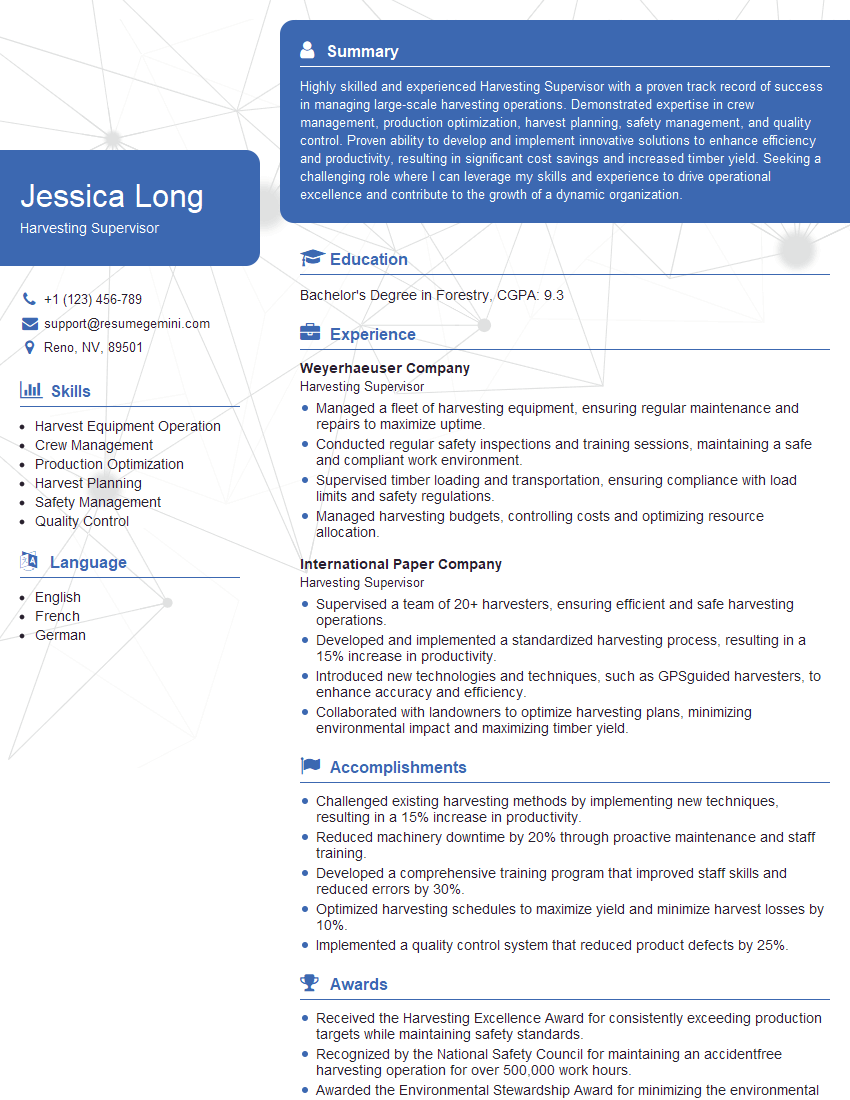
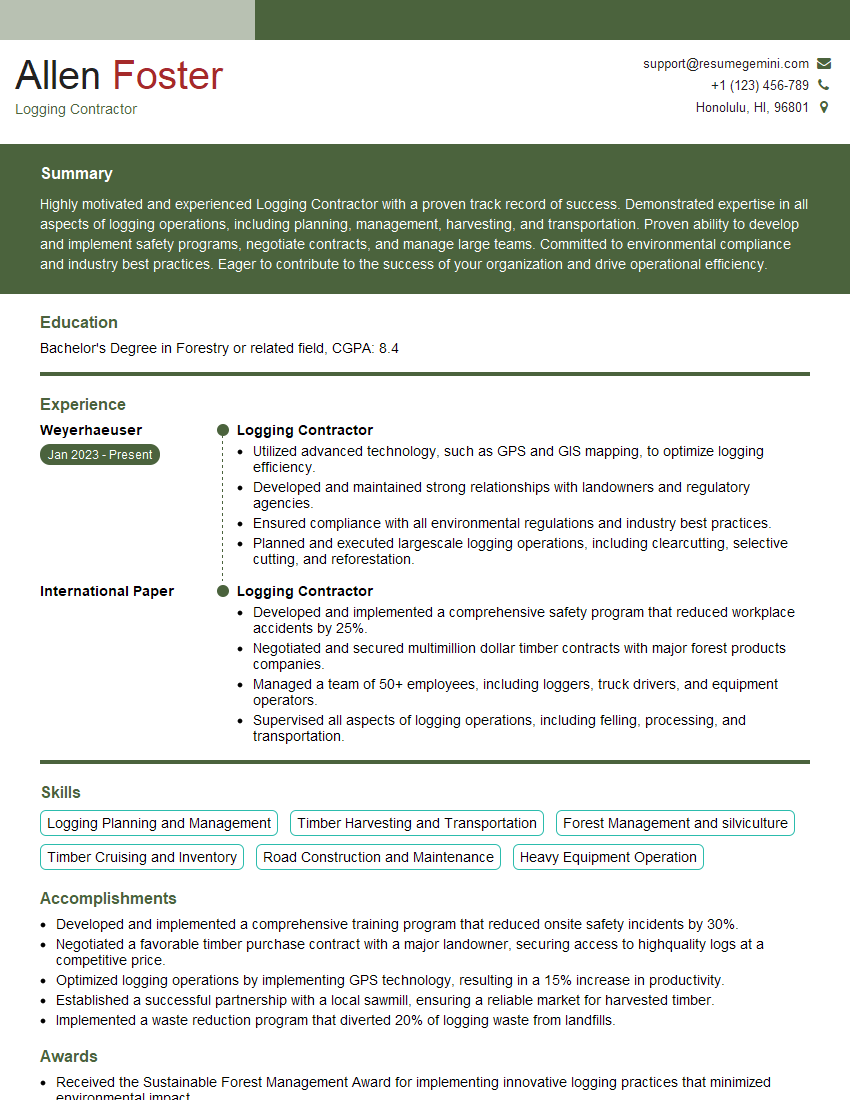
Mastering Log Felling Techniques is crucial for career advancement in the forestry industry, opening doors to higher-paying positions and specialized roles. A strong foundation in these techniques demonstrates your commitment to safety, efficiency, and environmental responsibility. To significantly improve your job prospects, creating an ATS-friendly resume is vital. ResumeGemini is a trusted resource that can help you build a compelling resume showcasing your skills and experience. We provide examples of resumes tailored to Log Felling Techniques to guide you in crafting a professional and impactful document.




Explore more articles
Users Rating of Our Blogs
Share Your Experience
We value your feedback! Please rate our content and share your thoughts (optional).
What Readers Say About Our Blog
Hello,
we currently offer a complimentary backlink and URL indexing test for search engine optimization professionals.
You can get complimentary indexing credits to test how link discovery works in practice.
No credit card is required and there is no recurring fee.
You can find details here:
https://wikipedia-backlinks.com/indexing/
Regards
NICE RESPONSE TO Q & A
hi
The aim of this message is regarding an unclaimed deposit of a deceased nationale that bears the same name as you. You are not relate to him as there are millions of people answering the names across around the world. But i will use my position to influence the release of the deposit to you for our mutual benefit.
Respond for full details and how to claim the deposit. This is 100% risk free. Send hello to my email id: [email protected]
Luka Chachibaialuka
Hey interviewgemini.com, just wanted to follow up on my last email.
We just launched Call the Monster, an parenting app that lets you summon friendly ‘monsters’ kids actually listen to.
We’re also running a giveaway for everyone who downloads the app. Since it’s brand new, there aren’t many users yet, which means you’ve got a much better chance of winning some great prizes.
You can check it out here: https://bit.ly/callamonsterapp
Or follow us on Instagram: https://www.instagram.com/callamonsterapp
Thanks,
Ryan
CEO – Call the Monster App
Hey interviewgemini.com, I saw your website and love your approach.
I just want this to look like spam email, but want to share something important to you. We just launched Call the Monster, a parenting app that lets you summon friendly ‘monsters’ kids actually listen to.
Parents are loving it for calming chaos before bedtime. Thought you might want to try it: https://bit.ly/callamonsterapp or just follow our fun monster lore on Instagram: https://www.instagram.com/callamonsterapp
Thanks,
Ryan
CEO – Call A Monster APP
To the interviewgemini.com Owner.
Dear interviewgemini.com Webmaster!
Hi interviewgemini.com Webmaster!
Dear interviewgemini.com Webmaster!
excellent
Hello,
We found issues with your domain’s email setup that may be sending your messages to spam or blocking them completely. InboxShield Mini shows you how to fix it in minutes — no tech skills required.
Scan your domain now for details: https://inboxshield-mini.com/
— Adam @ InboxShield Mini
Reply STOP to unsubscribe
Hi, are you owner of interviewgemini.com? What if I told you I could help you find extra time in your schedule, reconnect with leads you didn’t even realize you missed, and bring in more “I want to work with you” conversations, without increasing your ad spend or hiring a full-time employee?
All with a flexible, budget-friendly service that could easily pay for itself. Sounds good?
Would it be nice to jump on a quick 10-minute call so I can show you exactly how we make this work?
Best,
Hapei
Marketing Director
Hey, I know you’re the owner of interviewgemini.com. I’ll be quick.
Fundraising for your business is tough and time-consuming. We make it easier by guaranteeing two private investor meetings each month, for six months. No demos, no pitch events – just direct introductions to active investors matched to your startup.
If youR17;re raising, this could help you build real momentum. Want me to send more info?
Hi, I represent an SEO company that specialises in getting you AI citations and higher rankings on Google. I’d like to offer you a 100% free SEO audit for your website. Would you be interested?
Hi, I represent an SEO company that specialises in getting you AI citations and higher rankings on Google. I’d like to offer you a 100% free SEO audit for your website. Would you be interested?
good