Preparation is the key to success in any interview. In this post, we’ll explore crucial Market Research Databases (e.g., Nielsen, IRI) interview questions and equip you with strategies to craft impactful answers. Whether you’re a beginner or a pro, these tips will elevate your preparation.
Questions Asked in Market Research Databases (e.g., Nielsen, IRI) Interview
Q 1. Explain the difference between Nielsen and IRI data.
Nielsen and IRI are both leading providers of syndicated market research data, but they collect and analyze data in different ways, leading to distinct strengths and weaknesses. Think of it like this: Nielsen focuses primarily on consumer panels and TV viewing habits, while IRI focuses more on point-of-sale (POS) scanner data from retailers.
- Nielsen: Primarily uses a panel of households that track their purchases (Homescan), providing insights into consumer behavior and brand choices. They also track TV viewing habits to understand advertising effectiveness. Their data offers a deeper understanding of who is buying a product and why.
- IRI: Primarily uses data collected from supermarket scanners at the point of sale, offering a comprehensive view of sales performance across various retail channels. This provides a detailed picture of what is being sold, where, and how much. They also offer BehaviorScan, a unique panel offering a blend of household purchasing and exposure to marketing messages.
In short, Nielsen provides a richer picture of consumer behavior while IRI offers a more granular view of sales performance. Often, combining data from both sources gives the most complete understanding of the market.
Q 2. How would you use Nielsen Homescan data to analyze a new product launch?
Analyzing a new product launch using Nielsen Homescan data involves a multi-step process. First, I’d segment the Homescan panel based on relevant demographics and purchasing behaviors to identify potential target consumers. Then, I’d track the product’s trial rate, repeat purchase rate, and overall market share among these segments over time.
For example, if we launched a new organic baby food, I’d focus on Homescan panels with households containing infants and toddlers. I’d analyze how frequently this segment purchased the product initially (trial rate) and how often they repurchased it (repeat purchase rate) compared to existing competitors. I’d also compare the market share gained by our product to that of similar organic baby food offerings. Finally, I’d correlate purchasing patterns with other data points captured in Homescan, such as media consumption habits, to identify potential marketing opportunities.
This allows for a comprehensive understanding of the product’s success, identifying areas for improvement or potential adjustments to marketing strategies.
Q 3. Describe your experience with IRI’s BehaviorScan data.
My experience with IRI’s BehaviorScan data has been extensive, primarily focusing on understanding the impact of marketing activities on consumer purchasing behavior. BehaviorScan panels provide a unique combination of purchase data and exposure data (TV viewing, print media, etc.), allowing for powerful causal analyses. For example, I’ve used BehaviorScan to evaluate the effectiveness of specific advertising campaigns by comparing the purchasing behavior of households exposed to the campaign with those who weren’t.
One project involved analyzing the effectiveness of a new promotional offer for a packaged goods brand. By comparing the purchasing behavior of households exposed to the promotion versus a control group, we were able to isolate the promotional lift and accurately measure its return on investment. The detailed household-level data allowed for a deep dive into specific consumer segments, identifying those most responsive to the promotion and informing future marketing strategies. This provided invaluable insights beyond simple sales data, allowing the client to optimize their marketing spend.
Q 4. What are the limitations of using syndicated market research data like Nielsen or IRI?
While syndicated data like Nielsen and IRI offers significant advantages, it’s crucial to acknowledge its limitations. These datasets aren’t perfect and come with several caveats:
- Sampling Bias: The data is based on a sample of households or retailers; therefore, it might not perfectly represent the entire market. This is particularly true for niche products with smaller consumer bases.
- Data Lag: There’s often a delay between when the data is collected and when it’s available, making real-time analysis challenging.
- Cost: Accessing this data can be expensive, limiting its accessibility for smaller organizations.
- Data Accuracy: Scanner data can suffer from errors in price scanning, item identification, or data entry. Household panel data might suffer from recall bias or participation bias.
- Limited Qualitative Data: Syndicated data primarily provides quantitative information. It often lacks the rich qualitative insights gathered through focus groups or in-depth interviews.
Understanding these limitations is crucial for accurate interpretation and avoiding overgeneralization of findings.
Q 5. How do you handle missing data in Nielsen or IRI datasets?
Handling missing data is a critical aspect of working with Nielsen and IRI datasets. My approach involves a combination of techniques, always prioritizing a thorough understanding of *why* the data is missing.
- Identifying the Cause: Is the missing data random (missing completely at random, MCAR), systematic (missing at random, MAR), or non-random (missing not at random, MNAR)? Understanding the cause helps determine the best imputation method.
- Imputation Techniques: For MCAR data, simple imputation techniques like mean or median imputation might be acceptable. For MAR data, more sophisticated methods like multiple imputation or regression imputation are more appropriate. MNAR data is the most challenging, often requiring specialized techniques or even discarding the affected variables if the missingness is significant.
- Sensitivity Analysis: After imputation, it’s essential to perform a sensitivity analysis to assess the impact of the chosen imputation method on the overall results. This helps ensure that the conclusions aren’t overly influenced by the handling of missing data.
The ultimate goal is to minimize bias while maintaining the integrity of the dataset.
Q 6. Explain your process for cleaning and preparing market research data.
Cleaning and preparing market research data is a crucial and often time-consuming step. My process typically involves the following stages:
- Data Validation: Checking for data consistency, completeness, and accuracy. This often involves comparing data against known values or other data sources.
- Data Transformation: Converting data into a usable format. This includes tasks like standardizing units, dealing with outliers, and creating new variables from existing ones. For example, converting sales data from dollars to units or creating a new variable representing product category.
- Data Cleaning: Identifying and correcting errors, such as removing duplicates, handling missing data (as described above), and resolving inconsistencies.
- Data Aggregation: Summarizing data into meaningful aggregates. This might involve calculating averages, totals, or percentages across various dimensions, such as product category, retailer type, or geographic region.
- Data Integration: Combining data from different sources to create a more comprehensive view. This might involve merging Nielsen and IRI data, or combining syndicated data with proprietary internal data.
Throughout this process, rigorous documentation and version control are essential to ensure traceability and reproducibility of the results.
Q 7. How do you identify key performance indicators (KPIs) from Nielsen or IRI data?
Identifying key performance indicators (KPIs) from Nielsen or IRI data depends heavily on the specific business objective. However, some common KPIs include:
- Market Share: The percentage of total market sales accounted for by a specific brand or product.
- Sales Growth/Decline: The percentage change in sales volume or value over a specific period.
- Distribution: The percentage of stores or outlets carrying a particular product.
- Price Elasticity: The responsiveness of demand to changes in price.
- Brand Awareness/Consideration: The percentage of consumers familiar with a brand or who consider it when making a purchase (often requiring integration with additional data sources).
- Average Price: The average price paid per unit of a product.
- Household Penetration: The percentage of households purchasing a particular product within a given time frame.
- Repeat Purchase Rate: The percentage of purchasers who repurchase the product after their initial trial.
The selection of KPIs should be guided by the overall business objectives. For instance, a new product launch might prioritize market share and household penetration, while an established brand might focus on sales growth and brand awareness.
Q 8. How would you use IRI data to identify market share trends?
IRI data provides a comprehensive view of retail sales, allowing for a robust analysis of market share trends. We can identify these trends by focusing on key metrics like dollar sales, unit sales, and market share percentage for specific products and brands within defined categories.
For instance, let’s say we’re tracking the market share of different cola brands. I would first define the relevant product category (cola), the geographic area (e.g., national, regional), and the time period (e.g., the last year). Then, I would extract data on dollar sales for each cola brand from IRI’s data warehouse. This data would be further segmented by retailer type (e.g., supermarket, convenience store) if needed for more granular analysis. To calculate market share, I’d divide each brand’s dollar sales by the total dollar sales of the cola category within the specified area and timeframe. Finally, I’d track these share percentages over time to reveal market share trends, identifying growth, decline, or periods of stability for each brand.
Visualizations such as line charts, showing market share over time for each brand, would clearly highlight emerging trends. A bar chart would illustrate market share at a specific point in time. These visuals are crucial for effectively communicating market share trends to stakeholders.
Q 9. How would you use Nielsen data to analyze pricing strategies?
Nielsen data, particularly its retail scanner data, offers invaluable insights into pricing strategies. By analyzing price changes and their impact on sales volume and market share, we can effectively gauge the effectiveness of different pricing models.
For example, we could examine the impact of a price promotion on a specific product. We would compare sales volume and market share during the promotion period with sales volume and market share during a comparable pre-promotion period. This analysis could reveal the promotion’s effectiveness in driving sales, determining if price elasticity of demand was as expected. We’d also examine the impact on competitor sales to understand the competitive landscape and how their pricing influenced consumer choice. To analyze a competitor’s pricing strategy, I would compare their price points to our own and to the overall category average over time, looking for patterns in pricing, promotions, and their effect on sales and market share. This requires careful selection of appropriate metrics such as price per unit, average price, and promotional frequency.
Data visualization is crucial here. Scatter plots showing price against sales volume would reveal the relationship between these two variables. Line charts, showing price changes over time, can help identify trends in the competitor’s pricing strategies. A crucial aspect is understanding the interplay of various factors affecting price and sales.
Q 10. Describe your experience with data visualization tools for presenting market research findings from Nielsen or IRI.
I have extensive experience using various data visualization tools to present market research findings from both Nielsen and IRI. My go-to tools include Tableau, Power BI, and Excel. The specific tool chosen depends on the complexity of the analysis, the size of the dataset, and the audience’s technical proficiency.
For instance, with Tableau, I can create highly interactive dashboards that showcase key trends and insights derived from Nielsen’s Homescan panel data or IRI’s Infoscan data. This allows for dynamic exploration of the data, letting clients drill down into specific segments or time periods. With Power BI, I’ve created reports that effectively communicate complex findings related to product performance, pricing dynamics, and distribution patterns to both technical and non-technical audiences. Finally, Excel, while simpler, remains a versatile tool for creating charts and graphs for quick presentations or initial data exploration.
I always focus on creating visualizations that are clear, concise, and easily understandable. Effective labeling, legends, and the appropriate chart type are crucial for conveying information accurately and efficiently. For instance, for presenting market share trends, a well-labeled line chart is typically the most appropriate.
Q 11. What are some common challenges you’ve encountered while working with Nielsen or IRI data?
Working with Nielsen and IRI data presents several common challenges. One major hurdle is data inconsistencies and gaps. Data collection methodologies differ across retailers, and not all retailers report data consistently, leading to missing values or discrepancies. Another challenge is data latency. These datasets often have a time lag before they are updated, delaying the analysis and potentially limiting the timeliness of insights.
Furthermore, understanding the data’s nuances can be tricky. Each data provider uses specific methodologies and definitions (e.g., different ways of classifying product categories or retail channels), necessitating a deep understanding of these nuances to avoid misinterpretations. Finally, the sheer volume of data can be overwhelming. Proper data cleaning, filtering, and aggregation are crucial for managing large datasets effectively.
I’ve addressed these issues by implementing robust data quality checks, utilizing data imputation techniques where appropriate, and collaborating closely with data providers to address data gaps or inconsistencies. Choosing the right analytical methodology, accounting for limitations in the data, and proactively communicating any data-related limitations to stakeholders are also crucial.
Q 12. How would you address discrepancies between Nielsen and IRI data?
Discrepancies between Nielsen and IRI data are common due to differences in their data collection methodologies, retailer coverage, and data definitions. Addressing these discrepancies requires a methodical approach.
First, I’d thoroughly investigate the source of the discrepancy. This involves comparing the data collection methodologies, retailer coverage, and data definitions used by both providers. Differences in retailer coverage can lead to varying sales figures. Nielsen and IRI might have different panels of retailers. Understanding these differences is crucial. Next, I’d examine the level of aggregation. Discrepancies might be less pronounced at higher levels of aggregation (e.g., total category sales) and more apparent at lower levels (e.g., individual brand sales).
Finally, I’d use a reconciliation approach. This involves weighing the data from both sources based on factors like retailer coverage, historical accuracy, and data quality. A simple average might not be appropriate; instead, a weighted average based on perceived reliability of each dataset might be more suitable. In certain scenarios, I might opt to favor one dataset over another, basing my choice on the specific analytical need and available evidence of data accuracy. Transparency in this process, acknowledging limitations, is essential.
Q 13. How familiar are you with different Nielsen panels (e.g., Homescan, Retail Scanner)?
I’m very familiar with different Nielsen panels. The Homescan panel provides household-level data on consumer purchases of packaged goods, offering valuable insights into consumer behavior, brand loyalty, and the impact of promotions. The retail scanner data offers a detailed view of retail sales at the point of purchase, providing information on pricing, promotions, distribution, and market share at a granular level.
These two panels complement each other. Homescan provides valuable context into *why* consumers are buying what they are, while retail scanner data illustrates the *what* and *how much*. Understanding the strengths and weaknesses of each panel is critical to choosing the appropriate data source for specific analysis. For example, if I’m interested in understanding the impact of in-store promotions on consumer purchase behavior, retail scanner data would provide that immediate impact. However, if I’m trying to analyze long-term brand loyalty patterns, Homescan’s panel data is crucial.
Furthermore, I have also worked with other Nielsen panels such as the single-source panel data (combining household purchase data with television viewing habits) which helps track the effectiveness of advertising campaigns, as well as custom panels created for specific client needs.
Q 14. Explain how you would use IRI’s Infoscan data to track brand performance.
IRI’s Infoscan data is a powerful tool for tracking brand performance. It provides detailed sales data across various retail channels, allowing for a comprehensive assessment of a brand’s progress. I would use this data by first identifying the specific brand and its product category.
Next, I would extract relevant data points from Infoscan, such as dollar sales, unit sales, market share, average price, and distribution. This data would be segmented by retailer type (e.g., supermarket, drug store), geography, and time period. I would then analyze these metrics to track the brand’s performance over time, comparing them to previous periods and to competitors’ performance. For example, a decline in unit sales could signal a decrease in consumer demand. A decrease in average price suggests price-based competition or promotional activities. Increased distribution coverage could be positive, indicating expansion in market reach.
This analysis would also involve comparing the brand’s performance against key performance indicators (KPIs) that have been established for the brand. These comparisons help us understand whether the brand is achieving its business objectives. Finally, visual representations such as line charts for sales trends, and bar charts for market share comparisons across retailers and time periods would provide a holistic view of the brand’s performance, allowing me to present findings in a clear and concise way to stakeholders.
Q 15. How would you segment your market using Nielsen or IRI data?
Segmenting a market using Nielsen or IRI data involves leveraging their rich datasets to divide the total market into distinct groups of consumers who share similar characteristics and exhibit similar purchasing behaviors. This allows for targeted marketing strategies and a deeper understanding of consumer preferences. We can segment based on various factors:
- Demographics: Age, gender, income, education, household size, ethnicity, etc. For example, I might analyze IRI data to identify the purchasing habits of Millennials versus Baby Boomers for a specific product category.
- Geographics: Region, urban/rural location, climate. IRI’s store-level data is excellent for understanding regional variations in demand.
- Psychographics: Lifestyle, values, interests, attitudes. While Nielsen and IRI don’t directly measure psychographics, we can infer them through purchasing patterns. For instance, frequent purchases of organic food items might suggest a health-conscious lifestyle segment.
- Behavioral Segmentation: Brand loyalty, purchase frequency, price sensitivity, usage rate. Nielsen’s Homescan panel data provides invaluable insights into consumer purchasing behavior over time, allowing us to identify heavy vs. light users of a particular product.
- Product Usage: How consumers use the product, the occasions of use. This requires careful consideration of the product category and may involve further analysis beyond the raw data provided by the databases.
The specific segmentation approach depends heavily on the business objective and the available data. For instance, a new product launch may require a focus on demographic and geographic segmentation to identify high-potential customer groups, while an existing product might benefit from a more nuanced behavioral segmentation to improve customer retention.
Career Expert Tips:
- Ace those interviews! Prepare effectively by reviewing the Top 50 Most Common Interview Questions on ResumeGemini.
- Navigate your job search with confidence! Explore a wide range of Career Tips on ResumeGemini. Learn about common challenges and recommendations to overcome them.
- Craft the perfect resume! Master the Art of Resume Writing with ResumeGemini’s guide. Showcase your unique qualifications and achievements effectively.
- Don’t miss out on holiday savings! Build your dream resume with ResumeGemini’s ATS optimized templates.
Q 16. Describe your experience using SQL or other database query languages with Nielsen or IRI data.
My experience with SQL and database query languages in the context of Nielsen and IRI data is extensive. I regularly use SQL to extract, transform, and load (ETL) data from these databases. My expertise lies in writing complex queries to efficiently retrieve specific information and perform data manipulation tasks.
For example, I’ve used SQL to:
- Extract sales data:
SELECT product_name, SUM(sales_volume) FROM sales_data WHERE region = 'Northeast' GROUP BY product_name;This query calculates the total sales volume for each product in the Northeast region. - Analyze promotions:
SELECT product_name, AVG(price) FROM price_data WHERE promotion_id IS NOT NULL;This query computes the average price of products during promotional periods. - Join datasets: I regularly join tables from different Nielsen or IRI modules (e.g., sales data with demographic data) to gain a holistic view of consumer behavior. This involves using
JOINclauses in SQL. Example:SELECT sales_data.product_name, demographic_data.age_group FROM sales_data INNER JOIN demographic_data ON sales_data.customer_id = demographic_data.customer_id;
This proficiency allows for efficient data extraction and preparation for further analysis in tools like R or Python. I also have experience utilizing the proprietary interfaces offered by Nielsen and IRI to access their data through more user-friendly tools.
Q 17. How do you interpret market share data from Nielsen or IRI?
Market share data from Nielsen or IRI represents the percentage of total market sales attributable to a particular brand or product. Interpreting this data requires a nuanced understanding of its context. I always consider the following factors:
- Time Period: Market share fluctuates over time. Comparing current market share to previous periods reveals trends and growth/decline. A year-over-year comparison is often crucial.
- Market Definition: The specific market being considered greatly influences interpretation. For instance, a brand might have a high market share within a specific geographic region but low share nationally.
- Data Granularity: Analyzing market share at different levels of granularity—e.g., total market, category, sub-category—offers a deeper understanding. A company might have a small overall market share but dominate a particular niche.
- Competitive Landscape: Market share changes are often directly related to competitive actions. Understanding competitor strategies is vital to contextualize changes in market share.
- External Factors: Economic conditions, seasonality, and new product introductions can also significantly impact market share.
For example, observing a 5% increase in market share in a growing market indicates strong performance, whereas a 5% increase in a stagnant market might suggest aggressive market share stealing from competitors.
Q 18. How do you assess the accuracy and reliability of Nielsen or IRI data?
Assessing the accuracy and reliability of Nielsen and IRI data involves several steps. These databases are highly regarded but are not without limitations. I approach this by:
- Understanding Data Collection Methodology: Both Nielsen and IRI employ various data collection methods like scanner data from retail outlets, consumer panels, and surveys. Understanding these methods helps gauge potential biases and limitations. For instance, scanner data might not perfectly capture sales from smaller, independent stores.
- Considering Sample Size and Representativeness: Panel data relies on a sample of households. A sufficiently large and representative sample is crucial for generalizability. I always check for information on sample size and demographics to assess the representativeness.
- Checking for Data Consistency and Outliers: I meticulously examine the data for inconsistencies and outliers that might indicate errors or inaccuracies. Identifying these outliers is often a crucial part of data cleaning.
- Comparing Across Data Sources: Whenever possible, I cross-validate findings from Nielsen and IRI data with other sources, such as company internal sales data. This helps to identify discrepancies and potential issues.
- Considering Data Limitations: I’m always aware of the inherent limitations. Nielsen data, for example, might not fully capture online sales for certain product categories, while IRI’s data is largely retail-focused and may not reflect direct-to-consumer sales.
By carefully evaluating these aspects, I can form a reliable assessment of the data’s accuracy and make well-informed decisions.
Q 19. How would you use Nielsen or IRI data to forecast future sales?
Forecasting future sales using Nielsen or IRI data involves applying statistical techniques to historical sales data and incorporating external factors. My approach typically includes:
- Time Series Analysis: I use time series models (e.g., ARIMA, exponential smoothing) to identify trends, seasonality, and cyclical patterns in historical sales data. These models project future sales based on past patterns.
- Regression Analysis: I incorporate external factors (e.g., macroeconomic indicators, promotional activities, competitor actions) into regression models to improve forecast accuracy. For example, I might use regression to model the relationship between advertising spend and sales.
- Causal Inference: By considering the impact of various factors on sales, I can build more accurate predictive models. Understanding the causal relationship between promotions and sales, for example, is crucial for effective forecasting.
- Scenario Planning: I create multiple forecast scenarios based on different assumptions about future conditions (e.g., optimistic, pessimistic, most likely). This accounts for uncertainty in the forecast.
- Data Visualization and Monitoring: I regularly monitor the forecasts and re-calibrate them as new data becomes available. Visualizing the forecasts helps to communicate the findings effectively.
The choice of forecasting method depends heavily on the characteristics of the sales data and the specific business context. For example, a new product might require a more qualitative approach initially, combined with market research data.
Q 20. Explain your experience with data manipulation and analysis using software like Excel, R, or Python.
I possess extensive experience manipulating and analyzing data using Excel, R, and Python. My skills span a wide range of techniques, including:
- Data Cleaning and Transformation: In Excel, I use functions like VLOOKUP, pivot tables, and conditional formatting to clean and prepare data for analysis. In R and Python, I utilize packages like
dplyrandpandasfor efficient data manipulation and cleaning. - Data Visualization: I create insightful charts and graphs in Excel, using R’s
ggplot2and Python’smatplotlibandseabornlibraries for more advanced visualizations. - Statistical Analysis: I perform various statistical analyses in R and Python, including hypothesis testing, regression analysis, and time series modeling. I’m proficient in interpreting the results and drawing meaningful conclusions.
- Data Mining and Machine Learning: I’ve applied machine learning techniques in Python (using libraries such as
scikit-learn) to build predictive models and uncover hidden patterns in large datasets.
For instance, I recently used Python to build a predictive model for customer churn using Nielsen panel data, successfully identifying key factors influencing churn and enabling targeted retention strategies.
Q 21. How would you create a presentation summarizing key findings from Nielsen or IRI data for senior management?
Creating a presentation summarizing key findings from Nielsen or IRI data for senior management requires a clear and concise communication style that focuses on the most relevant information. I usually follow these steps:
- Define Key Objectives: Start by identifying the primary objectives of the analysis and the key questions the presentation needs to address. This keeps the presentation focused and avoids unnecessary details.
- Select Key Findings: Choose the most important findings that directly address the objectives. Avoid overwhelming the audience with too much data; prioritize clarity and impact.
- Develop a Storyline: Structure the presentation around a clear narrative that leads the audience through the key findings and insights. Use a logical flow that is easy to follow.
- Visualizations: Utilize clear and compelling visualizations (charts, graphs, maps) to effectively communicate complex data. Minimize text and maximize visual appeal.
- Executive Summary: Begin with a concise executive summary highlighting the most critical findings and recommendations. This gives the audience a clear understanding of the main points before diving into the details.
- Actionable Recommendations: Conclude with actionable recommendations based on the findings. This demonstrates the practical value of the analysis.
For example, if analyzing brand performance, I’d start by showing overall market share trends, then highlight key drivers of growth or decline, and finally propose specific marketing strategies based on these insights. The presentation should be visually appealing, easy to understand, and focused on providing actionable insights that inform decision-making.
Q 22. How do you prioritize data analysis tasks when working with large Nielsen or IRI datasets?
Prioritizing data analysis tasks with massive datasets like Nielsen or IRI requires a strategic approach. I typically begin by clearly defining the business objective. What specific questions are we trying to answer? This guides the selection of relevant datasets and metrics. Next, I consider the urgency and impact of each task. A time-sensitive analysis needed for an upcoming board meeting, for example, would take precedence over a long-term trend analysis. I then break down large projects into smaller, manageable chunks. This allows for iterative progress and easier tracking of milestones. Finally, I leverage automation wherever possible, using scripting languages like Python with libraries like Pandas to streamline data cleaning, transformation, and analysis. This ensures efficient use of time and resources.
For example, if investigating declining sales for a specific product, I’d prioritize analyzing recent sales data (say, the last 6 months) before delving into longer-term trends. I would also focus on key metrics such as volume, pricing, distribution, and competitor activity before exploring more granular details like consumer demographics.
Q 23. Describe your experience validating market research data from Nielsen or IRI.
Data validation is crucial when working with Nielsen or IRI data. My process involves several steps. First, I check for data completeness and consistency. Are there any missing values or outliers that need attention? I might use descriptive statistics and visualizations to identify anomalies. Second, I compare the data against other reliable sources, such as internal sales data or competitor information, to identify any significant discrepancies. This cross-validation helps to build confidence in the data’s accuracy. Third, I investigate the data’s methodology. Understanding how the data was collected, processed, and weighted is essential to interpreting the results correctly. For instance, Nielsen’s panel data is based on a sample of households, so I need to be mindful of sampling bias and potential limitations in generalizability. Finally, I document all validation steps and findings thoroughly. This ensures transparency and traceability, allowing others to review and understand my analysis.
I remember one instance where I detected inconsistencies in promotional data for a client. By investigating the data source directly and communicating with Nielsen’s support team, we were able to rectify a reporting error that was significantly affecting the client’s marketing strategy. This highlights the importance of diligent validation processes.
Q 24. How would you use Nielsen or IRI data to identify opportunities for product innovation?
Nielsen and IRI data are invaluable for identifying product innovation opportunities. I would start by analyzing market share data to identify gaps and unmet needs. Are there any underserved segments? Are there any product categories with high growth potential? Then, I would dive into consumer behavior data to understand purchasing patterns, preferences, and unmet needs. What products are consumers buying? What are their purchasing motivations? Are there any unmet needs or dissatisfaction with existing products? This analysis can highlight opportunities for new product development, product line extensions, or improvements to existing products. For example, analyzing IRI data might reveal a growing demand for organic snacks among health-conscious consumers, suggesting an opportunity for a new line of organic snack products. Additionally, examining Nielsen’s demographic data can help tailor the new product to the target segment’s specific needs and preferences.
Q 25. Explain how you would utilize Nielsen or IRI data to assess the effectiveness of a marketing campaign.
Assessing the effectiveness of a marketing campaign using Nielsen or IRI data involves measuring the campaign’s impact on key metrics such as sales, market share, and brand awareness. Before the campaign, I’d establish a baseline using historical data. Then, during and after the campaign, I’d track changes in these metrics. For example, I might compare sales volume in the regions exposed to the campaign to those that weren’t. A lift in sales would indicate a positive campaign impact. Furthermore, I’d analyze changes in brand awareness metrics, such as brand lift studies provided by Nielsen or IRI, to understand if the campaign successfully improved consumer perception of the brand. I would also analyze distribution data to see if the campaign influenced product availability in key retail locations. This comprehensive approach allows for a nuanced understanding of the campaign’s success. I often use statistical techniques like regression analysis to isolate the effect of the marketing campaign from other factors influencing sales.
Q 26. How do you stay updated on changes and improvements in Nielsen or IRI data offerings?
Staying updated on Nielsen and IRI offerings is crucial. I regularly attend industry conferences and webinars hosted by these companies. Their websites are also a treasure trove of information on new data products, methodologies, and analytical tools. I also subscribe to relevant industry publications and newsletters, and I actively participate in online communities and forums where market research professionals discuss current trends and best practices. Furthermore, building relationships with account managers at Nielsen and IRI provides direct access to information on upcoming product releases and methodological enhancements. Direct communication is often critical for understanding subtle nuances in data updates or new data capabilities. This multifaceted approach ensures that I’m always aware of the latest developments in the field.
Q 27. How do you ensure data security and privacy when working with Nielsen or IRI data?
Data security and privacy are paramount when working with Nielsen and IRI data, which often contains sensitive consumer information. I strictly adhere to all data usage agreements and confidentiality policies. This includes limiting access to the data only to authorized personnel, using secure storage and transmission methods, and anonymizing data whenever possible. I regularly review and update my security protocols to reflect best practices and emerging threats. Nielsen and IRI themselves maintain robust security measures, but it’s my responsibility to ensure that I handle the data with the utmost care and responsibility. For example, I never store sensitive data on my personal devices. Instead, I work with the datasets on secure company servers using appropriate access controls. Furthermore, I always anonymize data to the extent possible before conducting any analysis that isn’t explicitly required to identify the consumer.
Key Topics to Learn for Market Research Databases (e.g., Nielsen, IRI) Interview
- Data Navigation & Extraction: Understanding the database structure, querying techniques (SQL or platform-specific languages), and efficiently extracting relevant data sets for analysis.
- Market Share Analysis: Interpreting market share data, identifying trends, and understanding the implications of different market share metrics (e.g., volume vs. value share).
- Competitive Analysis: Utilizing database information to analyze competitor strategies, product performance, and market positioning.
- Sales & Distribution Analysis: Analyzing sales data by region, channel, and product to understand distribution effectiveness and identify opportunities for growth.
- Consumer Behavior Analysis: Leveraging demographic, purchase behavior, and brand loyalty data to understand consumer preferences and segmentation.
- Pricing & Promotion Analysis: Assessing the impact of pricing strategies and promotional activities on sales and market share.
- Report Generation & Presentation: Creating clear and concise reports summarizing key findings and effectively communicating insights to stakeholders through data visualization.
- Data Cleaning & Validation: Identifying and addressing data inconsistencies and errors to ensure data accuracy and reliability.
- Advanced Analytical Techniques: Familiarity with statistical modeling, forecasting, and other advanced analytical techniques used within the databases (e.g., regression analysis, time series analysis).
- Understanding Data Limitations: Recognizing the limitations and potential biases inherent in the data and interpreting results accordingly.
Next Steps
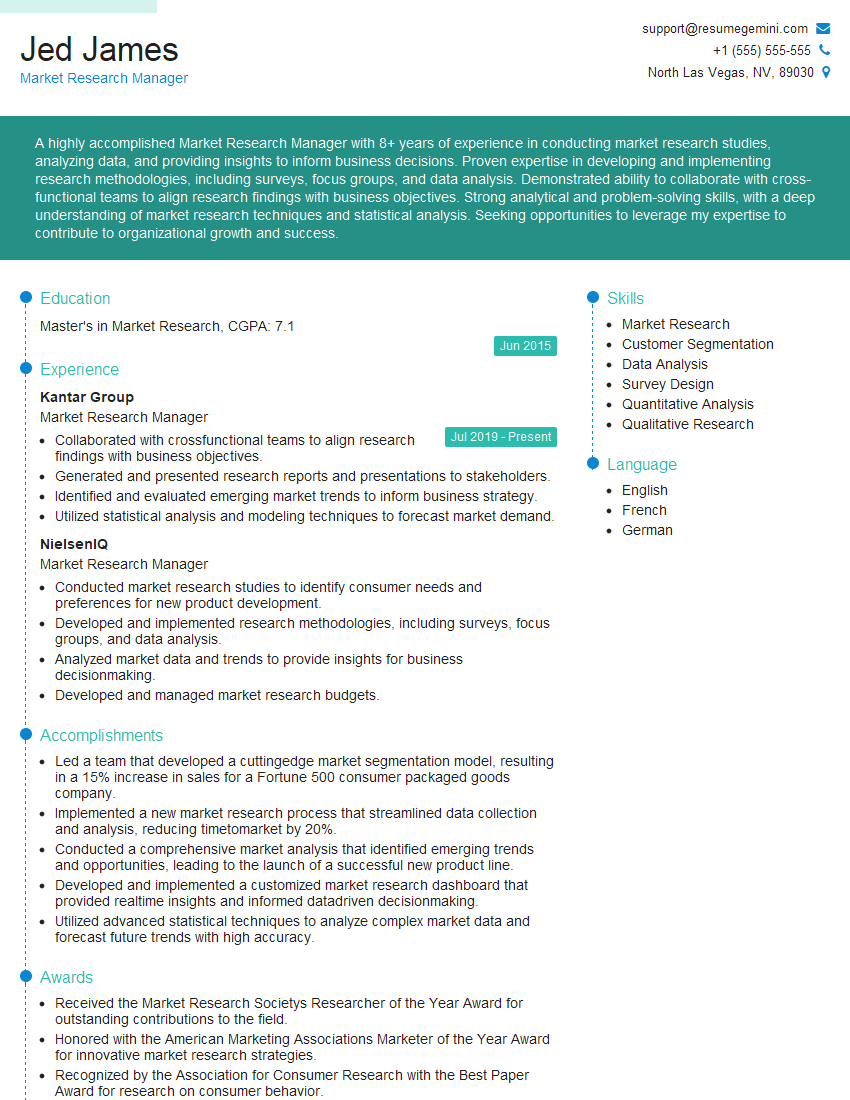
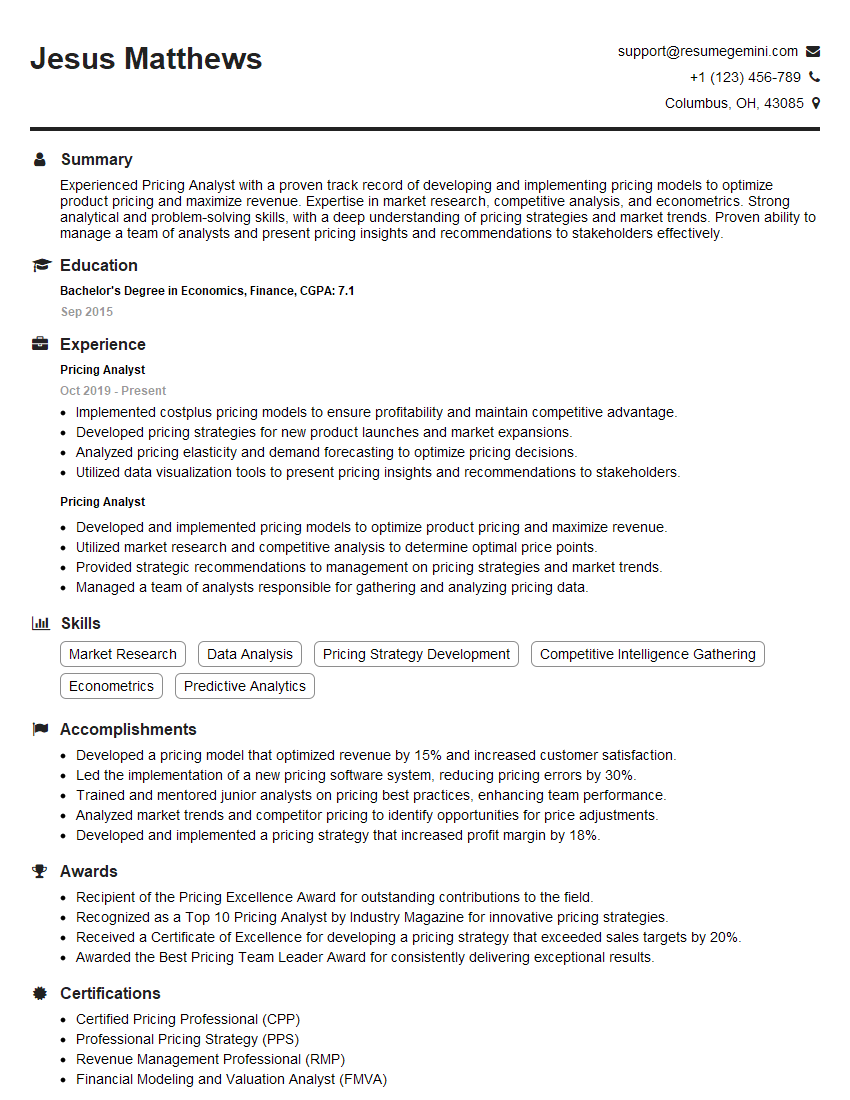
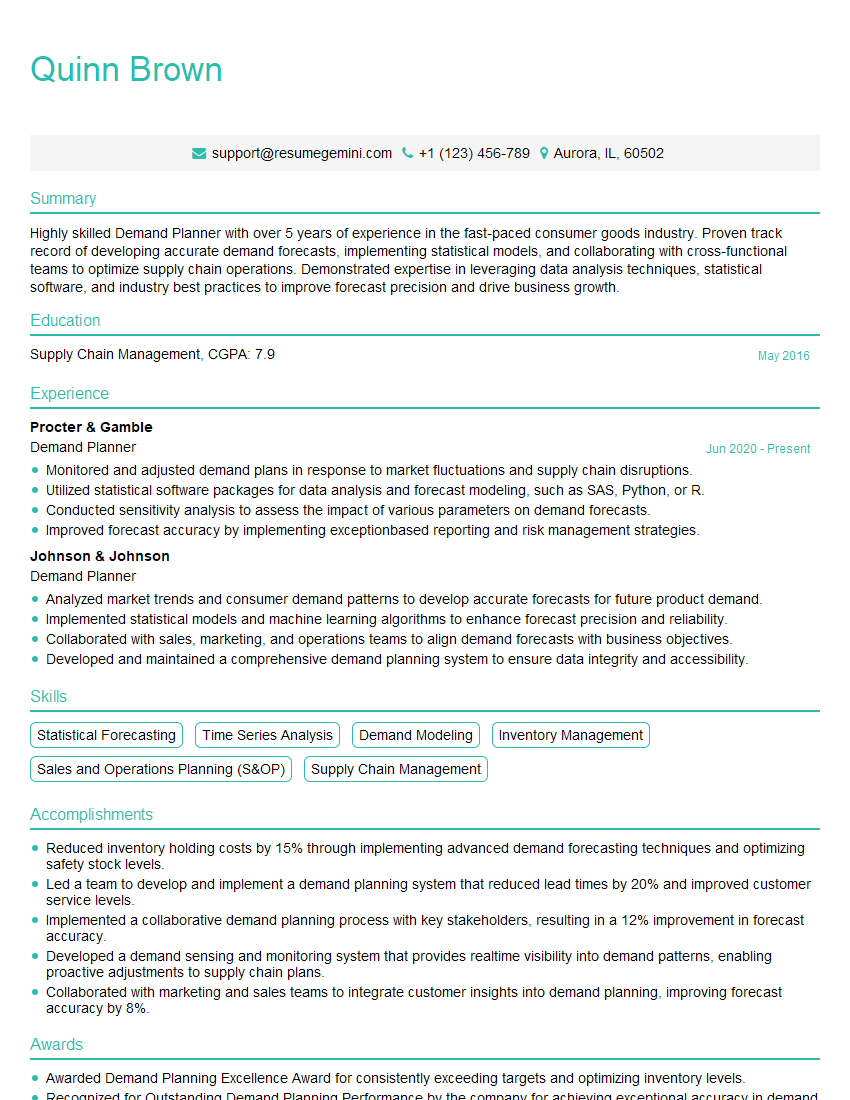
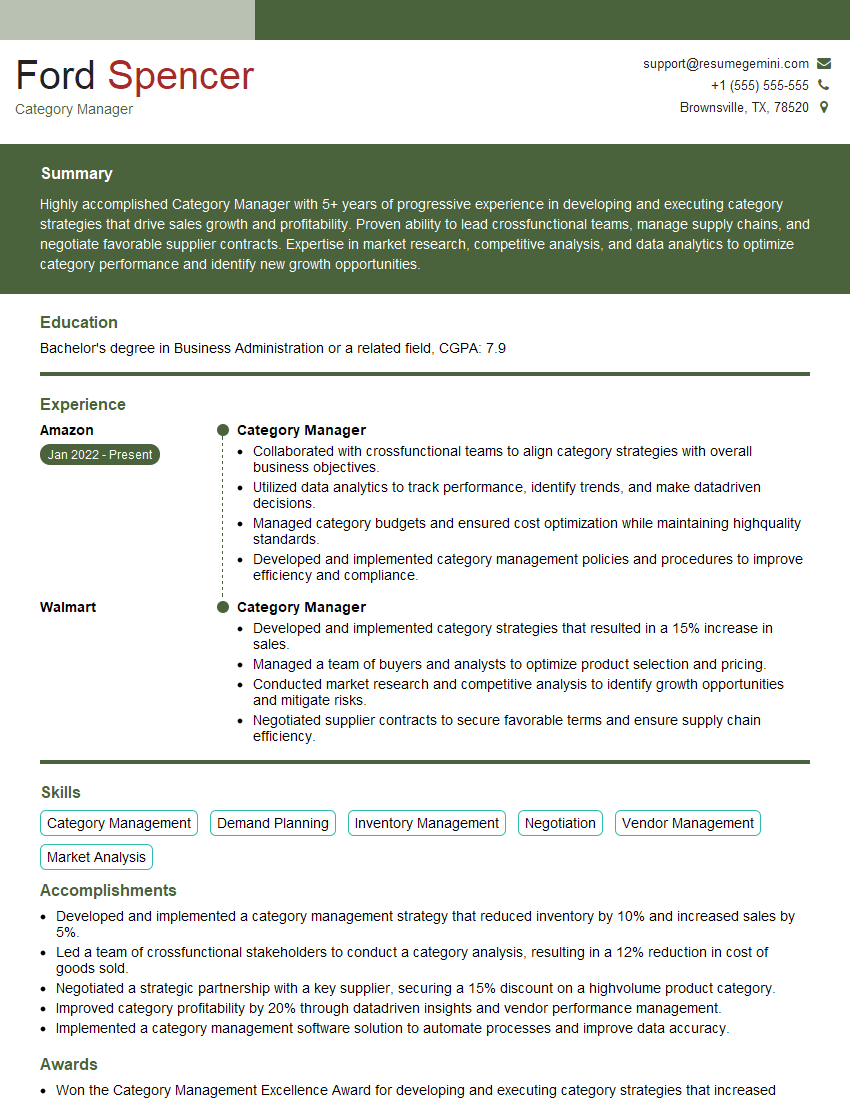
Mastering market research databases like Nielsen and IRI is crucial for career advancement in market research, consumer insights, and related fields. These skills are highly sought after and demonstrate a strong analytical capability and business acumen. To maximize your job prospects, create an ATS-friendly resume that highlights your relevant skills and experience. ResumeGemini is a trusted resource for building professional, impactful resumes that catch the eye of recruiters. Examples of resumes tailored to Market Research Databases (e.g., Nielsen, IRI) roles are available to help you showcase your capabilities effectively. Invest the time to craft a compelling resume – it’s your first impression!
Explore more articles
Users Rating of Our Blogs
Share Your Experience
We value your feedback! Please rate our content and share your thoughts (optional).
What Readers Say About Our Blog
Attention music lovers!
Wow, All the best Sax Summer music !!!
Spotify: https://open.spotify.com/artist/6ShcdIT7rPVVaFEpgZQbUk
Apple Music: https://music.apple.com/fr/artist/jimmy-sax-black/1530501936
YouTube: https://music.youtube.com/browse/VLOLAK5uy_noClmC7abM6YpZsnySxRqt3LoalPf88No
Other Platforms and Free Downloads : https://fanlink.tv/jimmysaxblack
on google : https://www.google.com/search?q=22+AND+22+AND+22
on ChatGPT : https://chat.openai.com?q=who20jlJimmy20Black20Sax20Producer
Get back into the groove with Jimmy sax Black
Best regards,
Jimmy sax Black
www.jimmysaxblack.com
Hi I am a troller at The aquatic interview center and I suddenly went so fast in Roblox and it was gone when I reset.
Hi,
Business owners spend hours every week worrying about their website—or avoiding it because it feels overwhelming.
We’d like to take that off your plate:
$69/month. Everything handled.
Our team will:
Design a custom website—or completely overhaul your current one
Take care of hosting as an option
Handle edits and improvements—up to 60 minutes of work included every month
No setup fees, no annual commitments. Just a site that makes a strong first impression.
Find out if it’s right for you:
https://websolutionsgenius.com/awardwinningwebsites
Hello,
we currently offer a complimentary backlink and URL indexing test for search engine optimization professionals.
You can get complimentary indexing credits to test how link discovery works in practice.
No credit card is required and there is no recurring fee.
You can find details here:
https://wikipedia-backlinks.com/indexing/
Regards
NICE RESPONSE TO Q & A
hi
The aim of this message is regarding an unclaimed deposit of a deceased nationale that bears the same name as you. You are not relate to him as there are millions of people answering the names across around the world. But i will use my position to influence the release of the deposit to you for our mutual benefit.
Respond for full details and how to claim the deposit. This is 100% risk free. Send hello to my email id: lukachachibaialuka@gmail.com
Luka Chachibaialuka
Hey interviewgemini.com, just wanted to follow up on my last email.
We just launched Call the Monster, an parenting app that lets you summon friendly ‘monsters’ kids actually listen to.
We’re also running a giveaway for everyone who downloads the app. Since it’s brand new, there aren’t many users yet, which means you’ve got a much better chance of winning some great prizes.
You can check it out here: https://bit.ly/callamonsterapp
Or follow us on Instagram: https://www.instagram.com/callamonsterapp
Thanks,
Ryan
CEO – Call the Monster App
Hey interviewgemini.com, I saw your website and love your approach.
I just want this to look like spam email, but want to share something important to you. We just launched Call the Monster, a parenting app that lets you summon friendly ‘monsters’ kids actually listen to.
Parents are loving it for calming chaos before bedtime. Thought you might want to try it: https://bit.ly/callamonsterapp or just follow our fun monster lore on Instagram: https://www.instagram.com/callamonsterapp
Thanks,
Ryan
CEO – Call A Monster APP
To the interviewgemini.com Owner.
Dear interviewgemini.com Webmaster!
Hi interviewgemini.com Webmaster!
Dear interviewgemini.com Webmaster!
excellent
Hello,
We found issues with your domain’s email setup that may be sending your messages to spam or blocking them completely. InboxShield Mini shows you how to fix it in minutes — no tech skills required.
Scan your domain now for details: https://inboxshield-mini.com/
— Adam @ InboxShield Mini
support@inboxshield-mini.com
Reply STOP to unsubscribe
Hi, are you owner of interviewgemini.com? What if I told you I could help you find extra time in your schedule, reconnect with leads you didn’t even realize you missed, and bring in more “I want to work with you” conversations, without increasing your ad spend or hiring a full-time employee?
All with a flexible, budget-friendly service that could easily pay for itself. Sounds good?
Would it be nice to jump on a quick 10-minute call so I can show you exactly how we make this work?
Best,
Hapei
Marketing Director
Hey, I know you’re the owner of interviewgemini.com. I’ll be quick.
Fundraising for your business is tough and time-consuming. We make it easier by guaranteeing two private investor meetings each month, for six months. No demos, no pitch events – just direct introductions to active investors matched to your startup.
If youR17;re raising, this could help you build real momentum. Want me to send more info?
Hi, I represent an SEO company that specialises in getting you AI citations and higher rankings on Google. I’d like to offer you a 100% free SEO audit for your website. Would you be interested?
Hi, I represent an SEO company that specialises in getting you AI citations and higher rankings on Google. I’d like to offer you a 100% free SEO audit for your website. Would you be interested?