Every successful interview starts with knowing what to expect. In this blog, we’ll take you through the top Masterclasses and Workshops interview questions, breaking them down with expert tips to help you deliver impactful answers. Step into your next interview fully prepared and ready to succeed.
Questions Asked in Masterclasses and Workshops Interview
Q 1. Describe your experience designing engaging workshop curricula.
Designing engaging workshop curricula involves a multi-faceted approach focusing on learner needs, clear learning objectives, and dynamic delivery. It’s not just about the content, but how that content is presented and experienced.
- Needs Analysis: I begin by thoroughly understanding the target audience’s prior knowledge, skills, and learning goals. This often involves surveys, interviews, or analyzing existing documentation. For example, a workshop for beginner photographers would differ significantly from one for professionals looking to master advanced lighting techniques.
- Learning Objectives: Clearly defined, measurable, achievable, relevant, and time-bound (SMART) objectives guide curriculum development. Instead of vaguely stating ‘learn about photography,’ I’d outline specific objectives like ‘participants will be able to adjust aperture, shutter speed, and ISO to achieve desired depth of field’ or ‘participants will be able to edit photos using Adobe Lightroom.’
- Content Sequencing: I structure the content logically, moving from foundational concepts to more advanced topics. This often incorporates a variety of learning methods—lectures, interactive exercises, group discussions, case studies, and hands-on activities. For instance, a workshop on project management might start with defining project scope, then move to scheduling, risk management, and finally, project closure.
- Assessment & Feedback: Regular formative assessments (e.g., quizzes, polls, short assignments) are integrated throughout the workshop to gauge understanding and provide immediate feedback. This helps to ensure continuous improvement and address any knowledge gaps. Summative assessments, such as a final project or exam, help evaluate overall learning outcomes.
Q 2. How do you assess the effectiveness of your Masterclasses?
Assessing the effectiveness of my Masterclasses involves a blend of quantitative and qualitative methods. It’s crucial to understand both the knowledge gained and the overall learning experience.
- Pre- and Post-Tests: I administer pre- and post-tests to measure the change in knowledge and skills. This provides a clear indication of learning gains. For instance, a Masterclass on data analysis might include a pre-test assessing basic statistical knowledge and a post-test focusing on applying those concepts to a complex dataset.
- Surveys and Feedback Forms: Post-Masterclass surveys gather participant feedback on various aspects, including content relevance, instructor effectiveness, engagement levels, and areas for improvement. Open-ended questions allow for richer qualitative data.
- Participant Engagement Metrics: Online platforms often provide data on participation rates (e.g., attendance, forum activity), allowing me to track engagement throughout the Masterclass. Active participation signifies better knowledge absorption.
- Case Studies and Projects: If the Masterclass involves a practical project, reviewing the participant’s work provides insights into their understanding and application of the learned skills. This offers a more tangible assessment of their mastery.
Q 3. What strategies do you use to manage participant engagement during online workshops?
Managing participant engagement during online workshops requires a proactive and multi-pronged approach that leverages technology and interactive elements.
- Interactive Activities: I incorporate interactive elements such as polls, quizzes, breakout rooms, and Q&A sessions throughout the workshop to maintain active participation. This prevents passive learning and keeps participants engaged.
- Regular Check-ins: Frequent check-ins with participants help gauge understanding, address questions, and foster a sense of community. This can be achieved through informal polls or quick verbal check-ins.
- Small Group Discussions: Breakout rooms allow for smaller, more intimate discussions, promoting deeper engagement and facilitating peer-to-peer learning.
- Use of Visual Aids: Engaging visuals, videos, and interactive simulations cater to different learning styles and maintain participant interest.
- Clear Communication and Organization: A well-structured agenda, clear instructions, and prompt responses to questions are crucial for maintaining a positive and productive learning environment.
Q 4. Explain your approach to adapting workshop content for diverse learning styles.
Adapting workshop content for diverse learning styles is critical for ensuring inclusivity and maximizing learning outcomes. I utilize a variety of techniques to cater to visual, auditory, kinesthetic, and reading/writing learners.
- Multi-Modal Delivery: I incorporate a variety of learning methods—lectures, visual aids, hands-on activities, group discussions, and written materials—to accommodate different learning preferences. For example, a visual learner might benefit from diagrams and charts, while a kinesthetic learner might appreciate interactive exercises.
- Differentiated Activities: I offer varied activities that allow participants to engage with the material in ways that suit their learning styles. This could involve offering choices in assignments or providing different formats for the same information.
- Accessibility Considerations: I ensure materials are accessible to participants with disabilities, such as providing transcripts for videos or using alternative text for images.
- Flexibility and Choice: Providing flexibility in how participants engage with the material, such as allowing them to choose activities or projects, can greatly improve engagement and learning outcomes.
Q 5. How do you handle technical difficulties during a virtual Masterclass?
Handling technical difficulties during a virtual Masterclass requires a proactive and calm approach. Preparation and having backup plans are key.
- Tech Check Rehearsals: I always conduct thorough tech rehearsals before the Masterclass to identify and resolve potential issues. This includes testing all equipment and software, ensuring stable internet connection, and familiarizing myself with the platform’s features.
- Multiple Communication Channels: I utilize multiple communication channels (e.g., email, chat, phone) to stay in touch with participants and address issues promptly. This ensures that participants can reach out even if one channel is down.
- Troubleshooting Resources: I provide participants with easily accessible troubleshooting resources or a designated support contact who can assist with any technical problems.
- Contingency Plans: I always have backup plans in place, such as alternative methods of delivery (e.g., recording the session) or alternative activities, in case of unforeseen technical difficulties.
- Communication & Transparency: Open and honest communication about any technical glitches is essential to maintain trust and reassure participants. I explain the situation, offer solutions, and apologize for any inconvenience.
Q 6. Describe your experience using Learning Management Systems (LMS).
My experience with Learning Management Systems (LMS) is extensive. I’ve utilized various platforms, including Moodle, Canvas, and Thinkific, to deliver and manage online courses and workshops.
- Course Design and Organization: LMS platforms provide excellent tools for structuring course content, uploading materials, and managing assignments. I use these features to create a well-organized and easy-to-navigate learning environment.
- Communication and Collaboration: Many LMS platforms offer features for communication and collaboration, such as discussion forums, announcements, and messaging systems. I leverage these tools to foster interaction and community among participants.
- Assessment and Grading: LMS platforms simplify the process of creating, administering, and grading assessments. This allows me to provide timely feedback and track participant progress effectively.
- Tracking and Reporting: LMS platforms provide valuable data on participant engagement and performance. This information helps me assess the effectiveness of the course and identify areas for improvement.
- Example: In a recent online course on digital marketing using Thinkific, I utilized its built-in quiz feature to assess participants’ understanding after each module. The platform also allowed me to track their progress, provide personalized feedback, and generate detailed reports on overall course performance.
Q 7. What methods do you use to gather feedback from workshop participants?
Gathering feedback from workshop participants is crucial for continuous improvement. I use a variety of methods to collect both quantitative and qualitative data.
- Post-Workshop Surveys: I use online survey tools (e.g., SurveyMonkey, Google Forms) to gather feedback on various aspects of the workshop, including content, delivery, and overall experience. These surveys include both quantitative (e.g., rating scales) and qualitative (e.g., open-ended questions) questions.
- Focus Groups: Focus groups provide a more in-depth understanding of participant perspectives. They allow for richer discussions and exploration of specific issues.
- Informal Feedback Sessions: I often conduct informal feedback sessions at the end of workshops, providing an opportunity for participants to share their thoughts and suggestions in a relaxed setting.
- Individual Interviews: For more detailed feedback, I sometimes conduct individual interviews with participants to gather in-depth information on their experiences.
- Social Media Feedback: When appropriate, I monitor social media platforms for feedback and comments from participants.
Q 8. How do you incorporate interactive elements into your Masterclasses?
Interactive elements are crucial for engaging participants and boosting knowledge retention in Masterclasses. My approach focuses on a multi-faceted strategy, moving beyond passive lectures.
- Live Q&A Sessions: I dedicate significant time for real-time questions, fostering a dialogue and addressing individual learning needs. For example, in a Masterclass on digital marketing, I’d pause regularly to answer questions on specific tools or strategies, allowing for immediate clarification.
- Polls and Quizzes: Short, engaging polls throughout the class gauge understanding and keep participants actively involved. Quizzes at the end of modules reinforce learning and highlight areas needing further review. A recent marketing Masterclass included a mid-session poll asking about participants’ current social media strategies, sparking discussion and personalization.
- Group Activities and Breakout Rooms: For larger classes, I use breakout rooms for collaborative exercises. This allows for peer learning and problem-solving. A Masterclass on leadership skills might involve a case study analysis within small groups, followed by a class-wide discussion.
- Interactive Worksheets and Templates: I provide downloadable resources participants can complete during or after the class, applying the concepts learned. This active engagement solidifies understanding and offers a practical takeaway. For instance, a financial planning Masterclass might include downloadable budgeting templates and worksheets.
Q 9. What experience do you have in developing assessments for workshops?
Developing effective assessments is key to measuring learning outcomes. My approach blends formative and summative assessments, ensuring a comprehensive evaluation.
- Formative Assessments: These are integrated throughout the workshop, providing ongoing feedback. Examples include short quizzes, polls, and informal group discussions. This allows for adjustments to the teaching approach during the workshop itself, ensuring participants stay engaged and on track.
- Summative Assessments: These evaluate overall learning at the end of the workshop. Examples include final exams, projects, presentations, or case studies. A recent workshop on project management concluded with participants presenting their plans for a simulated project, showcasing their acquired skills.
- Variety of Assessment Methods: I use a range of assessment types tailored to the workshop’s objective. This might include multiple-choice questions, short answer questions, practical exercises, or even role-playing, ensuring a holistic evaluation of participant learning.
- Clear Rubrics and Feedback: All assessments are accompanied by clear rubrics outlining grading criteria, providing transparency and allowing participants to understand expectations and track their progress. I also provide constructive feedback on all assessments to help with skill development.
Q 10. Explain your approach to creating visually appealing and informative training materials.
Visually appealing and informative training materials are crucial for engagement. My approach prioritizes clarity, consistency, and aesthetic appeal.
- Consistent Branding and Design: I maintain a consistent brand identity across all materials, ensuring a professional and cohesive look and feel. This enhances the overall learning experience and strengthens brand recognition.
- Use of High-Quality Images and Graphics: Relevant images, infographics, and illustrations enhance understanding and break up text, improving readability and engagement. I avoid using overly complex visuals that might distract from the learning objectives.
- Clear and Concise Text: I use clear, concise language, avoiding jargon and technical terms wherever possible. I use bullet points, headings, and subheadings to organize information effectively and improve readability.
- Accessible Formats: Materials are created in accessible formats (e.g., PDF, Word documents) and with sufficient font sizes and color contrast for visual accessibility. I also consider alternative formats for visually or learning impaired individuals.
Q 11. How do you ensure inclusivity and accessibility in your workshops?
Inclusivity and accessibility are paramount in my workshops. My approach ensures everyone feels welcome and can fully participate.
- Diverse Content and Examples: I use diverse examples and case studies that reflect various backgrounds, experiences, and perspectives, promoting a sense of belonging for all participants.
- Accessible Learning Materials: All materials are created with accessibility in mind, using clear fonts, sufficient color contrast, and alternative formats (e.g., audio descriptions) as needed. I also ensure the venue is accessible for participants with mobility limitations.
- Flexible Learning Styles: I cater to various learning styles (visual, auditory, kinesthetic) through a variety of teaching methods, such as discussions, activities, presentations, and demonstrations.
- Open Communication and Support: I create a safe and respectful learning environment where participants feel comfortable expressing their needs and concerns. I am always available to answer questions and provide support throughout the workshop.
Q 12. Describe your experience with different instructional design models (e.g., ADDIE, Agile).
My experience encompasses various instructional design models, allowing me to adapt my approach to different contexts and learning objectives.
- ADDIE Model (Analysis, Design, Development, Implementation, Evaluation): This systematic approach is excellent for large-scale, structured training programs. I’ve used it extensively for corporate training programs, meticulously analyzing needs, designing the curriculum, developing materials, delivering the training, and evaluating outcomes.
- Agile Model: This iterative approach is ideal for projects requiring flexibility and adaptation. I use this model for workshops where participant feedback is crucial for shaping the content and delivery. The iterative nature of the Agile model allows for quick adjustments and ensures the training remains relevant and engaging.
- Choosing the Right Model: The choice between ADDIE and Agile (or a hybrid approach) depends on the project’s scope, complexity, and the degree of flexibility required. For example, a highly structured compliance training would benefit from the ADDIE model, while a creative workshop might be better suited to the Agile model.
Q 13. How do you handle difficult or disruptive participants in a workshop setting?
Handling difficult or disruptive participants requires tact and a proactive approach. My strategy prioritizes de-escalation and maintaining a positive learning environment.
- Proactive Engagement: Creating a clear structure, engaging activities, and fostering a sense of community helps prevent disruptive behavior. I begin by establishing clear expectations and guidelines from the outset.
- Addressing Behavior Directly (Privately): If disruptive behavior occurs, I address it privately and respectfully, seeking to understand the root cause. I might offer additional support or clarification.
- Involving Others (If Necessary): In extreme cases, where behavior is impacting other participants, I might involve a co-facilitator or other support personnel.
- Maintaining a Calm and Professional Demeanor: Throughout, I maintain a calm and professional demeanor, avoiding escalation. My focus is always on de-escalation and restoring a positive learning environment.
Q 14. What is your experience with blended learning approaches?
Blended learning combines online and in-person learning experiences, leveraging the strengths of each. I have significant experience integrating online and offline components to create dynamic and effective learning journeys.
- Online Modules for Pre-Workshop Preparation: Participants might complete online modules before the workshop, preparing them for in-person sessions and maximizing class time. This allows for a more focused and productive workshop experience.
- Post-Workshop Online Resources: After the workshop, participants have access to online resources such as recordings, supplementary materials, and online discussion forums, fostering continued learning and community engagement.
- Real-time Collaboration Tools: During in-person sessions, online tools like collaborative documents or whiteboards can enhance interaction and allow for seamless sharing of information.
- Assessment Integration: Online quizzes and assignments can be integrated to assess knowledge gained both before and after the workshop. This provides continuous feedback and improves learning outcomes.
Q 15. How familiar are you with different eLearning authoring tools?
My experience with eLearning authoring tools is extensive. I’m proficient in a range of platforms, each suited to different needs. For example, Articulate Storyline 360 is my go-to for creating interactive courses with branching scenarios and sophisticated assessments. I use Adobe Captivate for screen recordings and software simulations, ideal for demonstrating complex software applications. Lectora is another tool in my arsenal, particularly useful for its robust testing capabilities and accessibility features. For simpler projects or rapid prototyping, I frequently leverage tools like Google Slides or Canva, focusing on creating visually appealing and easy-to-understand content. My choice of tool always depends on the project’s specific requirements, budget, and desired level of interactivity.
Choosing the right authoring tool is crucial. A complex tool isn’t always necessary. For a simple training video on a new company policy, Canva might suffice. However, for a comprehensive course on advanced data analysis, Articulate Storyline 360 would allow for more intricate simulations and assessments.
Career Expert Tips:
- Ace those interviews! Prepare effectively by reviewing the Top 50 Most Common Interview Questions on ResumeGemini.
- Navigate your job search with confidence! Explore a wide range of Career Tips on ResumeGemini. Learn about common challenges and recommendations to overcome them.
- Craft the perfect resume! Master the Art of Resume Writing with ResumeGemini’s guide. Showcase your unique qualifications and achievements effectively.
- Don’t miss out on holiday savings! Build your dream resume with ResumeGemini’s ATS optimized templates.
Q 16. Explain your experience in creating engaging video content for online learning.
Creating engaging video content for online learning requires a multi-faceted approach. I focus on incorporating several key elements. First, I always begin with a strong narrative structure. This isn’t just about presenting information; it’s about telling a story that keeps learners hooked. Second, I utilize diverse media. This might involve screen recordings, animations, real-world footage, and even interactive elements within the video itself, to avoid monotony. Third, I prioritize concise and clear communication. I break down complex information into easily digestible chunks, using visuals to support key concepts. Finally, I always test my videos with a target audience to ensure they are truly engaging and effective.
For instance, when creating a video on project management, I might start with a relatable anecdote about a failed project, then transition into explaining key project management methodologies using both visual aids and on-screen demonstrations. I’d follow this with interactive quizzes embedded within the video to reinforce learning and keep the learner actively involved.
Q 17. How do you measure the ROI of your training programs?
Measuring the ROI of training programs is critical. I use a multi-pronged approach that combines quantitative and qualitative data. Quantitative measures might include pre- and post-training assessments to gauge knowledge improvement, surveys to assess learner satisfaction, and tracking key performance indicators (KPIs) related to the skills taught in the training. For example, if the training focuses on sales techniques, we’d track sales figures after the training to see if there’s an increase. Qualitative data comes from learner feedback, manager observations, and even case studies illustrating the impact of the training on specific projects or initiatives.
Ultimately, a complete ROI calculation involves comparing the cost of the training to the improvements seen in KPIs and learner satisfaction. This helps determine if the investment in training yielded a positive return. It’s not just about numbers; it’s about understanding whether the training effectively improved performance and contributed to organizational goals.
Q 18. How do you stay current with trends in the field of instructional design and adult learning?
Staying current in instructional design and adult learning requires ongoing effort. I actively participate in professional development opportunities, such as attending conferences (like the Learning Technologies Conference or DevLearn), webinars, and workshops. I subscribe to relevant journals and newsletters like Training Industry Magazine and follow thought leaders on social media platforms like LinkedIn and Twitter. I also engage in peer learning by networking with other instructional designers and attending online forums and communities.
Furthermore, I actively research new technologies and pedagogical approaches. For example, I’ve recently been exploring the applications of virtual reality and augmented reality in training, as well as the use of microlearning and personalized learning pathways.
Q 19. What is your approach to creating a positive and supportive learning environment?
Creating a positive and supportive learning environment is paramount. I achieve this by fostering a culture of collaboration and respect. My courses are designed to be inclusive and welcoming, acknowledging diverse learning styles and needs. I prioritize clear communication, providing learners with ample opportunities to ask questions and receive prompt feedback. I also incorporate opportunities for peer-to-peer interaction, such as group discussions or collaborative projects, to build a sense of community and shared learning.
One technique I use is to start each course with an icebreaker activity to help learners get to know each other. I also make myself readily available for questions and provide personalized support where needed. I believe a positive learning environment is one where learners feel comfortable taking risks, making mistakes, and ultimately, achieving their learning goals.
Q 20. Describe your experience with needs analysis for training programs.
Needs analysis is the cornerstone of effective training program design. My approach involves a systematic process that begins with identifying the performance gap. This involves analyzing current performance data, conducting interviews with stakeholders (managers, employees, subject matter experts), and observing employees in their work environment. The goal is to understand the discrepancy between current performance and desired performance. This analysis helps to define the specific learning objectives that the training program must address.
For example, if a sales team isn’t meeting its targets, a needs analysis might reveal a lack of proficiency in a particular sales technique. This would then inform the design of a training program specifically focused on developing that skill. The needs analysis also helps to identify the appropriate training method (e.g., online course, workshop, on-the-job training) and ensure the training is aligned with organizational goals.
Q 21. How do you develop and maintain strong relationships with stakeholders?
Developing and maintaining strong relationships with stakeholders is crucial for success. I prioritize open and transparent communication, ensuring that stakeholders are kept informed throughout the entire training development process. This involves regular meetings, progress reports, and soliciting feedback at various stages. I actively listen to their concerns and actively seek their input, incorporating their suggestions wherever possible. Building trust is key; I demonstrate my commitment to delivering a high-quality product that meets their needs and aligns with organizational objectives.
For example, I might start a project with a kickoff meeting where I clearly lay out the project plan, timeline, and deliverables. Throughout the process, I would provide regular updates and invite feedback through informal channels like quick emails or chats. This ensures collaboration and strengthens relationships, resulting in a better final product.
Q 22. How do you prioritize multiple projects and deadlines effectively?
Prioritizing multiple projects and deadlines effectively requires a structured approach. I utilize a combination of project management techniques, like the Eisenhower Matrix (urgent/important), and Kanban boards to visualize workflow. This allows me to identify critical tasks and allocate resources accordingly. For instance, when launching a new Masterclass and simultaneously running several workshops, I prioritize tasks based on their impact on each project’s overall success and their deadlines. Tasks crucial for both projects receive top priority. I also break down large projects into smaller, manageable chunks, setting realistic deadlines for each. Regular review and adjustment are key; I dedicate time each week to assess progress, re-prioritize as needed, and proactively address potential roadblocks.
- Eisenhower Matrix: Categorizing tasks into Urgent/Important, Important/Not Urgent, Urgent/Not Important, and Neither helps focus energy on high-impact activities.
- Kanban Board: A visual tool to track project progress, identify bottlenecks, and manage workflow.
- Time Blocking: Allocating specific time slots for focused work on particular tasks helps maintain efficiency and avoid context switching.
Q 23. Describe your experience working with diverse teams and individuals.
I thrive in diverse team environments. My experience spans working with individuals from various backgrounds, skill sets, and learning styles. I adapt my communication style to suit each individual’s needs, fostering a collaborative and inclusive atmosphere. For example, while developing a workshop on digital marketing, our team included a graphic designer, a marketing strategist, and several experienced instructors. I facilitated open communication, leveraging each team member’s strengths, and ensuring everyone felt heard and valued. Conflict resolution is handled through open dialogue and a focus on finding common ground. Building strong relationships based on trust and mutual respect is paramount for effective teamwork.
Q 24. What is your approach to troubleshooting and problem-solving in a training context?
My approach to troubleshooting and problem-solving in a training context is systematic and learner-centric. I employ a five-step process: Identify, Analyze, Brainstorm, Implement, and Evaluate. For example, if participants struggle to grasp a specific concept in a Masterclass, I first identify the exact point of difficulty through observation and feedback. Then, I analyze the root cause—is it the delivery method, the content complexity, or a lack of prior knowledge? Next, I brainstorm solutions such as providing additional resources, adjusting the teaching method, or offering personalized support. I implement the chosen solution and finally evaluate its effectiveness by assessing participant understanding and feedback. This iterative process allows for continuous improvement and ensures effective learning outcomes.
Q 25. How do you adapt your communication style to different audiences?
Adapting my communication style is crucial for effective training. I adjust my language, tone, and delivery method depending on the audience. For instance, when addressing experienced professionals in a Masterclass, I employ a more sophisticated vocabulary and focus on in-depth analysis. However, with beginners in a workshop, I utilize simpler language, more visual aids, and practical examples. I also consider the audience’s learning preferences; some prefer interactive sessions, while others benefit from more structured lectures. Active listening and observing nonverbal cues help me gauge the audience’s understanding and adjust accordingly. The key is to ensure clarity, engagement, and inclusivity for all participants.
Q 26. Describe your experience in creating marketing materials for workshops or Masterclasses.
My experience in creating marketing materials involves a multi-faceted approach, combining compelling visuals and clear messaging. I start by defining the target audience and their needs, focusing on the unique value proposition of each workshop or Masterclass. This informs the design and content of brochures, website copy, social media posts, and email campaigns. For example, when promoting a Masterclass on public speaking, I highlighted testimonials from past participants, showcasing the tangible benefits (e.g., increased confidence, improved communication skills). I utilize high-quality visuals, engaging headlines, and clear calls to action to convert interest into registrations. Data analysis from previous campaigns informs future marketing strategies, ensuring ongoing optimization.
Q 27. What is your experience using data analytics to improve training outcomes?
Data analytics plays a vital role in improving training outcomes. I leverage various metrics, such as pre and post-training assessments, participant feedback surveys, and engagement data (e.g., time spent on modules, completion rates), to track progress and identify areas for improvement. For example, low scores on a post-training quiz might indicate a need for more focused instruction on a particular topic. Similarly, low engagement on specific modules might suggest a need for a more interactive or engaging presentation style. This data-driven approach allows for continuous optimization of training materials and delivery methods, ensuring participants achieve the desired learning objectives.
Q 28. Explain your experience in creating and maintaining a learning community.
Creating and maintaining a thriving learning community involves fostering a sense of belonging, collaboration, and ongoing learning. I use various platforms and strategies to facilitate interaction and knowledge sharing among participants. This can include online forums, social media groups, or dedicated communication channels within a learning management system (LMS). Regular events, such as Q&A sessions or online discussions, encourage engagement and interaction. I also prioritize providing opportunities for peer-to-peer learning, encouraging participants to share their experiences and support each other. The goal is to build a supportive and interactive environment where participants continue learning and connecting long after the formal training concludes.
Key Topics to Learn for Masterclasses and Workshops Interview
- Understanding the Learning Environment: Analyze the unique dynamics of masterclasses and workshops, differentiating them from traditional classroom settings. Consider the instructor’s role, participant interaction, and the overall learning objective.
- Curriculum Design and Development: Explore the principles of effective curriculum design tailored to masterclasses and workshops. This includes identifying target audiences, selecting appropriate learning methodologies, and structuring content for optimal engagement.
- Facilitating Interactive Learning: Master techniques for fostering active participation and collaborative learning within a workshop or masterclass setting. Consider strategies for managing group discussions, addressing diverse learning styles, and incorporating practical exercises.
- Assessment and Evaluation: Understand different methods for assessing participant learning outcomes in masterclasses and workshops. Explore both formative (ongoing) and summative (final) assessment techniques, and how to provide constructive feedback.
- Technological Proficiency: Demonstrate familiarity with relevant technologies used in delivering online or hybrid masterclasses and workshops. This might include virtual classroom platforms, video conferencing tools, and learning management systems.
- Problem-Solving in a Workshop Context: Showcase your ability to address logistical challenges, manage unexpected situations, and adapt to changing participant needs within the dynamic environment of a masterclass or workshop.
Next Steps
Mastering the skills and knowledge related to masterclasses and workshops is crucial for career advancement in education, training, and professional development. A strong understanding of these concepts will significantly enhance your interview performance and increase your chances of securing a rewarding position. To further strengthen your application, focus on building an ATS-friendly resume that effectively highlights your relevant skills and experience. We highly recommend using ResumeGemini, a trusted resource for crafting professional and impactful resumes. Examples of resumes tailored to Masterclasses and Workshops are available to help you get started.
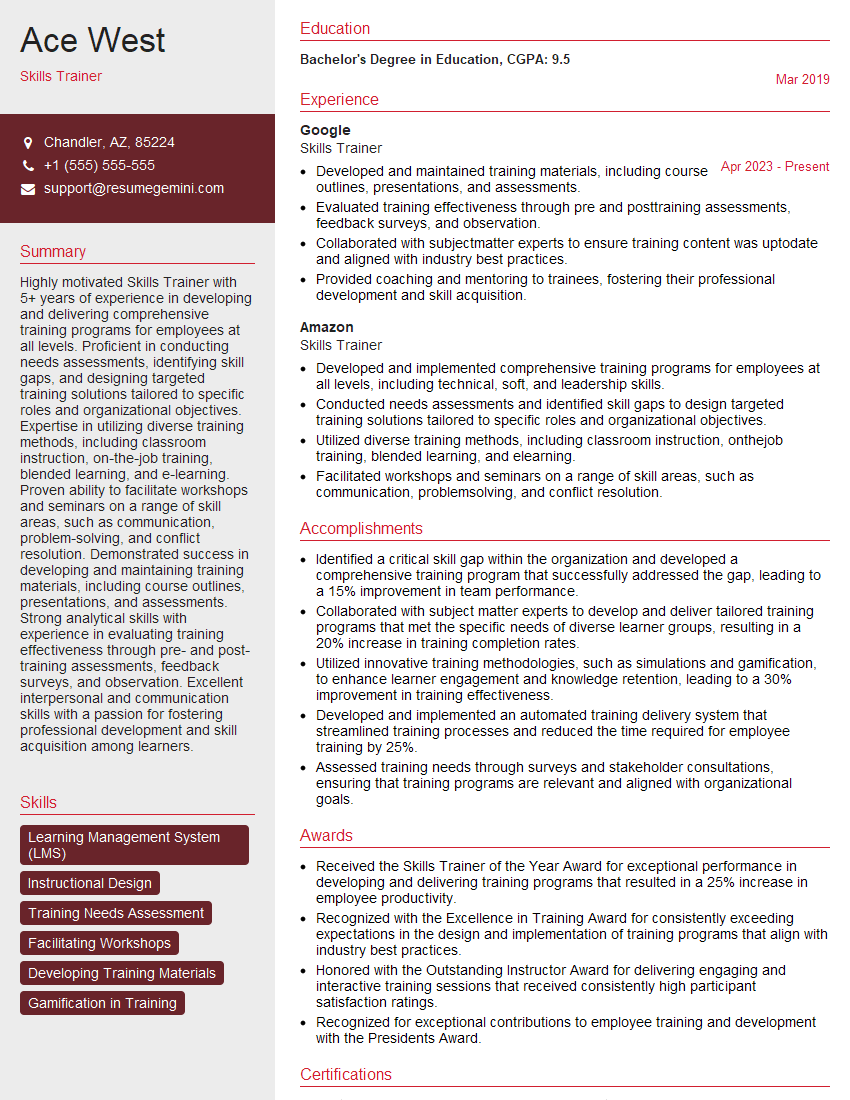
Skills Trainer Resume Sample
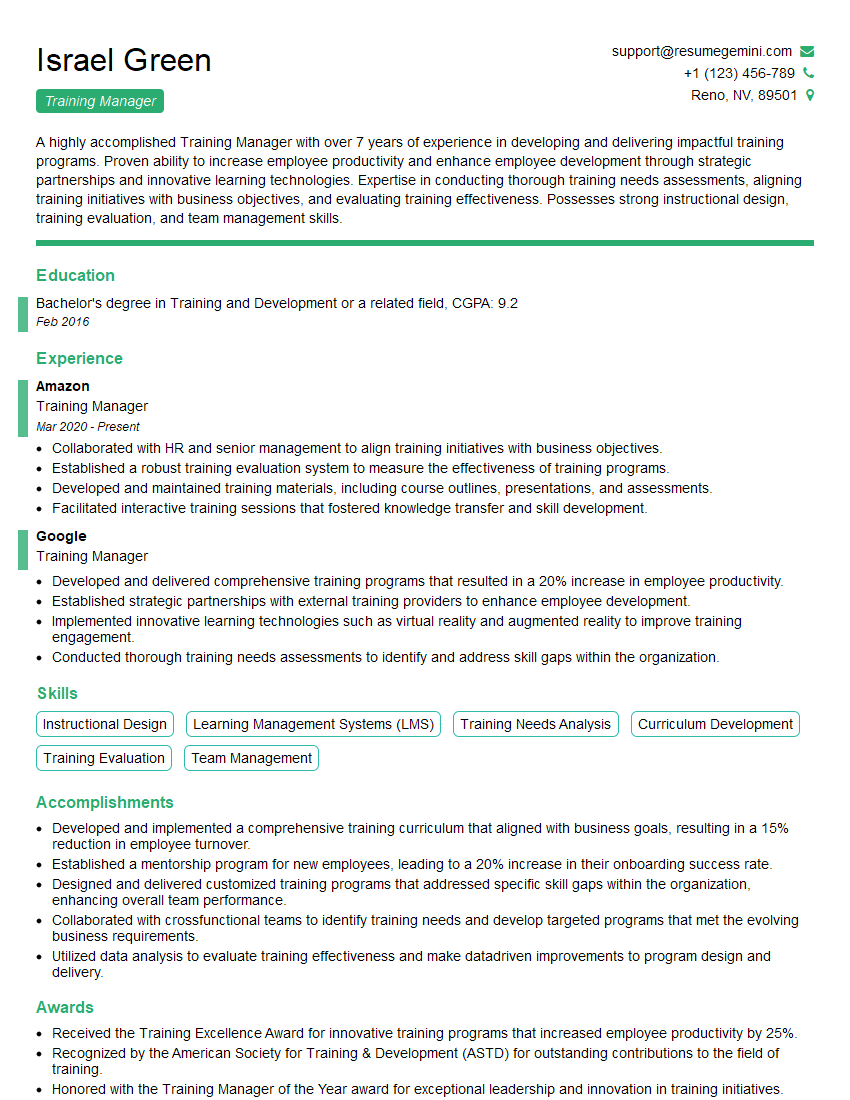
Training Manager Resume Sample

Faculty Member Resume Sample
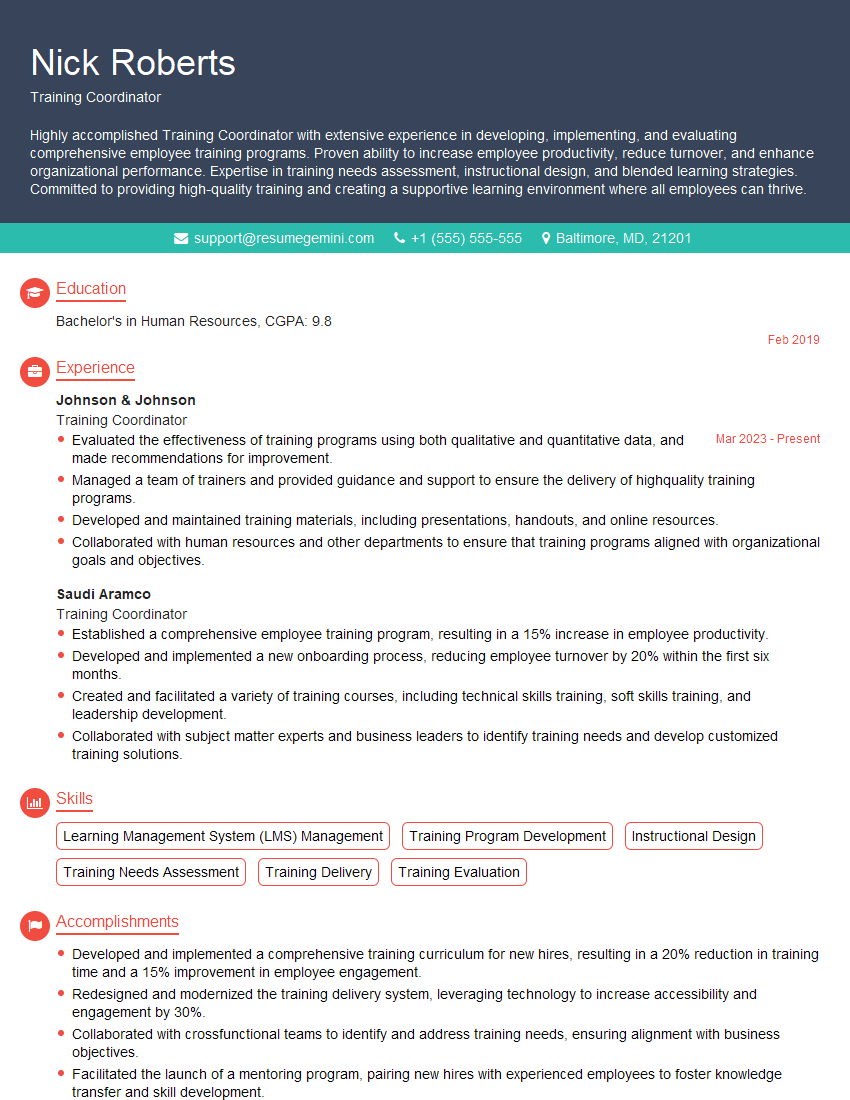
Training Coordinator Resume Sample
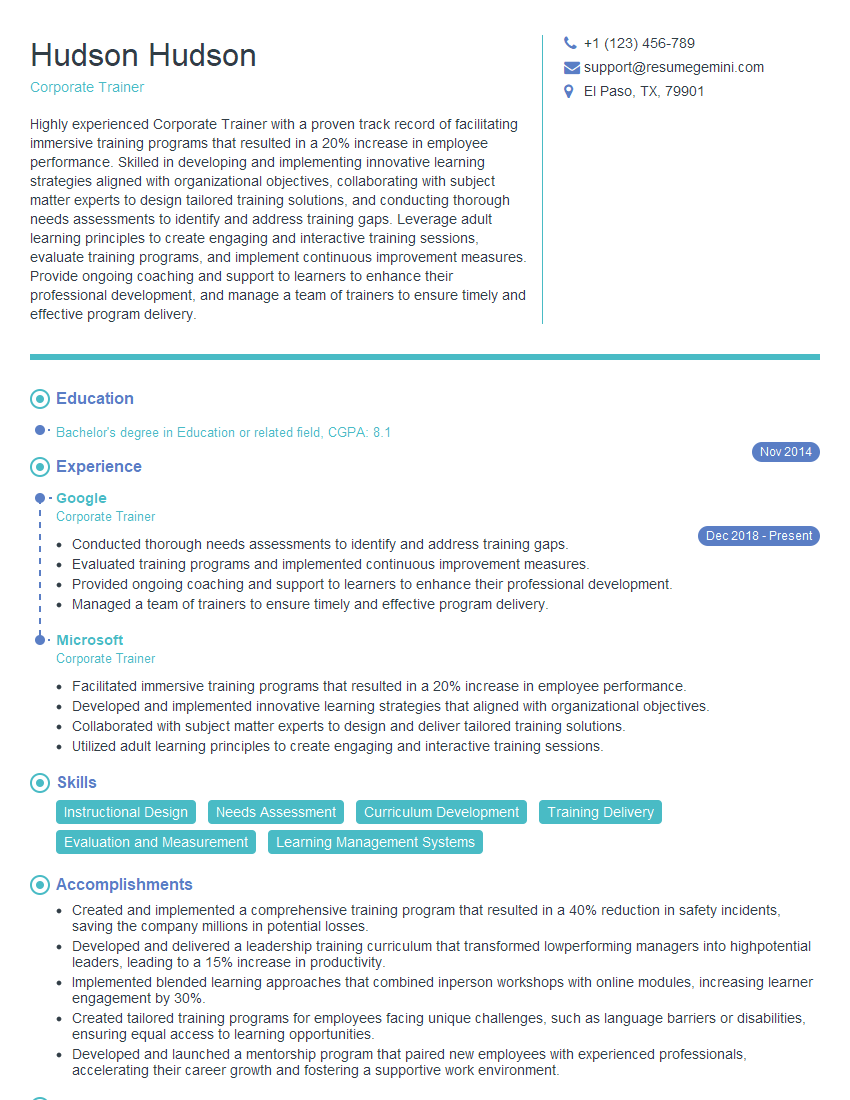
Corporate Trainer Resume Sample

Curriculum Developer Resume Sample

Adjunct Professor Resume Sample
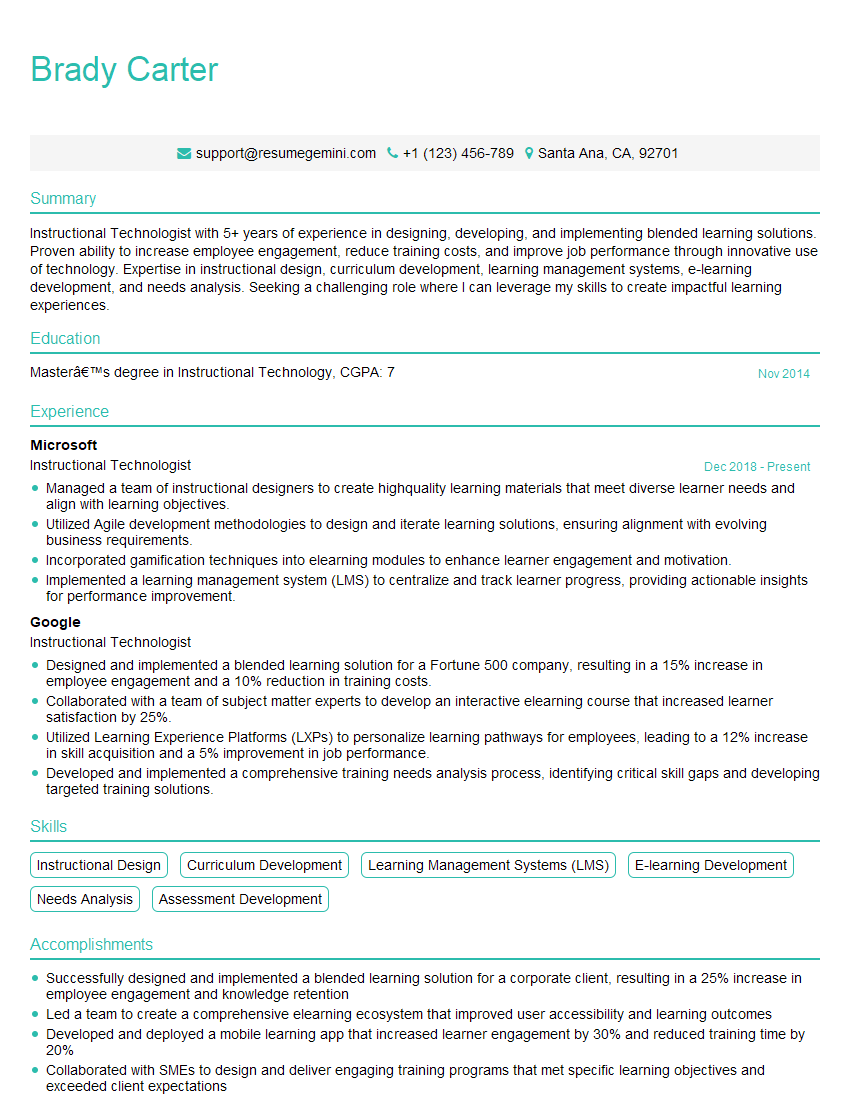
Instructional Technologist Resume Sample
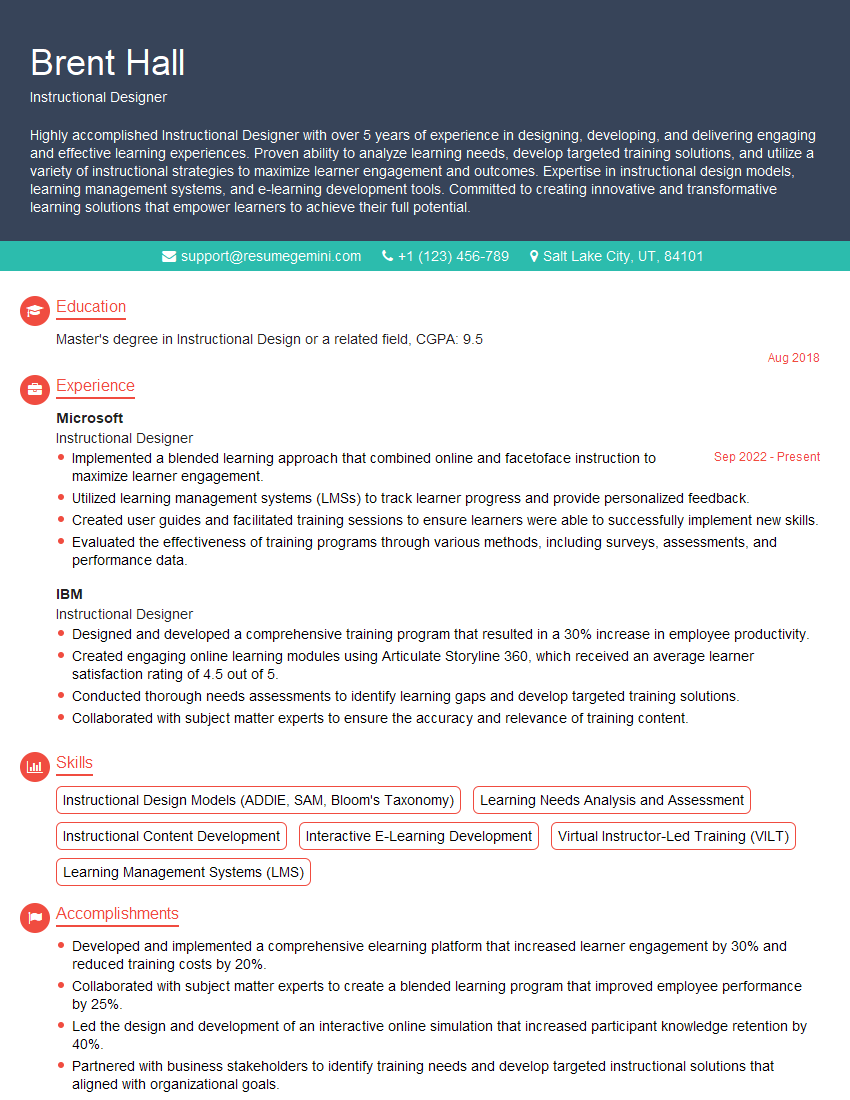
Instructional Designer Resume Sample

Content Creator Resume Sample
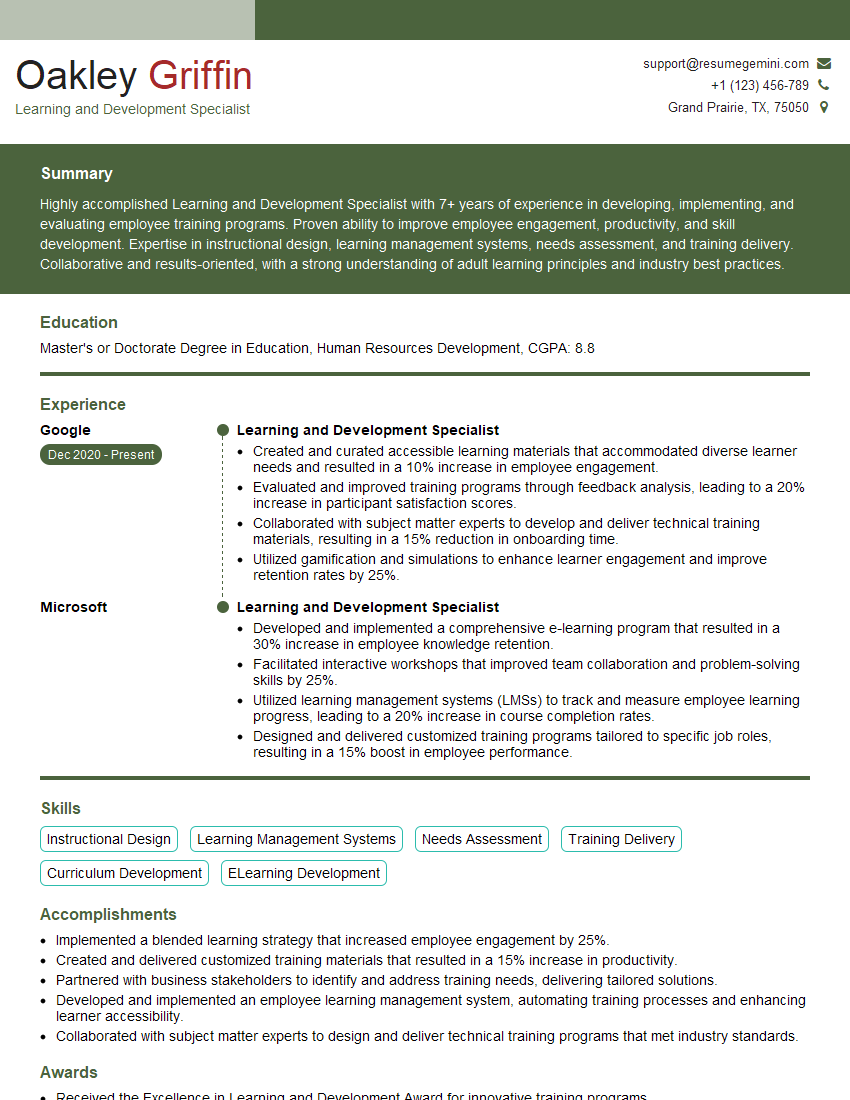
Learning and Development Specialist Resume Sample
Explore more articles
Users Rating of Our Blogs
Share Your Experience
We value your feedback! Please rate our content and share your thoughts (optional).
What Readers Say About Our Blog
Hello,
we currently offer a complimentary backlink and URL indexing test for search engine optimization professionals.
You can get complimentary indexing credits to test how link discovery works in practice.
No credit card is required and there is no recurring fee.
You can find details here:
https://wikipedia-backlinks.com/indexing/
Regards
NICE RESPONSE TO Q & A
hi
The aim of this message is regarding an unclaimed deposit of a deceased nationale that bears the same name as you. You are not relate to him as there are millions of people answering the names across around the world. But i will use my position to influence the release of the deposit to you for our mutual benefit.
Respond for full details and how to claim the deposit. This is 100% risk free. Send hello to my email id: [email protected]
Luka Chachibaialuka
Hey interviewgemini.com, just wanted to follow up on my last email.
We just launched Call the Monster, an parenting app that lets you summon friendly ‘monsters’ kids actually listen to.
We’re also running a giveaway for everyone who downloads the app. Since it’s brand new, there aren’t many users yet, which means you’ve got a much better chance of winning some great prizes.
You can check it out here: https://bit.ly/callamonsterapp
Or follow us on Instagram: https://www.instagram.com/callamonsterapp
Thanks,
Ryan
CEO – Call the Monster App
Hey interviewgemini.com, I saw your website and love your approach.
I just want this to look like spam email, but want to share something important to you. We just launched Call the Monster, a parenting app that lets you summon friendly ‘monsters’ kids actually listen to.
Parents are loving it for calming chaos before bedtime. Thought you might want to try it: https://bit.ly/callamonsterapp or just follow our fun monster lore on Instagram: https://www.instagram.com/callamonsterapp
Thanks,
Ryan
CEO – Call A Monster APP
To the interviewgemini.com Owner.
Dear interviewgemini.com Webmaster!
Hi interviewgemini.com Webmaster!
Dear interviewgemini.com Webmaster!
excellent
Hello,
We found issues with your domain’s email setup that may be sending your messages to spam or blocking them completely. InboxShield Mini shows you how to fix it in minutes — no tech skills required.
Scan your domain now for details: https://inboxshield-mini.com/
— Adam @ InboxShield Mini
Reply STOP to unsubscribe
Hi, are you owner of interviewgemini.com? What if I told you I could help you find extra time in your schedule, reconnect with leads you didn’t even realize you missed, and bring in more “I want to work with you” conversations, without increasing your ad spend or hiring a full-time employee?
All with a flexible, budget-friendly service that could easily pay for itself. Sounds good?
Would it be nice to jump on a quick 10-minute call so I can show you exactly how we make this work?
Best,
Hapei
Marketing Director
Hey, I know you’re the owner of interviewgemini.com. I’ll be quick.
Fundraising for your business is tough and time-consuming. We make it easier by guaranteeing two private investor meetings each month, for six months. No demos, no pitch events – just direct introductions to active investors matched to your startup.
If youR17;re raising, this could help you build real momentum. Want me to send more info?
Hi, I represent an SEO company that specialises in getting you AI citations and higher rankings on Google. I’d like to offer you a 100% free SEO audit for your website. Would you be interested?
Hi, I represent an SEO company that specialises in getting you AI citations and higher rankings on Google. I’d like to offer you a 100% free SEO audit for your website. Would you be interested?
good