Preparation is the key to success in any interview. In this post, we’ll explore crucial Material Conservation interview questions and equip you with strategies to craft impactful answers. Whether you’re a beginner or a pro, these tips will elevate your preparation.
Questions Asked in Material Conservation Interview
Q 1. Describe your experience with different types of adhesives used in conservation.
Choosing the right adhesive is crucial in conservation, as it must be reversible and compatible with the artifact’s material. My experience spans a wide range, from traditional natural adhesives to modern synthetic options.
Animal glues (hide glue, fish glue): These are reversible, relatively weak, and well-suited for joining paper, wood, and some textiles. I’ve used hide glue successfully to reattach a detached section of a 19th-century painting, ensuring minimal damage to the delicate paint layers. The reversibility is key—we can potentially remove it in the future without harming the artwork.
Starch pastes (wheat starch, rice starch): These are excellent for paper conservation, offering good adhesion while being relatively weak and easily reversible. I’ve used wheat starch paste to mend tears in a collection of antique maps, achieving a strong but flexible bond that doesn’t create stiff patches.
Synthetic adhesives (acrylic emulsions, polyvinyl acetate): These offer greater strength and flexibility than natural adhesives, but careful selection is vital to ensure reversibility. For instance, I’ve used a specifically formulated, archival-quality acrylic adhesive to consolidate a fragile ceramic shard, offering structural support without compromising the artifact’s integrity. The selection depends heavily on the material and its specific deterioration.
Pressure-sensitive adhesives (PSA): These are generally avoided in conservation due to their irreversible nature and often detrimental effects on materials. However, understanding their properties allows for informed decisions regarding their removal, which I’ve had to address in several projects involving previously treated artifacts.
Q 2. Explain the principles of preventive conservation.
Preventive conservation focuses on minimizing deterioration before intervention is necessary. It’s about creating a stable environment and practicing good handling techniques to extend the lifespan of objects. Think of it as proactive healthcare for cultural heritage.
Environmental control: Maintaining stable temperature and humidity levels is paramount. Fluctuations can cause expansion and contraction, leading to cracking and warping. I’ve seen first-hand the devastating effects of fluctuating humidity on wooden furniture, resulting in significant cracking and warping. A stable environment minimizes this risk.
Proper storage and handling: Using acid-free materials for storage, handling objects with clean gloves, and avoiding direct sunlight are crucial. This avoids transfer of pollutants and physical damage.
Pest control: Regular inspections and preventative measures against insects and rodents are vital. A single insect infestation can destroy an entire collection. Implementing comprehensive pest management strategies is vital.
Disaster preparedness: Having a plan in place for emergencies, such as floods or fires, is crucial to protecting collections. This includes creating secure storage, developing evacuation plans, and working with insurance providers.
Q 3. What are the ethical considerations in material conservation?
Ethical considerations are paramount in conservation. Our interventions must be minimally invasive, reversible whenever possible, and prioritize the long-term well-being of the artifact over immediate aesthetic improvement.
Reversibility: Treatments should ideally be reversible, allowing future conservators to correct mistakes or adapt to evolving best practices. For instance, we try to avoid irreversible consolidants if possible and prefer techniques allowing future adjustment.
Minimally invasive treatment: We should only intervene when necessary, and then use the least invasive methods. A delicate balance is maintained between stability and originality. This respect for the object’s history is fundamental.
Transparency and documentation: Every treatment should be meticulously documented, including materials used, methods employed, and observations made. This allows others to understand our choices and trace the history of the object.
Cultural sensitivity: When dealing with objects from different cultures, respecting the significance and cultural context of the artifact is vital. It is important to include and consult with relevant communities and experts.
Q 4. How do you assess the condition of a deteriorating artifact?
Assessing the condition of a deteriorating artifact involves a multi-faceted approach, combining visual inspection with scientific analysis.
Visual examination: This involves carefully observing the artifact for signs of damage, such as cracks, tears, discoloration, stains, pest damage, and loose or missing components. Detailed photographic documentation is crucial.
Material identification: Determining the materials used in the artifact (e.g., type of paper, paint, textile fiber) is essential for tailoring appropriate conservation treatments. Techniques like microscopy, spectroscopy, and chromatography are invaluable here.
Environmental monitoring: Assessing the environmental conditions surrounding the artifact (temperature, humidity, light levels) helps in understanding the factors contributing to its deterioration.
Non-destructive testing: Techniques like X-ray, UV fluorescence, and infrared reflectography are used to investigate the artifact’s structure without causing damage. This allows for a deeper understanding of any internal issues.
All of this information is then compiled into a comprehensive condition report, which guides the conservation treatment planning.
Q 5. What are the different methods for cleaning aged paper?
Cleaning aged paper requires a delicate touch. The goal is to remove surface dirt and pollutants without causing further damage to the fragile fibers.
Dry cleaning: This involves removing loose surface dirt using soft brushes, erasers, or vacuuming with specialized equipment. This is often the first step, attempting to remove as much dirt as possible without any chemicals.
Wet cleaning: This involves using aqueous solutions (water with appropriate additives) to remove ingrained dirt. The choice of cleaning solution is crucial and depends on the type of paper and inks. Testing on an inconspicuous area is essential. Methods range from localized sponge cleaning to immersion washing under controlled conditions – the latter is only used as a last resort for very stable materials.
Gel cleaning: This uses special cleaning gels that are applied locally and remove dirt without excessive wetting. This is often preferred for delicate areas or localized staining.
Regardless of the method, careful assessment and documentation are essential. The success of the cleaning relies on the appropriateness of the chosen method and a great amount of attention to detail.
Q 6. Explain the process of consolidating a fragile artifact.
Consolidation strengthens a fragile artifact without significantly altering its appearance or structure. The goal is to increase its structural integrity and prevent further deterioration.
The process typically involves:
Assessment: Thoroughly assess the artifact’s condition and identify areas requiring consolidation. This step is identical to artifact assessment described in question 4.
Material selection: Choose a suitable consolidant compatible with the artifact’s material and the level of fragility. The selection of the consolidant should be based on its reversibility, compatibility, effectiveness and stability.
Application: Apply the consolidant carefully, using appropriate techniques such as injection, brushing, or immersion. This might require repeated application depending on the nature of fragility and material.
Drying: Allow the consolidant to dry completely under controlled environmental conditions to prevent cracking or warping. Drying conditions should be carefully considered to avoid introducing further damage.
Evaluation: After consolidation, assess the treatment’s success, monitoring the artifact’s stability and appearance. The effectiveness of the consolidation might vary based on the degree of deterioration.
Consolidation is a complex procedure requiring expertise and precision. A common mistake is over-consolidation, which can lead to stiffening and loss of flexibility.
Q 7. Describe your experience with different types of textile conservation treatments.
Textile conservation demands a nuanced understanding of fiber types, dyes, and degradation processes. My experience covers a broad spectrum of treatments.
Surface cleaning: This involves gentle cleaning to remove loose dirt and grime using soft brushes, vacuuming, or carefully applied solvents (when appropriate and tested). Often, dry cleaning is the only safe approach for many textiles.
Stain removal: Removing stains involves careful selection of solvents and application techniques, with extensive testing on inconspicuous areas. The goal is to remove the stain while preserving the textile’s structure and color.
Repair and mending: Repairing tears and holes may involve patching with compatible materials, using appropriate stitching techniques, or filling losses with compatible fillers. The choices depend on the significance of the hole and the availability of original materials.
Consolidation: Strengthening weakened fibers often involves the application of consolidants. The choice of consolidant depends on the fiber type and the type of damage. This process is similar to consolidating fragile artifacts.
Support structures: Fragile textiles may require support structures to prevent further damage during handling, display, or storage. This can involve mounting on acid-free supports or creating custom enclosures.
I have worked extensively on textiles ranging from delicate silk embroideries to robust woven tapestries, always tailoring my approach to the specific needs of the material.
Q 8. What are the risks and benefits of using different cleaning methods on paintings?
Cleaning paintings is a delicate balancing act. The goal is to remove dirt and grime without causing further damage to the artwork. Different methods carry varying risks and benefits, depending on the painting’s materials, age, and condition.
Dry Cleaning: This involves using soft brushes, compressed air, or vacuuming with specialized attachments. It’s the least invasive method, minimizing the risk of damage, but it’s also less effective at removing deeply ingrained dirt. Think of it as dusting – gentle and safe, but may not clean everything.
Wet Cleaning: This employs solvents or water to dissolve dirt and grime. It’s more effective than dry cleaning but carries a higher risk. The wrong solvent can damage the paint layer or varnish, while water can lead to swelling, discoloration, or mold growth. A highly skilled conservator will carefully select the solvent and apply it with precision, often testing on an inconspicuous area first.
Gel Cleaning: This involves using a specially formulated gel to remove dirt without the use of large amounts of liquid. It’s a good compromise between dry and wet cleaning, offering greater cleaning power than dry methods while mitigating some of the risks of wet cleaning. Think of it as a targeted cleaning solution, perfect for delicate areas.
Example: A canvas painting with a delicate varnish layer might benefit from dry cleaning or gel cleaning, while a heavily soiled oil painting on a robust canvas might tolerate a more aggressive wet cleaning approach, but only with careful testing and meticulous application by a conservator.
Q 9. How do you select appropriate storage conditions for diverse collections?
Selecting appropriate storage conditions is crucial for preserving collections. It involves considering several factors, such as material type, age, and sensitivity to environmental factors. The overarching goal is to create a stable environment that minimizes degradation.
Temperature and Humidity: These are paramount. Fluctuations can cause expansion and contraction of materials, leading to cracking, warping, or mold growth. Ideal conditions typically range from 68-72°F (20-22°C) and 45-55% relative humidity. Think of it like maintaining a comfortable climate for yourself; materials need a stable climate too!
Light Exposure: UV and visible light damage many materials over time, leading to fading or embrittlement. Collections should be stored in low-light conditions, ideally in the dark or using UV-filtering materials. Imagine how your skin feels after a sunny day—excessive light is harmful to many objects too.
Pest Control: Insects and rodents can cause significant damage to collections. Regular inspections and appropriate pest control measures are essential. This is akin to protecting your house from pests—objects require similar protection.
Storage Materials: The materials used for storage, such as boxes, folders, and mounts, should be acid-free and inert to prevent chemical reactions with the collection items. Using museum-quality archival materials is crucial. Think of these materials as a protective cocoon against unwanted chemical interactions.
Example: Photographs should be stored in acid-free archival sleeves and boxes in a cool, dark, and dry environment, while metal objects might require specific conditions to prevent corrosion. Different materials have different needs.
Q 10. Explain your knowledge of various photographic preservation techniques.
Photographic preservation encompasses a wide range of techniques aimed at mitigating degradation and extending the lifespan of photographs. The chosen method depends heavily on the type of photograph (e.g., gelatin silver print, daguerreotype, etc.)
Environmental Control: Similar to other archival materials, maintaining stable temperature and humidity is critical. Fluctuations can cause warping, cracking, and fading.
Proper Handling and Storage: Photographs should be handled with clean, cotton gloves to avoid transferring oils and dirt. They need to be stored in acid-free enclosures in a cool, dark place.
Digitization: High-resolution scanning can create digital surrogates, allowing for access while minimizing the handling of the original. This is a valuable tool for preservation and access.
Conservation Treatments: For damaged photographs, specialized treatments may be necessary. This might include cleaning, repairing tears, and deacidification.
Specialized Housing: This depends on the type of photograph. For example, glass plate negatives require custom fitted boxes to prevent breakage, while film negatives need protective sleeves and archival storage.
Example: A faded gelatin silver print might benefit from controlled environmental conditions and careful handling, while a severely damaged daguerreotype would require expert conservation treatment to stabilize the image.
Q 11. What are the common causes of degradation in archival materials?
Archival materials degrade through a combination of intrinsic and extrinsic factors. Intrinsic factors are inherent to the material itself, while extrinsic factors are related to the environment.
Intrinsic Factors: These include the inherent chemical instability of the material. For instance, certain dyes fade over time, while cellulose-based materials like paper are prone to acid hydrolysis.
Extrinsic Factors:
Light: UV and visible light cause fading and embrittlement.
Temperature and Humidity: Fluctuations cause expansion and contraction, leading to physical damage.
Pollutants: Airborne pollutants like sulfur dioxide can cause acidification and degradation.
Pests: Insects and rodents can physically damage materials.
Improper Handling: Rough handling or improper storage can lead to physical damage.
Example: An old book might show signs of acid degradation (intrinsic) due to the acidic nature of the paper, accelerated by high humidity and temperature fluctuations (extrinsic).
Q 12. How would you approach the conservation of a water damaged manuscript?
Conserving a water-damaged manuscript is a complex process that requires careful assessment and a phased approach. The goal is to minimize further damage while preserving as much of the original material as possible.
Assessment: A thorough assessment is needed to determine the extent of the damage, the type of paper, and the presence of any mold or other contaminants.
Stabilization: The manuscript needs to be carefully cleaned of surface dirt and debris. If mold is present, it needs to be addressed with appropriate methods, usually involving specialized cleaning agents and environmental control.
Drying: Slow, controlled drying is crucial to prevent further damage. This can involve air drying in a controlled environment or freeze-drying, depending on the manuscript’s condition and materials. Rapid drying can cause irreversible damage.
Repair and Consolidation: Once dry, any tears, creases, or losses need to be addressed with appropriate conservation techniques. This may involve tissue mending, patching, or the use of specialized adhesives.
Housing and Storage: Finally, the manuscript needs appropriate archival housing to protect it from further damage.
Example: A water-damaged medieval manuscript might require freeze-drying to prevent mold growth and then delicate mending and tissue repair to stabilize the affected pages.
Q 13. Discuss your understanding of environmental monitoring in conservation.
Environmental monitoring in conservation is crucial for maintaining stable conditions and preventing degradation. It involves regularly measuring and recording key environmental parameters.
Temperature and Humidity: Data loggers are used to continuously monitor temperature and relative humidity. This data allows for the identification of fluctuations and trends, helping to identify potential problems.
Light Levels: Light meters are used to measure the intensity of UV and visible light. This helps ensure that collections are not exposed to damaging levels of light.
Air Quality: Monitoring air quality can help identify the presence of pollutants such as sulfur dioxide, which can damage collections. Air quality monitors help detect these pollutants.
Data Analysis and Reporting: The collected data is analyzed to identify any significant deviations from ideal conditions. This information is used to make adjustments to the storage environment and prevent further degradation.
Example: A museum might use data loggers to monitor temperature and humidity in their storage areas, generating reports that alert staff to any significant fluctuations, allowing for timely intervention and minimizing risks of damage.
Q 14. What is the difference between in-situ and off-site conservation?
In-situ and off-site conservation refer to where the conservation work is carried out.
In-situ Conservation: This refers to carrying out conservation treatments in the object’s original location, whether it’s a museum gallery, an archive, or a historical building. This is often preferred for very large or immovable items where transport is impossible or risky. Think of a large mural on a building’s wall.
Off-site Conservation: This involves removing the object from its original location and carrying out the conservation work in a dedicated conservation laboratory. This provides a controlled environment and access to specialized tools and equipment, ideal for delicate or complex treatments. Many artifacts would be conserved in a lab.
The choice between in-situ and off-site conservation depends on the item’s condition, size, fragility, and the available resources and expertise. A balance of what’s best for the object and the safety of the conservator needs to be considered.
Q 15. How do you handle ethical dilemmas in conservation decision-making?
Ethical dilemmas in conservation are unfortunately common. They often involve balancing the object’s preservation with its accessibility, research potential, and even its aesthetic appeal. My approach centers on a robust ethical framework that prioritizes the long-term well-being of the artifact. This involves careful consideration of several factors.
- Objectivity: I strive for impartiality, basing decisions on scientific evidence and established best practices, not personal preferences or external pressures.
- Transparency: All decisions, including the rationale behind them, are meticulously documented and shared with stakeholders. This ensures accountability and allows for constructive dialogue.
- Collaboration: I actively involve all relevant parties – curators, conservators, researchers, and potentially even community members – in the decision-making process. Open communication fosters a shared understanding and strengthens ethical resolve.
- Prioritization: When faced with conflicting priorities, I employ a risk assessment methodology, prioritizing interventions that minimize harm and maximize the preservation of the object’s integrity.
For example, I once faced a dilemma regarding a fragile textile. While conservation was needed to prevent further deterioration, the treatment process itself carried a risk of damage. Through thorough documentation, stakeholder consultation, and a detailed risk assessment, we opted for a minimal intervention approach, focusing on environmental control rather than aggressive cleaning, prioritizing long-term preservation over immediate aesthetic improvement. The outcome successfully balanced preservation and the textile’s integrity.
Career Expert Tips:
- Ace those interviews! Prepare effectively by reviewing the Top 50 Most Common Interview Questions on ResumeGemini.
- Navigate your job search with confidence! Explore a wide range of Career Tips on ResumeGemini. Learn about common challenges and recommendations to overcome them.
- Craft the perfect resume! Master the Art of Resume Writing with ResumeGemini’s guide. Showcase your unique qualifications and achievements effectively.
- Don’t miss out on holiday savings! Build your dream resume with ResumeGemini’s ATS optimized templates.
Q 16. Describe your experience with digital imaging in documentation and analysis.
Digital imaging is an indispensable tool in conservation. My experience encompasses its use throughout the entire process – from initial documentation to analysis and monitoring post-treatment. I am proficient in utilizing various techniques, including:
- High-resolution photography: Capturing detailed images of the object’s surface, including texture, color, and any existing damage.
- Multispectral imaging: Employing different wavelengths of light to reveal hidden features or underlying layers that are invisible to the naked eye, such as pigments or previous repairs.
- 3D scanning and modeling: Creating accurate digital representations of the object, providing valuable information for analysis, documentation, and future restoration. This is particularly useful for complex or fragile objects.
- Image analysis software: Utilizing specialized software to analyze digital images, identify areas of concern, and monitor changes over time.
For instance, I used multispectral imaging to analyze a historical painting. The technique revealed underlying sketches and pentimenti (changes made during the painting process) that were not visible under normal lighting conditions. This provided crucial insights into the artist’s creative process and informed subsequent conservation decisions. The 3D model of the painting facilitated the design of custom supports and helped visualize the structural integrity of the work.
Q 17. Explain your proficiency with different types of conservation equipment.
My experience spans a wide range of conservation equipment, from basic tools to specialized instruments. I am proficient in using:
- Microscopes: For detailed examination of materials and assessing the extent of damage at a microscopic level.
- Environmental monitoring equipment: Including hygrometers, thermometers, and data loggers, to monitor and control temperature, relative humidity, and light levels within storage and display environments.
- Cleaning tools: A variety of brushes, scalpels, and suction devices for delicate cleaning and removal of surface dirt and grime.
- Specialized instruments: Such as ultraviolet (UV) and infrared (IR) lamps for detecting materials and identifying pigments, and various specialized tools for different materials like metal, stone or paper.
- Vacuum systems: For the safe and effective removal of loose particulate matter.
For example, my expertise with specialized vacuum systems allowed me to safely remove dust and debris from a collection of delicate textiles without causing any further damage. This precise control minimized risk and ensured the long-term preservation of these historically significant objects.
Q 18. How do you create a comprehensive conservation treatment plan?
Creating a comprehensive conservation treatment plan is a systematic process, akin to crafting a detailed roadmap. It requires a deep understanding of the object, its materials, its deterioration mechanisms, and the potential risks and benefits of various treatments. The plan typically includes:
- Detailed examination and documentation: A thorough visual inspection and scientific analysis of the object’s condition, including photographic documentation, material identification, and the characterization of damage.
- Treatment goals and objectives: Clearly defined aims for the conservation process, outlining the desired outcomes and the extent of intervention.
- Methodology: A detailed description of the proposed treatment techniques, including materials, tools, and procedures, justified by the scientific analysis.
- Risk assessment: A careful evaluation of potential risks associated with the treatment, along with strategies for mitigation.
- Timeline and budget: A realistic estimate of the time required for completion and the associated costs.
- Ethical considerations: A discussion of relevant ethical issues and how they are addressed in the treatment plan.
I always tailor the plan to the specific object’s needs. A rigid approach is rarely suitable. A recent project involved a 17th-century map with significant foxing (brown spots caused by oxidation) and tears. The plan meticulously detailed the cleaning techniques to be employed— focusing on minimal intervention—the method of repair for tears, and the materials used, all backed up by thorough scientific testing and rationale.
Q 19. What are the key elements of a successful conservation report?
A successful conservation report is a comprehensive record of the object’s history, condition, treatment, and outcomes. It serves as a vital tool for future conservators and researchers. Key elements include:
- Object history and provenance: Background information on the object, including its creation date, maker, and ownership history.
- Condition assessment: A detailed description of the object’s condition at the start of treatment, including its materials, deterioration mechanisms, and any pre-existing damage.
- Treatment methodology: A clear and concise account of the procedures undertaken, including materials used and any challenges encountered.
- Results and assessment: An evaluation of the treatment’s effectiveness, outlining both successes and limitations.
- Post-treatment recommendations: Guidelines for the long-term care and storage of the object.
- Photographs and diagrams: High-quality images documenting the object’s condition before, during, and after treatment.
- Analysis reports: Results from scientific analyses, such as material identification or dating.
The report should be written clearly and precisely, avoiding technical jargon where possible. It acts as a historical record and a guide for future care. I always aim for a report that is both informative and accessible to a broad audience, not just fellow specialists.
Q 20. How do you prioritize conservation projects based on urgency and significance?
Prioritizing conservation projects requires a balanced approach considering both urgency and significance. I use a system that integrates several key factors:
- Urgency: This is determined by the rate of deterioration and the immediate risk of irreversible damage. Objects at high risk of loss or significant damage take precedence.
- Significance: This involves evaluating the object’s cultural, historical, or scientific importance, its rarity, and its overall contribution to knowledge. Objects of exceptional significance warrant higher priority, even if their deterioration rate is relatively slow.
- Feasibility: This considers the resources available – time, funding, and expertise – to undertake the conservation work. Projects that are feasible given the available resources are prioritized.
- Cost-benefit analysis: This assesses the relative costs of treatment compared to the potential benefits in terms of preservation and access.
I often employ a scoring system to objectively rank projects. Each factor is assigned a weighted score based on its relative importance, enabling a quantitative comparison of different projects. This ensures transparency and facilitates decision-making, particularly when resources are limited.
Q 21. What are the common challenges in conserving archaeological artifacts?
Conserving archaeological artifacts presents unique challenges due to their age, often fragile state, and the complex environmental conditions they have endured. These challenges include:
- Material degradation: Artifacts often suffer from various types of deterioration, including corrosion, oxidation, biodegradation, and fracturing, requiring specialized treatments.
- Incomplete information: The lack of context and maker’s techniques makes material identification and appropriate treatment challenging.
- Environmental sensitivity: Archaeological materials are highly sensitive to changes in temperature, humidity, and light, requiring precise environmental control during conservation and storage.
- Ethical considerations: Dealing with human remains and culturally significant objects often involves navigating ethical and legal complexities. Respect for cultural heritage and community perspectives is paramount.
- Limited resources: Archaeological projects often have constrained budgets and personnel, demanding efficient and cost-effective conservation strategies.
For example, working with waterlogged wood requires specific techniques to prevent shrinkage and cracking during the drying process. This process can take years and requires careful monitoring and control of environmental conditions. I have extensive experience in dealing with these challenges, using a combination of scientific analysis and traditional conservation practices tailored to the specific material and context.
Q 22. Explain your understanding of the various stages of object deterioration.
Object deterioration is a complex process involving a series of interconnected stages. It’s not a linear progression; multiple stages can occur simultaneously, and the rate of deterioration depends on numerous factors, including the object’s material, environmental conditions, and previous treatments.
- Initial Degradation: This involves subtle changes often imperceptible to the naked eye, such as the weakening of molecular bonds within the object’s material. Think of a tiny crack forming in a ceramic glaze – initially invisible but a precursor to larger problems.
- Visible Damage: As degradation progresses, noticeable changes appear. This could manifest as discoloration, cracking, flaking paint on a canvas, or insect damage in wooden furniture. This stage is when preventative measures become crucial.
- Significant Deterioration: The object shows substantial damage, compromising its structural integrity or visual appearance. For instance, a significant portion of a painting might be lost due to flaking, or a large section of a textile might be riddled with holes.
- Irreversible Damage: In the final stages, the deterioration becomes irreversible, and significant loss of material or information occurs. This can lead to the complete disintegration of the object, rendering it irreparable.
Understanding these stages helps conservators prioritize treatments and make informed decisions about the best course of action for preserving the object. For example, identifying initial degradation allows for preventative measures like environmental control, slowing down deterioration before visible damage occurs.
Q 23. How do you maintain accurate and detailed conservation records?
Maintaining accurate and detailed conservation records is paramount. It’s like a detailed medical history for an object, crucial for future treatments and research. We use a combination of methods:
- Detailed Treatment Reports: These reports meticulously document every aspect of the conservation process, including the object’s initial condition, diagnostic testing results, materials used, treatment procedures, and observations throughout the process. They often include photographs and technical drawings.
- Digital Databases: We utilize specialized databases to store and manage digital photographs, condition reports, treatment reports, and analytical data. This ensures easy access and searchability of information.
- Archival-Quality Materials: All records are produced using archival-quality materials, such as acid-free paper and inks, to ensure longevity and prevent the records from themselves deteriorating.
- Consistent Terminology and Standards: We follow established standards and terminology to ensure clarity and consistency across all records. This allows for easy communication and understanding by other conservators and researchers.
The goal is to create a comprehensive and enduring record that provides a detailed history of the object and its conservation treatment, allowing future conservators to make informed decisions about its care.
Q 24. What are the appropriate methods for documenting conservation treatments?
Documenting conservation treatments involves a multi-faceted approach to ensure clarity and reproducibility. We use a combination of methods to comprehensively capture the treatment process.
- Detailed Written Documentation: This includes treatment reports that describe the materials used, the methods employed, and any observations made during treatment. The level of detail should allow another conservator to replicate the treatment if necessary.
- Photography and Videography: Extensive before-and-after photographs and videos capture the object’s condition at each stage of treatment. This visual record complements written documentation.
- Technical Drawings and Diagrams: For complex treatments or objects, detailed drawings and diagrams can help visualize the treatment process and the object’s structure.
- Sampling and Analysis Reports: If material analysis was conducted, reports detailing the results should be included. This adds crucial information about the object’s composition and deterioration mechanisms.
- Digital Archiving: All documentation is digitally archived using appropriate file formats and storage systems to ensure its long-term accessibility and preservation.
The aim is to create a comprehensive record that’s both understandable and verifiable by other professionals. Think of it as a detailed case study that can be reviewed, replicated, and learned from.
Q 25. Explain your understanding of material compatibility in conservation treatments.
Material compatibility is a critical aspect of conservation treatments. It involves selecting materials that won’t react negatively with the object’s material or contribute to its further deterioration. It’s about choosing materials that are chemically inert and will not cause harm over time.
For example, using a solvent that dissolves the binding medium of a painting would be disastrous. Similarly, using a metal adhesive on a silver object could lead to galvanic corrosion.
- Testing: Before applying any treatment, we conduct tests on inconspicuous areas of the object to evaluate the material’s compatibility. These tests often involve analyzing the chemical properties of materials and assessing their interaction with the object.
- Archival Materials: We prioritize the use of archival-quality materials, which are specifically designed for long-term stability and inertness. These materials are less likely to cause adverse reactions with the object.
- Understanding Material Science: A deep understanding of materials science, the chemical and physical properties of materials, and their potential interactions is essential. This allows us to make informed decisions about material compatibility.
Failing to consider material compatibility can lead to irreversible damage, undoing any positive aspects of the conservation treatment. Therefore, a cautious and thoroughly researched approach is paramount.
Q 26. How do you balance the preservation of an object with its accessibility?
Balancing preservation with accessibility is a constant challenge in conservation. We aim for a delicate balance that protects the object’s integrity while ensuring it remains available for study, display, and engagement. This involves:
- Environmental Control: Maintaining stable environmental conditions – temperature, humidity, and light levels – is crucial in slowing deterioration. This often involves climate-controlled storage or display cases.
- Controlled Access: Limiting direct handling and restricting access to the object can minimize the risk of damage. This might involve gloves, viewing through protective barriers, or limiting the number of people allowed close to the object.
- High-Quality Imaging and Digital Access: Creating high-resolution images and 3D models allows for virtual access, reducing the need for physical handling. This is particularly important for fragile or sensitive objects.
- Rotation of Objects: If an object is displayed regularly, rotating it with other objects can reduce its exposure to environmental factors and potential damage from handling.
- Educating the Public: Educating the public on the importance of careful handling and respectful viewing can promote responsible interaction.
The optimal solution often involves a tailored approach, considering the object’s specific needs and the context of its use. Sometimes, limited access is necessary to ensure long-term preservation; other times, carefully designed displays can allow for access while minimizing risks.
Q 27. Describe your experience working collaboratively with curators and other professionals.
Collaboration is integral to successful conservation. I’ve worked extensively with curators, scientists, and other specialists. For example, in a recent project involving a damaged textile, I worked closely with a textile conservator to develop a treatment plan. The curator provided historical context and object-handling guidelines. A scientist helped analyze the textile’s composition, determining the best cleaning methods.
- Shared Goals: Collaboration is effective when we share a common goal – to preserve and protect the object. Open communication and a shared understanding of the object’s significance are key.
- Respectful Dialogue: We need to respect each other’s expertise and knowledge. This requires active listening, clear communication, and valuing different perspectives.
- Regular Meetings and Communication: Regular meetings and updates ensure everyone stays informed about the project’s progress, potential challenges, and decisions made.
- Documentation and Transparency: Maintaining thorough documentation helps ensure that everyone understands the conservation process and the reasoning behind specific choices.
Such collaborations are essential not only for effective treatment but also for the development of new conservation techniques and best practices.
Q 28. What are your strategies for professional development in the field of conservation?
Professional development is ongoing in conservation. The field is constantly evolving with new materials, techniques, and technologies emerging. I pursue professional development through several avenues:
- Continuing Education Courses and Workshops: Attending workshops and courses offered by professional organizations, such as the American Institute for Conservation (AIC), keeps me updated on the latest advances in conservation science and techniques.
- Conferences and Symposia: Participating in conferences and symposia allows me to learn from leading experts and network with colleagues from around the world.
- Mentorship and Collaboration: Mentorship from experienced conservators is invaluable, and collaborative projects with diverse professionals help expand my skill set and broaden my perspective.
- Independent Research and Study: I actively engage in independent research and self-study, exploring new materials, methods, and technologies to enhance my knowledge and skills.
- Publication and Presentation: Sharing knowledge through publications and presentations helps solidify my understanding and contributes to the broader field of conservation.
Continuous professional development ensures that I can provide the best possible care for the objects entrusted to me.
Key Topics to Learn for Material Conservation Interview
- Preventive Conservation: Understanding environmental factors (temperature, humidity, light) and their impact on materials. Practical application: Developing a preventative conservation plan for a specific collection.
- Material Science: Knowledge of the properties and degradation pathways of various materials (e.g., paper, textiles, paint, metals). Practical application: Identifying the cause of deterioration in a historical artifact.
- Treatment Techniques: Familiarity with different cleaning, repair, and stabilization methods for various materials. Practical application: Choosing the appropriate treatment method for a damaged object, considering its material composition and condition.
- Ethics and Documentation: Understanding ethical guidelines in conservation and the importance of meticulous documentation. Practical application: Justifying treatment choices and documenting the entire conservation process.
- Risk Assessment and Management: Identifying potential risks to collections and developing strategies for mitigation. Practical application: Assessing the risks associated with a particular exhibition environment.
- Collection Management: Understanding best practices for storage, handling, and display of objects. Practical application: Developing a plan for the proper storage and handling of a specific collection.
- Digital Conservation: Understanding the challenges and opportunities of preserving digital materials. Practical application: Describing methods for digitizing and preserving fragile documents.
Next Steps
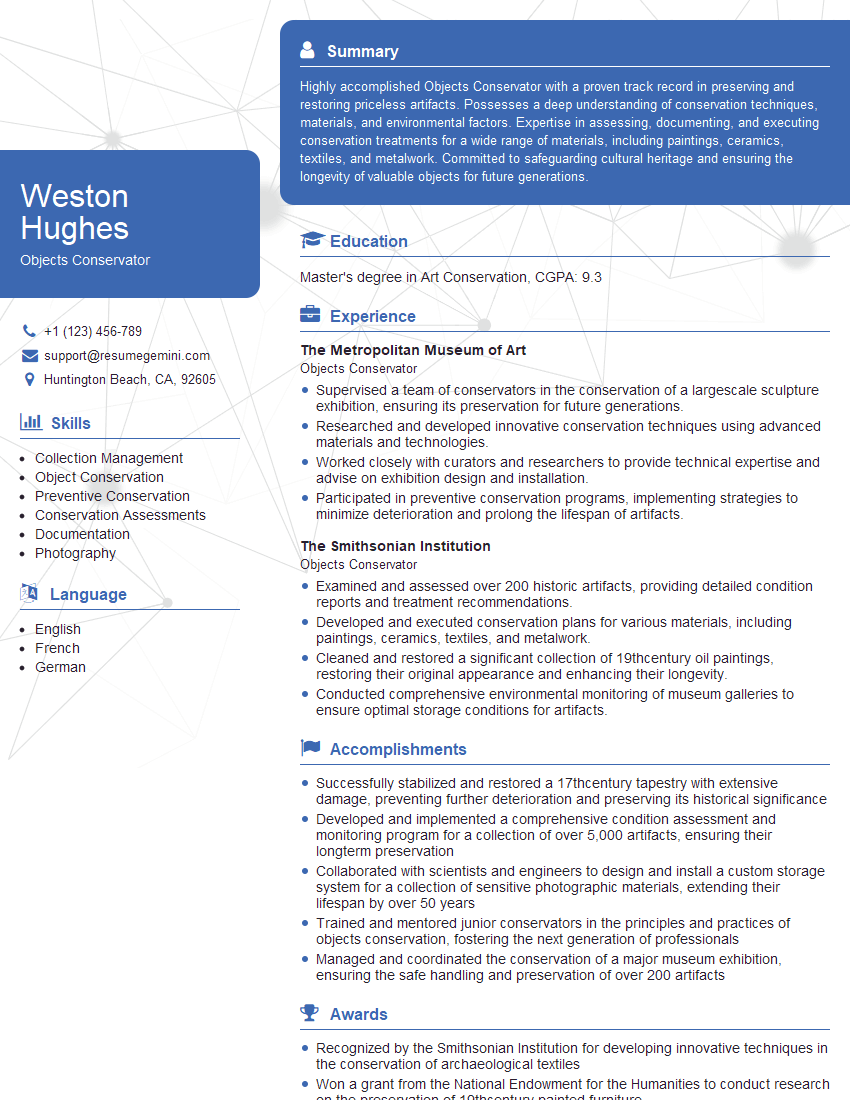
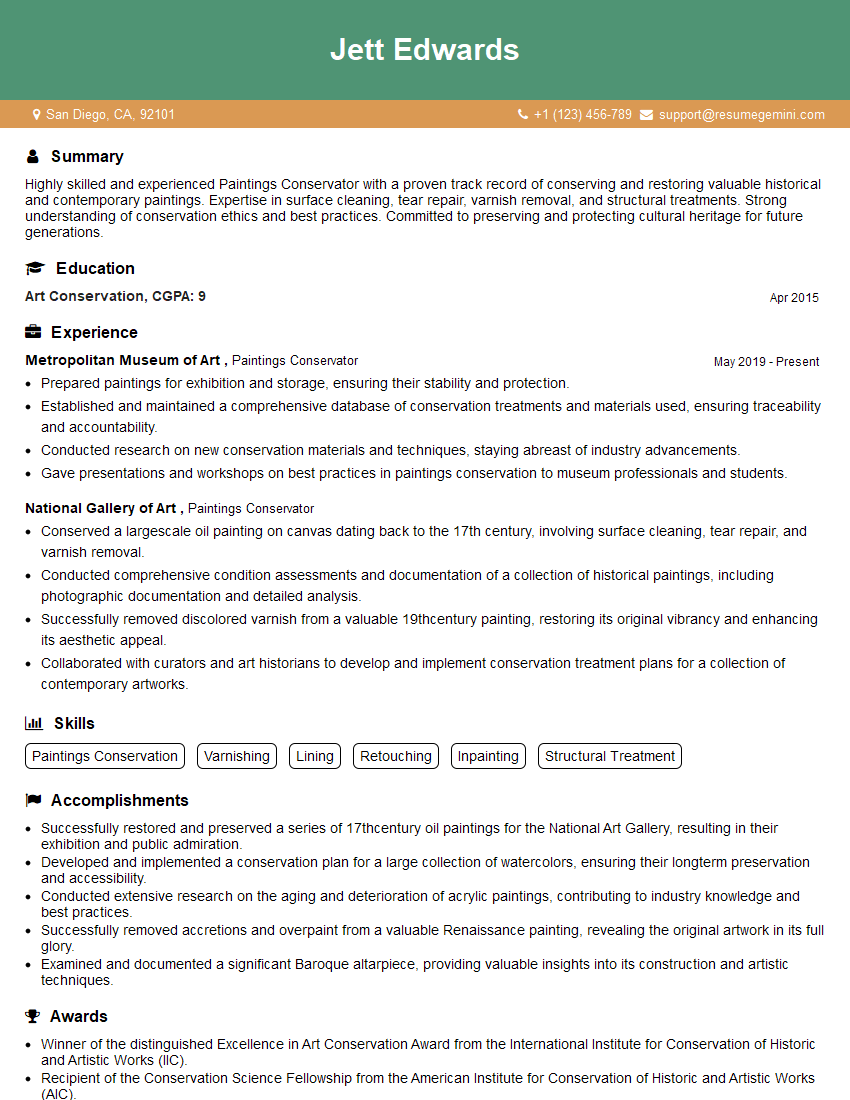
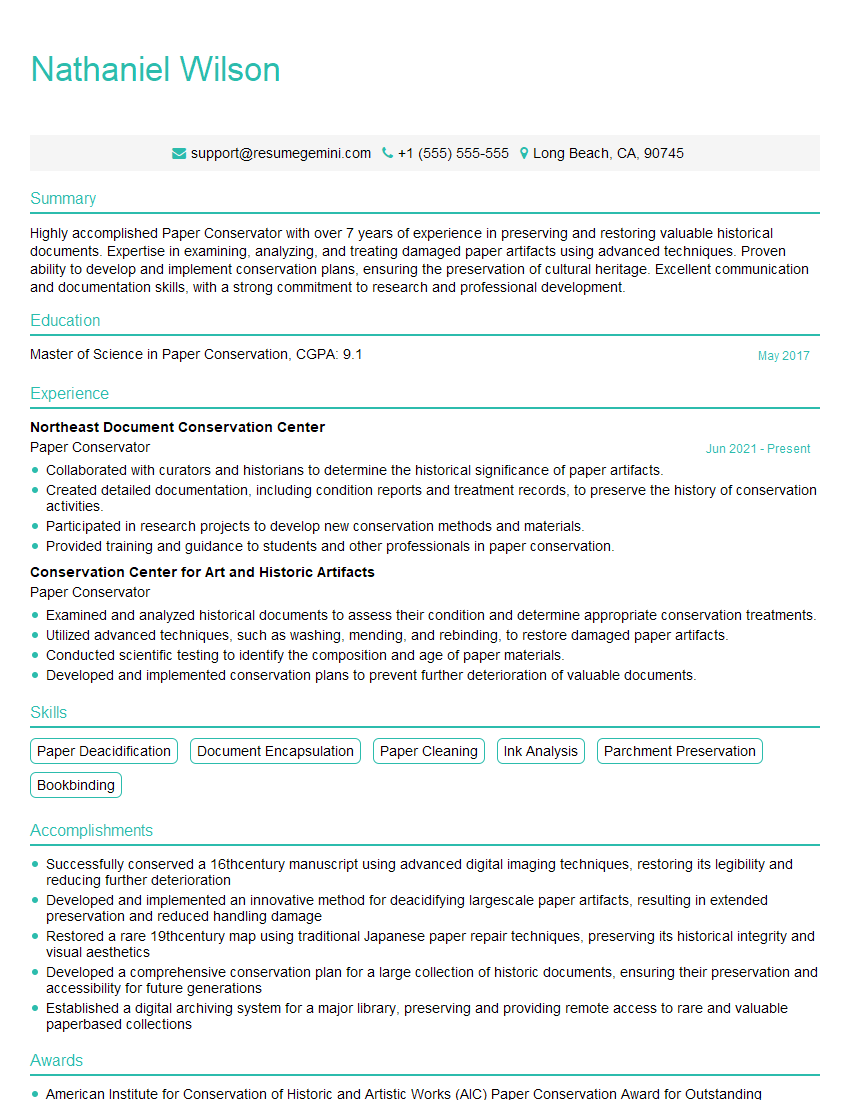
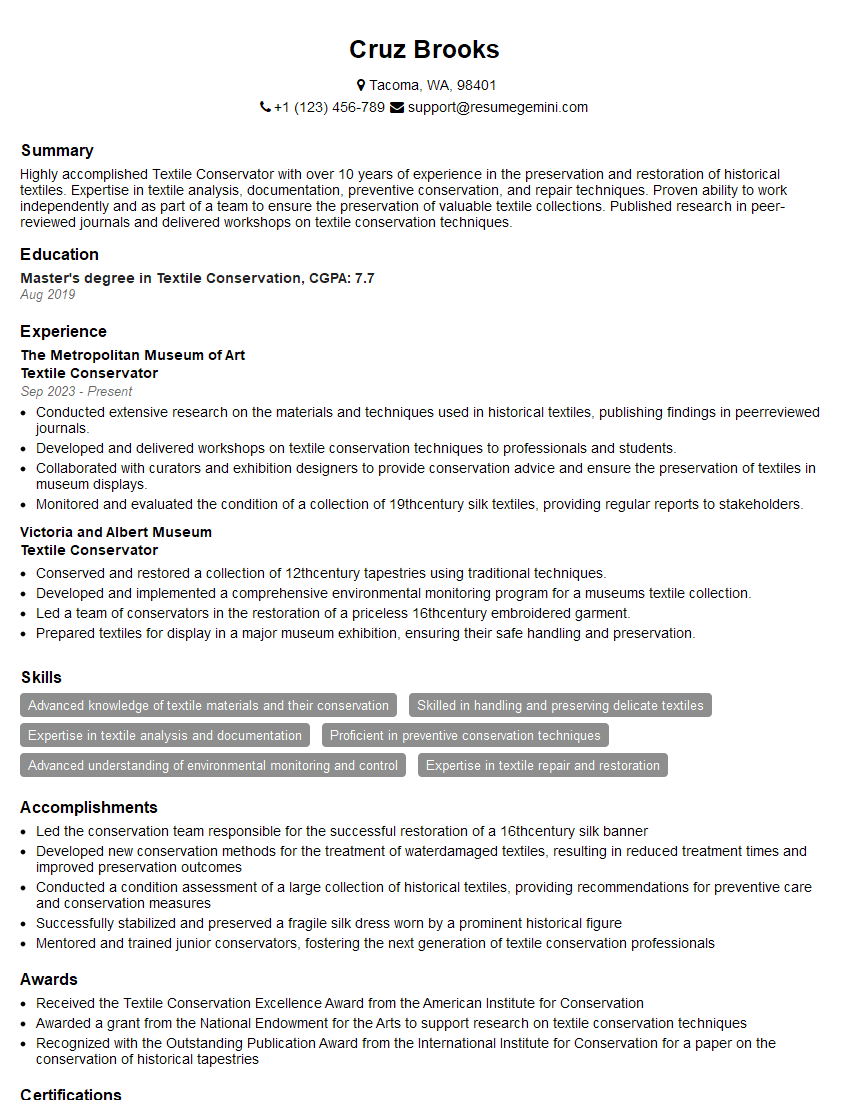
Mastering Material Conservation opens doors to a rewarding career in museums, archives, libraries, and private collections. To maximize your job prospects, creating a strong, ATS-friendly resume is crucial. ResumeGemini is a trusted resource to help you build a professional and impactful resume that highlights your skills and experience effectively. Examples of resumes tailored specifically to Material Conservation are available to guide you, ensuring your qualifications shine through to potential employers. Invest in your career – invest in your resume.
Explore more articles
Users Rating of Our Blogs
Share Your Experience
We value your feedback! Please rate our content and share your thoughts (optional).
What Readers Say About Our Blog
Attention music lovers!
Wow, All the best Sax Summer music !!!
Spotify: https://open.spotify.com/artist/6ShcdIT7rPVVaFEpgZQbUk
Apple Music: https://music.apple.com/fr/artist/jimmy-sax-black/1530501936
YouTube: https://music.youtube.com/browse/VLOLAK5uy_noClmC7abM6YpZsnySxRqt3LoalPf88No
Other Platforms and Free Downloads : https://fanlink.tv/jimmysaxblack
on google : https://www.google.com/search?q=22+AND+22+AND+22
on ChatGPT : https://chat.openai.com?q=who20jlJimmy20Black20Sax20Producer
Get back into the groove with Jimmy sax Black
Best regards,
Jimmy sax Black
www.jimmysaxblack.com
Hi I am a troller at The aquatic interview center and I suddenly went so fast in Roblox and it was gone when I reset.
Hi,
Business owners spend hours every week worrying about their website—or avoiding it because it feels overwhelming.
We’d like to take that off your plate:
$69/month. Everything handled.
Our team will:
Design a custom website—or completely overhaul your current one
Take care of hosting as an option
Handle edits and improvements—up to 60 minutes of work included every month
No setup fees, no annual commitments. Just a site that makes a strong first impression.
Find out if it’s right for you:
https://websolutionsgenius.com/awardwinningwebsites
Hello,
we currently offer a complimentary backlink and URL indexing test for search engine optimization professionals.
You can get complimentary indexing credits to test how link discovery works in practice.
No credit card is required and there is no recurring fee.
You can find details here:
https://wikipedia-backlinks.com/indexing/
Regards
NICE RESPONSE TO Q & A
hi
The aim of this message is regarding an unclaimed deposit of a deceased nationale that bears the same name as you. You are not relate to him as there are millions of people answering the names across around the world. But i will use my position to influence the release of the deposit to you for our mutual benefit.
Respond for full details and how to claim the deposit. This is 100% risk free. Send hello to my email id: [email protected]
Luka Chachibaialuka
Hey interviewgemini.com, just wanted to follow up on my last email.
We just launched Call the Monster, an parenting app that lets you summon friendly ‘monsters’ kids actually listen to.
We’re also running a giveaway for everyone who downloads the app. Since it’s brand new, there aren’t many users yet, which means you’ve got a much better chance of winning some great prizes.
You can check it out here: https://bit.ly/callamonsterapp
Or follow us on Instagram: https://www.instagram.com/callamonsterapp
Thanks,
Ryan
CEO – Call the Monster App
Hey interviewgemini.com, I saw your website and love your approach.
I just want this to look like spam email, but want to share something important to you. We just launched Call the Monster, a parenting app that lets you summon friendly ‘monsters’ kids actually listen to.
Parents are loving it for calming chaos before bedtime. Thought you might want to try it: https://bit.ly/callamonsterapp or just follow our fun monster lore on Instagram: https://www.instagram.com/callamonsterapp
Thanks,
Ryan
CEO – Call A Monster APP
To the interviewgemini.com Owner.
Dear interviewgemini.com Webmaster!
Hi interviewgemini.com Webmaster!
Dear interviewgemini.com Webmaster!
excellent
Hello,
We found issues with your domain’s email setup that may be sending your messages to spam or blocking them completely. InboxShield Mini shows you how to fix it in minutes — no tech skills required.
Scan your domain now for details: https://inboxshield-mini.com/
— Adam @ InboxShield Mini
Reply STOP to unsubscribe
Hi, are you owner of interviewgemini.com? What if I told you I could help you find extra time in your schedule, reconnect with leads you didn’t even realize you missed, and bring in more “I want to work with you” conversations, without increasing your ad spend or hiring a full-time employee?
All with a flexible, budget-friendly service that could easily pay for itself. Sounds good?
Would it be nice to jump on a quick 10-minute call so I can show you exactly how we make this work?
Best,
Hapei
Marketing Director
Hey, I know you’re the owner of interviewgemini.com. I’ll be quick.
Fundraising for your business is tough and time-consuming. We make it easier by guaranteeing two private investor meetings each month, for six months. No demos, no pitch events – just direct introductions to active investors matched to your startup.
If youR17;re raising, this could help you build real momentum. Want me to send more info?
Hi, I represent an SEO company that specialises in getting you AI citations and higher rankings on Google. I’d like to offer you a 100% free SEO audit for your website. Would you be interested?
Hi, I represent an SEO company that specialises in getting you AI citations and higher rankings on Google. I’d like to offer you a 100% free SEO audit for your website. Would you be interested?