Are you ready to stand out in your next interview? Understanding and preparing for Material Flow and Process Optimization interview questions is a game-changer. In this blog, we’ve compiled key questions and expert advice to help you showcase your skills with confidence and precision. Let’s get started on your journey to acing the interview.
Questions Asked in Material Flow and Process Optimization Interview
Q 1. Describe your experience with Value Stream Mapping.
Value Stream Mapping (VSM) is a lean manufacturing technique used to visually represent the flow of materials and information in a process. It helps identify waste and bottlenecks, paving the way for process improvements. I’ve extensively used VSM in various settings, from automotive part manufacturing to food processing. For instance, in a recent project with a food manufacturer, we mapped their entire production line, from raw material arrival to finished product packaging. This revealed significant delays in the quality control stage, a bottleneck that was slowing down the entire process. By using VSM, we visually identified the problem, prompting a re-evaluation of the QC process, leading to a 20% increase in throughput.
The process typically involves creating a current-state map, identifying value-added and non-value-added activities, creating a future-state map to illustrate improvements, and then implementing those improvements. This iterative approach ensures a structured and effective optimization process. Key elements in a VSM include identifying customer demand, lead times, inventory levels, and various process steps, each represented using standard symbols for clarity and easy understanding.
Q 2. Explain the principles of Lean Manufacturing.
Lean manufacturing is a philosophy focused on eliminating waste and maximizing value for the customer. It’s built on five core principles: Value, Value Stream, Flow, Pull, and Perfection.
- Value: Defining value from the customer’s perspective is paramount. What are they willing to pay for?
- Value Stream: Identifying all the steps involved in delivering that value, including both value-added and non-value-added activities.
- Flow: Ensuring a smooth, continuous flow of materials and information through the value stream, eliminating interruptions and bottlenecks.
- Pull: Producing only what is needed, when it’s needed, based on actual customer demand (just-in-time production).
- Perfection: Continuously striving to improve the process by eliminating all forms of waste and achieving optimal efficiency.
Think of it like baking a cake: Lean principles would focus on eliminating unnecessary steps (waste), ensuring all ingredients (materials) arrive on time, and baking only the number of cakes needed based on orders (pull). This avoids wasted ingredients, oven time, and storage space.
Q 3. How would you identify bottlenecks in a material flow process?
Identifying bottlenecks requires a systematic approach. I usually start with data collection and analysis. This could include observing the process, analyzing production data, and interviewing personnel involved in the process. Specific techniques include:
- Little’s Law: This relates inventory, throughput, and lead time (WIP = TH * LT). High Work-In-Process (WIP) often points to bottlenecks.
- Process Mapping: Visual representation of the process helps pinpoint areas with excessive delays or high error rates.
- Data Analysis: Examining cycle times, throughput rates, and defect rates can illuminate bottlenecks. A sudden drop in throughput often signals a problem.
- Visual Management: Using visual indicators (like Kanban boards) can quickly highlight areas with build-up of work.
For example, in a packaging facility, I once identified a bottleneck at the labeling machine through analysis of cycle times. The machine was old and frequently broke down, causing a significant backlog. This data-driven approach allowed us to prioritize replacing the machine, significantly improving overall efficiency.
Q 4. What metrics do you use to measure process optimization success?
Measuring process optimization success requires a combination of quantitative and qualitative metrics. Key metrics include:
- Throughput: The rate at which the process produces output (units per hour, per day, etc.).
- Cycle Time: The time it takes to complete one unit of work.
- Lead Time: The total time from order placement to delivery.
- Inventory Levels: Tracking raw materials, work-in-progress, and finished goods inventory helps gauge efficiency.
- Defect Rate: The percentage of defective products or services produced.
- Cost Reduction: Measuring the decrease in operational costs resulting from optimization efforts.
- Employee Satisfaction: A well-optimized process often improves morale and job satisfaction.
These metrics are usually tracked before and after implementing changes, providing a clear measure of improvement. For instance, a reduction in cycle time, coupled with an increase in throughput and a decrease in defects, strongly indicates successful optimization.
Q 5. Describe your experience with Six Sigma methodologies.
Six Sigma is a data-driven methodology focused on minimizing variation and defects in processes. My experience involves applying DMAIC (Define, Measure, Analyze, Improve, Control) cycles to various projects. I’ve used statistical tools like control charts, hypothesis testing, and regression analysis to identify root causes of variation and implement corrective actions. In one project involving a call center, we used Six Sigma to reduce customer wait times. We began by defining the problem (long wait times), measured the current wait times, analyzed the root causes (insufficient staffing during peak hours), implemented solutions (optimized staffing schedules), and finally put in place controls to maintain improvements.
Six Sigma’s structured approach ensures a thorough investigation and systematic resolution of process issues, leading to measurable improvements in quality and efficiency.
Q 6. How would you improve efficiency in a warehouse operation?
Improving warehouse efficiency involves several strategies. I would focus on optimizing layout, utilizing technology, and improving processes:
- Optimize Warehouse Layout: Implementing a well-defined layout, considering the frequency of item access (fast-movers vs. slow-movers), minimizing travel distances, and strategically placing storage racks and equipment.
- Implement Warehouse Management Systems (WMS): Using WMS software to manage inventory, track shipments, optimize picking routes, and streamline operations significantly improves efficiency.
- Optimize Picking and Packing Processes: Employing techniques like wave picking, zone picking, and batch picking can enhance efficiency. Using barcode scanners and RFID technology further automates and accelerates these processes.
- Improve Inventory Management: Implementing robust inventory control systems, utilizing just-in-time inventory practices, and reducing unnecessary storage to minimize carrying costs.
- Automation: Where feasible, introducing automated guided vehicles (AGVs), conveyor systems, and robotic systems to automate material handling processes.
For example, in a distribution center, implementing a WMS and optimizing picking routes resulted in a 15% reduction in order fulfillment time and a 10% decrease in labor costs.
Q 7. Explain the concept of Kanban and its application.
Kanban is a visual signaling system for managing workflow. It emphasizes pull-based production, where work is initiated only when needed. The system uses cards (Kanban cards) to represent work items, displayed on a Kanban board showing the flow of work through different stages (e.g., To Do, In Progress, Done). The limit on the number of cards in each stage (Work-In-Progress limits) prevents overwork and bottlenecks.
Imagine a restaurant kitchen: A Kanban system could be used to manage orders. Each order is a card. The chef only starts cooking when a new order card appears, ensuring they aren’t overwhelmed with too many orders in progress. This ensures a smooth workflow and reduces wasted effort.
Kanban’s application extends beyond manufacturing to software development, project management, and even personal task management. Its flexibility and simplicity make it a valuable tool for managing any type of workflow that requires visual control and limitation of Work-In-Progress (WIP).
Q 8. What are the key differences between push and pull systems?
Push and pull systems are two fundamentally different approaches to managing material flow within a production or supply chain environment. Think of it like this: a push system is like a garden hose constantly spraying water, while a pull system is like carefully watering each plant individually as needed.
- Push System: In a push system, production is initiated based on a forecast of demand. Materials are pushed through the process, regardless of immediate customer orders. This leads to potential overproduction, increased inventory, and longer lead times. Imagine a factory producing 1000 widgets a day, even if only 500 are ordered. The excess inventory ties up capital and increases storage costs.
- Pull System: A pull system, on the other hand, is demand-driven. Production only begins when a customer order is received. Materials are ‘pulled’ through the process as needed. This approach minimizes waste, reduces inventory, and improves responsiveness to customer demands. Consider a just-in-time (JIT) manufacturing system where parts arrive precisely when needed on the assembly line.
The key difference lies in the initiating factor: forecast in push systems versus actual demand in pull systems. Choosing the right system depends on factors like product demand variability, production lead times, and inventory holding costs.
Q 9. How do you handle unexpected disruptions in material flow?
Unexpected disruptions are inevitable in material flow. My approach involves a multi-pronged strategy built around proactive planning, real-time monitoring, and agile response mechanisms.
- Proactive Planning: This includes identifying potential risks (e.g., supplier delays, equipment failures) and developing contingency plans. We might explore alternative suppliers or have backup equipment ready.
- Real-time Monitoring: Robust tracking systems with real-time data visualization are crucial. This allows us to quickly identify bottlenecks or deviations from the planned flow. We can use dashboards to monitor key performance indicators (KPIs) like cycle time and inventory levels.
- Agile Response: When disruptions occur, quick decision-making is paramount. We prioritize the most critical materials and orders, communicate openly with stakeholders (suppliers, customers), and re-plan the material flow as necessary. This might involve adjusting production schedules or finding alternative transportation routes.
For instance, during a recent supplier delay, our real-time monitoring system flagged the issue immediately. Using our pre-established contingency plan, we quickly sourced materials from a secondary supplier, minimizing the impact on our production schedule and customer deliveries.
Q 10. Describe your experience with inventory management techniques.
My experience encompasses a wide range of inventory management techniques, each with its own strengths and weaknesses.
- Just-in-Time (JIT): I’ve successfully implemented JIT systems in several projects, dramatically reducing inventory holding costs and improving responsiveness to customer demand. The challenge is in achieving perfect synchronization of supply and demand.
- Economic Order Quantity (EOQ): This classic model helps determine the optimal order quantity to minimize total inventory costs. I’ve used it to optimize ordering cycles for various raw materials, balancing ordering costs with holding costs.
- Material Requirements Planning (MRP): MRP is particularly useful for managing complex manufacturing environments with multiple components and bills of materials. I’ve used MRP systems to plan and schedule production effectively, ensuring timely availability of all necessary materials.
- Kanban: I’ve successfully applied Kanban systems to streamline workflows and reduce lead times. The visual cues provided by Kanban boards make it easy to identify bottlenecks and optimize material flow.
The choice of technique depends on the specific characteristics of the supply chain and the product being manufactured. Often, a hybrid approach, combining several techniques, provides the best results.
Q 11. Explain your understanding of different warehouse layout designs.
Warehouse layout design significantly impacts efficiency. Several common designs exist, each suitable for different scenarios:
- U-shaped layout: Reduces material handling distances and improves workflow.
- I-shaped layout: Simple and easy to manage but can lead to bottlenecks.
- L-shaped layout: Offers a compromise between U-shaped and I-shaped layouts.
- Random Storage: Best for low-volume, high-variety items, relying heavily on advanced warehouse management systems (WMS).
- Dedicated Storage: Ideal for high-volume, low-variety items, prioritizing fast retrieval.
The optimal design considers factors like product characteristics (size, weight, frequency of access), throughput requirements, and available space. For example, a high-volume warehouse storing identical pallets might benefit from a dedicated storage layout, while a smaller warehouse with a diverse range of products would be better suited for random storage managed by a WMS. I always conduct a thorough analysis before recommending a specific design.
Q 12. How would you implement a new material handling system?
Implementing a new material handling system requires a systematic approach.
- Needs Assessment: Define the objectives and identify current bottlenecks. This includes analyzing material flow, storage capacity, and throughput requirements.
- System Selection: Evaluate various material handling technologies (conveyors, automated guided vehicles (AGVs), forklifts) based on cost, efficiency, and suitability to the facility and materials.
- Design and Layout: Develop a detailed design that integrates the selected system with the existing warehouse layout. Consider ergonomics and safety.
- Implementation: This involves procurement, installation, testing, and integration of the new system with existing systems (WMS, ERP).
- Training and Support: Provide thorough training to personnel on operating and maintaining the new system. Establish ongoing support mechanisms.
- Monitoring and Optimization: Continuously monitor system performance and make adjustments as needed to ensure optimal efficiency and throughput.
Successful implementation demands close collaboration with stakeholders, thorough planning, and a phased approach. During a recent project, we implemented a new conveyor system in a manufacturing plant, improving throughput by 20% and reducing labor costs significantly. We followed a phased approach, starting with a pilot run to validate the design and then rolling out the system incrementally.
Q 13. What are the common challenges in optimizing material flow?
Optimizing material flow presents several common challenges:
- Poor Data Visibility: Lack of real-time tracking and monitoring makes it difficult to identify bottlenecks and inefficiencies.
- Inadequate Inventory Management: Excessive inventory ties up capital and storage space, while insufficient inventory leads to production delays.
- Inefficient Warehouse Layout: Poorly designed layouts lead to long travel distances and increased material handling costs.
- Lack of Standardization: Inconsistent processes and procedures can create confusion and delays.
- Resistance to Change: Employees may resist new systems or processes, affecting implementation success.
Addressing these challenges requires a combination of technological solutions (real-time tracking, WMS), process improvements (standardization, lean principles), and effective change management strategies.
Q 14. How do you use data analytics to improve process efficiency?
Data analytics is pivotal for improving process efficiency. We leverage data to gain insights into material flow patterns, identify bottlenecks, and optimize resource allocation.
- Data Collection: We gather data from various sources, including warehouse management systems (WMS), enterprise resource planning (ERP) systems, and material handling equipment. This data includes cycle times, inventory levels, equipment utilization, and order fulfillment rates.
- Data Analysis: We use statistical techniques and data visualization tools to analyze the collected data and identify patterns, trends, and anomalies. This could involve identifying frequently occurring bottlenecks, analyzing the effectiveness of different material handling strategies, or forecasting future demand.
- Actionable Insights: The insights derived from data analysis are used to inform decision-making. We might adjust production schedules, optimize warehouse layouts, or implement new material handling technologies. For example, by analyzing historical data on equipment downtime, we were able to predict and prevent future failures, improving overall equipment effectiveness.
Continuous monitoring and analysis of data are crucial for adapting to changing conditions and ensuring sustained improvement. We use predictive modeling to anticipate issues and proactively adjust strategies for better control and performance.
Q 15. Explain your experience with process simulation software.
My experience with process simulation software spans several years and multiple platforms. I’m proficient in using tools like Arena Simulation, AnyLogic, and Siemens Plant Simulation. These tools are invaluable for creating digital twins of manufacturing processes. For example, in a recent project involving a bottling plant, we used Arena Simulation to model different production line configurations, optimizing bottle throughput and reducing bottlenecks. The simulation allowed us to test various scenarios – from changes in machine speeds to adjustments in worker assignments – before implementing them in the real world, saving significant time and resources. We were able to identify a 15% increase in efficiency by simply re-sequencing some of the processes. Beyond modeling, I’m also adept at analyzing the simulation results to extract actionable insights and present them effectively to stakeholders. This often involves creating visual reports and dashboards showcasing key performance indicators (KPIs) like cycle time, utilization, and throughput.
Career Expert Tips:
- Ace those interviews! Prepare effectively by reviewing the Top 50 Most Common Interview Questions on ResumeGemini.
- Navigate your job search with confidence! Explore a wide range of Career Tips on ResumeGemini. Learn about common challenges and recommendations to overcome them.
- Craft the perfect resume! Master the Art of Resume Writing with ResumeGemini’s guide. Showcase your unique qualifications and achievements effectively.
- Don’t miss out on holiday savings! Build your dream resume with ResumeGemini’s ATS optimized templates.
Q 16. How would you address capacity constraints in a manufacturing process?
Addressing capacity constraints requires a systematic approach. Think of it like unclogging a drain – you need to identify the blockage before you can fix it. My process typically involves these steps:
- Identify the Bottleneck: This often involves analyzing production data to pin-point the slowest part of the process. Tools like Little’s Law (Inventory = Throughput * Cycle Time) are essential here. For instance, if a particular machine is consistently operating at 100% capacity while others are idle, that’s your bottleneck.
- Analyze the Root Cause: Once the bottleneck is identified, we investigate the underlying causes. Is it due to machine limitations, insufficient staffing, material shortages, or poor process design? Thorough data analysis and on-site observation are critical here.
- Develop Solutions: Based on the root cause analysis, we explore several solutions. This might include upgrading equipment, improving worker training, optimizing material flow, implementing lean manufacturing principles, or even outsourcing certain tasks. Each solution is evaluated using simulation software to predict its impact before implementation.
- Implement and Monitor: After selecting the best solution, it is carefully implemented, and the process is closely monitored using real-time data and KPI tracking. Any unexpected issues are addressed promptly.
For example, in a food processing plant, we identified a bottleneck at the packaging station. Analysis revealed insufficient packaging material supply was the root cause. By implementing a Kanban system and optimizing supplier delivery schedules, we eliminated the bottleneck and increased overall capacity.
Q 17. Describe your experience with supply chain risk management.
Supply chain risk management is crucial for business continuity. My experience involves identifying potential disruptions and developing mitigation strategies. This starts with a thorough risk assessment, considering factors like supplier reliability, geopolitical instability, natural disasters, and cybersecurity threats. For example, I’ve worked with companies to develop contingency plans for supplier defaults, utilizing secondary suppliers or holding safety stock to buffer against potential shortages. Beyond reactive measures, proactive risk mitigation includes diversifying the supplier base, improving supply chain visibility through technology like blockchain, and building strong relationships with key suppliers. I’ve successfully implemented robust risk management frameworks, enabling clients to anticipate and respond effectively to unexpected disruptions. Regular scenario planning, coupled with real-time monitoring and data analysis, is key to proactive risk management.
Q 18. What is your experience with different scheduling algorithms?
I have extensive experience with various scheduling algorithms, each with its strengths and weaknesses. Common algorithms include:
- First-Come, First-Served (FCFS): Simple but can lead to long wait times and inefficient resource utilization.
- Shortest Processing Time (SPT): Prioritizes jobs with the shortest processing time, minimizing overall completion time but can lead to starvation for longer jobs.
- Earliest Due Date (EDD): Prioritizes jobs with the earliest due date, minimizing tardiness but can lead to longer overall completion time.
- Critical Ratio (CR): Prioritizes jobs based on their remaining time and due date, balancing completion time and tardiness.
- Priority Scheduling: Assigns priorities to jobs based on various criteria, offering flexibility but requires careful priority definition.
The choice of algorithm depends on specific project requirements and constraints. For instance, in a job shop environment with diverse jobs and tight deadlines, a priority scheduling algorithm might be most suitable. However, in a flow shop environment with standardized processes, an SPT algorithm might be more efficient. I typically use simulation to compare the performance of different algorithms under various scenarios to identify the optimal one for a given context.
Q 19. How do you measure the ROI of process optimization initiatives?
Measuring the ROI of process optimization initiatives is crucial to justify investments. It goes beyond simply tracking cost savings; it requires a holistic approach. I typically use a combination of quantitative and qualitative metrics:
- Cost Savings: Reduced labor costs, material waste, and operational expenses.
- Increased Efficiency: Higher throughput, reduced cycle times, and improved resource utilization. This often translates to increased production capacity and revenue.
- Improved Quality: Lower defect rates and reduced rework, leading to improved customer satisfaction and reduced warranty claims.
- Reduced Lead Times: Faster delivery times, improving customer responsiveness and potentially increasing market share.
- Enhanced Safety: Fewer workplace accidents, improving employee morale and reducing insurance costs.
These metrics are quantified whenever possible and presented with a clear calculation of the return on investment (ROI). For instance, if a project results in $100,000 in annual cost savings and the initial investment was $20,000, the ROI is 500%. Additionally, intangible benefits, like improved employee morale and customer satisfaction, are qualitatively assessed and documented. A well-structured ROI analysis demonstrates the tangible and intangible value delivered by optimization initiatives.
Q 20. Explain your understanding of different types of inventory.
Understanding different types of inventory is fundamental to effective inventory management. Key categories include:
- Raw Materials: The basic inputs used in the manufacturing process.
- Work-in-Progress (WIP): Partially finished goods that are still in the production process.
- Finished Goods: Completed products ready for sale.
- Maintenance, Repair, and Operations (MRO): Items used to maintain and repair equipment and facilities.
- Safety Stock: Extra inventory held to buffer against unexpected demand or supply chain disruptions.
Effective inventory management balances the costs of holding excessive inventory with the risks of stockouts. Techniques like ABC analysis (classifying inventory by value and importance) and Economic Order Quantity (EOQ) calculations are used to optimize inventory levels. For example, a high-value item might justify a higher safety stock level than a low-value item to protect against supply disruptions.
Q 21. How do you ensure compliance with safety regulations in material handling?
Ensuring compliance with safety regulations in material handling is paramount. This involves a multi-faceted approach:
- Risk Assessment: Identifying potential hazards associated with material handling activities, such as falling objects, collisions, ergonomic issues, and hazardous material spills.
- Engineering Controls: Implementing physical safeguards, such as guardrails, safety barriers, and automated systems, to minimize risks.
- Administrative Controls: Developing and implementing safe work procedures, providing employee training, and establishing clear communication protocols.
- Personal Protective Equipment (PPE): Providing employees with appropriate PPE, such as safety shoes, gloves, and helmets, based on the identified hazards.
- Regular Inspections and Maintenance: Regularly inspecting equipment and facilities to ensure they are in good working order and comply with safety standards.
- Emergency Response Plans: Developing and practicing emergency response plans to handle incidents effectively.
Compliance requires meticulous record-keeping, regular audits, and continuous improvement efforts. For example, in a warehouse setting, ensuring proper forklift training, implementing clear traffic rules for forklifts and pedestrians, and maintaining well-lit and organized aisles are critical to prevent accidents.
Q 22. Describe your experience with root cause analysis techniques.
Root cause analysis (RCA) is a systematic approach to identifying the underlying causes of problems, not just the symptoms. My experience encompasses various techniques, including the 5 Whys, fishbone diagrams (Ishikawa diagrams), fault tree analysis, and Pareto analysis.
For instance, in a previous role, we experienced consistently late deliveries from a supplier. Using the 5 Whys, we uncovered the root cause wasn’t simply ‘supplier delays,’ but rather a lack of efficient internal communication regarding order specifications, leading to incorrect production schedules at the supplier’s end. This highlighted the need for improved internal process documentation and a more robust communication system.
Fishbone diagrams are particularly helpful for brainstorming potential causes, visually organizing them by category (e.g., manpower, materials, methods, machines, measurement, environment). This approach helps avoid overlooking potential contributors. In another project, we used a fishbone diagram to analyze production line bottlenecks, identifying machine maintenance issues as a significant contributor to downtime.
Q 23. How would you handle a situation with high levels of inventory?
High inventory levels are a classic symptom of inefficiencies in material flow. Addressing this requires a multi-pronged approach focusing on demand forecasting, inventory management techniques, and process improvements. My strategy would involve:
- Analyzing Demand Patterns: Implementing robust forecasting methods (e.g., time series analysis, moving averages) to accurately predict future demand and optimize production accordingly.
- Inventory Classification: Employing ABC analysis to classify inventory items based on their value and consumption rate. This allows focusing resources on managing high-value items more effectively.
- Lean Principles: Applying lean manufacturing principles to reduce waste, such as overproduction, unnecessary inventory, and waiting time. This involves streamlining processes, improving workflow, and optimizing storage layouts.
- Just-in-Time (JIT) Inventory: Exploring the feasibility of implementing JIT systems to receive materials only when needed, minimizing storage costs and reducing the risk of obsolescence.
- Root Cause Analysis: Identifying the root causes of excess inventory. Are there forecasting inaccuracies? Are there production bottlenecks leading to over-production? Are there quality issues causing excess scrap?
For example, I once worked with a company experiencing high levels of raw material inventory. By implementing ABC analysis and focusing on improved forecasting based on historical sales and seasonality, we were able to reduce inventory levels by 25% within six months, freeing up considerable capital and storage space.
Q 24. Explain your understanding of the principles of 5S.
The 5S methodology is a systematic approach to workplace organization that aims to improve efficiency, safety, and morale. It’s an acronym for five Japanese words:
- Seiri (Sort): Eliminating unnecessary items from the workspace. This involves clearly identifying and removing anything that isn’t essential for the current process.
- Seiton (Set in Order): Arranging necessary items in a logical and easily accessible manner. This often involves implementing standardized work instructions and clearly labeling everything.
- Seiso (Shine): Cleaning the workspace thoroughly and regularly. This includes maintaining equipment, removing dirt and debris, and ensuring a clean and safe environment.
- Seiketsu (Standardize): Establishing procedures and standards to maintain the first three S’s consistently. This involves creating checklists, visual aids, and standardized work instructions.
- Shitsuke (Sustain): Maintaining the 5S practices through continuous improvement and discipline. This necessitates regular audits and feedback loops.
I’ve implemented 5S in several manufacturing settings, significantly improving workplace organization and productivity. In one instance, applying 5S to a warehouse reduced search time for parts by 40%, resulting in a significant increase in order fulfillment speed.
Q 25. Describe your experience with implementing new technologies to improve material flow.
I have extensive experience implementing new technologies to optimize material flow. This includes:
- Warehouse Management Systems (WMS): Implementing WMS to improve inventory tracking, order fulfillment, and warehouse efficiency. A recent project involved integrating a new WMS with our existing ERP system, resulting in a 20% reduction in order processing time.
- Automated Guided Vehicles (AGVs): Utilizing AGVs to automate material handling tasks, improving efficiency and reducing labor costs. This has been effective in reducing transportation times and improving safety in warehouse environments.
- Radio Frequency Identification (RFID): Implementing RFID tracking systems for improved real-time visibility of materials throughout the supply chain. This technology has proven particularly useful in tracking high-value items and preventing loss or theft.
- Conveyor Systems: Designing and implementing efficient conveyor systems for automated material flow within production lines. This significantly improved production throughput and reduced manual handling injuries.
In each case, successful implementation involved careful planning, employee training, and data analysis to measure the impact of the new technology on key performance indicators (KPIs).
Q 26. How do you prioritize process improvement projects?
Prioritizing process improvement projects requires a structured approach. I typically use a combination of methods:
- Impact Assessment: Evaluating the potential impact of each project on key metrics such as cost reduction, cycle time improvement, quality enhancement, and customer satisfaction. This often involves quantifying the potential benefits.
- Urgency and Feasibility: Assessing the urgency of addressing each problem and the feasibility of implementation, considering factors such as resource availability, technical challenges, and organizational support.
- Value Stream Mapping (VSM): Utilizing VSM to visualize the current state of the process and identify areas with the greatest potential for improvement. This helps focus efforts on high-impact areas.
- Return on Investment (ROI): Calculating the potential ROI for each project to prioritize those with the highest financial benefits. This ensures that resources are allocated efficiently.
- Stakeholder Alignment: Ensuring alignment with organizational goals and priorities by consulting stakeholders and incorporating their input into the prioritization process.
For instance, I once used a weighted scoring system to prioritize projects based on their impact, urgency, and feasibility, allowing for a data-driven decision making process.
Q 27. What is your approach to continuous improvement?
My approach to continuous improvement is rooted in a culture of proactive problem-solving and data-driven decision making. It involves:
- Regular Process Reviews: Scheduling regular reviews of processes to identify areas for improvement. These reviews often involve the direct input of workers on the frontline, who often have valuable insights.
- Data Analysis: Tracking key performance indicators (KPIs) to monitor process performance and identify trends. Data-driven analysis helps in identifying root causes and measuring the effectiveness of improvement initiatives.
- Kaizen Events: Conducting focused improvement events (Kaizen events) to address specific issues in a short timeframe. These events often involve cross-functional teams and dedicated resources to ensure effectiveness.
- Employee Involvement: Encouraging employee participation and empowerment to drive improvements. This often involves suggesting mechanisms for employee feedback and rewarding positive contributions.
- Benchmarking: Benchmarking our performance against industry best practices to identify areas where we can further improve.
Continuous improvement is not a one-time effort but an ongoing journey requiring consistent effort and a commitment to excellence.
Q 28. Explain your experience with different types of material handling equipment.
My experience with material handling equipment encompasses a broad range of technologies, including:
- Conveyors: Roller conveyors, belt conveyors, chain conveyors – selection depends on factors like product type, throughput requirements, and space constraints.
- Forklifts: Various types, from counterbalance to reach trucks, are essential for palletized goods. Safety training and maintenance scheduling are critical for efficient and safe operation.
- Automated Guided Vehicles (AGVs): Experience with programming and deployment, understanding their benefits in high-volume operations, and limitations in more flexible environments.
- Cranes: Overhead cranes and jib cranes are valuable for heavier items and overhead material movement. Maintenance and safety protocols are paramount.
- Robotics: Experience with robotic arms and automated systems for precise and repetitive tasks. Integration with other material handling systems is a key aspect.
The choice of equipment is heavily influenced by factors such as the type and volume of materials, the layout of the facility, and budget considerations. In one project, we successfully replaced manual pallet handling with AGVs, dramatically improving efficiency and reducing worker fatigue.
Key Topics to Learn for Material Flow and Process Optimization Interview
- Value Stream Mapping: Understanding and applying the principles of value stream mapping to identify bottlenecks and areas for improvement in material flow. Practical application includes analyzing current processes, identifying waste, and proposing optimized solutions.
- Lean Manufacturing Principles: Applying concepts like 5S, Kaizen, and Kanban to streamline material flow and minimize waste. This includes understanding the practical implementation of these principles in different manufacturing environments.
- Inventory Management Techniques: Mastering inventory control methods, such as Just-in-Time (JIT) and Economic Order Quantity (EOQ), to optimize stock levels and reduce storage costs. This involves understanding the trade-offs between inventory holding costs and potential stockouts.
- Supply Chain Optimization: Analyzing and improving the entire supply chain, from sourcing raw materials to delivering finished goods, to ensure efficient material flow and timely delivery. Practical examples could include supplier relationship management and logistics optimization.
- Process Simulation and Modeling: Utilizing software tools to simulate and model different process configurations to identify optimal solutions. This includes understanding the strengths and limitations of various simulation techniques.
- Data Analysis and Metrics: Using key performance indicators (KPIs) such as cycle time, lead time, and throughput to track progress and measure the effectiveness of optimization initiatives. This requires proficiency in data analysis and interpretation.
- Six Sigma Methodology: Applying Six Sigma tools and techniques to identify and eliminate defects and variations in material flow processes. This includes understanding DMAIC and other Six Sigma methodologies.
Next Steps
Mastering Material Flow and Process Optimization is crucial for career advancement in manufacturing, supply chain, and operations management. It demonstrates a valuable skillset highly sought after by employers. To maximize your job prospects, creating a strong, ATS-friendly resume is essential. ResumeGemini can help you build a compelling resume that highlights your skills and experience effectively. ResumeGemini provides examples of resumes tailored to Material Flow and Process Optimization to guide you in creating your own professional and impactful document. Invest the time to create a resume that showcases your expertise and sets you apart from other candidates.

Operations Manager Resume Sample
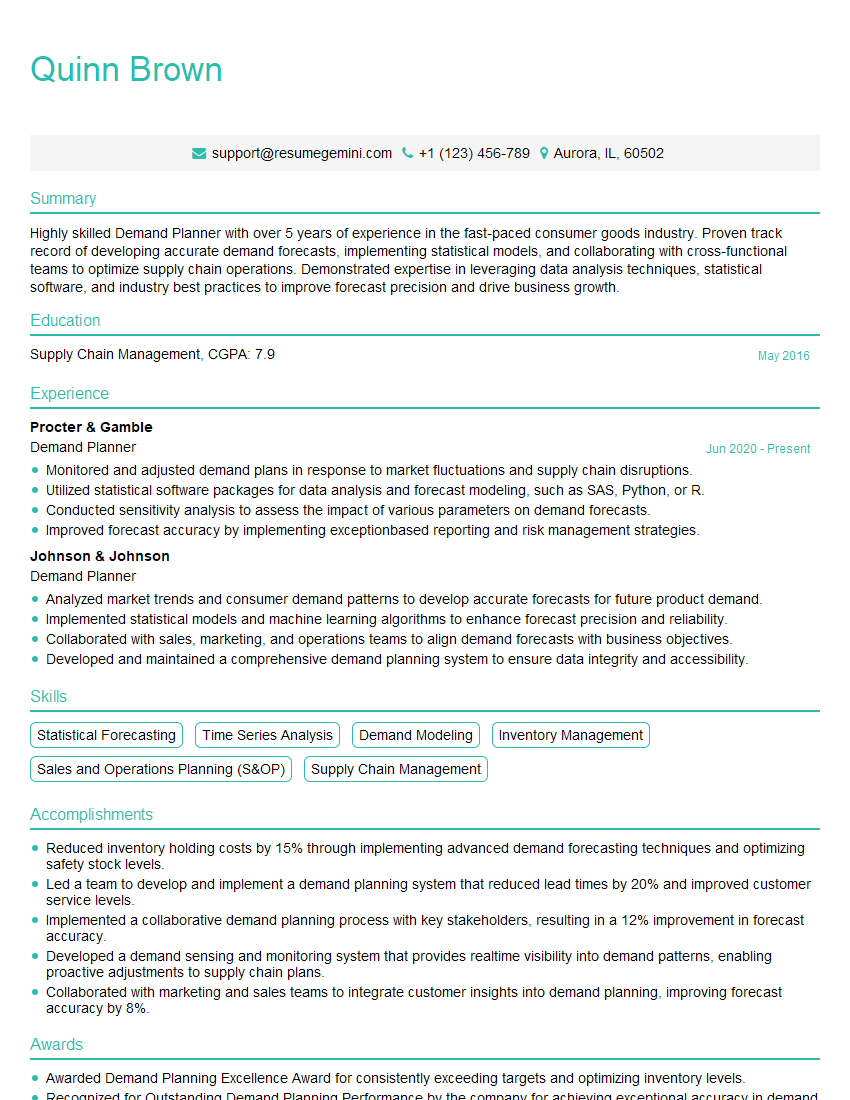
Demand Planner Resume Sample
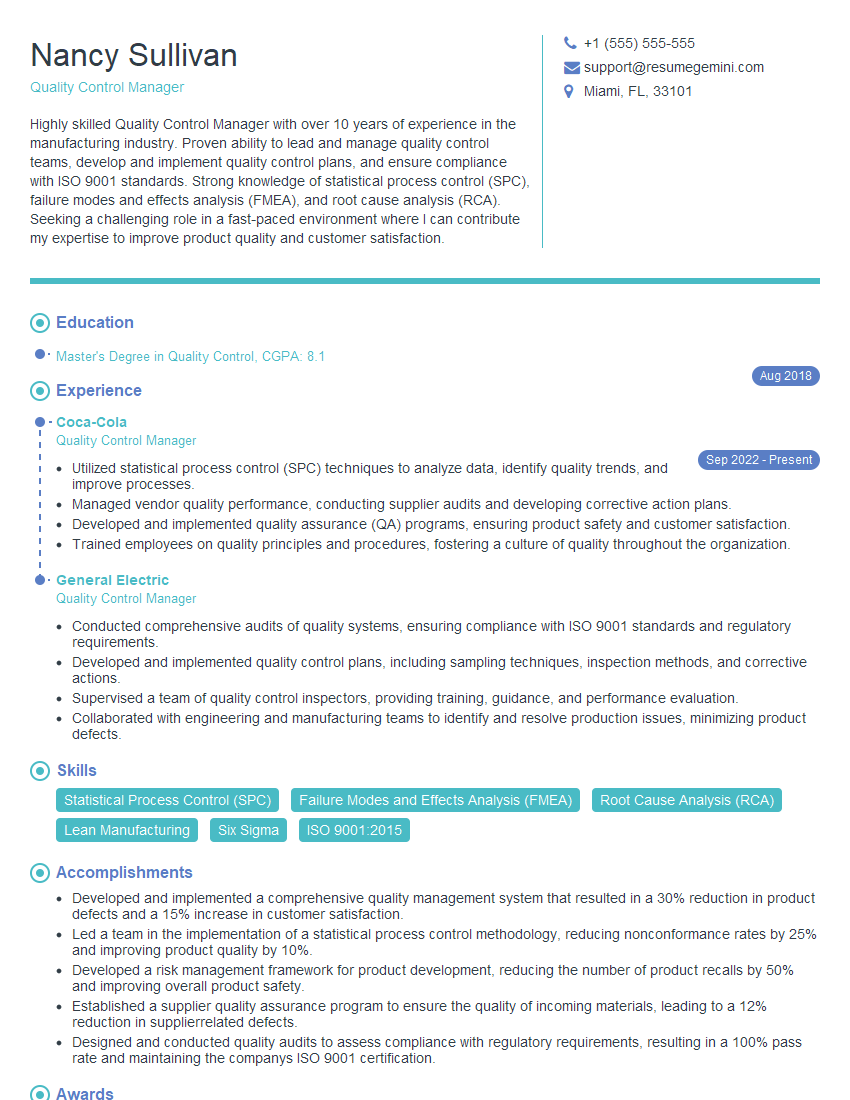
Quality Control Manager Resume Sample
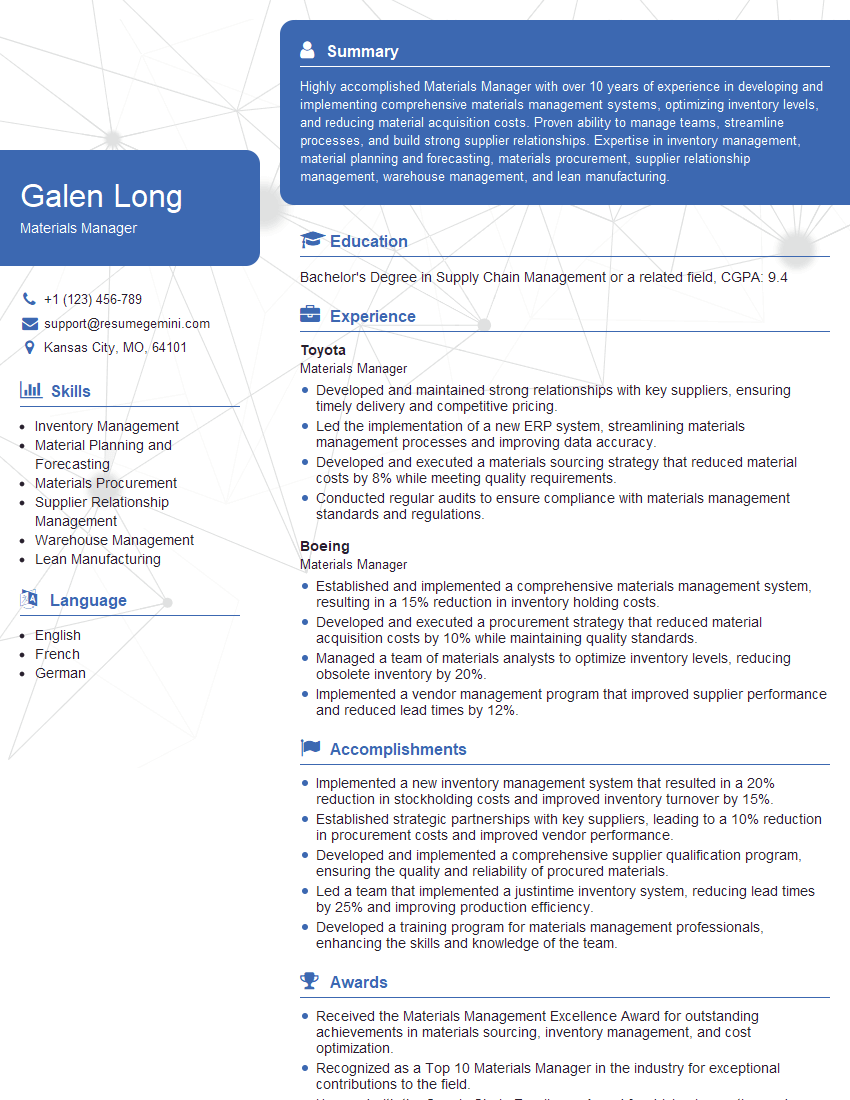
Materials Manager Resume Sample

Procurement Manager Resume Sample
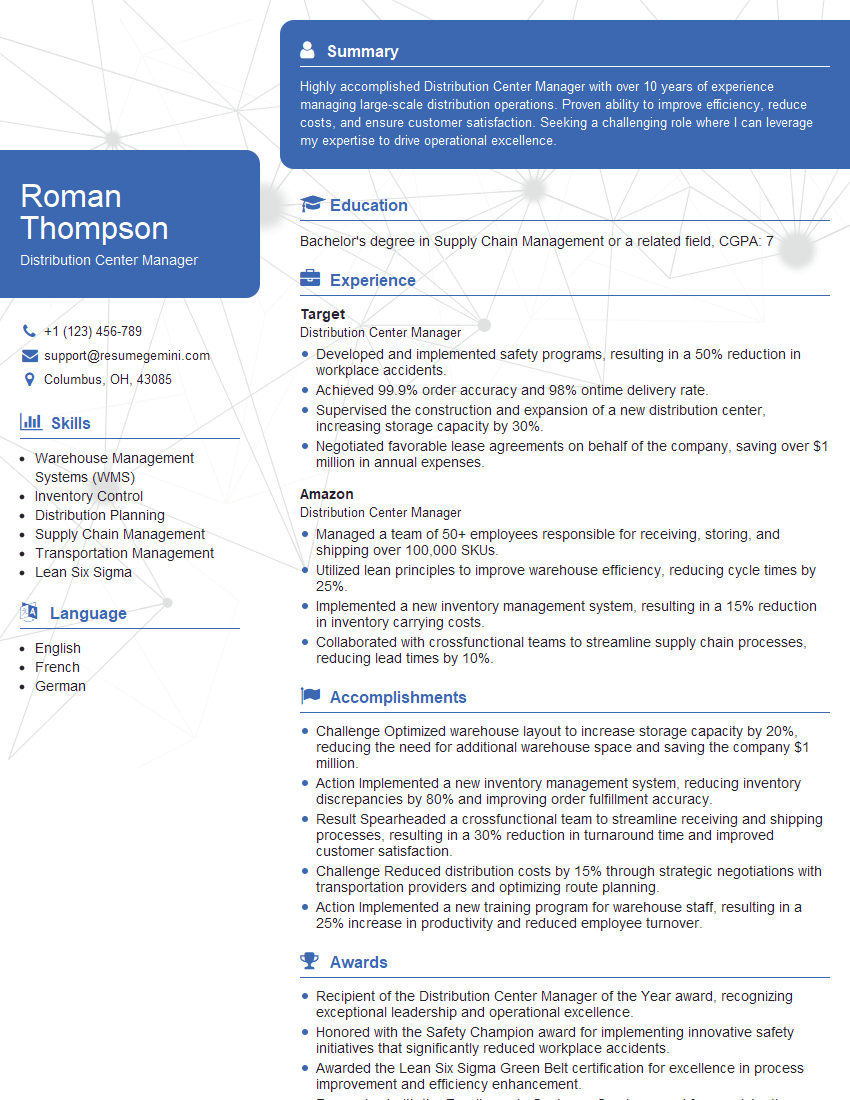
Distribution Center Manager Resume Sample
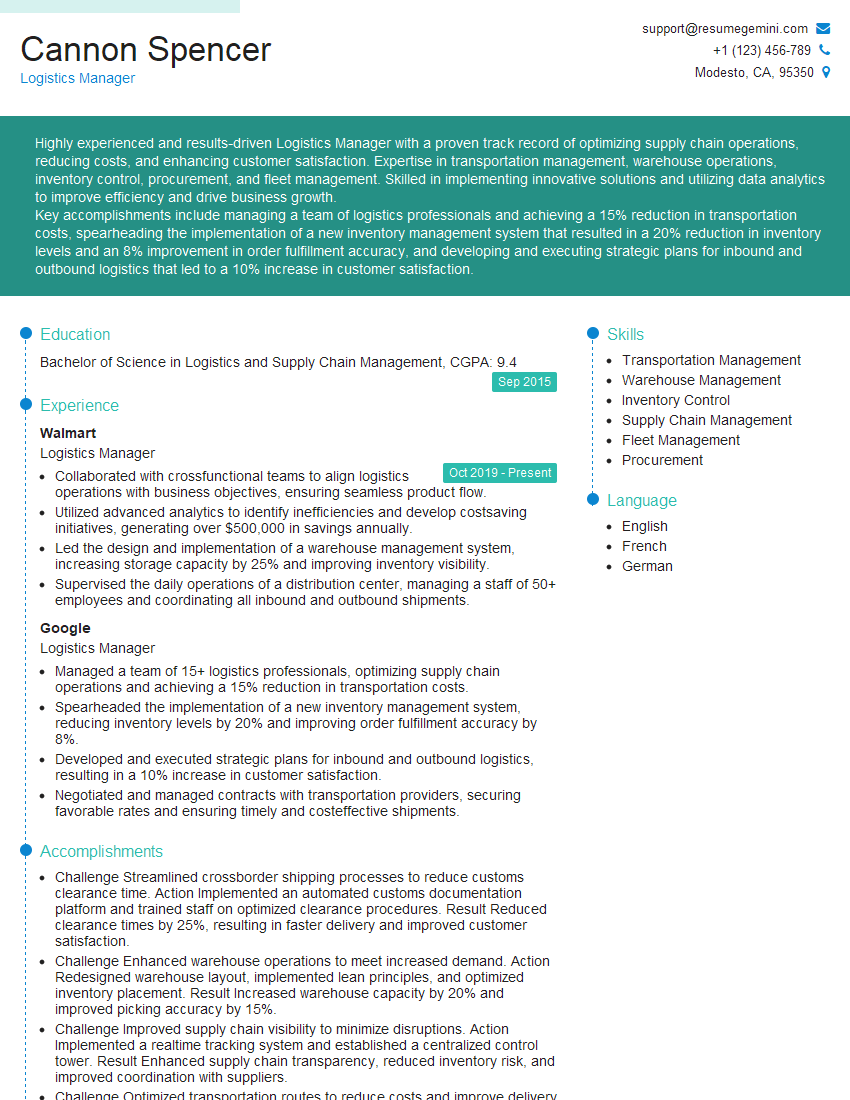
Logistics Manager Resume Sample
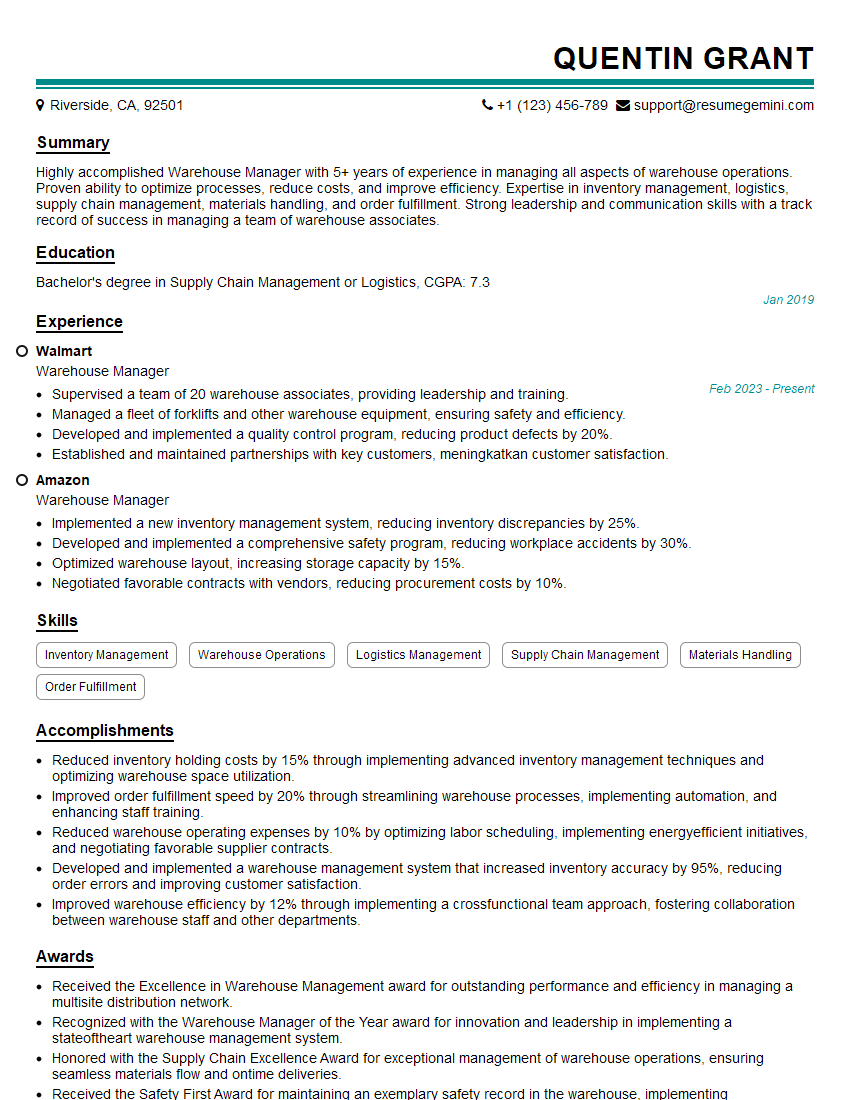
Warehouse Manager Resume Sample
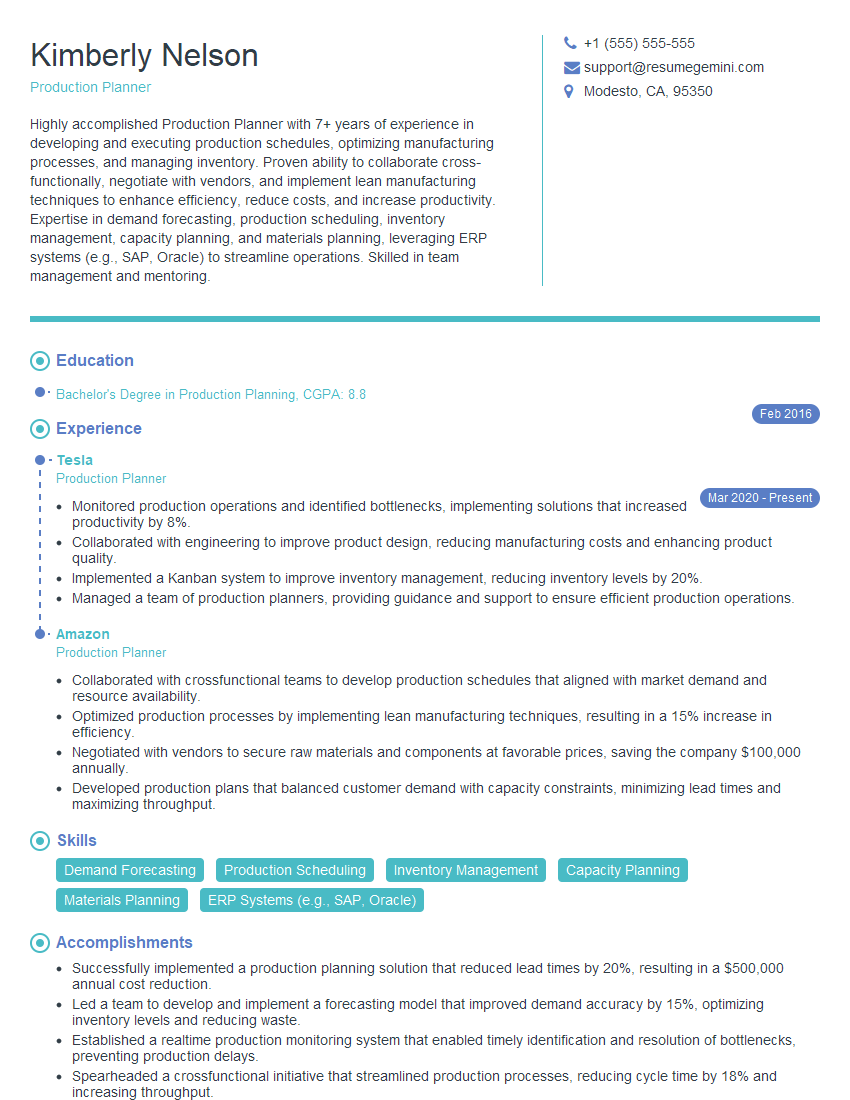
Production Planner Resume Sample
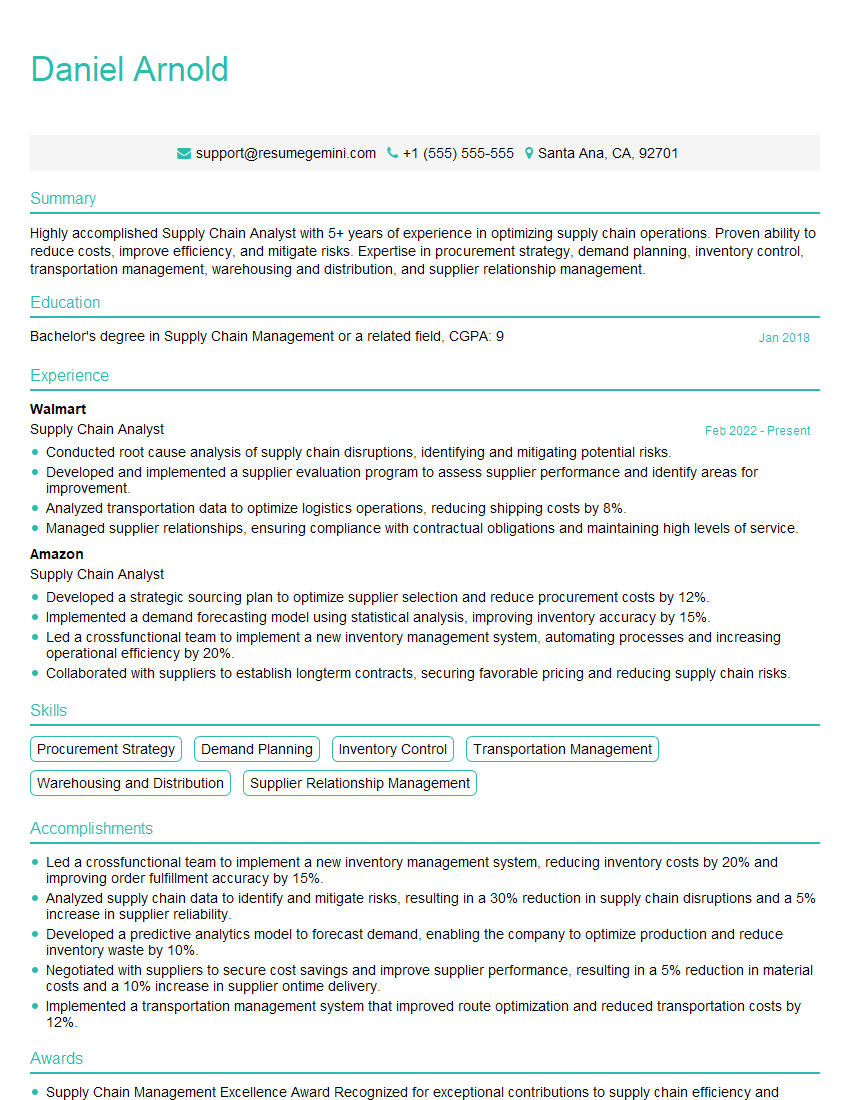
Supply Chain Analyst Resume Sample

Operations Research Analyst Resume Sample
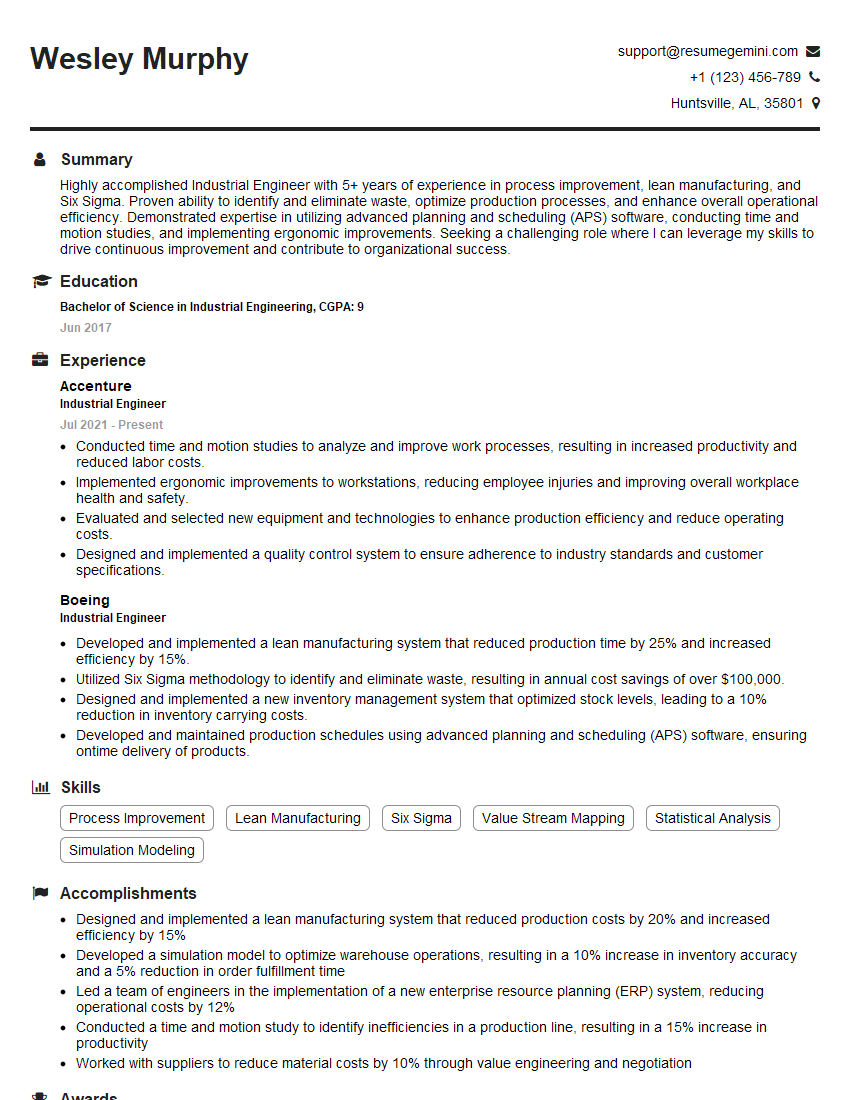
Industrial Engineer Resume Sample
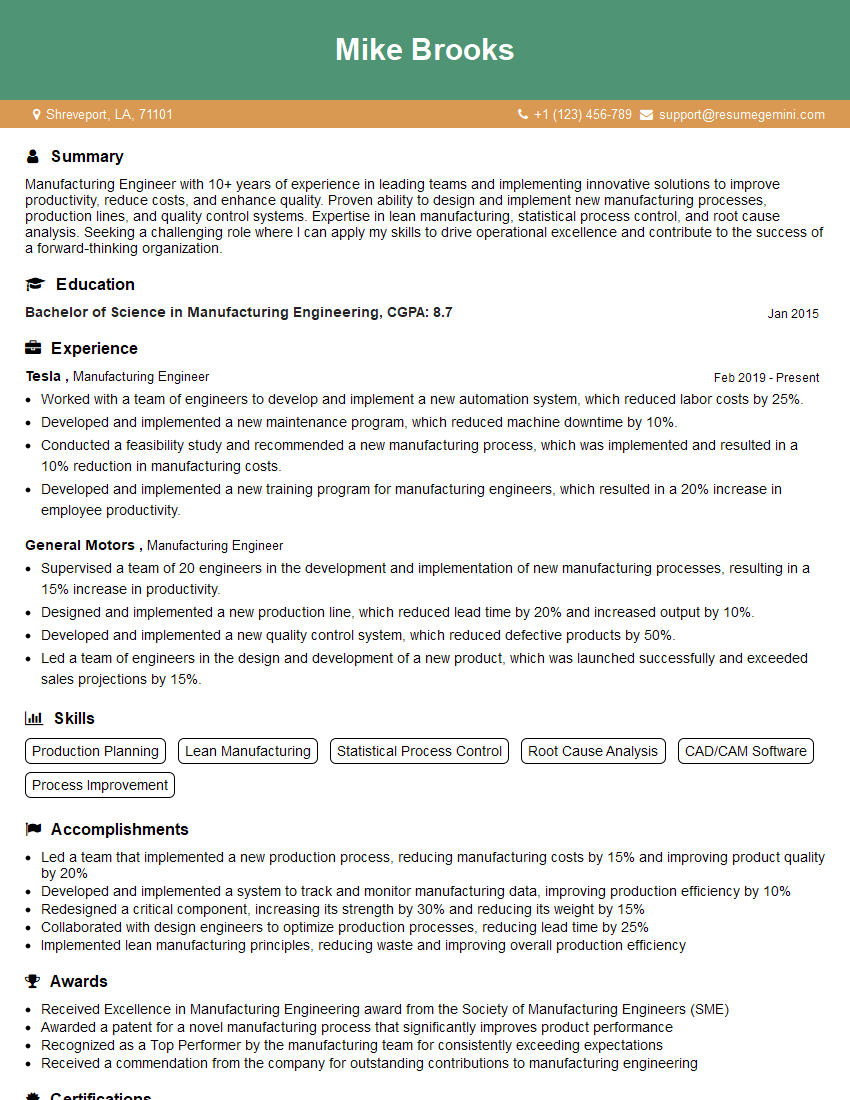
Manufacturing Engineer Resume Sample
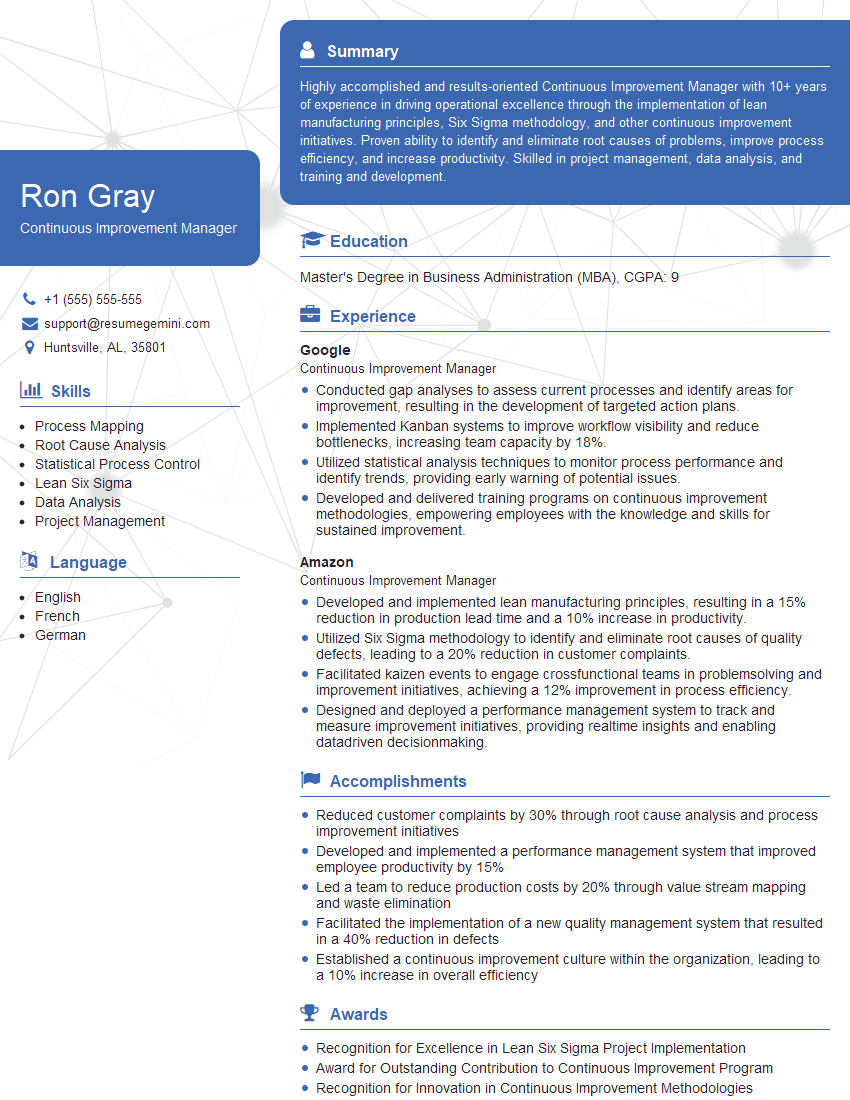
Continuous Improvement Manager Resume Sample
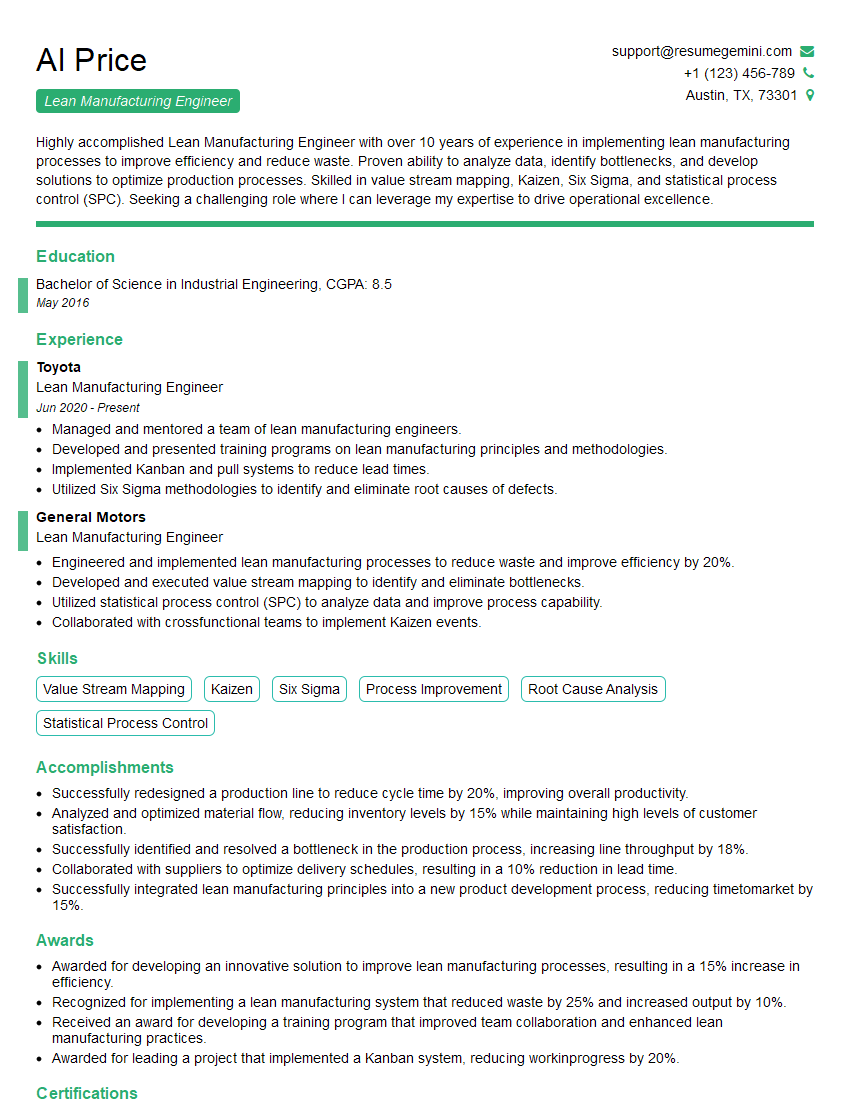
Lean Manufacturing Engineer Resume Sample
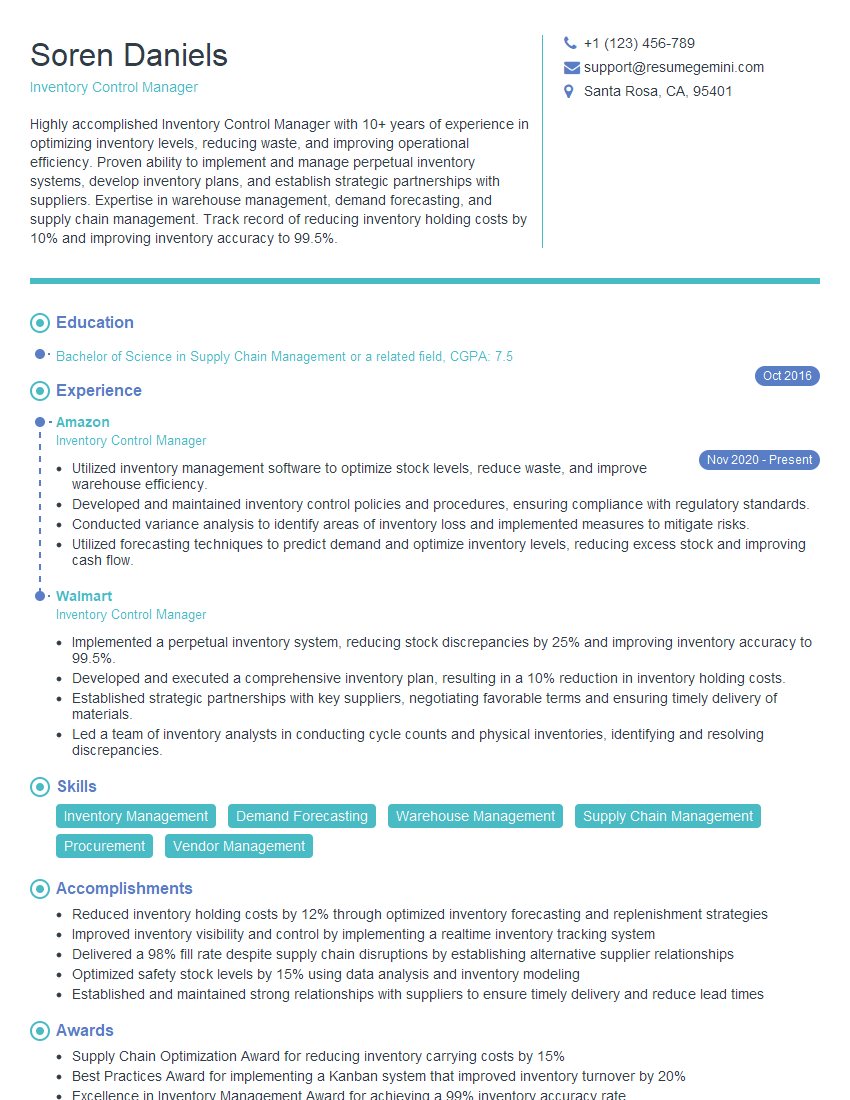
Inventory Control Manager Resume Sample
- Operations Manager
- Demand Planner
- Quality Control Manager
- Materials Manager
- Procurement Manager
- Distribution Center Manager
- Logistics Manager
- Warehouse Manager
- Production Planner
- Supply Chain Analyst
- Operations Research Analyst
- Industrial Engineer
- Manufacturing Engineer
- Continuous Improvement Manager
- Lean Manufacturing Engineer
- Inventory Control Manager
Explore more articles
Users Rating of Our Blogs
Share Your Experience
We value your feedback! Please rate our content and share your thoughts (optional).
What Readers Say About Our Blog
Hello,
we currently offer a complimentary backlink and URL indexing test for search engine optimization professionals.
You can get complimentary indexing credits to test how link discovery works in practice.
No credit card is required and there is no recurring fee.
You can find details here:
https://wikipedia-backlinks.com/indexing/
Regards
NICE RESPONSE TO Q & A
hi
The aim of this message is regarding an unclaimed deposit of a deceased nationale that bears the same name as you. You are not relate to him as there are millions of people answering the names across around the world. But i will use my position to influence the release of the deposit to you for our mutual benefit.
Respond for full details and how to claim the deposit. This is 100% risk free. Send hello to my email id: [email protected]
Luka Chachibaialuka
Hey interviewgemini.com, just wanted to follow up on my last email.
We just launched Call the Monster, an parenting app that lets you summon friendly ‘monsters’ kids actually listen to.
We’re also running a giveaway for everyone who downloads the app. Since it’s brand new, there aren’t many users yet, which means you’ve got a much better chance of winning some great prizes.
You can check it out here: https://bit.ly/callamonsterapp
Or follow us on Instagram: https://www.instagram.com/callamonsterapp
Thanks,
Ryan
CEO – Call the Monster App
Hey interviewgemini.com, I saw your website and love your approach.
I just want this to look like spam email, but want to share something important to you. We just launched Call the Monster, a parenting app that lets you summon friendly ‘monsters’ kids actually listen to.
Parents are loving it for calming chaos before bedtime. Thought you might want to try it: https://bit.ly/callamonsterapp or just follow our fun monster lore on Instagram: https://www.instagram.com/callamonsterapp
Thanks,
Ryan
CEO – Call A Monster APP
To the interviewgemini.com Owner.
Dear interviewgemini.com Webmaster!
Hi interviewgemini.com Webmaster!
Dear interviewgemini.com Webmaster!
excellent
Hello,
We found issues with your domain’s email setup that may be sending your messages to spam or blocking them completely. InboxShield Mini shows you how to fix it in minutes — no tech skills required.
Scan your domain now for details: https://inboxshield-mini.com/
— Adam @ InboxShield Mini
Reply STOP to unsubscribe
Hi, are you owner of interviewgemini.com? What if I told you I could help you find extra time in your schedule, reconnect with leads you didn’t even realize you missed, and bring in more “I want to work with you” conversations, without increasing your ad spend or hiring a full-time employee?
All with a flexible, budget-friendly service that could easily pay for itself. Sounds good?
Would it be nice to jump on a quick 10-minute call so I can show you exactly how we make this work?
Best,
Hapei
Marketing Director
Hey, I know you’re the owner of interviewgemini.com. I’ll be quick.
Fundraising for your business is tough and time-consuming. We make it easier by guaranteeing two private investor meetings each month, for six months. No demos, no pitch events – just direct introductions to active investors matched to your startup.
If youR17;re raising, this could help you build real momentum. Want me to send more info?
Hi, I represent an SEO company that specialises in getting you AI citations and higher rankings on Google. I’d like to offer you a 100% free SEO audit for your website. Would you be interested?
Hi, I represent an SEO company that specialises in getting you AI citations and higher rankings on Google. I’d like to offer you a 100% free SEO audit for your website. Would you be interested?
good