Feeling uncertain about what to expect in your upcoming interview? We’ve got you covered! This blog highlights the most important Mechanical Safety Testing interview questions and provides actionable advice to help you stand out as the ideal candidate. Let’s pave the way for your success.
Questions Asked in Mechanical Safety Testing Interview
Q 1. Explain the difference between a safety factor and a factor of safety.
While often used interchangeably, ‘safety factor’ and ‘factor of safety’ represent subtly different perspectives in mechanical safety. Both refer to the ratio of the material’s ultimate strength to the anticipated working stress. However, ‘safety factor’ emphasizes the inherent safety margin built into a design, focusing on the material’s inherent capacity to withstand loads exceeding normal operational conditions. Think of it as the ‘buffer’ against unexpected forces or material imperfections. ‘Factor of safety,’ on the other hand, is a more calculated and often regulatory-driven approach, considering a broader range of factors like environmental conditions, manufacturing tolerances, and potential operational errors. It’s a more comprehensive assessment aiming to ensure compliance with safety regulations.
Example: A bridge designed with a safety factor of 3 means the bridge’s structural components can withstand three times the expected maximum load. A factor of safety calculation, however, would consider the possibility of overloading, corrosion, and variations in material strength to arrive at that factor of 3.
Q 2. Describe your experience with various testing standards (e.g., ISO, ASTM).
My experience with testing standards is extensive, encompassing both ISO and ASTM standards extensively. I’ve worked extensively with standards such as ISO 6436 (Mechanical properties of non-ferrous metals), ISO 14644 (Cleanrooms and associated controlled environments) – particularly relevant when testing components for sensitive environments -, and ASTM E8 (Tension testing of metallic materials). In aerospace projects, I utilized standards such as SAE ARP5797 which deals with material property validation. My experience isn’t limited to simple tensile testing; it also includes fatigue testing to ISO 12107, impact testing (Charpy, Izod) to ASTM E23, and fracture toughness testing according to ASTM E399. This broad exposure allows me to select the most appropriate standard for each project and ensure compliance with industry best practices.
For instance, in one project involving the design of a critical pressure vessel, selecting the right ASTM standard for material selection and subsequent testing was paramount, as any deviation could have serious safety implications. I used my knowledge of both ISO and ASTM practices to develop a robust test plan, helping us achieve both compliance and an optimized, reliable design.
Q 3. How do you determine the appropriate testing methods for a given mechanical component?
Determining the appropriate testing methods involves a systematic approach that considers several factors. Firstly, we need to understand the component’s function and the loads it will experience during its operational life. Secondly, the material properties are crucial. Thirdly, potential failure modes must be considered.
- Functional Analysis: What are the main stresses acting on the component (tensile, compressive, shear, torsion)?
- Material Properties: What are the mechanical properties of the material (yield strength, ultimate tensile strength, fatigue strength)?
- Potential Failure Modes: What are the likely ways the component could fail (fracture, yielding, fatigue, creep)?
Based on these considerations, we choose relevant tests. For instance, a component under significant cyclic loading would necessitate fatigue testing. If the component is expected to experience shock loads, an impact test would be necessary. A component under high pressure would require pressure testing. Selecting the correct test methods is vital for accurate safety assessment and reliable design validation.
Q 4. What are the common failure modes of mechanical components?
Mechanical components can fail in various ways, and understanding these modes is crucial for effective safety assessment. Some common failure modes include:
- Fracture: A complete separation of the component, often due to exceeding the material’s ultimate tensile strength.
- Yielding: Permanent deformation of the component beyond its elastic limit, leading to loss of functionality.
- Fatigue: Progressive damage caused by repeated cyclic loading, eventually leading to fracture.
- Creep: Time-dependent deformation under sustained load, particularly at high temperatures.
- Buckling: Sudden collapse of a structural member under compressive load.
- Wear: Gradual degradation of material surfaces due to friction or other interactions.
- Corrosion: Degradation of material due to chemical reactions with the environment.
Identifying potential failure modes early in the design phase through FEA and appropriate testing methods helps prevent catastrophic failures. For example, in designing a rotating shaft, consideration of fatigue failure is crucial, leading to the implementation of appropriate surface treatments and the design of adequate safety factors.
Q 5. Explain your understanding of fatigue testing and its importance in safety assessment.
Fatigue testing is a critical aspect of safety assessment as many mechanical components experience cyclic loading during their operational life. This repeated loading, even at stresses well below the material’s yield strength, can initiate and propagate microscopic cracks, eventually leading to catastrophic failure. Fatigue testing aims to determine the material’s fatigue strength – the stress amplitude that can withstand a specific number of cycles before failure. This information is essential to designing components that can safely withstand repeated loading over their operational life.
The process involves subjecting specimens to controlled cyclic loading under various conditions and monitoring their response. Techniques include constant-amplitude fatigue testing (sinusoidal waveform) and variable-amplitude fatigue testing (representing real-world loading patterns). Results are typically presented as an S-N curve (stress amplitude vs. number of cycles to failure). The importance of fatigue testing cannot be overstated; it is vital for ensuring the longevity and safety of components in applications involving dynamic loading, such as aircraft wings, bridges, or vehicle axles.
Q 6. How do you perform a risk assessment for a mechanical system?
A risk assessment for a mechanical system involves a structured approach to identify and evaluate potential hazards and their associated risks. I typically use a hazard and operability study (HAZOP) methodology, coupled with a Failure Modes and Effects Analysis (FMEA). HAZOP systematically examines the system’s design and operation to identify potential deviations from intended performance, while FMEA identifies potential failure modes, their causes, effects, and severity.
The process involves the following steps:
- Hazard Identification: List all potential hazards associated with the system.
- Risk Assessment: For each hazard, determine the likelihood and severity of the potential consequences.
- Risk Evaluation: Combine likelihood and severity to determine the overall risk level.
- Risk Control: Implement control measures to mitigate the risks (e.g., design modifications, safety devices, operational procedures).
- Risk Monitoring: Regularly monitor and review the effectiveness of the implemented controls.
By using this framework, we can prioritize risk reduction efforts and focus on the most critical hazards. For example, in designing a robotic arm, a HAZOP analysis could reveal potential hazards related to pinch points, while an FMEA could pinpoint potential failure modes of individual components and their impact on the overall system safety.
Q 7. Describe your experience with finite element analysis (FEA) in safety testing.
Finite Element Analysis (FEA) is an indispensable tool in my safety testing workflow. FEA allows us to simulate the behavior of mechanical components under various loading conditions without the need for extensive physical testing. This is particularly useful for complex geometries and loading scenarios where physical testing might be impractical or expensive. FEA enables us to predict stress distributions, displacements, and potential failure points within a component under different operating conditions.
I use FEA to perform a variety of analyses, including static analysis (to determine stresses under steady loads), dynamic analysis (to determine stresses under transient loads), and fatigue analysis (to determine the life of a component under cyclic loading). The results provide valuable insights into potential design weaknesses and help us optimize the design for improved safety and performance. FEA is particularly helpful in identifying stress concentration areas that may not be apparent through simple calculations. For example, FEA helped us to identify a critical stress concentration point in a complex casting in a previous project, which led to a redesign that significantly improved the component’s fatigue life and overall safety.
Q 8. What are some common non-destructive testing (NDT) methods used in mechanical safety testing?
Non-destructive testing (NDT) methods are crucial in mechanical safety testing because they allow us to evaluate the integrity of a component without causing damage. This is vital for ensuring the continued safe operation of machinery and equipment. Several common NDT methods include:
- Visual Inspection: This is the simplest method, involving a thorough visual examination for surface defects like cracks, corrosion, or deformation. Think of a mechanic checking a car engine for loose bolts or leaks – that’s a form of visual inspection.
- Liquid Penetrant Testing (LPT): This method uses a dye to highlight surface-breaking flaws. The dye penetrates the crack, and a developer draws it back to the surface, making the flaw visible. This is particularly useful for detecting fine cracks in complex geometries.
- Magnetic Particle Testing (MPT): Used on ferromagnetic materials, MPT applies a magnetic field and then sprinkles magnetic particles onto the surface. These particles cluster at discontinuities, revealing flaws beneath the surface. Imagine iron filings aligning around a hidden magnet – the same principle applies here.
- Ultrasonic Testing (UT): This uses high-frequency sound waves to detect internal flaws. The waves reflect off discontinuities, revealing their size, location, and orientation. It’s like using sonar to map the underwater terrain – UT uses sound waves to ‘map’ the interior of a component.
- Radiographic Testing (RT): Also known as X-ray or gamma-ray testing, RT uses penetrating radiation to create an image of the internal structure of the component. This is effective in detecting internal flaws like voids or inclusions. Think of an X-ray of a bone showing a fracture – RT provides a similar image for mechanical components.
The choice of NDT method depends on factors like the material, the type of flaw expected, and the component’s geometry. Often, a combination of methods is employed for comprehensive evaluation.
Q 9. How do you interpret and analyze test results to determine if a component meets safety requirements?
Interpreting test results involves comparing the measured data to predefined acceptance criteria specified in design documents, industry standards, or regulatory requirements. This comparison helps determine whether a component meets safety requirements. For example, if a tensile test reveals that a component’s yield strength is below the minimum specified value, it fails to meet the safety requirements.
The analysis process typically involves:
- Data Collection: Gathering all relevant data from the tests performed, including measurements, observations, and any deviations.
- Data Comparison: Comparing the collected data against the pre-defined acceptance criteria. This often involves checking if the measured values fall within specified tolerances or limits.
- Statistical Analysis: For larger datasets, statistical methods can be used to evaluate the data’s variability and identify outliers. This ensures that the conclusions are not biased by random errors.
- Failure Mode and Effects Analysis (FMEA): Assessing potential failure modes and their impact on safety. FMEA helps identify critical components and pinpoint areas needing further investigation.
- Documentation: All findings are meticulously documented, including deviations, justifications, and any corrective actions.
If the results show that the component fails to meet requirements, further investigations are needed to understand the cause and find a solution. This might involve redesigning the component, changing the material, or altering the manufacturing process.
Q 10. Explain your experience with creating and maintaining safety test documentation.
Creating and maintaining safety test documentation is paramount for ensuring traceability, repeatability, and regulatory compliance. My experience involves developing comprehensive documentation that covers every aspect of the testing process, including:
- Test Plan: A detailed outline of the testing procedures, including the test methods, equipment used, sample preparation, and acceptance criteria. This ensures consistency and reproducibility.
- Test Procedures: Step-by-step instructions for conducting each test. Clear, unambiguous procedures minimize errors and ensure that tests are performed consistently across different operators and locations.
- Test Reports: Comprehensive reports that document all test data, observations, analyses, and conclusions. These reports provide a complete record of the testing process and its outcomes.
- Calibration Records: Maintaining records of calibrations for all testing equipment ensures accuracy and reliability of the test results. This is essential for validating the integrity of the data.
- Non-conformance Reports: Documenting any discrepancies between test results and specifications. These reports trigger corrective actions and preventive measures.
I utilize a document management system to ensure efficient storage, retrieval, and version control of all test documentation. This ensures that the latest and most accurate versions are always available.
Q 11. How do you handle discrepancies between test results and design specifications?
Discrepancies between test results and design specifications warrant thorough investigation. A step-by-step approach is crucial:
- Verification: First, the test results and the design specifications are carefully reviewed to confirm the discrepancy. This might involve re-checking calculations, reviewing procedures, and verifying the accuracy of the measurement equipment.
- Root Cause Analysis: If the discrepancy is confirmed, a thorough root cause analysis is conducted to identify the source of the problem. This often involves investigating the manufacturing process, material properties, and testing procedures.
- Corrective Action: Once the root cause is identified, appropriate corrective actions are implemented to address the issue. This may include redesigning the component, improving manufacturing processes, or revising the testing procedures.
- Verification of Correction: After implementing the corrective action, further testing is conducted to verify that the issue has been resolved. This ensures that the problem is fixed and doesn’t recur.
- Documentation: All findings, actions, and verifications are meticulously documented. This documentation serves as a record for future reference and facilitates continuous improvement.
A common example is a material not meeting its specified tensile strength. This could stem from a faulty batch of material, an incorrect manufacturing process, or even an error in the test procedure itself. A thorough investigation is crucial to determine the exact cause and implement the necessary corrective actions.
Q 12. Describe your experience with different types of mechanical testing (e.g., tensile, compression, shear).
My experience encompasses various mechanical testing methods, including:
- Tensile Testing: This involves applying a controlled tensile force to a specimen until it breaks. The data obtained includes yield strength, ultimate tensile strength, and elongation, providing information about the material’s resistance to stretching and breaking. I’ve used this extensively to evaluate the strength of various materials, from metals to polymers.
- Compression Testing: This involves applying a compressive force to a specimen until it fails. The data obtained includes compressive strength and modulus, vital for evaluating materials’ resistance to crushing. This is often used for testing concrete, ceramics, and other brittle materials.
- Shear Testing: This involves applying a shear force to a specimen, causing it to slide along a plane. The data obtained includes shear strength and modulus, critical for evaluating the material’s resistance to shearing forces. This is frequently used in evaluating the strength of joints and fasteners.
- Fatigue Testing: This involves subjecting a specimen to cyclic loading to determine its endurance limit – the maximum stress it can withstand for a specified number of cycles without failing. This is crucial for evaluating the lifespan and reliability of components under cyclic loading.
- Impact Testing: This measures a material’s resistance to sudden impacts. This is essential for assessing the toughness of materials, especially those used in applications where impact resistance is critical.
Each test method provides unique insights into a material’s mechanical properties, and the selection of appropriate tests depends on the specific application and safety requirements.
Q 13. What are your strategies for ensuring the accuracy and reliability of test results?
Ensuring the accuracy and reliability of test results is paramount. My strategies include:
- Proper Equipment Calibration: Regular calibration and verification of all testing equipment according to established schedules and procedures. This guarantees that the equipment is functioning within its specified tolerances, delivering accurate and reliable results.
- Standard Operating Procedures (SOPs): Adherence to documented SOPs for each test method minimizes human error and ensures consistency. Clear, step-by-step instructions make the process more reproducible.
- Sample Selection: Careful selection of representative samples is crucial. The samples must be representative of the entire population of components to ensure that the test results are truly indicative of the overall performance.
- Environmental Control: Controlling environmental factors such as temperature and humidity during testing minimizes their influence on the test results. Environmental variations can significantly affect material properties.
- Data Validation: Implementing robust data validation procedures, including outlier analysis and statistical process control (SPC), helps to identify and address any anomalies or errors in the data.
- Blind Testing: Occasionally, blind testing can be useful to eliminate bias. This involves conducting tests without knowing the expected results or the source of the specimen.
Through the combination of these strategies, I strive for a high degree of confidence in the accuracy and reliability of my test results.
Q 14. Explain your familiarity with relevant safety regulations and standards.
I am familiar with a range of relevant safety regulations and standards, including:
- ISO 9001: This standard outlines the requirements for a quality management system, ensuring consistent quality in the products and services provided, including testing procedures.
- ISO 17025: This standard specifies the general requirements for the competence of testing and calibration laboratories, providing a framework for ensuring the quality and reliability of test results.
- ASTM standards: The American Society for Testing and Materials (ASTM) develops and publishes numerous standards for materials testing, covering a wide range of materials and test methods. I frequently refer to these standards in my work.
- ASME codes and standards: The American Society of Mechanical Engineers (ASME) provides codes and standards for the design, manufacture, and testing of pressure vessels, boilers, and other mechanical equipment. Adherence to these standards is crucial for ensuring safety in these applications.
- OSHA regulations: The Occupational Safety and Health Administration (OSHA) sets safety standards for workplaces, including those involved in materials testing, to ensure the safety of personnel.
My knowledge of these regulations and standards ensures that all testing activities are conducted in compliance with the applicable regulations, guaranteeing the safety and integrity of the tested components and the safety of personnel involved in the testing process.
Q 15. How do you incorporate safety considerations into the design process?
Safety considerations are interwoven into every stage of the design process, from initial concept to final testing. It’s not an afterthought; it’s a fundamental principle. We employ a proactive, preventative approach, using techniques like Failure Modes and Effects Analysis (FMEA) and Hazard and Operability Studies (HAZOP).
For instance, in designing a robotic arm for a factory, we wouldn’t simply focus on speed and precision. We’d also consider pinch points, potential for unintended movement, emergency stops, and safeguarding to prevent worker injury. FMEA would help us systematically identify potential failure modes of each component (e.g., motor failure, sensor malfunction) and their potential impact, enabling us to implement safeguards like redundant systems or fail-safe mechanisms.
HAZOP would facilitate a more thorough review, considering deviations from intended operation (e.g., what happens if the power fluctuates, or a sensor fails to register an object?). This structured approach guides us towards robust design choices and avoids costly and potentially dangerous fixes later in the development cycle.
Career Expert Tips:
- Ace those interviews! Prepare effectively by reviewing the Top 50 Most Common Interview Questions on ResumeGemini.
- Navigate your job search with confidence! Explore a wide range of Career Tips on ResumeGemini. Learn about common challenges and recommendations to overcome them.
- Craft the perfect resume! Master the Art of Resume Writing with ResumeGemini’s guide. Showcase your unique qualifications and achievements effectively.
- Don’t miss out on holiday savings! Build your dream resume with ResumeGemini’s ATS optimized templates.
Q 16. Describe your experience with statistical analysis of test data.
Statistical analysis is critical for interpreting test data and ensuring the reliability and safety of a mechanical system. My experience includes using various statistical methods, such as hypothesis testing, regression analysis, and analysis of variance (ANOVA), to draw meaningful conclusions from experimental results.
For example, during fatigue testing of a component, we might collect hundreds of data points on stress and strain cycles to failure. We then use statistical methods like Weibull analysis to model the data and predict the probability of failure at different stress levels. This informs design decisions concerning material selection, safety factors, and maintenance schedules.
I’m proficient in using software packages like Minitab and JMP to perform these analyses and create visualizations that clearly communicate the findings to engineering and management teams. This ensures that decisions based on test data are statistically sound and support the system’s safe operation.
Q 17. How do you identify and mitigate potential hazards in a mechanical system?
Hazard identification and mitigation require a systematic approach. We use a combination of techniques including HAZOP, FMEA, and Fault Tree Analysis (FTA).
HAZOP involves systematically examining each stage of a system’s operation, considering deviations from the intended behavior. For instance, in a conveyor belt system, we’d examine what happens if the belt speed increases unexpectedly (hazard: product damage, injury), or if the emergency stop fails (hazard: severe injury).
FMEA, as mentioned earlier, focuses on identifying potential failure modes for individual components. FTA takes this a step further, diagramming the various events that could lead to a top-level hazard, allowing for a more comprehensive understanding of cascading failures. Mitigation strategies, such as safety interlocks, pressure relief valves, and emergency shut-off systems, are developed based on the results of these analyses, with rigorous testing to validate their effectiveness.
Q 18. What are some common causes of mechanical failures?
Mechanical failures stem from a variety of causes, often interconnected. Some common culprits include:
- Material defects: Inclusions, cracks, or inconsistencies in material properties can weaken components and lead to premature failure.
- Fatigue: Repeated stress cycles can cause micro-cracks to propagate, ultimately leading to fracture. This is a significant concern in many applications.
- Corrosion: Environmental factors can degrade material strength, causing components to weaken and fail.
- Improper design: Insufficient safety factors, inadequate stress analysis, and poor selection of materials can lead to catastrophic failure.
- Manufacturing defects: Imperfect welds, improper machining, or incorrect assembly can compromise component integrity.
- Overloading: Exceeding a component’s design limits can result in immediate failure.
- Wear and tear: Friction and abrasion over time can cause components to degrade and fail.
Understanding these potential failure modes is paramount to designing robust and reliable systems. Proper selection of materials, appropriate safety factors, and rigorous testing are all essential to mitigate these risks.
Q 19. Explain your experience with root cause analysis techniques.
Root cause analysis (RCA) is crucial for identifying the fundamental reasons behind failures. My experience encompasses various RCA techniques including the ‘5 Whys’, Fishbone diagrams, and Fault Tree Analysis.
The ‘5 Whys’ is a simple yet effective iterative questioning method designed to drill down to the root cause. For instance, if a pump fails: Why did it fail? (Overheating). Why did it overheat? (Bearing failure). Why did the bearing fail? (Insufficient lubrication). Why was there insufficient lubrication? (Faulty lubrication system). Why did the lubrication system fail? (Lack of preventative maintenance).
Fishbone diagrams visually represent potential contributing factors to a failure, often categorized as people, methods, machines, materials, environment, and measurements. FTA, as previously mentioned, uses a graphical model to show the various events that can lead to a system failure, allowing for a quantitative assessment of risk.
By applying these methods systematically, we can prevent recurrence of similar incidents, leading to improved safety and reliability.
Q 20. Describe your experience with safety audits and inspections.
Safety audits and inspections are vital for maintaining a safe working environment and ensuring compliance with safety regulations. My experience involves conducting both planned and unplanned inspections, using checklists and relevant standards to evaluate compliance.
During an audit, I examine aspects like machine guarding, emergency stop systems, lockout/tagout procedures, personal protective equipment (PPE) usage, and adherence to established safety protocols. I document any deficiencies or non-compliances, and work with the relevant personnel to develop corrective actions. This ensures that potential hazards are identified and addressed promptly, reducing the risk of accidents and injuries.
For instance, in a manufacturing facility, I might identify a missing guard on a rotating machine, leading to the immediate implementation of a temporary solution and a plan for permanent remediation. These inspections and audits help maintain a proactive safety culture within organizations.
Q 21. How do you develop and implement safety protocols?
Developing and implementing effective safety protocols requires a multi-faceted approach that combines engineering controls, administrative controls, and personal protective equipment (PPE).
Engineering controls are the most effective, addressing hazards at the source. Examples include machine guarding, interlocks, and automatic shut-off systems. Administrative controls address hazards through policies, procedures, and training programs. This includes establishing clear safety guidelines, conducting regular safety meetings, and providing comprehensive training to employees.
PPE serves as a last line of defense, protecting workers from residual hazards. This might include safety glasses, hearing protection, or specialized clothing. Implementing these protocols effectively requires clear communication, worker involvement, and a commitment to continuous improvement. Regular audits and inspections are crucial to ensure that the protocols remain effective and are being followed consistently.
Q 22. Explain your understanding of human factors in mechanical safety.
Human factors in mechanical safety encompass the interplay between humans and machinery, recognizing that human error is a significant contributor to accidents. It’s not just about designing machines to be inherently safe, but also about understanding how humans interact with them – their limitations, their tendencies, and their cognitive abilities. We need to design equipment and processes that account for these aspects.
- Anthropometry: Considering the physical dimensions of the human body to ensure comfortable and safe reach, posture, and clearances around machinery. For example, designing control panels with buttons sized and spaced appropriately to prevent accidental activation.
- Human-Computer Interaction (HCI): Designing intuitive and user-friendly interfaces. A confusing control panel could lead to errors. Clear labeling, consistent symbols, and logical control layouts are crucial.
- Cognitive Ergonomics: Understanding mental processes like attention, memory, and decision-making to mitigate errors. For instance, using visual cues and alarms to alert operators to potential hazards. Reducing cognitive workload through automation where appropriate is also important.
- Environmental Factors: Considering the impact of noise, lighting, temperature, and vibration on operator performance and safety. Poor lighting could lead to misidentification of hazards.
A practical example would be designing a forklift with a low center of gravity to prevent tipping, coupled with clear visibility for the operator, intuitive controls, and appropriate safety alarms. This holistic approach that considers both the machine’s design and the human operator minimizes accident risk.
Q 23. Describe your experience with different types of failure analysis (e.g., fractography, metallurgical analysis).
My experience encompasses a range of failure analysis techniques. I’ve extensively used fractography to examine fracture surfaces of failed components under a microscope, identifying the origin and propagation of cracks. This helps determine whether the failure was due to fatigue, overload, or a material defect. Metallurgical analysis provides insights into the material’s microstructure, composition, and processing history. Techniques such as optical microscopy, scanning electron microscopy (SEM), and energy-dispersive X-ray spectroscopy (EDS) are employed to ascertain if there were any material defects or degradation that contributed to the failure.
For instance, in one project investigating the failure of a pressure vessel, fractography revealed a fatigue crack initiated at a weld imperfection. Metallurgical analysis then confirmed that the weld material had a lower than specified yield strength, contributing to the crack propagation. This dual approach provided a comprehensive understanding of the root cause of the failure, allowing for effective corrective actions.
Beyond these, I’m also proficient in other methods such as dimensional analysis, chemical analysis, and non-destructive testing (NDT) methods like ultrasonic testing and radiography to identify underlying flaws in materials or components before failure occurs.
Q 24. How do you ensure the safety of test personnel during testing activities?
Ensuring the safety of test personnel is paramount. This starts with thorough risk assessments before any testing begins, identifying potential hazards and implementing appropriate control measures.
- Safety Training: All personnel involved receive comprehensive safety training specific to the equipment and procedures used. This includes emergency response procedures.
- Personal Protective Equipment (PPE): Appropriate PPE such as safety glasses, hearing protection, gloves, and high-visibility clothing are mandatory. The type of PPE is dictated by the specific hazards identified in the risk assessment.
- Controlled Testing Environment: Tests are conducted in designated areas with appropriate barriers, containment systems, or remote operation where necessary. The test area is designed to mitigate risks associated with potential component failure or hazardous materials.
- Emergency Procedures: Clear emergency procedures, including evacuation plans and access to first aid, are established and regularly practiced. Emergency shut-off systems are readily accessible.
- Supervision: Experienced personnel supervise all testing activities, monitoring compliance with safety protocols and intervening if necessary.
For high-risk tests, we might employ additional safety measures, such as remote operation, blast shields, or redundant safety systems. Regular inspections of the equipment and the testing environment are also performed to identify any potential safety issues before they can cause harm.
Q 25. How do you communicate technical safety information to non-technical audiences?
Communicating complex technical information to non-technical audiences requires careful consideration and a strategic approach. I use a combination of techniques to ensure understanding.
- Simple Language: Avoiding jargon and technical terms unless absolutely necessary; defining terms when used.
- Visual Aids: Using diagrams, charts, graphs, and images to illustrate complex concepts effectively. A picture is truly worth a thousand words.
- Analogies and Metaphors: Relating technical concepts to everyday experiences to make them easier to grasp. For example, explaining the concept of stress and strain in a metal using the analogy of stretching a rubber band.
- Storytelling: Presenting information in a narrative format that engages the audience and helps them remember key points.
- Interactive Sessions: Facilitating discussions and Q&A sessions to address concerns and clarify any misunderstandings.
I find that tailoring my communication style to the specific audience’s level of understanding is crucial. For a board meeting, I might focus on high-level summaries and implications, while for a workshop with technicians, I’d provide more detail on specific procedures.
Q 26. Explain your experience with using specialized testing equipment and software.
My experience with specialized testing equipment and software is extensive. I’m proficient in using various types of testing machines, such as universal testing machines (UTMs) for tensile, compression, and flexural tests; fatigue testing machines for cyclic loading; and impact testers for determining material toughness.
I’m also skilled in using data acquisition systems and software to collect, analyze, and report test data. Software packages like LabVIEW, TestWorks, and MATLAB are part of my regular toolkit. I’m familiar with interpreting the results from these tests and using them to make informed decisions about the safety of the components or structures being tested. This includes using finite element analysis (FEA) software to simulate the behavior of components under different loading conditions to assess their safety margins.
Further, I have experience with specialized equipment for specific applications, such as environmental chambers for testing materials under extreme temperatures and humidity, and acoustic emission testing systems to detect crack initiation and propagation in real-time. My proficiency extends to calibrating and maintaining this equipment to ensure its accuracy and reliability.
Q 27. Describe a challenging safety testing situation you encountered and how you resolved it.
During a high-pressure hydraulic system test, we encountered an unexpected surge in pressure that exceeded the design limits of a critical component. The initial safety mechanisms failed to activate, raising serious safety concerns.
My first step was to immediately halt the test and secure the area. We then initiated a thorough investigation, examining the pressure readings and reviewing the system’s design specifications. This revealed a flaw in the pressure relief valve’s activation mechanism, triggered by a combination of high pressure and unexpected vibration. The valve’s design hadn’t considered these combined factors.
Our resolution involved several steps:
- Temporary Fix: We implemented an interim safety measure by incorporating a secondary pressure relief valve with a lower activation pressure to prevent a repeat incident.
- Root Cause Analysis: A comprehensive analysis of the system’s design, including simulations and stress analyses using FEA software, identified the design flaw in the pressure relief valve.
- Design Modification: The design of the pressure relief valve was revised to account for the combined pressure and vibration factors, enhancing its reliability.
- Retesting: After the design modifications, thorough retesting was conducted to verify the system’s safety and compliance with the original design specifications.
This incident highlighted the importance of thorough risk assessment, redundant safety systems, and continuous improvement in design and testing procedures. The experience reinforced the criticality of incorporating unexpected failure modes into our analyses and design considerations.
Q 28. How do you stay up-to-date with the latest advancements in mechanical safety testing?
Staying current in this rapidly evolving field requires a multi-pronged approach.
- Professional Organizations: Active membership in organizations like ASME (American Society of Mechanical Engineers) and ASTM International provides access to the latest standards, research papers, and conferences.
- Industry Publications and Journals: Regularly reading industry publications and peer-reviewed journals keeps me abreast of advancements in testing methods, materials, and safety regulations.
- Conferences and Workshops: Attending industry conferences and workshops allows me to network with other experts and learn about cutting-edge technologies and techniques.
- Continuing Education: I actively pursue continuing education opportunities, including workshops and online courses, to enhance my knowledge and skills.
- Collaboration and Networking: Engaging with colleagues and peers, sharing experiences, and participating in technical discussions foster knowledge sharing and continuous learning.
This combination of formal and informal learning ensures that my knowledge and skills remain sharp, allowing me to effectively address current and emerging challenges in mechanical safety testing.
Key Topics to Learn for Mechanical Safety Testing Interview
- Fundamental Testing Principles: Understand the theoretical basis of mechanical safety testing, including relevant standards (e.g., ISO, ASTM) and regulations.
- Material Properties and Failure Analysis: Learn to interpret material properties and apply this knowledge to predict potential failure modes in mechanical systems. Practical application includes analyzing stress-strain curves and fatigue data.
- Testing Methods and Equipment: Familiarize yourself with various testing methods (e.g., tensile testing, fatigue testing, impact testing) and the operation of relevant equipment. Understand the limitations and accuracies of different techniques.
- Data Acquisition and Analysis: Master the skills to collect, analyze, and interpret data from mechanical safety tests. Develop proficiency in using relevant software and statistical methods.
- Risk Assessment and Mitigation: Learn to identify potential hazards in mechanical systems and apply appropriate risk assessment methodologies to design safer products and processes. Practical application includes Failure Modes and Effects Analysis (FMEA).
- Safety Regulations and Standards: Gain a strong understanding of relevant safety regulations and standards within your industry. This includes interpreting and applying these standards to specific testing scenarios.
- Report Writing and Communication: Develop clear and concise communication skills to effectively present test results and recommendations to both technical and non-technical audiences.
- Problem-Solving and Troubleshooting: Develop your ability to troubleshoot equipment malfunctions, interpret unexpected test results, and identify potential sources of error in testing procedures.
Next Steps
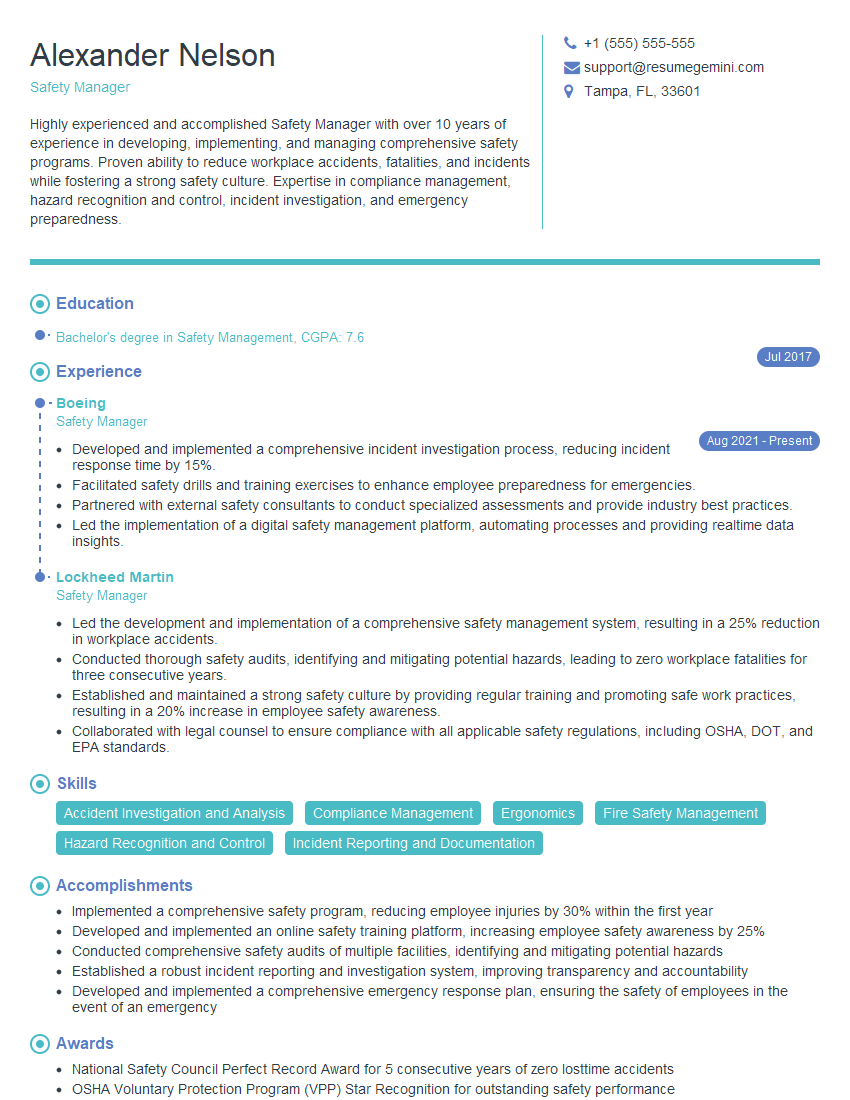
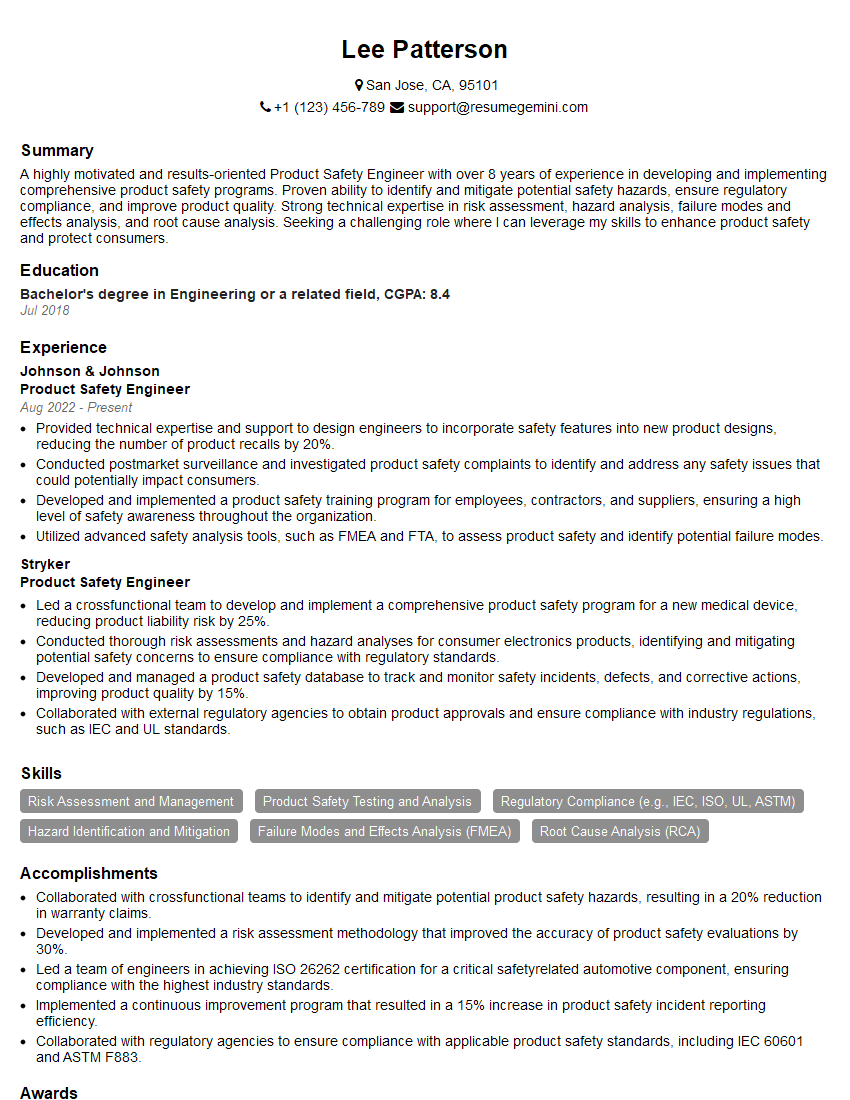
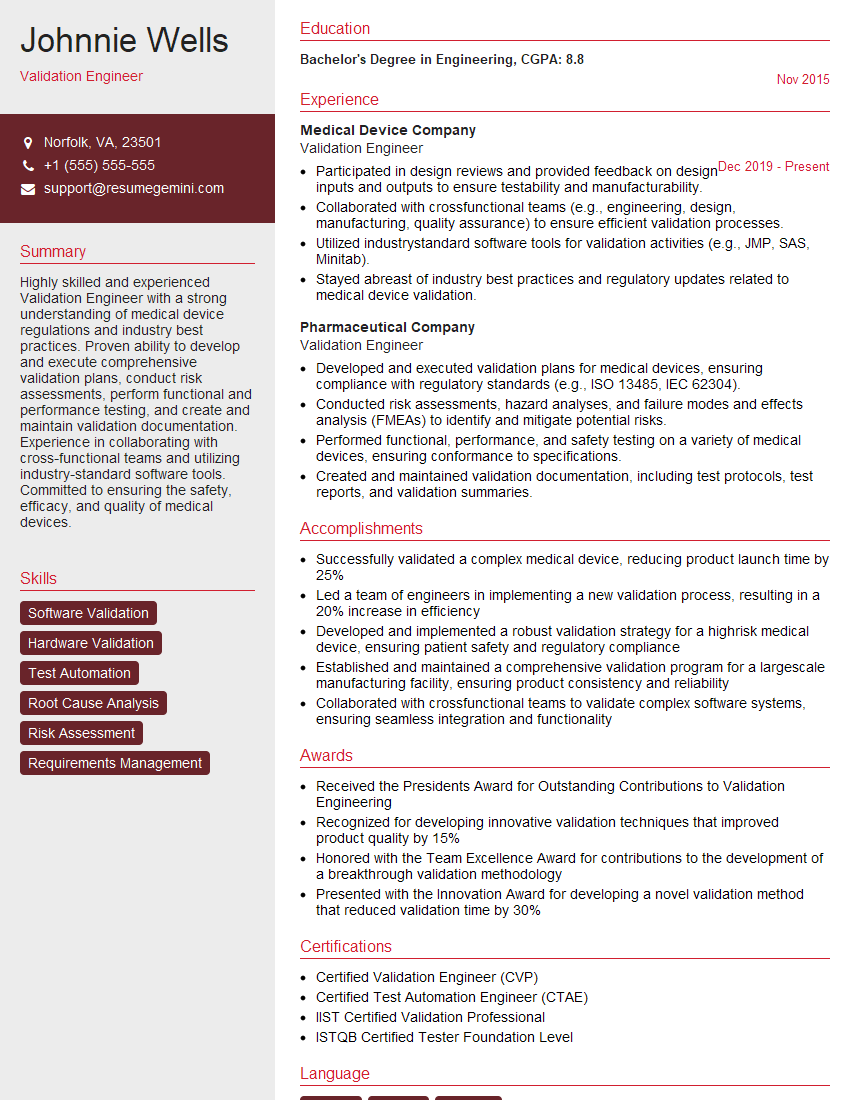
Mastering Mechanical Safety Testing is crucial for career advancement in engineering and related fields. A strong understanding of these principles will open doors to exciting opportunities and demonstrate your commitment to safety and quality. To maximize your job prospects, it’s essential to create a resume that effectively highlights your skills and experience to Applicant Tracking Systems (ATS). ResumeGemini is a trusted resource to help you build a professional and ATS-friendly resume. We provide examples of resumes tailored specifically to Mechanical Safety Testing roles, enabling you to showcase your expertise and secure your dream job.
Explore more articles
Users Rating of Our Blogs
Share Your Experience
We value your feedback! Please rate our content and share your thoughts (optional).
What Readers Say About Our Blog
Attention music lovers!
Wow, All the best Sax Summer music !!!
Spotify: https://open.spotify.com/artist/6ShcdIT7rPVVaFEpgZQbUk
Apple Music: https://music.apple.com/fr/artist/jimmy-sax-black/1530501936
YouTube: https://music.youtube.com/browse/VLOLAK5uy_noClmC7abM6YpZsnySxRqt3LoalPf88No
Other Platforms and Free Downloads : https://fanlink.tv/jimmysaxblack
on google : https://www.google.com/search?q=22+AND+22+AND+22
on ChatGPT : https://chat.openai.com?q=who20jlJimmy20Black20Sax20Producer
Get back into the groove with Jimmy sax Black
Best regards,
Jimmy sax Black
www.jimmysaxblack.com
Hi I am a troller at The aquatic interview center and I suddenly went so fast in Roblox and it was gone when I reset.
Hi,
Business owners spend hours every week worrying about their website—or avoiding it because it feels overwhelming.
We’d like to take that off your plate:
$69/month. Everything handled.
Our team will:
Design a custom website—or completely overhaul your current one
Take care of hosting as an option
Handle edits and improvements—up to 60 minutes of work included every month
No setup fees, no annual commitments. Just a site that makes a strong first impression.
Find out if it’s right for you:
https://websolutionsgenius.com/awardwinningwebsites
Hello,
we currently offer a complimentary backlink and URL indexing test for search engine optimization professionals.
You can get complimentary indexing credits to test how link discovery works in practice.
No credit card is required and there is no recurring fee.
You can find details here:
https://wikipedia-backlinks.com/indexing/
Regards
NICE RESPONSE TO Q & A
hi
The aim of this message is regarding an unclaimed deposit of a deceased nationale that bears the same name as you. You are not relate to him as there are millions of people answering the names across around the world. But i will use my position to influence the release of the deposit to you for our mutual benefit.
Respond for full details and how to claim the deposit. This is 100% risk free. Send hello to my email id: lukachachibaialuka@gmail.com
Luka Chachibaialuka
Hey interviewgemini.com, just wanted to follow up on my last email.
We just launched Call the Monster, an parenting app that lets you summon friendly ‘monsters’ kids actually listen to.
We’re also running a giveaway for everyone who downloads the app. Since it’s brand new, there aren’t many users yet, which means you’ve got a much better chance of winning some great prizes.
You can check it out here: https://bit.ly/callamonsterapp
Or follow us on Instagram: https://www.instagram.com/callamonsterapp
Thanks,
Ryan
CEO – Call the Monster App
Hey interviewgemini.com, I saw your website and love your approach.
I just want this to look like spam email, but want to share something important to you. We just launched Call the Monster, a parenting app that lets you summon friendly ‘monsters’ kids actually listen to.
Parents are loving it for calming chaos before bedtime. Thought you might want to try it: https://bit.ly/callamonsterapp or just follow our fun monster lore on Instagram: https://www.instagram.com/callamonsterapp
Thanks,
Ryan
CEO – Call A Monster APP
To the interviewgemini.com Owner.
Dear interviewgemini.com Webmaster!
Hi interviewgemini.com Webmaster!
Dear interviewgemini.com Webmaster!
excellent
Hello,
We found issues with your domain’s email setup that may be sending your messages to spam or blocking them completely. InboxShield Mini shows you how to fix it in minutes — no tech skills required.
Scan your domain now for details: https://inboxshield-mini.com/
— Adam @ InboxShield Mini
support@inboxshield-mini.com
Reply STOP to unsubscribe
Hi, are you owner of interviewgemini.com? What if I told you I could help you find extra time in your schedule, reconnect with leads you didn’t even realize you missed, and bring in more “I want to work with you” conversations, without increasing your ad spend or hiring a full-time employee?
All with a flexible, budget-friendly service that could easily pay for itself. Sounds good?
Would it be nice to jump on a quick 10-minute call so I can show you exactly how we make this work?
Best,
Hapei
Marketing Director
Hey, I know you’re the owner of interviewgemini.com. I’ll be quick.
Fundraising for your business is tough and time-consuming. We make it easier by guaranteeing two private investor meetings each month, for six months. No demos, no pitch events – just direct introductions to active investors matched to your startup.
If youR17;re raising, this could help you build real momentum. Want me to send more info?
Hi, I represent an SEO company that specialises in getting you AI citations and higher rankings on Google. I’d like to offer you a 100% free SEO audit for your website. Would you be interested?
Hi, I represent an SEO company that specialises in getting you AI citations and higher rankings on Google. I’d like to offer you a 100% free SEO audit for your website. Would you be interested?