Are you ready to stand out in your next interview? Understanding and preparing for Mental performance interview questions is a game-changer. In this blog, we’ve compiled key questions and expert advice to help you showcase your skills with confidence and precision. Let’s get started on your journey to acing the interview.
Questions Asked in Mental performance Interview
Q 1. Describe your approach to assessing an athlete’s mental state before a competition.
Assessing an athlete’s mental state before a competition involves a multi-faceted approach combining subjective and objective measures. It’s not just about identifying anxiety; it’s about understanding their overall psychological readiness. I begin with a detailed interview, exploring their mood, sleep patterns, confidence levels, and any specific worries or concerns related to the upcoming competition. This helps build rapport and gain a holistic understanding of their current state.
Next, I might use validated psychological questionnaires, such as the State-Trait Anxiety Inventory (STAI) or the Profile of Mood States (POMS), to quantify their anxiety, mood, and energy levels. These provide objective data to complement the subjective information gathered during the interview. Finally, I observe their behavior—body language, speech patterns, and overall demeanor—looking for signs of tension or distress. For example, a usually outgoing athlete exhibiting unusual quietness or fidgeting might signal increased anxiety. The combination of these methods provides a comprehensive picture of their mental readiness for the competition.
Q 2. Explain the difference between mindfulness and meditation in a performance context.
While both mindfulness and meditation aim to improve focus and awareness, they differ in their approach and application in a performance context. Mindfulness is the practice of paying attention to the present moment, without judgment. It involves observing thoughts, feelings, and sensations as they arise, without getting carried away by them. Think of it as a mental GPS, constantly checking your present location, but without any navigational orders.
Meditation, on the other hand, often involves a specific technique like focused attention (focusing on a single point, like your breath) or open monitoring (observing your thoughts without judgment). It’s more structured and deliberate than mindfulness. In performance, mindfulness can be used moment-to-moment during training or competition, helping to stay focused and manage distractions. Meditation, practiced regularly, can improve overall mental clarity, reducing stress and enhancing concentration, which in turn positively influences performance.
For example, an archer might use mindfulness to focus intensely on their breathing and the target during each shot. Regular meditation practice would help that archer maintain a calm, centered mind between shots and manage the pressure of competition.
Q 3. How would you help an athlete overcome pre-performance anxiety?
Helping athletes overcome pre-performance anxiety involves a personalized approach. I start by normalizing their feelings – anxiety before a big event is common and can even be beneficial in motivating performance; excessive anxiety is what needs to be addressed. Techniques vary from relaxation strategies to cognitive restructuring.
Firstly, I teach relaxation techniques like deep breathing exercises, progressive muscle relaxation, and visualization. Deep breathing, for instance, can slow down heart rate and calm the nervous system. Progressive muscle relaxation helps release muscle tension, a common symptom of anxiety.
Secondly, cognitive restructuring helps challenge and modify negative thoughts. If an athlete is catastrophizing (e.g., thinking, “If I make a mistake, my career is over”), we work together to reframe those thoughts into more realistic and positive ones (e.g., “If I make a mistake, I’ll learn from it and move on”).
Thirdly, self-talk and affirmations are powerful tools. We develop positive self-talk scripts to help the athlete replace negative self-criticism with encouraging statements.
Finally, exposure therapy, gradually exposing the athlete to anxiety-provoking situations, can be beneficial in reducing their fear response over time. This approach might involve starting with lower-pressure scenarios and progressively moving towards more challenging ones.
Q 4. What strategies do you employ to improve focus and concentration?
Improving focus and concentration requires a holistic approach. Strategies include enhancing attentional skills, managing distractions, and optimizing the training environment.
Firstly, I use attention training exercises, such as mindfulness meditation and selective attention tasks. These exercises help athletes improve their ability to focus on relevant stimuli while filtering out distractions. For example, a basketball player might practice focusing on the ball while ignoring the noise of the crowd.
Secondly, we work on managing internal and external distractions. Internal distractions (e.g., worries, self-doubt) can be addressed with cognitive restructuring and mindfulness. External distractions (e.g., noise, visual clutter) might require adjusting the training environment or utilizing noise-canceling headphones.
Thirdly, optimizing the training environment involves creating a space conducive to concentration, minimizing interruptions, and establishing routines. This could involve creating a quiet workspace, using a timer to structure practice sessions, and ensuring adequate sleep and nutrition.
Finally, I help athletes develop pre-performance routines to help them get into a state of focused readiness. These routines might involve specific exercises, imagery, and self-talk practices.
Q 5. Describe your experience using biofeedback in mental performance training.
Biofeedback is a valuable tool in mental performance training. It involves providing real-time feedback on physiological signals, such as heart rate, muscle tension, and skin conductance, allowing athletes to learn to control these responses. I use biofeedback to help athletes become more aware of their physiological responses to stress and pressure and learn self-regulation strategies.
For example, I might use heart rate variability (HRV) biofeedback to help an athlete regulate their nervous system. By providing visual or auditory feedback on their HRV, they can learn techniques to increase their parasympathetic activity (associated with relaxation) and decrease their sympathetic activity (associated with stress). Similarly, electromyography (EMG) biofeedback can help identify and reduce muscle tension, a common issue in athletes experiencing anxiety.
Biofeedback is especially effective when combined with other techniques like mindfulness and relaxation exercises. The real-time feedback acts as a guide, enhancing their ability to control their physiological state and improve their mental performance.
Q 6. How do you measure the effectiveness of your mental performance interventions?
Measuring the effectiveness of mental performance interventions requires a multi-pronged approach. I don’t rely solely on subjective feedback. It’s essential to combine qualitative and quantitative data.
Quantitatively, I track performance outcomes. This might involve analyzing competition results, assessing reaction times, and monitoring objective performance measures specific to the sport. I might also use pre- and post-intervention psychological assessments (e.g., STAI, POMS) to track changes in anxiety, mood, and confidence levels.
Qualitatively, I gather feedback through regular sessions with the athlete. This includes open-ended discussions about their experiences, their perceptions of improvements, and any challenges they have encountered. This provides valuable insights into the athlete’s experience and the effectiveness of the interventions from their perspective. I also may incorporate video analysis to assess pre-and post-intervention improvements in the athletes’ movement, body language, and decision-making.
Combining these qualitative and quantitative measures allows for a comprehensive assessment of the effectiveness of the intervention and aids in adjusting the training program as needed.
Q 7. Explain the role of imagery in enhancing athletic performance.
Imagery, also known as mental rehearsal, is a powerful technique for enhancing athletic performance. It involves creating vivid mental images of successful performance, engaging all senses – sight, sound, touch, smell, and even taste. This mental practice strengthens neural pathways, improving motor skills and enhancing psychological preparedness.
There are different types of imagery: internal imagery (experiencing the performance from your own perspective) and external imagery (viewing yourself as an outside observer). Both types are beneficial, but the optimal approach can vary depending on the athlete and the specific skill being practiced.
For example, a golfer might use internal imagery to feel the sensation of their swing, visualize the ball’s trajectory, and experience the feeling of successfully sinking the putt. External imagery might involve visualizing themselves performing the shot flawlessly from the perspective of a spectator.
Imagery is effective because it activates similar brain regions as actual physical performance. Consistent imagery practice enhances muscle memory, improves timing, and builds confidence. It also helps athletes develop coping strategies for dealing with pressure and adversity by mentally rehearsing how they will respond to challenging situations.
Q 8. How would you help a client develop a strong pre-game routine?
A pre-game routine is crucial for athletes to manage anxiety and optimize performance. It’s about creating a consistent, personalized ritual that helps shift the mind and body into a peak performance state. We collaboratively design a routine that’s tailored to the individual’s personality and sport, focusing on both physical and mental preparation.
- Physical Component: This might involve a specific warm-up routine, stretching exercises, or even a personalized playlist to get them in the zone. It’s about getting the body ready for the physical demands of the game.
- Mental Component: This involves techniques like visualization (mentally rehearsing successful plays), deep breathing exercises to manage anxiety, and positive self-talk to boost confidence. We might also incorporate mindfulness exercises to center the athlete in the present moment.
For example, a basketball player might incorporate shooting drills, followed by visualization of making crucial free throws, and then a few minutes of deep breathing before stepping onto the court. The key is consistency – repeating this routine before each game helps create a predictable, comforting environment that reduces pre-game jitters and promotes optimal performance.
Q 9. Describe your understanding of cognitive behavioral therapy (CBT) and its application in sports psychology.
Cognitive Behavioral Therapy (CBT) is a powerful therapeutic approach that focuses on the interconnectedness of thoughts, feelings, and behaviors. In sports psychology, CBT helps athletes identify and modify negative thought patterns and beliefs that hinder performance. It’s about teaching athletes to become their own therapists, equipping them with tools to manage pressure, anxiety, and self-doubt.
Application in Sports Psychology: CBT is used to address a wide range of issues, including:
- Identifying and Challenging Negative Thoughts: Athletes learn to recognize and challenge unhelpful thoughts like ‘I’m going to fail’ or ‘I’m not good enough,’ replacing them with more realistic and positive affirmations.
- Developing Coping Strategies: CBT equips athletes with practical strategies to manage performance anxiety, such as relaxation techniques, breathing exercises, and self-instructional training.
- Improving Self-Efficacy: By focusing on past successes and building confidence through small, achievable goals, CBT enhances the athlete’s belief in their ability to succeed.
- Goal Setting: CBT helps athletes set realistic, specific, and measurable goals, enhancing motivation and tracking progress.
For instance, an athlete struggling with pre-performance anxiety might use CBT to identify negative thoughts (‘I’m going to choke’), challenge them (‘I’ve performed well under pressure before’), and replace them with positive self-talk (‘I’m prepared, I can do this’).
Q 10. How do you address issues of self-doubt and negative self-talk in athletes?
Self-doubt and negative self-talk are common hurdles for athletes. My approach involves a multi-pronged strategy that combines cognitive restructuring, positive self-talk, and building self-compassion.
- Cognitive Restructuring: We identify the source of the negative self-talk – are there past experiences or unrealistic expectations driving these thoughts? We then collaboratively challenge the validity of these thoughts, replacing them with more balanced and realistic appraisals.
- Positive Self-Talk: Athletes learn to replace negative self-criticism with positive affirmations and encouraging self-statements. This involves practicing these statements regularly, both on and off the field.
- Self-Compassion: Instead of harsh self-criticism after a setback, we focus on self-kindness and understanding. We explore the athlete’s strengths and highlight their progress, emphasizing that mistakes are opportunities for learning and growth.
For example, an athlete who repeatedly says ‘I’m useless’ after missing a shot might learn to replace it with ‘I missed that shot, but I’ll adjust and try again.’ The focus shifts from self-blame to problem-solving and resilience.
Q 11. What are some common mental barriers to peak performance, and how do you address them?
Common mental barriers include fear of failure, lack of confidence, perfectionism, negative self-talk, and poor focus. Addressing them requires a personalized approach.
- Fear of Failure: This is often tackled through goal setting, focusing on process rather than outcome, and visualization of successful performance even in the face of challenges.
- Lack of Confidence: We build confidence through skill development, positive reinforcement, and identifying past successes. Setting achievable goals and celebrating small victories helps build momentum.
- Perfectionism: This is addressed by helping athletes embrace effort and progress over flawless performance, understanding that setbacks are inevitable and part of the learning process.
- Negative Self-Talk: Techniques like cognitive restructuring and positive self-talk are crucial here, as discussed earlier.
- Poor Focus: Mindfulness techniques, attention training exercises, and pre-performance routines can enhance focus and concentration.
For instance, an athlete with a fear of failure might benefit from practicing visualization of handling pressure situations successfully or focusing on mastering specific techniques rather than solely on the final result of a competition.
Q 12. How do you tailor your approach to mental performance training to different personality types?
My approach is highly individualized, recognizing that different personality types respond to training differently. I assess each athlete’s personality and learning style before crafting a tailored plan.
- Introverts: These athletes might benefit from more one-on-one sessions, quieter environments, and written exercises rather than group activities.
- Extroverts: Extroverts often thrive in group settings and benefit from interactive exercises and discussions. They might enjoy brainstorming sessions and collaborative goal setting.
- Highly Sensitive Individuals: These athletes may require a gentler approach, focusing on building self-compassion and providing a safe space to explore emotions.
For example, a highly sensitive athlete might find group exercises overwhelming, while an extroverted athlete might find individual sessions less stimulating. Adapting the approach allows me to maximize the effectiveness of the mental training program.
Q 13. Explain the concept of mental toughness and how you help athletes cultivate it.
Mental toughness is the ability to cope effectively with pressure, adversity, and setbacks. It’s not about being fearless or emotionless; rather, it’s about maintaining focus, resilience, and determination in the face of challenges.
Cultivating Mental Toughness:
- Building Resilience: We work on developing coping mechanisms to manage setbacks and bounce back from adversity. This involves exploring the athlete’s strengths, identifying resources, and practicing positive reframing of challenges.
- Developing Self-Belief: We work on enhancing self-efficacy and self-confidence, promoting a belief in the athlete’s capacity to overcome obstacles.
- Enhancing Focus and Concentration: Techniques like mindfulness, meditation, and attention training help improve focus under pressure.
- Managing Emotions: Athletes learn to regulate their emotional responses to stressful situations, using techniques like deep breathing, progressive muscle relaxation, and cognitive restructuring.
For instance, an athlete facing a crucial match might utilize mental toughness techniques to stay focused, manage anxiety, and maintain their determination despite the high-pressure environment. We might simulate such high-pressure situations during training to prepare them mentally.
Q 14. How do you help athletes cope with setbacks and failure?
Setbacks and failures are inevitable in sports. My approach focuses on helping athletes view these experiences as opportunities for learning and growth, rather than as indicators of personal inadequacy.
- Analyzing Performance: We objectively review the setback, identifying contributing factors without dwelling on self-blame. What went wrong? What could have been done differently?
- Focusing on Learnings: The emphasis shifts to extracting valuable lessons from the experience. What strategies can be improved? What new skills can be developed?
- Maintaining Perspective: We help athletes put the setback into perspective, remembering past successes and recognizing that one setback doesn’t define their overall ability.
- Setting New Goals: We help athletes set new, achievable goals, focusing on the process of improvement rather than solely on outcomes.
For example, after a loss, we might analyze the game, identifying areas for improvement in strategy or technique. The focus is on learning from the experience and developing a plan to perform better in future competitions. The key is to prevent setbacks from becoming a source of long-term discouragement.
Q 15. What is your experience with working with athletes of different ages and skill levels?
My experience spans over a decade, working with athletes ranging from young, aspiring youth players to seasoned professionals competing at national and international levels. I’ve worked with individuals in various sports, including team sports like basketball and soccer, as well as individual sports like golf and swimming. This diverse experience has allowed me to adapt my strategies to suit different developmental stages, skill sets, and personality types. For instance, working with a young athlete focuses heavily on building foundational mental skills like focus and self-belief, while with a professional athlete, it may involve refining high-level strategies for managing pressure and optimizing peak performance under intense competition.
I’ve found that understanding the specific challenges faced by each age group is crucial. Younger athletes often grapple with issues like self-doubt and fear of failure, whereas elite athletes might struggle with burnout, maintaining motivation, and dealing with the pressures of high expectations. Tailoring my approach to these specific needs is key to maximizing their success.
Career Expert Tips:
- Ace those interviews! Prepare effectively by reviewing the Top 50 Most Common Interview Questions on ResumeGemini.
- Navigate your job search with confidence! Explore a wide range of Career Tips on ResumeGemini. Learn about common challenges and recommendations to overcome them.
- Craft the perfect resume! Master the Art of Resume Writing with ResumeGemini’s guide. Showcase your unique qualifications and achievements effectively.
- Don’t miss out on holiday savings! Build your dream resume with ResumeGemini’s ATS optimized templates.
Q 16. Describe your understanding of goal setting and its importance in mental performance.
Goal setting is the cornerstone of effective mental performance enhancement. It provides direction, motivation, and a framework for measuring progress. I utilize a SMART goal-setting framework, which stands for Specific, Measurable, Achievable, Relevant, and Time-bound. A vague goal like “improve my performance” is ineffective. Instead, a SMART goal might be “Increase my free-throw percentage by 10% in the next three months by practicing 100 free throws per day with focused attention on my technique.”
The importance of goal setting lies in its ability to provide a clear vision and structure. This helps athletes stay focused on their objectives, overcome challenges, and experience a sense of accomplishment along the way. It fosters self-efficacy (belief in one’s ability to succeed), which is crucial for resilience and performance under pressure. Without clearly defined goals, athletes risk feeling lost and disengaged, hindering their overall progress and enjoyment of the sport.
Q 17. How do you utilize positive psychology principles in your practice?
Positive psychology principles form the foundation of my practice. I emphasize strengths-based coaching, focusing on identifying and building upon the athlete’s existing strengths rather than solely addressing weaknesses. This approach fosters self-esteem and confidence. For instance, if an athlete struggles with anxiety before competition, instead of dwelling on the anxiety, we would focus on developing coping mechanisms that leverage their strengths – perhaps their problem-solving skills or their ability to remain calm in other challenging situations.
Furthermore, I incorporate techniques like gratitude journaling, mindfulness exercises, and positive self-talk to cultivate optimism and resilience. We work on identifying and challenging negative thought patterns, replacing them with more constructive and empowering ones. The goal is to help athletes develop a positive mindset that enhances their motivation, focus, and overall well-being. This holistic approach recognizes the interconnectedness of mental and physical well-being.
Q 18. Explain the role of sleep and recovery in optimizing mental performance.
Sleep and recovery are paramount for optimizing mental performance. Insufficient sleep significantly impairs cognitive functions like attention, focus, decision-making, and emotional regulation – all crucial elements of peak athletic performance. Chronic sleep deprivation can lead to irritability, decreased motivation, and increased susceptibility to injuries. It also impacts the brain’s ability to consolidate learning and memory, which is essential for skill development and performance improvement.
Recovery encompasses more than just sleep; it includes proper nutrition, stress management, and adequate rest periods between training sessions. Overtraining, both physically and mentally, can lead to burnout, fatigue, and decreased performance. I work with athletes to develop individualized recovery strategies that are tailored to their sport, training volume, and personal needs. This includes educating them about sleep hygiene, recommending stress-reduction techniques, and advising them on nutritional strategies to support optimal brain function.
Q 19. How do you build rapport and trust with clients?
Building rapport and trust is the cornerstone of any successful therapeutic relationship. It begins with active listening, empathy, and unconditional positive regard. I create a safe and non-judgmental space where athletes feel comfortable sharing their thoughts, feelings, and struggles without fear of criticism. I prioritize understanding their unique perspectives and validating their experiences.
This involves open communication, transparency about my methods, and a commitment to collaboration. I work collaboratively with athletes to set goals and develop strategies, empowering them to take ownership of their mental health journey. Building trust is an ongoing process, fostered through consistency, reliability, and demonstrating genuine care for their overall well-being. Regular check-ins and opportunities for feedback help maintain open communication and build a strong working relationship.
Q 20. Describe a situation where you had to adapt your approach to meet a client’s unique needs.
I once worked with a young gymnast who experienced intense performance anxiety, leading to significant setbacks in competitions. My initial approach, which involved cognitive restructuring and relaxation techniques, proved insufficient. I realized she was deeply affected by her fear of disappointing her overly-critical parents.
I adapted my approach by incorporating family therapy into the sessions. We worked on improving communication dynamics within the family and helping the parents understand the impact of their expectations on their daughter’s performance and mental health. This change in approach was essential because it addressed the root cause of her anxiety, rather than simply managing the symptoms. The combined approach resulted in a significant improvement in her performance and overall well-being.
Q 21. How do you measure and track client progress?
Measuring and tracking client progress involves a multi-faceted approach. We utilize both quantitative and qualitative data to gain a comprehensive understanding of the athlete’s development. Quantitative data might include pre- and post-intervention scores on standardized psychological assessments measuring anxiety, self-esteem, and focus. For example, we might use the Sport Anxiety Scale or the State-Trait Anxiety Inventory to track changes in anxiety levels over time.
Qualitative data is equally important and is gathered through regular feedback sessions, journaling, and observations during training and competitions. This allows for a deeper understanding of the athlete’s subjective experiences, challenges, and insights. Combining both quantitative and qualitative data provides a comprehensive and nuanced picture of progress, helping us adapt our strategies and ensure the interventions are effective and tailored to the athlete’s individual needs.
Q 22. What are your ethical considerations when working with athletes?
Ethical considerations in working with athletes are paramount. My practice is built on a foundation of autonomy, beneficence, non-maleficence, and justice. Autonomy means respecting the athlete’s right to make their own decisions about their training and well-being, even if those decisions differ from my recommendations. Beneficence means acting in the athlete’s best interest, always striving to maximize their benefit. Non-maleficence means avoiding actions that could cause harm, both physically and psychologically. Justice means ensuring fair and equitable treatment for all athletes, regardless of their background, skill level, or status.
Specifically, this translates to obtaining informed consent before starting any intervention, maintaining professional boundaries, avoiding conflicts of interest (e.g., financial incentives influencing recommendations), and reporting any suspicions of abuse or unethical conduct. For example, I would never pressure an athlete into a technique they’re uncomfortable with or reveal confidential information without their explicit permission.
- Confidentiality: I strictly adhere to confidentiality guidelines, only breaking them in cases mandated by law, such as suspected self-harm or harm to others.
- Dual Relationships: I avoid dual relationships (e.g., being both a coach and a mental performance consultant for the same athlete) to ensure objectivity and prevent potential conflicts of interest.
- Competence: I only undertake work I am qualified to do, referring clients to other professionals when necessary.
Q 23. How do you handle confidentiality concerns with your clients?
Confidentiality is the cornerstone of my practice. I explain my confidentiality policy clearly at the outset of our relationship. This policy outlines what information will be kept confidential and under what limited circumstances it might be shared (e.g., legal requirements, mandated reporting of harm). I use secure methods of communication and storage for all client records.
I regularly check in with clients to ensure they are comfortable with the level of information shared and address any concerns they may have. I emphasize that trust is fundamental to the therapeutic relationship, and I strive to build rapport based on mutual respect and understanding. For instance, I might ask a client, ‘Is there anything you’re uncomfortable discussing?’, or ‘Are you happy with the level of detail we’re sharing right now?’ to ensure ongoing agreement and maintain open communication. This proactive approach helps prevent misunderstandings and fosters a strong therapeutic alliance.
Q 24. What are the limitations of mental performance training?
Mental performance training, while highly effective for many, has limitations. It’s not a magic bullet; it requires consistent effort and commitment from the athlete. Its effectiveness also depends on various factors such as the athlete’s personality, motivation, and the specific challenges they face.
Limitations include:
- Individual Differences: What works for one athlete might not work for another. Personality traits, learning styles, and pre-existing mental health conditions can significantly influence the outcome.
- Lack of Motivation or Commitment: Mental skills training requires dedicated practice and self-regulation; without sufficient effort from the athlete, progress will be limited.
- Underlying Medical Conditions: Severe mental health disorders or neurological issues may require different approaches than mental performance training alone.
- Pressure and Environmental Factors: Performance can be affected by factors beyond the control of the athlete, such as team dynamics, coaching styles, and injury.
- Overtraining and Burnout: Intense mental training can lead to overtraining and burnout if not managed carefully.
It’s crucial to manage expectations realistically and emphasize the collaborative nature of the process. I always discuss these limitations upfront with clients to ensure they have a clear understanding of what mental performance training can and cannot achieve.
Q 25. Describe your familiarity with various assessment tools used in mental performance training.
My familiarity with assessment tools spans various questionnaires, inventories, and performance-based measures. I frequently utilize tools like the Sport Confidence Inventory (SCI) to assess self-belief, the Competitive State Anxiety Inventory-2 (CSAI-2) to measure anxiety levels before competition, and the Test of Attentional and Interpersonal Style (TAIS) to understand attentional focus and interpersonal styles.
Beyond questionnaires, I also employ observation during training sessions and competitions to gather qualitative data and supplement the quantitative information provided by inventories. For example, I might observe an athlete’s body language, verbal cues, and decision-making under pressure to assess their mental state. The selection of specific assessment tools depends on the individual athlete’s needs and goals. The process is iterative; assessments inform training plans, and ongoing monitoring tracks progress and adjusts the interventions as needed. This approach ensures a personalized and effective mental performance program.
Q 26. How do you stay current with the latest research and advancements in the field?
Staying current in this rapidly evolving field is crucial. I actively participate in professional organizations such as the Association for Applied Sport Psychology (AASP), attend conferences and workshops regularly, and subscribe to leading journals in sports psychology and related fields.
I also maintain a network of colleagues with whom I regularly exchange information and discuss new developments. Furthermore, I dedicate time to reviewing research articles and books, utilizing online databases like PubMed and Google Scholar to search for relevant studies. This continuous learning ensures that my interventions are based on the latest scientific evidence and best practices, leading to more effective and updated mental performance training programs for my clients.
Q 27. Explain your understanding of the relationship between physical and mental well-being.
The relationship between physical and mental well-being is deeply intertwined and bidirectional. Physical health significantly impacts mental health and vice versa. For example, regular exercise can reduce stress, improve mood, and boost self-esteem, positively impacting mental well-being. Conversely, chronic stress or anxiety can negatively affect physical health, leading to sleep disturbances, weakened immunity, and increased risk of chronic diseases.
In my work, I acknowledge this interconnectedness. I work collaboratively with athletes’ physical trainers and medical teams whenever appropriate to create a holistic approach to their well-being. For example, if an athlete reports significant sleep problems, I might work with them on stress management techniques and recommend they consult a physician to rule out any underlying medical conditions. This integrated approach ensures a comprehensive strategy for enhancing both physical and mental performance.
Q 28. How would you manage a client who is resistant to your suggestions?
Resistance to suggestions is common and needs a sensitive approach. I would first strive to understand the source of the resistance. Is it due to a lack of understanding, mistrust, or discomfort with the suggested technique? I’d start by engaging in open and empathetic communication, actively listening to the client’s concerns and validating their feelings.
I might use motivational interviewing techniques to collaboratively explore the client’s goals and values, ensuring the interventions align with their personal aspirations. If resistance persists, I might adjust my approach, offering alternative strategies that better address the client’s needs and preferences. Collaboration is key; it’s not about imposing strategies but about guiding the athlete to find what works best for them. For example, if an athlete resists mindfulness exercises, we might explore other relaxation techniques like progressive muscle relaxation instead. The focus should always be on empowering the athlete to take ownership of their mental health and performance.
Key Topics to Learn for Mental Performance Interview
- Cognitive Function & Enhancement: Understanding the principles of attention, memory, and executive function. Practical application: Discuss strategies for improving focus and decision-making in high-pressure situations.
- Stress Management & Resilience: Explore techniques for coping with stress, building resilience, and maintaining optimal performance under pressure. Practical application: Describe your approach to managing workload and overcoming setbacks.
- Motivation & Goal Setting: Examine theories of motivation and the practical application of goal-setting methodologies. Practical application: Provide examples of how you’ve set and achieved challenging goals, demonstrating self-awareness and adaptability.
- Emotional Intelligence & Self-Regulation: Understanding and managing your own emotions, and recognizing and responding to the emotions of others. Practical application: Describe a situation where you successfully navigated a challenging interpersonal dynamic.
- Mindfulness & Mental Training: Explore techniques like mindfulness and meditation for enhancing mental clarity and focus. Practical application: Discuss how you incorporate these techniques into your daily routine to enhance performance.
- Performance Optimization & Peak States: Understanding factors influencing peak performance and strategies for achieving optimal mental states. Practical application: Describe your approach to preparing mentally for demanding tasks or competitions.
Next Steps
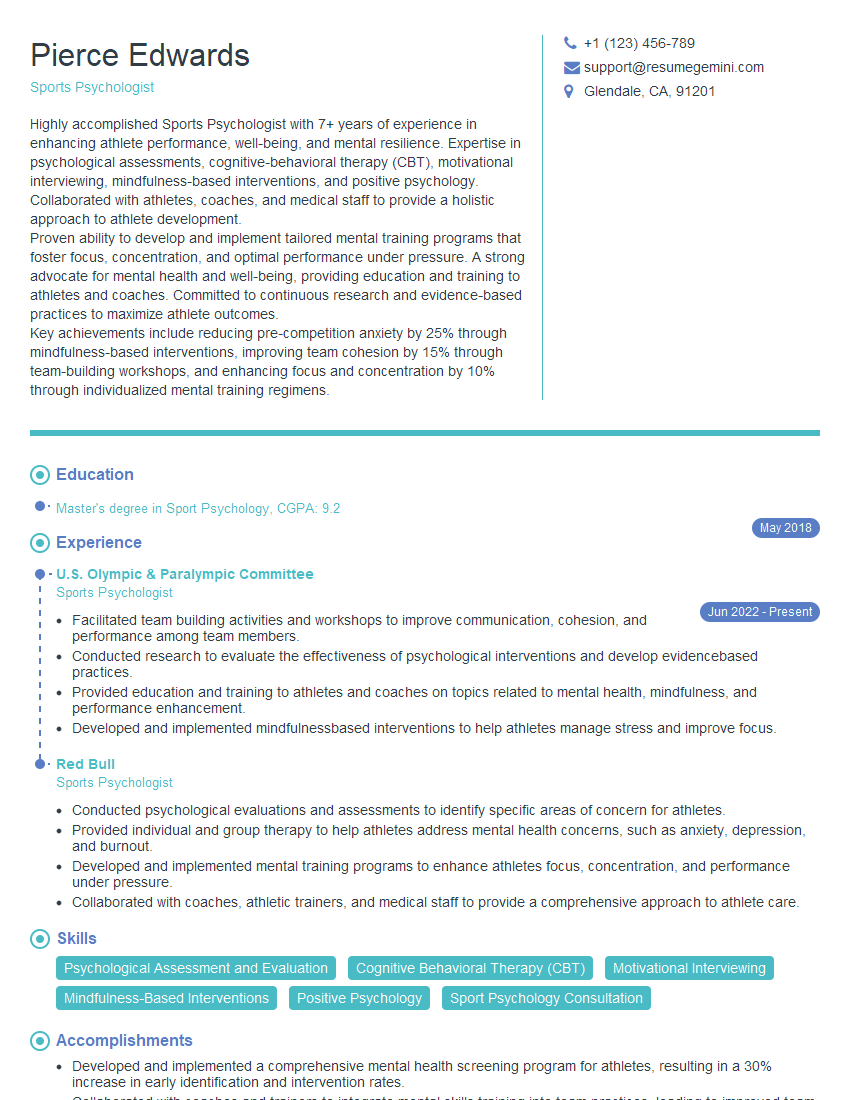
Mastering mental performance is crucial for career advancement in today’s competitive landscape. Employers highly value individuals who can manage stress effectively, maintain focus, and demonstrate resilience. An ATS-friendly resume is essential for maximizing your job prospects. It ensures your application is effectively screened by Applicant Tracking Systems, increasing your chances of landing an interview. To create a compelling and effective resume that showcases your mental performance skills, we strongly recommend using ResumeGemini. ResumeGemini provides a user-friendly platform and offers examples of resumes tailored to Mental Performance roles, guiding you to present your qualifications in the best possible light.
Explore more articles
Users Rating of Our Blogs
Share Your Experience
We value your feedback! Please rate our content and share your thoughts (optional).
What Readers Say About Our Blog
Attention music lovers!
Wow, All the best Sax Summer music !!!
Spotify: https://open.spotify.com/artist/6ShcdIT7rPVVaFEpgZQbUk
Apple Music: https://music.apple.com/fr/artist/jimmy-sax-black/1530501936
YouTube: https://music.youtube.com/browse/VLOLAK5uy_noClmC7abM6YpZsnySxRqt3LoalPf88No
Other Platforms and Free Downloads : https://fanlink.tv/jimmysaxblack
on google : https://www.google.com/search?q=22+AND+22+AND+22
on ChatGPT : https://chat.openai.com?q=who20jlJimmy20Black20Sax20Producer
Get back into the groove with Jimmy sax Black
Best regards,
Jimmy sax Black
www.jimmysaxblack.com
Hi I am a troller at The aquatic interview center and I suddenly went so fast in Roblox and it was gone when I reset.
Hi,
Business owners spend hours every week worrying about their website—or avoiding it because it feels overwhelming.
We’d like to take that off your plate:
$69/month. Everything handled.
Our team will:
Design a custom website—or completely overhaul your current one
Take care of hosting as an option
Handle edits and improvements—up to 60 minutes of work included every month
No setup fees, no annual commitments. Just a site that makes a strong first impression.
Find out if it’s right for you:
https://websolutionsgenius.com/awardwinningwebsites
Hello,
we currently offer a complimentary backlink and URL indexing test for search engine optimization professionals.
You can get complimentary indexing credits to test how link discovery works in practice.
No credit card is required and there is no recurring fee.
You can find details here:
https://wikipedia-backlinks.com/indexing/
Regards
NICE RESPONSE TO Q & A
hi
The aim of this message is regarding an unclaimed deposit of a deceased nationale that bears the same name as you. You are not relate to him as there are millions of people answering the names across around the world. But i will use my position to influence the release of the deposit to you for our mutual benefit.
Respond for full details and how to claim the deposit. This is 100% risk free. Send hello to my email id: [email protected]
Luka Chachibaialuka
Hey interviewgemini.com, just wanted to follow up on my last email.
We just launched Call the Monster, an parenting app that lets you summon friendly ‘monsters’ kids actually listen to.
We’re also running a giveaway for everyone who downloads the app. Since it’s brand new, there aren’t many users yet, which means you’ve got a much better chance of winning some great prizes.
You can check it out here: https://bit.ly/callamonsterapp
Or follow us on Instagram: https://www.instagram.com/callamonsterapp
Thanks,
Ryan
CEO – Call the Monster App
Hey interviewgemini.com, I saw your website and love your approach.
I just want this to look like spam email, but want to share something important to you. We just launched Call the Monster, a parenting app that lets you summon friendly ‘monsters’ kids actually listen to.
Parents are loving it for calming chaos before bedtime. Thought you might want to try it: https://bit.ly/callamonsterapp or just follow our fun monster lore on Instagram: https://www.instagram.com/callamonsterapp
Thanks,
Ryan
CEO – Call A Monster APP
To the interviewgemini.com Owner.
Dear interviewgemini.com Webmaster!
Hi interviewgemini.com Webmaster!
Dear interviewgemini.com Webmaster!
excellent
Hello,
We found issues with your domain’s email setup that may be sending your messages to spam or blocking them completely. InboxShield Mini shows you how to fix it in minutes — no tech skills required.
Scan your domain now for details: https://inboxshield-mini.com/
— Adam @ InboxShield Mini
Reply STOP to unsubscribe
Hi, are you owner of interviewgemini.com? What if I told you I could help you find extra time in your schedule, reconnect with leads you didn’t even realize you missed, and bring in more “I want to work with you” conversations, without increasing your ad spend or hiring a full-time employee?
All with a flexible, budget-friendly service that could easily pay for itself. Sounds good?
Would it be nice to jump on a quick 10-minute call so I can show you exactly how we make this work?
Best,
Hapei
Marketing Director
Hey, I know you’re the owner of interviewgemini.com. I’ll be quick.
Fundraising for your business is tough and time-consuming. We make it easier by guaranteeing two private investor meetings each month, for six months. No demos, no pitch events – just direct introductions to active investors matched to your startup.
If youR17;re raising, this could help you build real momentum. Want me to send more info?
Hi, I represent an SEO company that specialises in getting you AI citations and higher rankings on Google. I’d like to offer you a 100% free SEO audit for your website. Would you be interested?
Hi, I represent an SEO company that specialises in getting you AI citations and higher rankings on Google. I’d like to offer you a 100% free SEO audit for your website. Would you be interested?