The thought of an interview can be nerve-wracking, but the right preparation can make all the difference. Explore this comprehensive guide to Merchandise Display interview questions and gain the confidence you need to showcase your abilities and secure the role.
Questions Asked in Merchandise Display Interview
Q 1. Describe your experience creating effective retail displays.
Creating effective retail displays is about more than just arranging products; it’s about strategically communicating a brand’s story and driving sales. My approach involves a deep understanding of the target audience, the product’s features and benefits, and the overall retail environment. I begin by analyzing sales data and market trends to identify key selling points and potential areas for improvement. Then, I develop a concept that is both visually appealing and strategically effective. For instance, I once redesigned the display for a new line of organic skincare products. Instead of just placing the bottles on shelves, we created a calming oasis using natural elements like wood and stones, highlighting the products’ eco-friendly nature and appealing to the health-conscious consumer. The result was a 25% increase in sales within the first month.
My process typically involves sketching initial layouts, creating 3D models (using software like SketchUp or similar), and then prototyping displays in a smaller-scale before implementing them on a larger scale. This allows me to test different approaches and make adjustments before the final execution. I always consider factors like lighting, signage, and even the music playing in the background to ensure a holistic and engaging customer experience.
Q 2. Explain your understanding of planograms and their implementation.
Planograms are schematic diagrams that illustrate the optimal placement of products on shelves or displays. They are crucial for maximizing shelf space and improving sales. My understanding of planograms extends beyond simply following a pre-made template; I actively participate in their creation and refinement. I use planogram software to map out the arrangement of products, taking into account factors such as product size, packaging, pricing, and the placement of promotional materials. For example, when working with a grocery store client, I created a planogram for a new line of pasta sauces. By strategically placing the new sauces next to complementary products like pasta and cheese, we were able to significantly increase their sales.
Implementing planograms involves careful coordination with the store staff. I provide detailed instructions and training to ensure that the displays are set up correctly and consistently maintained. Regular audits and adjustments are essential to keep the planograms up-to-date and effective. I also use data analytics to track the performance of different planogram versions, enabling me to continually optimize the placement of products.
Q 3. How do you stay updated on current visual merchandising trends?
Staying current in visual merchandising requires a proactive and multi-faceted approach. I regularly attend industry conferences and trade shows, such as the Retail Design Institute conferences, to network with peers and learn about the latest trends and technologies. I also subscribe to relevant industry publications, such as Visual Merchandising & Store Design and Window Dressing magazine. These publications offer insights into new materials, display techniques, and consumer preferences.
Beyond traditional resources, I actively utilize online platforms. This includes following leading visual merchandisers and retail brands on social media platforms like Instagram and Pinterest for inspiration and to keep abreast of innovative displays. I also regularly research consumer behavior and emerging retail trends to gain a deeper understanding of market dynamics. This combined approach ensures I remain informed about the evolving landscape of visual merchandising.
Q 4. How do you measure the success of a merchandise display?
Measuring the success of a merchandise display involves a combination of quantitative and qualitative data. Quantitative metrics include sales figures, conversion rates (the percentage of customers who see a display and make a purchase), and the average transaction value. By tracking these metrics before, during, and after implementing a new display, we can assess its impact on sales. For instance, a significant increase in sales for products featured in a specific display would indicate its success.
However, quantitative data alone isn’t sufficient. Qualitative data, such as customer feedback, employee observations, and customer traffic patterns near the display, provide insights into the display’s overall effectiveness. Methods for gathering qualitative data can include surveys, focus groups, and even direct observation of customer interactions with the display. Combining these qualitative and quantitative metrics creates a comprehensive evaluation of the display’s impact.
Q 5. Describe your experience working with different retail environments.
My experience encompasses a diverse range of retail environments, from high-end boutiques to large-scale department stores, and even pop-up shops. This diversity has provided me with valuable experience adapting my approach to different contexts. For example, working in a luxury boutique required a more refined and minimalist approach, focusing on showcasing the quality and exclusivity of the products. Conversely, designing displays for a large department store required a more vibrant and impactful approach to capture attention within a crowded environment.
I’ve also worked with various product categories, including apparel, cosmetics, electronics, and grocery items, requiring tailored approaches to highlight individual product features. Each environment presents unique challenges and opportunities, demanding adaptability and creativity to effectively communicate the brand’s message and drive sales. The key is understanding the unique customer base and the store’s overall aesthetic.
Q 6. How do you handle challenges in creating displays with limited space?
Space constraints often present the biggest challenge in retail display design. However, limited space can be creatively overcome using several strategies. Firstly, I prioritize verticality—using tall, narrow displays or shelves to maximize vertical space utilization. Secondly, I leverage multifunctional fixtures, such as rotating displays or tiered shelves that allow for more products to be displayed in a smaller footprint. Thirdly, I optimize product placement by focusing on high-demand and high-margin items in the most visible areas.
Another important technique is strategic use of mirrors to create an illusion of more space. I also incorporate compact, yet eye-catching display techniques, such as using minimal props or focusing on bold color contrasts to create visual interest within the limited area. The aim is to create a visually stimulating display that feels uncluttered and easily navigable, even within confined space.
Q 7. How do you incorporate brand identity into merchandise displays?
Incorporating brand identity into merchandise displays is crucial for establishing a consistent brand image and enhancing customer recognition. I start by thoroughly understanding the brand’s values, mission, and target audience. This often involves reviewing the brand’s style guide, which provides specific guidelines on color palettes, typography, and imagery. Consistent use of these elements throughout the display ensures brand cohesion.
For instance, if the brand is known for its sustainable practices, the display might incorporate eco-friendly materials such as recycled wood or bamboo. Similarly, a brand known for its luxurious image might utilize high-end materials like polished metal or glass. The overall look, feel, and message of the display should seamlessly reflect the brand’s personality and resonate with its target customer. This includes not only the visual aspects but also the overall atmosphere created by the display.
Q 8. Explain your experience using display software or tools.
Throughout my career, I’ve utilized a variety of display software and tools, adapting my approach based on project needs and client preferences. My proficiency includes industry-standard programs like Adobe Creative Suite (Photoshop, Illustrator, InDesign), SketchUp for 3D modeling, and specialized retail display planning software such as Visual Merchandising software (VMS) systems. These VMS systems allow for creating virtual representations of store layouts and displays, enabling efficient space planning and product placement optimization before physical implementation. For example, I recently used a VMS system to design a new display for a clothing retailer, virtually placing mannequins, fixtures, and signage to optimize customer flow and maximize product visibility. This virtual planning significantly reduced the time and cost associated with physical mock-ups and iterations.
Beyond software, I’m comfortable working with digital asset management systems (DAMs) for image organization and retrieval, and project management software like Asana or Trello for collaborative workflows. This ensures seamless team communication and timely project completion.
Q 9. Describe your process for designing a window display.
My window display design process follows a structured approach to ensure impactful results. It begins with a thorough understanding of the campaign objectives and target audience. I carefully analyze the product category and brand identity to define the overall aesthetic and message.
- Concept Development: This involves brainstorming, mood board creation, and sketching initial layouts. I consider factors such as color palettes, lighting, and the overall visual narrative.
- Material Selection: Choosing the right materials is crucial for conveying the desired brand image and creating a cohesive display. I carefully consider durability, cost, and aesthetics when selecting materials such as wood, acrylic, fabric, or metal.
- Design Refinement: Using design software, I refine the initial concepts, creating detailed 2D and sometimes 3D renderings. I experiment with different layouts, color schemes, and typography until a visually compelling and effective design is achieved.
- Prototyping & Testing: Before final production, I often create a small-scale prototype to test the display’s practicality and visual appeal in a real-world setting. This allows for last-minute adjustments and ensures a smooth final installation.
- Installation & Monitoring: The final step involves overseeing the professional installation of the display and subsequently monitoring its performance in terms of customer engagement and sales impact. Post-installation observations often inform future displays.
For example, for a recent luxury watch launch, I opted for a minimalist, sophisticated design emphasizing clean lines and high-quality materials, contrasting with a vibrant and playful display designed for a children’s toy line.
Q 10. How do you manage budgets and timelines for display projects?
Budget and timeline management are critical aspects of display projects. I start by collaboratively establishing a realistic budget with the client or internal stakeholders, carefully outlining all costs from materials to labor and potential unexpected expenses. This involves detailed cost breakdowns for each component of the display.
Timelines are equally crucial. I use project management techniques like Gantt charts to break down the project into manageable phases, assigning deadlines to each stage, ensuring accountability, and keeping all team members informed. Regular progress meetings are essential to track progress, identify potential delays and address challenges proactively. Contingency plans are also developed to handle unforeseen issues. For instance, if a key material becomes unavailable, I have backup options or strategies for a quick substitution.
Effective budgeting and scheduling ensure projects are completed within the allocated resources and timeframe without compromising quality or creative vision. Thorough planning reduces unnecessary costs and allows for flexibility should adjustments be necessary.
Q 11. How do you collaborate with other teams (marketing, sales) on displays?
Collaboration is paramount in successful display design. I actively engage with marketing teams to align displays with ongoing campaigns and brand messaging. This ensures visual consistency and reinforces marketing objectives. Frequent communication through meetings, email updates, and shared online platforms keep everyone informed on progress, ensuring cohesion and resolving any discrepancies early.
Sales teams provide invaluable insights into product performance and customer preferences. Their feedback informs the product placement strategy within the display, optimizing product visibility and conversion rates. For example, data on top-selling products would guide their prominent placement within the display. Open communication channels facilitate the seamless integration of these different perspectives, creating displays that effectively support overall business goals.
Q 12. Explain your understanding of color theory and its application in displays.
Color theory is fundamental in creating engaging and effective displays. Understanding the color wheel, color harmonies (complementary, analogous, triadic), and the psychological impact of colors allows me to manipulate emotions and guide customer behavior. Warm colors like reds and oranges can evoke excitement and urgency, while cool colors like blues and greens create a sense of calm and serenity.
For example, using a vibrant red to highlight a sale item can grab attention immediately, whereas a calming blue might be more suitable for a luxury brand aiming to convey sophistication. I consider the brand’s identity, target audience, and the message I want to convey when choosing a color palette. Contrast is also essential for readability and visual impact; ensuring sufficient contrast between text and background is crucial.
Beyond basic color theory, I consider factors like lighting and the surrounding environment. A color that appears vibrant under one type of lighting might look dull under another. Therefore, thorough testing is crucial before finalizing the color scheme for a display.
Q 13. How do you create visually appealing displays for different product categories?
Creating visually appealing displays across different product categories requires adaptability and a keen understanding of each category’s unique characteristics and target audience. For example, a display for high-end electronics would require a minimalist, sleek aesthetic that emphasizes technological innovation, while a display for children’s toys would be more vibrant, playful, and interactive.
My approach involves tailoring the design elements – colors, lighting, materials, and arrangement – to match the product’s personality and appeal to its intended consumer. The layout needs to be adjusted based on the nature of the product. Bulky items will need more space and might require different shelving arrangements compared to smaller items.
Storytelling is crucial. I aim to create a narrative around the products, enhancing their appeal and making them more engaging to the customer. For example, I might create a themed display around a particular season or event, associating products with lifestyle and experiences. The key is to create visually rich and engaging experiences that resonate with the intended audience, driving sales.
Q 14. Describe your experience with different display materials and techniques.
My experience encompasses a wide range of display materials and techniques, including traditional and contemporary approaches. I’m proficient in using various materials such as wood, acrylic, metal, fabric, and lighting elements to create diverse displays.
Traditional techniques like hand-painting signage or creating custom-built wooden fixtures offer a unique touch and allow for customized solutions. I also utilize modern techniques such as digital printing for high-resolution graphics and LED lighting for dynamic and energy-efficient displays.
I carefully consider the durability, cost-effectiveness, and brand alignment when choosing materials and techniques. For example, a temporary promotional display might use cost-effective cardboard, whereas a permanent fixture in a high-end store would warrant more robust and sophisticated materials like polished wood or metal. My choices always prioritize both aesthetic appeal and practicality.
Q 15. How do you ensure displays are ADA compliant?
Ensuring ADA (Americans with Disabilities Act) compliance in merchandise displays is crucial for inclusivity and legal adherence. It boils down to making displays accessible to individuals with disabilities, particularly those with visual, mobility, or cognitive impairments.
- Accessible Signage: All signage must have sufficient contrast (e.g., dark text on a light background) and be large enough to read easily from a distance. Braille and tactile characters should be incorporated where appropriate.
- Clear Pathways: Aisles and pathways around displays must adhere to minimum width requirements to allow wheelchair access and maneuverability. Displays shouldn’t obstruct emergency exits or create hazardous crowding.
- Reach and Placement: Frequently accessed items and controls must be positioned within reach of individuals in wheelchairs (typically between 15 and 48 inches from the floor). Lower shelves are often necessary.
- Alternative Formats: Consider providing descriptions of displayed products in alternative formats, such as audio descriptions or large-print brochures, for visually impaired customers.
- Color Contrast: Utilize sufficient color contrast between text and background elements, following WCAG guidelines (Web Content Accessibility Guidelines) for sufficient readability. For example, avoid using light grey text on a white background.
For example, in a recent project for a clothing retailer, we ensured ADA compliance by strategically placing lower display shelves with prominent signage and wider aisles, allowing easy wheelchair access and visibility. This proactive approach avoided potential legal issues and enhanced the shopping experience for all customers.
Career Expert Tips:
- Ace those interviews! Prepare effectively by reviewing the Top 50 Most Common Interview Questions on ResumeGemini.
- Navigate your job search with confidence! Explore a wide range of Career Tips on ResumeGemini. Learn about common challenges and recommendations to overcome them.
- Craft the perfect resume! Master the Art of Resume Writing with ResumeGemini’s guide. Showcase your unique qualifications and achievements effectively.
- Don’t miss out on holiday savings! Build your dream resume with ResumeGemini’s ATS optimized templates.
Q 16. How do you handle unexpected issues or problems during display installation?
Unexpected issues during display installation are inevitable. My approach involves proactive planning and a flexible, problem-solving mindset. I always have a contingency plan ready.
- Pre-Installation Checklists: Thorough checklists for equipment, materials, and site conditions help identify potential problems early. This includes verifying dimensions, power sources, and available staff.
- On-Site Problem Assessment: When a problem arises, I immediately assess its impact and scope. Is it a minor adjustment or a major structural issue? This dictates the response.
- Resourcefulness and Teamwork: I leverage my network and resources—contacting colleagues, suppliers, or contractors—for quick solutions. Teamwork is essential for efficient problem-solving.
- Communication: Open and constant communication with clients and the installation team keeps everyone informed of the situation and the proposed solution. Transparency builds trust.
- Documentation: Meticulous documentation of the issue, solution, and any adaptations made is crucial for future reference and learning.
For instance, during a recent large-scale installation, we encountered a structural issue with the wall where a display was to be mounted. By quickly assessing the problem, contacting a structural engineer, and collaborating with the client, we found an alternative mounting solution without significantly delaying the project.
Q 17. How do you prioritize different tasks when managing multiple display projects?
Prioritizing multiple display projects requires a structured approach, using a project management methodology to maximize efficiency and meet deadlines.
- Prioritization Matrix: I use a matrix based on urgency and importance (Eisenhower Matrix). Urgent and important tasks (e.g., last-minute changes for a major launch) get immediate attention.
- Project Scheduling: Detailed project timelines are crucial. I utilize tools like Gantt charts to visualize dependencies and manage resources effectively.
- Resource Allocation: Matching appropriate resources—people, materials, and budget—to each project based on its complexity and timeline. This often involves delegating tasks.
- Regular Monitoring and Adjustment: Continuously tracking progress and adapting plans based on real-time information. This involves regular project meetings and status reports.
- Client Communication: Keeping clients informed about progress, potential delays, and any changes to the plan.
This system allows me to effectively manage several projects simultaneously, even under pressure. For example, I recently managed three concurrent projects—a high-profile launch, a seasonal refresh, and a smaller store update. By meticulously prioritizing tasks and communicating transparently, I successfully completed all projects on time and to budget.
Q 18. What is your experience with creating interactive or digital displays?
I have significant experience with creating interactive and digital displays, understanding their potential to enhance engagement and sales. This includes various technologies and design considerations.
- Touchscreen Displays: Designing user-friendly interfaces with intuitive navigation for touchscreen kiosks and interactive product demonstrations.
- Digital Signage: Creating dynamic content for LED screens and digital posters, incorporating video, animation, and interactive elements.
- Augmented Reality (AR): Integrating AR technologies to overlay digital information onto the real world, for example, allowing customers to visualize furniture in their own homes.
- Data Integration: Linking displays with point-of-sale (POS) systems or other data sources to display real-time information, such as product availability or customer reviews.
- Content Management Systems (CMS): Using CMS platforms to easily update and manage content on digital displays remotely.
In a recent project for a tech retailer, I designed an interactive wall showcasing new products. Using touchscreen technology, customers could access detailed product information, videos, and customer reviews. This led to a significant increase in customer engagement and sales.
Q 19. How do you ensure displays are consistent with brand guidelines?
Maintaining brand consistency across all displays is paramount for building a strong brand identity and customer recognition. It involves understanding and meticulously applying brand guidelines.
- Brand Style Guide Review: Thoroughly reviewing the brand style guide for visual elements such as logos, fonts, colors, and imagery. Adhering strictly to these specifications.
- Template Development: Creating consistent design templates for various display types to ensure uniformity across different locations and products.
- Color Palette Adherence: Utilizing brand-approved colors in all aspects of the display, from background to signage and product highlighting.
- Imagery and Messaging Alignment: Ensuring that the imagery and messaging used align with brand voice and values. Consistency builds trust.
- Regular Audits and Reviews: Conducting regular audits of existing displays to ensure continued compliance with brand guidelines and correct any inconsistencies.
For example, when working with a high-end jewelry brand, we meticulously adhered to their style guide, using precise font sizes, colors, and high-quality imagery to maintain a sense of luxury and consistency across all in-store displays.
Q 20. Describe your experience with analyzing sales data related to displays.
Analyzing sales data related to displays is crucial for evaluating their effectiveness and making data-driven improvements. It involves identifying correlations between display design, placement, and sales performance.
- Data Collection: Gathering sales data from point-of-sale (POS) systems, tracking sales for products displayed at different locations or using various display techniques.
- Data Analysis: Using statistical methods to identify trends, correlations, and patterns between display elements and sales figures. This might involve comparing sales of products displayed in different ways.
- A/B Testing: Conducting A/B tests to compare the effectiveness of different display designs or placement strategies. This provides evidence-based insights.
- Key Performance Indicators (KPIs): Tracking KPIs such as conversion rates, sales per square foot, and customer dwell time to evaluate the effectiveness of each display.
- Reporting and Recommendations: Presenting findings in clear reports and making data-driven recommendations for display improvements and optimization.
In one instance, by analyzing sales data, we discovered that a specific product display location significantly outperformed others. This insight allowed us to optimize the placement of other high-value products, leading to a notable increase in overall sales.
Q 21. How do you adapt displays for seasonal changes or promotions?
Adapting displays for seasonal changes or promotions requires a flexible and responsive approach, capitalizing on opportunities to drive sales.
- Seasonal Themes: Incorporating seasonal themes, colors, and imagery into displays to match the current season or holidays (e.g., Christmas, summer). This helps create relevance.
- Promotional Campaigns: Designing displays specifically to highlight promotional offers, discounts, or new product launches. This involves using visually appealing signage and strategically placed products.
- Content Updates: Regularly updating the content on digital displays or printed signage to showcase current promotions or seasonal items. This keeps messaging fresh.
- Product Rotation: Rotating displayed products to showcase seasonal items or limited-edition collections. This keeps displays dynamic and exciting.
- Flexibility in Design: Creating display designs that are easily adaptable to different themes or promotions. Modular displays are useful in this regard.
For instance, we recently redesigned a grocery store’s produce display for the fall season, incorporating warm colors, autumnal imagery, and highlighting seasonal fruits and vegetables. This resulted in a noticeable increase in sales of seasonal produce.
Q 22. What are some common mistakes to avoid in merchandise display?
Common mistakes in merchandise display often stem from neglecting the customer experience and failing to optimize for sales. Here are some key pitfalls to avoid:
- Poor Product Placement: Not placing high-demand items at eye level or strategically throughout the space. Think of it like a treasure hunt – don’t hide your bestsellers!
- Cluttered Displays: Overcrowding shelves or displays makes it difficult for customers to find what they’re looking for and creates a feeling of chaos. Less is often more.
- Inconsistent Branding: Displays that don’t align with the overall brand identity can confuse customers and damage brand perception. Imagine a luxury brand using flimsy, poorly designed displays – it’s jarring.
- Ignoring Customer Flow: Not considering how customers move through the store and designing displays to naturally guide them towards products. Strategic placement along high-traffic routes is essential.
- Lack of Signage: Failing to provide clear and concise signage leads to customer confusion and lost sales. Signage should be informative, easy to read, and visually appealing.
- Poor Lighting: Inadequate lighting can make products look dull and unappealing. This is crucial; even the best product can be overshadowed by poor lighting.
Avoiding these mistakes requires careful planning, a deep understanding of your target audience, and a keen eye for visual merchandising.
Q 23. How do you incorporate lighting to enhance merchandise displays?
Lighting is crucial for highlighting merchandise and creating the desired ambiance. Different lighting techniques can evoke various feelings and influence purchasing decisions.
- Accent Lighting: Spotlights or focused beams draw attention to specific products or key features, making them stand out from the rest. Think of a jewelry store highlighting a diamond necklace.
- Ambient Lighting: Provides overall illumination and sets the mood. Warm lighting can create a welcoming atmosphere, while cooler lighting can feel more modern and sleek.
- Backlighting: Illuminates products from behind, creating a halo effect that makes them appear more visually appealing. This technique is often used for displaying clothing or artwork.
- Layered Lighting: Combining different types of lighting (accent, ambient, backlighting) to achieve a balanced and dynamic effect. This provides depth and highlights features.
The key is to use light strategically to enhance the product’s appeal and guide the customer’s eye. Consider the color and texture of the products when choosing lighting temperature and intensity.
Q 24. How familiar are you with different display fixtures and their uses?
My experience encompasses a wide range of display fixtures, each suited for specific products and retail environments. Here are a few examples:
- Gondola Shelving: Versatile and commonly used for displaying a wide variety of products, particularly in supermarkets and drugstores. Different shelf heights and configurations allow for flexible product placement.
- Wall Shelves: Optimize vertical space and are ideal for showcasing smaller items or creating a visually appealing wall display. They are highly customizable.
- Countertop Displays: Perfect for impulse buys and high-margin items, often located near checkout areas. Think of candy or small accessories.
- Freestanding Displays: Used to create focal points and highlight specific products or promotions. These can be eye-catching and attention-grabbing.
- Kiosks: Self-contained units ideal for showcasing a single product line or brand. They are especially effective for creating a branded experience.
- Hanging Displays: Great for apparel, jewelry, and other items that can be hung. They save floor space and optimize visual impact.
The selection of appropriate fixtures depends heavily on the product, the store layout, and the overall marketing strategy. Proper fixture selection maximizes product visibility and optimizes customer flow.
Q 25. How do you incorporate storytelling into your merchandise displays?
Storytelling in merchandise displays elevates the shopping experience from a simple transaction to an engaging narrative. It connects with customers on an emotional level, increasing brand loyalty and sales.
For instance, a clothing retailer could create a display themed around “a weekend getaway” showcasing coordinating outfits, accessories, and travel items. Or a home goods store could tell a story about “cozy nights in” with displays focused on comfortable blankets, warm lighting, and books.
Key elements of effective storytelling include:
- Theme: A central idea that ties the display together.
- Narrative: A clear progression of elements that tell a story.
- Visual Elements: Props, backdrops, and other visual cues that enhance the narrative.
- Emotional Connection: Creating a feeling or mood that resonates with the customer.
By creating engaging narratives, displays become more than just product showcases – they become immersive experiences that capture the customer’s imagination and drive sales.
Q 26. Describe your experience working with various retail technologies (e.g., digital signage).
I have extensive experience integrating various retail technologies to enhance merchandise displays. This includes:
- Digital Signage: I’ve worked with various digital signage platforms to create dynamic and engaging displays that can be easily updated with promotions, videos, and interactive content. This allows for timely changes and targeted messaging.
- Interactive Kiosks: I’ve incorporated interactive kiosks into displays, allowing customers to browse products, access information, and even place orders. This enhances customer engagement and provides valuable data.
- RFID Technology: I have experience using RFID tags to track inventory and optimize stock levels, ensuring products are always available on the display floor. This helps avoid out-of-stock situations.
- Data Analytics: Integrating data analytics tools to track customer behavior and optimize display placement and product assortment. This provides insights for improving display effectiveness.
These technologies allow for personalized customer experiences, improved inventory management, and data-driven decision-making, ultimately leading to increased sales and improved profitability.
Q 27. How do you maintain the visual appeal of displays over time?
Maintaining the visual appeal of displays over time requires a proactive and systematic approach. Neglecting this can lead to a tired, unappealing retail environment.
- Regular Cleaning and Maintenance: Dusting, cleaning, and tidying displays regularly prevent a build-up of dirt and debris. This ensures products always look their best.
- Product Rotation: Frequently rotating products on display keeps the presentation fresh and exciting. This prevents the displays from becoming stale.
- Seasonal Changes: Updating displays seasonally with relevant products and themes keeps the store looking current and appealing. This adds vibrancy throughout the year.
- Scheduled Refreshes: Plan regular complete refreshes of displays to incorporate new products, promotions, and visual merchandising trends. This helps keep the store’s look contemporary.
- Visual Merchandising Audits: Conducting regular audits to assess the effectiveness and visual appeal of displays and make necessary adjustments. This ensures continuous improvement.
By following a consistent maintenance schedule and incorporating fresh ideas, displays can retain their visual appeal and continue to drive sales.
Q 28. Explain your experience with project management methodologies in a retail display context.
In my experience, successful retail display projects rely on structured project management methodologies. I often utilize a hybrid approach combining Agile and Waterfall principles.
Project Initiation: This involves clearly defining project objectives, setting a budget, and establishing a timeline. We establish key performance indicators (KPIs) to measure success.
Planning & Design: Detailed planning includes creating design concepts, sourcing materials, and selecting display fixtures. We utilize mood boards and presentations to collaboratively develop the best approach.
Implementation & Execution: This phase focuses on building and installing the displays. We use Agile principles for flexibility and quick adaptation to any issues arising during construction. Regular progress meetings and status updates ensure everything remains on schedule.
Testing & Evaluation: Before launch, we evaluate the displays to ensure they meet design specifications and customer expectations. This might include A/B testing different approaches.
Monitoring & Optimization: After launch, we continuously monitor the performance of the displays using KPIs. We make adjustments based on data analysis and customer feedback to maximize effectiveness.
By using a structured methodology, we minimize risks, ensure efficient resource allocation, and deliver high-quality, effective retail displays that meet both aesthetic and sales goals.
Key Topics to Learn for Merchandise Display Interview
- Visual Merchandising Principles: Understanding the elements and principles of design (line, shape, color, texture, space) as applied to retail environments.
- Space Planning & Design: Practical application involves creating effective floor plans, maximizing product visibility, and optimizing customer flow within a retail space. Consider different store layouts (grid, free-flow, etc.) and their impact on sales.
- Product Presentation Techniques: Mastering techniques like planogramming, creating compelling displays using props and signage, and understanding how to highlight key selling points of products.
- Branding and Storytelling: Understanding how to translate a brand’s identity and message into a cohesive and engaging visual merchandising strategy. Think about creating a narrative through display.
- Retail Analytics and Measurement: Knowing how to track and analyze the effectiveness of displays, using metrics like sales lift, conversion rates, and customer engagement to inform future strategies.
- Inventory Management & Replenishment: Understanding the relationship between merchandising and maintaining optimal stock levels. This includes forecasting demand and ensuring displays are always fully stocked.
- Technology in Merchandise Display: Explore the use of digital signage, virtual reality, and other technologies to enhance the customer experience and improve display effectiveness.
- Problem-Solving & Adaptability: Be prepared to discuss how you’ve overcome challenges in creating effective displays, such as limited space, budget constraints, or changing product assortments.
Next Steps
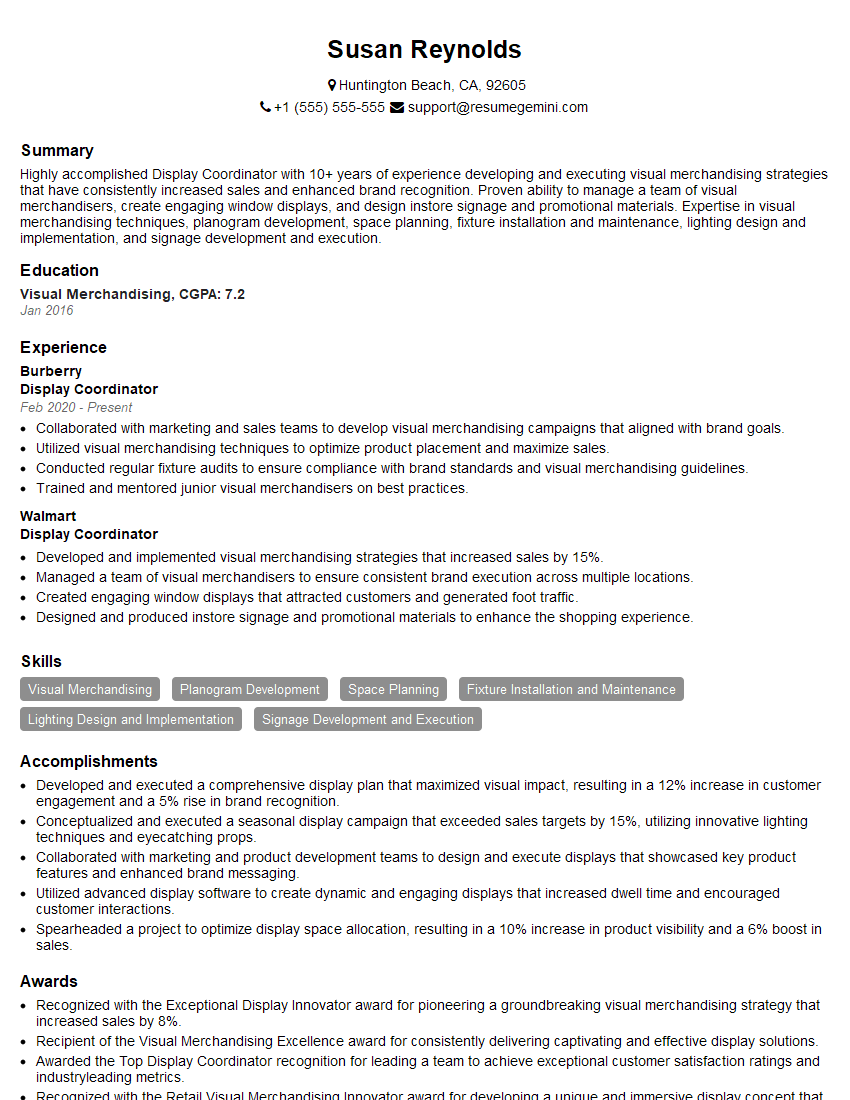
Mastering Merchandise Display opens doors to exciting career opportunities in retail, visual merchandising, and brand management, offering a path to increased responsibility and higher earning potential. To significantly boost your job prospects, creating a strong, ATS-friendly resume is crucial. ResumeGemini can help you build a professional and impactful resume that highlights your skills and experience. ResumeGemini offers examples of resumes tailored to Merchandise Display, providing you with the guidance you need to make a lasting impression on potential employers.
Explore more articles
Users Rating of Our Blogs
Share Your Experience
We value your feedback! Please rate our content and share your thoughts (optional).
What Readers Say About Our Blog
Attention music lovers!
Wow, All the best Sax Summer music !!!
Spotify: https://open.spotify.com/artist/6ShcdIT7rPVVaFEpgZQbUk
Apple Music: https://music.apple.com/fr/artist/jimmy-sax-black/1530501936
YouTube: https://music.youtube.com/browse/VLOLAK5uy_noClmC7abM6YpZsnySxRqt3LoalPf88No
Other Platforms and Free Downloads : https://fanlink.tv/jimmysaxblack
on google : https://www.google.com/search?q=22+AND+22+AND+22
on ChatGPT : https://chat.openai.com?q=who20jlJimmy20Black20Sax20Producer
Get back into the groove with Jimmy sax Black
Best regards,
Jimmy sax Black
www.jimmysaxblack.com
Hi I am a troller at The aquatic interview center and I suddenly went so fast in Roblox and it was gone when I reset.
Hi,
Business owners spend hours every week worrying about their website—or avoiding it because it feels overwhelming.
We’d like to take that off your plate:
$69/month. Everything handled.
Our team will:
Design a custom website—or completely overhaul your current one
Take care of hosting as an option
Handle edits and improvements—up to 60 minutes of work included every month
No setup fees, no annual commitments. Just a site that makes a strong first impression.
Find out if it’s right for you:
https://websolutionsgenius.com/awardwinningwebsites
Hello,
we currently offer a complimentary backlink and URL indexing test for search engine optimization professionals.
You can get complimentary indexing credits to test how link discovery works in practice.
No credit card is required and there is no recurring fee.
You can find details here:
https://wikipedia-backlinks.com/indexing/
Regards
NICE RESPONSE TO Q & A
hi
The aim of this message is regarding an unclaimed deposit of a deceased nationale that bears the same name as you. You are not relate to him as there are millions of people answering the names across around the world. But i will use my position to influence the release of the deposit to you for our mutual benefit.
Respond for full details and how to claim the deposit. This is 100% risk free. Send hello to my email id: lukachachibaialuka@gmail.com
Luka Chachibaialuka
Hey interviewgemini.com, just wanted to follow up on my last email.
We just launched Call the Monster, an parenting app that lets you summon friendly ‘monsters’ kids actually listen to.
We’re also running a giveaway for everyone who downloads the app. Since it’s brand new, there aren’t many users yet, which means you’ve got a much better chance of winning some great prizes.
You can check it out here: https://bit.ly/callamonsterapp
Or follow us on Instagram: https://www.instagram.com/callamonsterapp
Thanks,
Ryan
CEO – Call the Monster App
Hey interviewgemini.com, I saw your website and love your approach.
I just want this to look like spam email, but want to share something important to you. We just launched Call the Monster, a parenting app that lets you summon friendly ‘monsters’ kids actually listen to.
Parents are loving it for calming chaos before bedtime. Thought you might want to try it: https://bit.ly/callamonsterapp or just follow our fun monster lore on Instagram: https://www.instagram.com/callamonsterapp
Thanks,
Ryan
CEO – Call A Monster APP
To the interviewgemini.com Owner.
Dear interviewgemini.com Webmaster!
Hi interviewgemini.com Webmaster!
Dear interviewgemini.com Webmaster!
excellent
Hello,
We found issues with your domain’s email setup that may be sending your messages to spam or blocking them completely. InboxShield Mini shows you how to fix it in minutes — no tech skills required.
Scan your domain now for details: https://inboxshield-mini.com/
— Adam @ InboxShield Mini
support@inboxshield-mini.com
Reply STOP to unsubscribe
Hi, are you owner of interviewgemini.com? What if I told you I could help you find extra time in your schedule, reconnect with leads you didn’t even realize you missed, and bring in more “I want to work with you” conversations, without increasing your ad spend or hiring a full-time employee?
All with a flexible, budget-friendly service that could easily pay for itself. Sounds good?
Would it be nice to jump on a quick 10-minute call so I can show you exactly how we make this work?
Best,
Hapei
Marketing Director
Hey, I know you’re the owner of interviewgemini.com. I’ll be quick.
Fundraising for your business is tough and time-consuming. We make it easier by guaranteeing two private investor meetings each month, for six months. No demos, no pitch events – just direct introductions to active investors matched to your startup.
If youR17;re raising, this could help you build real momentum. Want me to send more info?
Hi, I represent an SEO company that specialises in getting you AI citations and higher rankings on Google. I’d like to offer you a 100% free SEO audit for your website. Would you be interested?
Hi, I represent an SEO company that specialises in getting you AI citations and higher rankings on Google. I’d like to offer you a 100% free SEO audit for your website. Would you be interested?