Unlock your full potential by mastering the most common Meteorological Data Interpretation interview questions. This blog offers a deep dive into the critical topics, ensuring you’re not only prepared to answer but to excel. With these insights, you’ll approach your interview with clarity and confidence.
Questions Asked in Meteorological Data Interpretation Interview
Q 1. Explain the difference between weather and climate.
Weather and climate are often confused, but they represent different timescales and perspectives on atmospheric conditions. Think of it like this: weather is what’s happening outside right now – the temperature, humidity, precipitation, wind speed, and direction at a specific location and time. It’s short-term and highly variable. Climate, on the other hand, is the long-term average weather pattern of a region over many years (typically 30 years or more). It describes the general atmospheric conditions, including average temperatures, rainfall, and seasonal variations. For example, a rainy day is weather, while the typically wet and mild winters of the Pacific Northwest represent its climate.
Q 2. Describe various types of meteorological data and their sources.
Meteorological data comes from a variety of sources, each providing a unique perspective on the atmosphere. These data types include:
- Surface Observations: Temperature, humidity, pressure, wind speed and direction, precipitation, visibility, and cloud cover measured at weather stations on the ground. These are often reported hourly.
- Upper Air Observations: Data collected by weather balloons (radiosondes) carrying instruments that measure atmospheric conditions at various altitudes. These provide vital information about the vertical structure of the atmosphere.
- Satellite Data: Images and measurements from satellites orbiting Earth, providing global coverage of cloud cover, temperature, humidity, and other atmospheric parameters. This is crucial for monitoring large-scale weather systems.
- Radar Data: Data from weather radars that detect precipitation, providing information on the type, intensity, and movement of storms. This is incredibly useful for short-term forecasting of severe weather.
- Aircraft Reports (PIREPS): Reports from aircraft pilots about weather conditions encountered during flight, providing real-time information on turbulence, icing, and other hazardous phenomena.
The sources of this data are diverse, including national meteorological agencies (like the NOAA in the US), private weather companies, and research institutions. Each source plays a vital role in the comprehensive understanding and forecasting of weather.
Q 3. How do you interpret weather maps and charts (e.g., surface analysis, upper air charts)?
Interpreting weather maps and charts requires understanding the symbols and conventions used. Surface analysis charts show weather conditions at the Earth’s surface, including isobars (lines of equal pressure), fronts (boundaries between air masses), and symbols representing weather phenomena (e.g., rain, snow, thunderstorms). Looking at the isobars, we can determine areas of high and low pressure, which are key to understanding wind patterns and associated weather. Fronts are analyzed to understand the movement and interaction of different air masses, which often lead to changes in weather.
Upper air charts display information at different altitudes, showing things like temperature, wind speed and direction, and humidity at various levels. These charts are critical for understanding the vertical structure of the atmosphere and for forecasting the development and movement of weather systems. For example, analyzing the position and strength of the jet stream (a fast-flowing, narrow air current high in the atmosphere) helps predict the trajectory and intensity of storms. By combining these charts with surface analysis, forecasters can develop a comprehensive picture of the current state of the atmosphere and predict its evolution.
Q 4. What are common atmospheric pressure systems and their associated weather patterns?
Atmospheric pressure systems are areas of high or low pressure, and understanding their interaction is crucial for weather forecasting. High-pressure systems (anticyclones) are characterized by descending air, which leads to clear skies, calm or light winds, and generally fair weather. Low-pressure systems (cyclones) are areas of rising air, often associated with cloudy skies, precipitation, and stronger winds. The direction of wind rotation around these systems depends on the hemisphere (clockwise around highs and counterclockwise around lows in the Northern Hemisphere, and vice versa in the Southern Hemisphere due to the Coriolis effect). Other systems include ridges (elongated areas of high pressure) and troughs (elongated areas of low pressure), which often influence the movement and development of larger weather systems. Understanding these systems and their interactions allows forecasters to predict changes in weather conditions, such as the approach of a storm.
Q 5. Explain the concept of atmospheric stability and instability.
Atmospheric stability refers to the atmosphere’s tendency to resist or enhance vertical motion. In a stable atmosphere, air parcels resist vertical displacement. If lifted, they cool and become denser than the surrounding air, sinking back to their original level. Stable conditions often result in clear skies, with limited cloud development except for stratiform clouds (layered clouds). In contrast, an unstable atmosphere enhances vertical motion. If a parcel of air is lifted, it remains warmer and less dense than the surrounding air, continuing to rise. This can lead to the development of cumuliform clouds (puffy clouds), potentially leading to thunderstorms and showers. The stability of the atmosphere is determined by the vertical temperature profile. A higher lapse rate (rate of temperature decrease with altitude) indicates greater instability, while a lower lapse rate indicates greater stability.
Q 6. How do you interpret temperature profiles and dew point data?
Temperature profiles show the variation of temperature with altitude. These profiles are crucial for determining atmospheric stability. A steep temperature decrease with altitude suggests instability, whereas a gradual decrease suggests stability. Dew point is the temperature to which air must be cooled at constant pressure to reach saturation. The difference between the temperature and the dew point (dew point spread) provides information about the atmosphere’s moisture content. A small dew point spread indicates high humidity, increasing the likelihood of cloud formation and precipitation. A large spread means drier air. By comparing temperature and dew point profiles, we can determine the level of atmospheric moisture and the potential for cloud formation and precipitation, which aids in determining whether conditions are stable or unstable.
Q 7. Describe different cloud types and their implications for weather forecasting.
Cloud types are classified based on their altitude and shape, providing valuable clues for weather forecasting. High-level clouds (cirrus, cirrostratus, cirrocumulus) are typically made of ice crystals and are associated with fair weather, but they can also indicate approaching storms. Mid-level clouds (altostratus, altocumulus) are composed of water droplets or ice crystals and are often associated with overcast skies and precipitation. Low-level clouds (stratus, stratocumulus, nimbostratus) are formed primarily of water droplets and are often associated with drizzle, light rain, or fog. Vertically developed clouds (cumulus, cumulonimbus) have significant vertical extent, with cumulonimbus clouds being the most significant, as they are associated with thunderstorms, heavy rain, hail, and strong winds. By observing the type, amount, and movement of clouds, forecasters can gain insights into current atmospheric conditions and predict future weather events.
Q 8. Explain the process of interpreting satellite and radar imagery.
Interpreting satellite and radar imagery involves analyzing visual representations of atmospheric conditions to understand current and predict future weather patterns. Satellite imagery provides a broad overview, showing cloud cover, temperature, moisture, and other atmospheric parameters from a distance. Radar imagery, on the other hand, focuses on precipitation, providing information about its intensity, type, and movement. Both are crucial for weather forecasting.
The process typically involves:
- Identifying cloud types and patterns: Different cloud types (e.g., cumulonimbus, stratus) indicate different weather phenomena (thunderstorms, steady rain). We analyze their shapes, heights, and organization to infer atmospheric stability and precipitation potential. For example, the presence of towering cumulonimbus clouds suggests severe thunderstorms.
- Analyzing temperature gradients: Satellite imagery shows temperature differences, revealing frontal systems (boundaries between air masses) where weather changes are most likely to occur. Cold fronts, for example, are often associated with intense precipitation and strong winds.
- Assessing moisture content: Water vapor imagery helps identify areas with high atmospheric moisture, crucial for predicting precipitation formation. Higher moisture levels usually indicate a greater chance of rainfall.
- Interpreting radar reflectivity: Radar reflectivity indicates the intensity of precipitation. Higher reflectivity values signify heavier rainfall or hail. The movement of precipitation echoes reveals the direction and speed of storms.
- Integrating data sources: We don’t rely on one image alone. We integrate data from multiple satellites and radars, along with surface observations (temperature, pressure, wind speed) to construct a comprehensive weather picture.
For instance, during a hurricane forecast, we’d use satellite imagery to track the storm’s size and intensity, while radar data would show the location and movement of heavy rainfall and strong winds within the hurricane.
Q 9. How do you use meteorological models to forecast weather?
Meteorological models are complex computer programs that use mathematical equations to simulate the atmosphere’s behavior. They take various input data (like temperature, pressure, humidity, wind speed from observations and satellite/radar imagery) and use these to predict future weather conditions. The process is iterative, with the model constantly updating its predictions based on new input data.
The steps typically involve:
- Data assimilation: Combining observational data with the model’s previous forecast to create the best possible initial state for the prediction.
- Model integration: Running the model forward in time, using the equations to simulate atmospheric processes.
- Post-processing: Analyzing the model output to create forecasts of various weather parameters (temperature, precipitation, wind, etc.) in user-friendly formats (maps, charts).
Different models use different levels of complexity and resolution. Some are global models with coarser resolution, while others are regional models with higher resolution focusing on specific areas. We often use an ensemble of models – running multiple models simultaneously to account for uncertainties and provide a range of possible forecasts. For example, we might use the Global Forecast System (GFS) and the European Centre for Medium-Range Weather Forecasts (ECMWF) models, comparing their outputs to make a more robust prediction.
Q 10. What are the limitations of numerical weather prediction models?
Numerical weather prediction models, while powerful, have limitations. These stem from several factors:
- Incomplete data: Observations are not uniformly distributed across the globe; some regions have sparse data, especially over oceans and remote areas, leading to inaccuracies in the model’s initial state.
- Model limitations: The models simplify complex atmospheric processes. Some physical processes (like cloud formation and interactions) are difficult to model accurately.
- Computational constraints: While models are constantly improving, computing power limits the resolution and complexity achievable. Higher resolution models require significantly more computing power.
- Chaos theory: The atmosphere is a chaotic system. Small initial errors can lead to large differences in the forecast after a few days. This limits the predictability of weather beyond a certain time horizon (typically a week or two).
- Data uncertainty: The initial data input to the model itself may contain errors that propagate and amplify throughout the forecast.
For example, a model might accurately predict a storm’s path for the next 24 hours, but its intensity prediction after 72 hours might be less reliable due to the chaotic nature of the system and uncertainties in initial conditions.
Q 11. Describe your experience with statistical analysis of meteorological data.
I have extensive experience using statistical methods to analyze meteorological data. This involves techniques like time series analysis, regression analysis, and spatial statistics. I have utilized these methods for various applications:
- Trend analysis: Identifying long-term changes in climate variables (temperature, precipitation) to assess climate change impacts using techniques such as linear regression and Mann-Kendall test.
- Extreme event analysis: Statistical methods like Generalized Extreme Value (GEV) distribution are used to analyze the frequency and intensity of extreme weather events (heatwaves, droughts, floods).
- Model evaluation: Statistical measures (e.g., root mean square error, correlation coefficient) are used to evaluate the accuracy and skill of weather prediction models.
- Developing statistical relationships: Identifying relationships between meteorological variables for improved forecasting or understanding of atmospheric processes. For example, I might use regression to predict rainfall amount based on antecedent soil moisture and atmospheric pressure.
For instance, in a recent project, I used time series analysis to identify a statistically significant upward trend in annual average temperature over the last 50 years in a specific region, providing evidence for climate change impacts.
Q 12. How do you handle missing or erroneous data in a meteorological dataset?
Missing or erroneous data are common challenges in meteorology. Handling them requires a careful approach to maintain data integrity and avoid biasing results. Strategies include:
- Identifying missing data patterns: We first analyze the nature of missing data; is it random, systematic (e.g., due to instrument malfunction), or clustered in space or time?
- Data imputation: Various techniques fill in missing values. Simple methods include using the mean or median of nearby observations (spatial or temporal interpolation). More sophisticated methods use statistical models to estimate missing values based on relationships with other variables.
- Error detection: We check data for outliers or physically impossible values using quality control checks. These values are then investigated – are they truly errors or exceptionally rare events? If errors, they might be corrected, removed, or replaced using imputation methods.
- Data quality flags: We often add quality flags to the dataset to identify imputed or potentially erroneous values, allowing for transparency in analyses.
For example, if a weather station’s temperature sensor malfunctioned for a few hours, we might impute the missing values using linear interpolation based on readings from neighboring stations and the surrounding temporal trend. We would then flag these imputed data points in our analysis.
Q 13. What quality control measures do you employ when working with meteorological data?
Rigorous quality control is essential when working with meteorological data. My quality control measures include:
- Data validation: Checking that data are within physically plausible ranges (e.g., temperature within -80°C to +60°C). Values outside these ranges trigger an investigation.
- Consistency checks: Verifying data consistency between different sources or instruments. For example, comparing measurements from multiple rain gauges in the same location.
- Spatial and temporal coherence checks: Checking for unrealistic spatial and temporal gradients in data. For instance, a sudden, large jump in temperature at a single location might indicate an error.
- Outlier detection: Identifying and analyzing outliers using statistical methods, such as box plots or Z-score calculations. Outliers might be errors or rare events needing further investigation.
- Documentation: Thorough documentation of all quality control steps and decisions made. This ensures reproducibility and transparency.
For example, if a particular weather station consistently reports lower temperatures than surrounding stations, I would investigate potential reasons (instrument calibration, siting issues) and make appropriate corrections or adjustments.
Q 14. Explain your experience with various data visualization techniques for meteorological data.
I have experience with various data visualization techniques, crucial for communicating meteorological information effectively. These include:
- Geographic Information Systems (GIS): Creating maps to display spatial patterns of weather variables (temperature, precipitation, wind). GIS software allows for creating informative and visually appealing maps.
- Time series plots: Illustrating the temporal evolution of meteorological variables (e.g., daily temperature, hourly rainfall). These plots are essential for identifying trends and patterns.
- Scatter plots: Showing the relationships between two or more variables (e.g., temperature vs. humidity). These are useful for correlation analysis.
- Histograms and box plots: Summarizing the distribution of meteorological data, useful for outlier detection and understanding data variability.
- Animated maps: Showing the evolution of weather patterns over time, such as the movement of a storm system.
For instance, to communicate the spatial distribution of rainfall during a flood event, I would create a GIS map showing the rainfall accumulation at various locations. To show the daily temperature variation over a month, a time-series plot would be suitable. And to show the progression of a hurricane, an animated map would be most effective.
Q 15. Describe your experience using specific meteorological software or tools (e.g., GRIB, NetCDF).
My experience with meteorological software is extensive. I’m proficient in handling GRIB and NetCDF files, the standard formats for storing gridded weather data. GRIB (GRIdded Binary) files are compact and efficient for storing global or regional weather forecasts, while NetCDF (Network Common Data Form) offers a more flexible and self-describing structure, ideal for various types of climate and meteorological data.
In my previous role, I routinely used Python libraries like xarray and cfgrib to access and process these data formats. For instance, I used xarray to slice and dice NetCDF files containing historical temperature data to analyze long-term trends in a specific region. With cfgrib, I efficiently extracted forecast parameters from GRIB files generated by global weather models to create visualizations for short-term weather prediction. This involved selecting specific variables, like temperature, wind speed, and precipitation, at different time steps and grid points to create accurate maps and graphs. I also have experience using commercial software packages like ArcGIS and specialized meteorological visualization tools which allow for more advanced analysis and presentation of the data.
Career Expert Tips:
- Ace those interviews! Prepare effectively by reviewing the Top 50 Most Common Interview Questions on ResumeGemini.
- Navigate your job search with confidence! Explore a wide range of Career Tips on ResumeGemini. Learn about common challenges and recommendations to overcome them.
- Craft the perfect resume! Master the Art of Resume Writing with ResumeGemini’s guide. Showcase your unique qualifications and achievements effectively.
- Don’t miss out on holiday savings! Build your dream resume with ResumeGemini’s ATS optimized templates.
Q 16. How do you interpret wind data (speed, direction, shear)?
Interpreting wind data involves understanding both its speed and direction, along with vertical wind shear. Wind speed, measured in knots or meters per second, indicates the rate of air movement. Direction is represented as the compass direction from which the wind is blowing (e.g., a north wind blows from north to south).
Wind shear refers to the rate of change in wind speed or direction over a given distance or altitude. Significant wind shear can be dangerous for aviation and can influence the development and intensification of severe weather like thunderstorms. For example, a strong low-level wind jet interacting with an upper-level trough could lead to increased instability and thunderstorm formation. I use wind data to understand atmospheric stability, jet stream patterns, and potential for severe weather. Visualizing wind data using tools like wind barbs on weather maps helps understand the overall flow patterns, identifying areas of convergence or divergence which are crucial in forecasting.
Q 17. Explain the concept of precipitation types and measurement techniques.
Precipitation refers to any form of water that falls from the atmosphere to the Earth’s surface. Types of precipitation include rain, snow, sleet, and hail. Each forms under different atmospheric conditions. Rain forms from the condensation of water vapor in clouds. Snow forms when water vapor directly changes to ice crystals in clouds. Sleet forms when rain falls through a layer of freezing air, and hail is formed by repeated upward and downward movements of ice pellets within a thunderstorm.
Precipitation measurement techniques vary. Rain gauges are the most common, measuring the accumulated depth of rainfall. Snow depth is measured with a ruler, and the water equivalent is determined by melting a sample. Weather radar provides a more spatially comprehensive view of precipitation, estimating intensity and type over a wide area. Automated weather stations, equipped with various sensors, are also used for comprehensive data collection. In my experience, comparing data from multiple sources (e.g., rain gauges and radar) provides a more accurate picture and helps identify potential biases in individual measurement methods.
Q 18. How do you interpret humidity data and its relationship to weather phenomena?
Humidity refers to the amount of water vapor present in the air. It’s expressed as relative humidity (%), which is the ratio of the actual water vapor present to the maximum amount of water vapor the air can hold at a given temperature. High relative humidity often indicates a greater chance of precipitation or fog. Low relative humidity can contribute to dry conditions and increased wildfire risk.
Humidity plays a vital role in weather phenomena. High humidity suppresses temperature fluctuations, leading to muggy conditions. Dew point temperature, the temperature at which the air becomes saturated and condensation occurs, is a critical measure in forecasting fog and dew. The relationship between temperature, pressure, and humidity is essential for understanding atmospheric stability and potential for cloud formation. I use dew point data to forecast fog and dew, while relative humidity data helps me to predict the likelihood and intensity of precipitation.
Q 19. What are different methods for forecasting extreme weather events?
Forecasting extreme weather events, like hurricanes, tornadoes, and blizzards, involves a multi-faceted approach. Numerical weather prediction (NWP) models are the cornerstone, using complex equations to simulate atmospheric processes. These models ingest vast amounts of data from observations and assimilate it to improve forecasts. Ensemble forecasting, where multiple model runs are performed with slightly varied initial conditions, helps quantify forecast uncertainty.
Other methods include statistical forecasting, using historical data to identify patterns and probabilities of extreme events, and nowcasting, which focuses on very short-term predictions (0-6 hours) using real-time observations like radar and satellite data. Additionally, human expertise is crucial in interpreting model output and incorporating local knowledge to refine forecasts. Combining these different approaches provides a robust framework for predicting and mitigating the impacts of extreme weather events.
Q 20. Explain the impact of climate change on various weather patterns.
Climate change, driven primarily by increased greenhouse gas emissions, is significantly altering various weather patterns. One key impact is the intensification of the hydrological cycle, leading to more frequent and intense precipitation events in some regions and more severe droughts in others. Sea level rise exacerbates coastal flooding during storms. Warmer temperatures contribute to more frequent and severe heatwaves and alter the distribution of precipitation types (e.g., increased rainfall and decreased snowfall in certain regions).
Changes in atmospheric circulation patterns, like shifts in jet stream behavior, also influence weather patterns, contributing to longer periods of extreme weather conditions and more unpredictable weather events. These effects are not uniform globally, with some regions experiencing more pronounced changes than others. Understanding these complex interactions is crucial for adapting to the changing climate and mitigating the associated risks.
Q 21. Describe your experience with analyzing climate data for long-term trends.
My experience with analyzing climate data for long-term trends involves using statistical methods to detect significant changes over time. I often utilize time series analysis techniques to identify trends, periodicities, and variability in datasets. This might involve applying smoothing methods to remove short-term noise and reveal underlying long-term patterns. I also conduct statistical significance tests to determine if observed changes are truly meaningful or simply random fluctuations.
For example, I’ve analyzed long-term temperature records to demonstrate a clear warming trend over the past century using linear regression. I also use spatial analysis techniques to examine how climate variables like precipitation and temperature are changing across different geographical regions and how these changes might be correlated with other environmental factors. These analyses are essential in understanding the impacts of climate change and for guiding adaptation and mitigation strategies.
Q 22. How do you interpret data from various meteorological sensors?
Interpreting data from meteorological sensors involves understanding the sensor’s specific measurements, the associated uncertainties, and how these measurements relate to broader atmospheric processes. We don’t just look at numbers; we contextualize them.
Temperature Sensors (Thermometers): These provide air temperature readings. Understanding the type of thermometer (e.g., shielded vs. unshielded) is crucial, as unshielded thermometers can be affected by solar radiation. We would look for diurnal temperature variations, comparing them to expected patterns for the location and time of year to identify any anomalies.
Humidity Sensors (Hygrometers): These measure the amount of water vapor in the air (relative humidity and/or dew point). We need to account for sensor drift and calibration to ensure accuracy. Sudden changes in humidity often indicate approaching weather systems.
Wind Sensors (Anemometers and Wind Vanes): These provide wind speed and direction. We need to consider sensor height and terrain effects, as wind speed can vary significantly with elevation. Analyzing wind patterns can help predict storm tracks or identify areas of potential turbulence.
Pressure Sensors (Barometers): These measure atmospheric pressure. Changes in pressure are a key indicator of approaching weather systems; a rapid drop often precedes a storm.
Precipitation Sensors (Rain Gauges): These measure rainfall amounts. We need to account for sensor type (e.g., tipping bucket, weighing bucket) and potential issues like wind-induced errors. Analyzing rainfall data is crucial for flood forecasting and agricultural applications.
Ultimately, the interpretation process is iterative, involving quality control checks, data validation, and integrating the data with other meteorological information (e.g., satellite imagery, radar data) for a comprehensive understanding.
Q 23. Explain the concept of atmospheric boundary layer and its importance in forecasting.
The Atmospheric Boundary Layer (ABL) is the lowest part of the troposphere, directly influenced by the Earth’s surface. Imagine it as a turbulent mixing layer where the air interacts constantly with the ground. This interaction affects temperature, humidity, and wind.
Its importance in forecasting is paramount because:
Surface Weather Impacts: The ABL determines surface temperature, humidity, and wind, which directly influence weather phenomena we experience daily, such as fog formation, heat waves, and wind chill.
Pollutant Dispersion: The ABL’s turbulent mixing plays a crucial role in dispersing pollutants. Accurate ABL modelling is essential for air quality forecasting and pollution control.
Cloud Formation: Low-level clouds often form within the ABL, influenced by its temperature and humidity profiles. Understanding the ABL’s dynamics is vital for cloud forecasting.
Weather Model Initialization: Accurate representation of the ABL’s properties is critical for initializing numerical weather prediction models, ensuring accurate forecasts.
For example, a stable ABL (little mixing) leads to trapping of pollutants near the surface, while a convective ABL (strong vertical mixing) results in better dispersion but potentially unstable weather.
Q 24. Describe your experience with data assimilation techniques.
I have extensive experience with various data assimilation techniques, primarily using variational and ensemble methods. Data assimilation is the process of combining observations from various sources (e.g., weather stations, satellites, radar) with numerical weather prediction models to produce a more accurate and consistent representation of the atmosphere.
Variational Data Assimilation: I’ve worked with 3D-Var and 4D-Var methods, which minimize the difference between model predictions and observations using optimization techniques. This ensures the model’s analysis is consistent with available data.
Ensemble Data Assimilation: I’ve utilized Ensemble Kalman Filter (EnKF) and its variants. This approach uses an ensemble of model forecasts to estimate the uncertainty associated with the analysis, providing a more realistic representation of our knowledge about the atmosphere.
My experience includes using these techniques in both operational and research settings, contributing to improved forecast accuracy, particularly in challenging weather situations with limited data coverage or high uncertainty.
Q 25. How do you communicate complex meteorological information to a non-technical audience?
Communicating complex meteorological information to a non-technical audience requires clear, concise language and effective visualization. I avoid jargon and use relatable analogies.
Simple Language: Instead of saying “baroclinic instability,” I might explain it as “a clash of warm and cold air masses that creates storms.”
Visual Aids: Maps, charts, and graphs are essential. I use color-coded maps to illustrate temperature gradients or precipitation amounts, making complex data easily understandable.
Real-World Examples: Relating forecasts to everyday activities helps people connect with the information. For example, I might say, “The high winds tomorrow could make driving difficult” instead of just reporting wind speeds.
Storytelling: Framing the information as a narrative can enhance engagement. I might discuss the weather system’s development and its likely impact, making the forecast more memorable.
Ultimately, the goal is to ensure the audience understands the key messages and can take appropriate actions based on the forecast.
Q 26. What are the ethical considerations in interpreting and presenting meteorological data?
Ethical considerations in meteorological data interpretation and presentation are paramount. Accuracy, transparency, and objectivity are crucial.
Accuracy: Presenting data without proper validation or acknowledging limitations is unethical. We must ensure the data quality and apply appropriate error analysis.
Transparency: Data sources and methodology must be clearly stated. Hiding limitations or uncertainties can lead to misinterpretations and potentially harmful decisions.
Objectivity: Presentations should avoid bias or manipulation. Overstating or understating the risk can have severe consequences.
Social Responsibility: Meteorological forecasts can significantly impact lives and property. We have a responsibility to ensure that our interpretations are responsible and contribute to the safety and well-being of the community.
Data Privacy: If dealing with personal weather station data, maintaining the privacy of the data providers is vital.
Adherence to ethical standards ensures trust and builds confidence in the meteorological profession.
Q 27. Explain your proficiency in programming languages relevant to meteorological data analysis (e.g., Python, R).
I am proficient in Python and R, which are essential tools for meteorological data analysis. My skills encompass data manipulation, statistical analysis, visualization, and model development.
Python: I use libraries like NumPy, Pandas, Scikit-learn, and Matplotlib for data analysis, machine learning, and visualization. I also utilize libraries like xarray for handling multi-dimensional meteorological datasets.
R: I’m skilled in using R for statistical modeling and creating publication-quality graphics. Packages such as ggplot2, dplyr, and tidyr are frequently used.
For example, I’ve used Python to develop automated data quality control routines and R to perform statistical analysis of climate change impacts on extreme weather events. My programming expertise significantly enhances my ability to process, analyze, and interpret large and complex meteorological datasets.
Q 28. Describe a challenging meteorological data interpretation project you have worked on and how you overcame the challenges.
One challenging project involved forecasting flash floods in a mountainous region with sparse weather station coverage. The challenge was that traditional methods struggled to capture the highly localized nature of these events.
To overcome this, I employed a multi-faceted approach:
High-Resolution Modeling: We utilized a very high-resolution numerical weather prediction model, taking advantage of increased computational power to resolve the complex terrain effects more accurately.
Data Assimilation with Satellite Imagery: We integrated satellite rainfall estimates into the model using advanced data assimilation techniques. This helped compensate for the lack of ground-based measurements.
Ensemble Forecasting: We ran the model multiple times with slightly varying initial conditions to produce an ensemble forecast. This allowed us to quantify the uncertainty associated with the forecast and provide a more robust prediction.
Collaboration with Hydrologists: We worked closely with hydrologists to incorporate information about the region’s hydrology (river systems, soil properties) into the flood prediction model.
This integrated approach led to significantly improved flash flood forecasts, resulting in earlier warnings and better preparedness for affected communities. The project highlighted the importance of combining advanced modelling techniques, data assimilation, and interdisciplinary collaboration for improving forecasts in challenging environments.
Key Topics to Learn for Meteorological Data Interpretation Interview
- Atmospheric Thermodynamics: Understanding concepts like temperature, pressure, humidity, and their relationships; applying these principles to analyze weather patterns and predict future conditions.
- Synoptic Meteorology: Interpreting weather maps and charts (surface analyses, upper-air charts); analyzing pressure systems, fronts, and jet streams to forecast weather events.
- Meteorological Instruments and Data Acquisition: Familiarizing yourself with various instruments (satellites, radar, surface stations); understanding data quality control and preprocessing techniques.
- Weather Forecasting Models: Grasping the basic principles of numerical weather prediction (NWP) models; understanding model limitations and uncertainties.
- Climate Data Analysis: Interpreting climate datasets; understanding climate variability and change; identifying trends and anomalies in long-term weather patterns.
- Statistical Methods in Meteorology: Applying statistical techniques to analyze meteorological data; understanding probability distributions and hypothesis testing.
- Data Visualization and Presentation: Creating effective visualizations of meteorological data (charts, graphs, maps); communicating findings clearly and concisely.
- Case Studies and Problem Solving: Analyzing real-world meteorological events; applying your knowledge to solve practical problems related to weather forecasting and climate analysis.
Next Steps
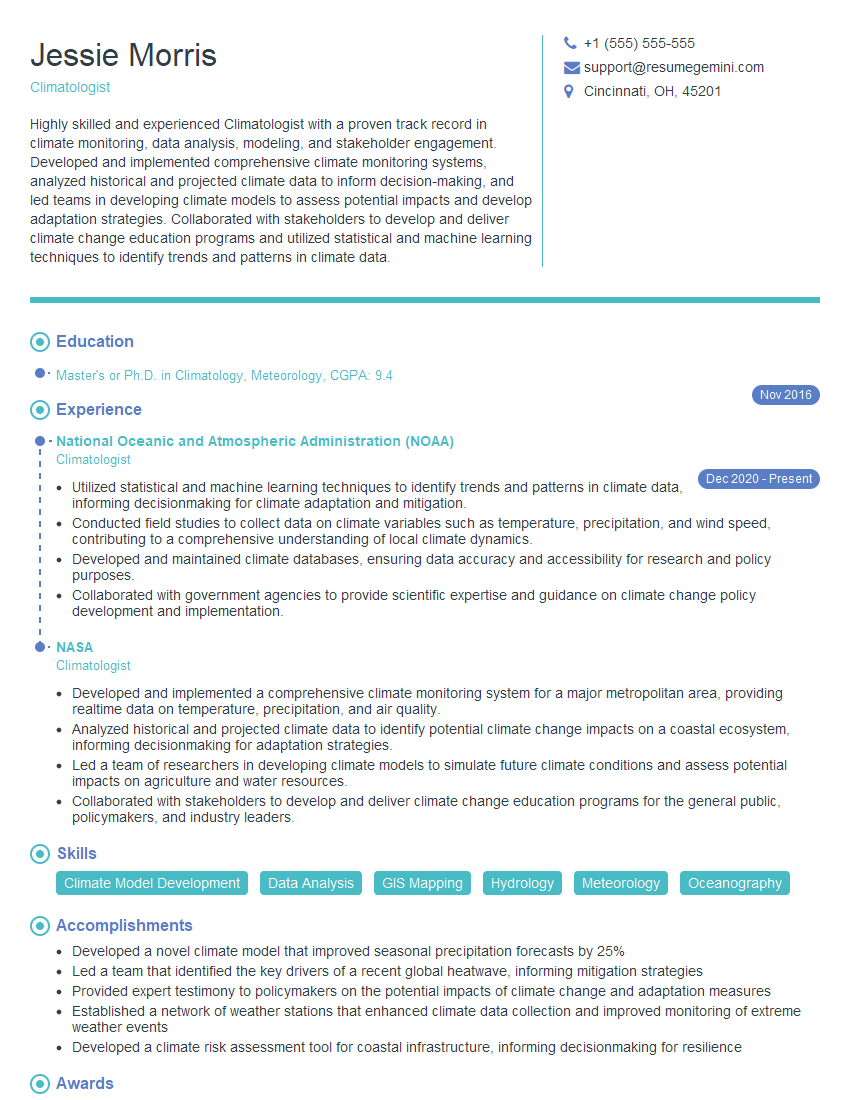
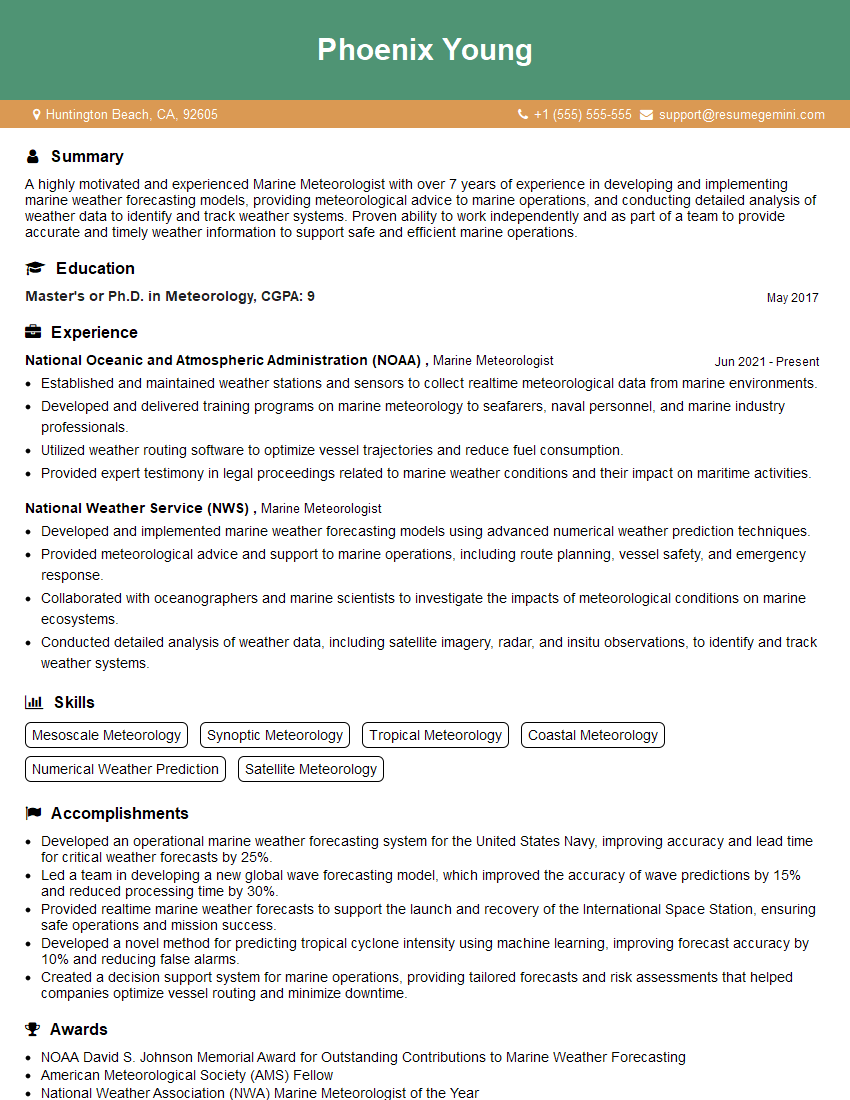
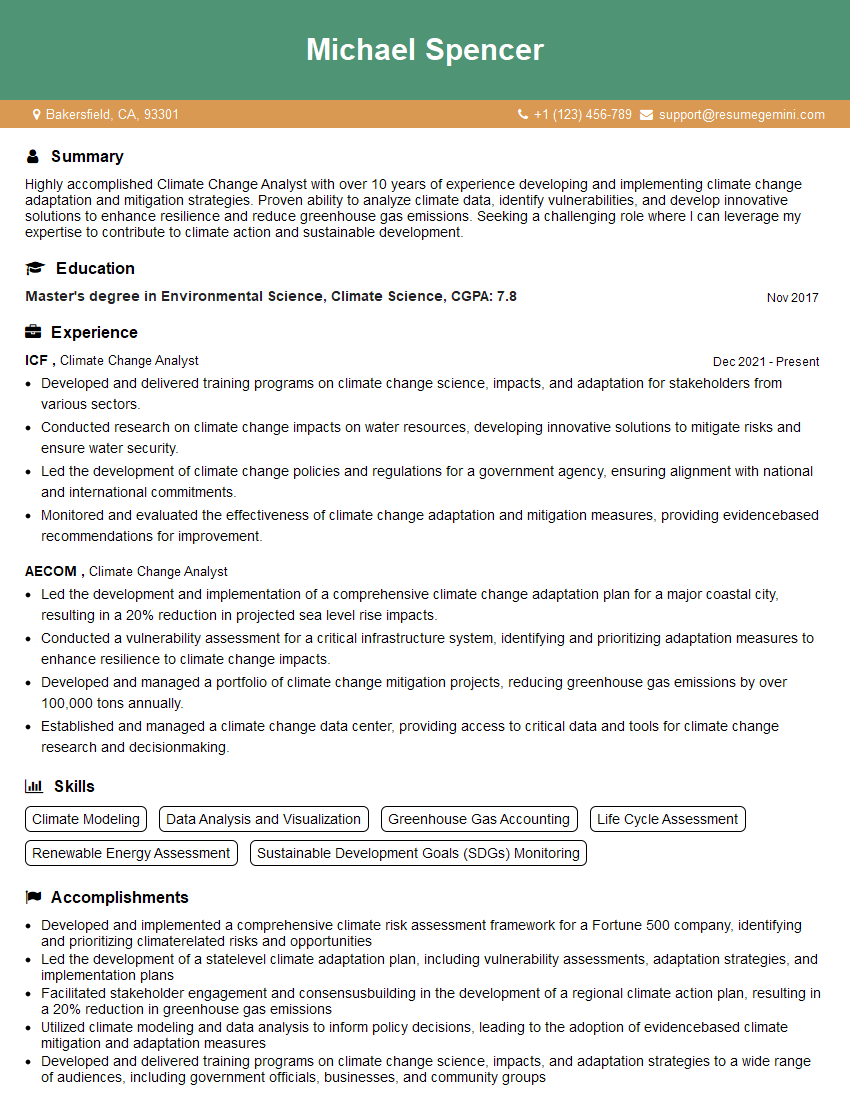
Mastering Meteorological Data Interpretation is crucial for career advancement in fields like forecasting, climate research, and environmental consulting. A strong understanding of these concepts directly translates to higher job prospects and increased earning potential. To significantly boost your job search, creating an ATS-friendly resume is essential. ResumeGemini can help you build a professional and impactful resume tailored to the specific requirements of Meteorological Data Interpretation roles. We provide examples of resumes specifically designed for this field to guide you through the process. Invest time in crafting a compelling resume – it’s your first impression with potential employers.


Explore more articles
Users Rating of Our Blogs
Share Your Experience
We value your feedback! Please rate our content and share your thoughts (optional).
What Readers Say About Our Blog
Hello,
we currently offer a complimentary backlink and URL indexing test for search engine optimization professionals.
You can get complimentary indexing credits to test how link discovery works in practice.
No credit card is required and there is no recurring fee.
You can find details here:
https://wikipedia-backlinks.com/indexing/
Regards
NICE RESPONSE TO Q & A
hi
The aim of this message is regarding an unclaimed deposit of a deceased nationale that bears the same name as you. You are not relate to him as there are millions of people answering the names across around the world. But i will use my position to influence the release of the deposit to you for our mutual benefit.
Respond for full details and how to claim the deposit. This is 100% risk free. Send hello to my email id: [email protected]
Luka Chachibaialuka
Hey interviewgemini.com, just wanted to follow up on my last email.
We just launched Call the Monster, an parenting app that lets you summon friendly ‘monsters’ kids actually listen to.
We’re also running a giveaway for everyone who downloads the app. Since it’s brand new, there aren’t many users yet, which means you’ve got a much better chance of winning some great prizes.
You can check it out here: https://bit.ly/callamonsterapp
Or follow us on Instagram: https://www.instagram.com/callamonsterapp
Thanks,
Ryan
CEO – Call the Monster App
Hey interviewgemini.com, I saw your website and love your approach.
I just want this to look like spam email, but want to share something important to you. We just launched Call the Monster, a parenting app that lets you summon friendly ‘monsters’ kids actually listen to.
Parents are loving it for calming chaos before bedtime. Thought you might want to try it: https://bit.ly/callamonsterapp or just follow our fun monster lore on Instagram: https://www.instagram.com/callamonsterapp
Thanks,
Ryan
CEO – Call A Monster APP
To the interviewgemini.com Owner.
Dear interviewgemini.com Webmaster!
Hi interviewgemini.com Webmaster!
Dear interviewgemini.com Webmaster!
excellent
Hello,
We found issues with your domain’s email setup that may be sending your messages to spam or blocking them completely. InboxShield Mini shows you how to fix it in minutes — no tech skills required.
Scan your domain now for details: https://inboxshield-mini.com/
— Adam @ InboxShield Mini
Reply STOP to unsubscribe
Hi, are you owner of interviewgemini.com? What if I told you I could help you find extra time in your schedule, reconnect with leads you didn’t even realize you missed, and bring in more “I want to work with you” conversations, without increasing your ad spend or hiring a full-time employee?
All with a flexible, budget-friendly service that could easily pay for itself. Sounds good?
Would it be nice to jump on a quick 10-minute call so I can show you exactly how we make this work?
Best,
Hapei
Marketing Director
Hey, I know you’re the owner of interviewgemini.com. I’ll be quick.
Fundraising for your business is tough and time-consuming. We make it easier by guaranteeing two private investor meetings each month, for six months. No demos, no pitch events – just direct introductions to active investors matched to your startup.
If youR17;re raising, this could help you build real momentum. Want me to send more info?
Hi, I represent an SEO company that specialises in getting you AI citations and higher rankings on Google. I’d like to offer you a 100% free SEO audit for your website. Would you be interested?
Hi, I represent an SEO company that specialises in getting you AI citations and higher rankings on Google. I’d like to offer you a 100% free SEO audit for your website. Would you be interested?
good