Are you ready to stand out in your next interview? Understanding and preparing for Microchip Development Framework (MPLAB) interview questions is a game-changer. In this blog, we’ve compiled key questions and expert advice to help you showcase your skills with confidence and precision. Let’s get started on your journey to acing the interview.
Questions Asked in Microchip Development Framework (MPLAB) Interview
Q 1. Explain the MPLAB X IDE interface and its key features.
MPLAB X IDE is Microchip’s integrated development environment (IDE) for developing embedded systems using their PIC microcontrollers. Think of it as your central hub for writing, compiling, debugging, and programming your PIC code. Its interface is quite intuitive, featuring a project explorer, editor, output window, and various toolbars.
- Project Explorer: This displays the files and folders within your project, allowing for easy navigation and management of source code, header files, and project settings.
- Editor: This is where you’ll write and edit your C or assembly code, with features like syntax highlighting, code completion, and debugging tools directly integrated.
- Output Window: This window displays messages from the compiler, linker, and debugger, providing valuable feedback during the development process. It’s where you’ll find error messages or build success notifications.
- Toolbars: Various toolbars provide quick access to common actions such as compiling, building, debugging, and programming the microcontroller. These are customizable to your preferences.
- Debugger: MPLAB X seamlessly integrates with various debuggers, allowing you to step through your code, inspect variables, and identify issues in real-time.
For example, imagine you’re building a system that controls a robotic arm. The project explorer would house all the code modules responsible for motor control, sensor readings, and user interface. The editor allows you to refine the logic for a specific joint, while the debugger lets you step through the code to ensure accurate motor movements and error-free operation.
Q 2. Describe the process of creating a new project in MPLAB X.
Creating a new project in MPLAB X is straightforward. First, you’ll select ‘Project’ -> ‘New Project’. The IDE then guides you through a series of steps:
- Select Device: Choose the specific PIC microcontroller you’ll be using from the extensive list provided. This is crucial, as the compiler and linker settings depend on this selection.
- Select Tool: Choose the compiler (XC8 for C, XC16 for C++, etc.) and linker you wish to use for building your project. The compiler translates your code into machine-readable instructions.
- Project Location: Specify where on your computer you’d like to save the project files.
- Project Name: Give your project a descriptive name.
- Additional Settings: You might have options to include examples or templates; this is helpful for beginners.
After completing these steps, MPLAB X generates a basic project structure including necessary files and settings for your chosen microcontroller and compiler. You are then ready to start coding.
For instance, if you are building a simple LED blinker for a PIC16F877A, you’ll choose that as your device, select the XC8 compiler, and then start writing your code within the main.c file generated by MPLAB X.
Q 3. How do you debug code using MPLAB X’s debugging tools?
MPLAB X provides powerful debugging tools to help you identify and resolve issues in your code. This is done by connecting your microcontroller to the computer using a programmer/debugger.
- Setting Breakpoints: Click in the gutter next to the line numbers in your code editor to set breakpoints. Execution will pause at these points allowing for inspection.
- Stepping Through Code: Use the ‘Step Into’, ‘Step Over’, and ‘Step Out’ commands to execute code line by line and trace the flow of execution. This helps understand exactly what’s happening at each step.
- Inspecting Variables: Use the ‘Watch’ window to monitor the values of variables during execution. This is crucial for identifying unexpected values or behaviors.
- Memory Inspection: Explore memory contents to see where data is stored and how it changes during execution. This is extremely helpful when dealing with memory-related issues like stack overflows or data corruption.
- Using the Call Stack: Examine the call stack to understand the sequence of function calls leading to the current point of execution. This provides insight into function call order and potential recursion problems.
Think of debugging like using a magnifying glass to meticulously examine the smallest details of your program’s operation. These tools allow you to see exactly what your code is doing at each step, pinpointing exactly where errors occur.
Q 4. What are the different types of debuggers supported by MPLAB X?
MPLAB X supports a variety of debuggers, each with its own strengths and limitations. The choice of debugger often depends on the specific PIC microcontroller and your budget.
- ICD 3/4: Microchip’s own in-circuit debuggers, providing robust debugging capabilities with advanced features.
- Real ICE: A more advanced and faster in-circuit emulator offering high-speed debugging for complex projects.
- Pickit 3/4: More affordable programmers and debuggers suitable for smaller projects and educational purposes, but usually with limited features compared to ICD or Real ICE.
- Third-party debuggers: Some third-party vendors also offer debuggers compatible with MPLAB X.
The selection depends on the requirements of the project. For example, a high-speed application may need the capabilities of Real ICE, whereas a simple educational project might suffice with a Pickit 3.
Q 5. Explain the process of programming a PIC microcontroller using MPLAB X.
Programming a PIC microcontroller in MPLAB X is done after successful compilation and linking of your code. This involves transferring the compiled code (hex file) into the microcontroller’s flash memory.
- Connect the Programmer: Connect your chosen programmer/debugger (ICD, Pickit, etc.) to your computer and the target PIC microcontroller.
- Select Programmer: In MPLAB X, select the correct programmer from the ‘Tools’ -> ‘Programmer’ menu.
- Select the Hex File: Specify the location of the compiled hex file (typically found in the ‘dist’ or ‘build’ folder of your project).
- Program the Device: Click the ‘Program’ button to begin the programming process. MPLAB X will communicate with the programmer to upload the code to the microcontroller’s flash memory. You should see a progress bar and confirmation once the process is complete.
Think of this as transferring the instructions of your program from your computer to the PIC microcontroller’s brain. Once programmed, the microcontroller will execute these instructions autonomously.
Q 6. How do you configure the clock speed of a PIC microcontroller in MPLAB X?
Configuring the clock speed of a PIC microcontroller in MPLAB X is typically done through the microcontroller’s configuration bits. These bits control various aspects of the microcontroller’s behavior, including the oscillator frequency.
The specific method varies depending on the PIC microcontroller family. However, the general process is:
- Access Configuration Bits: In MPLAB X, there will be a configuration bits editor either within the project settings or as a separate configuration file (usually a .lkr file). This will depend on the project type and compiler being used.
- Choose Oscillator: Select the appropriate oscillator type (e.g., internal RC oscillator, external crystal oscillator) that matches your hardware setup.
- Set Frequency: Depending on your chosen oscillator, you may need to specify the desired clock frequency (e.g., 4 MHz, 8 MHz, 16 MHz). This may involve selecting a specific prescaler value within the configuration bits.
- Verify the settings: It’s always a good practice to carefully review all the settings before building your project.
Incorrectly setting the clock speed can lead to unexpected behavior and even damage the microcontroller. For example, selecting a clock frequency much higher than the device’s specification can lead to instability or even permanent damage.
Q 7. What are the different memory spaces in a PIC microcontroller, and how do you access them?
PIC microcontrollers have different memory spaces used for various purposes. Understanding these is essential for efficient memory management in your programs.
- Program Memory (Flash): This is where your program code resides. It’s non-volatile, meaning the contents are retained even when power is removed. You access program memory indirectly through the program counter.
- Data Memory (RAM): This is volatile memory used to store variables and temporary data during program execution. You access data memory directly using memory addresses or pointers. The size of RAM is typically much smaller than program memory.
- Special Function Registers (SFRs): These registers control various peripherals and internal operations of the microcontroller. They reside in a separate memory space and are accessed using specific register addresses.
- EEPROM: Electrically erasable programmable read-only memory (EEPROM) is a type of non-volatile memory that can be rewritten many times. It is used for storing configuration data that needs to persist across power cycles.
Accessing these memories depends on the architecture. Data memory is typically accessed directly using pointers, SFRs are accessed using their predefined names, and program memory is accessed indirectly during program execution.
For example, unsigned char myVariable = 10; declares a variable that resides in RAM. Accessing a peripheral like a UART would involve writing to the relevant SFRs. Reading a value from EEPROM requires specific EEPROM read/write functions.
Q 8. Explain the concept of interrupts in PIC microcontrollers and how to handle them in MPLAB X.
Interrupts are crucial for efficient microcontroller operation. They allow the PIC to respond to external events or internal conditions without constantly polling for changes. Think of it like having a phone that only rings when someone calls, rather than constantly checking if someone is trying to reach you. In MPLAB X, handling interrupts involves several steps:
- Identify the interrupt source: Determine which peripheral (timer, UART, external pin, etc.) is triggering the interrupt. Each PIC family and even individual PICs have different interrupt vectors.
- Enable the interrupt: This is done by setting specific bits in configuration registers. For example, enabling the Timer0 interrupt might involve setting the T0IE bit in the INTCON register (the exact register and bit depend on the specific PIC).
- Write the Interrupt Service Routine (ISR): This is a function that executes when the interrupt occurs. The ISR should perform the necessary actions in response to the event. It’s critical to keep ISRs short and efficient to minimize interrupt latency.
- Configure the interrupt priority (if applicable): Higher priority interrupts can interrupt lower priority interrupts. This is crucial for managing complex systems where some events need immediate attention.
Example (Illustrative): Let’s say we’re using a PIC16F877A and want to handle an interrupt triggered by a button press connected to an external interrupt pin (INT0):
#include  // Include the header file for the specific PIC
void interrupt myInterrupt(void){
  if (INT0IF == 1){ // Check if INT0 interrupt flag is set
    INT0IF = 0; // Clear the interrupt flag
    // Perform actions in response to button press
  }
}
Remember to set the appropriate bits in the OPTION_REG and INTCON registers to enable and configure the external interrupt. In MPLAB X IDE, you’ll find the configuration bits within the project properties.
Q 9. How do you use timers and counters in PIC microcontrollers within MPLAB X?
Timers and counters are fundamental components in PIC microcontrollers, providing precise timing and counting capabilities. MPLAB X simplifies their use through its configuration options and peripheral libraries. You can use timers for tasks such as generating PWM signals, measuring time intervals, creating delays, or counting external events.
Using Timers: Most PICs have multiple timers with varying functionalities. The process typically involves:
- Selecting a timer: Choose the timer best suited for your application (e.g., Timer0, Timer1, Timer2). Consider features like resolution, prescaler options, and operating modes.
- Configuring the timer: Set the prescaler value to control the timer’s clock frequency, choose the timer mode (e.g., free-running, one-shot), and set the initial timer value.
- Enabling the timer: Activate the selected timer module. This typically involves setting a specific bit in a control register.
- Handling timer interrupts (optional): Configure interrupt handling if you need to be notified when the timer reaches a specific value or overflows.
Using Counters: Counters typically count external events, such as pulses from sensors. The configuration is similar to timers, but you might focus on input capture mode to count these events. You’ll need to define which pin will act as a counter input.
Example (Illustrative, Timer0): This code snippet shows basic Timer0 configuration (specific registers might vary depending on the PIC):
// Configure Timer0 to generate an interrupt every 1ms
OPTION_REGbits.PSA = 0; // Prescaler assigned to Timer0
OPTION_REGbits.PS2 = 1; // Prescaler = 16
OPTION_REGbits.PS1 = 1;
OPTION_REGbits.PS0 = 0;
TMR0 = 0; //Initialize Timer0
INTCONbits.TMR0IE = 1; //Enable Timer0 interrupt
INTCONbits.GIE = 1; //Enable Global Interrupt
Remember that you will need to write an appropriate interrupt service routine to handle the timer interrupt.
Q 10. What are the different communication protocols supported by PIC microcontrollers, and how do you implement them using MPLAB X?
PIC microcontrollers support a wide range of communication protocols, enabling them to interact with various devices and systems. Common protocols include:
- UART (Universal Asynchronous Receiver/Transmitter): Serial communication for simple text-based or binary data transfer. Very common for simple communication.
- SPI (Serial Peripheral Interface): High-speed synchronous communication for connecting multiple peripherals. Often used for sensors and displays.
- I2C (Inter-Integrated Circuit): Another commonly used synchronous protocol, efficient for communication with many sensors and other devices on a bus.
- CAN (Controller Area Network): A robust protocol for automotive and industrial applications, prioritizing real-time data transfer and fault tolerance.
- USB (Universal Serial Bus): For connecting to PCs and other USB-enabled devices. Requires more specialized hardware and firmware.
Implementation in MPLAB X: MPLAB X simplifies protocol implementation through libraries and configuration options. The process generally involves:
- Choosing the appropriate library: MPLAB X provides libraries or code examples for the common protocols listed above. They often abstract away low-level register manipulations.
- Configuring the peripheral: Set up the communication parameters such as baud rate (UART), clock speed (SPI), and addressing (I2C).
- Writing the communication functions: Create functions to send and receive data. These functions will use the selected library’s API.
- Integrating with the application: Use the communication functions within your main application code to transfer data.
For example, for UART communication, you would configure the UART module’s baud rate generator, enable transmission and reception, and then use functions to send and receive bytes of data.
Q 11. Explain your experience with using the MPLAB SIM simulator.
MPLAB SIM is an invaluable tool for debugging and testing PIC microcontroller code without needing physical hardware. I’ve extensively used MPLAB SIM throughout my development process to:
- Verify functionality: Before deploying code to a physical device, I use MPLAB SIM to identify and correct logic errors or unexpected behavior.
- Test interrupt handling: Simulating interrupts is straightforward in MPLAB SIM, allowing for thorough testing of ISR functionality and timing.
- Step through code: Single-stepping through the code allows for detailed observation of register values and program flow.
- Experiment with different configurations: MPLAB SIM lets me test various hardware configurations without the need for reprogramming a physical microcontroller.
- Reduce hardware debugging time: By identifying and resolving many issues in simulation, I significantly reduce the time needed for hardware debugging.
I find MPLAB SIM especially useful for testing time-critical applications, where precise timing and interrupt handling are crucial. By using breakpoints and watching variables, I can precisely analyze the behavior of the code under various conditions. It’s crucial to remember that simulation isn’t a perfect replica of real hardware; aspects like timing might differ slightly. Hence, thorough testing with actual hardware remains essential.
Q 12. How do you handle peripheral configuration in MPLAB X?
Peripheral configuration in MPLAB X is managed through a combination of code and configuration bits. The process usually involves:
- Selecting the device: Choosing the correct PIC microcontroller from the device list within the MPLAB X project settings is crucial. This defines the available peripherals and their registers.
- Setting configuration bits: Many PIC peripherals are controlled by configuration bits, which are set within the project’s configuration bit settings. These settings define the operating modes and functionalities of various peripherals (e.g., oscillator type, Watchdog Timer, interrupt priorities).
- Writing code to control peripherals: Direct register manipulation through C code is often required to configure the more detailed aspects of a peripheral (e.g., setting baud rate for UART, configuring timer modes, selecting ADC channels).
- Utilizing peripheral libraries (if available): Microchip offers libraries that abstract away many of the register-level details, simplifying the configuration process. Libraries usually provide higher-level functions for common tasks.
For instance, to configure a UART, you would set the baud rate via registers in your code *and* might need to select the appropriate oscillator and enable the UART module through the configuration bits. This ensures the proper clock signal for the UART.
Q 13. Describe your experience working with different PIC microcontroller families.
My experience spans several PIC microcontroller families, including the PIC16, PIC18, and dsPIC families. Each family offers a unique set of features and capabilities, requiring different approaches to development.
PIC16: This family is known for its simplicity and low cost, suitable for basic applications. I’ve worked extensively with PIC16F877A, a popular choice for beginners and hobbyists due to its plentiful tutorials. It’s characterized by its 8-bit architecture and relatively limited peripherals.
PIC18: The PIC18 family provides more advanced features than the PIC16, including enhanced peripherals, more memory, and more sophisticated interrupt handling capabilities. I’ve used this family in projects demanding more processing power and I/O capabilities.
dsPIC: This family incorporates a Digital Signal Processing (DSP) core, making it ideal for applications requiring significant signal processing, such as motor control or sensor signal processing. The dsPIC requires a deeper understanding of DSP principles.
My experience with these families has enabled me to adapt quickly to new PIC devices and leverage their unique capabilities in various projects. I find it’s important to not only understand the capabilities of the individual chips but also the different development tools and strategies required for each family to get the best performance out of them.
Q 14. What are your preferred methods for code optimization in MPLAB X?
Code optimization in MPLAB X is crucial for maximizing performance and minimizing resource usage. My preferred methods include:
- Profiling: I use the MPLAB X debugger and profiler to identify performance bottlenecks in my code. This allows me to target optimization efforts effectively.
- Compiler optimization settings: MPLAB XC8 (or other compilers) offers various optimization levels, from basic to aggressive. I carefully select an appropriate level based on the trade-off between performance and code size. More aggressive levels can sometimes lead to unexpected behavior.
- Code restructuring: I refactor code to reduce redundant calculations, eliminate unnecessary loops, and improve code clarity. Well-structured code is often more efficient.
- Data structures: Using efficient data structures (e.g., arrays instead of linked lists where appropriate) can significantly improve performance.
- Register usage: Efficiently using registers (faster access than memory) for frequently accessed variables enhances performance, especially in memory-constrained PICs.
- Library functions: Using optimized libraries and functions provided by Microchip can reduce code size and improve performance. I avoid using non-optimized custom functions.
- Inlining: Inlining small functions can eliminate function call overhead. But this increases the code size, so careful consideration is necessary.
A combination of these techniques, coupled with careful profiling, allows me to achieve optimal code performance for my applications. The specific optimization strategies will vary depending on the target application’s needs and constraints.
Q 15. Explain your experience with Real-Time Operating Systems (RTOS) within the MPLAB X environment.
My experience with Real-Time Operating Systems (RTOS) in MPLAB X is extensive. I’ve worked with several RTOS kernels, including FreeRTOS and Micrium µC/OS-II, integrating them into projects for various Microchip microcontrollers. The process typically involves selecting an appropriate RTOS configuration tailored to the project’s requirements (memory constraints, task priorities, inter-task communication needs, etc.). This often necessitates careful consideration of task scheduling algorithms, interrupt handling within the RTOS context, and the use of RTOS APIs for functions like semaphore management, mutexes, and message queues. For instance, in a recent project involving a motor control system, FreeRTOS was used to manage multiple tasks concurrently: one for sensor readings, another for motor control algorithms, and a third for user interface communication. Properly configuring interrupt priorities and utilizing RTOS synchronization mechanisms (like mutexes to prevent race conditions) proved crucial to ensure reliable operation. Within MPLAB X, this involves configuring the project to include the RTOS libraries, managing includes and linker configurations correctly, and using the debugger effectively to trace task execution and identify potential issues.
Career Expert Tips:
- Ace those interviews! Prepare effectively by reviewing the Top 50 Most Common Interview Questions on ResumeGemini.
- Navigate your job search with confidence! Explore a wide range of Career Tips on ResumeGemini. Learn about common challenges and recommendations to overcome them.
- Craft the perfect resume! Master the Art of Resume Writing with ResumeGemini’s guide. Showcase your unique qualifications and achievements effectively.
- Don’t miss out on holiday savings! Build your dream resume with ResumeGemini’s ATS optimized templates.
Q 16. How do you manage version control within your MPLAB X development process?
Version control is fundamental to any professional software development process, and I consistently use Git within my MPLAB X workflow. I typically leverage a Git client (like SourceTree or GitKraken) alongside MPLAB X. This involves creating a repository for each project, committing code changes regularly with descriptive messages, and branching for new features or bug fixes. Pull requests are used to integrate changes into the main branch after code review, ensuring code quality and maintainability. For example, during development of a firmware update, I might create a feature branch to implement the new functionalities. Once tested and reviewed, this branch gets merged into the main branch using a pull request. The use of Git tags allows for easy identification and tracking of specific release versions, which simplifies rollback procedures if needed. Furthermore, I utilize the `.gitignore` file to exclude build artifacts and temporary files from the repository, keeping it clean and efficient.
Q 17. Describe a challenging debugging scenario you encountered in MPLAB X and how you resolved it.
One particularly challenging debugging scenario involved a seemingly intermittent hardware fault in a project using a PIC32 microcontroller. The issue manifested as random crashes, making it difficult to pinpoint the root cause using standard debugging techniques. The problem was eventually traced to a subtle timing-related issue within an interrupt service routine (ISR). The ISR was modifying shared data without proper protection using mutexes or other synchronization mechanisms, leading to data corruption and subsequent program crashes. The solution involved implementing a mutex to protect the shared data section within the ISR, ensuring exclusive access and preventing race conditions. Additionally, I utilized MPLAB X’s advanced debugging features, including breakpoints within ISRs and register watches, to observe the program’s behavior in real-time and validate the effectiveness of the implemented solution. The methodical approach, combined with the advanced debugging capabilities of MPLAB X, was crucial in resolving this seemingly elusive issue.
Q 18. Explain your experience with using MPLAB Harmony.
MPLAB Harmony is a comprehensive framework that significantly streamlines embedded development on Microchip microcontrollers. I have extensive experience utilizing Harmony for projects requiring various peripherals and complex communication protocols. Harmony’s modular architecture allows for flexible configuration and customization, enabling the selection of only necessary drivers and middleware components. This reduces code size and simplifies the development process, especially in larger projects. For instance, in a recent project involving a CAN communication bus, I leveraged Harmony’s integrated CAN driver library, eliminating the need for developing a low-level driver from scratch. The driver was easily integrated, configured, and tested within the Harmony framework, saving considerable development time. Harmony’s built-in tools and utilities, such as the configuration tool, also assist in the generation of project files and drivers tailored to specific hardware configurations, furthering the efficiency gains. Furthermore, its use of peripheral libraries with well-defined APIs ensures code readability and maintainability.
Q 19. What are the different types of compiler optimization levels and their trade-offs?
Compiler optimization levels control the extent to which the compiler modifies the generated code to improve performance or code size. Common levels include:
-O0(No Optimization): The compiler generates code directly from the source with minimal changes. This is useful for debugging, as the generated code closely resembles the source code. It’s the slowest execution speed and largest code size, but easiest to debug.-O1(Optimization Level 1): Basic optimizations are performed, such as code cleanup and removal of redundant instructions. Improves performance and reduces code size more than-O0.-O2(Optimization Level 2): More aggressive optimizations are applied, potentially including loop unrolling, function inlining, and other advanced techniques. Leads to better performance and smaller code size compared to-O1, at the cost of debugging complexity.-O3(Optimization Level 3): This is the highest optimization level, performing all optimizations enabled at-O2along with even more aggressive optimizations. May lead to the best performance and smallest code size, but also may complicate debugging and potentially introduce unexpected behavior in rare cases.
The trade-off is between performance/code size and debugging ease. Higher optimization levels generally provide better performance and smaller code size but make debugging significantly more challenging because of the transformations applied to the code. In practice, I often start with -O0 for debugging and switch to -O2 or -O3 for release builds to ensure the best balance of performance and acceptable debugging capabilities.
Q 20. How do you handle memory allocation and deallocation in embedded systems developed in MPLAB X?
Memory management is critical in embedded systems due to the limited resources available. In MPLAB X development, I employ several strategies for efficient memory allocation and deallocation, heavily influenced by the specific microcontroller’s architecture and the RTOS being used (if any).
- Static Allocation: For variables whose size and lifetime are known at compile time, I use static allocation. This simplifies memory management but limits flexibility. Example:
static uint8_t buffer[1024]; - Dynamic Allocation: For variables whose size or lifetime is not known at compile time, I use dynamic allocation using functions like
malloc()andfree(), or their RTOS-specific equivalents. This offers flexibility but requires careful management to prevent memory leaks and fragmentation. Always ensure corresponding calls tofree()for allocated memory, particularly when using dynamic memory allocation within interrupt service routines to avoid unexpected behavior. - Memory Pooling: In resource-constrained environments, I utilize memory pooling. This involves pre-allocating a fixed-size block of memory and managing it as a pool from which smaller blocks are allocated and deallocated. This improves performance by reducing fragmentation and avoiding repeated calls to
malloc()/free().
Careful consideration of memory usage is crucial. Tools within MPLAB X, as well as external tools, can help analyze memory usage patterns and identify potential memory leaks and fragmentation issues.
Q 21. Explain your understanding of static and dynamic memory allocation in the context of MPLAB X development.
In the context of MPLAB X development, understanding the difference between static and dynamic memory allocation is essential for efficient memory management.
- Static Memory Allocation: Memory is allocated during compile time and its location is fixed. The compiler determines the memory addresses at compile time and these variables occupy a fixed section of memory throughout the program’s execution. Advantages include simplicity and speed. Disadvantages include limited flexibility (size is fixed at compile time) and potential for wasted memory if not used efficiently. Example:
int myStaticVar = 10; - Dynamic Memory Allocation: Memory is allocated during runtime using functions such as
malloc(),calloc(), andrealloc(). The memory location is not known until runtime and it is allocated from a heap. Advantages include flexibility (size is determined at runtime) and efficient memory usage. Disadvantages include slower allocation/deallocation time compared to static allocation, the risk of memory leaks iffree()is not called appropriately, and potential for memory fragmentation.
The choice between static and dynamic allocation depends on the specific needs of the application. Static allocation is suitable for variables with known sizes and lifetimes, while dynamic allocation is necessary when the size or lifetime is not known at compile time. Careful consideration is crucial to optimize both memory usage and program performance. Incorrect use of dynamic allocation may lead to memory leaks and system instability; thus, good programming practices are essential.
Q 22. How do you use watch windows and breakpoints effectively in MPLAB X?
Watch windows and breakpoints are indispensable debugging tools in MPLAB X. Watch windows allow you to monitor the values of specific variables or memory locations in real-time during program execution. Breakpoints, on the other hand, temporarily halt program execution at a designated line of code, allowing you to inspect the program’s state at that precise moment. Effective use involves a strategic combination of both.
For instance, imagine you’re debugging a complex state machine. You might set a breakpoint at the transition between states to examine the values of variables influencing the transition. Simultaneously, you’d add those variables to a watch window to observe their changes dynamically, leading to quick identification of incorrect state transitions or unexpected variable values.
Effective Strategies:
- Strategic Breakpoint Placement: Don’t overload your code with breakpoints; strategically place them at key points like function entry/exit points, loop beginnings, and locations where crucial decisions are made.
- Conditional Breakpoints: Use conditional breakpoints (available in MPLAB X) to halt execution only when specific conditions are met. This is particularly useful when dealing with loops or complex logic, helping to avoid unnecessary stops.
- Watch Window Organization: Organize your watch window effectively. Grouping related variables makes it easier to analyze the data. Add expressions to the watch window to calculate derived values or test conditions.
- Stepping Through Code: Once a breakpoint is hit, use the stepping features (step over, step into, step out) to carefully examine code execution flow. This allows for precise tracking of variable changes and function calls.
By combining these techniques, you can efficiently pinpoint errors and optimize code performance.
Q 23. Describe your experience using various data types and structures in embedded C for PIC microcontrollers.
My experience with data types and structures in embedded C for PIC microcontrollers is extensive. I routinely leverage the efficiency of various data types to optimize memory usage and performance, crucial in resource-constrained environments. I understand the nuances of each type, including their size, alignment, and potential performance implications.
For example, I often use unsigned char for representing bytes, unsigned int for counters, and int for signed values. For more complex data representation, I’m proficient in using struct and union to group related variables together, thereby enhancing code organization and efficiency.
Consider a sensor reading application. A struct could perfectly encapsulate sensor readings, timestamps, and status flags:
typedef struct {
  unsigned int timestamp;
  unsigned short temperature;
  unsigned char humidity;
  unsigned char status;
} sensorData;
Understanding bit fields within structures allows for very compact data storage. For instance, you can represent several flags within a single byte. This is especially useful when dealing with memory-limited microcontrollers. Furthermore, I’m adept at using enum to define symbolic constants, enhancing code readability and maintainability.
Q 24. How do you ensure code portability across different PIC microcontroller families?
Code portability across different PIC microcontroller families requires careful planning and adherence to coding best practices. The key is to avoid family-specific features or peripherals in the core logic of your code.
Strategies for Portability:
- Peripheral Abstraction: Create abstraction layers for hardware interactions. This involves using function calls to interact with peripherals instead of directly accessing registers. This allows you to easily switch between different microcontroller families by changing only the peripheral abstraction layer.
- Compiler-Specific Directives: Minimize the use of compiler-specific directives or extensions. Stick to the ANSI C standard as much as possible.
- Modular Design: Design your code in a modular fashion, separating different functionalities into independent modules. This makes it easier to adapt and port specific components when targeting different devices.
- Configuration Files: Use configuration files or build system settings to specify microcontroller-specific settings such as clock frequencies, memory mapping, and pin assignments. This keeps the core logic clean and portable.
- Standard Libraries: Leverage standard C libraries instead of microcontroller-specific libraries where feasible, avoiding family-specific functionalities as much as possible.
For example, a function that initializes the UART communication could be abstracted, with the actual implementation handled by a separate file for each microcontroller family. This simplifies the porting process by simply switching out the implementation file.
Q 25. Describe your experience using various debugging techniques, like single-stepping, breakpoints, and watchpoints.
My debugging toolkit goes beyond basic breakpoints. I’m experienced in using single-stepping, breakpoints, and watchpoints to isolate and resolve complex issues. Single-stepping allows me to trace the execution flow line by line, observing the impact of each instruction. Breakpoints pause execution at specific points for detailed state inspection. Watchpoints trigger when the value of a variable or memory location changes.
Imagine a scenario where a variable’s unexpected change causes a system malfunction. I would first set a watchpoint on that variable to halt execution immediately when its value changes, rather than manually stepping through the potentially lengthy code. This significantly accelerates debugging.
Effective Techniques:
- Single-Stepping: Step-over to execute the current line without stepping into function calls, step-into to trace into function calls, and step-out to continue execution until the current function returns.
- Breakpoints: Set breakpoints strategically, focusing on key sections of the code to efficiently pinpoint issues.
- Watchpoints: Use watchpoints to detect changes in crucial variables and memory locations. The instant notification accelerates debugging.
- Hardware Breakpoints: Utilize hardware breakpoints when available for improved performance, especially when debugging real-time applications.
The judicious use of these techniques, in combination, allows for rapid identification and resolution of even intricate bugs.
Q 26. What are your strategies for testing and validating your embedded code developed in MPLAB X?
Testing and validating embedded code demands a multifaceted approach. My strategy involves a combination of unit testing, integration testing, and system-level testing.
Testing Strategies:
- Unit Testing: I test individual functions or modules independently, using mock objects or simulating external dependencies. This isolates bugs early in the development cycle.
- Integration Testing: After unit tests, I test how different modules interact with each other. This ensures smooth data flow and proper interaction between components.
- System-Level Testing: Finally, I test the complete system as a whole under real-world or simulated conditions. This verifies that all components work together correctly and meet the requirements.
- Simulation: For hardware-dependent functions, I utilize simulation tools to verify the behavior without directly accessing the physical hardware.
- Code Coverage Analysis: Using tools in MPLAB X, I analyze the code coverage to ensure that most parts of the code are executed during the tests and improve test suite completeness.
I also employ various testing techniques like boundary value analysis, equivalence partitioning, and decision table testing to ensure comprehensive coverage of different input scenarios. Continuous integration is incorporated to automate the build and testing processes.
Q 27. How do you handle different types of errors during the development process within MPLAB X?
Handling errors effectively is paramount in embedded systems. MPLAB X provides excellent tools to manage different types of errors.
Error Handling Techniques:
- Compiler Errors: I carefully address compiler errors, understanding the root cause of the error and making the necessary corrections to the code. I find that carefully reading the compiler error messages helps me find and correct errors faster.
- Linker Errors: Linker errors often indicate issues with unresolved symbols or incorrect library inclusion. I meticulously check the project settings, library links, and variable declarations to resolve these.
- Runtime Errors: I use debugging techniques like breakpoints and watch windows to trace the execution flow and identify the point of failure during runtime. I incorporate error checks within the code itself, using
assert()statements to detect unexpected conditions during development and handle them gracefully (e.g., usingtry-catchblocks where applicable). - Debugging Tools: The debugger in MPLAB X is crucial for identifying and correcting runtime errors. It helps to step through the code, inspecting variables, and memory contents to pinpoint the root cause.
- Logging and Tracing: For complex systems, I incorporate logging and tracing mechanisms within the code. This provides insights into the system’s behavior and helps track errors across multiple modules during runtime.
By combining error prevention strategies, debugging techniques and logging mechanisms, I build robust, reliable embedded systems.
Q 28. What are your preferred methods for code commenting and documentation standards in MPLAB X projects?
Code commenting and documentation are essential for code maintainability and collaboration. In MPLAB X projects, I adhere to a consistent style.
Commenting and Documentation Standards:
- Header Comments: Each file starts with detailed header comments, describing the file’s purpose, author, creation date, revision history, and any relevant dependencies.
- Function Comments: Each function includes a detailed comment block describing its purpose, parameters, return values, and any side effects.
- Inline Comments: I strategically use inline comments to clarify complex logic or algorithms. However, I avoid over-commenting, only commenting where necessary.
- Doxygen Style: I prefer the Doxygen style for comments to facilitate automatic documentation generation. This helps create comprehensive documentation easily.
- Consistency: Maintaining consistent indentation, spacing, and commenting styles is crucial for readability.
This systematic approach ensures that my code is not only functional but also easily understood and maintained by myself and other developers. A well-documented codebase reduces debugging time and simplifies future enhancements.
Key Topics to Learn for Microchip Development Framework (MPLAB) Interview
- MPLAB X IDE: Understanding the integrated development environment, including project creation, code editing, debugging, and build processes. Practical application: Successfully building and deploying a simple embedded application.
- PIC Microcontrollers: Familiarity with different PIC architectures (e.g., PIC16, PIC18, PIC32), their peripherals, and memory organization. Practical application: Selecting the appropriate microcontroller for a specific project based on its requirements.
- Embedded C Programming: Proficiency in writing efficient and optimized C code for embedded systems, including memory management, interrupt handling, and real-time programming concepts. Practical application: Implementing a state machine to control peripheral devices.
- Debugger and Simulator: Mastering the use of the MPLAB simulator and debugger to troubleshoot code, analyze memory usage, and understand program flow. Practical application: Effectively debugging a complex program using breakpoints, watchpoints, and memory inspection.
- Peripheral Configuration: Understanding and configuring various peripherals like timers, UART, SPI, I2C, ADC, and PWM. Practical application: Implementing communication protocols (e.g., I2C) to interact with external sensors or devices.
- Real-Time Operating Systems (RTOS): Familiarity with basic RTOS concepts (tasks, scheduling, inter-process communication) and their implementation within the MPLAB environment. Practical application: Implementing a multi-tasking system to handle concurrent operations efficiently.
- Hardware Interfacing: Understanding how to interface various hardware components (sensors, actuators, displays) with PIC microcontrollers. Practical application: Designing and implementing a system that interacts with several hardware devices.
Next Steps
Mastering the Microchip Development Framework (MPLAB) significantly enhances your career prospects in embedded systems development, opening doors to exciting roles with high demand. To maximize your chances of landing your dream job, focus on crafting a professional and ATS-friendly resume that highlights your skills and experience effectively. ResumeGemini is a trusted resource that can help you build a compelling resume tailored to the embedded systems industry. They provide examples of resumes specifically showcasing MPLAB expertise, helping you present your qualifications in the best possible light. Take advantage of these resources to showcase your MPLAB skills and accelerate your career growth.
Applications Engineer Resume Sample
Software Development Engineer Resume Sample

Systems Architect Resume Sample
Firmware Engineer Resume Sample

Technical Support Engineer Resume Sample
Test Engineer Resume Sample
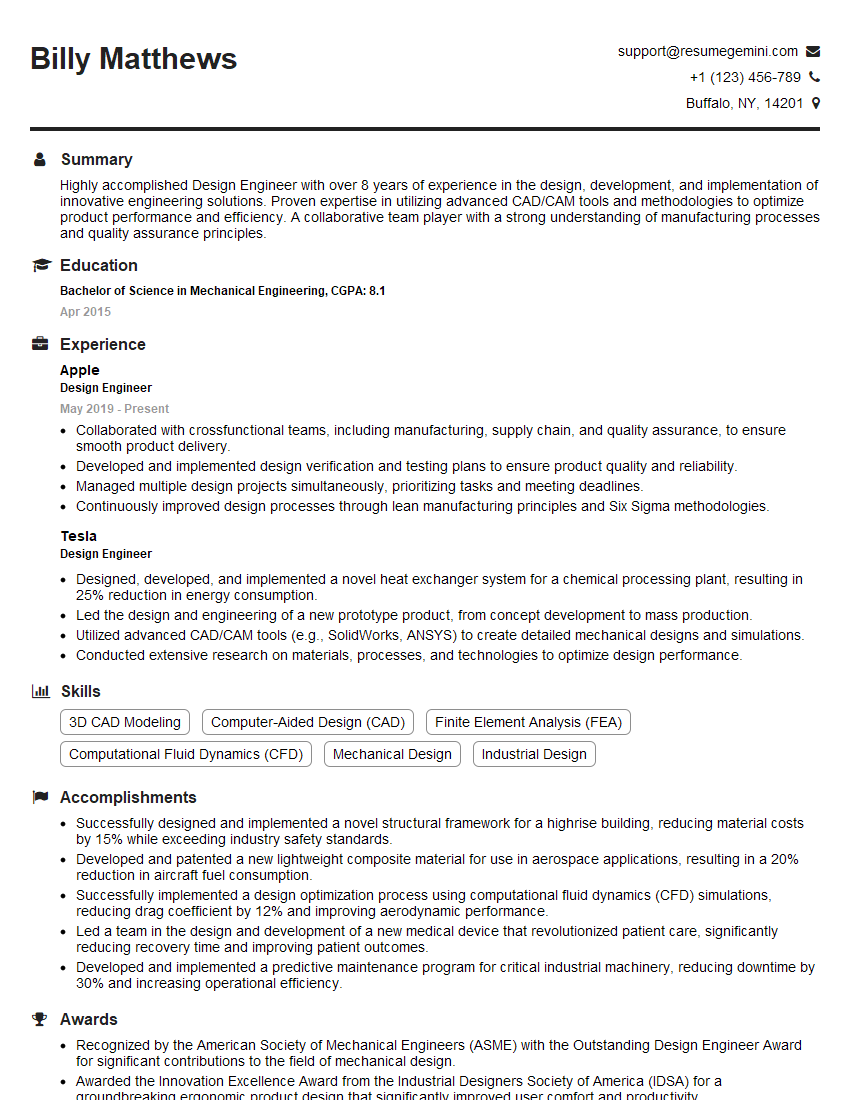
Design Engineer Resume Sample
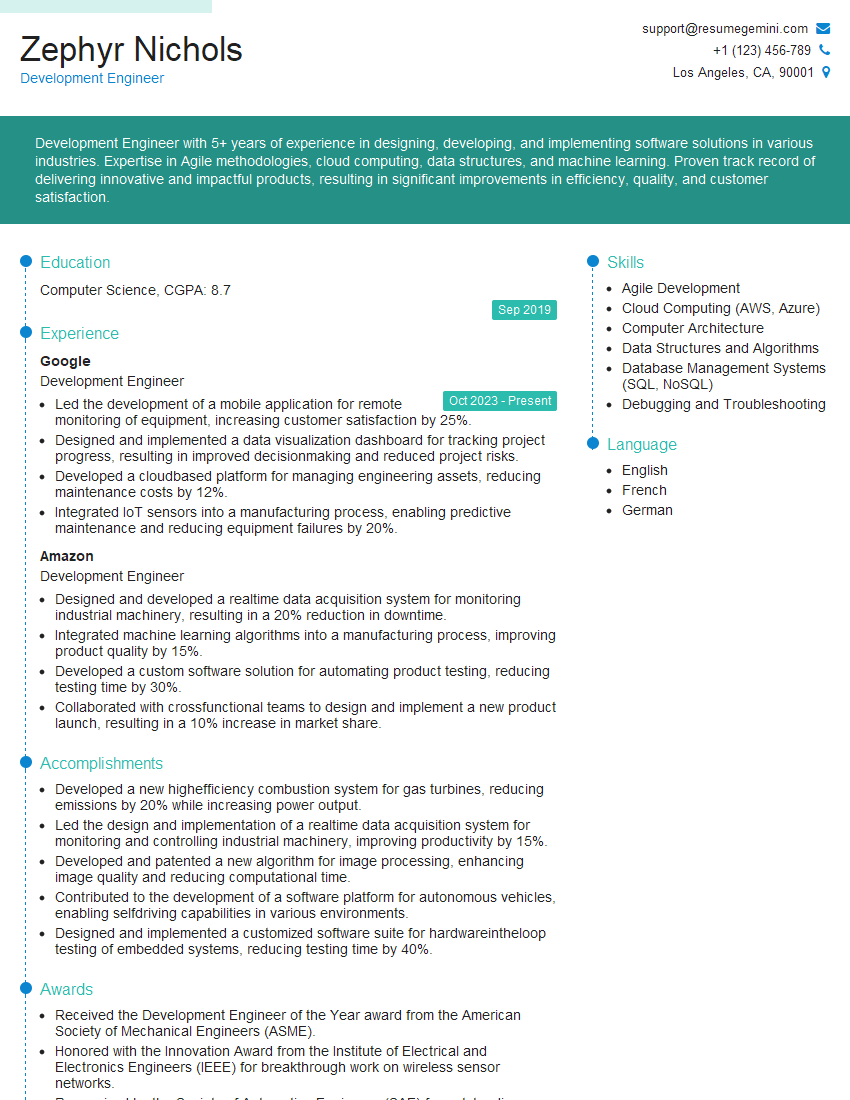
Development Engineer Resume Sample
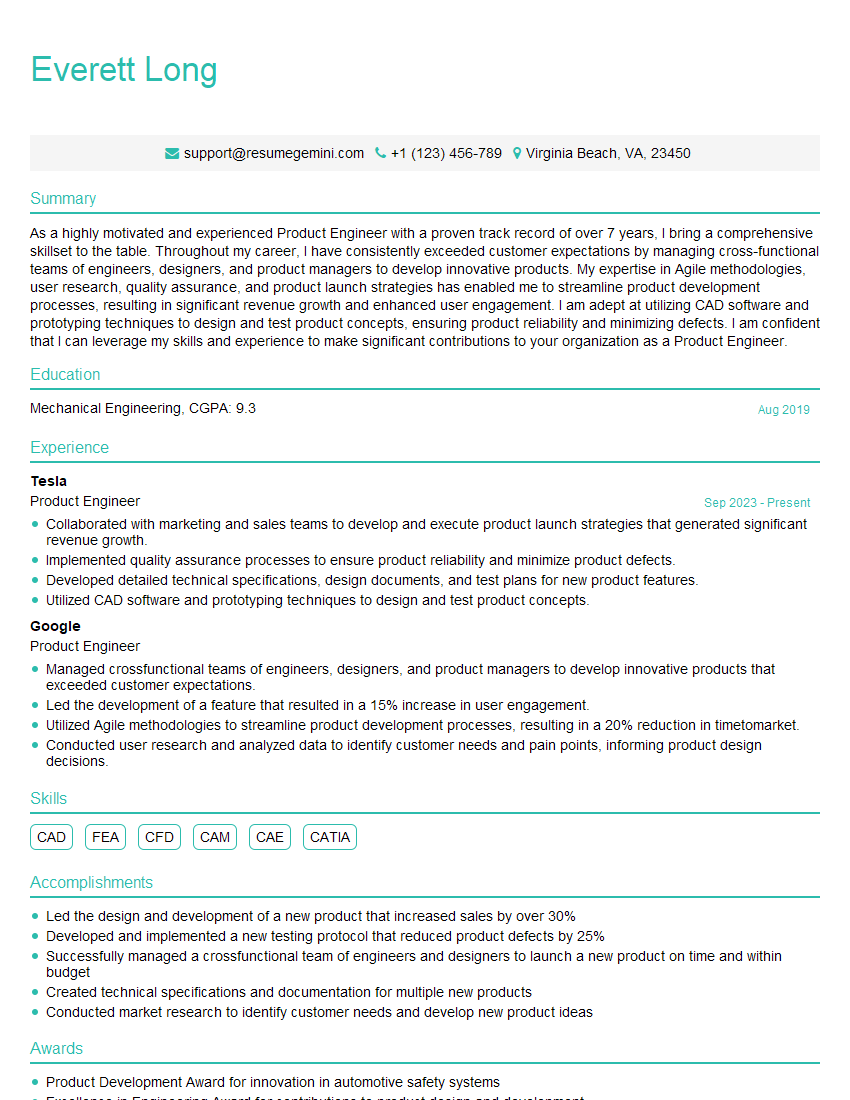
Product Engineer Resume Sample
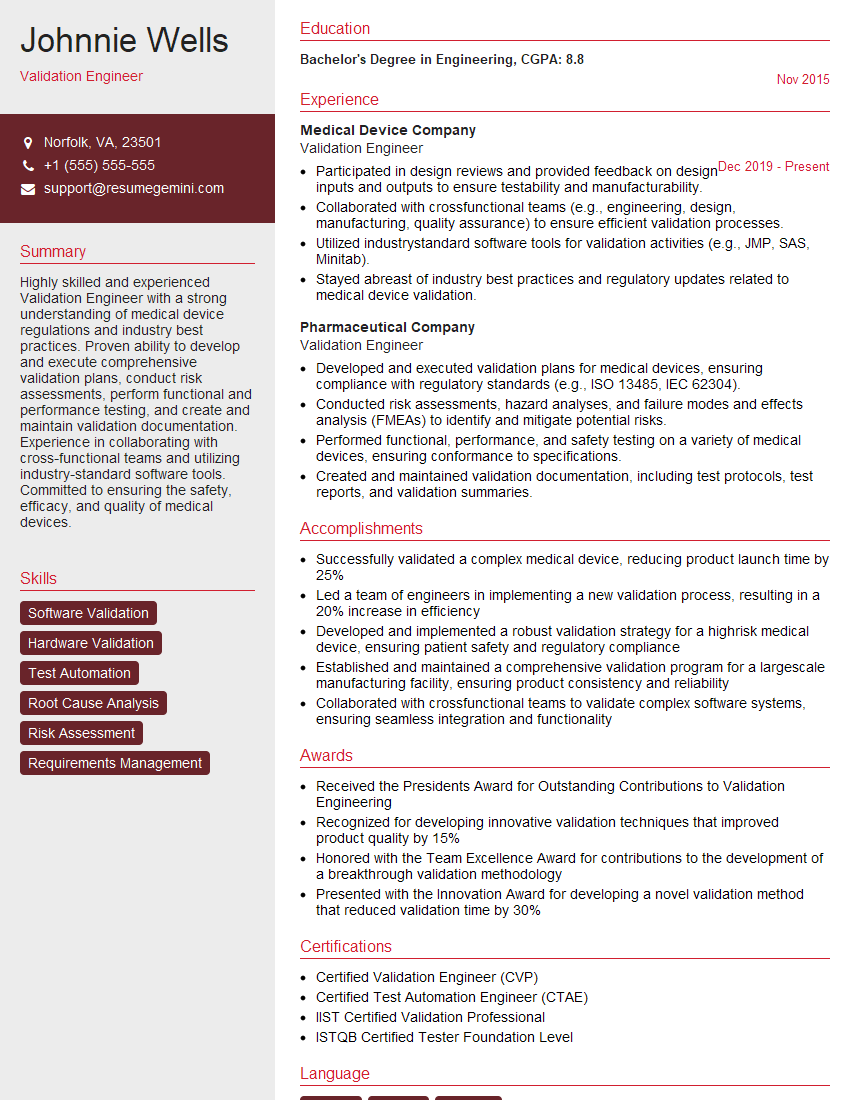
Validation Engineer Resume Sample
Robotics Engineer Resume Sample
Explore more articles
Users Rating of Our Blogs
Share Your Experience
We value your feedback! Please rate our content and share your thoughts (optional).
What Readers Say About Our Blog
Hello,
we currently offer a complimentary backlink and URL indexing test for search engine optimization professionals.
You can get complimentary indexing credits to test how link discovery works in practice.
No credit card is required and there is no recurring fee.
You can find details here:
https://wikipedia-backlinks.com/indexing/
Regards
NICE RESPONSE TO Q & A
hi
The aim of this message is regarding an unclaimed deposit of a deceased nationale that bears the same name as you. You are not relate to him as there are millions of people answering the names across around the world. But i will use my position to influence the release of the deposit to you for our mutual benefit.
Respond for full details and how to claim the deposit. This is 100% risk free. Send hello to my email id: [email protected]
Luka Chachibaialuka
Hey interviewgemini.com, just wanted to follow up on my last email.
We just launched Call the Monster, an parenting app that lets you summon friendly ‘monsters’ kids actually listen to.
We’re also running a giveaway for everyone who downloads the app. Since it’s brand new, there aren’t many users yet, which means you’ve got a much better chance of winning some great prizes.
You can check it out here: https://bit.ly/callamonsterapp
Or follow us on Instagram: https://www.instagram.com/callamonsterapp
Thanks,
Ryan
CEO – Call the Monster App
Hey interviewgemini.com, I saw your website and love your approach.
I just want this to look like spam email, but want to share something important to you. We just launched Call the Monster, a parenting app that lets you summon friendly ‘monsters’ kids actually listen to.
Parents are loving it for calming chaos before bedtime. Thought you might want to try it: https://bit.ly/callamonsterapp or just follow our fun monster lore on Instagram: https://www.instagram.com/callamonsterapp
Thanks,
Ryan
CEO – Call A Monster APP
To the interviewgemini.com Owner.
Dear interviewgemini.com Webmaster!
Hi interviewgemini.com Webmaster!
Dear interviewgemini.com Webmaster!
excellent
Hello,
We found issues with your domain’s email setup that may be sending your messages to spam or blocking them completely. InboxShield Mini shows you how to fix it in minutes — no tech skills required.
Scan your domain now for details: https://inboxshield-mini.com/
— Adam @ InboxShield Mini
Reply STOP to unsubscribe
Hi, are you owner of interviewgemini.com? What if I told you I could help you find extra time in your schedule, reconnect with leads you didn’t even realize you missed, and bring in more “I want to work with you” conversations, without increasing your ad spend or hiring a full-time employee?
All with a flexible, budget-friendly service that could easily pay for itself. Sounds good?
Would it be nice to jump on a quick 10-minute call so I can show you exactly how we make this work?
Best,
Hapei
Marketing Director
Hey, I know you’re the owner of interviewgemini.com. I’ll be quick.
Fundraising for your business is tough and time-consuming. We make it easier by guaranteeing two private investor meetings each month, for six months. No demos, no pitch events – just direct introductions to active investors matched to your startup.
If youR17;re raising, this could help you build real momentum. Want me to send more info?
Hi, I represent an SEO company that specialises in getting you AI citations and higher rankings on Google. I’d like to offer you a 100% free SEO audit for your website. Would you be interested?
Hi, I represent an SEO company that specialises in getting you AI citations and higher rankings on Google. I’d like to offer you a 100% free SEO audit for your website. Would you be interested?
good