Preparation is the key to success in any interview. In this post, we’ll explore crucial Microprocessor Programming and Interfacing interview questions and equip you with strategies to craft impactful answers. Whether you’re a beginner or a pro, these tips will elevate your preparation.
Questions Asked in Microprocessor Programming and Interfacing Interview
Q 1. Explain the von Neumann architecture.
The von Neumann architecture is a computer architecture where both instructions and data are stored in the same memory space. This is in contrast to the Harvard architecture, where instructions and data are kept in separate memory spaces. Imagine a library: in a von Neumann architecture, the library holds both books (data) and instructions on how to use the library (program instructions) all mixed together. In a Harvard architecture, there would be separate sections, one for books and one for library guides.
This unified memory access simplifies the design but creates a potential bottleneck known as the von Neumann bottleneck. Since both instructions and data share the same bus, they compete for access to the CPU, limiting the speed at which the processor can operate. The CPU can only fetch an instruction *or* data at a time. The benefit of this architecture, however, is its simplicity and cost-effectiveness, which is why it remains the most common architecture used in modern computers.
For example, when the CPU needs to execute an instruction to add two numbers, it first fetches the instruction from memory, then fetches the two numbers (data) from the same memory, before finally performing the addition. This fetch-execute cycle relies on the single memory space.
Q 2. What is the difference between a microprocessor and a microcontroller?
The key difference between a microprocessor and a microcontroller lies in their intended application and integrated peripherals. A microprocessor is a central processing unit (CPU) on a single integrated circuit (IC) designed for general-purpose computing. Think of it as the ‘brain’ of a desktop computer or a smartphone. It requires external components such as memory (RAM and ROM) and input/output (I/O) interfaces to function.
A microcontroller, also an IC containing a CPU, is specifically designed for embedded systems. In addition to the CPU, it integrates memory (usually smaller amounts of both RAM and ROM), input/output peripherals (like timers, analog-to-digital converters (ADCs), serial communication interfaces, etc.), and other functionalities directly onto the chip. It’s a complete, self-contained system on a single chip, like the brains of a washing machine or a car engine.
In essence, a microprocessor is a powerful CPU needing external support, while a microcontroller is a self-sufficient system-on-a-chip (SoC) tailored for embedded applications. A microprocessor is designed for high performance and scalability, whereas a microcontroller focuses on low power consumption, cost-effectiveness, and real-time performance.
Q 3. Describe the different addressing modes of a microprocessor.
Addressing modes define how a microprocessor accesses data in memory. They specify how the operand (the data being operated on) is located. Different addressing modes offer flexibility and efficiency in programming.
- Immediate Addressing: The operand is included directly in the instruction.
ADD R1, #5(Add the immediate value 5 to register R1). - Register Addressing: The operand is stored in a CPU register.
ADD R1, R2(Add the contents of register R2 to register R1). - Direct Addressing: The instruction contains the memory address of the operand.
LOAD R1, 1000h(Load the data at memory address 1000h into register R1). - Indirect Addressing: The instruction contains the memory address of a *pointer* which holds the address of the operand. The CPU first fetches the address from the memory location and then fetches the data.
- Register Indirect Addressing: The operand’s address is held in a register.
LOAD R1, (R2)(Load the data at the address pointed to by register R2 into register R1). - Displacement Addressing: The operand’s address is calculated by adding an offset to the contents of a register or a base address. This is commonly used for accessing array elements.
The choice of addressing mode impacts the instruction’s length and execution speed. Immediate addressing is fast but limits the size of the operand, while direct addressing simplifies access but might use more memory if addresses are large. Indirect addressing adds complexity but allows for dynamic memory access.
Q 4. Explain the concept of interrupts and their handling.
Interrupts are signals that temporarily halt the normal execution of a program to handle a high-priority event. Imagine a phone ringing during a meeting – it interrupts the meeting (main program execution) to answer the important call (interrupt service routine).
Interrupt handling involves several steps:
- Interrupt Request (IRQ): A peripheral device or an event generates an interrupt request signal.
- Interrupt Acknowledge: The CPU acknowledges the interrupt request and suspends the current program’s execution.
- Context Saving: The CPU saves the current program’s state (registers, program counter, etc.) onto a stack to resume it later.
- Interrupt Vectoring: The CPU determines which interrupt handler (a specific subroutine) to execute based on the interrupt’s source.
- Interrupt Service Routine (ISR): The ISR executes, addressing the event that triggered the interrupt (e.g., servicing a keyboard press or handling a timer event).
- Context Restoration: The CPU restores the saved program state.
- Return from Interrupt (RTI): The CPU returns control to the interrupted program.
Different interrupt priorities determine the order in which the CPU handles multiple concurrent interrupts. Interrupt controllers manage these priorities and handle interrupt requests.
Q 5. How do you handle memory management in embedded systems?
Memory management in embedded systems is crucial for efficient resource utilization and real-time operation. Due to limited resources, efficient memory handling is even more critical than in general-purpose systems. Key aspects include:
- Memory Mapping: Assigning specific memory regions to different purposes (code, data, stack, peripherals).
- Memory Allocation and Deallocation: Dynamically allocating and freeing memory during runtime using techniques like malloc() and free() (for C/C++). Careful management prevents memory leaks and fragmentation.
- Static vs. Dynamic Memory: Using static memory allocation for variables whose size is known at compile time and dynamic allocation when memory needs change during runtime.
- Memory Protection: Implementing mechanisms to prevent unauthorized memory access or modification. This is particularly important for protecting critical system code or data.
- Memory Fragmentation: Using strategies to minimize memory fragmentation, which occurs when small, unused blocks of memory become scattered throughout the memory, making it harder to allocate large blocks. Techniques like memory compaction or different memory allocation algorithms can help.
- Heap Management: The heap is the region of memory used for dynamic memory allocation. Efficient heap management is essential to avoid memory exhaustion and system instability.
Real-time operating systems (RTOSs) often provide sophisticated memory management features, including memory protection and dynamic memory allocation schemes tailored for real-time constraints.
Q 6. What are DMA controllers and how do they work?
A Direct Memory Access (DMA) controller is a hardware component that allows direct data transfer between peripherals and memory without CPU intervention. This offloads data transfers from the CPU, significantly improving system performance, particularly for high-bandwidth operations. Think of it as a dedicated delivery service that handles the transportation of large packages (data) between the warehouse (memory) and various locations (peripherals) without constantly needing the store manager (CPU) to oversee every single delivery.
A DMA controller works by:
- Requesting Access: A peripheral device requests a DMA transfer by signaling the DMA controller.
- Transfer Setup: The DMA controller receives the source and destination addresses (memory addresses and peripheral registers) and the amount of data to be transferred.
- Data Transfer: The DMA controller directly accesses memory and the peripheral, transferring data without CPU involvement. This happens in parallel with CPU operations, increasing overall system throughput.
- Completion Signal: Once the data transfer is complete, the DMA controller sends a signal (typically an interrupt) to the CPU to notify it.
DMA controllers are widely used in applications requiring high-speed data transfers, such as graphics processing, networking, and disk I/O. They significantly improve performance by reducing CPU overhead, allowing the CPU to focus on other tasks.
Q 7. Explain the different types of memory (RAM, ROM, Flash).
Microprocessors and microcontrollers utilize various types of memory, each with distinct characteristics:
- Random Access Memory (RAM): RAM is volatile memory, meaning data is lost when power is removed. It allows for fast read and write access, making it ideal for storing data that needs to be frequently accessed and modified. Think of RAM as a whiteboard – you can easily write and erase information.
- Read-Only Memory (ROM): ROM is non-volatile memory; it retains data even when power is off. It typically stores firmware and boot code. ROM is like a printed book – the information is permanent and cannot be easily changed.
- Flash Memory: Flash memory is also non-volatile but offers the ability to be rewritten (though with a limited number of write cycles). It’s used for storing programs, configurations, and data that need to persist across power cycles. Flash memory is like an erasable whiteboard that can be reused many times.
Different types of RAM exist, including SRAM (Static RAM), which is faster but more expensive, and DRAM (Dynamic RAM), which is slower but denser and cheaper. Similarly, different types of ROM and flash memory offer various features and performance characteristics. The selection of memory type depends on the specific needs of the application, such as speed, capacity, and power consumption.
Q 8. Describe the role of a cache memory.
Cache memory is a smaller, faster memory that sits between the CPU and the main memory (RAM). Its primary role is to speed up data access. Think of it like a well-organized desk – you keep frequently used items within easy reach, instead of constantly rummaging through a large filing cabinet (RAM). When the CPU needs data, it first checks the cache. If the data is present (a ‘cache hit’), it’s retrieved much faster than from RAM. If not (a ‘cache miss’), the data is fetched from RAM and then copied into the cache for future use. Different levels of cache exist (L1, L2, L3), each with varying speeds and sizes, creating a hierarchical memory system. This significantly improves overall system performance, especially in applications with repetitive data access patterns.
For example, in a game, textures and frequently accessed game data will be stored in the cache, resulting in smoother gameplay. A cache miss, however, can introduce latency and slow down processing.
Q 9. What are the different types of I/O interfaces?
I/O interfaces are the pathways through which a microprocessor communicates with external devices. They handle the transfer of data between the CPU and peripherals like keyboards, displays, sensors, and storage devices. Different interfaces offer varying speeds, data widths, and communication protocols. Common types include:
- Parallel Interfaces: Transmit multiple bits of data simultaneously over multiple wires. They’re relatively fast but require many wires, limiting their use in space-constrained applications. Example: Centronics parallel port (older printers).
- Serial Interfaces: Transmit data bit by bit over a single wire. They’re more efficient in terms of wiring but generally slower than parallel interfaces. Examples: UART (Universal Asynchronous Receiver/Transmitter) for simple communication, SPI (Serial Peripheral Interface) and I2C (Inter-Integrated Circuit) for communication with multiple peripherals.
- USB (Universal Serial Bus): A versatile and widely used serial interface known for its plug-and-play capabilities and support for various data rates.
- Ethernet: A network interface used for high-speed data communication over a network.
- PCIe (Peripheral Component Interconnect Express): A high-speed serial interface for connecting expansion cards in computers.
The choice of interface depends on factors like data rate requirements, distance to the peripheral, power consumption, and cost.
Q 10. Explain the concept of polling versus interrupt-driven I/O.
Polling and interrupt-driven I/O are two different methods for handling communication with peripherals. Imagine you’re waiting for a friend’s text message:
Polling: You constantly check your phone to see if the message has arrived. This is resource-intensive because you’re repeatedly checking, even when there’s no new message. In microprocessor terms, the CPU repeatedly checks the status of the I/O device. This is inefficient, especially when waiting for slow peripherals.
Interrupt-driven I/O: Your phone notifies you when a message arrives. This is more efficient because the CPU can work on other tasks until the message arrives. Here, the I/O device generates an interrupt signal when it’s ready to send or receive data. This signal causes the CPU to temporarily stop its current task and service the interrupt request. After handling the request, the CPU resumes its previous task. This significantly improves efficiency.
For instance, in a system reading data from a sensor, polling would continuously check the sensor’s output, consuming CPU cycles. Interrupt-driven I/O would allow the CPU to perform other operations and only respond when the sensor has new data.
Q 11. How do you debug embedded systems?
Debugging embedded systems is challenging due to their limited resources and real-time constraints. Effective debugging strategies combine hardware and software techniques:
- Hardware Debuggers: Tools like JTAG (Joint Test Action Group) and SWD (Serial Wire Debug) interfaces provide access to the system’s internal state, allowing you to step through code, set breakpoints, inspect variables, and analyze memory. They provide a crucial way to observe the system’s behavior in real-time.
- Software Debuggers (IDEs): Integrated Development Environments provide features like source code level debugging, watchpoints, and memory inspection. They often integrate seamlessly with hardware debuggers.
- Logic Analyzers and Oscilloscopes: These are hardware instruments used to capture and analyze digital signals, invaluable in tracking down timing or signal integrity problems.
- Print Statements (printf debugging): While less sophisticated, strategically placed print statements can provide valuable information about the system’s state at specific points during execution. This is useful for quick checks and preliminary investigations.
- Simulators and Emulators: Simulators mimic the target hardware in software, useful for early-stage debugging before having access to the physical hardware. Emulators provide a closer-to-hardware debugging experience.
- Systematically Isolating Issues: By carefully dividing the system into smaller modules and testing each individually, you can pinpoint the source of errors more efficiently.
A combination of these techniques provides a powerful approach to effective debugging.
Q 12. What are Real-Time Operating Systems (RTOS) and why are they used?
Real-Time Operating Systems (RTOS) are specialized operating systems designed for embedded systems and applications requiring precise timing control. Unlike general-purpose OSs (like Windows or macOS), RTOS prioritize deterministic behavior, meaning that tasks complete within predictable timeframes. This is crucial in applications where deadlines must be met, such as automotive control systems, industrial automation, and medical devices.
Key characteristics of RTOS include preemptive multitasking (allowing multiple tasks to run concurrently, switching between them based on priorities), real-time scheduling algorithms (ensuring tasks meet their deadlines), and minimal resource consumption (optimized for limited memory and processing power).
RTOS are used because they provide the necessary framework to manage multiple tasks with strict timing constraints. In a car’s engine control unit, for instance, an RTOS ensures that tasks like fuel injection and ignition timing are executed with precise timing to maintain smooth and efficient operation.
Q 13. Explain the concept of context switching in an RTOS.
Context switching is the mechanism by which an RTOS switches execution from one task to another. Each task has its own context, which includes the values of registers, program counter, stack pointer, and other CPU state information. When a context switch occurs, the RTOS saves the context of the currently running task and loads the context of the next task to be executed. This allows multiple tasks to appear to run simultaneously, although only one task runs at any given moment on a single CPU core.
For example, imagine a system with two tasks: one controlling a motor and another reading sensor data. The RTOS scheduler might switch between these tasks periodically, giving each a chance to execute. A context switch preserves the state of each task, ensuring that when it resumes execution, it picks up precisely where it left off. Efficient context switching is crucial for achieving high responsiveness and low latency in RTOS-based systems.
Q 14. What are semaphores and mutexes?
Semaphores and mutexes are synchronization primitives used to control access to shared resources in a multitasking environment, preventing race conditions (where multiple tasks try to modify the same resource simultaneously, leading to unpredictable results). Imagine multiple people trying to use the same restroom – you need a mechanism to avoid collisions!
Semaphores: Act as counters, allowing multiple tasks to access a shared resource up to a certain count. A semaphore is initialized with a value representing the number of available resources. When a task needs access, it attempts to decrement the semaphore. If successful (the count is greater than zero), the task proceeds. If the count is zero, the task blocks until the count becomes positive. When a task finishes using the resource, it increments the semaphore.
Mutexes (Mutual Exclusion): Are binary semaphores (their count can only be 0 or 1) and are used to guarantee exclusive access to a shared resource. Only one task can hold the mutex at any given time. When a task needs access to the resource, it tries to acquire the mutex. If successful, it proceeds. Other tasks attempting to acquire the mutex will block until the first task releases the mutex.
In a system where multiple tasks need to access a printer, a mutex would ensure that only one task prints at a time, preventing data corruption. Semaphores would be useful in a situation with multiple available printers.
Q 15. How do you handle concurrent processes in an embedded system?
Handling concurrent processes in embedded systems requires careful consideration of resource management and timing constraints. Real-time operating systems (RTOS) are frequently employed to achieve this. An RTOS provides a scheduler that allows multiple tasks (processes) to run seemingly concurrently, although on a single processor core this is actually achieved through rapid switching between tasks.
One common approach is using a priority-based preemptive scheduler. Higher-priority tasks preempt lower-priority tasks when they become ready, ensuring timely execution of critical operations. Synchronization mechanisms, such as mutexes (mutual exclusion semaphores) and semaphores, prevent race conditions and ensure data consistency when multiple tasks access shared resources. For instance, if two tasks need to update the same sensor data, a mutex would ensure that only one task can access and modify the data at a time, preventing data corruption.
Consider a system controlling a robotic arm. One task might be responsible for reading sensor data (e.g., position, force), another for controlling motor speeds, and a third for communication. An RTOS would schedule these tasks based on their priorities, ensuring that the motor control task receives its data in a timely manner to prevent jerky movements. Mutexes would safeguard shared memory regions to prevent data conflicts.
Career Expert Tips:
- Ace those interviews! Prepare effectively by reviewing the Top 50 Most Common Interview Questions on ResumeGemini.
- Navigate your job search with confidence! Explore a wide range of Career Tips on ResumeGemini. Learn about common challenges and recommendations to overcome them.
- Craft the perfect resume! Master the Art of Resume Writing with ResumeGemini’s guide. Showcase your unique qualifications and achievements effectively.
- Don’t miss out on holiday savings! Build your dream resume with ResumeGemini’s ATS optimized templates.
Q 16. Describe your experience with different programming languages for embedded systems (C, C++, Assembly).
My embedded systems programming experience spans several languages, each with its strengths and weaknesses. C is my primary language due to its efficiency, fine-grained control over hardware, and extensive library support for embedded systems. I’ve extensively used it for resource-constrained applications requiring precise control, such as real-time sensor data acquisition and actuator control.
C++ offers object-oriented programming capabilities, which can enhance code organization and maintainability for larger projects. However, its overhead can be a concern in resource-limited embedded environments. I’ve used it in projects requiring complex software architectures, where the benefits of object-oriented design outweighed the performance trade-offs.
Assembly language is essential for deeply embedded systems requiring extremely fine-grained control over the hardware. I’ve used it for low-level device initialization, critical timing routines, and optimization of performance-critical sections of code. For example, I utilized assembly to implement a custom interrupt handler to minimize latency in a high-speed data acquisition system.
// Example C code for reading a digital input pin: int digitalRead(int pin){ return (GPIO_PORTF_DATA_R >> pin) & 0x01; }Q 17. Explain your experience with different debugging tools.
My debugging arsenal includes a range of tools tailored to different situations. JTAG debuggers (e.g., those from Segger or Lauterbach) provide low-level access to the target microcontroller, allowing single-stepping, breakpoint setting, and register inspection. They’re invaluable for tracking down complex hardware/software interactions.
Integrated Development Environments (IDEs) like Keil MDK or IAR Embedded Workbench provide debugging features like stepping through code, setting breakpoints, and inspecting variables. These are convenient for everyday debugging tasks.
Logic analyzers provide a powerful method for observing signal transitions on multiple lines simultaneously. This is particularly useful for analyzing communication protocols or identifying timing issues. For instance, I used a logic analyzer to pinpoint a timing glitch in an SPI communication that was causing data corruption.
Oscilloscope combined with a logic analyzer aids to identify timing related problems, especially when dealing with analog components and their digital interactions. This combination was instrumental in resolving noise issues that were affecting sensor readings in a previous project.
Q 18. How do you design a low-power embedded system?
Designing a low-power embedded system requires a multi-faceted approach starting from selecting the hardware and extending to software optimization. First, select a microcontroller with low power consumption characteristics (consider the processor’s sleep modes and peripherals’ power consumption). Then implement power-saving techniques in the software such as putting the microcontroller to sleep when it’s not performing critical tasks. Utilize low-power peripherals and optimize their usage. For example, configure peripherals to only operate when needed and then power them down.
Employ power-saving modes in the microcontroller: Microcontrollers often have sleep modes (e.g., idle, sleep, deep sleep) that reduce power consumption. Select the appropriate mode based on the application’s needs. For instance, in a battery-powered sensor node, using deep sleep between data transmissions significantly extends battery life.
Optimize code for efficiency. Reduce unnecessary computations and memory accesses. This is often achieved through careful algorithm selection and coding style. I have used profiling tools to identify performance bottlenecks and optimize specific code sections to reduce the power consumption associated with CPU activity.
Clock gating: Disable clocks to inactive peripherals to reduce power consumption. For example, if a specific peripheral (like an ADC) is not actively being used, disable its clock until needed. This significantly decreases the overall power requirements.
Q 19. Explain your experience with different communication protocols (SPI, I2C, UART).
I’m proficient in several communication protocols commonly used in embedded systems. SPI (Serial Peripheral Interface) is a full-duplex, synchronous communication protocol often used for high-speed data transfer with peripherals like sensors and memory chips. I’ve used it in numerous projects, including interfacing with high-resolution ADCs and flash memory. Its simplicity and speed are beneficial when interacting with peripherals that require fast data transfer rates.
I2C (Inter-Integrated Circuit) is a multi-master, synchronous communication protocol commonly used for low-speed data transfer with multiple devices on a single bus. Its ability to address multiple devices makes it suitable for applications with many sensors or actuators, such as an environmental monitoring system. I have implemented I2C communication for interfacing with several sensors and actuators and have addressed potential bus arbitration conflicts efficiently.
UART (Universal Asynchronous Receiver/Transmitter) is an asynchronous communication protocol commonly used for serial communication over longer distances, like connecting to a PC or another microcontroller. Its simplicity and wide availability make it a popular choice for debugging and communication with external devices. I’ve leveraged UART for debugging and data logging in many embedded projects.
Q 20. Describe your experience with different peripheral devices (ADC, DAC, timers).
My experience includes extensive work with various peripheral devices. Analog-to-Digital Converters (ADCs) are crucial for measuring analog signals from sensors. I’ve used ADCs extensively to interface with sensors such as temperature sensors, potentiometers, and accelerometers. I’ve worked with various ADC resolutions and sampling rates, choosing the appropriate settings based on the application’s accuracy and speed requirements. Understanding noise and signal conditioning is critical for accurate readings.
Digital-to-Analog Converters (DACs) are needed for generating analog output signals. These are used for applications needing to control analog actuators, such as motors or LEDs. The choice of DAC resolution and output range depend on the application requirements. I’ve used DACs for tasks like generating PWM signals for motor control.
Timers are vital for tasks like generating periodic signals, creating delays, and implementing real-time control systems. I have utilized timers for PWM generation, creating delays, and managing timing-critical processes. In one project, I used timers to implement a state machine for controlling multiple sensors and actuators with precise timing.
Q 21. How do you handle interrupts in a real-time application?
Handling interrupts in real-time applications requires a deep understanding of interrupt priorities, context switching, and latency minimization. Each interrupt is assigned a priority, and the interrupt controller prioritizes interrupts based on their assigned priority. Higher-priority interrupts can preempt lower-priority interrupts. Efficient interrupt service routines (ISRs) are essential; they should be short, concise, and avoid blocking operations. A key principle is to perform only essential tasks within the ISR. Lengthy operations are deferred to other tasks via signaling mechanisms (e.g., flags, semaphores).
For instance, in a system monitoring several sensors, a high-priority interrupt might be used to handle critical sensor data acquisition. The ISR would read the sensor value and store it in a buffer. A lower-priority task would then process the data at a later time, allowing the system to respond quickly to time-critical sensor readings. Nested interrupts also need careful management; handling nested interrupts involves disabling interrupts during critical sections to prevent unexpected behavior or data corruption. The use of interrupt masking and proper disabling and enabling is paramount to avoid conflict.
Consider a system controlling a motor based on sensor feedback. A high-priority interrupt triggered by an emergency stop button would immediately stop the motor, regardless of other tasks. This requires a carefully designed interrupt system with appropriate priorities and efficient ISRs to ensure rapid response to critical events.
Q 22. What is the importance of timing in embedded systems?
Timing is absolutely critical in embedded systems because they often interact with real-world events in real-time. Think of an anti-lock braking system (ABS) in a car – it needs to respond to wheel speed changes within milliseconds to prevent skidding. Even a slight delay could be catastrophic. This precision requires careful management of system clocks, interrupts, and scheduling algorithms.
Imagine a simple embedded system controlling a traffic light. Precise timing is needed to ensure that the lights change at the correct intervals, maintaining traffic flow and safety. Poor timing can lead to collisions or prolonged traffic jams. This highlights the need for precise control over hardware timers and interrupts to handle events at their required frequencies.
- Hardware Timers: These provide precise timing signals that the microcontroller can use to trigger actions or measure time intervals.
- Real-Time Operating Systems (RTOS): An RTOS is often used to manage tasks and their execution timing, guaranteeing the timely execution of critical functions.
- Interrupt Service Routines (ISRs): These are special routines that respond immediately to external events such as button presses or sensor readings, ensuring prompt reaction. The timing of ISRs is crucial to prevent data loss or system instability.
In summary, precise timing ensures the responsiveness, reliability, and safety of embedded systems, especially those interacting directly with the physical world.
Q 23. Explain your understanding of memory mapped I/O.
Memory-mapped I/O (MMIO) is a technique where peripheral devices, such as sensors, actuators, and displays, are accessed through memory addresses instead of separate I/O ports. This simplifies hardware interaction as the CPU can use the same instructions (like LOAD and STORE) to access both memory and peripherals.
Imagine a simplified scenario where you want to control an LED using MMIO. Let’s say the LED is mapped to memory address 0x1000. To turn the LED on, you would simply write a value (e.g., 1) to that memory address. To turn it off, you would write a different value (e.g., 0). This direct memory access offers flexibility and efficiency.
// Example C code (pseudocode):
unsigned int *led_address = (unsigned int *)0x1000;

// Turn LED ON
*led_address = 1;

// Turn LED OFF
*led_address = 0;
The advantages include a streamlined programming model and efficient resource usage. However, MMIO requires careful management of memory space to avoid conflicts between peripherals and program memory. Additionally, the memory map is specific to the hardware architecture and must be documented precisely.
Q 24. What are the challenges of working with embedded systems?
Developing embedded systems presents unique challenges compared to software development for general-purpose computers. Resource constraints (limited memory, processing power) are common. Real-time constraints demand precise timing, and debugging can be complex due to limited debugging tools and the inherent interaction with physical hardware.
- Resource Constraints: Embedded systems frequently operate with limited memory and processing power. Careful memory management and efficient algorithms are crucial to meet performance requirements.
- Real-Time Requirements: Many embedded systems must respond to events within strict time limits. Missing these deadlines can lead to malfunction or system failure. RTOS and careful timing design are essential.
- Debugging Complexity: Debugging embedded systems can be challenging due to limited debugging tools and the need to interact directly with the hardware. JTAG debuggers and logic analyzers are commonly used.
- Hardware Dependence: Embedded systems are intimately tied to the specific hardware they run on. Changes in hardware require code adaptation, increasing development time and complexity.
- Power Consumption: Power efficiency is often paramount in embedded systems, particularly in battery-powered devices. Power optimization techniques are crucial for extending battery life.
Successfully navigating these challenges requires a strong understanding of both software and hardware principles, experience with embedded development tools, and robust testing methodologies.
Q 25. How do you ensure code reliability and robustness in embedded systems?
Ensuring code reliability and robustness in embedded systems is paramount due to the often safety-critical nature of these applications. Several strategies contribute to achieving this goal.
- Robust coding practices: Following coding standards (e.g., MISRA C for automotive applications), using defensive programming techniques (e.g., input validation, error handling), and avoiding undefined behavior are crucial.
- Static and dynamic analysis: Employing static analysis tools to detect potential errors in the code before runtime and using dynamic analysis (e.g., runtime tracing and debugging) to identify errors during execution enhances reliability.
- Code reviews: Peer reviews can uncover errors and inconsistencies missed during individual development. This collaborative approach helps improve code quality and reduces the risk of bugs.
- Testing: Rigorous testing is essential, encompassing unit testing, integration testing, and system testing. This includes functional testing and non-functional testing (e.g., stress tests, performance tests).
- Modular design: Dividing the code into independent modules promotes maintainability and testability, simplifying debugging and code modification.
For example, in an industrial control system, robust code ensures that a malfunction doesn’t cause a safety hazard or production downtime. Using a layered architecture, with error handling at each layer, significantly improves system resilience.
Q 26. Explain your approach to testing and verification in embedded systems development.
Testing and verification in embedded systems are crucial for reliability. My approach involves a multi-layered strategy combining various techniques.
- Unit Testing: Each module or function is tested independently to ensure it performs its intended task correctly. This helps isolate bugs early in development.
- Integration Testing: Modules are combined and tested together to verify interactions and data flow between them.
- System Testing: The entire system is tested as a whole to ensure it meets its overall requirements. This often involves testing with real or simulated hardware.
- Hardware-in-the-loop (HIL) Simulation: In safety-critical applications, simulating the physical environment in a controlled laboratory setting helps to comprehensively test system behavior under various conditions without risk to physical equipment or personnel.
- Static Analysis: Using tools to scan code for potential issues like buffer overflows, memory leaks, and other vulnerabilities before execution greatly reduces the chance of runtime problems.
- Dynamic Analysis: During runtime, employing debuggers, logic analyzers, and oscilloscopes provide real-time data to help track down the source of errors.
For instance, when developing a flight control system, HIL simulation allows testing the embedded system’s responsiveness to various flight scenarios without endangering a real aircraft. This systematic approach significantly increases confidence in the system’s reliability and safety.
Q 27. Describe your experience with version control systems (Git).
I have extensive experience using Git for version control in collaborative embedded systems projects. My proficiency includes branching strategies (like Gitflow), merging, conflict resolution, and using pull requests for code review. I am comfortable working with remote repositories (e.g., GitHub, GitLab) and understand the importance of maintaining a clean and well-documented commit history.
In a recent project, we used Gitflow to manage the development lifecycle. The develop branch served as our integration branch, while feature branches were created for specific functionalities. This allowed parallel development and facilitated easy merging without disrupting the main codebase. Pull requests were used for code review, ensuring that all code changes were thoroughly reviewed before being merged into the main branch.
My understanding extends to using Git for managing different versions of the software, reverting to previous versions if necessary, and leveraging Git’s capabilities for tracking changes effectively, making it a vital tool for managing complex embedded projects.
Q 28. How would you approach designing a system for data acquisition?
Designing a data acquisition system involves several key considerations. The design would heavily depend on the specific application and the type of data being acquired (analog signals, digital data, etc.).
My approach would include:
- Sensor Selection: Choosing the appropriate sensors to accurately measure the required data parameters is the first step. This choice depends on factors like accuracy, resolution, and environmental conditions.
- Signal Conditioning: Analog signals often need to be conditioned (amplified, filtered, etc.) to make them compatible with the microcontroller’s analog-to-digital converter (ADC). This step is crucial for achieving optimal accuracy.
- Analog-to-Digital Conversion (ADC): Analog signals are converted into digital format for processing by the microcontroller. The choice of ADC resolution and sampling rate will impact accuracy and data rate.
- Microcontroller Selection: Selecting a microcontroller with sufficient processing power, memory, and peripherals (ADC, communication interfaces) to handle the data acquisition task is important.
- Data Storage and Transmission: Deciding how data will be stored (e.g., on-board memory, external storage) and transmitted (e.g., wired communication, wireless communication) is crucial based on the requirements. The choice of communication protocol will depend on factors like data rate, range, and power consumption.
- Software Design: The software would manage data acquisition, processing, storage, and transmission. This involves scheduling tasks to ensure timely data collection and managing data integrity.
For example, in a weather station, sensors would measure temperature, humidity, and pressure. These signals would need conditioning before conversion by the ADC. The processed data would then be stored in memory and transmitted wirelessly to a central monitoring system. The software would handle data acquisition, error checking, and communication protocols.
Key Topics to Learn for Microprocessor Programming and Interfacing Interview
- Microprocessor Architecture: Understanding CPU components (ALU, registers, control unit), instruction sets, addressing modes, and pipeline concepts. Practical application: Analyzing the efficiency of different instruction sequences.
- Assembly Language Programming: Mastering assembly language syntax, writing and debugging assembly programs, understanding memory management and stack operations. Practical application: Optimizing code for specific microprocessors to improve performance.
- Interfacing with Peripherals: Learning about various input/output (I/O) techniques (memory-mapped I/O, programmed I/O, interrupt-driven I/O), handling interrupts, and interfacing with common peripherals (timers, ADC, DAC, serial communication). Practical application: Designing and implementing control systems using microcontrollers.
- Memory Organization: Understanding different types of memory (RAM, ROM, Flash), memory addressing schemes, and memory management techniques. Practical application: Optimizing memory usage in embedded systems.
- Real-Time Operating Systems (RTOS): Familiarizing yourself with the concepts of multitasking, scheduling algorithms, task synchronization, and interrupt handling within an RTOS environment. Practical application: Developing embedded systems that require precise timing and concurrent processing.
- Debugging and Troubleshooting: Developing strong debugging skills using hardware and software tools (e.g., logic analyzers, debuggers, simulators). Practical application: Efficiently identifying and resolving issues in embedded systems.
- Data Structures and Algorithms: Applying relevant data structures (arrays, linked lists, stacks, queues) and algorithms to optimize code efficiency and performance in embedded systems. Practical application: Implementing efficient data processing within resource-constrained environments.
Next Steps
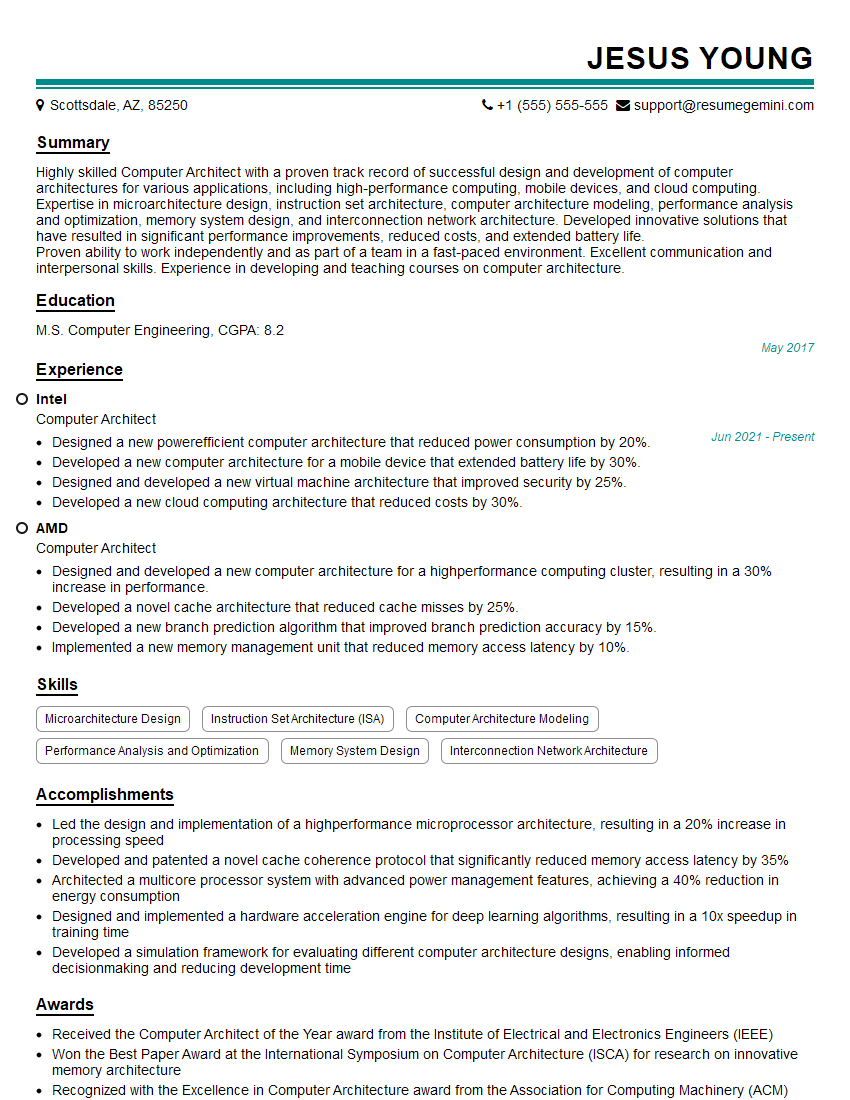
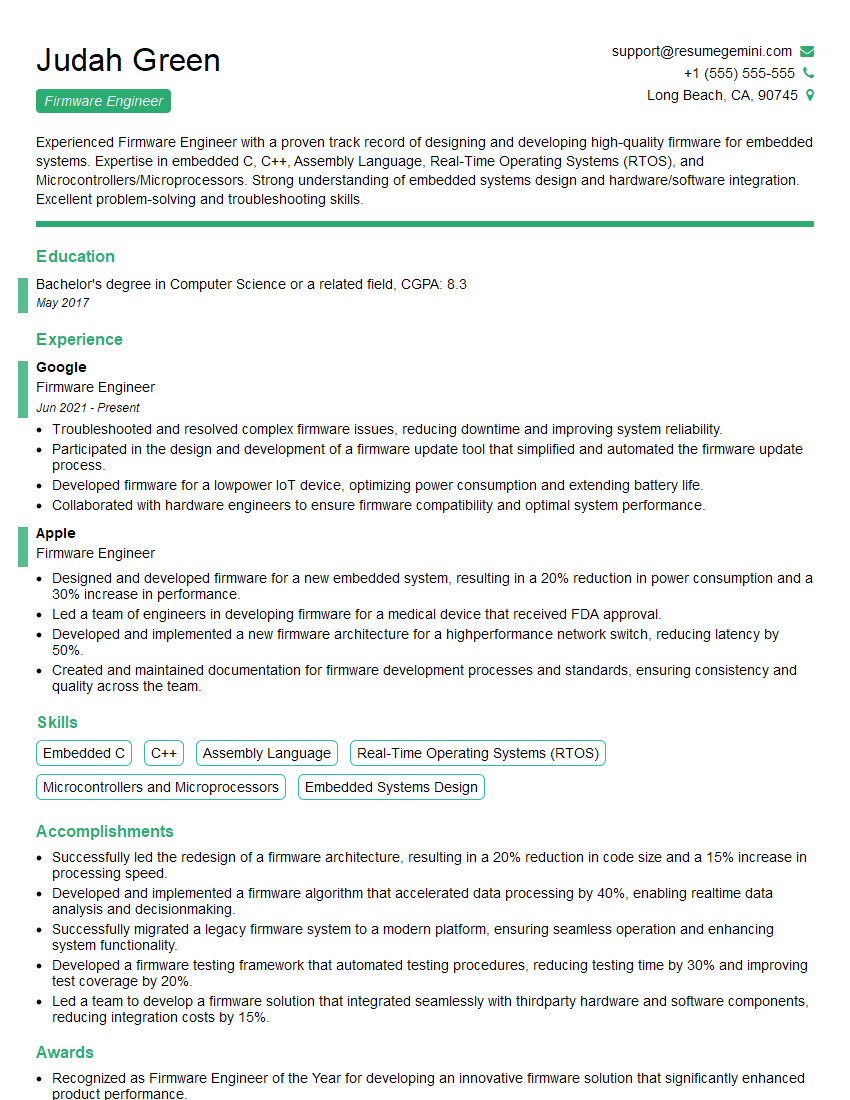
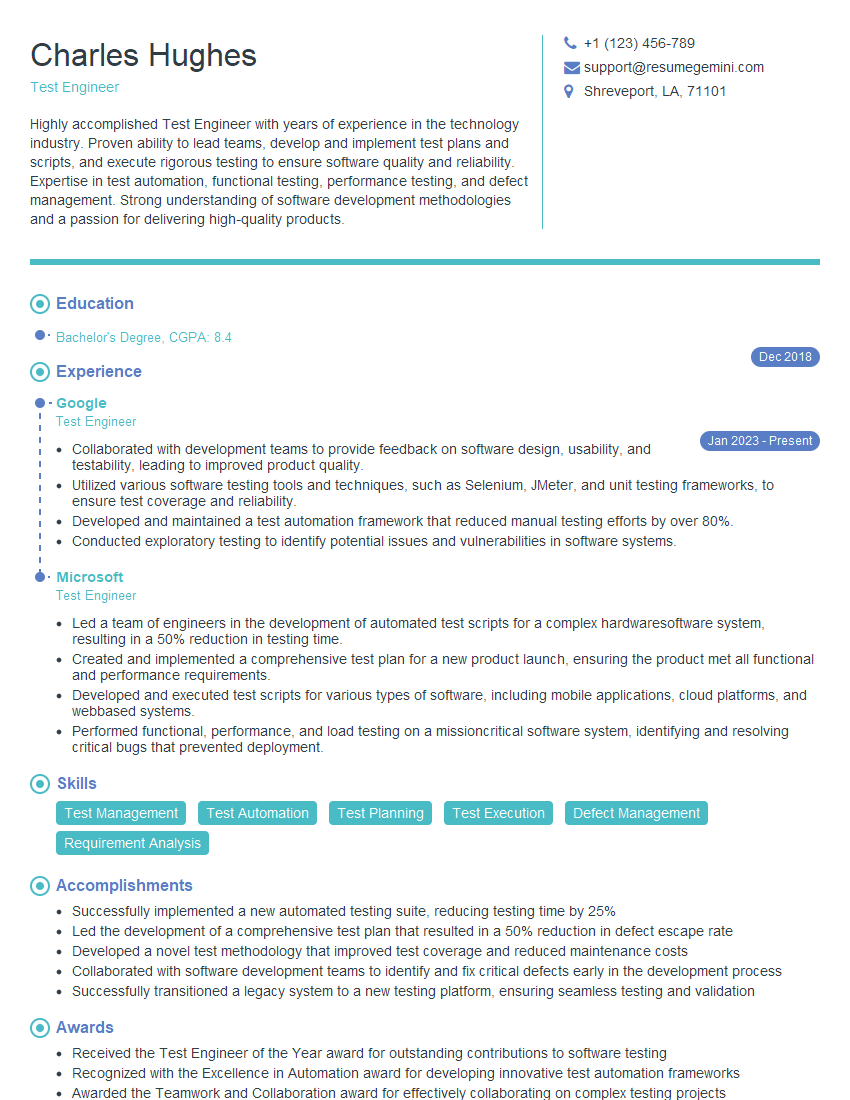
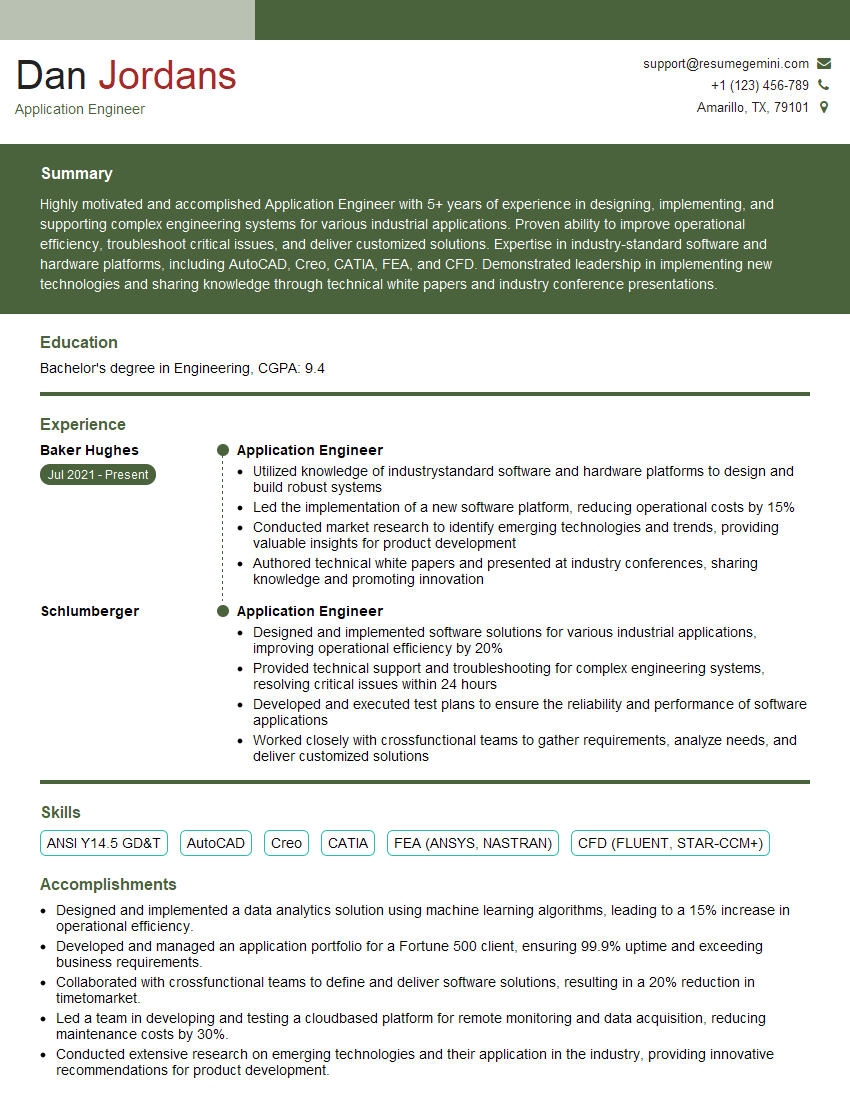
Mastering Microprocessor Programming and Interfacing opens doors to exciting careers in embedded systems, robotics, automotive engineering, and more. These skills are highly sought after, and demonstrating proficiency will significantly boost your job prospects. To make your application stand out, it’s crucial to have an ATS-friendly resume that highlights your technical abilities effectively. We strongly recommend using ResumeGemini to build a professional and impactful resume. ResumeGemini provides a user-friendly platform and offers examples of resumes tailored to Microprocessor Programming and Interfacing, ensuring your qualifications shine.



Explore more articles
Users Rating of Our Blogs
Share Your Experience
We value your feedback! Please rate our content and share your thoughts (optional).
What Readers Say About Our Blog
Attention music lovers!
Wow, All the best Sax Summer music !!!
Spotify: https://open.spotify.com/artist/6ShcdIT7rPVVaFEpgZQbUk
Apple Music: https://music.apple.com/fr/artist/jimmy-sax-black/1530501936
YouTube: https://music.youtube.com/browse/VLOLAK5uy_noClmC7abM6YpZsnySxRqt3LoalPf88No
Other Platforms and Free Downloads : https://fanlink.tv/jimmysaxblack
on google : https://www.google.com/search?q=22+AND+22+AND+22
on ChatGPT : https://chat.openai.com?q=who20jlJimmy20Black20Sax20Producer
Get back into the groove with Jimmy sax Black
Best regards,
Jimmy sax Black
www.jimmysaxblack.com
Hi I am a troller at The aquatic interview center and I suddenly went so fast in Roblox and it was gone when I reset.
Hi,
Business owners spend hours every week worrying about their website—or avoiding it because it feels overwhelming.
We’d like to take that off your plate:
$69/month. Everything handled.
Our team will:
Design a custom website—or completely overhaul your current one
Take care of hosting as an option
Handle edits and improvements—up to 60 minutes of work included every month
No setup fees, no annual commitments. Just a site that makes a strong first impression.
Find out if it’s right for you:
https://websolutionsgenius.com/awardwinningwebsites
Hello,
we currently offer a complimentary backlink and URL indexing test for search engine optimization professionals.
You can get complimentary indexing credits to test how link discovery works in practice.
No credit card is required and there is no recurring fee.
You can find details here:
https://wikipedia-backlinks.com/indexing/
Regards
NICE RESPONSE TO Q & A
hi
The aim of this message is regarding an unclaimed deposit of a deceased nationale that bears the same name as you. You are not relate to him as there are millions of people answering the names across around the world. But i will use my position to influence the release of the deposit to you for our mutual benefit.
Respond for full details and how to claim the deposit. This is 100% risk free. Send hello to my email id: lukachachibaialuka@gmail.com
Luka Chachibaialuka
Hey interviewgemini.com, just wanted to follow up on my last email.
We just launched Call the Monster, an parenting app that lets you summon friendly ‘monsters’ kids actually listen to.
We’re also running a giveaway for everyone who downloads the app. Since it’s brand new, there aren’t many users yet, which means you’ve got a much better chance of winning some great prizes.
You can check it out here: https://bit.ly/callamonsterapp
Or follow us on Instagram: https://www.instagram.com/callamonsterapp
Thanks,
Ryan
CEO – Call the Monster App
Hey interviewgemini.com, I saw your website and love your approach.
I just want this to look like spam email, but want to share something important to you. We just launched Call the Monster, a parenting app that lets you summon friendly ‘monsters’ kids actually listen to.
Parents are loving it for calming chaos before bedtime. Thought you might want to try it: https://bit.ly/callamonsterapp or just follow our fun monster lore on Instagram: https://www.instagram.com/callamonsterapp
Thanks,
Ryan
CEO – Call A Monster APP
To the interviewgemini.com Owner.
Dear interviewgemini.com Webmaster!
Hi interviewgemini.com Webmaster!
Dear interviewgemini.com Webmaster!
excellent
Hello,
We found issues with your domain’s email setup that may be sending your messages to spam or blocking them completely. InboxShield Mini shows you how to fix it in minutes — no tech skills required.
Scan your domain now for details: https://inboxshield-mini.com/
— Adam @ InboxShield Mini
support@inboxshield-mini.com
Reply STOP to unsubscribe
Hi, are you owner of interviewgemini.com? What if I told you I could help you find extra time in your schedule, reconnect with leads you didn’t even realize you missed, and bring in more “I want to work with you” conversations, without increasing your ad spend or hiring a full-time employee?
All with a flexible, budget-friendly service that could easily pay for itself. Sounds good?
Would it be nice to jump on a quick 10-minute call so I can show you exactly how we make this work?
Best,
Hapei
Marketing Director
Hey, I know you’re the owner of interviewgemini.com. I’ll be quick.
Fundraising for your business is tough and time-consuming. We make it easier by guaranteeing two private investor meetings each month, for six months. No demos, no pitch events – just direct introductions to active investors matched to your startup.
If youR17;re raising, this could help you build real momentum. Want me to send more info?
Hi, I represent an SEO company that specialises in getting you AI citations and higher rankings on Google. I’d like to offer you a 100% free SEO audit for your website. Would you be interested?
Hi, I represent an SEO company that specialises in getting you AI citations and higher rankings on Google. I’d like to offer you a 100% free SEO audit for your website. Would you be interested?