Interviews are more than just a Q&A session—they’re a chance to prove your worth. This blog dives into essential Navigation and Celestial Techniques interview questions and expert tips to help you align your answers with what hiring managers are looking for. Start preparing to shine!
Questions Asked in Navigation and Celestial Techniques Interview
Q 1. Explain the concept of celestial navigation.
Celestial navigation, also known as astronavigation, is the technique of determining one’s position on Earth using the positions of celestial bodies—primarily stars, the sun, and the moon. It’s like using the stars as a giant, natural GPS. Instead of relying on satellites, you use the precise angles of these bodies above the horizon, along with the time, to calculate your latitude and longitude.
Imagine yourself on a vast ocean, far from land. You have no radio contact and your GPS is malfunctioning. Celestial navigation provides a backup method, using a sextant to measure the angle of a celestial body above the horizon and a chronometer to record the precise time. Using nautical almanacs and sight reduction techniques, you can then calculate your position.
Q 2. Describe different types of navigation systems.
Navigation systems can be broadly categorized into several types:
- Celestial Navigation: As discussed earlier, this relies on observations of celestial bodies.
- Terrestrial Navigation: This uses landmarks, charts, and compass bearings for navigation, often used in coastal areas or for short-range travel.
- GPS (Global Positioning System): This is a satellite-based system using radio signals to determine precise location. It’s the most common method today.
- Inertial Navigation System (INS): An INS uses internal sensors (accelerometers and gyroscopes) to track movement and calculate position without external references. It’s highly accurate over short periods but drifts over time.
- Dead Reckoning: This involves estimating position based on a known starting point, speed, course, and time elapsed. It’s highly prone to error and used as a supplementary method.
- Electronic Chart Display and Information System (ECDIS): This integrates electronic charts with other navigation data, providing a comprehensive navigational picture.
Q 3. What are the limitations of GPS?
While GPS is incredibly accurate and convenient, it does have limitations:
- Signal Blockage/Interference: Buildings, dense foliage, and atmospheric conditions can block or weaken GPS signals, leading to inaccurate or unavailable readings. This is a major concern in urban canyons or heavily forested areas.
- Satellite Availability: The accuracy of GPS depends on the availability of satellites. Signal degradation can occur in areas with limited satellite visibility, such as deep canyons or during periods of high solar activity.
- Atmospheric Delays: The signals travel through the atmosphere, causing slight delays that affect accuracy.
- Multipath Errors: Signals can bounce off surfaces before reaching the receiver, causing errors in position calculations.
- Intentional or Unintentional Interference (Jamming/Spoofing): GPS signals can be intentionally jammed or spoofed, making them unreliable or providing false location data. This is a significant security concern.
Q 4. How do you correct for atmospheric refraction in celestial navigation?
Atmospheric refraction bends the light from celestial bodies as it passes through the Earth’s atmosphere. This causes the observed altitude of a celestial body to be slightly higher than its true altitude. To correct for this, we use refraction tables or correction formulas found in nautical almanacs. These tables provide correction values based on the observed altitude and atmospheric conditions.
The correction is applied by subtracting the refraction correction from the observed altitude of the celestial body. The resulting value is the corrected altitude, which is then used for position calculations in celestial navigation.
For example, if the observed altitude of a star is 30 degrees and the refraction correction for that altitude is 1 minute of arc (1/60 of a degree), the corrected altitude is 29.98 degrees (30° – 1′). This seemingly small correction becomes crucial for accurate position determination, especially at lower altitudes where refraction effects are more pronounced.
Q 5. Explain the principles of inertial navigation.
Inertial navigation relies on measuring acceleration to determine velocity and position. It uses a set of highly sensitive accelerometers mounted on a stable platform. These accelerometers measure the specific force acting on the platform in three dimensions. This specific force is the net force after gravity has been subtracted. The platform is kept aligned using gyroscopes, which detect any rotation of the platform.
Integrating the acceleration measurements twice yields velocity and then position. Because of the double integration, any initial errors in measurements accumulate over time, causing the system to drift. Therefore, INS is often augmented with other positioning systems, like GPS, to correct for this drift. Think of it like a very sophisticated version of dead reckoning—but with much greater precision, at least in the short term.
Imagine a submarine navigating underwater; GPS wouldn’t work. In this scenario, inertial navigation plays a vital role in maintaining position and course, though periodic updates from other sensors may be needed to prevent significant drift.
Q 6. How does a sextant work?
A sextant is a precision instrument used in celestial navigation to measure the angle between two points. In celestial navigation, these points are typically the horizon and a celestial body (sun, moon, star). The sextant works based on the principle of reflection. It contains two mirrors: an index mirror and a horizon mirror.
The index mirror is attached to an arm that rotates, allowing the user to adjust the angle. The horizon mirror is partially silvered, allowing the user to see both the horizon and the reflected image of the celestial body simultaneously. By adjusting the arm until the reflected image of the celestial body aligns with the horizon, the angle can be precisely measured on the sextant’s scale. This angle is the altitude of the celestial body.
It’s important to note that achieving an accurate reading requires careful technique to minimize errors due to parallax and the observer’s unsteadiness. The sextant’s precision, though, is crucial for accurate celestial navigation, highlighting the importance of proper training and handling.
Q 7. What are the different types of charts used in navigation?
Various chart types are used in navigation, each serving a specific purpose:
- Nautical Charts: These charts display water bodies, coastlines, depths, hazards, and other features relevant to marine navigation. They are used for marine navigation and are typically printed on waterproof paper.
- Aeronautical Charts: These charts display airports, airways, terrain features, and other information relevant to aviation navigation.
- Topographic Maps: Show land features such as elevation, contours, rivers, roads, and settlements. These are valuable for terrestrial navigation and planning.
- Electronic Charts (ENCs): Digital versions of nautical charts that contain extensive navigational data, offering features like dynamic updates, routing, and integration with other navigational systems. They are increasingly common in modern navigation.
- General Purpose Charts: These charts are less detailed than nautical or aeronautical charts and cover wider areas, providing a general overview of land and water features.
The choice of chart depends on the mode of transport and the specific navigational needs. For example, a deep-sea vessel will require nautical charts, whereas a small aircraft might rely on aeronautical charts. Good navigators know how to select and interpret the appropriate chart for their context.
Q 8. Explain the concept of dead reckoning.
Dead reckoning (DR) is a method of estimating one’s current position by using a previously determined position and advancing that position based on known or estimated speeds, headings, and elapsed time. Think of it like following a breadcrumb trail, but instead of breadcrumbs, you’re using your speed and direction. It’s a crucial navigational technique, particularly when other position-fixing methods are unavailable, such as during periods of poor visibility or instrument malfunction.
The process involves taking your last known position (latitude and longitude), then calculating the distance and bearing traveled since then. This calculation is done using simple trigonometry and considers factors like course, speed, and the time elapsed. Any changes in course or speed are accounted for. However, DR is inherently prone to errors that accumulate over time due to inaccuracies in speed, course, and current estimation. Therefore, it’s vital to cross-reference dead reckoning with other navigational techniques whenever possible, like celestial navigation or GPS, for verification and correction.
Example: A ship leaves a port at 10:00 AM with a course of 090° (East) at a speed of 10 knots. After 3 hours, its estimated position using dead reckoning would be 30 nautical miles East of the port’s position. This is a simplification; in reality, wind and currents would need to be considered.
Q 9. How do you calculate great-circle distance?
The great-circle distance is the shortest distance between two points on the surface of a sphere (like the Earth). It’s calculated using spherical trigonometry, usually employing the haversine formula, which avoids the accuracy issues that can arise from using the law of cosines with small angles.
The formula is: a = sin²(Δφ/2) + cos φ1 ⋅ cos φ2 ⋅ sin²(Δλ/2), where: a is the square of half the chord length between the points.φ1, φ2 are the latitudes of the two points.Δφ is the difference in latitude.Δλ is the difference in longitude.
Once you calculate ‘a’, you can find the angular distance c using c = 2 ⋅ atan2( √a, √(1−a) ). Finally, multiply c by the Earth’s radius (approximately 6371 km) to get the great-circle distance in kilometers.
Example: Calculating the great-circle distance between New York City (40.7°N, 74.0°W) and London (51.5°N, 0.1°W) requires plugging those latitude and longitude values into the haversine formula. The result would be approximately 5560 km.
Q 10. Describe the process of taking a celestial fix.
Taking a celestial fix involves using the observed altitudes of celestial bodies (sun, moon, stars) to determine your position. It’s a powerful technique that uses the principles of spherical trigonometry and requires a sextant (for measuring altitude), a chronometer (for precise time), and nautical almanac (for celestial body data).
The process involves the following steps:
- Sight the celestial body: Use a sextant to carefully measure the altitude of a celestial body above the horizon.
- Note the time: Record the exact Greenwich Mean Time (GMT) of the observation using a chronometer.
- Obtain celestial data: Find the declination (celestial latitude) and Greenwich Hour Angle (GHA) of the observed celestial body from the Nautical Almanac for the precise time of observation.
- Calculate Local Hour Angle (LHA): Subtract the GHA from the longitude (West is +, East is -).
- Solve the navigational triangle: Use this data (altitude, declination, LHA) in spherical trigonometry to solve the navigational triangle. This will give you your latitude and longitude.
- Plot your position: Once the latitude and longitude are calculated, plot the position on a chart.
Often, multiple celestial bodies are observed to improve accuracy and reduce potential errors in the observations.
Q 11. What are the different methods for determining latitude?
Latitude can be determined using several celestial methods:
- Meridian Altitude Method: This is the simplest method. When a celestial body crosses the meridian (north-south line through your zenith), its altitude is directly related to your latitude. The calculation is straightforward once the declination of the body is known from the Nautical Almanac.
- Ex-Meridian Altitude Method: This method allows for latitude calculation when the celestial body is not exactly on the meridian, but its altitude is still relatively high. This calculation is slightly more complex, needing to account for the time since meridian passage.
- Using Polaris (North Star): In the Northern Hemisphere, the altitude of Polaris (North Star) is approximately equal to your latitude. This method is easy to use but is subject to small errors based on precise location and atmospheric refraction.
Modern methods involve GPS, but celestial techniques remain invaluable in situations where GPS is unavailable or unreliable.
Q 12. How do you determine longitude using celestial navigation?
Longitude is determined using celestial navigation primarily by measuring the Greenwich Hour Angle (GHA) of a celestial body and comparing it to the Local Hour Angle (LHA). The difference between the GHA and LHA yields the longitude. Accurate timekeeping is crucial here, as a small error in time creates a significant longitude error.
The process essentially involves using the precise time of an observation (provided by a chronometer) to find the GHA from the Nautical Almanac. The LHA is calculated using the observed altitude and declination of the celestial body and the known latitude (determined using one of the methods previously explained). The difference between the GHA and LHA, duly accounted for the East-West direction, provides the longitude.
In essence: Longitude = GHA – LHA (with adjustments for East/West).
Q 13. Explain the concept of declination and right ascension.
Declination and Right Ascension are celestial coordinates that specify the location of a celestial body on the celestial sphere, similar to latitude and longitude on Earth.
Declination is the angular distance of a celestial body north or south of the celestial equator. It’s analogous to latitude, ranging from +90° (North Celestial Pole) to -90° (South Celestial Pole). A celestial body’s declination remains constant throughout the day.
Right Ascension is the angular distance measured eastward along the celestial equator from the vernal equinox to the hour circle passing through a celestial body. It’s analogous to longitude, measured in hours, minutes, and seconds (0h to 24h). Right Ascension changes constantly as the Earth rotates.
These two coordinates, along with the time, are essential for celestial navigation calculations as they are used to determine a celestial body’s position at any given time.
Q 14. What is the significance of the Nautical Almanac?
The Nautical Almanac is a publication providing the predicted positions of celestial bodies (sun, moon, planets, and stars) at specific times. It’s the cornerstone of celestial navigation, providing the crucial data needed to perform celestial fixes and other calculations. The accuracy of the Nautical Almanac is paramount, as even minor errors can lead to significant navigational inaccuracies.
It contains detailed information such as the:
- Greenwich Hour Angle (GHA): The angular distance of a celestial body west of the Greenwich meridian.
- Declination: The angular distance of a celestial body north or south of the celestial equator.
- Altitude and Azimuth: The altitude and azimuth of the celestial body for a given location and time.
- Sidereal Time: The time based on the Earth’s rotation relative to the stars.
Navigators use the data in the Nautical Almanac in conjunction with sextant measurements and precise timekeeping to determine their position at sea or in the air. Without the Nautical Almanac, accurate celestial navigation would be impossible.
Q 15. How do you use a compass for navigation?
Using a compass for navigation relies on understanding its basic function: it points towards magnetic north. To navigate, you need a map, a compass, and ideally, a protractor or something to measure angles. First, orient your map to north. Then, locate your current position on the map. Let’s say you want to travel to a point 30 degrees east of north. You’d align the compass’s direction of travel arrow with the line representing 30 degrees east of north on your map. The compass needle will point towards magnetic north. You then walk in the direction indicated by the direction of travel arrow, keeping the bearing constant. Regularly check your map and compass to ensure you stay on course, correcting for any drift.
Example: Imagine you’re hiking and need to reach a landmark 45 degrees west of north. You’d place the compass on your map, aligning the direction of travel arrow with the 45-degree west line. Then, walk in that direction, frequently rechecking your bearing against the compass and map to account for terrain variations.
Career Expert Tips:
- Ace those interviews! Prepare effectively by reviewing the Top 50 Most Common Interview Questions on ResumeGemini.
- Navigate your job search with confidence! Explore a wide range of Career Tips on ResumeGemini. Learn about common challenges and recommendations to overcome them.
- Craft the perfect resume! Master the Art of Resume Writing with ResumeGemini’s guide. Showcase your unique qualifications and achievements effectively.
- Don’t miss out on holiday savings! Build your dream resume with ResumeGemini’s ATS optimized templates.
Q 16. What are the different types of compasses?
Several compass types exist, each with strengths and weaknesses:
- Magnetic Compass: This is the most common type, relying on a magnetized needle to point towards magnetic north. Variations include liquid-filled compasses (for dampening needle oscillations), and lensatic compasses (offering magnified readings).
- Gyrocompass: Unlike magnetic compasses, gyrocompasses utilize a spinning rotor to determine true north, unaffected by magnetic fields. They are more complex and expensive, often found in ships and aircraft.
- Electronic Compass: These compasses use microelectromechanical systems (MEMS) to measure the Earth’s magnetic field. They’re commonly integrated into GPS devices and smartphones, providing digital readings.
- Solar Compass: A less precise navigation tool, the solar compass utilizes the position of the sun to determine direction, particularly useful in situations where magnetic compasses are unreliable.
Q 17. Explain the concept of magnetic variation.
Magnetic variation, or magnetic declination, is the angle between true north (the geographic North Pole) and magnetic north (where the Earth’s magnetic field lines converge). This angle varies depending on your location on Earth and changes over time. True north and magnetic north are rarely at the same point. Knowing the variation is crucial for accurate navigation, as a compass points to magnetic north, not true north.
Example: If the magnetic variation at your location is 15 degrees east, it means magnetic north lies 15 degrees east of true north. You would need to adjust your compass bearing accordingly to find your true heading.
Q 18. How do you correct for magnetic deviation?
Magnetic deviation refers to errors caused by local magnetic fields near ferrous metals within a vessel or aircraft affecting the compass reading. To correct for deviation, you need a deviation card or table, usually supplied with the vessel or aircraft. This card indicates the deviation at different compass headings. You apply this correction to the magnetic bearing to get the corrected compass bearing.
Example: If your compass shows a bearing of 100 degrees, and the deviation card indicates a 3-degree easterly deviation at this heading, you subtract 3 degrees (east is added to the magnetic bearing, west is subtracted) to obtain the corrected magnetic bearing of 97 degrees.
Q 19. Describe the different types of errors in navigation.
Navigation errors can stem from various sources:
- Instrumental Errors: Inaccuracies in the compass, GPS receiver, or other navigational instruments.
- Personal Errors: Mistakes in reading instruments, taking bearings, or calculating positions due to human factors.
- Magnetic Errors: Variation and deviation explained above.
- Environmental Errors: Interference from weather conditions (e.g., strong winds affecting aircraft, or magnetic storms affecting compasses), terrain effects, or atmospheric refraction.
- GPS Errors: Issues like satellite availability, atmospheric conditions, multipath interference, and ionospheric delays can impact GPS accuracy.
Minimizing errors requires careful instrument calibration, thorough training in navigation techniques, and awareness of environmental factors.
Q 20. How do you handle navigation in adverse weather conditions?
Navigating in adverse weather conditions requires extra caution and preparedness. Reduced visibility necessitates reliance on instruments like GPS, radar, and sonar (if applicable). In severe conditions, it might be wise to delay travel until weather improves. If travel is unavoidable, slow down, increase your safety margin, and have backup plans. Communicate your route and estimated time of arrival (ETA) to others, and ensure you have adequate emergency supplies.
Example: During a heavy fog, a ship captain would rely on radar to detect other vessels and obstacles, and would likely reduce speed to maintain a safe distance. Frequent GPS checks are crucial, and the ETA might be adjusted depending on progress. Additional caution and slower speeds allow time for more frequent course corrections and avoid collisions.
Q 21. Explain the principles of GPS triangulation.
GPS triangulation determines your location by using signals from multiple GPS satellites. Each satellite transmits its precise position and the time the signal was sent. Your GPS receiver measures the time it takes for the signal to reach it. By comparing the time differences from at least four satellites, the receiver can calculate the distance to each satellite. This creates spheres around each satellite, and the intersection of these spheres gives your three-dimensional position (latitude, longitude, and altitude).
In simpler terms: Imagine you’re at the center of a web spun by four spiders. Each spider (satellite) tells you how far away you are. By knowing these distances, you can pinpoint your exact location where all four distances intersect.
Q 22. What are the different satellite constellations used for navigation?
Several satellite constellations provide global navigation satellite system (GNSS) data. The most widely known are:
- GPS (Global Positioning System): Operated by the United States, GPS comprises a network of 24 satellites orbiting Earth. It’s known for its widespread availability and reliability.
- GLONASS (Global Navigation Satellite System): Russia’s counterpart to GPS, GLONASS offers similar functionality and is increasingly used worldwide.
- Galileo: A European Union system, Galileo provides high-precision positioning and offers enhanced services like search and rescue.
- BeiDou: China’s global navigation satellite system, BeiDou provides positioning, navigation, and timing services globally.
Each constellation works independently but can be integrated into a single receiver for improved accuracy and redundancy. Imagine them as different radio stations all broadcasting the same information—having access to more stations improves the signal quality and reliability.
Q 23. How does Differential GPS (DGPS) improve accuracy?
Differential GPS (DGPS) dramatically enhances GPS accuracy by correcting for systematic errors. A fixed, precisely surveyed base station receives GPS signals and compares them to its known location. It then broadcasts corrections to roving receivers.
These corrections account for atmospheric delays and other sources of error that affect all GPS signals in a given area. Think of it like a fine-tuning adjustment; the base station knows the ‘true’ location and tells the roving receiver how far off its initial reading is. This can improve accuracy from meters to centimeters, crucial for precise surveying, construction, and marine navigation.
Q 24. Describe the concept of WAAS or EGNOS.
WAAS (Wide Area Augmentation System) in North America and EGNOS (European Geostationary Navigation Overlay Service) in Europe are satellite-based augmentation systems (SBAS). They improve the accuracy and reliability of GPS signals.
They achieve this by monitoring GPS signals from geostationary satellites and broadcasting corrections to GPS receivers. These corrections compensate for ionospheric and tropospheric delays, improving accuracy and providing integrity information (alerts if the signal is unreliable). Imagine them as air traffic control for GPS, ensuring safe and accurate navigation.
Q 25. Explain the role of an altimeter in navigation.
An altimeter measures altitude, typically above sea level or a reference point. In navigation, it’s crucial for determining vertical position, particularly in aviation and marine applications.
In aviation, altimeters are essential for safe flight, ensuring proper altitudes are maintained to avoid terrain and other aircraft. At sea, altimeters can be used in conjunction with other instruments to calculate depth and aid in navigation, especially in shallow waters. For example, a pilot uses the altimeter to maintain a safe altitude above ground, while a ship’s captain might use it to avoid shallows or navigate a narrow channel.
Q 26. How do you interpret nautical charts?
Interpreting nautical charts requires understanding their symbology and conventions. Charts depict water depths, shorelines, navigation aids (buoys, lighthouses), hazards (rocks, wrecks), and other important navigational features.
A systematic approach is crucial: First, note the chart’s scale and date. Then, identify your position using GPS or other methods. Next, carefully examine the surrounding area, paying close attention to depth contours, symbols indicating hazards, and navigation aids. Finally, plan your route considering tides, currents, and other environmental factors. Think of it as reading a detailed map designed specifically for safe water travel.
Q 27. What safety procedures should be followed during navigation?
Navigation safety is paramount. Key procedures include:
- Pre-voyage planning: Thoroughly plan your route, considering weather conditions, currents, and potential hazards.
- Regular position checks: Frequently verify your position using multiple navigation instruments (GPS, compass, charts).
- Emergency preparedness: Have backup navigation systems and emergency communication equipment ready.
- Watchkeeping: Maintain a vigilant watch, constantly monitoring the surrounding environment and your vessel’s performance.
- Appropriate speed and course: Maintain safe speeds, adjusting for weather and visibility. Navigate with sufficient sea room.
- Compliance with regulations: Adhere to all relevant rules and regulations concerning navigation and safety.
Always prioritize safety. A small mistake can have significant consequences.
Q 28. Explain the importance of maintaining navigation logs.
Maintaining accurate navigation logs is essential for accountability, safety, and analysis. They provide a record of your vessel’s course, speed, position, and significant events during a voyage.
These logs are crucial for investigating incidents, conducting post-voyage analysis to improve future voyages, meeting regulatory requirements, and supporting insurance claims if needed. Imagine them as a detailed diary of your journey at sea, providing critical information for safety and efficiency. Regular, well-maintained logs are a vital part of responsible navigation practice.
Key Topics to Learn for Navigation and Celestial Techniques Interview
- Celestial Sphere and Coordinate Systems: Understand the celestial sphere model, different coordinate systems (equatorial, horizon, galactic), and their conversions. Practice transforming coordinates between systems.
- Celestial Navigation Techniques: Master sight reduction techniques using various methods (e.g., Hagner-Nomogram, calculator methods). Understand the principles behind determining latitude and longitude using celestial observations.
- Instrument Use and Calibration: Familiarize yourself with the operation and potential errors of sextants, chronometers, and other navigational instruments. Know how to perform calibrations and error corrections.
- Chartwork and Map Projections: Understand different map projections and their implications for navigation. Practice plotting courses, calculating distances, and interpreting navigational charts.
- Navigation Software and Electronic Charts: Become proficient with electronic charting systems and navigation software commonly used in the field. Understand their functionalities and limitations.
- Error Analysis and Uncertainty: Understand sources of error in celestial navigation and how to assess their impact on positional accuracy. Develop problem-solving skills to handle uncertainties in observations and calculations.
- Meteorology and its impact on Navigation: Understand how weather conditions (wind, currents, visibility) affect navigation and celestial observations. Learn how to incorporate meteorological data into your navigation plans.
- Safety Procedures and Emergency Navigation: Familiarize yourself with safety protocols and emergency procedures related to navigation. Understand backup navigation methods in case of equipment failure.
Next Steps
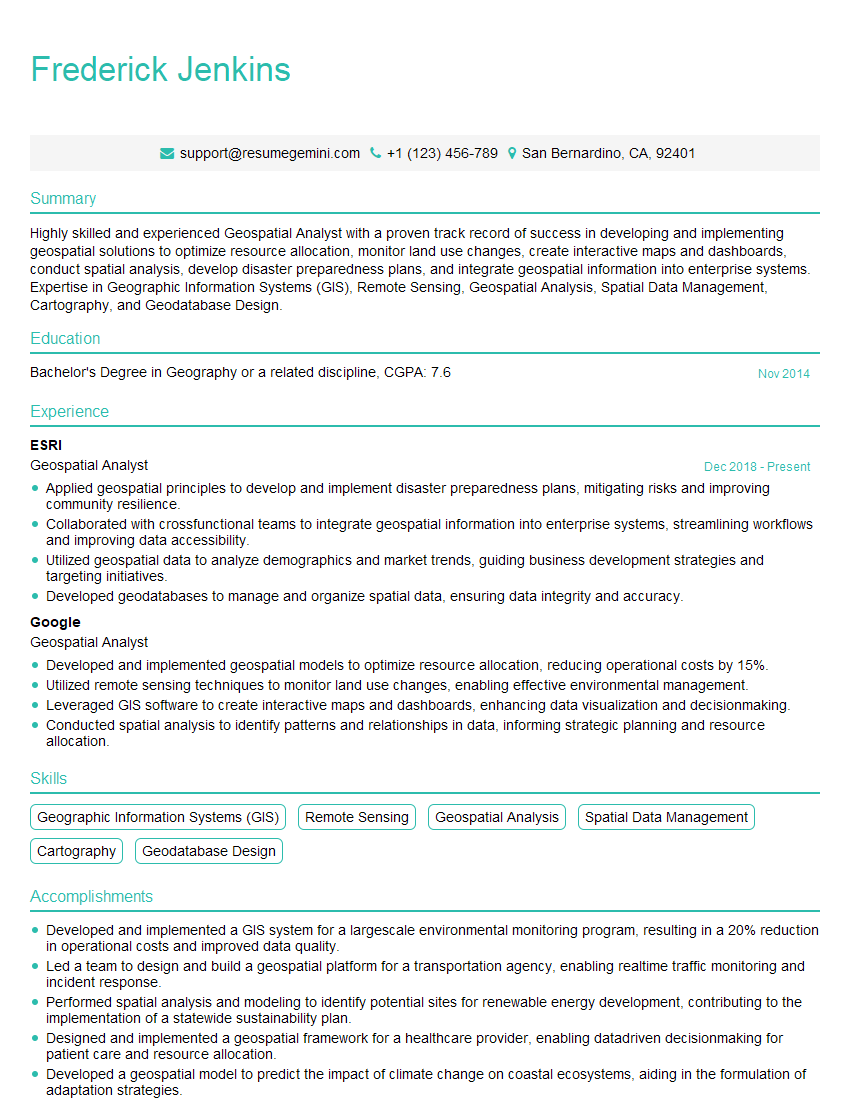
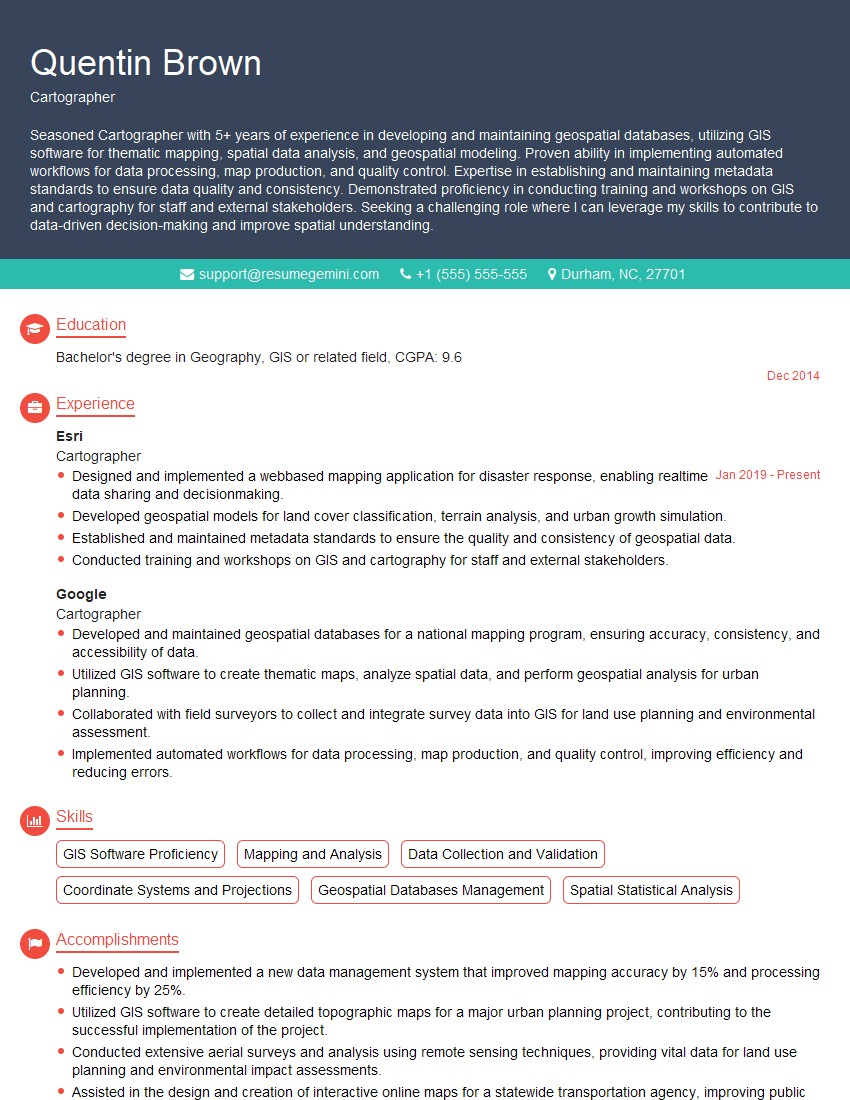
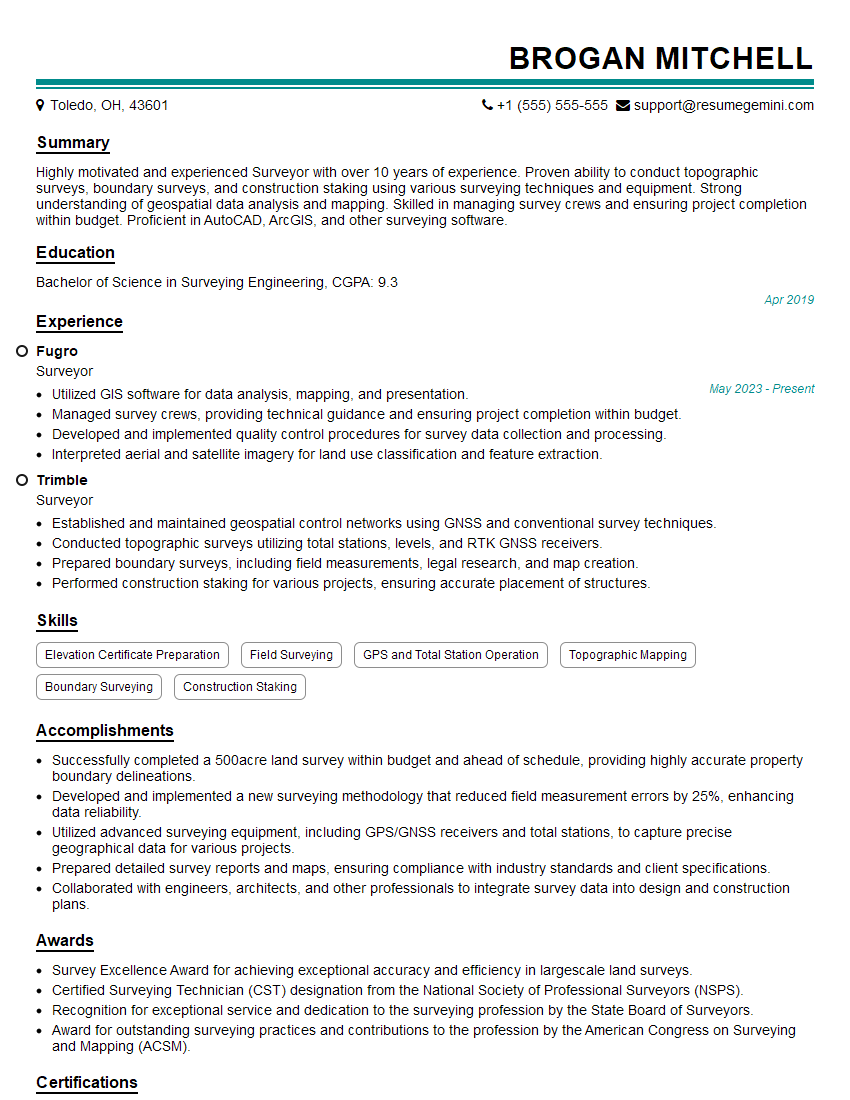
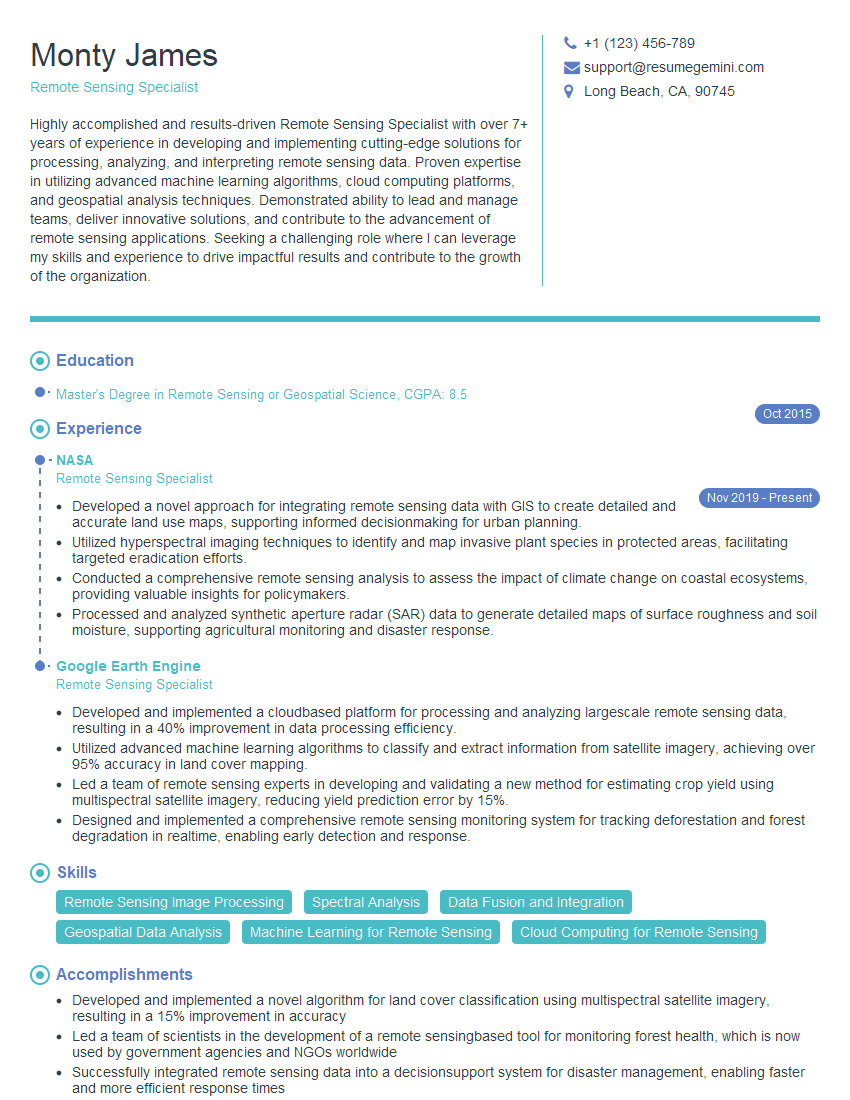
Mastering Navigation and Celestial Techniques is crucial for career advancement in fields requiring precise positional determination and autonomous navigation. A strong understanding of these principles opens doors to exciting opportunities and demonstrates a commitment to accuracy and precision. To maximize your job prospects, create an ATS-friendly resume that highlights your skills and experience effectively. ResumeGemini is a trusted resource to help you build a professional and impactful resume. They provide examples of resumes tailored to Navigation and Celestial Techniques to help you craft the perfect document showcasing your expertise.
Explore more articles
Users Rating of Our Blogs
Share Your Experience
We value your feedback! Please rate our content and share your thoughts (optional).
What Readers Say About Our Blog
Hello,
we currently offer a complimentary backlink and URL indexing test for search engine optimization professionals.
You can get complimentary indexing credits to test how link discovery works in practice.
No credit card is required and there is no recurring fee.
You can find details here:
https://wikipedia-backlinks.com/indexing/
Regards
NICE RESPONSE TO Q & A
hi
The aim of this message is regarding an unclaimed deposit of a deceased nationale that bears the same name as you. You are not relate to him as there are millions of people answering the names across around the world. But i will use my position to influence the release of the deposit to you for our mutual benefit.
Respond for full details and how to claim the deposit. This is 100% risk free. Send hello to my email id: [email protected]
Luka Chachibaialuka
Hey interviewgemini.com, just wanted to follow up on my last email.
We just launched Call the Monster, an parenting app that lets you summon friendly ‘monsters’ kids actually listen to.
We’re also running a giveaway for everyone who downloads the app. Since it’s brand new, there aren’t many users yet, which means you’ve got a much better chance of winning some great prizes.
You can check it out here: https://bit.ly/callamonsterapp
Or follow us on Instagram: https://www.instagram.com/callamonsterapp
Thanks,
Ryan
CEO – Call the Monster App
Hey interviewgemini.com, I saw your website and love your approach.
I just want this to look like spam email, but want to share something important to you. We just launched Call the Monster, a parenting app that lets you summon friendly ‘monsters’ kids actually listen to.
Parents are loving it for calming chaos before bedtime. Thought you might want to try it: https://bit.ly/callamonsterapp or just follow our fun monster lore on Instagram: https://www.instagram.com/callamonsterapp
Thanks,
Ryan
CEO – Call A Monster APP
To the interviewgemini.com Owner.
Dear interviewgemini.com Webmaster!
Hi interviewgemini.com Webmaster!
Dear interviewgemini.com Webmaster!
excellent
Hello,
We found issues with your domain’s email setup that may be sending your messages to spam or blocking them completely. InboxShield Mini shows you how to fix it in minutes — no tech skills required.
Scan your domain now for details: https://inboxshield-mini.com/
— Adam @ InboxShield Mini
Reply STOP to unsubscribe
Hi, are you owner of interviewgemini.com? What if I told you I could help you find extra time in your schedule, reconnect with leads you didn’t even realize you missed, and bring in more “I want to work with you” conversations, without increasing your ad spend or hiring a full-time employee?
All with a flexible, budget-friendly service that could easily pay for itself. Sounds good?
Would it be nice to jump on a quick 10-minute call so I can show you exactly how we make this work?
Best,
Hapei
Marketing Director
Hey, I know you’re the owner of interviewgemini.com. I’ll be quick.
Fundraising for your business is tough and time-consuming. We make it easier by guaranteeing two private investor meetings each month, for six months. No demos, no pitch events – just direct introductions to active investors matched to your startup.
If youR17;re raising, this could help you build real momentum. Want me to send more info?
Hi, I represent an SEO company that specialises in getting you AI citations and higher rankings on Google. I’d like to offer you a 100% free SEO audit for your website. Would you be interested?
Hi, I represent an SEO company that specialises in getting you AI citations and higher rankings on Google. I’d like to offer you a 100% free SEO audit for your website. Would you be interested?
good