Interviews are opportunities to demonstrate your expertise, and this guide is here to help you shine. Explore the essential Negotiation and sales skills interview questions that employers frequently ask, paired with strategies for crafting responses that set you apart from the competition.
Questions Asked in Negotiation and sales skills Interview
Q 1. Describe your sales process from lead generation to closing.
My sales process is a structured, yet adaptable, approach focusing on building relationships and understanding client needs. It unfolds in several key stages:
- Lead Generation: I leverage various techniques, including networking, online marketing (LinkedIn, industry-specific websites), referrals, and attending industry events. The goal is to identify potential clients who align with our ideal customer profile.
- Qualification: Once I’ve identified a lead, I carefully qualify them. This involves determining their budget, timeline, authority to make decisions, and overall need for our product or service. This prevents wasting time on unqualified leads.
- Needs Discovery: This is a crucial phase. I actively listen to understand their specific challenges, pain points, and desired outcomes. I ask open-ended questions, avoid interruptions, and truly focus on comprehending their situation. Think of it as a detective trying to solve a mystery—the client’s needs are the clues.
- Presentation & Proposal: I present a tailored solution that directly addresses the client’s needs, highlighting the value and benefits. My presentations are not just sales pitches; they’re conversations focused on demonstrating how our solution solves their problems.
- Handling Objections: This is an opportunity, not a roadblock! I actively listen to objections, clarify misunderstandings, and address concerns with empathy and logic. More on this in the next question.
- Closing: This isn’t about pressure; it’s about guiding the client toward a decision. I clearly outline the next steps and confidently ask for the sale, often offering different options to cater to their preferences. I always focus on mutual benefit and a long-term relationship.
- Follow-up and Onboarding: Post-sale, I follow up to ensure client satisfaction and smooth onboarding. This strengthens the relationship and can lead to future opportunities and referrals.
Q 2. How do you handle objections during a sales presentation?
Objections are invaluable insights into a client’s concerns. I approach them with a positive attitude, viewing them as opportunities to clarify, address misconceptions, and build trust. My approach involves:
- Listen Actively: Let the client fully express their concerns without interruption. Show empathy and understanding.
- Acknowledge and Validate: Acknowledge their point, even if you disagree. For example, ‘I understand your concern about the pricing. Many clients initially feel the same way…’
- Clarify and Reframe: Ask clarifying questions to ensure you fully understand the objection. Then, reframe the objection positively to highlight the benefits.
- Provide Evidence and Solutions: Address their concern with facts, data, testimonials, or case studies. Offer alternative solutions that may better address their specific needs.
- Summarize and Confirm: Once you’ve addressed the objection, summarize your understanding and confirm whether their concern has been resolved.
For example, if a client objects to the price, I might say, ‘I understand that this is an investment, but consider the long-term return and cost savings this will provide. Let’s review how this solution will impact your bottom line over the next year.’ This approach transforms objections into opportunities to highlight the overall value proposition.
Q 3. What is your approach to building rapport with potential clients?
Building rapport is paramount. I focus on creating a genuine connection based on trust and mutual respect. My approach emphasizes:
- Active Listening: Pay close attention, ask follow-up questions, and show genuine interest in their needs and perspectives.
- Empathy and Understanding: Put myself in their shoes and understand their challenges from their point of view.
- Finding Common Ground: Identify shared interests or experiences to establish a connection. Even something seemingly small can create a bond.
- Professionalism and Authenticity: Maintain a professional demeanor while being genuine and approachable. Avoid overly slick sales tactics.
- Personalized Communication: Tailor my communication style to the client’s personality and communication preferences.
For instance, I might start a conversation by asking about their experience in the industry, rather than immediately jumping into a sales pitch. This shows genuine interest and helps build a foundation for a successful relationship.
Q 4. Explain your understanding of the different negotiation styles.
Negotiation styles vary widely. Understanding them is crucial for effective deal-making. Here are some key styles:
- Competitive/Distributive: This style prioritizes winning at the expense of the other party. It’s often a zero-sum game where one party’s gain is the other’s loss. While sometimes necessary, it can damage long-term relationships.
- Collaborative/Integrative: This focuses on finding mutually beneficial solutions. Both parties work together to create value and find common ground. It’s ideal for building strong, lasting relationships.
- Accommodative: This style prioritizes the other party’s needs over one’s own. While fostering good relationships, it can lead to concessions that hurt your bottom line.
- Avoiding: This involves postponing or withdrawing from the negotiation altogether. It can be useful when the situation is unfavorable or when more information is needed.
- Compromising: This seeks a middle ground, where both parties make concessions. It’s a relatively easy approach but may not always yield the most optimal outcome.
The best style depends on the context. I often aim for a collaborative approach, but I’m adaptable and can adjust my style based on the situation and the other party’s approach.
Q 5. Describe a time you had to negotiate a complex deal. What was the outcome?
In a previous role, I negotiated a complex deal involving a customized software solution for a large corporation. Their initial budget was significantly lower than our estimated cost. The challenge was to justify the higher price while still securing the deal.
My approach was collaborative. I spent considerable time understanding their needs and constraints. I presented a phased implementation plan, breaking down the project into smaller, more manageable deliverables, making the cost seem less daunting. I also highlighted the long-term cost savings and competitive advantages the solution would provide. Ultimately, we reached an agreement that was mutually beneficial. They received a customized solution tailored to their needs, and we secured a profitable contract. The key was demonstrating the value proposition and building a strong relationship throughout the negotiation process.
Q 6. How do you prioritize multiple sales opportunities simultaneously?
Prioritizing multiple sales opportunities requires a strategic approach. I utilize a system combining urgency, value, and probability of closing:
- Urgency: Deals with imminent deadlines get higher priority. These often require immediate attention to avoid losing the opportunity.
- Value: Higher-value deals naturally deserve more focus. They have a greater potential impact on revenue and profitability.
- Probability of Closing: I assess the likelihood of closing each deal. Deals with a high probability of success often receive greater attention than those with lower odds.
I use a CRM (Customer Relationship Management) system to track all deals, their progress, and their respective priorities. This allows me to allocate my time and resources effectively, ensuring I’m focusing on the most promising opportunities.
Q 7. How do you measure your success as a salesperson?
I measure my success using a multi-faceted approach, going beyond simple sales figures:
- Revenue Targets: Meeting or exceeding pre-defined sales targets is a key metric. This reflects my ability to generate revenue for the company.
- Customer Acquisition Cost (CAC): I track how much it costs to acquire a new customer. Lower CAC indicates efficiency and effectiveness.
- Customer Lifetime Value (CLTV): I strive to cultivate long-term relationships with clients, maximizing their lifetime value to the company.
- Client Satisfaction: Positive feedback, referrals, and repeat business demonstrate successful client relationships.
- Lead Conversion Rate: This shows my ability to effectively convert leads into paying customers.
- Average Deal Size: Increasing the average deal size demonstrates my skill in upselling and cross-selling.
Ultimately, my success is measured not just by the numbers but also by the sustainable growth and strong relationships I cultivate with clients. It’s a holistic approach that emphasizes both short-term results and long-term value creation.
Q 8. What sales methodologies are you familiar with (e.g., SPIN selling, Sandler)?
I’m proficient in several sales methodologies, each with its strengths. SPIN selling focuses on uncovering needs through Situation, Problem, Implication, and Need-payoff questions. This is incredibly effective for complex sales where the customer might not initially realize the full value of the product. For example, when selling CRM software, I wouldn’t immediately pitch features; instead, I’d ask about their current challenges with lead management, lost deals, and sales team efficiency (Situation & Problem). I’d then explore the implications of those challenges (Implication) – e.g., lost revenue, decreased productivity. Finally, I’d showcase how our CRM solves these problems and creates a positive outcome (Need-payoff).
Sandler selling emphasizes building rapport, qualifying prospects aggressively early on, and handling objections proactively. It’s all about upfront qualification – making sure the prospect is a good fit for your offering and vice-versa, before investing significant time. I use this often to avoid wasting time on leads that aren’t serious buyers. A key component of Sandler is the ‘up-front contract’, establishing clear expectations early in the sales cycle. This avoids misunderstandings and ensures everyone is on the same page. I also have experience with Challenger Sale, which focuses on educating and even challenging customers to rethink their approach; and Solution Selling, which emphasizes understanding customer pain points and offering tailored solutions.
Q 9. How do you handle a difficult or demanding client?
Handling difficult clients requires patience, empathy, and strong communication skills. The key is to understand their underlying concerns. I start by actively listening to their complaints, asking clarifying questions, and acknowledging their feelings. For example, if a client is angry about a delay, I wouldn’t interrupt or become defensive; instead, I’d say something like, ‘I understand your frustration with the delay, and I apologize for the inconvenience.’ Then, I’d collaboratively work towards a solution, focusing on finding common ground and managing expectations. Sometimes, it’s about offering concessions or alternative solutions to meet their needs while still protecting the business. The goal is to turn a negative experience into a positive one, building trust and demonstrating commitment to their satisfaction. It’s important to remember that every difficult client has a legitimate concern that needs addressing.
Q 10. What is your strategy for qualifying leads?
My lead qualification strategy is based on a BANT framework – Budget, Authority, Need, and Timeline. I ask qualifying questions to assess each aspect. For ‘Budget,’ I inquire about their allocated budget for this type of solution. For ‘Authority,’ I confirm their decision-making power. ‘Need’ is evaluated by understanding their pain points and the desired outcomes. Finally, ‘Timeline’ helps determine their urgency and expected implementation timeframe. This ensures I’m focusing on leads that are truly ready to buy and are a good fit for my offerings. The combination of these four factors creates a reliable filter for high-potential leads and prevents me from wasting time on unqualified prospects. I also use a scoring system to prioritize leads based on their BANT scores.
Q 11. How do you identify and address customer needs?
Identifying and addressing customer needs is the cornerstone of successful sales. I achieve this through active listening, open-ended questions, and empathetic engagement. I focus on understanding their challenges, goals, and priorities. I avoid interrupting and encourage them to elaborate, asking questions like, ‘Tell me more about that,’ or ‘What are the biggest obstacles you’re facing?’ I also observe their body language and tone to gauge their emotional state. By carefully listening and observing, I build rapport and uncover their underlying needs, often those they haven’t even articulated yet. Then, I tailor my solution to meet those needs. It’s more than just selling a product; it’s about offering a solution that truly benefits the customer.
Q 12. Describe your experience using CRM software.
I have extensive experience using CRM software, including Salesforce, HubSpot, and Zoho. I’m proficient in managing contacts, tracking interactions, creating sales reports, forecasting sales, and utilizing automated workflows. In my previous role, I utilized Salesforce to streamline the sales process, track deals through each stage, and provide accurate sales forecasts. I also customized Salesforce dashboards to track key performance indicators (KPIs) such as conversion rates and deal closure times. This enabled me to identify areas for improvement and to focus on strategies that improved overall sales performance. I am adept at utilizing CRM systems to automate tasks like email marketing and lead nurturing, which frees up time to focus on building relationships with clients.
Q 13. How do you stay updated on industry trends and best practices?
Staying updated on industry trends and best practices is crucial for success in sales. I achieve this by actively engaging with various resources. I subscribe to industry newsletters and publications, attend webinars and conferences, and follow key influencers and thought leaders on social media platforms like LinkedIn. I also actively participate in online forums and communities to learn from the experiences and insights of other professionals. I regularly read industry reports and case studies to identify new strategies and adapt my approach accordingly. Continuous learning ensures my skillset is always current and enables me to offer the best possible advice and solutions to my clients.
Q 14. How do you handle rejection?
Rejection is an inevitable part of sales. Rather than viewing it as a personal failure, I see it as an opportunity for learning and growth. I analyze each rejection to identify areas for improvement, whether it’s my approach, communication, or understanding of the customer’s needs. I use feedback to refine my strategies and enhance my skills. For example, if I lose a deal due to pricing, I may research more competitive options or explore alternative solutions. I maintain a positive and resilient attitude, focusing on learning from each experience. Remember, each ‘no’ brings you closer to a ‘yes’. It’s a numbers game; the more leads you engage, the more likely you are to secure successful deals. Persistence, resilience, and continuous learning are essential for overcoming rejection and achieving success in sales.
Q 15. How would you approach negotiating a salary during a job offer?
Negotiating salary requires a strategic approach that balances assertiveness with collaboration. It’s not just about stating your desired salary; it’s about understanding the market value of your skills and experience, the company’s budget, and demonstrating your value proposition.
My approach involves several key steps:
- Research: Before the negotiation, I thoroughly research industry salary benchmarks for similar roles and experience levels using sites like Glassdoor, Salary.com, and LinkedIn Salary. This gives me a realistic expectation of what I can reasonably ask for.
- Quantify your accomplishments: Prepare specific examples of how you’ve added value in previous roles, quantifying your achievements whenever possible. For example, instead of saying “improved efficiency,” say “improved efficiency by 15% resulting in $X cost savings.”
- Know your walk-away point: Determine the minimum salary you’re willing to accept before entering negotiations. This helps you avoid accepting an offer that’s significantly below your worth.
- Open with a confident but reasonable range: Instead of stating a fixed number, I propose a salary range that reflects my research and value. For instance, I might say, “Based on my experience and research, I’m targeting a salary between $X and $Y.”
- Listen actively and ask clarifying questions: Pay close attention to the employer’s response and ask questions to understand their perspective. This shows genuine interest and helps you tailor your negotiation approach.
- Negotiate beyond salary: Consider negotiating other benefits, such as vacation time, bonuses, or professional development opportunities, to create a comprehensive compensation package.
- Be prepared to walk away: If the employer is unwilling to meet your minimum requirements, be prepared to politely decline the offer. This demonstrates your self-worth and can sometimes lead to a better counteroffer.
For example, in a previous negotiation, I researched the average salary for a similar role in my city and found it to be between $70,000 and $80,000. Based on my experience and accomplishments, I proposed a salary in the higher end of that range. The employer initially offered $72,000, but after highlighting my quantifiable achievements, I successfully negotiated a salary of $78,000 plus a performance bonus.
Career Expert Tips:
- Ace those interviews! Prepare effectively by reviewing the Top 50 Most Common Interview Questions on ResumeGemini.
- Navigate your job search with confidence! Explore a wide range of Career Tips on ResumeGemini. Learn about common challenges and recommendations to overcome them.
- Craft the perfect resume! Master the Art of Resume Writing with ResumeGemini’s guide. Showcase your unique qualifications and achievements effectively.
- Don’t miss out on holiday savings! Build your dream resume with ResumeGemini’s ATS optimized templates.
Q 16. What is your approach to closing a sale?
Closing a sale isn’t about pressure; it’s about confirming the customer’s decision to buy. My approach is built on building rapport, addressing concerns, and smoothly transitioning to the next step.
I employ a combination of techniques, always adapting to the individual customer’s style and preferences:
- Summarize benefits and address remaining concerns: Before closing, I reiterate the key benefits of the product or service and address any remaining objections or questions the customer might have. This reinforces the value proposition and demonstrates my attentiveness.
- Trial close: I use trial closes throughout the sales process to gauge the customer’s readiness to buy. This involves asking questions like, “Does that sound like something that would work for you?” or “Are you ready to proceed?” This provides valuable insight without feeling overly aggressive.
- Offer options: Instead of forcing a single choice, I might offer different packages or options to cater to the customer’s specific needs and budget. This gives them a sense of control and empowers their decision.
- Focus on the next step: Rather than focusing on signing the contract immediately, I focus on the next logical step. This might involve scheduling a demo, completing paperwork, or setting up the product installation. This breaks the closing down into manageable steps.
- Assure satisfaction: I reinforce the company’s commitment to customer satisfaction and provide clear details about post-sale support. This addresses any lingering concerns about long-term commitment.
For instance, after presenting a proposal to a client, I summarized the key benefits and addressed their concerns about implementation timelines. Then, I used a trial close: “Considering the streamlined workflow and cost savings, are we ready to move forward with the implementation next week?” This led to a smooth closing, with the client eagerly agreeing to proceed.
Q 17. Describe your experience with prospecting and cold calling.
Prospecting and cold calling are crucial for identifying new sales opportunities. While many now utilize digital methods, the core principles remain the same: research, personalization, and value proposition.
My approach combines both traditional and modern techniques:
- Targeted Research: Instead of generic cold calling, I conduct thorough research to identify potential clients who align with my product/service offerings. This involves utilizing LinkedIn, industry databases, and online searches to pinpoint ideal prospects.
- Personalized Approach: I craft personalized messages for each prospect, highlighting how my product or service can directly address their specific needs or challenges. Generic scripts are ineffective; genuine interest is key.
- Value-Driven Communication: I focus on the value proposition for the client, not just the features of my product or service. What problems will it solve? How will it improve their efficiency or profitability?
- Multiple Touchpoints: I utilize a multi-channel approach, combining cold calling with emails, LinkedIn messages, and even personalized direct mail where appropriate. Persistence, while respecting boundaries, is often crucial.
- Track and Analyze: I meticulously track my calls and communication efforts to identify what works and what doesn’t. This data helps me refine my approach and improve efficiency.
For example, I once researched a company experiencing challenges with data management. Instead of a generic cold call, I sent a personalized email referencing their recent industry news and highlighting how my solution addresses their specific data management problems. This led to a meeting and eventually a successful sale.
Q 18. How do you build and maintain strong client relationships?
Building and maintaining strong client relationships is essential for long-term success in sales. It goes beyond just making the sale; it’s about fostering trust and mutual respect.
My approach is built on several pillars:
- Active Listening: I listen attentively to my clients’ needs and concerns, seeking to understand their perspective completely. This demonstrates genuine interest and builds rapport.
- Proactive Communication: I keep clients informed about project progress, addressing any questions or concerns promptly and proactively. This maintains transparency and builds trust.
- Value-Added Service: I actively seek ways to provide value beyond the initial sale, such as offering helpful advice, sharing relevant industry information, or providing extra support.
- Regular Follow-up: I maintain regular contact with clients, even after the sale is complete, to check on their satisfaction and identify new opportunities.
- Personalized Approach: I strive to tailor my interactions to each client’s individual personality and communication style.
- Feedback and Improvement: I solicit feedback from clients regularly to identify areas for improvement and enhance my service.
For example, I regularly check in with my clients several weeks after a product launch to discuss their progress and answer any questions. This builds a strong relationship and shows commitment beyond a transaction.
Q 19. What metrics do you track to assess sales performance?
Tracking key sales metrics is crucial for assessing performance and identifying areas for improvement. The specific metrics I track depend on the product, target market, and sales strategy. However, some key metrics consistently inform my approach.
- Conversion Rate: This measures the percentage of leads who convert into paying customers. A low conversion rate indicates potential issues in the sales process.
- Average Deal Size: This indicates the average value of closed deals. Analyzing this helps identify opportunities to upsell or cross-sell.
- Sales Cycle Length: This tracks the time it takes to close a deal. A longer sales cycle might indicate the need for improved lead qualification or sales processes.
- Customer Acquisition Cost (CAC): This measures the cost of acquiring a new customer. Analyzing this helps optimize marketing and sales spend.
- Customer Lifetime Value (CLTV): This measures the total revenue generated by a customer over their relationship with the company. This informs long-term strategic decisions.
- Lead Generation Sources: Tracking the origin of leads allows for the optimization of marketing efforts and resource allocation.
By regularly monitoring these metrics, I can identify trends, pinpoint bottlenecks, and adapt my sales strategies to improve overall performance.
Q 20. Describe a time you had to adapt your sales strategy.
Adapting sales strategies is essential in dynamic markets. I once experienced a significant shift in the market due to the launch of a competing product with a lower price point.
My initial strategy focused on highlighting the premium features and quality of our product. However, with the competitor’s aggressive pricing, this approach wasn’t as effective.
To adapt, I focused on:
- Highlighting Value, Not Just Price: I shifted the emphasis from price to the long-term value proposition, highlighting the superior performance, reliability, and customer support of our product compared to the lower-priced competitor.
- Targeting Different Segments: I realized that our product appealed more strongly to certain customer segments who valued quality over price. By targeting those specific segments, I improved our conversion rate.
- Developing New Offers: I proposed new pricing packages and flexible payment options to make our product more competitive.
- Strengthening Customer Relationships: I emphasized building stronger relationships with existing customers, emphasizing loyalty programs and personalized support. This reduced churn and increased repeat business.
By adapting my strategy, I not only weathered the initial storm but also strengthened my position in the market. This situation highlighted the importance of remaining adaptable and market-aware.
Q 21. How do you manage your time effectively to meet sales targets?
Effective time management is critical for meeting sales targets. My approach combines strategic planning with disciplined execution.
My strategies include:
- Prioritization: I use tools like Eisenhower Matrix (urgent/important) to prioritize tasks based on their impact and urgency. High-impact activities are scheduled first.
- Time Blocking: I allocate specific time blocks for different activities like prospecting, client meetings, and administrative tasks. This helps maintain focus and prevents multitasking.
- Goal Setting: I set realistic daily and weekly sales goals, breaking down larger targets into smaller, achievable steps. This creates a sense of progress and keeps me motivated.
- CRM Utilization: I leverage Customer Relationship Management (CRM) systems to manage leads, track progress, and schedule activities efficiently. This eliminates manual tracking and improves organization.
- Delegation: Where possible, I delegate tasks to free up my time for higher-value activities such as client interaction and strategic planning.
- Regular Review and Adjustment: I regularly review my schedule and adjust it as needed based on changing priorities and unexpected events. Flexibility is key.
For example, I use a time-blocking system where I allocate mornings for focused work on high-priority tasks, reserving afternoons for client meetings and networking activities. This structure ensures that I maximize my productive time and consistently meet my targets.
Q 22. What is your understanding of win-win negotiation?
Win-win negotiation, also known as integrative negotiation, is a collaborative approach where both parties strive to achieve a mutually beneficial outcome. It’s not about compromise, where each side gives up something, but about finding creative solutions that address the underlying interests of all involved. Think of it like baking a bigger pie instead of dividing a smaller one.
How it works: Instead of focusing solely on positions (what each party wants), win-win negotiation emphasizes exploring interests (the underlying needs and desires driving those positions). This requires active listening, empathy, and a willingness to understand the other party’s perspective. It involves brainstorming potential solutions together and finding areas of common ground. For instance, instead of simply haggling over the price of a product, you might discover the buyer’s primary concern is timely delivery, leading to a solution where you offer a slightly higher price with a guaranteed expedited shipping.
- Active Listening: Truly hearing and understanding the other party’s needs and concerns.
- Joint Problem Solving: Working collaboratively to identify creative solutions that benefit everyone.
- Focus on Interests, not Positions: Understanding the ‘why’ behind the demands.
- Value Creation: Expanding the pie by finding ways to create more value for both parties.
Q 23. Describe your experience with using sales analytics and data.
Sales analytics and data are integral to my sales strategy. I leverage data to understand market trends, customer behavior, and the effectiveness of my sales techniques. I use CRM systems (like Salesforce or HubSpot) to track key metrics such as lead generation, conversion rates, deal size, and sales cycle length.
For example, I recently analyzed sales data to identify that customers who engaged with our online demos had a significantly higher conversion rate. This insight led me to invest more time and resources into creating high-quality demo materials and promoting them more effectively. I also use A/B testing on email campaigns and website landing pages to optimize my outreach strategies. This data-driven approach allows me to continuously refine my strategies and maximize my sales performance.
Specifically, I use data to:
- Identify high-potential leads: Targeting customers most likely to convert.
- Track campaign performance: Measuring the effectiveness of various marketing and sales initiatives.
- Forecast sales: Predicting future sales based on historical trends and current pipeline.
- Improve sales processes: Optimizing workflows to reduce sales cycle length and increase efficiency.
Q 24. How do you handle conflict resolution in sales negotiations?
Conflict is inevitable in sales negotiations, but effective conflict resolution is crucial. My approach centers around empathy, clear communication, and a focus on finding mutually acceptable solutions. I start by actively listening to understand the root cause of the conflict, separating the emotion from the facts.
For example, if a customer is upset about a delayed delivery, I acknowledge their frustration, explain the reasons for the delay (without making excuses), and offer a concrete solution, such as a discount or expedited shipping. I frame the discussion in a collaborative manner, focusing on finding a solution that meets both their needs and my company’s interests. If the conflict escalates, I don’t hesitate to involve a manager or other relevant parties to ensure a fair and effective resolution. I see conflict as an opportunity to build stronger relationships and enhance customer loyalty.
- Active Listening: Understand the other party’s perspective.
- Empathy: Show understanding and concern for their feelings.
- Clear Communication: State your position clearly and concisely.
- Collaborative Problem Solving: Work together to find a mutually acceptable solution.
- Escalation Protocol: Know when to seek help from more senior colleagues.
Q 25. What is your approach to handling pricing negotiations?
Pricing negotiations require a strategic approach that balances profitability with customer satisfaction. I begin by understanding the customer’s budget and priorities. I avoid simply stating my price; instead, I present the value proposition of my product or service, highlighting the unique benefits and return on investment it offers. This shifts the focus from price to value.
If a customer pushes for a lower price, I explore options like adjusting the scope of the project, offering different packages, or negotiating payment terms. I always have a well-defined pricing strategy, including a minimum acceptable price and a range of potential concessions. I use data to justify my pricing and to demonstrate the value I’m offering. I might present case studies showing similar clients achieving significant benefits from my solution. The goal is to reach a price that is both fair and profitable for both parties.
- Value-Based Pricing: Emphasizing the value delivered, not just the cost.
- Flexibility: Exploring alternative pricing models or payment terms.
- Data-Driven Justification: Using data to support the proposed price.
- Negotiation Range: Having a defined range of acceptable prices.
Q 26. How do you differentiate yourself from other sales professionals?
I differentiate myself through a combination of my in-depth industry knowledge, my data-driven approach, and my commitment to building strong, long-term relationships with clients. Many sales professionals focus on closing deals quickly. I prioritize understanding my clients’ needs deeply, providing customized solutions, and nurturing relationships that extend beyond the initial sale.
This proactive relationship building leads to repeat business and referrals. My data-driven approach allows me to demonstrate the ROI of my solutions and to continuously improve my performance. Combining strong analytical skills with a genuine focus on client needs sets me apart and creates a strong foundation for mutual success.
Q 27. How do you leverage technology to improve sales performance?
Technology plays a vital role in enhancing sales performance. I leverage CRM systems to manage leads, track interactions, and forecast sales. I use sales automation tools to streamline repetitive tasks, freeing up my time to focus on building relationships and closing deals. I also employ marketing automation platforms to nurture leads and deliver targeted messaging.
For example, using automated email sequences to follow up with leads after a meeting or demo increases engagement and improves conversion rates. Moreover, social selling platforms allow me to connect with potential clients, build my professional network, and share valuable content. Data analytics dashboards provide insights into sales performance, enabling me to identify areas for improvement and adjust my strategies accordingly. In short, I strategically use technology to enhance efficiency, effectiveness, and ultimately, sales performance.
Q 28. Describe a situation where you exceeded your sales quota.
In my previous role, I exceeded my sales quota by 25% in Q3. This success was due to a combination of factors, including identifying a new niche market segment within our existing customer base. Through thorough market research and analysis of customer data, I discovered an unmet need among a specific group of clients. I developed a tailored solution to address this need and crafted a targeted marketing campaign to reach this segment.
This involved not just focusing on the product but also on creating valuable content, such as webinars and case studies, showcasing the solution’s benefits. I also actively networked within this segment, attending industry events and building relationships with key influencers. This combination of strategic market analysis, targeted marketing, and focused relationship building drove exceptional results and exceeded expectations.
Key Topics to Learn for Negotiation and Sales Skills Interview
- Understanding Value Proposition: Defining and articulating the unique value you bring to a potential client or employer. Practical application: Crafting a compelling personal brand statement that highlights your strengths and differentiates you from other candidates.
- Active Listening and Questioning: Mastering the art of truly understanding the needs and concerns of the other party. Practical application: Developing strategies for asking open-ended questions to uncover underlying motivations and priorities during a negotiation.
- Strategic Planning & Preparation: Defining your goals, anticipating objections, and developing counter-arguments before entering a negotiation. Practical application: Creating a structured approach to sales calls or presentations, incorporating a clear agenda and desired outcomes.
- Handling Objections: Transforming objections into opportunities by addressing concerns effectively and building rapport. Practical application: Role-playing different objection scenarios to develop confident and persuasive responses.
- Closing Techniques: Mastering different closing strategies to secure agreements and build long-term relationships. Practical application: Practicing different closing techniques to find the approach best suited to various negotiation styles.
- Building Rapport and Trust: Establishing strong relationships based on mutual respect and understanding. Practical application: Utilizing effective communication techniques to build trust and establish credibility with potential clients or employers.
- Negotiation Tactics and Strategies: Understanding various negotiation styles and adapting your approach accordingly. Practical application: Analyzing case studies of successful and unsuccessful negotiations to identify key decision points and strategies.
- Ethical Considerations: Maintaining integrity and fairness throughout the negotiation process. Practical application: Reflecting on personal ethical guidelines and how they inform your negotiation approach.
Next Steps
Mastering negotiation and sales skills is crucial for career advancement in virtually any field. These skills translate directly to higher earning potential, increased leadership opportunities, and greater professional satisfaction. To significantly improve your job prospects, it’s essential to create a resume that effectively showcases these abilities to Applicant Tracking Systems (ATS). We highly recommend using ResumeGemini to build a professional, ATS-friendly resume that highlights your negotiation and sales accomplishments. Examples of resumes tailored to these skills are available to help you create a compelling application.
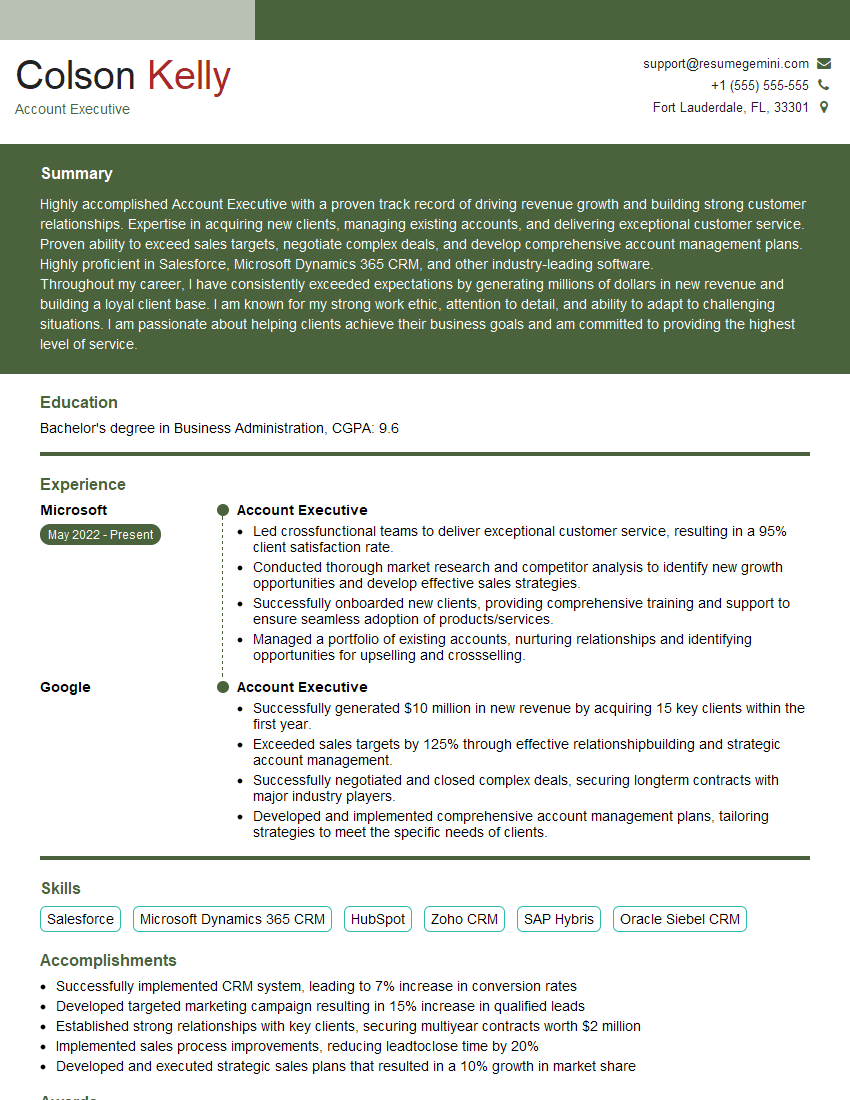
Account Executive Resume Sample
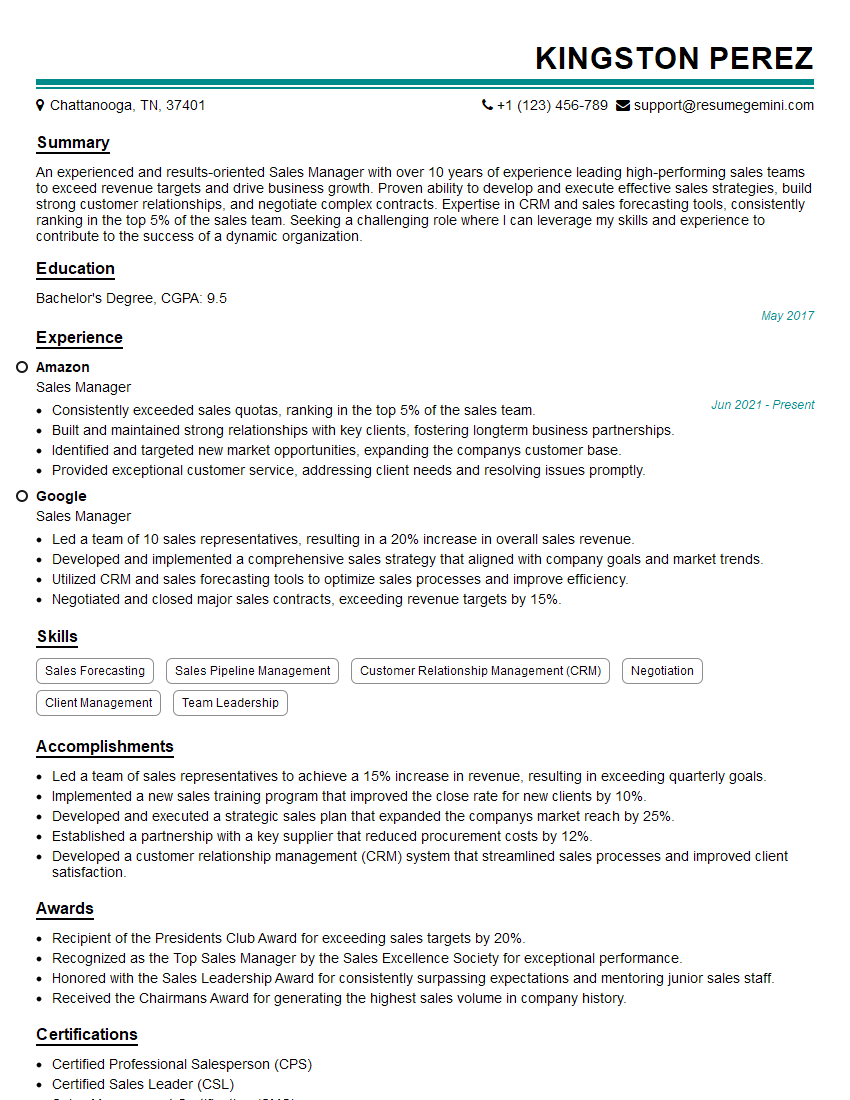
Sales Manager Resume Sample
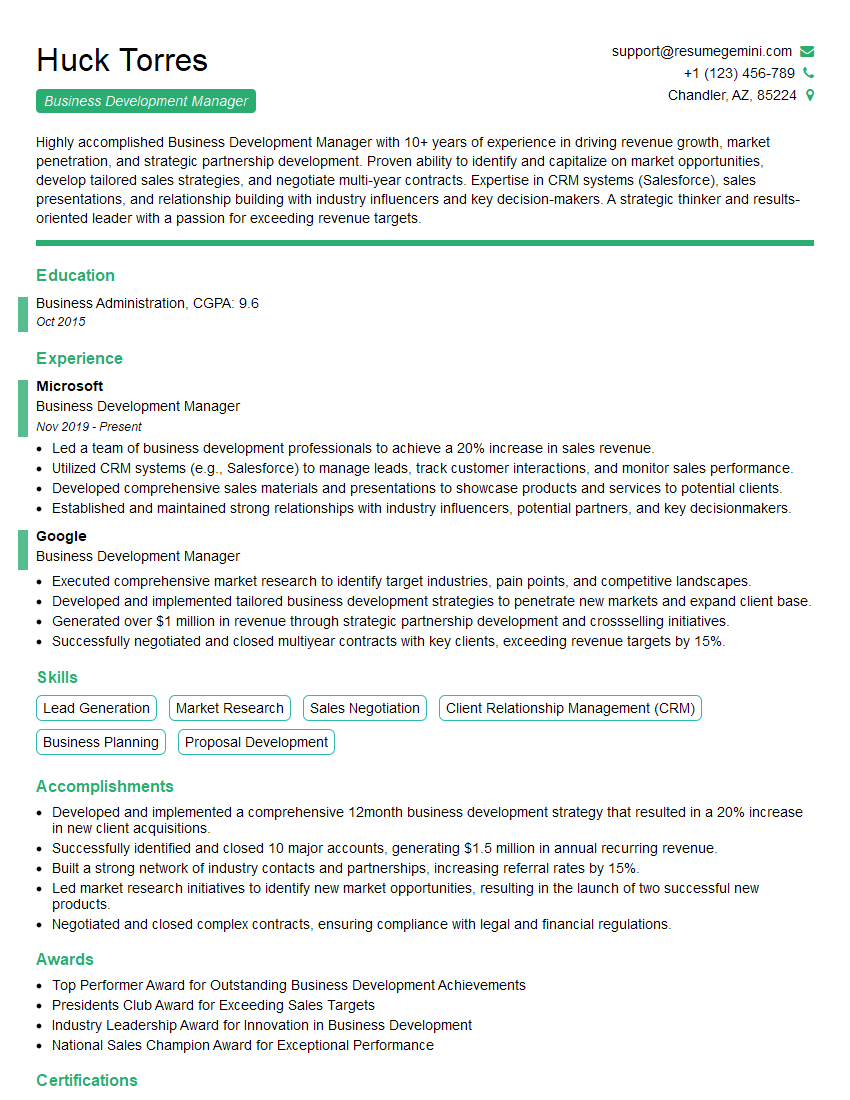
Business Development Manager Resume Sample
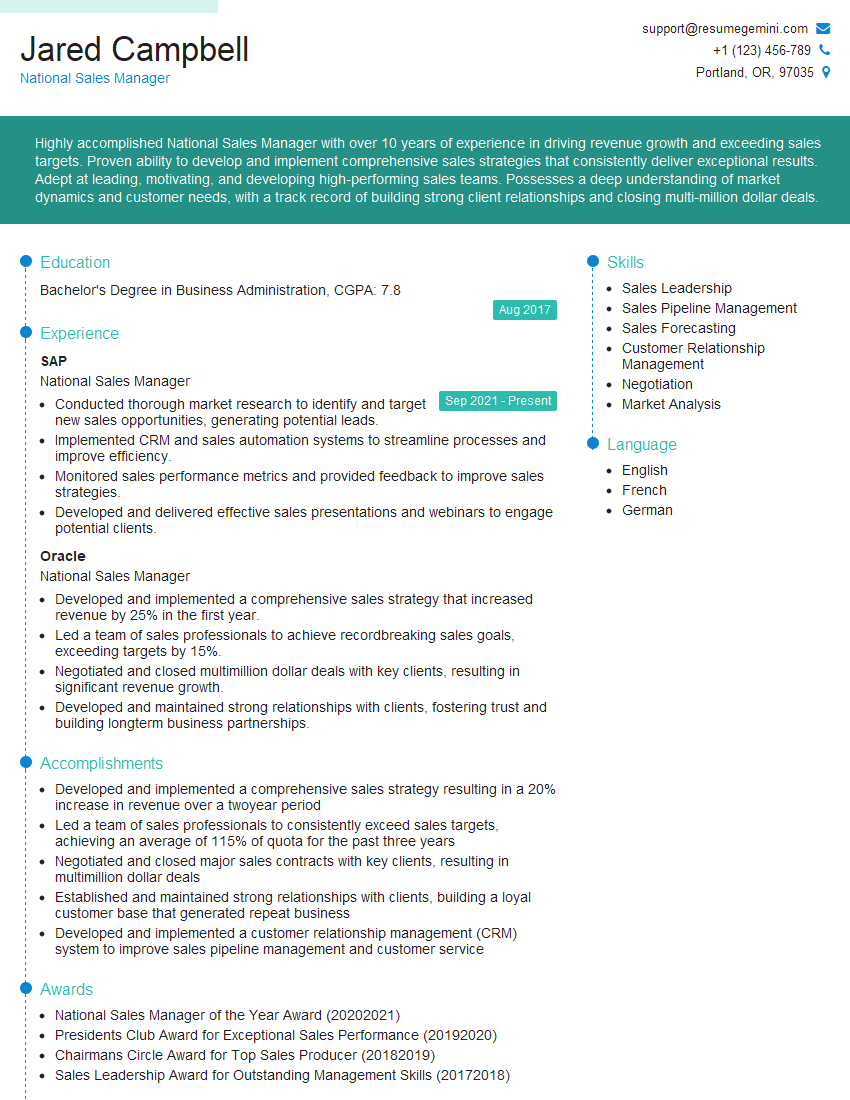
National Sales Manager Resume Sample
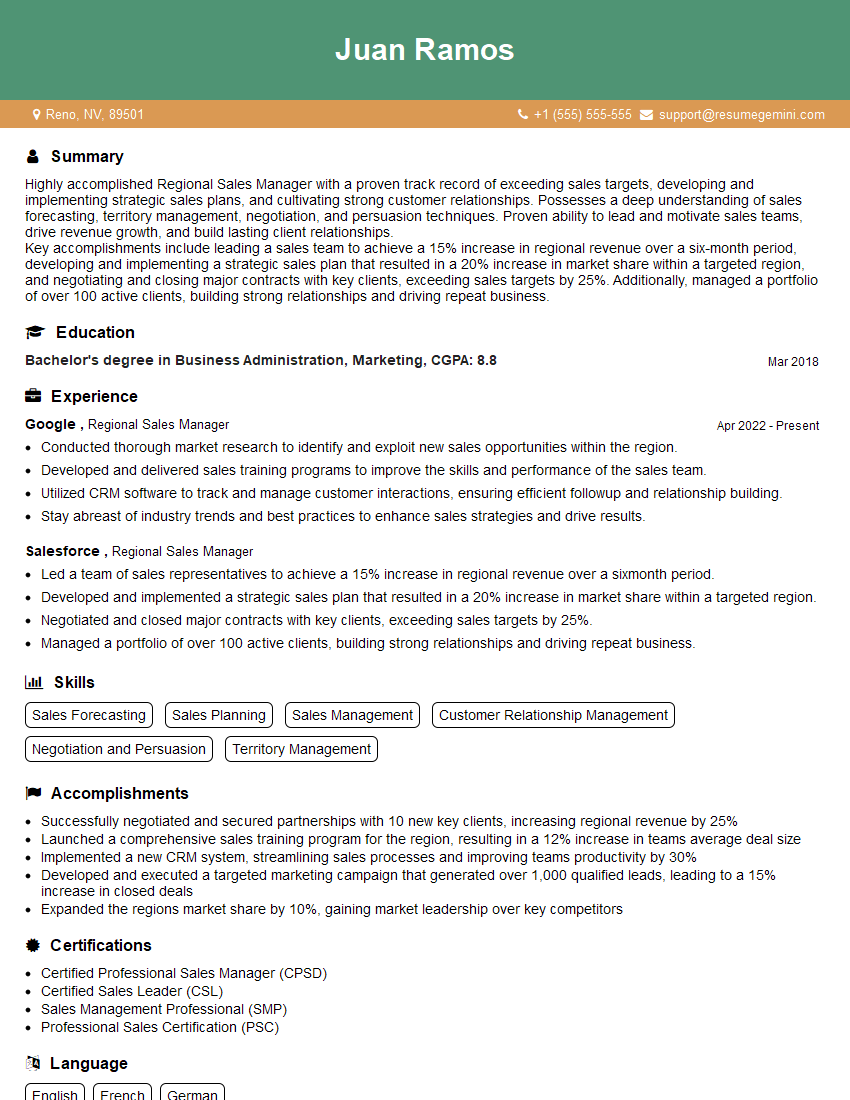
Regional Sales Manager Resume Sample
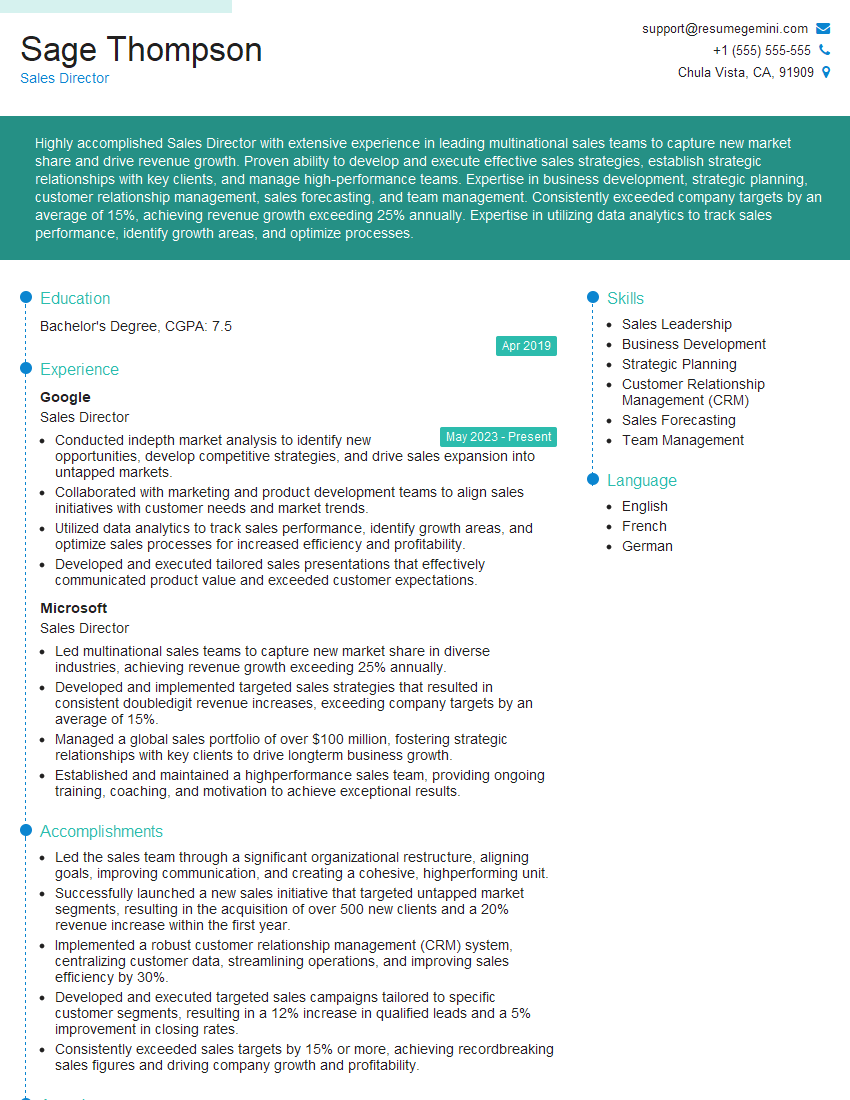
Sales Director Resume Sample
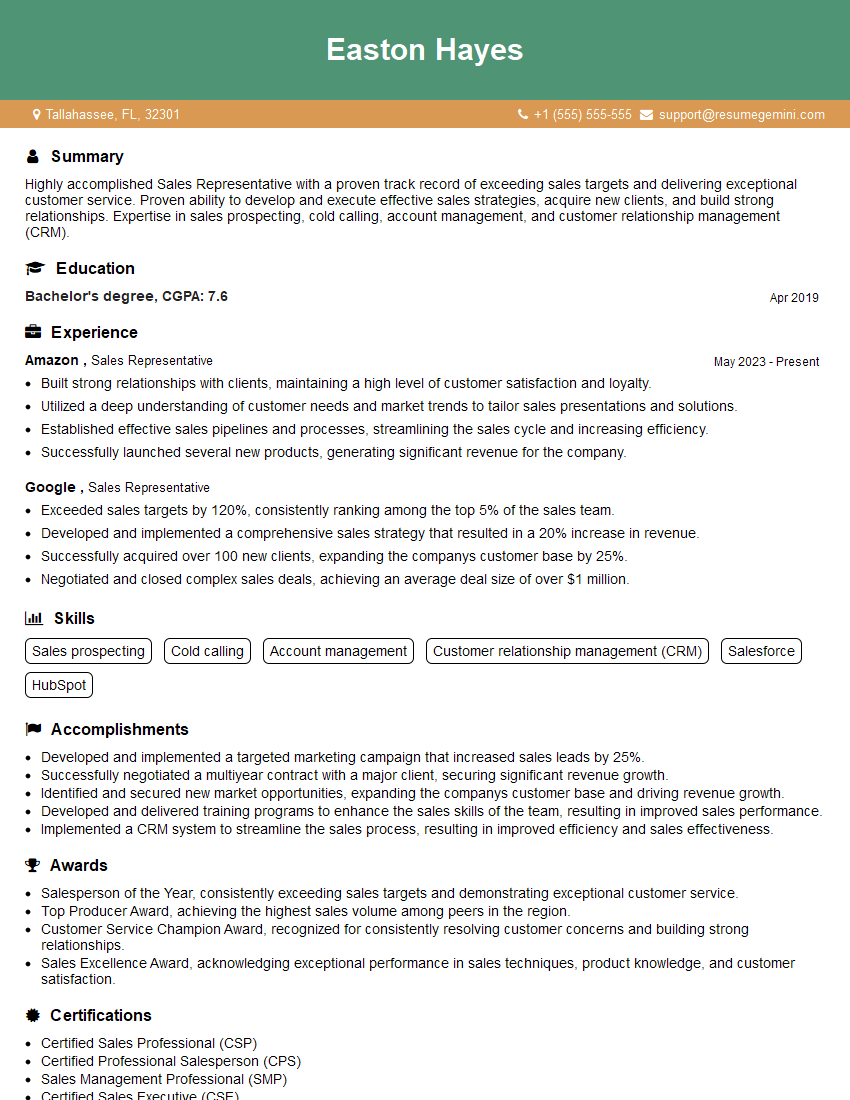
Sales Representative Resume Sample
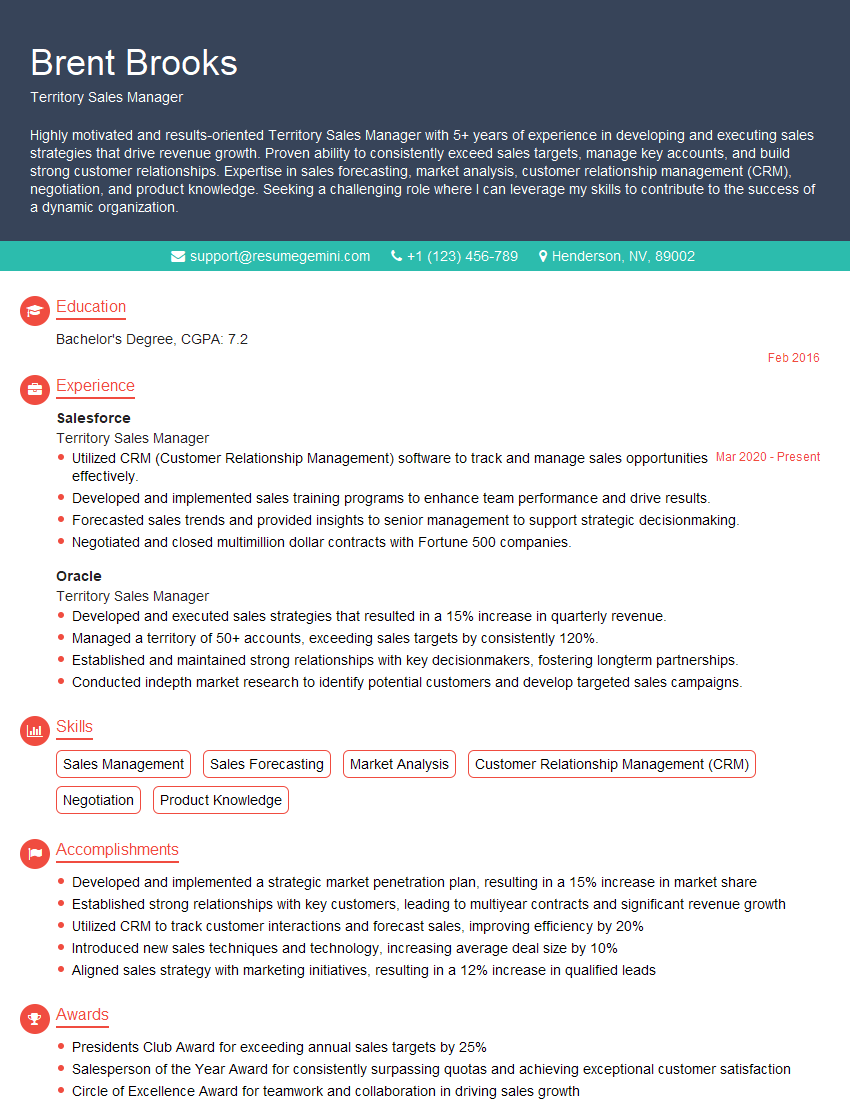
Territory Sales Manager Resume Sample

Procurement Manager Resume Sample
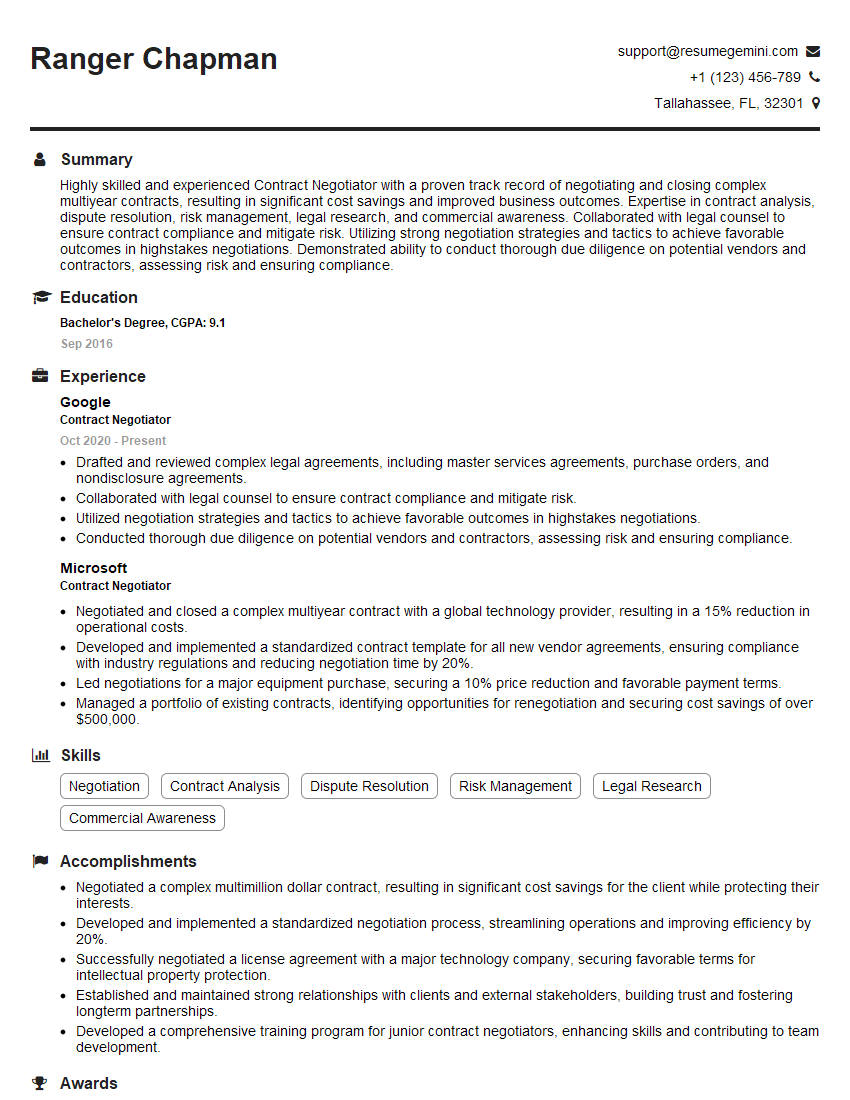
Contract Negotiator Resume Sample
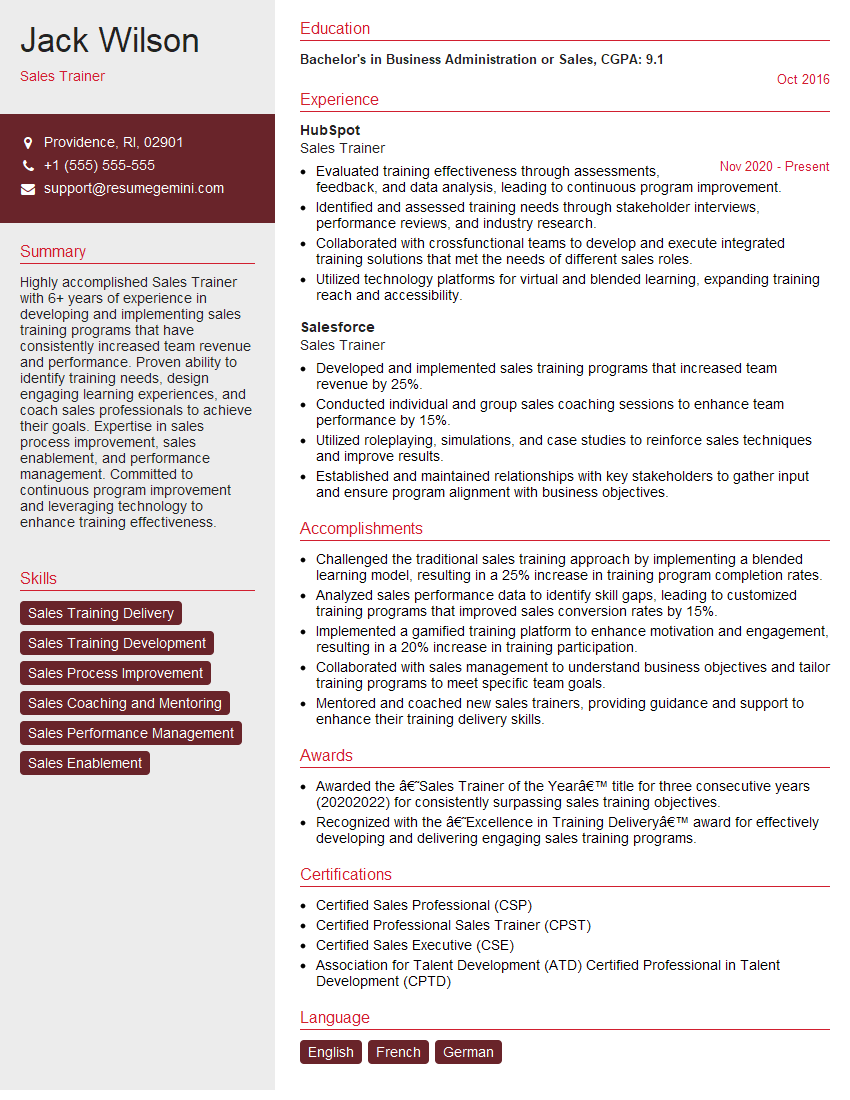
Sales Trainer Resume Sample
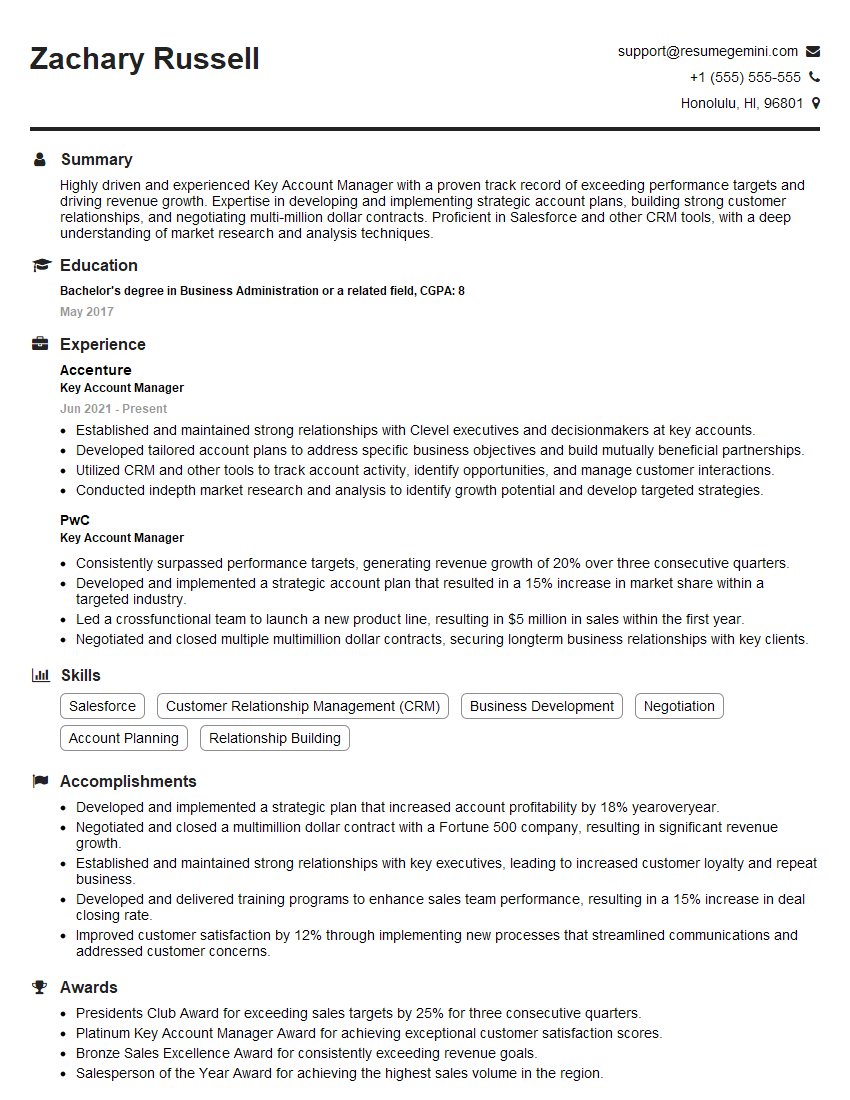
Key Account Manager Resume Sample
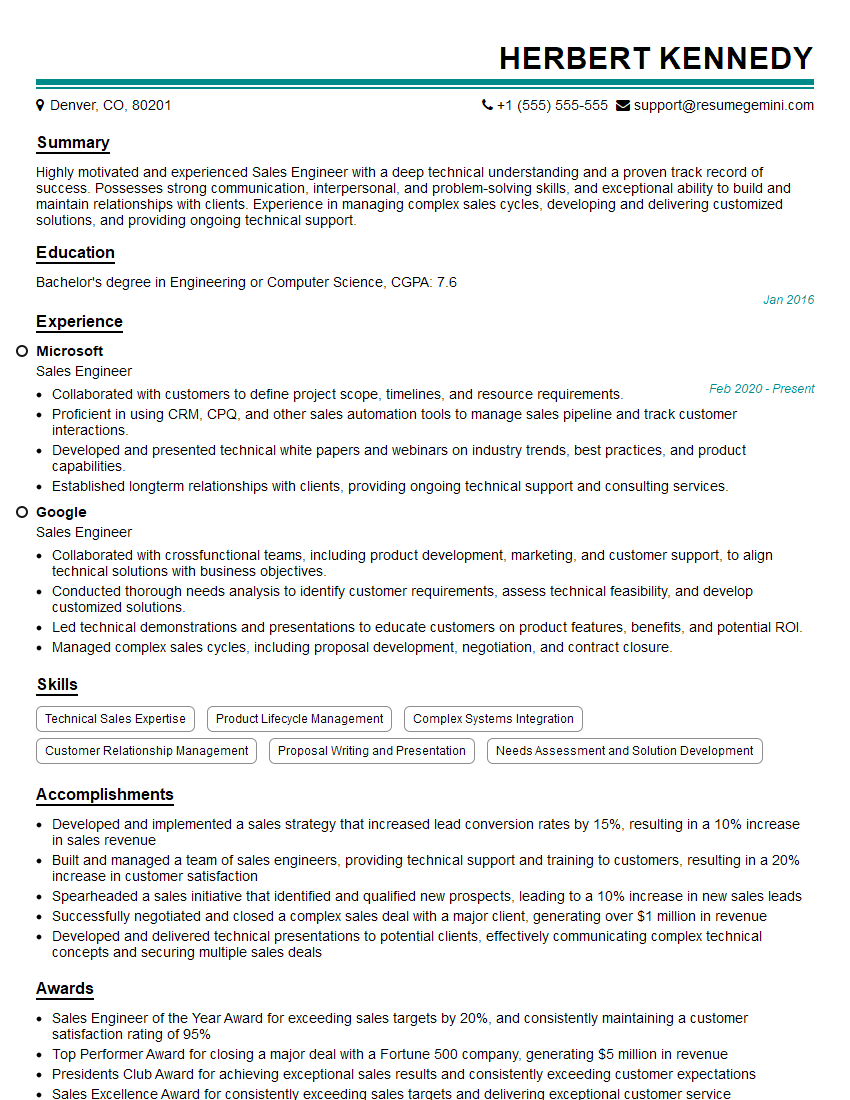
Sales Engineer Resume Sample
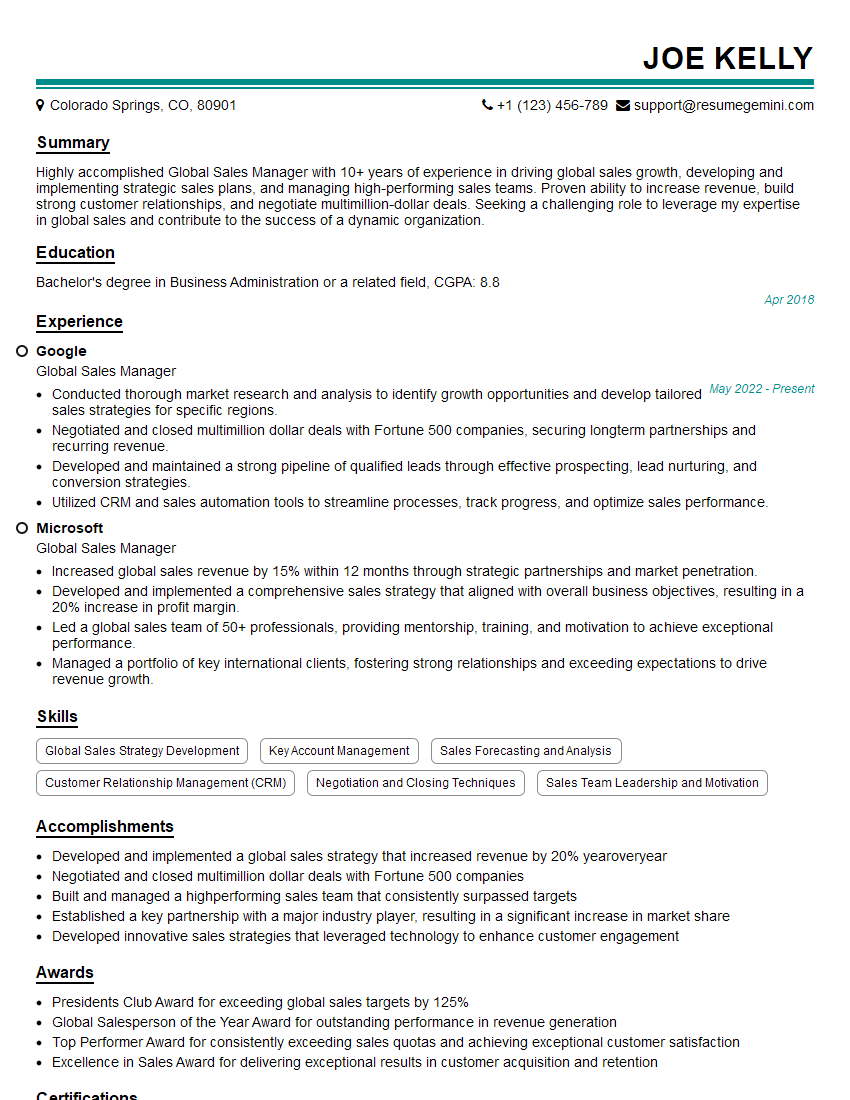
Global Sales Manager Resume Sample
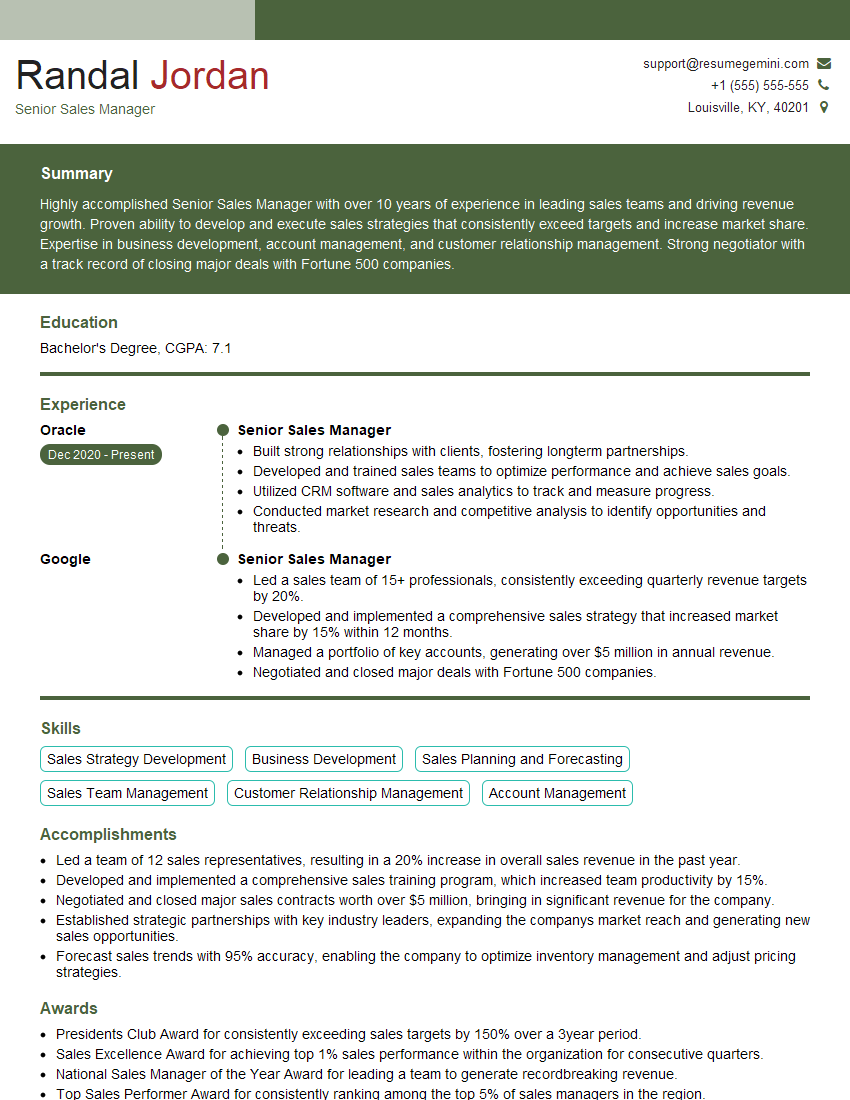
Senior Sales Manager Resume Sample
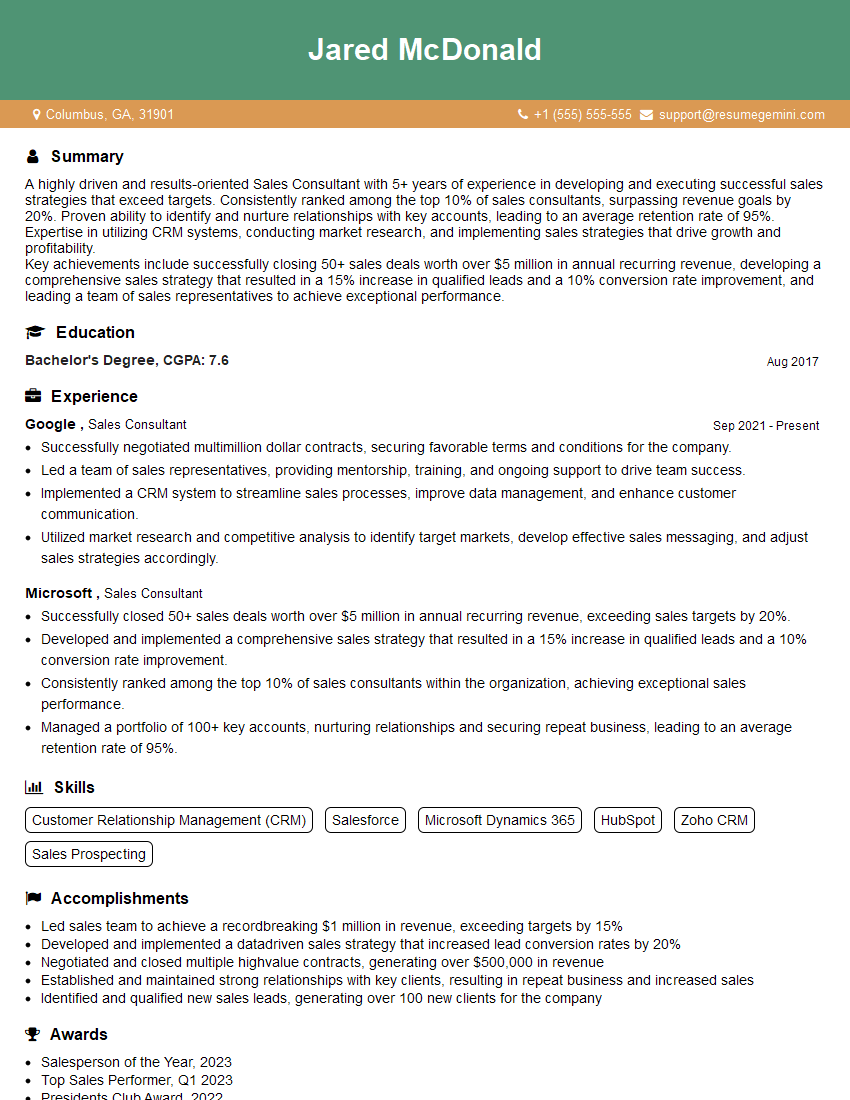
Sales Consultant Resume Sample
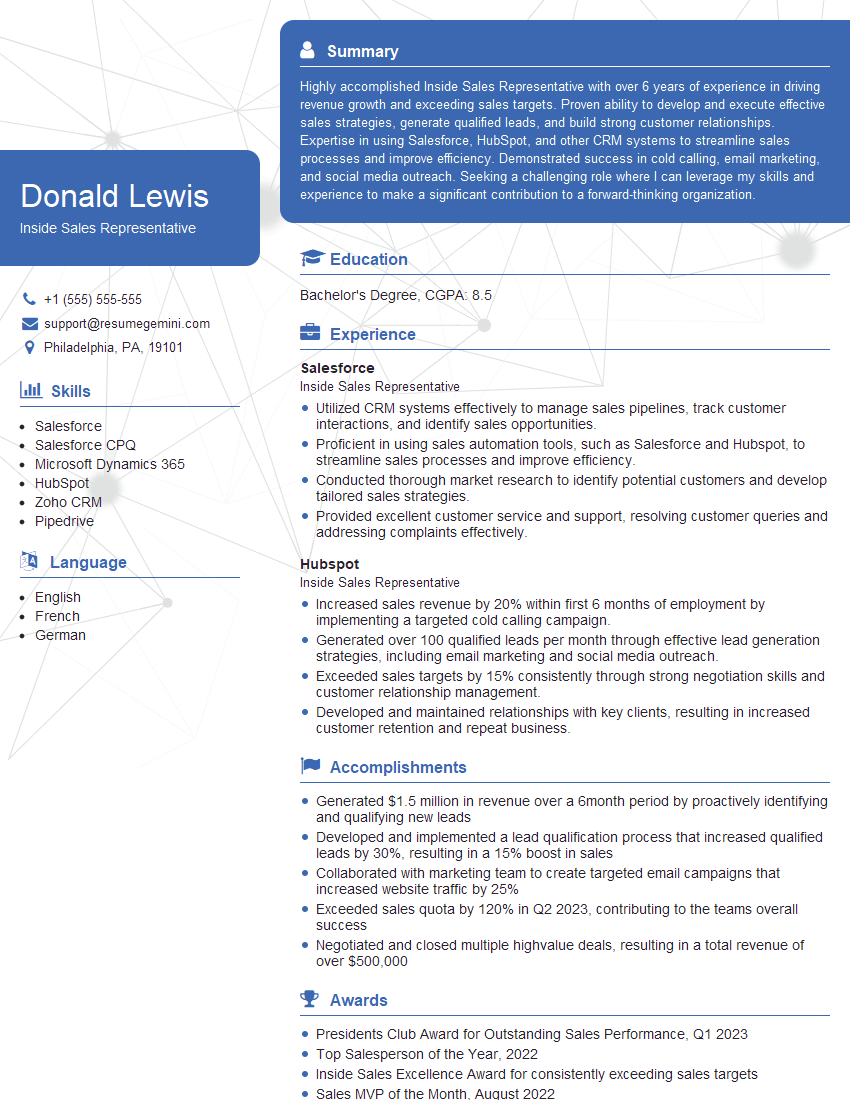
Inside Sales Representative Resume Sample
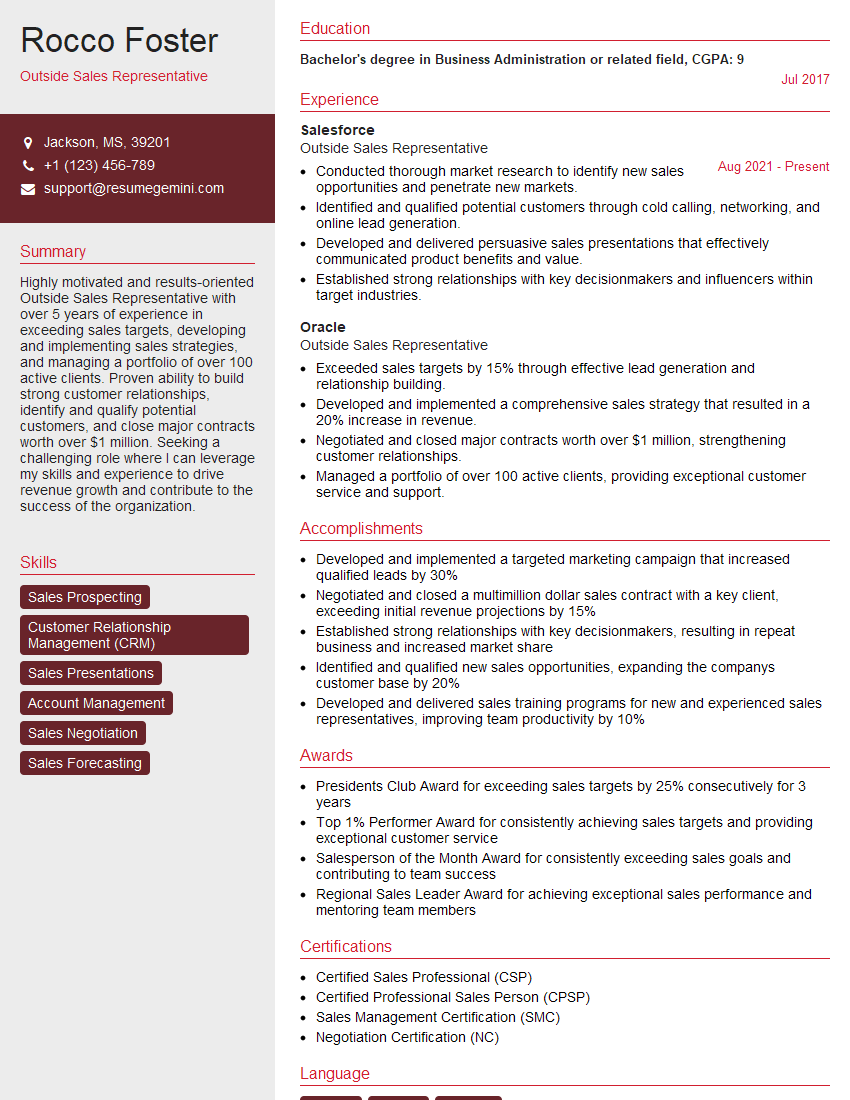
Outside Sales Representative Resume Sample
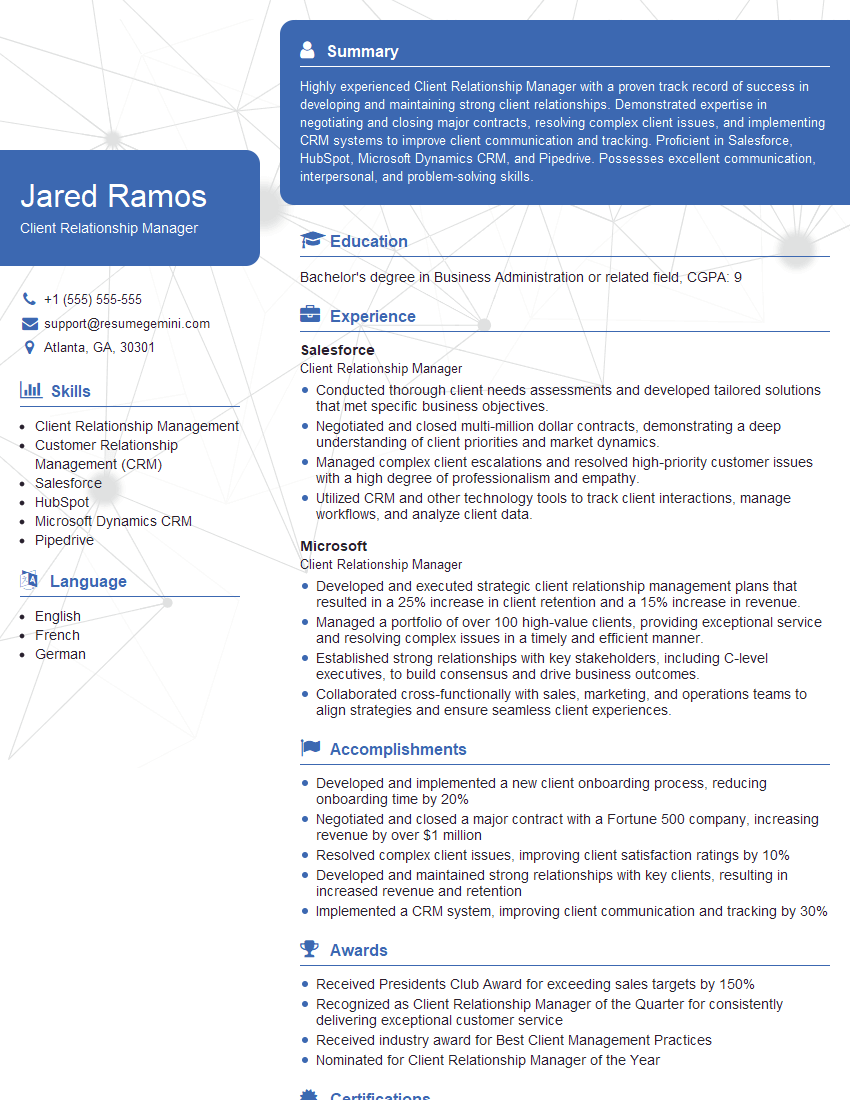
Client Relationship Manager Resume Sample
- Account Executive
- Sales Manager
- Business Development Manager
- National Sales Manager
- Regional Sales Manager
- Sales Director
- Sales Representative
- Territory Sales Manager
- Procurement Manager
- Contract Negotiator
- Sales Trainer
- Key Account Manager
- Sales Engineer
- Global Sales Manager
- Senior Sales Manager
- Sales Consultant
- Inside Sales Representative
- Outside Sales Representative
- Client Relationship Manager
Explore more articles
Users Rating of Our Blogs
Share Your Experience
We value your feedback! Please rate our content and share your thoughts (optional).
What Readers Say About Our Blog
Attention music lovers!
Wow, All the best Sax Summer music !!!
Spotify: https://open.spotify.com/artist/6ShcdIT7rPVVaFEpgZQbUk
Apple Music: https://music.apple.com/fr/artist/jimmy-sax-black/1530501936
YouTube: https://music.youtube.com/browse/VLOLAK5uy_noClmC7abM6YpZsnySxRqt3LoalPf88No
Other Platforms and Free Downloads : https://fanlink.tv/jimmysaxblack
on google : https://www.google.com/search?q=22+AND+22+AND+22
on ChatGPT : https://chat.openai.com?q=who20jlJimmy20Black20Sax20Producer
Get back into the groove with Jimmy sax Black
Best regards,
Jimmy sax Black
www.jimmysaxblack.com
Hi I am a troller at The aquatic interview center and I suddenly went so fast in Roblox and it was gone when I reset.
Hi,
Business owners spend hours every week worrying about their website—or avoiding it because it feels overwhelming.
We’d like to take that off your plate:
$69/month. Everything handled.
Our team will:
Design a custom website—or completely overhaul your current one
Take care of hosting as an option
Handle edits and improvements—up to 60 minutes of work included every month
No setup fees, no annual commitments. Just a site that makes a strong first impression.
Find out if it’s right for you:
https://websolutionsgenius.com/awardwinningwebsites
Hello,
we currently offer a complimentary backlink and URL indexing test for search engine optimization professionals.
You can get complimentary indexing credits to test how link discovery works in practice.
No credit card is required and there is no recurring fee.
You can find details here:
https://wikipedia-backlinks.com/indexing/
Regards
NICE RESPONSE TO Q & A
hi
The aim of this message is regarding an unclaimed deposit of a deceased nationale that bears the same name as you. You are not relate to him as there are millions of people answering the names across around the world. But i will use my position to influence the release of the deposit to you for our mutual benefit.
Respond for full details and how to claim the deposit. This is 100% risk free. Send hello to my email id: [email protected]
Luka Chachibaialuka
Hey interviewgemini.com, just wanted to follow up on my last email.
We just launched Call the Monster, an parenting app that lets you summon friendly ‘monsters’ kids actually listen to.
We’re also running a giveaway for everyone who downloads the app. Since it’s brand new, there aren’t many users yet, which means you’ve got a much better chance of winning some great prizes.
You can check it out here: https://bit.ly/callamonsterapp
Or follow us on Instagram: https://www.instagram.com/callamonsterapp
Thanks,
Ryan
CEO – Call the Monster App
Hey interviewgemini.com, I saw your website and love your approach.
I just want this to look like spam email, but want to share something important to you. We just launched Call the Monster, a parenting app that lets you summon friendly ‘monsters’ kids actually listen to.
Parents are loving it for calming chaos before bedtime. Thought you might want to try it: https://bit.ly/callamonsterapp or just follow our fun monster lore on Instagram: https://www.instagram.com/callamonsterapp
Thanks,
Ryan
CEO – Call A Monster APP
To the interviewgemini.com Owner.
Dear interviewgemini.com Webmaster!
Hi interviewgemini.com Webmaster!
Dear interviewgemini.com Webmaster!
excellent
Hello,
We found issues with your domain’s email setup that may be sending your messages to spam or blocking them completely. InboxShield Mini shows you how to fix it in minutes — no tech skills required.
Scan your domain now for details: https://inboxshield-mini.com/
— Adam @ InboxShield Mini
Reply STOP to unsubscribe
Hi, are you owner of interviewgemini.com? What if I told you I could help you find extra time in your schedule, reconnect with leads you didn’t even realize you missed, and bring in more “I want to work with you” conversations, without increasing your ad spend or hiring a full-time employee?
All with a flexible, budget-friendly service that could easily pay for itself. Sounds good?
Would it be nice to jump on a quick 10-minute call so I can show you exactly how we make this work?
Best,
Hapei
Marketing Director
Hey, I know you’re the owner of interviewgemini.com. I’ll be quick.
Fundraising for your business is tough and time-consuming. We make it easier by guaranteeing two private investor meetings each month, for six months. No demos, no pitch events – just direct introductions to active investors matched to your startup.
If youR17;re raising, this could help you build real momentum. Want me to send more info?
Hi, I represent an SEO company that specialises in getting you AI citations and higher rankings on Google. I’d like to offer you a 100% free SEO audit for your website. Would you be interested?
Hi, I represent an SEO company that specialises in getting you AI citations and higher rankings on Google. I’d like to offer you a 100% free SEO audit for your website. Would you be interested?