Are you ready to stand out in your next interview? Understanding and preparing for Nuclear Emergency Planning interview questions is a game-changer. In this blog, we’ve compiled key questions and expert advice to help you showcase your skills with confidence and precision. Let’s get started on your journey to acing the interview.
Questions Asked in Nuclear Emergency Planning Interview
Q 1. Describe the tiered response system for nuclear emergencies.
Nuclear emergency response relies on a tiered system, escalating the response based on the severity of the incident. Imagine it like a fire department’s response: a small fire gets a single truck, a large fire brings in many more resources. Similarly, a minor leak at a nuclear facility might only require the facility’s internal emergency response team, while a major accident would involve local, state, federal, and potentially even international agencies. These tiers are often pre-defined in emergency plans and outline specific roles and responsibilities for each level.
- Tier 1: Facility-level response. This involves the internal emergency response organization of the nuclear facility, handling minor incidents with their own resources.
- Tier 2: Local/regional response. This brings in local emergency services, such as fire departments, police, and emergency medical services. State agencies may also begin to participate.
- Tier 3: State/federal response. This level involves significant resources from state and federal agencies, including the Federal Emergency Management Agency (FEMA) and the Nuclear Regulatory Commission (NRC). Specialized teams for radiation monitoring and decontamination may be deployed.
- Tier 4: National/international response. This is reserved for exceptionally severe events requiring extensive resources and international cooperation. It involves coordinating efforts with neighboring states and potentially other countries.
Each tier has pre-defined communication protocols, resource mobilization strategies, and decision-making frameworks. This tiered system ensures a coordinated and efficient response, maximizing the effectiveness of resource allocation and minimizing the impact of the emergency.
Q 2. What are the key elements of an effective nuclear emergency communication plan?
Effective nuclear emergency communication is critical for public safety and efficient response. Imagine trying to fight a fire without being able to communicate with firefighters; chaos ensues! The same is true for a nuclear emergency. A comprehensive communication plan must be multi-faceted, incorporating:
- Clear and concise messaging: Avoid technical jargon and use easily understood language. Information should be accurate, timely, and accessible to diverse populations.
- Multiple communication channels: This could include sirens, radio broadcasts, television announcements, text alerts, social media, and public information websites. Redundancy is key to ensure information reaches everyone, even if one channel fails.
- Designated spokespeople: Having trained individuals as the primary communication points helps maintain consistency and accuracy of information.
- Pre-established communication protocols: Clear procedures for information flow between different agencies and levels of government are crucial to avoid confusion and delays.
- Public education and training: Regular public awareness campaigns educate the public on potential hazards and appropriate responses, preparing them for emergencies.
- Feedback mechanisms: Establish systems to gather feedback from the public, helping to identify areas for improvement in future emergency response.
Regular drills and exercises ensure that all stakeholders are familiar with the plan and can effectively execute it during a real emergency.
Q 3. Explain the process of radiological assessment in a nuclear emergency.
Radiological assessment in a nuclear emergency involves determining the extent and nature of radioactive contamination. It’s like a detective investigating a crime scene, but instead of fingerprints, we look for radiation levels. This process typically involves:
- Initial reconnaissance: Rapid assessment of the situation to determine the general area of contamination and the potential severity of the release.
- Environmental sampling: Collecting samples of air, water, soil, and vegetation to measure the levels and types of radioactive materials present. This is often done using specialized radiation detectors.
- Radiation monitoring: Using radiation detectors to map the extent of contamination and identify hot spots with higher levels of radiation. This data is crucial for determining the appropriate protective actions.
- Dosimetry measurements: Assessing the radiation exposure of individuals who may have been exposed. This involves using personal dosimeters or conducting bioassays.
- Data analysis and interpretation: Analyzing the collected data to create a comprehensive picture of the radiological situation, including the spread, type, and intensity of the radiation.
This information is used to inform decision-making regarding protective actions, resource allocation, and the overall emergency response strategy. Accurate and timely radiological assessment is vital for ensuring public safety.
Q 4. How do you determine the appropriate protective actions in a radiological release?
Determining appropriate protective actions in a radiological release depends heavily on the type and amount of radioactive material released, the prevailing meteorological conditions (wind, rain), and the proximity of the population to the source. It’s a balancing act between protecting people and maintaining essential functions of society. The assessment considers:
- Distance from the source: The further away from the source, the lower the radiation exposure. Evacuation may be necessary for those closest to the source.
- Radiation levels: Protective actions, such as sheltering in place, are determined based on the measured radiation levels. Higher levels may warrant more stringent actions.
- Duration of exposure: The longer the exposure, the higher the potential for radiation sickness. Actions are adjusted to minimize exposure time.
- Meteorological conditions: Wind direction and speed, rain, and other factors can influence the spread of contamination, impacting protective actions.
- Type of radioactive material: The characteristics of the radioactive material (half-life, decay products) will determine the duration and type of protective action needed.
Protective actions can range from sheltering in place to evacuation, taking potassium iodide (KI) tablets (in specific cases of Iodine-131 release), and decontamination. The decisions are based on a thorough analysis of the radiological assessment data and an understanding of the potential health consequences.
Q 5. What are the legal and regulatory frameworks governing nuclear emergency response?
The legal and regulatory frameworks governing nuclear emergency response are complex and vary by country. However, some common principles apply globally. Key legal and regulatory aspects include:
- National legislation: Each country has its own laws and regulations related to nuclear safety, emergency preparedness, and liability. These laws usually mandate the development and implementation of emergency plans.
- International agreements: International organizations like the International Atomic Energy Agency (IAEA) set safety standards and guidelines, providing a framework for national regulations. Conventions and treaties address international cooperation in nuclear emergencies.
- Nuclear Regulatory Commission (NRC) in the U.S. (or equivalent in other countries): These bodies oversee the licensing, operation, and safety of nuclear facilities and have significant roles in regulating emergency preparedness.
- Emergency planning requirements: Nuclear facilities are required to develop and regularly test detailed emergency plans, including off-site planning and public communication strategies.
- Liability and compensation: Legal frameworks establish liability for damages caused by nuclear accidents and mechanisms for compensating affected individuals and communities.
These frameworks aim to ensure the safe operation of nuclear facilities, protect public health and safety, and establish clear responsibilities in case of an emergency.
Q 6. What are the different types of radiation and their associated health risks?
Radiation comes in various forms, each with different health risks. Think of it like different types of light – some are visible, some aren’t, and some are more intense than others. The major types are:
- Alpha particles: Relatively heavy, short-range particles. They pose a significant health risk if ingested or inhaled, but are easily stopped by skin or paper.
- Beta particles: Lighter and more penetrating than alpha particles. They can penetrate skin and cause damage to internal organs. Shielding can be achieved with materials like aluminum or plastic.
- Gamma rays: Highly penetrating electromagnetic radiation. They can travel long distances and require substantial shielding, such as lead or concrete, for protection. Exposure to high levels of gamma radiation can cause severe health effects.
- X-rays: Similar to gamma rays but produced by electronic transitions, they also pose significant health risks with high exposure.
- Neutrons: High-energy particles that are highly penetrating and can cause significant damage to living tissue. Special shielding is needed, often water or concrete.
The health risks associated with radiation exposure depend on the type and amount of radiation, the duration of exposure, and the part of the body exposed. High doses can cause acute radiation sickness (ARS), while lower doses over long periods increase the risk of cancer and other health problems.
Q 7. Explain the concept of ALARA (As Low As Reasonably Achievable).
ALARA, or ‘As Low As Reasonably Achievable,’ is a fundamental principle in radiation protection. It’s a guiding philosophy, not a strict numerical target. Imagine you’re hiking and come across a steep cliff; you wouldn’t just jump – you’d find a safe path down. Similarly, ALARA emphasizes minimizing radiation exposure to individuals and the environment. It emphasizes a practical approach – considering the feasibility and cost-effectiveness of reducing radiation exposure. It’s not about achieving zero radiation, but keeping it as low as possible considering practical limits.
Implementation of ALARA involves:
- Time: Minimize the time spent in radiation areas.
- Distance: Increase the distance from the radiation source. Radiation intensity decreases rapidly with distance.
- Shielding: Use appropriate shielding materials to reduce exposure.
The principle of ALARA is used in various stages of nuclear activities, from design and operation of facilities to emergency response. By consistently applying ALARA principles, we can substantially reduce the risks associated with ionizing radiation.
Q 8. Describe the role of different agencies in a nuclear emergency response (e.g., FEMA, NRC).
Responding to a nuclear emergency requires a coordinated effort from multiple agencies, each with specific roles and responsibilities. The Federal Emergency Management Agency (FEMA) plays a crucial coordinating role, providing overall guidance and support to state and local governments. They manage logistics, resource allocation, and communication across various levels. The Nuclear Regulatory Commission (NRC) is the primary federal agency responsible for regulating the civilian nuclear industry and overseeing nuclear power plant safety. In an emergency, they would lead the technical aspects of response, assessing the radiological impact and advising on mitigation strategies. Other key players include the Department of Energy (DOE), responsible for managing the national nuclear stockpile and responding to nuclear weapons-related incidents; the Department of Homeland Security (DHS), which focuses on preparedness and response to all types of threats, including nuclear ones; and state and local emergency management agencies, who are often the first responders and responsible for implementing evacuation plans and providing immediate assistance to the affected population. Each agency’s role is defined by its area of expertise and statutory authority, but effective collaboration is paramount to a successful response.
For example, during a reactor incident, the NRC would provide expert technical advice on containment and radiation control, while FEMA would coordinate resource deployment such as shelter and medical care. State and local agencies would handle immediate evacuations and public communication within their jurisdictions.
Q 9. How do you manage public information and communication during a nuclear emergency?
Managing public information during a nuclear emergency is critical for minimizing panic and ensuring public safety. The strategy needs to be clear, consistent, and timely. This typically involves multiple channels: official government websites and social media accounts, press releases, public service announcements on radio and television, and community outreach programs using trusted local leaders. Information should be delivered in a calm, reassuring manner, avoiding technical jargon and focusing on clear, actionable steps the public should take. Accuracy is paramount; misinformation can be incredibly damaging. A dedicated public information center, usually staffed by experienced communications professionals and subject matter experts, is essential for coordinated messaging. It’s crucial to be transparent, acknowledging uncertainties while providing the best available information. Regular updates are vital to maintain public trust and prevent the spread of rumors.
For instance, informing the public about the levels of radiation, recommended protective actions (sheltering in place, evacuation), and availability of medical care needs to be done accurately and consistently. A dedicated hotline for public inquiries can handle a large volume of calls and provide immediate assistance.
Q 10. What are the key components of a post-incident analysis in a nuclear event?
A post-incident analysis, also known as a post-event review or after-action report, is a crucial process for learning from nuclear events, regardless of scale. It’s a structured review aiming to identify what went well, what could have been improved, and to prevent similar incidents in the future. Key components include: a detailed timeline of events; an assessment of the effectiveness of emergency response plans and procedures; an evaluation of communications, both internally and externally; identification of any equipment failures or deficiencies; a review of protective measures, such as shelter-in-place and evacuation; an analysis of the health consequences, and a thorough investigation of the root causes of the incident. The findings are used to update emergency response plans, training protocols, and regulatory frameworks. The process often involves participation from various agencies, experts, and stakeholders, enabling a comprehensive and objective evaluation.
For example, after the Fukushima Daiichi nuclear accident, a thorough post-incident analysis led to significant improvements in nuclear safety regulations globally, including stricter guidelines for tsunami preparedness and improved emergency response planning.
Q 11. Explain the different types of radiation detection instruments and their applications.
Radiation detection instruments are crucial tools in radiological emergencies. Several types exist, each with specific applications:
- Geiger-Müller counters: These are widely used for detecting beta and gamma radiation. They are relatively inexpensive and portable, making them suitable for initial surveys and screening.
- Scintillation detectors: These detectors are more sensitive than Geiger-Müller counters and can detect various types of radiation, including alpha, beta, and gamma. They are often used for more precise measurements and environmental monitoring.
- Ionization chambers: These are used for measuring higher levels of radiation, typically in controlled environments like nuclear power plants. They offer a wider dynamic range compared to Geiger-Müller counters.
- NaI(Tl) detectors: These are used in spectroscopy, allowing identification of specific radioactive isotopes based on their energy signature. They are often utilized in environmental monitoring to determine the nature of radioactive contamination.
The choice of instrument depends on the specific situation. For example, a Geiger-Müller counter might be sufficient for a quick initial survey of a potentially contaminated area, while a scintillation detector or NaI(Tl) detector would be used for more detailed measurements or identification of specific isotopes.
Q 12. Describe the different types of personal protective equipment (PPE) used in radiological emergencies.
Personal Protective Equipment (PPE) in radiological emergencies aims to minimize exposure to ionizing radiation and radioactive contamination. The type of PPE needed depends on the nature and level of the radiological hazard. Common types include:
- Respirators: These protect against inhalation of radioactive particles or aerosols. The type of respirator (e.g., N95, HEPA filter) will depend on the specific hazard.
- Protective clothing: This can range from simple coveralls to more specialized suits, often made of lead or other radiation-shielding materials. These provide protection against external radiation and contamination.
- Gloves: Different types of gloves are used depending on the task, including nitrile, latex, or lead-lined gloves to prevent contamination.
- Protective footwear: Boots, often made of rubber or other impervious materials, provide protection against contamination.
- Eye protection: Goggles or face shields protect the eyes from radiation and contamination.
The selection and use of PPE must comply with relevant regulations and safety procedures. Training on proper donning and doffing of PPE is essential to prevent accidental contamination.
Q 13. What is the importance of pre-emergency planning and exercises?
Pre-emergency planning and exercises are absolutely crucial for effective response to nuclear emergencies. These preparations establish clear roles and responsibilities, communication protocols, and procedures for handling various scenarios. They ensure that agencies and individuals know their roles, facilitating a coordinated and timely response. Exercises, including drills and simulations, allow for testing and refining of emergency plans, identifying weaknesses and areas for improvement. They also train personnel on the use of equipment, communication systems, and procedures under realistic conditions. Regular participation in these exercises is vital to maintain proficiency and readiness. It’s not just about memorizing a plan, but building muscle memory and a culture of preparedness.
For example, regular exercises involving multiple agencies and simulating a reactor accident scenario help identify potential communication breakdowns, logistical issues, or gaps in equipment or training. The lessons learned from these exercises directly improve the effectiveness of the emergency response.
Q 14. How do you manage the evacuation of a population in a nuclear emergency?
Managing population evacuation in a nuclear emergency requires careful planning and coordination. Pre-determined evacuation routes and zones, clearly communicated to the public, are critical. The evacuation plan must consider factors such as population density, available transportation, and potential obstacles. Clear communication channels, including public announcements, warning systems, and designated assembly points, are crucial to ensure efficient and orderly movement. Support systems, including transportation, shelter, and food and water supplies, must be in place to assist evacuees. The use of technology such as GPS tracking and emergency alert systems can enhance the effectiveness of the evacuation. The process must also consider the needs of vulnerable populations, such as elderly individuals, people with disabilities, and those with limited mobility.
In a real-world scenario, the evacuation plan might involve a phased approach, starting with those closest to the source of radiation, followed by wider areas as needed. Regular communication with evacuees would provide crucial updates, reducing anxieties and ensuring they have the necessary information to stay safe.
Q 15. What are the criteria for declaring a nuclear emergency?
Declaring a nuclear emergency is a serious decision based on a combination of factors, primarily the potential for significant radiological harm to the public. It isn’t triggered by a minor incident. Criteria typically include:
- Radiation release exceeding pre-defined thresholds: This involves monitoring radiation levels at various points, comparing them to established safety limits, and considering the potential for further release. For example, a significant release of radioactive material exceeding background radiation by several orders of magnitude would trigger immediate action.
- Potential for widespread contamination: The predicted spread of radioactive material, factoring in wind direction, precipitation, and terrain, is critically assessed. If a large population center is at risk of significant exposure, this is a major trigger.
- Confirmed or suspected damage to nuclear facilities: Physical damage to a reactor core or spent fuel storage area, leading to a breach of containment, would automatically trigger an emergency declaration.
- Confirmed or suspected sabotage or act of terrorism: Deliberate acts against nuclear facilities carry the potential for catastrophic consequences and warrant immediate emergency response.
The specific thresholds and decision-making process are defined in national and international emergency response plans. These plans often involve multiple agencies and levels of government, requiring a collaborative assessment of the situation before a formal declaration.
Career Expert Tips:
- Ace those interviews! Prepare effectively by reviewing the Top 50 Most Common Interview Questions on ResumeGemini.
- Navigate your job search with confidence! Explore a wide range of Career Tips on ResumeGemini. Learn about common challenges and recommendations to overcome them.
- Craft the perfect resume! Master the Art of Resume Writing with ResumeGemini’s guide. Showcase your unique qualifications and achievements effectively.
- Don’t miss out on holiday savings! Build your dream resume with ResumeGemini’s ATS optimized templates.
Q 16. Explain the concept of dose reconstruction in a radiological emergency.
Dose reconstruction in a radiological emergency is the process of estimating the radiation dose received by individuals exposed to ionizing radiation from a nuclear accident. It’s crucial for determining the need for medical intervention, assessing long-term health risks, and providing accurate information to the affected population. This isn’t a simple measurement; it involves gathering various data points and employing sophisticated modeling.
The process involves:
- Gathering data: This includes environmental monitoring data (soil, air, water samples), personal dosimeter readings (if available), information on the individuals’ location and duration of exposure, and medical records.
- Developing a model: Sophisticated computer models are used to simulate the dispersion of radioactive materials based on meteorological data, the type and quantity of released radionuclides, and the characteristics of the affected area.
- Calculating dose: The model estimates the radiation dose received by individuals based on their exposure pathways (e.g., inhalation, ingestion, external exposure). This involves accounting for different radionuclides and their decay rates.
- Uncertainty analysis: Dose reconstruction is inherently uncertain because of the inherent variability of environmental factors and the limitations of the available data. A thorough uncertainty analysis is performed to assess the reliability of the estimated dose.
Imagine a scenario where a nuclear power plant accident releases radioactive iodine. Dose reconstruction would involve analyzing iodine concentration in air samples at different locations, combining this with information on wind patterns and the time individuals spent in the affected areas to estimate their inhalation dose. The results are crucial for appropriate medical treatment, such as administering potassium iodide.
Q 17. What are the different types of contamination control measures?
Contamination control measures aim to prevent the spread of radioactive material and minimize exposure to people and the environment. These measures can be broadly classified into:
- Exclusion Zone Establishment and Control: This involves restricting access to heavily contaminated areas, implementing security checkpoints, and monitoring radiation levels at the perimeter.
- Decontamination: This involves removing radioactive material from surfaces and objects. Techniques include washing, scrubbing, chemical treatment, and in some cases, more extensive physical removal of contaminated material.
- Protective Measures: This encompasses personal protective equipment (PPE) such as respirators, protective clothing, and dosimeters for workers involved in cleanup and emergency response, limiting potential exposure.
- Waste Management: Proper handling, packaging, and disposal of contaminated materials are critical to prevent further spread and environmental impact. This includes defining storage locations and transportation methods.
- Environmental Remediation: This can involve extensive efforts like soil removal, surface sealing, and phytoremediation (using plants to absorb contaminants).
For instance, after the Chernobyl accident, establishing an exclusion zone was crucial to limit the immediate spread of contamination. Decontamination efforts were also undertaken, but the scale of the disaster highlighted the complexities of large-scale environmental remediation.
Q 18. How do you mitigate the impact of a nuclear accident on the environment?
Mitigating the environmental impact of a nuclear accident requires a multifaceted approach focusing on containing the spread of radioactive materials and promoting long-term recovery.
- Containment: Immediate efforts focus on containing the release of radioactive material from the source. This may involve deploying barriers, suppressing fires, and stabilizing damaged structures. For example, the use of helicopters to drop sand and boron to suppress the fire at Chernobyl is a prime example.
- Environmental Monitoring: Continuous monitoring of air, water, and soil samples provides crucial information for assessing the extent of contamination and tracking the spread of radioactive materials. This informs decision-making on further mitigation strategies.
- Remediation: Depending on the extent of contamination, remediation efforts may include soil removal, decontamination of water sources, and phytoremediation. These techniques aim to reduce long-term risks to the environment.
- Long-Term Monitoring: Even after immediate remediation efforts, long-term monitoring is crucial to assess the long-term environmental impacts and any potential delayed effects. This data is critical for future land-use planning and risk assessment.
The scale of the environmental impact varies drastically with the nature of the accident. A small, localized release might require limited remediation, while a major accident like Chernobyl necessitates a much broader and more long-term approach.
Q 19. What are the key performance indicators (KPIs) for measuring the effectiveness of a nuclear emergency response plan?
Key Performance Indicators (KPIs) for evaluating a nuclear emergency response plan’s effectiveness are crucial for continuous improvement. These KPIs should cover various aspects of the response.
- Timeliness of response: How quickly were emergency services deployed and containment measures initiated? Measuring the time taken from initial detection to implementation of key actions.
- Effectiveness of containment and mitigation: Did the measures taken effectively limit the spread of radioactive materials and minimize public exposure? This can be assessed via radiation monitoring data.
- Accuracy of information dissemination: How effectively was information communicated to the public and emergency responders? This often involves tracking public understanding and levels of anxiety.
- Effectiveness of evacuation and sheltering: If evacuation was necessary, how efficiently was it conducted and how well-protected were those who sheltered in place? KPIs here could be evacuation times and the number of people successfully evacuated.
- Number of casualties: A critical KPI reflecting the effectiveness of the response in minimizing health consequences, although this may not be directly controllable by all response measures.
- Resource utilization: How efficiently were resources (personnel, equipment, funding) utilized? This aspect helps to optimize resource allocation in future responses.
These KPIs are often tracked using a combination of quantitative data (e.g., radiation levels, number of people evacuated) and qualitative data (e.g., surveys, post-incident assessments).
Q 20. Describe your experience with emergency response exercises and drills.
Throughout my career, I have participated in numerous emergency response exercises and drills, both at the national and international levels. These exercises are crucial for testing the readiness and effectiveness of emergency response plans.
My experience includes:
- Full-scale simulations: These involve simulating a realistic nuclear accident scenario, including deployment of emergency services, public communication, and the execution of various mitigation strategies. These exercises are invaluable for identifying weaknesses in plans and coordination between agencies.
- Tabletop exercises: These involve a smaller group of stakeholders discussing a hypothetical scenario and focusing on decision-making processes and communication protocols. They are a cost-effective means of testing different scenarios and strategies.
- Functional exercises: These focus on specific aspects of the emergency response, such as decontamination procedures or the operation of monitoring equipment. They provide a more detailed evaluation of specific processes.
From these exercises, I have gained valuable insights into the complexities of coordinating a large-scale emergency response, the importance of clear communication, and the need for robust contingency plans. The lessons learned from these drills directly improve the effectiveness of real-world responses.
Q 21. Explain the role of decontamination in a nuclear emergency.
Decontamination in a nuclear emergency plays a vital role in reducing radiation exposure and preventing the spread of radioactive materials. It’s a crucial step in protecting both people and the environment.
The goals of decontamination are:
- Reduce radiation levels on individuals: This minimizes the internal and external radiation dose to individuals, reducing the risk of acute radiation sickness and long-term health effects.
- Reduce environmental contamination: This prevents the further spread of radioactive materials to other areas, limiting the extent of the contamination and protecting ecosystems.
- Enable safe access to areas: Decontamination allows for safe access to areas that were previously uninhabitable, enabling rescue, recovery, and long-term remediation efforts.
Decontamination methods vary depending on the type of contamination and the surface involved. They range from simple washing with water and detergent to more complex procedures like chemical decontamination or even the removal of contaminated soil or building materials. The process often involves careful monitoring of radiation levels to evaluate its effectiveness.
For example, following the Fukushima Daiichi nuclear disaster, decontamination efforts were extensive, ranging from simple washing of vehicles to more complex techniques for cleaning contaminated buildings and removing topsoil.
Q 22. How do you manage the psychological impact of a nuclear emergency on the affected population?
Managing the psychological impact of a nuclear emergency requires a multi-faceted approach focusing on pre-event preparedness, immediate response, and long-term recovery. Pre-event preparedness includes public education campaigns to familiarize the population with potential scenarios and coping mechanisms. This might involve distributing pamphlets explaining the different phases of response, outlining expected actions, and providing contact information for mental health support.
In the immediate aftermath, establishing clear and consistent communication is crucial. This involves regular updates on the situation, providing accurate information about potential risks and safety measures. Mobile phone alerts, radio broadcasts, and strategically placed public announcements are vital for disseminating information rapidly and widely. Psychological first aid teams comprised of trained professionals should be deployed to provide immediate support to traumatized individuals, and community centers converted into temporary shelters could provide a safe space for people to gather and receive assistance.
Long-term recovery necessitates providing ongoing mental health support, including counseling services, support groups, and community-based initiatives aimed at fostering resilience. We must also address the potential for long-term psychological impacts such as PTSD, and ensure adequate resources are available for treating these conditions. The success of this process hinges on establishing trust and transparency – open communication helps mitigate misinformation and anxiety, fostering a sense of community and shared responsibility.
Q 23. What are the ethical considerations in nuclear emergency management?
Ethical considerations in nuclear emergency management are paramount and revolve around several key principles: justice, beneficence, non-maleficence, and respect for persons. Justice demands equitable distribution of resources and protection, regardless of socioeconomic status or geographic location. Beneficence emphasizes prioritizing actions that maximize overall benefit and minimize harm. Non-maleficence necessitates avoiding actions that could cause unnecessary harm or suffering. Respect for persons mandates protecting individual autonomy and dignity, especially the rights of the vulnerable.
A significant ethical challenge arises in the allocation of scarce resources, like medical supplies or evacuation transportation, during a large-scale emergency. Establishing transparent and fair allocation criteria is vital to maintain public trust and avoid accusations of discrimination. Furthermore, the decision to evacuate or shelter-in-place must consider the potential risks and benefits for various population subgroups, such as the elderly, individuals with disabilities, and those with pre-existing health conditions. Ethical frameworks should guide these decisions, ensuring transparency and accountability throughout the process.
Transparency and open communication about risks and uncertainties are essential for maintaining public trust. Suppressed information or misleading statements can severely damage public confidence and hinder effective emergency response. Independent review mechanisms can help ensure accountability and promote ethical conduct within the emergency management system.
Q 24. How do you ensure the security of nuclear materials during an emergency?
Ensuring the security of nuclear materials during an emergency is critical to preventing potential acts of sabotage, theft, or accidental release. This involves a layered security approach that encompasses physical protection, cybersecurity, and robust emergency response protocols. Physical protection measures include hardened facilities, surveillance systems, armed guards, and access control systems. Regular security assessments are vital to identify vulnerabilities and implement necessary improvements. Cybersecurity measures aim to protect against cyberattacks that could potentially compromise control systems or critical infrastructure.
Emergency response plans should include detailed procedures for securing nuclear materials in various emergency scenarios, ranging from natural disasters to terrorist attacks. This includes procedures for relocating or securing materials, establishing emergency communication channels, and coordinating actions with law enforcement and other emergency responders. Regular training exercises are essential to ensure personnel are adequately prepared to respond to various emergency situations and understand their roles and responsibilities in protecting nuclear materials. These drills should simulate various scenarios and test the effectiveness of security measures and communication systems.
International collaboration is crucial in strengthening nuclear security, particularly in the context of global emergencies. Information sharing and best practice exchange among nations can help improve national-level security measures and enhance overall global nuclear security.
Q 25. What are the challenges in coordinating emergency response across different jurisdictions?
Coordinating emergency response across different jurisdictions presents significant challenges due to varying regulations, communication systems, and resource allocation priorities. Differences in emergency response plans, protocols, and training standards can complicate inter-agency cooperation. Jurisdictional boundaries may hinder efficient resource allocation and deployment, delaying critical assistance to affected areas. Communication barriers due to incompatible technologies or communication systems can further impede coordination efforts.
Establishing clear inter-jurisdictional agreements and protocols before an emergency is crucial. These agreements should outline responsibilities, communication channels, resource allocation mechanisms, and command structures. Regular joint training exercises and simulations are necessary to ensure smooth inter-agency coordination during real-world events. These exercises help identify potential communication and coordination bottlenecks and facilitate the development of effective strategies for addressing them.
Developing a common operating picture across jurisdictions is critical for effective coordination. This involves sharing real-time information, such as location of incidents, resource availability, and deployment status, through a centralized information management system. Establishing a unified command structure during an emergency helps streamline decision-making and ensures consistent messaging to the public. This structure should ensure clear lines of authority and responsibility, promoting accountability and effective collaboration.
Q 26. How do you ensure the effectiveness of emergency communication during a crisis?
Effective emergency communication during a crisis is paramount for saving lives, minimizing damage, and maintaining public order. A robust communication system should encompass multiple channels to ensure message delivery even in the event of widespread infrastructure damage. This might involve a combination of public alert systems (like sirens and cell phone alerts), radio broadcasts, social media, and community outreach programs. The system must be designed to reach diverse populations, including those with disabilities or limited access to technology.
Simplicity and clarity are crucial in crafting emergency messages. Information should be concise, easy to understand, and free of technical jargon. Messages should clearly outline the nature of the emergency, potential risks, recommended actions, and available resources. Consistency in messaging is critical to avoid confusion and prevent the spread of misinformation. Multiple rehearsals and drills are essential to ensure the communication system functions effectively and efficiently under pressure. This includes testing the reliability of various communication channels and evaluating the effectiveness of messaging strategies.
The system should also include mechanisms for receiving feedback from the public to ensure information is accurate and relevant. Two-way communication channels allow authorities to gather situational awareness and adjust response efforts accordingly. This continuous feedback loop allows for dynamic adjustments to messaging and resource allocation, ensuring the system remains responsive to the evolving situation.
Q 27. Describe your experience with the implementation and maintenance of a nuclear emergency response plan.
My experience with implementing and maintaining a nuclear emergency response plan involves a multifaceted approach encompassing planning, training, exercising, and continuous improvement. It begins with conducting a thorough risk assessment to identify potential nuclear accidents or radiological incidents. This includes analyzing the likelihood and consequences of different scenarios and mapping potential vulnerabilities. Based on this risk assessment, the plan outlines roles and responsibilities for all stakeholders, from government agencies to first responders to the general public.
The plan should detail procedures for various emergency phases: prevention, preparedness, response, recovery, and mitigation. Clear communication protocols are crucial, including establishing designated communication channels and procedures for disseminating information to the public and stakeholders. Comprehensive training programs for emergency responders and the public are vital for ensuring a smooth and effective response. This includes classroom training, realistic simulations, and regular drills to practice response procedures. Regular exercises – both tabletop and full-scale – are conducted to test the plan’s effectiveness and identify areas for improvement. This allows for fine-tuning and updating the plan to reflect changes in technology, threat scenarios, and best practices.
Maintaining the plan is an ongoing process requiring regular updates and revisions to address new developments and lessons learned from previous exercises or real-world events. This iterative process ensures that the plan remains relevant and effective, providing a reliable framework for managing a nuclear emergency effectively and minimizing the potential impact on the affected population.
Key Topics to Learn for Nuclear Emergency Planning Interview
- Emergency Response Procedures: Understanding and applying established protocols for various nuclear incidents, including pre-event planning, immediate response, and recovery phases.
- Radiation Protection and Safety: Knowledge of radiation sources, effects, and protective measures; practical application in assessing and mitigating radiation risks during emergencies.
- Emergency Communication and Public Information: Developing and executing effective communication strategies to inform and reassure the public during a nuclear emergency; understanding crisis communication techniques.
- Consequence Management: Analyzing potential impacts of a nuclear event, including health effects, environmental contamination, and societal disruption; planning for effective mitigation and recovery.
- Risk Assessment and Mitigation: Identifying and evaluating potential nuclear risks, developing and implementing mitigation strategies to minimize the likelihood and impact of emergencies.
- International Cooperation and Regulations: Familiarity with international treaties, conventions, and best practices related to nuclear safety and emergency response.
- Technical Aspects of Nuclear Facilities: Basic understanding of the design, operation, and safety systems of nuclear power plants or other nuclear facilities.
- Exercise Planning and Evaluation: Experience in planning, conducting, and evaluating drills and exercises designed to test emergency response capabilities.
- Data Analysis and Decision-Making under Pressure: Utilizing data from various sources to inform decision-making during a dynamic and stressful emergency situation.
- Ethical Considerations: Understanding and applying ethical principles related to decision-making in high-stakes nuclear emergency scenarios.
Next Steps
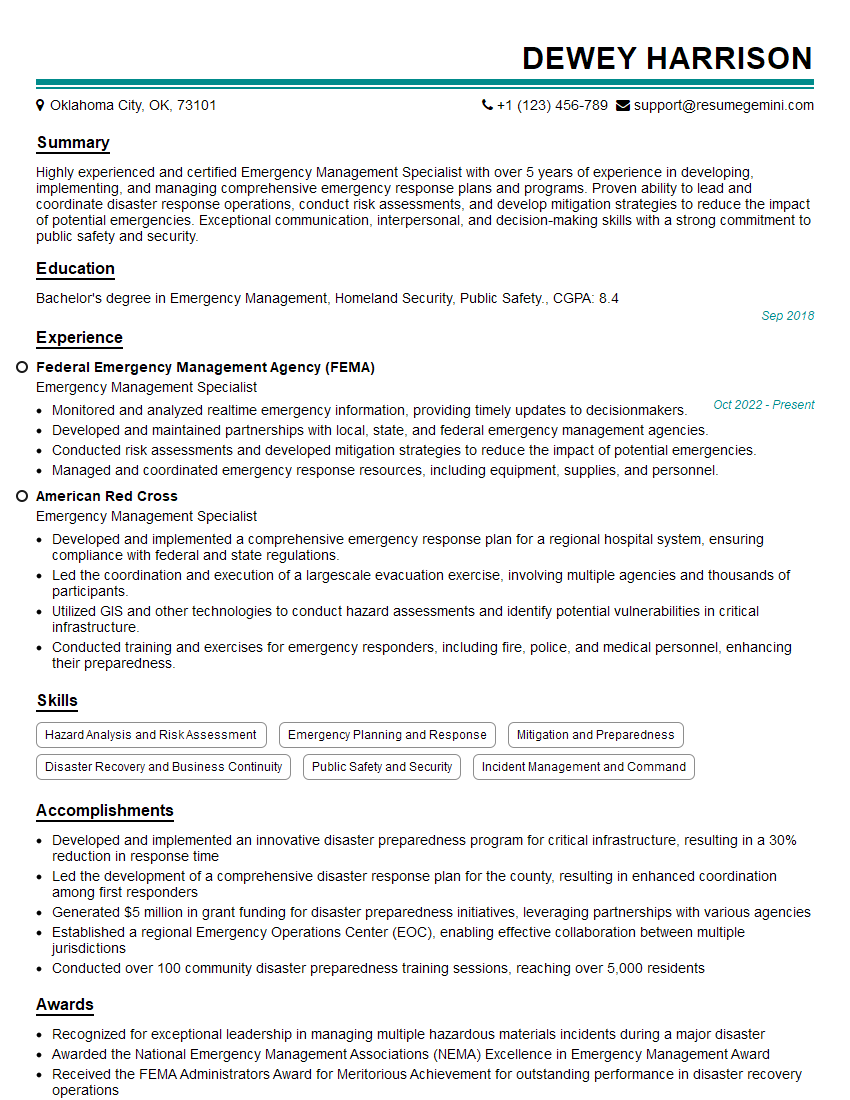
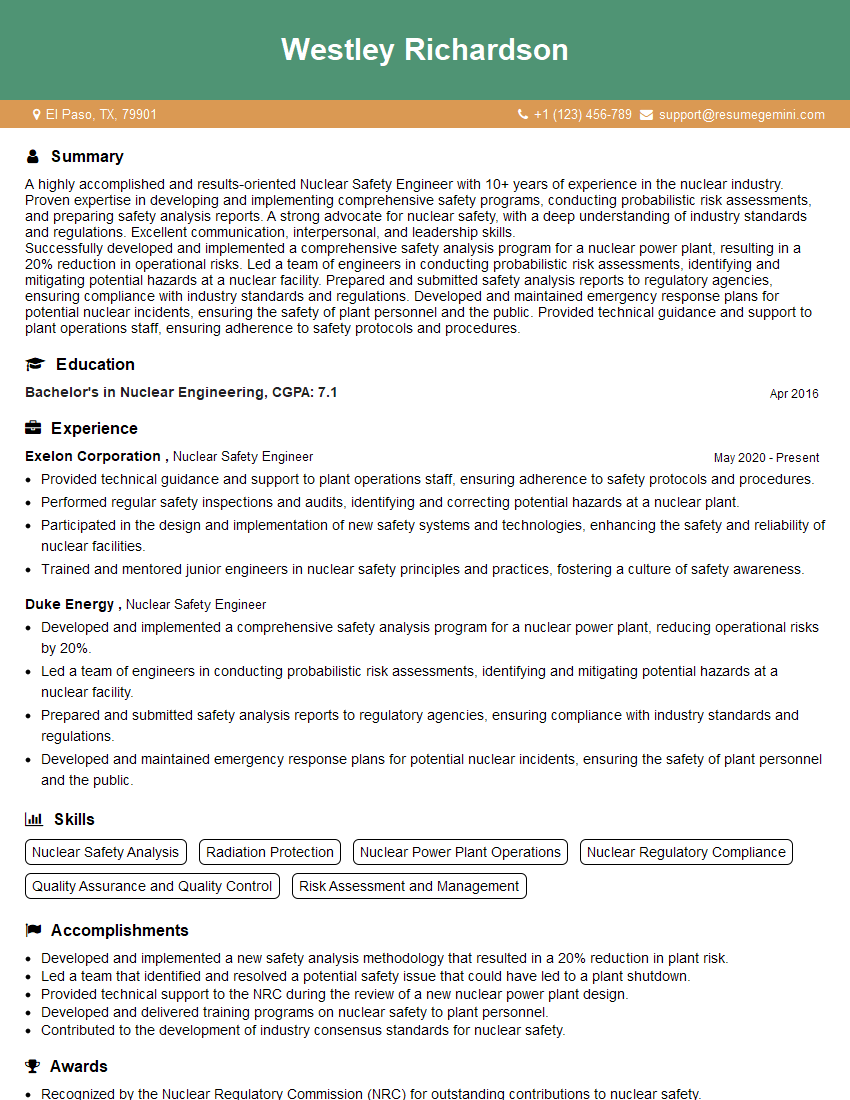
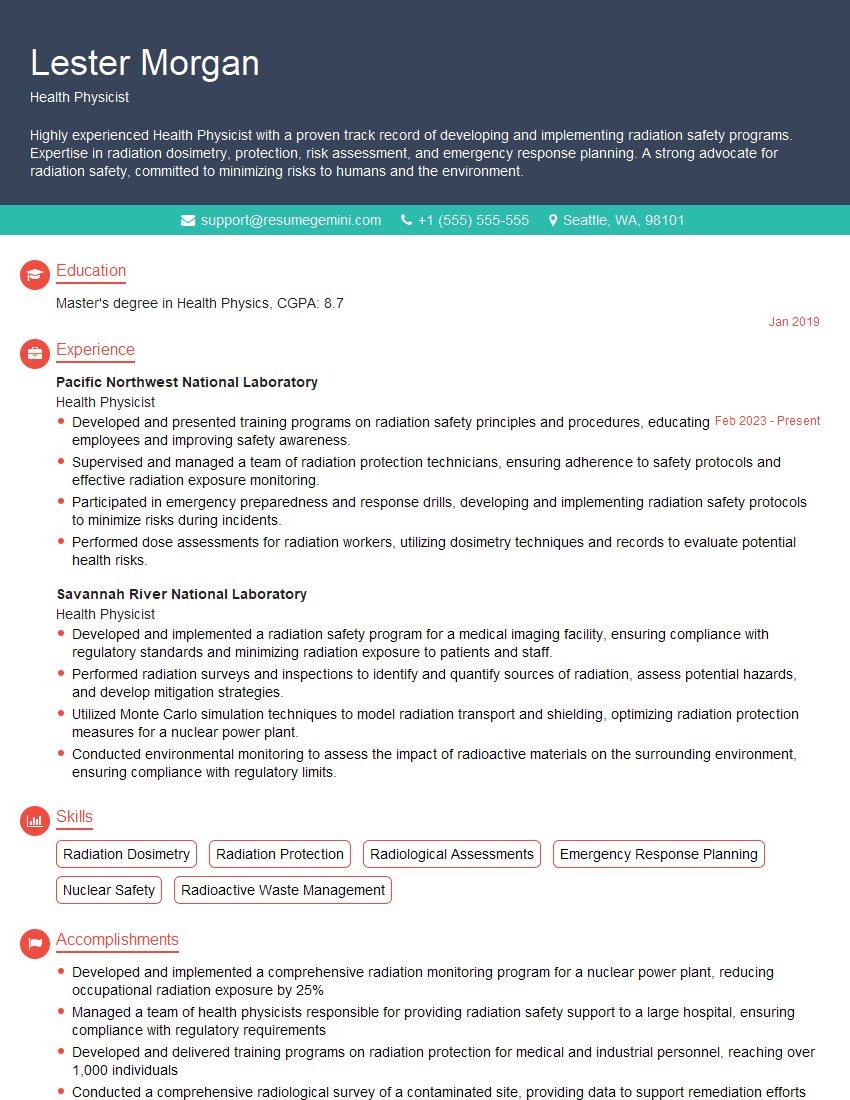
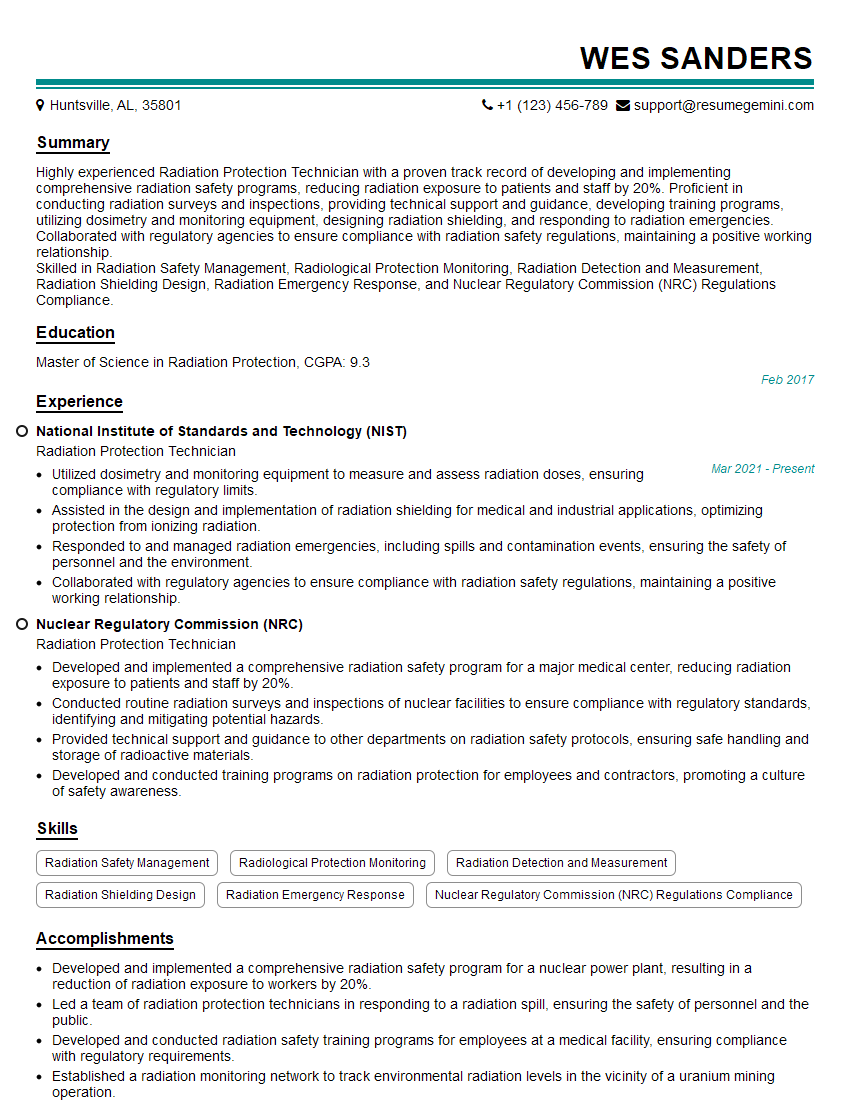
Mastering Nuclear Emergency Planning is crucial for a rewarding and impactful career, opening doors to leadership roles and opportunities to contribute to global safety. A well-crafted resume is your key to unlocking these opportunities. Creating an ATS-friendly resume that highlights your skills and experience in this specialized field is essential. ResumeGemini is a trusted resource to help you build a professional and impactful resume, ensuring your qualifications stand out to potential employers. Examples of resumes tailored to Nuclear Emergency Planning are available to help guide your resume creation process.
Explore more articles
Users Rating of Our Blogs
Share Your Experience
We value your feedback! Please rate our content and share your thoughts (optional).
What Readers Say About Our Blog
Attention music lovers!
Wow, All the best Sax Summer music !!!
Spotify: https://open.spotify.com/artist/6ShcdIT7rPVVaFEpgZQbUk
Apple Music: https://music.apple.com/fr/artist/jimmy-sax-black/1530501936
YouTube: https://music.youtube.com/browse/VLOLAK5uy_noClmC7abM6YpZsnySxRqt3LoalPf88No
Other Platforms and Free Downloads : https://fanlink.tv/jimmysaxblack
on google : https://www.google.com/search?q=22+AND+22+AND+22
on ChatGPT : https://chat.openai.com?q=who20jlJimmy20Black20Sax20Producer
Get back into the groove with Jimmy sax Black
Best regards,
Jimmy sax Black
www.jimmysaxblack.com
Hi I am a troller at The aquatic interview center and I suddenly went so fast in Roblox and it was gone when I reset.
Hi,
Business owners spend hours every week worrying about their website—or avoiding it because it feels overwhelming.
We’d like to take that off your plate:
$69/month. Everything handled.
Our team will:
Design a custom website—or completely overhaul your current one
Take care of hosting as an option
Handle edits and improvements—up to 60 minutes of work included every month
No setup fees, no annual commitments. Just a site that makes a strong first impression.
Find out if it’s right for you:
https://websolutionsgenius.com/awardwinningwebsites
Hello,
we currently offer a complimentary backlink and URL indexing test for search engine optimization professionals.
You can get complimentary indexing credits to test how link discovery works in practice.
No credit card is required and there is no recurring fee.
You can find details here:
https://wikipedia-backlinks.com/indexing/
Regards
NICE RESPONSE TO Q & A
hi
The aim of this message is regarding an unclaimed deposit of a deceased nationale that bears the same name as you. You are not relate to him as there are millions of people answering the names across around the world. But i will use my position to influence the release of the deposit to you for our mutual benefit.
Respond for full details and how to claim the deposit. This is 100% risk free. Send hello to my email id: lukachachibaialuka@gmail.com
Luka Chachibaialuka
Hey interviewgemini.com, just wanted to follow up on my last email.
We just launched Call the Monster, an parenting app that lets you summon friendly ‘monsters’ kids actually listen to.
We’re also running a giveaway for everyone who downloads the app. Since it’s brand new, there aren’t many users yet, which means you’ve got a much better chance of winning some great prizes.
You can check it out here: https://bit.ly/callamonsterapp
Or follow us on Instagram: https://www.instagram.com/callamonsterapp
Thanks,
Ryan
CEO – Call the Monster App
Hey interviewgemini.com, I saw your website and love your approach.
I just want this to look like spam email, but want to share something important to you. We just launched Call the Monster, a parenting app that lets you summon friendly ‘monsters’ kids actually listen to.
Parents are loving it for calming chaos before bedtime. Thought you might want to try it: https://bit.ly/callamonsterapp or just follow our fun monster lore on Instagram: https://www.instagram.com/callamonsterapp
Thanks,
Ryan
CEO – Call A Monster APP
To the interviewgemini.com Owner.
Dear interviewgemini.com Webmaster!
Hi interviewgemini.com Webmaster!
Dear interviewgemini.com Webmaster!
excellent
Hello,
We found issues with your domain’s email setup that may be sending your messages to spam or blocking them completely. InboxShield Mini shows you how to fix it in minutes — no tech skills required.
Scan your domain now for details: https://inboxshield-mini.com/
— Adam @ InboxShield Mini
support@inboxshield-mini.com
Reply STOP to unsubscribe
Hi, are you owner of interviewgemini.com? What if I told you I could help you find extra time in your schedule, reconnect with leads you didn’t even realize you missed, and bring in more “I want to work with you” conversations, without increasing your ad spend or hiring a full-time employee?
All with a flexible, budget-friendly service that could easily pay for itself. Sounds good?
Would it be nice to jump on a quick 10-minute call so I can show you exactly how we make this work?
Best,
Hapei
Marketing Director
Hey, I know you’re the owner of interviewgemini.com. I’ll be quick.
Fundraising for your business is tough and time-consuming. We make it easier by guaranteeing two private investor meetings each month, for six months. No demos, no pitch events – just direct introductions to active investors matched to your startup.
If youR17;re raising, this could help you build real momentum. Want me to send more info?
Hi, I represent an SEO company that specialises in getting you AI citations and higher rankings on Google. I’d like to offer you a 100% free SEO audit for your website. Would you be interested?
Hi, I represent an SEO company that specialises in getting you AI citations and higher rankings on Google. I’d like to offer you a 100% free SEO audit for your website. Would you be interested?