Cracking a skill-specific interview, like one for Nuclear Regulatory Commission (NRC) Compliance, requires understanding the nuances of the role. In this blog, we present the questions you’re most likely to encounter, along with insights into how to answer them effectively. Let’s ensure you’re ready to make a strong impression.
Questions Asked in Nuclear Regulatory Commission (NRC) Compliance Interview
Q 1. Explain the significance of 10 CFR Part 50 in NRC regulations.
10 CFR Part 50, “Domestic Licensing of Production and Utilization Facilities,” is the cornerstone of NRC regulations for nuclear power plants in the United States. It establishes the licensing requirements, technical specifications, and operational standards for the design, construction, operation, and decommissioning of these facilities. Think of it as the rulebook for nuclear power plant safety. It covers everything from the initial design approval and construction permits to the ongoing operational requirements and eventual plant shutdown. Without adherence to Part 50, a nuclear power plant simply cannot operate legally in the US.
Part 50 is incredibly detailed, addressing various aspects like:
- Reactor design and safety analysis: Ensuring the plant can withstand various accidents and maintain safety.
- Emergency planning: Outlining procedures for handling various emergencies.
- Operator training and qualifications: Guaranteeing highly trained personnel operate the plant.
- Radiation protection: Minimizing radiation exposure to workers and the public.
- Quality assurance: Implementing rigorous quality control throughout the plant’s lifecycle.
Failure to meet the requirements specified in Part 50 can lead to significant regulatory actions, including operational restrictions, fines, and even license revocation.
Q 2. Describe the process for obtaining an NRC license.
Obtaining an NRC license is a complex, multi-stage process that requires extensive documentation, rigorous review, and substantial financial investment. Imagine it as a meticulous marathon, not a sprint. It generally involves these key steps:
- Pre-application phase: This includes initial site selection, preliminary design work, and early engagement with the NRC to ensure the project aligns with regulatory expectations. This phase is crucial for avoiding costly setbacks later.
- Application submission: A comprehensive application detailing the plant’s design, safety analysis, and operational plans is submitted to the NRC. This application is typically hundreds, if not thousands, of pages long.
- NRC review: The NRC conducts a thorough review of the application, which can take several years. This involves detailed technical evaluations by NRC experts, public hearings, and extensive safety analyses.
- Licensing board hearing (if required): In some cases, a licensing board hearing is held to address specific concerns or objections raised during the review process.
- License issuance (or denial): After a successful review and resolution of any identified issues, the NRC issues the construction permit and, subsequently, the operating license. The operating license grants permission to operate the nuclear power plant.
Throughout the entire process, robust communication and cooperation between the applicant and the NRC are essential for a smooth and timely license issuance.
Q 3. What are the key elements of an effective NRC compliance program?
An effective NRC compliance program is not just about following regulations; it’s about building a strong safety culture. It involves a comprehensive system of processes, procedures, and training to ensure consistent adherence to all applicable regulations. This includes:
- Clearly defined roles and responsibilities: Everyone should understand their responsibility in maintaining compliance.
- Comprehensive training programs: Regular training for all personnel on relevant regulations and procedures is crucial. This ensures everyone is equipped to perform their duties safely and legally.
- Effective quality assurance program: This includes regular inspections, audits, and self-assessments to identify and correct any deviations from regulatory requirements.
- Robust record-keeping system: Maintaining detailed records of all activities, inspections, and corrective actions is vital for demonstrating compliance and facilitating continuous improvement.
- Proactive approach to identifying and addressing issues: This means continuously monitoring operations and proactively identifying potential compliance gaps before they become problems. The goal is prevention, not just reaction.
- Management commitment and oversight: The commitment from top management is critical for a successful compliance program. They must create a culture of safety and compliance, ensuring adequate resources and support are provided.
Think of it like maintaining a finely-tuned machine: regular checks, adjustments, and preventative maintenance are essential to ensure everything runs smoothly and safely.
Q 4. How do you ensure compliance with ALARA principles?
ALARA, which stands for “As Low As Reasonably Achievable,” is a fundamental principle guiding radiation protection efforts. It means keeping radiation exposure to workers and the public as low as possible, taking into account economic and social factors. This isn’t about eliminating radiation exposure entirely; it’s about optimizing radiation protection measures to minimize unnecessary exposure.
Ensuring compliance with ALARA requires a multi-pronged approach:
- Implementing engineering controls: This includes designing and using equipment that minimizes radiation production and exposure. Examples include shielding, remote handling systems, and optimized plant layouts.
- Implementing administrative controls: These involve procedures and work practices to minimize radiation exposure, such as work permits, time limits, and distance considerations. Detailed procedures for handling radioactive materials are essential.
- Using personal protective equipment (PPE): Providing and requiring the use of appropriate PPE, such as protective clothing and dosimeters, to reduce radiation exposure.
- Regular monitoring and assessment: Conducting regular radiation surveys and personnel dosimetry to track exposure levels and identify areas for improvement.
- Optimization analysis: Regularly reviewing and optimizing radiation protection measures to ensure they are achieving the ALARA goal. This often involves cost-benefit analyses to weigh the costs of various protection measures against the reduction in radiation exposure achieved.
ALARA is not just a guideline; it is a fundamental commitment to minimizing radiation exposure, reflecting a culture of safety and responsibility.
Q 5. Explain the role of a safety review board in NRC compliance.
A safety review board (SRB) plays a critical role in independent oversight of safety-related issues within a nuclear facility. Its primary function is to provide an independent assessment of safety-related matters, ensuring that potential risks are identified and mitigated. Think of them as an internal safety watchdog.
The SRB typically comprises individuals with diverse expertise, including nuclear engineering, operations, and safety management. Their independence is paramount; they should report directly to senior management, free from undue influence. The specific responsibilities of an SRB can vary depending on the facility and its regulatory requirements, but generally include:
- Reviewing safety analyses and reports: The SRB carefully examines safety-related assessments and reports to identify potential vulnerabilities.
- Investigating safety-significant events: They conduct in-depth investigations into any events that could potentially impact safety, identifying root causes and recommending corrective actions.
- Providing independent oversight of safety programs: The SRB monitors the effectiveness of the facility’s safety programs, offering suggestions for improvement.
- Making recommendations to management: Based on their reviews and investigations, the SRB makes recommendations to management on how to improve safety and comply with regulations. These recommendations often carry significant weight.
The presence and active engagement of an effective SRB significantly strengthens a facility’s safety culture and overall NRC compliance.
Q 6. What are the consequences of non-compliance with NRC regulations?
Non-compliance with NRC regulations can have severe consequences, ranging from administrative actions to legal penalties and even facility shutdown. The severity of the consequences depends on the nature and extent of the non-compliance. Imagine it as a tiered system of penalties, escalating with the severity of the infraction.
Potential consequences include:
- Enforcement actions: This can include written notices of violation, civil penalties (fines), and orders to take corrective actions.
- Operational restrictions: The NRC might impose restrictions on the facility’s operations, such as reducing power levels or suspending certain activities.
- License suspension or revocation: In severe cases, the NRC can suspend or revoke the facility’s operating license, effectively shutting it down.
- Criminal prosecution: In cases involving willful or reckless disregard for safety regulations, criminal prosecution can result in significant fines and imprisonment.
- Reputational damage: Non-compliance can severely damage the reputation of the facility and its operators, leading to loss of public trust and potential financial losses.
Maintaining strict compliance is not merely a legal obligation; it’s a critical responsibility for safeguarding public health and safety.
Q 7. How do you conduct a self-assessment for NRC compliance?
A self-assessment for NRC compliance involves a systematic evaluation of your facility’s adherence to all applicable regulations. Think of it as a comprehensive health check for your regulatory compliance. It’s a proactive measure to identify potential vulnerabilities before they become major issues.
A thorough self-assessment includes these steps:
- Define scope: Clearly identify the specific regulations and areas to be assessed. This should be based on your facility’s operations and the applicable regulations.
- Gather evidence: Collect relevant documentation, such as operating procedures, training records, inspection reports, and maintenance logs. This evidence will be used to demonstrate compliance or identify areas requiring improvement.
- Conduct the assessment: This typically involves a team of knowledgeable individuals reviewing the gathered evidence against the regulatory requirements. Using checklists and standardized procedures is highly recommended.
- Identify gaps and deficiencies: Based on the review, identify any areas where the facility is not fully compliant with regulations. These are the areas needing focused attention.
- Develop corrective actions: Develop and implement plans to address the identified deficiencies. This may include revising procedures, providing additional training, or upgrading equipment.
- Document findings and corrective actions: Maintain detailed records of the assessment findings, corrective actions taken, and their effectiveness. This documentation is critical for demonstrating proactive compliance efforts.
- Follow-up and verification: Follow up on the implementation of corrective actions and verify their effectiveness. This ensures ongoing compliance and continuous improvement.
Regular self-assessments are essential for maintaining a strong safety culture and preventing regulatory violations.
Q 8. Describe your experience with NRC inspections.
Throughout my career, I’ve been directly involved in numerous NRC inspections across various nuclear facilities. These inspections ranged from routine surveillance inspections to more focused inspections triggered by events or identified weaknesses. My role typically involved preparing for the inspection by ensuring all documentation was current and accurate, actively participating in the inspection process by providing clear and concise answers to inspectors’ questions, and following up on any identified findings with timely corrective actions. For example, during a recent inspection at a nuclear power plant, we were commended for our robust radiological control program, highlighting the effectiveness of our proactive approach to safety. In another instance, we proactively identified a minor discrepancy in our maintenance records which we corrected before the inspectors arrived, preventing a potential finding. This emphasizes the value of diligent preparation and a commitment to transparency.
- Preparation: This includes assembling relevant documentation, conducting self-assessments, and ensuring staff are well-informed.
- Inspection Participation: Active participation requires clear communication, providing complete and accurate information, and understanding the inspection process.
- Post-Inspection Activities: This involves addressing any findings, documenting corrective actions, and implementing improvements.
Q 9. Explain the importance of maintaining accurate records for NRC compliance.
Maintaining accurate records is paramount for NRC compliance. It’s the cornerstone of demonstrating that your facility operates safely and in accordance with regulations. Think of it as a comprehensive audit trail – if something goes wrong, accurate records allow you to trace the event, identify the root cause, and implement corrective actions. Inaccurate or incomplete records, on the other hand, can lead to significant issues, including fines, license suspension, or even closure. The NRC uses these records to verify your compliance, assess your safety culture, and track performance trends. For example, a missing entry in a maintenance log could indicate a failure to properly maintain equipment, potentially leading to a safety issue. Conversely, a detailed and accurate record keeps everyone accountable and supports a robust safety culture.
- Regulatory Compliance: Accurate records demonstrate adherence to NRC regulations and licensing requirements.
- Incident Investigation: Accurate records enable thorough root-cause analysis of events and incidents.
- Continuous Improvement: Records are key to identifying trends, patterns and areas for improvement in safety and performance.
Q 10. How do you handle discrepancies found during an audit?
Discrepancies discovered during an audit are addressed through a structured, multi-step process. First, the discrepancy needs to be fully understood and documented. This involves carefully examining the issue, verifying its scope, and determining its potential impact on safety and regulatory compliance. Next, a root cause analysis is performed to understand why the discrepancy occurred. This often involves interviewing personnel, reviewing procedures and equipment logs, etc. Once the root cause is understood, a corrective action plan is developed and implemented. This plan should address the immediate issue, prevent recurrence, and include a verification step to ensure effectiveness. For example, if a discrepancy shows non-compliance with a specific procedure, the corrective action may include retraining staff, revising the procedure for clarity, and implementing a system to track procedure adherence. Finally, the results of the corrective actions are documented and reported to the NRC as required.
- Documentation: Detail the nature of the discrepancy, its potential impact, and supporting evidence.
- Root Cause Analysis: Employ tools like the ‘5 Whys’ to identify the underlying causes of the discrepancy.
- Corrective Action Plan: Implement a well-defined plan that addresses immediate and long-term issues.
- Verification: Confirm the effectiveness of the corrective actions through follow-up audits and inspections.
Q 11. What is your understanding of the NRC’s enforcement process?
The NRC’s enforcement process is designed to ensure compliance with regulations and protect public health and safety. It’s a multi-stage process that may include issuing warnings, notices of violation (NOVs), civil penalties, and even license suspension or revocation in severe cases. The severity of the enforcement action depends on factors such as the nature and severity of the violation, the licensee’s history of compliance, and the potential impact on public safety. For instance, a minor procedural violation might result in a warning letter, while a serious safety issue could lead to significant fines and even legal action. The NRC’s enforcement actions aim not only to punish non-compliance but also to incentivize licensees to prioritize safety and compliance with regulations.
- Warning Letters: Issued for minor violations, serve as a notice of non-compliance.
- Notices of Violation (NOVs): Formal notification of a violation, outlining the specific infraction.
- Civil Penalties: Monetary fines for violations, varying in severity depending on the infraction.
- License Actions: In severe cases, the NRC may take license modification, suspension, or revocation actions.
Q 12. Describe your experience with emergency preparedness in a nuclear facility.
My experience with emergency preparedness in nuclear facilities has been extensive. It involves a holistic approach ensuring the facility is prepared to handle a wide range of emergencies, from equipment malfunctions to natural disasters and beyond. This includes developing and regularly testing emergency plans, training personnel on emergency procedures, and maintaining essential equipment. For example, I’ve been involved in designing and executing full-scale emergency drills, which simulate real-world scenarios, testing the effectiveness of our emergency response plans and the preparedness of our personnel. These drills are critical for identifying weaknesses and refining our procedures for better emergency response. Furthermore, we continuously review and update our plans based on lessons learned from drills, industry best practices, and evolving regulatory requirements.
- Emergency Plan Development: Creating comprehensive plans that cover various emergency scenarios.
- Training and Exercises: Conducting regular drills and simulations to test preparedness.
- Equipment Maintenance: Ensuring critical equipment is properly maintained and readily available.
- Communication Systems: Maintaining reliable internal and external communication systems.
Q 13. How do you ensure the effective implementation of corrective actions?
Ensuring the effective implementation of corrective actions is crucial for continuous improvement and maintaining NRC compliance. This involves more than just fixing a problem; it requires a systematic approach. This approach begins with clearly defining the corrective action, assigning responsibility for its implementation, and setting a realistic timeline. Regular monitoring is essential to ensure the action is progressing as planned. Effective communication is also vital—keeping all relevant personnel informed of the action’s status. Finally, verification steps must be implemented to confirm the effectiveness of the corrective action and prevent recurrence. A simple example is an instance where a leak was detected in a pipe. The corrective action would involve repairing the leak, but it would also incorporate an investigation into the root cause (e.g., corrosion), followed by implementing preventative maintenance procedures to avoid similar incidents. These steps ensure that the initial problem is resolved, and future issues are prevented.
- Clear Definition: Clearly outline the action, responsible parties, and completion deadline.
- Monitoring and Tracking: Regular monitoring of progress and timely reporting of updates.
- Communication: Maintain transparency and open communication amongst all involved parties.
- Verification: Implement steps to verify the effectiveness of the corrective action and prevent recurrence.
Q 14. Explain the concept of ‘defense in depth’ in nuclear safety.
Defense in depth is a fundamental principle in nuclear safety. It’s the concept of employing multiple layers of protection to prevent accidents and mitigate their consequences. Instead of relying on a single safety system, defense in depth utilizes a series of overlapping safeguards, each designed to prevent or mitigate potential hazards. Imagine it like a castle with multiple walls and defenses—even if one layer fails, others are in place to prevent a breach. In a nuclear power plant, this might include multiple physical barriers containing radioactive materials, redundant safety systems, administrative controls, and stringent operational procedures. If a primary safety system fails, backup systems are available. If an equipment malfunction occurs, administrative procedures are in place to mitigate the risk. The effectiveness of this approach relies on the integration and redundancy of these multiple layers, ensuring a high level of safety even under unforeseen circumstances.
- Multiple Barriers: Utilizing multiple layers of protection, such as physical barriers, administrative controls, and engineered safety features.
- Redundancy: Implementing backup systems to ensure safety even if one system fails.
- Diversity: Employing different types of safety features to prevent common-mode failures.
- Independent Verification: Regular checks and audits to ensure the effectiveness of each safety layer.
Q 15. What is your familiarity with the different types of NRC licenses?
The Nuclear Regulatory Commission (NRC) issues various licenses depending on the type and use of nuclear materials. These licenses are categorized broadly, but understanding the specifics is crucial for compliance. Think of it like a driver’s license – you need a different type depending on the vehicle you operate. Similarly, handling radioactive materials requires specific authorization.
- Material Licenses: These are for possession and use of radioactive materials, ranging from small amounts used in medical research to larger quantities used in industrial gauges. The specifics of the license will depend on the material’s radioactivity, quantity, and intended use. For example, a research lab might have a license for a small amount of Cesium-137, while a hospital could have licenses for various radioisotopes used in diagnostic imaging and treatment.
- Facility Licenses: These are for facilities that handle nuclear materials, such as nuclear power plants, fuel fabrication facilities, or research reactors. These licenses are far more extensive and demanding, including stringent safety, security, and environmental requirements. The license will specify the type of operations permitted, safety systems required, and emergency preparedness plans needed. A nuclear power plant license will be radically different from a license for a low-level waste disposal facility.
- Byproduct Material Licenses: These licenses govern the use of byproduct materials, such as those produced in nuclear reactors. These licenses often have specific requirements related to the storage, handling, and disposal of these materials. A medical facility utilizing technetium-99m for diagnostic scans would be an example.
Understanding the specific requirements of each license type is critical for maintaining compliance and ensuring safety.
Career Expert Tips:
- Ace those interviews! Prepare effectively by reviewing the Top 50 Most Common Interview Questions on ResumeGemini.
- Navigate your job search with confidence! Explore a wide range of Career Tips on ResumeGemini. Learn about common challenges and recommendations to overcome them.
- Craft the perfect resume! Master the Art of Resume Writing with ResumeGemini’s guide. Showcase your unique qualifications and achievements effectively.
- Don’t miss out on holiday savings! Build your dream resume with ResumeGemini’s ATS optimized templates.
Q 16. Describe your experience with radiation protection programs.
Radiation protection programs are paramount in ensuring the safety of workers and the public. My experience encompasses developing, implementing, and auditing these programs, ensuring they meet and exceed NRC requirements. These programs aren’t just checklists; they are living documents continuously refined and updated. I’ve worked across multiple facilities, each posing unique challenges.
A key aspect is establishing ALARA (As Low As Reasonably Achievable) principles – minimizing radiation exposure to all personnel. This involves implementing various control measures, including:
- Time Minimization: Reducing the duration of exposure to radiation sources.
- Distance Maximization: Increasing the physical distance from radiation sources.
- Shielding: Utilizing appropriate shielding materials to reduce radiation levels.
We use radiation monitoring equipment (e.g., dosimeters, area monitors) to track radiation levels and individual exposure, ensuring immediate action if thresholds are exceeded. Thorough training programs are also crucial, teaching personnel about radiation safety, emergency procedures, and handling of radioactive materials. I have extensive experience documenting and reviewing these programs to ensure compliance with all applicable NRC regulations and guidance.
Q 17. How do you manage radioactive waste in compliance with NRC regulations?
Managing radioactive waste is a critical aspect of NRC compliance, requiring a multifaceted approach. It starts with proper classification of the waste according to its radioactivity levels (e.g., low-level, intermediate-level, high-level). Each category necessitates specific handling, storage, and disposal methods, outlined in the facility’s license.
My experience includes:
- Waste Minimization: Implementing techniques and processes to reduce the generation of radioactive waste at the source.
- Storage: Ensuring proper storage in containers and facilities designed to meet stringent NRC criteria. This includes regular inspections for integrity and leak detection.
- Transportation: Following strict regulations for the transportation of radioactive materials, ensuring compliance with Department of Transportation (DOT) requirements in addition to NRC regulations.
- Disposal: Working with licensed disposal facilities to ensure the safe and permanent disposal of the waste according to all applicable regulations. Documentation of all these steps is meticulously maintained.
It’s crucial to remember that inadequate waste management can lead to significant environmental and health risks, so adherence to NRC regulations is not just a compliance issue but a matter of public safety.
Q 18. Explain your understanding of the NRC’s performance-based regulation.
The NRC’s shift towards performance-based regulation signifies a move away from prescriptive rules to a focus on achieving safety outcomes. Instead of dictating specific design or operational parameters, the NRC sets safety goals and allows licensees flexibility in how they achieve those goals. It’s like setting a target, and then empowering the facility to develop its own path to reach it.
This approach requires licensees to demonstrate their ability to meet the safety objectives, often through comprehensive safety analyses, robust quality assurance programs, and effective management systems. It’s not just about following the rules; it’s about demonstrating that the facility can consistently maintain a high level of safety performance. Key elements of this approach include:
- Safety Goals and Objectives: Clearly defined goals established by the NRC that a licensee needs to demonstrate they are achieving.
- Performance Indicators: Key metrics used to track and evaluate the effectiveness of the safety program.
- Self-Assessment and Improvement: A culture of self-evaluation and continuous improvement, ensuring ongoing compliance.
This approach demands a proactive safety culture and a deep understanding of the facility’s processes and potential risks.
Q 19. How do you ensure compliance with requirements for security at a nuclear facility?
Security at nuclear facilities is paramount, and compliance with NRC regulations requires a multi-layered approach. This includes physical protection measures, cyber security protocols, and robust personnel security procedures. It’s about creating a fortress, both physically and virtually.
My experience includes:
- Physical Protection Systems: Overseeing the design, implementation, and maintenance of physical security systems, such as perimeter barriers, access control systems, and surveillance equipment. This includes regular testing and evaluation to ensure effectiveness.
- Cybersecurity: Developing and maintaining cybersecurity programs to protect against cyber threats, including intrusion detection and prevention systems, incident response plans, and regular security audits. The increasing reliance on computer systems necessitates strong security measures.
- Personnel Security: Implementing rigorous background checks, security clearances, and training programs for all personnel with access to sensitive areas or information. This includes ensuring adherence to strict access control policies.
- Emergency Preparedness: Developing and regularly exercising comprehensive emergency plans to handle various security threats, including sabotage or terrorist attacks. This includes coordinated response drills with local and federal authorities.
Ensuring a secure environment is not just a compliance requirement; it is a fundamental aspect of public safety.
Q 20. Describe your experience with environmental monitoring and reporting.
Environmental monitoring and reporting are crucial for demonstrating compliance with NRC regulations concerning the release of radioactive materials to the environment. This involves a rigorous program to measure radiation levels in air, water, and soil, ensuring that releases remain well within regulatory limits. Think of it as a continuous health check of the surrounding environment.
My experience encompasses:
- Sampling and Analysis: Implementing a program for collecting samples from various environmental media, analyzing them for radioactive contamination, and ensuring accurate and precise results.
- Data Reporting: Compiling and reporting monitoring data to the NRC in a timely and accurate manner according to established formats and regulations. This includes documenting any anomalies and implementing corrective actions as needed.
- Regulatory Compliance: Staying abreast of changes in regulations and guidance related to environmental monitoring and reporting, ensuring that the program remains up-to-date and compliant.
This program is not merely a regulatory requirement; it is a commitment to the safety and well-being of the surrounding community and environment.
Q 21. What are the key differences between operating and decommissioning licenses?
Operating and decommissioning licenses represent distinct phases in the lifecycle of a nuclear facility. An operating license allows for the operation of a nuclear facility under strict safety and security regulations. A decommissioning license, on the other hand, guides the process of safely shutting down and dismantling the facility, managing the resulting radioactive waste, and restoring the site to a safe condition. It’s like the difference between building a house and carefully demolishing it.
Key differences include:
- Focus: An operating license focuses on safe and efficient operation; a decommissioning license focuses on safe dismantlement and environmental restoration.
- Regulations: Operating licenses have detailed regulations concerning daily operation and safety; decommissioning licenses have specific regulations for decontamination, waste management, and site restoration.
- Duration: Operating licenses are typically renewed periodically; decommissioning licenses have a defined timeframe for completing the process. It can last for many years.
- Financial Assurance: Operating licenses require financial assurance for potential accidents. Decommissioning licenses require sufficient funding to cover the costs of dismantling and environmental remediation.
Both types of licenses demand strict compliance with NRC regulations to protect public safety and the environment. The transition from an operating to a decommissioning license requires extensive planning and meticulous execution.
Q 22. How do you address conflicts between regulatory requirements and operational needs?
Addressing conflicts between NRC regulatory requirements and operational needs requires a balanced approach prioritizing safety and compliance. It’s not about choosing one over the other, but finding creative solutions that meet both.
My strategy involves:
- Identifying the conflict: Clearly define the specific regulatory requirement and the operational need that clashes with it. Document both with precise references to the regulation and operational context.
- Evaluating the risk: Assess the potential safety and regulatory consequences of both adhering to the regulation and deviating from it. This often involves a detailed risk assessment matrix.
- Exploring alternative solutions: Brainstorm potential solutions that would satisfy both the regulatory requirement and the operational need. This could involve modifying procedures, implementing new technologies, seeking regulatory waivers or exemptions (with a thorough justification), or adjusting operational timelines.
- Documenting the decision: Once a solution is selected, meticulously document the rationale, risk assessment, and chosen course of action. This documentation serves as a record for audits and helps to demonstrate proactive compliance.
- Implementing and monitoring: The chosen solution must be implemented effectively and continuously monitored for efficacy. Regular reviews ensure that the chosen solution continues to address the conflict and hasn’t created unforeseen problems.
For example, if a regulatory requirement mandates a specific inspection frequency that clashes with an operational schedule, we might explore options such as optimizing the inspection process to reduce downtime or seeking a temporary exemption with justification based on a thorough risk assessment.
Q 23. Describe your experience with root cause analysis in relation to non-compliance events.
Root cause analysis (RCA) is crucial for preventing recurring non-compliance events. My experience involves applying various RCA methodologies, such as the ‘5 Whys’ technique and Fault Tree Analysis (FTA), to systematically investigate the underlying causes of incidents.
The process typically starts by clearly defining the problem or event and gathering all relevant data. This includes reviewing logs, interviewing personnel, and analyzing documentation. Next, we use a chosen RCA methodology to drill down to the root causes, moving beyond immediate symptoms to uncover systemic issues. For example, a seemingly simple procedural error might be rooted in inadequate training or unclear procedures.
Following the identification of root causes, corrective and preventative actions (CAPAs) are developed and implemented. These CAPAs address the identified root causes, and their effectiveness is regularly monitored to ensure that the problem is resolved and does not reoccur. I have personally led several RCA investigations, resulting in the identification and correction of critical safety issues, improvements to operational procedures, and enhanced training programs. A particularly successful RCA investigation reduced the frequency of a specific type of equipment malfunction by 75% within six months of implementation of the identified CAPAs.
Q 24. How familiar are you with the requirements of 10 CFR Part 20?
10 CFR Part 20, “Standards for Protection Against Radiation,” is fundamental to NRC compliance. I am intimately familiar with its requirements, covering:
- Radiation protection programs: This includes dose limits for workers and the public, radiation monitoring, and emergency preparedness.
- Contamination control: Requirements for controlling radioactive contamination in facilities, including surface contamination limits and decontamination procedures.
- Waste disposal: Regulations on the handling, storage, and disposal of radioactive waste.
- Radiation safety training: Mandates for training personnel on radiation protection principles and procedures.
My understanding extends beyond just the specific regulations; I am also familiar with the associated NRC guidance documents and interpretations that provide further clarification and implementation details. I frequently use this knowledge to conduct radiation protection assessments, develop and implement radiation safety programs, and ensure compliance with all relevant regulations.
Q 25. Explain the process for reporting incidents and events to the NRC.
Reporting incidents and events to the NRC follows a structured process, with the specific requirements varying depending on the severity of the event. The NRC uses a tiered reporting system, generally categorized as:
- Immediate notifications: These are required for events that pose an immediate threat to public health and safety, such as unplanned releases of radioactive materials.
- Near-miss reporting: These reports detail events that could have resulted in a significant safety consequence but did not. This proactive reporting helps to identify and address potential problems before they occur.
- Annual reports: Facilities submit annual reports summarizing their radiation protection programs and any events that occurred during the year. This involves meticulous record-keeping and reporting.
The process usually involves promptly assessing the event, determining the appropriate reporting level, preparing a detailed report according to NRC guidelines, and submitting it electronically through the NRC’s electronic reporting system. Timely and accurate reporting is crucial for maintaining a transparent and accountable safety culture.
Q 26. Describe your understanding of the NRC’s regulatory guidance documents.
The NRC publishes numerous regulatory guides and other guidance documents that provide clarification and interpretation of its regulations. These documents are not legally binding but offer valuable insights into how the NRC expects licensees to comply with the regulations. I routinely consult these documents to ensure a thorough understanding of NRC expectations and best practices. For example, regulatory guides might offer recommended procedures for radiation surveys, emergency response planning, or quality assurance program implementation. Understanding these documents is critical in proactively addressing potential compliance issues.
Q 27. How do you stay updated on changes and updates to NRC regulations?
Staying updated on changes to NRC regulations is essential for maintaining compliance. My strategies include:
- Regularly checking the NRC website: The NRC website provides updates on regulatory changes, guidance documents, and enforcement actions.
- Subscribing to NRC newsletters and alerts: This ensures timely notification of any significant regulatory changes or updates.
- Participating in industry conferences and training: These events often feature discussions of current regulatory issues and best practices.
- Networking with other compliance professionals: Sharing information and insights with colleagues helps to stay informed about the latest developments.
- Utilizing commercial regulatory compliance databases: These databases provide up-to-date information and analysis of NRC regulations and guidance.
Proactive monitoring ensures that our operations remain compliant with the ever-evolving regulatory landscape.
Q 28. Explain your experience with implementing and maintaining a quality assurance program compliant with NRC regulations.
Implementing and maintaining a quality assurance (QA) program compliant with NRC regulations is critical for ensuring safe and reliable operations. My experience involves developing and implementing QA programs that meet or exceed NRC requirements, encompassing:
- Defining QA objectives: Clearly defining the scope and objectives of the QA program to ensure alignment with regulatory requirements and operational needs.
- Developing QA procedures: Creating detailed, documented procedures for all aspects of the program, including audits, inspections, corrective actions, and training. These procedures serve as a blueprint for consistent implementation.
- Conducting audits and inspections: Regularly conducting audits and inspections to ensure that procedures are being followed and that the program is effective. I often use audit checklists and templates to ensure consistency and comprehensiveness.
- Implementing corrective actions: Addressing any identified deficiencies through timely and effective corrective actions, with careful documentation to demonstrate closure.
- Training personnel: Providing comprehensive training to all personnel on QA procedures and responsibilities.
A successful QA program goes beyond mere compliance; it fosters a safety-conscious culture that continually strives for improvement. In a previous role, I successfully implemented a new QA program, resulting in a significant reduction in non-conformances and enhanced overall operational safety.
Key Topics to Learn for Nuclear Regulatory Commission (NRC) Compliance Interview
- Regulatory Framework: Understand the structure and function of the NRC, its regulations (10 CFR), and the legal basis for compliance. Explore the relationship between federal, state, and local regulations.
- Radiation Protection: Master the principles of ALARA (As Low As Reasonably Achievable), radiation safety programs, and the calculation and management of radiation exposure. Be prepared to discuss practical applications in various nuclear facilities.
- Emergency Preparedness: Know the requirements for emergency planning, response, and recovery, including the development and testing of emergency plans, communication protocols, and coordination with external agencies.
- Security: Familiarize yourself with NRC requirements for physical protection of nuclear materials and facilities, including safeguards against theft, sabotage, and unauthorized access. Consider the roles of security personnel and the importance of training.
- Environmental Protection: Understand the regulations regarding the environmental impact of nuclear facilities, including effluent monitoring, waste management, and environmental remediation.
- Inspections and Audits: Learn about the process of NRC inspections, including preparation for inspections, addressing findings, and implementing corrective actions. Discuss the role of self-assessment and internal audits in maintaining compliance.
- Incident Reporting and Investigation: Understand the procedures for reporting incidents and conducting thorough investigations, including root cause analysis and corrective action implementation.
- Quality Assurance (QA): Become familiar with the implementation and maintenance of QA programs in nuclear facilities to ensure consistent compliance with NRC regulations.
- Nuclear Material Control and Accounting (NMCA): Understand the principles and practices of NMCA, ensuring accurate tracking and accountability of nuclear materials throughout their lifecycle.
Next Steps
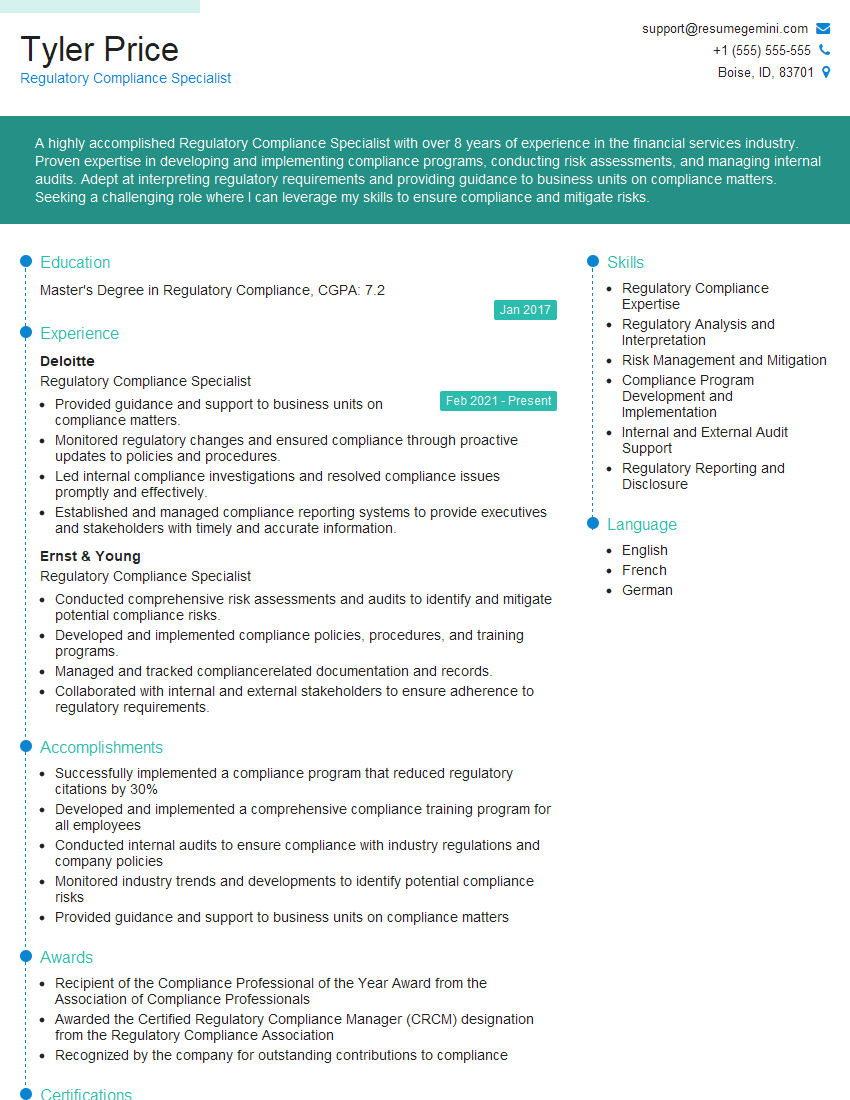
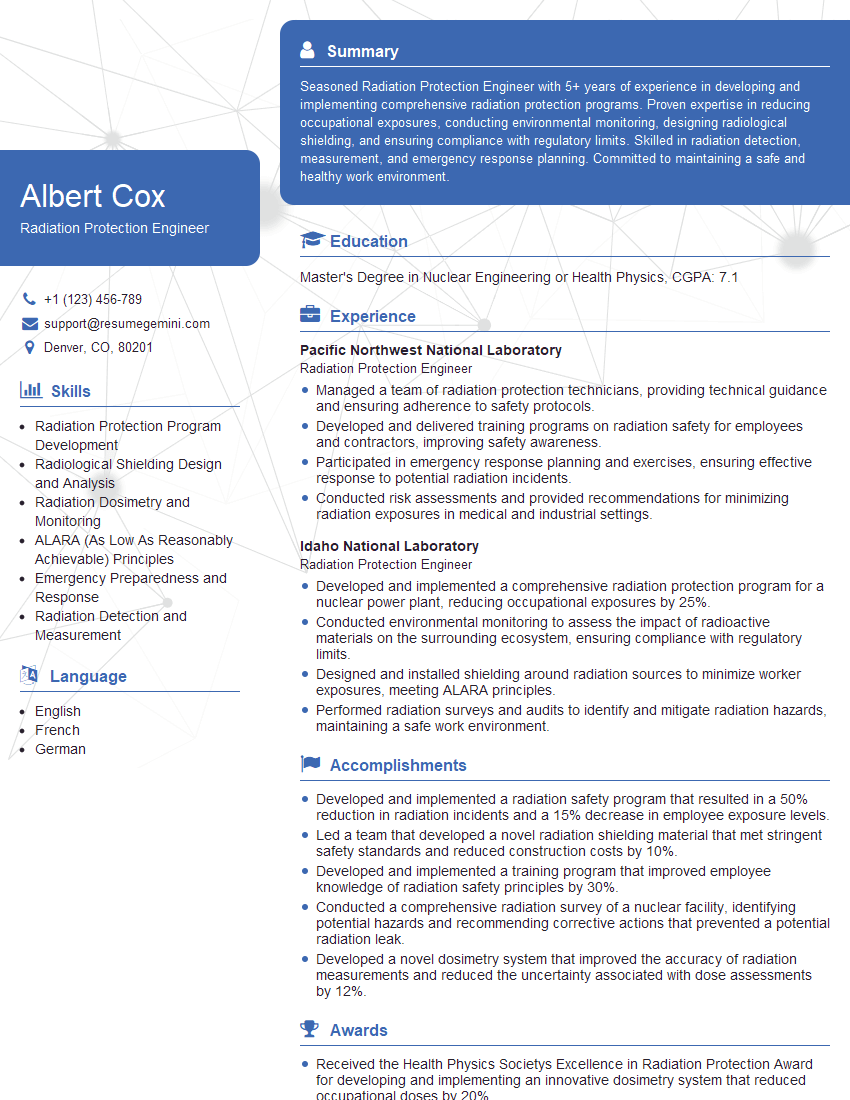
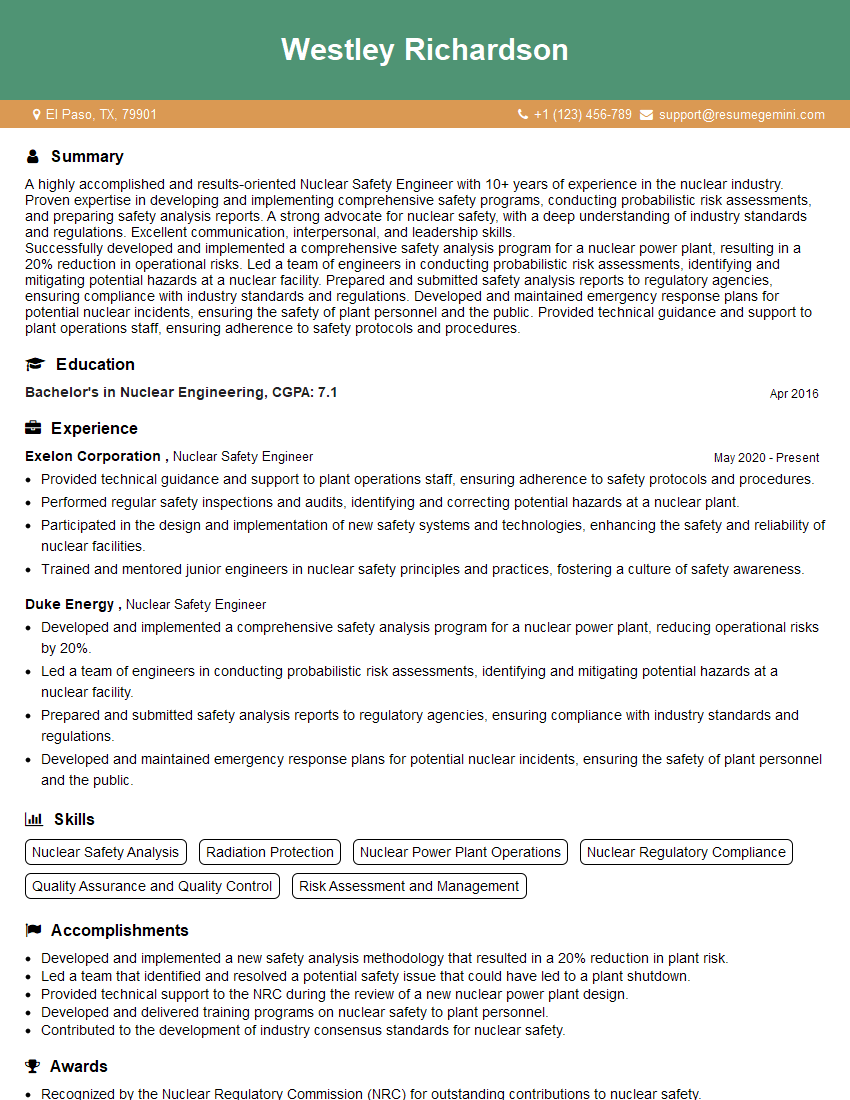
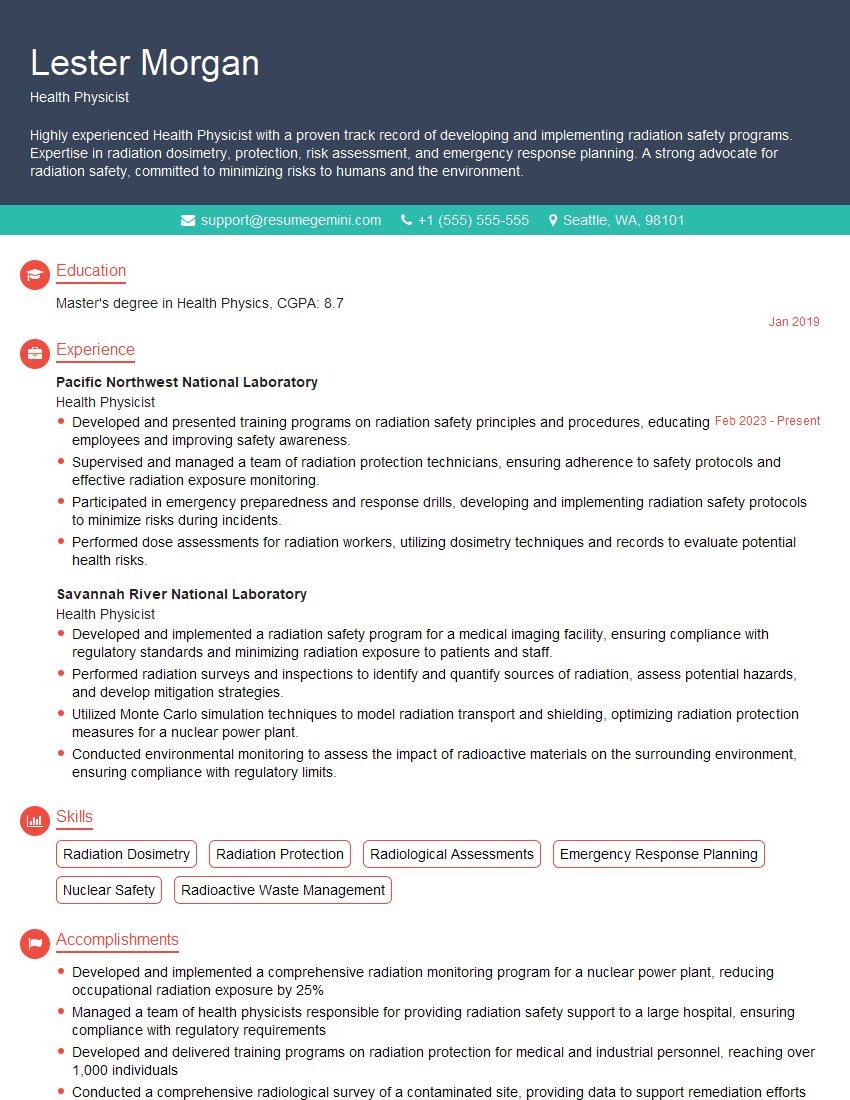
Mastering Nuclear Regulatory Commission (NRC) Compliance is crucial for a successful and rewarding career in the nuclear industry. It demonstrates a deep understanding of safety, security, and regulatory requirements, opening doors to leadership roles and enhanced career progression. Creating a strong, ATS-friendly resume is key to showcasing your skills and experience to potential employers. ResumeGemini is a trusted resource that can help you build a professional resume tailored to the specific demands of the NRC Compliance field. Examples of resumes tailored to Nuclear Regulatory Commission (NRC) Compliance are available to guide you.
Explore more articles
Users Rating of Our Blogs
Share Your Experience
We value your feedback! Please rate our content and share your thoughts (optional).
What Readers Say About Our Blog
Attention music lovers!
Wow, All the best Sax Summer music !!!
Spotify: https://open.spotify.com/artist/6ShcdIT7rPVVaFEpgZQbUk
Apple Music: https://music.apple.com/fr/artist/jimmy-sax-black/1530501936
YouTube: https://music.youtube.com/browse/VLOLAK5uy_noClmC7abM6YpZsnySxRqt3LoalPf88No
Other Platforms and Free Downloads : https://fanlink.tv/jimmysaxblack
on google : https://www.google.com/search?q=22+AND+22+AND+22
on ChatGPT : https://chat.openai.com?q=who20jlJimmy20Black20Sax20Producer
Get back into the groove with Jimmy sax Black
Best regards,
Jimmy sax Black
www.jimmysaxblack.com
Hi I am a troller at The aquatic interview center and I suddenly went so fast in Roblox and it was gone when I reset.
Hi,
Business owners spend hours every week worrying about their website—or avoiding it because it feels overwhelming.
We’d like to take that off your plate:
$69/month. Everything handled.
Our team will:
Design a custom website—or completely overhaul your current one
Take care of hosting as an option
Handle edits and improvements—up to 60 minutes of work included every month
No setup fees, no annual commitments. Just a site that makes a strong first impression.
Find out if it’s right for you:
https://websolutionsgenius.com/awardwinningwebsites
Hello,
we currently offer a complimentary backlink and URL indexing test for search engine optimization professionals.
You can get complimentary indexing credits to test how link discovery works in practice.
No credit card is required and there is no recurring fee.
You can find details here:
https://wikipedia-backlinks.com/indexing/
Regards
NICE RESPONSE TO Q & A
hi
The aim of this message is regarding an unclaimed deposit of a deceased nationale that bears the same name as you. You are not relate to him as there are millions of people answering the names across around the world. But i will use my position to influence the release of the deposit to you for our mutual benefit.
Respond for full details and how to claim the deposit. This is 100% risk free. Send hello to my email id: lukachachibaialuka@gmail.com
Luka Chachibaialuka
Hey interviewgemini.com, just wanted to follow up on my last email.
We just launched Call the Monster, an parenting app that lets you summon friendly ‘monsters’ kids actually listen to.
We’re also running a giveaway for everyone who downloads the app. Since it’s brand new, there aren’t many users yet, which means you’ve got a much better chance of winning some great prizes.
You can check it out here: https://bit.ly/callamonsterapp
Or follow us on Instagram: https://www.instagram.com/callamonsterapp
Thanks,
Ryan
CEO – Call the Monster App
Hey interviewgemini.com, I saw your website and love your approach.
I just want this to look like spam email, but want to share something important to you. We just launched Call the Monster, a parenting app that lets you summon friendly ‘monsters’ kids actually listen to.
Parents are loving it for calming chaos before bedtime. Thought you might want to try it: https://bit.ly/callamonsterapp or just follow our fun monster lore on Instagram: https://www.instagram.com/callamonsterapp
Thanks,
Ryan
CEO – Call A Monster APP
To the interviewgemini.com Owner.
Dear interviewgemini.com Webmaster!
Hi interviewgemini.com Webmaster!
Dear interviewgemini.com Webmaster!
excellent
Hello,
We found issues with your domain’s email setup that may be sending your messages to spam or blocking them completely. InboxShield Mini shows you how to fix it in minutes — no tech skills required.
Scan your domain now for details: https://inboxshield-mini.com/
— Adam @ InboxShield Mini
support@inboxshield-mini.com
Reply STOP to unsubscribe
Hi, are you owner of interviewgemini.com? What if I told you I could help you find extra time in your schedule, reconnect with leads you didn’t even realize you missed, and bring in more “I want to work with you” conversations, without increasing your ad spend or hiring a full-time employee?
All with a flexible, budget-friendly service that could easily pay for itself. Sounds good?
Would it be nice to jump on a quick 10-minute call so I can show you exactly how we make this work?
Best,
Hapei
Marketing Director
Hey, I know you’re the owner of interviewgemini.com. I’ll be quick.
Fundraising for your business is tough and time-consuming. We make it easier by guaranteeing two private investor meetings each month, for six months. No demos, no pitch events – just direct introductions to active investors matched to your startup.
If youR17;re raising, this could help you build real momentum. Want me to send more info?
Hi, I represent an SEO company that specialises in getting you AI citations and higher rankings on Google. I’d like to offer you a 100% free SEO audit for your website. Would you be interested?
Hi, I represent an SEO company that specialises in getting you AI citations and higher rankings on Google. I’d like to offer you a 100% free SEO audit for your website. Would you be interested?