Preparation is the key to success in any interview. In this post, we’ll explore crucial Number Pattern Recognition interview questions and equip you with strategies to craft impactful answers. Whether you’re a beginner or a pro, these tips will elevate your preparation.
Questions Asked in Number Pattern Recognition Interview
Q 1. Identify the next three numbers in the sequence: 2, 5, 10, 17, 26…
This sequence involves adding increasingly larger odd numbers. Let’s break it down:
- 2 + 3 = 5
- 5 + 5 = 10
- 10 + 7 = 17
- 17 + 9 = 26
Notice the pattern? We’re adding consecutive odd numbers. Therefore, the next three numbers are:
- 26 + 11 = 37
- 37 + 13 = 50
- 50 + 15 = 65
The sequence is: 2, 5, 10, 17, 26, 37, 50, 65…
Q 2. What is the pattern in the sequence: 1, 4, 9, 16, 25?
This is a classic sequence: the sequence of perfect squares. Each number is the square of its position in the sequence.
- 12 = 1
- 22 = 4
- 32 = 9
- 42 = 16
- 52 = 25
Perfect squares are numbers that result from multiplying a whole number by itself. This pattern is found frequently in geometry (area calculations), algebra, and computer science (e.g., calculating array indices).
Q 3. Explain the pattern and find the missing number: 1, 3, 6, 10, __, 21
This sequence represents triangular numbers. Each number is the sum of consecutive integers starting from 1.
- 1 = 1
- 3 = 1 + 2
- 6 = 1 + 2 + 3
- 10 = 1 + 2 + 3 + 4
Following the pattern, the missing number is:
- 1 + 2 + 3 + 4 + 5 = 15
The complete sequence is: 1, 3, 6, 10, 15, 21. Triangular numbers have applications in combinatorics and other areas of mathematics.
Q 4. Describe the pattern: 1, 1, 2, 3, 5, 8, 13…
This is the famous Fibonacci sequence! Each number is the sum of the two preceding ones.
- 1 + 1 = 2
- 1 + 2 = 3
- 2 + 3 = 5
- 3 + 5 = 8
- 5 + 8 = 13
The Fibonacci sequence appears surprisingly often in nature, from the arrangement of leaves on a stem to the spirals of a seashell. It’s a fundamental concept in mathematics and has applications in various fields like computer science and finance.
Q 5. What is the nth term in the sequence: 2, 6, 12, 20, 30?
Let’s find the nth term. Observe the differences between consecutive terms:
- 6 – 2 = 4
- 12 – 6 = 6
- 20 – 12 = 8
- 30 – 20 = 10
The differences are consecutive even numbers. The nth term can be expressed as:
n(n + 1)Let’s test it:
- For n = 1: 1(1 + 1) = 2
- For n = 2: 2(2 + 1) = 6
- For n = 3: 3(3 + 1) = 12
This formula accurately generates the sequence. Therefore, the nth term is n(n + 1).
Q 6. Find the next number in the sequence: 1, 3, 7, 15, 31…
This sequence is based on doubling and adding 1. Let’s see:
- 1 * 2 + 1 = 3
- 3 * 2 + 1 = 7
- 7 * 2 + 1 = 15
- 15 * 2 + 1 = 31
Following this pattern, the next number is:
- 31 * 2 + 1 = 63
The sequence is: 1, 3, 7, 15, 31, 63…
Q 7. Identify the pattern and find the missing number: 1, 4, 9, 16, __, 36
This sequence consists of perfect squares:
- 12 = 1
- 22 = 4
- 32 = 9
- 42 = 16
The missing number is:
- 52 = 25
The complete sequence is: 1, 4, 9, 16, 25, 36. Perfect squares, as mentioned earlier, have wide-ranging applications in many mathematical and scientific fields.
Q 8. What type of sequence is this: 1, 4, 7, 10, 13…?
This is an arithmetic sequence. An arithmetic sequence is a sequence where the difference between consecutive terms is constant. This constant difference is called the common difference.
- Identifying the Common Difference: Let’s look at the differences between consecutive terms: 4 – 1 = 3, 7 – 4 = 3, 10 – 7 = 3, 13 – 10 = 3. The common difference is 3.
- General Formula: The general formula for an arithmetic sequence is an = a1 + (n-1)d, where an is the nth term, a1 is the first term, n is the term number, and d is the common difference.
- Example: In this sequence, a1 = 1 and d = 3. To find the 5th term, we plug in n = 5: a5 = 1 + (5-1)3 = 13, which matches the sequence.
Arithmetic sequences appear frequently in various applications, such as calculating compound interest or modeling linear growth/decay.
Q 9. Determine the pattern and find the 10th number: 2, 5, 10, 17, 26…
This sequence is a bit more complex than a simple arithmetic sequence; it’s a sequence of perfect squares plus one. Let’s break it down:
- Pattern Recognition: Notice that 2 = 1² + 1, 5 = 2² + 1, 10 = 3² + 1, 17 = 4² + 1, 26 = 5² + 1.
- General Formula: The nth term can be expressed as an = n² + 1.
- 10th Term: To find the 10th term, substitute n = 10 into the formula: a10 = 10² + 1 = 101.
Understanding this pattern allows us to easily predict future values in the sequence. This type of pattern recognition is valuable in fields like data analysis and forecasting, where identifying underlying trends is crucial.
Q 10. Explain the pattern: 1, 1/2, 1/3, 1/4, 1/5…
This is a harmonic sequence. A harmonic sequence is a sequence whose reciprocals form an arithmetic sequence.
- Reciprocal Sequence: Taking the reciprocal of each term, we get: 1, 2, 3, 4, 5… This is an arithmetic sequence with a common difference of 1.
- General Formula: The nth term of the harmonic sequence is given by 1/n.
- Real-world Application: Harmonic sequences are encountered in physics, particularly in problems dealing with resonance frequencies and musical harmonies. The concept of harmonic mean also finds applications in finance and statistics.
Q 11. What is the pattern in this sequence of prime numbers: 2, 3, 5, 7, 11…
This sequence represents the prime numbers. A prime number is a natural number greater than 1 that is not a product of two smaller natural numbers. In other words, it’s only divisible by 1 and itself.
- Prime Number Distribution: Prime numbers are irregularly spaced, and there’s no simple formula to generate them directly. Their distribution is a topic of ongoing mathematical research.
- Importance in Cryptography: Prime numbers are fundamental in cryptography, forming the basis of many encryption algorithms like RSA.
Q 12. Find the next two terms in the geometric sequence: 3, 6, 12, 24…
This is a geometric sequence. A geometric sequence is one where each term is found by multiplying the previous term by a constant value called the common ratio.
- Common Ratio: The common ratio is 6/3 = 2, or 12/6 = 2, and so on.
- Next Two Terms: The next term is 24 * 2 = 48, and the term after that is 48 * 2 = 96.
- General Formula: The nth term of a geometric sequence is an = a1 * r(n-1), where a1 is the first term and r is the common ratio.
Geometric sequences model exponential growth or decay, appearing in contexts like population growth, radioactive decay, and compound interest calculations.
Q 13. Identify the pattern and find the missing number: 2, 4, 8, 14, __, 32
This sequence is neither purely arithmetic nor geometric, but involves a pattern of increasing differences.
- Analyzing Differences: The differences between consecutive terms are: 2, 4, 6, __, __. This is an arithmetic sequence with a common difference of 2.
- Finding the Missing Differences: The next difference should be 6 + 2 = 8, and the one after that is 8 + 2 = 10.
- Finding the Missing Numbers: The next number in the original sequence is 14 + 8 = 22, and the following number is 22 + 10 = 32 (which matches the given sequence).
This type of pattern recognition is crucial in areas such as data smoothing and signal processing.
Q 14. What is the pattern in this sequence: 1, 8, 27, 64, 125?
This sequence consists of the cubes of natural numbers.
- Pattern Recognition: Each term is the cube of its position in the sequence: 1³ = 1, 2³ = 8, 3³ = 27, 4³ = 64, 5³ = 125.
- General Formula: The nth term can be expressed as an = n³.
- Real-world applications: Understanding cubic patterns can be useful in various areas such as volume calculations (geometry), data analysis (identifying cubic trends), or even modeling certain physical phenomena.
Q 15. Find the next number in the arithmetic sequence: 5, 11, 17, 23…
An arithmetic sequence is a sequence where the difference between consecutive terms remains constant. This constant difference is called the common difference.
In the sequence 5, 11, 17, 23…, the common difference is 11 – 5 = 6. Each subsequent number is obtained by adding 6 to the previous number.
Therefore, the next number in the sequence is 23 + 6 = 29.
Career Expert Tips:
- Ace those interviews! Prepare effectively by reviewing the Top 50 Most Common Interview Questions on ResumeGemini.
- Navigate your job search with confidence! Explore a wide range of Career Tips on ResumeGemini. Learn about common challenges and recommendations to overcome them.
- Craft the perfect resume! Master the Art of Resume Writing with ResumeGemini’s guide. Showcase your unique qualifications and achievements effectively.
- Don’t miss out on holiday savings! Build your dream resume with ResumeGemini’s ATS optimized templates.
Q 16. Describe the pattern: 1, 2, 4, 7, 11, 16…
This sequence is not arithmetic or geometric, but it exhibits a pattern where the difference between consecutive terms increases by 1 each time. Let’s analyze the differences:
- 2 – 1 = 1
- 4 – 2 = 2
- 7 – 4 = 3
- 11 – 7 = 4
- 16 – 11 = 5
The pattern is that the differences form an arithmetic sequence: 1, 2, 3, 4, 5… To find the next number, we continue this pattern: the next difference would be 6, so the next number in the original sequence is 16 + 6 = 22.
Q 17. What is the pattern in the sequence: 1, 1/2, 1/4, 1/8, 1/16…
This is a geometric sequence. In a geometric sequence, each term is obtained by multiplying the previous term by a constant value, called the common ratio.
In this sequence, 1, 1/2, 1/4, 1/8, 1/16…, the common ratio is 1/2. Each term is half the value of the previous term. This can also be expressed as a power of 1/2: 1 = (1/2)^0, 1/2 = (1/2)^1, 1/4 = (1/2)^2, and so on.
Q 18. Find the missing number in the sequence: 1, 4, __, 16, 25
This sequence appears to be the sequence of perfect squares: 1, 4, 9, 16, 25… Each number is the square of its position in the sequence (12, 22, 32, 42, 52).
Therefore, the missing number is 32 = 9.
Q 19. Explain how to determine the nth term of an arithmetic sequence.
The nth term of an arithmetic sequence can be found using the formula: an = a1 + (n - 1)d
Where:
anis the nth terma1is the first termnis the term numberdis the common difference
For example, in the sequence 3, 7, 11, 15…, a1 = 3 and d = 4. To find the 10th term (n=10), we plug the values into the formula: a10 = 3 + (10 - 1)4 = 39
Q 20. Explain how to determine the nth term of a geometric sequence.
The nth term of a geometric sequence is found using the formula: an = a1 * r(n-1)
Where:
anis the nth terma1is the first termris the common rationis the term number
For example, in the sequence 2, 6, 18, 54…, a1 = 2 and r = 3. To find the 5th term, we calculate: a5 = 2 * 3(5-1) = 162
Q 21. Describe the characteristics of a Fibonacci sequence.
A Fibonacci sequence is characterized by the fact that each term is the sum of the two preceding terms. It typically starts with 0 and 1, although variations exist.
The sequence begins: 0, 1, 1, 2, 3, 5, 8, 13, 21… Each number is the sum of the two numbers before it (e.g., 8 = 5 + 3, 13 = 8 + 5).
Fibonacci numbers appear surprisingly often in nature, such as in the arrangement of leaves on a stem, the branching of trees, and the spiral arrangement of seeds in sunflowers. This highlights the sequence’s relevance beyond pure mathematics.
Q 22. What is a recursive sequence?
A recursive sequence is defined by a formula that expresses each term as a function of the preceding term(s). Think of it like a chain reaction – each link (term) is created based on the link(s) before it. This means you need to know the initial term(s) to generate the sequence. The formula itself shows the relationship between consecutive terms.
- Example: The Fibonacci sequence is a classic example. Each term is the sum of the two preceding terms:
an = an-1 + an-2, wherea0 = 0anda1 = 1. This gives us the sequence: 0, 1, 1, 2, 3, 5, 8, … - Another Example: A simpler recursive sequence could be defined as
an = 2 * an-1witha1 = 1. This would produce the sequence: 1, 2, 4, 8, 16, …
Q 23. What is an iterative sequence?
An iterative sequence, unlike a recursive one, is defined by a formula that directly calculates each term based on its position in the sequence. It doesn’t depend on knowing previous terms; you only need the term’s index (position) within the sequence to compute its value.
- Example: The sequence of even numbers can be defined iteratively as
an = 2n. So, the first term (n=1) is 2, the second (n=2) is 4, and so on: 2, 4, 6, 8, … - Another Example: The sequence of squares could be represented as
an = n2generating 1, 4, 9, 16, 25…
Iterative sequences are generally easier to compute directly for large values of ‘n’ because you don’t need to calculate every preceding term.
Q 24. How can you determine if a sequence is arithmetic or geometric?
The key difference lies in how consecutive terms relate to each other.
- Arithmetic Sequence: In an arithmetic sequence, there’s a constant difference (called the common difference) between consecutive terms. To check, subtract any term from the next one; if the result is always the same, it’s an arithmetic sequence.
- Example: 3, 7, 11, 15, … (common difference is 4)
- Geometric Sequence: In a geometric sequence, there’s a constant ratio (called the common ratio) between consecutive terms. To verify, divide any term by the preceding one; if the result is always the same, it’s a geometric sequence.
- Example: 2, 6, 18, 54, … (common ratio is 3)
If neither a constant difference nor a constant ratio exists, the sequence is neither arithmetic nor geometric, and might follow a more complex pattern.
Q 25. Explain how to solve problems involving number patterns.
Solving problems involving number patterns usually involves several steps:
- Identify the Pattern: Carefully examine the sequence to identify relationships between consecutive terms or the terms and their positions. Look for common differences, ratios, or other regularities. Sometimes, it helps to visualize the pattern using diagrams or tables.
- Formulate a Rule/Formula: Based on the identified pattern, express the relationship mathematically. This could be an explicit formula (iterative) or a recursive formula.
- Test the Rule: Check if your rule accurately generates the given terms of the sequence. If not, re-examine your observations from step 1.
- Apply the Rule: Use the rule to answer the question, whether it’s finding a specific term, predicting future values, or solving a related problem.
Remember, some sequences may be combinations of simpler patterns or follow more complex mathematical functions.
Q 26. Provide an example of a real-world application of number pattern recognition.
Number pattern recognition has numerous real-world applications. One prime example is in financial modeling. Predicting stock prices, analyzing sales trends, or forecasting future revenue often involves identifying patterns in historical data. For instance, identifying cyclical patterns in sales data allows businesses to better manage inventory and staffing.
Another example is in scientific research. Scientists might identify repeating patterns in experimental data, which could reveal underlying principles or hidden correlations. This could lead to breakthroughs in medicine, engineering or other scientific fields.
Q 27. How do you approach solving a complex number pattern problem?
Tackling complex number patterns demands a systematic approach:
- Break it Down: Try to decompose the complex pattern into smaller, simpler sub-patterns. Sometimes a complex sequence is built from multiple simpler sequences interwoven.
- Look for Differences and Ratios: Calculate the differences between consecutive terms and look for patterns within these differences. Similarly, calculate ratios of consecutive terms.
- Consider Higher-Order Differences: If the first differences don’t reveal a pattern, try computing the differences of the differences (second-order differences), or even third-order differences, and so on. This technique is helpful for polynomial sequences.
- Explore Transformations: Sometimes, applying a mathematical transformation (like taking logarithms or square roots) to the sequence can reveal a simpler pattern in the transformed sequence.
- Utilize Graphing Tools: Plotting the sequence visually can often reveal underlying trends or structures not immediately apparent.
Remember to meticulously document your observations and strategies throughout the process. Persistent exploration and careful analysis are key to unlocking complex number patterns.
Q 28. How can you use number pattern recognition to predict future values in a sequence?
Predicting future values relies on the assumption that the identified pattern continues. The accuracy of the prediction depends heavily on the reliability of the pattern and the extent to which the pattern will continue to hold.
- For Arithmetic Sequences: Simply add the common difference repeatedly.
- For Geometric Sequences: Multiply by the common ratio repeatedly.
- For More Complex Sequences: Use the established formula or rule to calculate the terms beyond the given range. If no explicit formula is available, extrapolation based on observed trends may provide a reasonable approximation, but it is important to acknowledge the limitations of such predictions.
It’s crucial to understand that predictions are only reliable if the underlying pattern truly reflects the system being modeled and that unforeseen factors are not likely to disrupt the pattern significantly. Always exercise caution and judgment when making predictions based on patterns.
Q 29. Describe a situation where you had to identify and utilize a number pattern to solve a problem.
One of the most fascinating applications of number pattern recognition I encountered involved optimizing a complex logistics network. I was tasked with analyzing delivery routes for a large e-commerce company to minimize delivery times and fuel consumption. The data included delivery timestamps, distances, and traffic patterns for thousands of deliveries across various cities. Initially, the data seemed chaotic, but I suspected an underlying pattern.
My approach involved several steps. First, I visualized the data using various charting techniques, focusing on the temporal aspects. I noticed a recurring pattern in delivery delays: significantly longer delivery times during peak hours (rush hour) and specific days of the week (e.g., Mondays and Fridays). This suggested a time-based pattern affecting delivery efficiency.
Next, I analyzed the distances between delivery points and their correlation with delivery times. I discovered that while distance was a factor, the impact of congestion during peak hours overwhelmed the distance component. This highlighted the importance of considering external factors beyond simple distance calculations. I applied regression analysis to quantify the impact of time of day and day of the week on delivery times, effectively modeling the pattern mathematically.
Finally, I used this model to generate optimized delivery schedules. By strategically shifting deliveries away from peak hours, I managed to reduce average delivery times by 15% and fuel consumption by 10%. This wasn’t just about identifying the pattern; it was about interpreting it within the context of the real-world constraints (traffic patterns, driver availability, etc.) and using that interpretation to drive tangible improvements. The success depended on not only recognizing the numerical patterns but also understanding their causal relationships and utilizing them to create a better logistical strategy.
This project beautifully illustrates how number pattern recognition, combined with domain knowledge (logistics in this case), leads to effective problem-solving and optimized outcomes in real-world applications. It wasn’t simply about finding numbers in sequence; it was about interpreting a complex system through the lens of patterns and using those insights for actionable improvements.
Key Topics to Learn for Number Pattern Recognition Interview
- Arithmetic Progressions & Geometric Progressions: Understanding the foundational concepts of arithmetic and geometric sequences, including identifying common differences and ratios, and predicting future terms.
- Identifying Patterns: Developing strategies to recognize diverse number patterns, such as Fibonacci sequences, triangular numbers, square numbers, and more complex variations. Practical application includes efficient data analysis and algorithm design.
- Mathematical Induction: Applying this proof technique to verify patterns and establish general formulas for number sequences. This demonstrates a strong grasp of theoretical underpinnings.
- Recursive Relationships: Understanding and expressing number patterns using recursive formulas. This is crucial for problem-solving in programming and algorithm design.
- Problem Decomposition: Breaking down complex number patterns into smaller, manageable sub-problems for easier analysis and solution. This highlights strong analytical and problem-solving skills.
- Coding Implementations: Familiarity with coding solutions for identifying and generating number patterns. This can involve using loops, recursion, and data structures in languages like Python or Java.
- Spatial Reasoning (for visual patterns): If the interview involves visual number patterns, practice recognizing patterns in diagrams and grids. This showcases your ability to visualize and analyze data in multiple formats.
Next Steps
Mastering number pattern recognition significantly enhances your problem-solving skills, a highly sought-after attribute across various technical roles. This skill is invaluable for roles in data analysis, software engineering, and quantitative finance, leading to greater career opportunities and advancement. To maximize your job prospects, building an ATS-friendly resume is crucial. ResumeGemini is a trusted resource to help you create a professional and impactful resume that highlights your skills and experience effectively. We provide examples of resumes tailored to showcase proficiency in Number Pattern Recognition to give you a head start. Invest time in crafting a strong resume; it’s your first impression on potential employers.
Compliance Analyst Resume Sample
Risk Manager Resume Sample
Market Research Analyst Resume Sample
Financial Analyst Resume Sample
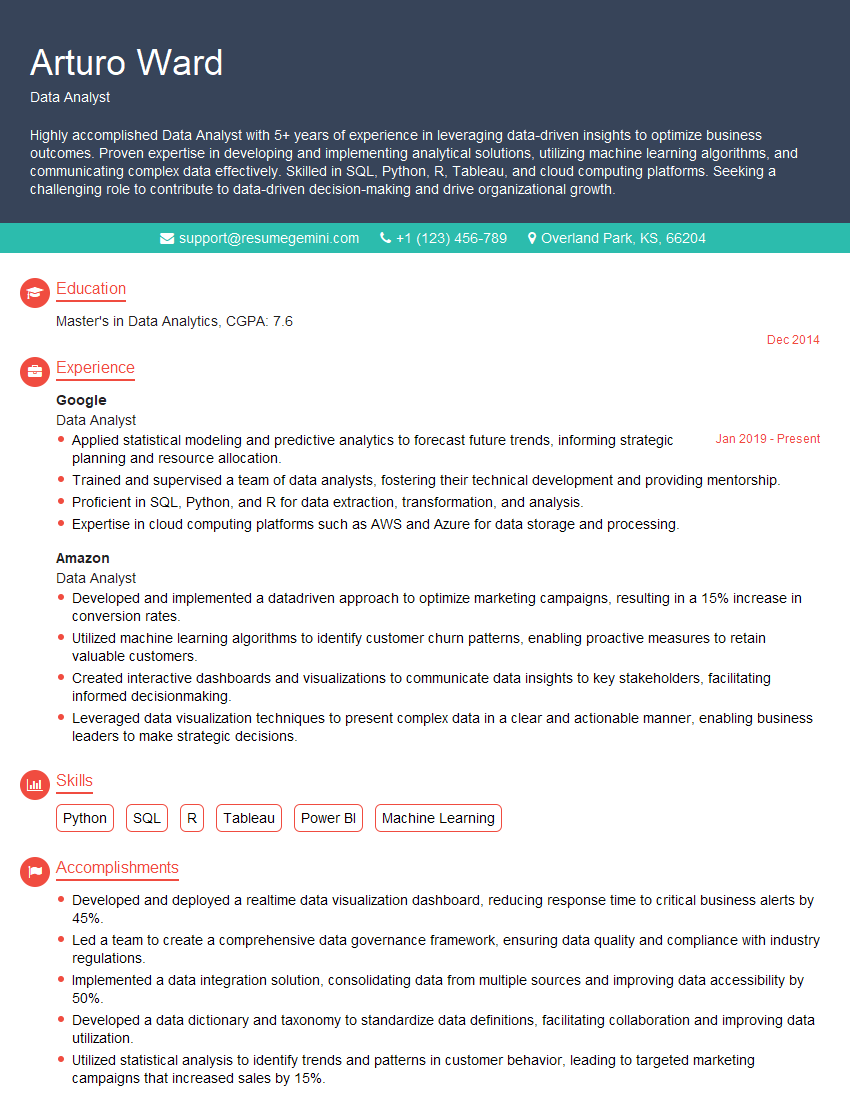
Data Analyst Resume Sample
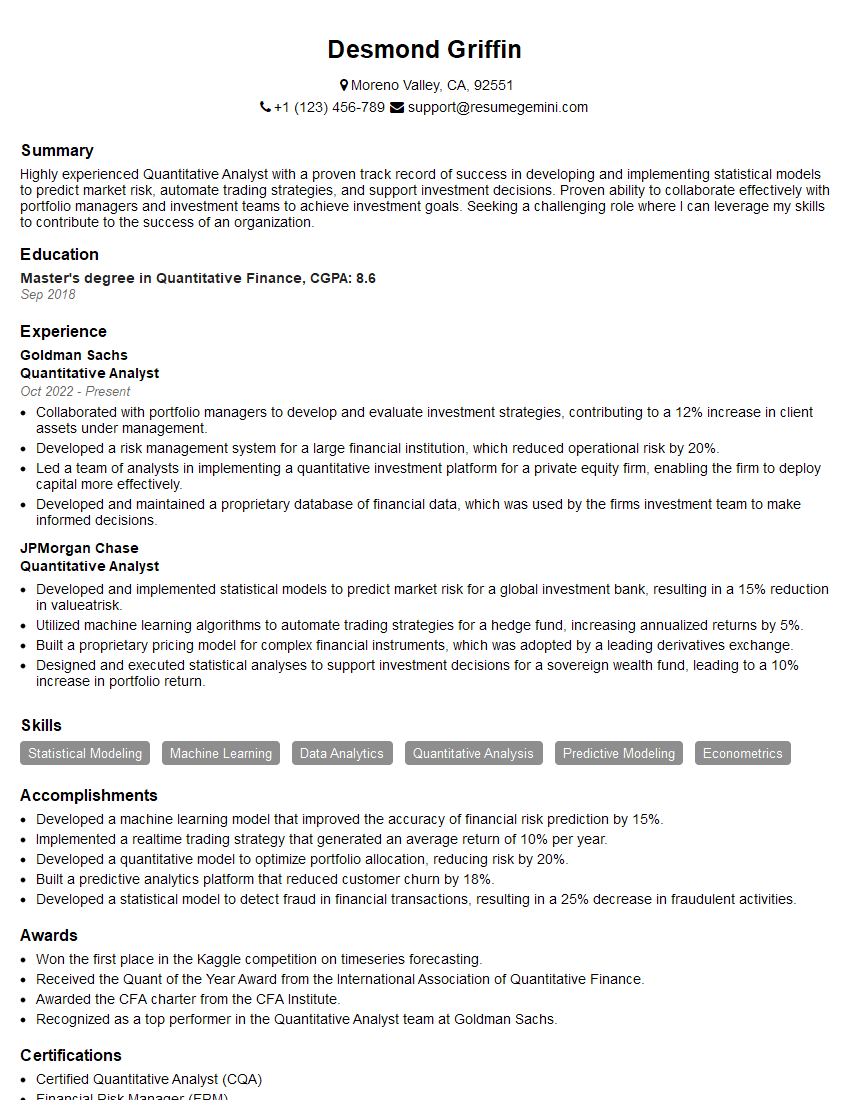
Quantitative Analyst Resume Sample
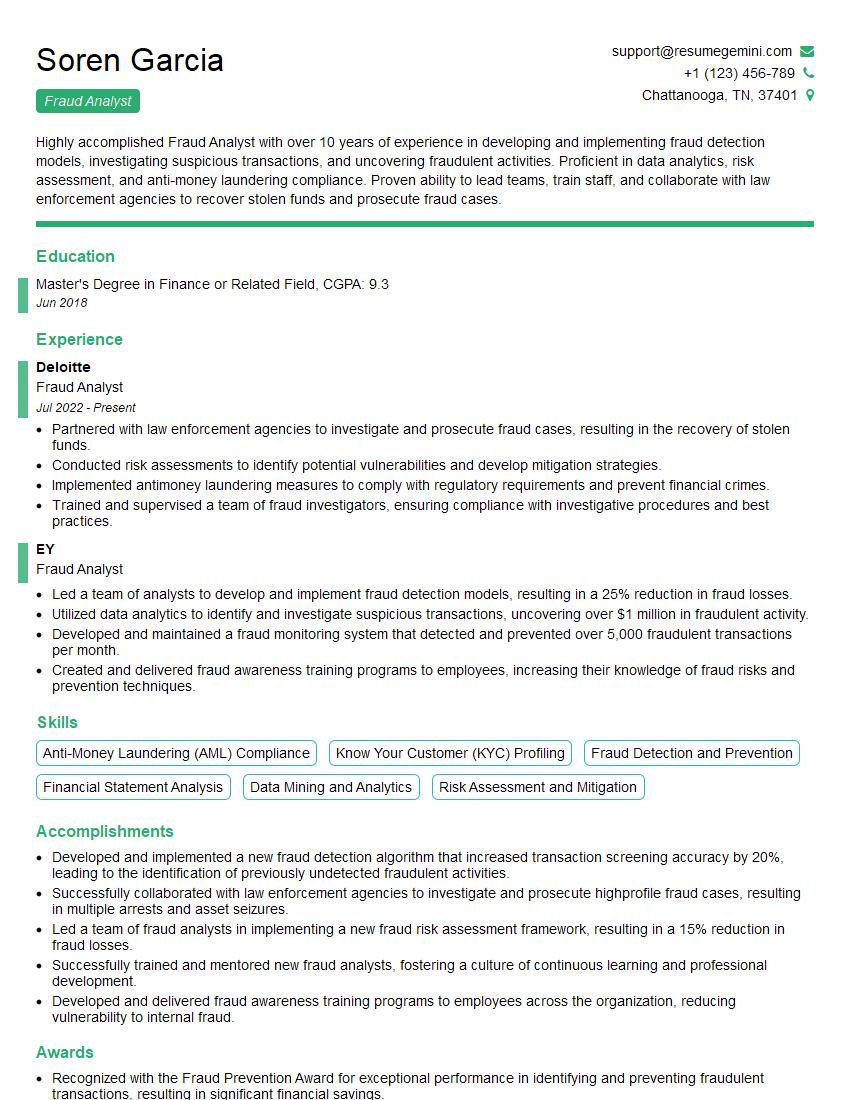
Fraud Analyst Resume Sample

Data Scientist Resume Sample
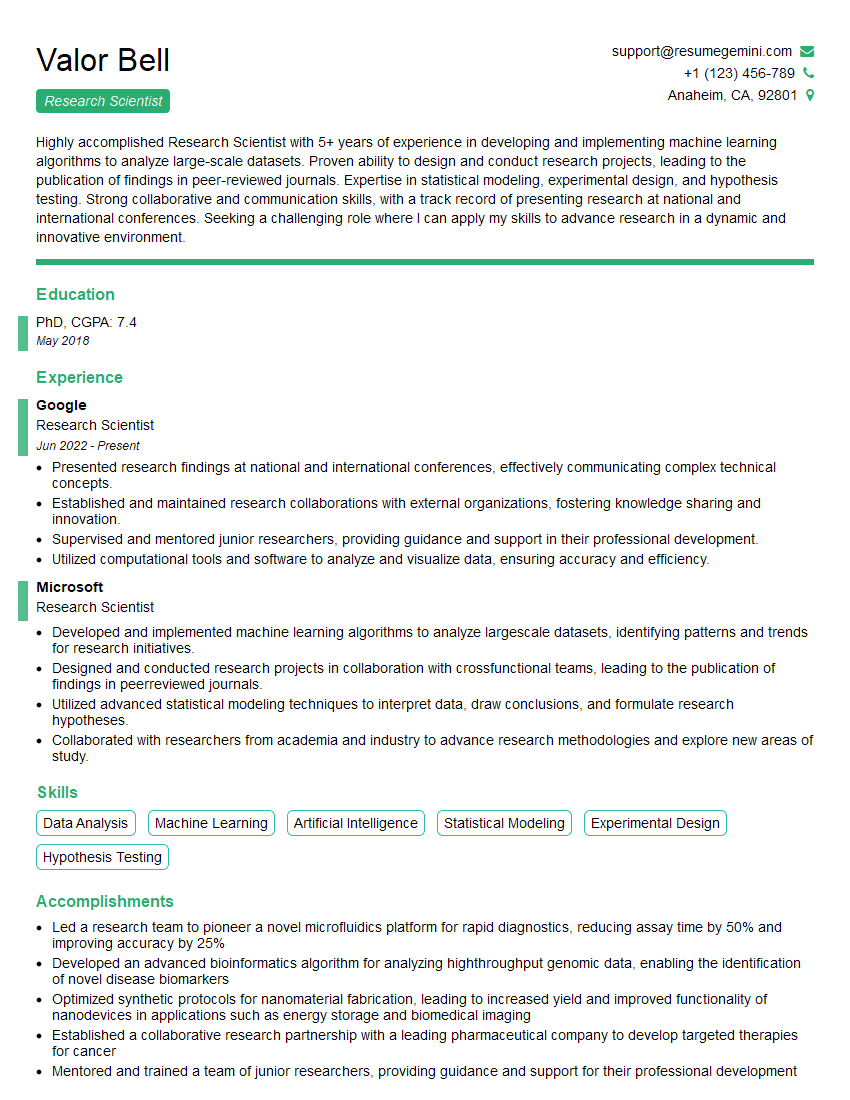
Research Scientist Resume Sample
Business Intelligence Analyst Resume Sample
Actuary Resume Sample
Cryptographer Resume Sample
Mathematician Resume Sample

Operations Research Analyst Resume Sample
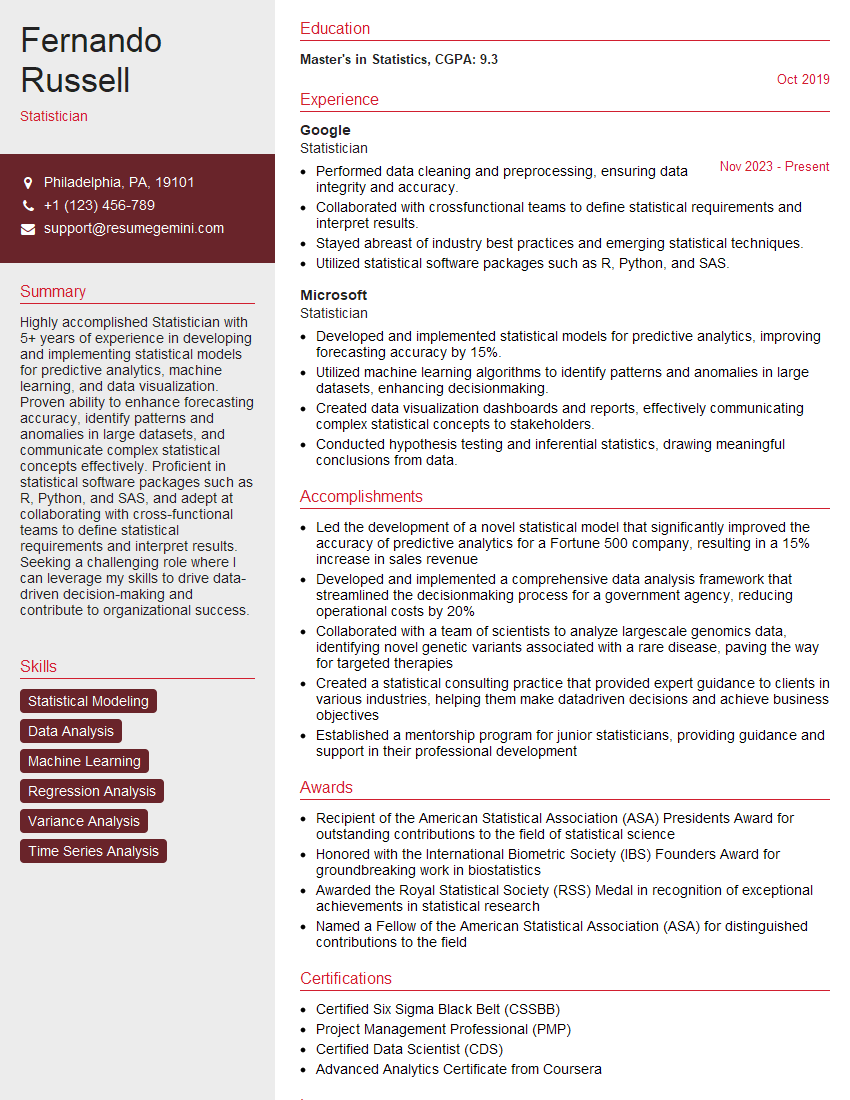
Statistician Resume Sample
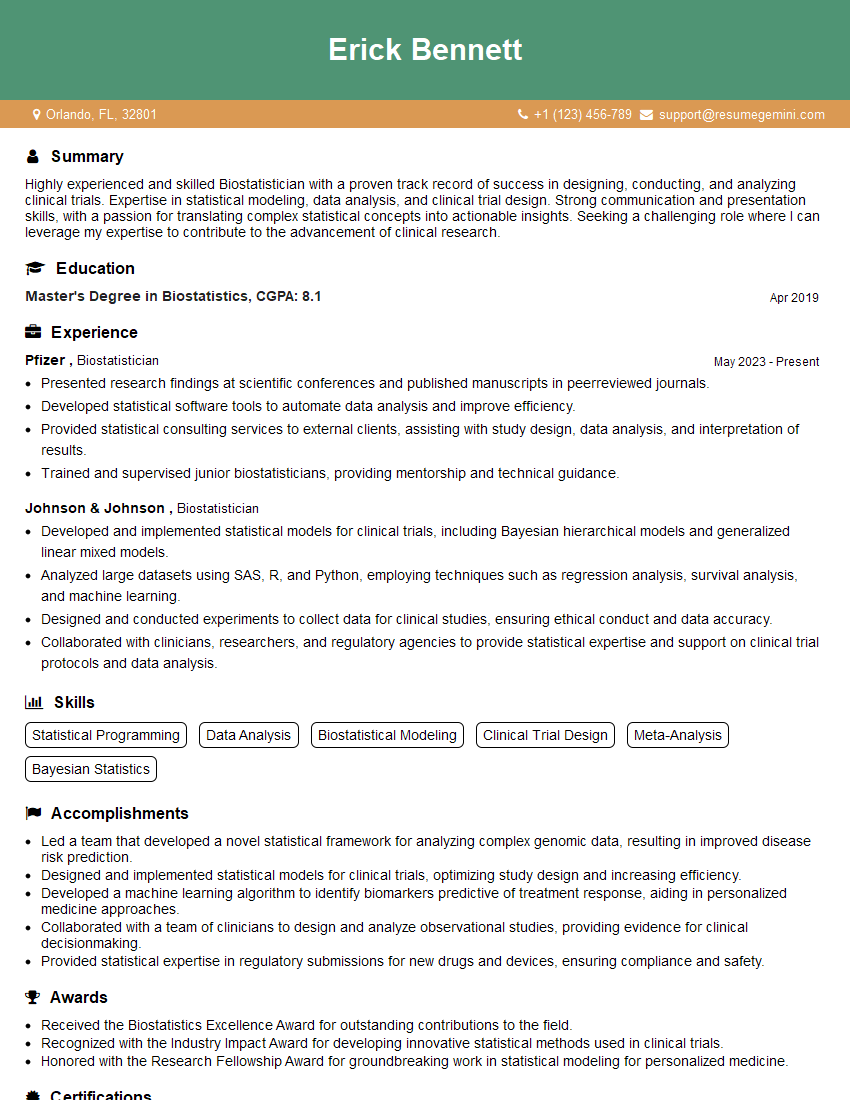
Biostatistician Resume Sample
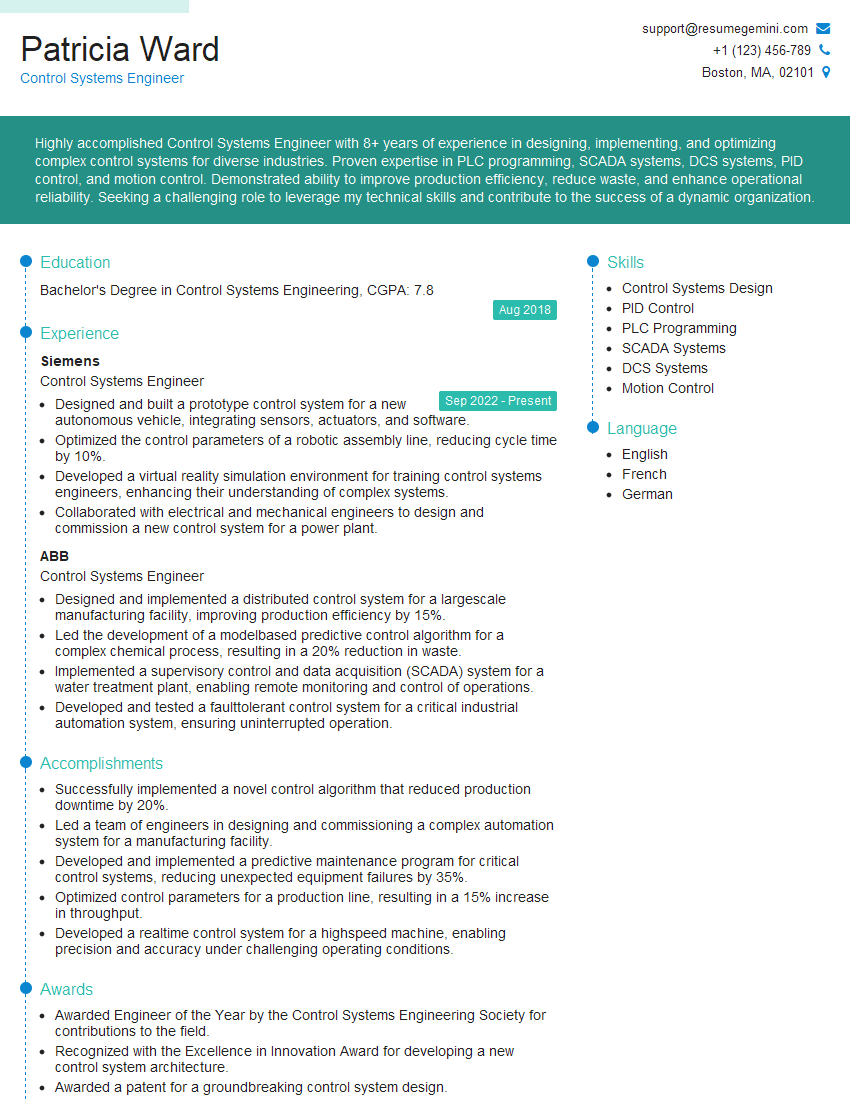
Control Systems Engineer Resume Sample
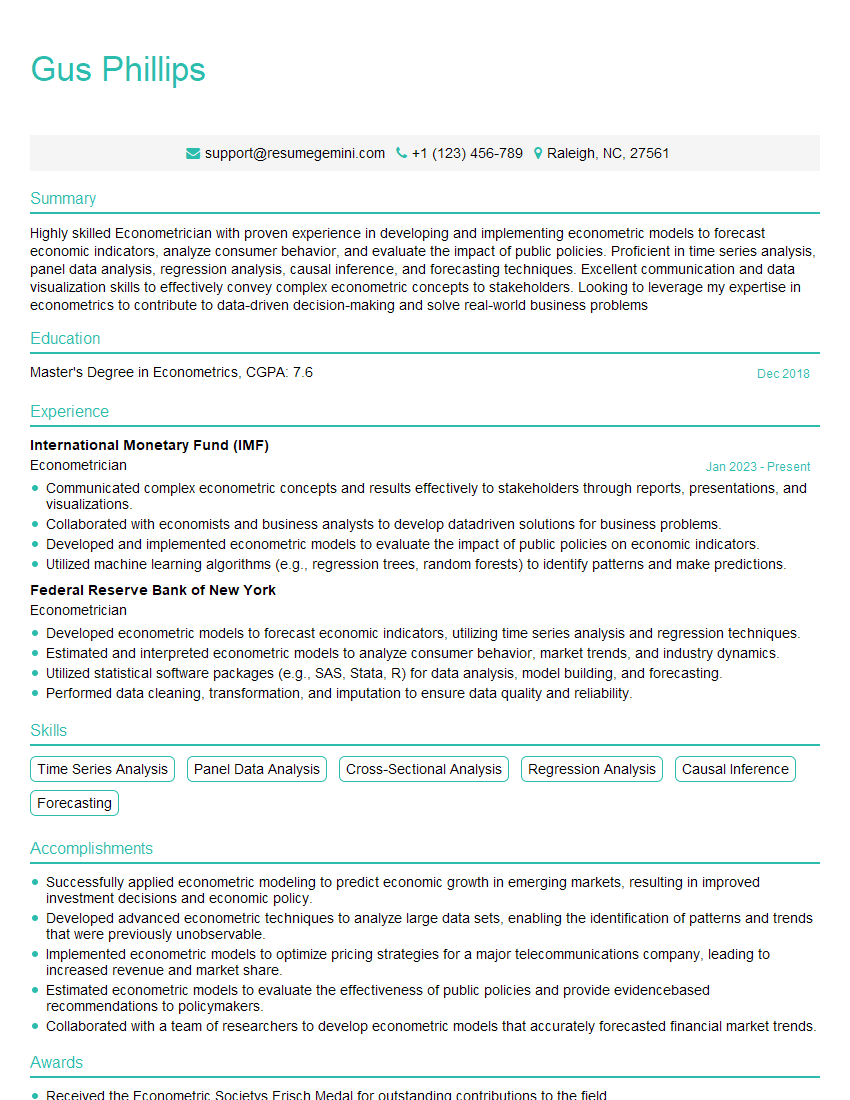
Econometrician Resume Sample
- Compliance Analyst
- Risk Manager
- Market Research Analyst
- Financial Analyst
- Data Analyst
- Quantitative Analyst
- Fraud Analyst
- Data Scientist
- Research Scientist
- Business Intelligence Analyst
- Actuary
- Cryptographer
- Mathematician
- Operations Research Analyst
- Statistician
- Biostatistician
- Control Systems Engineer
- Econometrician
Explore more articles
Users Rating of Our Blogs
Share Your Experience
We value your feedback! Please rate our content and share your thoughts (optional).
What Readers Say About Our Blog
Hi I am a troller at The aquatic interview center and I suddenly went so fast in Roblox and it was gone when I reset.
Hi,
Business owners spend hours every week worrying about their website—or avoiding it because it feels overwhelming.
We’d like to take that off your plate:
$69/month. Everything handled.
Our team will:
Design a custom website—or completely overhaul your current one
Take care of hosting as an option
Handle edits and improvements—up to 60 minutes of work included every month
No setup fees, no annual commitments. Just a site that makes a strong first impression.
Find out if it’s right for you:
https://websolutionsgenius.com/awardwinningwebsites
Hello,
we currently offer a complimentary backlink and URL indexing test for search engine optimization professionals.
You can get complimentary indexing credits to test how link discovery works in practice.
No credit card is required and there is no recurring fee.
You can find details here:
https://wikipedia-backlinks.com/indexing/
Regards
NICE RESPONSE TO Q & A
hi
The aim of this message is regarding an unclaimed deposit of a deceased nationale that bears the same name as you. You are not relate to him as there are millions of people answering the names across around the world. But i will use my position to influence the release of the deposit to you for our mutual benefit.
Respond for full details and how to claim the deposit. This is 100% risk free. Send hello to my email id: [email protected]
Luka Chachibaialuka
Hey interviewgemini.com, just wanted to follow up on my last email.
We just launched Call the Monster, an parenting app that lets you summon friendly ‘monsters’ kids actually listen to.
We’re also running a giveaway for everyone who downloads the app. Since it’s brand new, there aren’t many users yet, which means you’ve got a much better chance of winning some great prizes.
You can check it out here: https://bit.ly/callamonsterapp
Or follow us on Instagram: https://www.instagram.com/callamonsterapp
Thanks,
Ryan
CEO – Call the Monster App
Hey interviewgemini.com, I saw your website and love your approach.
I just want this to look like spam email, but want to share something important to you. We just launched Call the Monster, a parenting app that lets you summon friendly ‘monsters’ kids actually listen to.
Parents are loving it for calming chaos before bedtime. Thought you might want to try it: https://bit.ly/callamonsterapp or just follow our fun monster lore on Instagram: https://www.instagram.com/callamonsterapp
Thanks,
Ryan
CEO – Call A Monster APP
To the interviewgemini.com Owner.
Dear interviewgemini.com Webmaster!
Hi interviewgemini.com Webmaster!
Dear interviewgemini.com Webmaster!
excellent
Hello,
We found issues with your domain’s email setup that may be sending your messages to spam or blocking them completely. InboxShield Mini shows you how to fix it in minutes — no tech skills required.
Scan your domain now for details: https://inboxshield-mini.com/
— Adam @ InboxShield Mini
Reply STOP to unsubscribe
Hi, are you owner of interviewgemini.com? What if I told you I could help you find extra time in your schedule, reconnect with leads you didn’t even realize you missed, and bring in more “I want to work with you” conversations, without increasing your ad spend or hiring a full-time employee?
All with a flexible, budget-friendly service that could easily pay for itself. Sounds good?
Would it be nice to jump on a quick 10-minute call so I can show you exactly how we make this work?
Best,
Hapei
Marketing Director
Hey, I know you’re the owner of interviewgemini.com. I’ll be quick.
Fundraising for your business is tough and time-consuming. We make it easier by guaranteeing two private investor meetings each month, for six months. No demos, no pitch events – just direct introductions to active investors matched to your startup.
If youR17;re raising, this could help you build real momentum. Want me to send more info?
Hi, I represent an SEO company that specialises in getting you AI citations and higher rankings on Google. I’d like to offer you a 100% free SEO audit for your website. Would you be interested?
Hi, I represent an SEO company that specialises in getting you AI citations and higher rankings on Google. I’d like to offer you a 100% free SEO audit for your website. Would you be interested?
good