Are you ready to stand out in your next interview? Understanding and preparing for Offset Printing Basics interview questions is a game-changer. In this blog, we’ve compiled key questions and expert advice to help you showcase your skills with confidence and precision. Let’s get started on your journey to acing the interview.
Questions Asked in Offset Printing Basics Interview
Q 1. Explain the difference between sheetfed and web offset printing.
The core difference between sheetfed and web offset printing lies in how the substrate (paper) is fed into the press. Think of it like this: sheetfed is like loading individual sheets into a printer, one at a time, while web offset is like feeding a continuous roll of paper, similar to a newspaper printing press.
- Sheetfed Offset Printing: Uses individual sheets of paper, typically larger formats, offering greater flexibility in paper stock and finishing options. It’s ideal for high-quality, shorter print runs, like brochures, business cards, and high-end marketing materials. The precision and control over individual sheets allow for more intricate designs and higher-quality results.
- Web Offset Printing: Employs a continuous roll of paper, often used for high-volume, lower-cost printing, like newspapers, magazines, and mass-market publications. The speed and efficiency make it perfect for large print runs, but the flexibility in paper choice and finishing is often more limited.
Essentially, sheetfed offers quality and versatility, while web offset emphasizes speed and economy for large quantities. The choice depends entirely on the project’s requirements and budget.
Q 2. Describe the process of platemaking in offset printing.
Platemaking in offset printing is the crucial step where the image is transferred onto a thin metal plate that will then transfer the image to the blanket cylinder and finally the printing substrate. It’s a delicate process requiring precision and careful control.
- Image Creation: The printing file, typically a PDF, is prepared and often undergoes color separation and pre-press adjustments to optimize for print.
- Plate Creation: This involves using a platemaking device (e.g., CTP – Computer-to-Plate) to expose the plate to a laser or UV light, hardening the image areas while leaving the non-image areas easily removable. Different plate types exist (e.g., thermal, violet, UV) depending on the press and desired quality.
- Processing: The exposed plate is processed to remove the unexposed areas, leaving behind a raised image that accepts ink. This often involves washing and gumming to prepare the plate for printing.
- Proofing (Optional): Before mounting the plate onto the press, a proof may be pulled to ensure the color and image accuracy.
- Mounting: The finished plate is securely mounted onto the press’s plate cylinder, ready for printing.
Platemaking directly affects print quality. A poorly made plate can lead to blurry images, inconsistent color, and overall print defects. Modern CTP technology significantly improved the quality and speed of platemaking compared to older film-based methods.
Q 3. What are the key components of an offset printing press?
A modern offset printing press is a complex machine with several key components working in harmony. Think of it as an orchestrated dance of precision engineering.
- Plate Cylinder: Holds the printing plate and transfers the image to the blanket cylinder.
- Blanket Cylinder: A rubber cylinder that receives the image from the plate cylinder and transfers it to the impression cylinder.
- Impression Cylinder: Presses the paper against the blanket cylinder, transferring the image onto the substrate.
- Ink System: Delivers ink to the plate cylinder, often with multiple units for different colors (CMYK).
- Dampening System: Applies a water-based solution to the plate cylinder, balancing ink and water to achieve the correct image density and preventing ink smearing.
- Feed System: Handles the paper feed, whether sheetfed or web-fed.
- Delivery System: Collects and stacks the printed sheets or paper roll.
Each component plays a critical role; even a small malfunction can significantly affect the final printed output. Regular maintenance and careful operation are crucial for optimal performance.
Q 4. How do you achieve proper color registration in offset printing?
Achieving accurate color registration, meaning aligning the colors perfectly, is paramount in offset printing. Misregistration leads to blurry or misaligned images, severely compromising the print’s quality.
- Precise Plate Mounting: Correct placement of the plates on the cylinders is essential. This involves using registration marks (tiny crosshairs printed on the sheet) to align each color plate precisely.
- Calibration and Adjustment: Offset presses have precise adjustments for aligning the different color units. Experienced press operators regularly check and adjust these settings to ensure perfect registration.
- Press Setup: The entire press setup process must account for paper stretch and other factors that can influence registration. This involves careful pre-press preparations and press adjustments.
- High-Quality Plates: Using high-quality printing plates and maintaining their condition is crucial. Worn-out or damaged plates are more prone to registration problems.
- Regular Maintenance: Keeping the press well-maintained, particularly the registration mechanisms, is crucial for long-term registration accuracy.
Maintaining proper registration requires a combination of skilled operators, well-maintained equipment, and a systematic approach to pre-press and press operation.
Q 5. Explain the concept of dot gain in offset printing and how to compensate for it.
Dot gain refers to the enlargement of ink dots during the printing process. Imagine a tiny dot of ink; after printing, it might be slightly larger than intended. This is dot gain.
Several factors contribute to dot gain, including the type of paper, ink, and printing pressure. It leads to darker printed colors than intended, impacting the overall appearance and color balance of the print.
Compensating for Dot Gain: To counteract dot gain, pre-press professionals use a process called ‘dot gain compensation’ or ‘GCR (Gray Component Replacement)’. This involves adjusting the digital file before printing, reducing the size of the dots to account for the expected enlargement during the printing process. This ensures the final printed result matches the desired color and density. This is usually done using specialized software that profiles the press and paper to accurately predict and compensate for dot gain.
Failure to compensate for dot gain results in muddy colors and a loss of detail in the printed output. Proper compensation is crucial for achieving consistent and accurate color reproduction.
Q 6. What are the different types of inks used in offset printing?
Offset printing utilizes a variety of inks, each with specific properties tailored for different applications. The most common are:
- Conventional Inks: Oil-based inks that are widely used and offer vibrant colors. They dry through oxidation and absorption into the paper.
- UV (Ultraviolet) Inks: Cured instantly using UV lamps, offering quick drying times and excellent scratch resistance. Popular for packaging and applications requiring immediate handling.
- LED (Light-Emitting Diode) Inks: Similar to UV inks but use LED lights for curing, offering environmental benefits with less energy consumption and fewer ozone emissions.
- Water-Based Inks: Environmentally friendly option with reduced VOCs (Volatile Organic Compounds). However, they typically have limited color vibrancy and drying speeds compared to oil-based inks.
The choice of ink depends on several factors, including the type of substrate, drying requirements, environmental considerations, and desired print quality.
Q 7. Describe the process of ink trapping in offset printing.
Ink trapping refers to the reliable transfer of ink from one color to another when multiple colors are printed in succession. Imagine printing cyan, then magenta – good ink trapping ensures the magenta sits perfectly on top of the cyan without gaps or misalignment.
Proper ink trapping is crucial for sharp image details and a clean finish. Poor ink trapping results in gaps between colors, reducing image clarity and affecting the final color. This is often described as ‘color breaks’ or ‘ink trapping problems’.
Factors Affecting Ink Trapping:
- Ink Properties: Different inks have varied viscosities (thickness) and drying properties, directly impacting how well they trap.
- Paper Type: Paper absorbency and surface texture play a role in how smoothly the inks overlap.
- Press Conditions: The press’s settings, such as ink density and dampening, influence trapping.
- Pre-press Preparation: Proper file preparation with appropriate trapping settings in the RIP (Raster Image Processor) is crucial to prepare for different ink combinations.
Achieving good ink trapping often involves careful adjustment of ink and water balance on the press and pre-press preparation of the file. Experienced press operators and pre-press technicians use their expertise to ensure proper trapping to avoid print defects.
Q 8. What are some common printing defects and how are they corrected?
Offset printing, while a precise process, is susceptible to various defects. Understanding these defects and their remedies is crucial for producing high-quality prints. Common defects include:
- Mottle: Uneven ink distribution, appearing as a blotchy or mottled effect. This often stems from incorrect ink viscosity, improper dampening, or worn rollers. Correction: Adjust ink viscosity, check and clean dampening system components, and replace worn rollers.
- Set-off: Wet ink transferring from one printed sheet to the next, particularly noticeable in high-volume jobs. Correction: Use powder to absorb excess ink, employ dryer sheets, and potentially adjust the drying temperature of the press.
- Hickies: Small, irregular spots on the printed sheet, usually caused by dust, fibers, or other foreign particles. Correction: Thoroughly clean the press, especially rollers, blankets, and plates. Use appropriate cleaning solutions.
- Slur: Fuzzy or blurred images, typically due to improper ink/water balance, worn rollers, or incorrect impression pressure. Correction: Adjust ink/water balance, check roller condition, and adjust impression pressure.
- Ghosting: Faint, unintended reproduction of an image from a previous sheet, usually related to blanket issues. Correction: Inspect and clean the blanket, address any damage or wear, and potentially replace the blanket.
- Back Trapping: Ink sticking to the back of the sheet, often caused by excess ink or poor paper absorption. Correction: Reduce ink coverage, use a different paper stock, or adjust drying conditions.
Identifying the root cause is key to effective correction. A systematic approach involving careful press inspection and adjustment is essential. For instance, if you’re seeing mottle, you wouldn’t just add more ink; you’d diagnose whether the ink is too thick, the rollers are dirty, or the dampening system is malfunctioning.
Q 9. How do you perform a press wash-up?
A press wash-up is a critical procedure to clean the printing press after a job. Improper wash-up can lead to contamination of the next job and reduced print quality. The steps typically involve:
- Preparation: Gather all necessary cleaning solutions and materials, including plate cleaners, blanket washes, roller washes, and appropriate rags or cleaning wipes. Ensure proper ventilation.
- Plate Removal: Carefully remove the printing plates, following manufacturer instructions, and place them in a designated storage area.
- Blanket Cleaning: Using the appropriate blanket wash, thoroughly clean the blankets, removing any ink residue. Pay close attention to areas prone to ink buildup.
- Roller Cleaning: Clean all rollers (ink, dampening, and impression) using the recommended roller wash, removing ink and residue effectively. This often involves multiple cleaning cycles.
- Ink Fountain Cleaning: Completely empty the ink fountains and thoroughly clean them, removing any remaining ink.
- Dampening System Cleaning: Clean and flush the dampening system, removing any ink or residue, ensuring optimal dampening solution flow for the next print job.
- Final Inspection: Conduct a final inspection to ensure all components are clean and free from residue. Check for any damage during the cleaning process.
Each press type might have slight variations, so always consult the manufacturer’s manual for specific instructions. Proper wash-up procedures not only maintain print quality but also extend the lifespan of press components.
Q 10. Explain the importance of maintaining proper paper handling.
Proper paper handling is paramount in offset printing; it directly impacts print quality and press efficiency. Neglecting proper paper handling can lead to various issues including:
- Paper jams: Caused by improper feeding, misaligned paper guides, or wrinkled paper.
- Print defects: Wrinkled, creased, or torn paper sheets result in poor print quality.
- Press damage: Feeding problems can damage rollers and other press components.
- Waste: Spoilage from paper jams and poor handling reduces efficiency and increases costs.
To maintain proper paper handling, consider these points:
- Proper Storage: Store paper in a climate-controlled environment to prevent warping and moisture absorption.
- Acclimatization: Allow paper to acclimatize to the pressroom environment before printing to minimize expansion or contraction.
- Correct Paper Feed: Ensure proper alignment of paper guides and feed trays to prevent jams and misfeeds.
- Cleanliness: Keep the paper feed area clean and free from dust and debris.
- Paper Condition: Regularly inspect paper for defects before feeding.
Imagine trying to print on crumpled paper – the results would be disastrous. Proper handling ensures consistent paper flow, prevents jams, and ensures high-quality prints.
Q 11. What is the role of prepress in offset printing?
Prepress encompasses all the steps taken before the actual printing process begins. It’s the foundation upon which a successful print job is built. Key prepress activities include:
- File Preparation: This involves ensuring the artwork is in the correct format (e.g., PDF, TIFF), with appropriate resolution, color space (CMYK), and bleeds. This stage often involves color correction and image optimization.
- Plate Making: Creating printing plates from the prepared artwork. This involves using a digital plate imager to expose the plate to create the image that will be transferred to the paper.
- Proofing: Creating physical or digital proofs to ensure the final product matches the customer’s expectations. This is crucial to avoid costly reprints.
- Imposition: Arranging pages in the correct order for printing sheets that fold correctly into a final product. This is a complex task often requiring specialized software.
- Quality Control: Checking the prepared files and plates for errors before sending them to the press.
Think of prepress as the architect’s blueprints for a building. The building’s quality largely depends on the accuracy and thoroughness of the blueprints. Similarly, the quality of an offset print job heavily relies on the accuracy and thoroughness of the prepress stage.
Q 12. What are the different types of printing plates used in offset printing?
Offset printing utilizes various types of printing plates, each with its advantages and disadvantages:
- PS Plates (Photosensitive Plates): These plates are exposed to UV light through a film or digital imager. They’re widely used due to their relatively low cost and ease of use. They are categorized further into positive-working and negative-working plates depending on the image’s light exposure.
- CTP Plates (Computer-to-Plate): These plates are imaged directly from a computer, eliminating the need for film. This offers increased speed, precision, and reduced waste. Variations include thermal CTP and violet laser CTP, each offering a different sensitivity and performance characteristic.
- Flexographic Plates: While not exclusively used in offset, they can be utilized in certain situations. They are typically made of photopolymer and are flexible, which makes them ideal for printing on unusual substrates.
The choice of plate type depends on factors such as budget, required speed, print quality, and the available equipment. CTP plates offer higher precision and efficiency but come at a higher cost. PS plates are a cost-effective alternative but are slower and can generate more waste.
Q 13. Explain the concept of color profiles (e.g., ICC profiles) in printing.
Color profiles, such as ICC (International Color Consortium) profiles, are crucial for ensuring color consistency across different devices and stages of the printing process. An ICC profile is a mathematical description of a device’s color characteristics. It translates the colors from one color space (like sRGB on your monitor) to another (like CMYK used in printing). Without accurate profiles:
- Color Mismatch: The colors on your screen might appear significantly different on the printed piece.
- Inconsistent Results: Different printers or print settings might lead to variable color output.
- Wasted Materials: Incorrect color representation might lead to reprints and wasted resources.
In practice, a color profile for the monitor, the printer, and the specific paper stock are all used to ensure accurate color representation throughout the process. The printing press uses the CMYK profile created during prepress, so color management software meticulously calibrates the color to match the target result. A color management workflow is essential for professional print projects, where consistent color is crucial.
Q 14. How do you troubleshoot common press problems (e.g., slurring, hickeys)?
Troubleshooting press problems requires a systematic approach. Let’s examine slurring and hickeys:
- Slurring: This fuzzy, blurred effect usually indicates problems with ink/water balance, rollers, or impression pressure.
- Check ink/water balance: Adjust the balance carefully to ensure the ink is not too wet or too dry.
- Inspect rollers: Check for wear, damage, or buildup on the ink and dampening rollers. Replace or clean as needed.
- Adjust impression pressure: Ensure the impression cylinder is applying the correct pressure to transfer the ink to the paper without blurring.
- Hickeys: These small spots are usually caused by foreign particles like dust or fibers.
- Clean the press: Thoroughly clean the entire press, including rollers, blankets, plates, and the feed area.
- Identify the source: Try to identify the source of the contamination and address it (e.g., cleaning the paper storage area).
- Use appropriate cleaning solutions: Use cleaning solutions designed for the specific press components to avoid damage.
Other common problems include streaking (uneven ink distribution), set-off (ink transferring to subsequent sheets), and ghosting (faint reproduction of previous images). Troubleshooting these issues often involves checking ink viscosity, adjusting dampening, replacing worn parts, and ensuring the correct paper is being used. A well-maintained press and a methodical approach are crucial for quick and effective troubleshooting.
Q 15. What is the significance of maintaining consistent ink density?
Maintaining consistent ink density in offset printing is crucial for achieving accurate color reproduction and a professional-looking final product. Inconsistent ink density leads to variations in color across the printed piece, making it appear unprofessional and potentially causing problems with brand consistency. Think of it like baking a cake – if you don’t have the right amount of each ingredient, the final product won’t be as expected.
Factors affecting ink density include ink viscosity, the amount of ink transferred from the rollers to the plate, and the pressure applied by the impression cylinder. Monitoring these factors throughout the print run is critical. We use devices like densitometers to measure and control ink density, ensuring consistent color throughout the job. If we find inconsistencies, we adjust the ink keys on the press, the fountain solution levels or even the rollers themselves to compensate.
Career Expert Tips:
- Ace those interviews! Prepare effectively by reviewing the Top 50 Most Common Interview Questions on ResumeGemini.
- Navigate your job search with confidence! Explore a wide range of Career Tips on ResumeGemini. Learn about common challenges and recommendations to overcome them.
- Craft the perfect resume! Master the Art of Resume Writing with ResumeGemini’s guide. Showcase your unique qualifications and achievements effectively.
- Don’t miss out on holiday savings! Build your dream resume with ResumeGemini’s ATS optimized templates.
Q 16. How do you calculate the number of impressions per hour (IPH)?
Calculating Impressions Per Hour (IPH) is a key metric in offset printing, allowing printers to assess productivity and estimate job completion times. It’s calculated by considering the press speed and the number of colors being printed. A simplified formula is:
IPH = (Press Speed in sheets per hour) * (Number of colors)For instance, if a press runs at 10,000 sheets per hour and prints four-color process (CMYK), the IPH would be 40,000 impressions per hour. However, this is a simplified calculation. In reality, we need to factor in makeready time, downtime for adjustments, and other variables. More accurate estimations require historical data from similar jobs and include a realistic allowance for unforeseen interruptions.
Q 17. Explain the importance of proper makeready procedures.
Proper makeready procedures are the foundation of a successful offset print job. Makeready refers to all the steps taken before the actual printing begins, ensuring the press is properly set up and ready to produce high-quality prints. Skipping steps or rushing this process can lead to significant waste, delays, and unsatisfactory results – like trying to build a house without a proper foundation.
- Plate mounting: Accurately placing and securing the printing plates on the press.
- Ink and water balance: Achieving the correct balance between ink and fountain solution on the press to get proper ink transfer and color.
- Registration: Aligning the colors precisely to avoid misregistration, which is when colors don’t align properly and create blurry or mismatched images.
- Test prints: Producing test prints to check color accuracy, ink density, and registration before starting the main print run.
Careful makeready not only improves print quality but also minimizes waste and maximizes press efficiency. Experienced press operators know that a well-executed makeready saves time and resources in the long run.
Q 18. What are some common safety procedures in an offset printing environment?
Safety is paramount in an offset printing environment. Heavy machinery, chemicals, and moving parts present inherent risks. Common safety procedures include:
- Personal Protective Equipment (PPE): Always wearing appropriate PPE, such as safety glasses, gloves, and hearing protection.
- Lockout/Tagout procedures: Following strict procedures for locking out and tagging out machinery before performing maintenance or repairs to prevent accidental activation.
- Chemical handling: Proper handling and storage of chemicals, including using appropriate ventilation and protective gear.
- Fire safety: Understanding and practicing fire safety procedures, including knowing the location of fire extinguishers and emergency exits.
- Machine guarding: Ensuring all guards are in place and functioning correctly to prevent injuries from moving parts.
Regular safety training and adherence to established safety protocols are essential to minimize risks and create a safe working environment. We conduct regular safety inspections and briefings to reinforce safe practices.
Q 19. Describe different paper types and their suitability for offset printing.
Offset printing utilizes a wide variety of paper types, each with specific characteristics affecting print quality and suitability. Choosing the right paper is critical for achieving the desired outcome.
- Coated papers: These papers have a smooth, coated surface, providing excellent print quality, sharp details, and vibrant colors. Ideal for high-quality brochures, magazines, and catalogs.
- Uncoated papers: Have a natural, porous surface. They are suitable for a more rustic or textured look and feel well suited for letterheads, business cards or invitations.
- Recycled papers: Environmentally friendly option, often slightly rougher texture. Their absorbency can sometimes impact print quality, needing adjustments in the printing process.
- Specialty papers: This encompasses a broad range of papers including textured papers, metallic papers, and synthetic papers, offering unique visual and tactile effects.
The choice of paper depends on the project’s requirements, budget, and desired aesthetic. For example, a high-end fashion magazine would benefit from using a high-quality coated paper, while a rustic wedding invitation might be better suited to an uncoated textured stock.
Q 20. Explain how to adjust the pressure settings on an offset printing press.
Adjusting pressure settings on an offset printing press is a critical aspect of achieving consistent and high-quality prints. The pressure is controlled by adjusting the impression cylinder, which presses the paper against the inked plate. Too little pressure results in light, faint prints, and too much pressure can lead to poor ink transfer and even damage to the paper.
The adjustment is typically done using a pressure gauge or by making adjustments to the press’s settings via its control panel. The process involves making small, incremental adjustments and checking the results on test prints until the desired level of pressure is achieved. It’s an iterative process requiring experience and precision. Each paper type and ink viscosity may need different pressure settings. We monitor the printed sheets closely for even ink distribution and consistent image sharpness, making adjustments as needed. Improper pressure adjustment can significantly affect print quality and consistency. Experienced press operators know how to fine-tune the pressure settings precisely to get the best results.
Q 21. What is the difference between CMYK and PMS colors?
CMYK and PMS colors represent different color models used in offset printing. CMYK refers to the four process colors used in most color printing: Cyan, Magenta, Yellow, and Key (Black). These four colors are combined in varying proportions to create a vast range of colors. It’s an subtractive color model, meaning colors are created by subtracting light from white.
PMS (Pantone Matching System) colors are a proprietary color matching system using specific ink formulations to reproduce a specific color. Each PMS color has a unique number, ensuring consistency across different print jobs and locations. PMS colors are often used for branding and when precise color matching is crucial, such as corporate logos. While CMYK offers a broad range of colors, PMS colors offer greater accuracy and control over specific hues. In many cases, we use a combination of both – a PMS color for the logo and CMYK for the rest of the design, ensuring the brand’s exact colors are replicated.
Q 22. Explain the importance of proofing in offset printing.
Proofing in offset printing is absolutely critical; it’s the final quality check before a large-scale print run begins. Think of it as a dress rehearsal before the main performance. It allows us to catch errors – anything from incorrect text or images to color discrepancies or registration issues – before thousands of printed pieces are produced. This prevents costly reprints and ensures client satisfaction.
The proofing process usually involves creating a physical or digital proof that closely mimics the final printed product. We carefully examine the proof, comparing it to the client-approved artwork. This meticulous comparison catches even subtle variations. Common proofing methods include:
- Soft Proofing: Viewing the digital file on a calibrated monitor to check for color accuracy and image quality. This is a first step, but not a replacement for a hard proof.
- Hard Proofing: Creating a physical print, often using a high-quality inkjet printer or a smaller offset press, to accurately represent the final product’s appearance and feel.
- Contract Proofing: A legally binding proof that both client and printer sign off on, clearly defining what will be printed.
For example, I once caught a significant font error during the proofing stage of a brochure print run for a major bank. The correction cost a few hours of work and some ink but saved the company a potential reputational disaster and the expense of reprinting thousands of brochures.
Q 23. How do you manage waste and maintain environmental responsibility in an offset printing operation?
Environmental responsibility is paramount in modern offset printing. We employ a multi-pronged approach to waste management and sustainability. It’s not just about being ‘green’; it’s about cost-efficiency and resource optimization.
- Waste Reduction: We use sophisticated pre-press software to minimize paper waste during the production process. This includes optimizing imposition (arranging pages for printing) to reduce material usage. Careful planning and efficient workflow minimize scrap.
- Recycling and Responsible Disposal: All paper scraps, plates, and other materials are sorted and recycled whenever possible. We work with certified recycling facilities and adhere to all local environmental regulations for proper disposal of hazardous waste, such as solvents.
- Water Conservation: We use water-based inks and cleaning solutions wherever feasible, which significantly reduce water pollution compared to solvent-based alternatives. We also constantly monitor and improve water usage efficiency throughout the entire process.
- Energy Efficiency: Our presses are equipped with energy-saving features. We minimize idling time and actively pursue methods to reduce our carbon footprint.
- Sustainable Inks and Papers: We prioritize the use of vegetable-based inks and recycled paper stocks whenever clients permit and the project allows. We always inform clients about eco-friendly options.
For instance, we recently implemented a new imposition software that reduced paper waste by 15% on a large magazine printing project, resulting in significant cost savings for the client and a reduction in our environmental impact.
Q 24. How do you work with different file formats (e.g., PDF, TIFF) in the offset printing process?
Handling various file formats is a routine task in offset printing. Each format has its strengths and weaknesses, and understanding these is crucial for a smooth workflow.
- PDF (Portable Document Format): The industry standard. PDFs provide a reliable way to preserve the layout, fonts, and images intended for printing. We verify that PDFs are ‘press-ready,’ meaning they have the correct color space (CMYK), appropriate resolution, and bleed settings (the extra area printed beyond the trim line).
- TIFF (Tagged Image File Format): Ideal for high-resolution images. We use TIFF files when working with large, complex images, ensuring they are of sufficient resolution (typically 300 dpi) for quality offset printing.
I use color management software to transform the different file formats into the appropriate color space for printing (CMYK) whilst preserving the client’s intended color palette. For instance, if a client provides a file with RGB colors which is inappropriate for printing, I’ll accurately convert it to CMYK and conduct color proofing to ensure the printed result matches their expectations.
We also ensure that all fonts are embedded in the PDF or that the correct font files are available, to prevent font substitution issues. We verify that all images are appropriately sized and compressed to avoid issues with resolution and file size.
Q 25. Describe your experience with different types of offset printing presses.
My experience encompasses a range of offset printing presses, from smaller, single-color machines to large-format, multi-color presses. This experience allows me to choose the optimal press for each project, balancing print quality, production speed, and cost-effectiveness.
- Sheet-fed Presses: I’m proficient with various sheet-fed presses, including those from Heidelberg, Komori, and Mitsubishi. These presses are versatile and handle a wide variety of substrates and print jobs.
- Web Presses: I have experience with web presses, suitable for large-volume printing of newspapers, magazines, and other publications where high speed is critical.
- UV Presses: I am familiar with UV (ultraviolet) curing presses, which use UV light to instantly dry the ink. This technology is useful for applications requiring fast turnaround times or special effects.
Understanding the capabilities and limitations of each press type enables me to make informed decisions, optimize production, and ultimately deliver high-quality results. For example, choosing a UV press for a project with a tight deadline ensures faster turnaround and reduces drying time significantly.
Q 26. What is your experience with quality control procedures in offset printing?
Quality control is integrated into every stage of the offset printing process. It’s not a separate task; it’s a mindset. We follow rigorous procedures to ensure consistent and accurate reproduction of the client’s artwork.
- Pre-press Checks: This includes verifying the accuracy of the supplied files, checking for resolution, color profiles, and proper imposition. We perform thorough checks for any potential issues before plates are even made.
- Platemaking Quality Control: We regularly check the quality of the printing plates, ensuring sharp image reproduction and proper registration.
- Press Checks: We conduct regular press checks throughout the printing run, monitoring color consistency, registration, ink density, and paper quality. Adjustments are made as needed to maintain quality.
- Post-press Inspection: Once the printing is complete, a final inspection checks for any defects, such as misprints, smudges, or imperfections. A random sample is usually examined.
We maintain detailed records of all quality control checks and any adjustments made. This documentation is valuable for troubleshooting and ensuring consistent quality across different print runs. For instance, our rigorous quality control measures helped us catch a subtle color shift during a large-scale marketing campaign print run, preventing a costly error that could have affected brand consistency.
Q 27. How do you handle unexpected issues or problems during a printing job?
Unexpected issues are part and parcel of offset printing. Effective problem-solving requires a calm and systematic approach.
- Identify the problem: The first step is accurately determining the nature of the issue. Is it a press malfunction, a problem with the plates, a material defect, or something else? Thorough investigation is key.
- Isolate the cause: Once the problem is identified, we work to determine its root cause. This often involves analyzing the print samples, checking the press settings, and reviewing the pre-press process.
- Develop a solution: Based on the identified cause, we develop a solution. This may involve adjusting press settings, replacing faulty plates, or making adjustments to the materials.
- Implement the solution: The solution is implemented carefully and its effectiveness is monitored closely.
- Document the solution: We carefully document the problem, its cause, and the solution implemented to aid in preventing similar issues in the future.
For instance, I once encountered a paper jam during a rush job. By quickly identifying the cause (a slight misalignment in the feeder), I was able to quickly make adjustments and minimize production downtime, preventing significant delays and maintaining the project’s deadline.
Key Topics to Learn for Offset Printing Basics Interview
- The Printing Process: Understanding the fundamental steps involved in offset printing, from platemaking to final output. Consider the differences between sheetfed and web offset printing.
- Color Management (CMYK): Learn about color separation, color profiles (e.g., ICC profiles), and how to achieve accurate color reproduction. Practice troubleshooting color inconsistencies.
- Pre-press Preparation: Mastering file preparation for offset printing, including image resolution, file formats (e.g., PDF, TIFF), and trapping techniques. Understand the importance of accurate imposition.
- Press Operation & Maintenance: Familiarize yourself with the different components of an offset press and their functions. Understand basic troubleshooting and maintenance procedures.
- Paper & Ink Selection: Explore the various types of paper and inks used in offset printing, and understand how their properties affect the final print quality. Learn about ink drying methods.
- Quality Control & Troubleshooting: Develop your skills in identifying and resolving common printing defects, such as dot gain, slurring, and hickeys. Understand how to measure print quality.
- Finishing Techniques: Gain knowledge of post-press finishing options like cutting, folding, binding, and lamination, and how they impact the final product.
- Safety Procedures: Understand and be prepared to discuss safety protocols and best practices within an offset printing environment.
Next Steps
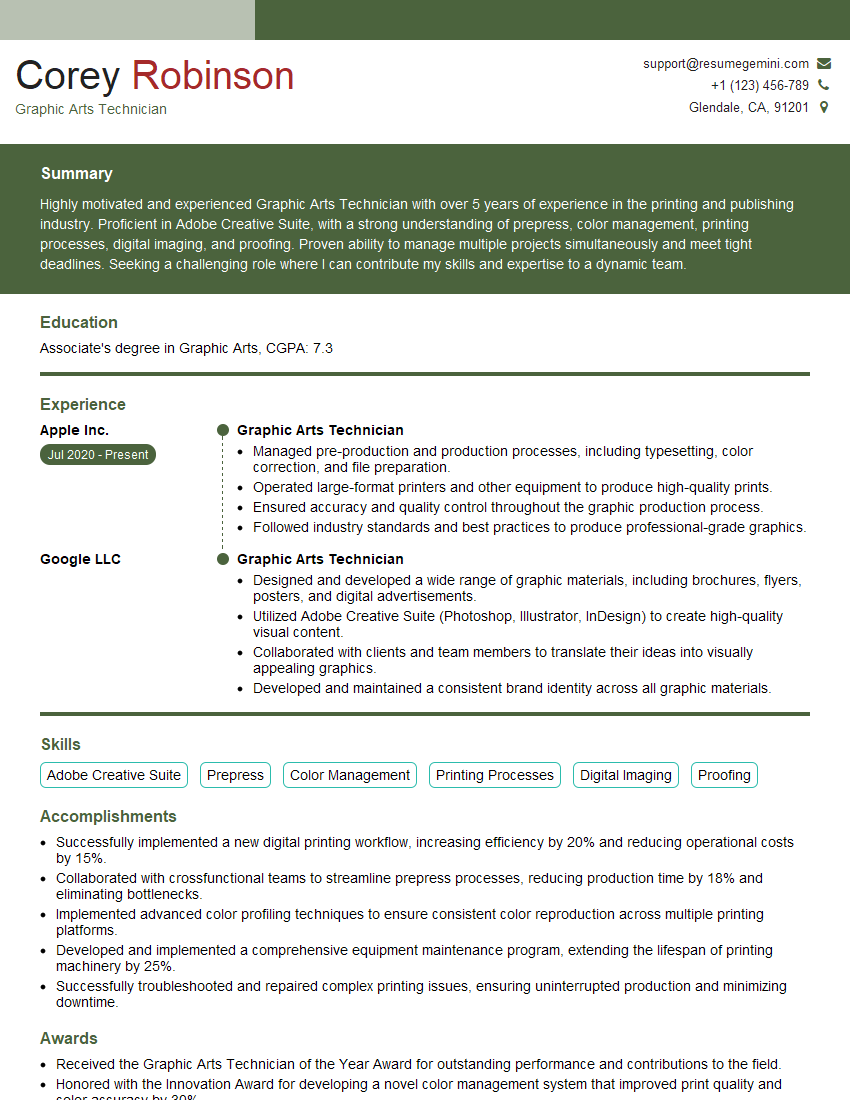
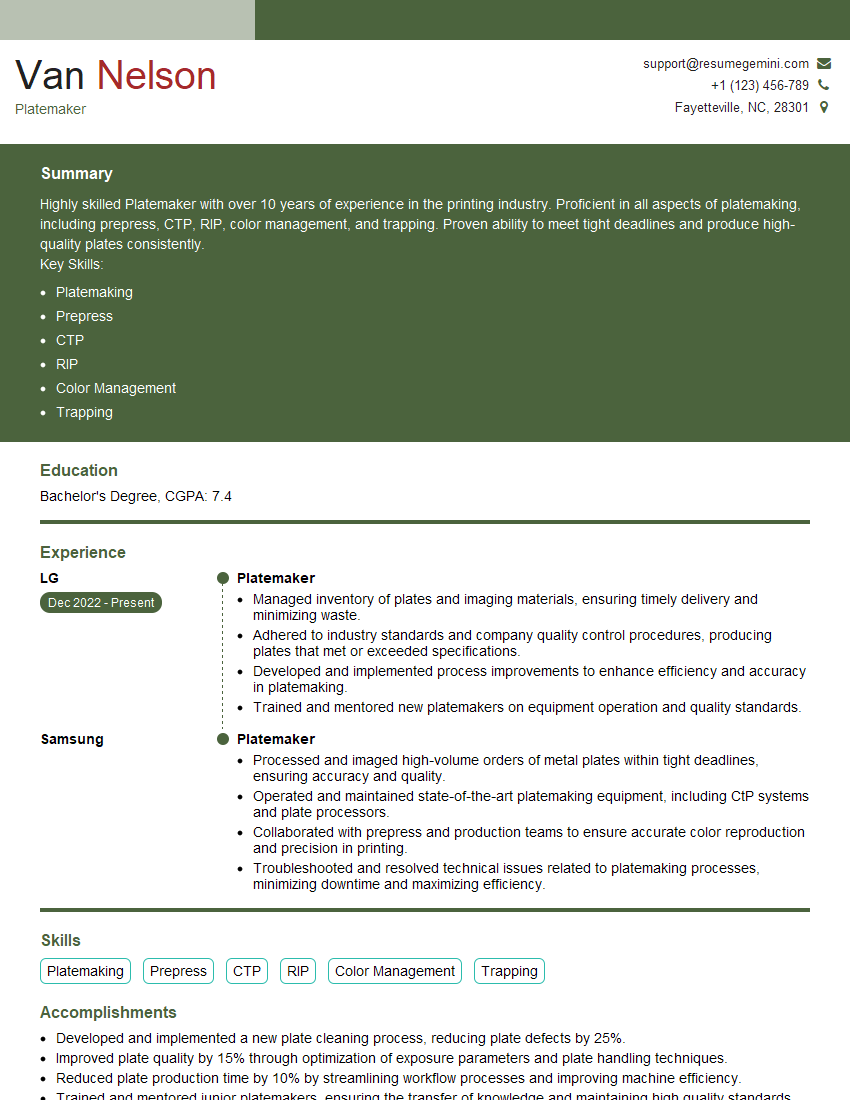
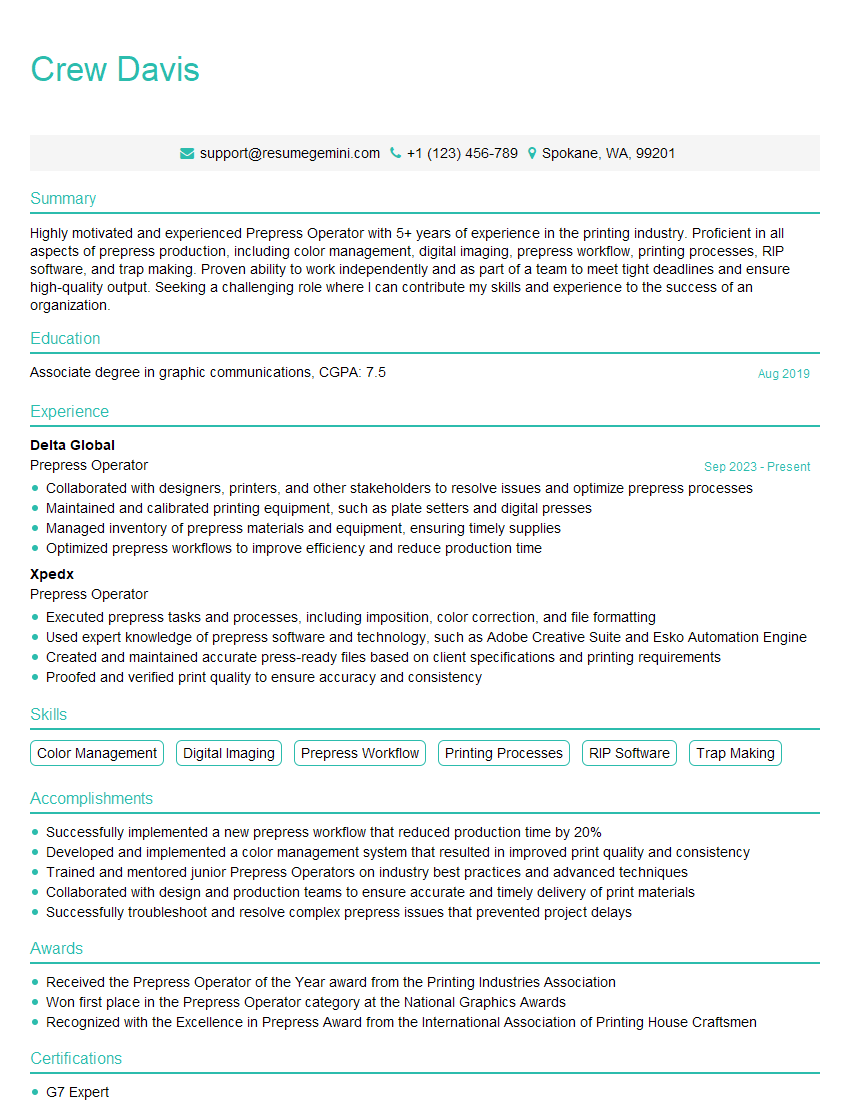
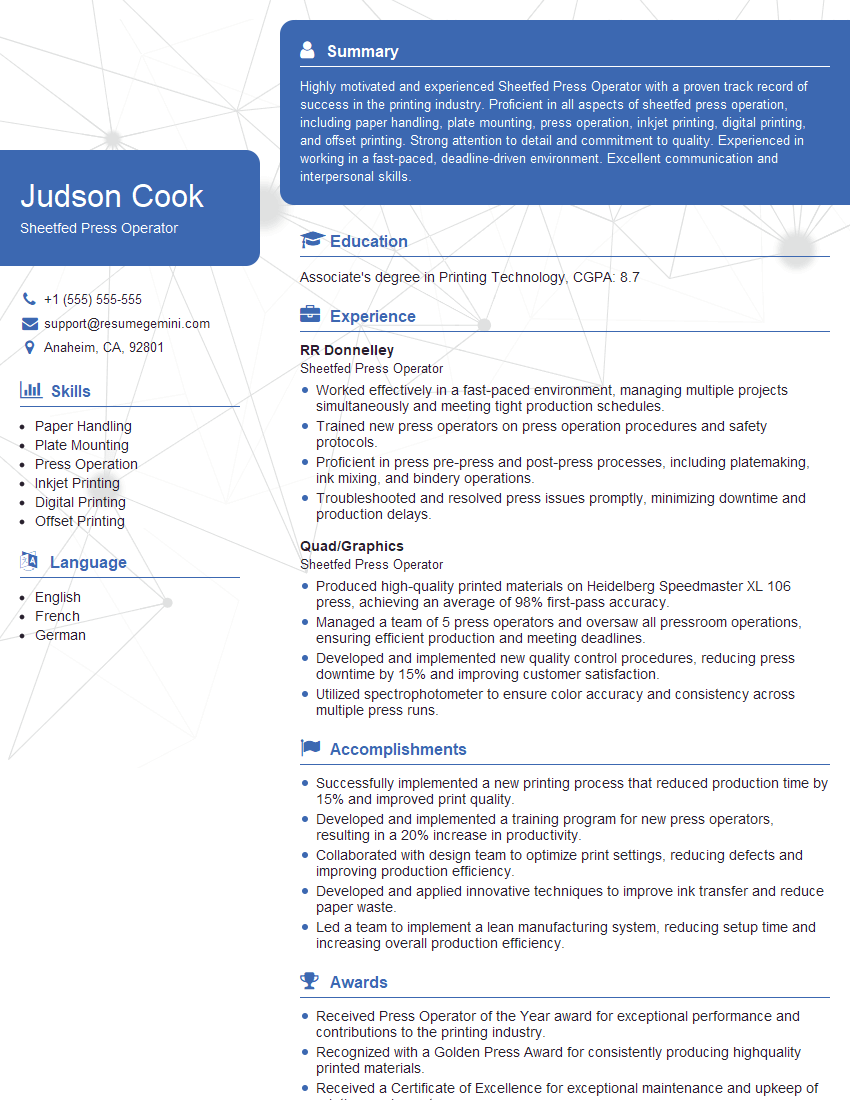
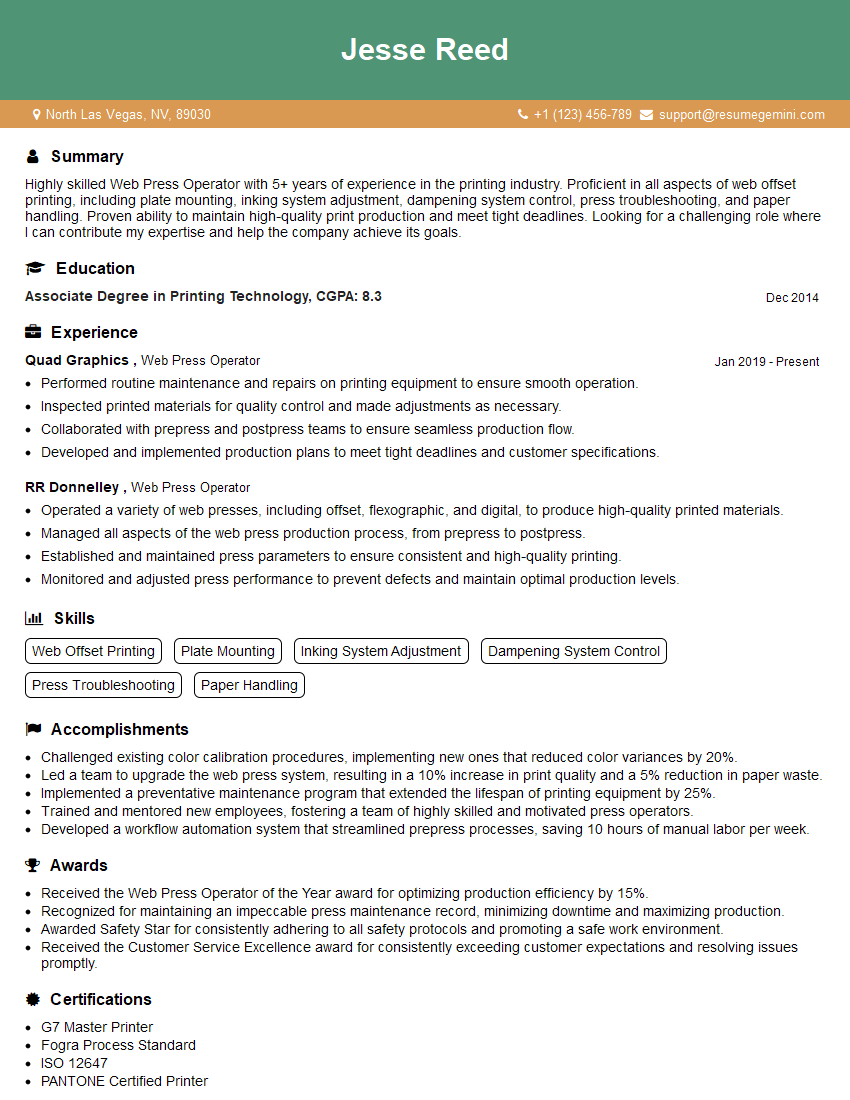
Mastering Offset Printing Basics is crucial for launching or advancing your career in the graphic arts industry. A strong understanding of these concepts demonstrates your technical proficiency and problem-solving abilities, making you a highly desirable candidate. To significantly boost your job prospects, create an ATS-friendly resume that highlights your relevant skills and experience. We strongly recommend using ResumeGemini to build a professional and impactful resume. ResumeGemini offers a user-friendly platform and provides examples of resumes tailored to Offset Printing Basics to help you get started.


Explore more articles
Users Rating of Our Blogs
Share Your Experience
We value your feedback! Please rate our content and share your thoughts (optional).
What Readers Say About Our Blog
Attention music lovers!
Wow, All the best Sax Summer music !!!
Spotify: https://open.spotify.com/artist/6ShcdIT7rPVVaFEpgZQbUk
Apple Music: https://music.apple.com/fr/artist/jimmy-sax-black/1530501936
YouTube: https://music.youtube.com/browse/VLOLAK5uy_noClmC7abM6YpZsnySxRqt3LoalPf88No
Other Platforms and Free Downloads : https://fanlink.tv/jimmysaxblack
on google : https://www.google.com/search?q=22+AND+22+AND+22
on ChatGPT : https://chat.openai.com?q=who20jlJimmy20Black20Sax20Producer
Get back into the groove with Jimmy sax Black
Best regards,
Jimmy sax Black
www.jimmysaxblack.com
Hi I am a troller at The aquatic interview center and I suddenly went so fast in Roblox and it was gone when I reset.
Hi,
Business owners spend hours every week worrying about their website—or avoiding it because it feels overwhelming.
We’d like to take that off your plate:
$69/month. Everything handled.
Our team will:
Design a custom website—or completely overhaul your current one
Take care of hosting as an option
Handle edits and improvements—up to 60 minutes of work included every month
No setup fees, no annual commitments. Just a site that makes a strong first impression.
Find out if it’s right for you:
https://websolutionsgenius.com/awardwinningwebsites
Hello,
we currently offer a complimentary backlink and URL indexing test for search engine optimization professionals.
You can get complimentary indexing credits to test how link discovery works in practice.
No credit card is required and there is no recurring fee.
You can find details here:
https://wikipedia-backlinks.com/indexing/
Regards
NICE RESPONSE TO Q & A
hi
The aim of this message is regarding an unclaimed deposit of a deceased nationale that bears the same name as you. You are not relate to him as there are millions of people answering the names across around the world. But i will use my position to influence the release of the deposit to you for our mutual benefit.
Respond for full details and how to claim the deposit. This is 100% risk free. Send hello to my email id: lukachachibaialuka@gmail.com
Luka Chachibaialuka
Hey interviewgemini.com, just wanted to follow up on my last email.
We just launched Call the Monster, an parenting app that lets you summon friendly ‘monsters’ kids actually listen to.
We’re also running a giveaway for everyone who downloads the app. Since it’s brand new, there aren’t many users yet, which means you’ve got a much better chance of winning some great prizes.
You can check it out here: https://bit.ly/callamonsterapp
Or follow us on Instagram: https://www.instagram.com/callamonsterapp
Thanks,
Ryan
CEO – Call the Monster App
Hey interviewgemini.com, I saw your website and love your approach.
I just want this to look like spam email, but want to share something important to you. We just launched Call the Monster, a parenting app that lets you summon friendly ‘monsters’ kids actually listen to.
Parents are loving it for calming chaos before bedtime. Thought you might want to try it: https://bit.ly/callamonsterapp or just follow our fun monster lore on Instagram: https://www.instagram.com/callamonsterapp
Thanks,
Ryan
CEO – Call A Monster APP
To the interviewgemini.com Owner.
Dear interviewgemini.com Webmaster!
Hi interviewgemini.com Webmaster!
Dear interviewgemini.com Webmaster!
excellent
Hello,
We found issues with your domain’s email setup that may be sending your messages to spam or blocking them completely. InboxShield Mini shows you how to fix it in minutes — no tech skills required.
Scan your domain now for details: https://inboxshield-mini.com/
— Adam @ InboxShield Mini
support@inboxshield-mini.com
Reply STOP to unsubscribe
Hi, are you owner of interviewgemini.com? What if I told you I could help you find extra time in your schedule, reconnect with leads you didn’t even realize you missed, and bring in more “I want to work with you” conversations, without increasing your ad spend or hiring a full-time employee?
All with a flexible, budget-friendly service that could easily pay for itself. Sounds good?
Would it be nice to jump on a quick 10-minute call so I can show you exactly how we make this work?
Best,
Hapei
Marketing Director
Hey, I know you’re the owner of interviewgemini.com. I’ll be quick.
Fundraising for your business is tough and time-consuming. We make it easier by guaranteeing two private investor meetings each month, for six months. No demos, no pitch events – just direct introductions to active investors matched to your startup.
If youR17;re raising, this could help you build real momentum. Want me to send more info?
Hi, I represent an SEO company that specialises in getting you AI citations and higher rankings on Google. I’d like to offer you a 100% free SEO audit for your website. Would you be interested?
Hi, I represent an SEO company that specialises in getting you AI citations and higher rankings on Google. I’d like to offer you a 100% free SEO audit for your website. Would you be interested?