The thought of an interview can be nerve-wracking, but the right preparation can make all the difference. Explore this comprehensive guide to Omnichannel Visual Merchandising interview questions and gain the confidence you need to showcase your abilities and secure the role.
Questions Asked in Omnichannel Visual Merchandising Interview
Q 1. Describe your experience with omnichannel visual merchandising strategies.
Omnichannel visual merchandising is about creating a consistent and compelling brand experience across all customer touchpoints, whether it’s a physical store, website, mobile app, social media, or email. My experience encompasses developing and implementing strategies that unify the visual presentation of products and brand messaging across these diverse platforms. This includes everything from designing engaging online displays and crafting compelling email campaigns to overseeing in-store displays and window installations. I’ve worked with various brands, tailoring strategies to suit their unique needs and target audiences.
For example, I once worked with a clothing retailer to create a cohesive visual theme for their fall collection. This involved designing online banners with consistent color palettes and imagery, creating in-store displays that echoed the same theme, and developing social media content that used the same brand voice and visual style. The result was a significantly more impactful and memorable campaign.
Q 2. How do you ensure brand consistency across all channels (online and offline)?
Maintaining brand consistency across all channels is crucial for building brand recognition and trust. I achieve this by establishing a comprehensive brand style guide that dictates everything from logo usage and color palettes to typography and photography styles. This guide serves as a central reference point for all teams involved in visual merchandising, ensuring everyone is on the same page. Regular training sessions and close collaboration with marketing and design teams are also essential for maintaining this consistency.
For instance, we might utilize a digital asset management system (DAM) to store approved images and branding elements, preventing the use of outdated or inconsistent visuals. This ensures consistent messaging, regardless of the channel.
Q 3. Explain your approach to creating a cohesive visual experience for customers across different touchpoints.
Creating a cohesive visual experience requires a holistic approach. It starts with a deep understanding of the target audience and their preferences. I use customer journey mapping to visualize how customers interact with the brand across different touchpoints. This allows me to identify opportunities to create a seamless and engaging experience. For instance, a customer who sees an engaging product video on Instagram should find a similar aesthetic and messaging on the website and in-store.
My approach involves using consistent design elements, storytelling across channels, and personalized experiences. This could be through using the same color scheme and fonts across all platforms, telling the brand story through visuals consistently across channels, or using data to personalize online recommendations and in-store offers.
Q 4. How do you measure the success of your visual merchandising efforts?
Measuring the success of visual merchandising efforts goes beyond simply looking at sales figures. It’s about understanding the impact on brand perception, customer engagement, and overall brand experience. I utilize a mix of quantitative and qualitative methods to assess performance. Quantitative metrics include sales conversion rates, website traffic, and social media engagement. Qualitative methods include customer surveys, focus groups, and A/B testing of different visual elements.
For example, we might track click-through rates on online banners to understand the effectiveness of a particular visual design. Or, we might conduct in-store surveys to gauge customer reactions to a new display setup.
Q 5. What metrics do you track to assess the performance of your visual merchandising strategies?
The metrics I track to assess performance include:
- Website Analytics: Bounce rate, time on site, pages per visit, conversion rates, heatmaps.
- Social Media Engagement: Likes, shares, comments, reach, click-through rates.
- In-Store Metrics: Sales conversion rates, dwell time, customer traffic, product placement effectiveness (using data from RFID or similar technologies).
- Email Marketing Metrics: Open rates, click-through rates, conversion rates.
- Customer Feedback: Surveys, reviews, focus groups.
By tracking these metrics, I can identify areas for improvement and optimize my visual merchandising strategies to maximize their impact.
Q 6. How do you adapt visual merchandising strategies for different customer segments?
Adapting visual merchandising strategies for different customer segments is key to maximizing impact. I segment customers based on demographics, psychographics, purchasing behavior, and other relevant factors. Once segmented, I tailor visual elements to resonate with each group’s preferences. For example, a younger audience might respond better to bold colors and trendy designs, while an older audience might prefer a more classic and sophisticated aesthetic.
This might involve creating targeted online ads with different imagery and messaging, or designing in-store displays that appeal to specific demographics. Personalization technology can also play a significant role in tailoring the online experience.
Q 7. Describe your experience with using visual merchandising software or tools.
I have extensive experience using various visual merchandising software and tools. These range from digital asset management (DAM) systems for storing and organizing visual assets to design software like Adobe Creative Suite for creating marketing materials. I am also proficient in using analytics platforms like Google Analytics to track the performance of online visual merchandising campaigns. Furthermore, I have experience with specialized visual merchandising platforms that allow for the creation and management of virtual displays and online storefronts, enabling virtual staging and experimentation before physical implementation.
For example, using a DAM system allows for version control and efficient collaboration among designers and marketers, ensuring brand consistency and speedier turnaround times. Using analytics platforms allows data-driven decision-making and optimization of campaigns.
Q 8. How do you stay current with the latest trends in visual merchandising and retail technology?
Staying current in the dynamic world of omnichannel visual merchandising requires a multi-pronged approach. It’s not just about following fleeting trends, but understanding the underlying shifts in consumer behavior and technological advancements that influence them.
- Industry Publications & Blogs: I religiously follow leading retail publications like Retail Dive, Visual Merchandising & Store Design, and specialized blogs focusing on visual merchandising, retail technology, and UX/UI design. These provide insights into emerging trends, best practices, and case studies.
- Conferences & Workshops: Attending industry conferences like NRF (National Retail Federation) Big Show and similar events allows me to network with peers, learn from experts, and witness firsthand the latest innovations in retail technology and visual merchandising.
- Social Media & Online Communities: Platforms like LinkedIn, Instagram, and Pinterest offer a wealth of visual inspiration and discussions around current trends. I actively engage in relevant communities to learn from others’ experiences and share my own insights.
- Competitive Analysis: Regularly analyzing the visual merchandising strategies of successful competitors, both online and offline, helps me identify emerging trends and understand what resonates with consumers.
- Data & Analytics: I leverage data analytics tools to track performance metrics of visual merchandising campaigns, understand consumer preferences, and optimize future strategies. This data-driven approach ensures that my strategies are always relevant and effective.
This combined approach ensures I stay ahead of the curve and adapt my strategies to the ever-evolving retail landscape.
Q 9. Explain your experience working with cross-functional teams to achieve visual merchandising goals.
Successful omnichannel visual merchandising relies heavily on collaborative teamwork. My experience involves seamless integration with various teams, including marketing, design, e-commerce, store operations, and even product development.
- Communication & Collaboration: I foster open communication through regular meetings, shared online platforms, and progress reports. This ensures everyone is aligned on goals, timelines, and deliverables.
- Shared Vision & Goals: I work collaboratively to define a shared vision for the visual merchandising strategy, ensuring alignment between online and offline experiences and reflecting the overall brand identity.
- Role Clarity & Responsibilities: I establish clear roles and responsibilities for each team member, preventing overlaps and ensuring efficiency.
- Conflict Resolution: I proactively address any conflicts or disagreements, facilitating constructive discussions and finding solutions that benefit the project as a whole.
- Feedback & Iteration: I actively solicit feedback from all stakeholders, using iterative processes to refine visual merchandising strategies based on input and performance data. This iterative approach allows for continuous improvement and optimization.
For example, during a recent project, I worked closely with the marketing team to ensure our in-store displays aligned with an upcoming digital campaign. This coordinated effort maximized the impact and created a consistent brand experience for the customer.
Q 10. How do you handle unexpected challenges or setbacks during a visual merchandising project?
Unexpected challenges are inevitable in visual merchandising. My approach focuses on proactive planning and flexible problem-solving.
- Contingency Planning: Before initiating any project, I develop a detailed plan that anticipates potential roadblocks. This involves identifying potential risks and developing backup strategies.
- Resourcefulness & Adaptability: When unexpected issues arise, I remain calm and adapt quickly. This may involve finding alternative vendors, adjusting timelines, or creatively re-purposing existing resources.
- Data-Driven Decision Making: I rely on data to analyze the impact of any setbacks and make informed decisions about how to proceed. For example, if a specific display isn’t performing well, I’ll use analytics to identify the problem and adjust the display accordingly.
- Communication & Transparency: I keep all stakeholders informed of any challenges and proposed solutions. Transparency builds trust and confidence.
- Post-Mortem Analysis: After completing a project, I conduct a post-mortem analysis to identify what went well, what could be improved, and how to prevent similar challenges in the future.
For instance, a recent supply chain disruption threatened to delay a major product launch. By working closely with alternative vendors and adjusting the display design slightly, we managed to launch on time with minimal impact on the overall visual merchandising strategy.
Q 11. How would you create a consistent brand experience between a physical store and an e-commerce website?
Creating a consistent brand experience across physical and e-commerce channels is crucial for building brand recognition and customer loyalty. This requires a holistic approach that carefully integrates both platforms.
- Brand Guidelines & Style Guide: A comprehensive brand style guide ensures consistency in colors, fonts, imagery, and messaging across all channels. This guide serves as the foundation for all visual merchandising efforts.
- Consistent Storytelling: The brand story should be consistently told across both physical and digital channels, creating a unified and engaging experience for the customer. This may involve using similar imagery, language, and tone of voice.
- Unified Visual Language: The visual elements used in-store should be reflected on the e-commerce website, such as product photography style, layout, and overall aesthetic. This creates a seamless transition between the two platforms.
- Interactive Experiences: Incorporate interactive elements into both online and offline experiences. For example, a physical store might feature augmented reality displays, while the website could use interactive product demos or 360-degree product views.
- Omnichannel Customer Journey Mapping: Map out the customer journey across both channels, identifying pain points and opportunities to enhance consistency and create a more cohesive experience.
Imagine a clothing retailer. The same color palette, font styles, and brand photography would be consistently used in-store and on their website. Their website might feature high-quality product photography mirroring the in-store mannequins and displays.
Q 12. Describe your process for designing visual merchandising displays for a new product launch.
Designing visual merchandising displays for a new product launch requires a structured and strategic approach. It’s not just about aesthetics; it’s about effectively communicating the product’s value proposition to the consumer.
- Product Understanding: Thoroughly research and understand the product’s features, benefits, and target audience. This is crucial for creating displays that resonate with potential buyers.
- Target Audience Analysis: Identify the key characteristics of the target audience, including their preferences, shopping habits, and lifestyle. This helps tailor the display’s design, messaging, and overall atmosphere.
- Concept Development & Mood Board Creation: Develop a visual concept for the display that aligns with the brand’s overall aesthetic and effectively communicates the product’s value proposition. A mood board can help visualize the design elements and overall look and feel.
- Design & Layout: Develop detailed designs and layouts for the display, considering factors such as product placement, lighting, signage, and overall presentation. This often involves creating digital mockups before physical implementation.
- Material Selection & Prototyping: Choose materials and props that align with the brand’s aesthetic and enhance the display’s overall impact. Creating prototypes allows for testing and refinement before final implementation.
- Implementation & Installation: Oversee the implementation and installation of the displays, ensuring they meet the design specifications and are visually appealing.
- Performance Monitoring & Optimization: Track the performance of the displays, using data and analytics to identify areas for improvement and optimize the display’s effectiveness over time.
For example, when launching a new skincare line, I might create a display that focuses on natural elements, calming colors, and informative signage highlighting the product’s key ingredients and benefits.
Q 13. How do you balance creative vision with the practical constraints of budget and time?
Balancing creative vision with practical constraints is a constant challenge in visual merchandising. It requires a strategic approach that prioritizes impactful design within budget and time limitations.
- Prioritization & Value Engineering: Prioritize the most impactful design elements and focus resources on those that will yield the greatest return on investment. Value engineering involves finding cost-effective alternatives without compromising the overall design.
- Budget Allocation: Develop a detailed budget that allocates resources to different aspects of the project, such as materials, labor, and production. This ensures that spending is aligned with priorities.
- Time Management & Project Planning: Develop a realistic project timeline that accounts for all tasks and potential delays. Utilizing project management tools and techniques ensures timely completion.
- Creative Problem-Solving: Utilize creativity and ingenuity to find cost-effective solutions without sacrificing the design’s impact. This may involve repurposing existing materials, utilizing digital elements, or collaborating with local artists or designers.
- Flexibility & Adaptation: Remain flexible and adaptable to changing circumstances. If unexpected issues arise, be prepared to adjust the plan and prioritize tasks based on the available resources.
For example, instead of using expensive custom-made props, I might use readily available materials that can be creatively repurposed to achieve a similar aesthetic. This allows me to stay within budget without compromising the overall visual impact.
Q 14. What strategies do you use to ensure your visual merchandising displays are accessible to all customers?
Accessibility is paramount in visual merchandising. Displays should be inclusive and cater to all customers, regardless of their abilities.
- Clear & Concise Signage: Use clear, concise, and easy-to-read fonts and signage. Ensure sufficient contrast between text and background colors for readability.
- Universal Design Principles: Incorporate universal design principles into display design, ensuring that the displays are usable and accessible to people with a wide range of abilities. This includes considering factors like color contrast, font size, and layout.
- Sensory Considerations: Consider the sensory needs of all customers. Avoid excessive noise or bright flashing lights that could be overwhelming or distracting for some individuals.
- Alternative Formats: Provide alternative formats for information, such as audio descriptions or braille, where appropriate.
- Accessible Product Placement: Ensure that products are easily accessible to customers using wheelchairs or other mobility devices. This includes sufficient space for maneuvering and appropriately positioned displays.
- Compliance with ADA Standards: Adhere to relevant accessibility guidelines, such as the Americans with Disabilities Act (ADA) standards, to ensure compliance.
For example, I’d ensure that all signage has sufficient contrast, is large enough to read easily, and is placed at an appropriate height. I might also provide audio descriptions for displays with complex visual information or interactive elements.
Q 15. How do you leverage data analytics to inform your visual merchandising decisions?
Data analytics is the cornerstone of effective Omnichannel Visual Merchandising. We leverage various data sources to inform decisions, moving beyond gut feelings and relying on concrete evidence. This includes:
- Sales Data: Analyzing sales figures by product, location, and time period reveals which displays are most effective at driving purchases. For instance, if a specific product consistently outperforms others in a particular window display, we can replicate that success elsewhere.
- Website Analytics: Tracking website traffic, bounce rates, and engagement with product pages helps understand customer behavior online, informing digital visual merchandising strategies. If a product’s online image receives high engagement, we can use similar imagery in-store.
- Customer Relationship Management (CRM) Data: CRM data allows us to segment customers based on demographics and purchase history, enabling personalized visual merchandising experiences across channels. For example, tailoring online banner ads and in-store displays to specific customer segments based on their preferences.
- Social Media Analytics: Monitoring social media mentions, hashtags, and user-generated content provides valuable insights into customer perception and brand sentiment. We can use this feedback to refine our messaging and visual storytelling.
By combining these data sources, we create a holistic view of customer behavior, allowing us to optimize visual merchandising strategies across all touchpoints for maximum impact.
Career Expert Tips:
- Ace those interviews! Prepare effectively by reviewing the Top 50 Most Common Interview Questions on ResumeGemini.
- Navigate your job search with confidence! Explore a wide range of Career Tips on ResumeGemini. Learn about common challenges and recommendations to overcome them.
- Craft the perfect resume! Master the Art of Resume Writing with ResumeGemini’s guide. Showcase your unique qualifications and achievements effectively.
- Don’t miss out on holiday savings! Build your dream resume with ResumeGemini’s ATS optimized templates.
Q 16. Describe your experience with A/B testing visual merchandising elements.
A/B testing is crucial for optimizing visual merchandising. It’s essentially a controlled experiment where we compare two different versions of a display to see which performs better. For example, we might test two different window displays featuring the same product line – one with a minimalist design, the other with a more elaborate presentation. We’d then track sales and customer engagement metrics (dwell time, interactions) for each version to determine which resonates more strongly with customers. This approach helps us eliminate guesswork and make data-driven improvements.
I’ve extensively used A/B testing in previous roles to optimize everything from product placement and signage to the use of color and lighting. The results often surprise us, revealing subtle yet impactful differences in how customers respond to various visual cues. For instance, a simple change like adjusting the height of a shelf or the angle of a mannequin can significantly impact sales.
Q 17. How do you incorporate customer feedback into your visual merchandising plans?
Customer feedback is invaluable. We actively solicit feedback through various channels:
- In-store surveys and comment cards: These offer direct, immediate feedback on specific displays and the overall shopping experience.
- Online surveys and reviews: These provide a broader reach and capture the opinions of customers who may not visit stores frequently.
- Social media monitoring: Tracking comments and mentions of our brand and products on social media platforms provides real-time insights into customer perceptions.
- Focus groups: These allow for more in-depth discussions and exploration of customer preferences.
This feedback is used to refine our visual merchandising strategies, addressing areas where improvements are needed and incorporating elements that resonate positively with customers. For example, if customer feedback consistently highlights a confusing store layout, we would adjust the signage and product placement accordingly.
Q 18. Explain your approach to managing the visual merchandising across multiple store locations.
Managing visual merchandising across multiple locations requires a structured and scalable approach. We use a combination of strategies to ensure consistency and brand integrity while allowing for regional adaptations:
- Centralized Style Guides and Templates: These provide a consistent framework for all locations, specifying brand colors, fonts, and display standards. This ensures brand uniformity across all locations.
- Digital Asset Management System (DAM): A DAM system centralizes all visual assets (images, videos, and design templates), making them readily accessible to all store locations.
- Regional Visual Merchandising Teams: Regional teams can adapt the centralized guidelines to meet local market preferences and seasonal variations, ensuring relevance while maintaining brand coherence.
- Regular Communication and Training: Regular communication and training programs keep all team members up-to-date on the latest visual merchandising guidelines and best practices.
- Remote Monitoring and Reporting Tools: Using technology to remotely monitor store displays, track key metrics, and identify areas needing attention.
This approach balances consistency with flexibility, enabling us to leverage the best practices while adapting to local nuances.
Q 19. How do you use visual merchandising to enhance the customer journey?
Visual merchandising plays a pivotal role in shaping the customer journey. We aim to create an engaging and seamless experience from the moment a customer encounters our brand, whether online or in-store:
- Attracting Attention: Eye-catching window displays, online banner ads, and social media posts capture attention and draw customers in.
- Guiding Navigation: Clear signage, intuitive store layouts, and strategically placed products guide customers through the shopping journey.
- Enhancing Engagement: Interactive displays, compelling storytelling, and personalized recommendations stimulate customer engagement.
- Inspiring Purchase: Well-designed product presentations, appealing displays, and strategic placement near checkout areas encourage purchases.
- Creating a Lasting Impression: A memorable and positive shopping experience encourages repeat business and brand loyalty.
By carefully orchestrating the visual elements across all channels, we create a holistic customer journey that is both enjoyable and effective.
Q 20. How would you handle a situation where a visual merchandising campaign underperforms?
When a visual merchandising campaign underperforms, a systematic approach is crucial. We would follow these steps:
- Analyze the Data: First, we’d thoroughly analyze sales data, website analytics, and customer feedback to identify the root causes of underperformance. This might reveal issues with product placement, messaging, or overall design.
- Identify Areas for Improvement: Based on the data analysis, we’d pinpoint specific areas needing improvement. This might involve changing product displays, adjusting signage, or refining the overall visual narrative.
- Implement Changes and A/B Test: We’d implement the identified changes, potentially using A/B testing to compare the effectiveness of different approaches.
- Monitor Results and Iterate: We’d closely monitor the performance of the revised campaign and make further adjustments as needed, constantly iterating based on real-time data and feedback.
- Document Findings and Learn: Finally, we would carefully document our findings, learning from the mistakes to improve future campaigns. This continuous learning process is key to ongoing success.
It’s important to remember that not every campaign will be a home run. By embracing a data-driven approach and embracing iterative improvements, we can learn from failures and turn them into valuable learning experiences.
Q 21. What is your preferred method for communicating visual merchandising concepts to others?
Effective communication is paramount. I favor a multi-faceted approach:
- Visual Presentations: Using mood boards, sketches, and digital mockups to illustrate visual concepts clearly. These provide a shared visual language and are much more effective than written descriptions alone.
- Detailed Style Guides and Documents: Comprehensive written documentation clarifies design specifications, ensuring consistency and understanding across the team.
- Interactive Workshops and Collaboration Sessions: Engaging in collaborative sessions to brainstorm ideas and gather feedback, fostering a sense of shared ownership and commitment.
- Regular Team Meetings and Check-ins: This ensures open communication, addresses any challenges, and promotes continuous improvement.
- Technology for Communication: Leveraging project management software and digital communication tools for efficient communication and collaboration.
By combining these methods, I ensure that everyone understands the visual merchandising strategy and can contribute effectively to its success.
Q 22. Describe your experience with implementing a new visual merchandising strategy.
Implementing a new visual merchandising strategy requires a systematic approach. It begins with a thorough understanding of the brand’s identity, target audience, and sales goals. For example, I once worked with a boutique clothing store that wanted to attract a younger demographic. We started by analyzing competitor strategies and conducting customer surveys. This informed the design decisions for our new strategy.
Next, I created a detailed plan outlining specific changes, such as updating the store layout, introducing new display fixtures, and refining the product presentation. We transitioned gradually, piloting new displays in a small section before implementing them across the store to assess their effectiveness. We tracked key metrics like sales per square foot and customer dwell time to measure the success of the changes. We even A/B tested different display configurations for our key products. Finally, continuous monitoring and refinement are essential – regularly analyzing sales data, customer feedback, and competitor activity allows for ongoing optimization.
- Step 1: Research & Analysis (Brand, Target Audience, Competitors)
- Step 2: Strategy Development (Layout, Fixtures, Product Presentation)
- Step 3: Implementation (Gradual Rollout, A/B Testing)
- Step 4: Monitoring & Optimization (Data Analysis, Feedback)
Q 23. How do you manage the visual merchandising of seasonal products and promotions?
Managing the visual merchandising of seasonal products and promotions requires meticulous planning and timely execution. It’s crucial to anticipate trends and plan well in advance. For instance, holiday displays often need to be designed and installed several weeks before the actual holiday. I use project management software to track deadlines and coordinate with different teams, from merchandising to marketing.
For seasonal changes, we create dedicated visual merchandising plans with specific timelines. This includes designing unique displays for each season, sourcing relevant props and decorations, and coordinating the timely removal of outdated displays. Promotions are integrated seamlessly into the existing design, using signage, special displays, and strategic product placement to highlight key offers. This approach ensures a cohesive and engaging shopping experience that doesn’t feel cluttered or disjointed. We often utilize color palettes and themes consistent with the season or promotion to enhance brand recognition and consistency.
Q 24. How do you ensure that your visual merchandising displays comply with brand guidelines?
Brand guidelines are paramount in visual merchandising. I ensure compliance by meticulously studying the brand’s style guide, which often includes specific instructions on color palettes, typography, logo usage, and overall aesthetic. For example, a luxury brand might require a very refined and minimalist aesthetic, while a more casual brand may allow for more playful and expressive displays.
I use a combination of checklists and style guides to monitor adherence to these rules. Before implementing any change, we review the plans with the brand’s marketing or design team to ensure it aligns with the brand’s image. We maintain a detailed style guide for our internal team, providing examples and clear instructions. This way, everyone is on the same page and understands the level of detail and adherence required for consistency.
Q 25. How do you use visual merchandising to drive sales and increase customer engagement?
Visual merchandising is a powerful tool for driving sales and increasing customer engagement. Effective displays attract attention, communicate brand messaging, and guide customers towards desired products. Think of it like a silent salesperson. I use several techniques to achieve this. Firstly, I use strategic product placement – placing high-demand items at eye level and in high-traffic areas. Secondly, creating visually appealing displays – using lighting, color, and textures to highlight key products and create an immersive experience.
I also incorporate storytelling and thematic displays – creating displays that tell a story or highlight a specific theme to draw customers in and create an emotional connection with the brand. For example, a display showcasing a ‘perfect summer picnic’ could greatly increase the sales of related products. Finally, data analysis is essential – regularly tracking sales data, customer feedback, and other metrics helps to evaluate the effectiveness of our displays and make adjustments as needed.
Q 26. What software or tools are you proficient in using for visual merchandising purposes?
Proficiency in various software and tools is essential for effective visual merchandising. I am proficient in tools such as:
- Adobe Creative Suite (Photoshop, Illustrator, InDesign): For creating visual mock-ups, marketing materials, and signage design.
- SketchUp or similar 3D modeling software: To design and visualize store layouts and displays.
- Project Management Software (Asana, Trello): To manage timelines, tasks, and team collaboration.
- Data Analytics Platforms (Google Analytics): To track the effectiveness of visual merchandising initiatives.
- Visual Merchandising Software (specific industry platforms): These often help in planning and execution.
My skillset also extends to photography and videography, crucial for creating high-quality visual content for both online and in-store marketing.
Q 27. Describe a time when you had to adapt your visual merchandising strategy due to unforeseen circumstances.
During a major renovation in one store, a critical shipment of key seasonal products was delayed. This threatened our planned holiday display launch. Instead of panicking, we quickly devised an alternative strategy. We used existing inventory to create a smaller, temporary display that highlighted the available products and communicated the upcoming arrival of the delayed items. We also leveraged our social media channels to inform our customers about the situation and maintain anticipation.
We used existing props creatively to create a compelling narrative of anticipation, focusing on the core holiday themes while highlighting the brand’s resilience and customer focus. This adaptive approach successfully managed customer expectations and minimized negative impact on sales. The situation highlighted the importance of flexibility and preparedness in visual merchandising – having backup plans and a positive communication strategy are vital.
Q 28. How do you balance the needs of different stakeholders when developing a visual merchandising plan?
Balancing the needs of different stakeholders, such as marketing, sales, operations, and design teams, is crucial in visual merchandising. Each team has different priorities and perspectives. Marketing may prioritize brand consistency, sales may focus on maximizing revenue, and operations may be concerned with logistical feasibility. For example, a vibrant marketing campaign may conflict with a minimalistic operational design or a high-turnover sales strategy.
To achieve this balance, I facilitate open communication and collaboration. I actively listen to the concerns and priorities of each stakeholder and incorporate their input into the overall strategy. We use collaborative project management tools to track feedback and ensure transparency. I create a shared vision document that outlines the objectives, strategies, and key performance indicators (KPIs), keeping everyone focused on common goals. Regular meetings and progress reports further facilitate open dialogue and ensure everyone remains informed and aligned.
Key Topics to Learn for Omnichannel Visual Merchandising Interview
- Understanding Omnichannel Strategy: Defining and differentiating the various channels (e.g., online, in-store, social media) and how visual merchandising strategies integrate seamlessly across them.
- Brand Consistency Across Channels: Maintaining a unified brand identity and visual language across all touchpoints to create a cohesive customer experience. Practical application: Analyzing a brand’s existing visual assets and proposing modifications for omnichannel consistency.
- Data-Driven Visual Merchandising: Utilizing analytics to understand customer behavior and preferences across channels, informing visual merchandising decisions to maximize impact. Example: Analyzing website heatmaps and in-store sales data to optimize product placement and visual displays.
- Visual Storytelling and Customer Journey Mapping: Crafting compelling visual narratives that resonate with the target audience at each stage of their shopping journey, regardless of the channel. Example: Designing engaging online campaigns that mirror the in-store experience.
- Technology and Tools: Familiarity with relevant software and technologies used in visual merchandising, such as digital signage, 3D modeling, and visual merchandising software. This includes understanding their practical applications and limitations.
- Measuring Success: Defining key performance indicators (KPIs) and metrics to track the effectiveness of omnichannel visual merchandising strategies. Examples include conversion rates, website traffic, and in-store sales.
- Adaptability and Trend Analysis: Staying current with evolving trends in visual merchandising and adapting strategies to reflect seasonal changes and evolving customer preferences.
- Problem-Solving and Collaboration: Demonstrating the ability to identify and solve visual merchandising challenges across channels, collaborating effectively with cross-functional teams (e.g., marketing, sales, design).
Next Steps
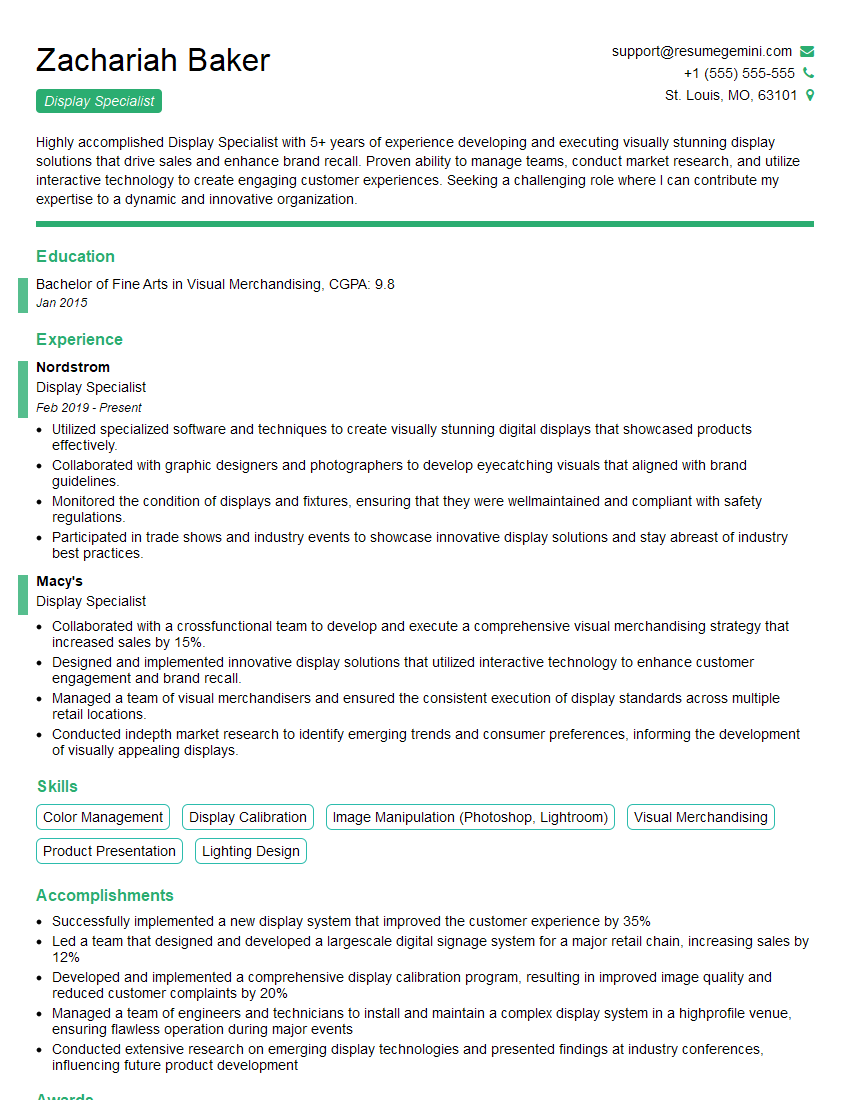
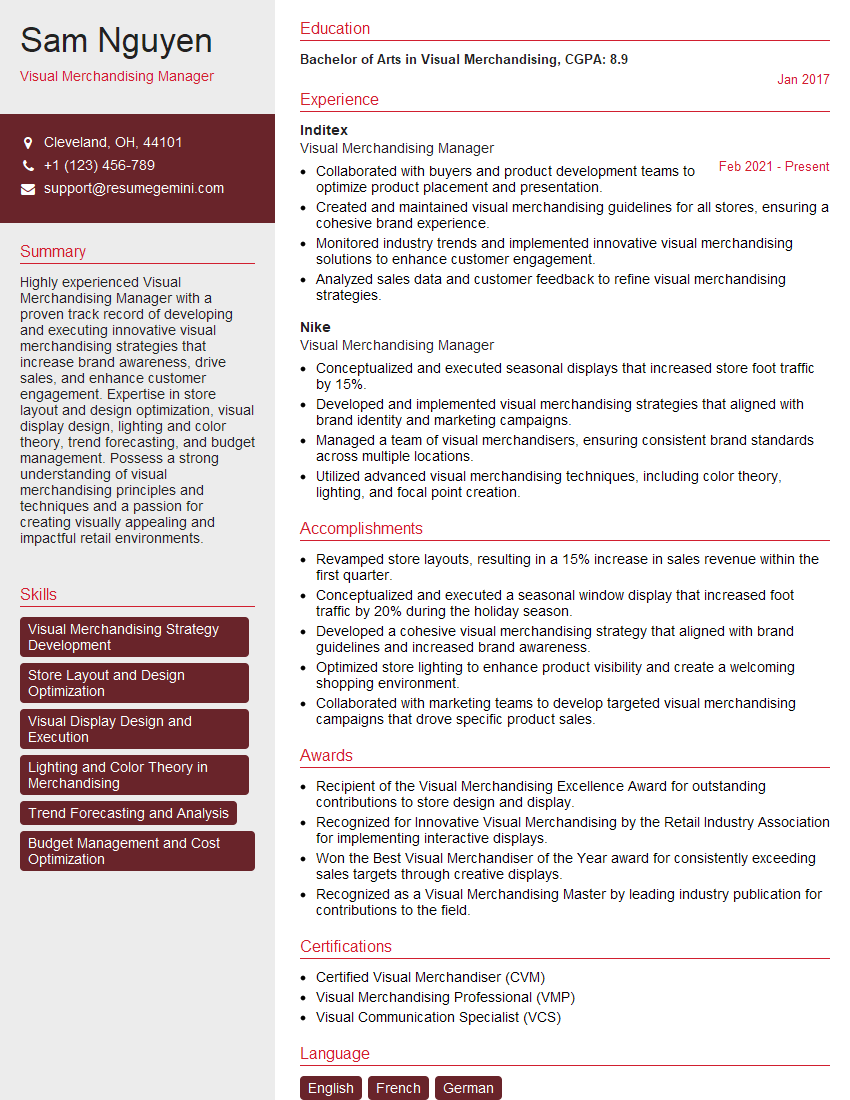
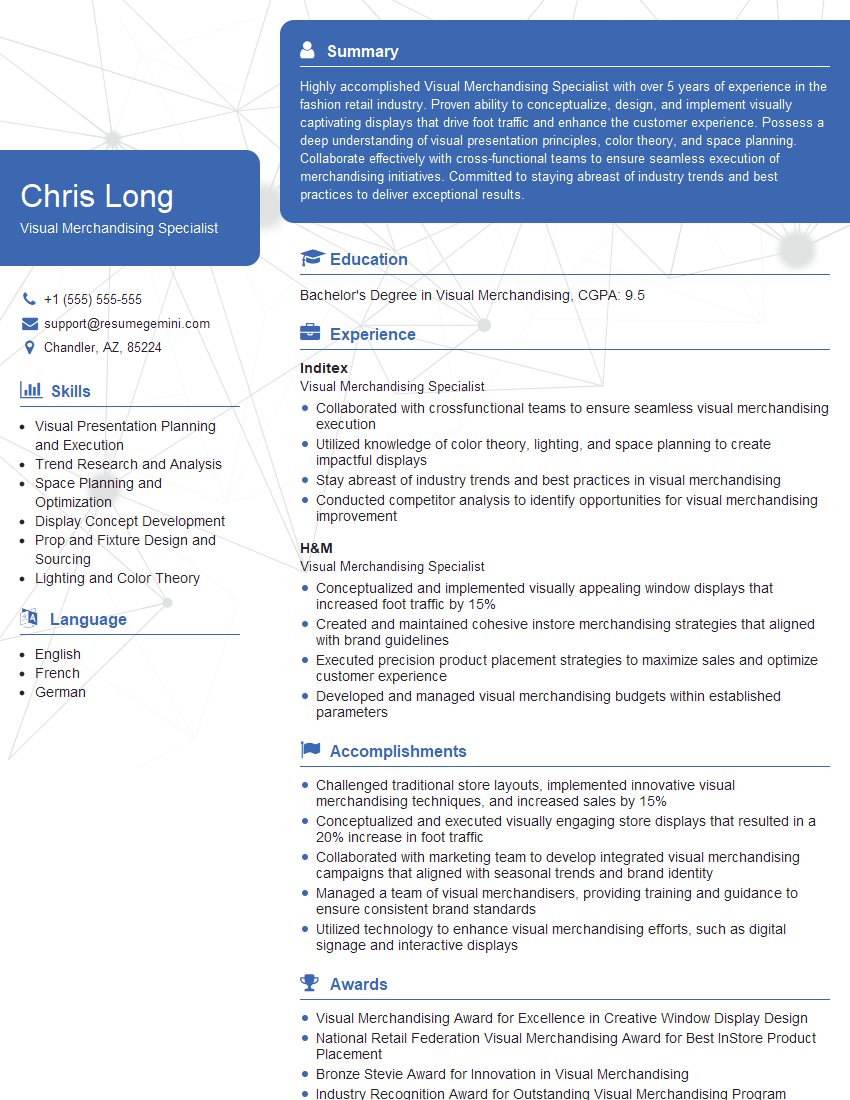
Mastering Omnichannel Visual Merchandising opens doors to exciting career opportunities, offering higher earning potential and greater responsibility within the retail and e-commerce industries. A strong resume is crucial for showcasing your skills and experience to potential employers. Creating an ATS-friendly resume significantly improves your chances of getting your application noticed. We highly recommend using ResumeGemini to build a professional and impactful resume that highlights your unique qualifications. ResumeGemini offers examples of resumes tailored to Omnichannel Visual Merchandising roles to guide you through the process.
Explore more articles
Users Rating of Our Blogs
Share Your Experience
We value your feedback! Please rate our content and share your thoughts (optional).
What Readers Say About Our Blog
Attention music lovers!
Wow, All the best Sax Summer music !!!
Spotify: https://open.spotify.com/artist/6ShcdIT7rPVVaFEpgZQbUk
Apple Music: https://music.apple.com/fr/artist/jimmy-sax-black/1530501936
YouTube: https://music.youtube.com/browse/VLOLAK5uy_noClmC7abM6YpZsnySxRqt3LoalPf88No
Other Platforms and Free Downloads : https://fanlink.tv/jimmysaxblack
on google : https://www.google.com/search?q=22+AND+22+AND+22
on ChatGPT : https://chat.openai.com?q=who20jlJimmy20Black20Sax20Producer
Get back into the groove with Jimmy sax Black
Best regards,
Jimmy sax Black
www.jimmysaxblack.com
Hi I am a troller at The aquatic interview center and I suddenly went so fast in Roblox and it was gone when I reset.
Hi,
Business owners spend hours every week worrying about their website—or avoiding it because it feels overwhelming.
We’d like to take that off your plate:
$69/month. Everything handled.
Our team will:
Design a custom website—or completely overhaul your current one
Take care of hosting as an option
Handle edits and improvements—up to 60 minutes of work included every month
No setup fees, no annual commitments. Just a site that makes a strong first impression.
Find out if it’s right for you:
https://websolutionsgenius.com/awardwinningwebsites
Hello,
we currently offer a complimentary backlink and URL indexing test for search engine optimization professionals.
You can get complimentary indexing credits to test how link discovery works in practice.
No credit card is required and there is no recurring fee.
You can find details here:
https://wikipedia-backlinks.com/indexing/
Regards
NICE RESPONSE TO Q & A
hi
The aim of this message is regarding an unclaimed deposit of a deceased nationale that bears the same name as you. You are not relate to him as there are millions of people answering the names across around the world. But i will use my position to influence the release of the deposit to you for our mutual benefit.
Respond for full details and how to claim the deposit. This is 100% risk free. Send hello to my email id: lukachachibaialuka@gmail.com
Luka Chachibaialuka
Hey interviewgemini.com, just wanted to follow up on my last email.
We just launched Call the Monster, an parenting app that lets you summon friendly ‘monsters’ kids actually listen to.
We’re also running a giveaway for everyone who downloads the app. Since it’s brand new, there aren’t many users yet, which means you’ve got a much better chance of winning some great prizes.
You can check it out here: https://bit.ly/callamonsterapp
Or follow us on Instagram: https://www.instagram.com/callamonsterapp
Thanks,
Ryan
CEO – Call the Monster App
Hey interviewgemini.com, I saw your website and love your approach.
I just want this to look like spam email, but want to share something important to you. We just launched Call the Monster, a parenting app that lets you summon friendly ‘monsters’ kids actually listen to.
Parents are loving it for calming chaos before bedtime. Thought you might want to try it: https://bit.ly/callamonsterapp or just follow our fun monster lore on Instagram: https://www.instagram.com/callamonsterapp
Thanks,
Ryan
CEO – Call A Monster APP
To the interviewgemini.com Owner.
Dear interviewgemini.com Webmaster!
Hi interviewgemini.com Webmaster!
Dear interviewgemini.com Webmaster!
excellent
Hello,
We found issues with your domain’s email setup that may be sending your messages to spam or blocking them completely. InboxShield Mini shows you how to fix it in minutes — no tech skills required.
Scan your domain now for details: https://inboxshield-mini.com/
— Adam @ InboxShield Mini
support@inboxshield-mini.com
Reply STOP to unsubscribe
Hi, are you owner of interviewgemini.com? What if I told you I could help you find extra time in your schedule, reconnect with leads you didn’t even realize you missed, and bring in more “I want to work with you” conversations, without increasing your ad spend or hiring a full-time employee?
All with a flexible, budget-friendly service that could easily pay for itself. Sounds good?
Would it be nice to jump on a quick 10-minute call so I can show you exactly how we make this work?
Best,
Hapei
Marketing Director
Hey, I know you’re the owner of interviewgemini.com. I’ll be quick.
Fundraising for your business is tough and time-consuming. We make it easier by guaranteeing two private investor meetings each month, for six months. No demos, no pitch events – just direct introductions to active investors matched to your startup.
If youR17;re raising, this could help you build real momentum. Want me to send more info?
Hi, I represent an SEO company that specialises in getting you AI citations and higher rankings on Google. I’d like to offer you a 100% free SEO audit for your website. Would you be interested?
Hi, I represent an SEO company that specialises in getting you AI citations and higher rankings on Google. I’d like to offer you a 100% free SEO audit for your website. Would you be interested?