Preparation is the key to success in any interview. In this post, we’ll explore crucial Open Pit Mining interview questions and equip you with strategies to craft impactful answers. Whether you’re a beginner or a pro, these tips will elevate your preparation.
Questions Asked in Open Pit Mining Interview
Q 1. Explain the stages involved in open pit mine planning.
Open pit mine planning is a complex, multi-stage process aimed at maximizing profitability while minimizing environmental impact. It’s like designing a giant puzzle, where each piece (stage) is crucial to the final picture (successful mine operation).
- Exploration and Resource Estimation: This initial phase involves geological surveys, drilling, and assaying to define the size, grade, and location of the orebody. Think of it as mapping the treasure to be extracted.
- Geotechnical Investigations: This stage assesses the rock mass properties, including strength, stability, and weathering characteristics. It’s like determining the structural integrity of the treasure chest before you open it.
- Mine Design and Scheduling: Using geological data and geotechnical parameters, a mine plan is developed, outlining the pit’s geometry, mining sequence, and production schedule. This is akin to creating a detailed plan of how to extract the treasure efficiently.
- Environmental Impact Assessment: This crucial stage assesses the potential environmental impacts of the mine and devises mitigation strategies. It’s ensuring the treasure hunt doesn’t ruin the surrounding environment.
- Infrastructure Planning: Planning and designing essential infrastructure, such as access roads, haul roads, water management systems, and power supply, is a vital part of the process. It’s preparing the logistics for the operation.
- Permitting and Approvals: Securing the necessary permits and approvals from regulatory agencies is a prerequisite to starting any mining operation. It’s like getting all the legal documents in order.
- Mine Closure Planning: Planning for the eventual closure and reclamation of the mine site, starting from day one, is essential for environmental responsibility. This is like planning for what happens after the treasure has been found, ensuring the land is restored.
Q 2. Describe different open pit mining methods and their applications.
Several open-pit mining methods exist, each suited to specific geological conditions and orebody characteristics. Imagine choosing the right tool for the job.
- Bench Mining: The most common method, involving excavating the orebody in a series of horizontal benches. Think of it as creating a giant staircase to access the ore.
- Cut-and-Fill Mining: Suitable for steeply dipping orebodies, this method involves excavating ore in slices, backfilling the void with waste rock. It’s like carving out the ore in layers and filling the gaps to maintain stability.
- Glory Hole Mining: Used for large, relatively shallow, and easily excavated deposits, it involves creating a large, open pit from the top. Think of it as a massive hole dug straight down.
- Highwall Mining: Often used for coal or other relatively shallow deposits, this method involves excavating the ore from a single high wall. It’s like mining along a giant cliff face.
The choice of method depends on factors like orebody geometry, rock strength, ground water conditions, and economic considerations.
Q 3. How do you determine the optimal pit limit?
Determining the optimal pit limit is a crucial aspect of open-pit mine planning, directly impacting profitability. It’s a balancing act between maximizing ore extraction and minimizing costs. We use sophisticated software and techniques for this, and it can be viewed as a complex optimization problem.
The process typically involves:
- Geometrical modelling of the orebody: Creating a 3D model of the orebody with different grades and rock types. This is the foundation of the entire exercise. Think of it as a virtual representation of the ore deposit.
- Economic modelling: Assigning economic parameters such as ore grades, mining costs, processing costs, and metal prices to the model. This provides a financial framework for decision-making.
- Optimization algorithms: Utilizing algorithms like Lerchs-Grossmann or similar techniques to determine the pit outline that maximizes the net present value (NPV). It’s like finding the most financially rewarding shape for the pit.
- Sensitivity analysis: Testing the robustness of the pit limit by varying key economic parameters to assess risks. It’s like testing the financial viability of the plan under various conditions.
The optimal pit limit represents the point where the incremental profit from extracting additional ore is offset by the increased costs of excavation and processing.
Q 4. What are the key geotechnical considerations in open pit mining?
Geotechnical considerations are paramount in open pit mining, directly influencing safety, stability, and operational efficiency. It’s like building a sturdy structure, ensuring it won’t collapse.
- Slope stability analysis: Assessing the risk of slope failure using methods like limit equilibrium analysis and numerical modelling. This is crucial for preventing catastrophic events.
- Rock mass characterization: Defining the strength, stiffness, and weathering characteristics of the rock mass to inform slope design and support measures. It’s understanding the building blocks of the pit walls.
- Groundwater management: Controlling groundwater inflow to prevent instability and optimize dewatering strategies. It’s managing the ‘water table’ effectively.
- Seismic considerations: Assessing the potential impact of seismic activity on slope stability and designing appropriate mitigation measures. This is vital in seismically active regions.
- Ground deformation monitoring: Implementing instrumentation and monitoring systems to detect early signs of instability and adjust mining operations accordingly. It’s like setting up an early warning system.
Q 5. Explain the role of blasting in open pit mining and its optimization.
Blasting is a crucial aspect of open pit mining, used to fragment the rock for efficient extraction. It’s like carefully breaking apart a large rock to manageable pieces.
Blasting optimization involves:
- Blast design: Determining the optimal pattern, type, and quantity of explosives to achieve the desired fragmentation. This involves careful calculation and experience.
- Drill pattern design: Designing the drill pattern to ensure even distribution of explosives and maximize fragmentation. This is the layout before the explosives are placed.
- Explosive selection: Choosing the appropriate type of explosives based on rock properties and desired fragmentation. It’s like selecting the best tool for the job.
- Monitoring and analysis: Monitoring blast performance through vibration monitoring, fragmentation analysis, and production data. This allows continuous improvement.
- Environmental considerations: Minimizing the environmental impact of blasting by controlling ground vibrations, airblast overpressure, and flyrock. It’s minimizing collateral damage.
Optimization aims to achieve the desired fragmentation with minimal costs, maximizing productivity, and reducing environmental impact.
Q 6. Describe different types of haul trucks used in open pit mines.
Haul trucks are the workhorses of open pit mines, transporting excavated material from the pit to processing facilities. They come in various sizes and capacities, each suited to specific needs. It’s like choosing the right delivery truck.
- Rigid-frame haul trucks: Large, robust trucks capable of carrying massive payloads, ideal for large-scale operations. Think of them as the heavy lifters.
- Articulated haul trucks: More maneuverable than rigid-frame trucks, better suited to rough terrain and confined spaces. They offer improved agility.
- Electric haul trucks: Becoming increasingly popular due to their environmental benefits and reduced operational costs. They are the environmentally friendly alternative.
The choice of haul truck depends on factors like mine size, haul distance, terrain conditions, and cost considerations. Larger mines typically use larger, more powerful trucks, while smaller operations might utilize smaller, more maneuverable trucks.
Q 7. How do you manage and mitigate risks associated with slope stability?
Slope stability management is critical for preventing catastrophic failures and ensuring the safety of personnel and equipment. It’s like continuously reinforcing a building’s foundation.
Risk mitigation strategies include:
- Regular slope monitoring: Using instruments like inclinometers, extensometers, and GPS to monitor ground movement and detect early warning signs of instability. It’s like regularly checking a building’s integrity.
- Slope design optimization: Designing slopes with appropriate angles and benches to minimize stress concentrations and promote stability. This involves creating a stable design from the start.
- Support measures: Implementing support measures such as rock bolts, shotcrete, and retaining walls where necessary to enhance slope stability. It’s like providing additional support to a structure.
- Water management: Controlling groundwater levels through drainage systems and dewatering techniques to prevent saturation and weakening of the rock mass. Managing water flow is critical.
- Emergency response planning: Developing and regularly testing emergency response plans to ensure a swift and effective response to slope failures. Having a plan is crucial.
Effective slope stability management requires a combination of careful planning, thorough monitoring, and proactive mitigation measures.
Q 8. What are the key environmental considerations in open pit mining operations?
Environmental considerations in open pit mining are paramount, impacting everything from local ecosystems to global climate change. We’re talking about significant land disturbance, impacting habitats and potentially causing biodiversity loss. Water management is critical; mine operations can generate significant volumes of wastewater, contaminated with heavy metals or other chemicals, posing risks to surface and groundwater. Air quality is another huge concern, with dust generated from blasting, hauling, and crushing activities, along with potential emissions from diesel equipment contributing to air pollution and greenhouse gas emissions. Finally, waste rock and tailings management is critical. These materials can contain harmful substances which need careful management to prevent environmental contamination. For example, a project I worked on in Chile involved implementing a rigorous water management plan which included the construction of tailings dams with advanced liner systems to prevent leakage and sophisticated water recycling processes to minimize fresh water consumption. We also implemented dust suppression techniques such as regular watering and the use of specialized equipment to minimize airborne dust particles.
- Habitat Loss and Fragmentation: Minimized through careful site selection and planning, including habitat restoration efforts.
- Water Pollution: Managed via effective water treatment and containment systems, preventing contamination of surface and groundwater.
- Air Quality: Improved through dust suppression techniques and emission control measures on equipment.
- Waste Rock and Tailings Management: Requires careful planning to prevent environmental contamination through proper disposal and potentially beneficial reuse.
Q 9. How do you ensure mine safety and comply with regulations?
Mine safety and regulatory compliance are non-negotiable. It’s a holistic approach incorporating rigorous safety protocols, training programs, and ongoing monitoring. Think of it like this: safety is not just a checklist, it’s a culture. We start with comprehensive risk assessments identifying potential hazards at each stage of the mining process. This informs our safety plans, encompassing everything from pre-blast inspections to emergency response protocols. Regular safety audits and training keep our team vigilant and aware. Furthermore, meticulous record-keeping and reporting ensures full compliance with all relevant regulations, varying across jurisdictions but typically covering aspects like ground control, equipment maintenance, and worker protection. For instance, in my previous role at a copper mine in Australia, we implemented a comprehensive safety management system based on the internationally recognized ISO 45001 standard. This included regular safety meetings, toolbox talks, and the use of advanced safety technology such as proximity sensors and automated emergency shutdown systems. We also established a robust reporting system to track and analyse safety incidents, allowing us to identify trends and implement preventive measures.
Q 10. Explain the importance of mine surveying in open pit mining.
Mine surveying is the backbone of open pit mining operations, providing the essential spatial data needed for efficient and safe operations. It’s the process of precisely measuring and mapping the mine’s geometry, both above and below ground. Think of it as creating a detailed 3D model of the mine, constantly updated. This information underpins every aspect, from initial resource modeling and pit design to ongoing monitoring and production control. Accurate surveying data is crucial for determining blast designs, optimizing haul routes, ensuring the stability of pit walls, and managing the stockpile inventory. Without it, we’d be essentially working blind, leading to inefficiencies, increased costs, and potential safety hazards. For example, in one project, precise surveying guided the excavation of a large ore body, avoiding costly over-excavation and ensuring we extracted the ore with maximum efficiency. Any deviations from the planned design were instantly flagged by our automated surveying system, allowing us to immediately correct our course.
Q 11. Describe your experience with mine scheduling and production planning.
My experience in mine scheduling and production planning involves developing and implementing strategies to optimize ore extraction and maximize profitability within the constraints of geological conditions, equipment capabilities, and market demands. This includes using advanced software to create detailed mine schedules, considering factors like ore grade, mining rates, equipment availability, and processing plant capacity. We use various techniques, such as critical path method (CPM) and linear programming, to optimize the sequencing of mining activities and minimize downtime. For example, in a gold mine in Nevada, I developed a production plan that integrated data from geological models, mine surveying, and metallurgical testing to create a optimized schedule for extracting the ore while minimizing dilution and maximizing recovery. This resulted in a 15% increase in gold production within the same timeframe. The key is a collaborative approach, working closely with geological, engineering, and processing teams to ensure a cohesive and efficient plan.
Q 12. How do you handle unexpected geological variations during mining?
Unexpected geological variations are a reality in open pit mining. Dealing with them effectively requires a combination of proactive planning and reactive problem-solving. Proactive measures include detailed geological modeling and exploration programs to characterize the ore body as accurately as possible before mining begins. However, surprises are inevitable. When unexpected geological variations are encountered, immediate actions include halting operations to assess the situation, re-evaluating the geological model, adjusting the mining plan, and implementing necessary safety precautions. This may involve modifying blast designs, adjusting haul routes, or implementing ground support measures. For example, in a project in Brazil, we encountered an unexpected fault zone during mining operations. Our team promptly stopped the operation, conducted detailed geological investigations, and implemented ground stabilization measures to prevent potential slope failures. This involved carefully designing support structures tailored to the specific characteristics of the fault zone and incorporating real-time monitoring using inclinometers and other geotechnical instrumentation. Adaptability and a collaborative response are key.
Q 13. What are the key performance indicators (KPIs) for open pit mining?
Key Performance Indicators (KPIs) in open pit mining are critical for evaluating efficiency, productivity, and profitability. These metrics are carefully chosen to track progress against targets, identify areas for improvement, and inform decision-making. Common KPIs include:
- Tons per hour (TPH): Measures the rate of material extraction.
- Ore grade: Represents the concentration of valuable minerals in the extracted ore.
- Recovery rate: Indicates the percentage of valuable minerals extracted from the ore.
- Stripping ratio: Measures the ratio of waste rock to ore extracted.
- Cost per ton: Reflects the overall cost of mining operations.
- Safety incidents: Tracks the frequency and severity of safety incidents.
- Environmental performance indicators: Measures impacts on air, water and biodiversity.
These KPIs, along with many others more specific to the particular project, are monitored regularly to provide a comprehensive overview of the mine’s performance. Regular reporting and analysis allow for prompt identification and resolution of any issues that may arise.
Q 14. Explain your experience with cost control and budget management in mining.
Cost control and budget management are crucial for the financial viability of any mining operation. It begins with a detailed budget that anticipates all costs, from exploration and capital expenditures to operating expenses. Effective cost control necessitates careful monitoring of actual costs against the budget, identifying variances, and implementing corrective actions. This involves tracking costs across all aspects of the operation, including labor, materials, equipment maintenance, and energy consumption. Regular cost reporting and variance analysis are crucial. Technology plays a vital role; we utilize software for cost tracking, forecasting, and reporting, allowing for proactive identification of potential overruns. For example, in a project in Canada, we implemented a sophisticated cost management system that integrated data from various sources, allowing for real-time monitoring and analysis of costs. This system helped us to identify and address cost inefficiencies, resulting in significant savings throughout the project lifespan. Ultimately, effective cost control is about balance: maintaining a focus on cost reduction without compromising safety or operational efficiency.
Q 15. How do you manage and resolve conflicts between different departments in a mine?
Conflict resolution in a mining operation requires a proactive, multi-faceted approach. It’s not simply about extinguishing flames, but preventing them in the first place. Effective communication is paramount. I believe in fostering a collaborative environment where open dialogue and respectful disagreement are encouraged. My strategy involves several key steps:
- Identify the root cause: Understanding the underlying issues, be it scheduling conflicts, resource allocation disagreements, or differing interpretations of safety protocols, is crucial. This often requires active listening and a willingness to see things from different perspectives. For example, a conflict between the drilling team and the blasting team might stem from inconsistent blast timing affecting drilling schedules.
- Facilitate collaborative problem-solving: I bring together representatives from all involved departments – not just the conflicting parties – to brainstorm solutions collectively. This promotes shared ownership and buy-in. We use techniques like brainstorming and root cause analysis to generate creative solutions.
- Establish clear communication channels: Regular meetings, progress reports, and transparent decision-making are essential. Utilizing project management software can streamline communication and track progress on conflict resolution.
- Develop clear roles and responsibilities: Ambiguity can be a major source of conflict. Having clearly defined roles and responsibilities helps reduce overlap and potential disputes.
- Implement conflict resolution protocols: A documented protocol for handling disputes, including escalation procedures, is critical. This ensures consistent and fair handling of future conflicts.
In one instance, a conflict arose between the geology team and the mining engineering team concerning the interpretation of geological data impacting pit design. By facilitating a joint review of the data, engaging independent experts when necessary, and establishing clear communication protocols, we collaboratively revised the pit design, resulting in a mutually acceptable solution and ultimately optimizing mine production.
Career Expert Tips:
- Ace those interviews! Prepare effectively by reviewing the Top 50 Most Common Interview Questions on ResumeGemini.
- Navigate your job search with confidence! Explore a wide range of Career Tips on ResumeGemini. Learn about common challenges and recommendations to overcome them.
- Craft the perfect resume! Master the Art of Resume Writing with ResumeGemini’s guide. Showcase your unique qualifications and achievements effectively.
- Don’t miss out on holiday savings! Build your dream resume with ResumeGemini’s ATS optimized templates.
Q 16. Describe your experience with mine water management.
Mine water management is critical for both environmental protection and operational efficiency. My experience encompasses various aspects, from water quantity and quality monitoring to dewatering strategies and water reuse initiatives. I’ve worked on projects involving:
- Hydrogeological investigations: Characterizing groundwater flow patterns and predicting the impact of mining activities on water resources. This includes conducting pumping tests, analyzing water quality parameters, and using numerical modeling to simulate groundwater flow.
- Dewatering strategies: Designing and implementing effective dewatering systems using various methods, such as well points, sumps, and large-scale pumping systems. I’ve worked on projects involving both surface and subsurface dewatering techniques, carefully considering the environmental impact of discharge.
- Water treatment and reuse: Developing and implementing water treatment systems to meet regulatory standards and allow for water reuse within the mine site. This reduces reliance on external water sources and minimizes environmental footprint.
- Water balance modeling: Creating comprehensive models to track water inflow, outflow, and consumption throughout the mine life cycle. This helps in optimizing water management strategies and predicting future water demands.
For instance, at a previous mine, we implemented a water reuse system that recycled treated mine water for dust suppression, reducing our freshwater consumption by 30%. This not only reduced our operational costs but also minimized our environmental impact.
Q 17. How do you ensure efficient material handling in an open pit mine?
Efficient material handling is the backbone of an open-pit mine’s productivity and profitability. It’s about optimizing the flow of materials from extraction to processing and ultimately to disposal. My approach involves:
- Strategic infrastructure planning: This involves optimizing haul road networks, designing efficient stockpile layouts, and strategically locating processing facilities to minimize haulage distances and maximize material flow.
- Fleet optimization: Selecting the appropriate equipment based on material type, tonnage, and haul distances. This includes analyzing factors like equipment capacity, fuel efficiency, and maintenance requirements. Utilizing telematics to monitor equipment performance is also key.
- Scheduling and dispatching: Implementing effective scheduling and dispatching systems to coordinate the movement of equipment and materials. Software like mine management systems (MMS) helps optimize this process.
- Blending and stockpiling strategies: Implementing strategies for blending different ore types and managing stockpiles to ensure consistent feed to the processing plant and to control material quality.
- Maintenance and preventative measures: Establishing a rigorous maintenance program to ensure optimal equipment uptime and minimize downtime due to equipment failure.
In one project, by optimizing the haul road network and implementing a new dispatching system, we reduced haulage time by 15%, resulting in significant cost savings and increased productivity.
Q 18. Explain your experience with different types of drilling equipment.
My experience with drilling equipment encompasses a wide range of technologies, from top-hammer drills to down-the-hole (DTH) drills and rotary drills. I’m familiar with their applications in various geological settings and mining scenarios:
- Top-hammer drills: These are widely used for pre-splitting and benching in open-pit mines. I have experience with both crawler-mounted and truck-mounted units, understanding their limitations and applications in different rock conditions.
- Down-the-hole (DTH) drills: These are highly efficient for drilling large-diameter blast holes in softer to moderately hard rock. I have overseen projects using DTH rigs and am proficient in optimizing drilling parameters for maximum penetration rate and hole quality.
- Rotary drills: These are particularly useful for drilling in hard rock formations and for exploration drilling. My experience includes working with both surface and underground rotary rigs, understanding the complexities of different drilling techniques.
- Reverse Circulation (RC) drills: I have significant experience with RC drilling, a technique particularly useful for exploration drilling, delivering cuttings to surface quickly for geological analysis.
For example, in one project, we switched from top-hammer drills to DTH drills in certain areas to significantly improve drilling rates and reduce overall drilling costs. This involved a careful assessment of the geological conditions and a detailed cost-benefit analysis.
Q 19. Describe your experience with mine ventilation systems.
Mine ventilation is critical for worker safety and productivity. Poor ventilation can lead to dangerous build-ups of harmful gases, dust, and heat. My experience covers designing, implementing, and maintaining ventilation systems in various open-pit mining operations. This includes:
- Ventilation system design: This involves assessing airflow requirements based on factors like mine geometry, ventilation resistance, and required air quality parameters. Software simulations are frequently used to optimize designs.
- Fan selection and installation: Selecting appropriate fans based on airflow requirements and pressure drop. This includes the installation, commissioning and maintenance of axial and centrifugal fans.
- Airflow monitoring and control: Implementing monitoring systems to measure airflow rates, gas concentrations, and temperature. This enables real-time adjustments to optimize ventilation and maintain safe working conditions.
- Emergency ventilation plans: Developing contingency plans for dealing with ventilation emergencies, such as power failures or equipment malfunctions.
In one project, by optimizing the ventilation system design and implementing a new control system, we reduced energy consumption by 10% while improving airflow distribution and worker comfort.
Q 20. What are the key factors influencing the selection of mining equipment?
Selecting mining equipment is a complex process requiring a thorough understanding of various factors. The decision process isn’t simply about the initial purchase price; it involves a holistic view of lifecycle costs and operational efficiency. Key factors include:
- Geological conditions: The type of rock, its hardness, and its fracturing influence the selection of drilling and blasting equipment, as well as excavators and haulers. For example, hard rock necessitates robust equipment with high power output.
- Mining method: Different mining methods, such as bench mining, require different types of equipment. A large open pit operation will require larger capacity equipment than a smaller quarry.
- Production targets: The desired production rate dictates the capacity and efficiency of required equipment. Larger production targets necessitate high-capacity excavators, haulers, and crushers.
- Operational costs: This includes fuel consumption, maintenance, labor, and repair costs. A thorough lifecycle cost analysis is crucial in comparing different equipment options.
- Environmental considerations: Emission regulations, noise pollution limits, and water usage restrictions can influence the choice of equipment. Manufacturers increasingly offer environmentally friendly equipment.
- Safety features: Modern equipment comes with advanced safety features such as automatic braking systems, proximity sensors, and rollover protection structures. Prioritizing safety should always be paramount.
For instance, when selecting excavators, we conduct a thorough analysis of the rock hardness, expected digging depth, and required cycle times. This helps in choosing the right size and type of excavator to maximize productivity and minimize downtime.
Q 21. How do you assess and mitigate the risks of ground control issues?
Ground control issues, such as slope instability and rockfalls, are major safety hazards and can significantly impact productivity. A robust risk assessment and mitigation strategy is crucial. My approach involves:
- Geotechnical investigations: This includes conducting detailed site investigations to characterize the geological conditions, rock mass strength, and potential instability zones. This often involves geotechnical mapping, drilling and sampling, and laboratory testing.
- Slope stability analysis: Employing advanced numerical modelling techniques to assess the stability of slopes under various loading conditions and environmental influences (e.g., rainfall). Software like Rocscience and Phase2 are often employed for this purpose.
- Risk assessment and mitigation strategies: Identifying potential ground control hazards, evaluating their likelihood and consequence, and implementing appropriate mitigation measures. These measures could include slope modification (benching, flattening), rock bolting, shotcrete, and early warning systems.
- Monitoring and instrumentation: Installing instruments such as inclinometers, extensometers, and displacement sensors to monitor slope movements and ground conditions. This provides early warning of potential instability.
- Emergency response plans: Developing and regularly rehearsing emergency response plans for ground control incidents, including evacuation procedures and rescue protocols.
In one instance, we identified a potential slope instability using advanced slope stability modelling. By implementing a combination of benching, rock bolting, and regular monitoring, we successfully mitigated the risk and prevented a potentially catastrophic failure.
Q 22. Describe your experience with mine closure planning and reclamation.
Mine closure planning and reclamation are critical for environmental responsibility and minimizing the long-term impacts of mining. It’s not simply about filling a hole; it’s a multi-phased process involving careful planning, engineering, and regulatory compliance, starting long before the mine reaches its end-of-life.
My experience encompasses all stages, from initial feasibility studies that incorporate reclamation costs and strategies into the overall mine plan, to detailed design of the final landform, including water management systems, topsoil replacement, and revegetation. For example, on a previous project involving a copper mine in Nevada, we developed a comprehensive plan that included diverting existing drainage patterns to prevent erosion, constructing terraces to stabilize slopes, and using native plant species to ensure successful revegetation. This plan meticulously addressed aspects like water quality monitoring, long-term monitoring protocols, and financial guarantees to ensure the successful completion of reclamation, even after the mining company’s departure. We also successfully navigated the complex regulatory landscape, obtaining all necessary permits and approvals from state and federal agencies.
- Pre-closure planning: This stage includes identifying potential environmental impacts, developing reclamation strategies, and securing necessary permits.
- Closure implementation: This involves implementing the approved reclamation plan, which may include backfilling, grading, topsoil replacement, and revegetation.
- Post-closure monitoring: This involves ongoing monitoring of the reclaimed site to ensure stability and environmental protection. This monitoring can extend for decades depending on the environmental sensitivity and regulatory requirements.
Q 23. How do you integrate sustainability principles into open pit mining operations?
Integrating sustainability into open pit mining is no longer optional; it’s a necessity for long-term viability and social license to operate. It’s about minimizing environmental footprints while maximizing economic and social benefits for all stakeholders.
My approach focuses on a holistic strategy. This involves:
- Resource Efficiency: Optimizing extraction methods to minimize waste rock generation and maximize ore recovery using advanced techniques like selective mining and improved blasting designs. For instance, in a gold mine project, we implemented advanced geostatistical modeling to optimize the mine plan, resulting in a 15% increase in ore recovery and a significant reduction in waste rock.
- Water Management: Implementing water recycling and reuse programs, reducing water consumption, and treating water to meet strict environmental standards before discharge. This includes techniques such as tailings water evaporation ponds and using treated water for dust suppression.
- Energy Optimization: Utilizing renewable energy sources whenever feasible, such as solar or wind power for mine operations. Also employing energy-efficient equipment and processes to minimize carbon emissions.
- Community Engagement: Working closely with local communities to address their concerns, provide opportunities for employment and training, and contribute to local infrastructure development.
- Biodiversity Conservation: Protecting and restoring biodiversity through habitat restoration, and minimizing the impact on endangered species. This could involve creating wildlife corridors or establishing protected areas within the mine site.
Sustainability isn’t just an environmental concern; it’s a business imperative. It reduces operational costs, improves public perception, and enhances the long-term value of the mining operation.
Q 24. Explain your experience with using mining software and data analysis tools.
I have extensive experience using various mining software and data analysis tools throughout my career. My proficiency spans from geological modeling software like Leapfrog Geo and Surpac to mine planning packages such as MineSight and Deswik. I’m also adept at using GIS software (ArcGIS) for spatial data analysis and visualization.
Data analysis is key to optimizing mine operations. I utilize these tools to:
- Geological Modeling: Create accurate 3D models of ore deposits to estimate resource quantities and grades, aiding in mine planning and production scheduling.
- Mine Planning and Scheduling: Optimize mine designs, production schedules, and fleet management to maximize profitability and efficiency.
- Data Analysis & Reporting: Analyze operational data to identify areas for improvement, track performance, and forecast future production.
- Simulation & Optimization: Conduct simulations to test different mining scenarios and optimize operational parameters.
For example, in a previous project, we used MineSight to optimize the blast design, resulting in a 10% improvement in fragmentation which reduced crushing costs and increased throughput. We also used Leapfrog Geo to create a high-resolution geological model, leading to a more precise estimation of ore reserves and improved mine planning.
Q 25. How do you manage and improve the efficiency of mining processes?
Improving the efficiency of mining processes is an ongoing pursuit. It requires a data-driven approach, continuous improvement, and a focus on all aspects of the operation.
My strategies include:
- Process Optimization: Analyzing operational data to identify bottlenecks and inefficiencies. This often involves Lean methodologies to streamline workflows and eliminate waste. For example, optimizing truck haulage routes using GPS tracking and advanced scheduling algorithms can significantly reduce cycle times and fuel consumption.
- Technology Integration: Implementing advanced technologies such as autonomous haulage systems, automated drilling, and remote monitoring systems to improve productivity and safety. These technologies not only increase efficiency but also create a safer work environment.
- Predictive Maintenance: Utilizing sensor data and machine learning algorithms to predict equipment failures and schedule maintenance proactively, minimizing downtime and maximizing equipment lifespan.
- Training and Development: Investing in the training and development of personnel to ensure they have the skills and knowledge to operate equipment efficiently and safely. A well-trained workforce is a key factor in efficient operations.
- Performance Monitoring and Reporting: Regularly monitoring key performance indicators (KPIs) and using data analysis to identify trends and areas for improvement.
Efficient mining processes aren’t just about speed; they are about optimizing resource utilization, minimizing costs, and enhancing safety.
Q 26. What are the challenges of operating an open pit mine in a remote location?
Operating an open pit mine in a remote location presents unique challenges, often amplifying existing operational complexities. The remoteness introduces significant logistical, infrastructural, and human resource challenges.
These challenges include:
- Infrastructure Development: Constructing and maintaining roads, power lines, water supply systems, and communication networks in remote areas can be costly and time-consuming. The lack of existing infrastructure often requires significant upfront investment.
- Logistics and Transportation: Transporting equipment, supplies, and personnel to and from the mine site can be challenging and expensive. This includes dealing with varying weather conditions and potentially difficult terrain.
- Workforce Management: Recruiting, retaining, and providing support for a workforce in a remote location requires careful planning and significant investment in accommodation, healthcare, and other essential services. This can include providing housing, transportation, and recreational facilities to attract and retain skilled employees.
- Environmental Considerations: Remote areas often have sensitive ecosystems. Environmental protection measures must be particularly robust due to the potential impact of mining activities on delicate environments and the difficulties in rapid response in case of an emergency.
- Regulatory Compliance: Navigating the regulatory landscape in remote areas may be complex, requiring extensive knowledge of local and national regulations.
Successfully managing these challenges requires careful planning, proactive risk management, and a strong commitment to safety and sustainability.
Q 27. How do you ensure the quality control of ore extraction and processing?
Ensuring the quality control of ore extraction and processing is fundamental to the financial success of a mining operation. This involves rigorous monitoring at every stage, from exploration to final product.
My approach focuses on a multi-layered system of quality control:
- Geological Control: Accurate geological modelling and mapping are crucial for directing mining activities towards high-grade ore and avoiding dilution. Regular geological sampling and assaying provide essential feedback loops for adjustments to mine planning.
- Drilling and Blasting: Optimizing drilling patterns and blast designs to achieve the desired fragmentation size enhances extraction efficiency and minimizes ore loss. Careful monitoring of blast parameters is critical for consistent results.
- Loading and Hauling: Implementing procedures for segregating ore and waste rock, monitoring material flow, and using weigh scales to accurately track production. This helps prevent mixing of different ore types or dilution with waste rock.
- Crushing and Grinding: Regular monitoring of particle size distribution and metal recovery ensures that the process is operating effectively. Sampling and assaying throughout the process helps optimize parameters and identify problems.
- Metallurgical Testing: Ongoing metallurgical testing helps determine the optimal processing parameters for maximizing metal recovery and minimizing losses.
Implementing a robust quality control system ensures that the mined ore meets the required specifications, maximizing profitability and minimizing environmental impact.
Q 28. Describe your experience with regulatory compliance in open pit mining.
Regulatory compliance in open pit mining is paramount. It involves adherence to a complex web of environmental, safety, and operational regulations which vary significantly by jurisdiction. Non-compliance can result in severe penalties, operational shutdowns, and reputational damage.
My experience includes:
- Permitting: Successfully navigating the process of obtaining and maintaining all necessary permits and licenses. This requires a deep understanding of applicable regulations and a proactive approach to environmental impact assessments.
- Environmental Monitoring: Implementing and maintaining comprehensive environmental monitoring programs to track air and water quality, noise levels, and other environmental parameters. This often includes collaboration with external environmental consultants and regulatory agencies.
- Safety Management: Implementing and adhering to stringent safety protocols to ensure the well-being of workers and minimize risks associated with mining operations. This often involves rigorous safety training programs and adherence to industry best practices.
- Reporting and Auditing: Preparing regular reports for regulatory agencies, participating in audits, and responding to requests for information in a timely and accurate manner. Maintaining comprehensive records is essential.
- Stakeholder Engagement: Effectively communicating with regulatory bodies, local communities, and other stakeholders to ensure transparency and build trust.
Regulatory compliance is not a mere checklist; it’s a continuous process of proactive engagement, robust record-keeping, and a commitment to responsible mining practices.
Key Topics to Learn for Open Pit Mining Interview
- Geology and Geotechnical Engineering: Understanding rock mass characteristics, stability analysis, and slope design is crucial. Consider how these principles impact blasting, excavation, and overall mine planning.
- Mine Planning and Design: Familiarize yourself with open pit mine design principles, including ultimate pit limit optimization, scheduling, and production planning. Think about the practical application of these concepts in resource estimation and mine life cycle management.
- Blasting and Excavation: Learn about different blasting techniques, drill and blast optimization, and the selection of appropriate excavation equipment. Consider the environmental and safety implications of these processes.
- Mineral Processing and Beneficiation: Understand the flowsheet from extraction to processing, including crushing, grinding, and concentration techniques. Explore how these processes are tailored to the specific ore body being mined.
- Environmental Management and Reclamation: Be prepared to discuss environmental regulations, water management, land reclamation, and dust control strategies in open pit mining operations. Think about the role of sustainable practices and reducing environmental impact.
- Safety and Health: Demonstrate your understanding of safety protocols, risk management, and emergency response procedures specific to open pit mining. This includes understanding and applying relevant regulations and best practices.
- Mine Surveying and Monitoring: Understand the importance of surveying techniques for accurate mine mapping and monitoring ground movement. Consider the role of technology in modern surveying practices and data analysis.
- Equipment Maintenance and Operations: Familiarity with heavy equipment used in open pit mining, including loaders, excavators, haul trucks, and drills, is essential. Be ready to discuss maintenance schedules, operational efficiency, and troubleshooting common issues.
Next Steps
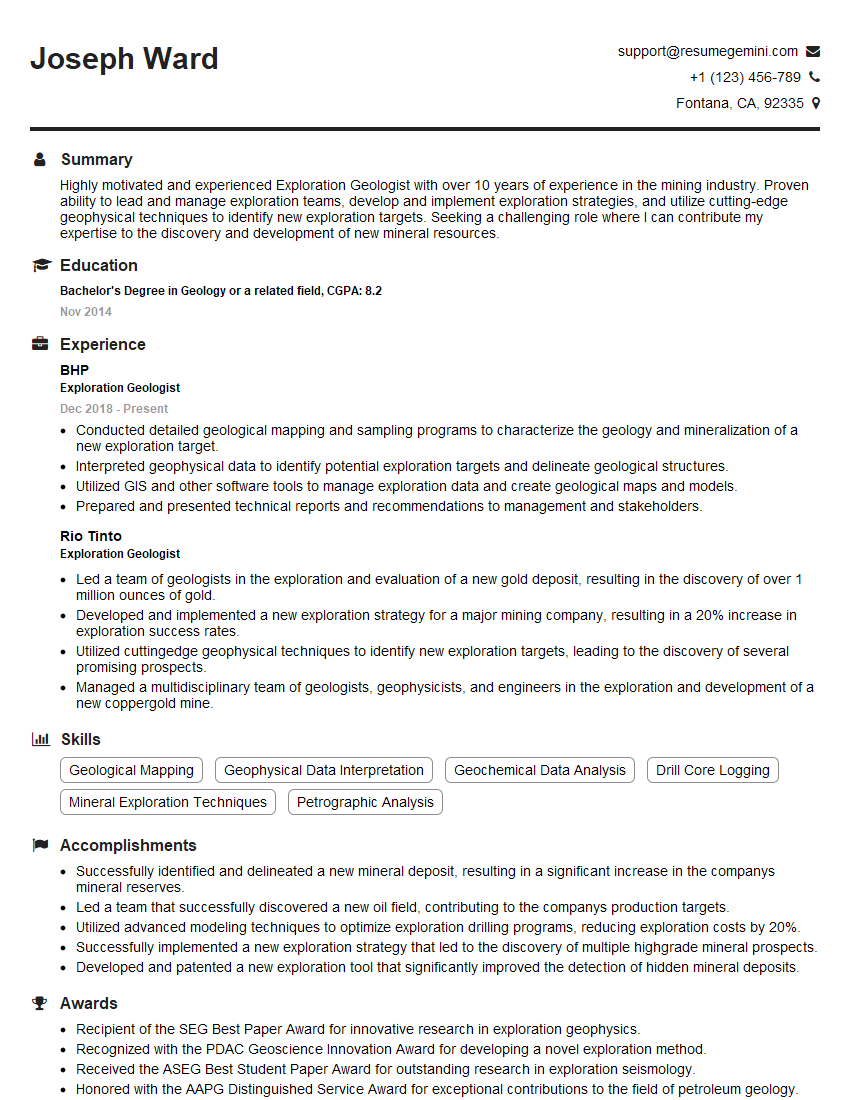
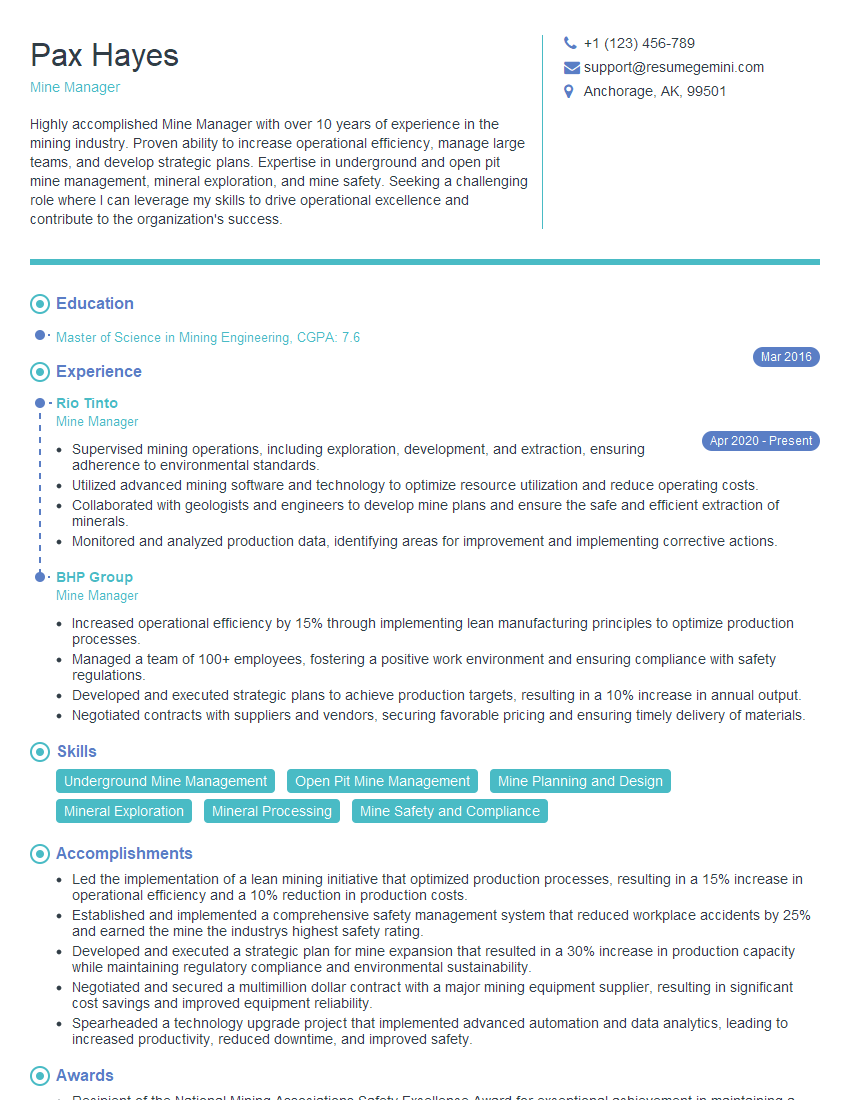
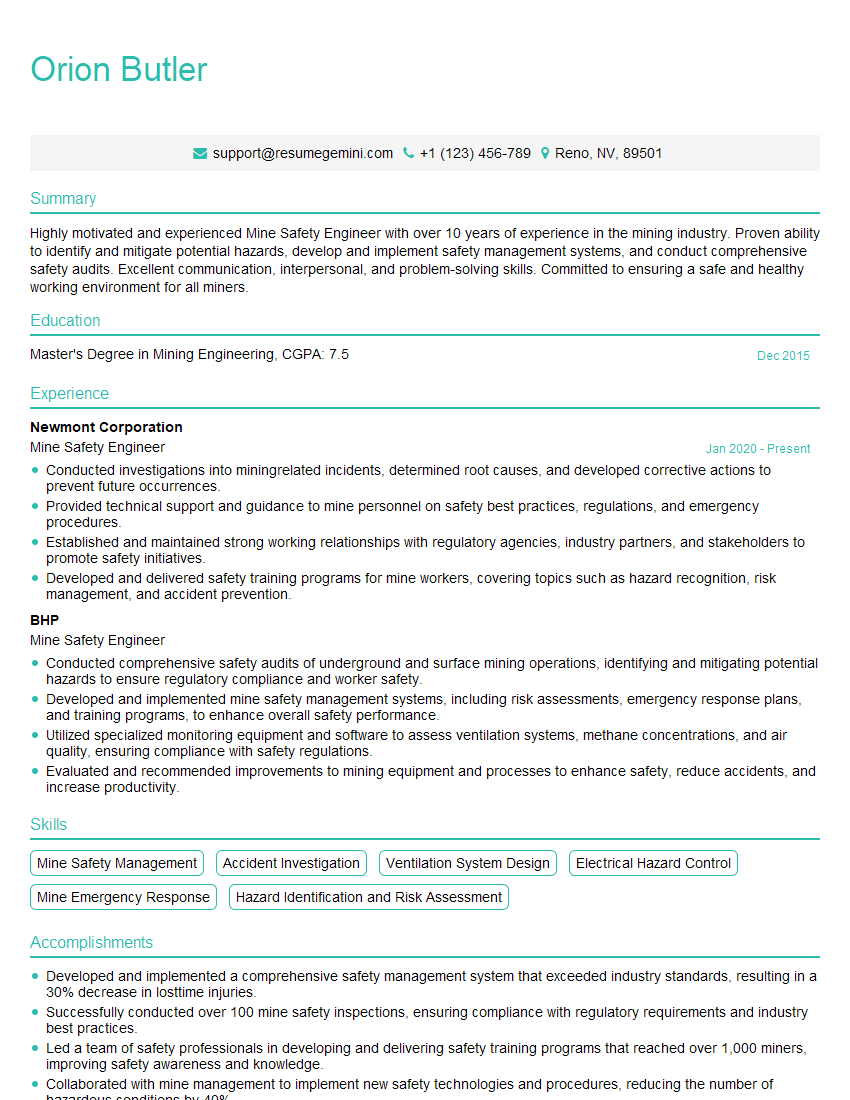
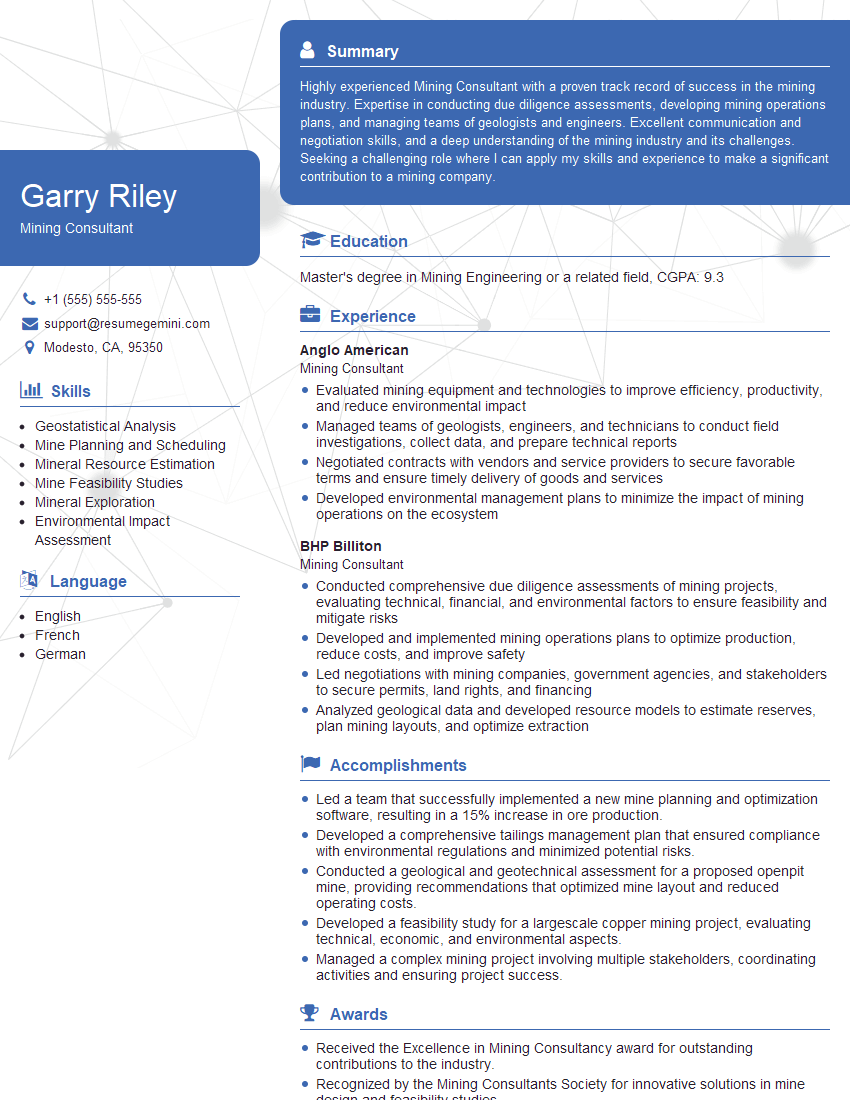
Mastering the intricacies of open pit mining opens doors to a rewarding and impactful career, offering opportunities for growth and specialization within this vital industry. To maximize your job prospects, creating a strong, ATS-friendly resume is critical. ResumeGemini is a trusted resource to help you build a professional and effective resume that highlights your skills and experience. Examples of resumes tailored to the Open Pit Mining sector are available to help you craft a compelling application that showcases your unique qualifications. Invest the time to build a standout resume – it’s your first impression.


Explore more articles
Users Rating of Our Blogs
Share Your Experience
We value your feedback! Please rate our content and share your thoughts (optional).
What Readers Say About Our Blog
Hi I am a troller at The aquatic interview center and I suddenly went so fast in Roblox and it was gone when I reset.
Hi,
Business owners spend hours every week worrying about their website—or avoiding it because it feels overwhelming.
We’d like to take that off your plate:
$69/month. Everything handled.
Our team will:
Design a custom website—or completely overhaul your current one
Take care of hosting as an option
Handle edits and improvements—up to 60 minutes of work included every month
No setup fees, no annual commitments. Just a site that makes a strong first impression.
Find out if it’s right for you:
https://websolutionsgenius.com/awardwinningwebsites
Hello,
we currently offer a complimentary backlink and URL indexing test for search engine optimization professionals.
You can get complimentary indexing credits to test how link discovery works in practice.
No credit card is required and there is no recurring fee.
You can find details here:
https://wikipedia-backlinks.com/indexing/
Regards
NICE RESPONSE TO Q & A
hi
The aim of this message is regarding an unclaimed deposit of a deceased nationale that bears the same name as you. You are not relate to him as there are millions of people answering the names across around the world. But i will use my position to influence the release of the deposit to you for our mutual benefit.
Respond for full details and how to claim the deposit. This is 100% risk free. Send hello to my email id: [email protected]
Luka Chachibaialuka
Hey interviewgemini.com, just wanted to follow up on my last email.
We just launched Call the Monster, an parenting app that lets you summon friendly ‘monsters’ kids actually listen to.
We’re also running a giveaway for everyone who downloads the app. Since it’s brand new, there aren’t many users yet, which means you’ve got a much better chance of winning some great prizes.
You can check it out here: https://bit.ly/callamonsterapp
Or follow us on Instagram: https://www.instagram.com/callamonsterapp
Thanks,
Ryan
CEO – Call the Monster App
Hey interviewgemini.com, I saw your website and love your approach.
I just want this to look like spam email, but want to share something important to you. We just launched Call the Monster, a parenting app that lets you summon friendly ‘monsters’ kids actually listen to.
Parents are loving it for calming chaos before bedtime. Thought you might want to try it: https://bit.ly/callamonsterapp or just follow our fun monster lore on Instagram: https://www.instagram.com/callamonsterapp
Thanks,
Ryan
CEO – Call A Monster APP
To the interviewgemini.com Owner.
Dear interviewgemini.com Webmaster!
Hi interviewgemini.com Webmaster!
Dear interviewgemini.com Webmaster!
excellent
Hello,
We found issues with your domain’s email setup that may be sending your messages to spam or blocking them completely. InboxShield Mini shows you how to fix it in minutes — no tech skills required.
Scan your domain now for details: https://inboxshield-mini.com/
— Adam @ InboxShield Mini
Reply STOP to unsubscribe
Hi, are you owner of interviewgemini.com? What if I told you I could help you find extra time in your schedule, reconnect with leads you didn’t even realize you missed, and bring in more “I want to work with you” conversations, without increasing your ad spend or hiring a full-time employee?
All with a flexible, budget-friendly service that could easily pay for itself. Sounds good?
Would it be nice to jump on a quick 10-minute call so I can show you exactly how we make this work?
Best,
Hapei
Marketing Director
Hey, I know you’re the owner of interviewgemini.com. I’ll be quick.
Fundraising for your business is tough and time-consuming. We make it easier by guaranteeing two private investor meetings each month, for six months. No demos, no pitch events – just direct introductions to active investors matched to your startup.
If youR17;re raising, this could help you build real momentum. Want me to send more info?
Hi, I represent an SEO company that specialises in getting you AI citations and higher rankings on Google. I’d like to offer you a 100% free SEO audit for your website. Would you be interested?
Hi, I represent an SEO company that specialises in getting you AI citations and higher rankings on Google. I’d like to offer you a 100% free SEO audit for your website. Would you be interested?
good