Interviews are opportunities to demonstrate your expertise, and this guide is here to help you shine. Explore the essential Operating Industrial Pressing Machines interview questions that employers frequently ask, paired with strategies for crafting responses that set you apart from the competition.
Questions Asked in Operating Industrial Pressing Machines Interview
Q 1. Describe your experience operating different types of industrial pressing machines.
Throughout my career, I’ve operated a wide variety of industrial pressing machines, from simple mechanical presses to complex, computer-controlled hydraulic presses. My experience encompasses presses used in various applications, including stamping metal parts for automotive components, forging parts for construction equipment, and even pressing powdered metals into intricate shapes. For example, I’ve extensively used C-frame presses for smaller, more precise work like punching holes in sheet metal, while larger, more powerful hydraulic presses were essential for forming larger components like chassis parts. I’m also experienced with eccentric presses, known for their high-speed capabilities and suited for high-volume production of simpler parts.
- Mechanical Presses: Proficient in operating various tonnage capacities and understanding their mechanical limitations.
- Hydraulic Presses: Experienced in controlling pressure, speed, and stroke length for precision work.
- Transfer Presses: Skilled in handling automated die transfers and high-speed production runs.
Q 2. Explain the safety procedures you follow when operating a press machine.
Safety is paramount when operating pressing machines. My safety procedures are meticulous and follow strict adherence to company and industry standards. Before commencing any operation, I always perform a thorough pre-operational inspection of the machine, looking for any signs of damage, loose components, or fluid leaks. I ensure that all safety guards are in place and functioning correctly. I never attempt to make adjustments while the machine is running. I utilize proper personal protective equipment (PPE), including safety glasses, hearing protection, steel-toed boots, and, depending on the task, gloves and a safety apron. I always clear the work area of any obstructions before starting the machine. Additionally, I regularly participate in safety training and refreshers to stay up to date on best practices and evolving safety protocols.
Think of it like this: a single lapse in safety can have devastating consequences. I treat every operation as if my own safety, and the safety of others, hinges on my diligence.
Q 3. How do you identify and troubleshoot common malfunctions in a pressing machine?
Troubleshooting press malfunctions requires a systematic approach. My process begins with careful observation: I listen for unusual noises, check for vibrations, and visually inspect the machine for any signs of problems. Common issues I’ve encountered include die misalignment, lubrication problems, hydraulic leaks (in hydraulic presses), and electrical faults. I systematically check each component, working from the most likely cause to the least likely. For example, if the press won’t cycle, I’d first check the electrical supply and control system, then hydraulic pressure (in hydraulic presses), and finally examine the mechanical linkages.
For example, if I notice inconsistent stamping pressure, I might first check the hydraulic pressure gauge (if applicable) and adjust it as needed. If the issue persists, I might then examine the die for wear and tear or misalignment, checking for burrs or other obstructions. Documentation and record-keeping are crucial for tracking issues and facilitating preventative maintenance.
Q 4. What are the different types of dies used in industrial pressing?
Industrial presses utilize a wide variety of dies depending on the part being produced. The selection of a die is tailored to the specific design and material of the final product. Some common types include:
- Blanking Dies: Used to cut out shapes from sheet metal.
- Punching Dies: Create holes in sheet metal.
- Bending Dies: Form bends or curves in metal sheet or wire.
- Drawing Dies: Form cups or similar shapes by pulling metal through a die cavity.
- Progressive Dies: Perform multiple operations in a single press stroke. Think of them as mini assembly lines integrated into the die itself.
- Compound Dies: Combine multiple operations, like blanking and punching, in a single die setup, improving efficiency.
The choice of die material is crucial, typically involving high-strength steel alloys to withstand the pressures and repeated use.
Q 5. Describe your experience with die changing and setup procedures.
Die changing and setup is a critical aspect of my work, requiring precision and a strong understanding of the press and the die itself. The procedure starts with a thorough safety check, ensuring the press is fully powered down and locked out. I carefully remove the old die using appropriate lifting equipment, following proper safety measures. Before installing the new die, I meticulously inspect it for any damage. The new die is then carefully positioned and secured, ensuring proper alignment using precision measuring tools. The process requires careful attention to detail to prevent damage to the die or the press. After installation, I perform a test run with scrap material to ensure proper function before proceeding with actual production. This ensures safety and avoids potential damage to expensive dies or the production materials.
Q 6. How do you ensure the quality and consistency of pressed parts?
Maintaining consistent part quality is achieved through a combination of careful attention to several factors. Regular calibration and maintenance of the press are essential. This includes checking for wear and tear on the dies and making adjustments as needed to maintain their accuracy. Regular lubrication and inspection of moving parts also help to ensure the consistency of the press’s operations. Moreover, maintaining consistent material properties is also crucial. This includes selecting materials from batches that meet predefined quality criteria and managing the press’s operational parameters, such as pressure and speed, within specific tolerances. Finally, regular quality checks during production using appropriate measuring tools, like calipers and micrometers, are conducted to verify dimensional accuracy and consistency.
Q 7. Explain your understanding of hydraulic and mechanical press systems.
Hydraulic and mechanical press systems both achieve the goal of applying force, but through different mechanisms. Mechanical presses use a system of levers and cams to generate force from a rotating crankshaft. Think of an old-fashioned hand-operated can crusher – that simple leverage is the principle at work, albeit on a larger scale and with greater force. Hydraulic presses utilize the principle of Pascal’s Law, which states that pressure applied to a confined fluid is transmitted equally and undiminished to all points in the fluid and the walls of the container. A hydraulic pump generates pressure, which is then transferred to a hydraulic cylinder that moves a ram, generating the pressing force. Hydraulic presses are known for their ability to generate extremely high forces with relatively compact designs and often allow for more precise pressure control. The choice between hydraulic and mechanical systems depends on the required force, precision, and production speed needed for a given application.
Q 8. How do you maintain and perform routine maintenance on a pressing machine?
Routine maintenance on a pressing machine is crucial for ensuring its longevity, safety, and efficient operation. It’s a multi-faceted process encompassing several key areas. Think of it like regularly servicing your car – preventative measures are far cheaper and safer than dealing with major breakdowns.
Visual Inspection: Daily checks are paramount. Look for signs of wear and tear on components like the ram, die, and safety guards. Check for oil leaks, loose bolts, or any unusual noises. Imagine spotting a small crack in a die before it causes a catastrophic failure – that’s the power of preventative maintenance.
Lubrication: Regularly lubricate moving parts according to the manufacturer’s recommendations. Using the correct lubricant is vital; using the wrong one could lead to corrosion or damage. This step is like oiling the hinges of a door – it ensures smooth, efficient operation and prevents premature wear.
Cleaning: Keep the machine free of debris and metal shavings. Accumulated debris can interfere with the machine’s operation and potentially lead to accidents. Think of it as cleaning your workspace – a clean environment leads to a safer and more productive process.
Hydraulic System Checks: Regularly check the hydraulic fluid level, ensuring it’s within the specified range. Check for leaks and inspect the hydraulic lines and fittings for damage. A compromised hydraulic system is like a flat tire – it stops the whole operation dead.
Electrical Checks: Regularly inspect electrical components for wear and damage. Ensure all connections are secure and that the control panel is functioning correctly. Think of this as checking your car’s electrical system – a faulty wire could cause a major problem.
Scheduled Maintenance: More extensive maintenance tasks, such as die changes, ram inspections, and major component replacements, should be performed according to a predetermined schedule. This might include professional servicing.
Q 9. What are the safety precautions you take to prevent accidents?
Safety is paramount when operating pressing machines. My approach to safety is proactive and comprehensive, encompassing all aspects of the operation. Think of it like a layered security system – multiple precautions work together to ensure maximum safety.
Lockout/Tagout (LOTO): Before performing any maintenance or repair work, I always implement LOTO procedures. This ensures that the machine is completely isolated from power sources, preventing accidental activation. This is non-negotiable – it’s the primary safety measure.
Personal Protective Equipment (PPE): I always wear appropriate PPE, including safety glasses, hearing protection, gloves, and steel-toed boots. This protects against flying debris, noise, and potential impacts. This is fundamental – safety gear is a safety net.
Proper Training: I ensure I am fully trained and competent in the operation and maintenance of the specific pressing machine. Regular refresher training keeps my skills sharp and up-to-date. Knowledge is power – understanding the machine minimizes risks.
Safe Work Practices: I adhere to strict safe work practices, which include maintaining a clean and organized workspace, ensuring proper machine guarding is in place, and following established procedures. It’s not enough to be trained, you must consistently apply your training.
Regular Inspections: Regular inspections of safety devices, guards, and emergency stops are essential. Any issues must be reported and resolved immediately. Regular checks are early warning systems.
Emergency Procedures: I am familiar with the emergency procedures to be followed in case of accidents, such as knowing the location of first-aid equipment and emergency shut-off switches. Preparation is key – knowing what to do in an emergency minimizes damage and injury.
Q 10. How do you interpret engineering drawings and specifications related to press operations?
Interpreting engineering drawings and specifications is a crucial skill for press operators. These documents provide a blueprint for setting up and operating the press safely and efficiently. It’s like reading a recipe – following the instructions correctly is vital for a successful outcome.
I am proficient in reading various types of drawings, including:
Mechanical Drawings: These show the physical dimensions, tolerances, and materials of press components.
Hydraulic Schematics: These illustrate the flow of hydraulic fluids through the press system.
Electrical Schematics: These outline the wiring and control systems of the press.
Die Drawings: These are crucial for setting up the dies correctly to ensure proper part formation.
I can extract critical information such as dimensions, tolerances, material specifications, and operating parameters from these drawings. I understand symbols, annotations, and various views, ensuring that I can set up the press precisely according to the specifications. Any deviation from the drawings could lead to defective parts or machine damage.
Q 11. Describe your experience with different press control systems (e.g., PLC, HMI).
I have extensive experience with various press control systems, including Programmable Logic Controllers (PLCs) and Human-Machine Interfaces (HMIs). Think of the PLC as the brain of the machine and the HMI as the interface for human interaction.
PLCs: I understand PLC programming logic, troubleshooting techniques, and the ability to diagnose and fix malfunctions. I can interpret ladder logic diagrams to understand the machine’s operational sequence and identify areas of concern.
HMIs: I am skilled in operating and interpreting information displayed on HMIs. I can monitor real-time data, such as pressure, speed, and tonnage, make necessary adjustments, and access diagnostic information. This is like the dashboard of the machine – giving me a real-time view of the machine’s status.
For example, in one instance, I diagnosed a problem using a PLC’s diagnostic tools and HMI feedback. It helped us locate a faulty sensor causing inconsistent pressure readings; quick identification and fixing this improved the product quality and prevented down-time.
Q 12. How do you monitor and adjust the pressing parameters (e.g., pressure, speed, tonnage)?
Monitoring and adjusting pressing parameters is crucial for achieving consistent product quality and preventing machine damage. This requires precision and a deep understanding of the relationships between parameters.
The parameters I typically monitor and adjust include:
Pressure: I ensure the pressure is within the specified range to achieve the desired forming result without exceeding the machine’s capacity. I monitor pressure gauges and the HMI for any deviations.
Speed: The pressing speed affects the quality of the finished product. I adjust the speed based on material properties and desired results.
Tonnage: This refers to the force applied by the press. It’s crucial to ensure that it is sufficient to form the part correctly, but not so high that it causes damage to the die or the machine.
Adjustments are made carefully based on the specific material and product requirements. Improper adjustments can result in defective parts, die damage, or even machine failure. Experience helps you anticipate potential issues and fine-tune parameters for optimal performance.
Q 13. Explain your experience with different types of press safety guards and devices.
Press safety guards and devices are vital for preventing accidents. They act as barriers between operators and moving parts, reducing the risk of injury.
I have experience with a variety of safety devices, including:
Light Curtains: These use infrared beams to detect the presence of an operator within a hazardous area, stopping the press immediately.
Pressure Mats: These activate the press only when the operator’s foot is firmly planted on the mat, preventing accidental activation.
Two-Hand Controls: These require the operator to use both hands to activate the press, preventing accidental activation.
Interlocks: Mechanical or electrical devices that prevent the press from operating unless safety guards are properly in place.
Emergency Stop Buttons: Readily accessible buttons that immediately shut down the machine in an emergency.
Regular inspection and maintenance of these devices are crucial to ensure their effectiveness. A malfunctioning safety device is as dangerous as no device at all.
Q 14. What is your experience with preventative maintenance on press tooling?
Preventative maintenance on press tooling is just as important as machine maintenance. Regular inspections and maintenance extend the life of the tooling, preventing costly downtime and ensuring consistent product quality. It’s like regular maintenance on your car’s tires – prevents costly damage and failure down the road.
Regular Inspections: I conduct regular visual inspections of the dies, checking for wear, cracks, chips, or any signs of damage. This is like a health check for the tooling.
Cleaning and Lubrication: I clean and lubricate the dies to remove debris and ensure smooth operation. Cleanliness prevents premature wear and tear.
Sharpening and Grinding: When necessary, I have the dies sharpened and reground to maintain their accuracy and extend their lifespan. This is crucial for maintaining consistent product quality.
Storage: Proper storage of dies is also important. They must be stored in a clean, dry place, preventing corrosion and damage.
Documentation: Keeping accurate records of maintenance performed on the tooling, including the date, type of maintenance, and any observations, allows me to track the tooling’s health and identify any patterns.
By implementing a preventative maintenance program for press tooling, we can significantly extend its lifespan, improve product quality, and minimize downtime caused by unexpected failures.
Q 15. How do you handle material jams or other production stoppages?
Material jams and production stoppages are unfortunately common occurrences in industrial pressing. My approach is systematic and prioritizes safety and minimizing downtime. First, I always ensure the machine is safely shut down and locked out before attempting any intervention.
- Identify the cause: Is it a misfed part? A tooling issue? A problem with the material itself (e.g., excessive moisture or inconsistent dimensions)? I systematically check each potential source. For instance, I might examine the material feed mechanism for obstructions or inspect the tooling for damage or misalignment.
- Clear the jam safely: Once the cause is identified, I carefully remove the jammed material, using appropriate tools and following all safety protocols. This might involve using compressed air, specialized extraction tools, or even manual removal, depending on the situation. For instance, I would never use a sharp object to dislodge a jam near moving parts.
- Correct the root cause: Simply clearing the jam isn’t enough. I’ll investigate the root cause to prevent recurrence. This might involve adjusting machine settings, replacing worn tooling, or addressing a problem with the incoming material supply.
- Restart and monitor: After resolving the issue, I’ll carefully restart the machine and closely monitor its operation to ensure the problem is fully resolved and production resumes smoothly.
For example, I once encountered a recurring jam caused by slightly warped sheets of metal. By working with the procurement team to implement stricter quality control on incoming materials, we eliminated the problem completely.
Career Expert Tips:
- Ace those interviews! Prepare effectively by reviewing the Top 50 Most Common Interview Questions on ResumeGemini.
- Navigate your job search with confidence! Explore a wide range of Career Tips on ResumeGemini. Learn about common challenges and recommendations to overcome them.
- Craft the perfect resume! Master the Art of Resume Writing with ResumeGemini’s guide. Showcase your unique qualifications and achievements effectively.
- Don’t miss out on holiday savings! Build your dream resume with ResumeGemini’s ATS optimized templates.
Q 16. How do you ensure the accuracy of the pressed parts?
Ensuring the accuracy of pressed parts is critical. It relies on a combination of precise machine setup, regular maintenance, and meticulous quality control.
- Precise Machine Setup: This starts with calibrating the machine according to the part specifications. This includes setting the die pressure, stroke length, and speed accurately. We use calibrated gauges and digital measuring tools to verify these settings. For example, a micrometer is crucial for precise measurements of die components.
- Regular Maintenance: Regular maintenance is key to preventing inaccuracies. This includes inspecting and replacing worn tooling, lubricating moving parts, and checking for any signs of machine wear or misalignment. A regular maintenance schedule, including preventative measures, helps avoid costly downtime and ensures consistent production quality.
- Quality Control: We conduct regular quality checks using various measuring instruments (calipers, micrometers, height gauges) to verify that the produced parts meet the specified tolerances. Statistical Process Control (SPC) charts are frequently used to track part dimensions and identify any trends or deviations from the norm, allowing for prompt corrective action. Any defective parts are immediately identified and removed from the production line.
For instance, I once used a coordinate measuring machine (CMM) to identify a subtle misalignment in a die, which was causing variations in the dimensions of the pressed parts. Addressing that minor misalignment significantly improved the accuracy of the final product.
Q 17. Describe your experience with different materials used in pressing operations.
My experience encompasses a broad range of materials commonly used in pressing operations. This includes:
- Sheet Metals: Steel (mild steel, stainless steel, high-strength steel), aluminum, brass, copper, and various alloys. Each material has different properties influencing the pressing process: yield strength, ductility, and formability. For example, stainless steel requires careful consideration of work hardening and springback.
- Plastics: Thermoplastics (like ABS, polycarbonate, and polypropylene) and thermosets (like epoxy and phenolic resins). Processing parameters (temperature, pressure, and dwell time) are critical to achieve the desired shape and prevent defects.
- Powder Metals: These require specialized tooling and processes. The process involves compacting metal powders under high pressure and then sintering them to produce a finished part. Density, particle size distribution, and lubricant content are all critical factors.
Understanding the properties of each material is crucial to optimizing the pressing parameters, selecting the appropriate tooling, and preventing defects. I adapt my approach based on the specific material characteristics.
Q 18. What are your skills in using measuring tools and equipment?
Proficiency in using various measuring tools and equipment is essential in my role. I’m highly skilled in using:
- Calipers: For precise measurements of length, width, and depth.
- Micrometers: For highly accurate measurements of smaller dimensions.
- Height Gauges: For measuring the height or thickness of parts.
- Dial Indicators: For precise measurements of runout, parallelism, and other dimensional characteristics.
- Go/No-Go Gauges: To quickly determine whether parts meet specified tolerances.
- Coordinate Measuring Machines (CMMs): For detailed dimensional inspections of complex parts.
I am adept at interpreting measurement data and identifying any discrepancies from the required specifications. I understand the limitations of each tool and select the most appropriate instrument for the task at hand.
Q 19. Explain your understanding of TPM (Total Productive Maintenance) in relation to pressing machines.
Total Productive Maintenance (TPM) is a philosophy focused on maximizing equipment effectiveness and minimizing downtime. In the context of pressing machines, TPM involves a proactive approach to maintenance and continuous improvement.
- Preventative Maintenance: TPM emphasizes regular preventative maintenance to avoid unexpected breakdowns. This includes lubrication schedules, regular inspections of tooling and machine components, and prompt replacement of worn parts.
- Operator Involvement: TPM encourages operators to actively participate in machine maintenance. Operators are trained to perform basic checks, identify potential problems early, and report any issues promptly. This empowers them to take ownership of machine upkeep.
- Continuous Improvement: TPM utilizes data analysis and problem-solving techniques (like Kaizen) to identify areas for improvement in machine efficiency and productivity. This continuous improvement process helps optimize the entire production process.
- Autonomous Maintenance: Training operators to perform basic machine maintenance tasks reduces the reliance on specialized maintenance personnel, thereby improving response time and reducing downtime.
By implementing TPM principles, we’ve significantly reduced machine downtime, improved part quality, and increased overall productivity in past roles.
Q 20. How do you work with team members to achieve production goals?
Effective teamwork is vital for achieving production goals. My approach is based on open communication, collaboration, and mutual respect.
- Clear Communication: I ensure that everyone understands the production goals, timelines, and their individual roles. I actively listen to my team members’ concerns and suggestions.
- Collaborative Problem-Solving: When faced with challenges (e.g., a production bottleneck), I work collaboratively with the team to identify solutions. I encourage brainstorming sessions and leverage the expertise of my colleagues to find the most efficient approach.
- Support and Mentorship: I support and mentor team members, providing guidance and training where needed. I believe in fostering a positive and collaborative work environment.
- Conflict Resolution: I address conflicts constructively, focusing on finding solutions that meet the needs of everyone involved. I encourage open communication and strive to resolve disagreements in a respectful manner.
For example, during a particularly busy period, we faced a challenge with maintaining production schedules. By working closely with the scheduling team and coordinating tasks effectively, we successfully managed to meet all deadlines without compromising quality.
Q 21. Describe your experience with documenting production data and reports.
Accurate documentation and reporting are crucial for monitoring production efficiency, identifying areas for improvement, and ensuring compliance with industry standards.
- Production Data Collection: I meticulously collect production data, including the number of parts produced, downtime, material usage, and any quality defects. This data is usually entered into a computerized Manufacturing Execution System (MES) or similar system.
- Report Generation: I’m proficient in generating various reports using collected data, including daily production reports, weekly performance summaries, and quality control reports. These reports highlight key performance indicators (KPIs) such as Overall Equipment Effectiveness (OEE) and First Pass Yield.
- Data Analysis: I use the collected data to identify trends, patterns, and potential issues. This allows for proactive problem-solving and continuous improvement. Statistical tools may be employed in this analysis. For example, I can identify times of day when machine efficiency is lower or materials exhibit higher defect rates.
- Compliance: I ensure that all documentation complies with relevant industry standards and company regulations.
In my previous role, my detailed reports helped identify a recurring tooling issue that was impacting production efficiency. Addressing this issue significantly improved the overall productivity of the pressing operation.
Q 22. How do you identify and report potential safety hazards?
Identifying and reporting potential safety hazards on industrial pressing machines is paramount. My approach is proactive and multi-faceted, encompassing regular inspections, operator training, and a robust reporting system.
Regular Inspections: I conduct daily visual inspections, checking for things like loose guards, damaged tooling, hydraulic leaks, frayed electrical wiring, and any signs of wear and tear on the machine structure. I use a checklist to ensure thoroughness and consistency.
Operator Training: I believe in empowering operators to identify hazards themselves. This involves providing comprehensive training on safe operating procedures, lockout/tagout procedures, and emergency shutdowns. Regular refresher courses reinforce best practices.
Reporting System: Any potential hazard, no matter how minor, is immediately reported. We use a formal reporting system, whether it’s a digital log or a physical form. This allows for immediate corrective action and prevents accidents. This information is tracked to identify recurring issues and implement preventative measures. For example, if we see a consistent issue with a specific tool causing a hazard, we can invest in a better design or explore new preventative maintenance approaches.
Reporting follows a clear chain of command, ensuring prompt investigation and resolution by the relevant personnel, from supervisor to maintenance team to management.
Q 23. How familiar are you with different types of lubrication for press equipment?
Lubrication is critical for the longevity and efficiency of press equipment. I’m familiar with various types, selecting the appropriate one depends heavily on the machine’s components and operating conditions.
Hydraulic Oils: These are essential for hydraulic systems, powering the press’s movement. Selecting the right viscosity is crucial; using an oil that’s too thick can lead to sluggish performance and overheating, while one that’s too thin may result in leaks. I always consult the manufacturer’s specifications to ensure compatibility.
Grease: Various greases are used for lubricating bearings, slides, and other moving parts. The choice depends on the operating temperature, load, and the type of bearing. Lithium-based greases are common for general purpose applications, while others might be more suitable for high-temperature or extreme pressure conditions.
Specialized Lubricants: Some presses utilize specialized lubricants for specific components such as gearboxes or linear guides. These lubricants are engineered for specific properties, such as high-temperature resistance or extreme pressure resistance, extending component life and optimizing performance.
Regular lubrication schedules are critical, and I would actively participate in developing and maintaining these schedules based on manufacturers’ recommendations and observations from past performance.
Q 24. What is your approach to continuous improvement in press operations?
Continuous improvement in press operations is a constant pursuit. It involves data analysis, operator feedback, and a commitment to adopting best practices.
Data Analysis: We track key performance indicators (KPIs) such as cycle time, downtime, defect rates, and energy consumption. Analyzing this data helps pinpoint bottlenecks and areas for improvement. For example, we might find that a particular die is causing frequent jams, necessitating adjustments to the setup or even die replacement.
Operator Feedback: Operators are the front line and their input is invaluable. Regular feedback sessions and suggestion boxes help identify issues that might not be apparent from data analysis alone. For example, an operator might suggest a change to the work flow to improve safety or efficiency.
Adopting Best Practices: Staying updated with the latest technologies and techniques in press operations is essential. This could involve implementing new lubrication methods, upgrading tooling, or adopting lean manufacturing principles to minimize waste and optimize processes.
Implementing these strategies, and frequently evaluating their efficacy, ensures we remain competitive and produce high-quality products while maintaining a safe and efficient work environment.
Q 25. How do you handle unexpected machine downtime?
Unexpected machine downtime is a serious issue, but a systematic approach can minimize its impact.
Immediate Assessment: First, I’d ensure the safety of personnel and the machine by isolating the power and ensuring the area is secure. Then, I’d assess the situation, trying to pinpoint the source of the problem. This might involve checking safety interlocks, hydraulic systems, electrical components or pneumatic systems.
Troubleshooting: Depending on my expertise, I’d attempt to troubleshoot the problem. This could involve checking for simple issues like a blown fuse or a hydraulic leak. Simple solutions are prioritized first.
Escalation: If the problem exceeds my capabilities, I immediately escalate the issue to the maintenance team or relevant specialists. Clear communication about the problem, its potential impact on production, and any safety concerns are critical.
Documentation: Every aspect of the downtime event—the cause, troubleshooting steps, resolution, and downtime duration—is meticulously documented. This data is valuable for preventive maintenance and reducing future downtime incidents.
My experience has taught me that a calm, systematic approach, coupled with clear communication, is key to minimizing the disruption caused by unexpected downtime.
Q 26. Describe your experience with different types of press tonnage and their applications.
Press tonnage refers to the maximum force a press can exert. Different tonnage presses are suited for various applications.
Low Tonnage Presses (e.g., under 100 tons): These are commonly used for lighter-duty tasks such as stamping small parts, shallow drawing, or bending thin materials. I’ve worked with these presses in the production of small electronic components and similar light-duty applications.
Medium Tonnage Presses (e.g., 100-500 tons): These are versatile and are used for a wider range of applications including forming larger parts, deeper drawing, and more complex stamping operations. These were common in automotive part production where I worked previously.
High Tonnage Presses (e.g., over 500 tons): These are powerful machines used for forming very large or heavy parts, forging, or other high-force applications. Safety procedures are especially critical with these presses, emphasizing proper tooling and training.
My experience spans various tonnage ranges, allowing me to select the appropriate press for specific jobs and safely operate it considering its power and limitations.
Q 27. Explain your understanding of press brake bending processes.
Press brake bending involves precisely shaping sheet metal using a press brake machine. The process involves clamping the sheet metal between a punch (the moving part) and a die (the stationary part), then bending the metal to a specified angle.
Die Selection: The choice of die depends on the material thickness, bending angle, and desired bend radius. Incorrect die selection can lead to poor bend quality or even damage to the tooling.
Material Properties: Understanding the material’s properties (yield strength, tensile strength, etc.) is critical for determining the appropriate bending force and preventing cracking or deformation. Different materials need different settings for optimal bending.
Bending Angle Accuracy: Achieving the precise bending angle is crucial for component fit and function. This involves precise adjustments to the press brake and sometimes the use of back gauges for consistent results.
Safety Procedures: Proper safety precautions are paramount throughout the bending process. This includes using appropriate personal protective equipment (PPE) like safety glasses and gloves, and correctly securing the sheet metal to prevent accidental ejection.
My experience with press brake bending includes extensive work with various materials, thicknesses, and bending geometries. I am proficient in selecting appropriate dies, adjusting machine settings, and ensuring both quality and safety.
Q 28. How do you ensure compliance with relevant safety regulations and standards?
Compliance with safety regulations and standards is non-negotiable. My approach focuses on understanding the relevant standards, implementing appropriate safety measures, and regularly auditing our practices.
Understanding Regulations: I am familiar with relevant OSHA (or equivalent international) regulations pertaining to industrial press operations. This understanding extends to safety standards for guarding, lockout/tagout procedures, and personal protective equipment (PPE).
Implementing Safety Measures: We implement comprehensive safety programs including regular machine inspections, operator training, and maintenance schedules to reduce the risk of accidents. This also includes ensuring all safety devices, including light curtains and emergency stops, are operational and regularly inspected.
Regular Audits: We conduct regular safety audits to ensure our practices remain compliant. This involves reviewing safety records, inspecting equipment, and observing operator practices to identify potential areas of improvement.
Documentation: We maintain thorough documentation of all safety procedures, training records, maintenance logs, and audit findings. This documentation serves as evidence of compliance during inspections.
My commitment to safety is unwavering, and I actively contribute to creating and maintaining a safe and compliant work environment.
Key Topics to Learn for Operating Industrial Pressing Machines Interview
- Machine Operation & Safety Procedures: Understanding the specific controls, safety protocols (lockout/tagout, emergency stops), and routine maintenance checks for various press types (hydraulic, pneumatic, mechanical).
- Material Handling & Preparation: Safe and efficient loading and unloading of materials, including proper stacking and storage techniques to prevent accidents and ensure consistent product quality. Knowledge of material specifications and their impact on the pressing process.
- Quality Control & Troubleshooting: Identifying and addressing common issues like misaligned dies, faulty components, and inconsistent product output. Implementing quality checks throughout the process and understanding relevant quality metrics.
- Die Set-up & Adjustment: Understanding die configurations, proper alignment, and adjustments needed for different product specifications. Knowledge of die maintenance and potential problems.
- Production Monitoring & Optimization: Tracking key performance indicators (KPIs) like production rate, downtime, and waste. Implementing strategies to optimize production efficiency and minimize downtime.
- Preventive Maintenance & Basic Troubleshooting: Performing routine maintenance tasks and identifying the signs of potential equipment malfunctions. Basic understanding of hydraulic/pneumatic systems and their components.
- Understanding Press Types and Applications: Familiarity with different types of industrial presses (e.g., stamping presses, forging presses, bending presses) and their respective applications in various industries.
Next Steps
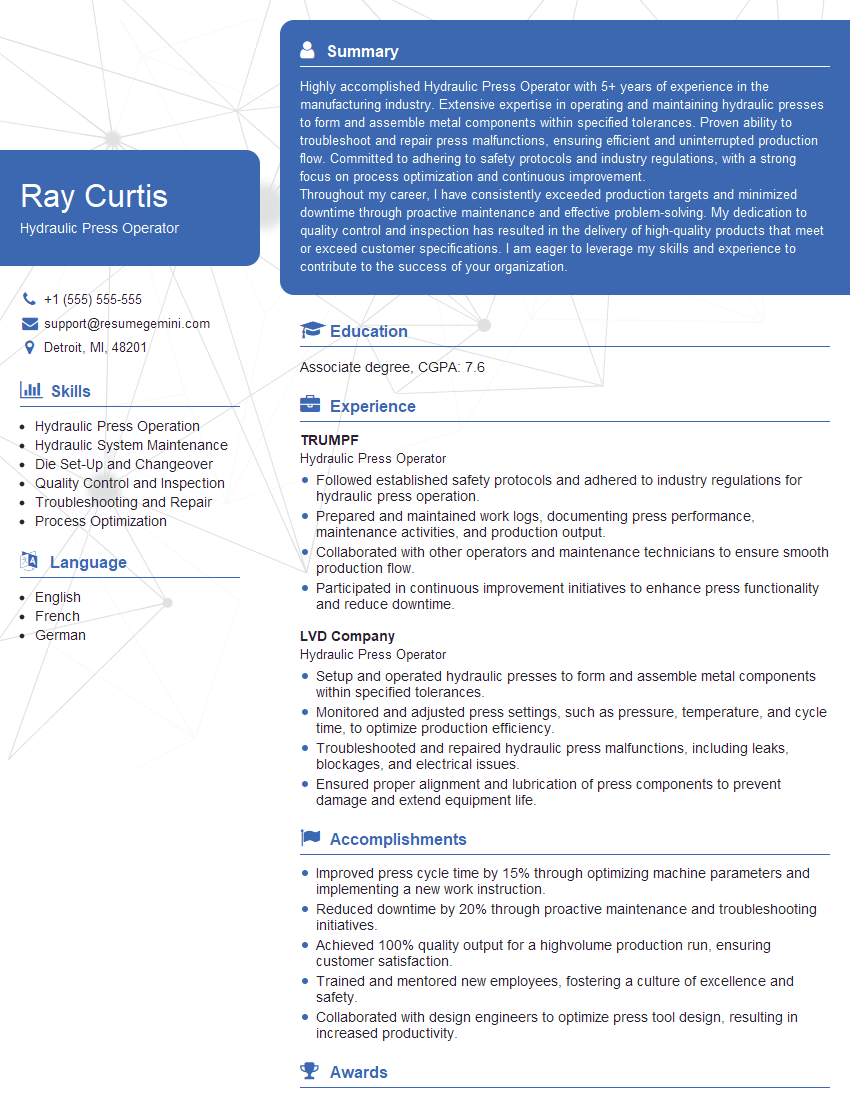
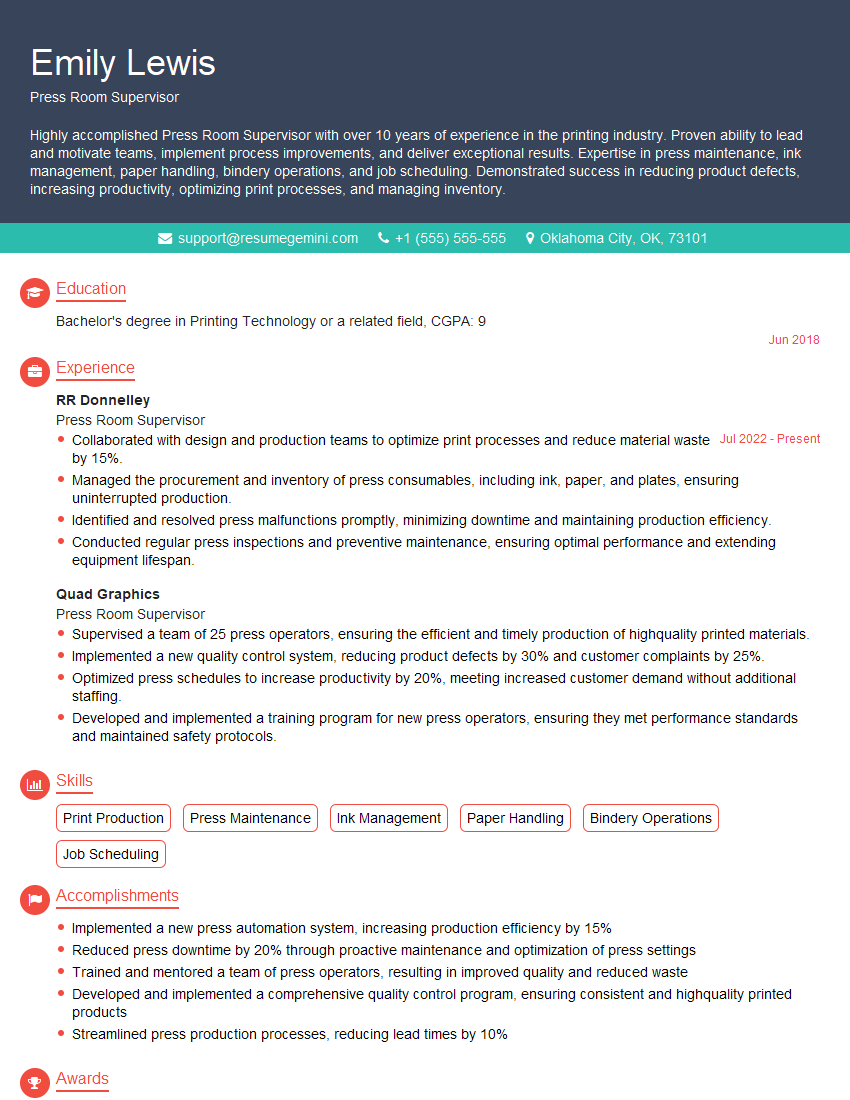
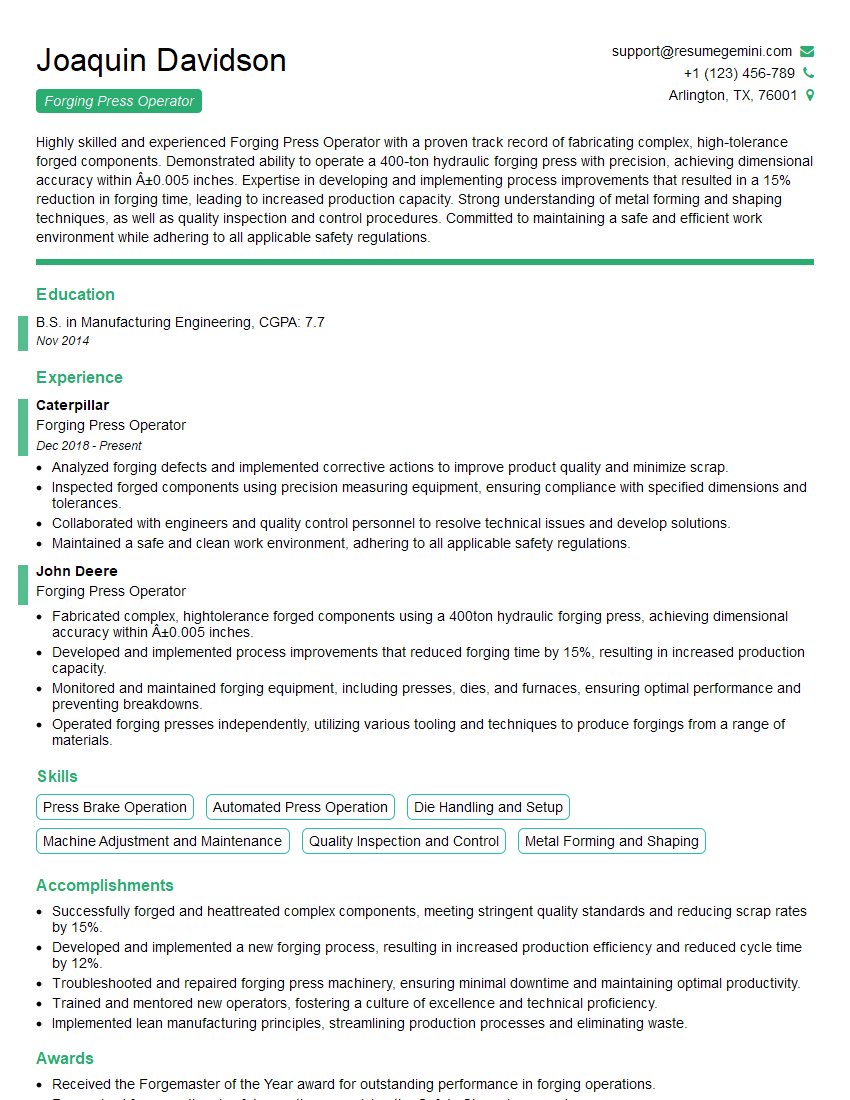
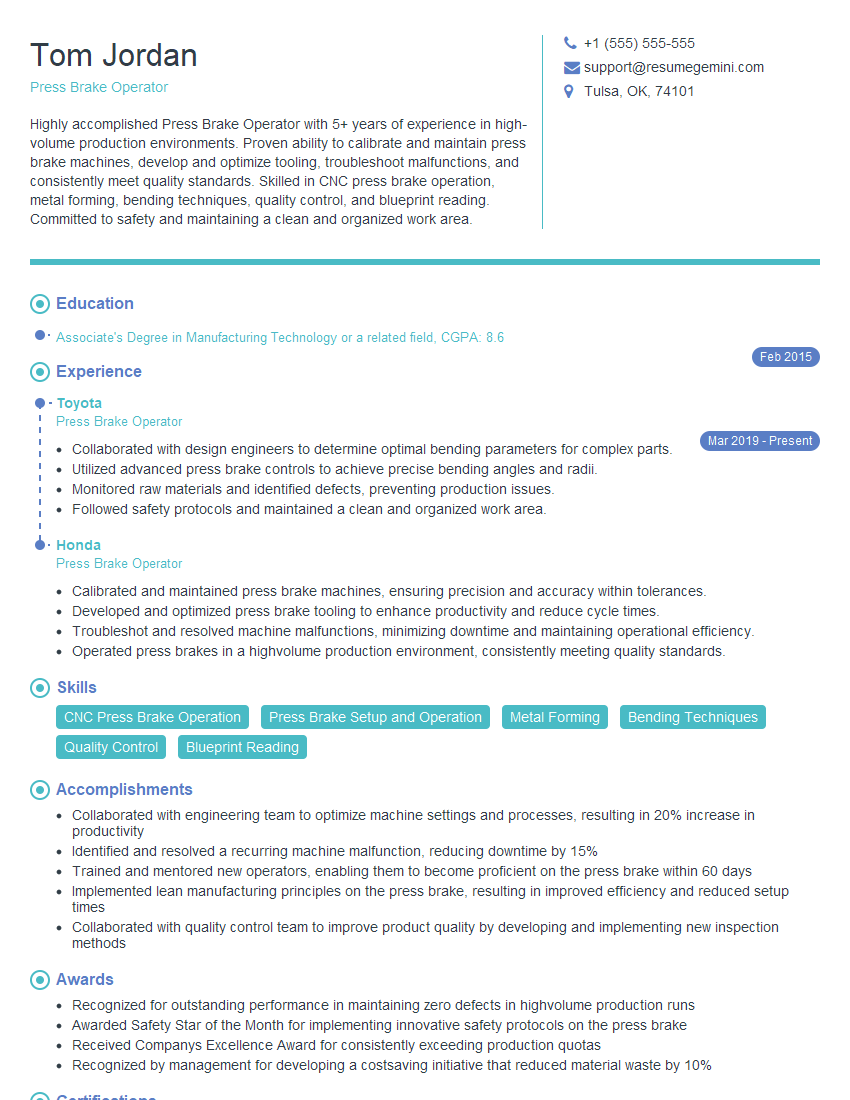
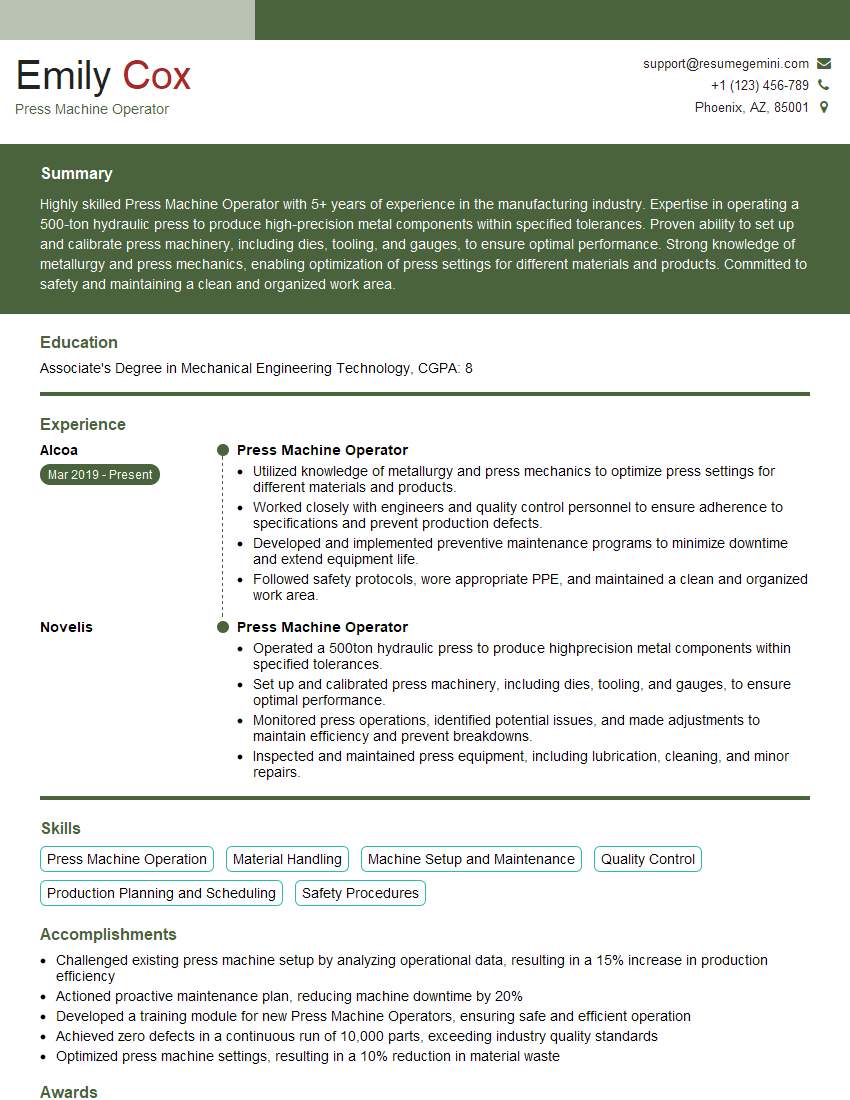
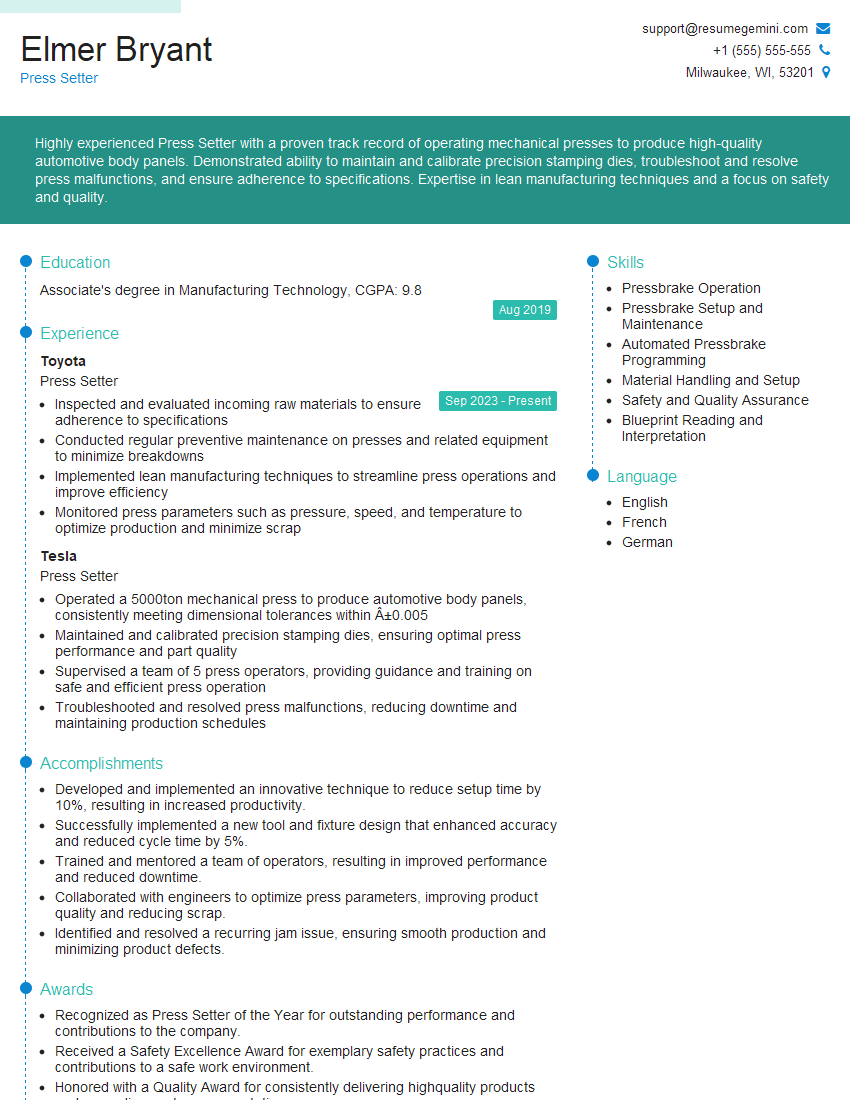
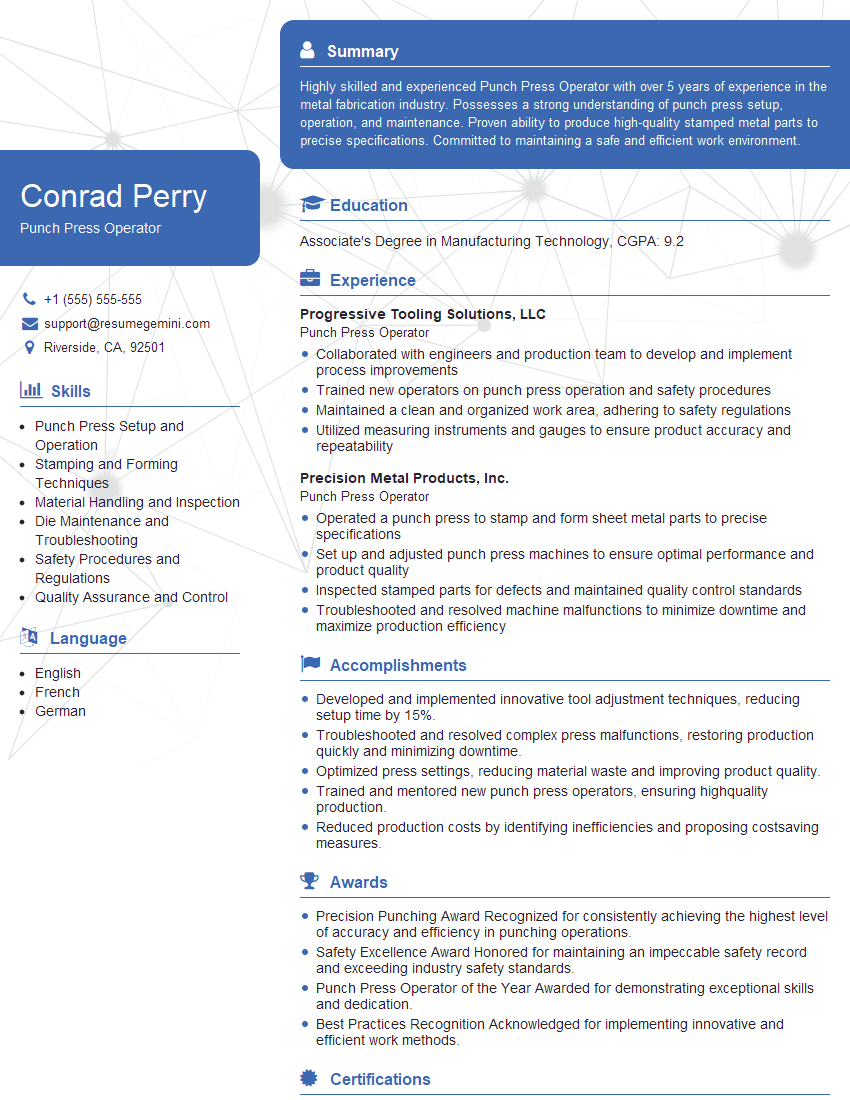
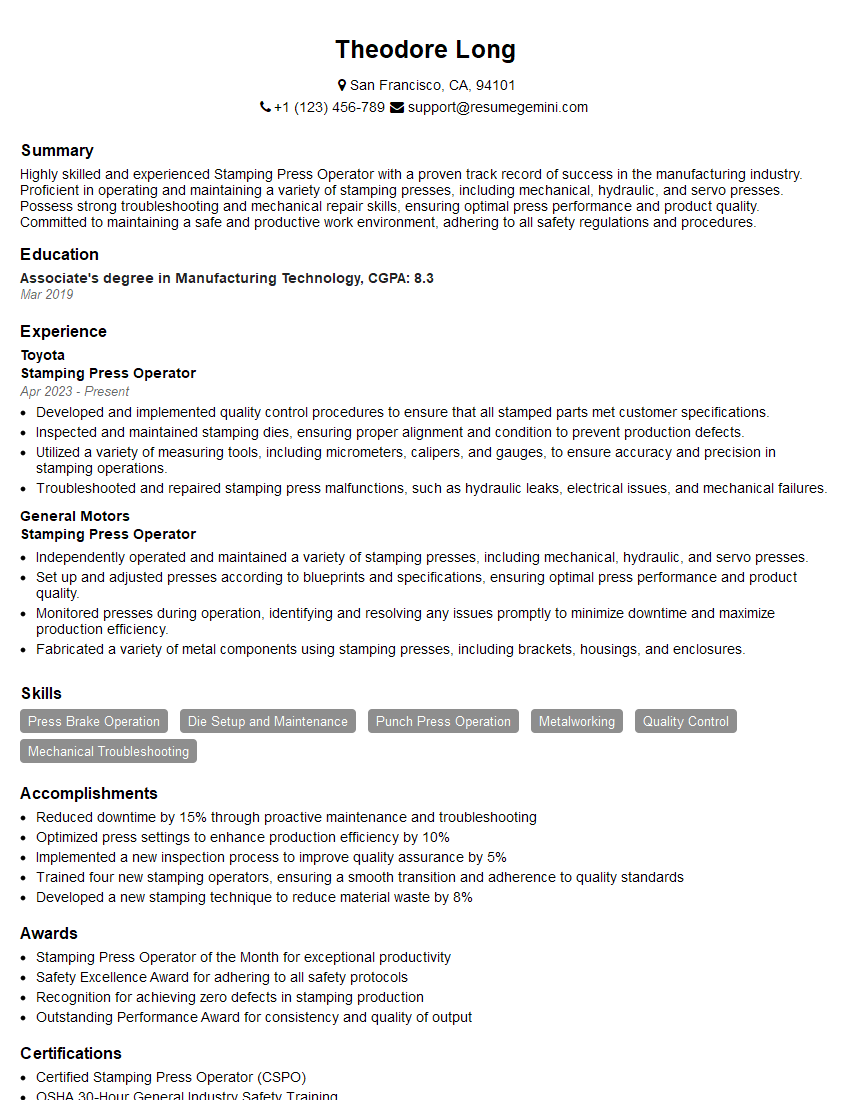
Mastering the operation of industrial pressing machines opens doors to diverse and rewarding career paths in manufacturing and related fields. These roles offer opportunities for skill development, advancement, and competitive salaries. To significantly boost your job prospects, it’s crucial to create a resume that effectively showcases your abilities to Applicant Tracking Systems (ATS). ResumeGemini is a trusted resource that can help you build a professional, ATS-friendly resume, highlighting your relevant skills and experience. We provide examples of resumes tailored to Operating Industrial Pressing Machines to help guide you through the process. Invest time in crafting a compelling resume – it’s your first impression with potential employers.
Explore more articles
Users Rating of Our Blogs
Share Your Experience
We value your feedback! Please rate our content and share your thoughts (optional).
What Readers Say About Our Blog
Attention music lovers!
Wow, All the best Sax Summer music !!!
Spotify: https://open.spotify.com/artist/6ShcdIT7rPVVaFEpgZQbUk
Apple Music: https://music.apple.com/fr/artist/jimmy-sax-black/1530501936
YouTube: https://music.youtube.com/browse/VLOLAK5uy_noClmC7abM6YpZsnySxRqt3LoalPf88No
Other Platforms and Free Downloads : https://fanlink.tv/jimmysaxblack
on google : https://www.google.com/search?q=22+AND+22+AND+22
on ChatGPT : https://chat.openai.com?q=who20jlJimmy20Black20Sax20Producer
Get back into the groove with Jimmy sax Black
Best regards,
Jimmy sax Black
www.jimmysaxblack.com
Hi I am a troller at The aquatic interview center and I suddenly went so fast in Roblox and it was gone when I reset.
Hi,
Business owners spend hours every week worrying about their website—or avoiding it because it feels overwhelming.
We’d like to take that off your plate:
$69/month. Everything handled.
Our team will:
Design a custom website—or completely overhaul your current one
Take care of hosting as an option
Handle edits and improvements—up to 60 minutes of work included every month
No setup fees, no annual commitments. Just a site that makes a strong first impression.
Find out if it’s right for you:
https://websolutionsgenius.com/awardwinningwebsites
Hello,
we currently offer a complimentary backlink and URL indexing test for search engine optimization professionals.
You can get complimentary indexing credits to test how link discovery works in practice.
No credit card is required and there is no recurring fee.
You can find details here:
https://wikipedia-backlinks.com/indexing/
Regards
NICE RESPONSE TO Q & A
hi
The aim of this message is regarding an unclaimed deposit of a deceased nationale that bears the same name as you. You are not relate to him as there are millions of people answering the names across around the world. But i will use my position to influence the release of the deposit to you for our mutual benefit.
Respond for full details and how to claim the deposit. This is 100% risk free. Send hello to my email id: lukachachibaialuka@gmail.com
Luka Chachibaialuka
Hey interviewgemini.com, just wanted to follow up on my last email.
We just launched Call the Monster, an parenting app that lets you summon friendly ‘monsters’ kids actually listen to.
We’re also running a giveaway for everyone who downloads the app. Since it’s brand new, there aren’t many users yet, which means you’ve got a much better chance of winning some great prizes.
You can check it out here: https://bit.ly/callamonsterapp
Or follow us on Instagram: https://www.instagram.com/callamonsterapp
Thanks,
Ryan
CEO – Call the Monster App
Hey interviewgemini.com, I saw your website and love your approach.
I just want this to look like spam email, but want to share something important to you. We just launched Call the Monster, a parenting app that lets you summon friendly ‘monsters’ kids actually listen to.
Parents are loving it for calming chaos before bedtime. Thought you might want to try it: https://bit.ly/callamonsterapp or just follow our fun monster lore on Instagram: https://www.instagram.com/callamonsterapp
Thanks,
Ryan
CEO – Call A Monster APP
To the interviewgemini.com Owner.
Dear interviewgemini.com Webmaster!
Hi interviewgemini.com Webmaster!
Dear interviewgemini.com Webmaster!
excellent
Hello,
We found issues with your domain’s email setup that may be sending your messages to spam or blocking them completely. InboxShield Mini shows you how to fix it in minutes — no tech skills required.
Scan your domain now for details: https://inboxshield-mini.com/
— Adam @ InboxShield Mini
support@inboxshield-mini.com
Reply STOP to unsubscribe
Hi, are you owner of interviewgemini.com? What if I told you I could help you find extra time in your schedule, reconnect with leads you didn’t even realize you missed, and bring in more “I want to work with you” conversations, without increasing your ad spend or hiring a full-time employee?
All with a flexible, budget-friendly service that could easily pay for itself. Sounds good?
Would it be nice to jump on a quick 10-minute call so I can show you exactly how we make this work?
Best,
Hapei
Marketing Director
Hey, I know you’re the owner of interviewgemini.com. I’ll be quick.
Fundraising for your business is tough and time-consuming. We make it easier by guaranteeing two private investor meetings each month, for six months. No demos, no pitch events – just direct introductions to active investors matched to your startup.
If youR17;re raising, this could help you build real momentum. Want me to send more info?
Hi, I represent an SEO company that specialises in getting you AI citations and higher rankings on Google. I’d like to offer you a 100% free SEO audit for your website. Would you be interested?
Hi, I represent an SEO company that specialises in getting you AI citations and higher rankings on Google. I’d like to offer you a 100% free SEO audit for your website. Would you be interested?