Are you ready to stand out in your next interview? Understanding and preparing for Operating Reach Stackers interview questions is a game-changer. In this blog, we’ve compiled key questions and expert advice to help you showcase your skills with confidence and precision. Let’s get started on your journey to acing the interview.
Questions Asked in Operating Reach Stackers Interview
Q 1. Describe your experience operating reach stackers.
My experience with reach stackers spans over eight years, encompassing various operational settings including container yards, intermodal terminals, and even some specialized industrial applications. I’ve operated a range of models, from older, less technologically advanced machines to the latest models featuring advanced safety features and computerized controls. This experience includes not only daily operation but also participating in maintenance checks, addressing minor malfunctions, and reporting larger issues for professional repair. I’m proficient in handling various container sizes and weights, adhering to strict safety protocols and achieving high efficiency rates.
For instance, in my previous role at Global Port Logistics, I was responsible for stacking and retrieving containers weighing up to 45 tons. This involved precise maneuvering in tight spaces, often under pressure to meet tight deadlines. My performance was consistently rated as exceeding expectations, highlighting my skill and efficiency in this demanding environment.
Q 2. What are the different types of reach stackers and their applications?
Reach stackers come in various types, primarily differentiated by their lifting capacity, reach, and features. Common types include:
- Standard Reach Stackers: These are the most common type, offering a balance between lifting capacity and maneuverability. They’re suited for general container handling in yards and terminals.
- Heavy-Duty Reach Stackers: Designed for exceptionally heavy loads (often exceeding 45 tons), these machines are used in demanding applications like handling oversized containers or heavy cargo.
- Empty Container Handlers: Optimized for quickly stacking and retrieving empty containers, these often feature higher lifting speeds but lower weight capacities compared to standard reach stackers.
- Specialized Reach Stackers: Some reach stackers are designed with specific features for particular industries, such as longer reach arms for handling containers in rail yards, or specialized attachments for handling different cargo types.
The application depends on the specific needs of the operation. A standard reach stacker is suitable for most container yards, while heavy-duty models are essential for handling exceptionally heavy loads. Empty container handlers prioritize speed and efficiency in the stacking and retrieval of empty containers.
Q 3. Explain the pre-operational checks you perform on a reach stacker.
Pre-operational checks are crucial for safety and efficient operation. My routine includes:
- Visual Inspection: Checking for any visible damage to the machine, including tires, forks, and the structure itself.
- Fluid Levels: Verifying the levels of engine oil, hydraulic fluid, coolant, and fuel.
- Tire Pressure: Ensuring proper tire inflation for optimal stability and maneuverability.
- Brake System: Testing the service and parking brakes to ensure they’re functioning correctly.
- Lights and Signals: Checking all lights, horns, and warning signals are operational.
- Hydraulic System: Testing the hydraulic functions, including lifting, lowering, and tilting of the forks.
- Safety Devices: Inspecting all safety devices, such as seatbelts, emergency stops, and load indicators, to ensure they’re functioning properly.
Ignoring even a minor issue can lead to serious consequences. For example, low hydraulic fluid could lead to a loss of lifting power, creating a dangerous situation.
Q 4. How do you ensure the safety of yourself and others while operating a reach stacker?
Safety is paramount. My approach involves:
- Following all safety regulations and company procedures: This includes wearing appropriate personal protective equipment (PPE) like high-visibility clothing, safety boots, and hearing protection.
- Maintaining a safe working distance from other vehicles and personnel: Never operate recklessly or in a rushed manner.
- Performing thorough pre-operational checks: This is fundamental to prevent accidents.
- Being aware of my surroundings at all times: This includes checking for pedestrians and other equipment before moving.
- Using hand signals and communication devices when working with others: This ensures clear communication and coordination.
- Never exceeding the reach stacker’s load capacity: Overloading can lead to serious accidents.
- Conducting load securing checks: Ensuring the load is secure and balanced to prevent shifting during operation.
I always remember that my actions directly affect the safety of myself and those around me. A moment’s carelessness can have devastating consequences.
Q 5. What are the common causes of reach stacker malfunctions?
Common malfunctions include:
- Hydraulic System Issues: Leaks, low fluid levels, or pump failures are frequent causes of malfunctions affecting lifting and tilting functions.
- Engine Problems: Issues with the engine, such as starting problems, overheating, or lack of power, often require professional attention.
- Electrical Faults: Problems with wiring, sensors, or control systems can lead to various malfunctions.
- Tire Punctures or Wear: Damaged or worn tires compromise stability and maneuverability.
- Brake Failure: Malfunctioning brakes are a serious safety hazard.
Regular maintenance is essential to minimize these problems. For instance, a preventative maintenance schedule includes regular fluid checks and tire inspections to avoid more significant issues.
Q 6. How do you troubleshoot a reach stacker that is not functioning correctly?
Troubleshooting depends on the nature of the malfunction. My approach involves:
- Identifying the Problem: Determine the specific symptoms of the malfunction. Is the engine not starting? Are the hydraulics unresponsive? This requires careful observation.
- Checking Obvious Issues: Look for simple issues like low fuel, low hydraulic fluid, or blown fuses. These can often be resolved quickly.
- Referring to the Operator’s Manual: This will often provide troubleshooting guidance for common problems.
- Using Diagnostic Tools: Some reach stackers have onboard diagnostic systems that provide error codes, aiding in identifying the specific problem.
- Contacting Maintenance Personnel: For complex issues or problems that cannot be resolved with simple checks, contacting trained technicians is crucial.
For example, if the engine won’t start, I’d first check the battery, then the fuel level. If those are fine, I’d consult the manual and potentially use diagnostic tools before contacting maintenance. Safety is paramount – if unsure about the problem, do not attempt a repair; call for professional help.
Q 7. What are the load capacity limits of the reach stackers you have operated?
I have operated reach stackers with load capacities ranging from 30 tons to 45 tons. The specific load capacity depends heavily on the model and manufacturer. It’s crucial to always adhere to the manufacturer’s stated load limits to maintain safe operating practices. Exceeding these limits puts the operator, the machine, and the load at significant risk. I always double-check the load weight and ensure it aligns with the machine’s capacity before lifting.
Q 8. Describe your experience with different types of container handling.
My experience encompasses a wide range of container handling, including loading and unloading containers onto and from various transport modes such as ships, trains, and trucks. I’m proficient in handling different container types – from standard 20ft and 40ft containers to specialized reefer (refrigerated) and oversized containers. This includes understanding weight distribution, proper securing techniques, and recognizing potential hazards associated with each type. For example, I’ve handled delicate cargo requiring extra care during stacking, and I’m adept at maneuvering in tight spaces to efficiently load and unload containers from vessels with limited accessibility.
Beyond the basics, I have experience with double-stacking containers, a crucial skill in maximizing space and efficiency. I’ve also worked with specialized equipment, such as spreaders adapted for various container types and sizes. My understanding extends beyond the physical handling; I’m familiar with relevant safety regulations and documentation procedures that ensure all operations are compliant and efficient.
Q 9. How do you handle different types of ground conditions when operating a reach stacker?
Ground conditions significantly impact reach stacker operation, affecting stability and maneuverability. My approach involves a thorough assessment before starting any work. I check for uneven terrain, soft ground, and potential obstacles like potholes or debris. I adjust my operating speed and technique accordingly. On soft ground, I might use wider tire spacing to distribute weight more evenly and prevent sinking. For uneven terrain, I operate at slower speeds and carefully maneuver the stacker to maintain stability, paying close attention to the load’s center of gravity. I often utilize the reach stacker’s stability features, such as adjustable outriggers, to enhance stability on uneven surfaces. In extreme cases, alternative loading/unloading methods might be required, or the ground needs preparation, such as using ground mats or compacted gravel to improve stability.
For instance, during a project at a port with notoriously muddy areas, I reduced speed significantly and used a wider stance to avoid getting stuck. Regular inspection of the tires for damage or wear is also part of my routine to ensure safe operation.
Q 10. What safety measures do you take when operating a reach stacker in confined spaces?
Operating a reach stacker in confined spaces demands heightened safety awareness. My primary focus is maintaining a clear understanding of the work area’s dimensions and identifying any potential obstructions. Before commencing any operation, I conduct a thorough site assessment to ensure sufficient clearance for the stacker’s movements, including the swing radius of the boom. I always ensure that the load is properly secured and that I have a clear line of sight during operation. Communication with colleagues and other operators is crucial, especially in busy environments. This includes utilizing hand signals or two-way radios to coordinate movement and prevent collisions. I also maintain a safe distance from other equipment and personnel. In extremely tight spaces, I may employ techniques like using mirrors or cameras to enhance visibility, or consult with site supervisors to determine the safest approach.
I recall one instance where I had to load containers onto a narrow barge. Careful planning, including slow, precise movements and constant communication with the barge crew, was essential to completing the task safely and efficiently.
Q 11. Explain your experience with maintaining reach stackers logs and documentation.
Maintaining accurate reach stacker logs and documentation is crucial for ensuring operational safety, compliance, and maintenance scheduling. I meticulously record all operational data, including the date, time, location, type of operation (loading, unloading, stacking), number of containers handled, and any unusual occurrences or maintenance needs. I also document pre- and post-operational inspections, noting any mechanical issues or safety concerns. This information is crucial for troubleshooting and planning maintenance activities. The documentation is also vital for regulatory compliance and in the event of any incidents or accidents. I’m familiar with different methods of documentation, including electronic logs and manual record-keeping, and I can adapt to the specific requirements of a given operation. The accuracy and completeness of my logs are paramount.
I ensure that the logs are legible, organized, and stored securely according to company procedures. This helps prevent discrepancies and streamlines the process for future reference and reporting.
Q 12. How do you manage your time effectively while operating a reach stacker in a busy environment?
Effective time management in a busy environment is crucial for reach stacker operation. My strategy involves prioritizing tasks based on urgency and importance. I usually work with a predetermined schedule or list of tasks provided by supervisors. But I also adapt to changing priorities based on real-time situations such as unexpected delays or urgent requests. I focus on efficient movement and minimizing idle time. This includes planning optimal routes, and smoothly executing operations to prevent bottlenecks. I also communicate effectively with coworkers and supervisors to ensure tasks are coordinated efficiently. I use technology, such as mobile devices or in-cabin systems if available, to access real-time information regarding container locations, delivery schedules, and potential issues.
For instance, during peak operational times, I’ve successfully managed to prioritize urgent deliveries while ensuring that ongoing tasks weren’t unduly delayed through careful planning and swift execution.
Q 13. Describe your experience with working in a team environment.
I’ve always thrived in team environments. Effective teamwork is essential for efficient and safe container handling operations. I actively participate in team meetings and communicate openly with supervisors, colleagues, and other stakeholders. I’m comfortable assisting team members with tasks and readily share my expertise to help improve overall efficiency and safety. I value mutual respect and collaboration, understanding that every team member’s contribution is vital to our success. My ability to communicate clearly and respectfully, as well as my willingness to assist others, make me a valuable member of any team.
For example, I’ve successfully worked with loading crews, truck drivers, and supervisors to ensure smooth container transfers and minimize delays. I believe active listening, clear communication, and mutual respect are key elements to fostering a positive and productive team environment.
Q 14. How do you prioritize tasks when operating a reach stacker?
Prioritizing tasks when operating a reach stacker involves a combination of factors: urgency, importance, and dependencies. I typically use a combination of visual cues (work orders, delivery schedules, container markings) and instructions from supervisors to assess these factors. Urgent tasks, such as those with immediate deadlines or that could impact other operations, are given priority. High-priority tasks might involve handling hazardous materials or time-sensitive cargo. Dependencies, such as when one task needs to be completed before another, also play a significant role in my decision-making. I also consider the overall workflow to ensure efficiency and to minimize congestion. I regularly communicate with supervisors and other team members to adjust priorities as needed, maintaining flexibility and responsiveness to evolving situations.
For instance, I might prioritize unloading a container with perishable goods even if another container has a slightly earlier scheduled delivery. Clear communication and situational awareness allow me to prioritize effectively while maintaining safety and operational efficiency.
Q 15. What is your experience with different types of lifting attachments?
My experience encompasses a wide range of lifting attachments used with reach stackers. These attachments are crucial for handling diverse cargo types efficiently and safely. I’m proficient with standard spreader bars for ISO containers, which are designed for different container sizes and weights. I’ve also worked extensively with specialized attachments such as:
- Double-spreader attachments: Allowing simultaneous handling of two containers, significantly improving efficiency in stacking operations.
- Forklift attachments: For handling non-containerized cargo like pallets or bundles.
- Paper roll clamps: Specifically designed for lifting and transporting large rolls of paper.
- Coil handling attachments: Used for safely lifting and transporting heavy steel coils.
Choosing the right attachment is critical. For instance, using a standard spreader bar on an oversized container could lead to instability, while using a coil handler on a pallet would be impractical. My experience allows me to select and utilize the appropriate attachment for each specific job, guaranteeing safety and maximizing productivity.
Career Expert Tips:
- Ace those interviews! Prepare effectively by reviewing the Top 50 Most Common Interview Questions on ResumeGemini.
- Navigate your job search with confidence! Explore a wide range of Career Tips on ResumeGemini. Learn about common challenges and recommendations to overcome them.
- Craft the perfect resume! Master the Art of Resume Writing with ResumeGemini’s guide. Showcase your unique qualifications and achievements effectively.
- Don’t miss out on holiday savings! Build your dream resume with ResumeGemini’s ATS optimized templates.
Q 16. How do you ensure the stability of loads when stacking containers?
Ensuring load stability during container stacking is paramount for safety and efficiency. My approach involves a multi-faceted strategy:
- Proper weight distribution: I meticulously check the weight of each container and distribute it evenly across the reach stacker’s lifting capacity, ensuring the center of gravity remains within the machine’s stability limits. Think of it like balancing a stack of books – uneven distribution leads to toppling.
- Ground conditions assessment: I always assess the ground conditions for stability. Soft ground, slopes, or uneven surfaces require extra caution and sometimes, specialized techniques to prevent tilting or tipping. For instance, using wooden planks to create a stable base under the reach stacker’s legs.
- Visual inspection: Before lifting, I thoroughly inspect the container condition for any signs of damage or uneven loading that could compromise stability. This includes checking for damaged doors, weakened corners, or unevenly distributed cargo.
- Slow and controlled movements: During lifting and stacking, I execute slow and controlled movements, avoiding jerky actions that can disrupt balance. It’s about precision, not speed.
- Using outriggers (when applicable): Some reach stackers have outriggers for enhanced stability, especially when handling heavy loads or working on uneven ground. I leverage these features whenever necessary.
By following these procedures, I ensure the load remains stable throughout the entire stacking process, minimizing the risk of accidents and maximizing productivity.
Q 17. What are the regulations and safety standards for operating reach stackers?
Operating reach stackers requires strict adherence to safety regulations and standards. These vary slightly depending on location but typically include:
- Operator licensing and training: I hold the necessary certifications and have undergone thorough training on safe operating procedures, emergency responses, and preventative maintenance.
- Pre-operational checks: Before each shift, I conduct a detailed inspection of the reach stacker, verifying its mechanical condition and functionality. This includes checking tire pressure, fluid levels, and the integrity of lifting mechanisms.
- Load capacity limits: I strictly adhere to the reach stacker’s rated load capacity and never attempt to lift loads exceeding this limit. This is crucial to prevent overloading and potential accidents.
- Safe working load limits (SWL): I’m familiar with SWL for all lifting attachments. Using attachments that exceed the SWL is a serious safety violation.
- Workplace safety regulations: I’m completely aware of and follow all regulations pertaining to working zones, pedestrian traffic control, and communication protocols.
- Personal Protective Equipment (PPE): I always wear the mandatory PPE including safety boots, high-visibility clothing, and safety helmets.
Regular compliance training and familiarization with updated safety regulations are fundamental aspects of my role.
Q 18. How do you handle emergency situations during reach stacker operation?
Emergency situations require calm, decisive action. My training equips me to handle various scenarios:
- Equipment malfunction: If I experience a mechanical failure, I immediately shut down the machine and report the issue to maintenance personnel. Never attempt repairs without proper training.
- Load instability: If a load starts to become unstable, I slowly and carefully lower it to the ground, taking all necessary precautions to prevent damage or injury.
- Collisions: If a collision is unavoidable, I’ll attempt to minimize impact by slowing down and protecting myself within the operator’s cab, reporting the incident immediately afterward.
- Fire: In case of fire, I’ll evacuate the area immediately, activate the nearest fire alarm, and follow the established emergency procedures.
- Medical emergency: If someone is injured, I’ll immediately summon emergency medical services and provide basic first aid if trained to do so.
Regular emergency response drills and detailed knowledge of site-specific emergency procedures are critical to ensuring a rapid and effective response.
Q 19. Describe your experience with different types of reach stacker controls.
I have experience with various reach stacker control systems, ranging from traditional lever and pedal controls to more modern electronic systems. Traditional systems offer direct mechanical control, providing a tangible feel for the machine’s movements. However, they can be less precise than electronic systems.
Modern electronic controls, often featuring joysticks and digital displays, offer greater precision and enhanced safety features such as load-sensing systems and anti-collision alerts. Some newer models even incorporate GPS-based guidance systems. The advantages include reduced operator fatigue, increased efficiency, and improved safety. My adaptability allows me to effectively operate different control types and leverage the strengths of each system for optimal performance.
Q 20. Explain your understanding of reach stacker maintenance schedules.
Reach stacker maintenance schedules are crucial for ensuring both safety and operational efficiency. They are typically outlined in a manufacturer-supplied manual, and I follow them religiously. These schedules generally include:
- Daily checks: These include inspections of fluid levels, tire pressure, and overall condition of the machine. This is a critical preventative measure to avoid more significant problems down the road.
- Weekly checks: More thorough checks of critical components such as brakes, hydraulic systems, and safety features are conducted.
- Monthly checks: These checks involve more in-depth inspections of wear and tear, and adjustments as needed. Think of it as a mini-MOT.
- Quarterly or semi-annual checks: These often include more significant maintenance tasks, such as filter replacements or lubricant changes.
- Annual inspections: These involve comprehensive checks by qualified technicians, often involving specialized equipment and testing.
Adhering to these schedules prevents unexpected breakdowns, ensures safety, and extends the lifespan of the machine. Proactive maintenance is cheaper and safer than reactive repairs.
Q 21. What is your experience with using a reach stacker’s diagnostic systems?
Modern reach stackers often incorporate sophisticated diagnostic systems that provide valuable data on machine performance and potential issues. I have significant experience using these systems for:
- Fault code identification: If a malfunction occurs, I use the diagnostic system to identify the error code, providing a clear indication of the problem to maintenance personnel. This significantly reduces downtime.
- Performance monitoring: I regularly monitor key performance indicators (KPIs) such as fuel consumption, operational hours, and hydraulic system pressures. These insights allow for optimized performance and preventative maintenance scheduling.
- Predictive maintenance: Some diagnostic systems incorporate predictive algorithms that analyze data to anticipate potential problems before they occur. This allows for proactive maintenance, reducing the risk of unexpected breakdowns and maximizing uptime.
Understanding and effectively utilizing these diagnostic systems is essential for maximizing efficiency and ensuring the continued safe and reliable operation of the reach stacker.
Q 22. How do you identify and report potential safety hazards related to reach stackers?
Identifying and reporting potential safety hazards with reach stackers is paramount. My approach involves a proactive, multi-layered strategy focusing on both pre-operational checks and ongoing awareness. This begins with a thorough pre-shift inspection, meticulously checking for any mechanical faults (worn tires, hydraulic leaks, damaged forks, malfunctioning lights), environmental hazards (uneven ground, obstacles in the path), and operational risks (inadequate visibility, unsafe load conditions).
During operation, I maintain constant vigilance. This includes monitoring load stability, ensuring sufficient clearance, and being aware of the surroundings, including pedestrian traffic and other machinery. Any identified hazard, no matter how minor, is immediately reported through the company’s established channels, often using a dedicated reporting system or directly informing my supervisor. I’d document the hazard, its location, potential consequences, and any immediate corrective actions taken (e.g., securing a loose object, halting operations until repairs are made). Following the company’s reporting protocols is critical; this ensures that hazards are addressed promptly, preventing potential accidents and injuries.
For example, during a shift, I noticed a significant crack on a lifting fork. I immediately stopped operating the reach stacker, reported it using the company’s online system, and placed a warning cone to prevent others from using it until repairs were made.
Q 23. Explain your understanding of load weight distribution.
Load weight distribution is crucial for safe and efficient reach stacker operation. It’s about ensuring the weight is evenly balanced across the forks to prevent instability, tipping, or damage to the machine or the cargo. Understanding the center of gravity of the load is essential. This is the point where the weight of the load is concentrated. If the center of gravity is too far forward or backward, it significantly increases the risk of tipping.
Proper weight distribution is achieved by carefully positioning the forks under the load’s center of gravity. I always check the load’s weight and dimensions against the reach stacker’s specifications to ensure it’s within the safe operating limits. Using load charts or the machine’s onboard system for weight verification is standard practice. Incorrect weight distribution can lead to severe consequences, including equipment damage, cargo spills, or serious injury. For instance, if you try lifting an unevenly loaded container, the reach stacker could tilt and cause an accident.
Q 24. Describe your experience with using various types of lifting gear.
My experience encompasses a wide range of lifting gear used in conjunction with reach stackers. This includes various types of spreader bars for different container sizes and types, shackles, and slings. I’m proficient in inspecting these gear pieces before each use for any signs of wear, damage, or defects, checking for fraying in slings, cracks in shackles, or bent spreader bars. This is a crucial safety step. I also understand the weight capacity limitations of each piece of equipment and ensure they are appropriately rated for the load being handled.
For example, I’ve worked extensively with twistlocks for secure container handling and know the importance of verifying that they are properly engaged and locked before lifting. I am familiar with the various types of twistlocks and how they function in different scenarios. I also understand the importance of using appropriate safety gear while handling heavy lifting equipment.
Q 25. What is your experience with reach stacker training and certification?
I hold a valid reach stacker operator certification, obtained through a comprehensive training program that covered all aspects of safe operation, including pre-operational checks, load handling techniques, emergency procedures, and relevant safety regulations. The training involved both theoretical learning and extensive practical hands-on experience using various reach stacker models. The certification process includes written and practical examinations that demonstrate competency. I regularly participate in refresher training courses to stay updated on industry best practices and new safety regulations.
My certification allows me to operate reach stackers safely and efficiently while adhering to all applicable rules and regulations. The training equipped me with the skills to handle various situations, such as load instability or equipment malfunctions, safely and effectively.
Q 26. How familiar are you with different types of container locking mechanisms?
I am very familiar with various container locking mechanisms, primarily twistlocks. These are crucial for securing containers onto the reach stacker’s spreader bar. I understand the different types of twistlocks, their operating mechanisms, and the importance of ensuring they are properly engaged and locked before lifting. I know how to identify worn or damaged twistlocks and report them immediately. Failure to properly secure a container can have severe consequences, leading to accidents and damage.
My experience includes working with both standard twistlocks and high-capacity twistlocks designed for heavier loads. I understand that improper engagement can lead to container slippage, leading to damage or accidents. Therefore I always perform a visual check and confirmation prior to lifting, following a strict checklist.
Q 27. How do you comply with the company’s operating procedures?
Compliance with company operating procedures is non-negotiable. I meticulously follow all established protocols, from pre-shift inspections and reporting procedures to the correct methods for loading, transporting, and unloading containers. This includes adherence to speed limits, designated routes, and safe working practices. I regularly review the company’s safety manual and attend any mandatory training sessions to ensure my knowledge remains current. Strict adherence to these procedures is critical for maintaining a safe working environment and preventing accidents.
I consider it my responsibility to understand and apply the company’s operating procedures. If I encounter any ambiguity or a situation not covered by the procedures, I seek clarification from my supervisor before proceeding.
Q 28. Explain your experience in performing pre-shift inspections.
Performing pre-shift inspections is a critical part of my routine. It’s a systematic check of the reach stacker’s mechanical and operational integrity before each use. This inspection involves a visual examination and checks for potential problems. I use a checklist to ensure a comprehensive evaluation. This checklist guides me in inspecting tires for wear and tear, checking fluid levels (hydraulic oil, engine coolant), examining the brakes and steering mechanisms for proper function, assessing the condition of the forks and spreader bar, verifying the functionality of all lights and safety devices, and confirming the condition of the warning systems and the emergency stop function.
Any defects discovered during the pre-shift inspection are immediately reported, and I will not operate the reach stacker until the necessary repairs or maintenance have been completed. This proactive approach significantly reduces the risk of accidents and ensures equipment is functioning optimally. Documenting these inspections thoroughly is another critical aspect of my approach. For example, I would take pictures of any defects found to be used as supporting documentation for my report.
Key Topics to Learn for Operating Reach Stackers Interview
- Reach Stacker Operation Fundamentals: Understanding the basic controls, pre-operational checks, and safe operating procedures.
- Load Handling Techniques: Proper lifting, stacking, and transporting techniques for various container types and weights; addressing load stability and center of gravity.
- Safety Regulations and Procedures: Familiarity with relevant safety regulations, emergency procedures, and hazard identification within a port or yard environment.
- Maintenance and Troubleshooting: Basic understanding of routine maintenance checks, common malfunctions, and simple troubleshooting steps. Knowing when to report more complex issues.
- Yard Management and Efficiency: Understanding the logistics of container movement within a yard, optimizing routes, and efficient stacking strategies.
- Communication and Teamwork: Effective communication with colleagues, supervisors, and other yard personnel; understanding the importance of teamwork in a busy operational environment.
- Regulations and Compliance: Knowledge of relevant industry standards, regulations, and compliance procedures related to safe operation.
- Practical Application: Be prepared to discuss specific scenarios, such as handling oversized or awkwardly shaped loads, dealing with equipment malfunctions, or responding to emergency situations.
Next Steps
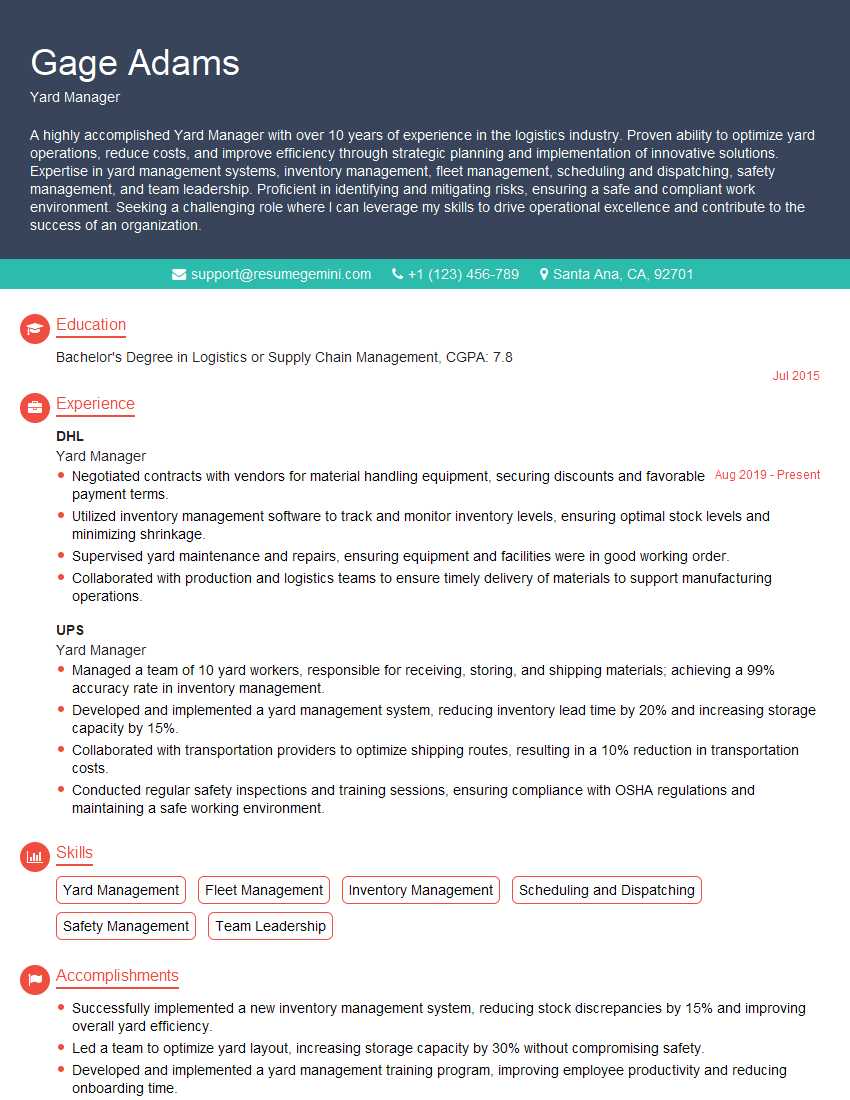
Mastering the operation of reach stackers opens doors to rewarding careers in logistics, ports, and intermodal transportation. These roles offer competitive salaries and opportunities for advancement. To significantly boost your job prospects, it’s crucial to create a professional and ATS-friendly resume that highlights your skills and experience effectively. ResumeGemini is a trusted resource that can help you build a powerful resume tailored to the specific requirements of Operating Reach Stacker positions. We provide examples of resumes optimized for this field to guide your process. Invest time in crafting a compelling resume – it’s your first impression with potential employers.

Explore more articles
Users Rating of Our Blogs
Share Your Experience
We value your feedback! Please rate our content and share your thoughts (optional).
What Readers Say About Our Blog
Attention music lovers!
Wow, All the best Sax Summer music !!!
Spotify: https://open.spotify.com/artist/6ShcdIT7rPVVaFEpgZQbUk
Apple Music: https://music.apple.com/fr/artist/jimmy-sax-black/1530501936
YouTube: https://music.youtube.com/browse/VLOLAK5uy_noClmC7abM6YpZsnySxRqt3LoalPf88No
Other Platforms and Free Downloads : https://fanlink.tv/jimmysaxblack
on google : https://www.google.com/search?q=22+AND+22+AND+22
on ChatGPT : https://chat.openai.com?q=who20jlJimmy20Black20Sax20Producer
Get back into the groove with Jimmy sax Black
Best regards,
Jimmy sax Black
www.jimmysaxblack.com
Hi I am a troller at The aquatic interview center and I suddenly went so fast in Roblox and it was gone when I reset.
Hi,
Business owners spend hours every week worrying about their website—or avoiding it because it feels overwhelming.
We’d like to take that off your plate:
$69/month. Everything handled.
Our team will:
Design a custom website—or completely overhaul your current one
Take care of hosting as an option
Handle edits and improvements—up to 60 minutes of work included every month
No setup fees, no annual commitments. Just a site that makes a strong first impression.
Find out if it’s right for you:
https://websolutionsgenius.com/awardwinningwebsites
Hello,
we currently offer a complimentary backlink and URL indexing test for search engine optimization professionals.
You can get complimentary indexing credits to test how link discovery works in practice.
No credit card is required and there is no recurring fee.
You can find details here:
https://wikipedia-backlinks.com/indexing/
Regards
NICE RESPONSE TO Q & A
hi
The aim of this message is regarding an unclaimed deposit of a deceased nationale that bears the same name as you. You are not relate to him as there are millions of people answering the names across around the world. But i will use my position to influence the release of the deposit to you for our mutual benefit.
Respond for full details and how to claim the deposit. This is 100% risk free. Send hello to my email id: [email protected]
Luka Chachibaialuka
Hey interviewgemini.com, just wanted to follow up on my last email.
We just launched Call the Monster, an parenting app that lets you summon friendly ‘monsters’ kids actually listen to.
We’re also running a giveaway for everyone who downloads the app. Since it’s brand new, there aren’t many users yet, which means you’ve got a much better chance of winning some great prizes.
You can check it out here: https://bit.ly/callamonsterapp
Or follow us on Instagram: https://www.instagram.com/callamonsterapp
Thanks,
Ryan
CEO – Call the Monster App
Hey interviewgemini.com, I saw your website and love your approach.
I just want this to look like spam email, but want to share something important to you. We just launched Call the Monster, a parenting app that lets you summon friendly ‘monsters’ kids actually listen to.
Parents are loving it for calming chaos before bedtime. Thought you might want to try it: https://bit.ly/callamonsterapp or just follow our fun monster lore on Instagram: https://www.instagram.com/callamonsterapp
Thanks,
Ryan
CEO – Call A Monster APP
To the interviewgemini.com Owner.
Dear interviewgemini.com Webmaster!
Hi interviewgemini.com Webmaster!
Dear interviewgemini.com Webmaster!
excellent
Hello,
We found issues with your domain’s email setup that may be sending your messages to spam or blocking them completely. InboxShield Mini shows you how to fix it in minutes — no tech skills required.
Scan your domain now for details: https://inboxshield-mini.com/
— Adam @ InboxShield Mini
Reply STOP to unsubscribe
Hi, are you owner of interviewgemini.com? What if I told you I could help you find extra time in your schedule, reconnect with leads you didn’t even realize you missed, and bring in more “I want to work with you” conversations, without increasing your ad spend or hiring a full-time employee?
All with a flexible, budget-friendly service that could easily pay for itself. Sounds good?
Would it be nice to jump on a quick 10-minute call so I can show you exactly how we make this work?
Best,
Hapei
Marketing Director
Hey, I know you’re the owner of interviewgemini.com. I’ll be quick.
Fundraising for your business is tough and time-consuming. We make it easier by guaranteeing two private investor meetings each month, for six months. No demos, no pitch events – just direct introductions to active investors matched to your startup.
If youR17;re raising, this could help you build real momentum. Want me to send more info?
Hi, I represent an SEO company that specialises in getting you AI citations and higher rankings on Google. I’d like to offer you a 100% free SEO audit for your website. Would you be interested?
Hi, I represent an SEO company that specialises in getting you AI citations and higher rankings on Google. I’d like to offer you a 100% free SEO audit for your website. Would you be interested?