Are you ready to stand out in your next interview? Understanding and preparing for Operating Rules Interpretation interview questions is a game-changer. In this blog, we’ve compiled key questions and expert advice to help you showcase your skills with confidence and precision. Let’s get started on your journey to acing the interview.
Questions Asked in Operating Rules Interpretation Interview
Q 1. Explain the difference between a rule and a policy.
While the terms ‘rule’ and ‘policy’ are often used interchangeably, there’s a crucial distinction. A policy is a high-level statement of intent, outlining desired outcomes and general principles. Think of it as the ‘what’ – what the organization aims to achieve. A rule, on the other hand, is a specific, actionable instruction detailing how to achieve the policy’s goals. It’s the ‘how’.
For example, a policy might be: ‘Maintain data privacy and security.’ The corresponding rules would be specific actions like: ‘All sensitive data must be encrypted at rest and in transit,’ ‘Access to sensitive data is restricted to authorized personnel only,’ and ‘Regular security audits must be conducted.’ Rules provide the concrete steps needed to implement a policy effectively.
Q 2. Describe your experience interpreting complex operating rules.
Throughout my career, I’ve extensively interpreted complex operating rules, particularly in the financial sector. I’ve worked with rules governing anti-money laundering (AML) compliance, sanctions screening, and trade surveillance. One particularly challenging experience involved interpreting rules surrounding the identification of politically exposed persons (PEPs). These rules are often nuanced, with multiple layers of exceptions and qualifications. I tackled this by systematically breaking down the rule sets, identifying key components, and creating a decision tree to guide my analysis. This allowed me to manage the complexity and consistently apply the rules to diverse scenarios. The ability to visualize the rule logic proved critical in reaching accurate interpretations and ensuring consistent application.
Q 3. How do you identify ambiguities or conflicts within a set of operating rules?
Identifying ambiguities and conflicts in operating rules requires a meticulous and systematic approach. I typically employ a combination of techniques:
- Careful Reading and Annotation: I read each rule carefully, annotating any potentially ambiguous terms or phrases, identifying potential overlaps, or conflicts with other rules.
- Cross-Referencing: I compare each rule against other relevant rules, looking for inconsistencies or contradictions. This includes checking for conflicting definitions or exceptions.
- Scenario Testing: I create hypothetical scenarios to test the rules’ application. Inconsistencies will often become apparent when trying to apply rules to real-world situations.
- Gap Analysis: I identify any gaps or loopholes that could lead to inconsistent application or circumvention of the rules.
For example, if one rule prioritizes speed of processing and another prioritizes accuracy, a conflict arises needing careful resolution.
Q 4. How would you approach resolving conflicting operating rules?
Resolving conflicting operating rules requires careful consideration and a well-defined process. My approach involves:
- Identifying the source of the conflict: Determining which rules are conflicting and the nature of the conflict.
- Prioritization: Determining which rule takes precedence. This might be based on the date of the rule, the regulatory authority issuing the rule, or the overall business objective.
- Escalation: In cases where the conflict can’t be resolved internally, escalating the issue to the relevant stakeholders (e.g., legal, compliance, management) for a final determination.
- Documentation: Documenting the conflict, the resolution process, and the final decision to ensure transparency and consistency.
Often, this involves understanding the context of the rules and the broader policy goals they seek to implement.
Q 5. What methods do you use to ensure consistent interpretation of operating rules?
Consistent interpretation of operating rules is paramount. I utilize several methods to achieve this:
- Standardized Procedures: Develop clear and consistent procedures for applying the rules. This might include flowcharts, decision trees, or detailed written instructions.
- Training and Education: Training all relevant personnel on the rules, their interpretations, and the procedures for applying them. This ensures everyone is working from the same understanding.
- Regular Audits and Reviews: Regularly auditing the application of the rules to identify any inconsistencies or areas for improvement. This process should include review of past decisions to ensure consistency.
- Knowledge Management Systems: Using a central repository to store interpretations, decisions, and updates on the rules. This ensures easy access to information and promotes consistency across the organization.
By using these methods, I help to avoid ambiguity and create a standardized approach to implementing the rules.
Q 6. How do you stay updated on changes to relevant operating rules and regulations?
Staying updated on changes to operating rules and regulations is crucial. My strategy involves:
- Subscription to Regulatory Updates: Subscribing to newsletters, alerts, and updates from relevant regulatory bodies.
- Monitoring Official Websites: Regularly checking the websites of relevant regulatory bodies for new rules, guidance, and interpretations.
- Professional Development: Attending conferences, webinars, and workshops to stay abreast of changes in the regulatory landscape.
- Networking with Peers: Engaging with peers in the industry to share information and best practices.
This ensures I’m always working with the most current and accurate information. Proactive monitoring is key to avoiding non-compliance.
Q 7. Describe your experience with rules engines or rule management systems.
I have extensive experience using rules engines and rule management systems, primarily in the context of fraud detection and compliance. These systems allow for the automated application of complex rules to large datasets, significantly improving efficiency and accuracy. I’ve worked with various platforms, configuring and maintaining rule sets, ensuring their accuracy and effectiveness. For example, in a fraud detection system, a rules engine might be used to identify suspicious transactions based on various criteria (e.g., transaction amount, location, frequency). The ability to easily modify and update rules within the system is a key advantage, allowing for quick adaptation to evolving threats or regulatory changes. //Example rule: IF (transactionAmount > $10000 AND transactionLocation = 'High-Risk Country') THEN flagTransaction AS 'Suspicious'; This showcases how a simple rule can be implemented within a rules engine.
Q 8. Explain how you would explain complex operating rules to non-technical stakeholders.
Explaining complex operating rules to non-technical stakeholders requires a shift from technical jargon to clear, concise language and relatable analogies. I begin by understanding their level of knowledge and tailoring my explanation accordingly. Instead of using technical terms like “conditional logic” or “recursive algorithms,” I use plain language, focusing on the “what” and “why” before the “how.”
For example, if explaining a rule about fraud detection, instead of saying, “The system flags transactions exceeding a predefined threshold based on a Bayesian network analysis,” I’d say something like, “The system looks for unusual spending patterns. If someone suddenly spends much more than usual, it raises a flag for review.” Visual aids like flowcharts or simple diagrams can also greatly enhance understanding.
I often use real-world examples to illustrate the rule’s purpose. For instance, I might compare an operating rule to a store’s return policy: There are specific conditions that must be met before a return is approved, just as there are conditions within an operating rule that determine its application.
Q 9. How do you prioritize multiple, competing operating rules?
Prioritizing competing operating rules requires a structured approach. I use a framework that considers factors like:
- Regulatory Compliance: Rules mandated by law or regulation always take precedence. Non-compliance carries significant risks.
- Business Criticality: Rules critical for core business operations (e.g., those preventing financial loss) are prioritized over those with less impact.
- Risk Level: Rules mitigating higher-risk scenarios (e.g., security breaches) are prioritized over those addressing lower-risk issues.
- Rule Dependency: Rules that are prerequisites for others are prioritized to ensure smooth operation of downstream processes.
A weighted scoring system can be implemented, assigning points to each rule based on these factors. This allows for objective comparison and prioritization. In cases of conflict, a clear escalation process involving relevant stakeholders (legal, compliance, business) is essential to make informed decisions.
Q 10. What is your approach to documenting the interpretation of operating rules?
Thorough documentation of operating rule interpretations is paramount. My approach involves creating a centralized repository accessible to all relevant stakeholders. This repository includes:
- Rule Statement: The original, verbatim rule definition.
- Interpretation: A clear, unambiguous explanation of how the rule is to be applied, including specific examples and edge cases.
- Decision Logic: A detailed breakdown of the decision-making process, especially useful for complex rules with multiple conditions. This could include flowcharts or decision tables.
- Version History: A record of all changes and updates to the interpretation, including the rationale behind the changes.
- Contact Information: Details of who to contact for clarification or support.
Using a version control system ensures that all updates are tracked and easily accessible, promoting transparency and collaboration. The format should be easily understandable to both technical and non-technical audiences, possibly employing a combination of text, diagrams, and examples.
Q 11. How do you handle exceptions to operating rules?
Exceptions to operating rules should be handled carefully and documented meticulously. They should not be taken lightly and should only be made after thorough review and approval from relevant stakeholders.
My approach involves:
- Exception Request Process: A formal process for submitting, reviewing, and approving exception requests, clearly defining the required information and approval levels.
- Documentation: Each exception is carefully documented, including the reason for the exception, the rule impacted, the date of the exception, the individual granting the exception, and the resolution.
- Impact Assessment: An assessment of the potential impact of the exception on the overall system and business operations.
- Review and Monitoring: Regular review of granted exceptions to identify recurring patterns that may indicate a need for rule revision or improvement.
Exceptions should be the exception, not the rule. If exceptions become frequent, it suggests that the original operating rule may require modification or clarification.
Q 12. How do you identify and mitigate risks associated with incorrect rule interpretation?
Identifying and mitigating risks associated with incorrect rule interpretation is crucial. My strategy includes:
- Testing and Validation: Rigorous testing of the rule interpretation against various scenarios, including edge cases and boundary conditions. This can involve unit testing, integration testing, and user acceptance testing.
- Peer Review: Having other subject matter experts review the interpretation to identify potential flaws or ambiguities.
- Monitoring and Auditing: Continuously monitoring the system for any anomalies or unexpected behaviors that could indicate incorrect rule application. Regular audits ensure compliance and identify areas for improvement.
- Training and Education: Providing comprehensive training to individuals involved in implementing and interpreting the rules to minimize misinterpretations.
- Incident Management: A robust incident management process to handle any errors resulting from incorrect interpretation. This involves documenting the error, its impact, and the corrective actions taken.
A proactive approach to risk management, focusing on prevention rather than just reaction, is key to avoiding costly errors and ensuring the effectiveness of operating rules.
Q 13. Explain your experience with different types of operating rules (e.g., business rules, regulatory rules).
My experience encompasses various types of operating rules, including business rules and regulatory rules. Business rules govern internal processes and workflows, often focusing on efficiency and operational excellence. For example, I’ve worked on rules governing order fulfillment, customer onboarding, or inventory management. These often involve defining conditional logic and data transformations.
Regulatory rules, on the other hand, are driven by legal and compliance requirements, such as those related to data privacy (GDPR, CCPA), anti-money laundering (AML), or Know Your Customer (KYC) regulations. These rules are generally more stringent and require a deep understanding of legal and regulatory frameworks. For example, I have experience interpreting and implementing rules related to sanctions screening and transaction monitoring.
The approach to interpreting and implementing each type is similar in principle but differs in the level of scrutiny and the need for legal expertise. Regulatory rules often require more stringent testing, documentation, and audit trails to ensure compliance.
Q 14. How do you validate the accuracy and completeness of operating rules?
Validating the accuracy and completeness of operating rules is an iterative process that begins with thorough requirements gathering and continues through implementation and beyond. I employ a multi-faceted approach:
- Requirements Traceability: Ensuring that each rule directly addresses a specific requirement, documented in a requirements specification document.
- Rule Completeness Checks: Verifying that the rules cover all possible scenarios and edge cases, minimizing gaps in coverage.
- Data Validation: Testing the rules with various data sets, including realistic and edge-case data to identify inconsistencies or errors.
- Cross-Checking: Comparing the rules with existing documentation, policies, and other relevant information to identify conflicts or redundancies.
- Simulation and Modeling: Simulating various scenarios to assess the impact of rule changes and ensure that the expected outcomes are achieved.
- User Acceptance Testing (UAT): Involving end-users in the testing process to verify that the rules meet their needs and expectations.
By combining these methods, we aim to produce operating rules that are accurate, complete, and effective, leading to a robust and compliant system.
Q 15. Describe a situation where you had to interpret a poorly written operating rule.
Interpreting poorly written operating rules is a common challenge. It often involves ambiguity, lack of clarity, or inconsistencies that lead to misapplication. For example, I once encountered a rule stating that ‘all transactions over $10,000 must be reviewed.’ The problem? It didn’t define ‘transaction.’ Was it a single payment, the sum of multiple payments within a day, or across a week? This ambiguity created inconsistencies in how different teams applied the rule.
My approach involved several steps: First, I documented the inconsistencies and ambiguities found in the rule’s language. Then, I collaborated with the rule’s authors and relevant stakeholders – including compliance, legal, and the operational teams – to clarify the intent. We held workshops to discuss real-life scenarios and determine the correct interpretation. Finally, we rewrote the rule to eliminate ambiguity. The revised rule specified what constitutes a ‘transaction’ (e.g., a single payment exceeding $10,000 or the cumulative sum of payments within a 24-hour period) and included detailed examples for different situations. This ensured consistent application across the board and minimized future interpretation issues.
Career Expert Tips:
- Ace those interviews! Prepare effectively by reviewing the Top 50 Most Common Interview Questions on ResumeGemini.
- Navigate your job search with confidence! Explore a wide range of Career Tips on ResumeGemini. Learn about common challenges and recommendations to overcome them.
- Craft the perfect resume! Master the Art of Resume Writing with ResumeGemini’s guide. Showcase your unique qualifications and achievements effectively.
- Don’t miss out on holiday savings! Build your dream resume with ResumeGemini’s ATS optimized templates.
Q 16. How do you ensure the operating rules are applied consistently across different teams or departments?
Consistency in applying operating rules across different teams and departments is crucial for regulatory compliance and operational efficiency. It’s like baking a cake – if everyone follows the recipe correctly, you’ll have the same delicious outcome. Inconsistent application, on the other hand, leads to errors and risks.
I achieve this consistency through several key strategies: First, I ensure the rules are clearly written, easy to understand, and readily accessible to all relevant personnel. Second, I conduct comprehensive training sessions for all teams involved, using practical examples and scenarios to illustrate how the rules should be applied. Third, I use a centralized rule management system, accessible by all teams, that keeps everyone updated on the latest versions. Fourth, I establish regular audits and monitoring procedures to identify any inconsistencies in application and provide immediate corrective actions. Finally, establishing clear escalation paths for ambiguous situations helps manage and resolve them consistently. If a team encounters a grey area, they know exactly who to contact for guidance, preventing inconsistent interpretations.
Q 17. How do you handle situations where operating rules are outdated or incomplete?
Outdated or incomplete operating rules pose significant risks, exposing the organization to compliance breaches and operational inefficiencies. Imagine a rulebook for a game that hasn’t been updated in years; the rules might be irrelevant to the current game.
My approach to addressing this involves a proactive strategy: First, I establish a regular review process for all operating rules – ideally, annually or more frequently for high-risk areas. During these reviews, I assess the rules’ relevance, completeness, and accuracy. Second, I leverage data analysis to identify any gaps or areas where the rules are insufficient. For example, if audit logs show a high frequency of events not covered by existing rules, this indicates a need for updates. Third, I collaborate with subject matter experts and stakeholders to update, revise, or create new rules as needed. Finally, I ensure that any changes to the rules are communicated effectively and thoroughly to all impacted teams through training and updates to the centralized rule management system.
Q 18. Explain your experience with regulatory compliance frameworks (e.g., SOX, GDPR).
My experience encompasses various regulatory compliance frameworks, including SOX (Sarbanes-Oxley Act) and GDPR (General Data Protection Regulation). Both require robust internal controls and data management processes. SOX, focused on financial reporting, demands meticulous documentation of processes and controls to ensure accuracy and prevent fraud. GDPR, focused on data privacy, necessitates robust data governance practices, including clear consent mechanisms, data security measures, and processes for handling data subject requests.
In my work, I’ve been involved in designing, implementing, and auditing internal controls to meet these regulatory requirements. This includes developing detailed process maps, documenting control procedures, conducting risk assessments, and designing monitoring mechanisms. I also actively participate in regulatory training programs to stay updated on the latest changes and best practices. For example, in a recent project involving a client preparing for a SOX audit, I led the effort to document their financial processes, design control testing procedures, and ensured that the organization met all requirements.
Q 19. How do you measure the effectiveness of operating rules?
Measuring the effectiveness of operating rules requires a multifaceted approach. It’s not just about whether the rules exist but whether they are effective in achieving their intended purpose. Think of it like evaluating a marketing campaign; you need to track its impact.
My approach includes several key metrics: First, I track the frequency and nature of rule violations. A high number of violations suggests either poorly written rules or inadequate training. Second, I monitor the time it takes to resolve rule violations. Long resolution times may indicate inefficient processes. Third, I assess the impact of rule violations on key performance indicators (KPIs). For example, a high rate of payment errors due to rule violations could negatively impact customer satisfaction. Finally, I conduct periodic audits to validate the effectiveness of the controls and procedures implemented to support the rules. By analyzing these metrics, I can identify areas for improvement and ensure that the rules are consistently effective in mitigating risks and achieving their goals.
Q 20. What is your process for identifying and reporting violations of operating rules?
My process for identifying and reporting violations of operating rules is designed for efficiency and accuracy. Think of it like a well-oiled machine, working smoothly to ensure compliance.
The process begins with establishing clear reporting channels. Employees are trained to report potential violations through designated channels, which could include a dedicated email address, an online reporting system, or direct reporting to supervisors. Once a violation is reported, it undergoes a thorough investigation. This involves gathering evidence, documenting the details of the violation, and identifying the root cause. Depending on the severity of the violation, appropriate disciplinary actions are taken. Finally, all violations are documented and tracked in a central repository, allowing for trend analysis and identification of recurring issues. Regular reporting to management ensures visibility and timely intervention, preventing minor issues from escalating into larger problems.
Q 21. Describe your experience with data analysis relevant to operating rules compliance.
Data analysis plays a vital role in ensuring operating rules compliance. It’s like having a detective analyze evidence to solve a case; the data provides the clues. By analyzing relevant data, we can identify patterns, trends, and anomalies that might indicate rule violations or areas needing improvement.
My experience includes using data analysis techniques to identify potential rule violations. This might involve querying databases to identify transactions exceeding specified thresholds, analyzing audit logs to spot unusual activities, or using statistical methods to detect outliers. For example, I’ve used SQL queries to identify transactions violating a specific rule around maximum payment amounts. I’ve also used data visualization tools to present compliance data in a clear and concise manner for management review. The insights gleaned from these analyses inform decisions about rule improvements, training needs, and enforcement efforts, ultimately strengthening the overall compliance program.
Q 22. How would you use technology to enhance operating rules interpretation and compliance?
Technology plays a crucial role in enhancing operating rules interpretation and compliance. We can leverage several tools to improve accuracy and efficiency.
- Rule-based engines: These systems can automatically analyze transactions against a codified set of operating rules, flagging potential violations in real-time. This reduces manual review and improves consistency.
- Natural Language Processing (NLP): NLP can be used to analyze complex, ambiguous rules, extracting key elements and identifying potential inconsistencies. This allows for more efficient rule clarification and update processes.
- Data visualization tools: Visualizing compliance data can highlight trends and patterns, allowing us to identify areas needing improvement or rule refinement. Dashboards can track key metrics such as violation rates, providing a clear picture of compliance status.
- Machine learning (ML): ML algorithms can be trained on historical data to identify anomalies and predict potential rule violations, enabling proactive risk mitigation. For example, an ML model can learn to detect patterns indicative of fraudulent transactions, helping prevent non-compliance.
Imagine a financial institution processing millions of transactions daily. A rule-based engine, coupled with an ML model for fraud detection, can significantly enhance compliance and reduce operational risk, compared to manual review.
Q 23. How do you ensure effective communication and collaboration when interpreting operating rules?
Effective communication and collaboration are vital for accurate operating rules interpretation. My approach involves:
- Clear and concise documentation: Ensuring the operating rules are written in plain language, avoiding jargon and ambiguity. Regular review and updates are essential to keep the documentation current and relevant.
- Cross-functional collaboration: Establishing a collaborative environment involving legal, compliance, technology, and operations teams. This ensures a holistic understanding of the rules and their impact across different business units.
- Regular training and communication: Providing regular training to all stakeholders to ensure everyone understands the rules and their implications. This can include interactive workshops, online modules, and regular updates via newsletters or meetings.
- Utilizing communication tools: Utilizing a shared platform (e.g., a project management tool or internal wiki) to centralize the documentation and facilitate efficient communication and information sharing.
For example, in a recent project, we used a collaborative platform to manage revisions to complex AML (Anti-Money Laundering) rules. This ensured everyone was on the same page and changes were communicated promptly, minimizing misunderstandings and improving compliance.
Q 24. Describe a situation where your interpretation of operating rules prevented a negative outcome.
During a recent audit, we discovered a loophole in our internal trading rules that could have potentially led to significant regulatory violations. My careful interpretation of the related regulations and internal guidelines highlighted this gap.
The rules, while seemingly comprehensive, lacked a specific clause addressing a particular type of derivative transaction. My interpretation, based on the spirit and intent of the regulations, identified this omission. We promptly raised the issue, resulting in an immediate clarification and revision of the internal trading rules. This prevented potential penalties and reputational damage.
Q 25. Explain how you would improve the clarity and efficiency of a set of ambiguous operating rules.
Improving clarity and efficiency of ambiguous operating rules requires a systematic approach.
- Conduct a thorough review: Start by identifying the specific areas of ambiguity. This might involve soliciting feedback from various stakeholders to pinpoint pain points.
- Reword rules for clarity: Rewrite ambiguous sections using plain language, avoiding jargon and technical terms whenever possible. Use clear, concise sentences and structured formatting to improve readability.
- Create flowcharts or diagrams: For complex rules, visual aids can significantly improve understanding. Flowcharts can illustrate the decision-making process, clarifying the logic behind the rules.
- Provide examples and scenarios: Illustrative examples can make abstract concepts more tangible. This helps users understand how to apply the rules in various practical situations.
- Implement a testing process: Test the revised rules rigorously to ensure they are accurate, consistent, and effective. This could involve simulating various scenarios and identifying potential loopholes.
For instance, I once simplified a complex set of data validation rules by creating a decision tree flowchart. This visual representation clarified the logic, drastically reducing errors and improving the efficiency of data validation.
Q 26. What are the key challenges you have faced in interpreting and applying operating rules?
Interpreting and applying operating rules presents several challenges:
- Ambiguity and inconsistency: Rules may be poorly written, leading to conflicting interpretations. Outdated or inconsistent rules across different departments can also cause problems.
- Rapidly changing regulatory landscape: The regulatory environment is dynamic, requiring continuous updates to internal rules to maintain compliance. Keeping up with these changes can be demanding.
- Technological limitations: Existing systems might not be adequately equipped to handle the complexities of updated rules, necessitating system enhancements or upgrades.
- Lack of awareness and training: Inadequate training can lead to misinterpretations and non-compliance. Employees might not fully grasp the implications of the rules.
For example, in one instance, conflicting interpretations of a data privacy rule across different departments led to inconsistent data handling practices. We resolved this by clarifying the rule, providing training, and updating internal documentation to ensure consistent application across the organization.
Q 27. How do you use root cause analysis to determine the cause of operating rule non-compliance?
Root cause analysis (RCA) is crucial for addressing operating rule non-compliance effectively. My approach involves:
- Data gathering: Collect data related to the non-compliance incident, including details of the violation, affected parties, and relevant documentation.
- Identify contributing factors: Analyze the data to identify the root cause(s) of the non-compliance. This involves considering factors such as unclear rules, inadequate training, system failures, or human error.
- Develop corrective actions: Once the root cause is identified, develop and implement corrective actions to address the issue. This might involve revising the rules, improving training, fixing system flaws, or implementing new procedures.
- Monitor effectiveness: Continuously monitor the effectiveness of the corrective actions to ensure the issue is resolved and recurrence is prevented.
For example, if we find frequent errors in a specific rule, we might conduct a root cause analysis, identifying whether the issue stems from poor rule clarity, insufficient training, or a system error that needs fixing. RCA helps ensure that we address the core problem rather than just treating the symptoms.
Q 28. Explain your experience with developing training materials related to operating rules.
I have significant experience in developing training materials related to operating rules. My approach emphasizes practical application and engagement.
- Needs assessment: I begin with a needs assessment to understand the target audience’s existing knowledge, learning styles, and specific training needs.
- Modular design: I design training materials in modules, focusing on specific rule sets or aspects of compliance. This allows for flexible delivery and tailored learning experiences.
- Variety of formats: I utilize various formats including online modules, interactive workshops, videos, and job aids, to cater to different learning styles and preferences.
- Practical scenarios and case studies: I incorporate realistic scenarios and case studies to help learners apply the rules in practical situations. These scenarios illustrate the consequences of non-compliance and the benefits of compliance.
- Assessment and feedback: I include assessments to evaluate learning outcomes and provide feedback to reinforce learning.
For instance, I recently developed an online training module on AML compliance. It included interactive quizzes, videos demonstrating real-world scenarios, and downloadable resources for quick reference. The module received positive feedback, demonstrating its effectiveness in improving employee understanding and knowledge retention.
Key Topics to Learn for Operating Rules Interpretation Interview
- Fundamental Principles: Understanding the core tenets of operating rules and their underlying legal and regulatory framework.
- Rule Application & Case Studies: Analyzing real-world scenarios and applying operating rules to solve complex problems. Focus on developing a structured approach to interpretation.
- Ambiguity & Exception Handling: Mastering techniques for navigating ambiguous situations and identifying exceptions within the ruleset.
- Data Analysis & Interpretation: Understanding how data informs the application of operating rules and the importance of accurate data interpretation.
- Regulatory Compliance: Demonstrating a strong understanding of how operating rules contribute to overall regulatory compliance.
- Communication & Collaboration: Highlighting skills in clearly communicating complex rule interpretations to both technical and non-technical audiences.
- Problem-Solving Methodology: Articulating your systematic approach to identifying, analyzing, and resolving issues related to operating rules interpretation.
- Technological Aspects: Exploring how technology supports and enhances the interpretation and application of operating rules (if applicable to the specific role).
Next Steps
Mastering Operating Rules Interpretation opens doors to exciting and challenging career opportunities within highly regulated industries. A strong understanding of these rules is highly valued and demonstrates a commitment to accuracy and compliance. To significantly improve your job prospects, focus on crafting a compelling and ATS-friendly resume that showcases your expertise. ResumeGemini is a trusted resource that can help you build a professional resume that truly reflects your skills and experience. Examples of resumes tailored specifically to Operating Rules Interpretation roles are available to help you get started. Invest time in perfecting your resume; it’s your first impression and a crucial step in landing your dream job.

Operations Manager Resume Sample
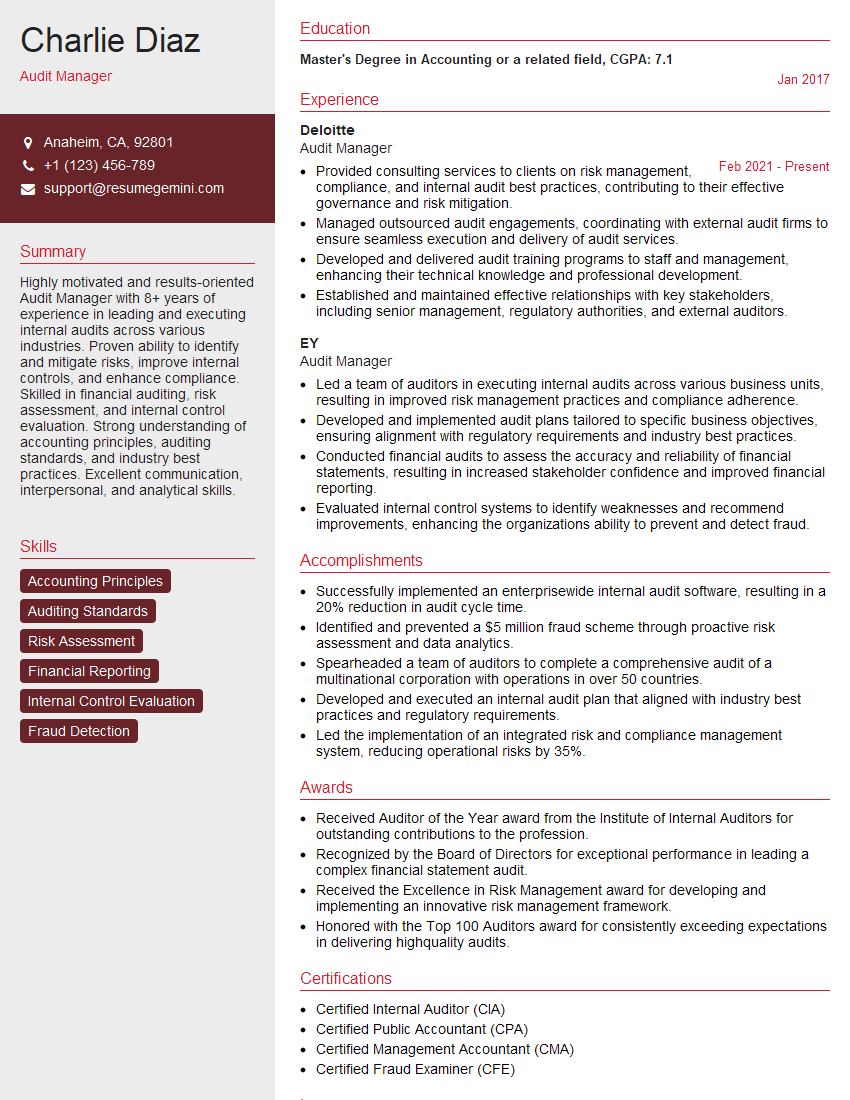
Audit Manager Resume Sample
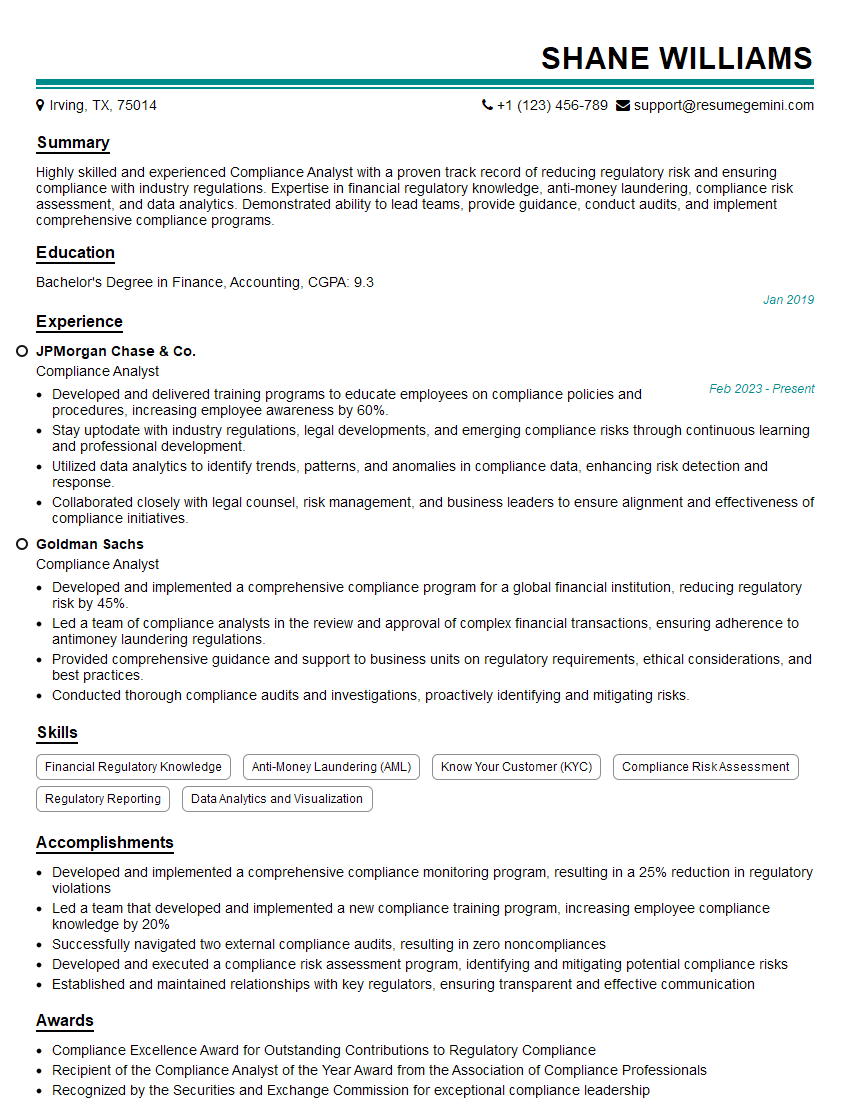
Compliance Analyst Resume Sample
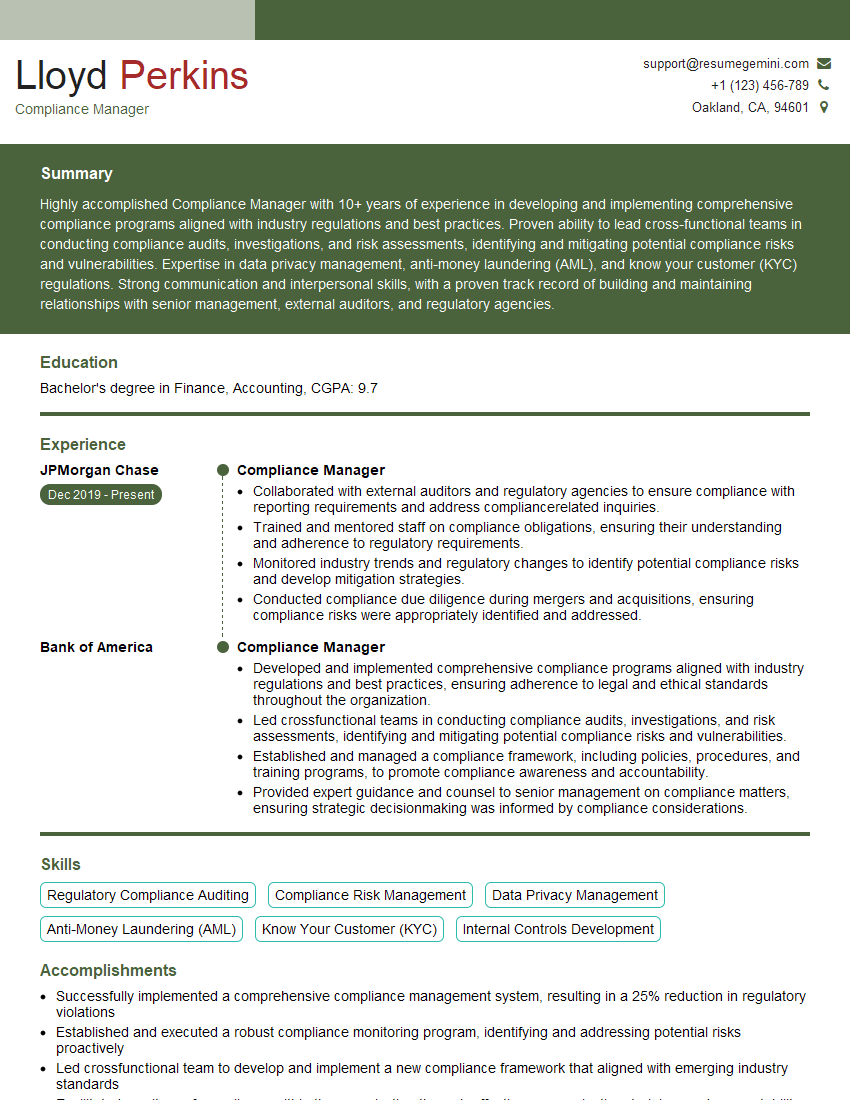
Compliance Manager Resume Sample
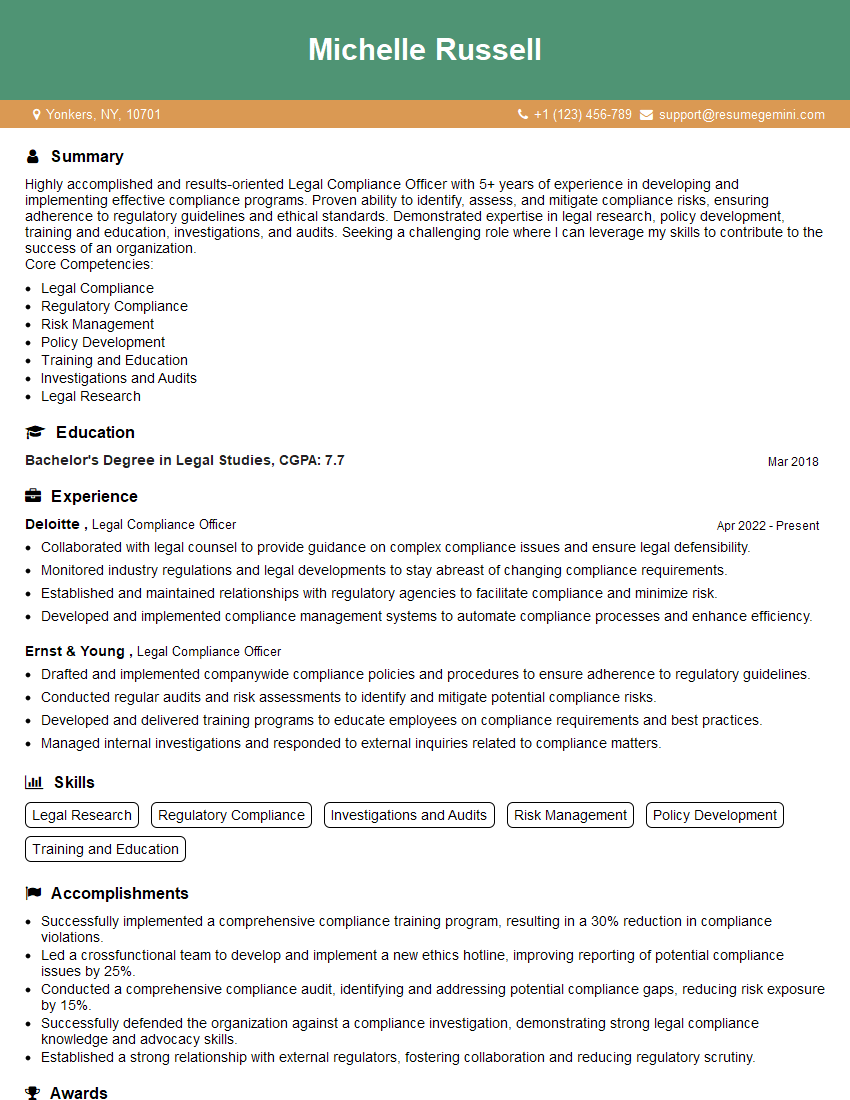
Legal Compliance Officer Resume Sample
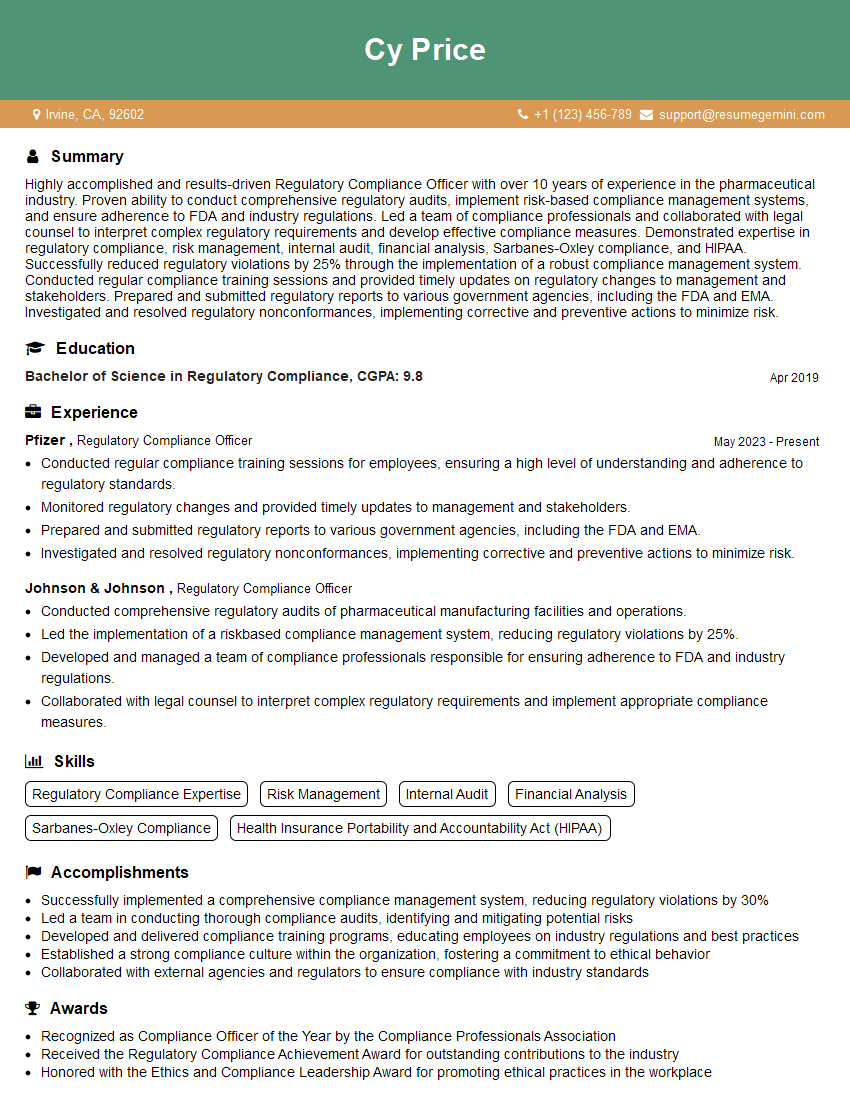
Regulatory Compliance Officer Resume Sample
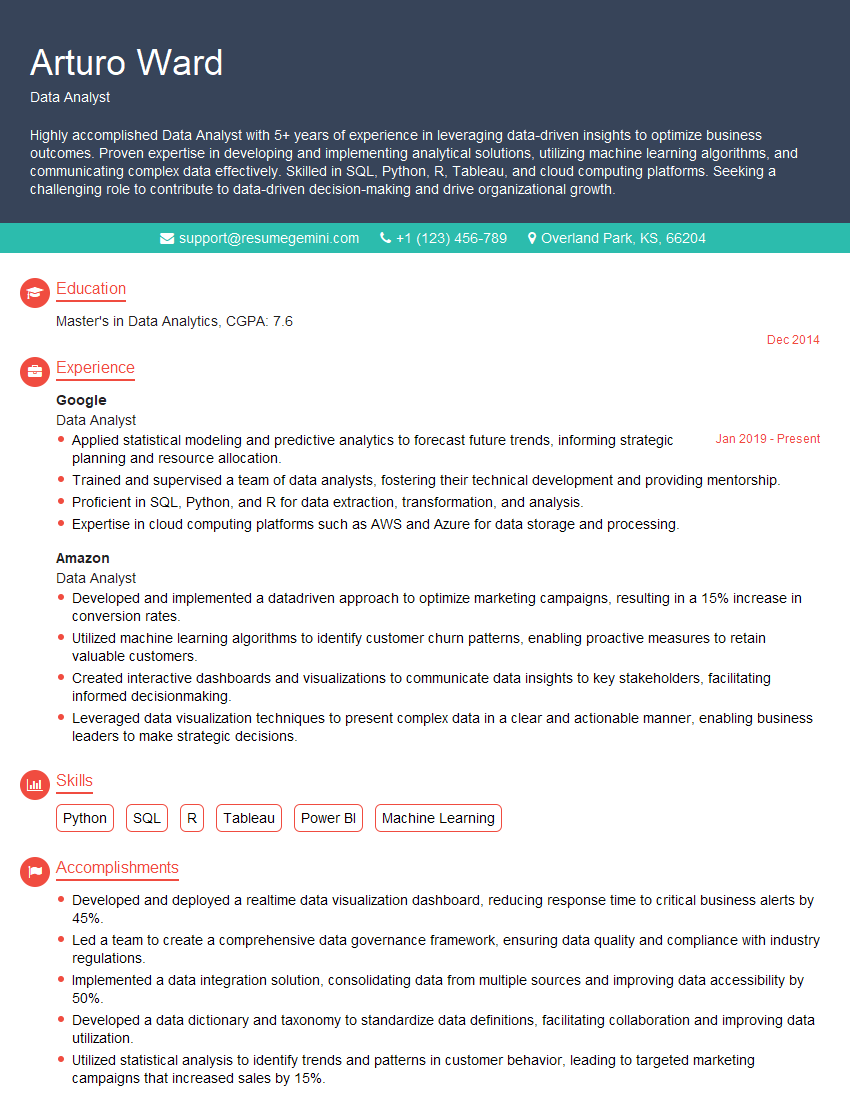
Data Analyst Resume Sample
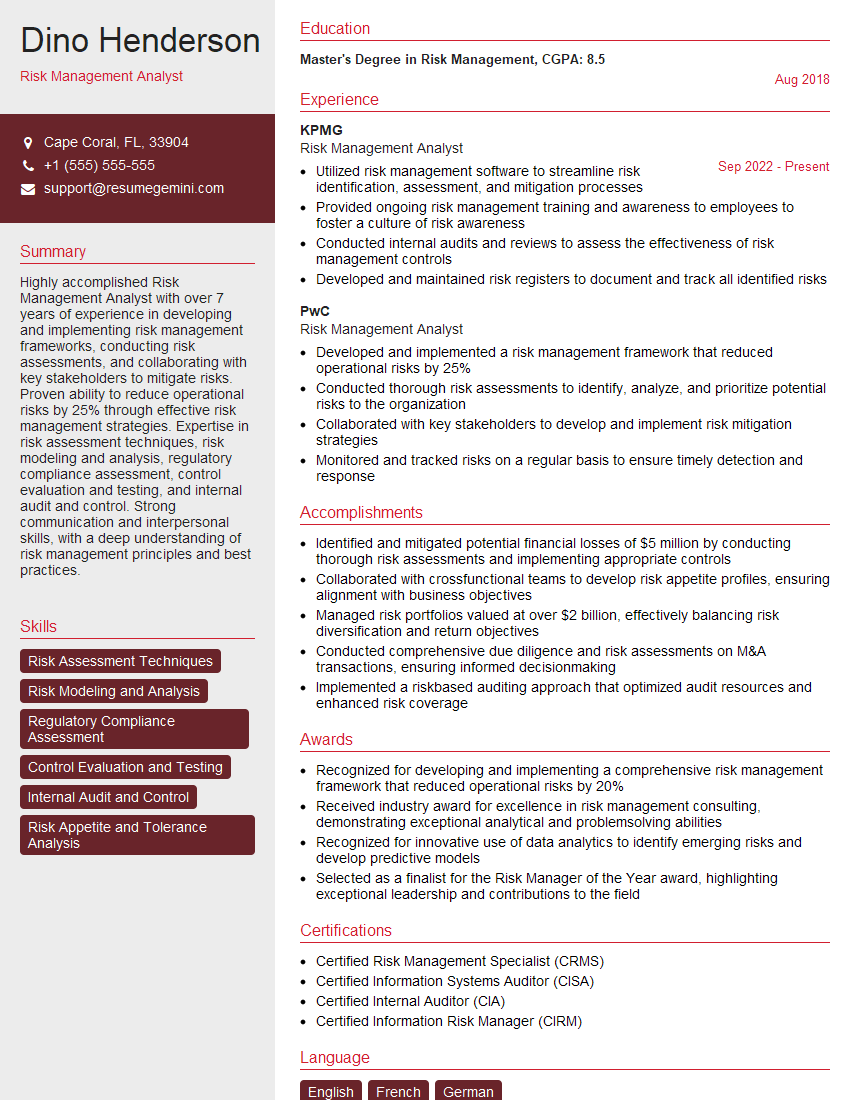
Risk Management Analyst Resume Sample
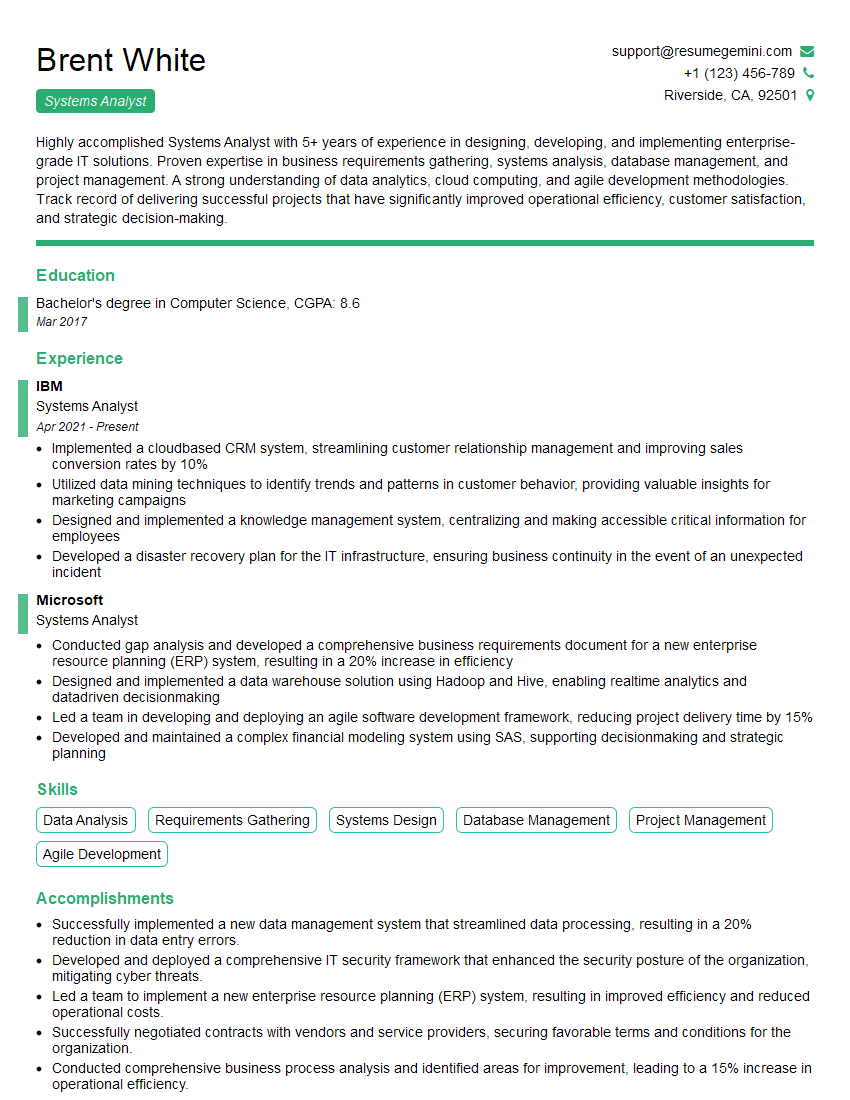
Systems Analyst Resume Sample
Business Systems Analyst Resume Sample
Information Security Analyst Resume Sample
Explore more articles
Users Rating of Our Blogs
Share Your Experience
We value your feedback! Please rate our content and share your thoughts (optional).
What Readers Say About Our Blog
Hello,
we currently offer a complimentary backlink and URL indexing test for search engine optimization professionals.
You can get complimentary indexing credits to test how link discovery works in practice.
No credit card is required and there is no recurring fee.
You can find details here:
https://wikipedia-backlinks.com/indexing/
Regards
NICE RESPONSE TO Q & A
hi
The aim of this message is regarding an unclaimed deposit of a deceased nationale that bears the same name as you. You are not relate to him as there are millions of people answering the names across around the world. But i will use my position to influence the release of the deposit to you for our mutual benefit.
Respond for full details and how to claim the deposit. This is 100% risk free. Send hello to my email id: [email protected]
Luka Chachibaialuka
Hey interviewgemini.com, just wanted to follow up on my last email.
We just launched Call the Monster, an parenting app that lets you summon friendly ‘monsters’ kids actually listen to.
We’re also running a giveaway for everyone who downloads the app. Since it’s brand new, there aren’t many users yet, which means you’ve got a much better chance of winning some great prizes.
You can check it out here: https://bit.ly/callamonsterapp
Or follow us on Instagram: https://www.instagram.com/callamonsterapp
Thanks,
Ryan
CEO – Call the Monster App
Hey interviewgemini.com, I saw your website and love your approach.
I just want this to look like spam email, but want to share something important to you. We just launched Call the Monster, a parenting app that lets you summon friendly ‘monsters’ kids actually listen to.
Parents are loving it for calming chaos before bedtime. Thought you might want to try it: https://bit.ly/callamonsterapp or just follow our fun monster lore on Instagram: https://www.instagram.com/callamonsterapp
Thanks,
Ryan
CEO – Call A Monster APP
To the interviewgemini.com Owner.
Dear interviewgemini.com Webmaster!
Hi interviewgemini.com Webmaster!
Dear interviewgemini.com Webmaster!
excellent
Hello,
We found issues with your domain’s email setup that may be sending your messages to spam or blocking them completely. InboxShield Mini shows you how to fix it in minutes — no tech skills required.
Scan your domain now for details: https://inboxshield-mini.com/
— Adam @ InboxShield Mini
Reply STOP to unsubscribe
Hi, are you owner of interviewgemini.com? What if I told you I could help you find extra time in your schedule, reconnect with leads you didn’t even realize you missed, and bring in more “I want to work with you” conversations, without increasing your ad spend or hiring a full-time employee?
All with a flexible, budget-friendly service that could easily pay for itself. Sounds good?
Would it be nice to jump on a quick 10-minute call so I can show you exactly how we make this work?
Best,
Hapei
Marketing Director
Hey, I know you’re the owner of interviewgemini.com. I’ll be quick.
Fundraising for your business is tough and time-consuming. We make it easier by guaranteeing two private investor meetings each month, for six months. No demos, no pitch events – just direct introductions to active investors matched to your startup.
If youR17;re raising, this could help you build real momentum. Want me to send more info?
Hi, I represent an SEO company that specialises in getting you AI citations and higher rankings on Google. I’d like to offer you a 100% free SEO audit for your website. Would you be interested?
Hi, I represent an SEO company that specialises in getting you AI citations and higher rankings on Google. I’d like to offer you a 100% free SEO audit for your website. Would you be interested?
good