Feeling uncertain about what to expect in your upcoming interview? We’ve got you covered! This blog highlights the most important Operation of Waste Management Equipment interview questions and provides actionable advice to help you stand out as the ideal candidate. Let’s pave the way for your success.
Questions Asked in Operation of Waste Management Equipment Interview
Q 1. Describe your experience operating different types of waste collection vehicles.
Throughout my career, I’ve operated a variety of waste collection vehicles, from smaller rear-load trucks ideal for residential areas to larger, automated side-load trucks used in high-density commercial districts. I’m also experienced with roll-off trucks, essential for handling large, bulky waste containers from construction sites or industrial facilities. Each vehicle type presents unique operational challenges; for instance, maneuvering a rear-loader in tight residential streets requires precision and awareness of surroundings, unlike operating a larger roll-off truck, which necessitates careful attention to weight distribution and safe lifting procedures. My experience includes both manual and automated systems, allowing me to adapt quickly to different equipment.
- Rear-load trucks: Proficient in efficient bin emptying and route optimization.
- Side-load trucks: Experienced with automated arm operation and waste compaction mechanisms.
- Roll-off trucks: Skilled in safe hook-up and disconnect procedures and weight management.
Q 2. Explain the proper procedures for loading and unloading waste containers.
Safe and efficient loading and unloading of waste containers is paramount. The process begins with a pre-operation check of the container and surrounding area to ensure there are no obstructions or hazards. For example, checking for loose debris near the bin to prevent it from getting caught in the truck’s mechanism. Next, I position the vehicle carefully, ensuring the container is aligned correctly with the truck’s lifting mechanism. The lifting mechanism (be it hydraulic arms or a hook system) is engaged smoothly and slowly to avoid sudden jolts or spills. Once the container is secured, the contents are discharged into the truck’s hopper, and the container is carefully lowered and detached. Finally, a post-operation visual inspection is carried out before moving to the next location.
- Proper alignment: Ensuring the container is properly positioned to prevent damage to both the container and the vehicle.
- Gradual operation: Avoid sudden movements during lifting and unloading to prevent spills and damage.
- Secure placement: Confirm the container is securely hooked or engaged before lifting.
- Visual inspection: Check for damage or spillage after unloading.
Q 3. How do you ensure the safety of yourself and others while operating waste management equipment?
Safety is my top priority. I always conduct pre-trip inspections of the vehicle, checking tires, lights, hydraulic systems, and emergency brakes. While operating, I maintain a safe speed, follow traffic laws, and use caution in areas with limited visibility. When loading and unloading containers, I use all safety equipment, including high-visibility clothing, gloves, and safety shoes. I’m also trained to recognize and avoid potential hazards, such as uneven ground or hidden obstacles. Furthermore, I always adhere to company safety protocols and report any unsafe conditions immediately.
For example, I’ve had instances where I’ve had to carefully navigate around pedestrians or cyclists in congested urban areas, requiring extra alertness and defensive driving. I always prioritize safety over speed or efficiency.
Q 4. What are the common maintenance checks you perform on waste collection vehicles?
Regular maintenance checks are crucial for preventing breakdowns and ensuring the safe operation of waste collection vehicles. My routine checks include: checking fluid levels (engine oil, coolant, hydraulic fluid, brake fluid); inspecting tires for wear and tear, damage or proper inflation; examining the condition of lights, signals, and mirrors; verifying the functionality of the lifting mechanism and compaction system; and visually inspecting the body for any damage or leaks. I also check for any unusual noises, vibrations, or smells that may indicate a problem. These checks are documented daily in a logbook.
For instance, detecting a slow leak in a hydraulic line early allows for timely repair, preventing a more significant breakdown later.
Q 5. How do you handle equipment malfunctions or breakdowns?
In the event of a malfunction or breakdown, my first priority is safety. I secure the vehicle in a safe location, away from traffic if possible, and activate hazard lights. I then assess the situation to determine the nature of the problem and its severity. If it’s a minor issue I can handle, like a blown bulb, I may attempt a repair. However, for more complex problems, I immediately report the incident to my supervisor and follow established company procedures for calling for roadside assistance or a mechanic.
For example, if the hydraulic system malfunctions, I would immediately stop the vehicle and contact maintenance, prioritizing the safety of myself and others.
Q 6. Describe your experience with different types of waste compactors and balers.
My experience encompasses various compactors and balers, from those used in smaller transfer stations to large industrial models. I’m familiar with different compaction styles, including horizontal and vertical compactors, each having its own operational characteristics and maintenance requirements. Balers are commonly used for recyclable materials, such as cardboard and plastics, significantly reducing volume and facilitating easier transportation. I understand the safety procedures associated with operating these machines, including proper lockout/tagout procedures during maintenance.
For example, the operation of a horizontal compactor requires a different skill set than a vertical compactor, due to variations in loading and compaction mechanisms. Each requires understanding their specific safety features.
Q 7. Explain the process of operating a transfer station.
Operating a transfer station involves coordinating the efficient transfer of waste from collection vehicles to larger transport vehicles. This includes receiving and inspecting incoming waste loads for compliance with regulations, guiding collection vehicles to designated unloading areas, monitoring the weighing and compacting process, ensuring the safe operation of the machinery, and maintaining a clean and organized work environment. Effective communication is essential in coordinating multiple vehicles and personnel within the transfer station. I’m responsible for adhering to safety regulations and maintaining detailed records of all incoming and outgoing waste.
A crucial aspect involves ensuring that waste is properly sorted and processed in accordance with local regulations. This can involve directing specific types of waste to designated areas for efficient handling and recycling.
Q 8. How do you manage waste segregation and sorting procedures?
Waste segregation and sorting are crucial for efficient waste management. We employ a multi-pronged approach, starting with clear public education campaigns to promote understanding of different waste streams (recyclables, compostables, hazardous waste, etc.). This is followed by providing clearly labelled bins and containers at various locations.
On the operational side, we utilize a combination of manual sorting and automated systems depending on the volume and type of waste. For instance, smaller-scale operations might rely on manual sorting by trained personnel who identify and separate materials based on their composition and recyclability. Larger facilities often incorporate automated systems like conveyor belts, optical sorters (which use sensors to identify materials), and magnetic separators. This automated process significantly increases efficiency and accuracy.
For example, in one project, we implemented a color-coded bin system combined with educational leaflets distributed to residents. This led to a 20% increase in the amount of correctly sorted recyclable materials within six months.
Q 9. What are the regulations and safety protocols related to handling hazardous waste?
Handling hazardous waste demands strict adherence to regulations and safety protocols. These vary depending on location and the specific type of hazardous waste, but common elements include:
- Proper labeling and packaging: Hazardous waste must be clearly labeled with the appropriate hazard symbols and descriptions to indicate its nature and potential risks. Special containers designed to prevent leakage and spills are mandatory.
- Designated storage areas: Dedicated, secure storage areas are required, ensuring waste is contained and protected from the elements and unauthorized access. These areas often have secondary containment measures to prevent spills from reaching the environment.
- Personal Protective Equipment (PPE): Workers handling hazardous waste must use appropriate PPE, such as respirators, gloves, safety glasses, and protective clothing. The specific PPE required depends on the hazards presented by the waste.
- Emergency response plans: Detailed emergency response plans are essential, outlining procedures for spills, fires, or other incidents. This includes training personnel on how to handle such situations safely and effectively.
- Transportation regulations: The transportation of hazardous waste is highly regulated, demanding specialized vehicles and adherence to strict guidelines for secure transport and proper documentation.
Non-compliance can lead to severe penalties, including hefty fines and legal action. Regular safety audits and training sessions are crucial to maintain compliance and ensure worker safety.
Q 10. How do you ensure compliance with environmental regulations during waste disposal?
Environmental compliance is paramount in waste disposal. We achieve this through meticulous record-keeping, adherence to permits and licenses, and ongoing monitoring of our operations. This includes:
- Permitting and licensing: We secure all necessary permits and licenses from regulatory bodies. This ensures we operate legally and within the established environmental standards.
- Waste characterization: Accurate waste characterization is vital. This involves analyzing the waste stream to determine its composition and potential environmental impacts. This information helps to select appropriate disposal methods.
- Regular monitoring and reporting: We continuously monitor our operations to ensure adherence to emission standards and waste disposal limits. This involves regular reporting to environmental agencies.
- Compliance audits: We undergo regular compliance audits to assess our adherence to environmental regulations and identify areas for improvement. These audits are performed both internally and by external regulatory bodies.
- Technological solutions: We leverage technology, such as leachate monitoring systems in landfills to minimize environmental impact. We also use data analytics to optimize our processes and minimize waste.
For example, we implemented a new system for tracking landfill gas emissions which resulted in a significant reduction in methane release, exceeding regulatory targets.
Q 11. Describe your experience with GPS tracking and route optimization in waste collection.
GPS tracking and route optimization are integral to efficient waste collection. GPS tracking provides real-time location data for our vehicles, allowing us to monitor their progress, identify delays, and adjust routes dynamically. Route optimization software uses this data, along with factors like traffic patterns and service schedules, to create the most efficient collection routes. This reduces travel time, fuel consumption, and operational costs.
For example, we implemented a route optimization system that utilized real-time traffic data from a GPS tracking system. This system resulted in a 15% reduction in fuel consumption and a 10% reduction in overall operational time compared to our previous system.
Furthermore, the data collected through GPS tracking allows for better performance analysis and helps us to identify areas needing improved service frequency or alternative collection strategies.
Q 12. How do you deal with overflowing bins or unexpected waste volumes?
Overflowing bins and unexpected waste volumes require a swift and efficient response. Our strategy involves:
- Immediate response teams: We have designated teams that respond immediately to reports of overflowing bins. This ensures prompt action and prevents potential environmental hazards and public health issues.
- Flexible scheduling: Our scheduling allows for flexibility to accommodate unexpected surges in waste volume. This often involves adding extra collection runs or deploying additional vehicles.
- Communication and coordination: Clear communication channels are maintained with the public and relevant stakeholders to address the issue and provide updates on the situation.
- Preventive measures: We implement preventative measures such as educating the public about proper waste disposal practices and potentially adjusting collection schedules for areas with higher waste generation.
For example, during a large community event, we anticipated increased waste and proactively deployed extra bins and added extra collection runs, preventing any major overflow issues.
Q 13. What are the signs of a malfunctioning compactor or baler?
Identifying malfunctions in compactors and balers is crucial for preventing downtime and ensuring safety. Signs of malfunction can include:
- Unusual noises: Grinding, squealing, or unusual vibrations are often early indicators of mechanical problems.
- Slow operation or jams: The equipment may operate slower than usual, experience frequent jams, or fail to compact/bale waste effectively.
- Leaks: Hydraulic fluid leaks indicate potential damage to seals or hydraulic components.
- Control panel errors: Error messages or unusual readings on the control panel often pinpoint specific issues.
- Overheating: Excessive heat generation is a sign of potential motor or hydraulic problems.
Regular preventative maintenance is essential for identifying minor issues before they escalate into major problems. This includes regular inspections, lubrication, and replacement of worn-out parts.
Q 14. Explain your troubleshooting skills related to waste management equipment.
My troubleshooting approach involves a systematic process:
- Safety first: Ensure the equipment is safely shut down and isolated before attempting any repairs.
- Identify the problem: Observe the equipment for any obvious signs of malfunction, check control panel error messages, and gather information from operators.
- Consult manuals and documentation: Refer to operation and maintenance manuals for troubleshooting guides and diagnostic procedures.
- Systematic checks: Conduct systematic checks on various components, starting with the most likely causes of the problem, and working through a checklist.
- Testing and verification: After performing any repairs, test the equipment to verify that the problem is resolved.
- Record-keeping: Maintain detailed records of any repairs, including the problem encountered, the actions taken, and the outcome.
For example, I once diagnosed a hydraulic leak in a compactor by systematically checking the hydraulic lines and connectors for any visible leaks or damage. After replacing a damaged seal, the leak was resolved, and the compactor resumed normal operation. My experience spans a range of equipment, encompassing various makes and models, giving me a comprehensive understanding of common issues and troubleshooting strategies. Regular training keeps me abreast of the latest technologies and best practices.
Q 15. What is your experience with preventative maintenance schedules for waste equipment?
Preventative maintenance schedules for waste equipment are crucial for maximizing uptime, minimizing breakdowns, and extending the lifespan of these often-expensive assets. My experience involves developing and implementing comprehensive schedules based on manufacturer recommendations, operational data analysis, and risk assessments. I leverage computerized maintenance management systems (CMMS) to track inspections, repairs, and scheduled maintenance tasks. For example, a typical schedule for a refuse truck might include daily checks of fluid levels, weekly inspections of tires and brakes, and monthly lubrication of key components. For smaller equipment like compactors, the frequency might be slightly different, but the principle remains the same – proactive attention to prevent major issues down the line. I’ve found that tailoring the schedule to specific equipment and its usage patterns is key to its effectiveness. For instance, a truck operating in a hilly region might require more frequent brake inspections than one operating on flat terrain.
- Daily Checks: Fluid levels, tire pressure, visual inspections for damage.
- Weekly Inspections: Brakes, lights, hydraulic systems, engine compartment.
- Monthly Inspections: More thorough checks of all systems, lubrication, filter changes.
- Annual Inspections: Comprehensive overhaul, major component replacements.
Data collected from the CMMS is then analyzed to identify trends and potential weaknesses in the equipment or maintenance program itself, allowing for continuous improvement.
Career Expert Tips:
- Ace those interviews! Prepare effectively by reviewing the Top 50 Most Common Interview Questions on ResumeGemini.
- Navigate your job search with confidence! Explore a wide range of Career Tips on ResumeGemini. Learn about common challenges and recommendations to overcome them.
- Craft the perfect resume! Master the Art of Resume Writing with ResumeGemini’s guide. Showcase your unique qualifications and achievements effectively.
- Don’t miss out on holiday savings! Build your dream resume with ResumeGemini’s ATS optimized templates.
Q 16. How do you communicate effectively with supervisors and colleagues?
Effective communication is paramount in a team-oriented environment like waste management. I prioritize clear, concise, and respectful communication with supervisors and colleagues. I use a variety of methods depending on the situation. For example, I use daily briefings with my team to discuss operational plans, any challenges encountered, and safety concerns. For more complex issues or updates requiring formal documentation, I use email or written reports. With supervisors, I maintain open communication channels, proactively reporting on progress, issues, and potential solutions. When addressing problems, I focus on facts, avoiding emotional language and instead focusing on solutions. Active listening is key to understanding concerns and ensuring everyone feels heard. I also proactively seek feedback to ensure that my communication is understood and effective.
For instance, if a piece of equipment malfunctions, I would first report it to my supervisor, detailing the issue, its impact on operations, and any immediate actions taken. Then, I would follow up with a detailed written report including any suggested repairs or maintenance requirements.
Q 17. Describe your experience working in a team environment.
My experience working in team environments has been extensive. In waste management, teamwork is essential for efficient and safe operations. I’ve been part of teams responsible for everything from daily refuse collection routes to emergency repairs and large-scale cleanup operations. I’ve consistently found that success hinges on clear roles, open communication, and mutual respect. I’ve collaborated with drivers, mechanics, supervisors, and administrative staff, demonstrating adaptability and a willingness to assist wherever needed. I value a collaborative approach where everyone contributes their expertise. In one particular instance, our team was facing a significant backlog due to an unexpected equipment failure. By working collaboratively and prioritizing tasks effectively, we managed to overcome the challenge and minimize disruption to service. This involved coordinating with mechanics, rerouting routes, and communicating clearly with supervisors and the public.
Q 18. How do you prioritize tasks and manage your time effectively?
Prioritizing tasks and managing time effectively is critical in waste management, where unexpected events can disrupt carefully laid plans. I utilize a combination of methods, including prioritizing tasks based on urgency and impact, setting realistic deadlines, and leveraging time management techniques like time blocking and the Eisenhower Matrix (urgent/important). I use CMMS software to schedule maintenance, track progress, and identify potential bottlenecks. I also make use of daily planning sessions to outline the day’s tasks and adjust priorities as necessary. Unexpected situations, such as equipment failures or traffic delays, require quick thinking and adaptability. My approach involves assessing the situation, prioritizing immediate needs, and communicating effectively with the team to find efficient solutions. For example, if a truck breaks down, I’ll prioritize getting a replacement vehicle and rerouting affected routes while simultaneously reporting the issue to maintenance.
Q 19. How do you adapt to changing work schedules or unexpected situations?
Adaptability is crucial in this industry. Waste collection schedules are often affected by unexpected events, such as severe weather, traffic accidents, or equipment malfunctions. I’m comfortable adjusting to changing work schedules and handling unexpected situations through proactive planning and problem-solving. I utilize flexible scheduling techniques and maintain open communication with supervisors and colleagues to manage unexpected changes. For example, during a severe snowstorm, I would work with my team and supervisors to adjust collection routes, prioritizing essential areas and informing the public of any delays. I am also comfortable working overtime or adjusting my schedule as needed to ensure smooth operations.
Q 20. What are your knowledge and experience with different types of waste materials?
My knowledge of waste materials is comprehensive, spanning residential, commercial, and industrial waste streams. I’m familiar with various types of waste, including recyclables (paper, plastic, glass, metal), organic waste (food scraps, yard waste), hazardous waste (batteries, chemicals), and construction and demolition debris. Understanding the composition of different waste streams is crucial for efficient sorting, processing, and disposal. This knowledge informs my decision-making in terms of equipment selection, maintenance, and safety procedures. For example, handling hazardous waste requires specialized equipment and safety protocols, different from those used for handling residential garbage.
Q 21. Describe your understanding of waste stream management.
Waste stream management encompasses the entire lifecycle of waste, from generation to disposal. My understanding includes the processes of collection, transportation, processing, recycling, and disposal. This involves knowledge of various waste management technologies, including transfer stations, landfills, recycling facilities, and waste-to-energy plants. I understand the importance of minimizing environmental impact through efficient waste diversion programs, promoting recycling and composting, and adhering to regulatory requirements. A key component is understanding the different waste streams and their characteristics to optimize collection routes, processing methods, and disposal strategies. For example, a thorough understanding of the waste stream composition allows for better planning and optimization of recycling programs and landfill space usage.
Q 22. What is your experience with waste disposal methods (landfill, recycling, incineration)?
My experience encompasses all three major waste disposal methods: landfill, recycling, and incineration. I’ve worked extensively with landfill operations, including compaction techniques using heavy machinery like bulldozers and compactors to maximize space and minimize environmental impact. This includes understanding and adhering to regulations concerning liner systems and leachate management. In recycling, my experience involves overseeing the sorting process, optimizing material separation using automated systems and manual sorting lines to ensure high-quality recyclable materials. I’m familiar with different recycling streams, including paper, plastics, metals, and glass, and the challenges of contamination. Finally, with incineration, I have firsthand knowledge of waste-to-energy plants, focusing on operational efficiency, emissions control, and ash management. This includes understanding the combustion process and the importance of adhering to strict environmental regulations.
For example, I once oversaw the implementation of a new automated sorting system at a recycling facility, which increased our processing capacity by 30% and reduced labor costs. In another instance, I successfully resolved a landfill leachate issue by identifying a leak in the liner system and implementing an emergency repair plan, preventing environmental contamination.
Q 23. How do you ensure accurate record-keeping related to waste collection and disposal?
Accurate record-keeping is paramount in waste management. We utilize a combination of manual and digital methods to ensure precise tracking. Manual records might include daily weighbridge tickets for incoming waste, while digital systems manage data on waste types, volumes, disposal locations, and associated costs. This data is often integrated with GPS tracking of collection vehicles to provide real-time information on routes and waste collection progress. We also maintain detailed logs of equipment maintenance and repairs, crucial for regulatory compliance and preventative maintenance scheduling. All records are regularly audited to maintain accuracy and integrity, ensuring accountability and transparency.
For instance, we implemented a barcoding system for waste containers, linking them to specific clients and enabling us to track waste generation patterns and optimize collection routes. This led to a 15% reduction in operational costs. Furthermore, our digital records are stored securely and backed up regularly to prevent data loss.
Q 24. How do you maintain cleanliness and hygiene standards in waste management operations?
Maintaining cleanliness and hygiene is non-negotiable. Our procedures begin with proper training for all personnel, emphasizing the use of Personal Protective Equipment (PPE) like gloves, safety glasses, and high-visibility clothing. Regular cleaning schedules are in place for all equipment and facilities, using appropriate disinfectants and detergents. We also employ strict waste segregation practices, both at the collection point and at the processing facilities, minimizing cross-contamination. The entire process, from collection to disposal, is designed to prevent the spread of disease and maintain a safe working environment.
For instance, we implement rigorous wash-down procedures for our collection vehicles after each run to prevent the spread of bacteria and other harmful pathogens. We also conduct regular inspections to ensure proper sanitation levels are maintained across all facilities and equipment.
Q 25. What are the challenges associated with operating waste management equipment in various weather conditions?
Weather significantly impacts waste management operations. Extreme heat can lead to equipment malfunctions due to overheating, while cold temperatures can affect hydraulic systems and battery performance. Heavy rainfall can make roads impassable and create hazardous working conditions, impacting collection schedules. Snow and ice can severely restrict access to certain areas, and high winds can cause damage to equipment or create safety hazards. We mitigate these challenges through preventative maintenance, using winter-appropriate fluids and lubricants, and having contingency plans for adverse weather conditions.
For example, during a severe winter storm, we proactively rescheduled routes and prioritized critical areas based on a risk assessment matrix. We also invested in specialized tires and chains for our vehicles to navigate snowy and icy roads, ensuring the safety of our drivers and uninterrupted service to a large extent.
Q 26. Describe your experience with using specialized tools or equipment for waste management.
My experience includes using various specialized equipment, such as articulated waste collection trucks with automated side-loading systems, compactors for processing recyclables, and specialized equipment for handling hazardous waste. I’m proficient in operating heavy machinery like bulldozers and excavators for landfill operations. I have also used advanced GPS-tracking systems for real-time monitoring of waste collection vehicles, enabling efficient route optimization and improved resource management. Furthermore, I’m familiar with operating and maintaining equipment for the processing of different waste streams, such as shredders and balers for recyclable materials.
For instance, I’ve gained experience using specialized grapple trucks equipped with powerful claws to lift and transport large, bulky waste items. I’ve also used different types of compactors, each designed for particular waste types to maximize space and efficiency in landfills.
Q 27. How do you handle difficult situations or customer complaints related to waste collection?
Handling difficult situations and customer complaints requires a calm and professional approach. I begin by actively listening to the customer’s concerns, empathizing with their frustrations and ensuring they feel heard. I then gather information to understand the root cause of the problem. This might involve reviewing our operational records, checking GPS tracking data, or investigating the site in question. Once the issue is understood, I offer solutions – whether it’s a rescheduled collection, a revised service plan, or a compensation offer for any inconvenience caused. My objective is to resolve the issue efficiently and restore customer satisfaction. Open communication and clear explanation of the actions taken are key to achieving a positive outcome.
For example, I once handled a complaint about missed collections by analyzing our route data and determining that a traffic accident had caused a significant delay. I proactively contacted the customer, explaining the situation, and offering a prompt collection and a small discount on their next bill, leaving them satisfied with our response.
Q 28. What are your future career goals within the waste management industry?
My future career goals involve advancing within the waste management industry, potentially in a managerial or supervisory role where I can leverage my experience and expertise to optimize operational efficiency and environmental sustainability. I’m interested in exploring new technologies in waste processing and resource recovery, such as advanced sorting systems and anaerobic digestion plants. I’m also keen on contributing to the development of more sustainable waste management practices, minimizing environmental impact and promoting circular economy principles. Ultimately, I aim to make a significant contribution to creating a cleaner and more sustainable future.
Key Topics to Learn for Operation of Waste Management Equipment Interview
- Equipment Operation & Maintenance: Understanding the mechanics, operation procedures, and routine maintenance schedules for various waste management vehicles (e.g., garbage trucks, compactors, recycling trucks). This includes pre-trip inspections and safety protocols.
- Safety Procedures & Regulations: Familiarity with OSHA regulations, safe operating practices, and emergency procedures specific to waste management equipment. This includes understanding hazard communication and waste handling best practices.
- Waste Stream Management: Knowledge of different waste streams (residential, commercial, industrial), proper sorting techniques, and the impact of efficient waste handling on environmental sustainability.
- Troubleshooting & Repair: Ability to identify common malfunctions, perform basic troubleshooting, and understand when to call for professional maintenance or repairs. This also includes understanding preventative maintenance schedules and their importance.
- Route Optimization & Efficiency: Understanding the logistics of waste collection routes, efficient time management, and minimizing fuel consumption and environmental impact.
- GPS & Telematics Systems: Familiarity with using GPS and telematics systems for route navigation, tracking vehicle performance, and reporting operational data.
- Hydraulic Systems & Mechanics: Understanding the basic principles of hydraulic systems in waste management equipment and their role in efficient operation.
- Waste Disposal Regulations and Compliance: Knowledge of local, state, and federal regulations pertaining to waste disposal and environmentally sound practices.
Next Steps
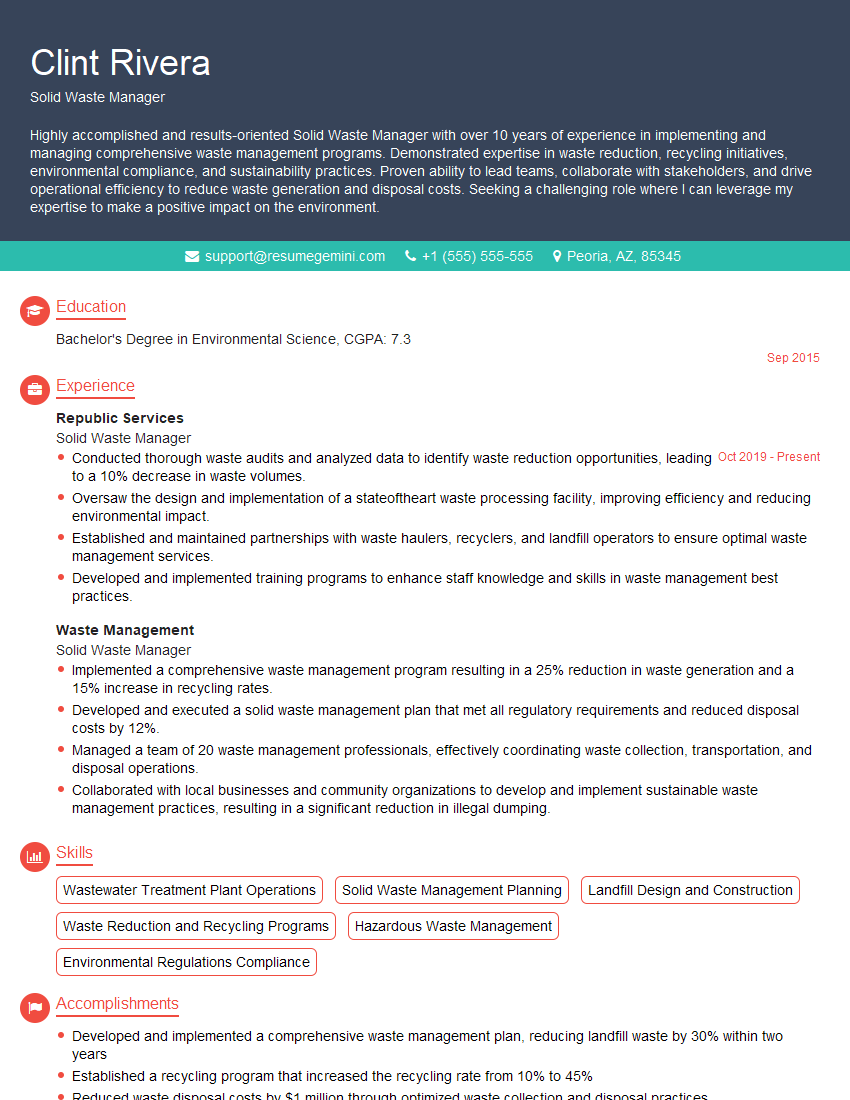
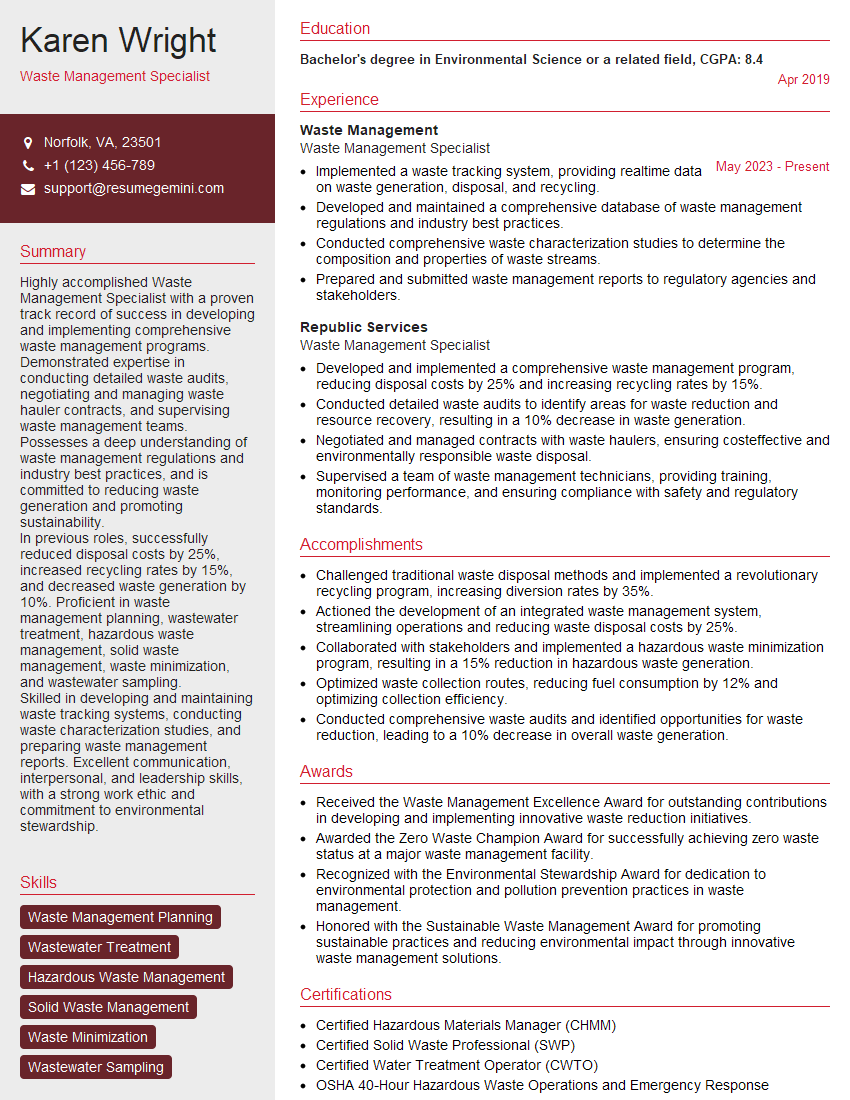
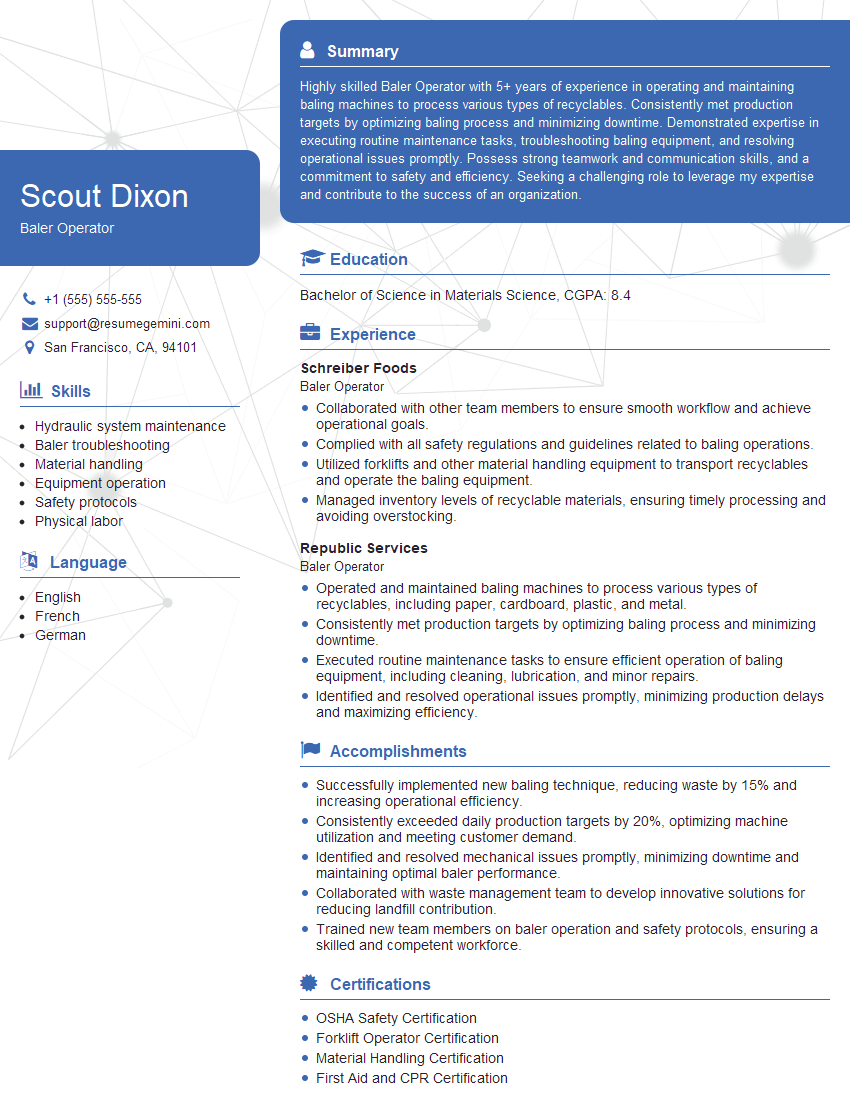
Mastering the operation of waste management equipment opens doors to a rewarding career with excellent growth potential. A strong understanding of these technical skills, combined with a well-crafted resume, significantly increases your chances of landing your dream job. Creating an ATS-friendly resume is crucial for getting noticed by employers. We highly recommend using ResumeGemini to build a professional and impactful resume that highlights your skills and experience effectively. ResumeGemini offers examples of resumes tailored to the Operation of Waste Management Equipment field to help you get started.
Explore more articles
Users Rating of Our Blogs
Share Your Experience
We value your feedback! Please rate our content and share your thoughts (optional).
What Readers Say About Our Blog
Attention music lovers!
Wow, All the best Sax Summer music !!!
Spotify: https://open.spotify.com/artist/6ShcdIT7rPVVaFEpgZQbUk
Apple Music: https://music.apple.com/fr/artist/jimmy-sax-black/1530501936
YouTube: https://music.youtube.com/browse/VLOLAK5uy_noClmC7abM6YpZsnySxRqt3LoalPf88No
Other Platforms and Free Downloads : https://fanlink.tv/jimmysaxblack
on google : https://www.google.com/search?q=22+AND+22+AND+22
on ChatGPT : https://chat.openai.com?q=who20jlJimmy20Black20Sax20Producer
Get back into the groove with Jimmy sax Black
Best regards,
Jimmy sax Black
www.jimmysaxblack.com
Hi I am a troller at The aquatic interview center and I suddenly went so fast in Roblox and it was gone when I reset.
Hi,
Business owners spend hours every week worrying about their website—or avoiding it because it feels overwhelming.
We’d like to take that off your plate:
$69/month. Everything handled.
Our team will:
Design a custom website—or completely overhaul your current one
Take care of hosting as an option
Handle edits and improvements—up to 60 minutes of work included every month
No setup fees, no annual commitments. Just a site that makes a strong first impression.
Find out if it’s right for you:
https://websolutionsgenius.com/awardwinningwebsites
Hello,
we currently offer a complimentary backlink and URL indexing test for search engine optimization professionals.
You can get complimentary indexing credits to test how link discovery works in practice.
No credit card is required and there is no recurring fee.
You can find details here:
https://wikipedia-backlinks.com/indexing/
Regards
NICE RESPONSE TO Q & A
hi
The aim of this message is regarding an unclaimed deposit of a deceased nationale that bears the same name as you. You are not relate to him as there are millions of people answering the names across around the world. But i will use my position to influence the release of the deposit to you for our mutual benefit.
Respond for full details and how to claim the deposit. This is 100% risk free. Send hello to my email id: lukachachibaialuka@gmail.com
Luka Chachibaialuka
Hey interviewgemini.com, just wanted to follow up on my last email.
We just launched Call the Monster, an parenting app that lets you summon friendly ‘monsters’ kids actually listen to.
We’re also running a giveaway for everyone who downloads the app. Since it’s brand new, there aren’t many users yet, which means you’ve got a much better chance of winning some great prizes.
You can check it out here: https://bit.ly/callamonsterapp
Or follow us on Instagram: https://www.instagram.com/callamonsterapp
Thanks,
Ryan
CEO – Call the Monster App
Hey interviewgemini.com, I saw your website and love your approach.
I just want this to look like spam email, but want to share something important to you. We just launched Call the Monster, a parenting app that lets you summon friendly ‘monsters’ kids actually listen to.
Parents are loving it for calming chaos before bedtime. Thought you might want to try it: https://bit.ly/callamonsterapp or just follow our fun monster lore on Instagram: https://www.instagram.com/callamonsterapp
Thanks,
Ryan
CEO – Call A Monster APP
To the interviewgemini.com Owner.
Dear interviewgemini.com Webmaster!
Hi interviewgemini.com Webmaster!
Dear interviewgemini.com Webmaster!
excellent
Hello,
We found issues with your domain’s email setup that may be sending your messages to spam or blocking them completely. InboxShield Mini shows you how to fix it in minutes — no tech skills required.
Scan your domain now for details: https://inboxshield-mini.com/
— Adam @ InboxShield Mini
support@inboxshield-mini.com
Reply STOP to unsubscribe
Hi, are you owner of interviewgemini.com? What if I told you I could help you find extra time in your schedule, reconnect with leads you didn’t even realize you missed, and bring in more “I want to work with you” conversations, without increasing your ad spend or hiring a full-time employee?
All with a flexible, budget-friendly service that could easily pay for itself. Sounds good?
Would it be nice to jump on a quick 10-minute call so I can show you exactly how we make this work?
Best,
Hapei
Marketing Director
Hey, I know you’re the owner of interviewgemini.com. I’ll be quick.
Fundraising for your business is tough and time-consuming. We make it easier by guaranteeing two private investor meetings each month, for six months. No demos, no pitch events – just direct introductions to active investors matched to your startup.
If youR17;re raising, this could help you build real momentum. Want me to send more info?
Hi, I represent an SEO company that specialises in getting you AI citations and higher rankings on Google. I’d like to offer you a 100% free SEO audit for your website. Would you be interested?
Hi, I represent an SEO company that specialises in getting you AI citations and higher rankings on Google. I’d like to offer you a 100% free SEO audit for your website. Would you be interested?