The right preparation can turn an interview into an opportunity to showcase your expertise. This guide to Operational Art interview questions is your ultimate resource, providing key insights and tips to help you ace your responses and stand out as a top candidate.
Questions Asked in Operational Art Interview
Q 1. Define Operational Art and differentiate it from strategy and tactics.
Operational art is the use of military forces to attain strategic objectives. It sits between strategy and tactics, bridging the gap between the ‘what’ (strategy) and the ‘how’ (tactics).
- Strategy defines the overall goals and objectives of a campaign, focusing on the big picture – the why and what. Think of it as the overall game plan.
- Operational Art is the thinking behind orchestrating military forces to achieve strategic goals. It’s about designing campaigns, selecting the right battles, and managing resources over time. It’s the how we achieve strategic goals.
- Tactics focuses on the detailed execution of battles and engagements – the how on a smaller scale. It addresses individual units and immediate actions on the battlefield.
Imagine planning a large-scale football game. Strategy is determining whether to go for a run-heavy or pass-heavy offense. Operational art is deciding the formations, plays, and when to utilize specific players based on the opponent’s strengths and weaknesses. Tactics are the individual actions of players on the field during each play.
Q 2. Describe the key principles of Operational Art.
Key principles of Operational Art are multifaceted and often context-dependent, but some core tenets include:
- Objective: All actions must contribute to a clearly defined and attainable objective. Knowing what you aim to achieve is paramount.
- Offensive Action: Maintaining initiative and seizing opportunities is crucial. Reactive defense is generally less effective.
- Mass and Concentration of Force: Applying superior force at the decisive point is key to achieving success.
- Unity of Command: Clear lines of authority and responsibility prevent confusion and ensure efficient execution.
- Security: Protecting your forces and critical assets is non-negotiable. Intelligence gathering is crucial.
- Economy of Force: Applying just enough force to achieve the objective, avoiding unnecessary risk and resource expenditure.
- Maneuver: Using movement and deception to gain positional advantage.
- Surprise: Achieving unexpected results through deception and speed.
- Simplicity: Clear, easily understandable plans are less prone to misinterpretation.
These principles are interconnected and should be considered holistically, not in isolation. The specific application of these principles will heavily depend on the operational environment and context.
Q 3. Explain the relationship between Operational Art and Operational Design.
Operational design is the process of developing the operational concept for a military operation; operational art is the skill used in that process. Operational design is the detailed planning phase, while operational art is the underlying thought process that guides the design. It’s the difference between designing a house (operational design) and having the architectural vision and skill to build a masterpiece (operational art).
Operational design translates strategic guidance into a detailed operational plan, considering factors like geography, logistics, enemy capabilities, and available resources. Operational art informs the design process, ensuring the plan is feasible, efficient and effective in achieving the strategic objective. A strong operational design requires a high level of operational art.
Q 4. How do you assess risk in the context of Operational Art?
Risk assessment in operational art is an iterative process that involves identifying potential threats, analyzing their likelihood and impact, and developing mitigation strategies. It requires a deep understanding of the operational environment, enemy capabilities, and potential unforeseen challenges. A structured approach might include:
- Identify Potential Threats: What are the potential risks to the mission? This includes enemy actions, environmental factors, logistical issues, and friendly fire.
- Assess Likelihood and Impact: How likely is each threat to occur, and what would be the impact if it did? Use qualitative or quantitative methods to estimate risk levels.
- Develop Mitigation Strategies: For each significant threat, develop plans to reduce the likelihood or impact of the risk. This may involve adjusting the plan, adding redundancy, or increasing security measures.
- Monitor and Adapt: Continuously monitor the operational environment and update the risk assessment as needed. Be prepared to adapt the plan in response to changing circumstances.
For example, assessing the risk of an amphibious landing operation might involve analyzing the weather, enemy defenses, and the availability of support assets. Mitigation strategies could include deploying specialized units to suppress enemy fire, using weather forecasting to determine the optimal landing window and having backup landing sites.
Q 5. What are the common challenges in applying Operational Art in a complex environment?
Applying operational art in a complex environment presents numerous challenges:
- Uncertainties and Ambiguities: Complex environments are characterized by unpredictable factors, making planning and execution difficult. The fog of war is significantly amplified.
- Multiple Actors: Multiple actors – both state and non-state – with competing interests can make coordinating actions and predicting outcomes challenging.
- Information Overload: Gathering, processing, and interpreting vast amounts of data is crucial but difficult in a complex setting.
- Interdependence of Operations: Operations often have cascading effects, making it hard to isolate any single action.
- Limited Resources: Balancing resource allocation across multiple objectives and competing priorities is a constant challenge.
- Ethical Considerations: In complex environments, the line between civilian and military targets can become blurred, requiring careful consideration of ethical implications.
Successfully navigating these challenges requires robust planning, adaptable strategies, and effective communication among all involved parties. Utilizing robust simulations and wargaming can assist in preparation for complex scenarios.
Q 6. Explain your understanding of the Operational Art process.
The operational art process is iterative and not linear. It generally involves:
- Understanding the Strategic Context: Clearly define the overall strategic goals and objectives.
- Developing an Operational Concept: Create a broad outline of how to achieve the strategic objective, including the main lines of effort.
- Planning the Campaign: Develop detailed plans, including timelines, resource allocation, and contingency plans.
- Executing the Operation: Implement the plan and adapt as necessary based on evolving circumstances.
- Assessing and Learning: Analyze the results and extract lessons learned to improve future operations.
This process is dynamic and feedback loops occur continuously, with the initial concept refined based on new information and evolving circumstances. This requires robust communication and adaptability from commanders and staff.
Q 7. How would you develop an operational design for a specific scenario?
Developing an operational design requires a structured approach. Let’s consider a hypothetical scenario: A peacekeeping operation in a volatile region with multiple factions.
- Define the Strategic Objective: The overall goal might be to establish a stable environment, reduce violence, and facilitate a political settlement.
- Analyze the Operational Environment: This involves gathering intelligence on the various factions, their strengths and weaknesses, terrain, infrastructure, and the local population’s sentiments.
- Develop the Operational Concept: This might involve a phased approach, starting with establishing a secure base, building trust with the local population, mediating between factions, and gradually deploying peacekeeping forces throughout the region.
- Design the Campaign Plan: Detailed plans are made for each phase. This will include timelines, resource allocation (troops, equipment, supplies), communication plans, rules of engagement, and contingency plans for various scenarios (escalation of violence, natural disasters).
- Risk Assessment and Mitigation: Identify potential threats – such as attacks by armed groups, internal conflicts among peacekeeping forces, and humanitarian crises – and develop plans to mitigate them.
- Develop a Communication Strategy: Plan how to communicate with local populations, other international actors, and the home country.
- Logistics and Support: Outline the logistics plan for deploying and sustaining the peacekeeping operation, including supply chains, medical support, and transportation.
This is a simplified example, and the specific operational design will heavily depend on the unique circumstances of the situation. The process is highly iterative and adaptable.
Q 8. How do you integrate different capabilities and resources in operational planning?
Integrating diverse capabilities and resources in operational planning is akin to orchestrating a symphony. Each instrument (capability – air power, ground forces, cyber, etc.) and musician (resource – personnel, equipment, funding) plays a vital role in achieving the overall objective (the harmonious melody). It requires a meticulous process.
- Needs Assessment: Begin by clearly defining the operational objectives and the specific tasks required to achieve them. This reveals the necessary capabilities and resources.
- Capability Matching: Match the identified tasks to available capabilities. This might involve determining which units, platforms, or technologies are best suited for specific roles. For example, using special forces for a clandestine operation rather than a large armored division.
- Resource Allocation: Allocate resources effectively, considering limitations and priorities. This involves prioritizing tasks based on their importance and the resources available. A cost-benefit analysis may be necessary here.
- Synchronization: Coordinate the actions of different capabilities and resources to ensure they work together seamlessly. This involves establishing clear lines of communication and command and control structures. This is crucial for avoiding friendly fire incidents or conflicting actions.
- Contingency Planning: Anticipate potential problems and develop backup plans. Consider what happens if a key resource fails or a critical capability becomes unavailable.
For example, during Operation Desert Storm, the successful integration of air power, ground forces, and naval assets was critical to achieving a swift and decisive victory. The meticulous planning and coordination of these diverse capabilities ensured a synergistic effect far exceeding the sum of their individual parts.
Q 9. Describe your experience with using military decision-making processes.
My experience with military decision-making processes (MDMP) is extensive. I’ve participated in numerous planning cycles, from small-unit operations to larger joint task force exercises. The MDMP, while structured, is adaptable. I’ve found its iterative nature crucial for refining plans based on new information and emerging challenges.
My proficiency encompasses all phases: Receipt of Mission, Mission Analysis, Course of Action Development, Course of Action Analysis, Course of Action Comparison, and Course of Action Approval. I am experienced in using various decision-making tools and techniques, including wargaming, risk assessment, and decision support systems. In one specific exercise simulating a humanitarian relief operation in a contested environment, the MDMP framework helped our team identify crucial vulnerabilities in our initial plan, allowing us to develop more robust and adaptable solutions. This highlighted the importance of robust communication and collaborative decision making throughout the MDMP process.
Q 10. How do you manage uncertainty and ambiguity in operational planning?
Managing uncertainty and ambiguity in operational planning is paramount. It’s not about eliminating uncertainty, but about acknowledging it and mitigating its impact. This is often compared to navigating in fog—you can’t see everything, but you can use your instruments, experience and knowledge to chart a course.
- Scenario Planning: Develop multiple operational plans based on different potential scenarios. This allows for flexibility and adaptability when unforeseen events occur.
- Risk Assessment: Identify and assess potential risks and vulnerabilities, prioritizing those that could most severely impact the mission’s success. Quantify the risks whenever possible.
- Contingency Planning: Develop backup plans to address potential problems. This includes having flexible plans for resource allocation and task execution.
- Adaptive Planning: Embrace a mindset of continuous assessment and adjustment. This requires staying informed about changes in the operational environment and quickly adapting plans accordingly.
- Information Gathering: Aggressively seek information to reduce uncertainties and ambiguity. Intelligence gathering and analysis are vital.
A real-world example is planning for counterinsurgency operations. The enemy’s actions are often unpredictable, necessitating plans that are adaptable to various levels of enemy activity and evolving political situations.
Q 11. How do you assess the effectiveness of operational plans?
Assessing the effectiveness of operational plans requires a multi-faceted approach. It’s not just about whether the mission was completed, but also how well it was executed and what lessons were learned.
- Measuring against Objectives: Compare actual outcomes with planned objectives. Did the plan achieve its intended purpose?
- Performance Indicators: Establish key performance indicators (KPIs) at the outset. Measure these KPIs throughout the operation and after its completion to assess progress and overall performance.
- After-Action Reviews (AARs): Conduct thorough AARs to identify successes, failures, and areas for improvement. These reviews should involve all stakeholders.
- Data Analysis: Collect and analyze relevant data to identify trends and patterns. This data might include casualty rates, resource consumption, and enemy activity.
- Qualitative Assessments: Include qualitative assessments alongside quantitative data to capture intangible aspects of effectiveness, such as morale and the impact on the local population.
For instance, after a peacekeeping mission, effectiveness might be judged by its success in reducing violence, protecting civilians, and building trust with local communities. A robust evaluation would utilize both quantitative data (e.g., number of violent incidents) and qualitative assessments (e.g., interviews with community members).
Q 12. How do you communicate operational plans to different stakeholders?
Communicating operational plans effectively to diverse stakeholders is crucial for success. It requires tailoring the message to the audience’s needs and understanding.
- Tailored Communication: Different stakeholders (political leaders, military commanders, supporting agencies) need different levels of detail. Use clear and concise language, avoiding jargon whenever possible.
- Multiple Channels: Use multiple communication channels to ensure the message reaches everyone. This might include briefings, written reports, maps, and simulations.
- Visual Aids: Utilize visual aids (maps, charts, graphics) to enhance understanding and retention of complex information.
- Feedback Mechanisms: Establish feedback mechanisms to ensure that stakeholders understand the plan and can provide input.
- Regular Updates: Provide regular updates to keep stakeholders informed of progress and any changes to the plan.
During a complex disaster relief operation, clear and timely communication between the military, government agencies, and international aid organizations is essential to ensure a coordinated and effective response.
Q 13. How do you adapt operational plans in response to changing circumstances?
Adapting operational plans in response to changing circumstances is a hallmark of successful operational art. Rigidity is the enemy of effectiveness.
- Continuous Monitoring: Continuously monitor the operational environment for changes that might impact the plan. This includes intelligence updates, weather reports, and assessments of enemy activity.
- Decision-Making Process: Have a clear and efficient decision-making process in place to respond quickly and effectively to changes.
- Flexibility in Design: Design operational plans that are flexible and adaptable. This might involve building in contingency plans or establishing clear decision points for adapting the plan.
- Rehearsal and Simulation: Regularly rehearse and simulate different scenarios to prepare for unexpected events. This can identify weaknesses in the plan and improve the response mechanisms.
- Decentralized Authority: Delegate decision-making authority to lower levels whenever possible, enabling faster adaptation to local circumstances.
Consider a military operation where the enemy unexpectedly changes tactics. A successful adaptation would require a commander to quickly analyze the new situation, adjust the plan, and communicate the changes to subordinate units.
Q 14. Explain your experience in conducting operational assessments.
Conducting operational assessments involves a systematic evaluation of an operation’s planning, execution, and outcomes. It’s a critical component of learning and improving.
- Data Collection: Gather data from multiple sources, including operational reports, intelligence reports, after-action reviews, and interviews with personnel.
- Analysis Framework: Utilize a structured framework to analyze the data. This might involve comparing actual outcomes to planned objectives, identifying key successes and failures, and assessing the overall effectiveness of the operation.
- Identifying Lessons Learned: Identify key lessons learned and develop recommendations for future operations. These might involve improving planning processes, training, equipment, or doctrine.
- Communication of Findings: Clearly communicate the findings of the assessment to relevant stakeholders. This ensures that lessons learned are incorporated into future operations.
- Objective Evaluation: Maintain an objective and unbiased approach throughout the assessment. Personal biases should not influence the analysis.
For example, an operational assessment of a counter-narcotics operation might involve analyzing the amount of drugs seized, the number of arrests made, and the impact on drug trafficking networks. The assessment should also consider unintended consequences, such as any negative impacts on local communities.
Q 15. Describe your experience in developing and using operational models.
Developing operational models is crucial for visualizing and understanding complex operational environments. My experience spans creating both theoretical and simulation-based models. For example, during a counter-insurgency operation, I developed a model using agent-based simulation to predict insurgent responses to different counter-insurgency strategies. This allowed us to test and refine our approach before committing resources in the field. Another project involved a more traditional wargame to evaluate different force deployment options during a large-scale amphibious assault, factoring in variables like weather, terrain, and enemy reactions. These models aren’t just static diagrams; they’re dynamic tools updated regularly based on real-time data and feedback, allowing for adaptive planning.
In each case, the process involved:
- Defining the scope: Clearly identifying the problem, objectives, and parameters of the model.
- Data collection: Gathering relevant information on terrain, enemy capabilities, friendly forces, and other factors.
- Model construction: Using appropriate software and techniques (e.g., agent-based modeling, wargaming, system dynamics) to build the model.
- Validation and verification: Testing the model’s accuracy and reliability through sensitivity analysis and comparison with historical data.
- Iteration and refinement: Continuously updating the model based on new information and feedback.
Using these models, we were able to identify potential risks, optimize resource allocation, and improve our understanding of the operational environment, ultimately leading to better outcomes.
Career Expert Tips:
- Ace those interviews! Prepare effectively by reviewing the Top 50 Most Common Interview Questions on ResumeGemini.
- Navigate your job search with confidence! Explore a wide range of Career Tips on ResumeGemini. Learn about common challenges and recommendations to overcome them.
- Craft the perfect resume! Master the Art of Resume Writing with ResumeGemini’s guide. Showcase your unique qualifications and achievements effectively.
- Don’t miss out on holiday savings! Build your dream resume with ResumeGemini’s ATS optimized templates.
Q 16. How do you prioritize competing objectives in operational planning?
Prioritizing competing objectives in operational planning requires a structured approach. Think of it like resource allocation – you only have so much time, personnel, and equipment. I use a system that combines analytical techniques with collaborative decision-making. This process involves:
- Defining and weighting objectives: Clearly articulating each objective and assigning a weight based on its importance to the overall mission. This often involves using a scoring system, considering factors like risk, impact, and urgency.
- Analyzing trade-offs: Understanding the potential consequences of prioritizing one objective over another. This requires a clear understanding of the interdependencies between objectives.
- Developing alternative courses of action (COAs): Creating multiple plans, each prioritizing different objectives, to explore different options and their potential outcomes.
- Risk assessment: Evaluating the potential risks associated with each COA and prioritizing those plans that minimize significant risks.
- Decision analysis: Using decision matrices and other tools to compare and contrast the COAs and select the best option based on the weighted objectives and risk assessment.
For example, in a humanitarian relief operation, we might need to prioritize speed of delivery of aid (to save lives) over perfect logistical efficiency (to minimize costs). The weighting of these objectives would depend on the specific context of the operation.
Q 17. How do you measure the success of an operation?
Measuring operational success requires a multi-faceted approach. It’s not just about achieving the stated objective; it’s about evaluating the overall effectiveness and efficiency of the operation. I employ a combination of quantitative and qualitative measures. Quantitative measures include:
- Objective attainment: Did the operation achieve its primary and secondary objectives? This might involve measuring casualty rates, territory gained, infrastructure secured, or humanitarian aid delivered.
- Resource consumption: How efficiently were resources (personnel, time, equipment, funds) used to achieve the objectives?
- Timeline adherence: Was the operation completed within the planned timeframe?
Qualitative measures include:
- Impact assessment: What was the overall impact of the operation on the operational environment and the people affected? This might involve conducting surveys, interviews, or focus groups.
- Lessons learned: What insights can be gained from the operation to improve future operations?
- Stakeholder satisfaction: How satisfied were the involved parties (military, civilians, government) with the operation’s conduct and outcomes?
A successful operation is one that not only achieves its objectives but also does so efficiently, effectively, and with minimal negative consequences. It’s a holistic assessment, not simply a tick-box exercise.
Q 18. Explain your understanding of the effects-based approach to operations.
The effects-based approach to operations focuses on achieving desired effects rather than solely on accomplishing specific tasks. Instead of prescribing precise actions, it emphasizes the desired outcomes and works backward to identify the actions required to achieve those outcomes. It’s a more flexible and adaptive approach, allowing for adjustments based on real-time feedback and changing circumstances.
The process typically involves:
- Defining desired effects: Clearly articulating the strategic, operational, and tactical effects desired at each level.
- Identifying key objectives: Pinpointing the specific objectives that must be achieved to produce the desired effects.
- Developing courses of action: Creating plans that focus on the desired effects and consider multiple ways to achieve them.
- Assessing risks and opportunities: Evaluating the potential risks and opportunities associated with each COA.
- Monitoring and assessment: Continuously monitoring the effects of the operation and making adjustments as needed.
For instance, instead of focusing solely on seizing a specific building, an effects-based approach would concentrate on the desired effect of disrupting an enemy’s command and control network. The specific actions taken – whether seizing a building, conducting cyber operations, or employing psychological operations – would be determined based on what is most likely to achieve the desired effect.
Q 19. Describe your experience working with joint or multinational forces.
My experience working with joint and multinational forces has been extensive. I’ve participated in numerous exercises and operations, requiring close coordination and collaboration with diverse teams. This involves understanding different national cultures, military doctrines, communication protocols, and technological capabilities.
Successful collaboration requires:
- Clear communication: Establishing effective communication channels and procedures to ensure seamless information sharing.
- Mutual understanding: Establishing a shared understanding of the operational objectives, risks, and constraints.
- Interoperability: Ensuring that different forces can work together effectively, utilizing compatible equipment and procedures.
- Cultural sensitivity: Demonstrating respect for different cultures and working styles.
- Conflict resolution: Developing effective mechanisms for resolving disagreements and conflicts among diverse team members.
A specific example involves a peacekeeping operation where I worked with troops from several different nations. Establishing clear communication protocols, regular meetings, and fostering a collaborative environment were key to success. Understanding the nuances of different military cultures helped me navigate disagreements effectively and maintain a cohesive team.
Q 20. How do you manage conflict and disagreements among team members during planning?
Managing conflict and disagreements among team members is vital for effective operational planning. My approach focuses on proactive conflict management rather than reactive firefighting. I utilize a combination of techniques, including:
- Open communication: Creating a safe space for open and honest communication among team members. This includes active listening and encouraging the expression of diverse viewpoints.
- Collaborative problem-solving: Utilizing techniques like brainstorming and facilitated workshops to foster collaborative problem-solving and find mutually acceptable solutions.
- Mediation: If disagreements arise, acting as a neutral mediator to help facilitate a constructive discussion and resolution.
- Clear decision-making processes: Establishing clear procedures for decision-making that are transparent and fair.
- Team-building exercises: Conducting team-building activities to foster trust and camaraderie among team members.
A crucial aspect is focusing on the issues, not the personalities. Framing disagreements as opportunities for improvement, rather than personal attacks, helps maintain a positive and productive work environment.
Q 21. How do you utilize technology to enhance operational planning and execution?
Technology plays a pivotal role in enhancing operational planning and execution. I’ve leveraged various technologies throughout my career, including:
- Geographic Information Systems (GIS): GIS provides crucial support for visualizing operational areas, analyzing terrain, and planning troop movements. It allows us to create detailed maps, model potential scenarios, and assess risk factors.
- Simulation and modeling software: These tools are indispensable for running wargames, testing different strategies, and predicting potential outcomes. This allows for a more efficient allocation of resources and reduces the risk of unforeseen difficulties during the actual operation.
- Command and control systems: Modern C2 systems enable real-time monitoring and coordination of forces during an operation. They facilitate better communication, quicker decision-making, and improved situational awareness.
- Data analytics: Data analytics allows us to analyze vast amounts of data to identify trends, patterns, and insights that can inform planning and decision-making. This can include analyzing intelligence reports, logistical data, or casualty figures.
- Collaboration platforms: Digital collaboration tools enhance communication and coordination within a team, regardless of their physical location. Tools like video conferencing and shared document editing facilitate efficient teamwork.
By integrating these technological tools, we can achieve a higher level of operational efficiency, reduce risks, and significantly improve the likelihood of mission success.
Q 22. Explain your understanding of the role of intelligence in Operational Art.
Intelligence is the lifeblood of Operational Art. It’s not just about gathering information; it’s about understanding the enemy’s capabilities, intentions, and vulnerabilities, as well as the operational environment itself. This understanding informs the design and execution of our operational plans. Effective intelligence allows commanders to anticipate adversary actions, identify opportunities, and mitigate risks.
For example, during Operation Desert Storm, detailed intelligence on Iraqi troop deployments, communication networks, and command structures was crucial in shaping the coalition’s successful strategy. Without accurate and timely intelligence, the precision strikes and swift maneuver warfare that characterized the campaign wouldn’t have been possible. The failure to accurately assess enemy capabilities can lead to catastrophic consequences, as seen in the initial stages of the Vietnam War.
Specifically, intelligence supports Operational Art by:
- Defining the Operational Environment: Understanding the terrain, infrastructure, and the people within the operational area is paramount.
- Assessing Adversary Capabilities and Intentions: This allows for the development of effective countermeasures and strategies.
- Identifying Vulnerabilities: Exploiting weaknesses in the adversary’s plans or defenses is key to operational success.
- Supporting Decision Making: Timely and relevant intelligence feeds directly into the commander’s decision-making process, informing every aspect of the operation.
Q 23. How do you account for logistical considerations in operational planning?
Logistical considerations are fundamental to successful operational planning. Ignoring logistics is a recipe for disaster. It’s about ensuring that the forces have the necessary supplies, equipment, and support to sustain their operations. This involves everything from fuel and ammunition to food, water, medical supplies, and personnel replacements.
We use a variety of techniques to account for logistics, including:
- Detailed assessments of consumption rates: Understanding how much fuel, ammunition, and other supplies are needed, and when they’ll be needed.
- Route planning and analysis: Ensuring that supply routes are secure, efficient, and capable of handling the required volume of traffic.
- Pre-positioning of supplies: Establishing stockpiles of critical supplies closer to the operational area to reduce transit times and vulnerabilities.
- Simulation and modeling: Using computer simulations to test the robustness of logistical plans under various scenarios.
For example, in planning a large-scale military operation, one must consider factors such as the distance from supply depots, the terrain, potential enemy interdiction, and the capacity of the transportation network. Failure to do so can lead to a rapid degradation of combat power, even if the operational plan is brilliant in other aspects.
Q 24. Explain your experience in dealing with constraints in operational planning.
Operational planning is rarely conducted in a vacuum. Constraints are the reality. These can be resource limitations (budget, personnel, equipment), political constraints (public opinion, international relations), time constraints (urgency of the situation), or environmental constraints (weather, terrain).
My experience shows that effectively managing constraints involves a multi-step process:
- Identifying Constraints: A thorough initial assessment is crucial to understand all limiting factors.
- Prioritization: Not all constraints are equal. We need to prioritize which ones pose the greatest threat to mission success.
- Trade-off Analysis: Often, we must make difficult choices, weighing the impact of one constraint against another. For example, we might accept a slightly less desirable outcome in one area to mitigate a more significant constraint in another.
- Innovation and Adaptation: Constraints can often foster creativity. We might need to develop novel approaches or adapt existing plans to overcome limitations.
In one particular operation, we faced significant budgetary constraints. By carefully analyzing our requirements and prioritizing essential capabilities, we were able to develop a cost-effective plan that still met our operational objectives. This involved innovative use of existing resources and partnering with other organizations to share capabilities.
Q 25. Describe your experience in using wargaming or simulation to evaluate operational plans.
Wargaming and simulation are invaluable tools for evaluating operational plans. They allow us to test the plans against various scenarios, including unexpected events and adversary reactions. This iterative process helps identify weaknesses and refine the plan before actual deployment.
My experience includes using both tabletop wargames and computer simulations. Tabletop wargames allow for more in-depth analysis of strategic and tactical decisions, while computer simulations can model larger-scale operations and test sensitivity to various parameters.
For instance, in a recent exercise, we used a computer simulation to evaluate the effectiveness of different deployment strategies for a humanitarian aid operation. The simulation allowed us to experiment with various resource allocation schemes and logistical plans, ultimately leading to a more efficient and effective deployment plan.
The key to successful use of wargaming and simulation is a clear understanding of the objectives and the development of robust scenarios. The lessons learned from these exercises are then fed back into the planning process to improve the overall design.
Q 26. How do you apply Operational Art in a non-military context?
The principles of Operational Art are surprisingly applicable in non-military contexts. The core ideas of understanding the environment, defining clear objectives, developing a robust plan, adapting to changing circumstances, and effectively managing resources are transferable to a wide range of fields.
For example, in business, launching a new product can be seen through the lens of operational art. Understanding the market (the operational environment), defining clear sales targets (objectives), developing a marketing and distribution plan (plan), responding to competitor actions (adaptability), and managing the budget and personnel (resource management) are all aspects that align directly with operational art principles. Similarly, project management in any complex organization can greatly benefit from this approach.
In essence, Operational Art provides a framework for planning and executing complex endeavors, regardless of the specific domain. It’s about strategic thinking, systematic planning, flexible execution, and continuous adaptation to achieve ambitious goals.
Q 27. How do you ensure effective communication and coordination during an operation?
Effective communication and coordination are paramount during an operation. Breakdown in communication can lead to confusion, duplication of effort, and ultimately, failure. To ensure effective communication and coordination, we utilize a multi-layered approach:
- Clear and concise communication protocols: Establishing standard operating procedures for communication, including reporting formats, frequencies, and encryption.
- Redundant communication systems: Having multiple communication channels to ensure continued communication even in the face of failures.
- Common operational picture: Providing all participants with the same situational awareness through maps, data sharing, and regular briefings.
- Collaborative planning and execution: Involving all relevant stakeholders in the planning and execution phases to foster a shared understanding and sense of ownership.
- Regular rehearsals and training: Conducting drills and simulations to test communication procedures and ensure that everyone understands their roles and responsibilities.
In a complex operation involving multiple units and agencies, a robust communication plan is essential to success. This often involves integrated communication systems, pre-arranged communication protocols, and regular communication checks to ensure all units are operating with the same information and coordinating their actions effectively. Clear, concise, and timely communication is crucial for mitigating misunderstandings and operational failures.
Q 28. What are your strengths and weaknesses regarding Operational Art?
Strengths: My strengths lie in my ability to synthesize complex information, develop robust operational plans, and adapt to dynamic environments. I possess strong analytical skills, a systematic approach to problem-solving, and a deep understanding of the human element in operations. I excel at collaborative planning and fostering effective communication within teams.
Weaknesses: Like everyone, I have areas for improvement. While I am adept at strategic thinking, I am always striving to further enhance my skills in predictive modeling and forecasting, especially concerning complex non-linear systems and the impact of emerging technologies. I’m also continuously working on refining my ability to anticipate second- and third-order effects of decisions in dynamic situations.
Key Topics to Learn for Operational Art Interview
- Strategic Objectives & Campaign Design: Understanding how operational art translates high-level strategic goals into achievable campaign objectives. This includes analyzing the operational environment and identifying key factors for success.
- Operational Design & Planning: Mastering the process of developing and refining operational plans, considering factors like time, resources, and risk. Practical application includes scenario planning and contingency development.
- Maneuver & Tempo: Understanding the principles of maneuver warfare and how to effectively control tempo to achieve decisive results. This involves analyzing the enemy’s capabilities and weaknesses to exploit vulnerabilities.
- Joint Operations & Interoperability: Exploring the complexities of coordinating and integrating forces from different services and nations. This includes understanding command and control structures and communication protocols.
- Logistics & Sustainment: Recognizing the critical role of logistics in supporting operational objectives. This involves understanding resource management, supply chain optimization, and the impact of logistical constraints on operational plans.
- Risk Assessment & Decision-Making under Uncertainty: Developing a strong understanding of risk assessment methodologies and how to make effective decisions in complex and uncertain environments. This includes scenario planning and wargaming to analyze potential outcomes.
- Operational Level Communication & Collaboration: Understanding effective communication strategies for operational-level coordination and collaboration among diverse teams and stakeholders.
- Technology Integration & Information Superiority: Exploring the impact of technological advancements on operational art and the importance of leveraging information superiority to gain a decisive advantage.
Next Steps
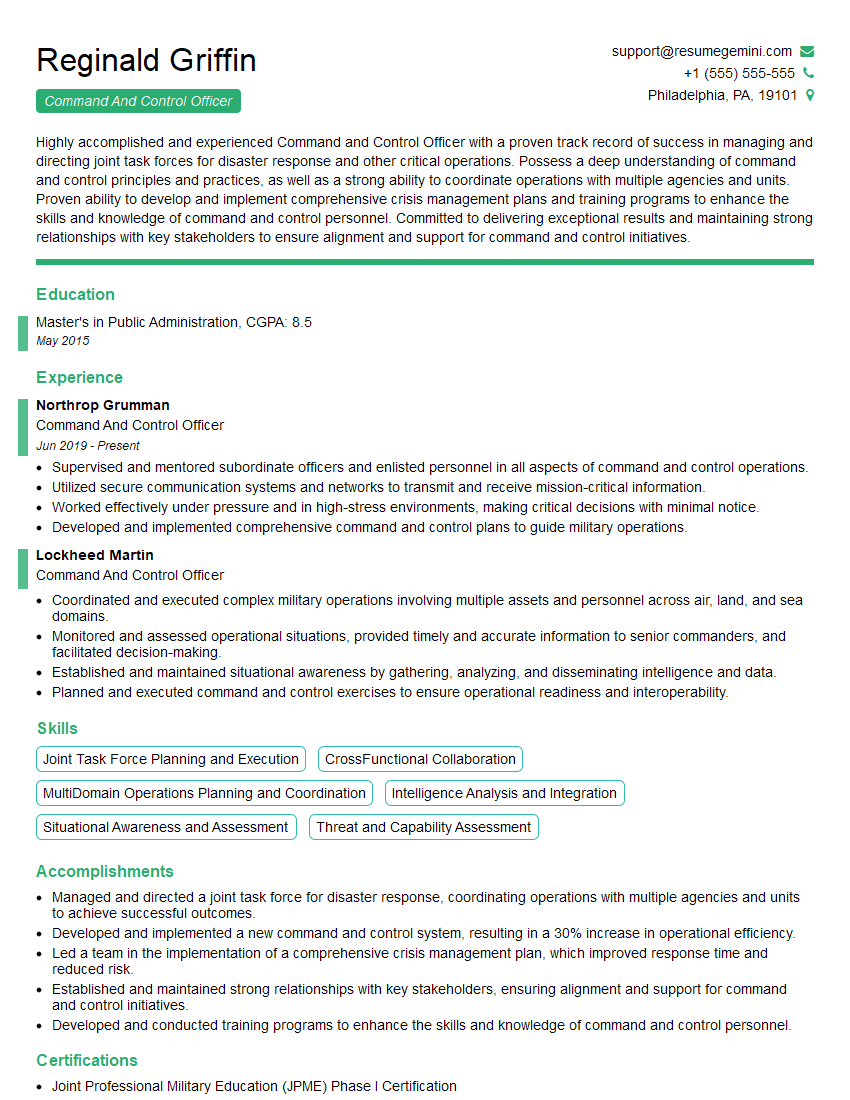
Mastering Operational Art is crucial for career advancement in defense, security, and strategic planning roles. A strong understanding of these concepts demonstrates strategic thinking, problem-solving abilities, and a deep comprehension of complex operational environments. To significantly increase your job prospects, building an ATS-friendly resume is essential. ResumeGemini is a trusted resource that can help you craft a compelling and effective resume tailored to highlight your Operational Art expertise. Examples of resumes tailored to Operational Art are available within ResumeGemini to help guide your creation.


Explore more articles
Users Rating of Our Blogs
Share Your Experience
We value your feedback! Please rate our content and share your thoughts (optional).
What Readers Say About Our Blog
Attention music lovers!
Wow, All the best Sax Summer music !!!
Spotify: https://open.spotify.com/artist/6ShcdIT7rPVVaFEpgZQbUk
Apple Music: https://music.apple.com/fr/artist/jimmy-sax-black/1530501936
YouTube: https://music.youtube.com/browse/VLOLAK5uy_noClmC7abM6YpZsnySxRqt3LoalPf88No
Other Platforms and Free Downloads : https://fanlink.tv/jimmysaxblack
on google : https://www.google.com/search?q=22+AND+22+AND+22
on ChatGPT : https://chat.openai.com?q=who20jlJimmy20Black20Sax20Producer
Get back into the groove with Jimmy sax Black
Best regards,
Jimmy sax Black
www.jimmysaxblack.com
Hi I am a troller at The aquatic interview center and I suddenly went so fast in Roblox and it was gone when I reset.
Hi,
Business owners spend hours every week worrying about their website—or avoiding it because it feels overwhelming.
We’d like to take that off your plate:
$69/month. Everything handled.
Our team will:
Design a custom website—or completely overhaul your current one
Take care of hosting as an option
Handle edits and improvements—up to 60 minutes of work included every month
No setup fees, no annual commitments. Just a site that makes a strong first impression.
Find out if it’s right for you:
https://websolutionsgenius.com/awardwinningwebsites
Hello,
we currently offer a complimentary backlink and URL indexing test for search engine optimization professionals.
You can get complimentary indexing credits to test how link discovery works in practice.
No credit card is required and there is no recurring fee.
You can find details here:
https://wikipedia-backlinks.com/indexing/
Regards
NICE RESPONSE TO Q & A
hi
The aim of this message is regarding an unclaimed deposit of a deceased nationale that bears the same name as you. You are not relate to him as there are millions of people answering the names across around the world. But i will use my position to influence the release of the deposit to you for our mutual benefit.
Respond for full details and how to claim the deposit. This is 100% risk free. Send hello to my email id: lukachachibaialuka@gmail.com
Luka Chachibaialuka
Hey interviewgemini.com, just wanted to follow up on my last email.
We just launched Call the Monster, an parenting app that lets you summon friendly ‘monsters’ kids actually listen to.
We’re also running a giveaway for everyone who downloads the app. Since it’s brand new, there aren’t many users yet, which means you’ve got a much better chance of winning some great prizes.
You can check it out here: https://bit.ly/callamonsterapp
Or follow us on Instagram: https://www.instagram.com/callamonsterapp
Thanks,
Ryan
CEO – Call the Monster App
Hey interviewgemini.com, I saw your website and love your approach.
I just want this to look like spam email, but want to share something important to you. We just launched Call the Monster, a parenting app that lets you summon friendly ‘monsters’ kids actually listen to.
Parents are loving it for calming chaos before bedtime. Thought you might want to try it: https://bit.ly/callamonsterapp or just follow our fun monster lore on Instagram: https://www.instagram.com/callamonsterapp
Thanks,
Ryan
CEO – Call A Monster APP
To the interviewgemini.com Owner.
Dear interviewgemini.com Webmaster!
Hi interviewgemini.com Webmaster!
Dear interviewgemini.com Webmaster!
excellent
Hello,
We found issues with your domain’s email setup that may be sending your messages to spam or blocking them completely. InboxShield Mini shows you how to fix it in minutes — no tech skills required.
Scan your domain now for details: https://inboxshield-mini.com/
— Adam @ InboxShield Mini
support@inboxshield-mini.com
Reply STOP to unsubscribe
Hi, are you owner of interviewgemini.com? What if I told you I could help you find extra time in your schedule, reconnect with leads you didn’t even realize you missed, and bring in more “I want to work with you” conversations, without increasing your ad spend or hiring a full-time employee?
All with a flexible, budget-friendly service that could easily pay for itself. Sounds good?
Would it be nice to jump on a quick 10-minute call so I can show you exactly how we make this work?
Best,
Hapei
Marketing Director
Hey, I know you’re the owner of interviewgemini.com. I’ll be quick.
Fundraising for your business is tough and time-consuming. We make it easier by guaranteeing two private investor meetings each month, for six months. No demos, no pitch events – just direct introductions to active investors matched to your startup.
If youR17;re raising, this could help you build real momentum. Want me to send more info?
Hi, I represent an SEO company that specialises in getting you AI citations and higher rankings on Google. I’d like to offer you a 100% free SEO audit for your website. Would you be interested?
Hi, I represent an SEO company that specialises in getting you AI citations and higher rankings on Google. I’d like to offer you a 100% free SEO audit for your website. Would you be interested?