Preparation is the key to success in any interview. In this post, we’ll explore crucial Organ Recovery interview questions and equip you with strategies to craft impactful answers. Whether you’re a beginner or a pro, these tips will elevate your preparation.
Questions Asked in Organ Recovery Interview
Q 1. Describe the process of organ preservation from retrieval to transplantation.
Organ preservation begins the moment organ retrieval starts. Think of it like a delicate relay race where the baton (the organ) needs to be passed flawlessly. First, the organ is carefully excised from the donor, minimizing trauma and preserving its blood supply as much as possible. This is often done using specialized instruments and techniques designed to avoid damage. Immediately following retrieval, the organ is flushed with a preservation solution, a specially formulated fluid designed to slow down cellular metabolism, reduce the risk of injury and maintain organ viability. This solution is typically cold and contains nutrients and protective agents. The organ is then packed in a sterile container and transported to the recipient hospital, usually via specialized transport teams equipped with temperature-controlled containers to maintain the optimal preservation temperature, typically around 4°C. Throughout this process, continuous monitoring is crucial – assessing temperature, solution pressure, and the overall condition of the organ.
Upon arrival at the recipient hospital, the organ is assessed again to ensure its suitability for transplantation. If all is well, the preservation solution may be flushed out, and the organ is prepared for implantation by the surgical team. The entire process, from retrieval to implantation, needs to be meticulously timed to minimize the ischemic time – the time the organ is without blood supply, which is critically important to the organ’s viability.
Q 2. Explain the criteria for determining organ suitability for transplantation.
Determining organ suitability is a rigorous process involving multiple factors. Imagine it like a thorough quality check before a high-stakes product launch. We assess the organ’s size and anatomical structure to ensure compatibility with the recipient. We scrutinize the organ’s function, using tests like biopsies to check for damage, inflammation, or infection. Blood tests are also vital, as they reveal information about the donor’s health and the overall organ health. Viral serology is performed to rule out the transmission of infectious diseases like hepatitis or HIV. Lastly, we evaluate the cold ischemic time to gauge the impact of the time spent without blood flow and the extent of cell damage. Only when all these criteria are met and carefully reviewed by a team of specialists – surgeons, pathologists, and transplant coordinators – is the organ deemed suitable for transplantation.
Q 3. What are the common challenges encountered during organ recovery?
Organ recovery is not without its challenges. Think of it as navigating a complex, high-stakes operation that requires careful planning and flawless execution. One common challenge is the limited availability of suitable organs. The demand far exceeds the supply, making efficient organ retrieval and preservation crucial. Another significant challenge is the inherent risk of complications during the retrieval process itself. For example, accidental damage to adjacent blood vessels or structures during organ excision can compromise the organ’s viability. Additionally, unexpected difficulties in identifying or accessing the organ within the donor can delay the procedure and increase ischemic time. This is why meticulous planning and a highly skilled surgical team are absolutely essential. Beyond this, technical difficulties with equipment and unexpected anatomical variations can also add to the difficulties encountered.
Q 4. How do you manage ischemic time during organ retrieval?
Managing ischemic time is paramount to organ viability; it’s the key to a successful transplant. Minimizing this time is a top priority and requires a highly coordinated and efficient team effort. It starts with efficient surgical techniques during organ retrieval, minimizing the time it takes to remove the organ. This is often rehearsed, with many surgeons participating in simulation drills before live cases. Rapid and efficient processing, including flushing with preservation solution, is also essential, and the use of portable preservation devices, where available, has enabled better management. Efficient transportation, utilizing specialized transport teams with temperature-controlled vehicles, is crucial. In some cases, the use of normothermic machine perfusion – maintaining the organ at normal body temperature with oxygenated blood substitute – can extend the acceptable ischemic time, but this is still an evolving area of research. Every minute counts.
Q 5. Describe your experience with different organ preservation solutions.
My experience encompasses a variety of organ preservation solutions, each with its unique properties and applications. University of Wisconsin (UW) solution is a widely used cold storage solution that is excellent for the preservation of many types of organs. It helps to maintain cell viability during cold storage, but even so, the ischemic time is still critically important. Other solutions focus on reducing cellular damage through mechanisms like reducing calcium influx, preserving mitochondrial function and reducing oxidative stress. In recent years, there has been significant development in machine perfusion techniques, using oxygenated perfusates to maintain organ viability at normothermic temperatures – offering potential for extending the preservation time for certain organs. The choice of preservation solution depends on various factors like the type of organ, the anticipated ischemic time, and the recipient’s circumstances.
Q 6. Explain the importance of sterile technique in organ recovery.
Sterile technique is absolutely non-negotiable in organ recovery. Imagine the consequences of introducing bacteria into a donor organ – it’s simply catastrophic. Maintaining sterility prevents infection, which could severely damage the organ and render it unsuitable for transplantation. Every step, from the preparation of the surgical field to the handling of the organ and the packaging for transport, follows strict aseptic protocols. We use sterile gloves, gowns, drapes, and instruments. The operating room environment is meticulously maintained to prevent contamination. Any deviation from these rigorous protocols increases the risk of infection and could lead to transplant failure, or worse, life-threatening complications in the recipient.
Q 7. How do you handle complications during organ retrieval?
Complications during organ retrieval require immediate and decisive action. Think of it as a dynamic situation that demands adaptability and expertise. If there is bleeding, for example, we employ techniques to control it – often requiring the use of advanced hemostatic agents or surgical techniques. If there’s unexpected anatomical variation or damage to the organ, we may need to adjust our retrieval strategy and may even decide that the organ is not suitable. We rely on our team’s expertise, communicate promptly and openly and follow established protocols to address various issues which can arise. These protocols usually include rapid assessment, implementation of corrective measures, and reassessment of the organ’s suitability. Documentation of the entire procedure is critically important to ensure transparency and to aid in future cases.
Q 8. What is your understanding of the ethical considerations in organ donation and recovery?
Ethical considerations in organ donation and recovery are paramount. They revolve around ensuring the process respects the autonomy of the donor (or their family’s wishes if the donor is deceased), maintains fairness and equity in access to organs, and guarantees the safety and well-being of both the donor and recipient. This involves meticulous adherence to informed consent procedures, strict regulations against coercion or undue influence, and transparent allocation systems that prioritize medical need and suitability.
- Respect for Autonomy: We prioritize obtaining truly informed consent from donors or their families, ensuring they fully understand the implications of donation, including potential risks and benefits. This involves clear, compassionate communication and ample time for reflection.
- Justice and Equity: Organ allocation must be fair, avoiding discrimination based on factors unrelated to medical need. National and international guidelines strive to create equitable access to life-saving transplants.
- Beneficence and Non-Maleficence: Our actions must aim to maximize benefit and minimize harm to both donors and recipients. This necessitates rigorous quality control in organ retrieval, preservation, and transplantation.
For example, a case involving a potential donor with a history of substance abuse requires careful consideration of potential risks to the recipient. We’d involve a multidisciplinary ethics committee to guide decision-making, ensuring adherence to the highest ethical standards.
Q 9. Describe your experience with different types of organ retrieval procedures.
My experience encompasses various organ retrieval procedures, including both abdominal and thoracic procedures. Abdominal procedures typically involve the retrieval of organs like kidneys, liver, pancreas, and intestines. Thoracic procedures focus on heart and lung retrieval. Each procedure requires a highly specialized surgical team and meticulous attention to detail to minimize injury and maximize organ viability.
- Kidney Retrieval: This involves a minimally invasive laparoscopic approach whenever possible, reducing trauma to the donor. The kidneys are carefully dissected and removed, preserving their vascular supply.
- Liver Retrieval: This procedure is more complex and often requires significant surgical skill, as the liver’s intricate vascular network needs careful management. The liver is often divided into segments for transplantation into multiple recipients.
- Heart and Lung Retrieval: These are complex and time-sensitive procedures, requiring a high level of precision to ensure the integrity of these delicate organs.
Throughout every procedure, strict sterile techniques and continuous monitoring of organ perfusion are crucial to ensuring optimal organ quality.
Q 10. How do you ensure the quality and viability of the recovered organ?
Ensuring organ quality and viability is of utmost importance. This begins with careful assessment of the donor’s medical history and physiological status before organ retrieval. During retrieval, meticulous surgical technique is crucial to minimize ischemic (lack of blood flow) injury. Post-retrieval, preservation techniques play a vital role.
- Careful Donor Selection: Rigorous screening is performed to assess donor suitability, considering factors like age, medical history, and cause of death.
- Minimizing Ischemia Time: This is critical. Rapid retrieval and efficient preservation techniques are used to minimize the time organs are without oxygenated blood flow, reducing damage.
- Organ Preservation Solutions: We use specialized cold storage solutions (ice-slurry) or machine perfusion techniques (discussed further below) to maintain organ integrity during transport.
- Continuous Monitoring: Throughout the entire process, organ function is closely monitored to ensure its suitability for transplantation.
For instance, a liver showing signs of significant ischemia during retrieval might be deemed unsuitable for transplantation, regardless of its initial assessment.
Q 11. Explain the role of perfusion in organ preservation.
Perfusion, in the context of organ preservation, refers to the process of supplying an organ with oxygenated blood or a perfusion solution to maintain its viability. It’s crucial because it helps maintain cellular function and prevents damage during the time between retrieval and transplantation.
- Normothermic Machine Perfusion (NMP): This advanced technique involves maintaining the organ at near-body temperature and perfusing it with a solution that mimics the body’s physiological environment. This allows for improved organ function and metabolic activity compared to cold storage.
- Hypothermic Machine Perfusion (HMP): This technique involves perfusing the organ at a lower temperature, but still maintains better organ function than cold storage alone.
The goal is to extend the preservation time and improve the outcome of the transplant by minimizing ischemia-reperfusion injury, which occurs when blood flow is restored to the organ after a period of ischemia.
Q 12. How do you communicate with the donor family during the organ recovery process?
Communicating with the donor family is a profoundly important yet sensitive aspect of the process. We approach these conversations with utmost empathy and respect, acknowledging their grief and appreciating their generous act of considering organ donation.
- Empathetic Approach: We emphasize listening to the family’s concerns, providing accurate information about the donation process, and answering their questions with honesty and sensitivity.
- Respect for Wishes: We prioritize respecting the donor’s wishes, if known, and the family’s decisions regarding donation.
- Clear Communication: We provide clear and accessible information about the medical criteria for donation, the potential recipients, and the organ transplantation process.
- Ongoing Support: We offer ongoing support to the family, both during and after the donation process, acknowledging their profound loss and the extraordinary act of gift they are enabling.
Often, these conversations are facilitated by trained professionals with specialized skills in grief counseling and bereavement support.
Q 13. Describe your experience with cold storage versus machine perfusion.
Both cold storage and machine perfusion are crucial organ preservation methods, each with its own strengths and limitations.
- Cold Storage: This traditional method involves immersing the organ in a cold preservation solution (typically ice-slurry) to slow down metabolic processes. It is simpler and more widely available but has limitations in preservation time and potential for organ damage.
- Machine Perfusion: This more advanced method uses a machine to perfuse the organ with a specialized solution, maintaining physiological parameters. It can significantly extend preservation time and improve organ viability. This is particularly beneficial for organs that are less tolerant of cold storage such as the heart and lungs.
The choice between cold storage and machine perfusion depends on several factors, including the type of organ, the availability of resources, and the distance to the recipient hospital. While cold storage remains a vital tool, machine perfusion is increasingly used for its ability to improve transplant outcomes by preserving organ quality more effectively.
Q 14. How do you manage logistical challenges associated with organ transport?
Logistical challenges in organ transport are significant, demanding precise coordination and efficiency to ensure the organ arrives at the recipient hospital in optimal condition within the critical time window.
- Specialized Transport Teams: We utilize dedicated transport teams trained in organ preservation and handling. These teams are equipped with specialized containers and monitoring equipment.
- Time-Sensitive Transport: Organ transport is a race against time, requiring efficient routes, rapid transportation (air or ground ambulance), and effective communication with recipient hospitals.
- Chain of Custody: Strict chain-of-custody procedures are followed to ensure the organ’s integrity and traceability throughout the transport process.
- Real-Time Monitoring: Continuous monitoring of the organ’s temperature and other parameters is crucial to ensure quality is maintained.
For example, a cross-country organ transport might involve coordination with multiple air traffic control agencies, ground transport teams, and recipient hospital personnel to ensure a smooth and timely delivery. Careful planning and meticulous execution are paramount to minimizing delays and maintaining the viability of the organ.
Q 15. What are the key indicators of organ viability during the recovery process?
Assessing organ viability during recovery is crucial for successful transplantation. We use a multifaceted approach, combining visual inspection with sophisticated physiological tests. Key indicators include:
- Visual Inspection: We carefully examine the organ for any signs of injury, discoloration, or ischemia (lack of blood supply). For example, a liver showing significant pallor or bruising might be deemed unsuitable.
- Cold Ischemia Time (CIT): This is the time elapsed between organ removal and reperfusion (restoration of blood flow). Minimizing CIT is paramount, as prolonged ischemia causes cellular damage. We meticulously track CIT from the moment of organ procurement to the moment of implantation.
- Laboratory Tests: Blood samples from the organ are analyzed for various parameters like lactate levels (a marker of cellular damage), potassium levels (high levels indicate cell death), and enzyme levels (such as liver enzymes for liver grafts). Abnormally high levels indicate compromised organ viability.
- Functional Assessment: Depending on the organ, we might conduct specialized functional tests. For example, a heart might undergo assessment of its contractility and rhythm before transplantation.
- Histological Evaluation: In some cases, a small tissue sample (biopsy) is examined under a microscope to evaluate the extent of cellular damage and inflammation. This provides a more in-depth assessment of organ health.
The combination of these methods gives us a comprehensive picture of the organ’s health and suitability for transplantation.
Career Expert Tips:
- Ace those interviews! Prepare effectively by reviewing the Top 50 Most Common Interview Questions on ResumeGemini.
- Navigate your job search with confidence! Explore a wide range of Career Tips on ResumeGemini. Learn about common challenges and recommendations to overcome them.
- Craft the perfect resume! Master the Art of Resume Writing with ResumeGemini’s guide. Showcase your unique qualifications and achievements effectively.
- Don’t miss out on holiday savings! Build your dream resume with ResumeGemini’s ATS optimized templates.
Q 16. Explain the importance of accurate documentation in organ recovery.
Accurate documentation is absolutely non-negotiable in organ recovery. It forms the cornerstone of the entire transplantation process, ensuring patient safety, regulatory compliance, and legal protection.
- Patient Information: Detailed records of the donor’s medical history, including any infections or medications, are essential. This information is crucial for recipient compatibility and risk assessment.
- Organ Procurement Details: This includes the precise time of organ extraction, the preservation methods used, and any observations made during the procurement process. For instance, recording the exact time an organ is placed in a preservation solution is critical for CIT calculations.
- Organ Transportation & Storage: The entire chain of custody must be meticulously documented, from organ retrieval to transport to the recipient hospital. This ensures the organ’s integrity and traceability.
- Laboratory Results: All laboratory results, including blood tests, biopsy findings, and any other relevant data, must be accurately documented and attached to the organ’s record.
- Post-transplant Follow-up: Post-transplant data, such as recipient’s response to the organ and any complications, is critical for future research and quality improvement.
Imagine a scenario where a crucial detail regarding a donor’s medication is missed. This could have disastrous consequences for the recipient. Meticulous documentation prevents such errors and safeguards the entire transplantation process.
Q 17. How do you collaborate with the surgical team during the recovery procedure?
Collaboration with the surgical team is vital. We work as an integrated unit, with clearly defined roles and responsibilities. Our interaction starts even before the donor procedure.
- Pre-operative Planning: We discuss the donor’s condition, potential organ viability, and the surgical approach with the surgical team. This involves careful planning of the organ retrieval process to minimize ischemia time.
- Intra-operative Coordination: During the donor procedure, we work side-by-side with the surgical team, ensuring the organs are carefully removed, handled, and preserved according to established protocols. Constant communication prevents delays and ensures the organs are protected from damage.
- Organ Assessment: We perform the organ viability assessment under the watchful eye of the surgical team, sharing our findings and discussing any potential issues.
- Post-operative Debriefing: After the organ retrieval, we debrief with the surgical team to review the procedure, document findings, and plan for organ transport.
Effective communication and mutual respect are essential for a smooth and successful organ recovery process. A breakdown in communication can lead to delays, organ damage, and even loss of the organ entirely.
Q 18. Describe your experience working under pressure in a time-sensitive situation.
Organ recovery is inherently time-sensitive; every minute counts. I’ve encountered numerous situations demanding immediate action under pressure. One instance involved a donor with a complex medical history. The retrieval process had to be accelerated to minimize ischemia time.
Our team efficiently coordinated all aspects, from the surgical procedure to the organ preservation and transport. Clear communication, precise execution of protocols, and a focus on the task at hand allowed us to overcome challenges and successfully procure the organs within the critical timeframe. We practiced effective teamwork, delegating tasks and ensuring that each step was completed smoothly, without sacrificing safety or efficiency.
These high-pressure scenarios highlight the importance of training, teamwork, and adherence to established protocols. The feeling of accomplishment after successfully navigating such situations is incredibly rewarding, knowing we gave someone a second chance at life.
Q 19. How do you handle unexpected events during organ recovery?
Unexpected events are a reality in organ recovery. Our protocols include contingency plans for various scenarios.
- Unexpected Damage: If the organ sustains unexpected damage during retrieval, we assess the extent of the injury. Minor damage might be manageable, while extensive damage necessitates rejection of the organ for transplantation.
- Technical Difficulties: If we encounter technical difficulties during organ preservation or transport, we have backup plans in place. This might involve switching to an alternative preservation technique or using a different transport method.
- Unexpected Donor Condition: A sudden change in the donor’s condition can impact organ viability. In such cases, we reassess the organ using additional tests and make a decision based on the latest information.
In all cases, our priority is maintaining sterility, preventing further damage, and documenting all events thoroughly. Regular training and simulation exercises help us prepare for and effectively manage such unforeseen events.
Q 20. What measures do you take to prevent contamination during organ recovery?
Preventing contamination is crucial to ensure the organ’s safety and the recipient’s well-being. We adhere to strict sterile techniques throughout the entire process:
- Surgical Environment: The organ retrieval procedure takes place in a sterile operating room, following strict infection control protocols. All surgical personnel wear sterile gowns, gloves, and masks.
- Sterile Instruments & Supplies: All instruments and supplies used during the recovery process are sterile. We use aseptic techniques to prevent contamination.
- Organ Preservation Solution: The organ is immediately placed in a sterile preservation solution designed to maintain its viability and prevent bacterial growth.
- Transport Container: The transport container is meticulously cleaned and sterilized before use. This ensures the organ remains protected from contamination during transportation.
- Environmental Controls: The environment where the organ is handled and stored is carefully controlled to minimize the risk of bacterial or fungal contamination.
A breach in these protocols can have dire consequences, leading to infections, organ rejection, and even death of the recipient. Therefore, meticulous adherence to sterile techniques is paramount.
Q 21. Explain your understanding of regulatory compliance in organ transplantation.
Regulatory compliance is essential in organ transplantation. It ensures ethical practices, patient safety, and the fair allocation of organs. My understanding includes:
- Organ Procurement Organizations (OPOs): I’m familiar with the regulations governing OPOs, including their responsibilities in donor identification, consent acquisition, and organ recovery.
- The United Network for Organ Sharing (UNOS): I understand UNOS’s role in organ allocation and the criteria used to prioritize recipients. This includes understanding the ethical considerations surrounding organ allocation.
- Tissue and Organ Transplantation Laws: I’m knowledgeable about federal and state laws regarding organ donation, transplantation, and the ethical handling of human tissue. This involves understanding the legal requirements for donor consent and organ allocation.
- Infection Control Regulations: I’m familiar with all infection control guidelines to ensure that organs are handled safely to minimize the risk of transmission of infectious diseases.
- Data Privacy and Confidentiality: I understand the importance of maintaining patient confidentiality and complying with data privacy regulations.
Non-compliance can result in severe penalties, including hefty fines and even legal action. Adherence to regulations is not merely a formality; it’s a commitment to ensuring ethical and safe practices in organ transplantation.
Q 22. How do you ensure the safety of the surgical team during organ recovery?
Ensuring the safety of the surgical team during organ recovery is paramount. It involves a multi-layered approach focusing on infection control, sharps safety, and a strict adherence to surgical protocols.
- Universal Precautions: We treat all body fluids as potentially infectious, using appropriate personal protective equipment (PPE) like gowns, gloves, masks, eye protection, and shoe covers throughout the procedure. This minimizes the risk of exposure to bloodborne pathogens or other infectious agents.
- Sharps Safety: Proper handling and disposal of sharps, including needles, scalpels, and other instruments, are critical. Designated sharps containers are readily available, and we meticulously follow safe handling techniques to avoid accidental needlesticks or cuts.
- Strict Aseptic Technique:Maintaining a sterile field is essential. This includes meticulous preparation of the surgical site, using sterile drapes, and employing sterile instruments and supplies. Any breach in sterility is immediately addressed to prevent infection.
- Team Training and Communication: Regular training on infection control, safe surgical practices, and emergency protocols is crucial. Effective communication within the surgical team ensures that everyone is aware of potential hazards and can react swiftly in emergency situations. For example, a designated ‘sharps monitor’ is often appointed to actively oversee and manage sharps during the procedure.
In one instance, we identified a potential improvement in our PPE protocols after an incident where a small amount of splash occurred. We subsequently implemented a new type of splash-resistant gown, significantly enhancing team protection. Safety is never compromised.
Q 23. Describe your familiarity with different types of organ transport containers.
My familiarity with organ transport containers spans various types, each designed to maintain organ viability during transport. The choice of container depends on the organ, the distance of transport, and the specific preservation solution used.
- Simple Insulated Containers: These are basic containers designed to maintain a specific temperature range, often using ice or ice packs. They are suitable for short-distance transport of organs with less stringent temperature requirements.
- Perfusion Systems: More sophisticated systems use a machine to continuously perfuse the organ with a preservation solution, maintaining organ viability for longer periods. These are often used for organs like hearts or livers.
- Hypothermic Storage Containers: These are designed to maintain organs at low temperatures (hypothermia), slowing down metabolic processes and reducing cellular damage. They can include various features like temperature sensors and alarms to ensure optimal conditions.
- Specialized Containers for Specific Organs: Some organs have very specific requirements. For instance, lungs might require a container designed to maintain appropriate pressure and humidity.
Think of it like choosing the right container for a delicate cake; the wrong container could ruin it. Similarly, the wrong organ transport system can severely compromise the organ’s viability for transplantation.
Q 24. How do you troubleshoot equipment malfunctions during organ retrieval?
Troubleshooting equipment malfunctions during organ retrieval requires a systematic approach combining quick thinking and technical expertise. The first step is always to ensure the safety of the patient and the team.
- Identify the Malfunction: The first step is precisely identifying the malfunction – is it a power issue, a malfunctioning component, or a software glitch?
- Safety First: If the malfunction poses an immediate safety risk, immediately stop the procedure and address the issue according to established protocols. This could involve switching to a backup system or calling for assistance.
- Check Basic Issues: Begin troubleshooting with basic checks: Is the equipment properly plugged in? Are there any loose connections? Are there any obvious signs of damage?
- Consult Manuals and Support: If basic checks fail, consult the equipment’s operating manual or contact technical support for guidance.
- Backup Plans: We have well-defined backup plans and alternative equipment readily available to minimize downtime in critical situations.
- Documentation: Thorough documentation of the malfunction, troubleshooting steps, and any corrective actions taken is essential for future reference and quality improvement.
For example, during a liver retrieval, the perfusion system experienced a sudden power fluctuation. By quickly switching to a backup system and carefully checking the power supply, we were able to prevent any major disruption to the procedure. This demonstrates the importance of redundancy and preparedness.
Q 25. What are the different methods for assessing organ function before transplantation?
Assessing organ function before transplantation is critical to determining suitability for the recipient. We utilize a variety of methods, integrating both macroscopic and microscopic examinations along with sophisticated testing.
- Macroscopic Examination: A visual inspection of the organ’s size, color, texture, and the presence of any abnormalities or injuries.
- Microscopic Examination (Histology): Tissue samples are analyzed under a microscope to evaluate cellular structure and identify potential damage.
- Cold Ischemia Time: This is the time elapsed between organ removal and reperfusion (restoration of blood flow). Minimizing this time is crucial to maintain organ viability.
- Functional Tests: Various tests depending on the organ are used, such as assessing the heart’s contractility, lung ventilation, liver enzyme levels, or kidney function through urine output.
- Imaging: Techniques like ultrasound, CT scans, or MRI can assess the organ’s structure and blood flow.
For example, during a kidney assessment, we evaluate urine output, creatinine levels, and perform a biopsy to assess the overall health of the kidney tissue. The information from all these tests contribute to a comprehensive evaluation of organ quality.
Q 26. Explain your experience with post-recovery organ assessment and documentation.
Post-recovery organ assessment and documentation are crucial for ensuring the quality and safety of the organ for transplantation. It involves a meticulous process of examining, documenting, and preserving the organ’s condition.
- Detailed Visual Inspection: A thorough examination of the organ’s appearance, noting any discoloration, tears, or other abnormalities.
- Measurement of Key Parameters: Recording vital parameters like organ size, weight, and temperature.
- Documentation of Preservation Solution: Precise recording of the type and amount of preservation solution used.
- Detailed Assessment of Perfusion: If perfusion was utilized, documenting perfusion pressure, flow rate, and solution temperature.
- Sampling and Analysis: Obtaining tissue samples for later analysis, such as cold storage testing and microbiological evaluation.
- Meticulous Documentation: All these observations and measurements are meticulously documented in a standardized format that follows regulatory requirements and allows the recipient team to assess the organ’s suitability.
Precise documentation is critical. For instance, a slight discrepancy in the recorded preservation solution could influence transplantation success. Accuracy here is paramount.
Q 27. How do you maintain a sterile environment during the transport of the organ?
Maintaining a sterile environment during organ transport is critical to preventing contamination and preserving the organ’s viability. The process involves meticulous attention to detail and the use of specialized equipment and techniques.
- Sterile Packaging: The organ is placed in a sterile container specifically designed for organ transport. This typically involves multiple layers of sterile materials such as surgical drapes and specialized bags that offer a barrier against contamination.
- Sterile Gloves and Instruments: All personnel handling the organ wear sterile gloves and use sterile instruments to prevent any contamination.
- Controlled Environment: Organ transport vehicles maintain a controlled environment of temperature and humidity to prevent microbial growth and organ damage.
- Appropriate Transportation: The transport route is meticulously planned to minimize travel time and potential environmental exposure.
- Regular Monitoring: During transport, critical parameters such as temperature and pressure are monitored to ensure that the organ remains in optimal condition.
Imagine transporting a precious artifact – the same care and precision are required for organ transport. Any compromise in sterility can lead to organ rejection or severe infection in the recipient.
Q 28. Describe your understanding of the impact of organ shortage on transplantation.
The organ shortage significantly impacts transplantation, creating a critical gap between the number of patients in need and the available organs. This shortage leads to several critical consequences:
- Increased Waiting Lists: Thousands of patients worldwide are on waiting lists for life-saving organ transplants. The lengthy waiting times can severely impact the health and survival chances of these patients.
- Increased Mortality Rates: Many patients die before receiving a transplant due to the prolonged wait, disease progression, or complications associated with prolonged illness.
- Limited Access to Transplantation: The organ shortage creates inequities in access to transplantation, with some populations having more difficulty than others in receiving a life-saving organ.
- Ethical Dilemmas: The scarcity of organs forces tough ethical decisions regarding organ allocation and prioritization among patients.
- Increased Research and Development: The organ shortage drives the need for innovation in areas such as organ preservation, xenotransplantation (using animal organs), and tissue engineering.
This critical situation underscores the importance of initiatives to increase organ donation, improve organ preservation techniques, and develop alternative transplantation strategies. Every life saved through transplantation is a testament to the success of efforts to overcome this challenge.
Key Topics to Learn for Organ Recovery Interview
- Organ Procurement Process: Understanding the entire process from organ identification to preservation, including legal and ethical considerations.
- Surgical Techniques & Procedures: Familiarity with different surgical approaches for organ retrieval and the associated challenges and best practices.
- Organ Preservation & Transportation: Knowledge of techniques used to maintain organ viability during transportation, including hypothermic preservation and perfusion.
- Donor Management: Understanding the medical and psychological aspects of donor management, including family communication and consent processes.
- Recipient Selection & Allocation: Knowledge of organ allocation systems, criteria for recipient selection, and ethical implications.
- Quality Control & Safety Measures: Understanding the importance of maintaining high standards of quality control and implementing robust safety measures throughout the process.
- Troubleshooting & Problem-Solving: Developing critical thinking skills to anticipate and resolve challenges that may arise during organ recovery procedures.
- Teamwork & Collaboration: Recognizing the importance of effective communication and collaboration within a multidisciplinary team.
- Regulatory Compliance & Legal Frameworks: Understanding relevant regulations and legal frameworks governing organ donation and transplantation.
- Technological Advancements: Awareness of emerging technologies and their potential applications in organ recovery and transplantation.
Next Steps
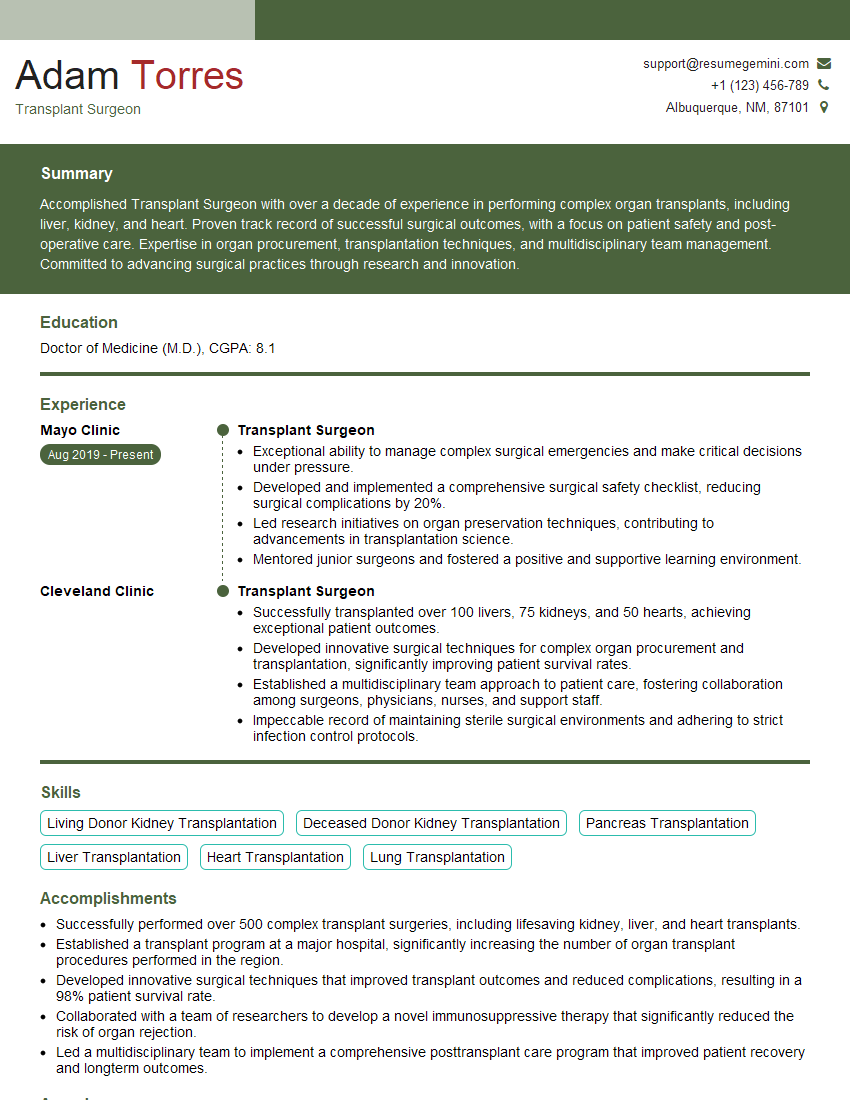
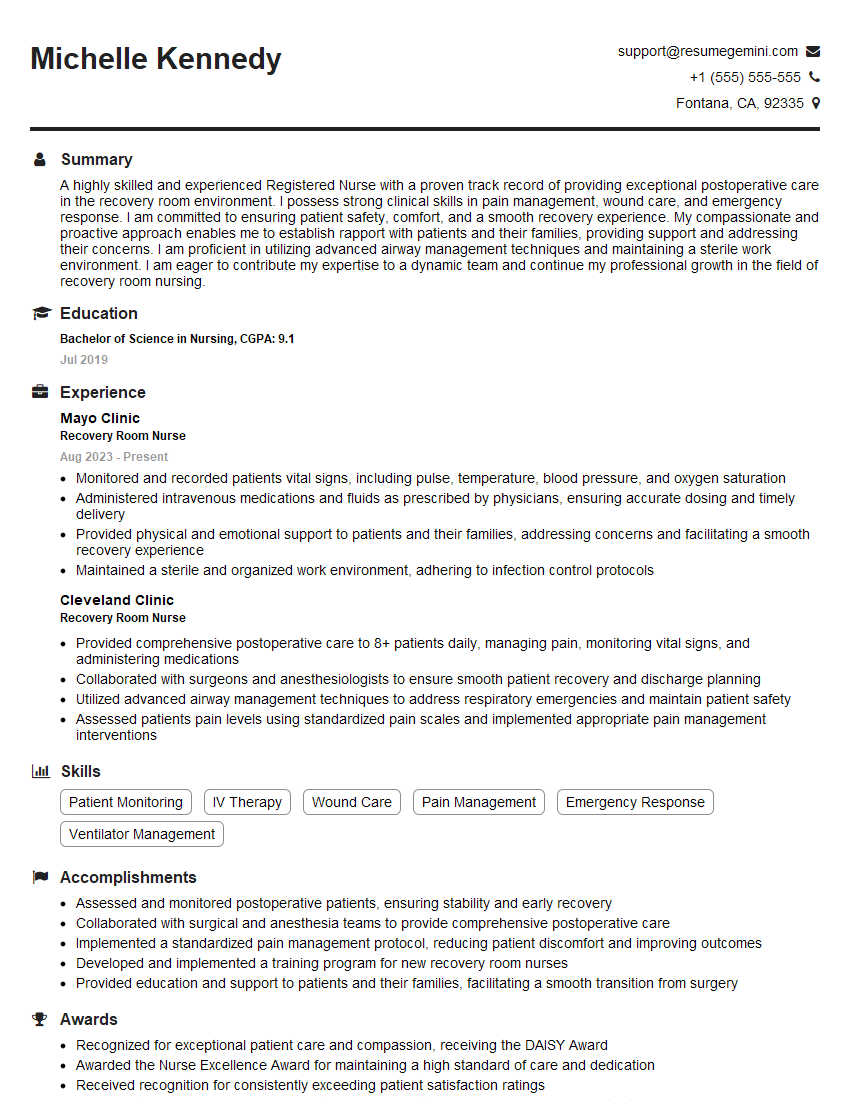
Mastering the complexities of organ recovery positions you for a rewarding and impactful career in a field that saves lives. To maximize your job prospects, building an ATS-friendly resume is crucial. ResumeGemini is a trusted resource that can help you craft a compelling and effective resume that highlights your skills and experience in this specialized field. We provide examples of resumes tailored to the Organ Recovery field to help guide you. Invest time in creating a strong resume – it’s your first impression on potential employers.
Explore more articles
Users Rating of Our Blogs
Share Your Experience
We value your feedback! Please rate our content and share your thoughts (optional).
What Readers Say About Our Blog
Attention music lovers!
Wow, All the best Sax Summer music !!!
Spotify: https://open.spotify.com/artist/6ShcdIT7rPVVaFEpgZQbUk
Apple Music: https://music.apple.com/fr/artist/jimmy-sax-black/1530501936
YouTube: https://music.youtube.com/browse/VLOLAK5uy_noClmC7abM6YpZsnySxRqt3LoalPf88No
Other Platforms and Free Downloads : https://fanlink.tv/jimmysaxblack
on google : https://www.google.com/search?q=22+AND+22+AND+22
on ChatGPT : https://chat.openai.com?q=who20jlJimmy20Black20Sax20Producer
Get back into the groove with Jimmy sax Black
Best regards,
Jimmy sax Black
www.jimmysaxblack.com
Hi I am a troller at The aquatic interview center and I suddenly went so fast in Roblox and it was gone when I reset.
Hi,
Business owners spend hours every week worrying about their website—or avoiding it because it feels overwhelming.
We’d like to take that off your plate:
$69/month. Everything handled.
Our team will:
Design a custom website—or completely overhaul your current one
Take care of hosting as an option
Handle edits and improvements—up to 60 minutes of work included every month
No setup fees, no annual commitments. Just a site that makes a strong first impression.
Find out if it’s right for you:
https://websolutionsgenius.com/awardwinningwebsites
Hello,
we currently offer a complimentary backlink and URL indexing test for search engine optimization professionals.
You can get complimentary indexing credits to test how link discovery works in practice.
No credit card is required and there is no recurring fee.
You can find details here:
https://wikipedia-backlinks.com/indexing/
Regards
NICE RESPONSE TO Q & A
hi
The aim of this message is regarding an unclaimed deposit of a deceased nationale that bears the same name as you. You are not relate to him as there are millions of people answering the names across around the world. But i will use my position to influence the release of the deposit to you for our mutual benefit.
Respond for full details and how to claim the deposit. This is 100% risk free. Send hello to my email id: lukachachibaialuka@gmail.com
Luka Chachibaialuka
Hey interviewgemini.com, just wanted to follow up on my last email.
We just launched Call the Monster, an parenting app that lets you summon friendly ‘monsters’ kids actually listen to.
We’re also running a giveaway for everyone who downloads the app. Since it’s brand new, there aren’t many users yet, which means you’ve got a much better chance of winning some great prizes.
You can check it out here: https://bit.ly/callamonsterapp
Or follow us on Instagram: https://www.instagram.com/callamonsterapp
Thanks,
Ryan
CEO – Call the Monster App
Hey interviewgemini.com, I saw your website and love your approach.
I just want this to look like spam email, but want to share something important to you. We just launched Call the Monster, a parenting app that lets you summon friendly ‘monsters’ kids actually listen to.
Parents are loving it for calming chaos before bedtime. Thought you might want to try it: https://bit.ly/callamonsterapp or just follow our fun monster lore on Instagram: https://www.instagram.com/callamonsterapp
Thanks,
Ryan
CEO – Call A Monster APP
To the interviewgemini.com Owner.
Dear interviewgemini.com Webmaster!
Hi interviewgemini.com Webmaster!
Dear interviewgemini.com Webmaster!
excellent
Hello,
We found issues with your domain’s email setup that may be sending your messages to spam or blocking them completely. InboxShield Mini shows you how to fix it in minutes — no tech skills required.
Scan your domain now for details: https://inboxshield-mini.com/
— Adam @ InboxShield Mini
support@inboxshield-mini.com
Reply STOP to unsubscribe
Hi, are you owner of interviewgemini.com? What if I told you I could help you find extra time in your schedule, reconnect with leads you didn’t even realize you missed, and bring in more “I want to work with you” conversations, without increasing your ad spend or hiring a full-time employee?
All with a flexible, budget-friendly service that could easily pay for itself. Sounds good?
Would it be nice to jump on a quick 10-minute call so I can show you exactly how we make this work?
Best,
Hapei
Marketing Director
Hey, I know you’re the owner of interviewgemini.com. I’ll be quick.
Fundraising for your business is tough and time-consuming. We make it easier by guaranteeing two private investor meetings each month, for six months. No demos, no pitch events – just direct introductions to active investors matched to your startup.
If youR17;re raising, this could help you build real momentum. Want me to send more info?
Hi, I represent an SEO company that specialises in getting you AI citations and higher rankings on Google. I’d like to offer you a 100% free SEO audit for your website. Would you be interested?
Hi, I represent an SEO company that specialises in getting you AI citations and higher rankings on Google. I’d like to offer you a 100% free SEO audit for your website. Would you be interested?