Interviews are opportunities to demonstrate your expertise, and this guide is here to help you shine. Explore the essential Packaging and Sealing Techniques interview questions that employers frequently ask, paired with strategies for crafting responses that set you apart from the competition.
Questions Asked in Packaging and Sealing Techniques Interview
Q 1. Explain different types of packaging materials and their suitability for various products.
Packaging materials are chosen based on the product’s characteristics and required protection. The wrong material can lead to product damage, spoilage, or even safety hazards. Let’s explore some common types:
- Paperboard: Cost-effective, readily recyclable, and versatile. Ideal for cartons, boxes, and display packaging for items like cereal or electronics. Its strength varies greatly depending on the grade.
- Corrugated Cardboard: Provides excellent cushioning and protection for fragile items during shipping. Think of your Amazon deliveries! The flutes (the wavy layers) determine the board’s strength and shock absorption properties.
- Plastics (e.g., PET, HDPE, PP): Offer a wide range of properties from rigidity to flexibility. PET is excellent for bottles (think soda), HDPE is common for milk jugs, and PP is used for microwaveable containers. They offer good barrier protection but recycling can be a concern depending on the type and regional infrastructure.
- Flexible Films (e.g., polyethylene, polypropylene): Used for pouches, bags, and wraps. They are lightweight, offer good moisture and oxygen barriers (depending on the type), and are widely used for food, snacks, and personal care products. They are also often laminated to combine properties like strength and barrier protection.
- Glass: Provides excellent barrier protection, is inert to many products, and is easily recyclable. However, it’s heavy, fragile, and can be expensive to transport.
- Metal (e.g., aluminum, tin): Offers strong barrier properties and protection from light and moisture. Commonly used for cans, tins, and specialized containers. Aluminum cans are widely recycled.
The suitability of each material depends heavily on the product’s properties (e.g., perishability, fragility, sensitivity to light and moisture), its shelf life, and distribution requirements. A delicate electronic device needs far more protection than a sturdy plastic toy.
Q 2. Describe various sealing methods (e.g., heat sealing, induction sealing, adhesive sealing).
Sealing methods ensure product integrity and prevent contamination. The best method depends on the packaging material and product characteristics.
- Heat Sealing: Uses heat to melt and fuse thermoplastic materials together. It’s widely used for sealing plastic films and pouches. Think of the seal on your chip bag. The temperature and pressure must be carefully controlled to create a strong, leak-proof seal.
- Induction Sealing: Uses electromagnetic induction to heat a sealing layer within the package, creating a tamper-evident seal. This method is often used on bottles and jars, especially for pharmaceuticals or food items requiring a high level of hygiene. The heated liner creates a very tight, airtight seal.
- Adhesive Sealing: Employs adhesives (hot melt, pressure-sensitive, or water-based) to bond different packaging materials. It’s versatile and can be used for a wide range of packaging types, from cartons and boxes to envelopes. The choice of adhesive depends on the substrate and the required bond strength. This is a very common method for closing cartons and boxes.
Each method has its advantages and disadvantages regarding speed, cost, seal strength, and suitability for various materials. For instance, heat sealing is fast and cost-effective for high-volume applications, while induction sealing provides superior tamper evidence.
Q 3. What are the key considerations for selecting appropriate packaging for a specific product?
Selecting the right packaging is critical for product safety, preservation, and marketing appeal. Several factors must be considered:
- Product Characteristics: Consider the product’s fragility, perishability, size, weight, shape, and chemical properties. A liquid requires different packaging than a solid.
- Environmental Conditions: The package must protect the product from humidity, temperature fluctuations, light exposure, and physical damage during transport and storage. A product shipped overseas needs robust protection.
- Distribution Channels: The packaging must withstand the rigors of the chosen distribution network. Items shipped by air require lighter and more durable packaging than those shipped by truck.
- Regulatory Requirements: Packaging must comply with all relevant regulations regarding food safety, hazardous materials, and labeling. Different regions have varying regulations.
- Consumer Appeal: Packaging should attract consumers and communicate product information effectively. An attractive package can boost sales.
- Cost-Effectiveness: The packaging should be cost-effective while providing adequate protection and functionality. The cost of packaging needs to be balanced against protection and appeal.
A thorough analysis of these factors allows for the selection of optimal packaging that ensures product quality, safety, and marketability.
Q 4. How do you ensure the integrity and safety of sealed packages?
Ensuring the integrity and safety of sealed packages involves various strategies throughout the process:
- Material Selection: Choosing packaging materials with appropriate barrier properties and strength. For example, using a material that is resistant to oxygen for a product prone to oxidation.
- Sealing Process Validation: Verifying that the chosen sealing method and parameters consistently create strong, reliable seals. This often involves testing the seal strength and integrity.
- Tamper Evidence: Incorporating features that clearly indicate whether a package has been opened or tampered with. Induction seals, for example, leave visible evidence of tampering.
- Leak Testing: Employing methods to check for leaks in sealed packages to ensure product safety and shelf life. This could involve pressure testing or dye penetration testing.
- Quality Control Checks: Regularly inspecting packages for defects or irregularities in the sealing process. This can be done both during and after production.
- Traceability: Maintaining records that track the packaging materials, the sealing process, and the distribution of the finished products. This allows for quick identification and recall in case of issues.
By implementing these measures, manufacturers can significantly improve the reliability and safety of their packaging.
Q 5. Explain the importance of barrier properties in packaging.
Barrier properties in packaging refer to the material’s ability to prevent the passage of gases (oxygen, carbon dioxide, nitrogen), moisture, aromas, and light. These properties are critical for maintaining product quality and shelf life.
- Moisture Barrier: Prevents moisture absorption or loss, essential for preserving food and pharmaceuticals. A poor moisture barrier can lead to spoilage or degradation.
- Oxygen Barrier: Keeps oxygen out, preventing oxidation (rancidity in food) and degradation of sensitive products. Many food products require excellent oxygen barriers.
- Aroma Barrier: Prevents the loss of desirable aromas or the uptake of unwanted odors. This is important for perfumes, food, and other aromatic products.
- Light Barrier: Protects light-sensitive products from degradation caused by UV light. Many pharmaceuticals and some food products require protection from light.
Materials with strong barrier properties, such as metallized films, aluminum foil, or certain types of plastic films, are chosen for products that require extended shelf life or are sensitive to environmental factors. The selection of barrier materials is directly linked to product safety and quality. Think of how a bag of coffee needs to keep the aroma in and moisture out.
Q 6. Describe your experience with packaging machinery and equipment.
Throughout my career, I’ve worked extensively with a variety of packaging machinery and equipment, including:
- Form-Fill-Seal (FFS) machines: These automated systems form a pouch from a roll of film, fill it with product, and then seal it. I have experience troubleshooting and maintaining different types of FFS machines for various applications, including food, pharmaceuticals, and consumer goods.
- Cartoning machines: These machines automatically erect, fill, and close cartons. I’ve worked with both horizontal and vertical cartoning machines, optimizing their settings for maximum efficiency and minimal waste.
- Case packers: These machines automatically pack filled cartons into cases for shipping. My experience includes working with robotic case packers and optimizing their performance for various case sizes and product configurations.
- Labeling machines: I’m familiar with various labeling technologies, including pressure-sensitive, glue-applied, and wrap-around labeling. This includes setup, maintenance, and troubleshooting.
- Heat sealing and induction sealing equipment: I have hands-on experience with both types of sealing equipment, including setting up parameters, conducting preventive maintenance, and troubleshooting common issues like inconsistent seals or equipment malfunctions.
My experience extends beyond just operation; I’m also proficient in preventative maintenance, troubleshooting, and performance optimization of this machinery, ensuring efficient and reliable packaging operations.
Q 7. How do you troubleshoot common packaging and sealing issues?
Troubleshooting packaging and sealing issues requires a systematic approach. I typically follow these steps:
- Identify the Problem: Precisely define the issue. Is it a weak seal, incorrect labeling, or a jam in the machine? Gathering data like photos and production records is vital.
- Analyze the Problem: Examine potential causes. Is it a machine malfunction, faulty materials, improper settings, or operator error? Consider the frequency and severity of the issue.
- Isolate the Cause: Systematically test components or variables to pinpoint the root cause. This may involve checking the machine settings, inspecting the packaging materials, or observing the operator’s technique.
- Implement a Solution: Based on the root cause, implement a corrective action. This could involve adjusting machine settings, replacing faulty parts, retraining operators, or improving materials handling.
- Verify the Solution: Monitor the packaging process to ensure that the implemented solution resolves the issue and prevents recurrence. This might involve monitoring production data and conducting quality checks.
For example, if encountering inconsistent heat seals, I would first check the temperature and pressure settings of the heat sealer, then examine the condition of the heating element, and finally, inspect the packaging material for defects. A systematic, data-driven approach is key to efficient troubleshooting.
Q 8. What are the regulations and standards related to packaging and labeling?
Packaging and labeling regulations are crucial for ensuring product safety, consumer information, and fair trade practices. These vary by region and product type but generally cover aspects like material safety (e.g., food-grade materials), labeling accuracy (including ingredients, nutritional information, and warnings), and transportation regulations (e.g., UN hazardous materials classifications).
Major standards organizations like the FDA (Food and Drug Administration) in the US, the EFSA (European Food Safety Authority) in Europe, and ISO (International Organization for Standardization) worldwide publish extensive guidelines. For example, FDA regulations dictate specific labeling requirements for food products, ensuring consumers are informed about potential allergens or nutritional content. Similarly, ISO standards define testing methods for packaging materials’ strength and barrier properties. Non-compliance can lead to significant penalties, product recalls, and reputational damage.
- FDA (US): Sets standards for food packaging safety and labeling.
- EFSA (Europe): Evaluates the safety of food packaging materials.
- ISO (International): Develops international standards for packaging materials and processes.
Q 9. Explain the concept of Modified Atmosphere Packaging (MAP).
Modified Atmosphere Packaging (MAP) is a technique that extends the shelf life of perishable products by altering the gaseous environment within the package. Instead of relying solely on air, MAP uses a controlled mixture of gases – typically nitrogen, carbon dioxide, and oxygen – to inhibit microbial growth and slow down enzymatic reactions that cause spoilage.
For example, high nitrogen levels displace oxygen, preventing aerobic bacteria from thriving. Carbon dioxide can act as a bacteriostatic agent, further inhibiting bacterial growth. Oxygen levels are carefully managed to balance preservation with the product’s need for respiration (some products, like fresh produce, require a small amount of oxygen). The selection of gas mixtures is crucial and depends on the specific product’s characteristics. MAP is widely used for fresh produce, meats, and baked goods. Think of the pre-packaged salad in a plastic container – that’s likely using MAP to maintain freshness.
Q 10. Describe different types of closures and their applications.
Closures are a critical component of packaging, ensuring product protection and convenience. The choice of closure depends on factors like product type, packaging material, and desired functionality.
- Screw caps: Common for bottles and jars, offering good sealing and tamper evidence.
- Press-on lids: Simple and inexpensive, suitable for many applications but may not provide as strong a seal.
- Crimp caps: Used for metal cans and some bottles, offering a secure and tamper-evident seal.
- Child-resistant closures: Designed to prevent children from easily opening containers containing potentially hazardous substances.
- Spout pouches: Combine a flexible pouch with a dispensing spout for easy pouring.
- Resealable closures: Allow for repeated opening and closing of the package, improving convenience and preserving product freshness (e.g., zipper closures on bags).
Selecting the appropriate closure is key to preventing leakage, contamination, and maintaining product integrity throughout its shelf life. A poorly chosen closure can lead to product spoilage, consumer dissatisfaction, and even safety issues.
Q 11. How do you ensure the efficiency and effectiveness of packaging lines?
Efficiency and effectiveness on packaging lines are paramount for minimizing costs and maximizing output. It involves a multifaceted approach focusing on several key areas.
- Optimized line design: Strategic layout of equipment to minimize bottlenecks and maximize flow.
- Preventive maintenance: Regular inspections and maintenance to prevent downtime and ensure equipment operates at peak performance.
- Automation and robotics: Integrating automated systems to handle repetitive tasks, increase speed, and reduce manual labor.
- Process monitoring and control: Implementing systems to monitor key parameters (speed, temperature, seal integrity) in real-time and make necessary adjustments.
- Operator training: Well-trained operators are crucial for efficient and safe operation of the packaging line.
- Data analysis: Tracking key performance indicators (KPIs) to identify areas for improvement and optimize the process.
For example, implementing a system for real-time monitoring of seal integrity can quickly identify and rectify issues before a significant number of faulty packages are produced, saving time and material costs.
Q 12. What are your experiences with quality control and testing in packaging?
Quality control and testing in packaging are vital to ensure product safety and maintain brand reputation. My experience encompasses various techniques, including:
- Visual inspection: Checking for defects like print errors, damaged packaging, or incorrect labeling.
- Dimensional measurements: Verifying dimensions are within specified tolerances.
- Seal integrity testing: Evaluating the strength and effectiveness of package seals using methods like burst testing or vacuum decay tests.
- Barrier property testing: Assessing the ability of packaging to prevent moisture, oxygen, or other gases from entering or escaping.
- Drop testing: Simulating real-world conditions to evaluate the packaging’s ability to protect the product during transport and handling.
- Statistical Process Control (SPC): Utilizing statistical methods to monitor and control the process, identifying potential issues early on.
In one instance, we identified a recurring issue with seal integrity on a particular packaging line through SPC data analysis. By investigating the root cause, we discovered a problem with the sealing temperature settings, which were promptly adjusted to resolve the issue and prevent further defects.
Q 13. Explain the importance of sustainability in packaging design.
Sustainability is no longer a trend but a necessity in packaging design. It’s about minimizing the environmental impact throughout the entire packaging lifecycle – from raw material sourcing to end-of-life management.
This involves using recycled and renewable materials, reducing packaging weight and volume, designing for recyclability and compostability, and optimizing transportation efficiency to reduce carbon emissions. Consumers are increasingly conscious of environmental issues, and sustainable packaging choices can enhance brand image and attract environmentally conscious customers. For example, using plant-based materials like PLA (polylactic acid) instead of petroleum-based plastics is a significant step towards more sustainable packaging.
Q 14. How do you reduce packaging waste and improve environmental impact?
Reducing packaging waste and improving environmental impact requires a holistic strategy that encompasses design, material selection, and end-of-life management.
- Lightweighting: Reducing the amount of material used without compromising product protection.
- Material substitution: Switching to recycled or renewable materials whenever possible.
- Design for recyclability: Creating packaging that is easily recyclable and compatible with existing recycling infrastructure.
- Compostable packaging: Using materials that can break down naturally in compost environments.
- Reusable packaging: Designing packaging systems that can be reused multiple times.
- Waste reduction programs: Implementing initiatives to minimize waste generation throughout the packaging process.
A successful example is the adoption of flexible packaging materials that offer the same level of protection as heavier rigid containers, significantly reducing the amount of material and transportation costs. This also reduces the environmental footprint associated with manufacturing and transportation.
Q 15. Describe your experience with different types of packaging testing (e.g., burst, compression).
Packaging testing is crucial for ensuring product safety and quality throughout its lifecycle. My experience encompasses a wide range of tests, including burst, compression, drop, vibration, and climate testing.
Burst testing measures the maximum internal pressure a package can withstand before rupturing. This is particularly important for flexible packaging like pouches and bags, ensuring they can handle the stresses of filling and transportation. I’ve used this extensively for testing food pouches and pharmaceutical blister packs, adjusting designs based on the results to meet required pressure tolerances.
Compression testing evaluates a package’s ability to resist deformation under weight. This is crucial for stacked products during storage and shipping. For example, I worked on optimizing the corrugated boxes for a client who experienced significant product damage during transit. By modifying the box’s design and using compression testing, we increased its resistance by 20%, resulting in fewer damaged products and reduced customer complaints. Other tests like drop tests simulate accidental falls during handling, and vibration tests mimic the rigors of transportation. Climate tests assess how the packaging performs under varying temperatures and humidity levels, crucial for products with temperature-sensitive components.
Career Expert Tips:
- Ace those interviews! Prepare effectively by reviewing the Top 50 Most Common Interview Questions on ResumeGemini.
- Navigate your job search with confidence! Explore a wide range of Career Tips on ResumeGemini. Learn about common challenges and recommendations to overcome them.
- Craft the perfect resume! Master the Art of Resume Writing with ResumeGemini’s guide. Showcase your unique qualifications and achievements effectively.
- Don’t miss out on holiday savings! Build your dream resume with ResumeGemini’s ATS optimized templates.
Q 16. How familiar are you with packaging design software?
I’m proficient in several packaging design software packages, including SolidWorks, AutoCAD, and Adobe Illustrator. My experience extends beyond simply creating visuals. I understand how to leverage these tools to create efficient, cost-effective, and protective designs. In SolidWorks, for instance, I can perform finite element analysis (FEA) to simulate real-world stresses on packaging to prevent failures. With Illustrator, I design labels and packaging artwork while ensuring accurate color reproduction and print-ready files. My skills enable me to translate client needs and product specifications into detailed, manufacturable designs.
Q 17. Explain your experience in managing packaging projects.
My project management experience encompasses the entire packaging lifecycle, from concept to launch. This includes leading cross-functional teams, managing budgets and timelines, and ensuring projects meet quality and regulatory requirements. I’ve successfully managed numerous projects, coordinating with design, manufacturing, and quality control teams. For example, in a recent project for a new line of cosmetics, I orchestrated the design, prototyping, and production of sustainable packaging, staying within budget and delivering on time. My approach emphasizes clear communication, risk assessment, and proactive problem-solving to ensure efficient and successful project delivery.
Q 18. Describe a time you had to solve a challenging packaging problem.
One challenging project involved a client whose product, a delicate glass ornament, suffered high breakage rates during shipping. The initial packaging was inadequate, leading to significant losses. To solve this, I employed a multi-pronged approach. First, I conducted thorough drop tests with the existing packaging to identify the points of failure. Then, I used FEA simulation in SolidWorks to test various packaging designs, including different materials, cushioning, and box constructions. We explored using custom-fit inserts made of polyethylene foam. We also evaluated different types of corrugated board for added protection and analyzed the optimal stacking configurations during transportation. Through iterative testing and design refinement, we drastically reduced the breakage rate by over 80%, saving the company considerable financial losses and enhancing their brand reputation.
Q 19. What are the key factors in determining the shelf life of a product?
Shelf life, the duration a product retains its quality and safety, is determined by several key factors. These include the product’s inherent properties (e.g., its sensitivity to oxidation, moisture, and light), the packaging’s barrier properties (e.g., its ability to protect against oxygen, moisture, and UV light), and storage conditions (e.g., temperature and humidity).
- Product characteristics: Perishable goods like fresh produce have short shelf lives due to inherent biological processes.
- Packaging barrier: Packaging materials like foil, metallized films, and multilayer plastics provide excellent barriers, extending shelf life. Conversely, porous materials shorten shelf life.
- Storage conditions: Proper temperature and humidity control (refrigeration or freezing) significantly extends shelf life.
A comprehensive shelf-life study, often involving accelerated stability testing under controlled conditions, is crucial for accurate determination.
Q 20. Explain your understanding of packaging cost optimization.
Packaging cost optimization is a crucial aspect of product development. It involves balancing material costs, manufacturing processes, and transportation expenses while maintaining product protection and marketability. Strategies include:
- Material selection: Choosing cost-effective materials without compromising quality or barrier properties. This may involve exploring alternative materials or reducing material thickness where appropriate.
- Design optimization: Minimizing material usage through efficient design, such as using right-sized packaging or exploring alternative package styles.
- Manufacturing process optimization: Streamlining production processes through automation, improved efficiency, or exploring alternative manufacturing techniques.
- Negotiating with suppliers: Securing favorable pricing and terms from packaging suppliers.
Effective cost optimization requires a holistic approach, considering all aspects of the packaging lifecycle. Software tools can help analyze and optimize designs to minimize material use and manufacturing costs.
Q 21. How familiar are you with different types of tamper-evident packaging?
Tamper-evident packaging is designed to provide visual indication of unauthorized access or tampering. Various types exist, each with its own advantages and applications:
- Induction seals: A heat-sealed film creates a tamper-evident seal on containers. Breaking the seal is clearly visible.
- Shrink bands: A plastic film shrunk around the product or container shows evidence of tampering if removed.
- Tamper-evident closures: Caps or closures with mechanisms that visibly indicate if they’ve been opened are used on bottles, jars, and tubes.
- Void fill: Materials that change state (e.g., from clear to cloudy) upon tampering.
- Security labels: These labels utilize special adhesives that leave a residue when removed.
The choice of tamper-evident packaging depends on the product’s nature, regulatory requirements, and security level required. For pharmaceutical products, robust tamper-evident packaging is essential to ensure patient safety.
Q 22. Describe your experience working with suppliers of packaging materials.
My experience with packaging material suppliers spans over 15 years, encompassing everything from initial sourcing and qualification to ongoing relationship management and performance monitoring. I’ve worked with a wide range of suppliers, from small, specialized firms offering niche materials to large multinational corporations providing a broader spectrum of packaging options. My approach emphasizes building strong, collaborative partnerships. This involves clearly defining specifications, conducting thorough quality audits, and establishing clear communication channels for addressing any issues promptly. For instance, in one project involving a new biodegradable film, I worked closely with the supplier throughout the development process, providing feedback on material properties, printability, and seal integrity to ensure it met our exacting requirements. This collaborative approach resulted in a successful product launch and a long-term partnership.
Furthermore, I regularly evaluate supplier performance based on key metrics including material quality consistency, lead times, responsiveness, and price competitiveness. I utilize a weighted scoring system to objectively compare different suppliers and ensure we consistently select the best partner for each project. This systematic approach ensures both the quality and cost-effectiveness of our packaging materials.
Q 23. How do you ensure compliance with industry regulations for food packaging?
Ensuring compliance with food packaging regulations is paramount. My approach involves a multi-faceted strategy that begins with a thorough understanding of all applicable regulations, including those from the FDA (Food and Drug Administration) in the US, the EFSA (European Food Safety Authority) in Europe, and other relevant bodies depending on the target market. This understanding extends to materials, manufacturing processes, and labeling requirements. We maintain meticulous documentation of all materials used, including certifications demonstrating their compliance with food safety standards like FDA 21 CFR 175, 176, 177, and others.
We conduct regular internal audits to verify our adherence to these regulations, and we welcome external audits from regulatory bodies and our clients to further reinforce our commitment to safety. For example, we meticulously track the origin and processing history of all materials to ensure traceability in case of any potential contamination issues. In the case of any non-conformances, we have established robust corrective and preventative action (CAPA) procedures to address the issues and prevent future recurrence.
Q 24. What are your experiences with automated packaging systems?
I have extensive experience with automated packaging systems, ranging from simple flow wrappers and cartoners to highly sophisticated integrated lines incorporating robotic palletizers and vision systems. My involvement has encompassed system selection, design validation, installation oversight, and troubleshooting. In one project, we successfully integrated a new high-speed bagging system that increased our production capacity by 40% while simultaneously improving the consistency and quality of our packaging.
My experience extends to the programming and optimization of Programmable Logic Controllers (PLCs) to control these systems and improve efficiency. I understand the importance of proper machine guarding and safety procedures to ensure a safe working environment. I’m also proficient in working with various packaging automation vendors to secure optimal solutions tailored to specific production needs and budget constraints.
Q 25. Explain the principles of hermetic sealing.
Hermetic sealing creates an airtight and watertight barrier, preventing the entry of external contaminants and the escape of the product’s contents. This is achieved by completely eliminating any pathways for gas or liquid exchange between the package’s interior and the external environment. Think of it like creating a completely sealed capsule. Several methods achieve this, including vacuum sealing, modified atmosphere packaging (MAP), and using specialized materials with inherent barrier properties.
Vacuum sealing removes air from the package before sealing, minimizing oxidation and extending shelf life. MAP involves replacing the air with a gas mixture (e.g., nitrogen, carbon dioxide) that inhibits microbial growth and maintains product quality. Materials like metal foils, specialized films with high barrier properties (e.g., EVOH, nylon), and laminates offer excellent hermetic sealing capabilities.
The success of hermetic sealing hinges on creating a robust seal with minimal imperfections. This necessitates precise control over sealing temperature, pressure, and dwell time, parameters that can vary significantly depending on the packaging materials and the sealing equipment employed.
Q 26. How do you balance cost, performance and sustainability in your packaging choices?
Balancing cost, performance, and sustainability in packaging decisions requires a holistic approach that considers the entire lifecycle of the package – from material sourcing to end-of-life management. We utilize a weighted scoring system to evaluate different packaging options, assigning weights to factors like material cost, performance metrics (e.g., barrier properties, strength, shelf life extension), and environmental impact (e.g., carbon footprint, recyclability, compostability).
For example, while a fully recyclable paperboard carton might be more expensive than a less sustainable plastic package initially, its lower environmental impact and potential for recycling might make it more cost-effective in the long run, reducing waste disposal costs and improving our company’s sustainability profile. We actively explore sustainable alternatives, such as biodegradable or compostable materials and reduced packaging sizes, while ensuring the selected packaging maintains the required product protection and performance levels. This ensures that we’re making informed choices that optimize value while considering our environmental responsibilities.
Q 27. What are the latest trends in packaging technology?
The packaging technology landscape is constantly evolving. Several key trends are reshaping the industry. Active packaging, which incorporates features that interact with the product or the environment to extend shelf life or enhance sensory qualities, is gaining momentum. Examples include oxygen scavengers to maintain product freshness and indicators that signal spoilage. Sustainable packaging is another significant trend, with companies increasingly focusing on using recycled materials, biodegradable alternatives, and reducing packaging weight to minimize environmental impact.
Furthermore, smart packaging is emerging, incorporating sensors and technologies to monitor product conditions (temperature, humidity) and enhance traceability throughout the supply chain. Digital printing techniques allow for highly personalized and cost-effective packaging solutions. Finally, advancements in automation, such as robotics and AI-driven systems, are driving efficiency and precision in packaging lines.
Q 28. Describe your proficiency with statistical process control (SPC) in a packaging context.
Statistical Process Control (SPC) is crucial for maintaining consistent packaging quality. We utilize various SPC techniques, including control charts (e.g., X-bar and R charts, p-charts) to monitor key parameters during packaging operations. These parameters could include seal strength, package dimensions, fill weight, and the number of defects. By plotting data on control charts, we can identify trends and deviations from established targets, allowing for timely interventions to prevent out-of-specification packaging.
For instance, if the seal strength of a particular package type consistently falls below a predetermined lower control limit, it indicates a potential issue (e.g., improper sealing temperature, malfunctioning equipment) that requires immediate attention. We use this data to implement corrective actions, investigate root causes, and prevent further deviations. SPC allows for proactive quality management, reducing waste, improving efficiency, and ensuring consistent product quality, leading to enhanced customer satisfaction and brand reputation. Furthermore, robust SPC implementation contributes significantly to demonstrating regulatory compliance.
Key Topics to Learn for Packaging and Sealing Techniques Interview
- Material Science & Selection: Understanding different packaging materials (plastics, paperboard, metal, etc.), their properties (strength, barrier properties, recyclability), and suitability for various products and applications. Consider the environmental impact of choices.
- Packaging Design Principles: Learn about designing for functionality (protection, ease of use, stacking), aesthetics (brand appeal, shelf impact), and cost-effectiveness. Explore concepts like barrier layers, cushioning, and tamper evidence.
- Sealing Methods & Technologies: Familiarize yourself with various sealing techniques like heat sealing, induction sealing, adhesive bonding, ultrasonic welding, and their applications. Understand the advantages and limitations of each method.
- Quality Control & Assurance: Learn about quality control measures for packaging and sealing processes. Understand methods for testing seal integrity, leak detection, and ensuring product safety and shelf life.
- Automation & Equipment: Gain an understanding of automated packaging and sealing machinery, including their operation, maintenance, and troubleshooting. Familiarize yourself with common equipment types and their capabilities.
- Regulations & Compliance: Understand relevant industry regulations and standards related to food safety, product labeling, and environmental compliance for packaging materials.
- Problem-Solving & Troubleshooting: Develop your ability to identify and resolve common issues related to packaging and sealing processes, including seal failures, material defects, and equipment malfunctions. Practice explaining your problem-solving approach.
Next Steps
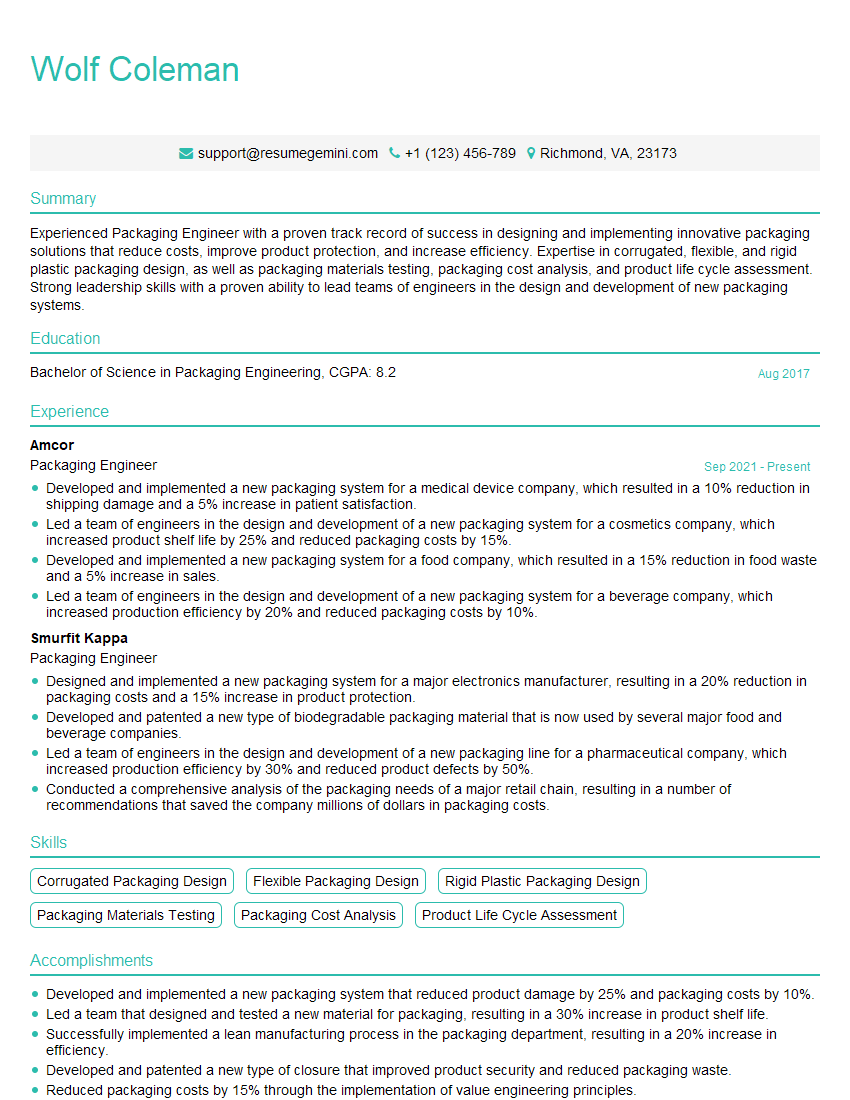
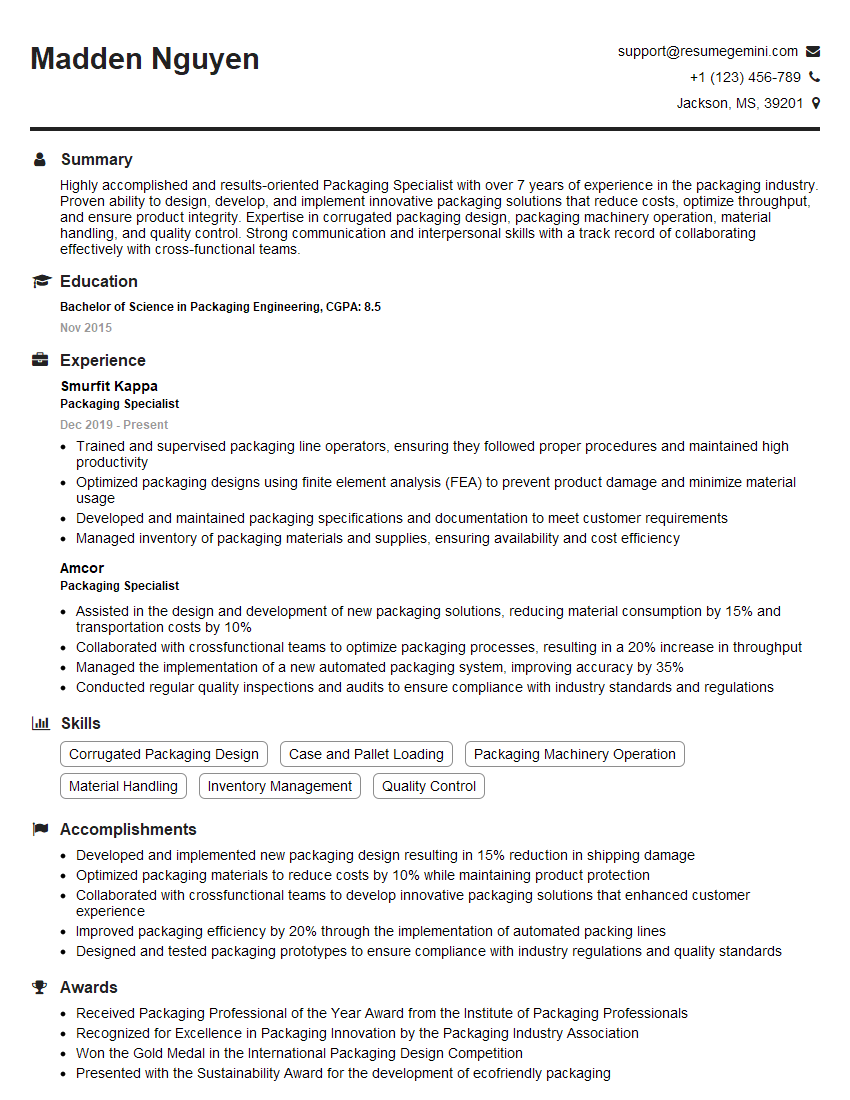
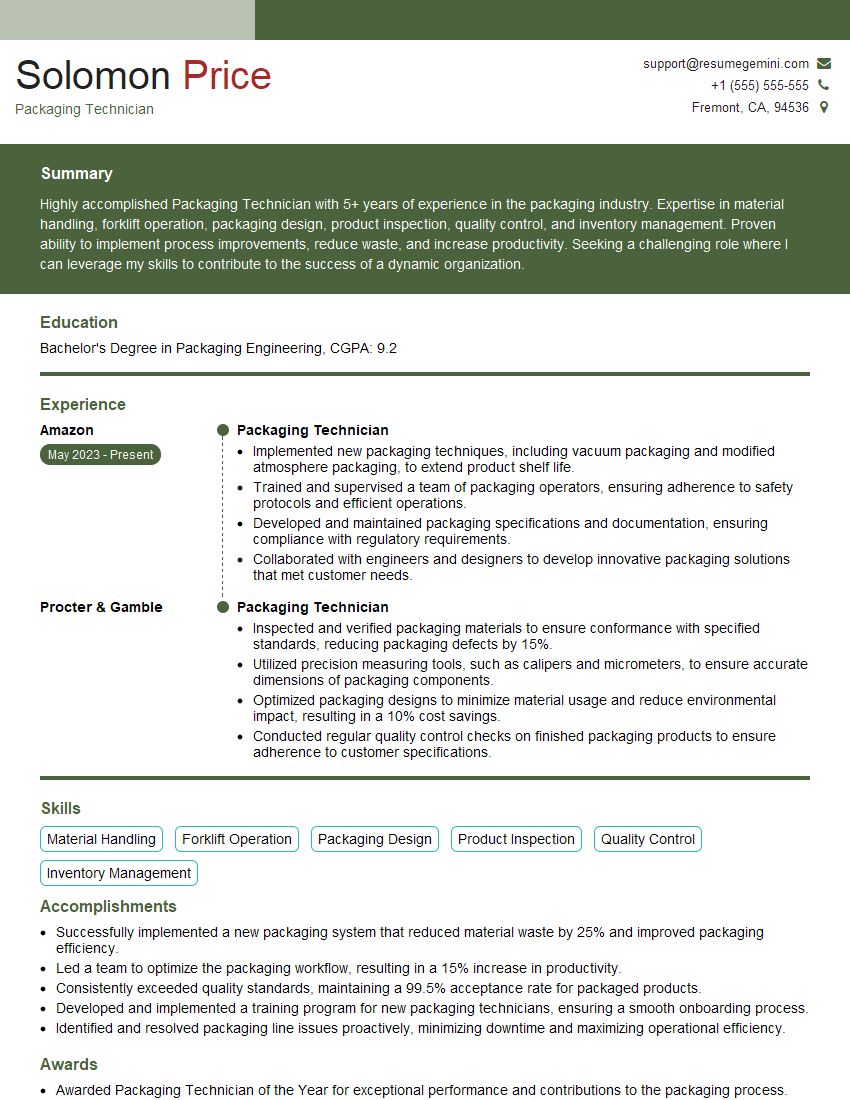
Mastering Packaging and Sealing Techniques opens doors to exciting career opportunities in a constantly evolving industry. A strong understanding of these techniques significantly enhances your employability and positions you for advancement. To maximize your job prospects, creating a well-structured, ATS-friendly resume is crucial. ResumeGemini is a trusted resource that can help you build a professional resume showcasing your skills and experience effectively. They offer examples of resumes tailored to Packaging and Sealing Techniques, providing a valuable head start in your job search. Invest time in crafting a compelling resume – it’s your first impression on potential employers.
Explore more articles
Users Rating of Our Blogs
Share Your Experience
We value your feedback! Please rate our content and share your thoughts (optional).
What Readers Say About Our Blog
Hello,
we currently offer a complimentary backlink and URL indexing test for search engine optimization professionals.
You can get complimentary indexing credits to test how link discovery works in practice.
No credit card is required and there is no recurring fee.
You can find details here:
https://wikipedia-backlinks.com/indexing/
Regards
NICE RESPONSE TO Q & A
hi
The aim of this message is regarding an unclaimed deposit of a deceased nationale that bears the same name as you. You are not relate to him as there are millions of people answering the names across around the world. But i will use my position to influence the release of the deposit to you for our mutual benefit.
Respond for full details and how to claim the deposit. This is 100% risk free. Send hello to my email id: [email protected]
Luka Chachibaialuka
Hey interviewgemini.com, just wanted to follow up on my last email.
We just launched Call the Monster, an parenting app that lets you summon friendly ‘monsters’ kids actually listen to.
We’re also running a giveaway for everyone who downloads the app. Since it’s brand new, there aren’t many users yet, which means you’ve got a much better chance of winning some great prizes.
You can check it out here: https://bit.ly/callamonsterapp
Or follow us on Instagram: https://www.instagram.com/callamonsterapp
Thanks,
Ryan
CEO – Call the Monster App
Hey interviewgemini.com, I saw your website and love your approach.
I just want this to look like spam email, but want to share something important to you. We just launched Call the Monster, a parenting app that lets you summon friendly ‘monsters’ kids actually listen to.
Parents are loving it for calming chaos before bedtime. Thought you might want to try it: https://bit.ly/callamonsterapp or just follow our fun monster lore on Instagram: https://www.instagram.com/callamonsterapp
Thanks,
Ryan
CEO – Call A Monster APP
To the interviewgemini.com Owner.
Dear interviewgemini.com Webmaster!
Hi interviewgemini.com Webmaster!
Dear interviewgemini.com Webmaster!
excellent
Hello,
We found issues with your domain’s email setup that may be sending your messages to spam or blocking them completely. InboxShield Mini shows you how to fix it in minutes — no tech skills required.
Scan your domain now for details: https://inboxshield-mini.com/
— Adam @ InboxShield Mini
Reply STOP to unsubscribe
Hi, are you owner of interviewgemini.com? What if I told you I could help you find extra time in your schedule, reconnect with leads you didn’t even realize you missed, and bring in more “I want to work with you” conversations, without increasing your ad spend or hiring a full-time employee?
All with a flexible, budget-friendly service that could easily pay for itself. Sounds good?
Would it be nice to jump on a quick 10-minute call so I can show you exactly how we make this work?
Best,
Hapei
Marketing Director
Hey, I know you’re the owner of interviewgemini.com. I’ll be quick.
Fundraising for your business is tough and time-consuming. We make it easier by guaranteeing two private investor meetings each month, for six months. No demos, no pitch events – just direct introductions to active investors matched to your startup.
If youR17;re raising, this could help you build real momentum. Want me to send more info?
Hi, I represent an SEO company that specialises in getting you AI citations and higher rankings on Google. I’d like to offer you a 100% free SEO audit for your website. Would you be interested?
Hi, I represent an SEO company that specialises in getting you AI citations and higher rankings on Google. I’d like to offer you a 100% free SEO audit for your website. Would you be interested?
good