Are you ready to stand out in your next interview? Understanding and preparing for Packaging Techniques interview questions is a game-changer. In this blog, we’ve compiled key questions and expert advice to help you showcase your skills with confidence and precision. Let’s get started on your journey to acing the interview.
Questions Asked in Packaging Techniques Interview
Q 1. Explain your experience with different packaging materials (e.g., paperboard, plastic, metal).
My experience spans a wide range of packaging materials, each with its unique properties and applications. Paperboard, for instance, is incredibly versatile – from the sturdy construction of corrugated boxes for appliances to the elegant folding cartons used for luxury goods. I’ve worked extensively with different grades of paperboard, understanding the impact of factors like caliper (thickness), burst strength, and surface finish on the final product’s durability and aesthetics. Plastics offer another spectrum of options, from lightweight films for flexible packaging (think snack bags) to rigid containers like PET bottles for beverages or HDPE containers for chemicals. The choice depends heavily on the product’s characteristics – barrier properties are crucial for preserving food, while impact resistance is paramount for durable goods. Finally, metal packaging, including tin cans and aluminum foil, provides excellent barrier protection and often contributes to a premium shelf presence. I’ve worked with different metal alloys and coatings, understanding their impact on corrosion resistance, printability, and recyclability. For example, I successfully optimized the thickness of a tin can for a client, reducing material costs while maintaining structural integrity during transportation.
Q 2. Describe your familiarity with various packaging types (e.g., corrugated boxes, flexible pouches, rigid containers).
My familiarity with packaging types is comprehensive. Corrugated boxes are a staple, and I’ve designed them for diverse products, optimizing flute type (e.g., A-flute for heavy items, B-flute for lighter ones) and board thickness for optimal protection. Flexible pouches, another common type, are highly adaptable. I’ve worked with various constructions, from stand-up pouches with zippers for consumer goods to vacuum-sealed pouches for preserving food freshness. The choice of material and lamination layers is crucial for maintaining product quality and shelf life. Rigid containers, like those made of plastic or metal, offer excellent protection for fragile or sensitive goods. I’ve designed and optimized rigid containers for pharmaceuticals, ensuring child-resistant features and tamper-evident seals were integrated, adhering to strict regulatory requirements. Each packaging type presents unique challenges and opportunities; the key is choosing the right one based on product characteristics, supply chain logistics, and cost considerations.
Q 3. What are the key considerations for selecting appropriate packaging for a product?
Selecting the appropriate packaging involves a multifaceted evaluation. First, product protection is paramount. The packaging must safeguard the product during handling, transportation, and storage, preventing damage from impacts, vibration, moisture, or other environmental factors. Product preservation is equally important – maintaining quality, freshness, and shelf life, especially for food and pharmaceuticals. For instance, a specialized barrier material is necessary to prevent oxygen ingress and extend the shelf life of coffee beans. Next, cost-effectiveness demands a careful balance between material costs, manufacturing processes, and transportation efficiency. Marketing and branding also play a significant role. The packaging should be visually appealing, communicating the product’s value proposition and brand identity effectively. Finally, regulatory compliance is non-negotiable – adhering to all relevant safety standards and labeling requirements ensures the product can be legally marketed and sold.
Q 4. How do you ensure packaging meets regulatory compliance requirements (e.g., FDA, ISO)?
Ensuring regulatory compliance is a critical aspect of my work. This involves meticulous attention to detail and a thorough understanding of relevant regulations such as those set by the FDA (Food and Drug Administration) for food and pharmaceutical products, and ISO (International Organization for Standardization) standards for quality management systems. I work closely with regulatory specialists to understand all applicable requirements and incorporate them into the packaging design and manufacturing process. This includes proper labeling, material selection based on food contact regulations, and adherence to testing protocols to verify the integrity and safety of the packaging. For example, I’ve managed the documentation and testing required to achieve FDA approval for a novel pharmaceutical packaging design, ensuring the packaging’s compatibility with the drug formulation and its safety for the patient. A robust quality management system is crucial, with regular audits and documentation to ensure ongoing compliance.
Q 5. Describe your experience with packaging design software (e.g., CAD, SolidWorks).
I’m proficient in several packaging design software applications, including CAD (Computer-Aided Design) software like SolidWorks and AutoCAD. These tools allow me to create detailed 3D models of packaging designs, enabling precise analysis of structural integrity, optimizing material usage and minimizing waste. I use these tools to simulate real-world conditions, performing virtual drop tests or compression tests to predict packaging performance before proceeding to physical prototypes. For example, using SolidWorks, I recently designed a reusable, stackable shipping container, using finite element analysis to ensure it could withstand the rigors of multiple shipping cycles. Software such as Adobe Illustrator and Photoshop are also essential for creating visually appealing and brand-consistent packaging artwork and labels.
Q 6. How do you balance cost-effectiveness with optimal packaging performance?
Balancing cost-effectiveness and optimal packaging performance requires a strategic approach. It’s not simply about choosing the cheapest material; it’s about optimizing the overall cost across the product lifecycle. This involves careful material selection, taking into account the trade-offs between cost and performance. For instance, using a slightly more expensive, but more durable material might reduce the rate of damaged goods and minimize returns. Efficient design minimizes material usage without compromising protection. I use advanced software to optimize designs for minimal material usage while maintaining structural integrity. Also, leveraging sustainable and recyclable materials can reduce long-term costs and enhance the brand’s environmental image, enhancing cost-effectiveness and overall appeal.
Q 7. Explain your understanding of different packaging testing methods (e.g., drop testing, compression testing).
My understanding of packaging testing methods is comprehensive. Drop testing, for example, simulates the shocks and impacts packaging may encounter during transportation. We conduct these tests from various heights and orientations to determine the packaging’s ability to protect the product. Compression testing measures the packaging’s resistance to crushing under pressure, crucial for stackable products or those transported in bulk. Vibration testing simulates the forces encountered during transit, evaluating the packaging’s ability to withstand repeated shaking and jarring. Other tests include climate testing (evaluating resistance to temperature and humidity extremes), puncture resistance testing, and seal integrity testing. The choice of tests depends on the product and the anticipated stresses during its journey. For example, a pharmaceutical product needs more rigorous testing than a typical consumer product, focusing on maintaining its integrity under various environmental conditions.
Q 8. How do you approach resolving packaging-related issues during production?
Resolving packaging issues during production requires a systematic approach. My first step is always to identify the root cause. This involves careful observation, data analysis (e.g., defect rates, machine downtime logs), and often, collaboration with the production team. Once the problem is pinpointed – whether it’s a faulty machine setting, material defect, or operator error – I develop a targeted solution.
For example, if we’re experiencing excessive package damage, I might investigate whether the machinery requires recalibration, if the packaging material itself is subpar (e.g., insufficient strength or poor sealing), or if the handling procedures need improvement (e.g., improper stacking or transportation). Solutions might include recalibrating equipment, sourcing a higher-quality material, implementing new handling protocols, or retraining personnel. The key is to not just address the immediate symptom but to eliminate the underlying cause to prevent recurrence. Continuous monitoring and process improvement are essential to maintain consistent quality.
Q 9. What is your experience with sustainable and eco-friendly packaging solutions?
Sustainable and eco-friendly packaging is a core focus in my work. I have extensive experience with biodegradable and compostable materials like PLA (polylactic acid) and sugarcane bagasse, as well as recycled content options such as post-consumer recycled (PCR) paperboard and rPET (recycled polyethylene terephthalate). My approach involves a lifecycle assessment considering material sourcing, production, transportation, end-of-life management, and its overall environmental impact. This includes exploring options for reducing packaging weight without compromising product protection.
For instance, I recently helped a client transition from traditional plastic clamshells to molded pulp packaging for their electronics, significantly reducing plastic waste and improving the recyclability of their packaging. This involved careful consideration of the product’s fragility and the need for adequate protection, followed by rigorous testing to ensure the integrity of the new packaging.
Q 10. Describe your experience with packaging automation and machinery.
I’m proficient in operating and troubleshooting various packaging automation machines, including cartoners, case packers, palletizers, and labeling systems. My experience encompasses both traditional and robotic automation. I’m familiar with PLC programming (Programmable Logic Controllers) and understand the intricacies of machine setup, operation, and maintenance. I can effectively diagnose mechanical and electrical issues, often preventing costly downtime. Furthermore, I have experience in selecting and integrating new automation technologies to streamline packaging processes and improve efficiency.
For example, I once led a project implementing a robotic palletizing system, which reduced labor costs by 40% and improved palletizing speed by 30%. This involved careful planning and coordination with engineers and technicians, as well as thorough training for operators.
Q 11. Explain your understanding of supply chain management related to packaging.
Packaging plays a vital role in the overall supply chain, affecting everything from storage and transportation to inventory management and product protection. Effective supply chain management related to packaging requires a holistic approach. This includes sourcing raw materials from reliable suppliers, ensuring efficient production and packaging processes, coordinating logistics and transportation, and managing inventory levels. It’s essential to consider factors like packaging durability, storage conditions, and transportation methods to minimize damage and waste throughout the supply chain.
A key aspect is collaboration: working closely with suppliers, manufacturers, distributors, and retailers to ensure seamless flow of goods. For example, optimizing packaging dimensions to maximize space utilization on trucks reduces transportation costs and carbon footprint.
Q 12. How do you manage packaging inventory and minimize waste?
Managing packaging inventory effectively and minimizing waste requires a combination of strategies. This starts with accurate forecasting of packaging needs based on historical data, sales projections, and market trends. Implementing a just-in-time (JIT) inventory system can help reduce storage costs and minimize the risk of obsolescence. Regular inventory audits are crucial to ensure accuracy and identify potential issues. In addition, implementing robust quality control measures helps prevent the production of defective packaging that would be wasted.
We utilize inventory management software to track stock levels and predict future demand. Furthermore, we actively seek ways to reuse or recycle excess packaging materials. For example, we might repurpose cardboard boxes or use scrap material in other packaging applications.
Q 13. What is your approach to improving packaging efficiency and reducing costs?
Improving packaging efficiency and reducing costs involves analyzing every aspect of the packaging process. This includes streamlining workflows, optimizing packaging designs, and improving material selection. Lean manufacturing principles can be applied to identify and eliminate waste in the form of excess materials, unnecessary steps, and inefficient processes. Automation is crucial for improving speed and consistency while reducing labor costs.
For instance, we recently redesigned a product’s packaging, reducing its size by 15% while maintaining product protection. This directly translated to lower material costs, reduced shipping expenses, and a smaller environmental footprint.
Q 14. Describe your experience with different printing techniques used for packaging.
I have experience with a variety of printing techniques used for packaging, including flexography, offset lithography, gravure printing, and digital printing. Each technique has its strengths and weaknesses concerning cost, speed, print quality, and suitability for different substrates. Flexography is commonly used for flexible packaging due to its versatility and cost-effectiveness. Offset lithography is ideal for high-volume printing with sharp detail. Gravure printing excels in producing high-quality images on flexible materials, while digital printing allows for customization and shorter runs.
Choosing the right technique depends on several factors, including the print volume, the type of packaging material, the desired print quality, and the budget. I make sure to consider these factors when determining the most appropriate technique for each project.
Q 15. How do you ensure packaging provides adequate protection against damage during transit?
Ensuring adequate protection during transit involves a multifaceted approach that considers the product’s fragility, the transit environment, and cost-effectiveness. We begin by analyzing the product’s vulnerability to different types of damage – shock, vibration, compression, and moisture. This informs the selection of appropriate cushioning materials, such as bubble wrap, foam inserts, or air pillows. The type and amount of cushioning are determined by the product’s weight, shape, and fragility. For instance, a delicate glass vase would require significantly more cushioning than a sturdy metal part.
Next, we select the right outer packaging. Corrugated cardboard boxes are a common choice, offering good protection against compression and moderate shock. However, for heavier or more fragile items, we might use double-walled or triple-walled cardboard, or even wooden crates. We also consider the use of corner boards or edge protectors to reinforce vulnerable points. For products susceptible to moisture damage, we integrate waterproof liners or vapor barriers within the packaging.
Finally, we optimize the packaging design for efficient stacking and palletizing. Proper stacking prevents shifting and damage during transportation. We often use strapping or shrink wrapping to secure the packages on a pallet, further reducing the risk of damage. A well-designed packaging system should consider the entire journey from the production line to the final destination, mitigating risks at every stage.
Career Expert Tips:
- Ace those interviews! Prepare effectively by reviewing the Top 50 Most Common Interview Questions on ResumeGemini.
- Navigate your job search with confidence! Explore a wide range of Career Tips on ResumeGemini. Learn about common challenges and recommendations to overcome them.
- Craft the perfect resume! Master the Art of Resume Writing with ResumeGemini’s guide. Showcase your unique qualifications and achievements effectively.
- Don’t miss out on holiday savings! Build your dream resume with ResumeGemini’s ATS optimized templates.
Q 16. Explain your understanding of the principles of barrier packaging.
Barrier packaging focuses on protecting the product from environmental factors that could compromise its quality, safety, or shelf life. These factors include moisture, oxygen, light, and microorganisms. The primary goal is to create a barrier that prevents the ingress of harmful substances and the egress of desirable ones. For example, a food product might require a barrier to prevent oxidation, which can lead to rancidity. A pharmaceutical product might require protection against moisture to prevent degradation.
Several materials provide excellent barrier properties. These include different polymers like polyethylene (PE), polypropylene (PP), and ethylene vinyl alcohol (EVOH). Metal foils, such as aluminum foil, offer excellent barrier properties as well. Often, composite packaging structures are used, combining different materials to achieve optimal barrier properties. For instance, a flexible pouch might have layers of PET (polyethylene terephthalate) for strength, aluminum foil for oxygen and light barrier, and polyethylene for sealing.
The choice of barrier material depends on several factors, including the product’s requirements, the desired shelf life, and the cost considerations. Testing is crucial to verify that the chosen barrier system effectively protects the product under intended storage and transportation conditions.
Q 17. Describe your experience with designing packaging for various climates and conditions.
My experience includes designing packaging solutions for a wide range of climates and conditions. This involves understanding the impacts of temperature extremes, humidity, and UV radiation on the product and packaging. For example, products shipped to hot, humid climates might require packaging that prevents moisture ingress and ensures breathability to prevent condensation. We use materials with good temperature resistance and UV protection to prevent degradation. For cold climates, we focus on preventing freezing damage, potentially by incorporating insulation or using materials resistant to low-temperature cracking.
One project involved designing packaging for a pharmaceutical product destined for distribution across various global regions. We had to account for extreme temperature fluctuations during transportation and storage. We performed extensive testing, simulating different climatic conditions, to verify that the packaging maintained its integrity and protected the product from degradation. We ultimately selected a multi-layered structure incorporating insulated packaging to maintain a stable temperature.
Climate-specific packaging design requires detailed knowledge of material properties and a thorough understanding of the potential risks associated with diverse environments. Rigorous testing is crucial to ensure the packaging effectively protects the product under all anticipated conditions.
Q 18. How do you ensure the integrity of sealed packages?
Maintaining the integrity of sealed packages is essential for product safety and quality. This starts with selecting the right sealing method and materials. Several options exist, each suited to specific applications: heat sealing, adhesive sealing, induction sealing, and ultrasonic sealing. Heat sealing is common for flexible packaging like pouches and bags, using heat to melt and bond the layers. Adhesive sealing relies on the use of pressure-sensitive adhesives to create a bond. Induction sealing creates a hermetic seal for containers, and ultrasonic sealing creates a strong bond without heat.
Beyond the sealing method, the materials themselves play a crucial role. The seal’s strength and durability depend heavily on the compatibility of the materials being sealed. We perform seal strength testing to ensure the seal can withstand handling and transportation stresses, and we also ensure that the seals are tamper-evident, giving a visual indication of any potential compromise.
Finally, consistent manufacturing processes are crucial. Properly calibrated sealing equipment and meticulous quality control are essential to maintain uniform and reliable seals across all packages.
Q 19. What experience do you have with modifying packaging designs based on testing results?
Modifying packaging designs based on testing results is a standard procedure in the packaging development process. It’s a continuous improvement cycle. For example, drop tests might reveal weak points in the packaging structure. This might necessitate reinforcing vulnerable areas with extra cushioning or modifying the box’s design to distribute impact forces more effectively. Vibration testing can highlight resonant frequencies that could damage the product during transit. We might adjust the packaging materials or introduce damping elements to mitigate these vibrations.
In one project, we initially designed a package using a single-walled cardboard box. However, vibration testing revealed unacceptable levels of product damage. Based on the results, we transitioned to a double-walled cardboard box, effectively reducing the damage during transit. This iterative process of testing and modification is critical to optimizing the design for robust performance. Data-driven design refinements are fundamental to ensuring the efficacy and cost-effectiveness of our packaging solutions.
Q 20. Describe your experience with managing a packaging project from concept to completion.
Managing a packaging project from concept to completion involves several key stages. It starts with defining the project scope, including product specifications, target market, and budget constraints. Then, we move to the design phase, exploring different packaging concepts and selecting materials that are functional, cost-effective, and environmentally responsible. Detailed specifications are drawn up, including dimensions, material specifications, and printing requirements.
The next stage is prototyping and testing. We create prototypes to evaluate the design’s performance under different conditions, conducting various tests, including drop tests, compression tests, and climate chamber testing. Based on the test results, we may iterate on the design to achieve optimal protection and performance. Once the design is finalized, we move into production, working closely with manufacturers to ensure consistent quality control and timely delivery. Throughout this process, we maintain meticulous documentation and track the project’s progress closely.
A recent project involved designing packaging for a new line of electronics. We successfully managed the project from initial concept development through to mass production, leveraging a collaborative approach, rigorous testing, and close communication with all stakeholders.
Q 21. How familiar are you with different types of packaging closures and seals?
I am very familiar with a wide variety of packaging closures and seals. This includes simple closures like snap-fit lids, screw caps, and press-on closures, through more sophisticated systems such as tamper-evident seals, induction seals, and child-resistant closures. The selection of a closure depends largely on the product type, intended use, and required level of protection. For instance, a child-resistant closure is mandated for certain pharmaceutical and household products. Tamper-evident seals are used extensively in food and pharmaceutical packaging to ensure the product hasn’t been compromised.
Different sealing technologies cater to various packaging materials and product types. Heat sealing is widely used for flexible packaging, whereas induction sealing provides a hermetic seal for jars and bottles. Ultrasonic sealing is ideal for materials that are sensitive to heat. My experience includes working with a wide range of these technologies, selecting the optimal solution based on product requirements and cost considerations.
Beyond the functionality, the aesthetics and ease of use of the closure are also important factors to consider. A well-designed closure enhances the overall consumer experience and contributes to the product’s brand image.
Q 22. How do you stay updated on the latest packaging technologies and trends?
Staying current in the dynamic field of packaging requires a multi-pronged approach. I actively participate in industry events like PACK EXPO and FachPack, attending conferences and workshops to learn about the latest innovations. Trade publications such as Packaging World and Packaging Digest are essential reading, providing in-depth analyses of new materials, technologies, and market trends. I also leverage online resources, including industry-specific websites and webinars offered by leading packaging companies and research institutions. Furthermore, I maintain a network of contacts within the packaging community, engaging in discussions and knowledge sharing to stay abreast of emerging best practices and challenges. For example, recently, I learned about the growing use of biodegradable and compostable packaging through a webinar hosted by a leading sustainable packaging provider, which directly impacted a current project of mine.
Q 23. Explain your understanding of packaging labeling requirements and regulations.
Packaging labeling is a highly regulated area, crucial for consumer safety and accurate product information. My understanding encompasses a broad range of regulations, including those governing food labeling (like FDA regulations in the US or EU directives), hazardous materials labeling (e.g., GHS/CLP), and pharmaceutical packaging regulations (e.g., GMP guidelines). These regulations dictate various aspects, such as ingredient listing, nutritional information (for food products), warnings, and handling instructions. For example, a mislabeled food product could have severe legal ramifications and pose a health risk to consumers. I’m proficient in navigating these complexities, ensuring that all labels adhere to the relevant legal and industry standards. I often collaborate with regulatory specialists to ensure complete compliance and avoid any potential pitfalls. The process includes thorough label design review, verification of all claims, and careful selection of appropriate labeling materials that comply with the regulations specific to the product’s target market.
Q 24. How do you prioritize different packaging features when designing a new package?
Prioritizing packaging features is a crucial design element, balancing multiple objectives. I use a weighted prioritization matrix, assigning weights to different criteria based on their importance to the product and the target market. Typically, the top priorities are product protection (maintaining quality and extending shelf life), cost-effectiveness (considering material costs, production efficiency, and transportation), and consumer appeal (enticing design, ease of use, and sustainability). For example, for a fragile electronic device, product protection would be the highest priority, even if it increases the overall cost. Conversely, for a high-volume, low-cost consumer good, cost might outweigh some aspects of aesthetics. The matrix helps me to systematically assess and rank various features, ensuring a balanced and optimized package design that meets all essential requirements. This structured approach helps to eliminate subjective bias and ensure objectivity in the decision-making process.
Q 25. Describe your experience with lifecycle assessment of packaging materials.
I have extensive experience in performing lifecycle assessments (LCAs) for packaging materials. This involves evaluating the environmental impact of a product’s packaging across its entire life cycle – from raw material extraction to manufacturing, distribution, use, and disposal. We use standardized methodologies like ISO 14040 and ISO 14044, which involves quantifying inputs and outputs (energy consumption, greenhouse gas emissions, water usage, waste generation). For instance, a recent project involved comparing the environmental footprint of a plastic bottle versus a glass bottle for a beverage product, considering factors such as material sourcing, transportation distances, and end-of-life management options (recycling, composting, or incineration). The LCA results helped us justify the selection of the most environmentally friendly option and ultimately supported the client’s sustainability goals. The findings were presented in a comprehensive report that highlighted areas for improvement throughout the product’s packaging lifecycle.
Q 26. How do you assess the impact of packaging on product shelf life?
Packaging plays a vital role in maintaining product shelf life. I assess this impact through various methods, including accelerated shelf-life studies. These studies simulate real-world conditions (temperature, humidity, light exposure) to predict the product’s degradation over time under different packaging scenarios. I also consider the packaging material’s barrier properties against oxygen, moisture, and light, which are crucial for preventing spoilage or degradation. For example, using a modified atmosphere packaging (MAP) can significantly extend the shelf life of fresh produce by controlling the gaseous environment within the package. Data analysis from shelf-life studies, coupled with an understanding of the product’s intrinsic properties and degradation mechanisms, helps me determine the optimal packaging solution to preserve quality and minimize waste.
Q 27. What is your experience with packaging modifications to improve product appeal?
I have extensive experience in improving product appeal through packaging modifications. This often involves collaborating with marketing and design teams to create eye-catching and informative packaging that enhances brand recognition and drives sales. This can include changes to the packaging materials (e.g., switching to a more premium-feeling material), the design (e.g., incorporating new colors or graphics), or the format (e.g., developing a more convenient or user-friendly design). For example, I recently worked on a project where we redesigned the packaging for a line of organic snacks, switching from a plain, unappealing bag to a colorful, eye-catching stand-up pouch with a transparent window to showcase the product. This change resulted in a significant increase in sales, demonstrating the impact of well-designed packaging on consumer purchasing decisions. The process frequently includes market research, consumer feedback analysis, and rigorous testing to ensure the modified packaging achieves the desired aesthetic and functional improvements.
Key Topics to Learn for Packaging Techniques Interview
- Material Science in Packaging: Understanding the properties of various packaging materials (paperboard, plastics, films, metals) and their suitability for different products and applications. Consider factors like barrier properties, strength, and recyclability.
- Packaging Design Principles: Learn about designing packaging for optimal protection, shelf appeal, and ease of use. Explore concepts like ergonomics, structural integrity, and graphics design considerations.
- Packaging Processes: Familiarize yourself with common packaging processes such as filling, sealing, labeling, and palletizing. Understand the machinery involved and potential challenges in each stage.
- Sustainability and Eco-Friendly Packaging: Explore sustainable packaging options, including biodegradable and compostable materials, reduced packaging waste, and lifecycle assessments. This is a growing area of importance in the industry.
- Regulations and Compliance: Gain knowledge of relevant packaging regulations and safety standards, including food safety, labeling requirements, and environmental regulations.
- Cost Optimization and Efficiency: Understand the importance of cost-effective packaging solutions. Explore strategies for minimizing material usage, streamlining processes, and improving overall efficiency.
- Quality Control and Testing: Learn about methods for testing the quality and performance of packaging, including durability tests, seal integrity tests, and barrier property tests.
- Problem-Solving in Packaging: Develop your ability to troubleshoot common packaging issues, such as damaged goods, leaks, or inefficient processes. Consider root cause analysis and problem-solving methodologies.
Next Steps
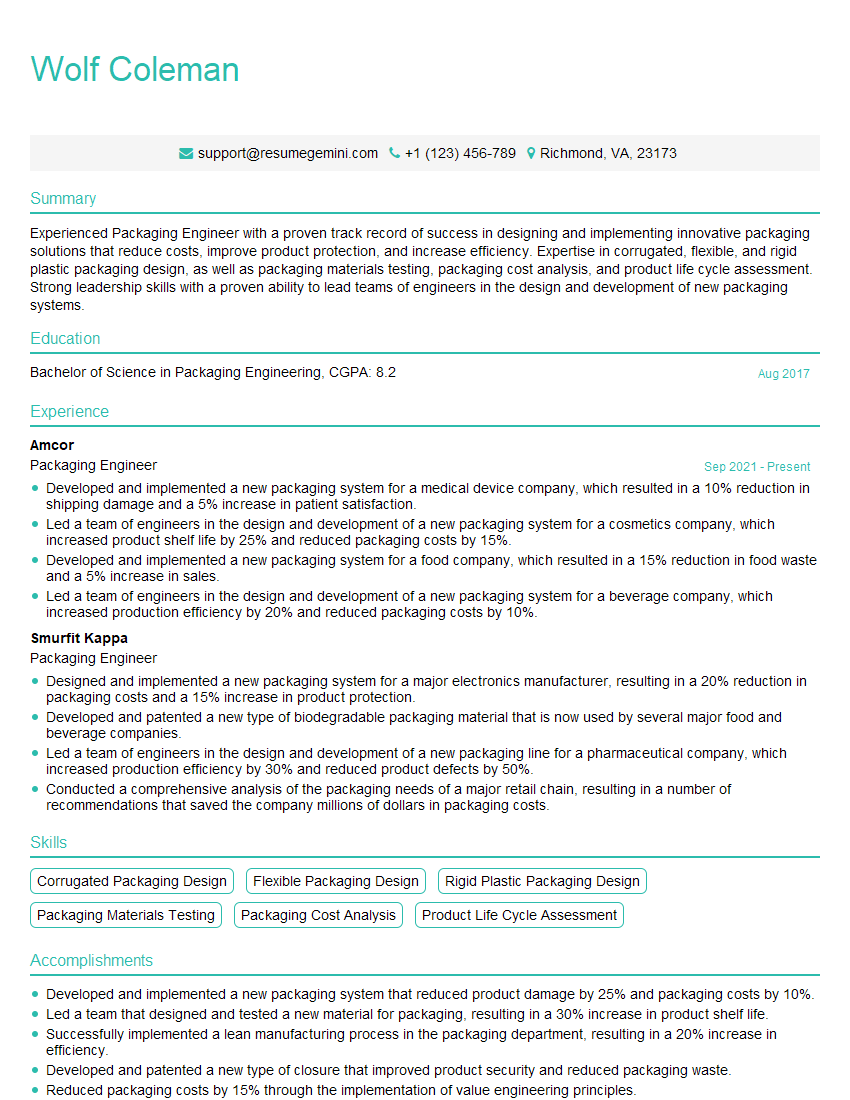
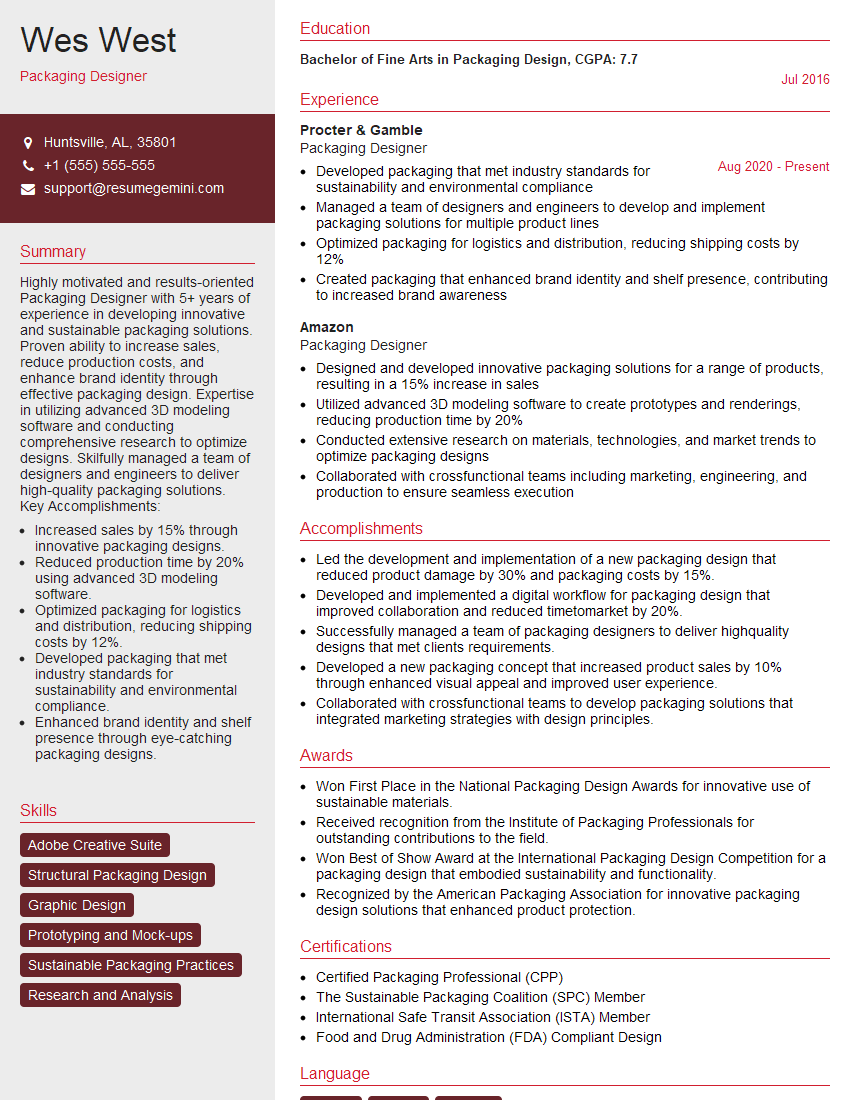
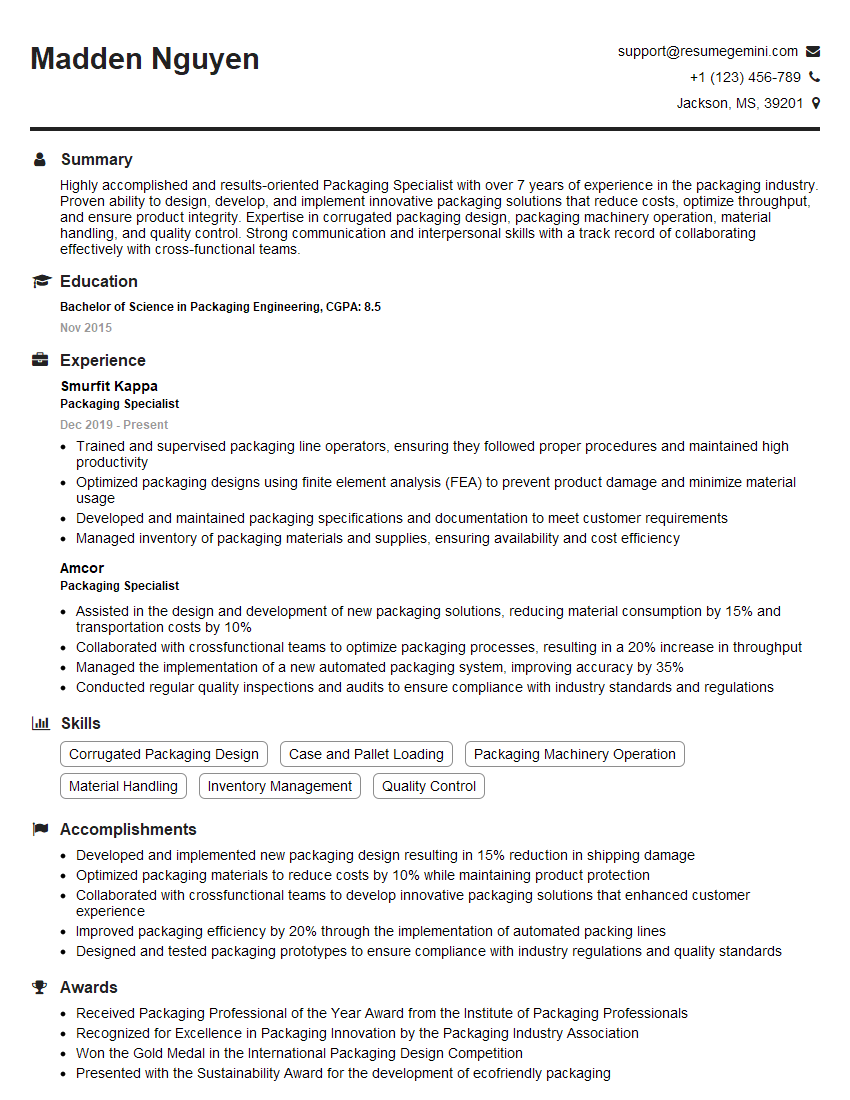
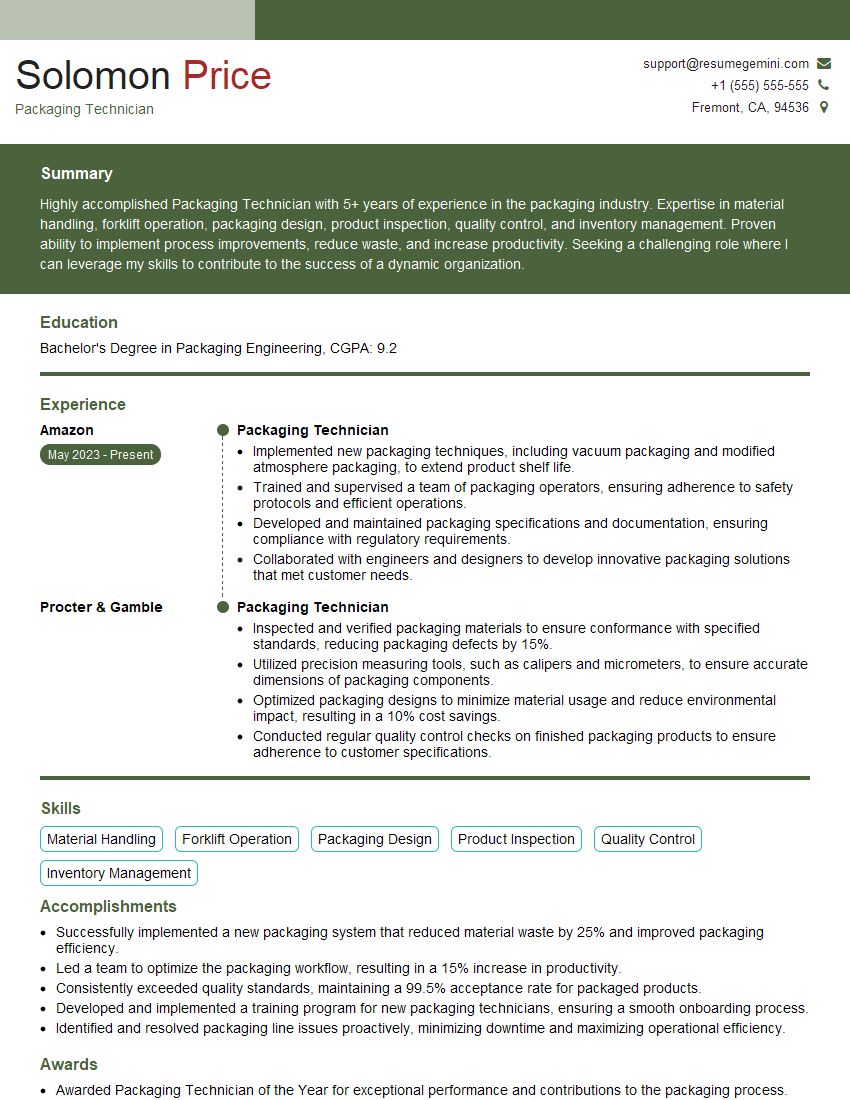
Mastering Packaging Techniques is crucial for career advancement in this dynamic field. A strong understanding of these concepts will significantly improve your job prospects and allow you to contribute effectively to a company’s success. To stand out, create an ATS-friendly resume that highlights your skills and experience effectively. ResumeGemini is a trusted resource for building professional resumes that get noticed. Take advantage of their tools and resources to craft a compelling resume, and remember to check out their examples tailored specifically to Packaging Techniques to get started.
Explore more articles
Users Rating of Our Blogs
Share Your Experience
We value your feedback! Please rate our content and share your thoughts (optional).
What Readers Say About Our Blog
Attention music lovers!
Wow, All the best Sax Summer music !!!
Spotify: https://open.spotify.com/artist/6ShcdIT7rPVVaFEpgZQbUk
Apple Music: https://music.apple.com/fr/artist/jimmy-sax-black/1530501936
YouTube: https://music.youtube.com/browse/VLOLAK5uy_noClmC7abM6YpZsnySxRqt3LoalPf88No
Other Platforms and Free Downloads : https://fanlink.tv/jimmysaxblack
on google : https://www.google.com/search?q=22+AND+22+AND+22
on ChatGPT : https://chat.openai.com?q=who20jlJimmy20Black20Sax20Producer
Get back into the groove with Jimmy sax Black
Best regards,
Jimmy sax Black
www.jimmysaxblack.com
Hi I am a troller at The aquatic interview center and I suddenly went so fast in Roblox and it was gone when I reset.
Hi,
Business owners spend hours every week worrying about their website—or avoiding it because it feels overwhelming.
We’d like to take that off your plate:
$69/month. Everything handled.
Our team will:
Design a custom website—or completely overhaul your current one
Take care of hosting as an option
Handle edits and improvements—up to 60 minutes of work included every month
No setup fees, no annual commitments. Just a site that makes a strong first impression.
Find out if it’s right for you:
https://websolutionsgenius.com/awardwinningwebsites
Hello,
we currently offer a complimentary backlink and URL indexing test for search engine optimization professionals.
You can get complimentary indexing credits to test how link discovery works in practice.
No credit card is required and there is no recurring fee.
You can find details here:
https://wikipedia-backlinks.com/indexing/
Regards
NICE RESPONSE TO Q & A
hi
The aim of this message is regarding an unclaimed deposit of a deceased nationale that bears the same name as you. You are not relate to him as there are millions of people answering the names across around the world. But i will use my position to influence the release of the deposit to you for our mutual benefit.
Respond for full details and how to claim the deposit. This is 100% risk free. Send hello to my email id: lukachachibaialuka@gmail.com
Luka Chachibaialuka
Hey interviewgemini.com, just wanted to follow up on my last email.
We just launched Call the Monster, an parenting app that lets you summon friendly ‘monsters’ kids actually listen to.
We’re also running a giveaway for everyone who downloads the app. Since it’s brand new, there aren’t many users yet, which means you’ve got a much better chance of winning some great prizes.
You can check it out here: https://bit.ly/callamonsterapp
Or follow us on Instagram: https://www.instagram.com/callamonsterapp
Thanks,
Ryan
CEO – Call the Monster App
Hey interviewgemini.com, I saw your website and love your approach.
I just want this to look like spam email, but want to share something important to you. We just launched Call the Monster, a parenting app that lets you summon friendly ‘monsters’ kids actually listen to.
Parents are loving it for calming chaos before bedtime. Thought you might want to try it: https://bit.ly/callamonsterapp or just follow our fun monster lore on Instagram: https://www.instagram.com/callamonsterapp
Thanks,
Ryan
CEO – Call A Monster APP
To the interviewgemini.com Owner.
Dear interviewgemini.com Webmaster!
Hi interviewgemini.com Webmaster!
Dear interviewgemini.com Webmaster!
excellent
Hello,
We found issues with your domain’s email setup that may be sending your messages to spam or blocking them completely. InboxShield Mini shows you how to fix it in minutes — no tech skills required.
Scan your domain now for details: https://inboxshield-mini.com/
— Adam @ InboxShield Mini
support@inboxshield-mini.com
Reply STOP to unsubscribe
Hi, are you owner of interviewgemini.com? What if I told you I could help you find extra time in your schedule, reconnect with leads you didn’t even realize you missed, and bring in more “I want to work with you” conversations, without increasing your ad spend or hiring a full-time employee?
All with a flexible, budget-friendly service that could easily pay for itself. Sounds good?
Would it be nice to jump on a quick 10-minute call so I can show you exactly how we make this work?
Best,
Hapei
Marketing Director
Hey, I know you’re the owner of interviewgemini.com. I’ll be quick.
Fundraising for your business is tough and time-consuming. We make it easier by guaranteeing two private investor meetings each month, for six months. No demos, no pitch events – just direct introductions to active investors matched to your startup.
If youR17;re raising, this could help you build real momentum. Want me to send more info?
Hi, I represent an SEO company that specialises in getting you AI citations and higher rankings on Google. I’d like to offer you a 100% free SEO audit for your website. Would you be interested?
Hi, I represent an SEO company that specialises in getting you AI citations and higher rankings on Google. I’d like to offer you a 100% free SEO audit for your website. Would you be interested?