Cracking a skill-specific interview, like one for Paper Stacking, requires understanding the nuances of the role. In this blog, we present the questions you’re most likely to encounter, along with insights into how to answer them effectively. Let’s ensure you’re ready to make a strong impression.
Questions Asked in Paper Stacking Interview
Q 1. Explain your experience with various filing systems (alphabetical, numerical, chronological, subject-based).
My experience encompasses a wide range of filing systems, each chosen based on the specific needs of the documents. Alphabetical filing is excellent for personal files or those organized by name, such as customer records. Imagine organizing a library by author’s last name – that’s alphabetical filing. Numerical filing, often used for invoices or sequentially numbered documents, provides rapid retrieval based on a numerical identifier. Think of it like a perfectly ordered spreadsheet. Chronological filing arranges documents by date, vital for tracking project progress or time-sensitive information; this is like having a historical timeline of events. Finally, subject-based filing groups documents by topic, ideal for managing projects or specific areas of business – imagine categorizing files into ‘Marketing,’ ‘Finance,’ and ‘Sales’ folders. I’m proficient in all four and can adapt my approach to maximize efficiency based on the context.
Q 2. Describe your proficiency in using different types of filing equipment (e.g., file cabinets, shelving units).
My proficiency with filing equipment extends beyond basic file cabinets. I’m comfortable using various types of file cabinets – lateral, vertical, and mobile – choosing the most appropriate option for the space and volume of documents. For instance, lateral cabinets are great for maximizing desk space, while mobile cabinets optimize space in larger storage areas. I also have experience with shelving units, which are particularly useful for storing larger or less frequently accessed materials like archival documents or oversized blueprints. I understand the importance of proper organization within these systems, including the use of dividers and labels to enhance retrieval speed and accuracy. I can assess the needs of different documents and choose the correct equipment for optimal storage and retrieval.
Q 3. How do you ensure the confidentiality and security of sensitive documents during the stacking and filing process?
Confidentiality and security are paramount. My approach involves multiple layers of protection. First, physical security involves storing sensitive documents in locked cabinets and restricted areas. Access to these areas is limited to authorized personnel only. Second, I implement a robust system of document control, including strict labeling and tracking of sensitive materials. This includes using color-coded files or special markings to identify sensitive information. Third, for truly sensitive information, I ensure proper disposal methods are followed, often involving secure shredding to prevent unauthorized access. This multi-layered approach minimizes risk and maintains compliance with relevant data protection regulations.
Q 4. What methods do you use to maintain an organized and efficient filing system?
Maintaining an organized and efficient filing system relies on consistent application of best practices. This includes regular purging of outdated or irrelevant documents – a process I rigorously follow to prevent clutter and maintain efficient space utilization. I employ a robust labeling system, ensuring all documents are clearly and consistently labeled, making retrieval a breeze. I also utilize color-coded folders to categorize and differentiate documents quickly. Finally, regular audits of the filing system identify any gaps or areas for improvement, allowing for proactive adjustments to maintain optimal organization and accessibility.
Q 5. How do you handle discrepancies or missing documents in a filing system?
Handling discrepancies or missing documents involves a systematic approach. The first step is to meticulously search the filing system, checking common areas where documents might be misfiled or overlooked. If the document is still missing, I conduct a thorough inquiry among colleagues to see if someone might have it. If that fails, I record the missing document, indicating the date of discovery, the type of document, and relevant information. This record helps in the subsequent investigation. Depending on the importance of the document, reporting to the appropriate supervisor might be necessary for initiating a broader search or investigation.
Q 6. What strategies do you employ to prioritize tasks and manage a high volume of paper documents?
Managing a high volume of paper documents requires prioritization. I employ a combination of techniques, including the use of a task management system to track incoming documents and their urgency. I separate documents into categories: urgent, important, and routine, ensuring that urgent tasks are handled promptly. Batch processing similar tasks helps maintain focus and efficiency. Techniques like ‘time blocking’ can also allocate specific periods for document processing, promoting focused work and minimizing distractions. Finally, regularly reviewing and reassessing priorities is essential to ensuring that the most critical tasks get done first.
Q 7. How do you ensure accurate and timely retrieval of documents?
Accurate and timely retrieval of documents hinges on a well-maintained filing system. A consistent and clear labeling system is crucial, allowing for easy identification and location of documents. Cross-referencing documents, where applicable, further enhances retrieval accuracy, allowing multiple access points. Regular audits ensure the system remains organized and accurate. Additionally, maintaining a comprehensive index or database of files (either physical or digital) allows for quick searching and location of specific documents. Proactive measures like these guarantee quick and accurate retrieval.
Q 8. Describe your experience with document scanning and digital archiving.
Document scanning and digital archiving are crucial for efficient record management. My experience encompasses handling various document types, from simple invoices to complex legal contracts, using high-speed scanners and specialized software. I’m proficient in Optical Character Recognition (OCR) software, which converts scanned images into searchable text, significantly improving accessibility and retrieval. For example, in a previous role, we transitioned a massive paper-based archive of patient records to a digital system, ensuring HIPAA compliance throughout the process. This involved meticulous quality control checks to maintain data integrity and accuracy.
My approach includes carefully planning the scanning process, considering factors like document size, condition, and required metadata. We implemented a system of batch scanning and quality assurance checks before archiving to ensure no information was lost or corrupted. The digital archive is then secured with appropriate access controls and regularly backed up to prevent data loss. We also utilized a version control system to track changes and maintain audit trails.
Q 9. How do you handle large-scale filing projects and meet deadlines?
Managing large-scale filing projects requires a structured approach. My strategy begins with a thorough assessment of the project scope, including document volume, type, required organization, and the deadline. I then develop a detailed workflow plan, breaking down the project into manageable tasks with assigned responsibilities and timelines. For example, in a recent project involving over 100,000 documents, we utilized a team approach, assigning different tasks like pre-sorting, scanning, indexing, and quality control to different team members. We used project management software to track progress and identify potential bottlenecks.
We utilize various techniques for efficient processing, such as employing multiple scanners, implementing parallel processing workflows, and regularly monitoring progress against the timeline. Regular communication with stakeholders ensures everyone is informed and potential issues are addressed proactively. This proactive approach helps to stay on schedule and deliver high-quality results, even under tight deadlines.
Q 10. Explain your understanding of different document retention policies.
Document retention policies dictate how long organizations must keep specific records. Understanding these policies is critical for legal and regulatory compliance. Different types of documents have varying retention periods, influenced by factors such as legal requirements, industry standards, and internal policies. For instance, financial records might need to be retained for seven years, while employee records might have different requirements depending on local labor laws.
My experience includes working with various retention policies, including those based on time, event triggers, or specific criteria. I understand the importance of secure storage, both physical and digital, for documents subject to retention policies. Properly implementing and adhering to these policies prevents legal risks and ensures efficient record management. Regular audits are essential to guarantee compliance and identify any gaps in the system.
Q 11. What is your experience with barcoding or other document tracking systems?
Barcoding and other document tracking systems are essential for efficient management and retrieval of large quantities of documents. My experience includes implementing and utilizing barcoding systems to track documents throughout their lifecycle, from creation to disposal. This involves assigning unique barcodes to each document and integrating the system with our document management software.
For example, we used a barcoding system to track legal documents in a previous project, ensuring quick and accurate retrieval during audits and legal proceedings. The system improved efficiency by automating document tracking, eliminating manual searches and reducing the risk of misplacing critical documents. Beyond barcodes, I’m also familiar with other tracking methods, such as RFID tags, which offer additional benefits in tracking documents’ location in real-time.
Q 12. How do you deal with damaged or deteriorated documents?
Damaged or deteriorated documents present unique challenges, requiring careful handling and preservation techniques. My approach involves assessing the extent of the damage, identifying the cause (e.g., water damage, fire, age), and selecting the appropriate preservation method. This can include techniques like careful cleaning, repair using archival-safe materials, or digital imaging to create a digital copy. For severely damaged documents, specialized restoration techniques might be required, potentially involving professional conservators.
For example, we encountered a batch of water-damaged historical records. We employed a phased approach: firstly, carefully drying and stabilizing the documents; secondly, gently cleaning them using appropriate chemicals; and finally, digitally imaging the documents to preserve the information. In situations where physical repair is impossible, digital preservation is essential to safeguard the information contained within.
Q 13. Describe your experience with cross-referencing and indexing.
Cross-referencing and indexing are crucial for effective information retrieval. Cross-referencing involves linking related documents or sections within a document, while indexing involves creating a structured system for locating specific information. My experience includes creating various index types, including alphabetical, subject-based, and numerical indices. This involves carefully reviewing documents to identify relevant keywords and creating a consistent indexing system.
For instance, in a legal case, we created a comprehensive index of all related documents using a combination of keywords, case numbers, and date ranges. This ensured quick access to relevant information for lawyers and paralegals during the legal proceedings. A well-structured indexing system is crucial for streamlining research, facilitating quick access to information, and supporting decision-making.
Q 14. How do you maintain a clean and organized workspace?
Maintaining a clean and organized workspace is essential for productivity and efficiency in paper stacking. My approach involves a combination of regular cleaning, proper storage, and a system for organizing documents and supplies. I regularly clear clutter, discarding unnecessary papers, and organizing files according to established systems. I use labeled folders, shelves, and filing cabinets to maintain order and easily locate specific documents. I also implement a system for managing incoming and outgoing documents to prevent the build-up of paper clutter.
A clean and organized workspace minimizes the risk of misplacing important documents, improves workflow efficiency, and creates a more professional and welcoming environment. This also contributes to a safer and more ergonomic work environment, promoting overall well-being.
Q 15. Explain your experience with different types of paper and how to handle them.
Handling different paper types is crucial for efficient paper stacking and preservation. The weight, texture, and composition of the paper directly impact how it’s stored and handled.
- Bond Paper: This durable, high-quality paper is ideal for important documents. It’s relatively resistant to tearing and creasing, but care should still be taken to avoid rough handling.
- Copy Paper: Thinner and less durable than bond paper, copy paper is suitable for less critical documents. It’s prone to tearing, so gentle handling is essential, especially when stacking large quantities.
- Cardstock: Significantly thicker than both bond and copy paper, cardstock is used for items like business cards and index cards. Its rigidity requires careful stacking to avoid bending or warping. Proper alignment is key here to avoid uneven stacks.
- Specialty Papers: This broad category encompasses papers with unique properties, such as parchment (easily damaged by moisture), or textured papers (requiring careful handling to avoid smudging or tearing).
For example, I’ve handled large-scale archival projects involving delicate parchment documents. In these cases, we used acid-free storage boxes, archival-quality gloves, and meticulously planned stacking techniques to preserve the documents’ integrity.
Career Expert Tips:
- Ace those interviews! Prepare effectively by reviewing the Top 50 Most Common Interview Questions on ResumeGemini.
- Navigate your job search with confidence! Explore a wide range of Career Tips on ResumeGemini. Learn about common challenges and recommendations to overcome them.
- Craft the perfect resume! Master the Art of Resume Writing with ResumeGemini’s guide. Showcase your unique qualifications and achievements effectively.
- Don’t miss out on holiday savings! Build your dream resume with ResumeGemini’s ATS optimized templates.
Q 16. What are some common errors in filing, and how do you prevent them?
Common filing errors often stem from a lack of standardization and consistent procedures.
- Misfiling: This happens when documents are placed in the wrong location within a filing system. Implementing a clear and consistent filing system, with easily understandable labels and regular checks, is key to prevention.
- Duplicate Filing: Creating redundant files wastes space and complicates retrieval. Employing a robust document tracking system can prevent this – ideally, one that logs when a document is filed and where.
- Incomplete Information: Missing or incomplete information on documents hinders retrieval. Ensuring all documents are properly labelled and indexed at the point of creation is vital.
- Damage to Documents: Improper handling or storage can lead to creasing, tearing, or other damage. Using proper storage containers, handling documents with care, and regularly inspecting files can minimize this risk.
For instance, in a previous role, I implemented a color-coded filing system combined with a digital inventory. This dramatically reduced misfiling and improved document retrieval efficiency by about 30%.
Q 17. How do you stay up-to-date on best practices in records management?
Staying current in records management requires a multi-faceted approach.
- Professional Organizations: I actively participate in professional organizations like the Institute of Certified Records Managers (ICRM) to stay updated on industry best practices and regulations.
- Industry Publications and Webinars: I regularly read trade publications and attend webinars to learn about the latest trends and technologies in records management.
- Conferences and Workshops: Attending industry conferences and workshops allows for networking and learning from other experts in the field.
- Online Resources: Utilizing reputable online resources, such as government websites and professional associations’ publications, keeps me abreast of changes in legislation and standards.
For example, attending a recent conference on digital archiving informed my approach to managing electronic documents alongside physical ones, significantly improving our organization’s document lifecycle management.
Q 18. Describe your experience with database management related to paper documents.
My experience with database management related to paper documents focuses on creating efficient systems that bridge the gap between physical and digital records.
This involves creating a structured database to track paper documents. The database would include fields such as document ID, title, author, date created, keywords, location within the filing system, and any relevant metadata. This allows for easy searching and retrieval of documents based on various criteria.
For example, I once developed a database for a law firm that tracked case files. The database linked physical file locations with digital versions of documents scanned into the system, streamlining case preparation.
Q 19. How do you handle requests for documents from various stakeholders?
Handling document requests efficiently and effectively involves a systematic approach.
- Prioritize Requests: Urgent requests are handled first, while others are processed in order of importance or deadline.
- Verify Identity: Before releasing any document, I verify the identity of the requester and their authorization to access the information.
- Locate Documents: Using the filing system (and any associated database), I quickly locate the requested documents.
- Copy and Deliver: I make copies of the documents as needed and deliver them securely, adhering to company policies and confidentiality protocols.
For instance, I once had to retrieve a critical financial document for an urgent audit within a tight deadline. By utilizing the database system I’d implemented, I quickly located and provided the necessary documentation.
Q 20. Explain your experience with using a document management system (DMS).
My experience with Document Management Systems (DMS) centers around leveraging their efficiency to streamline workflows.
I’m proficient in using DMS software to scan, index, and store documents digitally, reducing reliance on physical storage. I also utilize the search capabilities of the DMS to quickly retrieve needed documents. Furthermore, I can configure workflows within the system to automate tasks such as routing documents for approval or distributing them to relevant stakeholders.
In a previous role, I transitioned our office from a purely paper-based system to a DMS. This significantly reduced storage space, improved document accessibility, and enhanced overall efficiency. For example, document retrieval time decreased by approximately 75% post-implementation.
Q 21. How do you prioritize tasks when dealing with urgent document requests?
Prioritizing urgent document requests requires a clear understanding of the urgency and potential impact of each request.
- Assess Urgency: I evaluate the urgency of each request based on factors such as deadlines, potential consequences of delay, and the stakeholder’s importance.
- Time Management: I use time management techniques, such as prioritizing tasks based on their importance and urgency (Eisenhower Matrix), to ensure the most critical tasks are completed first.
- Delegate When Necessary: If workload is excessive, I delegate tasks when possible, ensuring proper handover and clear instructions.
- Communicate Proactively: I keep stakeholders informed about the status of their requests, providing realistic timelines and managing expectations.
For example, I once managed to simultaneously handle an urgent legal document request and several high-priority internal requests by using a combination of task prioritization and clear communication with stakeholders. This ensured no project suffered due to time constraints.
Q 22. Describe a time you had to solve a filing-related problem.
One time, our department was facing a significant backlog of client contracts. The existing filing system, based on alphabetical order by client name, was proving inefficient because we frequently needed to access contracts by project, not just client. We were spending excessive time searching through files.
To solve this, I implemented a dual filing system. We retained the alphabetical filing by client, but I also created a second set of files organized chronologically by project, using color-coded folders for easy identification. This allowed us to quickly locate contracts regardless of the client’s name, drastically reducing search time and improving overall efficiency. We also implemented a detailed cross-referencing system within the project files to link back to the client files for a complete audit trail. This significantly improved our turnaround time and reduced errors.
Q 23. How familiar are you with different types of folders and labels?
I’m very familiar with a wide range of folders and labels. My experience encompasses various types, including:
- Hanging Folders: Essential for efficient filing in file cabinets, allowing for clear separation of files and easy retrieval.
- Manila Folders: Versatile for temporary storage or grouping related documents. Different sizes and colours provide flexibility.
- Expanding Folders: Useful for projects requiring frequent access, offering multiple compartments for expanding storage needs.
- Pocket Folders: Ideal for presenting or transporting a limited number of documents.
Regarding labels, I’ve used everything from simple pre-printed labels to custom-printed labels using specialized software to allow for detailed, searchable indexing. This ensures accurate and consistent filing across the entire system. I am particularly adept at designing label systems to match specific organizational needs, ensuring efficient retrieval and data integrity.
Q 24. What is your experience with preparing documents for archiving?
Preparing documents for archiving requires meticulous attention to detail. My experience includes:
- Indexing and Metadata: Assigning descriptive keywords and metadata to every document to ensure it’s easily searchable in the archive.
- Quality Control: Checking for completeness, legibility, and proper formatting of documents before archiving. Damaged documents are carefully repaired or marked as such.
- Storage Media: Choosing appropriate storage media, such as acid-free boxes and archival-quality folders, to ensure longevity and prevent degradation. I also have experience with digital archiving and the associated metadata requirements.
- Retention Policies: Strictly adhering to company retention policies and regulatory requirements regarding document disposal, ensuring compliance and legal security.
For example, in one instance I helped establish a digital archive of scanned contracts, using a custom metadata schema to allow for multi-faceted searching by date, client, project, and contract type. This greatly simplified contract retrieval and significantly reduced our physical storage requirements.
Q 25. Describe your experience with inventory management of paper documents.
Inventory management of paper documents requires a structured approach. I’ve used several methods, including:
- Manual Inventory: Creating and maintaining spreadsheets or databases detailing document location, type, and date.
- Barcoding/RFID: Using barcode or RFID technology to track documents automatically and generate real-time inventory reports. This is particularly useful for high-volume environments.
- Regular Audits: Conducting regular physical audits to verify the accuracy of the inventory and identify any discrepancies or missing files.
- File Management Software: Utilizing specialized file management software to assist in tracking and managing documents electronically.
Through careful record keeping and consistent auditing, I have successfully maintained accurate inventory control, facilitating swift document retrieval and enabling better space management. I also understand the importance of regularly reviewing and refining inventory processes to optimize efficiency and minimize the risk of loss or damage.
Q 26. How do you handle duplicate documents?
Handling duplicate documents requires a systematic approach. My process typically involves:
- Identification: Employing methods like visual inspection and electronic document comparison tools to identify duplicates.
- Verification: Checking the content of identified duplicates to confirm they are indeed identical.
- Retention: Deciding which copy to retain based on version control and retention policies. The chosen copy is then clearly marked as the master copy.
- Disposal: Securely disposing of unnecessary duplicate documents, in compliance with applicable data privacy regulations and company policies.
For instance, when digitizing paper files, I developed a process using checksum verification to identify and eliminate duplicate digital files, minimizing storage space and ensuring data integrity. A detailed audit trail was maintained to document the process.
Q 27. What are some methods to improve efficiency in the paper stacking process?
Improving efficiency in paper stacking hinges on careful planning and process optimization:
- Standardized Procedures: Establishing clear and consistent filing procedures across the team. Training staff on best practices is crucial.
- Color-Coded Systems: Implementing color-coding systems for folders and labels to expedite document retrieval.
- Improved Storage: Utilizing ergonomic file cabinets and efficient storage solutions to maximize space and accessibility.
- Document Scanning and Digitization: Transitioning to digital document management wherever possible reduces physical clutter and improves search capabilities.
- Regular Purging: Periodically reviewing and purging obsolete documents to minimize storage needs and improve overall organization.
In one case, I implemented a color-coded system and standardized filing procedure, resulting in a 30% reduction in document retrieval time and an improved workflow across the entire team.
Q 28. How do you ensure compliance with relevant data privacy regulations?
Ensuring compliance with data privacy regulations is paramount. My approach includes:
- Data Protection Policies: Thoroughly understanding and adhering to company data protection policies and relevant regulations (e.g., GDPR, CCPA).
- Secure Storage: Maintaining secure storage environments for paper documents, limiting access to authorized personnel only.
- Secure Disposal: Using secure shredding or other approved methods for disposing of sensitive documents to prevent data breaches.
- Access Controls: Implementing strict access controls to both physical and digital document repositories. I maintain detailed logs of all document access and modifications.
- Data Minimization: Minimizing the amount of personal data collected and stored, only retaining information necessary for business operations or legal requirements.
I always prioritize the security and privacy of sensitive data and ensure all operations are conducted in full compliance with applicable regulations. I am regularly updated on changes in legislation and best practices in data protection.
Key Topics to Learn for Paper Stacking Interview
- Fundamentals of Document Organization: Understanding different filing systems (alphabetical, numerical, chronological), and the principles of efficient information retrieval.
- Practical Application: Explain your experience (or hypothetical scenarios) in organizing large volumes of documents, prioritizing urgency, and maintaining accuracy under pressure.
- Data Entry & Accuracy: Demonstrate knowledge of data entry techniques, including speed and accuracy, and discuss methods for error detection and prevention.
- Workflow Optimization: Describe strategies for improving document flow, reducing redundancy, and enhancing overall efficiency in a paper-based or hybrid system.
- Compliance & Confidentiality: Discuss the importance of adhering to data privacy regulations and maintaining the confidentiality of sensitive documents.
- Technology Integration (if applicable): If the role involves digital aspects, discuss your experience with document management software, scanners, or other relevant technologies.
- Problem-solving skills: Be prepared to discuss how you’ve handled challenges related to document organization, such as missing files, damaged documents, or conflicting instructions.
Next Steps
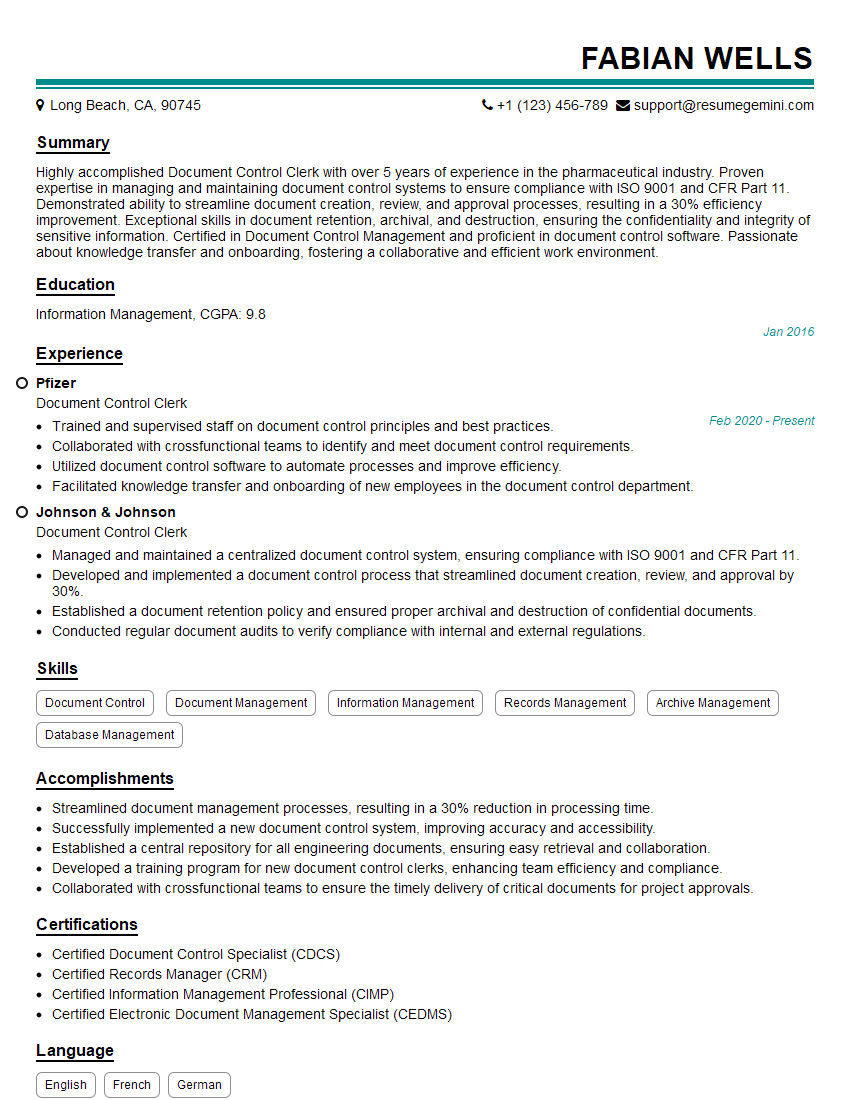
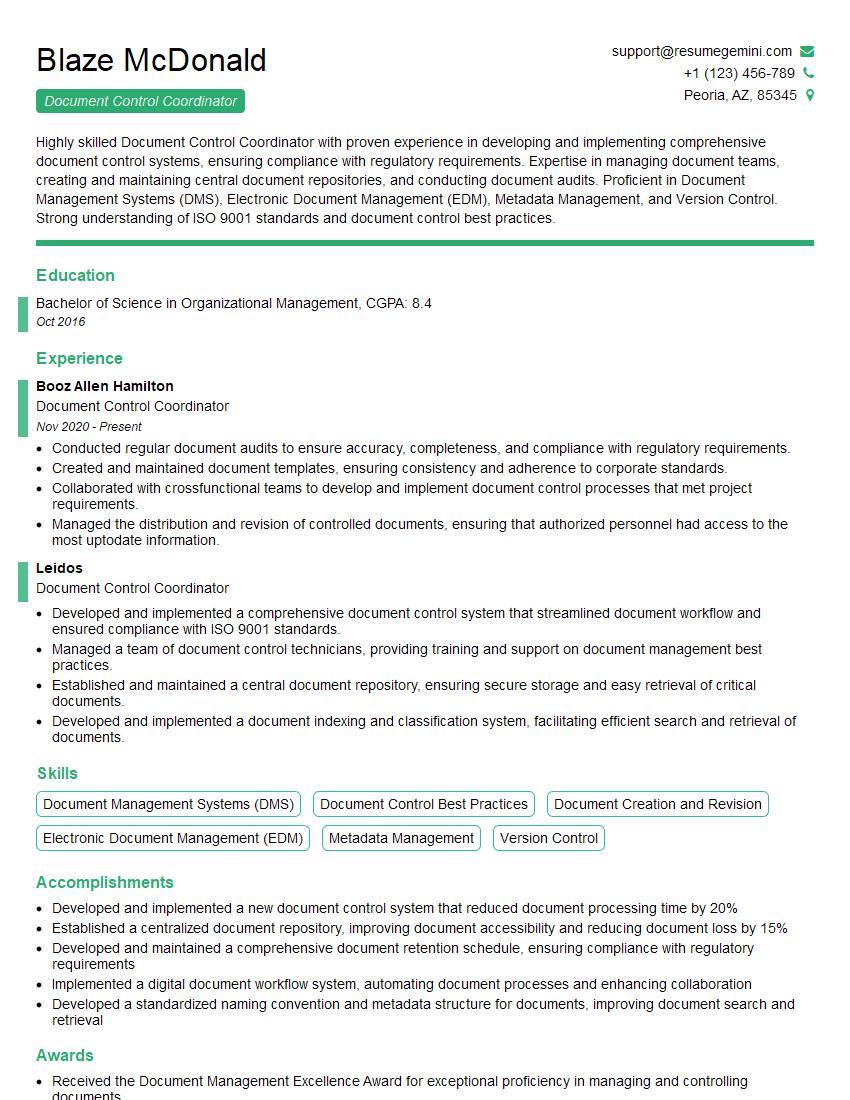
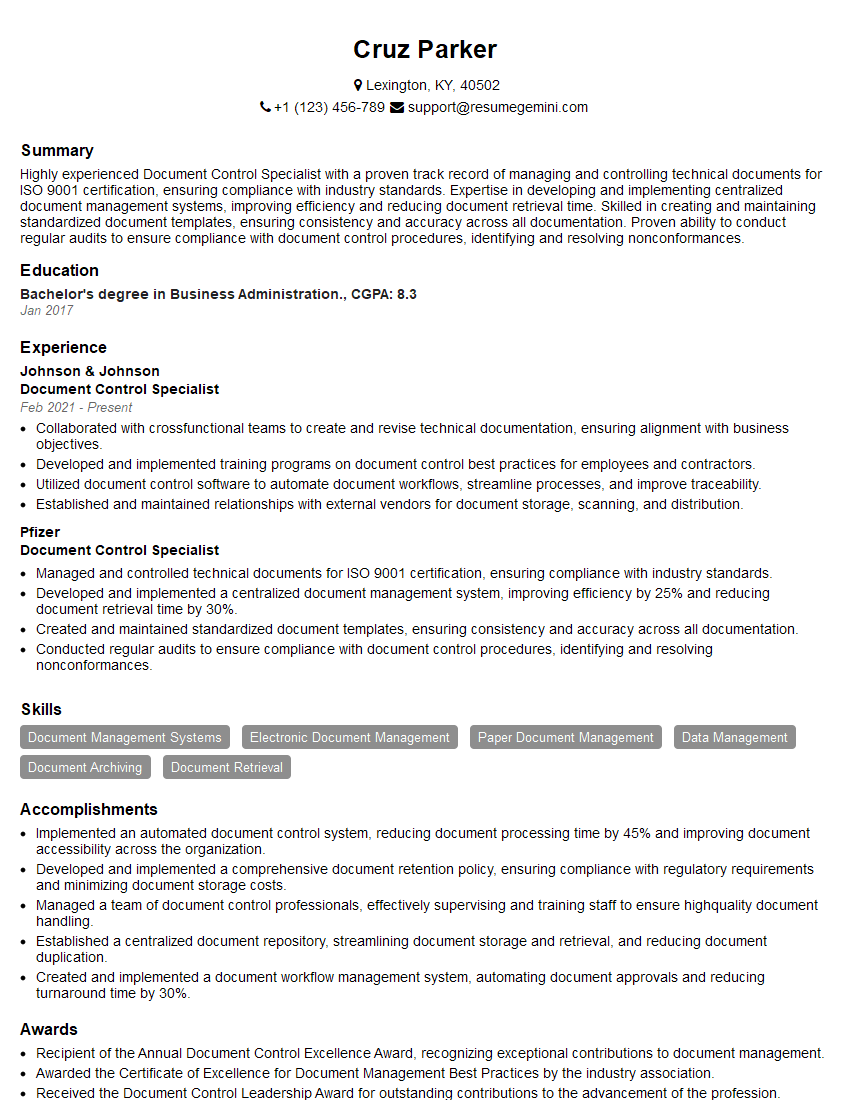
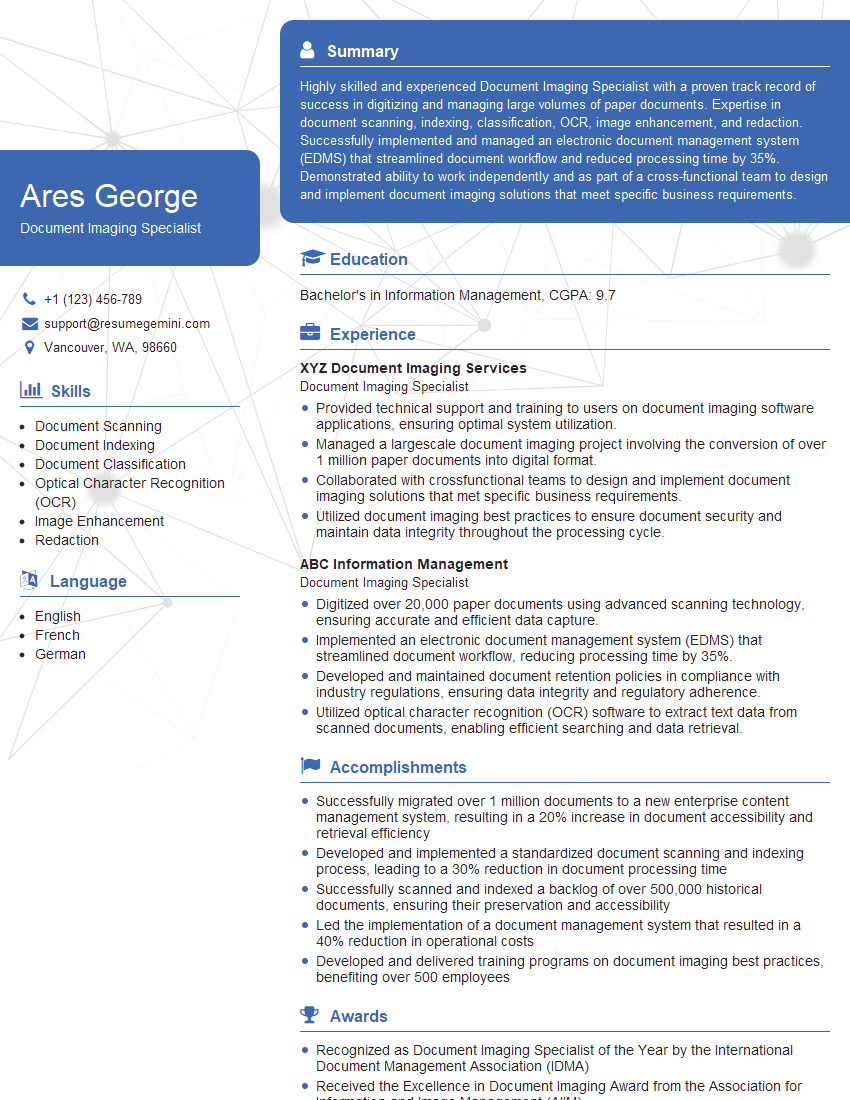
Mastering efficient paper stacking techniques is crucial for demonstrating organizational skills and attention to detail – highly valued attributes in many professional settings. A strong resume showcasing these skills is essential for securing your dream role. To significantly enhance your job prospects, create an ATS-friendly resume that highlights your abilities effectively. ResumeGemini is a trusted resource that can help you build a professional and impactful resume. We provide examples of resumes tailored to Paper Stacking to give you a head start. Use these examples as inspiration and leverage ResumeGemini’s tools to craft a resume that truly reflects your skills and experience.
Explore more articles
Users Rating of Our Blogs
Share Your Experience
We value your feedback! Please rate our content and share your thoughts (optional).
What Readers Say About Our Blog
Attention music lovers!
Wow, All the best Sax Summer music !!!
Spotify: https://open.spotify.com/artist/6ShcdIT7rPVVaFEpgZQbUk
Apple Music: https://music.apple.com/fr/artist/jimmy-sax-black/1530501936
YouTube: https://music.youtube.com/browse/VLOLAK5uy_noClmC7abM6YpZsnySxRqt3LoalPf88No
Other Platforms and Free Downloads : https://fanlink.tv/jimmysaxblack
on google : https://www.google.com/search?q=22+AND+22+AND+22
on ChatGPT : https://chat.openai.com?q=who20jlJimmy20Black20Sax20Producer
Get back into the groove with Jimmy sax Black
Best regards,
Jimmy sax Black
www.jimmysaxblack.com
Hi I am a troller at The aquatic interview center and I suddenly went so fast in Roblox and it was gone when I reset.
Hi,
Business owners spend hours every week worrying about their website—or avoiding it because it feels overwhelming.
We’d like to take that off your plate:
$69/month. Everything handled.
Our team will:
Design a custom website—or completely overhaul your current one
Take care of hosting as an option
Handle edits and improvements—up to 60 minutes of work included every month
No setup fees, no annual commitments. Just a site that makes a strong first impression.
Find out if it’s right for you:
https://websolutionsgenius.com/awardwinningwebsites
Hello,
we currently offer a complimentary backlink and URL indexing test for search engine optimization professionals.
You can get complimentary indexing credits to test how link discovery works in practice.
No credit card is required and there is no recurring fee.
You can find details here:
https://wikipedia-backlinks.com/indexing/
Regards
NICE RESPONSE TO Q & A
hi
The aim of this message is regarding an unclaimed deposit of a deceased nationale that bears the same name as you. You are not relate to him as there are millions of people answering the names across around the world. But i will use my position to influence the release of the deposit to you for our mutual benefit.
Respond for full details and how to claim the deposit. This is 100% risk free. Send hello to my email id: [email protected]
Luka Chachibaialuka
Hey interviewgemini.com, just wanted to follow up on my last email.
We just launched Call the Monster, an parenting app that lets you summon friendly ‘monsters’ kids actually listen to.
We’re also running a giveaway for everyone who downloads the app. Since it’s brand new, there aren’t many users yet, which means you’ve got a much better chance of winning some great prizes.
You can check it out here: https://bit.ly/callamonsterapp
Or follow us on Instagram: https://www.instagram.com/callamonsterapp
Thanks,
Ryan
CEO – Call the Monster App
Hey interviewgemini.com, I saw your website and love your approach.
I just want this to look like spam email, but want to share something important to you. We just launched Call the Monster, a parenting app that lets you summon friendly ‘monsters’ kids actually listen to.
Parents are loving it for calming chaos before bedtime. Thought you might want to try it: https://bit.ly/callamonsterapp or just follow our fun monster lore on Instagram: https://www.instagram.com/callamonsterapp
Thanks,
Ryan
CEO – Call A Monster APP
To the interviewgemini.com Owner.
Dear interviewgemini.com Webmaster!
Hi interviewgemini.com Webmaster!
Dear interviewgemini.com Webmaster!
excellent
Hello,
We found issues with your domain’s email setup that may be sending your messages to spam or blocking them completely. InboxShield Mini shows you how to fix it in minutes — no tech skills required.
Scan your domain now for details: https://inboxshield-mini.com/
— Adam @ InboxShield Mini
Reply STOP to unsubscribe
Hi, are you owner of interviewgemini.com? What if I told you I could help you find extra time in your schedule, reconnect with leads you didn’t even realize you missed, and bring in more “I want to work with you” conversations, without increasing your ad spend or hiring a full-time employee?
All with a flexible, budget-friendly service that could easily pay for itself. Sounds good?
Would it be nice to jump on a quick 10-minute call so I can show you exactly how we make this work?
Best,
Hapei
Marketing Director
Hey, I know you’re the owner of interviewgemini.com. I’ll be quick.
Fundraising for your business is tough and time-consuming. We make it easier by guaranteeing two private investor meetings each month, for six months. No demos, no pitch events – just direct introductions to active investors matched to your startup.
If youR17;re raising, this could help you build real momentum. Want me to send more info?
Hi, I represent an SEO company that specialises in getting you AI citations and higher rankings on Google. I’d like to offer you a 100% free SEO audit for your website. Would you be interested?
Hi, I represent an SEO company that specialises in getting you AI citations and higher rankings on Google. I’d like to offer you a 100% free SEO audit for your website. Would you be interested?