The right preparation can turn an interview into an opportunity to showcase your expertise. This guide to Passion for cycling and the bicycle industry interview questions is your ultimate resource, providing key insights and tips to help you ace your responses and stand out as a top candidate.
Questions Asked in Passion for cycling and the bicycle industry Interview
Q 1. Describe your experience with different bicycle types (road, mountain, hybrid).
My experience spans across various bicycle types, each offering a unique riding experience and demanding specific handling skills. Road bikes, with their lightweight frames and drop handlebars, are optimized for speed and efficiency on paved surfaces. I’ve logged countless miles on road bikes, participating in group rides and solo endurance challenges, learning to navigate varied terrains and weather conditions. Mountain bikes, on the other hand, are built for rugged trails and off-road adventures. I’ve extensively used both hardtail and full-suspension mountain bikes, mastering technical climbs, descents, and navigating obstacles. My experience includes tackling challenging single-track trails and participating in mountain biking competitions. Hybrid bikes provide a versatile blend of road and mountain bike features, ideal for commuting and recreational riding on mixed surfaces. I’ve used hybrids for commuting, light touring, and exploring local paths, appreciating their practicality and comfort. Each type demands a different riding style and presents unique maintenance challenges, all of which I’ve learned to manage effectively.
Q 2. Explain the process of a standard bicycle tune-up.
A standard bicycle tune-up involves a systematic check and adjustment of various components to ensure optimal performance and safety. It begins with a thorough inspection of the entire bicycle, checking for any signs of damage or wear and tear. The process typically includes:
- Wheels: Checking wheel trueness, spoke tension, and tire pressure. Addressing any wobbles or issues with spoke tension.
- Brakes: Inspecting brake pads for wear, adjusting brake cable tension for optimal stopping power, and ensuring proper cable routing.
- Drivetrain: Cleaning and lubricating the chain, cassette, and derailleurs. Adjusting derailleur limits and cable tension for smooth shifting.
- Bottom Bracket and Crankset: Checking for play or looseness in the bottom bracket and crank arms. Tightening any loose components.
- Headset: Checking for headset play and tightening as needed. This ensures smooth steering.
- Handlebars and Stem: Checking for tightness of the handlebar and stem bolts to ensure secure attachment.
- Tires: Checking tire pressure and inspecting tires for cuts or embedded objects.
A tune-up might also involve minor repairs or adjustments as needed. Think of it like a preventative maintenance check-up for your bicycle, ensuring it’s running smoothly and safely.
Q 3. What are the common problems associated with bicycle derailleurs?
Derailleurs, the mechanisms that shift the chain between the gears, are susceptible to several common problems. These include:
- Poor Shifting: This can be caused by worn-out cables, misaligned derailleurs, bent derailleur hangers, or a dirty/worn cassette and chain. The shifting might be sluggish, skip gears, or fail altogether.
- Chain Drop: The chain might fall off the cassette or chainrings due to incorrectly adjusted limits, bent derailleur, or a worn chain.
- Cable Issues: Stretched or frayed cables can hinder smooth shifting. Corrosion within the housing can also impede the cable’s movement.
- Derailleur Hanger Damage: These small metal parts are prone to bending in crashes, resulting in significant shifting problems. A bent hanger needs replacement.
- Worn Components: Excessive wear on the cassette, chain, and chainrings can lead to poor shifting performance and inefficient power transfer.
Troubleshooting often involves careful inspection, adjustment, and potentially replacing worn parts. A derailleur hanger alignment tool is very helpful in resolving issues caused by a bent hanger.
Q 4. How do you troubleshoot flat tires efficiently?
Troubleshooting a flat tire efficiently involves a methodical approach. First, I assess the situation: where am I, what tools do I have, and what type of tire is it?
- Locate the puncture: Inflate the tire slightly to feel for the leak. Gently rotate the tire to locate it.
- Deflate the tire completely: This makes the removal process easier.
- Remove the wheel: This depends on your bike type but generally involves releasing the quick-release lever or loosening the axle nuts.
- Remove the tire from the rim: Use tire levers carefully to avoid damaging the rim or tire.
- Inspect the inner tube: Find the puncture using visual inspection or by inflating the tube slightly under water to see the bubbles. Mark the area clearly.
- Replace the inner tube: Install the new inner tube, ensuring it’s properly seated inside the tire.
- Re-install the tire onto the rim: Ensure the tire bead is properly seated in the rim channel.
- Re-install the wheel: Secure the wheel and pump up the tire.
Carrying a spare inner tube, tire levers, and a pump is crucial for efficient flat tire repair. Knowing how to quickly and safely repair a flat tire on the road is a fundamental cycling skill.
Q 5. What are your preferred methods for cleaning and maintaining bicycles?
My preferred method for cleaning and maintaining bicycles combines thoroughness with care. I typically start by using a dedicated bicycle cleaner and a soft brush to remove dirt and grime from the frame, components, and wheels. I pay particular attention to the drivetrain (chain, cassette, and derailleurs), where dirt buildup significantly impacts performance. Following the cleaning, I apply a high-quality lubricant to the chain, ensuring complete coverage. I also inspect the cables for wear and tear. For more detailed cleaning, I might use a degreaser to remove stubborn grease and grime from the drivetrain components. Regular maintenance includes checking and adjusting the brakes, derailleurs, and other components as needed. After a cleaning, I’ll wipe the bike down with a clean, soft cloth to remove any excess cleaner or lubricant.
For longer-term storage, keeping the bike clean, and applying corrosion protectant can help increase its lifespan. This process prevents the buildup of rust and corrosion and reduces wear and tear.
Q 6. Describe your experience with bicycle wheel building.
My experience with bicycle wheel building encompasses the entire process, from selecting appropriate components to tensioning and truing the finished wheel. I have hands-on experience in selecting and lacing spokes, ensuring proper spoke patterns and tension. The process requires attention to detail and understanding of the wheel building principles, particularly the impact of spoke tension on wheel strength and trueness. Truing the wheel, the process of adjusting the spoke tension to ensure the rim is perfectly round and laterally aligned, requires a truing stand and patience. Precise measurements and adjustments are crucial in achieving a well-built and reliable wheel. Building wheels is a highly skilled task that combines technical expertise with a meticulous approach. It’s deeply satisfying to build a wheel from scratch and know its construction quality.
Q 7. What types of bicycle brakes are you familiar with, and their pros/cons?
I’m familiar with several types of bicycle brakes, each with its own strengths and weaknesses:
- Rim Brakes: These are the traditional type, using brake pads that squeeze against the rim of the wheel to create friction. They are relatively simple, lightweight, and easy to maintain. However, they are less effective in wet conditions and can wear down rims over time.
- Caliper Brakes (Side-pull): A specific type of rim brake, offering decent stopping power. However they also suffer from poor wet weather performance.
- V-Brakes: Another type of rim brake, offering more stopping power than caliper brakes due to their design. They’re still affected by wet conditions but are more robust.
- Disc Brakes (Mechanical and Hydraulic): These use a rotor attached to the wheel and a caliper that squeezes brake pads against the rotor. Disc brakes offer superior stopping power in all weather conditions and are less prone to fading. They are more complex and expensive than rim brakes, and can add weight to the bike. Hydraulic disc brakes provide superior modulation and feel compared to mechanical disc brakes.
The choice of brake type depends on the intended use of the bicycle. Road bikes often feature rim brakes or disc brakes, while mountain bikes almost universally utilize disc brakes due to their superior stopping power on demanding terrain.
Q 8. How do you assess the fit of a bicycle for a customer?
Proper bicycle fit is crucial for comfort, performance, and injury prevention. It’s a multi-point assessment, not just about frame size. We begin with a detailed interview, understanding the customer’s riding style (road, mountain, commuting), experience level, and any physical limitations or discomfort they’ve previously experienced.
The assessment itself involves several key measurements: inseam (to determine frame size), arm length (for handlebar reach), torso length (for stem length), and shoulder width (for handlebar width). We use these measurements to determine the optimal reach, stack (vertical height), and overall geometry of the bike. We also consider saddle height and position, which significantly impact pedaling efficiency and comfort. For example, a saddle that’s too low can strain the knees, while one that’s too high can cause hip pain. We often make minor adjustments during a test ride, fine-tuning the position until the customer feels completely comfortable and in control. It’s an iterative process aiming for a harmonious interaction between rider and machine.
- Inseam Measurement: Crucial for determining frame size. We usually measure from the crotch to the floor, while the customer is barefoot.
- Reach and Stack Adjustments: These are altered through stem length and handlebar position. Too much reach can strain the back, while too little can lead to cramped shoulders.
- Saddle Height and Fore/Aft Position: These affect pedaling efficiency and comfort. Incorrect saddle positioning can lead to knee pain or numbness.
Q 9. Describe your experience with bicycle repair tools and equipment.
My experience with bicycle repair tools and equipment is extensive. I’m proficient with a wide range of tools, from basic wrenches and screwdrivers to specialized equipment like truing stands, spoke tension meters, and headset presses. I’m comfortable working on all aspects of bicycle maintenance and repair, from simple flat tire fixes to complex drivetrain overhauls. I regularly use torque wrenches to ensure that components are properly tightened, avoiding damage. My workbench is equipped with all the essential tools and safety equipment required for efficient and safe repair work. I also have experience using specialized tools for working on carbon fiber frames, such as torque wrenches calibrated specifically for the material’s delicate nature.
For example, I’ve successfully repaired damaged carbon fiber frames using specialized resins and curing processes. I’ve also rebuilt wheels from scratch, accurately measuring and adjusting spoke tension for optimum performance and durability. My tool collection is constantly evolving as new technologies and repair techniques emerge, allowing me to handle almost any bicycle repair job.
Q 10. What is your knowledge of bicycle components and their functions?
I possess a comprehensive understanding of bicycle components and their functions. This ranges from the frame, fork, and wheels to the groupset (shifters, derailleurs, brakes, crankset, bottom bracket), and other components like handlebars, stem, seatpost, saddle, pedals, and tires. I understand how each component interacts with others to create a functional and efficient bicycle system. For example, I understand how tire pressure affects rolling resistance and grip, the impact of different cassette ratios on climbing versus sprinting, and how different brake types provide varying levels of stopping power. I can identify and troubleshoot issues with any of these components, accurately diagnosing malfunctions and implementing effective repairs.
- Groupset: This is the heart of the drivetrain. I understand the intricacies of indexed shifting, cable routing, and derailleur adjustment.
- Brakes: I’m knowledgeable about rim brakes, disc brakes (hydraulic and mechanical), and their maintenance.
- Wheels: I understand wheel building, truing, and the importance of proper spoke tension.
Q 11. How familiar are you with different bicycle frame materials (aluminum, carbon fiber, steel)?
I am very familiar with the properties of different bicycle frame materials: aluminum, carbon fiber, and steel. Each material has its own unique characteristics that affect the ride quality, durability, and weight of the bicycle.
- Aluminum: Known for its strength-to-weight ratio, durability, and relatively low cost. It’s a popular choice for all types of bicycles but can be susceptible to fatigue if overstressed.
- Carbon Fiber: Offers exceptional stiffness and lightweight properties, making it ideal for high-performance bicycles. However, it’s more expensive and requires specialized repair techniques. Damage is less visible than with other materials, so careful inspection is crucial.
- Steel: Offers a compliant and comfortable ride, with excellent durability and repairability. It’s a popular choice for touring and gravel bikes. However, it’s heavier than aluminum or carbon fiber.
My experience allows me to advise customers on the best material choice based on their individual riding style and preferences. For example, a casual commuter might find an aluminum frame perfectly adequate, while a serious racer might prefer the lightweight performance of carbon fiber.
Q 12. Explain the differences between various types of bicycle tires.
Bicycle tires vary significantly in terms of construction, tread pattern, and intended use. Understanding these differences is vital for selecting the correct tire for a given riding condition.
- Construction: Tires can be wired (using a steel wire bead), folding (using a flexible aramid or Kevlar bead), or tubeless-ready. Tubeless tires offer superior puncture protection and lower rolling resistance.
- Tread Pattern: Slick tires are designed for smooth surfaces like paved roads, offering minimal rolling resistance. Tread patterns with knobs are designed for off-road use, providing grip and traction on loose surfaces. The depth and spacing of knobs will vary depending on the intended terrain.
- Intended Use: Road tires are typically slick, while mountain bike tires feature aggressive tread patterns. Gravel tires provide a compromise, offering decent traction on both paved and unpaved surfaces.
For example, a road cyclist would use slick tires for speed and efficiency, while a mountain biker would use knobby tires for optimal grip and traction on trails.
Q 13. Describe your experience with bicycle suspension systems.
My experience with bicycle suspension systems encompasses both front (fork) and rear suspension designs. I understand the mechanics of various suspension technologies, including air springs, coil springs, and dampers. I can diagnose and repair common suspension issues such as air leaks, oil leaks, and damper malfunctions. I am familiar with different suspension adjustments, such as rebound, compression, and lockout settings, and how these affect the ride quality. I can also explain the differences between various suspension designs, such as air versus coil, and their suitability for different riding styles and terrains. I’m familiar with servicing and maintaining suspension components, ensuring proper lubrication and adjusting settings for optimal performance. Understanding suspension sag, and its relationship to the rider’s weight, is essential for correctly setting up any suspension system.
For example, I can guide a customer on adjusting their suspension based on their weight and riding style, helping them find the optimal balance between comfort, control, and efficiency.
Q 14. How do you diagnose and resolve issues with bicycle shifting?
Diagnosing and resolving shifting issues requires a systematic approach. I begin by visually inspecting the drivetrain, checking for bent derailleurs, damaged cables, or worn chain. I then assess the shifting performance, noting any inconsistencies or jumps in the chain.
Common problems include cable stretching, misadjusted derailleurs, worn cassette or chain, or dirty components. My troubleshooting process usually involves checking cable tension, adjusting derailleur limits, and cleaning the drivetrain. I use specialized tools to measure cable tension and adjust derailleur alignment precisely. Sometimes a simple cable adjustment can solve the issue. In more severe cases, replacing worn components like chains or cassettes might be necessary. Proper lubrication of the entire drivetrain plays a crucial role in smooth, consistent shifting. I often use a chain wear tool to accurately assess the wear state of the chain and ensure that replacement is done when needed to prevent damage to the cassette and chainrings.
For example, if a customer experiences ghost shifting (unexpected gear changes), I would check the cable tension, derailleur alignment, and look for any interference with the cable housing. I might carefully lubricate the cable and housing to ensure smooth cable movement.
Q 15. What is your knowledge of bicycle safety standards and regulations?
Bicycle safety standards and regulations are crucial for ensuring the safety of cyclists. My knowledge encompasses both international and national standards, focusing on areas like bicycle construction, braking systems, and component safety. For example, I’m familiar with the European Union’s EN standards (like EN 14766 for bicycles) and the Consumer Product Safety Commission (CPSC) regulations in the US. These standards dictate requirements for things like frame strength, handlebar and stem clamping forces, and brake performance. I understand the importance of regular safety checks, including tire pressure, brake function, and overall structural integrity. A lack of adherence to these standards can lead to serious accidents, highlighting the importance of rigorous quality control and consumer awareness.
- EN Standards (EU): These cover various aspects of bicycle design and safety, ensuring a minimum level of quality and safety for bicycles sold within the EU.
- CPSC Standards (US): Similar to EU standards, these regulations define safety requirements for bicycles sold in the United States, focusing on preventing accidents and injuries.
- ISO Standards (International): These provide a global framework for bicycle safety, offering guidelines that many national standards build upon.
Career Expert Tips:
- Ace those interviews! Prepare effectively by reviewing the Top 50 Most Common Interview Questions on ResumeGemini.
- Navigate your job search with confidence! Explore a wide range of Career Tips on ResumeGemini. Learn about common challenges and recommendations to overcome them.
- Craft the perfect resume! Master the Art of Resume Writing with ResumeGemini’s guide. Showcase your unique qualifications and achievements effectively.
- Don’t miss out on holiday savings! Build your dream resume with ResumeGemini’s ATS optimized templates.
Q 16. Describe your experience working in a fast-paced retail environment (bike shop).
My experience in a fast-paced bike shop environment honed my skills in customer service, sales, and inventory management. I thrived in the high-energy atmosphere, juggling multiple tasks simultaneously – from assisting customers with repairs and part selection to processing sales and managing stock levels. One busy Saturday, for instance, we had a sudden influx of customers needing flat tire repairs. I efficiently coordinated with my colleagues, prioritizing customers based on urgency and ensuring everyone received prompt, professional service. This experience built my resilience and ability to perform under pressure, key traits for any successful retail professional.
Beyond immediate customer needs, I actively contributed to maintaining a well-organized and visually appealing shop floor. This involved constantly restocking shelves, arranging displays, and ensuring the shop was always clean and welcoming. This attention to detail improved customer experience and contributed to higher sales.
Q 17. How do you handle customer complaints or difficult situations?
Handling customer complaints requires a calm, empathetic, and solution-oriented approach. I start by actively listening to the customer’s concerns without interrupting, demonstrating genuine understanding and validating their feelings. Once I fully grasp the issue, I offer a sincere apology even if the problem wasn’t directly my fault. Then, I work collaboratively with the customer to find a mutually agreeable solution, whether it involves a repair, a refund, or an exchange. For example, I once had a customer complain about a faulty derailleur on a newly purchased bike. After listening to their frustration, I offered to immediately inspect and repair the bike or offer a replacement if necessary. The customer appreciated the swift and proactive response, transforming a negative experience into a positive one. Ultimately, focusing on building rapport and showing genuine care often diffuses even the most difficult situations.
Q 18. How would you approach selling a high-end bicycle to a customer?
Selling a high-end bicycle requires more than just showcasing the product’s features; it’s about understanding the customer’s needs and aspirations. I begin by engaging in a conversation to understand their riding style, experience level, and the kind of riding they plan to do. This helps me determine which features are most relevant to them. I then explain the technological advancements, highlighting the benefits specific to their needs. For instance, if they’re an avid endurance rider, I’d emphasize the lightweight frame, efficient drivetrain, and comfortable geometry. I would avoid technical jargon and instead use relatable analogies. Finally, I focus on the long-term value and satisfaction of owning a high-quality bike, emphasizing the superior performance and lasting durability. The sale isn’t about a transaction; it’s about building a long-term relationship with a customer who values quality and performance.
Q 19. How do you stay updated with the latest trends and technologies in the cycling industry?
Staying updated in the rapidly evolving cycling industry is a continuous process. I subscribe to leading cycling magazines like Bicycle Retailer & Industry News and Road Bike Action, follow industry influencers on social media, and attend trade shows like Eurobike and Interbike. I also actively participate in online forums and communities, engaging with fellow enthusiasts and professionals to discuss new technologies and trends. Furthermore, I regularly review manufacturer websites and technical publications to stay informed about advancements in materials, component design, and bicycle technology. This multi-faceted approach ensures I remain at the forefront of industry knowledge.
Q 20. Describe your experience with inventory management in a bicycle shop.
Inventory management in a bike shop requires precision and efficiency. My experience involves utilizing inventory management software to track stock levels, monitor sales trends, and predict future demand. This allows for optimal ordering of parts and bikes, preventing stockouts and minimizing storage costs. I also implement a system of regular stock checks to ensure accuracy and identify any discrepancies. Accurate inventory management is essential for avoiding customer disappointments and ensuring the smooth operation of the business. I understand the financial implications of overstocking and understocking and actively manage the process to optimize profitability.
Q 21. How do you manage your time effectively when dealing with multiple customers?
Managing my time effectively with multiple customers requires a strategic approach. I use a combination of prioritization, multitasking, and efficient communication. Upon arrival, I quickly assess each customer’s needs, prioritizing those requiring urgent attention, such as safety-related repairs. I acknowledge all customers promptly, even if I cannot immediately attend to them, providing a realistic timeframe for service. While working with one customer, I might begin a related task for another, such as preparing a part for a repair or looking up information for a future order. This system allows me to effectively manage multiple requests simultaneously without compromising the quality of service to any individual customer. Smooth, clear communication is key to preventing frustration and maintaining a positive atmosphere.
Q 22. Describe your understanding of bicycle maintenance schedules.
Bicycle maintenance schedules are crucial for ensuring optimal performance, safety, and longevity of your bike. They vary based on riding frequency, terrain, and bike type. A basic schedule generally involves daily checks, weekly checks, and monthly/seasonal servicing.
- Daily Checks: Quick visual inspection of tires (pressure, wear), brakes (functionality), and quick release levers (tightness). This takes only a few minutes and prevents small issues from becoming major problems.
- Weekly Checks: More thorough inspection including drivetrain lubrication (chain, derailleurs, cassette), brake cable tension, and tire pressure check.
- Monthly/Seasonal Checks: This involves a deeper clean, full drivetrain lubrication, tightening of all bolts, inspection of wheel bearings and hubs, and a potential professional tune-up depending on your experience level. Before winter storage, it’s essential to clean your bike thoroughly and potentially apply protective coatings to prevent rust.
Think of it like servicing your car: regular smaller checks prevent larger, more expensive repairs down the road. A proactive approach to maintenance maximizes your bike’s lifespan and enhances your riding experience.
Q 23. What is your knowledge of different types of bicycle gears and their ratios?
Bicycle gears work in a system of chainrings (front) and cogs (rear cassette), creating various gear ratios. The gear ratio determines how many rotations of the pedals are needed for one rotation of the wheel. A lower gear ratio (e.g., 22/34) is easier to pedal, ideal for hills or starting, while a higher gear ratio (e.g., 50/11) provides greater speed on flat terrain but requires more effort.
Different types of gears include:
- Single-speed: Simplest system with one fixed gear ratio.
- Multi-speed (derailleur): Most common type using derailleurs (front and rear) to shift between various chainring and cog combinations, offering a wide range of gear ratios. This uses a cable-operated system to shift the chain across gears.
- Internal hub gears: Gears are housed within the rear hub, offering smooth shifting, and are less susceptible to the elements.
Understanding gear ratios is crucial for efficient cycling. For instance, a cyclist climbing a steep hill should use a lower gear ratio to maintain a comfortable cadence (pedal rotation speed) and prevent excessive strain. Conversely, on a flat road, a higher gear ratio allows for faster speeds.
Q 24. Explain your experience with e-bike maintenance and repair.
E-bike maintenance is similar to standard bike maintenance but includes the added complexity of the electric system. My experience encompasses troubleshooting and repairing various e-bike components, including:
- Battery maintenance: Proper charging practices, battery health checks, and troubleshooting charging issues are crucial.
- Motor repair and diagnostics: Diagnosing motor malfunctions, including issues with power delivery or noise, and replacing faulty components.
- Controller diagnostics: Troubleshooting problems with the electronic control unit (ECU), which manages power to the motor.
- Display unit repair: Repairing or replacing faulty display units that provide crucial information to the rider.
- Sensor checks: Checking the functionality of sensors, like speed and cadence sensors.
One memorable instance involved diagnosing an e-bike with intermittent power loss. After systematically checking all the components, I traced the issue to a faulty connection in the wiring harness leading to the motor. Repairing the connection solved the problem, underscoring the importance of careful diagnostics in e-bike maintenance.
Q 25. Describe your experience using point-of-sale (POS) systems in a retail environment.
My experience with point-of-sale (POS) systems in a retail bike shop setting involved processing sales transactions, managing inventory, and generating reports. I am proficient in using various POS systems, including those with integrated inventory management features. I can efficiently handle customer transactions, process payments, issue receipts, and manage returns and exchanges.
I am familiar with tasks like:
- Processing sales transactions: Accurately recording sales, applying discounts, and handling various payment methods.
- Inventory management: Updating stock levels, tracking sales data, and managing low-stock alerts.
- Generating reports: Creating sales reports, inventory reports, and other relevant data for business analysis.
- Customer relationship management (CRM): Using the POS system to capture customer information for future communication and personalized service.
Understanding POS systems is vital for smooth daily operations in a retail environment, ensuring accurate sales data and efficient inventory management.
Q 26. How do you handle the repair of carbon fiber bicycle frames?
Carbon fiber frames require specialized handling due to their delicate nature. Repairing them is typically best left to trained professionals with the right equipment. Minor scratches and superficial damage can sometimes be addressed with careful sanding and repainting, but significant structural damage usually necessitates replacement.
Attempting major repairs without proper knowledge and equipment could weaken the frame, significantly compromising safety. Proper repair involves:
- Assessment of damage: A thorough examination to assess the extent and type of damage, using specialized tools like ultrasonic testing or x-ray imaging if necessary.
- Specialized repair materials: Using carbon fiber repair kits and resin systems designed specifically for carbon fiber composite materials.
- Precise repair techniques: Employing techniques like applying specialized resin, using appropriate curing processes, and meticulously sanding and finishing the repair area to ensure proper strength and aesthetics.
In short, while minor cosmetic issues can be addressed, structural repairs on carbon fiber frames are best handled by experienced professionals to guarantee the frame’s integrity and rider safety.
Q 27. What safety measures do you take while working on bicycles?
Safety is paramount when working on bicycles. My approach always prioritizes preventative measures:
- Eye protection: Wearing safety glasses to protect from flying debris during cleaning, repair, or maintenance tasks.
- Hand protection: Using gloves to protect hands from sharp edges, grease, and chemicals.
- Proper tools: Using the correct tools for the job to prevent injury. This includes well-maintained tools to avoid slips or breakage.
- Workspace setup: Maintaining a clean and organized workspace to avoid accidental injuries. A well-lit area helps avoid eye strain.
- Secure bike handling: Using a bike stand or other secure method to prevent accidental drops or falls.
- Chemical safety: Using appropriate ventilation and protective measures when handling cleaning agents or solvents.
By prioritizing these safety measures, the risk of injury is significantly reduced, ensuring both personal and customer safety.
Q 28. Describe your experience with bicycle repair documentation and record-keeping.
Thorough bicycle repair documentation and record-keeping are essential for several reasons, including warranty claims, future reference, and tracking customer interactions.
My approach incorporates:
- Customer information: Recording customer name, contact information, and bike details.
- Detailed work order: Creating a comprehensive record of the repairs undertaken, including parts used, labor hours, and any specific issues encountered.
- Digital photography: Taking photos of the bike before, during, and after repairs to document the work performed.
- Warranty tracking: Accurately recording warranty information and related repair details.
- Organized filing system: Maintaining a well-organized digital or physical filing system to easily access previous repair records.
This detailed approach ensures accountability, aids in efficient problem-solving, and provides excellent customer service by maintaining a clear history of all repairs.
Key Topics to Learn for a Passion for Cycling and the Bicycle Industry Interview
- Bicycle Technology & Mechanics: Understanding frame materials (carbon fiber, aluminum, steel), drivetrain components (derailleurs, shifters, cassettes), braking systems (disc brakes, rim brakes), wheel technologies, and suspension systems. Consider practical application: troubleshooting common mechanical issues, evaluating component performance, and explaining the benefits of different technologies.
- Cycling Industry Trends: Stay updated on current market trends, including e-bikes, gravel bikes, and cycling apparel. Explore the impact of technology, sustainability, and consumer preferences on the industry. Practical application: Analyzing market data, identifying emerging opportunities, and discussing innovative product development.
- Business & Marketing in Cycling: Understand retail operations, distribution channels, marketing strategies (digital marketing, social media), and brand management within the cycling industry. Practical application: Developing marketing campaigns, analyzing sales data, and understanding consumer behavior in the cycling market.
- Cycling Culture & Community: Demonstrate knowledge of different cycling disciplines (road, mountain, gravel, etc.), relevant events (races, group rides), and the broader cycling community. Practical application: Discuss event participation, community engagement strategies, and the importance of fostering a positive cycling culture.
- Safety & Regulations: Understand cycling safety regulations, equipment requirements, and best practices for promoting safe cycling. Practical application: Discussing safety protocols, risk management, and compliance with industry standards.
Next Steps
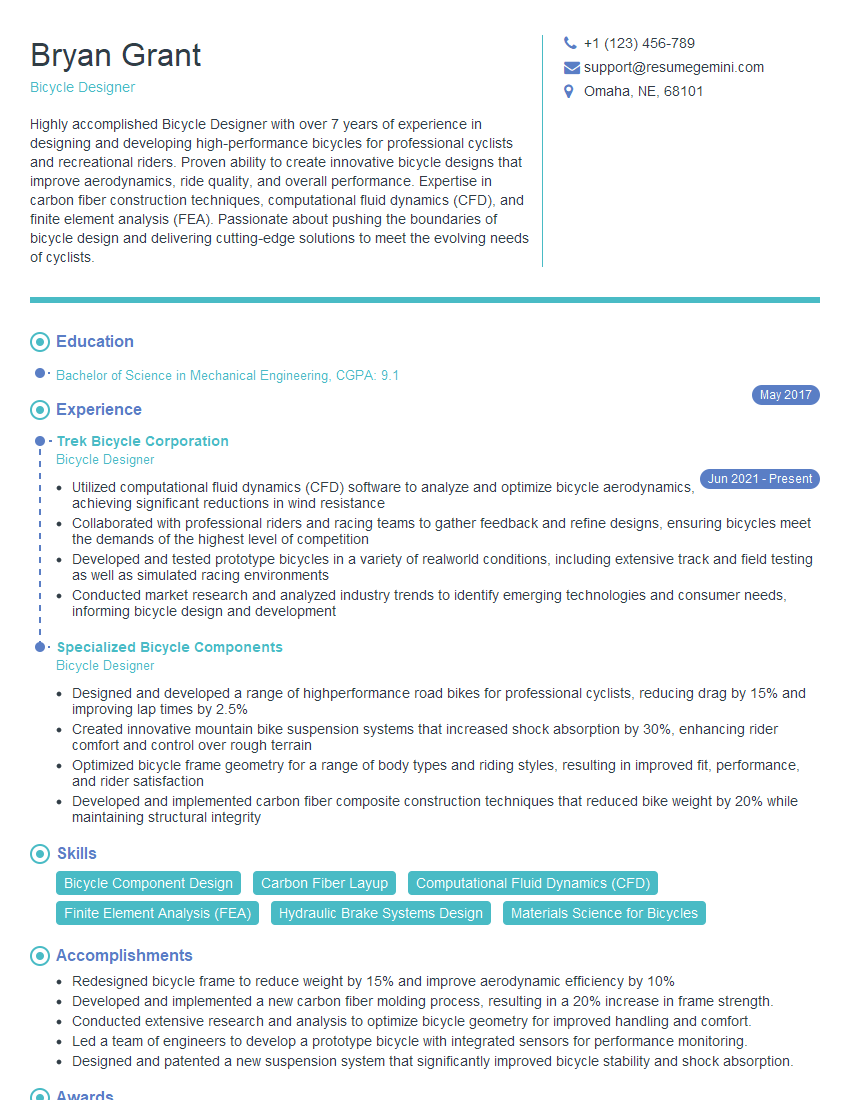
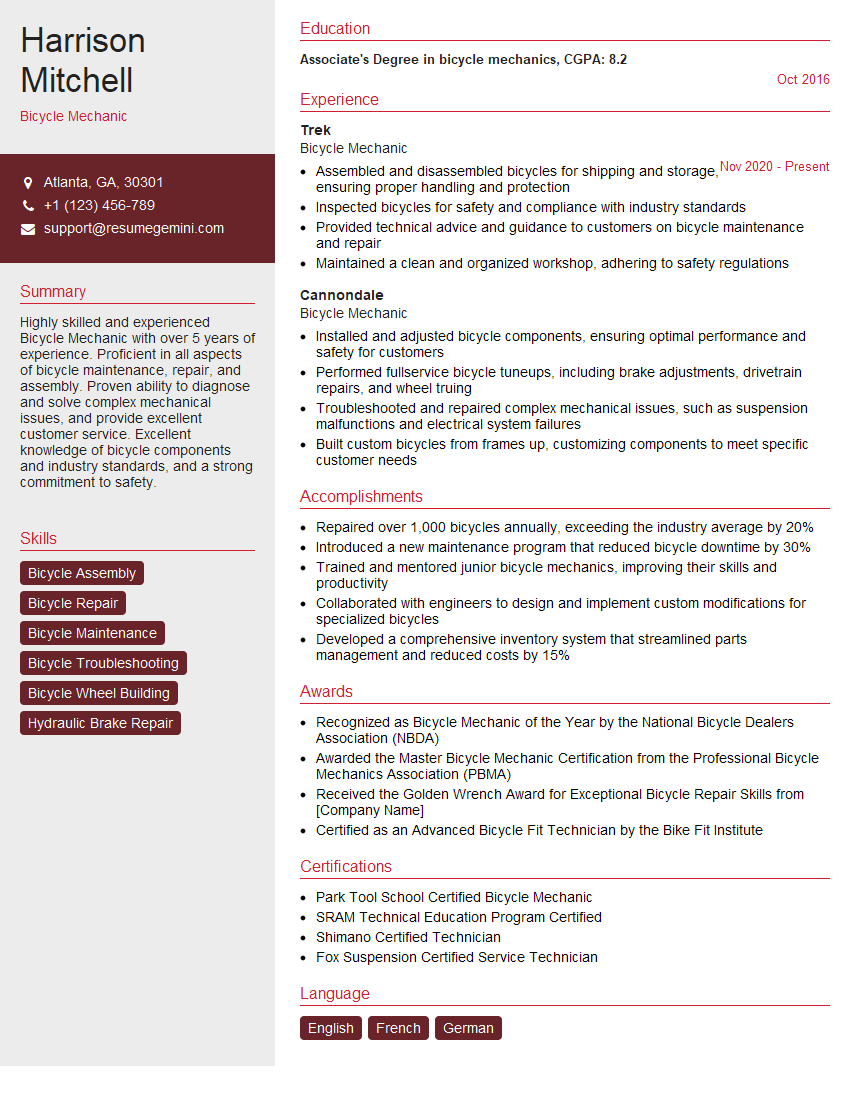
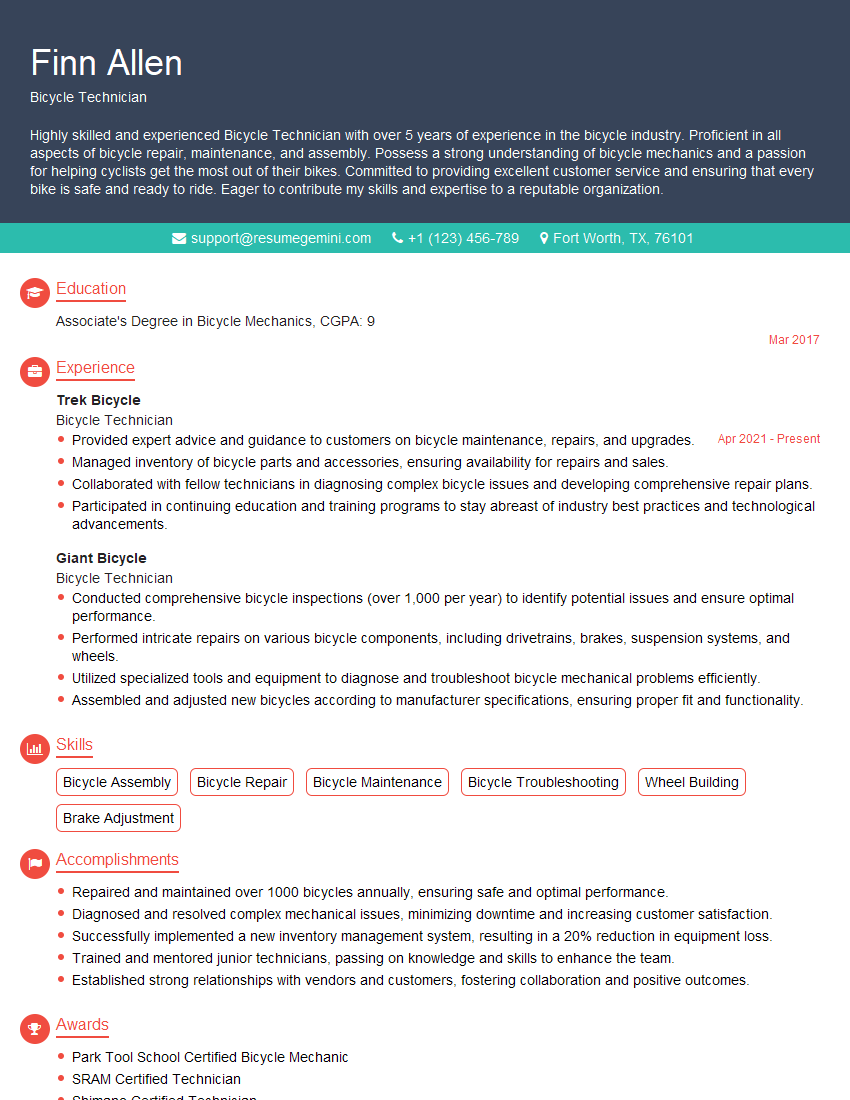
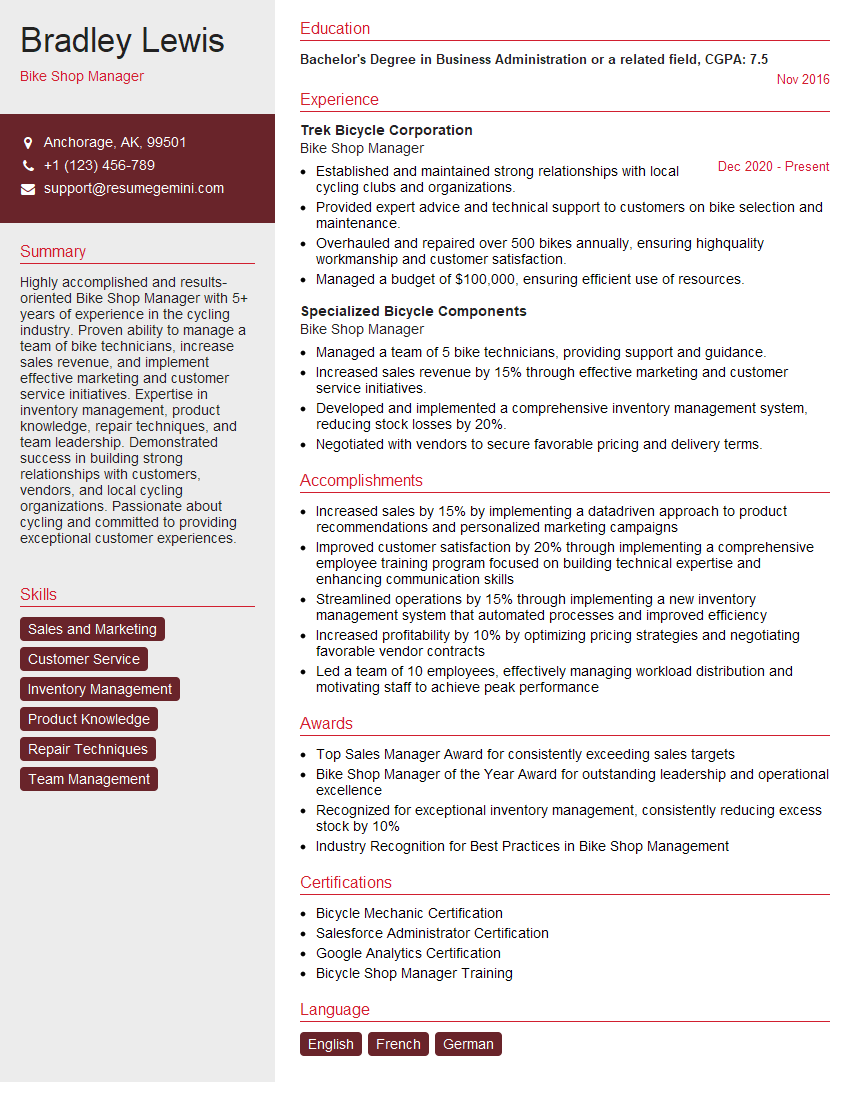
Mastering the intricacies of the cycling industry and demonstrating a genuine passion for cycling is crucial for career advancement. A strong understanding of these topics will significantly enhance your interview performance and increase your chances of securing your dream role. To further strengthen your application, create an ATS-friendly resume that highlights your skills and experience effectively. ResumeGemini is a trusted resource to help you build a professional and impactful resume. Examples of resumes tailored to the cycling industry are available to help guide you. Invest time in crafting a compelling resume – it’s your first impression and a key to unlocking exciting career opportunities.


Explore more articles
Users Rating of Our Blogs
Share Your Experience
We value your feedback! Please rate our content and share your thoughts (optional).
What Readers Say About Our Blog
Attention music lovers!
Wow, All the best Sax Summer music !!!
Spotify: https://open.spotify.com/artist/6ShcdIT7rPVVaFEpgZQbUk
Apple Music: https://music.apple.com/fr/artist/jimmy-sax-black/1530501936
YouTube: https://music.youtube.com/browse/VLOLAK5uy_noClmC7abM6YpZsnySxRqt3LoalPf88No
Other Platforms and Free Downloads : https://fanlink.tv/jimmysaxblack
on google : https://www.google.com/search?q=22+AND+22+AND+22
on ChatGPT : https://chat.openai.com?q=who20jlJimmy20Black20Sax20Producer
Get back into the groove with Jimmy sax Black
Best regards,
Jimmy sax Black
www.jimmysaxblack.com
Hi I am a troller at The aquatic interview center and I suddenly went so fast in Roblox and it was gone when I reset.
Hi,
Business owners spend hours every week worrying about their website—or avoiding it because it feels overwhelming.
We’d like to take that off your plate:
$69/month. Everything handled.
Our team will:
Design a custom website—or completely overhaul your current one
Take care of hosting as an option
Handle edits and improvements—up to 60 minutes of work included every month
No setup fees, no annual commitments. Just a site that makes a strong first impression.
Find out if it’s right for you:
https://websolutionsgenius.com/awardwinningwebsites
Hello,
we currently offer a complimentary backlink and URL indexing test for search engine optimization professionals.
You can get complimentary indexing credits to test how link discovery works in practice.
No credit card is required and there is no recurring fee.
You can find details here:
https://wikipedia-backlinks.com/indexing/
Regards
NICE RESPONSE TO Q & A
hi
The aim of this message is regarding an unclaimed deposit of a deceased nationale that bears the same name as you. You are not relate to him as there are millions of people answering the names across around the world. But i will use my position to influence the release of the deposit to you for our mutual benefit.
Respond for full details and how to claim the deposit. This is 100% risk free. Send hello to my email id: lukachachibaialuka@gmail.com
Luka Chachibaialuka
Hey interviewgemini.com, just wanted to follow up on my last email.
We just launched Call the Monster, an parenting app that lets you summon friendly ‘monsters’ kids actually listen to.
We’re also running a giveaway for everyone who downloads the app. Since it’s brand new, there aren’t many users yet, which means you’ve got a much better chance of winning some great prizes.
You can check it out here: https://bit.ly/callamonsterapp
Or follow us on Instagram: https://www.instagram.com/callamonsterapp
Thanks,
Ryan
CEO – Call the Monster App
Hey interviewgemini.com, I saw your website and love your approach.
I just want this to look like spam email, but want to share something important to you. We just launched Call the Monster, a parenting app that lets you summon friendly ‘monsters’ kids actually listen to.
Parents are loving it for calming chaos before bedtime. Thought you might want to try it: https://bit.ly/callamonsterapp or just follow our fun monster lore on Instagram: https://www.instagram.com/callamonsterapp
Thanks,
Ryan
CEO – Call A Monster APP
To the interviewgemini.com Owner.
Dear interviewgemini.com Webmaster!
Hi interviewgemini.com Webmaster!
Dear interviewgemini.com Webmaster!
excellent
Hello,
We found issues with your domain’s email setup that may be sending your messages to spam or blocking them completely. InboxShield Mini shows you how to fix it in minutes — no tech skills required.
Scan your domain now for details: https://inboxshield-mini.com/
— Adam @ InboxShield Mini
support@inboxshield-mini.com
Reply STOP to unsubscribe
Hi, are you owner of interviewgemini.com? What if I told you I could help you find extra time in your schedule, reconnect with leads you didn’t even realize you missed, and bring in more “I want to work with you” conversations, without increasing your ad spend or hiring a full-time employee?
All with a flexible, budget-friendly service that could easily pay for itself. Sounds good?
Would it be nice to jump on a quick 10-minute call so I can show you exactly how we make this work?
Best,
Hapei
Marketing Director
Hey, I know you’re the owner of interviewgemini.com. I’ll be quick.
Fundraising for your business is tough and time-consuming. We make it easier by guaranteeing two private investor meetings each month, for six months. No demos, no pitch events – just direct introductions to active investors matched to your startup.
If youR17;re raising, this could help you build real momentum. Want me to send more info?
Hi, I represent an SEO company that specialises in getting you AI citations and higher rankings on Google. I’d like to offer you a 100% free SEO audit for your website. Would you be interested?
Hi, I represent an SEO company that specialises in getting you AI citations and higher rankings on Google. I’d like to offer you a 100% free SEO audit for your website. Would you be interested?