Interviews are more than just a Q&A session—they’re a chance to prove your worth. This blog dives into essential Pattern Grading and Marking interview questions and expert tips to help you align your answers with what hiring managers are looking for. Start preparing to shine!
Questions Asked in Pattern Grading and Marking Interview
Q 1. Explain the difference between pattern grading and pattern marking.
Pattern grading and pattern marking are distinct but interconnected processes in apparel manufacturing. Pattern grading is the systematic scaling of a base pattern (typically a size medium) to create a range of sizes (e.g., small, large, extra-large). It involves adjusting measurements proportionally across all pattern pieces to maintain the garment’s design and fit across different sizes. Pattern marking, on the other hand, is the process of transferring the graded pattern pieces onto fabric, ensuring efficient fabric utilization and minimizing waste. Think of grading as creating the blueprint for multiple sizes, and marking as the instructions for cutting those blueprints from the fabric.
For example, grading might involve increasing the chest width by a specific amount for each larger size, while marking focuses on arranging those graded pieces onto the fabric layout most efficiently.
Q 2. Describe your experience with various grading methods (e.g., manual, digital).
My experience spans both manual and digital grading methods. Manual grading, while time-consuming, allows for a nuanced understanding of the pattern and the ability to make subtle adjustments based on design features and fabric drape. I’ve worked extensively with this method, using tools like French curves, rulers, and grading scales to meticulously adjust pattern pieces. This experience has given me a deep understanding of the underlying principles of pattern design and construction.
Digital grading, using software such as Lectra Modaris and Gerber Accumark, significantly increases efficiency and accuracy. I’m proficient in these platforms, utilizing their automated grading capabilities to generate multiple sizes quickly and consistently. Digital grading reduces errors and allows for easy modification and experimentation. I find that combining the precision of digital tools with my hands-on experience provides the best results.
Q 3. How do you handle inconsistencies in grading rules across different size ranges?
Inconsistencies in grading rules across size ranges can significantly affect the fit and overall appearance of the garment. To handle this, I employ a thorough understanding of body measurements and grading standards. First, I meticulously review the grading rules for each size range, identifying any discrepancies or conflicts. This often involves consulting with designers and pattern makers to clarify the intended design and fit across different size ranges.
Next, I develop a standardized set of grading rules, prioritizing consistency and accuracy. This might involve averaging measurements or creating a weighted average to reconcile conflicting data. If significant discrepancies remain, I conduct fit tests on prototype garments to identify and correct any issues before mass production. The key is to create a grading system that balances the desired aesthetics with the realities of body proportions across the size spectrum.
Q 4. What software are you proficient in for pattern grading and marking?
My software proficiency includes both industry-standard CAD programs and specialized pattern-making software. I am highly skilled in using Lectra Modaris and Gerber Accumark for pattern grading, marking, and marker making. These programs allow for automated grading, efficient marker creation, and precise pattern manipulation. In addition, I have experience with Adobe Illustrator for pattern design and manipulation, and I’m familiar with other related software such as Optitex.
Q 5. Explain your process for creating a marker, including nesting techniques.
Creating a marker involves strategically arranging graded pattern pieces onto a fabric layout to minimize waste and maximize efficiency. My process begins with selecting the appropriate fabric width and understanding the grainlines of the pattern pieces. I then use nesting techniques to optimize fabric usage. These techniques include:
- Spread Nesting: Laying out pattern pieces in a linear fashion, common for simple garments.
- Block Nesting: Grouping similar pieces together to reduce fabric waste, improving efficiency.
- Automatic Nesting (Software-Assisted): Utilizing CAD software to automatically generate efficient markers, which is particularly useful for complex garments or large orders.
Once the pattern pieces are nested, I ensure there’s sufficient allowance for seam allowances, cutting tolerances, and any necessary markings. The final step involves generating a cutting plan, specifying the number of layers of fabric needed for the marker.
Q 6. How do you ensure accurate grading while maintaining garment design integrity?
Maintaining design integrity during grading requires a keen eye for detail and a strong understanding of garment construction. I achieve this by carefully considering the design’s key features during the grading process. For instance, when grading a dress with a fitted bodice and a flared skirt, I would ensure that the bodice grading maintains its tailored fit while the skirt grading allows for the desired flare at each size.
To ensure accuracy, I utilize both proportional grading and differential grading techniques where necessary. Proportional grading scales the pattern uniformly, while differential grading makes adjustments to specific areas based on design elements or fit requirements. Regular fit testing throughout the grading process helps identify and correct potential issues before they become significant problems.
Q 7. Describe your experience with different fabric types and their impact on grading.
Different fabric types significantly impact the grading process. The drape, stretch, and weight of a fabric can influence how a pattern behaves and how it fits on the body. For example, a lightweight, drapey fabric might require less ease than a heavy, structured fabric. A stretchy fabric will have different grading requirements than a non-stretch fabric, particularly around areas with curves.
My experience includes working with various fabrics, including knits, wovens, and non-woven materials. I adjust my grading techniques to accommodate each fabric’s properties. This includes considering factors like fabric shrinkage, potential distortion during cutting, and the final drape of the finished garment. Understanding these factors is critical for achieving accurate and consistent results across different fabric types and size ranges.
Q 8. How do you identify and correct grading errors?
Identifying and correcting grading errors requires a meticulous approach. It starts with a thorough understanding of the original base pattern and the grading rules. Errors often manifest as distorted proportions, incorrect seam alignments, or unexpected shaping.
My process involves a multi-step approach: First, I visually inspect the graded pattern pieces against the original and compare measurements against the grading specifications. I use a grading ruler and check key points like bust, waist, and hip measurements to ensure consistent grading increments. Any discrepancies are noted. Second, I use a digital pattern making software (discussed in the next question) to overlay the graded pattern on the base pattern, highlighting any differences more clearly. Then, I meticulously investigate these discrepancies. Sometimes it’s a simple numerical error; other times it’s a more complex issue related to the design itself, requiring readjustments of curves and points. I make the corrections directly on the digital pattern, double-checking my work with measurements and visual inspection before generating the final, corrected pattern.
For example, I once discovered an error in a sleeve grading where the cap height wasn’t increasing proportionally with the sleeve circumference, causing the sleeve to fit awkwardly. By analyzing the grading rules and carefully adjusting the key points on the digital pattern, I ensured a consistent and well-fitting sleeve across all sizes.
Q 9. How do you manage large-scale grading projects efficiently?
Managing large-scale grading projects efficiently hinges on strong organizational skills and leveraging technology. It’s not just about speed; it’s about maintaining accuracy and consistency across many styles and sizes. My strategy includes several key steps:
- Detailed Specification Sheets: Each project starts with a well-defined specification sheet that includes all relevant information – base pattern, grading rules, size range, and deadlines.
- Batch Grading: I group similar styles together to optimize the grading process. This minimizes the setup time and allows for efficient workflow.
- Digital Pattern Making Software: As discussed in the next answer, software like Lectra Modaris significantly speeds up the process and reduces manual errors.
- Quality Control Checkpoints: I build in multiple checkpoints to verify the accuracy of the grading at different stages of the project, reducing the risk of finding major errors at the end.
- Teamwork and Delegation: For very large projects, I create a clear task breakdown and delegate tasks to team members based on their expertise, ensuring efficient use of resources. Regular progress checks prevent bottlenecks.
Imagine a project to grade 10 different styles, each across 6 sizes – that’s 60 individual patterns! Employing these strategies keeps the project on track and ensures quality.
Q 10. What is your experience with digital pattern grading software (specify software)?
I have extensive experience with Lectra Modaris, a leading digital pattern grading software. I am proficient in using its various features for creating, grading, and manipulating patterns. This includes automating grading rules, applying grading scales, and generating accurate measurements for all sizes.
Lectra Modaris allows for precise control over grading parameters, enabling fine-tuning of grading curves for different garment styles. Its ability to handle complex shapes and curves efficiently saves a significant amount of time and reduces the likelihood of manual errors compared to traditional manual grading methods. I also use the software to generate markers for efficient fabric usage, a topic discussed in the next question. The software’s built-in functions provide valuable tools to improve efficiency, accuracy, and overall quality of the grading process.
Q 11. How do you ensure efficient fabric usage when creating markers?
Efficient fabric usage in marker making is crucial for minimizing material waste and production costs. My approach involves a combination of skill and technology.
- Nesting Techniques: I use various nesting techniques, depending on the fabric type and garment complexity. This includes straight nesting, block nesting and other optimized arrangements to maximize the number of pieces per marker.
- Marker Making Software: Lectra Modaris allows for automated marker making, allowing for testing of different nesting configurations to determine optimal fabric placement. This maximizes yield, ensuring minimum waste.
- Spread Optimization: I carefully adjust the orientation of pattern pieces to minimize fabric waste. For example, I ensure the grainlines are parallel to the fabric selvedge and consider the direction of fabric patterns to optimize placement.
- Fabric Width Consideration: I always account for fabric width to ensure efficient utilization of the available material. Different fabrics have different widths, and understanding this is key to efficient marker generation.
For example, using optimized nesting in Lectra Modaris for a shirt production can result in a significant reduction in fabric waste, potentially saving thousands of dollars in a large-scale production run.
Q 12. Describe your process for checking the accuracy of a graded pattern.
Checking the accuracy of a graded pattern is a critical step to ensure the final garment fits correctly. My process involves several checks:
- Measurement Verification: I meticulously verify all key measurements of the graded patterns against the grading specifications. This includes bust, waist, hip, length, and other relevant measurements, comparing them to the original pattern and grading rules.
- Visual Inspection: I visually inspect the graded patterns for any distortions or irregularities in the shape and line of the pattern pieces. Smooth curves should remain smooth, and angles should be consistent.
- Test Garment Construction: Ideally, a toile (sample garment) is constructed using the graded pattern to check the fit on a model. This allows for adjustments before the final production begins, catching any subtle fit issues not apparent on the paper pattern.
- Software Verification: Using digital pattern making software provides a digital record and assists in ensuring accuracy. The software provides measurements and can highlight any significant deviations from the grading plan.
A slight miscalculation during grading, for instance, in a sleeve cap, can lead to a significant fitting issue in the final garment. These checks help identify and correct these issues before mass production.
Q 13. How do you handle grading complex garment styles (e.g., dresses, jackets)?
Grading complex garment styles, such as dresses and jackets, requires a more nuanced approach than simpler garments. The complexity stems from the multiple pattern pieces and intricate shaping involved.
My strategy includes:
- Understanding the Design: I thoroughly analyze the design elements, identifying key areas of shaping and fit. Understanding how darts, seams, and other design elements contribute to the silhouette is crucial for accurate grading.
- Gradual Grading: I may employ gradual grading techniques for some areas to prevent distortions. This involves adjusting the grading increments based on the specific area and its contribution to the fit.
- Control Points: I identify and carefully track key control points during grading. These points often correspond to the design features and their accurate grading ensures proportional scaling of the design.
- Multiple Checks: I perform more rigorous checks than in simpler garment styles, as the risk of errors is higher due to the complexity of the design. This includes detailed measurement checks and multiple toile fittings.
For example, grading a princess-seam dress requires close attention to the curves of the princess seams and the balance of the bodice and skirt to maintain the silhouette’s integrity across all sizes. A jacket grading requires careful attention to the sleeve head, collar placement, and overall shaping of the jacket to ensure consistent fitting.
Q 14. What are the common challenges you face during pattern grading?
Pattern grading presents several challenges, some of which are:
- Maintaining Proportions: Ensuring that the garment proportions are maintained across all sizes is crucial. This becomes especially difficult with complex designs and significant size variations.
- Managing Design Elements: Successfully scaling design elements like darts, pockets, and embellishments across sizes while maintaining their aesthetic appeal can be tricky.
- Time Constraints: Meeting tight deadlines while maintaining accuracy can be stressful, requiring efficient workflow management.
- Software Limitations: While digital pattern making software helps, it doesn’t eliminate the need for human expertise. Understanding the software’s limitations and adapting accordingly is important.
- Fabric Considerations: Different fabrics behave differently when sewn, so understanding the impact of fabric choice on the fit and grading is important.
Overcoming these challenges requires a combination of technical skill, problem-solving abilities, and the ability to adapt to unexpected situations. Experience plays a key role in quickly identifying and resolving these challenges.
Q 15. How do you communicate effectively with designers and production teams?
Effective communication with designers and production teams is paramount in pattern grading. I prioritize clear, concise, and visual communication. With designers, I focus on understanding their design intent – the drape, silhouette, and intended fit. This often involves reviewing sketches, technical drawings, and even early prototypes. I then translate their vision into technical specifications for grading, ensuring we’re both on the same page regarding the target measurements and fit adjustments. With production teams, my focus shifts to ensuring the graded patterns are accurate, manufacturable, and meet their production constraints. This includes providing clear instructions on marker making, fabric consumption, and potential challenges. I often utilize digital pattern-making software to share updated patterns and documentation, making collaboration seamless and transparent. Regular meetings and open communication channels ensure that any discrepancies or questions are addressed promptly.
For example, I once worked with a designer who envisioned a very fluid, asymmetrical skirt. To ensure the grading maintained the design’s unique drape, I created detailed notes and visual aids showing how specific seam allowances and grading adjustments would affect the final garment. This detailed communication prevented misinterpretations and ensured the final product matched the designer’s vision across all sizes.
Career Expert Tips:
- Ace those interviews! Prepare effectively by reviewing the Top 50 Most Common Interview Questions on ResumeGemini.
- Navigate your job search with confidence! Explore a wide range of Career Tips on ResumeGemini. Learn about common challenges and recommendations to overcome them.
- Craft the perfect resume! Master the Art of Resume Writing with ResumeGemini’s guide. Showcase your unique qualifications and achievements effectively.
- Don’t miss out on holiday savings! Build your dream resume with ResumeGemini’s ATS optimized templates.
Q 16. Describe your experience with fit analysis and its relationship to grading.
Fit analysis is the crucial link between design and grading. It involves meticulously examining a sample garment on a live model or using a 3D body scan to pinpoint areas of tension, pulling, or excess fabric. This information directly informs the grading process. For instance, if fit analysis reveals that a specific dart needs adjustment in one size, I’ll make the necessary alterations to the master pattern and systematically apply these changes across the size range, maintaining proportion and balance. Without thorough fit analysis, grading could lead to inconsistencies and ill-fitting garments. I use this data to create grading rules that ensure a consistent fit across all sizes.
For example, I recently worked on a project where fit analysis revealed that the sleeve cap was too tight on a specific size range. This wasn’t apparent in the original design. Using the fit analysis notes, I adjusted the sleeve cap curve during the grading process and created a new block for this pattern, preventing inconsistencies across different sizes.
Q 17. What is your understanding of different grading standards (e.g., industry standards)?
Understanding various grading standards is essential for ensuring consistent sizing across different brands and markets. Industry standards, such as those established by organizations like ASTM International or national standards bodies, provide standardized measurement charts and grading methodologies. These standards often specify body measurements for different size ranges and gender demographics. These serve as a baseline, but it’s important to note that brands often develop their own internal grading standards based on their target customer’s body shape and fit preferences. I have experience working with both standardized and proprietary grading systems and am adept at adapting my approach to meet specific requirements, considering factors such as body proportions, cultural variations in sizing, and brand-specific fit preferences.
For example, I might use ASTM International standards for initial measurements but then tailor them to a client’s house style, adjusting the grading rules for features specific to their brand’s style and fit.
Q 18. How do you ensure consistency in grading across multiple production runs?
Consistency across multiple production runs is achieved through meticulous documentation and digital pattern-making systems. I always maintain detailed records of all grading rules, including specific measurements and adjustments made for each size. Digital pattern-making software allows me to save and easily retrieve these graded patterns, minimizing the risk of errors. Furthermore, I regularly conduct quality checks to ensure the graded patterns remain consistent and accurate throughout production. This involves making test garments and evaluating them for fit and construction. This approach minimizes variability between production runs, ensuring consistent sizing and fit across all batches.
Using version control in digital pattern-making is key. Each change is tracked, documented, and can be easily reverted if required. Regular audits ensure the accuracy of the system.
Q 19. Explain your experience with manual pattern grading tools and techniques.
While I primarily utilize digital pattern-making software, I possess extensive experience with manual pattern grading tools and techniques. This provides me with a deep understanding of the underlying principles of grading. I’m proficient in using tools like French curves, rulers, and pattern shears to make precise adjustments to patterns. My manual skills allow me to identify and address potential issues more effectively. For example, I can quickly assess the impact of a grading adjustment on the overall drape or fit. This hands-on experience complements my digital expertise, allowing me to solve complex grading challenges with both precision and efficiency. I also understand the limitations and benefits of both techniques. Manual grading excels in unique design contexts whereas digital grading offers speed and accuracy.
For instance, when dealing with a complex design requiring subtle curve adjustments, I might combine manual and digital approaches. I might use manual techniques for initial shaping, followed by digital tools for precision and efficiency in grading across various sizes.
Q 20. How do you adapt your grading approach for different body types?
Adapting the grading approach for different body types is critical for creating inclusive sizing. This involves understanding body shape variations—such as differences in bust, waist, hip circumference, and height—and how these variations impact fit. I use body measurement data and body scans to create customized grading rules that account for these differences. For example, I might adjust the grading rules for plus-size garments to accommodate a fuller bust and hip, and use different grading ratios based on specific customer fit requirements.
I often work with body measurement charts that consider different body types – using a standard chart as a starting point and creating fit adjustments for different customer segments. This ensures a comfortable and flattering fit across a diverse range of body shapes.
Q 21. Describe your problem-solving skills in relation to pattern grading issues.
Problem-solving in pattern grading involves a systematic approach. When facing an issue, I start by carefully examining the graded pattern and comparing it to the original base pattern and any available fit analysis data. I look for inconsistencies in measurements, unusual shaping, or areas where the grading rules may have been misapplied. If the problem stems from the grading rules themselves, I systematically review and adjust those rules, testing the changes on sample garments until the issue is resolved. If the problem is due to a design flaw, I collaborate with the designers to find a solution that preserves the design intent while ensuring a proper fit.
For example, If I notice a significant difference in sleeve length between consecutive sizes, I’d carefully examine the grading rules for the sleeve, checking if the length adjustment ratio is correct. If not, I would refine the rule to ensure a smoother progression of sleeve length across sizes. Similarly, if there’s a consistent problem in one area across all sizes (e.g., consistent pulling across the bust), the issue points back to the design itself, requiring collaboration with the designer to adjust the pattern’s construction before grading.
Q 22. What is your experience with various types of markers (e.g., spread, block)?
My experience encompasses a wide range of marker types, each with its strengths and weaknesses. Spread markers are ideal for smaller runs or when maximizing fabric utilization isn’t paramount. They’re simpler to create, particularly for complex shapes. Think of it like arranging puzzle pieces – you place the pattern pieces directly onto the fabric layout. Block markers, on the other hand, are crucial for mass production due to their efficiency. They involve repeating blocks of pattern pieces, creating a highly optimized fabric layout, similar to a tiled floor. This leads to significantly less waste but requires more sophisticated software and planning. I’m also proficient with automatic nesting markers generated by specialized software, which leverages algorithms to achieve optimal fabric usage. Choosing the right marker type depends on factors like production volume, fabric cost, and the complexity of the garment.
For example, for a small bespoke tailoring business, spread markers might suffice, but for a large clothing manufacturer producing thousands of units, a block marker created using advanced nesting software would be far more efficient and cost-effective.
Q 23. How do you incorporate customer feedback into the pattern grading process?
Customer feedback is vital for iterative improvement in pattern grading. I actively incorporate this feedback into the process through a structured approach. Firstly, I carefully analyze feedback reports, noting specific areas of concern, like tightness in the sleeves or a baggy fit across the back. Then, I use this data to adjust the master pattern, making targeted grading changes. This might involve slight alterations to ease, length, or width measurements for specific sizes. For example, if multiple customers report discomfort around the armhole in a particular size, I will adjust the armhole grading specifically for that size, ensuring better fit and comfort in future production runs. After implementing changes, we conduct fit tests with sample garments to validate the updated patterns and refine the fit even further. This iterative process ensures the graded patterns reflect real-world customer needs and preferences.
Q 24. Explain your familiarity with different types of pattern pieces.
My familiarity extends to the full spectrum of pattern pieces, including basic body blocks (the foundation patterns), individual garment pieces like sleeves, collars, facings, pockets, and cuffs, and also more complex components such as gussets, yokes, and darts. I understand the purpose and functionality of each, including how their shape and size impact the overall garment fit and drape. For example, a properly graded sleeve cap will contribute significantly to a comfortable and well-fitting sleeve, while an incorrectly graded dart can significantly affect the shape and silhouette of the garment. This comprehensive understanding is critical for effective grading and ensures a well-constructed and aesthetically pleasing final product.
Q 25. How do you minimize fabric waste during the marker making process?
Minimizing fabric waste is a key concern, and I utilize several techniques to achieve this. Firstly, I leverage advanced computer-aided design (CAD) software with sophisticated nesting algorithms that automatically arrange pattern pieces to maximize fabric usage. Secondly, I carefully select the marker type (as discussed earlier). Thirdly, I consider the fabric’s grain and direction to ensure efficient placement, reducing waste from misalignment. Finally, I regularly review and refine my marker layouts, making incremental adjustments based on experience and analysis to optimize nesting efficiency. This is an ongoing process that improves over time with experience and attention to detail. I might even experiment with different fabric widths to determine which provides the most efficient marker layout for a particular garment.
Q 26. Describe your experience with quality control checks for graded patterns.
Quality control is a non-negotiable aspect of my work. My quality checks begin with verifying the accuracy of the initial base pattern. I then meticulously review every grading step, checking measurements against the specifications. This includes cross-checking measurements across different sizes to ensure consistency and proportionality. Visual inspection also plays a key role, ensuring that graded pieces maintain the intended shape and proportions. Once graded patterns are finalized, I conduct test runs with sample garments to validate the fit and identify any potential issues early on. This rigorous approach helps catch errors and ensures the graded patterns are of consistently high quality.
Q 27. What methods do you use to ensure efficient time management in a fast-paced environment?
In a fast-paced environment, efficient time management is critical. I utilize a combination of strategies including prioritizing tasks based on urgency and importance, using project management tools to track deadlines, breaking down large projects into smaller, manageable tasks, and frequently reviewing my workflow to identify areas for improvement. Effective communication with stakeholders is crucial to ensure alignment and avoid unnecessary delays. I also prioritize automation where possible, leveraging CAD software to streamline repetitive tasks, freeing up time for more complex grading challenges. For example, I might automate repetitive calculations or measurements rather than doing them manually.
Q 28. How do you stay updated on the latest advancements in pattern grading technology?
I stay updated through various methods. I actively participate in industry conferences and workshops, attend webinars on new software and techniques, and subscribe to relevant industry publications and online forums. I also network with colleagues to share best practices and discuss the latest developments. Continuous professional development is crucial in this field, as technology is constantly evolving and improved techniques are always emerging. Keeping up-to-date with new software and best practices allows me to deliver efficient and high-quality results consistently.
Key Topics to Learn for Pattern Grading and Marking Interview
- Understanding Grading Principles: Grasp the fundamental concepts of pattern grading, including scaling techniques, ease allowances, and garment construction considerations.
- Software Proficiency: Demonstrate familiarity with industry-standard pattern grading software and its applications in efficient and accurate grading.
- Grading Techniques: Master various grading methods, such as proportional grading, sloper grading, and the application of grade rules for different body types and sizes.
- Practical Application: Be prepared to discuss real-world examples of how you’ve applied grading techniques to solve problems or improve pattern efficiency. Think about specific projects or challenges you’ve overcome.
- Marking Techniques & Best Practices: Explain different marking methods, including manual and digital techniques, and the importance of clear, accurate marking for successful garment construction.
- Quality Control and Accuracy: Describe how you ensure the accuracy and quality of your grading and marking work, including methods for error detection and correction.
- Understanding Fabric Properties: Explain how fabric properties influence grading and marking decisions, and how you account for draping, stretch, and other factors.
- Advanced Grading Concepts (Optional): Consider researching advanced topics like 3D pattern grading, fit analysis, or specialized grading techniques for specific garments (e.g., knitwear).
Next Steps
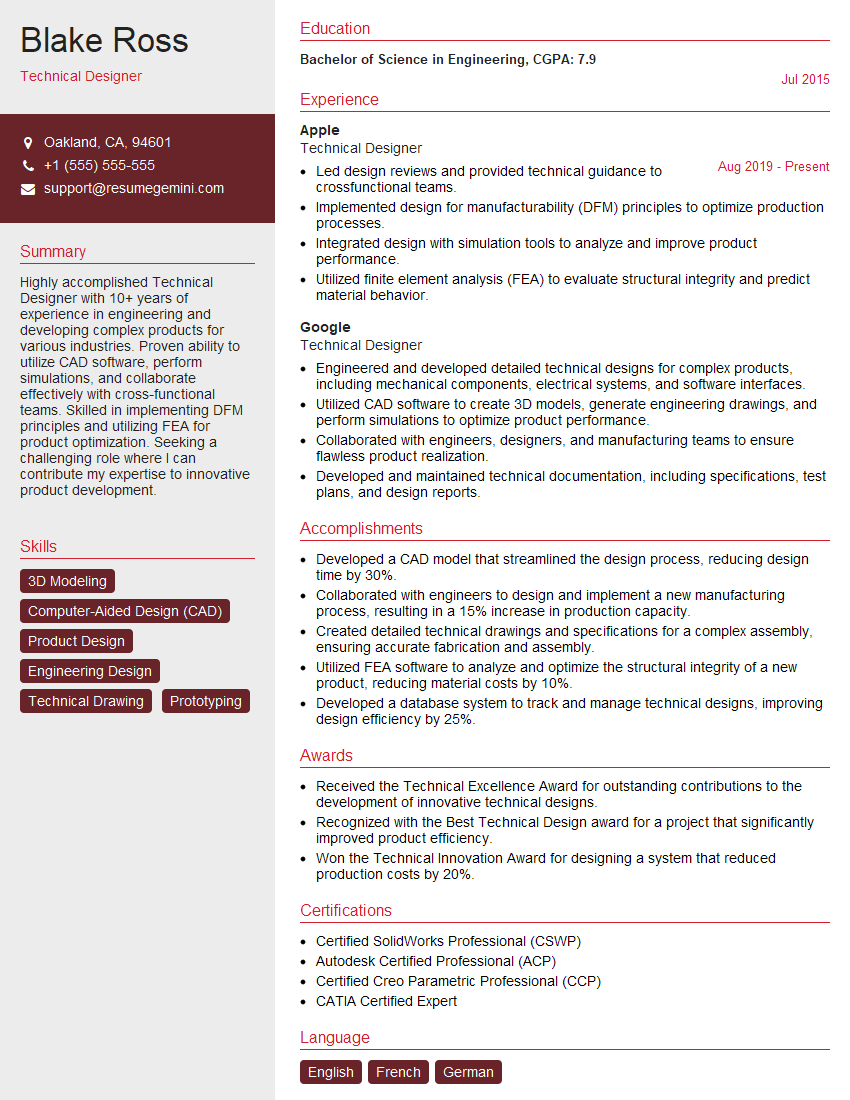
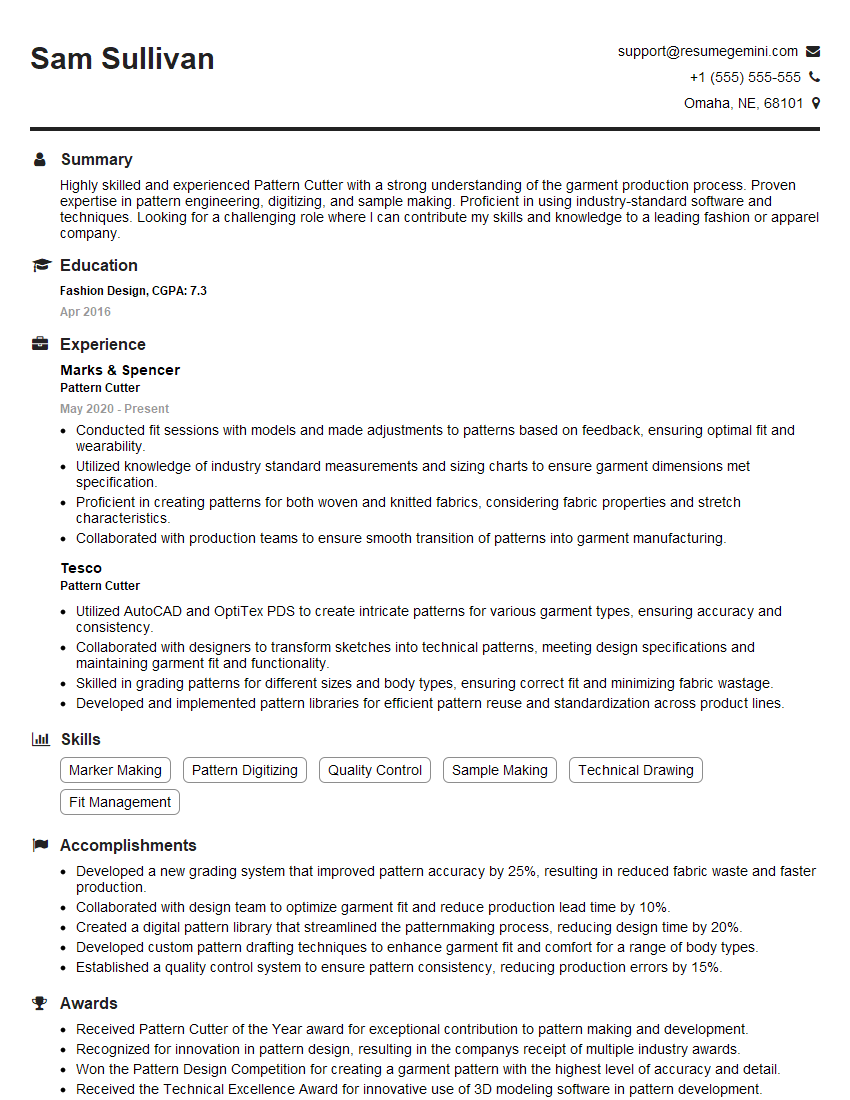
Mastering Pattern Grading and Marking is crucial for career advancement in the fashion and apparel industry, opening doors to specialized roles and higher earning potential. A well-crafted resume is your key to unlocking these opportunities. An ATS-friendly resume ensures your qualifications are effectively communicated to hiring managers and Applicant Tracking Systems. To help you create a professional and impactful resume, we encourage you to explore ResumeGemini, a trusted resource for building resumes that stand out. Examples of resumes tailored specifically to Pattern Grading and Marking professionals are available to help guide your process.



Explore more articles
Users Rating of Our Blogs
Share Your Experience
We value your feedback! Please rate our content and share your thoughts (optional).
What Readers Say About Our Blog
Hello,
we currently offer a complimentary backlink and URL indexing test for search engine optimization professionals.
You can get complimentary indexing credits to test how link discovery works in practice.
No credit card is required and there is no recurring fee.
You can find details here:
https://wikipedia-backlinks.com/indexing/
Regards
NICE RESPONSE TO Q & A
hi
The aim of this message is regarding an unclaimed deposit of a deceased nationale that bears the same name as you. You are not relate to him as there are millions of people answering the names across around the world. But i will use my position to influence the release of the deposit to you for our mutual benefit.
Respond for full details and how to claim the deposit. This is 100% risk free. Send hello to my email id: [email protected]
Luka Chachibaialuka
Hey interviewgemini.com, just wanted to follow up on my last email.
We just launched Call the Monster, an parenting app that lets you summon friendly ‘monsters’ kids actually listen to.
We’re also running a giveaway for everyone who downloads the app. Since it’s brand new, there aren’t many users yet, which means you’ve got a much better chance of winning some great prizes.
You can check it out here: https://bit.ly/callamonsterapp
Or follow us on Instagram: https://www.instagram.com/callamonsterapp
Thanks,
Ryan
CEO – Call the Monster App
Hey interviewgemini.com, I saw your website and love your approach.
I just want this to look like spam email, but want to share something important to you. We just launched Call the Monster, a parenting app that lets you summon friendly ‘monsters’ kids actually listen to.
Parents are loving it for calming chaos before bedtime. Thought you might want to try it: https://bit.ly/callamonsterapp or just follow our fun monster lore on Instagram: https://www.instagram.com/callamonsterapp
Thanks,
Ryan
CEO – Call A Monster APP
To the interviewgemini.com Owner.
Dear interviewgemini.com Webmaster!
Hi interviewgemini.com Webmaster!
Dear interviewgemini.com Webmaster!
excellent
Hello,
We found issues with your domain’s email setup that may be sending your messages to spam or blocking them completely. InboxShield Mini shows you how to fix it in minutes — no tech skills required.
Scan your domain now for details: https://inboxshield-mini.com/
— Adam @ InboxShield Mini
Reply STOP to unsubscribe
Hi, are you owner of interviewgemini.com? What if I told you I could help you find extra time in your schedule, reconnect with leads you didn’t even realize you missed, and bring in more “I want to work with you” conversations, without increasing your ad spend or hiring a full-time employee?
All with a flexible, budget-friendly service that could easily pay for itself. Sounds good?
Would it be nice to jump on a quick 10-minute call so I can show you exactly how we make this work?
Best,
Hapei
Marketing Director
Hey, I know you’re the owner of interviewgemini.com. I’ll be quick.
Fundraising for your business is tough and time-consuming. We make it easier by guaranteeing two private investor meetings each month, for six months. No demos, no pitch events – just direct introductions to active investors matched to your startup.
If youR17;re raising, this could help you build real momentum. Want me to send more info?
Hi, I represent an SEO company that specialises in getting you AI citations and higher rankings on Google. I’d like to offer you a 100% free SEO audit for your website. Would you be interested?
Hi, I represent an SEO company that specialises in getting you AI citations and higher rankings on Google. I’d like to offer you a 100% free SEO audit for your website. Would you be interested?
good