Cracking a skill-specific interview, like one for physical strength certification, requires understanding the nuances of the role. In this blog, we present the questions you’re most likely to encounter, along with insights into how to answer them effectively. Let’s ensure you’re ready to make a strong impression.
Questions Asked in physical strength certification Interview
Q 1. Explain the difference between concentric and eccentric muscle contractions.
Concentric and eccentric contractions are two phases of a single muscle action. Think of a bicep curl: the concentric phase is the lifting portion, where the muscle shortens to overcome resistance. The eccentric phase is the lowering portion, where the muscle lengthens while still under tension.
- Concentric: Muscle fibers shorten, generating force to move a load. Example: The upward phase of a push-up, the upward phase of a squat.
- Eccentric: Muscle fibers lengthen under tension, controlling the movement of a load. Example: The lowering phase of a push-up, the lowering phase of a squat. Eccentric contractions are often stronger than concentric ones.
Understanding this distinction is crucial for designing effective strength training programs. Ignoring eccentric training can lead to muscular imbalances and increased risk of injury.
Q 2. Describe the principles of progressive overload.
Progressive overload is the gradual increase in training demands over time to continually challenge the body and stimulate further adaptations. It’s the foundation of strength development. You wouldn’t expect to get stronger lifting the same weight repeatedly!
This increase in demand can manifest in several ways:
- Increasing weight: Gradually adding more weight to the bar or resistance.
- Increasing repetitions: Performing more repetitions with the same weight.
- Increasing sets: Completing more sets of an exercise.
- Decreasing rest periods: Shortening the rest intervals between sets.
- Increasing training frequency: Training the same muscle groups more often per week.
- Altering exercise selection: Progressing to more challenging exercises.
Imagine a client starting with 5kg dumbbells for bicep curls. Over time, we might increase to 7.5kg, then 10kg, and so on, ensuring they’re always working slightly outside their comfort zone. It’s a gradual process tailored to the individual’s progress and recovery capacity.
Q 3. What are the benefits and risks of plyometric training?
Plyometric training, or jump training, involves explosive movements that utilize the stretch-shortening cycle of muscles. Think box jumps, medicine ball throws, or clap push-ups.
Benefits:
- Increased power and explosiveness.
- Improved muscle strength and speed.
- Enhanced athletic performance in sports requiring jumps, sprints, and quick changes of direction.
Risks:
- Increased risk of muscle strains and tears, especially if proper technique isn’t used. Jumping incorrectly can overload joints and muscles.
- Potential for joint injury, particularly in knees and ankles, if performed with inadequate preparation and insufficient warm-up.
- Not suitable for everyone, especially individuals with pre-existing joint issues or those new to exercise.
Proper coaching, gradual progression, and adequate warm-up and cool-down are essential to minimize the risks and maximize the benefits of plyometric training.
Q 4. How do you assess a client’s current fitness level?
Assessing a client’s fitness level is crucial before designing a training program. I utilize a combination of methods:
- Health history questionnaire: This identifies any pre-existing conditions, injuries, or limitations. It’s crucial for safety.
- Movement screens: These assess fundamental movement patterns, identifying areas of weakness or imbalances which could increase injury risk. Examples include overhead squat and push-up assessment.
- Fitness tests: These provide objective measures of strength, endurance, and flexibility. These may include:
- Strength tests: 1-repetition maximum (1RM) for key lifts.
- Endurance tests: Distance runs, bike tests, or bodyweight circuit assessments.
- Flexibility tests: Sit-and-reach test, shoulder range of motion tests.
- Subjective assessment: This involves discussions with the client about their goals, training experience, and any discomfort.
Based on this data, I can create a safe and effective training plan tailored to their individual needs and capabilities.
Q 5. What are the key components of a well-designed strength training program?
A well-designed strength training program should include several key components:
- Specific goals: Clearly defined objectives, like increasing strength, improving muscle mass, or enhancing athletic performance.
- Needs analysis: Identifying the client’s current fitness level and any limitations.
- Exercise selection: Choosing exercises that target all major muscle groups, using a mix of compound (multi-joint) and isolation (single-joint) movements for balanced development.
- Training split: Determining how to structure workouts throughout the week, considering muscle recovery needs.
- Progressive overload: Gradually increasing the training demands over time.
- Rest and recovery: Adequate sleep, nutrition, and rest days are essential to allow muscle growth and repair.
- Periodization: Varying training intensity and volume across different phases to optimize results and prevent overtraining.
- Monitoring progress: Tracking progress using metrics like weight lifted, repetitions performed, and changes in body composition.
- Program adjustments: Modifying the program based on the client’s progress and any feedback they provide.
Q 6. Explain the importance of proper warm-up and cool-down routines.
Proper warm-up and cool-down routines are crucial for injury prevention, improved performance, and enhanced recovery.
Warm-up: This prepares the body for exercise by gradually increasing heart rate, blood flow, and muscle temperature. A good warm-up typically includes:
- Light cardio, such as jogging or cycling.
- Dynamic stretching, involving controlled movements through a range of motion, like arm circles or leg swings.
- Specific movements related to the workout, such as lighter versions of the exercises to be performed.
Cool-down: This helps the body recover from exercise by gradually slowing down heart rate and reducing muscle soreness. A good cool-down usually includes:
- Light cardio.
- Static stretching, holding each stretch for 20-30 seconds. This helps improve flexibility and reduce muscle stiffness.
Think of a warm-up as preparing your car engine before driving and the cool-down as letting the engine idle before turning it off. It’s all about preventing damage and extending the lifespan of your ‘machine’.
Q 7. How would you address a client’s plateau in strength gains?
When a client plateaus, it means their body has adapted to the current training stimulus. To break through this plateau, several strategies can be employed:
- Increase training volume: Add sets or repetitions.
- Increase training intensity: Increase weight, decrease rest periods, or utilize more advanced training techniques.
- Change training split: Alter the frequency and organization of training days.
- Change exercise selection: Introduce new exercises to stimulate different muscle fibers.
- Assess nutrition and recovery: Ensure adequate calorie intake, sufficient protein for muscle growth, and sufficient sleep to support recovery.
- Deload: Temporarily reduce training volume and intensity to allow the body to recover before resuming a more demanding program.
- Address technique: Check for any technical flaws in exercise form that might be hindering progress.
- Consider detraining: A period of reduced training to reset the system, particularly if overtraining is suspected.
It’s crucial to carefully analyze the situation and make appropriate adjustments based on the individual’s training history, current program, and overall response. Sometimes, it’s as simple as tweaking a few variables; other times, a more significant program overhaul may be necessary.
Q 8. Describe different training methods (e.g., powerlifting, bodybuilding, Olympic lifting).
Different training methods emphasize various aspects of strength and physique development. Let’s explore three prominent approaches:
- Powerlifting: This focuses on maximal strength in three core lifts: squat, bench press, and deadlift. Training involves low repetitions (1-5) with heavy weight, prioritizing strength gains over muscle hypertrophy (growth). Think of powerlifters as moving massive weight, less about aesthetic muscle size. A typical powerlifting program might involve heavy squats on Monday, bench press on Wednesday, and deadlifts on Friday, with lighter accessory work incorporated.
- Bodybuilding: The primary goal here is muscle hypertrophy. Training involves higher repetitions (8-12 or even higher) with moderate weight, focusing on achieving muscle fatigue and stimulating muscle growth. Exercises are often chosen to target specific muscle groups, and the emphasis is on shaping and aesthetics. A bodybuilding program might incorporate various isolation exercises (like bicep curls or triceps extensions) in addition to compound movements (like squats and presses) for well-rounded development.
- Olympic Weightlifting: This involves two main lifts: the snatch and the clean and jerk. These highly technical lifts require explosive power and coordination. Training incorporates a variety of movements designed to improve technique, speed, and power. Olympic weightlifting emphasizes power development, agility, and coordination more so than sheer maximal strength. A program would involve practicing the snatch and clean and jerk, alongside supplementary exercises to improve mobility, speed, and strength necessary for successful execution.
Each method uses different training parameters (weight, reps, sets, rest periods) to achieve its specific goals. The best method depends on the individual’s goals and training experience.
Q 9. What is your experience with designing programs for specific populations (e.g., seniors, athletes)?
My experience designing programs for diverse populations is extensive. I’ve worked with seniors, athletes of all levels (from recreational to elite), and individuals with various health conditions. Program design needs to be highly individualized.
Seniors: Programs for seniors prioritize safety and functional strength, focusing on exercises that improve balance, mobility, and daily living activities. We incorporate lighter weights, higher repetitions, and ample rest periods, adjusting exercises to accommodate limitations in mobility or flexibility. For example, a modified squat against a chair might replace a traditional barbell back squat.
Athletes: Athlete programs are designed to enhance their sport-specific performance. For instance, a marathon runner needs a different program than a powerlifter or a tennis player. Careful consideration of their training volume, intensity, and rest is critical to avoid overtraining and injuries. We meticulously plan around their competition schedule, using periodization (explained in a later answer) to optimize performance at key times.
Adaptability is key across all populations. I always conduct thorough assessments to determine an individual’s current fitness level, limitations, and goals before creating a tailored program.
Q 10. How do you ensure client safety during strength training?
Client safety is paramount. Several strategies are essential:
- Thorough Assessment: Before commencing any training, a comprehensive assessment is crucial. This involves evaluating their medical history, current fitness level, and any pre-existing conditions or injuries.
- Proper Technique Instruction: I emphasize correct form and technique for every exercise. Poor technique significantly increases the risk of injury. I use demonstrations, visual aids, and hands-on coaching to ensure clients understand and execute exercises properly.
- Progressive Overload: Gradually increasing the intensity or volume of training prevents overtraining and allows the body to adapt safely. We avoid rapid jumps in weight, reps, or sets.
- Warm-up and Cool-down: These are non-negotiable. A thorough warm-up prepares the body for exercise, while a cool-down helps with recovery and reduces muscle soreness.
- Spotting: When performing exercises with heavy weights, a spotter is essential. This ensures that the client can safely complete the lift and prevent injuries.
- Communication: Open communication is vital. Clients should report any pain or discomfort immediately, and I am constantly monitoring their form and progress.
By implementing these measures, we significantly reduce the risk of injuries and ensure a safe and effective training experience.
Q 11. Explain the concept of periodization in strength training.
Periodization is the systematic manipulation of training variables (volume, intensity, frequency, and exercise selection) over time to optimize performance and prevent overtraining. Think of it like strategically planning a year-long journey, instead of just running full speed until you burn out.
A typical periodization model might include:
- Macrocycle: The overall training plan, often spanning a year or even longer.
- Mesocycle: Shorter periods (e.g., 4-8 weeks) within the macrocycle, each with specific goals (e.g., hypertrophy phase, strength phase, power phase).
- Microcycle: The weekly training plan, outlining specific workouts and exercises for each day.
For example, a powerlifter might have a macrocycle focusing on competition preparation. Within that, there might be a mesocycle dedicated to building maximal strength, followed by a mesocycle focused on peaking performance leading up to the competition. Each week (microcycle) will have workouts reflecting the goals of the mesocycle.
Periodization allows athletes to systematically improve their strength and avoid overtraining by strategically varying the demands placed on their bodies. It’s a key strategy for long-term success.
Q 12. What are the common signs of overtraining, and how would you address them?
Overtraining is a condition caused by excessive training without adequate rest and recovery. Recognizing the signs early is crucial.
Common signs include:
- Decreased performance despite increased training volume.
- Persistent muscle soreness and fatigue.
- Loss of motivation and enthusiasm for training.
- Increased resting heart rate.
- Sleep disturbances.
- Irritability and mood changes.
- Frequent illnesses.
Addressing Overtraining:
If these signs appear, I recommend the following:
- Reduce training volume and intensity: Cut back on the number of workouts, sets, reps, or weight lifted.
- Increase rest and recovery: Prioritize sleep, proper nutrition, and stress management techniques like mindfulness or yoga.
- Active recovery: Light activities like walking or swimming can improve blood flow and reduce muscle soreness without straining the body further.
- Assess the training program: Evaluate if the program is appropriate for the client’s capabilities and goals. Sometimes adjustments to exercises, sets, reps, or rest are needed.
- Consult a medical professional: In some cases, consulting a doctor or physical therapist is necessary to rule out other underlying medical conditions.
Preventing overtraining is better than addressing it. Careful program design and attention to recovery are key.
Q 13. How do you adapt training programs for individuals with injuries or limitations?
Adapting programs for individuals with injuries or limitations requires a cautious and individualized approach. Safety always comes first.
Strategies I use:
- Identify limitations: A thorough assessment is crucial to understand the nature, location, and severity of the injury or limitation.
- Modify exercises: Exercises might need to be adapted to avoid putting stress on the injured area. For example, a person with a knee injury might avoid deep squats and instead focus on leg press or hamstring curls.
- Reduce weight and resistance: Lowering the weight allows for proper form and reduces stress on the body. Focusing on higher repetitions can be more beneficial in rehabilitation.
- Use alternative exercises: Exercises that target the same muscle group without stressing the injured area can be substituted. For example, if bench pressing aggravates a shoulder, dumbbell flyes or cable crossovers might be more suitable alternatives.
- Incorporate rehabilitation exercises: Rehabilitation exercises can be added to improve strength, range of motion, and function in the injured area.
- Gradual progression: The training program should progress gradually, allowing the body to adapt safely to increased demands. Progress should be closely monitored.
- Collaboration with medical professionals: Consulting with physical therapists, doctors, or other healthcare providers is often crucial to ensure that the training program aligns with the individual’s rehabilitation plan.
Adapting programs for individuals with injuries or limitations requires specialized knowledge, careful planning, and constant communication. A collaborative approach with healthcare professionals is often beneficial to ensure the client’s safety and progress.
Q 14. Describe your experience with different types of resistance training equipment.
My experience encompasses a broad range of resistance training equipment, including:
- Free weights (barbells, dumbbells): These offer versatility and are fundamental to many strength training programs. They challenge balance and coordination, enhancing functional strength.
- Weight machines: These provide a guided movement, making them suitable for beginners or individuals with limited mobility. They are less demanding on balance and coordination compared to free weights but offer less functional benefit.
- Resistance bands: These are portable, inexpensive, and offer a versatile resistance that changes throughout the range of motion. Excellent for rehabilitation and home workouts.
- Cable machines: These allow for a wide range of exercises with consistent resistance throughout the entire movement, targeting specific muscle groups effectively.
- Bodyweight exercises: These require no equipment and are ideal for beginners or for incorporating into other training programs. Examples include push-ups, squats, lunges, and pull-ups.
The choice of equipment depends on the individual’s goals, experience level, available resources, and any physical limitations. I tailor equipment selection to optimize the client’s training program and ensure safety and effectiveness.
Q 15. Explain the importance of proper nutrition for strength gains.
Proper nutrition is absolutely fundamental for strength gains. Think of it like this: you can’t build a strong house with weak bricks. Your muscles need the right building blocks – protein, carbohydrates, and healthy fats – to grow and repair after intense training.
Protein is crucial for muscle protein synthesis, the process of building and repairing muscle tissue. Aim for roughly 1.6-2.2 grams of protein per kilogram of body weight daily, depending on your training intensity and goals. Good sources include lean meats, poultry, fish, eggs, dairy, and legumes.
Carbohydrates provide the energy your muscles need to fuel your workouts. Choose complex carbs like whole grains, fruits, and vegetables over simple sugars for sustained energy release. Carbohydrate intake should be adjusted based on training volume and intensity.
Healthy Fats are essential for hormone production and overall health. Incorporate sources like avocados, nuts, seeds, and olive oil into your diet.
Micronutrients (vitamins and minerals) also play a significant role. They support various metabolic processes involved in muscle growth and recovery. A balanced diet rich in fruits and vegetables will ensure adequate intake.
Ignoring proper nutrition will severely hinder progress, leading to plateaus, increased risk of injury, and ultimately, a lack of strength gains.
Career Expert Tips:
- Ace those interviews! Prepare effectively by reviewing the Top 50 Most Common Interview Questions on ResumeGemini.
- Navigate your job search with confidence! Explore a wide range of Career Tips on ResumeGemini. Learn about common challenges and recommendations to overcome them.
- Craft the perfect resume! Master the Art of Resume Writing with ResumeGemini’s guide. Showcase your unique qualifications and achievements effectively.
- Don’t miss out on holiday savings! Build your dream resume with ResumeGemini’s ATS optimized templates.
Q 16. How would you motivate a client who is struggling to reach their goals?
Motivating a struggling client involves a multifaceted approach that focuses on understanding their challenges and adjusting the plan accordingly. I start by actively listening to their concerns and understanding their barriers.
1. Re-evaluate Goals: Sometimes, goals are unrealistic. We collaboratively readjust them to be more achievable and sustainable. For instance, if someone aimed for a 50kg deadlift increase in a month, we’d break it down into smaller, weekly goals.
2. Celebrate Small Wins: We highlight every achievement, no matter how small. This positive reinforcement boosts confidence and motivation. Did they improve their form? Did they increase their reps? This is celebrated!
3. Adjust Training Program: A plateau often signifies the need for program adjustments. This may involve altering exercises, sets, reps, rest periods, or even the training split. It might also mean introducing new stimulus to avoid adaptation.
4. Enhance Accountability: I work with clients to develop strategies for accountability, such as regular check-ins, progress tracking, and even creating a support system with friends or family.
5. Focus on the Process: Shifting the focus from the outcome to the process – enjoying the workouts, feeling stronger, making progress – can be incredibly motivating.
6. Non-Scale Victories: I encourage clients to track non-scale victories like improved sleep, increased energy levels, and better mood, which show overall progress, beyond just numbers.
Q 17. What is your experience with functional movement assessments?
Functional movement assessments (FMAs) are a cornerstone of my practice. I use them to identify movement limitations and asymmetries that can contribute to injury risk and hinder performance. My experience with FMAs includes utilizing various established protocols such as the FMS (Functional Movement Screen) and the SFMA (Selective Functional Movement Assessment).
During an FMA, I systematically evaluate fundamental movement patterns such as squatting, lunging, pushing, pulling, and rotational movements. I observe posture, range of motion, and the quality of movement execution. This helps determine if there are any compensations or limitations that could affect training.
The results of the assessment directly inform program design. For example, if a client exhibits limited ankle dorsiflexion during a squat assessment, we would prioritize mobility work targeting the ankles and lower legs before progressing to more demanding strength training exercises to reduce injury risk.
Q 18. How do you track and measure client progress?
Tracking and measuring client progress is crucial for demonstrating efficacy and keeping clients motivated. I use a multi-pronged approach combining objective and subjective measures.
Objective Measures: These include:
- Strength testing: Recording 1-rep max (1RM) on key lifts like squat, bench press, and deadlift.
- Body composition analysis: Using tools like DEXA scans, skinfold calipers, or bioelectrical impedance analysis to track changes in body fat percentage and muscle mass.
- Performance metrics: Tracking metrics like reps, sets, weight lifted, distance covered, and speed to monitor progress across various training modalities.
Subjective Measures: These gather qualitative data and are equally important:
- Client feedback: Regular check-ins to discuss progress, challenges, and overall satisfaction.
- Self-reported measures: Using questionnaires or scales to assess pain levels, energy levels, and perceived exertion during workouts.
- Qualitative observations: Observing movement quality, posture, and overall technique to identify areas for improvement.
This combination provides a comprehensive picture of the client’s progress and allows for adjustments to the training program as needed. The data is also used to celebrate achievements and provide motivation.
Q 19. Explain the importance of flexibility and mobility training.
Flexibility and mobility training are not just about being able to touch your toes; they are essential components of a well-rounded strength training program. They improve performance, prevent injuries, and enhance overall well-being.
Flexibility refers to the range of motion in a joint, while mobility refers to the ability to actively move through that range of motion. Both are interconnected and crucial for optimal function.
Benefits of Flexibility and Mobility Training:
- Improved joint health: Increased range of motion reduces stress on joints, lowering the risk of injuries like sprains and strains.
- Enhanced performance: Greater mobility allows for better movement patterns, leading to increased power and strength output in exercises.
- Reduced muscle soreness: Improved blood flow from mobility work aids muscle recovery.
- Improved posture: Addressing mobility restrictions in the spine and hips improves posture and reduces back pain.
- Stress reduction: Many mobility exercises can be meditative and contribute to relaxation.
I incorporate flexibility and mobility exercises into every training program, often as a warm-up or cool-down, or as dedicated sessions.
Q 20. What are your methods for creating a positive and motivating training environment?
Creating a positive and motivating training environment is paramount to client success. It’s about fostering a culture of support, encouragement, and achievement.
1. Positive Reinforcement: Focus on celebrating accomplishments, emphasizing effort and progress over perfection. Positive feedback reinforces desired behaviors and keeps motivation high.
2. Supportive Atmosphere: Create a space where clients feel comfortable asking questions, expressing concerns, and supporting each other. Teamwork and camaraderie can be highly motivating.
3. Individualized Approach: Recognize that everyone is different. Tailor the environment and communication style to meet each individual’s needs and preferences. Some clients thrive in a more competitive atmosphere, while others prefer a quieter, more individual approach.
4. Clear Communication: Maintain open and honest communication throughout the process. Explain the rationale behind the training plan, and be responsive to questions and concerns.
5. Music and Ambiance: Utilize music and other environmental factors to create a positive and energizing atmosphere.
6. Education: Empower clients by educating them on the science behind training and nutrition. Understanding the “why” behind the exercises enhances adherence and motivation.
Q 21. Describe your experience with designing strength training programs for various goals (e.g., muscle hypertrophy, strength, power).
Designing strength training programs requires a deep understanding of training principles and individual needs. My experience spans various goals, tailoring programs to optimize results for each client.
Muscle Hypertrophy (Muscle Growth): These programs emphasize higher rep ranges (8-12 reps per set), moderate weight, and shorter rest periods to promote muscle growth. We might incorporate various training techniques like drop sets, supersets, and rest-pause sets to maximize muscle stimulation.
Strength (Maximal Strength): For strength gains, we focus on lower rep ranges (1-5 reps per set), heavier weights, and longer rest periods. Progressive overload is crucial; consistently increasing the weight lifted over time is key to maximizing strength.
Power (Speed and Strength): Power training combines both speed and strength. We might use plyometrics (jump training), Olympic lifts (clean and jerk, snatch), and medicine ball throws. Training volume is usually lower, with emphasis on explosive movements and rapid force production.
Regardless of the goal, program design always includes: a thorough needs assessment, warm-up, progressive overload, periodization (planning for long-term progress), and adequate recovery.
Q 22. What is your experience working with different assessment tools for muscular strength and endurance?
My experience with muscular strength and endurance assessment tools is extensive. I’m proficient in utilizing a range of methods, from standardized tests like 1-repetition maximum (1RM) assessments for strength and various timed endurance tests (e.g., push-up or sit-up tests) to more advanced techniques. For example, I routinely use isokinetic dynamometry to measure peak torque and power output, providing a more precise understanding of muscle performance. I also incorporate functional movement screens, such as the FMS (Functional Movement Screen), to identify movement limitations and potential injury risks. The choice of assessment depends heavily on the client’s goals, fitness level, and any pre-existing conditions. For a seasoned athlete, a 1RM test might be appropriate, while a less experienced individual may benefit more from a submaximal test or a functional movement screen. I always ensure the selected method is reliable, valid, and safe for the individual.
- 1RM testing: Accurately measures maximal strength capabilities.
- Isokinetic dynamometry: Provides detailed information on muscle performance at various speeds.
- Functional Movement Screen (FMS): Identifies asymmetries and movement limitations.
- Submaximal tests: Useful for less experienced individuals or those with limitations.
Q 23. How do you ensure you are staying up to date with current best practices in strength and conditioning?
Staying current in the dynamic field of strength and conditioning requires continuous professional development. I actively participate in continuing education courses offered by reputable organizations like the National Strength and Conditioning Association (NSCA) and the American College of Sports Medicine (ACSM). I regularly attend conferences and workshops to learn about the latest research findings and practical applications. Further, I maintain subscriptions to leading journals in the field, such as the Journal of Strength and Conditioning Research and Medicine & Science in Sports & Exercise, and actively read relevant research articles. This allows me to incorporate evidence-based practices into my training programs and adapt my strategies to new discoveries. I also network with other professionals in the field, exchanging ideas and best practices. Staying informed isn’t just about reading; it’s about actively engaging in the community and adapting my knowledge to real-world situations.
Q 24. Explain the principles of specificity and individualization in training.
The principles of specificity and individualization are paramount in effective strength training. Specificity means tailoring the training program to the specific demands of the activity or sport the client is aiming for. If a client wants to improve their vertical jump, the training program must emphasize exercises that target the muscles involved in jumping, like squats, plyometrics, and deadlifts. It’s not just about the exercises, but also the intensity, volume, and rest periods. Individualization means recognizing that each person responds differently to training. Factors such as age, gender, training history, nutritional intake, and even sleep patterns affect progress. A successful program considers these individual characteristics and adapts the training plan accordingly. For example, a 60-year-old beginner will have a very different program from a 25-year-old experienced athlete. We wouldn’t expect the same progress, and the risk of injury needs to be carefully managed. Therefore, a holistic approach is essential.
Q 25. How do you handle client feedback or concerns about their training program?
Client feedback is essential for program success. I actively encourage open communication and create a safe space for clients to express their concerns. I listen attentively, ask clarifying questions, and avoid interrupting. If a client expresses discomfort, I immediately assess the situation to rule out any potential injuries. We collaboratively review their progress, discussing both successes and challenges. If there are concerns about the program’s effectiveness or difficulty, we adjust the plan together, ensuring it remains challenging yet achievable. I might modify exercises, adjust sets and reps, or change the training schedule to better suit their needs. This collaborative approach builds trust and ensures that the client feels heard and understood.
Q 26. What are some common mistakes you see people make in strength training and how do you correct them?
Common mistakes in strength training include improper form, neglecting proper warm-up and cool-down, insufficient rest between sets, and inconsistent training. Improper form significantly increases the risk of injury. I correct this by demonstrating proper technique, providing verbal cues, using mirrors for visual feedback, and possibly utilizing video analysis. Insufficient warm-up can lead to muscle strains. I address this by emphasizing a proper dynamic warm-up routine, preparing muscles for activity. Similarly, inadequate cool-down can hinder recovery. I incorporate static stretching into the cool-down. Insufficient rest impairs muscle recovery and can lead to overtraining. I teach clients about the importance of appropriate rest periods based on their training goals and intensity. Finally, inconsistency is a major obstacle to progress. I encourage client adherence to the program and provide support to help them maintain a consistent schedule.
Q 27. Describe your experience with injury prevention strategies in strength training.
Injury prevention is a central focus in my approach. This begins with a thorough assessment of the client’s medical history, physical limitations, and current fitness level. I incorporate dynamic warm-up routines and cool-down stretches to prepare and recover the muscles effectively. I emphasize proper exercise form and technique throughout each session. Progressive overload is implemented gradually to avoid sudden increases in stress on the musculoskeletal system. I also teach clients about proper lifting mechanics, including how to maintain a neutral spine and avoid jerky movements. Regular assessment of movement quality through functional movement screens helps identify potential weaknesses or imbalances that could predispose a client to injury. If I identify any limitations, I adjust the program accordingly, adding corrective exercises or modifications to target specific areas. Open communication is critical; clients are encouraged to report any pain or discomfort immediately.
Q 28. Explain how you would communicate with a client who has a contraindication to a certain exercise.
Communicating a contraindication requires clear, empathetic, and evidence-based explanations. I would start by acknowledging the client’s concerns and assuring them that their safety is my top priority. I would then explain the contraindication in simple, non-technical language, highlighting the specific reason why the exercise is inappropriate for them. For instance, if a client has a history of shoulder impingement, I would explain how a particular overhead press variation might exacerbate the condition and increase the risk of injury. I would then offer alternative exercises that achieve similar training goals without posing the same risk. This approach focuses on collaboration and empowers the client to understand the rationale behind the adjustments. Providing visual aids or written explanations can further enhance understanding and reassurance. Open communication, patience, and a focus on finding suitable alternatives are key to a positive outcome.
Key Topics to Learn for Physical Strength Certification Interview
- Biomechanics of Strength Training: Understanding the principles of leverage, force production, and muscle activation is crucial. Consider how different exercises target specific muscle groups and the biomechanical implications of varying techniques.
- Program Design and Periodization: Learn to design effective strength training programs, incorporating principles of periodization (e.g., linear, undulating) to optimize strength gains and prevent overtraining. Be prepared to discuss the rationale behind your program choices.
- Exercise Technique and Safety: Mastering proper exercise form is essential for both performance and injury prevention. Understand common errors and how to correct them. Be ready to discuss risk management strategies.
- Strength Assessment and Measurement: Familiarize yourself with various methods of assessing strength (e.g., 1RM testing, isokinetic dynamometry) and the interpretation of results. Understand the limitations of different assessment methods.
- Nutritional Considerations for Strength Training: Discuss the role of nutrition in supporting muscle growth, recovery, and overall performance. Be prepared to discuss macronutrient needs and the timing of nutrient intake.
- Individualization of Training Programs: Learn how to adapt training programs based on individual needs, goals, and limitations. Consider factors such as age, experience level, and specific health conditions.
- Client Communication and Motivation: Effective communication and motivational techniques are key to client success. Be prepared to discuss strategies for building rapport, setting realistic goals, and maintaining client adherence.
Next Steps
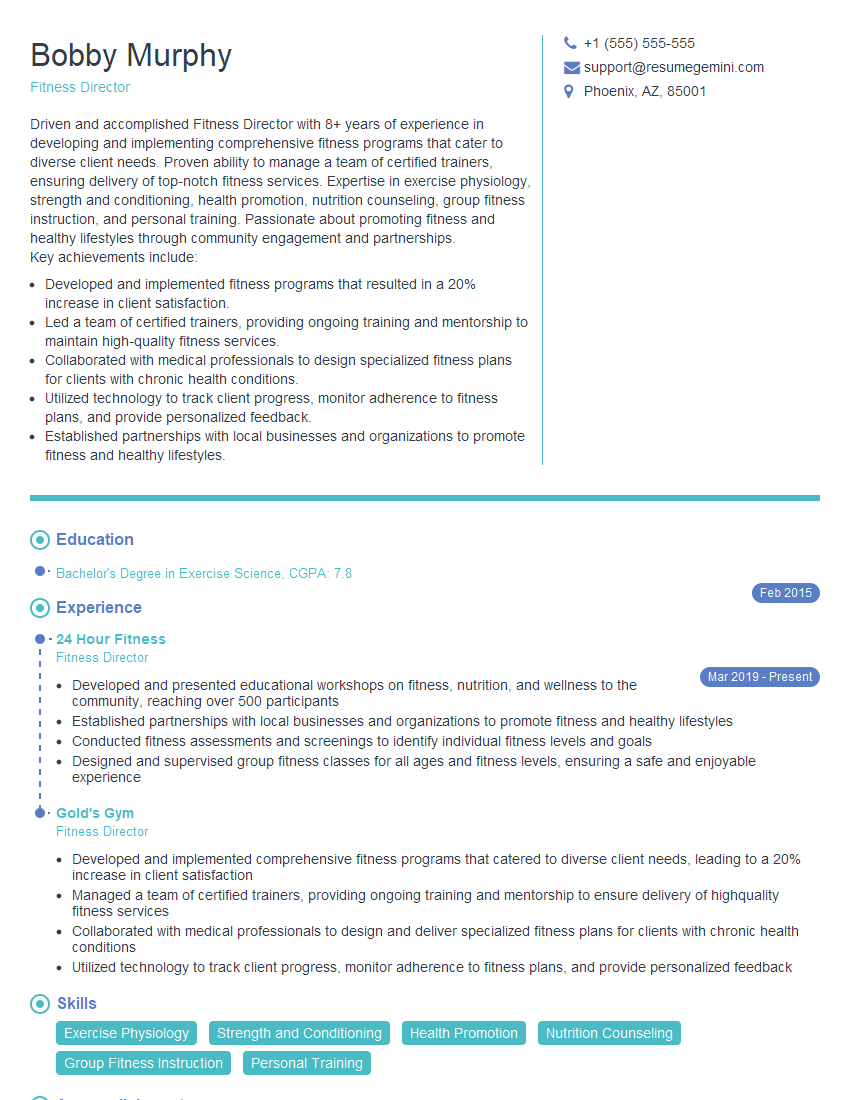
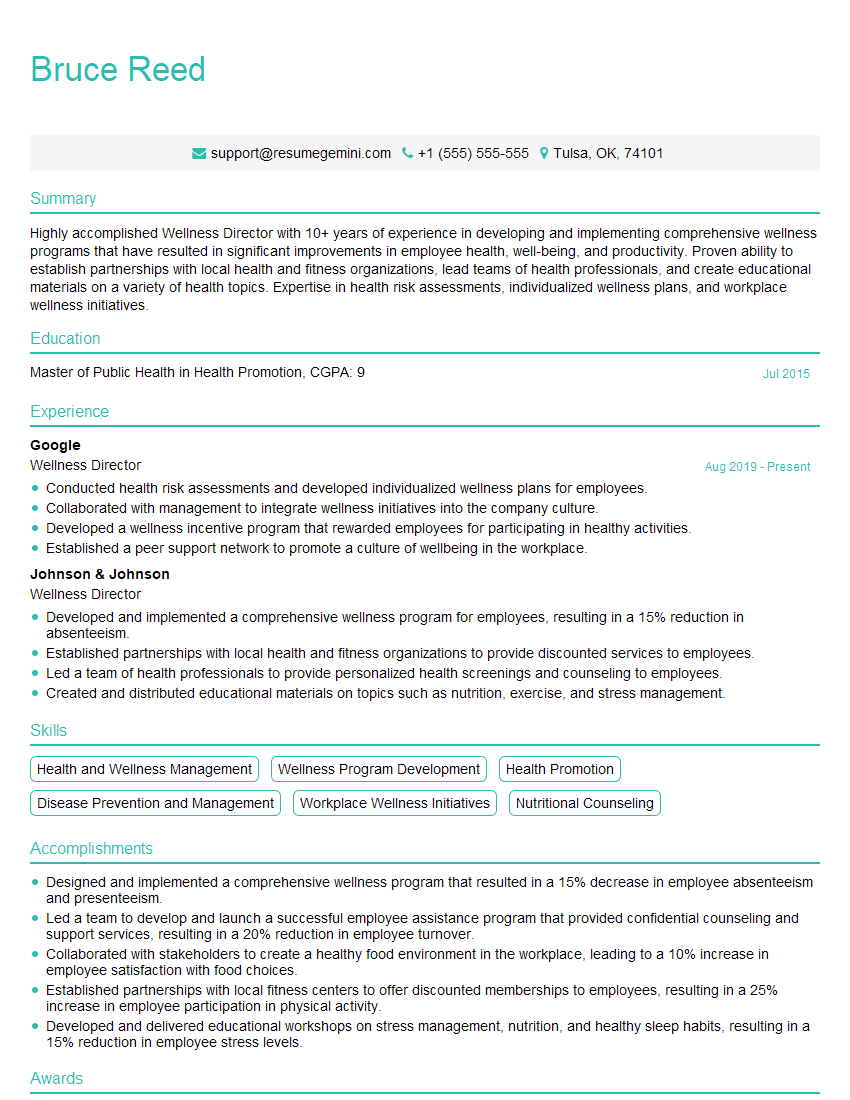
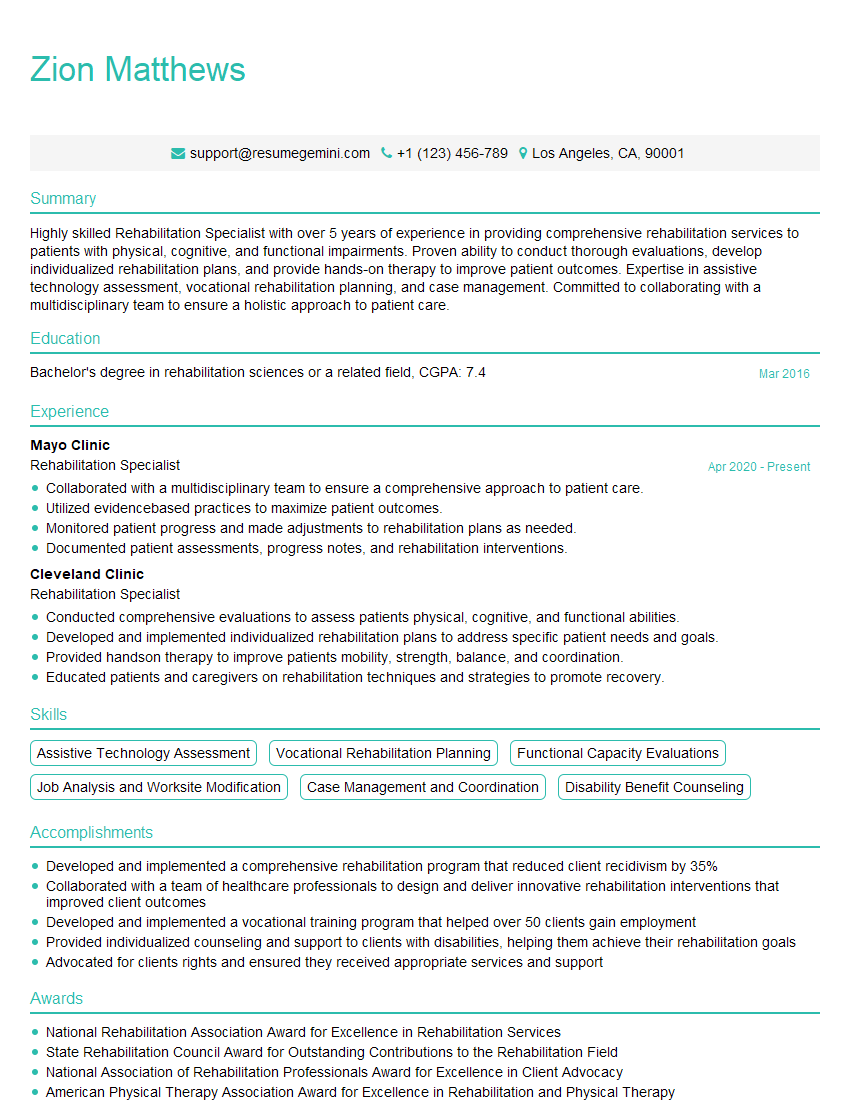
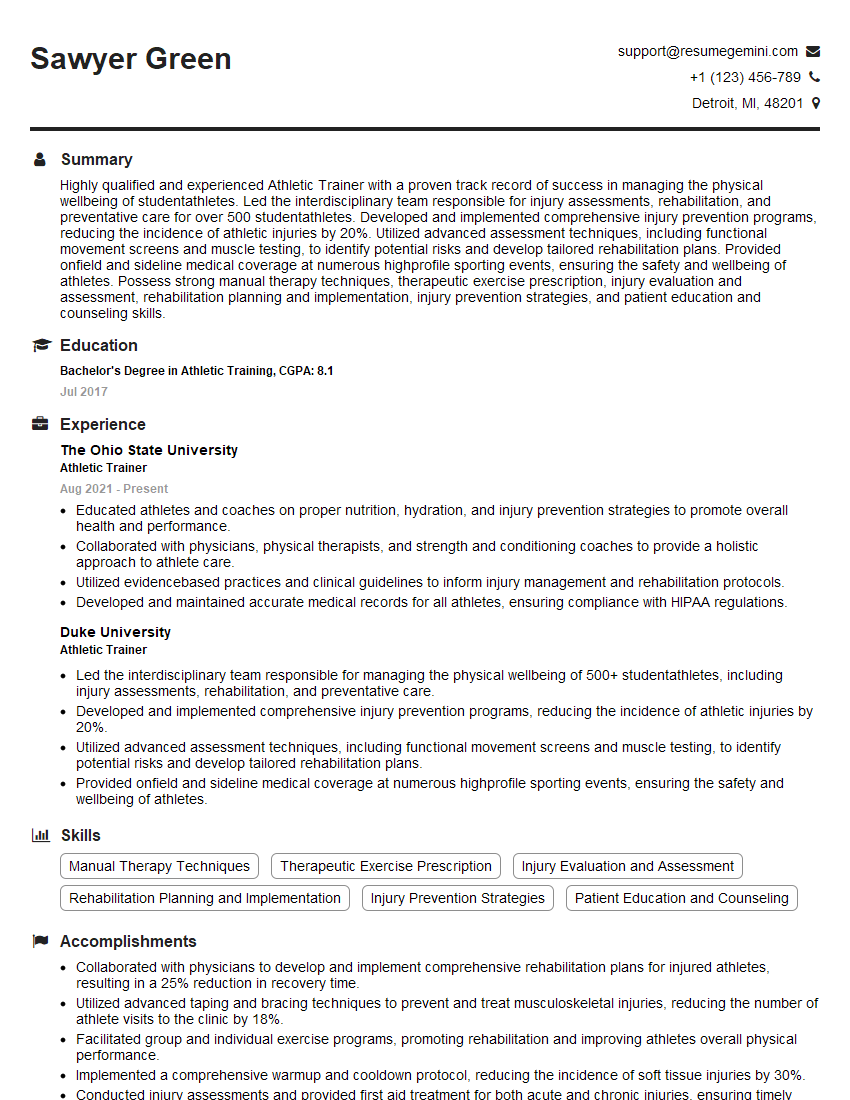
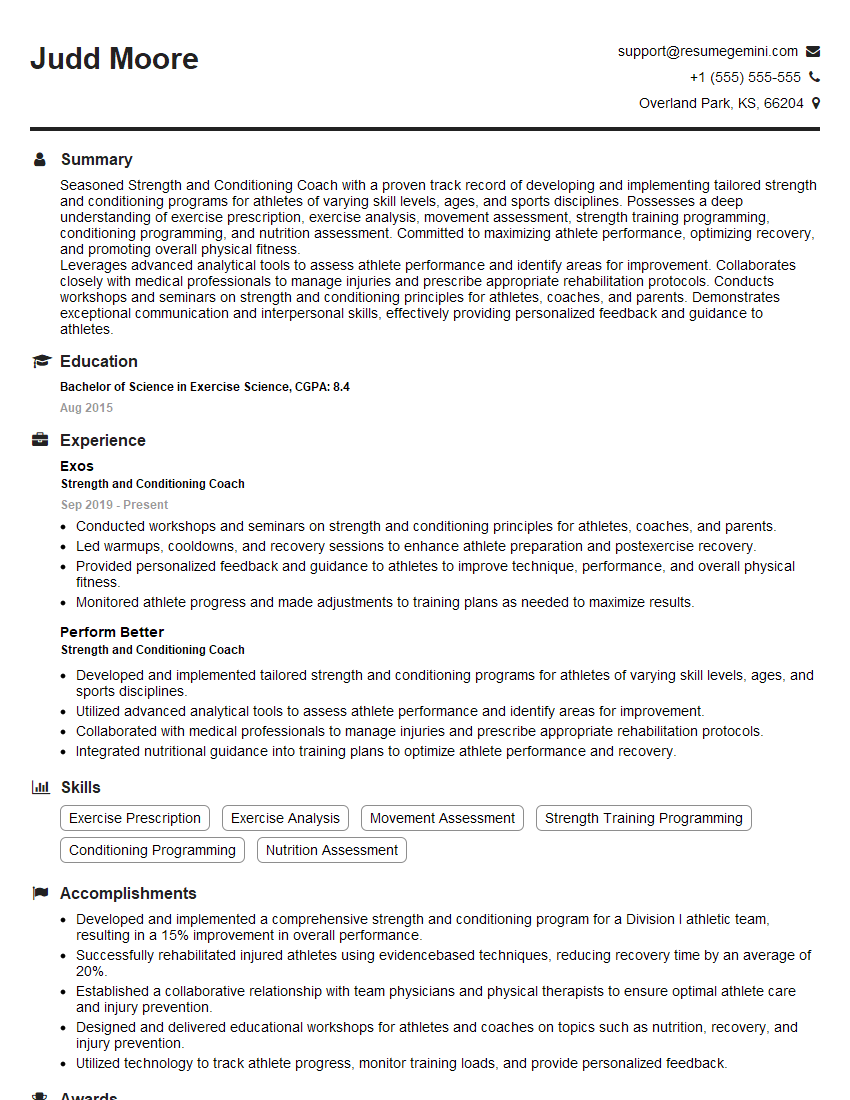
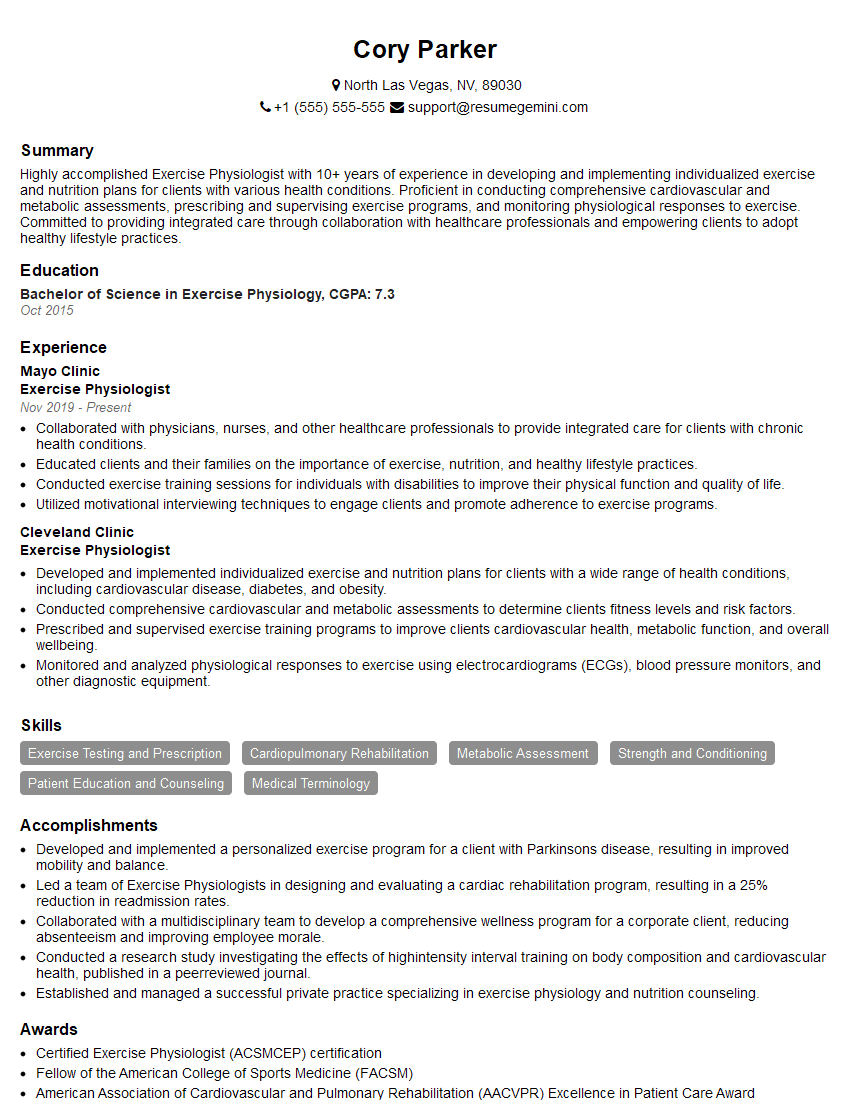
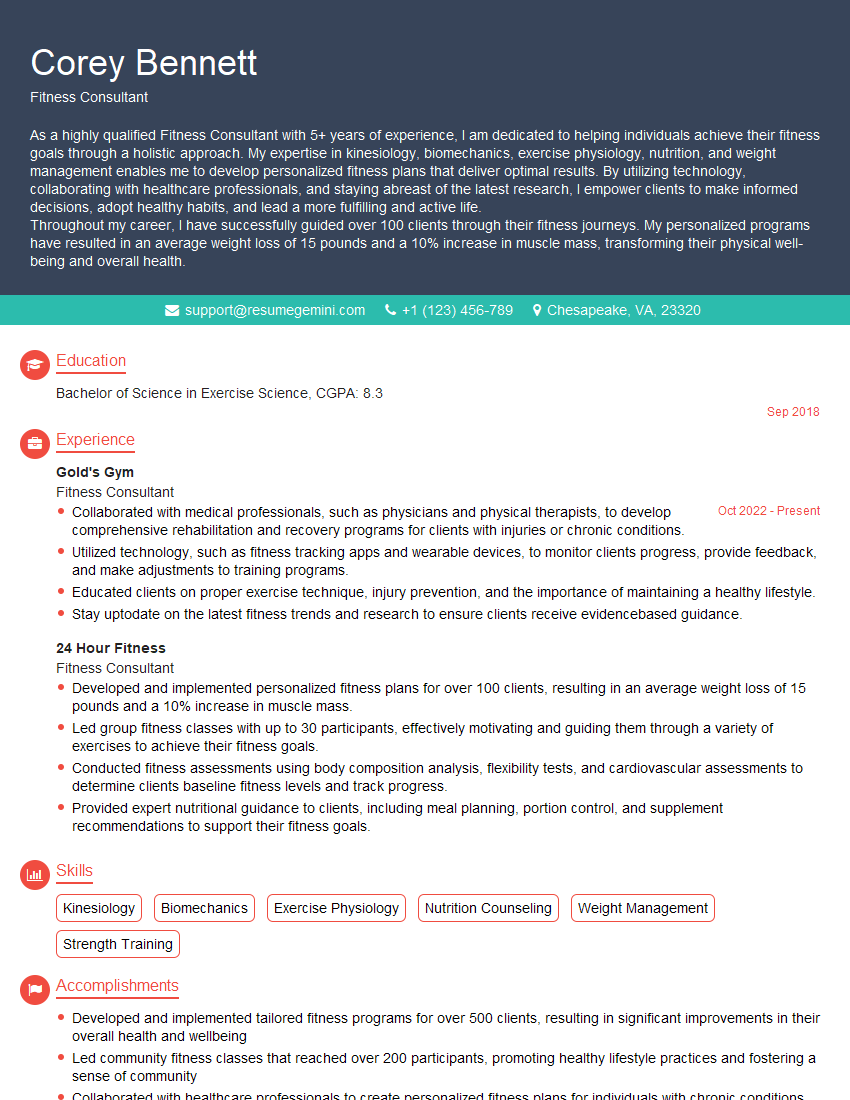
Mastering physical strength certification opens doors to exciting career opportunities in fitness, rehabilitation, and sports performance. A strong resume is your key to unlocking these possibilities. Crafting an ATS-friendly resume is essential to ensure your application gets noticed. ResumeGemini can help you build a professional and impactful resume that highlights your skills and experience. We provide examples of resumes tailored specifically to physical strength certification to help you get started. Take the next step towards your dream career today!
Explore more articles
Users Rating of Our Blogs
Share Your Experience
We value your feedback! Please rate our content and share your thoughts (optional).
What Readers Say About Our Blog
Attention music lovers!
Wow, All the best Sax Summer music !!!
Spotify: https://open.spotify.com/artist/6ShcdIT7rPVVaFEpgZQbUk
Apple Music: https://music.apple.com/fr/artist/jimmy-sax-black/1530501936
YouTube: https://music.youtube.com/browse/VLOLAK5uy_noClmC7abM6YpZsnySxRqt3LoalPf88No
Other Platforms and Free Downloads : https://fanlink.tv/jimmysaxblack
on google : https://www.google.com/search?q=22+AND+22+AND+22
on ChatGPT : https://chat.openai.com?q=who20jlJimmy20Black20Sax20Producer
Get back into the groove with Jimmy sax Black
Best regards,
Jimmy sax Black
www.jimmysaxblack.com
Hi I am a troller at The aquatic interview center and I suddenly went so fast in Roblox and it was gone when I reset.
Hi,
Business owners spend hours every week worrying about their website—or avoiding it because it feels overwhelming.
We’d like to take that off your plate:
$69/month. Everything handled.
Our team will:
Design a custom website—or completely overhaul your current one
Take care of hosting as an option
Handle edits and improvements—up to 60 minutes of work included every month
No setup fees, no annual commitments. Just a site that makes a strong first impression.
Find out if it’s right for you:
https://websolutionsgenius.com/awardwinningwebsites
Hello,
we currently offer a complimentary backlink and URL indexing test for search engine optimization professionals.
You can get complimentary indexing credits to test how link discovery works in practice.
No credit card is required and there is no recurring fee.
You can find details here:
https://wikipedia-backlinks.com/indexing/
Regards
NICE RESPONSE TO Q & A
hi
The aim of this message is regarding an unclaimed deposit of a deceased nationale that bears the same name as you. You are not relate to him as there are millions of people answering the names across around the world. But i will use my position to influence the release of the deposit to you for our mutual benefit.
Respond for full details and how to claim the deposit. This is 100% risk free. Send hello to my email id: lukachachibaialuka@gmail.com
Luka Chachibaialuka
Hey interviewgemini.com, just wanted to follow up on my last email.
We just launched Call the Monster, an parenting app that lets you summon friendly ‘monsters’ kids actually listen to.
We’re also running a giveaway for everyone who downloads the app. Since it’s brand new, there aren’t many users yet, which means you’ve got a much better chance of winning some great prizes.
You can check it out here: https://bit.ly/callamonsterapp
Or follow us on Instagram: https://www.instagram.com/callamonsterapp
Thanks,
Ryan
CEO – Call the Monster App
Hey interviewgemini.com, I saw your website and love your approach.
I just want this to look like spam email, but want to share something important to you. We just launched Call the Monster, a parenting app that lets you summon friendly ‘monsters’ kids actually listen to.
Parents are loving it for calming chaos before bedtime. Thought you might want to try it: https://bit.ly/callamonsterapp or just follow our fun monster lore on Instagram: https://www.instagram.com/callamonsterapp
Thanks,
Ryan
CEO – Call A Monster APP
To the interviewgemini.com Owner.
Dear interviewgemini.com Webmaster!
Hi interviewgemini.com Webmaster!
Dear interviewgemini.com Webmaster!
excellent
Hello,
We found issues with your domain’s email setup that may be sending your messages to spam or blocking them completely. InboxShield Mini shows you how to fix it in minutes — no tech skills required.
Scan your domain now for details: https://inboxshield-mini.com/
— Adam @ InboxShield Mini
support@inboxshield-mini.com
Reply STOP to unsubscribe
Hi, are you owner of interviewgemini.com? What if I told you I could help you find extra time in your schedule, reconnect with leads you didn’t even realize you missed, and bring in more “I want to work with you” conversations, without increasing your ad spend or hiring a full-time employee?
All with a flexible, budget-friendly service that could easily pay for itself. Sounds good?
Would it be nice to jump on a quick 10-minute call so I can show you exactly how we make this work?
Best,
Hapei
Marketing Director
Hey, I know you’re the owner of interviewgemini.com. I’ll be quick.
Fundraising for your business is tough and time-consuming. We make it easier by guaranteeing two private investor meetings each month, for six months. No demos, no pitch events – just direct introductions to active investors matched to your startup.
If youR17;re raising, this could help you build real momentum. Want me to send more info?
Hi, I represent an SEO company that specialises in getting you AI citations and higher rankings on Google. I’d like to offer you a 100% free SEO audit for your website. Would you be interested?
Hi, I represent an SEO company that specialises in getting you AI citations and higher rankings on Google. I’d like to offer you a 100% free SEO audit for your website. Would you be interested?