Every successful interview starts with knowing what to expect. In this blog, we’ll take you through the top PID Tuning and Control Loop Analysis interview questions, breaking them down with expert tips to help you deliver impactful answers. Step into your next interview fully prepared and ready to succeed.
Questions Asked in PID Tuning and Control Loop Analysis Interview
Q 1. Explain the principles of a PID controller.
A PID controller is a feedback control system used to regulate a process variable to a desired setpoint. It achieves this by continuously calculating an error – the difference between the setpoint and the current process variable – and adjusting a manipulated variable (like valve position or motor speed) to minimize this error. The name PID stands for Proportional, Integral, and Derivative, representing the three core control actions the controller uses to manipulate the system.
Think of it like steering a car. The setpoint is your destination, the process variable is your current location, and the error is the distance and direction you still need to travel. The PID controller acts like your steering wheel and accelerator, adjusting them based on the error to get you to your destination efficiently and accurately.
Q 2. Describe the role of each term (Proportional, Integral, Derivative) in a PID controller.
Each term in a PID controller contributes differently to the control action:
- Proportional (P): This term responds directly to the current error. A larger error leads to a larger corrective action. It’s like instantly turning the steering wheel more sharply when you’re further from your lane.
- Integral (I): This term addresses persistent errors. It accumulates the error over time, providing a corrective action proportional to the accumulated error. This is crucial for eliminating steady-state errors – those persistent offsets from the setpoint. Imagine your car slowly drifting to the right; the integral term counteracts this drift.
- Derivative (D): This term anticipates future errors based on the rate of change of the error. It dampens rapid changes, preventing overshoot and oscillations. Think of it as gently easing off the accelerator as you approach your destination to avoid overshooting.
The combined action of these three terms provides a robust and adaptable control strategy.
Q 3. How do you tune a PID controller using the Ziegler-Nichols method?
The Ziegler-Nichols method is a simple tuning technique based on experimentally determining the ultimate gain (Ku) and ultimate period (Tu) of the system. This involves:
- Set the controller to only Proportional (P) control. Turn off the integral and derivative terms.
- Gradually increase the proportional gain (Kp) until the system starts to oscillate continuously. This is the ultimate gain (Ku).
- Measure the period of these oscillations. This is the ultimate period (Tu).
- Use the following equations to calculate the PID gains:
Kp = 0.6 * KuTi = 0.5 * TuTd = 0.125 * Tu
Where Kp is the proportional gain, Ti is the integral time, and Td is the derivative time. These values provide a starting point, and further fine-tuning might be necessary based on the system’s behavior.
Q 4. What are the limitations of the Ziegler-Nichols method?
The Ziegler-Nichols method, while simple, has limitations:
- It’s an open-loop method. It requires pushing the system to the verge of instability, which might be unsafe or impractical for some processes.
- It provides only an initial approximation. Further tuning is often necessary to achieve optimal performance. The resulting tuning is often oscillatory and may not be suitable for all systems.
- It assumes a first-order plus dead-time (FOPDT) system model. Many real-world systems are more complex, and this approximation might not be accurate.
- It doesn’t consider constraints such as actuator saturation or limitations in the process variables.
More sophisticated tuning methods, like those based on system identification or optimization algorithms, often yield better results.
Q 5. Explain the concept of controller gain and its impact on system stability.
Controller gain refers to the amplification factor applied to the error signal in a controller. A higher gain means a stronger corrective action for a given error. This has a significant impact on system stability:
- Low Gain: Results in slow response, potentially leading to large steady-state errors. The system reacts sluggishly to disturbances.
- High Gain: Can lead to oscillations, overshoot, and instability. The system reacts aggressively to disturbances, which can be destabilizing if not properly managed by the I and D terms.
Finding the optimal gain involves a trade-off between speed and stability. Too low a gain results in poor performance, while too high a gain causes instability. This is where proper PID tuning comes into play.
Q 6. What is the difference between open-loop and closed-loop control systems?
The core difference between open-loop and closed-loop control systems lies in their feedback mechanism:
- Open-loop control: The controller output is determined solely by the input signal; there’s no feedback to correct for errors. Think of a toaster – you set the time, and it operates regardless of whether the bread is actually toasted.
- Closed-loop control (or feedback control): The controller output is adjusted based on feedback from the process variable, ensuring the output matches the desired setpoint. A thermostat is a perfect example – it measures the room temperature and adjusts the heating accordingly to maintain the set temperature.
PID controllers are inherently closed-loop systems because they continuously monitor the error and adjust the output to minimize it.
Q 7. Describe the effects of integral windup and how to prevent it.
Integral windup occurs when the integral term in a PID controller continues to accumulate error even when the manipulated variable is saturated (reached its maximum or minimum value). This happens frequently when the system is facing a large persistent disturbance. Imagine trying to steer a car stuck in deep mud – your steering wheel (the manipulated variable) is maxed out, but the integral term keeps accumulating error, making the system overcompensate once it’s free. When the saturation is relieved, this accumulated error can cause a large overshoot or even instability.
Preventing integral windup involves techniques like:
- Saturation limits on the integral term: Preventing the integral from accumulating beyond a certain limit.
- Anti-windup schemes: These more sophisticated techniques actively modify the integral term during saturation to prevent excessive accumulation.
- Reset windup: This method involves resetting the integral term when the system output reaches its limit.
Choosing the right anti-windup strategy depends on the specific application and the characteristics of the system being controlled.
Q 8. How do you handle controller saturation?
Controller saturation occurs when the output of a controller reaches its physical limits, preventing it from further responding to changes in the error signal. Imagine a valve controlling fluid flow; it can only open or close so far. If the controller demands a valve opening beyond its maximum, it saturates, leading to performance issues and instability.
Handling saturation requires a multi-pronged approach:
- Anti-windup strategies: These prevent the integrator from accumulating error during saturation. One common method is to stop the integrator from integrating when the output is saturated. Another involves modifying the integrator’s input during saturation to reflect the actual output instead of the requested output.
- Output limiting: This involves setting hard limits on the controller’s output, ensuring it never exceeds its physical bounds. This is a basic but crucial step.
- Setpoint ramping: Slowly changing the setpoint instead of making abrupt changes minimizes the risk of overdriving the actuator and causing saturation. Think of gently increasing the temperature of an oven instead of abruptly setting it to a high value.
- Proper controller tuning: A well-tuned controller will avoid excessive demands that lead to saturation in the first place. Aggressive tuning often exacerbates saturation.
For example, in a temperature control system, if the heater is already at maximum power and the controller demands even higher power to meet the setpoint, anti-windup prevents the controller from accumulating even more error, while output limiting prevents damage to the heater.
Q 9. Explain the concept of dead time and its effect on control system performance.
Dead time, also known as transport delay, is the time delay between a change in the controller’s output and the resulting effect on the process variable. Imagine shouting across a canyon; there’s a delay before you hear the echo. This delay is dead time. In control systems, dead time is inherent in many processes, such as material transport in pipes or chemical reactions with significant reaction times.
Dead time significantly affects control system performance, often leading to instability. It creates a phase lag, making it difficult for the controller to respond promptly to errors, particularly with oscillatory systems. The longer the dead time, the more challenging it becomes to achieve accurate and stable control.
Consider a temperature control system with a long pipe carrying the heated fluid. Changes in the heater output won’t affect the temperature sensor until the heated fluid travels the length of the pipe, resulting in a dead time. This dead time can make the system prone to oscillations and sluggish response. Addressing dead time often involves using specialized control strategies like Smith Predictors or model predictive control.
Q 10. What are some common control system stability criteria?
Several criteria assess the stability of a control system. These criteria help determine whether the system will settle to a steady state or oscillate indefinitely or even diverge.
- Routh-Hurwitz criterion: This algebraic method uses a table derived from the system’s characteristic polynomial to determine the number of roots in the right-half plane of the s-plane. Roots in the right-half plane indicate instability.
- Root locus method: This graphical technique maps the location of the closed-loop poles as a gain parameter is varied. Roots moving into the right-half plane signify instability.
- Gain and Phase Margins (from Bode plots or Nyquist plots): These margins provide quantitative measures of stability robustness. Positive margins indicate stability.
- Nyquist stability criterion: This frequency-domain method analyzes the encirclements of the -1 point by the Nyquist plot to determine the number of unstable closed-loop poles.
These criteria are essential tools for evaluating and improving the stability of a control system, ensuring it operates reliably and safely.
Q 11. Explain the Nyquist stability criterion.
The Nyquist stability criterion is a powerful frequency-domain method for assessing the stability of a closed-loop control system. Instead of analyzing the system’s poles directly, it examines the system’s frequency response. The criterion states that the number of unstable closed-loop poles is equal to the number of clockwise encirclements of the -1 point in the complex plane by the Nyquist plot of the open-loop transfer function.
A Nyquist plot is a polar plot of the open-loop transfer function, G(jω), as the frequency ω varies from -∞ to ∞. If the Nyquist plot does not encircle the -1 point, the closed-loop system is stable. If it does encircle the -1 point, the number of encirclements indicates the number of unstable closed-loop poles.
Imagine the Nyquist plot as a path traced in the complex plane. If this path avoids the point (-1, 0), the system is stable. Each time the path goes around (-1, 0) clockwise, it indicates an unstable pole. This allows engineers to visualize and assess system stability quickly and effectively.
Q 12. How do you analyze the frequency response of a control system?
Analyzing the frequency response of a control system involves determining how the system responds to sinusoidal inputs of varying frequencies. This reveals critical insights into its dynamics and stability, complementing the time-domain analysis. Several methods help in frequency response analysis:
- Bode plots: These plots display the magnitude and phase of the system’s transfer function as a function of frequency. Gain and phase margins are directly obtained from Bode plots.
- Nyquist plots: These polar plots display the complex frequency response of the open-loop transfer function, essential for applying the Nyquist stability criterion.
- Experimental frequency response analysis: This involves applying sinusoidal inputs to the system at different frequencies and measuring the resulting outputs. This data is then used to obtain the frequency response characteristics.
Tools like MATLAB and specialized control system software simplify these analyses. For instance, applying a sinusoidal signal to a motor’s input and measuring its speed response can reveal the frequency characteristics of the motor’s dynamics.
Q 13. What is a Bode plot and how is it used in control system design?
A Bode plot is a graphical representation of the frequency response of a control system. It consists of two plots: a magnitude plot (in decibels) and a phase plot (in degrees) both plotted against frequency (typically on a logarithmic scale).
The magnitude plot shows how the system amplifies or attenuates signals at different frequencies, while the phase plot indicates the phase shift introduced by the system at various frequencies. Bode plots provide a quick and intuitive way to assess the stability and performance of a system. For example, gain and phase margins can be easily determined from a Bode plot, and resonant frequencies can be identified.
In control system design, Bode plots are used to:
- Assess stability: Determine gain and phase margins to evaluate stability robustness.
- Design compensators: Shape the frequency response to meet design specifications, improve stability, and enhance performance.
- Analyze system dynamics: Identify resonant frequencies, bandwidth, and other key characteristics.
The simplicity of extracting useful information from a Bode plot makes it a fundamental tool in control system engineering. For example, observing a large phase lag at a high frequency immediately highlights a potential instability issue.
Q 14. Explain the concept of phase margin and gain margin.
Gain margin and phase margin are critical indicators of a control system’s stability robustness, easily obtained from Bode or Nyquist plots.
Gain margin is the amount of gain increase (in dB) that can be applied to the open-loop system before it becomes unstable. A positive gain margin indicates stability, signifying how much the system’s gain could be increased before oscillations start. A larger gain margin implies more robust stability.
Phase margin is the amount of additional phase lag (in degrees) that can be added to the open-loop system at the gain crossover frequency (where the magnitude is 1 or 0 dB) before it becomes unstable. A positive phase margin indicates stability, showing how much phase lag can be tolerated before oscillations start. A larger phase margin suggests greater damping and less oscillatory behavior.
Both margins are often specified as design requirements. For instance, a typical requirement might be a phase margin of at least 45 degrees and a gain margin of at least 6 dB to ensure sufficient stability and robustness in the face of uncertainties or disturbances in a real-world system. Insufficient margins often indicate a need for controller redesign or retuning.
Q 15. What is a root locus plot and how is it used?
A root locus plot is a graphical representation of the closed-loop poles of a control system as a function of a single gain parameter. Imagine it as a map showing how the system’s stability and response change as you ‘turn the knob’ on your controller’s gain. Each point on the locus represents a possible location of the closed-loop poles for a particular gain value.
It’s used to analyze the system’s stability and transient response. By examining the root locus, we can determine the range of gain values that result in a stable system, identify potential oscillations, and assess the speed of response. For instance, poles further to the left in the s-plane indicate faster response times and increased damping, while poles in the right-half plane signify instability. Designing a controller often involves manipulating the root locus to achieve the desired performance characteristics. A common goal might be to move the poles into the left half-plane and cluster them tightly to achieve fast settling time and minimal overshoot.
Think of it like this: you’re driving a car. The root locus shows you how the car’s handling changes (stability and response) as you increase the sensitivity of the steering (gain). Too little gain, and it’s sluggish; too much, and it becomes unstable and over-corrects. The root locus helps you find the ‘sweet spot’ for optimal control.
Career Expert Tips:
- Ace those interviews! Prepare effectively by reviewing the Top 50 Most Common Interview Questions on ResumeGemini.
- Navigate your job search with confidence! Explore a wide range of Career Tips on ResumeGemini. Learn about common challenges and recommendations to overcome them.
- Craft the perfect resume! Master the Art of Resume Writing with ResumeGemini’s guide. Showcase your unique qualifications and achievements effectively.
- Don’t miss out on holiday savings! Build your dream resume with ResumeGemini’s ATS optimized templates.
Q 16. Describe different types of PID controller implementations (e.g., parallel, series).
PID controllers can be implemented in several ways, the most common being parallel and series forms. In the parallel form, the proportional (P), integral (I), and derivative (D) terms are summed directly to produce the controller output:
u(t) = K_p e(t) + K_i ∫ e(t)dt + K_d ∂e(t)/∂twhere u(t) is the controller output, e(t) is the error signal, and K_p, K_i, and K_d are the proportional, integral, and derivative gains, respectively. This is often preferred for its simplicity and ease of tuning.
The series form, on the other hand, involves cascading the P, I, and D terms. This means the output of one term becomes the input of the next. It’s less common due to potential complexity in tuning and interaction between the terms. While both forms achieve the same goal, their mathematical representation and tuning characteristics differ slightly.
Other less common forms include interacting and non-interacting forms, which differ mainly in the way the integral term interacts with other controller parameters. Choosing the appropriate structure depends on the specifics of the controlled process and the desired performance characteristics. For instance, a parallel form is generally easier to tune, but a series form might be preferred when certain nonlinearities are to be dealt with.
Q 17. What is anti-windup and how does it work?
Anti-windup is a crucial mechanism to prevent integrator windup, a common problem in PID controllers. Integrator windup occurs when the integral term continues to accumulate error even when the actuator is saturated (at its limits). This leads to a large accumulated error even after the saturation is resolved, resulting in sluggish response and overshoot.
Anti-windup techniques essentially limit the integral term’s accumulation when the actuator is saturated. One common method involves stopping the integral term’s accumulation when the actuator is at its limits. Another approach is to back-calculate the integral term based on the difference between the desired and actual actuator output during saturation. This ensures that the integral action doesn’t wind up excessively. Various sophisticated anti-windup strategies exist, employing techniques like conditional integration or using a separate dynamics model for the actuator.
Imagine a water tank being filled with a tap. If the tank overflows (saturation), the water keeps flowing but can’t increase the level further. Anti-windup prevents the tap from constantly increasing the water flow even though the tank is full. Once the overflow stops, the tap returns to the correct level gradually.
Q 18. Explain how to select appropriate sampling rates for a control system.
Selecting an appropriate sampling rate is crucial for the performance and stability of a digital control system. The sampling rate, or frequency, determines how often the controller reads the process variable and updates its output. It must be chosen carefully, considering several factors.
The Nyquist-Shannon sampling theorem guides this choice: the sampling rate must be at least twice the highest frequency present in the system’s dynamics. If not, aliasing can occur where high-frequency components are falsely interpreted as low-frequency ones, leading to instability or poor performance.
Practical considerations include the speed of the process, actuator limitations, and computational resources. Faster processes necessitate higher sampling rates, while slower ones may only require lower rates. The processing power of the controller also limits how often it can sample and update the output. A rule of thumb is to sample at 10 times the dominant time constant of the system, although higher rates can improve performance in some situations. Too high of a sampling rate wastes processing power; too low, and the controller can’t react quickly enough.
As an example: If the system’s dominant time constant is 0.1 seconds, a sample rate of at least 10 samples per second (10 Hz) would be a good starting point.
Q 19. What are some common challenges in implementing PID controllers in real-world systems?
Implementing PID controllers in real-world systems presents many challenges:
- Nonlinearities: Real-world processes are rarely linear. PID controllers, in their basic form, assume linearity. This mismatch can lead to poor performance.
- Process variations: Process parameters often change over time or due to external factors, making it challenging to maintain consistent control performance. A controller tuned for one operating point might be ineffective under different conditions.
- Noise: Measurement noise can significantly affect the derivative term, leading to erratic control actions. Filtering techniques are crucial to mitigate this issue.
- Actuator saturation and limitations: Actuators have physical limitations (e.g., maximum force or speed). This can lead to integrator windup if not addressed appropriately with anti-windup strategies.
- Parameter tuning: Finding optimal PID gains for complex processes is often challenging and time-consuming. Manual tuning methods can be inefficient, hence automated tuning methods are generally preferred in industrial environments.
- Model uncertainty: Accurate process models are essential for effective controller design. However, obtaining precise models can be difficult or expensive.
Overcoming these challenges often involves advanced control techniques beyond simple PID, such as model predictive control (MPC), adaptive control, or fuzzy logic controllers.
Q 20. How do you deal with disturbances in a control system?
Dealing with disturbances is a key aspect of control system design. Disturbances are any unmeasured inputs that affect the process output. They can be random or deterministic, and their effects can be significant. A robust control system should minimize the impact of these disturbances.
Several strategies can help:
- Feedforward control: If the disturbance is measurable or predictable, a feedforward controller can compensate for its effect before it affects the process output. This is often used in conjunction with feedback control.
- Feedback control: This is the cornerstone of disturbance rejection. A feedback controller continuously measures the process output and adjusts the control signal to minimize the error between the desired output and the actual output. The integral term in a PID controller is particularly effective in rejecting constant disturbances.
- Robust controller design: Robust control methods design controllers that are less sensitive to uncertainties and disturbances. This might involve using techniques like H-infinity control or loop shaping.
- Disturbance observers: These estimate the effect of disturbances based on available measurements and can be used to compensate for their impact.
For instance, in a temperature control system, external temperature changes (disturbance) can be compensated for using a feedback PID controller, which measures the actual temperature and adjusts heating/cooling accordingly. Adding insulation to the system (feedforward) can also help minimize the effect of these disturbances.
Q 21. Explain the concept of process modeling and its importance in control system design.
Process modeling involves creating a mathematical representation of the system being controlled. This model describes the relationship between the system’s inputs, outputs, and internal states. Accurate process modeling is fundamental to control system design because it provides a basis for designing and tuning the controller. Without a model, controller design is essentially trial and error, which can be inefficient and unreliable.
The accuracy and complexity of the model depend on the process and the desired control performance. Simple models may suffice for some applications, while others require more sophisticated models. Common modeling techniques include:
- First-order plus dead time (FOPDT) models: These are simple models suitable for processes with a dominant time constant and a delay.
- Transfer function models: These models represent the process using a ratio of polynomials in the Laplace domain. They are widely used in classical control design.
- State-space models: These are more general models suitable for complex systems with multiple inputs and outputs. They are often used in modern control design.
- Data-driven modeling: This involves using data from the process to identify a model, often using techniques like system identification. This is beneficial when analytical models are difficult to obtain.
By having an accurate model, we can simulate the closed-loop system before physical implementation, allowing us to predict its behavior and identify potential issues early on. This significantly reduces the time and cost associated with commissioning the control system.
Q 22. How do you handle nonlinear processes with PID control?
PID controllers are inherently designed for linear systems. However, many real-world processes are nonlinear. Handling nonlinearity requires strategies that adapt the PID controller’s behavior or employ alternative control methods. One common approach is to linearize the process around an operating point. This involves creating a linearized model that approximates the nonlinear behavior within a small range of operation. The PID controller is then tuned for this linearized model. This works well if the process operates primarily within this narrow range.
For larger deviations from the operating point, more advanced techniques are needed. These include:
- Gain scheduling: This involves changing the PID gains (proportional, integral, derivative) based on the operating point. As the process moves, the gains are adjusted to maintain good performance. Think of it like adjusting your car’s gas pedal – you press harder going uphill (higher gain) than on flat ground (lower gain).
- Fuzzy logic control: This technique uses fuzzy sets and rules to map inputs (process variables) to outputs (control actions). It handles nonlinearity gracefully by defining rules based on linguistic descriptions, such as “If error is large and change in error is positive, then increase control output significantly.”
- Nonlinear PID controllers: These modify the standard PID algorithm to explicitly account for nonlinear characteristics. For example, a modified proportional term might use a nonlinear function instead of a simple multiplication.
The best approach depends on the specific nonlinearity and the desired level of performance. For simple nonlinearities, linearization and gain scheduling might suffice. For complex nonlinearities, fuzzy logic or nonlinear PID controllers offer more robustness.
Q 23. What are some advanced control techniques beyond PID control?
PID control is a workhorse, but for complex systems, more advanced techniques are often necessary. Some examples include:
- Model Predictive Control (MPC): MPC predicts the future behavior of the system based on a model and optimizes the control actions to achieve desired setpoints while satisfying constraints. It’s particularly useful in multivariable systems with complex interactions.
- Adaptive Control: Adaptive controllers adjust their parameters online to compensate for changing process dynamics or disturbances. Imagine a robot arm adjusting its grip based on the weight of the object it’s lifting.
- State-Space Control: This method uses a state-space representation of the system (a set of differential equations) to design controllers that achieve desired performance characteristics. It’s very powerful but requires a detailed mathematical model of the system.
- Optimal Control: This involves finding the control inputs that optimize a performance index (e.g., minimize energy consumption or tracking error) subject to constraints.
The choice depends on factors like the complexity of the system, the availability of a system model, and the performance requirements. While PID is simple and often effective, advanced techniques often provide superior performance and robustness for more challenging applications.
Q 24. Describe your experience with PID tuning software or tools.
I have extensive experience with various PID tuning software and tools, including:
- MATLAB’s Control System Toolbox: I’ve used this extensively for simulating, analyzing, and tuning PID controllers using techniques like Ziegler-Nichols and relay feedback. It provides powerful tools for visualization and analysis.
- Commercial SCADA systems: In industrial settings, I’ve worked with numerous SCADA systems (Supervisory Control and Data Acquisition) that offer built-in PID tuning features, often with auto-tuning capabilities. These systems provide real-time monitoring and control functionalities.
- Specialized PID tuning software: I’ve also used standalone software packages specifically designed for PID tuning. These often offer advanced features like adaptive tuning algorithms and optimization routines.
My experience spans from using simple manual tuning methods based on step responses to employing sophisticated auto-tuning algorithms. The choice of tool always depends on the specific application and the complexity of the control system.
Q 25. How do you troubleshoot a poorly performing control loop?
Troubleshooting a poorly performing control loop is a systematic process. I typically follow these steps:
- Gather data: Collect data on the process variable, the setpoint, the controller output, and any disturbances. Look for trends, unusual patterns, or spikes.
- Analyze the data: Examine the data visually (plots are essential!) to understand the loop’s behavior. Is it oscillating? Is it slow to respond? Are there large offsets?
- Check the controller parameters: Ensure the PID gains are appropriately tuned. If the loop is oscillating, the gains might be too high. If it’s slow, the gains might be too low. Consider retuning using various methods.
- Investigate the sensor and actuator: Make sure the sensor is correctly calibrated and providing accurate measurements. Verify that the actuator is functioning correctly and has sufficient range.
- Identify disturbances: Look for external factors affecting the process, such as changes in feedstock quality, ambient temperature, or load variations. Incorporate feedforward control to mitigate known disturbances.
- Check for limitations: Determine if there are any physical limitations (e.g., actuator saturation, valve stiction) preventing the controller from achieving the desired performance.
- Consider model mismatch: Assess whether the control system’s model of the process is accurate. A mismatch can lead to poor performance.
This iterative approach allows for systematic identification and resolution of issues affecting the control loop’s performance.
Q 26. What are some metrics used to evaluate the performance of a control system?
Several metrics are used to evaluate control system performance. The key metrics often depend on the specific application and priorities. Here are some common ones:
- Rise time: The time it takes for the system to reach a certain percentage (e.g., 90%) of its final value after a step change in the setpoint.
- Settling time: The time it takes for the system to settle within a specified tolerance band of the final value.
- Overshoot: The maximum deviation of the system’s response from the final value, expressed as a percentage.
- Steady-state error: The difference between the final value and the setpoint. A large steady-state error indicates poor performance.
- Integral of the Absolute Error (IAE): This sums the absolute values of the errors over time. Lower IAE indicates better performance.
- Integral of the Squared Error (ISE): Similar to IAE, but sums the squares of the errors, placing more weight on larger errors.
By analyzing these metrics, one can quantitatively assess the performance of a control system and identify areas for improvement. A well-tuned PID controller will typically exhibit low rise time, settling time, and overshoot, along with a minimal steady-state error.
Q 27. Explain the importance of proper sensor selection in a control system.
Proper sensor selection is crucial for effective control system design. The sensors provide the feedback signal that is essential for the controller to make informed decisions. An inaccurate or noisy sensor can lead to poor control performance and even instability.
Key considerations in sensor selection include:
- Accuracy: The sensor should provide measurements with sufficient accuracy for the desired control precision.
- Precision: The sensor should have low variability in repeated measurements under the same conditions.
- Resolution: The sensor should be able to detect small changes in the measured variable.
- Response time: The sensor should respond quickly to changes in the measured variable to ensure timely feedback to the controller.
- Noise characteristics: Sensors generate noise, which can corrupt the signal. The noise level should be acceptable for the control application. Filtering can help mitigate noise.
- Environmental considerations: The sensor should be compatible with the operating environment (e.g., temperature, pressure, humidity).
- Cost and maintainability: The cost of the sensor and the ease of maintenance should also be considered.
In short, selecting an appropriate sensor is not simply choosing the cheapest option; it’s choosing a sensor that meets the application’s requirements for accuracy, reliability, and speed, ultimately ensuring the control system’s success.
Q 28. Describe a situation where you had to optimize a PID controller for a specific application.
During a project involving a temperature control system for a chemical reactor, I encountered challenges in achieving stable and accurate temperature control. The reactor exhibited significant thermal inertia and nonlinearities due to exothermic reactions. The initial PID tuning, using a simple Ziegler-Nichols method, resulted in oscillations and slow response.
To optimize the controller, I employed the following strategies:
- Process Modeling: I developed a simplified dynamic model of the reactor using first-order plus dead-time (FOPDT) approximation. This model helped me understand the process dynamics better.
- Advanced Tuning Methods: I used the model to perform more advanced PID tuning techniques, including internal model control (IMC) tuning and optimal tuning using a simulation environment. This provided better initial estimates for the PID gains.
- Gain Scheduling: Given the nonlinearity, I implemented gain scheduling, adjusting the PID gains based on the current reactor temperature. This improved performance across the broader operating range.
- Real-Time Adjustment: I monitored the system’s response closely and made real-time adjustments to the PID gains based on the observed behavior. This was crucial to fine-tune the controller for optimal performance under actual operating conditions.
Through this iterative process of modeling, tuning, and real-time adjustment, I was able to significantly improve the temperature control system’s performance, reducing overshoot, settling time, and steady-state error. The final controller demonstrated robust and accurate temperature regulation across the entire operating range of the chemical reactor.
Key Topics to Learn for PID Tuning and Control Loop Analysis Interview
- Understanding PID Controllers: Grasp the fundamental principles of Proportional, Integral, and Derivative control actions. Explore how each component contributes to overall system performance.
- Tuning Methods: Become familiar with various PID tuning techniques, such as Ziegler-Nichols, Cohen-Coon, and others. Understand their strengths and weaknesses, and when to apply each method.
- Stability Analysis: Learn how to analyze the stability of a control loop using techniques like Bode plots, Nyquist plots, and root locus analysis. Understand concepts like gain margin and phase margin.
- Controller Design: Explore different controller structures beyond basic PID, such as cascade control, feedforward control, and other advanced control strategies.
- Practical Applications: Study real-world examples of PID control in various industries, such as process control, robotics, and automotive systems. Be prepared to discuss specific applications and challenges.
- Troubleshooting and Optimization: Develop your skills in diagnosing control loop problems, identifying sources of instability or poor performance, and implementing corrective actions to optimize controller performance.
- Software and Simulation: Gain experience using simulation software (e.g., MATLAB, Simulink) to model and analyze control systems. Be prepared to discuss your experience with relevant tools.
- Advanced Concepts (Optional): Depending on the seniority of the role, you might also want to explore topics such as non-linear control, adaptive control, and model predictive control.
Next Steps
Mastering PID Tuning and Control Loop Analysis is crucial for a successful career in automation, process engineering, and related fields. A strong understanding of these concepts demonstrates a valuable skill set highly sought after by employers. To maximize your job prospects, it’s essential to create a compelling and ATS-friendly resume that effectively showcases your expertise. ResumeGemini is a trusted resource that can help you build a professional and impactful resume, tailored to highlight your skills in PID Tuning and Control Loop Analysis. Examples of resumes specifically designed for this field are available to guide you. Invest the time to craft a strong resume; it’s your first impression and a critical step in securing your dream role.
Systems Engineer Resume Sample
Automation Engineer Resume Sample

Commissioning Engineer Resume Sample
Process Control Engineer Resume Sample
Controls Engineer Resume Sample
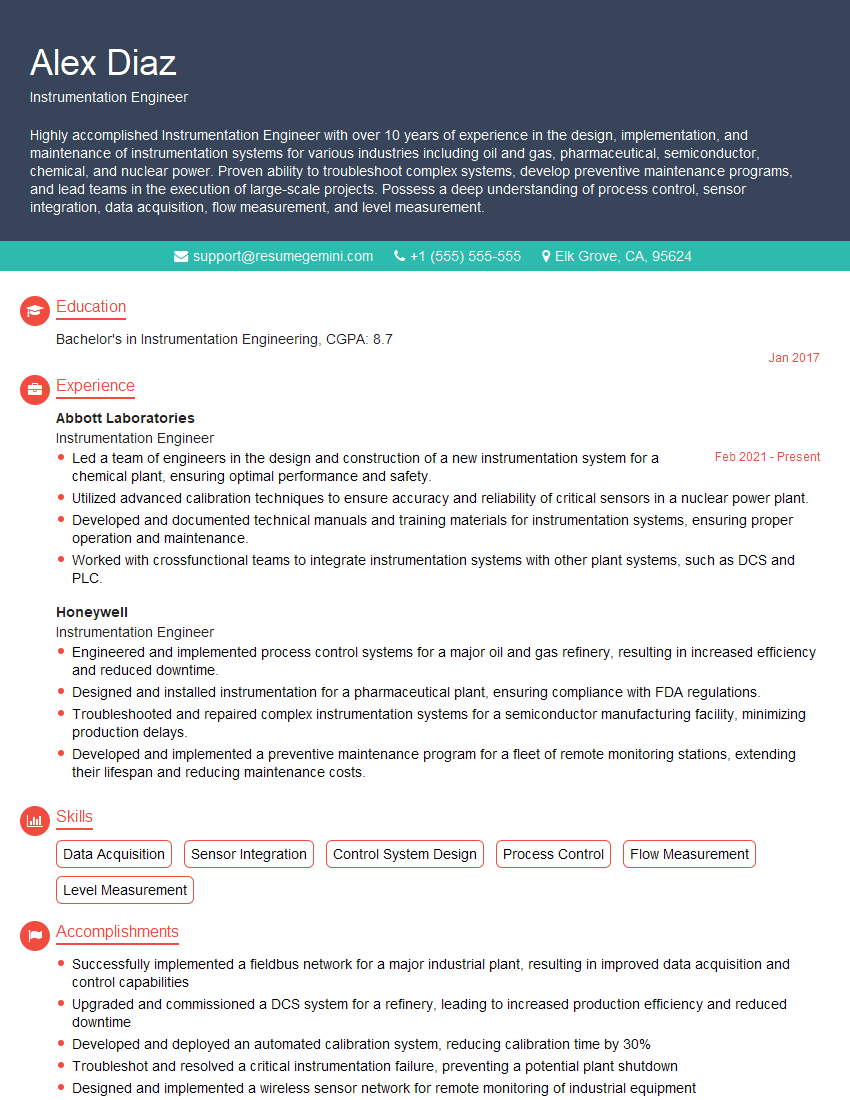
Instrumentation Engineer Resume Sample
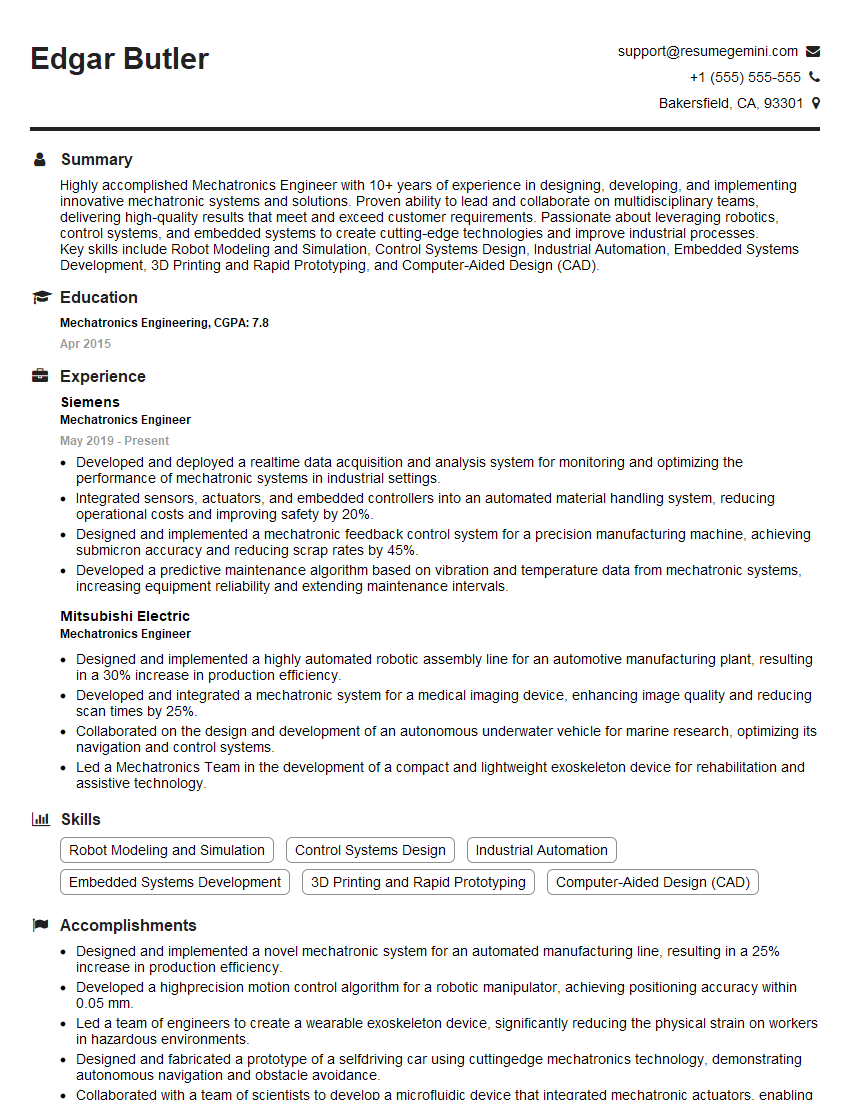
Mechatronics Engineer Resume Sample
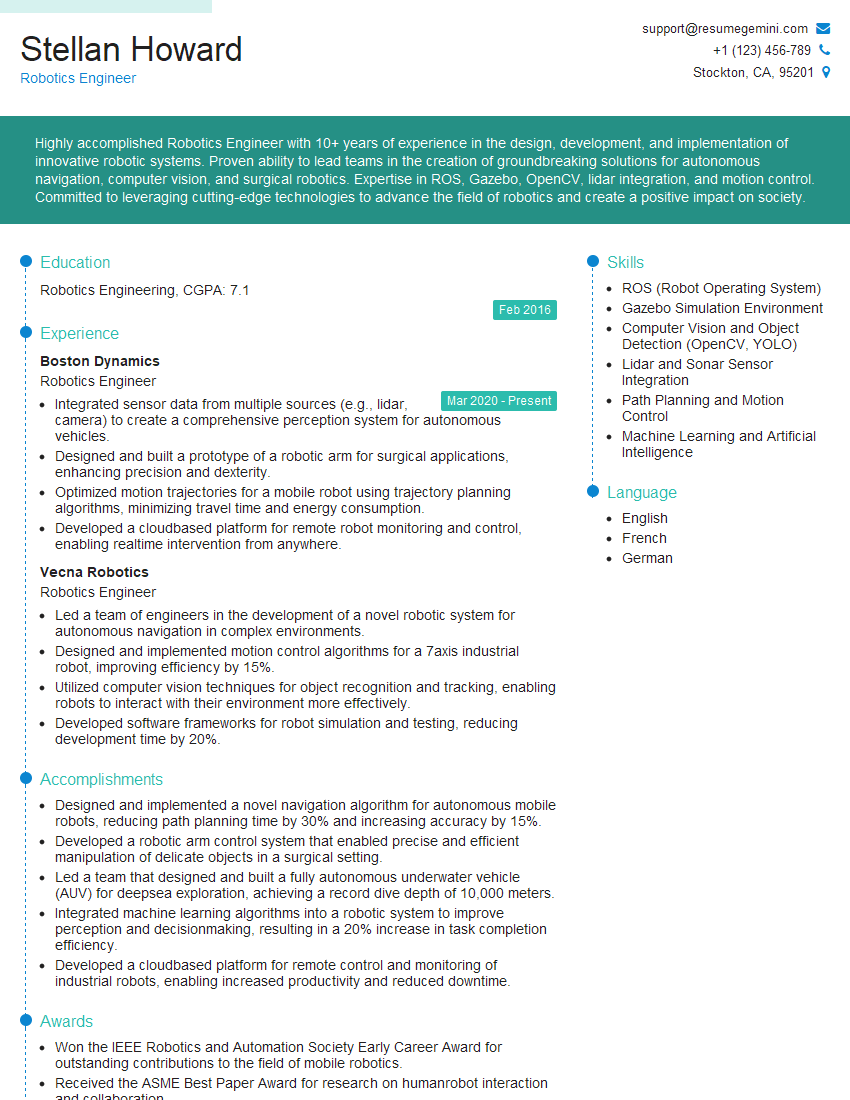
Robotics Engineer Resume Sample
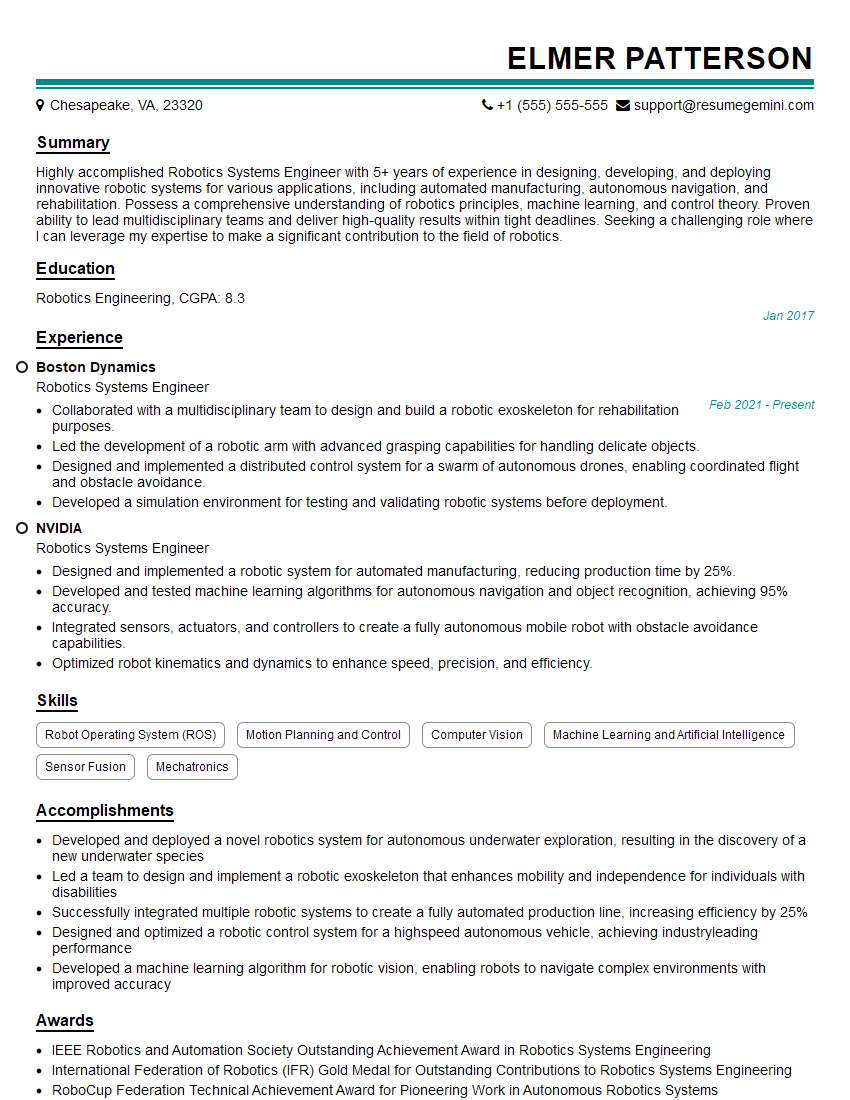
Robotics Systems Engineer Resume Sample
Explore more articles
Users Rating of Our Blogs
Share Your Experience
We value your feedback! Please rate our content and share your thoughts (optional).
What Readers Say About Our Blog
Hello,
we currently offer a complimentary backlink and URL indexing test for search engine optimization professionals.
You can get complimentary indexing credits to test how link discovery works in practice.
No credit card is required and there is no recurring fee.
You can find details here:
https://wikipedia-backlinks.com/indexing/
Regards
NICE RESPONSE TO Q & A
hi
The aim of this message is regarding an unclaimed deposit of a deceased nationale that bears the same name as you. You are not relate to him as there are millions of people answering the names across around the world. But i will use my position to influence the release of the deposit to you for our mutual benefit.
Respond for full details and how to claim the deposit. This is 100% risk free. Send hello to my email id: [email protected]
Luka Chachibaialuka
Hey interviewgemini.com, just wanted to follow up on my last email.
We just launched Call the Monster, an parenting app that lets you summon friendly ‘monsters’ kids actually listen to.
We’re also running a giveaway for everyone who downloads the app. Since it’s brand new, there aren’t many users yet, which means you’ve got a much better chance of winning some great prizes.
You can check it out here: https://bit.ly/callamonsterapp
Or follow us on Instagram: https://www.instagram.com/callamonsterapp
Thanks,
Ryan
CEO – Call the Monster App
Hey interviewgemini.com, I saw your website and love your approach.
I just want this to look like spam email, but want to share something important to you. We just launched Call the Monster, a parenting app that lets you summon friendly ‘monsters’ kids actually listen to.
Parents are loving it for calming chaos before bedtime. Thought you might want to try it: https://bit.ly/callamonsterapp or just follow our fun monster lore on Instagram: https://www.instagram.com/callamonsterapp
Thanks,
Ryan
CEO – Call A Monster APP
To the interviewgemini.com Owner.
Dear interviewgemini.com Webmaster!
Hi interviewgemini.com Webmaster!
Dear interviewgemini.com Webmaster!
excellent
Hello,
We found issues with your domain’s email setup that may be sending your messages to spam or blocking them completely. InboxShield Mini shows you how to fix it in minutes — no tech skills required.
Scan your domain now for details: https://inboxshield-mini.com/
— Adam @ InboxShield Mini
Reply STOP to unsubscribe
Hi, are you owner of interviewgemini.com? What if I told you I could help you find extra time in your schedule, reconnect with leads you didn’t even realize you missed, and bring in more “I want to work with you” conversations, without increasing your ad spend or hiring a full-time employee?
All with a flexible, budget-friendly service that could easily pay for itself. Sounds good?
Would it be nice to jump on a quick 10-minute call so I can show you exactly how we make this work?
Best,
Hapei
Marketing Director
Hey, I know you’re the owner of interviewgemini.com. I’ll be quick.
Fundraising for your business is tough and time-consuming. We make it easier by guaranteeing two private investor meetings each month, for six months. No demos, no pitch events – just direct introductions to active investors matched to your startup.
If youR17;re raising, this could help you build real momentum. Want me to send more info?
Hi, I represent an SEO company that specialises in getting you AI citations and higher rankings on Google. I’d like to offer you a 100% free SEO audit for your website. Would you be interested?
Hi, I represent an SEO company that specialises in getting you AI citations and higher rankings on Google. I’d like to offer you a 100% free SEO audit for your website. Would you be interested?
good