The right preparation can turn an interview into an opportunity to showcase your expertise. This guide to Postpress Production interview questions is your ultimate resource, providing key insights and tips to help you ace your responses and stand out as a top candidate.
Questions Asked in Postpress Production Interview
Q 1. Describe your experience with different binding methods (e.g., perfect binding, saddle stitch, wire-O).
My experience encompasses a wide range of binding methods, each suited to different project needs. Perfect binding, for instance, is ideal for books and magazines with a significant page count. It involves gluing the edges of the pages together to create a block, which is then attached to a cover. I’ve worked extensively with this method, ensuring accurate glue application to avoid page slippage and achieving a clean, professional finish. Saddle stitching is a simpler, cost-effective technique for documents with fewer pages, like brochures or booklets. It involves folding pages in half and securing them with wire staples down the spine. I’ve refined my skills in aligning pages precisely for a flawless stitch. Finally, Wire-O binding, with its double-loop wire, offers a high-end, professional look and allows for lay-flat opening, perfect for calendars or notebooks. I’ve handled various wire gauges and sizes, adapting to different paper weights and project requirements.
- Perfect Binding: Ideal for books, magazines, high page count documents.
- Saddle Stitch: Cost-effective, suitable for brochures, booklets, low page count documents.
- Wire-O Binding: High-end look, lay-flat opening, suitable for calendars, notebooks.
Q 2. Explain the process of die-cutting and its applications in postpress.
Die-cutting is a postpress process that uses a precisely shaped blade to cut, emboss, or perforate materials like paper, cardboard, or plastic. Imagine using cookie cutters on a large scale! It’s incredibly versatile. The process begins with creating a die, a metal plate with the desired shape or design etched into it. This die is then pressed against the material, creating the precise cuts or impressions. In postpress, die-cutting is extensively used for creating unique shapes for business cards, creating custom packaging with intricate designs, and even for adding decorative elements to invitations and greeting cards. The precision of die-cutting ensures consistent results across large print runs. One example I recall vividly involved creating custom-shaped hang tags for a clothing line – the intricate die created a truly memorable piece.
Applications in postpress include:
- Creating custom shapes for business cards or invitations.
- Producing intricate designs on packaging.
- Adding decorative elements to marketing materials.
- Creating perforated tear-off sections on forms.
Q 3. What are the common issues encountered during the folding process and how do you troubleshoot them?
Folding is a critical step, and issues can significantly impact quality. Common problems include misfolding, creasing, and paper jams. Misfolding often arises from incorrect paper settings on the folding machine, while inconsistent creasing can result from worn rollers or improper pressure settings. Paper jams are frequently caused by paper misfeeds or wrinkles. Troubleshooting involves a systematic approach:
- Visual Inspection: Carefully examine the machine for any obvious obstructions, like wrinkled paper.
- Paper Adjustments: Verify paper size, weight, and type are correctly set on the machine, adjusting feed trays and rollers as needed.
- Roller Check: Inspect rollers for wear and tear or debris. Replace worn rollers and clean dirty ones.
- Pressure Adjustment: If creasing is uneven, adjust the pressure settings to achieve a consistent fold.
- Calibration: For complex folds, recalibrating the folding machine according to manufacturer guidelines is often necessary.
For instance, I once had to troubleshoot a machine consistently misfolding a glossy brochure. After checking, I found that the paper was slightly thicker than specified, requiring an adjustment in the feed rollers and pressure settings.
Q 4. How do you ensure quality control in postpress production?
Quality control is paramount. It’s a multi-stage process starting even before the postpress phase. I begin with a thorough prepress check, ensuring the print files are correct and prepared for the finishing operations. During the process, random sampling and in-process checks monitor the quality of each step. This ensures early detection of issues like misaligned folds or improper binding. At the final stage, a 100% inspection of a representative sample checks for defects like smudges, scratches, or inconsistencies in cutting and binding. Detailed documentation, including visual inspections and measurements, is maintained throughout. This helps identify recurring problems, allowing for preventative measures and continuous improvement. For instance, if a certain binding machine regularly shows inconsistencies, I analyze the root cause, make necessary adjustments, and establish a preventive maintenance schedule.
Q 5. What are your preferred methods for troubleshooting a malfunctioning finishing machine?
My approach to troubleshooting malfunctioning finishing machines is systematic and prioritizes safety. First, I always disconnect the power to prevent accidents. Then, I carefully examine the machine for obvious problems: loose connections, frayed wires, or jammed components. If the problem isn’t immediately apparent, I consult the machine’s operation manual for troubleshooting guides or error codes displayed on the machine. If the manual doesn’t help, I’ll often check for online resources and contact the manufacturer’s technical support. I keep a detailed log of all troubleshooting steps, including the date, time, problem description, and solutions implemented. This helps in resolving future similar issues more efficiently. For instance, a recent issue with a laminator involved a malfunctioning heater. By consulting the manual and online forums, I identified the problem and replaced the faulty component, restoring functionality.
Q 6. Describe your experience with various types of laminating films and their applications.
I’ve worked with various laminating films, each offering unique properties. Gloss lamination provides a high-shine finish, enhancing the vibrancy of colors and adding durability. Matt lamination offers a sophisticated, less reflective finish, ideal for projects where a subtle look is desired. Satin lamination provides a balance between gloss and matt, offering a soft sheen. Beyond these common types, I have experience with UV-cured laminates offering exceptional scratch resistance, and textured laminates, adding a tactile element to the final product. The choice of film depends heavily on the project and the desired aesthetic and durability. For a high-end product catalog, I’d opt for UV-cured laminate, while for a brochure seeking a more classic feel, matt lamination might be appropriate.
Q 7. How do you handle rush jobs and meet tight deadlines in postpress?
Handling rush jobs requires meticulous planning and efficient execution. I prioritize tasks based on their urgency and dependencies. Clear communication with the client ensures all expectations and specifications are understood and any potential challenges are identified early on. Effective resource allocation, including personnel and equipment, is crucial. Overtime may be necessary but is planned carefully to ensure quality is not compromised. Using efficient work processes and potentially outsourcing non-critical tasks can help streamline the production and meet tight deadlines. Continuous monitoring and progress updates help to identify potential bottlenecks and facilitate swift decision-making. For example, I once had to produce 10,000 brochures within 48 hours. By prioritizing tasks, working overtime, and communicating transparently with the client, we successfully met the deadline without sacrificing quality.
Q 8. What safety precautions do you observe while operating postpress equipment?
Safety is paramount in postpress. Before operating any equipment, I always ensure I’m wearing the appropriate Personal Protective Equipment (PPE), including safety glasses, hearing protection, and cut-resistant gloves. This is non-negotiable. I thoroughly inspect the machine for any damage or loose parts before powering it on. Regular maintenance checks are crucial, and I meticulously follow the manufacturer’s safety guidelines for each piece of equipment. For example, when using a guillotine cutter, I always ensure the safety bar is in place and the blade is sharp to prevent jamming and potential injury. Additionally, I maintain a clean and organized workspace to minimize tripping hazards and keep the area clear of obstructions. I also understand and follow lockout/tagout procedures when performing maintenance or repairs.
Think of it like driving a car; you wouldn’t drive without a seatbelt. Similarly, in postpress, using safety equipment is not optional. It’s an integral part of the process.
Q 9. Explain your understanding of different paper types and their suitability for various finishing techniques.
Different paper types significantly impact the suitability for various finishing techniques. For instance, a thin, lightweight paper like 20lb bond might tear easily during die-cutting or embossing, whereas a heavier stock like 80lb cover would be more suitable. Coated papers, with their smooth surface, are ideal for high-quality printing and sharp images but might have issues with adhesive bonding in some processes. Uncoated papers, on the other hand, absorb glue better, making them ideal for certain binding methods. The paper’s grain direction also matters; printing across the grain can lead to cracking or distortion during folding.
- Uncoated Papers: Absorbent, ideal for letterpress, embossing, and glue binding.
- Coated Papers: Smooth surface, best for high-quality printing and sharp images, but can be challenging for certain adhesive applications.
- Cardstock: Thicker, sturdy, good for die-cutting, embossing, and folding.
Choosing the right paper is critical for a successful postpress operation. A mismatch between paper and finishing technique can lead to wasted materials, delays, and even project failure. I always consult the paper specifications and recommend the most suitable paper based on the finishing requirements of the job.
Q 10. Describe your experience with different types of finishing equipment (specify brands if possible).
My experience encompasses a wide range of finishing equipment. I’ve worked extensively with various folding machines, including Heidelberg and MBO folders. I’m proficient in operating different types of binding machines, such as PUR (Polyurethane Reactive) binding machines from Horizon and wire-o binding machines from various manufacturers. I’m also experienced with die-cutting machines, using both manual and automated systems. Experience with specific brands like Komori (printing presses indirectly impacting post-press needs) allows for effective troubleshooting and optimization of workflows. My expertise extends to cutting and trimming equipment like guillotine cutters (e.g., Polar) and automated cutting systems. Understanding the nuances of each machine and its capabilities is crucial for efficient and high-quality output. For example, the precision of a Polar guillotine cutter is unmatched for clean cuts.
Q 11. How do you manage inventory of consumables (e.g., glue, thread, film)?
Consumable inventory management is vital for smooth postpress operations. I use a combination of methods: a First-In, First-Out (FIFO) system for consumables with expiration dates, like adhesives, and a minimum-maximum stock level system for other materials. Regular stock checks are conducted, and I maintain detailed records in a spreadsheet or database, tracking consumption rates and ordering new stock when levels reach the reorder point. This proactive approach prevents unexpected shortages that could halt production. I also incorporate regular quality checks of consumables to ensure they are within acceptable parameters for use.
For example, if glue becomes too viscous, it can cause binding issues. Regular checks prevent such problems from occurring.
Q 12. How do you maintain accurate records of production output and material usage?
Accurate record-keeping is essential for tracking production efficiency and material costs. I use a combination of digital and manual methods. A digital system tracks job numbers, quantities produced, material usage, machine run times, and downtime. This data allows for performance analysis and identifying areas for improvement. Manual logs supplement the digital system for real-time tracking of certain processes and quality checks. All records are meticulously kept and archived for easy retrieval and auditing. This enables efficient reporting and allows for informed decision-making on future projects.
For instance, tracking material usage helps us identify and rectify waste in the production process.
Q 13. Explain your understanding of job costing and its importance in postpress.
Job costing is the process of assigning direct and indirect costs to individual jobs in postpress. It involves tracking all expenses associated with a specific project, from materials and labor to machine use and overhead. This is crucial for accurate pricing, profitability analysis, and identifying cost-effective practices. By carefully tracking each cost element, we can determine the actual cost of each job and compare it to the quoted price, revealing profitability and areas for efficiency improvements.
For instance, if we notice consistently high material waste on a particular type of binding, we can investigate the process, adjust techniques, or choose different materials to reduce costs.
Q 14. How do you manage a team in a postpress environment?
Managing a postpress team requires a combination of strong leadership, clear communication, and effective delegation. I foster a collaborative environment, encouraging teamwork and open communication. I delegate tasks based on individual skill sets and experience, ensuring everyone feels valued and their contributions are recognized. Regular team meetings are held to address concerns, celebrate successes, and discuss process improvements. Training and development opportunities are provided to enhance skills and knowledge. I also emphasize safety and quality, creating a culture of continuous improvement and high standards.
For example, cross-training team members allows for greater flexibility and reduces the impact of absences.
Q 15. Describe your experience with workflow management software in postpress.
Workflow management software is crucial for streamlining postpress production. I have extensive experience using MIS (Management Information Systems) software like PrintVis and EFI Radius. These systems allow for efficient job tracking, from initial order entry and scheduling through to final delivery. They help manage resources effectively – assigning jobs to specific machines and operators based on their skills and availability. For example, in one project, we utilized PrintVis to track the movement of a large direct mail campaign. The software allowed real-time monitoring of each stage, from printing to folding, inserting, and mailing, which helped us identify and resolve bottlenecks quickly, keeping the project on schedule and within budget.
Beyond job tracking, these systems provide valuable data analysis capabilities. We can track key metrics like turnaround times, material costs, and operator efficiency, facilitating informed decision-making for future projects. They also improve communication by providing real-time updates to clients and internal teams.
Career Expert Tips:
- Ace those interviews! Prepare effectively by reviewing the Top 50 Most Common Interview Questions on ResumeGemini.
- Navigate your job search with confidence! Explore a wide range of Career Tips on ResumeGemini. Learn about common challenges and recommendations to overcome them.
- Craft the perfect resume! Master the Art of Resume Writing with ResumeGemini’s guide. Showcase your unique qualifications and achievements effectively.
- Don’t miss out on holiday savings! Build your dream resume with ResumeGemini’s ATS optimized templates.
Q 16. What are the key performance indicators (KPIs) you focus on in postpress?
Key Performance Indicators (KPIs) in postpress are crucial for measuring efficiency and profitability. I primarily focus on:
- On-time delivery rate: This measures our ability to meet deadlines consistently. A high percentage reflects efficient scheduling and production.
- Waste percentage: Minimizing waste of materials (paper, ink, etc.) is key to profitability. Tracking waste helps identify areas for improvement in processes and training.
- Machine uptime: Maximizing the productive time of our equipment is essential. Downtime due to maintenance or malfunctions directly impacts our output and costs.
- Throughput: The amount of work completed per unit of time. Improvements here mean increased productivity and potentially lower costs per unit.
- Customer satisfaction: Measured through feedback surveys and complaint resolution rates. This is paramount for retaining clients.
By monitoring these KPIs regularly, I can pinpoint areas needing improvement and make data-driven decisions to optimize postpress operations.
Q 17. How do you handle customer complaints related to postpress finishing?
Handling customer complaints is a critical aspect of postpress. My approach involves a systematic process:
- Acknowledge and empathize: I begin by acknowledging the customer’s frustration and expressing empathy for the inconvenience.
- Gather information: I collect detailed information about the complaint, including specifics about the job, the nature of the defect, and any relevant supporting documents (e.g., photos).
- Investigate the root cause: I thoroughly investigate the issue, working with the production team to identify the source of the problem. This could involve reviewing production records, examining the finished product, and possibly testing materials or equipment.
- Develop a solution: Based on the investigation, I propose a solution that addresses the customer’s concern. This might involve re-doing the job, offering a discount, or implementing preventative measures to avoid similar issues in the future.
- Communicate the resolution: I clearly communicate the solution to the customer, setting realistic expectations and timelines. I follow up to ensure satisfaction.
For example, once we had a complaint about misaligned binding on a booklet. After thorough investigation, we discovered a minor miscalibration on the binding machine. We corrected it, reprinted the affected booklets, and offered a small discount to the customer as a goodwill gesture. Transparent communication and proactive problem-solving were key to resolving the situation positively.
Q 18. What are your strategies for improving efficiency in postpress operations?
Improving efficiency in postpress requires a multifaceted approach. My strategies include:
- Lean manufacturing principles: Implementing lean methodologies like 5S (Sort, Set in Order, Shine, Standardize, Sustain) to reduce waste and optimize workflow.
- Process automation: Automating repetitive tasks like collating, folding, and inserting using automated equipment.
- Operator training: Providing continuous training to operators to improve their skills and efficiency.
- Preventive maintenance: Implementing a rigorous preventive maintenance program for all equipment to minimize downtime.
- Data analysis: Using data from workflow management software to identify bottlenecks and areas for improvement in processes.
- Inventory management: Optimizing inventory levels to minimize storage costs and ensure timely availability of materials.
For instance, we implemented a new automated inserting machine that significantly increased our throughput for direct mail campaigns, reducing turnaround time and labor costs.
Q 19. Explain your experience with automated postpress equipment.
I have significant experience with automated postpress equipment, including:
- High-speed folders: These machines automate the folding process, significantly increasing speed and consistency compared to manual folding.
- Automated inserting systems: These systems automate the insertion of inserts into envelopes or other packaging, improving accuracy and speed.
- Perfect binding machines: Automated perfect binding machines are crucial for producing books and magazines efficiently, applying adhesive and trimming the spine precisely.
- Cutting and trimming machines: Automated cutters and trimmers offer precise cutting and trimming, reducing waste and improving consistency.
My experience includes troubleshooting, maintaining, and optimizing these machines, ensuring they operate at peak efficiency. For example, I resolved a recurring jam in an automated inserting machine by identifying and replacing a worn-out component, preventing significant downtime.
Q 20. How familiar are you with different types of cutting and trimming techniques?
I’m very familiar with various cutting and trimming techniques, including:
- Guillotine cutting: A highly accurate method for cutting large stacks of paper using a large blade.
- Rotary cutting: Uses a rotating cylinder with blades for high-speed, continuous cutting, ideal for large volumes.
- Die cutting: Uses custom-made dies to cut intricate shapes and designs, often used for packaging or special promotional items.
- Creasing: Creating score lines in paper to allow for easy folding without cracking.
- Trimming: Removing excess material from the edges of printed sheets to achieve precise dimensions.
The choice of technique depends on the project’s requirements, such as the material, the quantity, and the complexity of the cut. I’m proficient in selecting and operating the appropriate equipment for each technique.
Q 21. Describe your experience with specialized postpress techniques (e.g., embossing, debossing).
I have hands-on experience with specialized postpress techniques like embossing and debossing. Embossing creates a raised design, while debossing creates a recessed design. Both techniques add a tactile and visual dimension to printed materials. These are often used for:
- Branding and packaging: Adding a luxurious feel and enhancing brand identity.
- Invitations and greeting cards: Creating elegant and memorable pieces.
- Books and brochures: Highlighting key elements or adding a distinctive touch.
I understand the intricacies of die-making and machine setup for these processes, ensuring high-quality results. For example, on a recent project, we used embossing to create a textured logo on high-quality paper for a premium product launch. The embossed logo significantly enhanced the product’s perceived value.
Q 22. How do you ensure consistency in the finished product across large print runs?
Ensuring consistency across large print runs is paramount in postpress. It’s like baking a batch of cookies – you want every single one to look and taste the same. We achieve this through meticulous attention to detail at every stage, starting with pre-press. This includes verifying color profiles, ensuring the correct paper stock is used consistently throughout the run, and employing standardized operating procedures for each postpress process (e.g., cutting, folding, binding).
Specifically, we use color management systems (CMS) to maintain color accuracy. This involves using calibrated monitors, printers, and proofing systems to ensure the final product matches the approved proofs. Regular checks of the output during the run (spot checks) are crucial to catch any deviations early. We maintain precise calibration logs for all equipment, document paper stock specifics, and perform regular quality control checks using standardized procedures and checklists. Any variation is documented and immediately addressed to maintain consistent quality across the entire print run.
Q 23. Explain your experience with pre-flighting and quality checks before postpress begins.
Preflighting is absolutely critical; it’s like a pre-flight checklist for an airplane before takeoff. Before any postpress operation begins, I meticulously review the digital files using software like PitStop Pro or Acrobat Pro. This involves checking for:
- Color profiles: Ensuring the correct color spaces are used and that there are no color discrepancies.
- Image resolution: Verifying images are high enough resolution for the intended print size to avoid pixelation.
- Fonts: Checking for embedded fonts and missing glyphs.
- Bleeds and margins: Confirming appropriate bleeds and safe zones to prevent issues during trimming.
- Imposition: Reviewing the layout of pages for printing and binding.
I also conduct physical checks on printed samples (proofs) to evaluate color accuracy, registration, and overall quality before proceeding to mass production. Any detected issue is flagged and addressed with the pre-press team before further steps are undertaken, significantly reducing the risk of errors in the final product and rework.
Q 24. What are your skills in using different software for postpress planning and execution?
My expertise encompasses various software critical for postpress planning and execution. I’m proficient in:
- Esko Automation Engine: For automating prepress tasks and integrating various workflows for optimum efficiency. This is particularly useful for managing complex jobs with multiple finishing processes.
- PitStop Pro: For preflighting and automated PDF correction, ensuring file integrity before printing.
- Adobe Acrobat Pro: For PDF creation, editing, and quality checks.
- Various MIS (Management Information Systems) software: I have experience with various job tracking and management systems to improve process visibility and efficiency.
My skills extend beyond software; I understand the integration of these tools within a broader workflow, allowing for smooth data flow and minimized manual intervention, directly impacting efficiency and reducing errors.
Q 25. Describe a situation where you had to solve a complex problem in postpress production.
We once faced a significant challenge with a large-scale book printing project. Just before the final binding stage, we discovered inconsistencies in the page count between the different sections. This was a critical issue as it risked misaligned pages and a complete loss of synchronization. The problem was likely caused by an error during the imposition process. Instead of scrapping the entire job, I collaborated with the pre-press team to analyze the imposition files and pinpoint the exact location of the error.
We implemented a meticulous, section-by-section review and correction using the Esko software, carefully tracking each section’s page count and verifying the final assembly. While time-consuming, this methodical approach ensured we delivered the project on time, albeit with added hours. This experience highlighted the importance of thorough quality control and the need for robust error detection protocols at each production stage. The improved processes we introduced as a result saved time and reduced costs in subsequent projects.
Q 26. How do you stay updated on the latest technologies and trends in postpress?
Staying current in postpress is essential, as the industry is constantly evolving. I actively participate in industry events such as conferences and workshops organized by associations like PIA (Printing Industries of America) and attend webinars offered by various industry leaders. I also subscribe to industry publications, both print and digital, to stay informed about new technologies and best practices. Furthermore, I actively engage in online forums and communities to participate in discussions, share experiences, and learn from other professionals. Regularly exploring new software features and testing out new equipment trials are key to maintaining a leading-edge skill set in this dynamic environment.
Q 27. What are your salary expectations for this Postpress Production role?
My salary expectations for this role are between $75,000 and $90,000 annually, depending on the benefits package and the overall responsibilities. This expectation is based on my extensive experience, proven track record of success in managing complex projects, and mastery of relevant software and technologies. I am confident that my contributions will quickly exceed the value of this compensation.
Q 28. What are your long-term career goals within postpress production?
My long-term career goals involve progressing into a leadership role within postpress production, possibly a production manager or operations manager. I aspire to leverage my expertise to optimize production processes, implement innovative technologies, and mentor future professionals. I am keen on spearheading initiatives focused on sustainability and efficiency improvements within a company’s postpress operations, contributing to both environmental responsibility and improved bottom lines.
Key Topics to Learn for Postpress Production Interview
- Finishing Techniques: Understanding various finishing methods like binding (perfect, saddle-stitch, wire-o), cutting, folding, and lamination. Consider the practical applications of each method and when they are most appropriate.
- Die-Cutting and Embossing: Explore the theoretical principles behind these processes, including die creation and machine operation. Be prepared to discuss troubleshooting common issues and optimizing production efficiency.
- Quality Control and Inspection: Master the techniques for identifying defects in post-press products and implementing effective quality control measures. Think about practical examples of how you would address quality issues in a production environment.
- Material Handling and Workflow: Discuss the importance of efficient material handling and workflow optimization in a post-press environment. Understand how different processes are interconnected and how to minimize downtime.
- Print Finishing Software and Technology: Familiarize yourself with industry-standard software used for pre-press planning and post-press scheduling and production management. Be able to discuss various automated systems and their impact on efficiency.
- Cost Estimation and Budgeting: Learn how to accurately estimate costs associated with different post-press techniques, materials, and labor. This is crucial for effective project management.
- Safety and Compliance: Understand and adhere to safety regulations and industry best practices related to equipment operation and material handling in post-press production.
- Sustainability in Postpress: Discuss environmentally friendly practices and sustainable materials within the postpress production process. This increasingly important aspect shows forward-thinking.
Next Steps
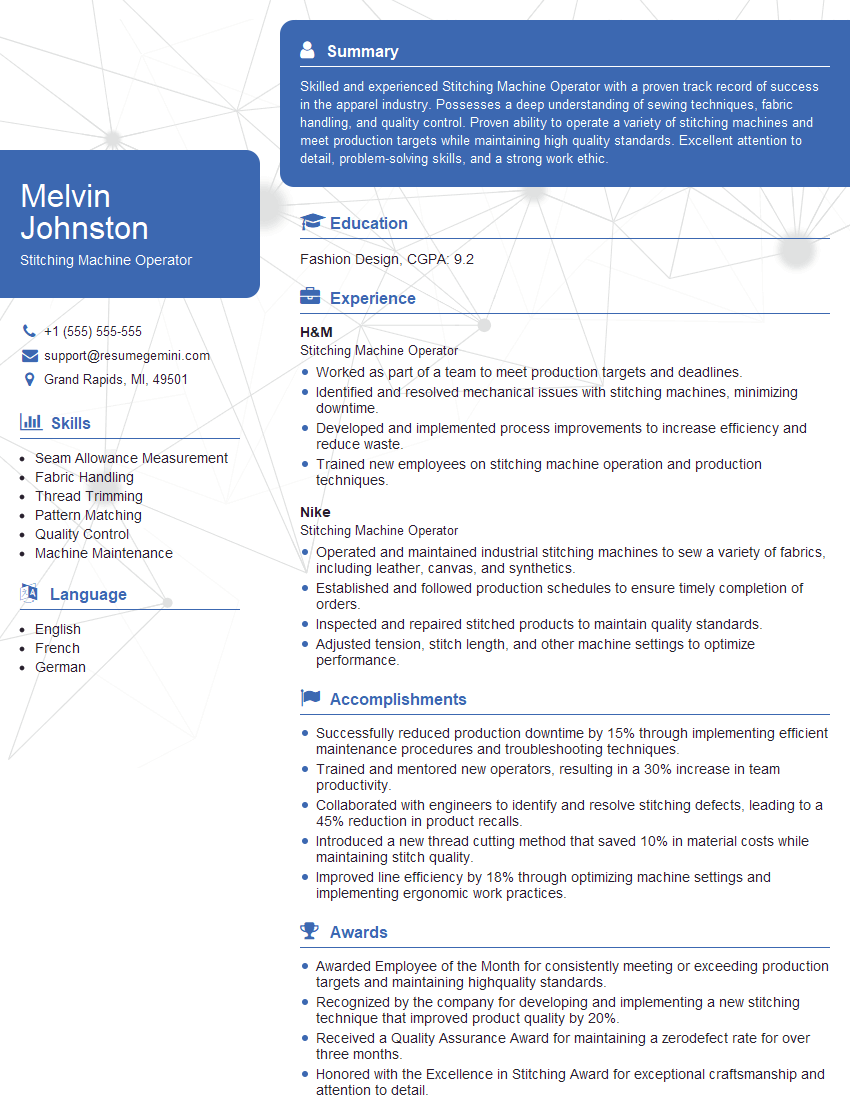
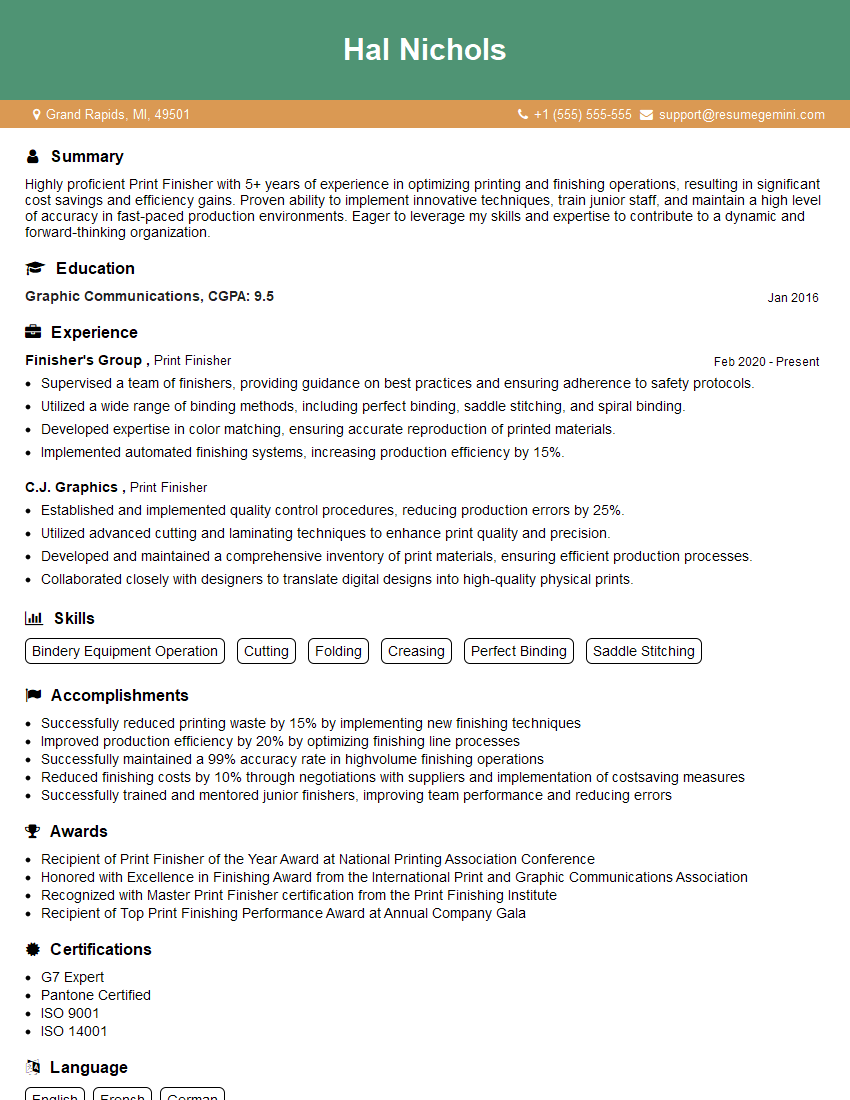
Mastering Postpress Production opens doors to rewarding and diverse career opportunities within the printing and publishing industries. A strong understanding of these techniques makes you a highly valuable asset. To maximize your job prospects, creating a compelling and ATS-friendly resume is crucial. ResumeGemini is a trusted resource that can help you build a professional resume that showcases your skills and experience effectively. Examples of resumes tailored to Postpress Production are available to help guide you. Take the next step towards your dream career today!
Explore more articles
Users Rating of Our Blogs
Share Your Experience
We value your feedback! Please rate our content and share your thoughts (optional).
What Readers Say About Our Blog
Attention music lovers!
Wow, All the best Sax Summer music !!!
Spotify: https://open.spotify.com/artist/6ShcdIT7rPVVaFEpgZQbUk
Apple Music: https://music.apple.com/fr/artist/jimmy-sax-black/1530501936
YouTube: https://music.youtube.com/browse/VLOLAK5uy_noClmC7abM6YpZsnySxRqt3LoalPf88No
Other Platforms and Free Downloads : https://fanlink.tv/jimmysaxblack
on google : https://www.google.com/search?q=22+AND+22+AND+22
on ChatGPT : https://chat.openai.com?q=who20jlJimmy20Black20Sax20Producer
Get back into the groove with Jimmy sax Black
Best regards,
Jimmy sax Black
www.jimmysaxblack.com
Hi I am a troller at The aquatic interview center and I suddenly went so fast in Roblox and it was gone when I reset.
Hi,
Business owners spend hours every week worrying about their website—or avoiding it because it feels overwhelming.
We’d like to take that off your plate:
$69/month. Everything handled.
Our team will:
Design a custom website—or completely overhaul your current one
Take care of hosting as an option
Handle edits and improvements—up to 60 minutes of work included every month
No setup fees, no annual commitments. Just a site that makes a strong first impression.
Find out if it’s right for you:
https://websolutionsgenius.com/awardwinningwebsites
Hello,
we currently offer a complimentary backlink and URL indexing test for search engine optimization professionals.
You can get complimentary indexing credits to test how link discovery works in practice.
No credit card is required and there is no recurring fee.
You can find details here:
https://wikipedia-backlinks.com/indexing/
Regards
NICE RESPONSE TO Q & A
hi
The aim of this message is regarding an unclaimed deposit of a deceased nationale that bears the same name as you. You are not relate to him as there are millions of people answering the names across around the world. But i will use my position to influence the release of the deposit to you for our mutual benefit.
Respond for full details and how to claim the deposit. This is 100% risk free. Send hello to my email id: lukachachibaialuka@gmail.com
Luka Chachibaialuka
Hey interviewgemini.com, just wanted to follow up on my last email.
We just launched Call the Monster, an parenting app that lets you summon friendly ‘monsters’ kids actually listen to.
We’re also running a giveaway for everyone who downloads the app. Since it’s brand new, there aren’t many users yet, which means you’ve got a much better chance of winning some great prizes.
You can check it out here: https://bit.ly/callamonsterapp
Or follow us on Instagram: https://www.instagram.com/callamonsterapp
Thanks,
Ryan
CEO – Call the Monster App
Hey interviewgemini.com, I saw your website and love your approach.
I just want this to look like spam email, but want to share something important to you. We just launched Call the Monster, a parenting app that lets you summon friendly ‘monsters’ kids actually listen to.
Parents are loving it for calming chaos before bedtime. Thought you might want to try it: https://bit.ly/callamonsterapp or just follow our fun monster lore on Instagram: https://www.instagram.com/callamonsterapp
Thanks,
Ryan
CEO – Call A Monster APP
To the interviewgemini.com Owner.
Dear interviewgemini.com Webmaster!
Hi interviewgemini.com Webmaster!
Dear interviewgemini.com Webmaster!
excellent
Hello,
We found issues with your domain’s email setup that may be sending your messages to spam or blocking them completely. InboxShield Mini shows you how to fix it in minutes — no tech skills required.
Scan your domain now for details: https://inboxshield-mini.com/
— Adam @ InboxShield Mini
support@inboxshield-mini.com
Reply STOP to unsubscribe
Hi, are you owner of interviewgemini.com? What if I told you I could help you find extra time in your schedule, reconnect with leads you didn’t even realize you missed, and bring in more “I want to work with you” conversations, without increasing your ad spend or hiring a full-time employee?
All with a flexible, budget-friendly service that could easily pay for itself. Sounds good?
Would it be nice to jump on a quick 10-minute call so I can show you exactly how we make this work?
Best,
Hapei
Marketing Director
Hey, I know you’re the owner of interviewgemini.com. I’ll be quick.
Fundraising for your business is tough and time-consuming. We make it easier by guaranteeing two private investor meetings each month, for six months. No demos, no pitch events – just direct introductions to active investors matched to your startup.
If youR17;re raising, this could help you build real momentum. Want me to send more info?
Hi, I represent an SEO company that specialises in getting you AI citations and higher rankings on Google. I’d like to offer you a 100% free SEO audit for your website. Would you be interested?
Hi, I represent an SEO company that specialises in getting you AI citations and higher rankings on Google. I’d like to offer you a 100% free SEO audit for your website. Would you be interested?